Inside The Swatch Sistem51 And Bioceramic Production Sites

In September, I ended up spending more time in airport lounges than in my living room at home. Sometimes, that’s not so bad, especially when it means new opportunities! One highlight was visiting Switzerland to tour two Swatch Group production sites. At one, I saw how movements are made, and at the other, I watched cases and dials being produced. Swatch really captures the imagination when it comes to manufacturing, with an estimated annual output of over three million watches. Still, the Swatch Group does not share the brand’s exact annual production numbers.
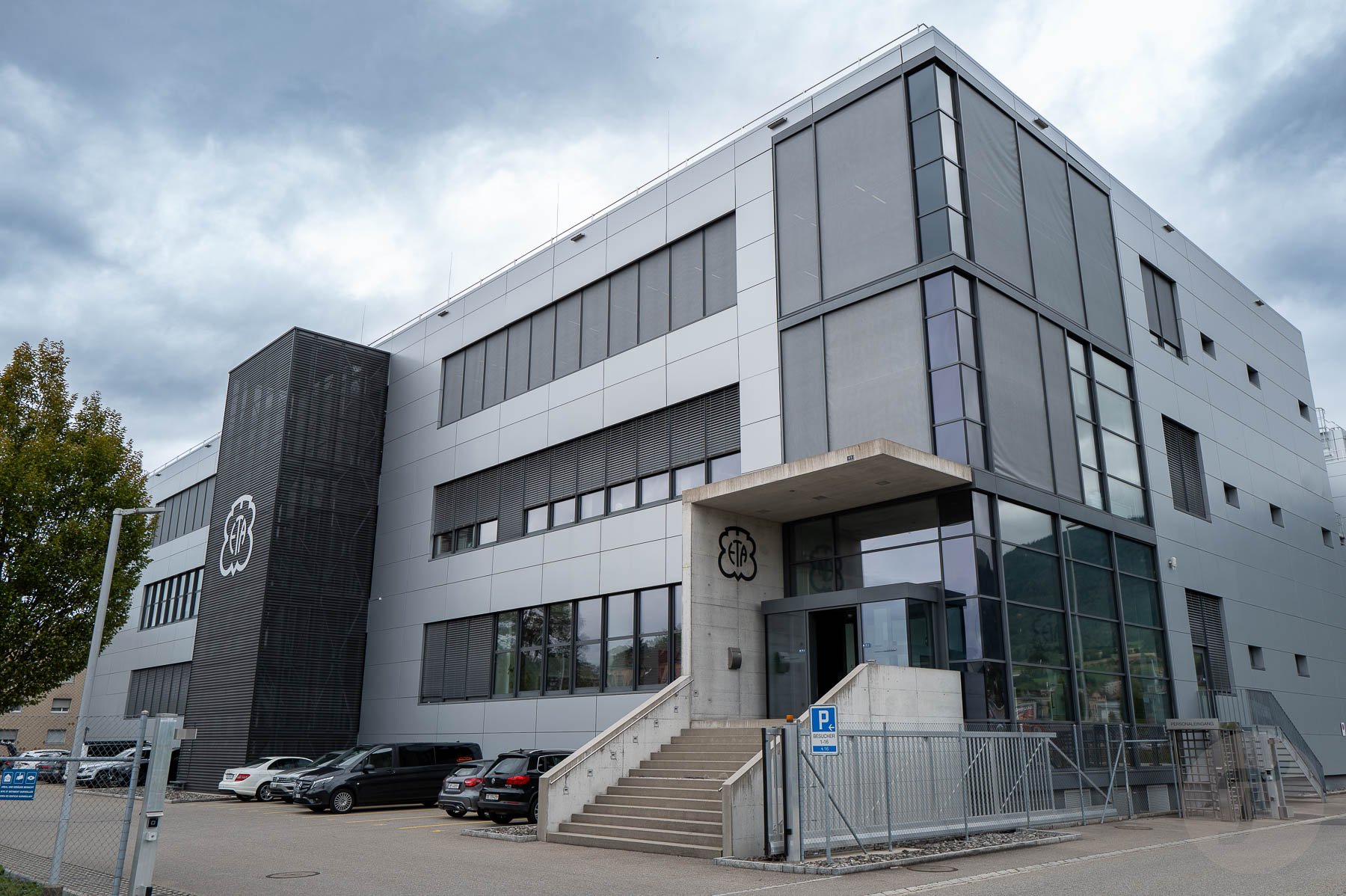
Swatch facility in Grenchen
Swatch in Boncourt and Grenchen
I visited one of the production sites back when the MoonSwatch debuted. Since then, that facility has moved and merged with another Swatch site in Grenchen, Switzerland. Nowadays, Swatch has its Sistem51 calibers and other movements alongside ETA in Boncourt, about 75 minutes from Grenchen. My trip there started with a flight from Amsterdam to Zurich, then a train ride from Zurich Airport to Biel, home to Swatch and the Swatch Group headquarters.
After checking into Biel’s Courtyard by Marriott hotel, I quickly changed into something more suitable for that evening’s welcome dinner with Swatch CEO Vivian Stauffer.
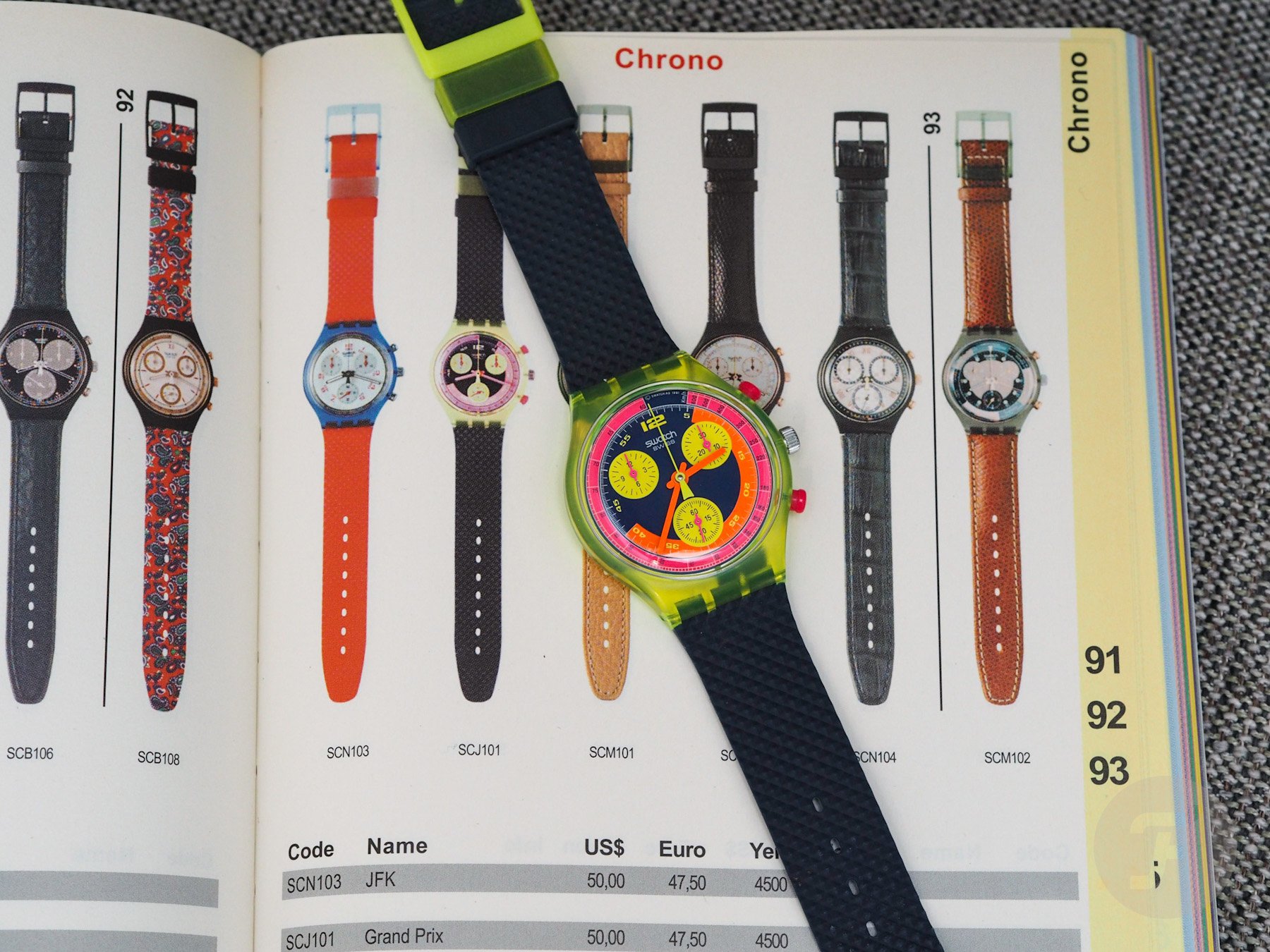
Swatch SCJ101 “Grand Prix”
An early pick-up in Biel
Before becoming CEO of Swatch, Stauffer served as CEO of Hamilton from 2020 to 2025. However, he began his career at the Swatch Group in 2002 before moving to Hamilton in 2007. Over dinner, we chatted about his early days at Swatch, reminiscing about some of the watches Swatch made for the Olympic Games in Greece (2004), among many other models that stuck with us. I remember buying the Swatch Diaphane Chrono Olympic Athens 2004 edition (SVCK4026), whose box, featuring the Marathon 3D maquette, was as impressive as the watch itself. It holds a special place in my modest Swatch collection.
Anyway, the next morning, one Italian and two German journalists and I had an early pick-up planned at 7:30 in the hotel lobby. From Biel to Boncourt, our first stop of the day, would take about 90 minutes by car.
The ETA and Swatch production facility in Boncourt
The Sistem51 production facility in Boncourt
For the occasion, I brought my Swatch SCJ101 “Grand Prix,” which I also briefly discussed with Stauffer. He also reminded me of the “White Horses” model (reference SCW100), which is quite popular among collectors. Anyway, with this colorful Swatch chrono from 1992 on my wrist, little could go wrong. After the typical Swiss commute, with wonderful sights of villages, fields, forests, and mountains, we arrived at Rue du Temps (“Street of Time”) in Boncourt. Among the impressive lineup of buildings, we saw signs for Comadur (which produces sapphire crystals and rubies), ETA (movements), and Nivarox-FAR (movement assembly).
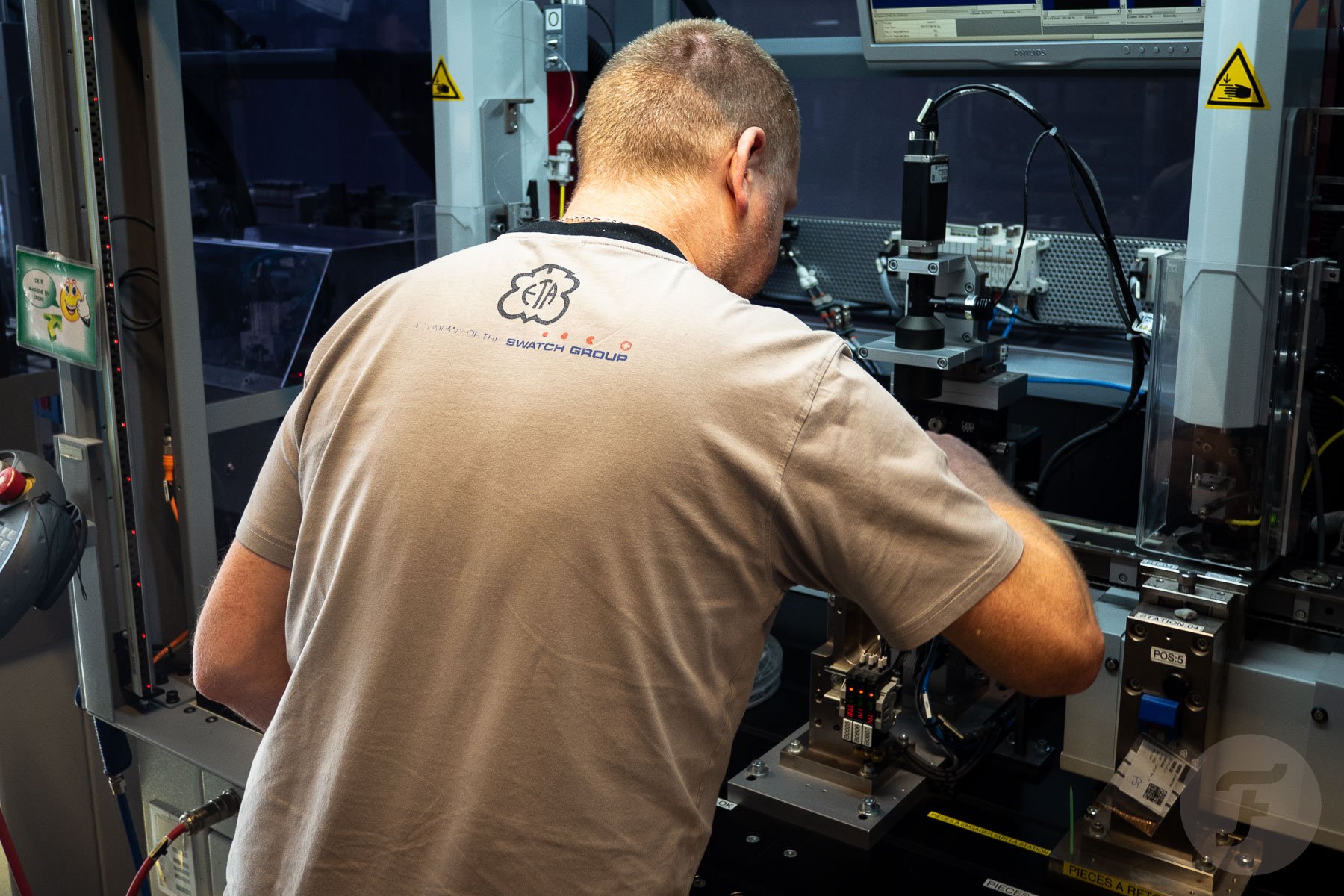
Just before 9:00, we entered the Swatch and ETA building, where production of Sistem51 movements (among others) takes place. In a meeting room, with some croissants (it was still early) and a coffee, we met the Swatch engineer who would give us a tour of both locations. After that, we got an introduction to the production plant and a brief overview of mechanical Swatch movements, with a special focus on the Sistem51. This movement is famous for its modular construction and comprises five main elements — the mechanical stem module, the escapement module, the automatic winding module, the rotor itself, and a plate that houses the wheel train, date, and hand pinions.
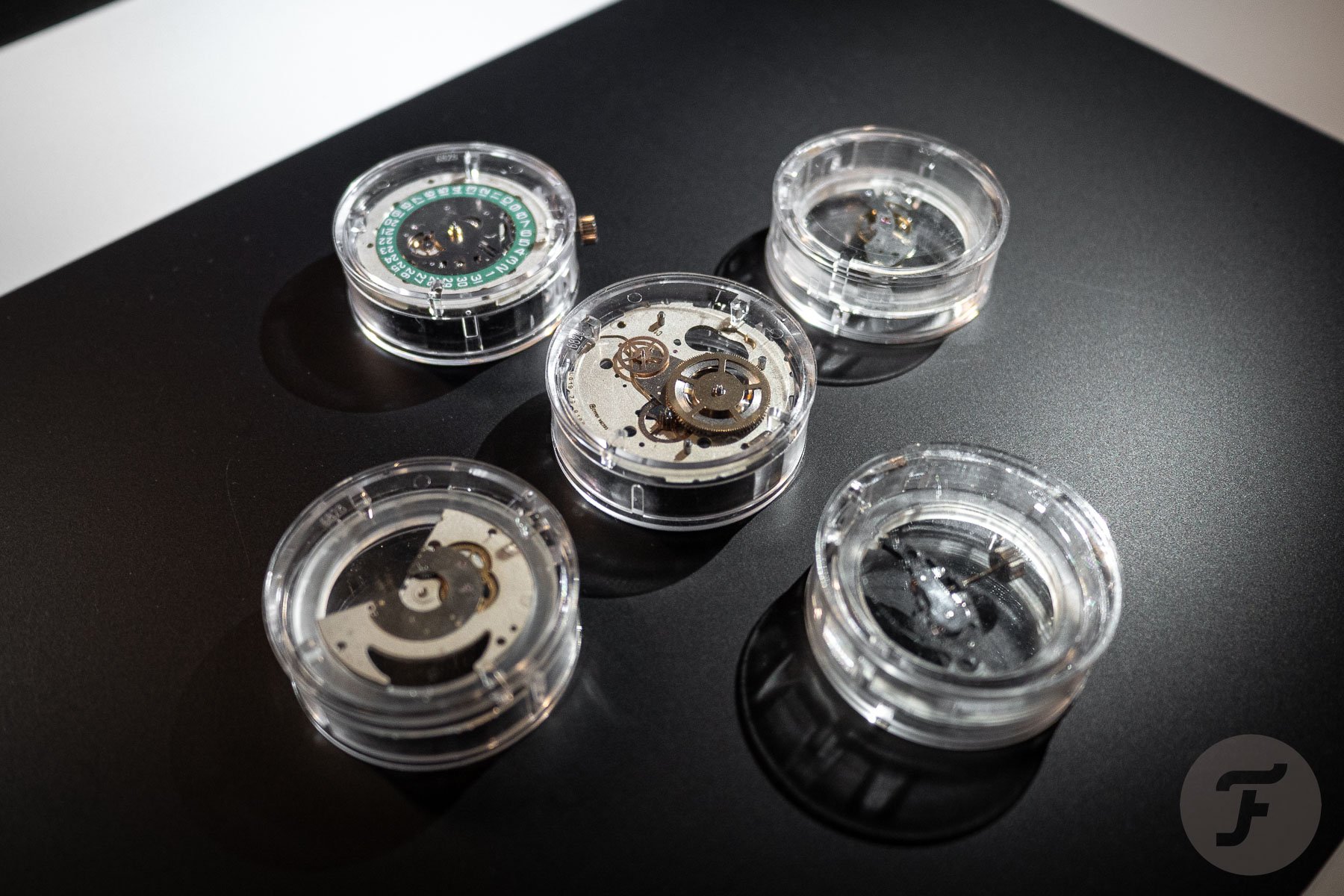
Sistem51 movements
Remembering the Flymagic
First introduced in 2013, the Sistem51 found its way into several Swatch models, including the Flymagic, which featured a modified and inverted Sistem51-based movement. As you know, more recently, it has also powered the Scuba Fifty Fathoms and Royal Pop collections. The latter features a hand-wound version of the Sistem51.
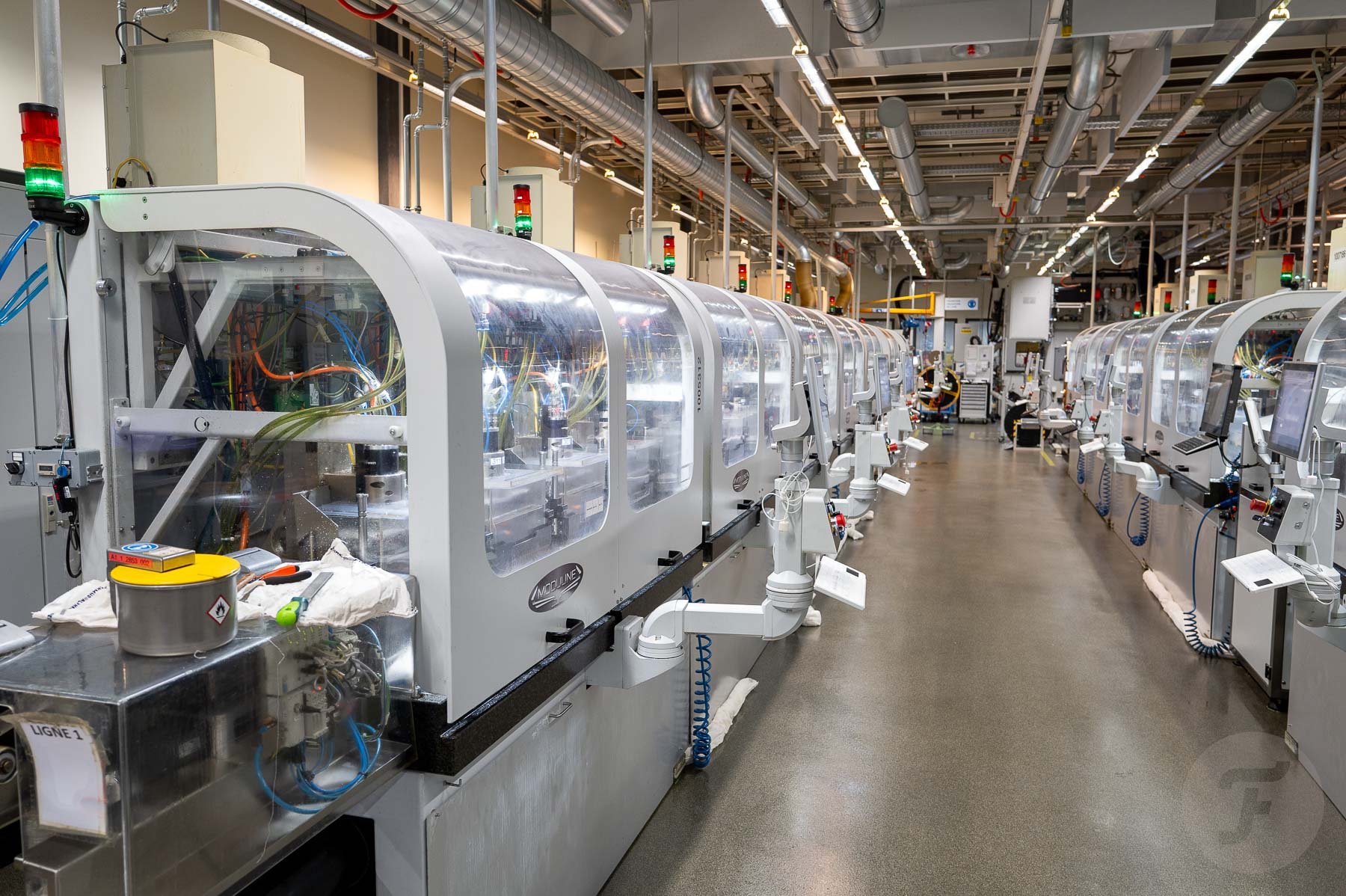
Swatch assembly lines
After the presentation (and our breakfast), we received white coats and entered the production floor, where an impressive lineup of machines awaited us. As I walked through the facility with my camera in hand, I wondered when someone would tell me to stop photographing all the equipment. The others had their smartphones, but I thought it would be nice to bring a regular digital camera to get some proper photos. As we walked around, we saw machines on both sides that process long strips of metal (a nickel-copper-zinc alloy) fed into them via big spools.


These strips go through an entire sequence of stamping, cutting, sandblasting, and so on. Between steps, they’re also washed to ensure they are clean before entering the next machine. Swatch engineers closely monitor the production process, while the system captures approximately 800,000 photos at different stages. It then compares these images with the programmed tolerances to ensure accuracy. All elements are welded together, so the bond is permanent, and even the slightest misalignment can cause issues further down the line. This meticulous process ensures all complete Sistem51 movements are ready for testing.
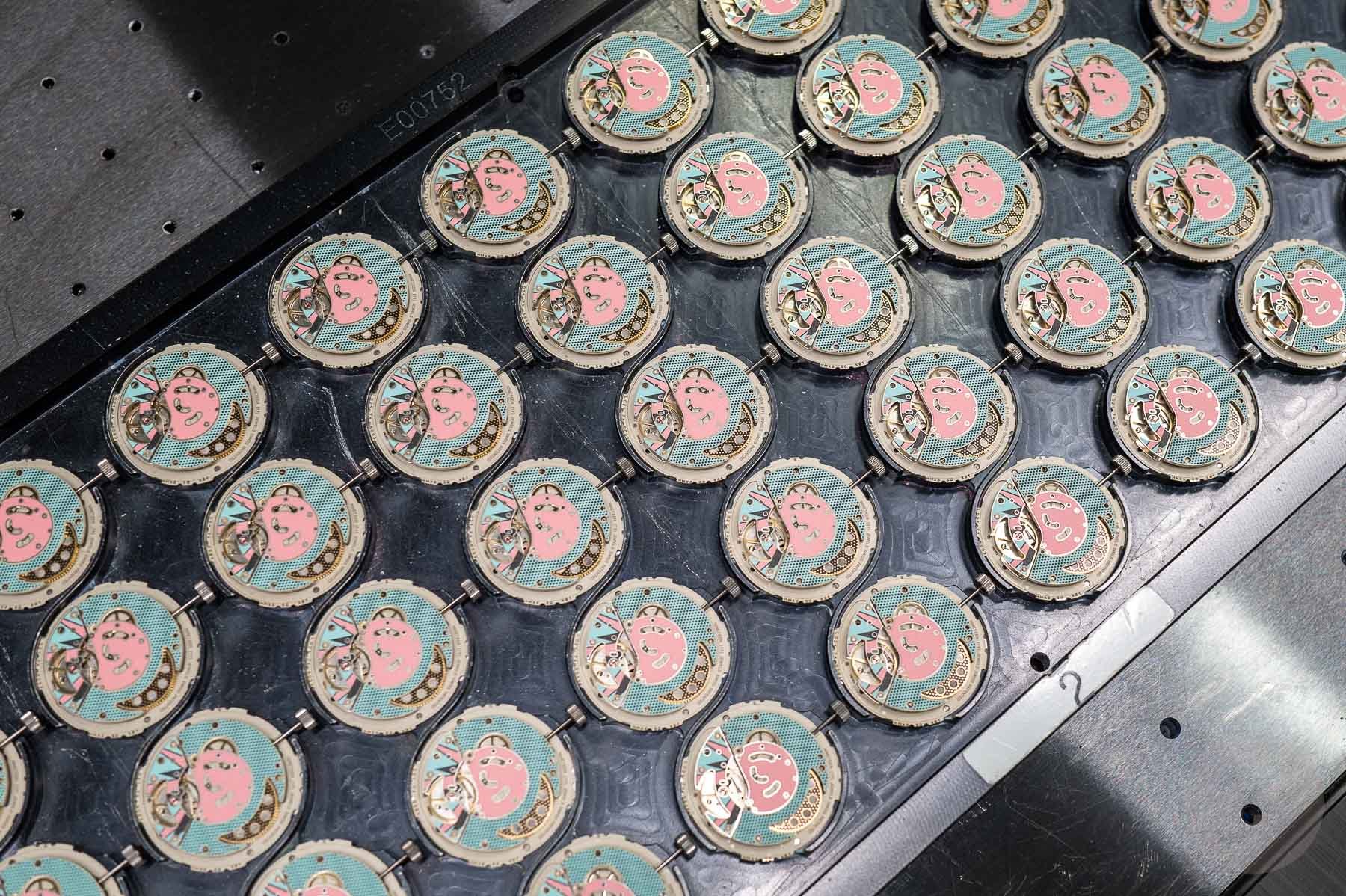
Sistem51 movements with color printing applied
No pictures allowed
At this location, we also witnessed the machines used for laser-based regulation of the Sistem51 movement. Both the Sistem51 and Powermatic 80 eschew the conventional regulator and use ETA/Swatch Group’s laser-based factory regulation, but their balance-wheel regulation systems differ. At this point, we had to hand over our smartphones and my camera, as no pictures were allowed. In front of us were several (large) machines that monitor movements, analyze their performance, and use laser regulation to get the watch running within Swatch’s tolerances. Some parts looked familiar, like the timegrapher overviews. However, I also saw screens showing detailed information, using graphs to indicate what the laser needed to do to make the movement more precise.
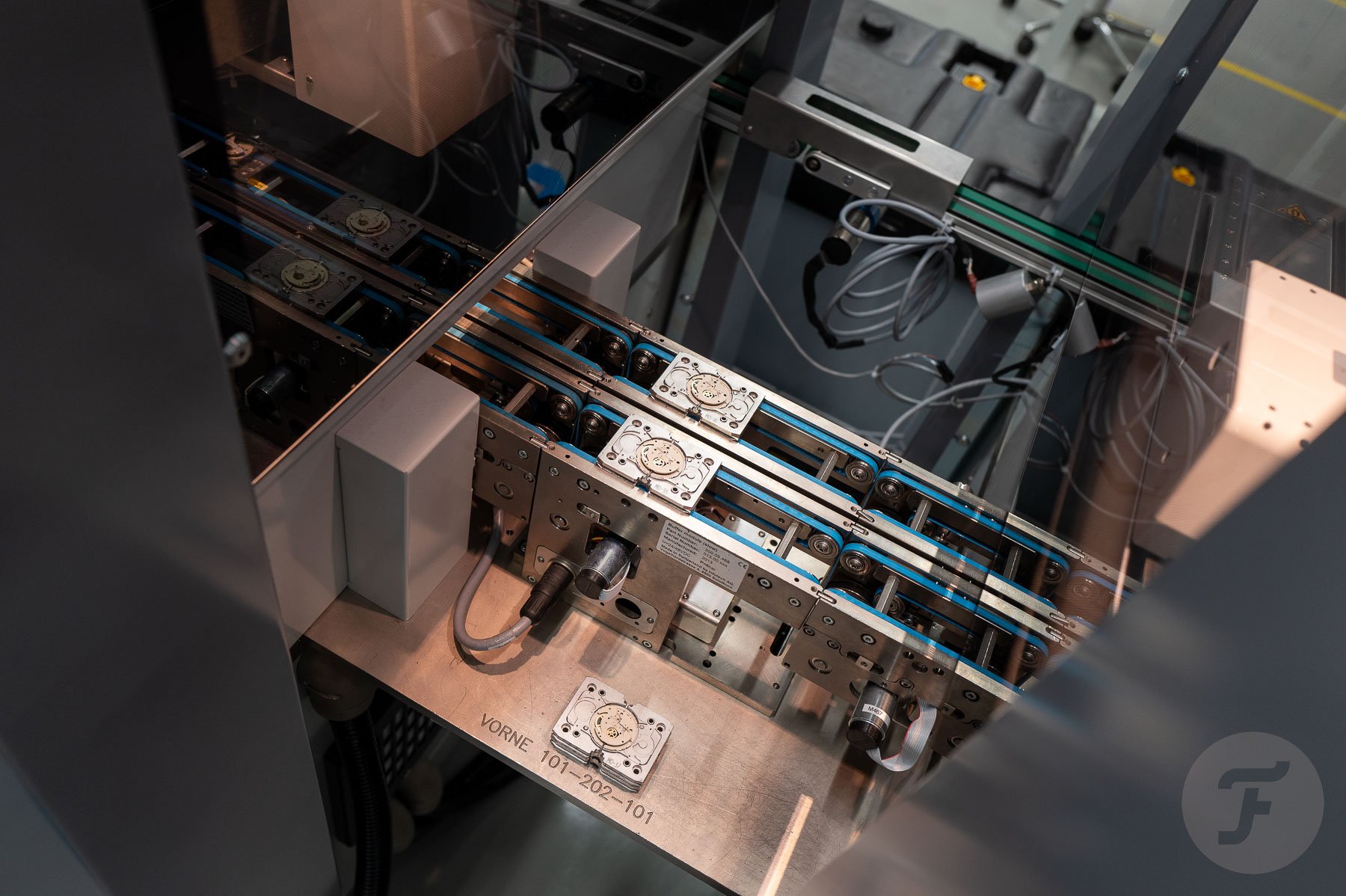
Tuning with lasers
For this step, technicians place each Sistem51 movement in a holder and track it individually. As the holder rotates through several positions, the equipment measures the movement’s performance. Next, the technicians place the holder inside a large laser machine. Based on the measurement results, the laser removes material from the rim of the balance wheel to fine-tune the movement’s rate. The equipment then measures and analyzes the movement’s performance again. If the movement fails to meet the average daily accuracy standard of -5/+15 seconds, the technicians repeat the entire process until it does.
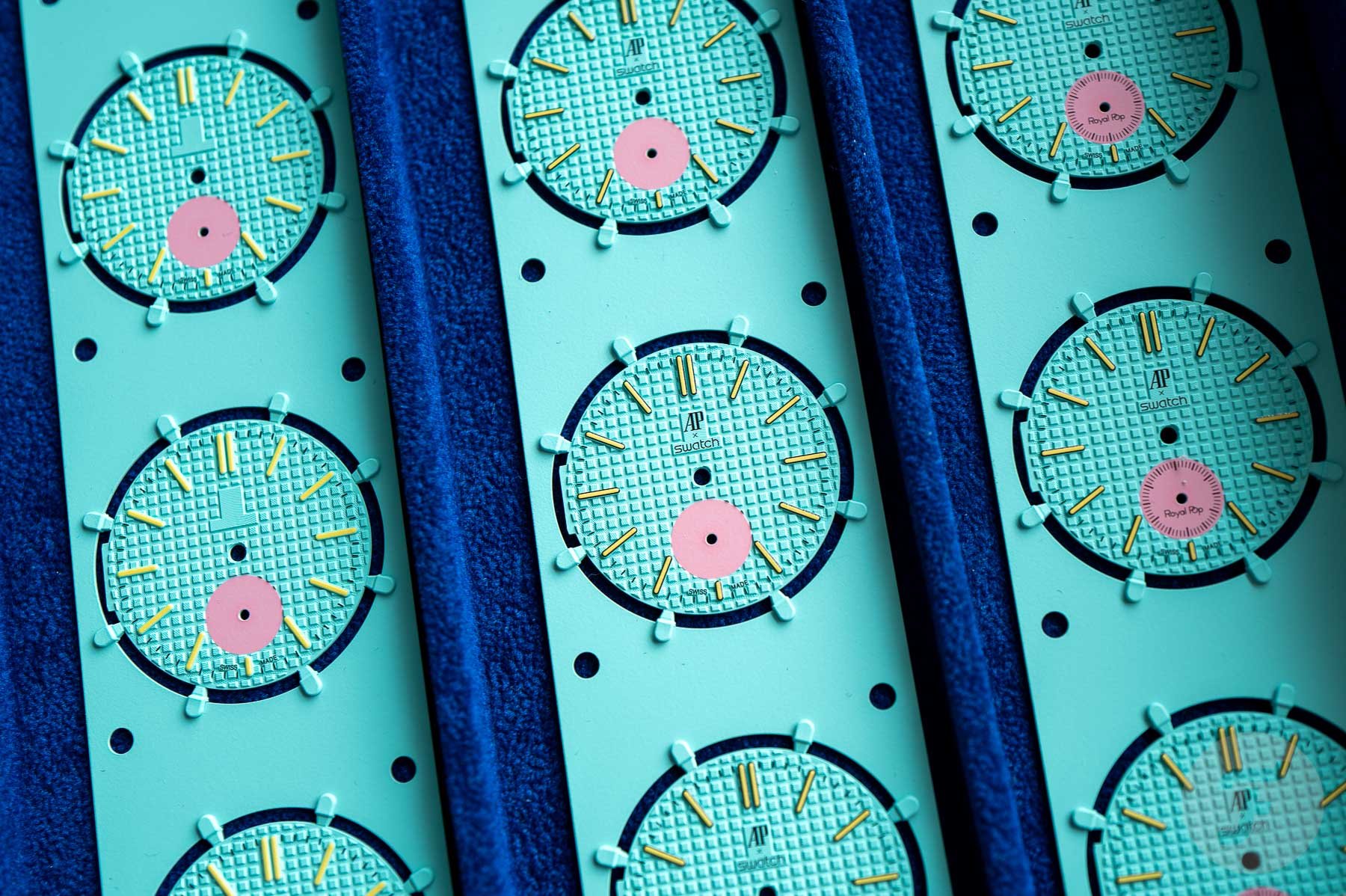
Bioceramic dials of the Swatch Royal Pop
Bioceramic production and printing
After witnessing the “secret machines” at work, we picked up our phones and my camera and headed out to the next location in Grenchen. It takes a bit more than an hour to reach the ETA site in this famous village, which I visited in 2022 to witness the printing of Swatch straps and dials.
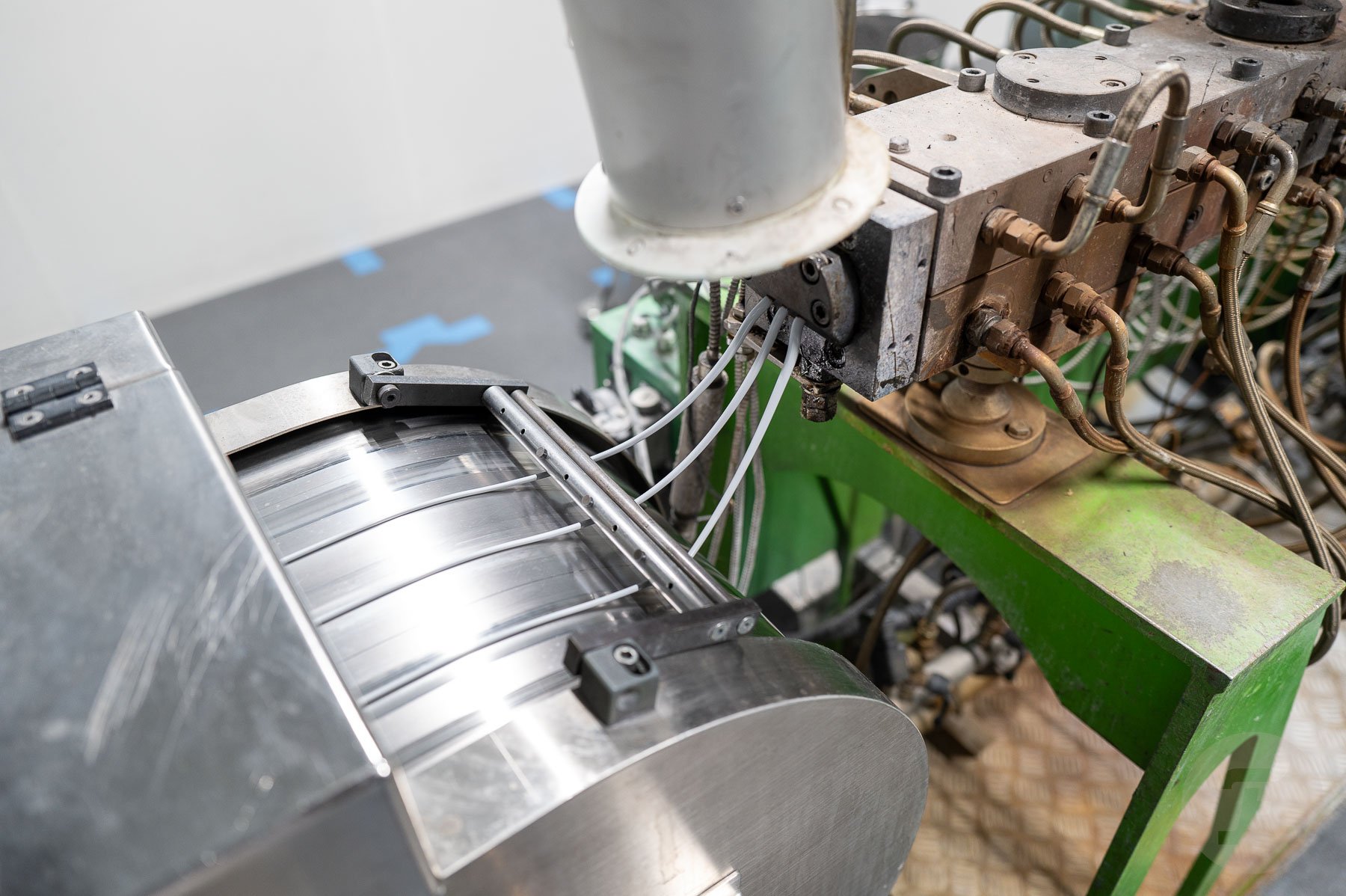
Here’s where the Bioceramic material comes to life
Today, production of Swatch’s Bioceramic parts also takes place here, whereas it used to happen at another location in the same city. We basically got the same tour I got four years ago, except that both production sites are now one. And of course, it now also includes production of the later collaborations with Blancpain and Audemars Piguet.
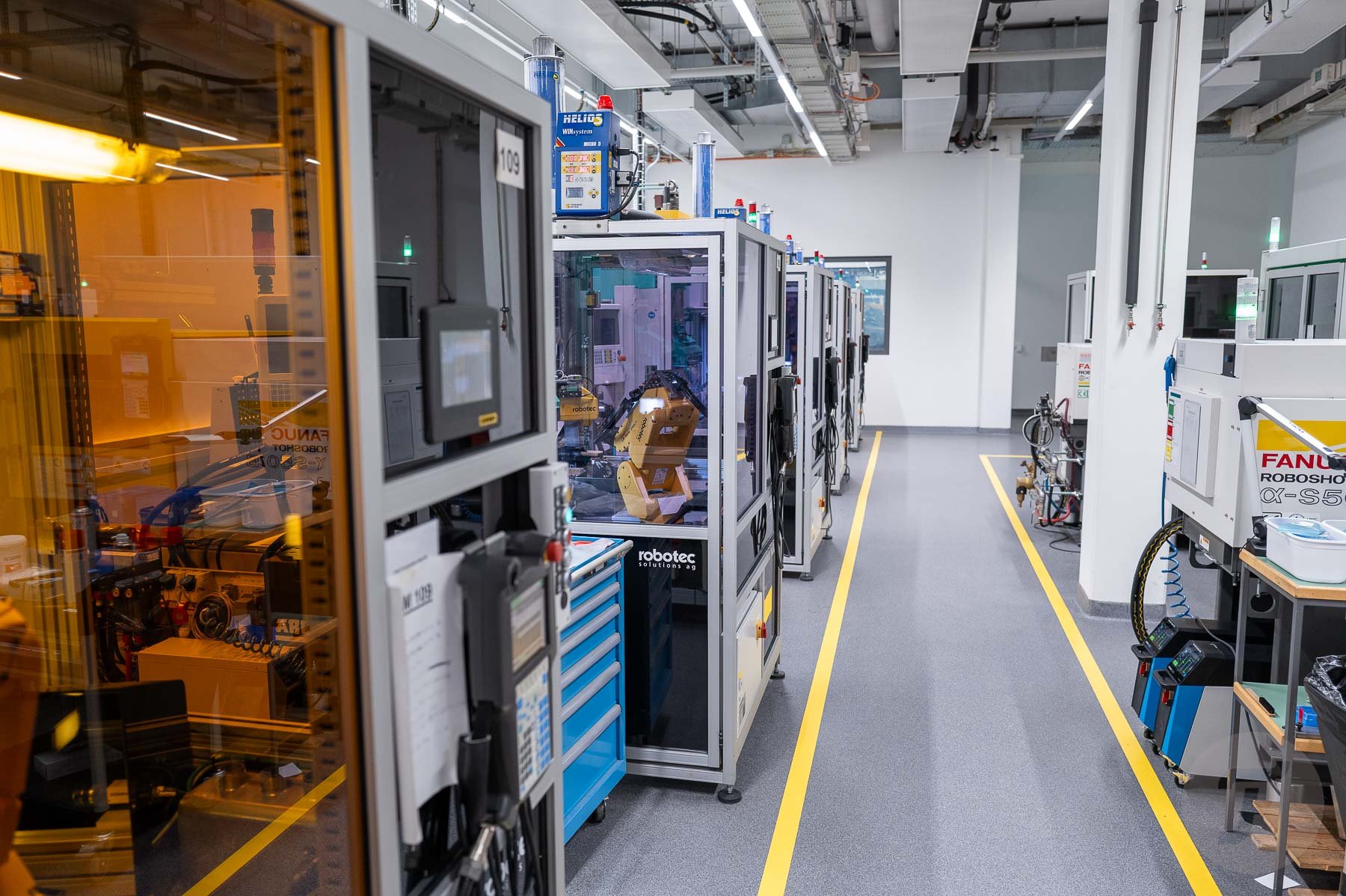
Once more, I was impressed by the level of detail that Swatch puts into these dials and the amount of machinery in the Grenchen production facility. It surprised me to see how much manual intervention quality control still required, even with annual production exceeding three million watches.


I asked whether there were more Swatch facilities, but apart from the two we visited, there’s only one other location in Sion, Switzerland, where final assembly takes place, including the (manual) attachment of the straps. Of course, there are also suppliers like Universo, a Swatch Group-owned company located in La Chaux-de-Fonds.
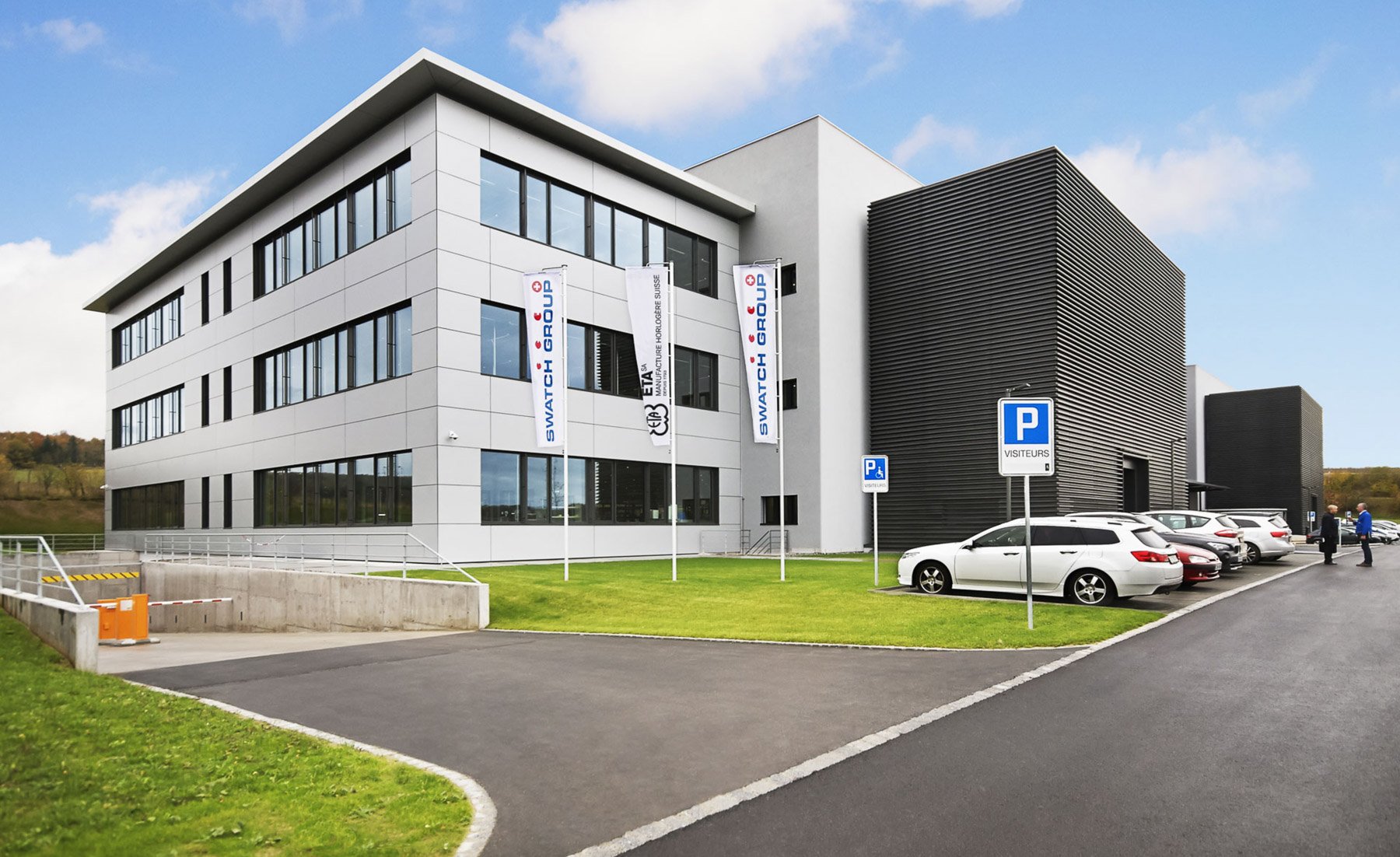
Image: Swatch Group
The Swatch tour in just a few hours
By the time the tour in Grenchen was finished, my Swatch SCJ101 “Grand Prix” only read 3:15 PM. In just a few hours, I witnessed the production of Sistem51 movements, the manufacturing of Swatch’s Bioceramic material and different parts (cases, dials, keepers, etc.) made out of it, the printing and stamping of various components, and lunch.
I then took the train from Grenchen to Biel and onward to Zurich Airport. While waiting for my flight, I stopped by the Swatch boutique. I found myself looking at the watches with even more respect than I’d already had for the brand and its production processes. I have two large weekender bags full of Swatch watches, collected (or hoarded) over more than 35 years. Even my oldest ones still run (after occasional free battery changes at Swatch boutiques), an argument I always use to counter those who insist Swatches are disposable products.

Audemars Piguet × Swatch Royal Pop Ocho Negro
With the MoonSwatch, this brand suddenly got back on the wrists of many, from eight to 80 years old, so to speak. And that’s a great thing. As Mr. Hayek once told me (read the Fratello interview with him here), these watches are about having fun. And I agree. Life is often serious enough already, so let’s make sure we have as much fun as possible.