Pondering Swatch’s Relevance: Is Adrenaline-Fueled Hype Enough To Remain A Player In The Watch Game?

Hype around Swatch is not new. The “Second Watch,” launched in 1983 as a fun and affordable accessory you could wear to match your daily outfits, was never meant to be a lifelong heirloom investment. It was always about the heat of the moment. The colorful plastic Swatch caused a massive cultural and commercial “uproar” in the ‘80s and ‘90s, albeit in a very positive way. The brand triggered a global frenzy, with shoppers fiercely competing to buy the latest versions. Swatch was also always collaborating with artists like Keith Haring (1986) and fashion designer Vivienne Westwood (1992–1993), for instance. When Swatch collaborated with Omega to create the MoonSwatch, everything changed. And now, a few years after the Blancpain × Swatch Bioceramic Scuba Fifty Fathoms and right after the launch of the Audemars Piguet × Swatch Royal Pop, I can’t help but start pondering Swatch’s relevance.
What’s the difference between working with an artist and another watch brand? The answer is obvious. An artist is an industry outsider who brings in a certain artistic signature to a watch that serves as the canvas. When two watch brands create a new watch together, it’s the merger of two similar entities — watches. The idea is not new. In 2004, fashion giant H&M partnered with high-fashion designer Karl Lagerfeld and released a collection clearly showing the designer’s signature style at affordable prices. Many more collaborations followed, often selling out globally within minutes. The MoonSwatch follows the same principle. High-end brand Omega brings the famous Speedmaster design; Swatch makes it more affordable by using a Bioceramic case with a quartz movement and adding its visual twist — colors. The bonus is the name MoonSwatch, a play on words and a cosmic coincidence. The Royal Pop, though? It all feels different.
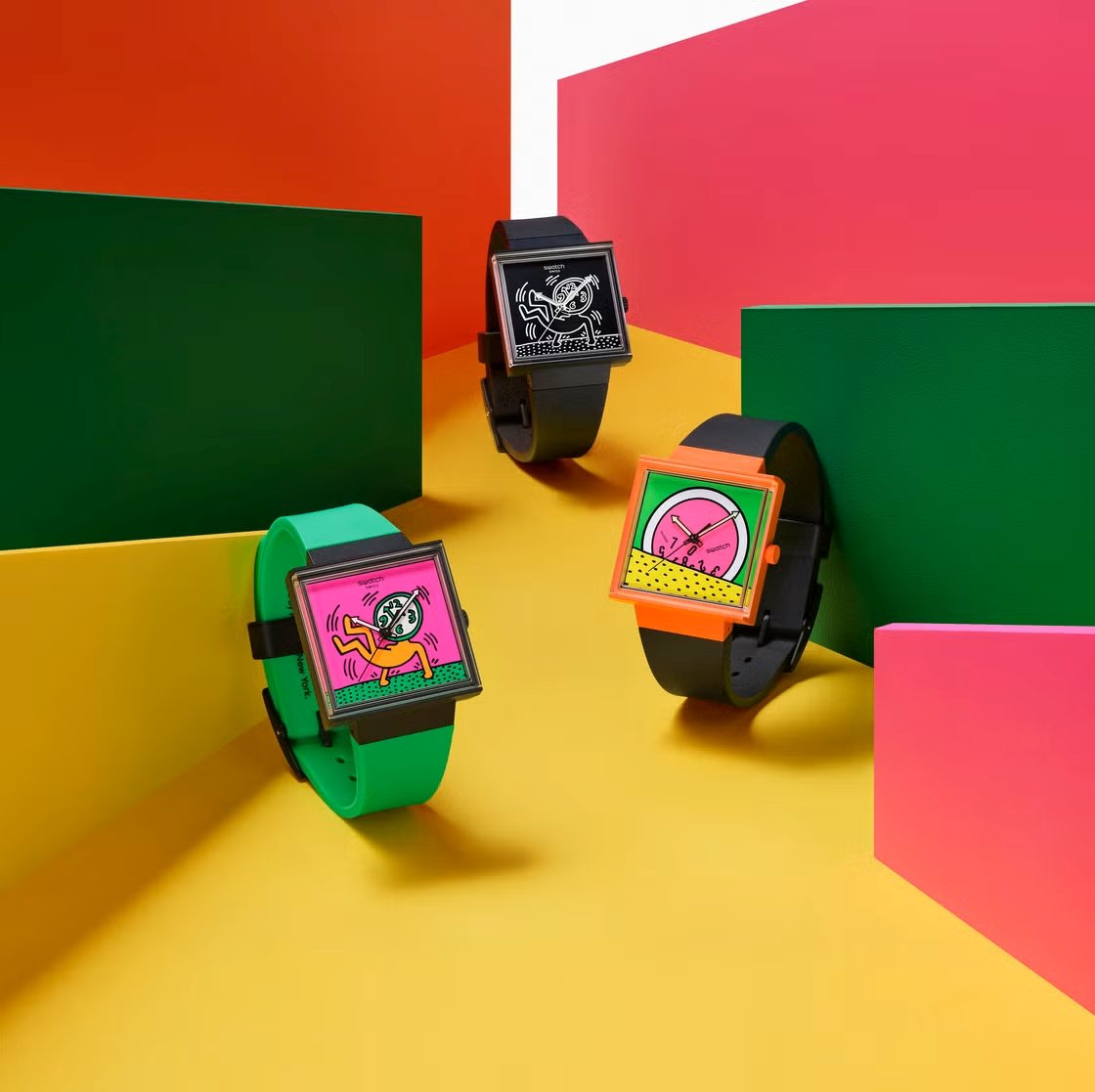
Swatch’s 2024 “Break Free” Watches celebrate Keith Haring’s artwork and hark back to the 1980s
Pondering Swatch’s relevance: Are collabs a bonus or a necessity?
Let this sink in: since the brand’s launch in 1983, well over 400 million Swatches have been sold worldwide. Swatch was always about volume. Luxury watch brands are not. But since opposites attract, the MoonSwatch was a massive hit that charmed Swatch buyers, plenty of open-minded Omega fans, and a new audience caught up in the marketing buzz. Since the 2022 launch, 33 variations have appeared in the Omega × Swatch MoonSwatch collection. The magic didn’t quite happen again when the Blancpain × Swatch Bioceramic Scuba Fifty Fathoms collection debuted in 2023. Blancpain, being too much of a niche brand, may be why the affordable version of one of the most important dive watches in history made far fewer waves than the MoonSwatch.
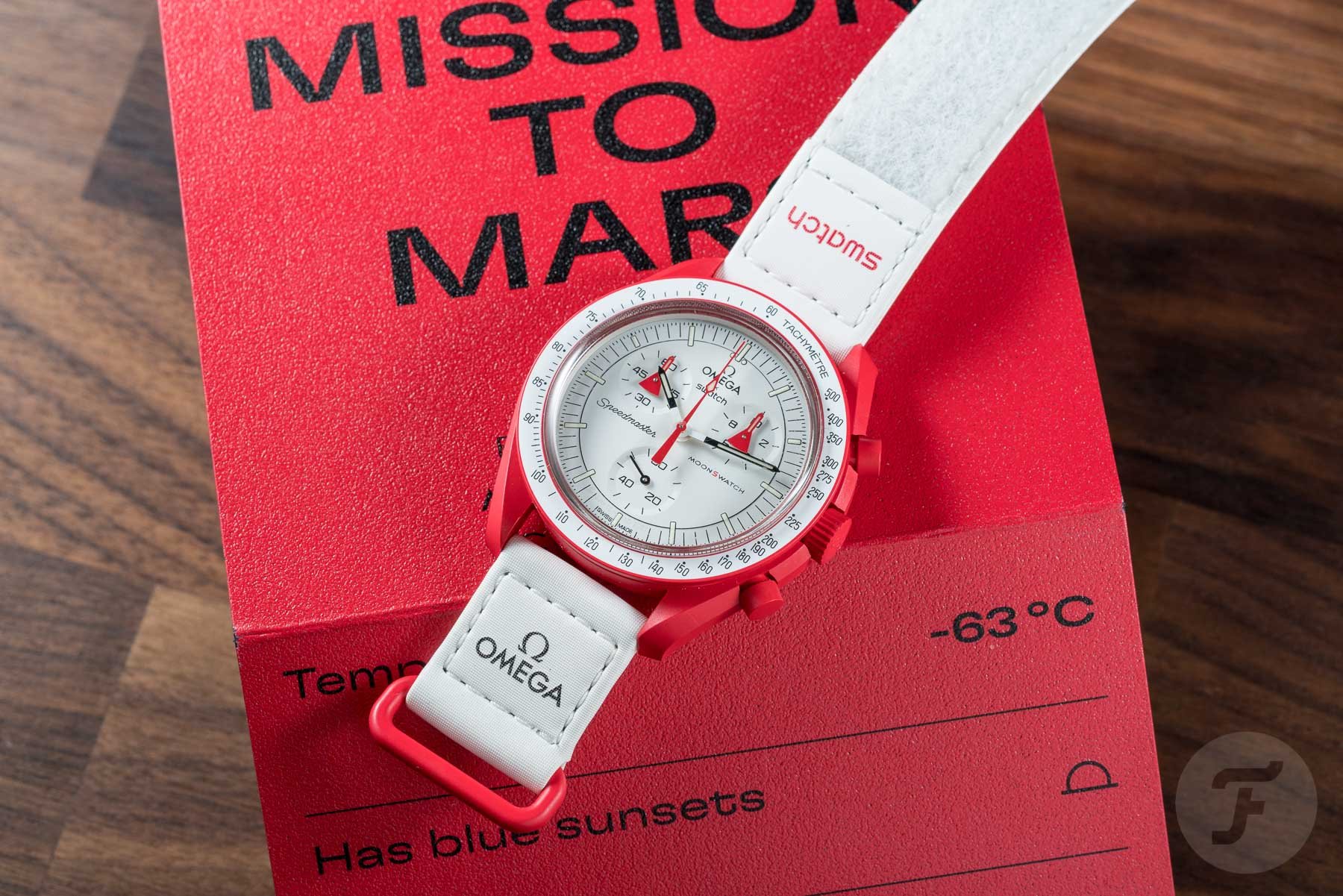
The Omega × Swatch Mission to Mars is one of the original MoonSwatches
Hype or frenzy?
But the launch of the eight models in the Audemars Piguet × Swatch Royal Pop collection created an uproar. And not all was positive. Shops had to close because public safety was in jeopardy. Was it because watch fans couldn’t wait to wear one of the colorful Bioceramic watches around their necks? I don’t think so. It was all about reselling the Royal Pop as quickly and for as much money as possible. That’s what created overheated situations. To me, it also proved that everything revolves around money and logos these days, including the world of watches. The legendary and groundbreaking Royal Oak is now an icon, and since the internet has opened the world of high luxury to all, it is widely recognized as a symbol of luxury. It’s also a hard-to-get watch that sells for well over retail prices on the secondary market.
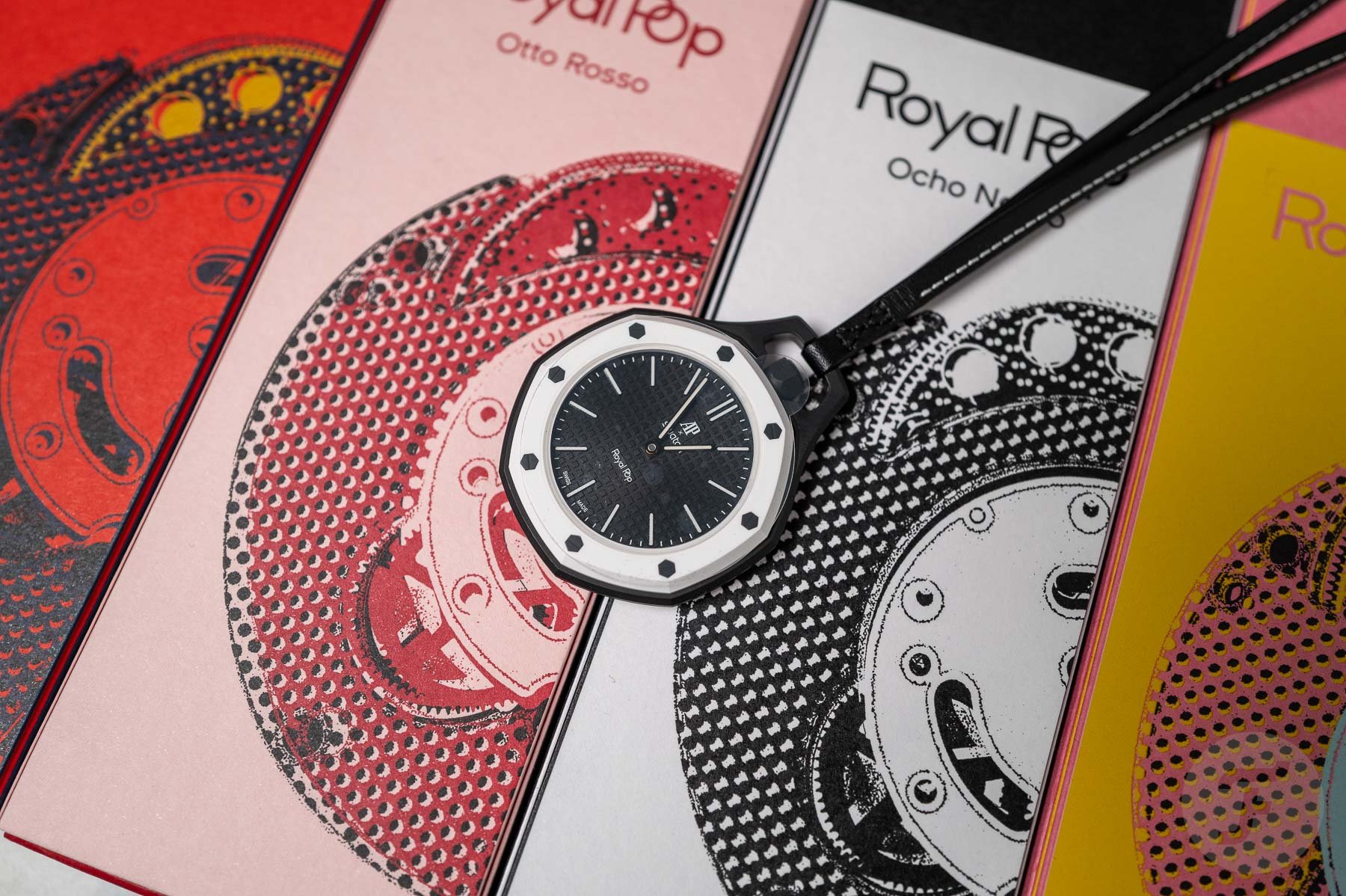
Audemars Piguet × Swatch Royal Pop Ocho Negro
Speculation-driven motives
Whereas the MoonSwatch was an experiment gone right, the Royal Pop did what the people behind it, who also know what’s going on in the world of watches, thought it would do: it created a buzz. It did more than that, though. The Royal Pop also turned city centers into scenes of chaos. With retail pricing hovering around the €400 mark and resale expectations running considerably higher, the limited-production pieces attracted crowds far beyond what most shops could handle. Of the 220 participating stores worldwide, reports suggest that roughly 20 experienced significant disturbances, ranging from crowd surges to outright public disorder.
Paris saw police deploy tear gas after a frenzied crowd of several hundred became increasingly unruly. Scuffles were reported in Milan, London, and Manchester. And shopping centers, such as one in the Netherlands, had to close down altogether as tensions escalated throughout the day. For a product intended to celebrate playful watchmaking, the release quickly became an uncomfortable reminder of how speculative hype continues to reshape modern collecting culture in general and the watch world specifically.
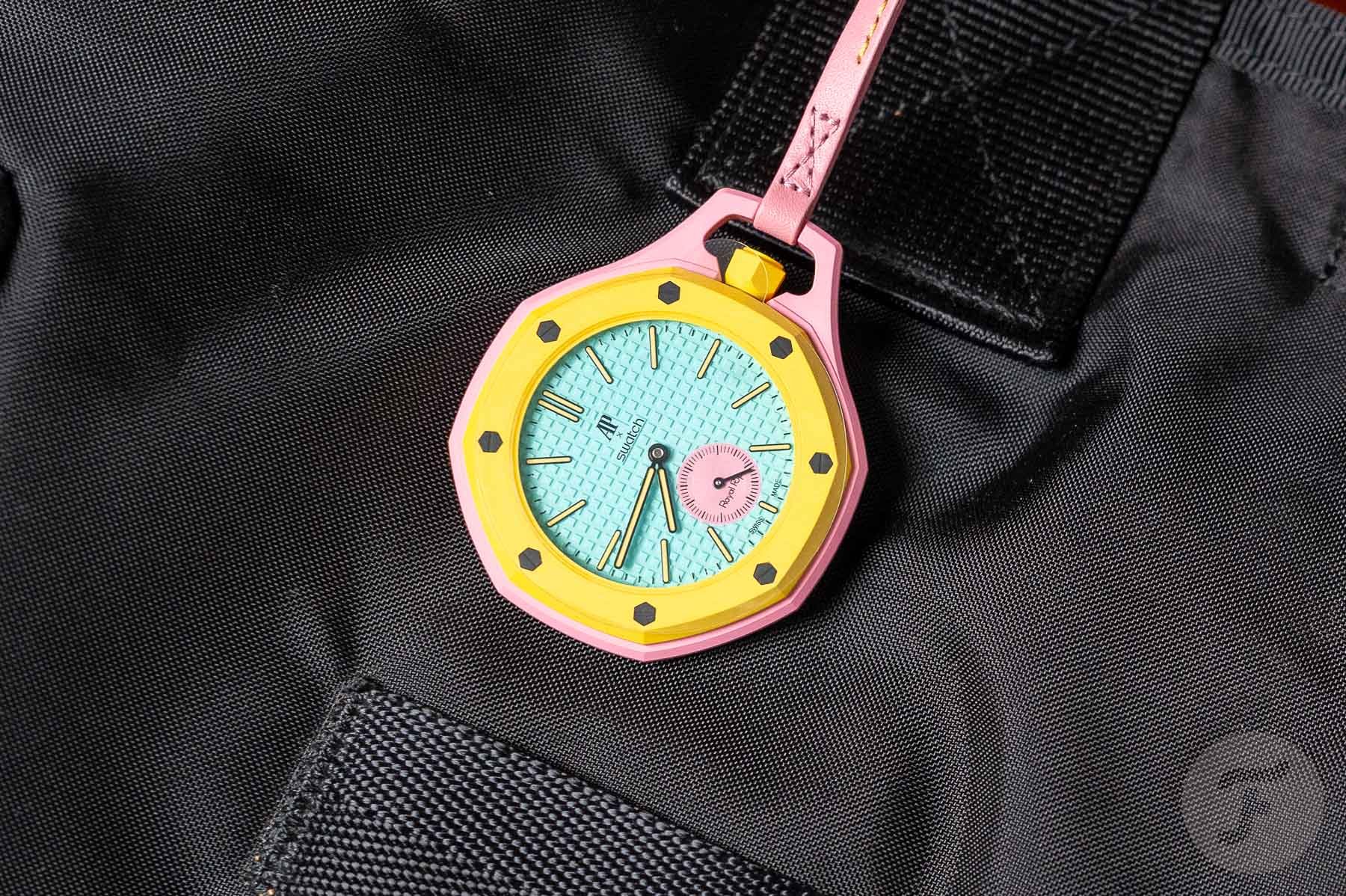
Audemars Piguet × Swatch Royal Pop Otg Roz
After the initial hype
A watch release in the mainstream news is something you don’t experience every day. It’s too bad that this one wasn’t about the watch itself but, rather, the trouble it caused. And apart from that, there are additional aspects of the Royal Pop that raise questions about what it is and what it does. You could say that the Royal Pop sees AP lowering its standards. To hit a mass-market price point, AP and Swatch’s hyped collaboration swapped artisanal, carefully crafted luxury materials for cheaper, mass-produced fabrics. This won’t hurt Swatch, but it could damage AP’s image. Also, the “cheap chic” Royal Pop cheapens AP’s brand equity; it could dilute the brand’s carefully cultivated watchmaking prestige.
Did that happen to Omega? No, it didn’t, but Haute Horlogerie brand AP operates at a higher (price) level and is perceived differently. It’s revered as a grail by those aspiring to it and cherished by those who are in the fortunate position to own an exclusive watch from Le Brassus.
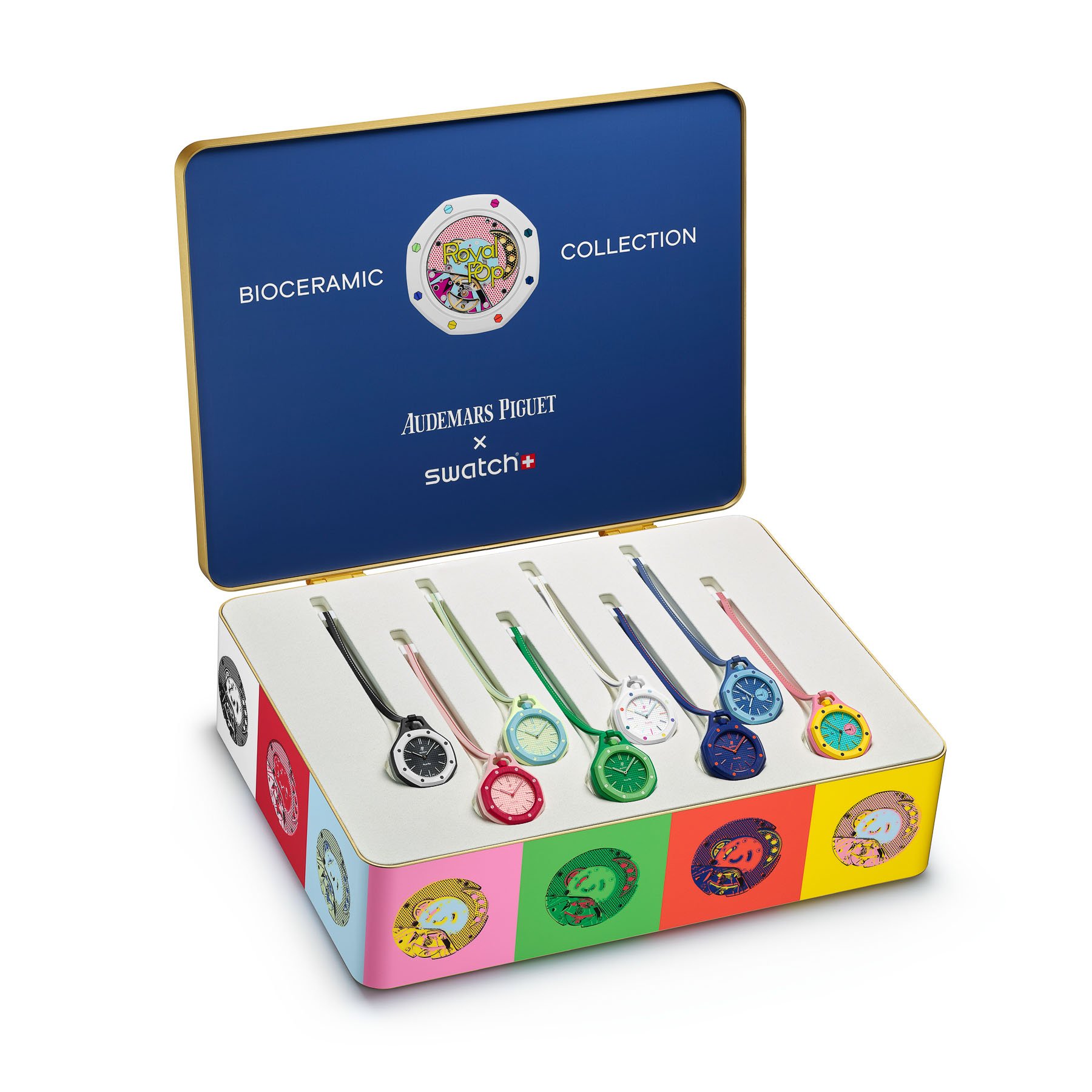
Join the “movement”
Whereas a Swatch made in collaboration with an artist was the result of two worlds colliding and introducing that artist to a much larger audience than before, two watches made by commercial entities merging hit differently. Having an original Keith Haring painting on the wall is a reality for way fewer people than owning an Omega and even an AP. An art Swatch feels like it’s promoting art, stimulating people to go to a museum and see the inspiration for what they’re wearing on their wrist. AP CEO Ilaria Resta is all about promoting historical watchmaking as a cultural phenomenon, but does the Royal Pop, with its newly reconstructed hand-wound version of Swatch’s Sistem51 movement, do that? She says it does, but the chaotic frenzy the Royal Pop created is hardly about the movement.
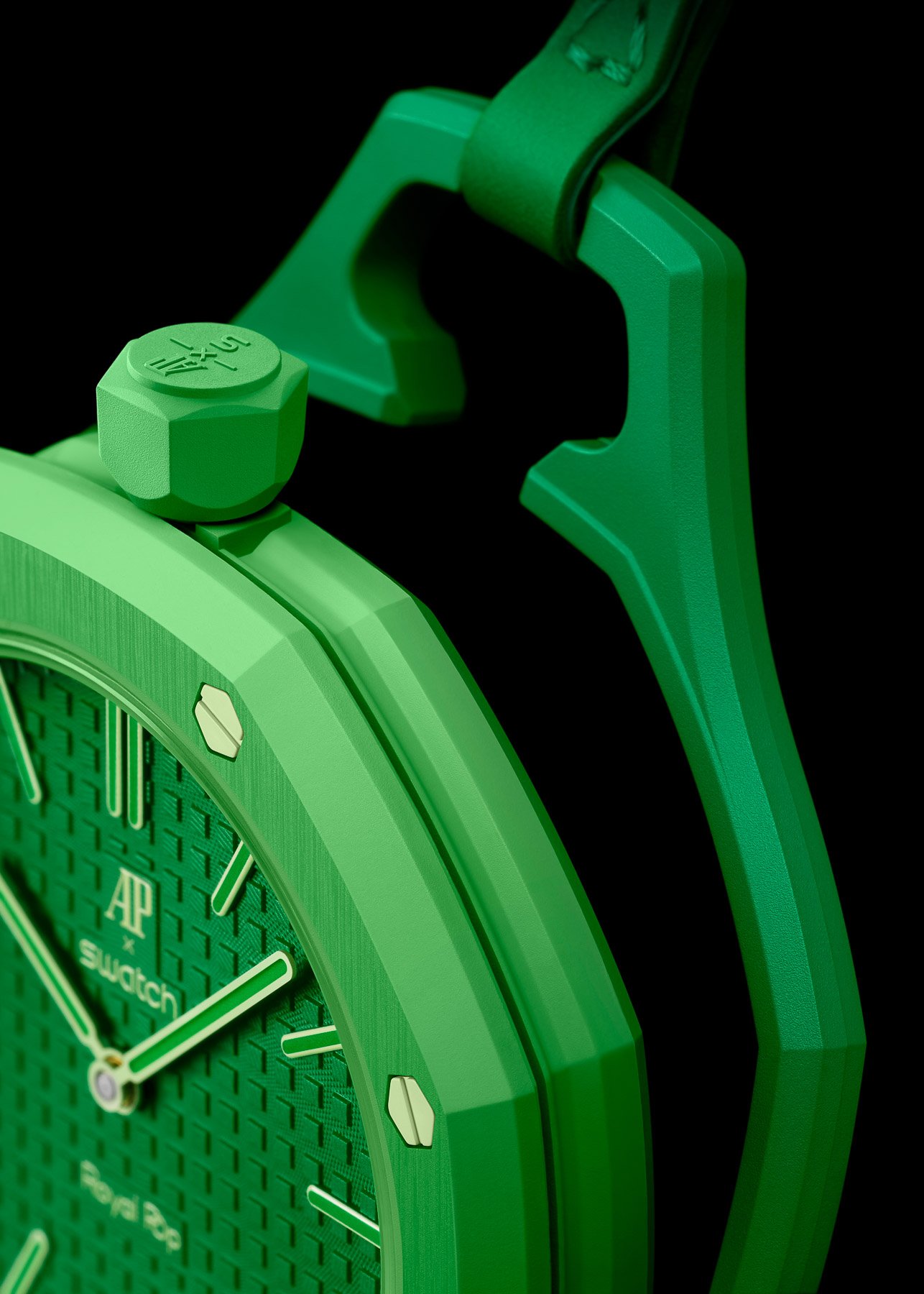
Audemars Piguet × Swatch Royal Pop Green Eight
Also, the driver of an art Swatch from a while back was Swatch, not the artist. Yes, the artist contributed significantly to the concept, but the canvas was the hype factor, so to speak. In the three collaborations Swatch did with watch brands, the participating higher-positioned brand was the driver, with AP as the turbo-charged one.
Swatch has proven once again that a collaboration can generate more attention, conversation, and cultural impact than many conventional product launches, no matter how big the marketing budgets. But did the latest collaboration establish cultural relevance early and position AP within the digital universe of younger consumers, long before they become actual clients? That is something time will tell, and even then, it will be hard to measure.
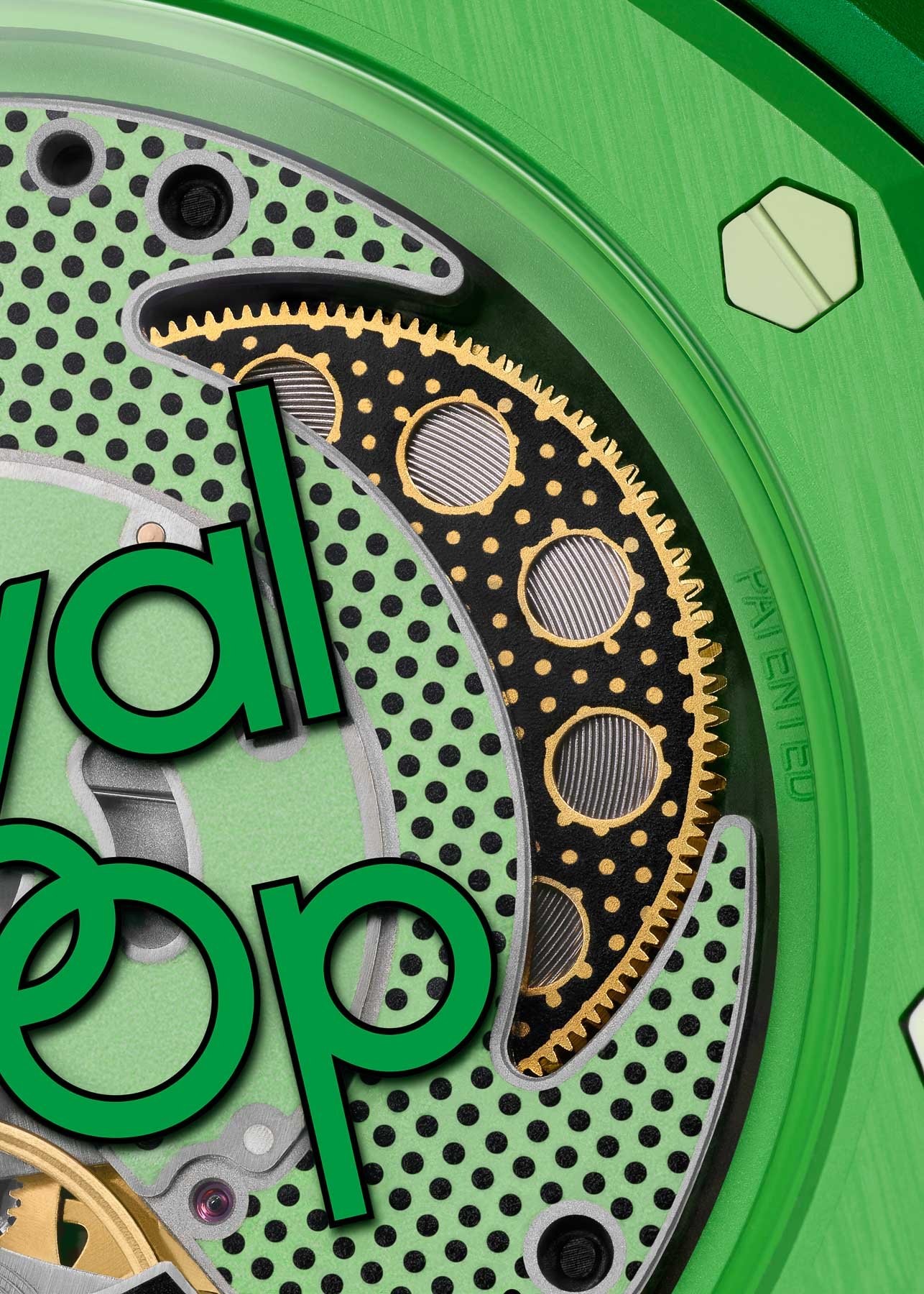
Movement side of the Audemars Piguet × Swatch Royal Pop Green Eight
It’s not about the product
To me, the Royal Pop feels like a much more concerted attempt to get attention, be relevant, and participate in online culture. By collaborating with AP, Swatch aims to stay visible through a one-shot drop and heavy social media engagement. Yes, it’s commercially interesting, but so is staying permanently present in the cultural conversation. It starts with a cultural connection, and it results in a transaction later along the line. For both brands, constant communication with the audience is important. By remaining visible and active in online communities, they aim to influence and shape future consumers by building relationships.
What it tells me is that it’s not about the product, meaning the launch of the Royal Pop is not a product launch but, instead, a way to communicate. Swatch and AP do so by creating an object that only becomes desirable because of the price, AP logo on the dial, exclusivity, and, on top of that, resale value. It started with vague teasing, controlled “leaks,” and endless community speculation before the actual product was officially presented. And when the product finally debuted, all the attention went to the problematic situations at the selling points. The product became secondary and the buzz around it primary.
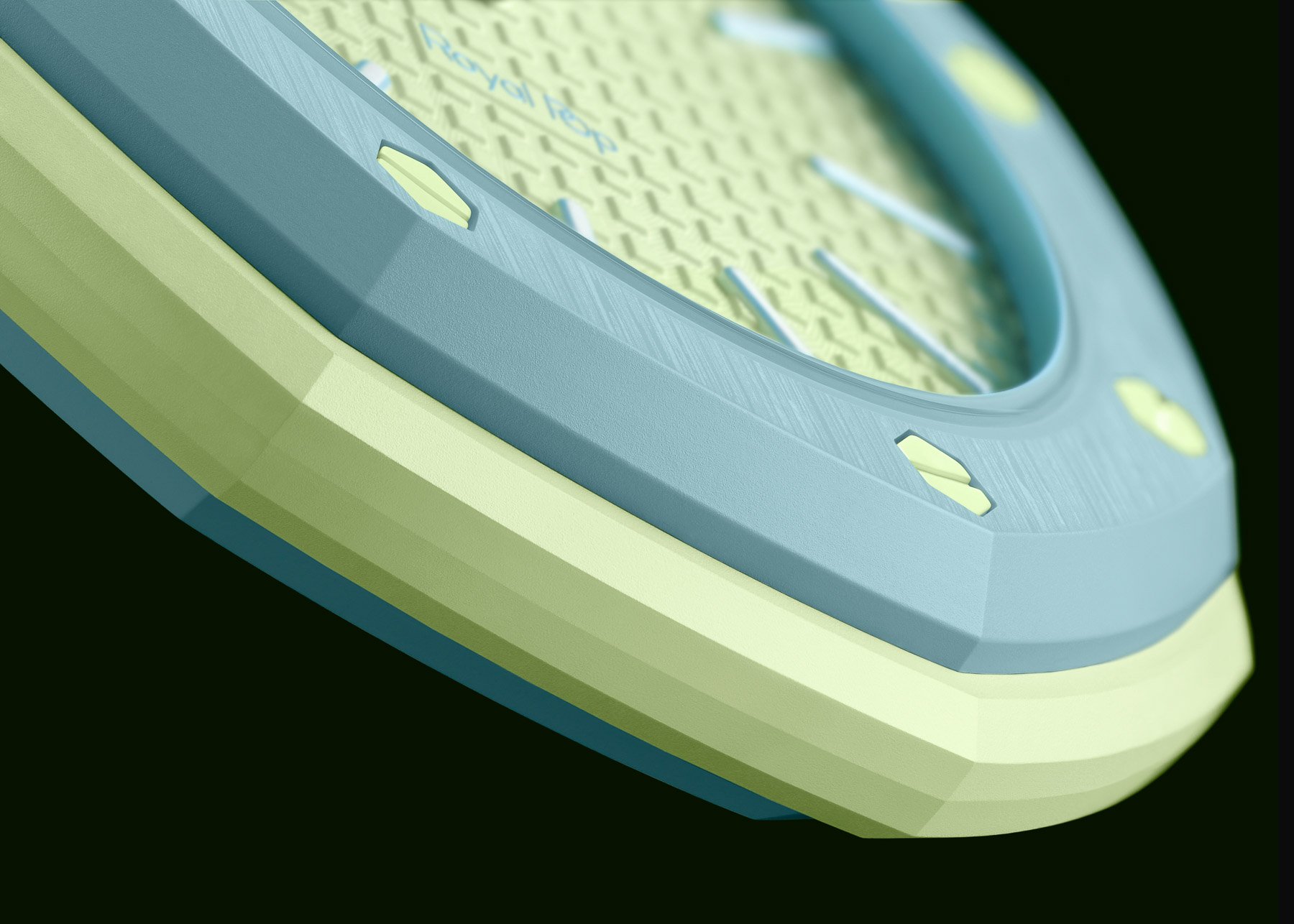
Detail of the Audemars Piguet × Swatch Royal Pop Blaue Acht
Can I get your attention?
What Swatch and AP understand is that in today’s world, a watch brand’s value is no longer based solely on history, craftsmanship, or exclusivity. The ability to maintain center stage in a very busy, crowded digital environment also contributes to brand value. But things work differently for Swatch and AP. For AP, the Royal Pop and the buzz it creates are about building a connection with a generation that establishes its luxury references online. And it does so years before these people will make a first serious purchase.
For Swatch, having a connection to an audience feels more important now. It’s more urgent because the brand is a mass producer of relatively cheap watches, so people don’t have to save money. That puts a Swatch in direct competition with, for example, clothes, shoes, and sunglasses. It seems that only when Swatch teams up with another watch brand does it manage to engage on a grand and global scale.
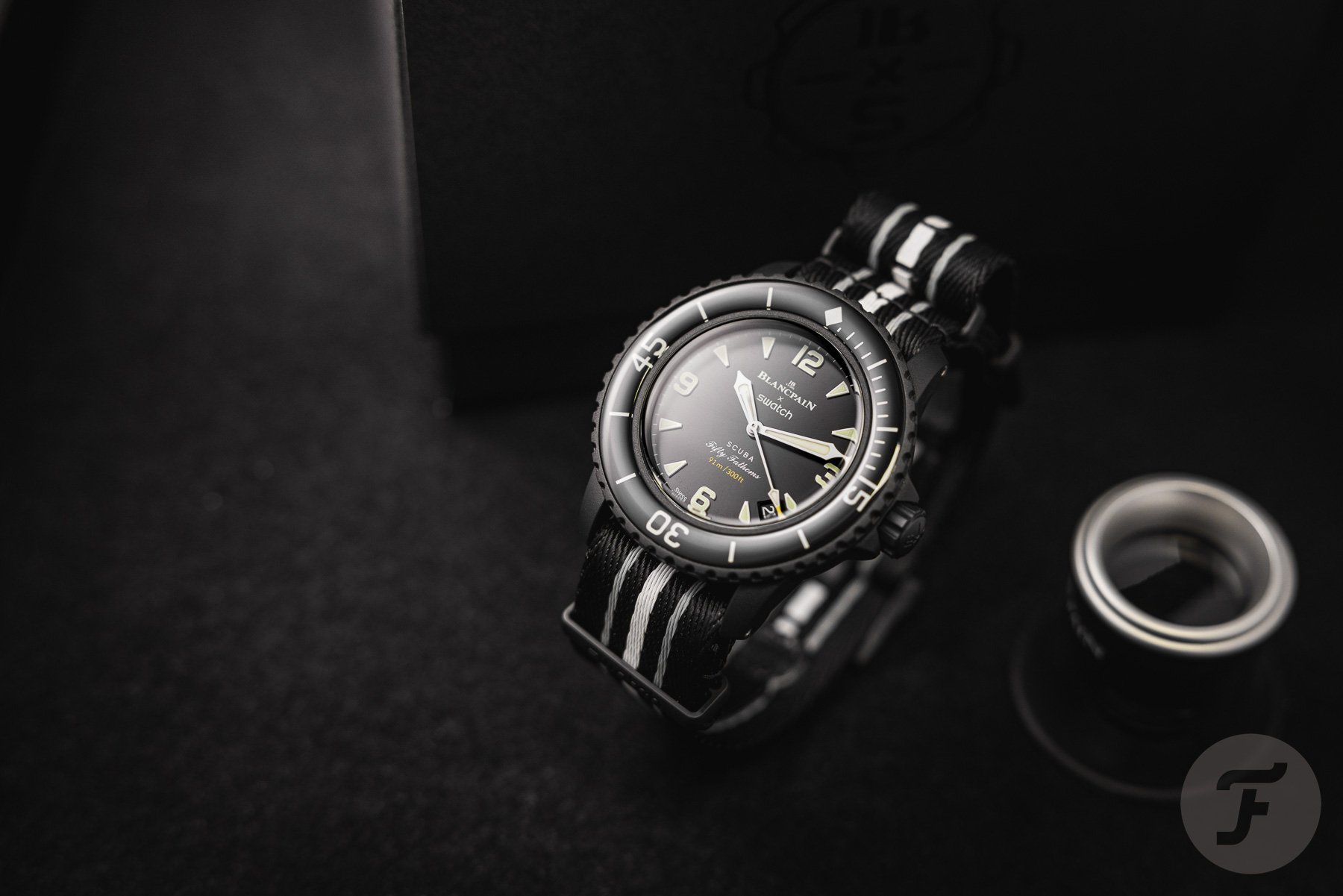
Blancpain × Swatch Bioceramic Scuba Fifty Fathoms Ocean of Storms
“Drop culture”
Swatch’s remaining desirability and relevance seem largely driven by the massive success of the collaborations. While standard models continue to function as established and, therefore, hard-to-hype fashion accessories, the luxury-crossover watches have kept the brand in the spotlight. “Drop culture” helps Swatch, but will it do so in the long run? What will be the next collaboration? It is a question many have already asked themselves, even with the Royal Pop just out. The “Enrichment Economy” works for Swatch, but what higher-positioned, more prestigious brands are left to collaborate with that will do better than the previous one? Don’t suggest Rolex or Patek Philippe because that will never happen, and a collaboration with a Richemont brand, like Cartier or Panerai, is also out of the question.
Maybe an LVMH brand would like to give it a go, but which one? The only one that makes sense is TAG Heuer. Then again, that brand already has an affordable, funky watch in the shape of the Formula 1 Solargraph. The other brands in the LVMH portfolio don’t have the aura that appeals to a massive audience.
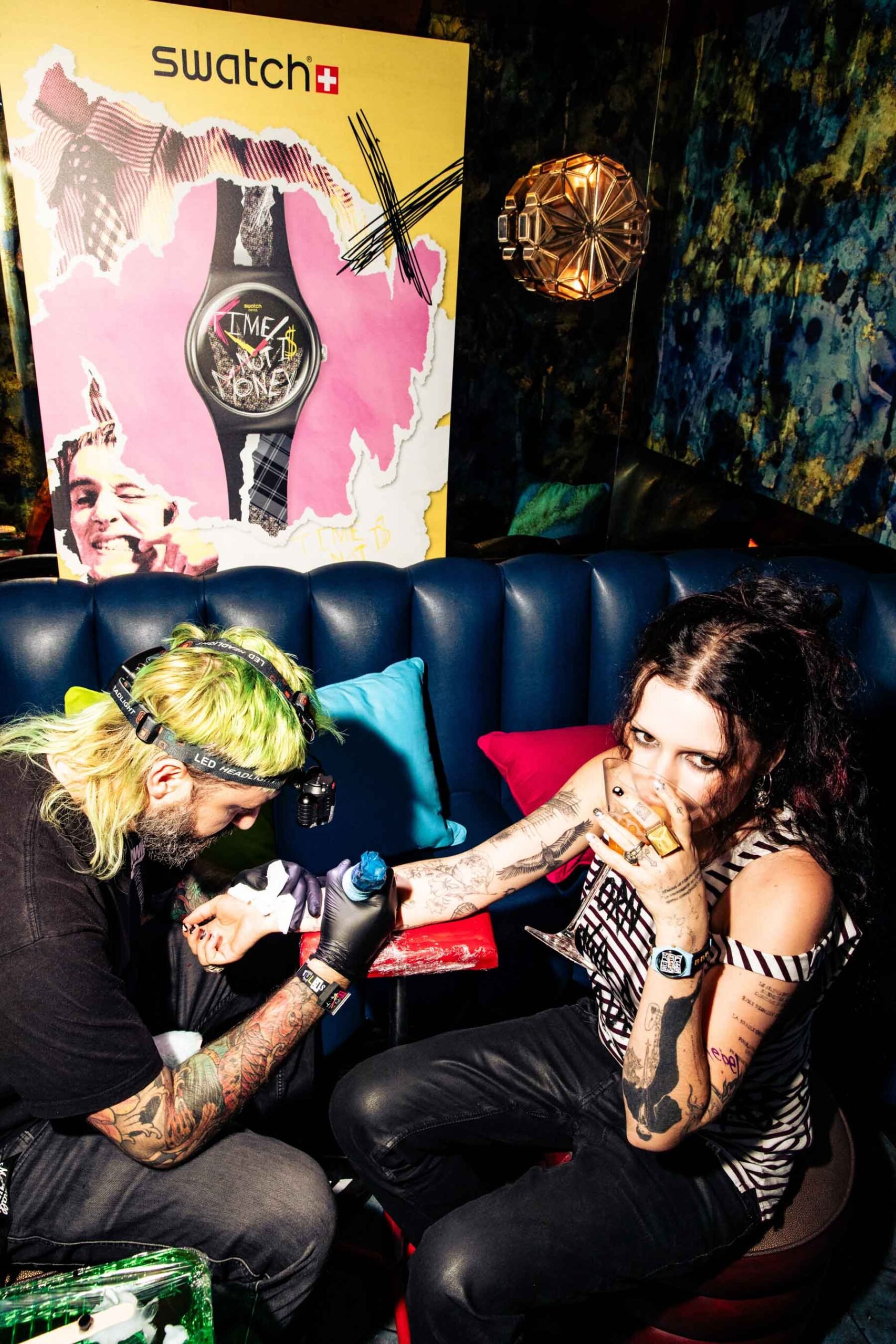
Bioceramic buzz of the future
In other words, it seems Swatch needs to create buzz on its own. Maybe the company can do so by promoting the environmentally friendly, Swiss-made Bioceramic watches, which are still affordable, colorful fashion accessories, as fun, disconnected alternatives to smartwatches. The steady and loud ticking of a quartz-powered Swatch could be the beat for a generation of people who don’t want to spend their precious time online. They would miss out on the next Swatch hype then, though…
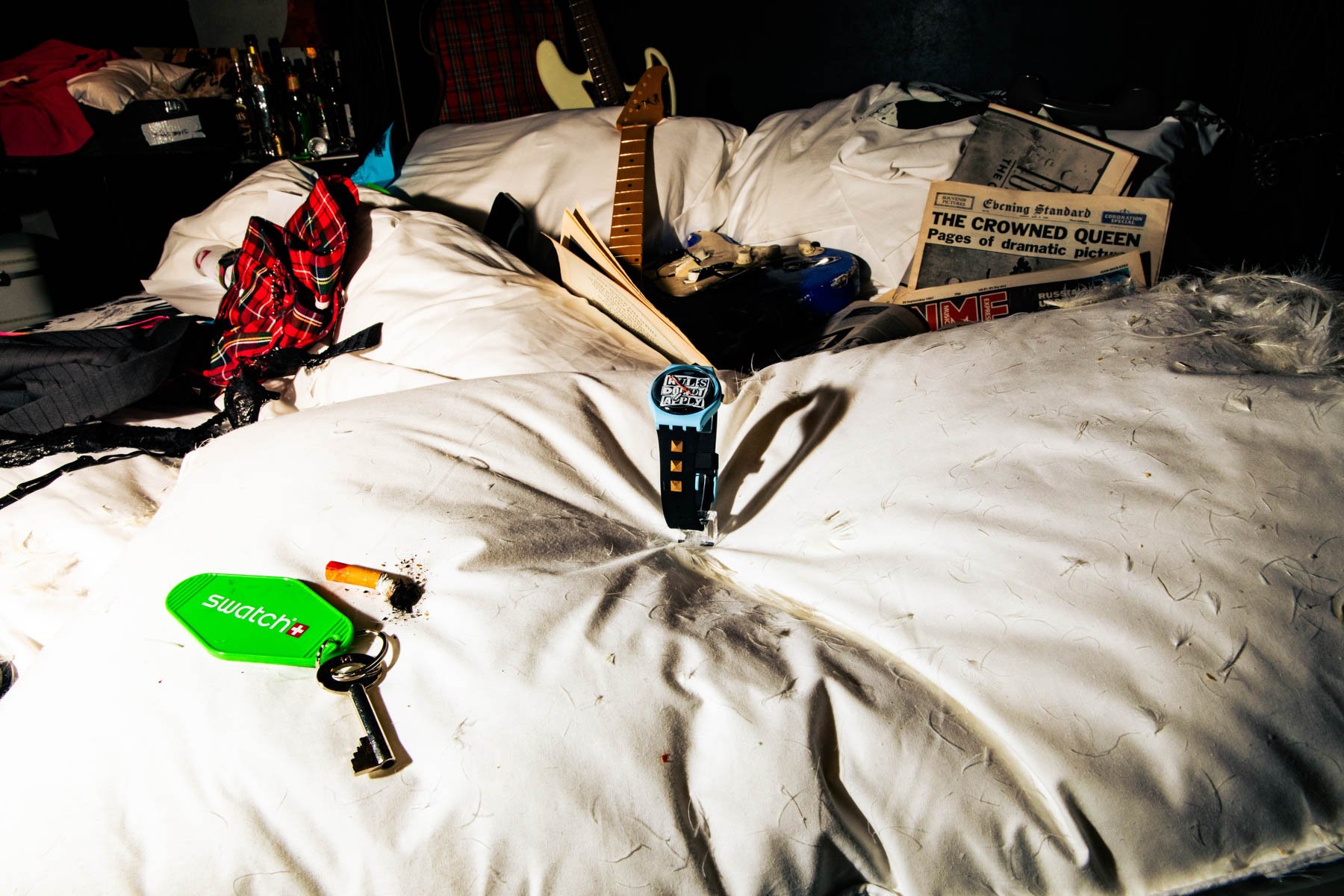
Swatch No Rules
What are your thoughts on the relevance of Swatch? Do you see more collaborations with watch brands in the future? Or what about a Swatch collaboration with Hermès or Chanel that doesn’t use existing watches from those brands as a starting platform but, instead, uses a long-standing Swatch design and enriches it with iconic symbols from them instead? Let me know in the comments section below.