Sicura Makes A Comeback After 47 Years With The Hexa 400

In the past decade, we have seen many once-defunct Swiss brands return to the watch industry. A few recent returnees that come to mind are Gallet and Universal Genève. Today, another legendary brand joins the ranks. It’s the return of the classic Swiss brand Sicura. Under the leadership of the famous Ernest Schneider in the late 1960s and 1970s, Sicura introduced a series of innovative watches. Among them were dive watches with patented multi-bezel systems and dual-crown architecture. One of these served as inspiration for the new Sicura Hexa 400, which marks the brand’s revival after 47 years. It’s time to find out more.
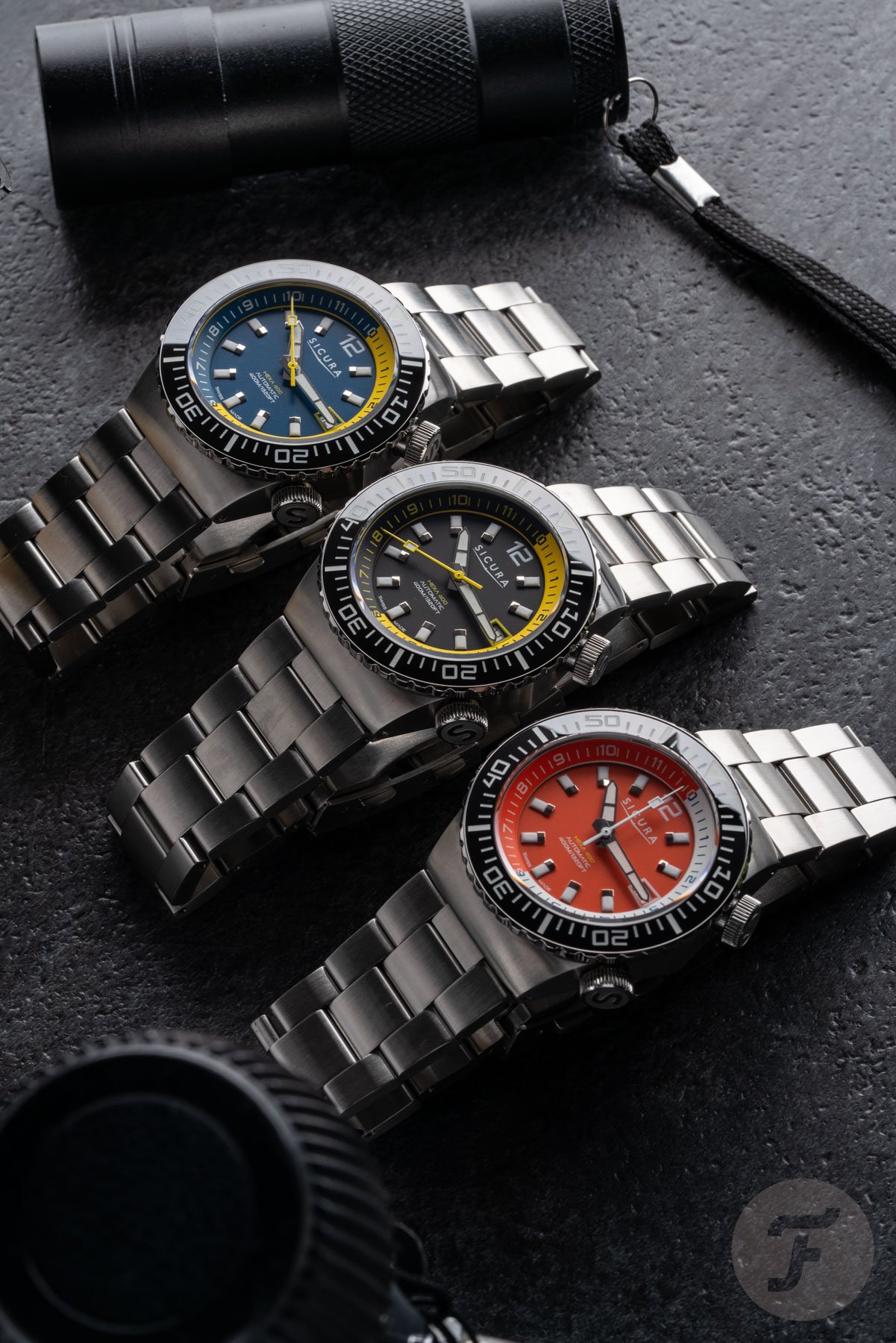
People familiar with Swiss watch history will know that, under the leadership of Ernest Schneider, Sicura made a name for itself by producing innovative tool watches. Tomas wrote about some of these oddities, including the Sicura Victorinox knife watch. Later on, Schneider famously became the CEO of Breitling and led the brand to new successes in the 1980s and ’90s. After a 47-year absence, Sicura now returns with the Hexa 400 diver. The three new watches were inspired by the classic Sicura 400 Diver from 1968, featuring a dual-bezel system for tracking info on multiple scales. The three new Sicura Hexa 400 divers include a regular dive bezel and an internal bezel that lets you track the time in a second time zone. This makes them multifunctional and gives us plenty to talk about.
The details of the Sicura Hexa 400
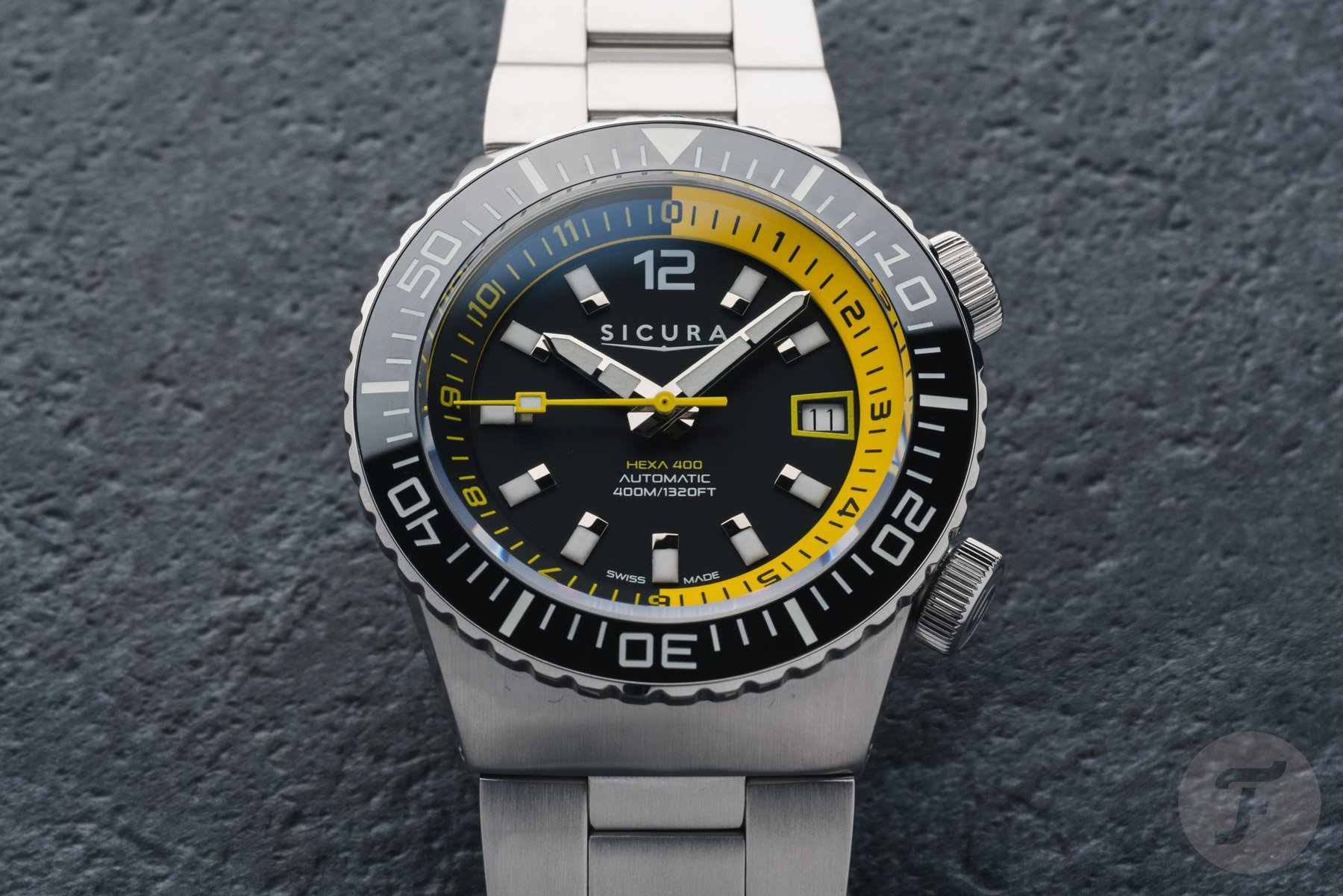
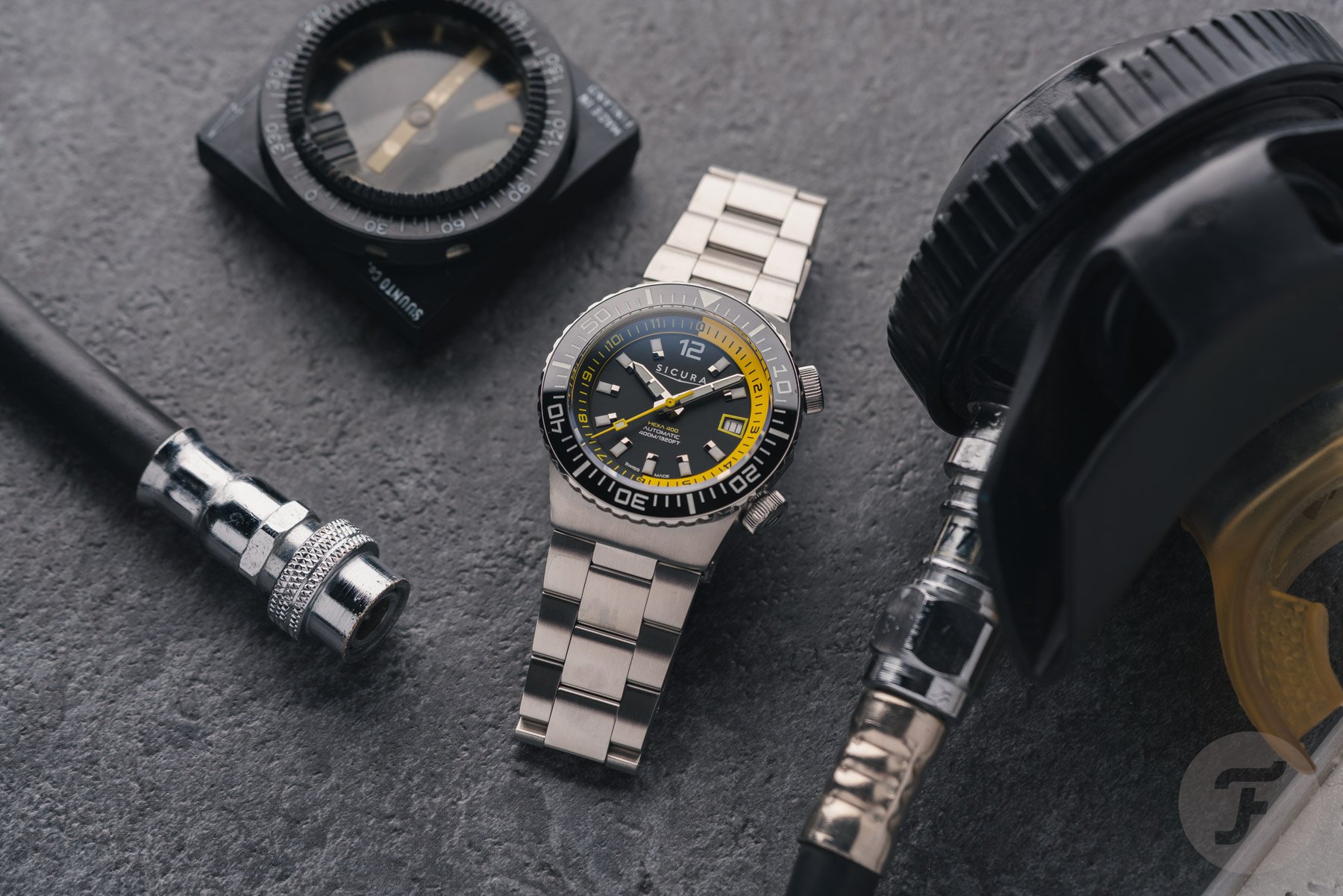
Let’s kick things off with some specs. The Sicura Hexa 400 divers each have a 40mm stainless steel case with shrouded lugs, a 14mm profile, a 46mm length, and a 400m depth rating. The 120-click bezel contains a black ceramic insert with a 60-minute dive scale that glows in the dark. On the right side of the case, you will find two signed crowns that bring both functionality and character. The upper one rotates the inner bezel, while the lower crown adjusts the date and time. The brushed case comes fitted with a three-row Oyster-style bracelet with a folding clasp featuring a secure lock and a dive extension that you can also use as a toolless micro-adjustment.
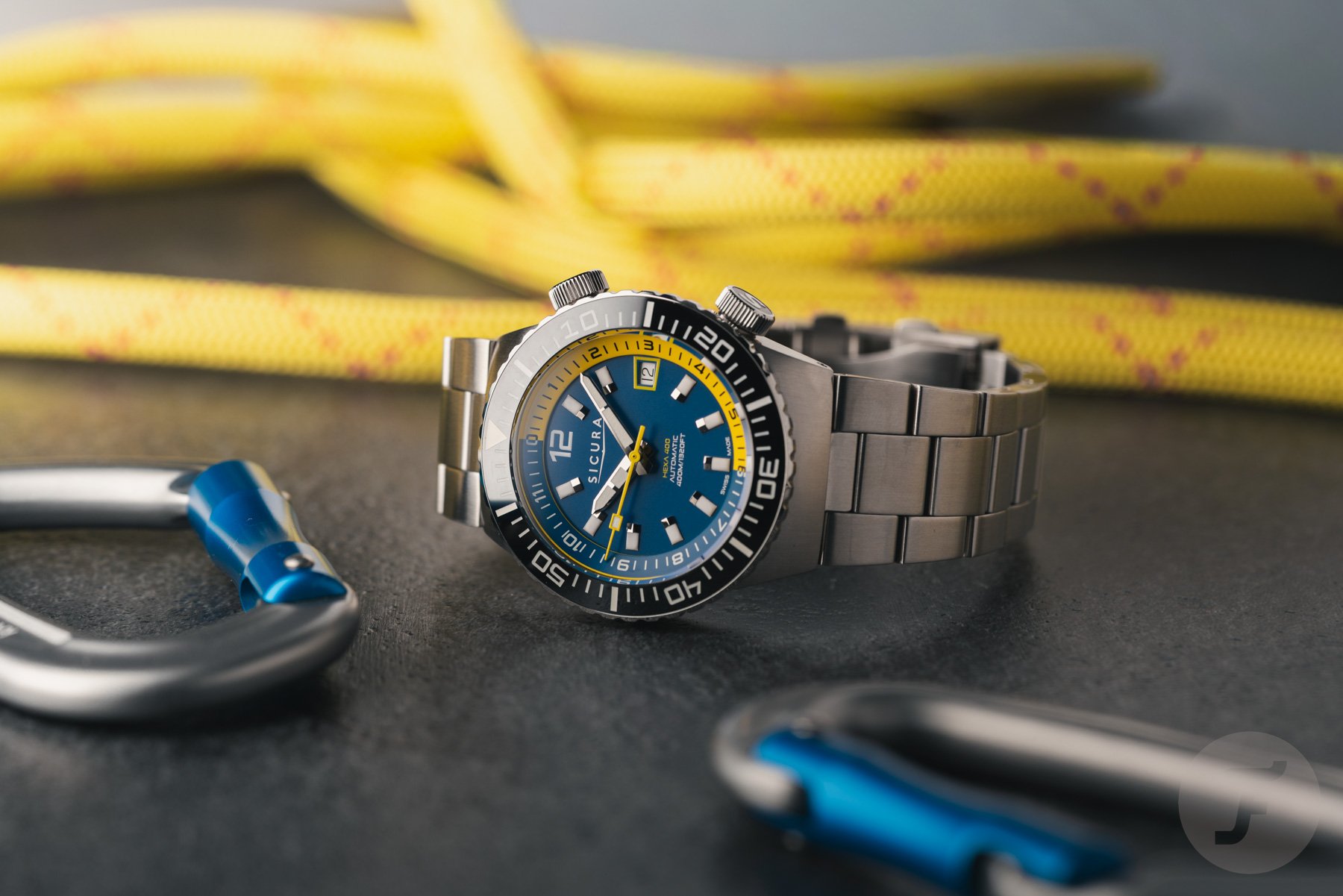
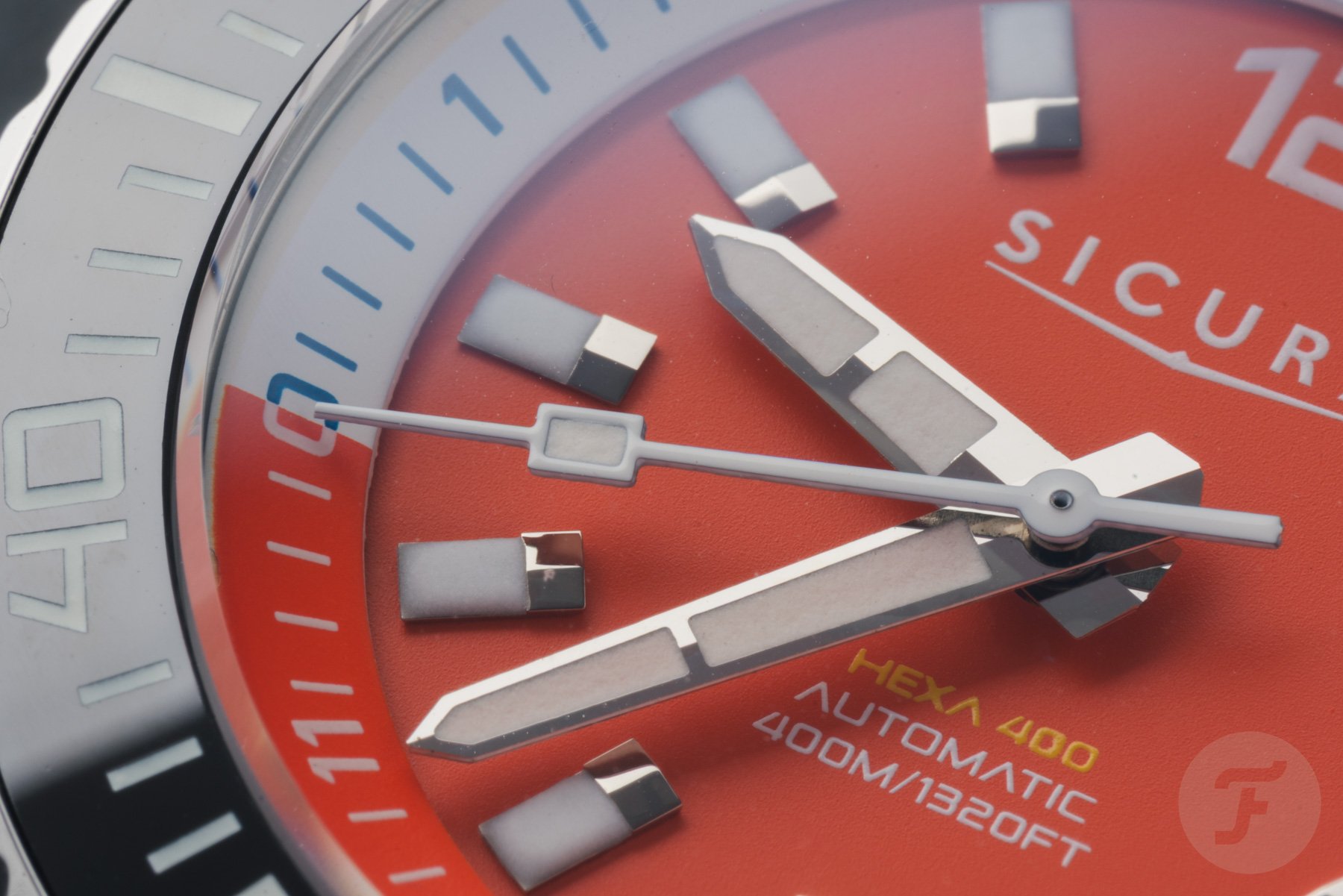
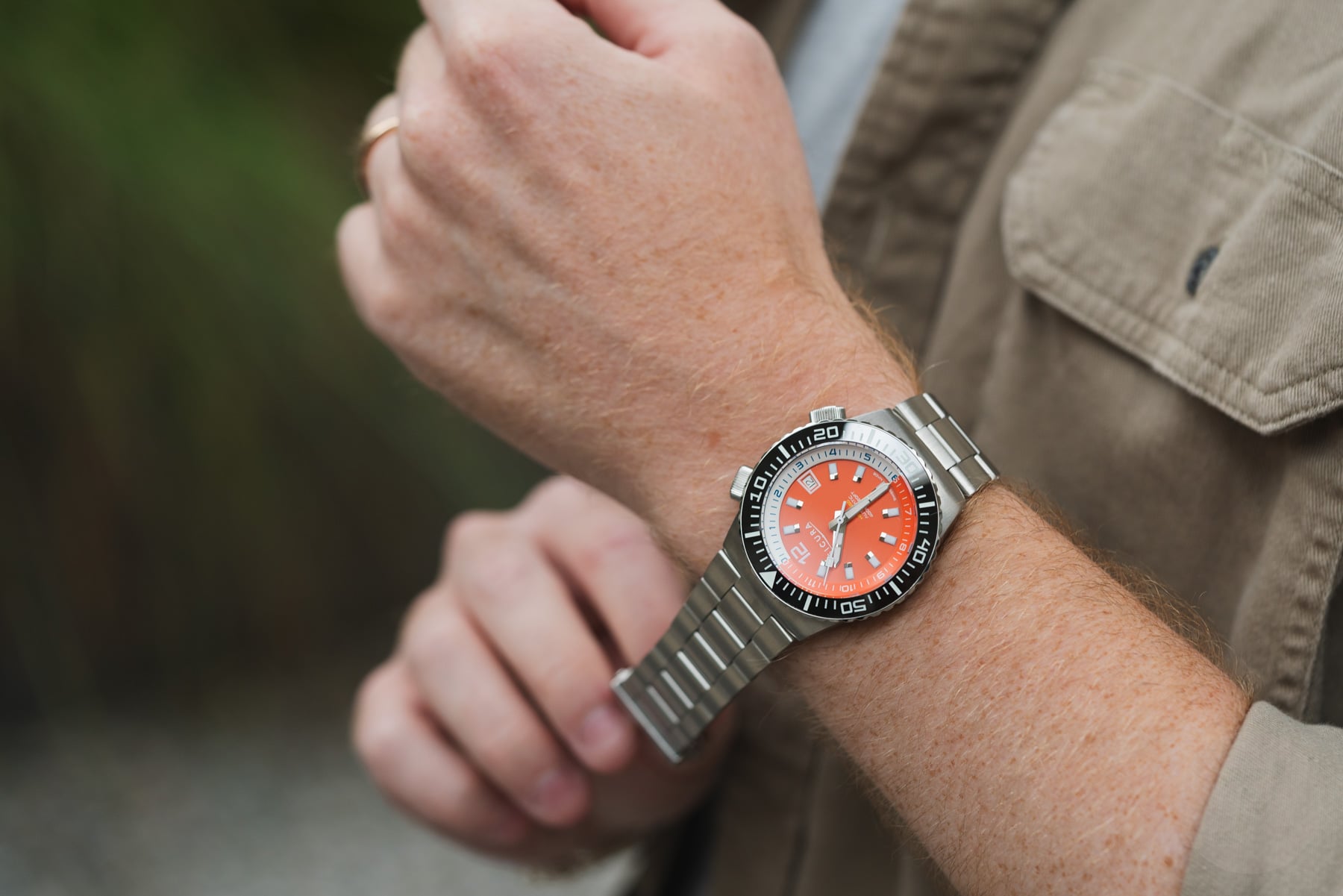
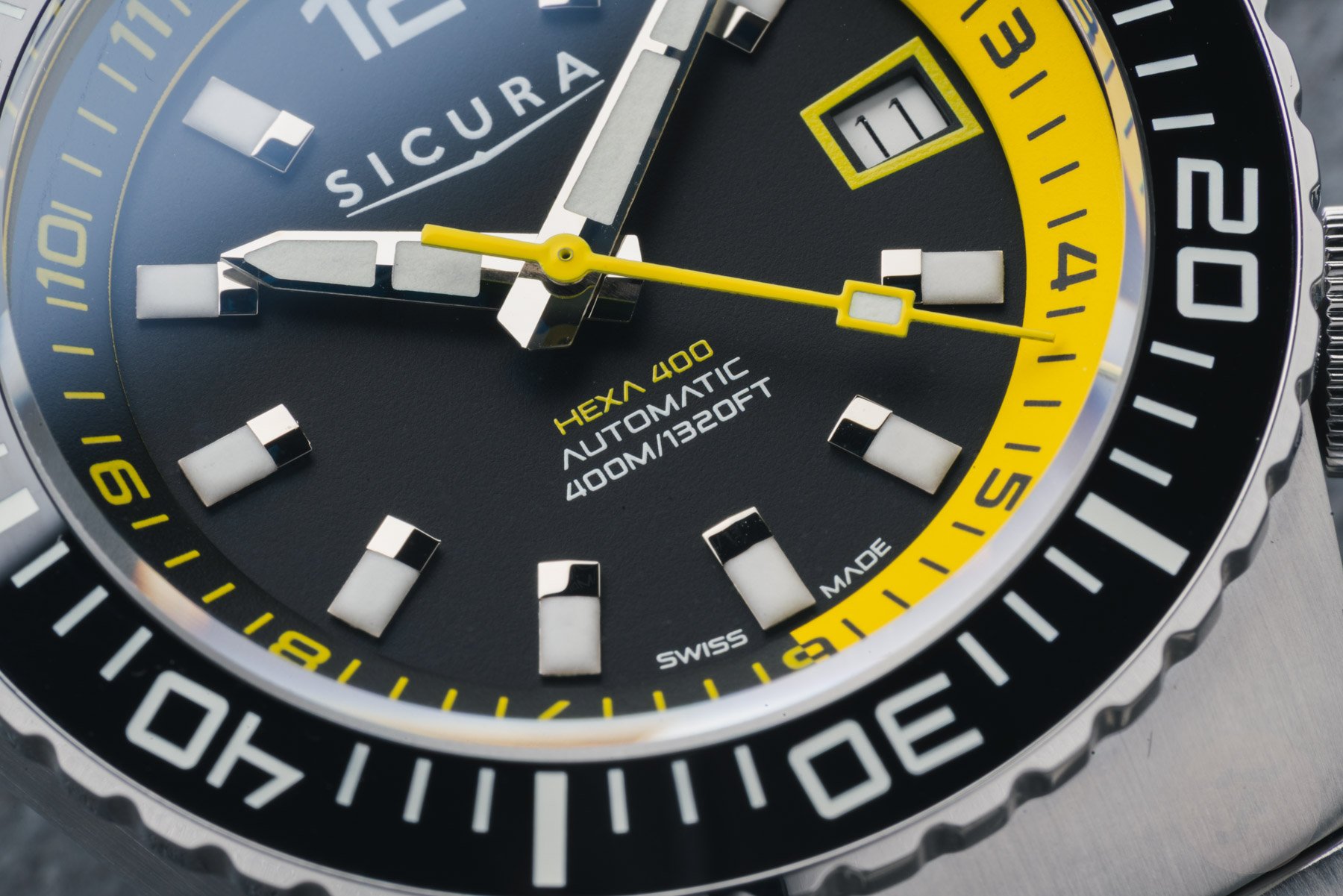
Inside the case lies a matte dial with applied indexes, large Arabic numerals at 12 o’clock, and a date window at 3 o’clock. Additionally, the dial features an inner rotating bezel for dual-time tracking on a 12-hour scale. You can choose from either a black dial with yellow accents, a blue dial with yellow accents, or an orange dial with white accents. The accent color appears on the seconds hand and divides the rehaut’s 12-hour scale in half. Oddly enough, the original Diver 400 from the ’60s featured a 24-hour scale, which I prefer. Because Sicura chose a 12-hour scale, it’s not the classic day/night color division you would see on most GMTs. Furthermore, the usual division is horizontal, whereas this one is vertical, creating a different overall dynamic.
Hovering over the dial are the lume-filled hands. A fun detail is that the hands and hour markers have a distinct retro vibe, whereas the rest of the style is far more modern.
The overall style looks familiar
Looking at the design of the new Sicura Hexa 400, I was reminded of classic IWC divers. The design loosely resembles watches like the GST Deep One ref. 3527 and the later Aquatimers from the late ’90s and early 2000s. But the Hexa 400 also has a ’60s twist with hands and markers modeled after the 400 Diver, resulting in a slightly different feel.
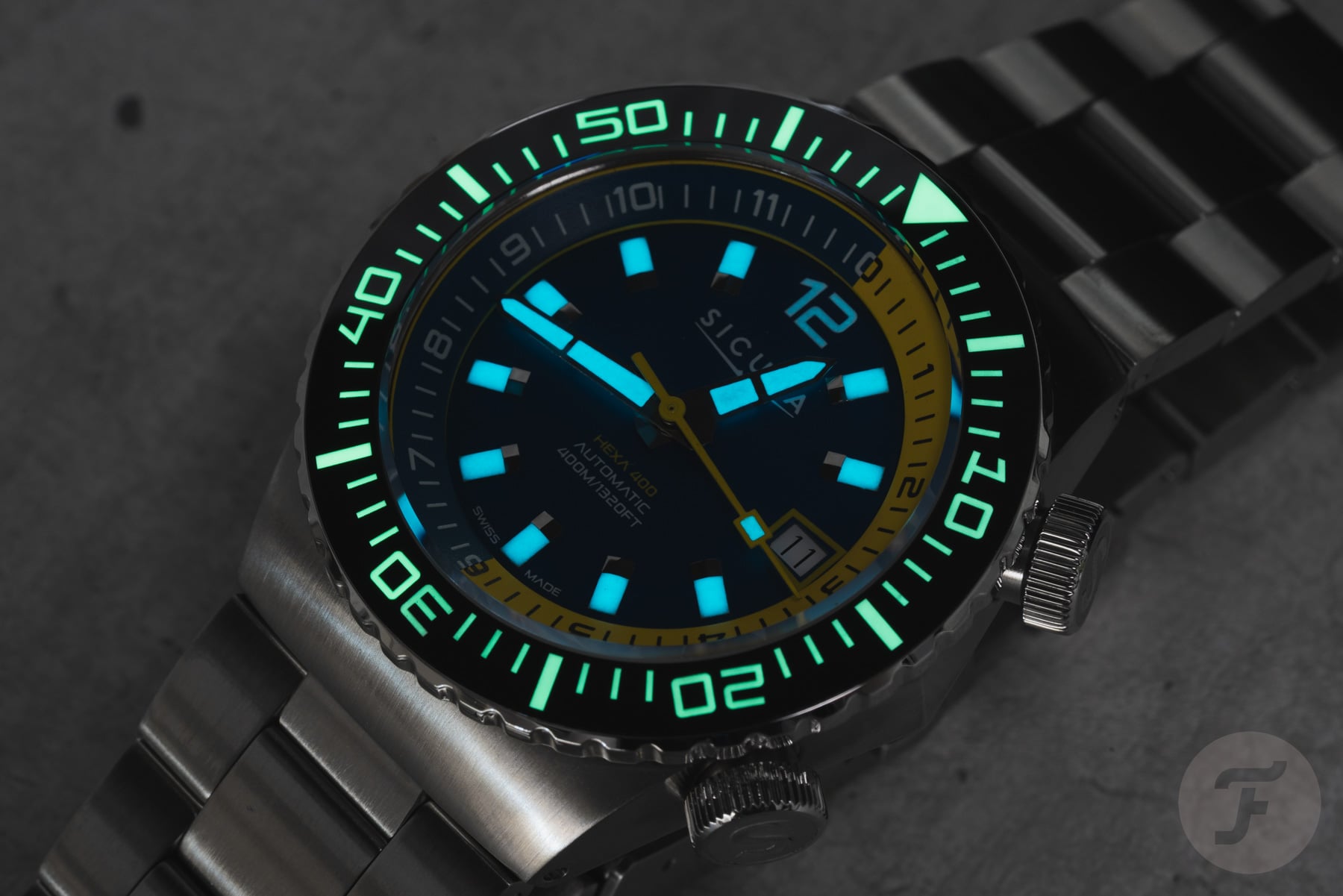
It’s an odd combination that may seem like it won’t work. When looking at the watches, though, it makes sense. Overall, I gravitate towards the darker colors more than the orange-dial version, simply because blue and black are colors I prefer to wear regularly. But I like that Sicura added an orange dial version to complete this new trio of dive watches.
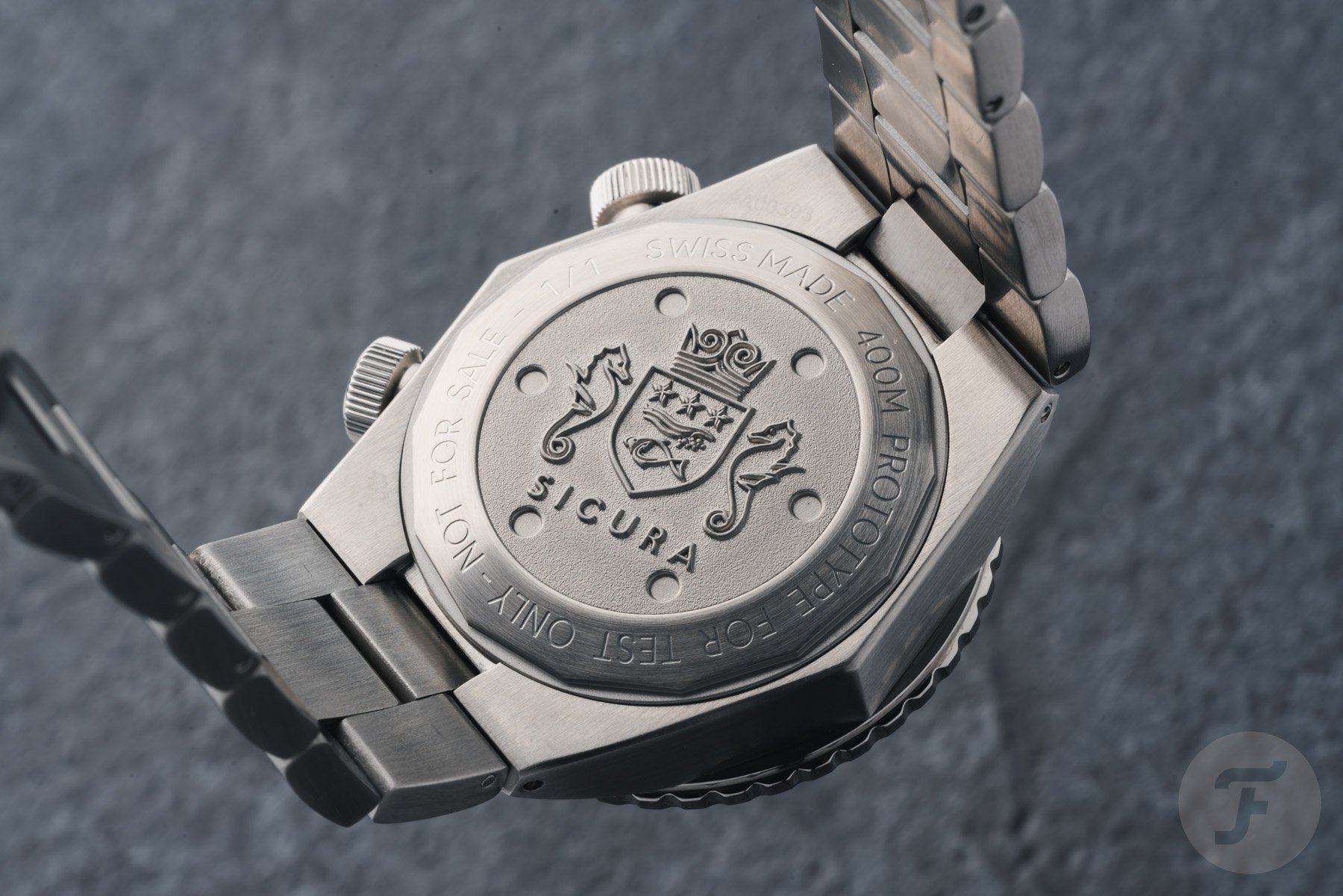
Inside the case lies the Sellita SW200-1. This automatic caliber operates at 28,800 vph, features 26 jewels, and offers a 38-hour power reserve. The movement is safely hidden behind the steel case back, which features the classic Sicura crest with two seahorses and the brand name.
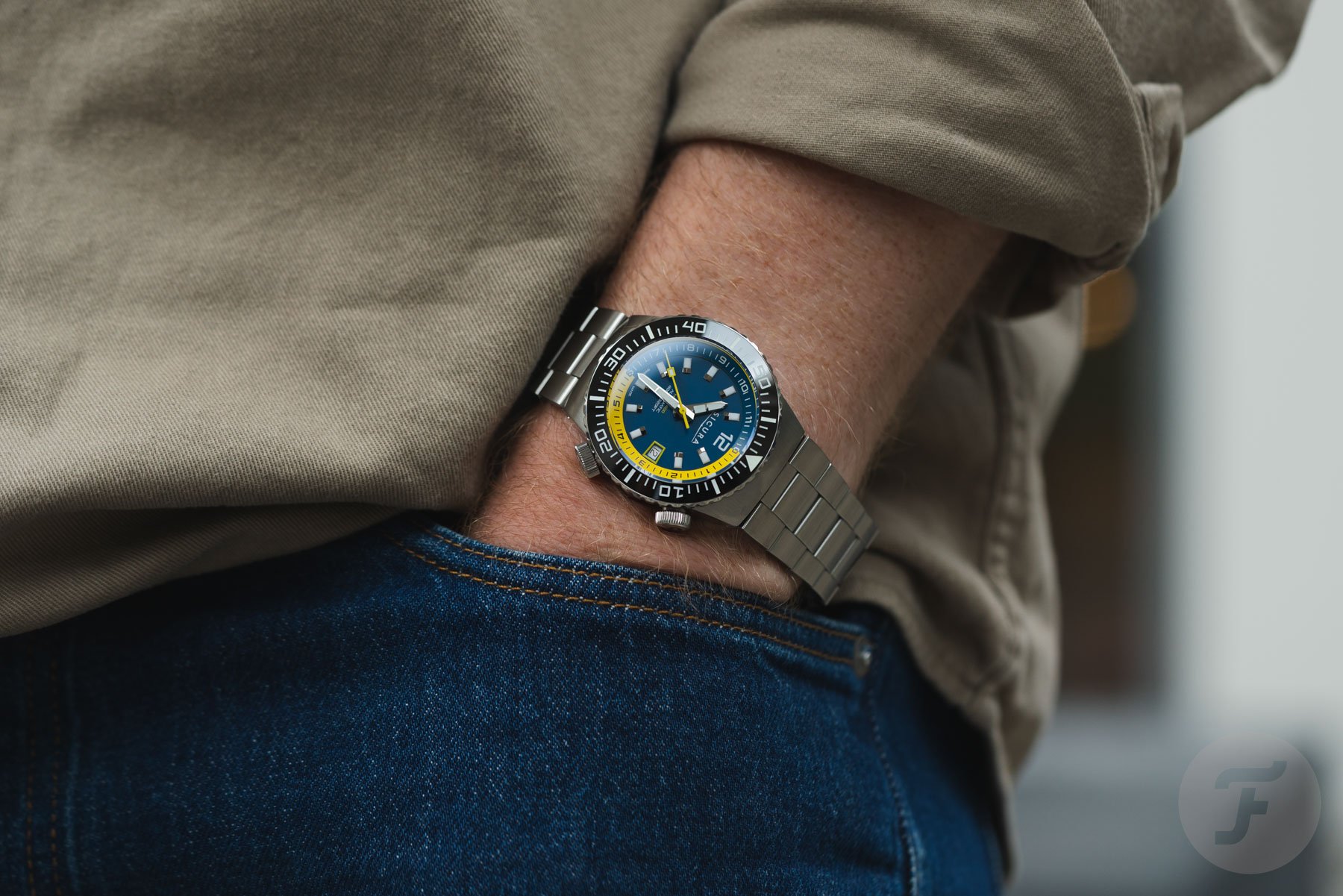
Wearing the Sicura Hexa 400
When you pick up one of the Hexa 400 divers, it feels nice and hefty. The solid build quality of both the case and the bracelet immediately stands out. The brushed finish is somewhat superficial, but that’s only noticeable when you zoom in. Another first impression is how nicely shaped the hexagonal case is.
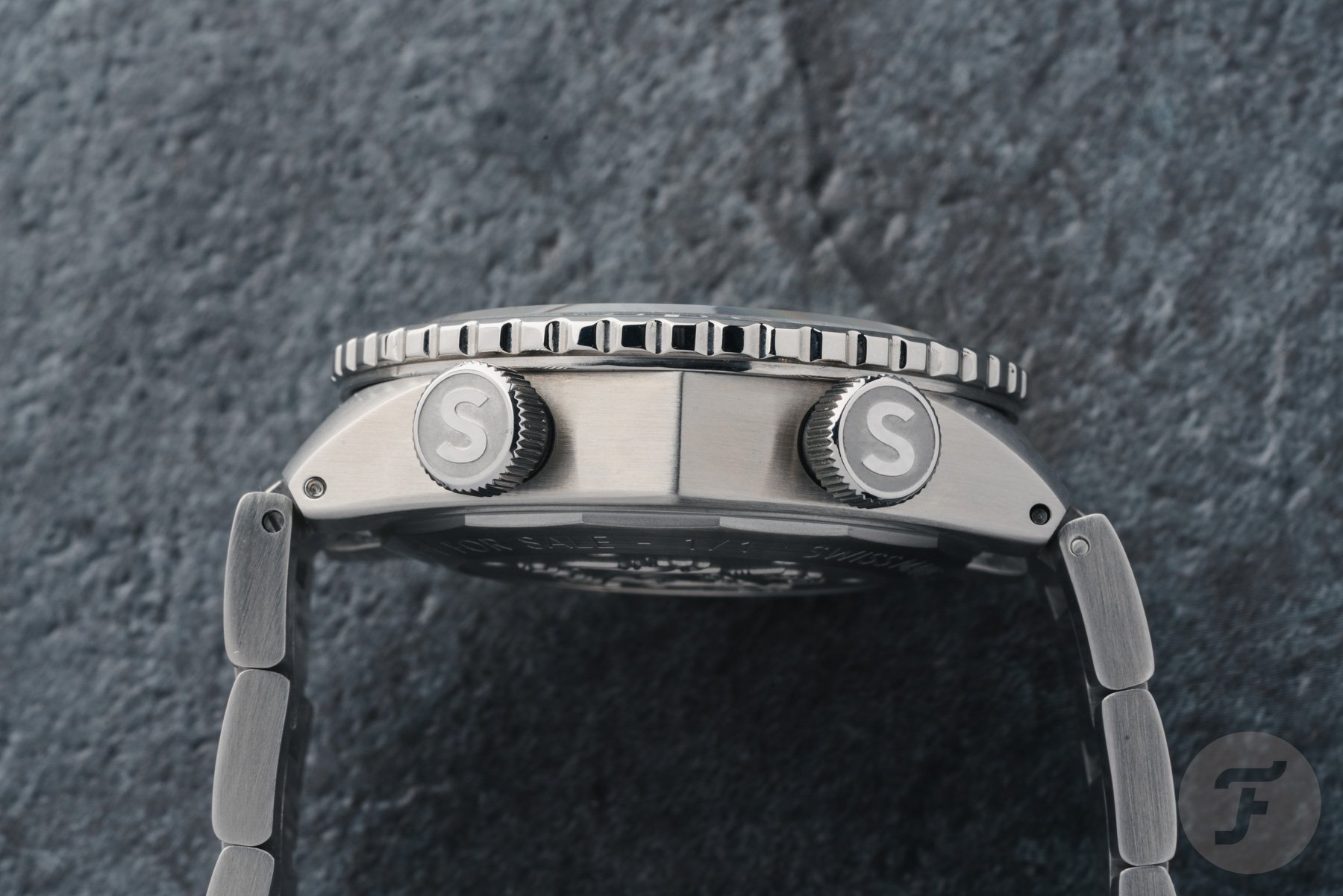
We don’t see case shapes like this very often, and it works really well with the contrasting circular dial and bezel. The integrated bracelet tapers down from 24mm at the case to 20mm at the clasp. While far from subtle, it is important to remember that this is a tool watch first and foremost. These bracelet dimensions certainly fit the rugged character you would expect from a serious dive watch.
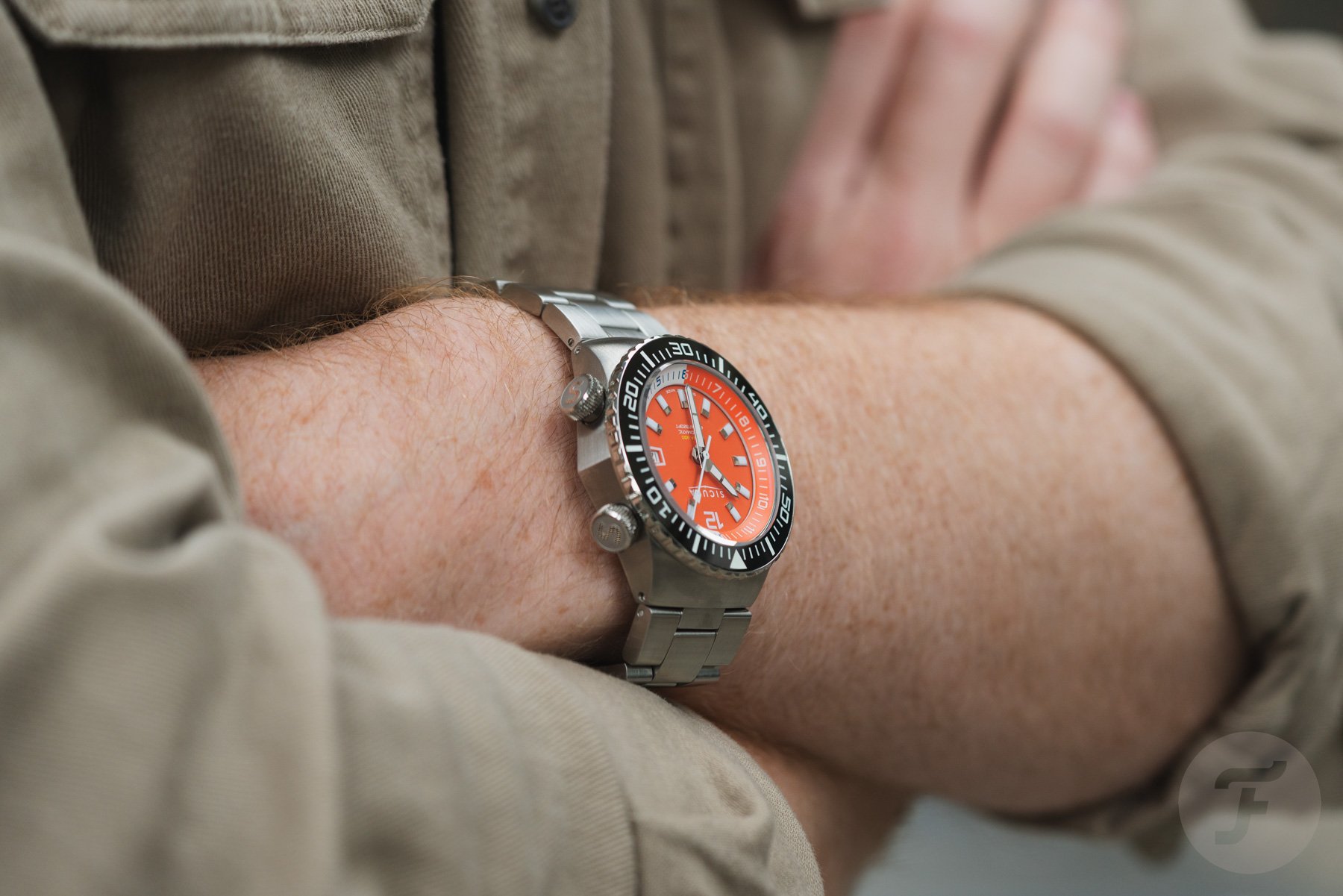
Weighing in at 195 grams, the Hexa 400 feels substantial. I like that solidity because it gives you the feel of a proper tool watch. Despite that weight, the watch sits well on the wrist and actually feels rather compact. But the combination of the dimensions and the weight makes the Hexa 400 a watch for people who like proper tools on the wrist. Turning the 120-click bezel also feels pleasant, with its nice-sounding, subtle clicks. One thing I noticed is that with two rotating bezels and no minute track on the dial, you have to line up the scales in accordance with the 12 o’clock marker. It can be a bit of a challenge.
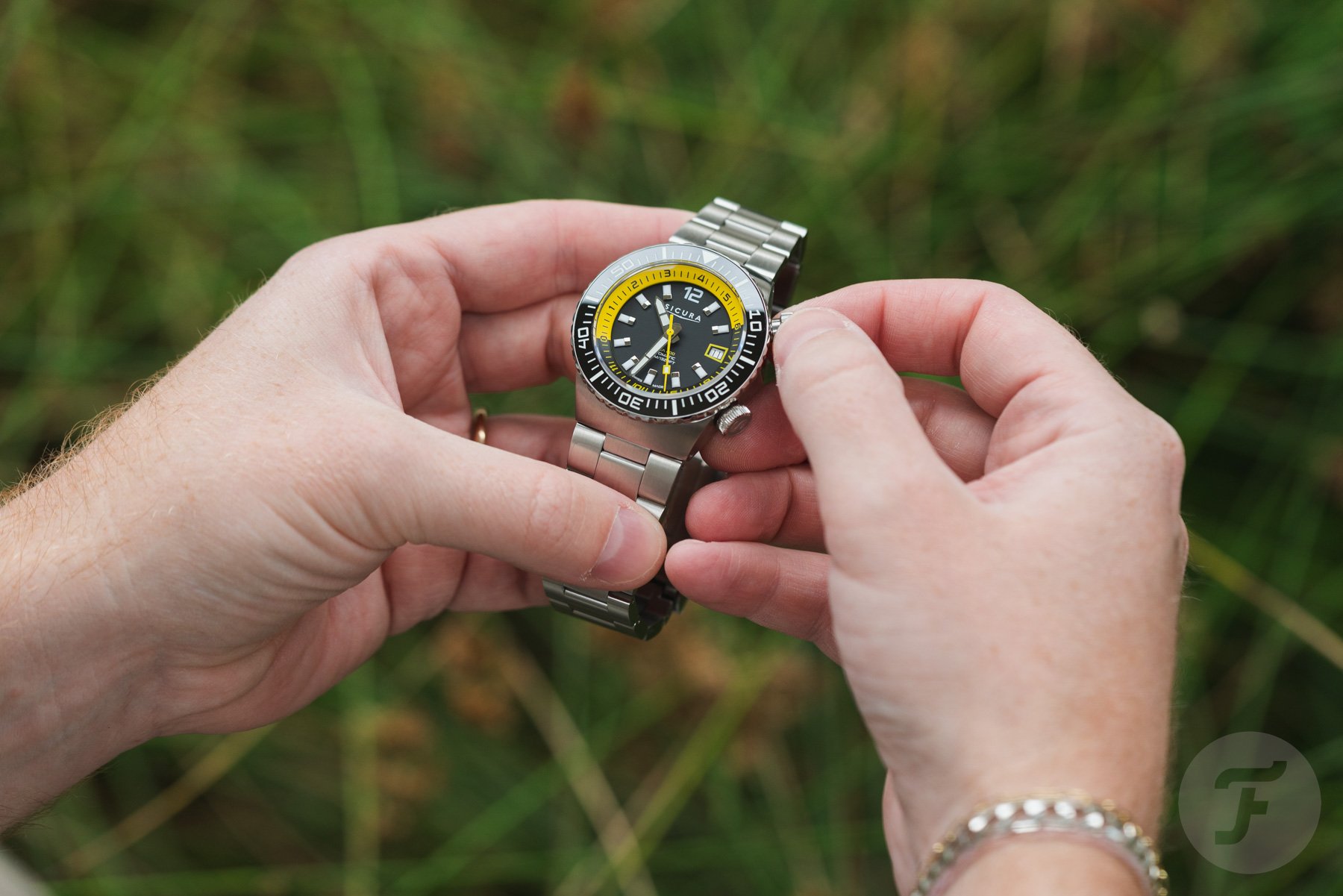
Operating the two bezels with different scales
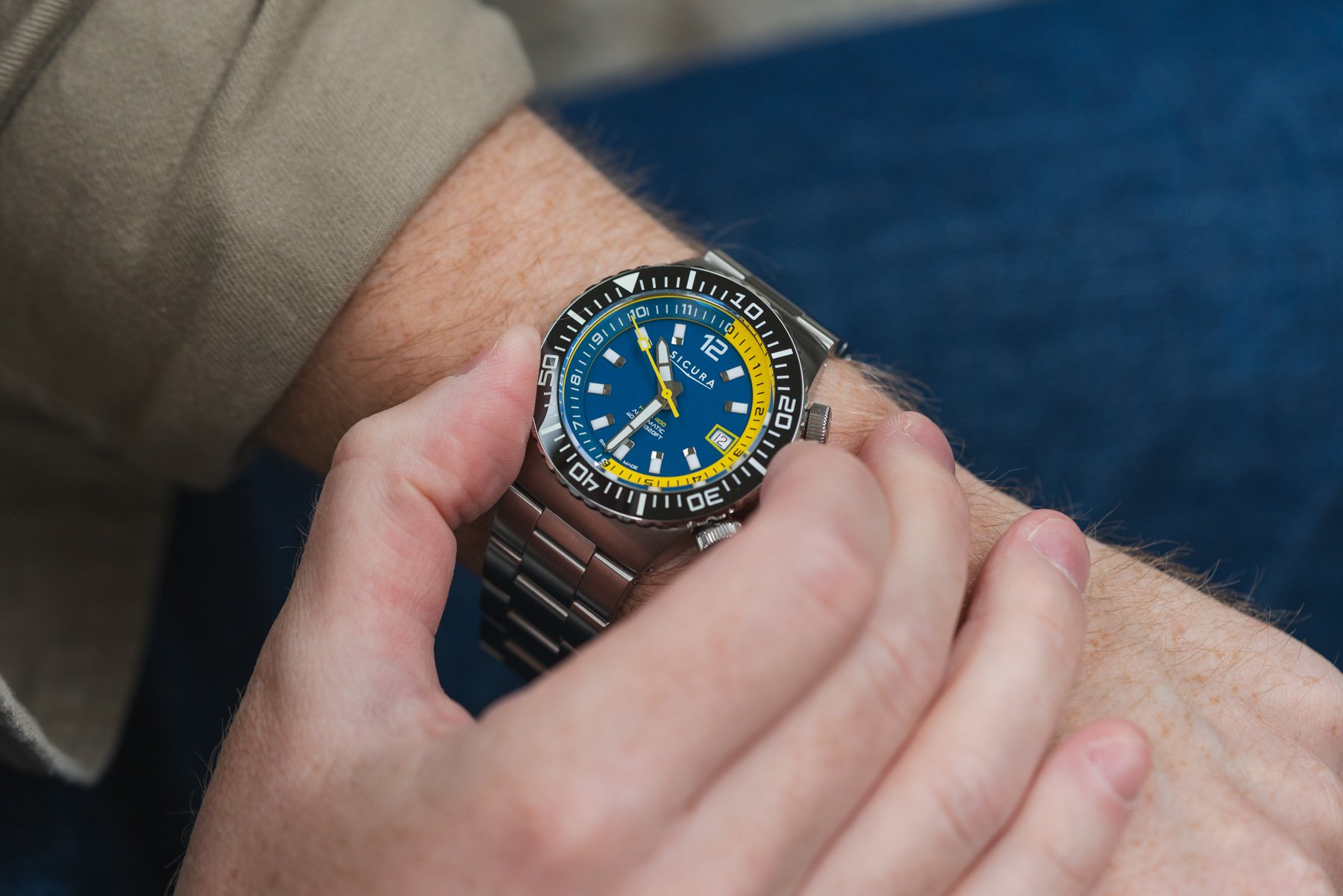
On top of that, screwing in the upper crown to lock the inner bezel in place was a fun challenge. Once you have set the bezel, press the crown in and turn it to screw it in and lock the bezel. Don’t apply too much pressure, though, or it will cause the bezel to rotate again. There is a bit of a technique to it that is actually fun to master. As mentioned, the lower crown adjusts both the date and the time. If you pull it out to the first position, you can change the date by turning it clockwise. If you pull it out to the second position, you can adjust the time. The crowns are easy to grip and operate thanks to their substantial size and fine knurling.
A nice detail is the date frame, as it matches the accent color. All the date wheels are white with black printing, which makes sense. The designers chose white because it complements the set of hour markers. While on the topic of design, with the inner bezel’s 12-hour scale in its standard position, you see a vertical color division between the base and accent colors.
I much prefer a horizontal division, as it is visually more pleasing to me. While I understand splitting the day up into four parts, the aesthetic solution here is not appealing to me. But there is an easy fix if you don’t actively use the GMT bezel: just put it in the position you like best and wear the watch.
Final thoughts on the Sicura Hexa 400
Overall, my time with the Sicura Hexa 400 divers was an interesting experience. First off, I appreciate these watches for bringing something different to the table. With a double-scale layout, the watches offer great functionality. They also immediately link to Sicura’s wonderful history, in which the brand created some amazing oddball watches. Consequently, I am sure there are plenty of people who would love to try one of these Hexa 400 divers.
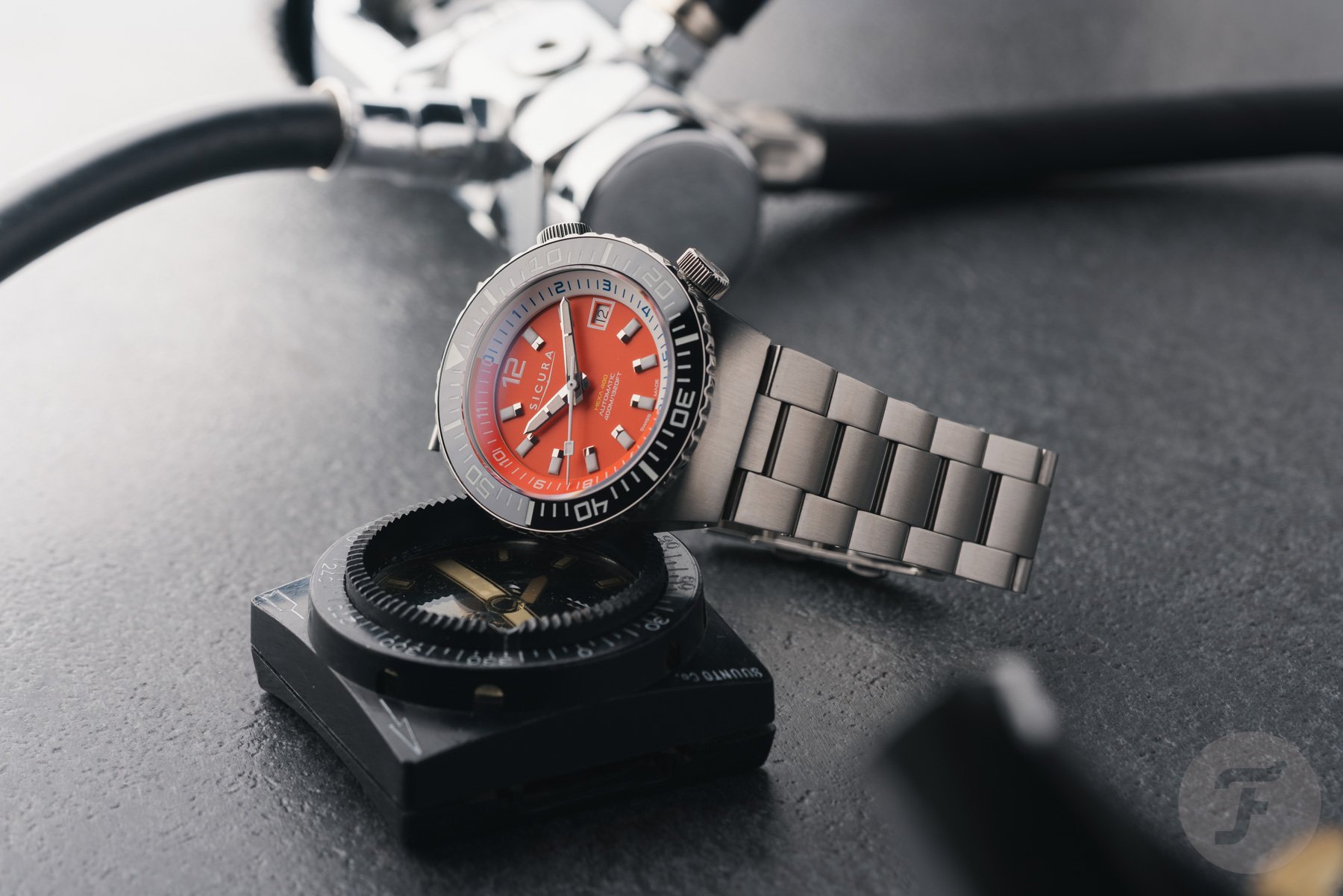
Practically speaking, there is a lot to unpack. I like the design, as it takes a step away from the usual Rolex-inspired aesthetic. I also appreciate the IWC designs it loosely resembles, and it’s another reason the watches are different from the usual suspects. The Hexa 400 is solid, and I can definitely see the potential for it to become a daily wearer. That said, some details could use improvement. As I mentioned, lining up the two bezels can be a bit tricky. I like a bit of a challenge because it’s fun, but if you don’t have much time, it can be a nuisance.
A solid start to a new beginning
The build quality of these watches is definitely solid and on par with other brands in the sub-€1,500 price bracket. For €1,450, you get a super-solid dive watch from a revived Swiss brand with plenty of history. On top of that, the design offers something different from the usual watches in the category. Add the double-bezel functionality, and you have a series of divers that stand out from the crowd. That’s why I think there are quite a few people who love seeing the new Sicura Hexa 400. It’s a good start to the resurrection of Sicura, and I can’t wait to see what’s next for the brand, especially knowing how quirky and bonkers some of its tool watches from the 1970s were.
This is a partnership post. Learn more.