The Movement Is The Dial: The Berneron Mirage Miroir In White And Yellow Gold

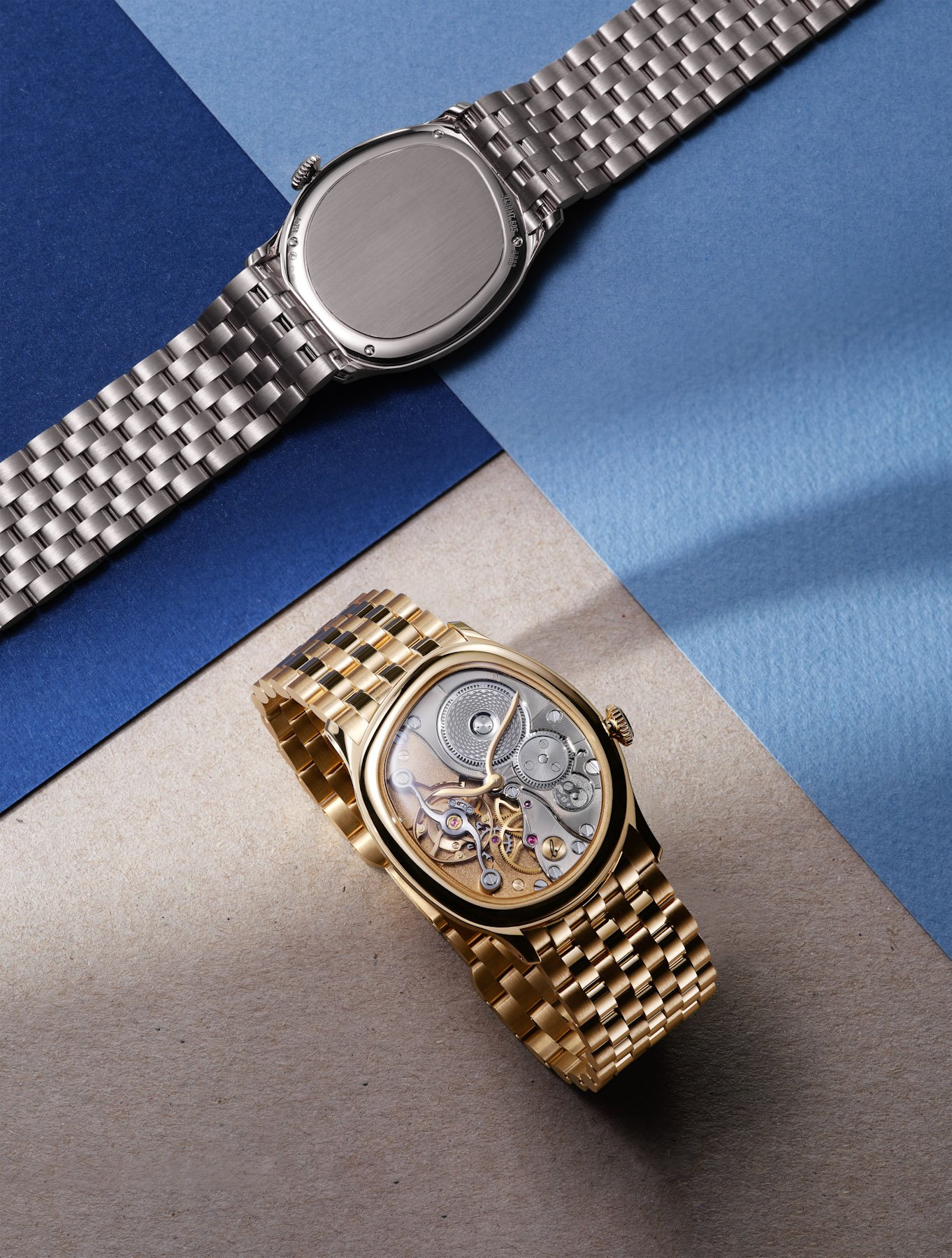
Berneron is back with another Mirage, and this time, the name is quite a literal description. The new Mirage Miroir takes the independent brand’s already unconventional approach to watch design and turns it inward. This watch introduces the new caliber 283, which features a mirrored architecture that transforms it into the dial itself. Available in both 18K yellow and white gold, this ultra-thin 38 × 7mm timepiece pushes the Mirage concept further without abandoning what made it so interesting in the first place — the shape.
Since the launch of the original Mirage, Berneron has been stubborn about one particular idea: the movement should not simply be something that fits inside a case. Rather, the mechanics should influence the watch’s shape. That direction gave the Mirage its asymmetry, which comes from the caliber rather than an externally influenced shape. With the Miroir, Sylvain Berneron is reflecting our beloved original Mirage, as if a mirror were in front of it. The result is a mechanically familiar yet visually unfamiliar watch, which is cool. More on that in a bit.
Reflected from within
Berneron describes the original Mirage as the first shaped watch to derive its asymmetry from the caliber rather than from an external freeform design. As explained previously, the reason is mechanical. The movement was laid out to accommodate elements such as a large barrel and a pocket-watch-style balance while escaping the conventional circular architecture of a wristwatch movement. The asymmetry came from the mechanics, and the case followed. Well, that idea is still at the heart of the Mirage Miroir, but the visual language has changed dramatically. Instead of hiding the movement behind a dial, Berneron has created a new mirrored construction for its caliber 283. The brand is very clear that this is not traditional openworking or simply reversing an existing movement.
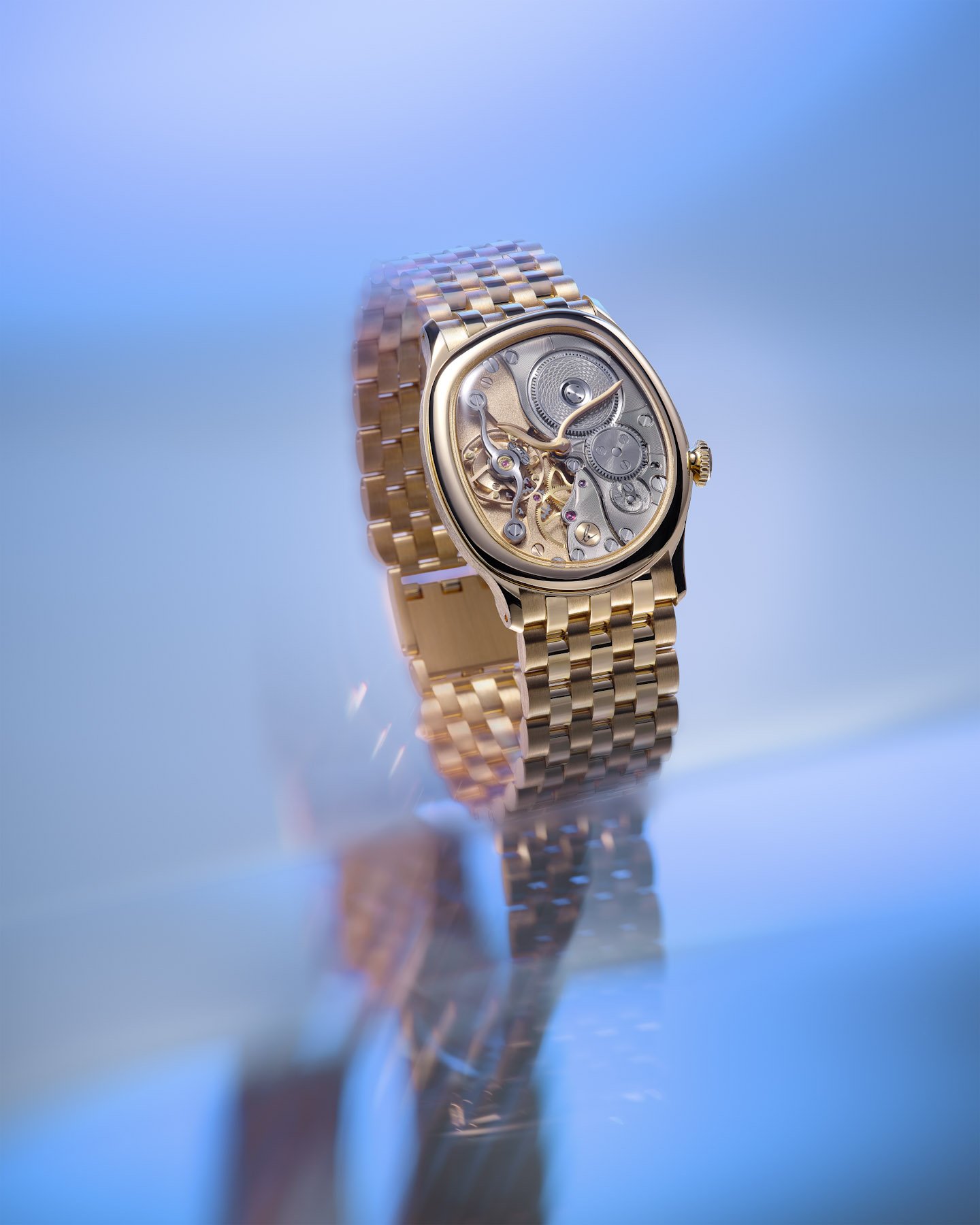
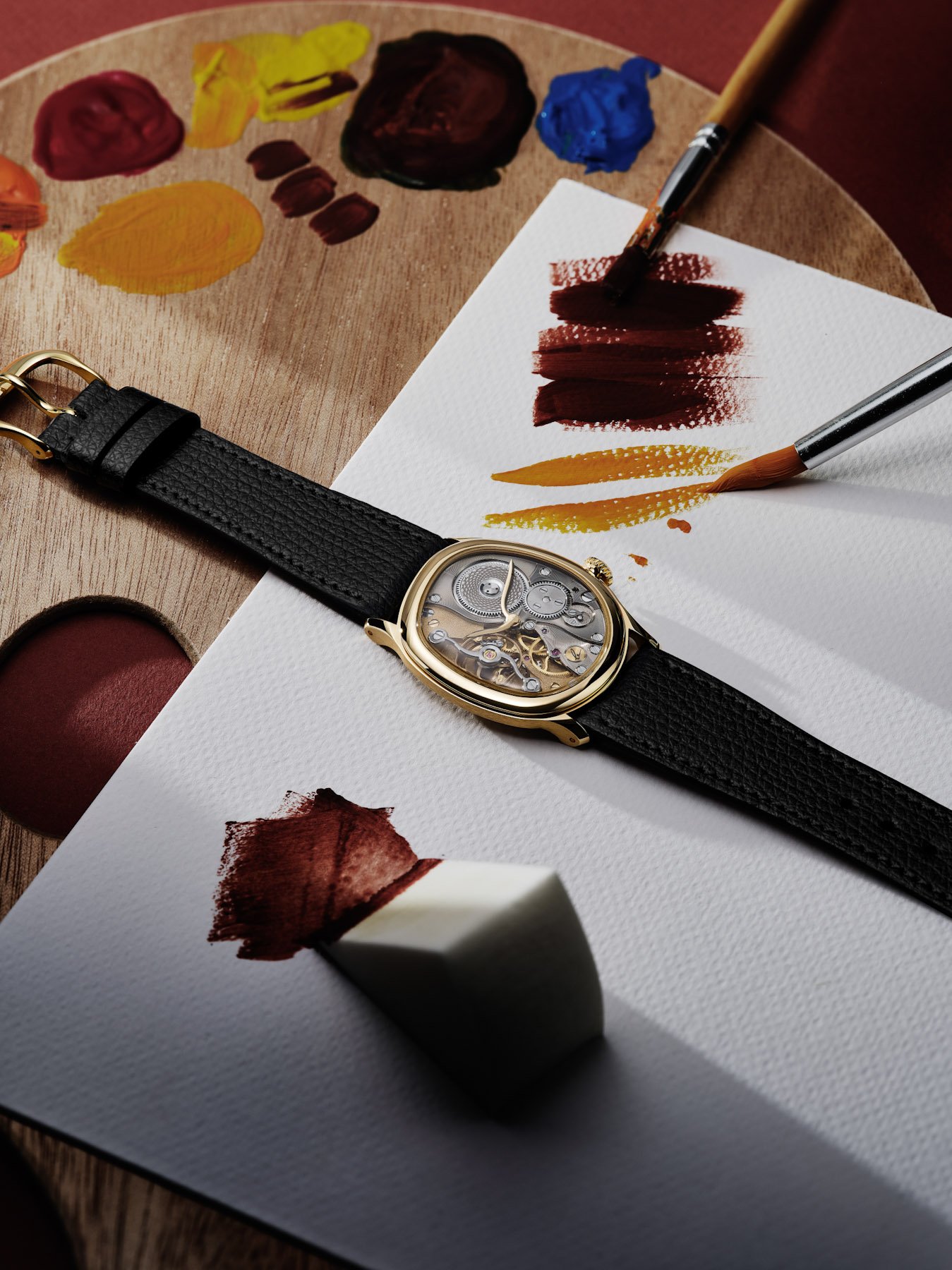
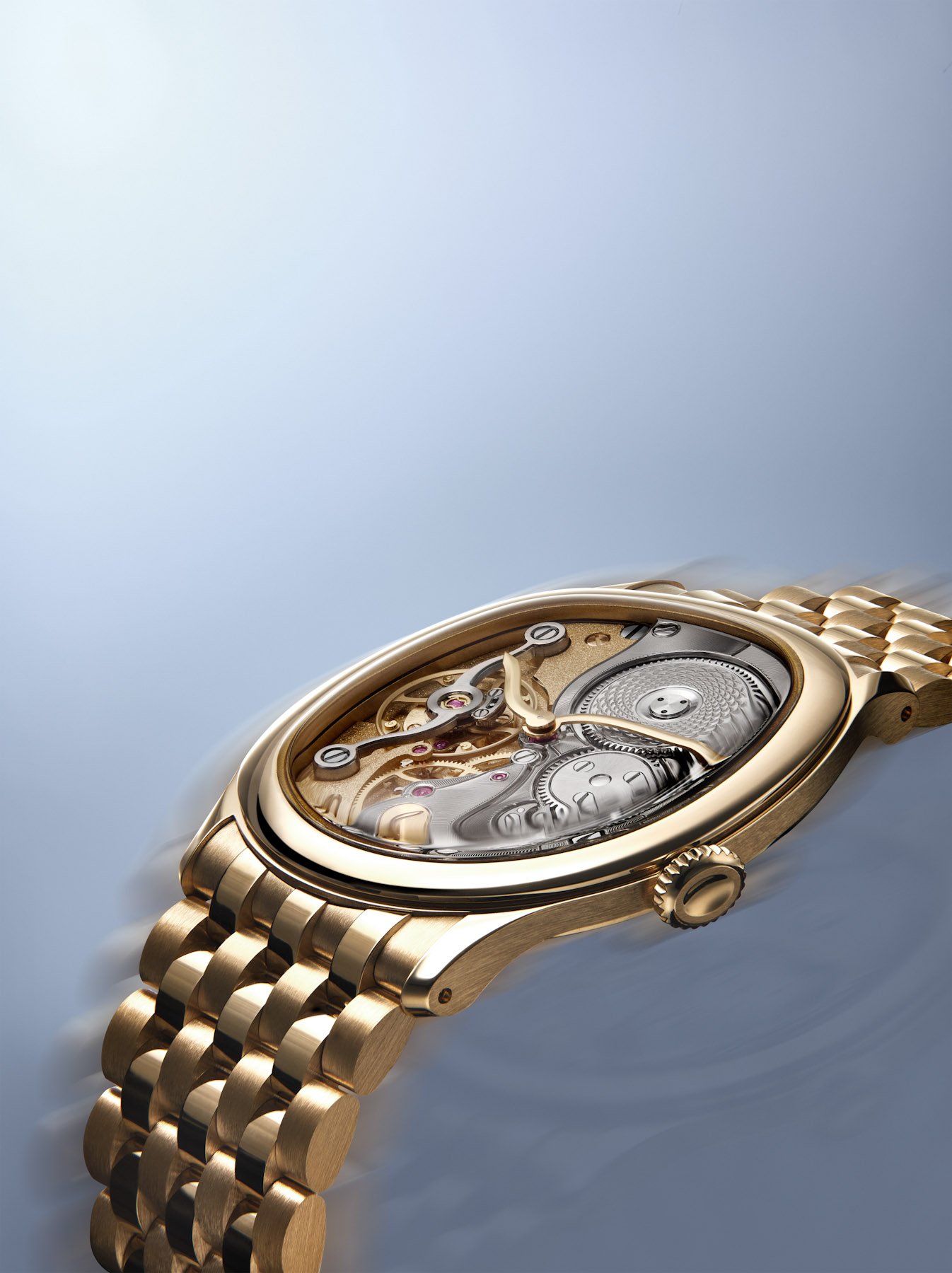
The movement has been designed specifically around the mirrored concept, giving the dial side a distinct identity. Even the movement’s guilloché has a job beyond decoration. The sector pattern becomes the marker through which the hours are read. This is where the Miroir becomes particularly interesting from a horological perspective. Modern openworked watches often make the movement visible by removing material. Berneron is taking a different route: the architecture itself becomes the display. It also has no conventional seconds hand. Instead, the seconds wheel is left visible and acts as a running indicator through its rotation. This is a small but important decision. Removing another layer of dial furniture means the mechanical structure remains exposed, allowing the movement to communicate the passage of time rather than merely decorate it. That is a much more convincing use of openworking than simply putting a transparent window somewhere on a watch.
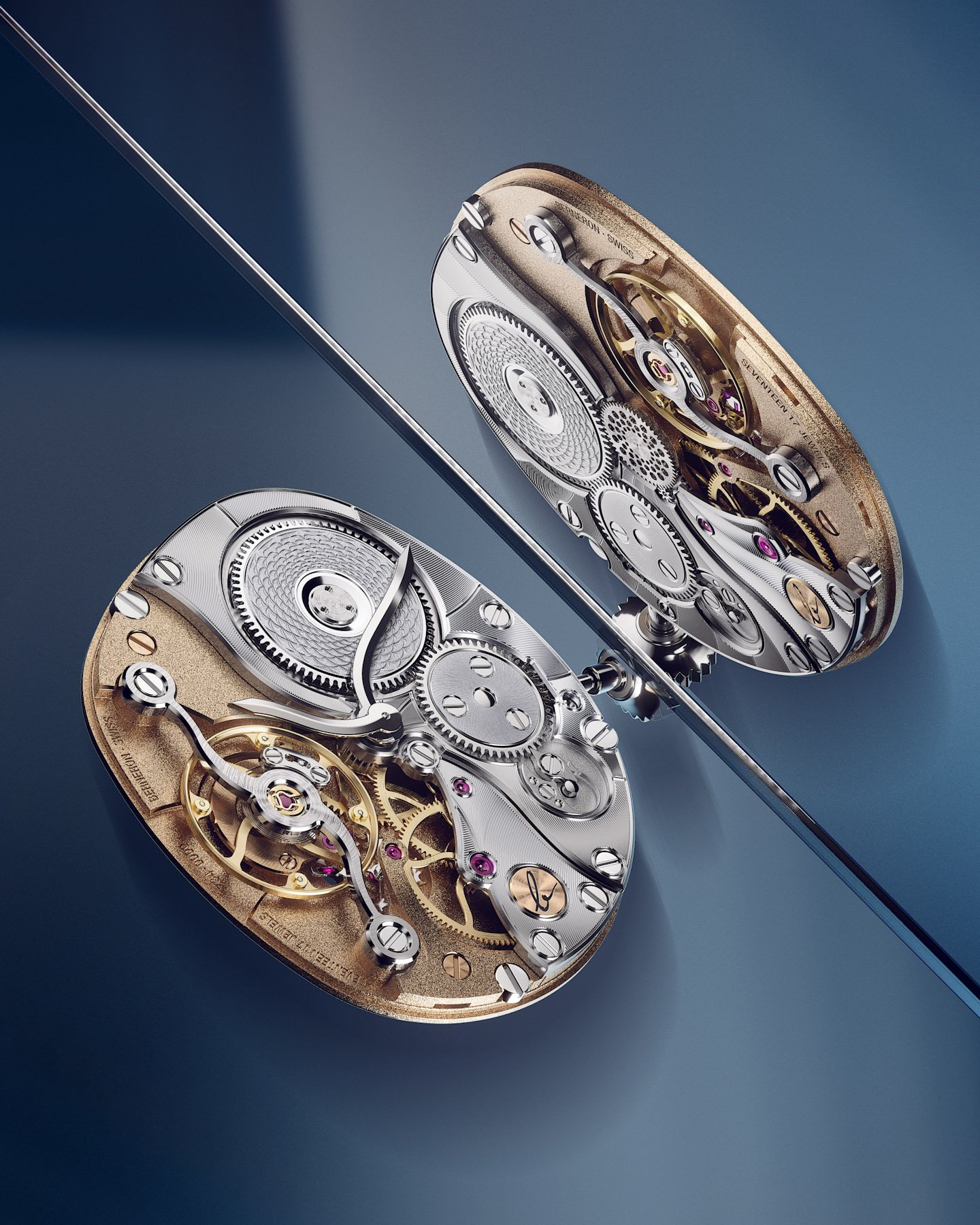
Calibers 283 (left) and 233 (right)
Caliber 283: Decoration with a purpose
Berneron’s new 30 × 28mm caliber 283 gets its name from its 2.83mm thickness. It contains 135 components and 17 jewels, ticks at 21,600 vph (3 Hz), and provides a 72-hour power reserve. Although it uses a traditional Swiss lever escapement and a free-sprung balance wheel, the inverted handset places the hour hand above the minute hand. That last detail is particularly relevant to the Mirage identity because Berneron has used the reversed handset to achieve a thinner composition.
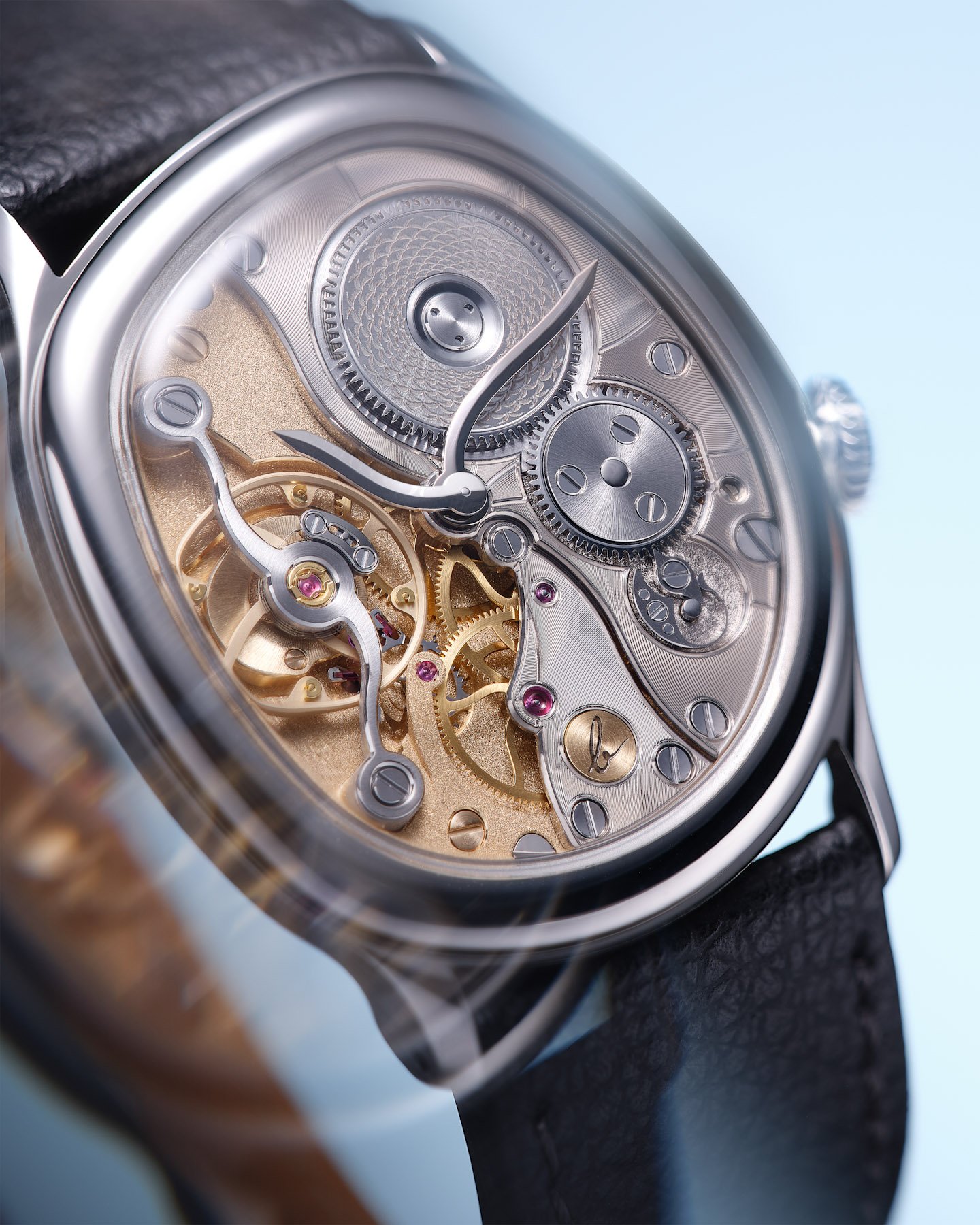
Then, there is the finishing. Berneron has packed its caliber 283 with a mix of traditional techniques, including guillochage, colimaçonnage (snailing), laser engraving, anglage, cerclage (concentric brushing), traits tirés (linear satin brushing) and nuagage (frosting). None of this is particularly surprising for a watch at this level (and price). The important thing is how those techniques participate in the package. The guilloché is not simply there because it looks good (although it does). It helps mark the hours. Additionally, the bridges’ stepped architecture creates visual divisions that assist in reading the watch. The decoration is part of the face, so to speak.
The 30m-water-resistant 34mm-wide case has a 42mm lug-to-lug and is made entirely of 18K gold. In fact, so are the watch’s hands, mainplate, bridges, and buckle, as well as the strap’s buckle and spring bars. Considering the visual complexity here, the Mirage Miroir’s 7mm profile is impressive. There is also something old-school about the use of a Hesalite crystal with a scratch-resistant coating rather than just going for sapphire because the movement deserves to be seen. Berneron offers the Miroir on a 20/16mm Barenia leather strap or a 20mm solid-gold bracelet.
Final thoughts
There is a tendency in independent watchmaking to mistake “doing too much” for originality. Give a watch an asymmetrical case, show half the movement, and throw in some French-sounding finishes, and suddenly, the nerds will drool over it. Berneron has always been cool to me, though, because the Mirage’s bizarre shape has a mechanical reason for its existence. The watchmaking here is closer to industrial design, sculpture, or jewelry but doesn’t forsake the horological logic that purists care about.
Caliber 233 made the first Mirage what it is, and caliber 283 now puts it all right in your face. The Mirage Miroir is priced at CHF 72,500 on leather and CHF 130,250 with the 18K gold bracelet. First deliveries are scheduled for October 2027, with Series A production planned at 36 pieces per color annually for 10 years. For a brand that describes its watches as “art to wear,” the Miroir is probably one of the clearest projections of that yet.
What do you think of the Berneron Mirage Miroir? Is this an upgrade to or a downgrade from the original Mirage? Is Berneron on the right path as an independent? Dear friends, let’s chat!