The Photographer Preserving Centuries Of Pocket Watches

Today, we have a slightly different story here on Fratello. This is the experience of one New Zealand photographer who has been diligently capturing the mechanical lives of pocket watches at the Tāmaki Paenga Hira Auckland Museum.
There’s a big difference between commercial watch photography and museum archiving. Commercial photography is about selling a fantasy of sorts. It’s about slick lighting, spotless surfaces, and carefully edited glamour shots that hide every microscopic smudge. Archival photography, however, is about unvarnished truth. It documents an object’s reality, scratches, patina, broken bits, and all, ensuring that its history is preserved long after the metal itself might degrade. Therefore, it’s no exaggeration to say that good museum archival photography can require some of the highest technical skills in the craft.
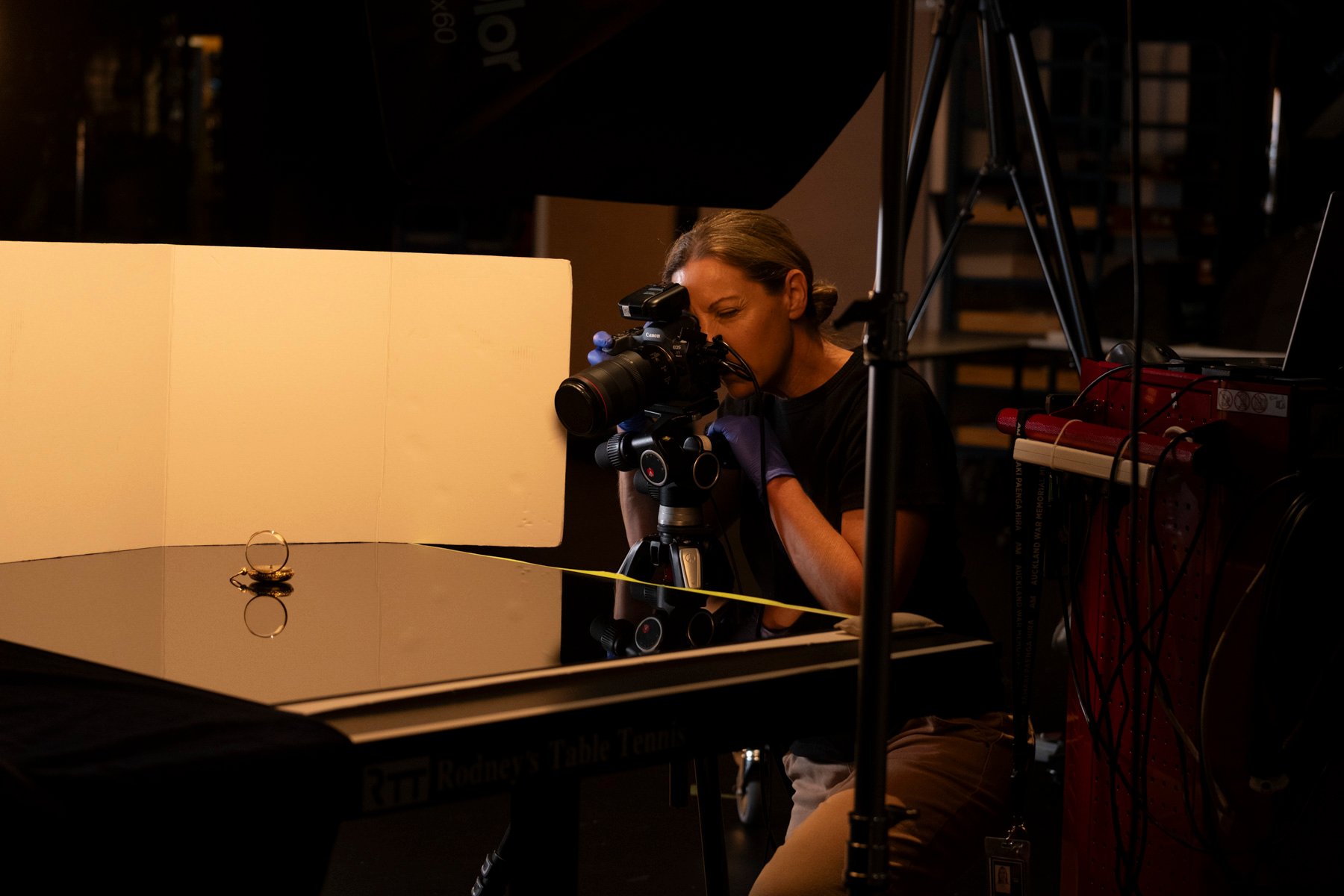
Jen Carol at work
When museum photographer Jen Carol was tasked with digitizing more than 100 antique pocket watches at the Auckland Museum in New Zealand, she wasn’t merely taking pictures. Rather, she was creating a permanent visual record of 17th-, 18th-, and 19th-century horological history. I spoke with Jen to discuss the technical challenges of taming reflective glass and gold, encountering archaic horological terms like “beetles and poker hands,” and what happens when a 100-year-old watch suddenly starts ticking on your studio table.
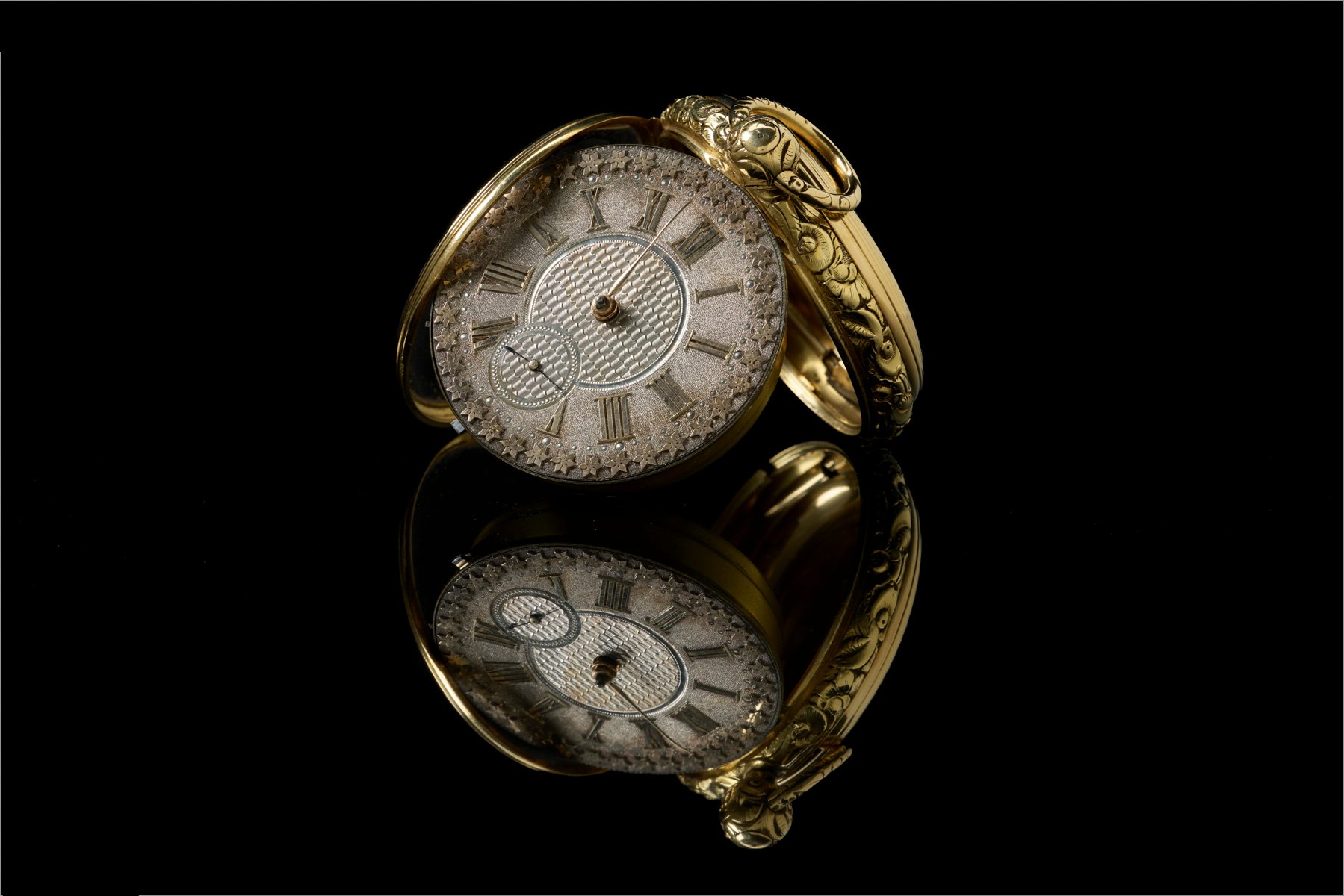
John Gleave, 1826, Liverpool, H108
The archival mandate: no Photoshop
“At the museum, we shoot for archival purposes, not for commercial reasons,” Jen explains. “The wear and tear, the dust, the scratches, the broken bits, they are all important. They form part of the object’s history. We don’t do any post-production work, no touch-ups, no alterations. The photo stays true to the moment the object came into the museum’s care.”
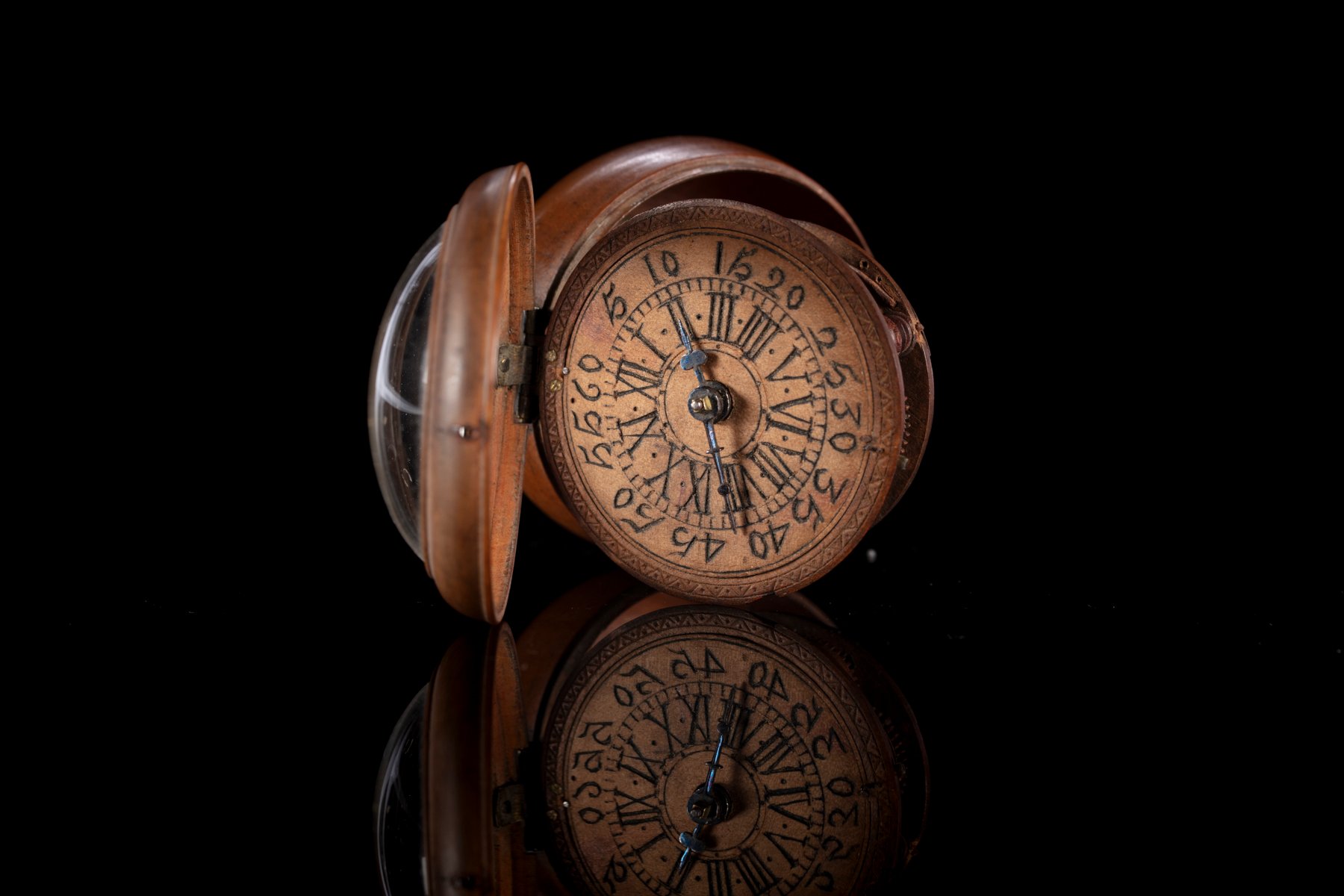
Unknown, 18th century, Russia, H71, Mackelvie Collection
That mandate places massive pressure on the camera setup. In a commercial shoot, a hot spot on a crystal or a shadow over a hallmark can be fixed in Photoshop. In archival work, if it’s not right in the frame, it’s wrong forever. The pieces’ physical fragility only makes the process more exacting. “There is an added layer of complexity due to their age and condition,” says Jen. “Each watch is assessed for risk, and that informs how I approach the photography. A hinge might be too fragile to open, for instance, or I may need a collection manager present. I can’t suspend, prop, or force any part of the watch. How the watch sits is how it is photographed.”
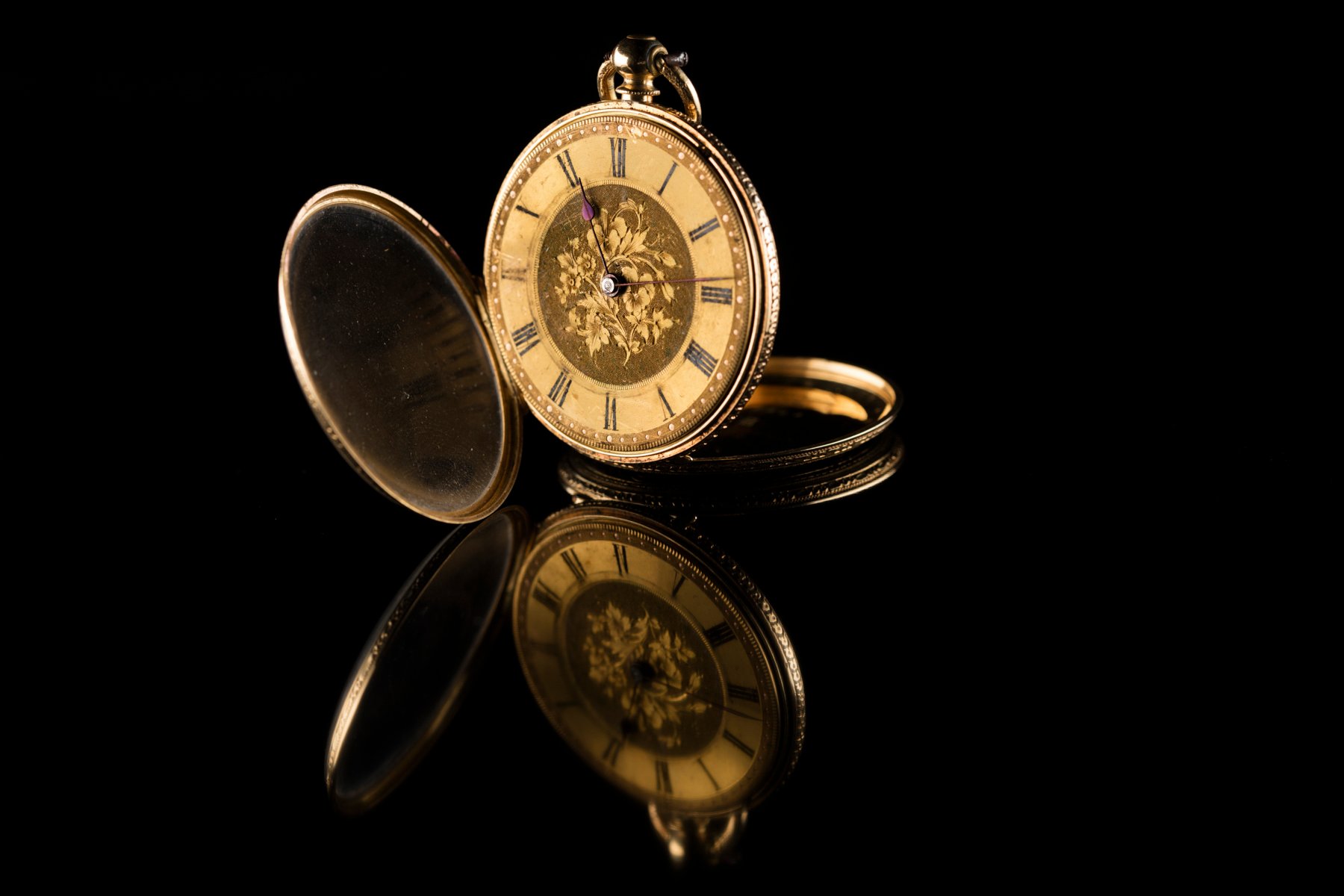
Bernard, circa 1880, Switzerland, H197
Taming the glare: a trial-and-error masterclass
Photographing a pocket watch means battling a curved dome of glass resting over highly reflective gold, silver, or gunmetal. Initially, Jen tried a heavy-handed approach to control reflections — placing a circular polarizer on her camera lens and polarizing gels over hard studio light modifiers. The result? The reflections disappeared entirely. “The reflections died right there,” Jen recalls. “However, the combination of hard directional light and the total lack of reflections looked horrible. I needed a cup of tea.”


Step away from the studio table, reassess. Removing 100% of the reflection tricks the human eye into thinking the crystal isn’t even there. To make the watch look real, you need subtle highlights along the curve of the glass, just enough to give it form without obscuring the dial underneath.
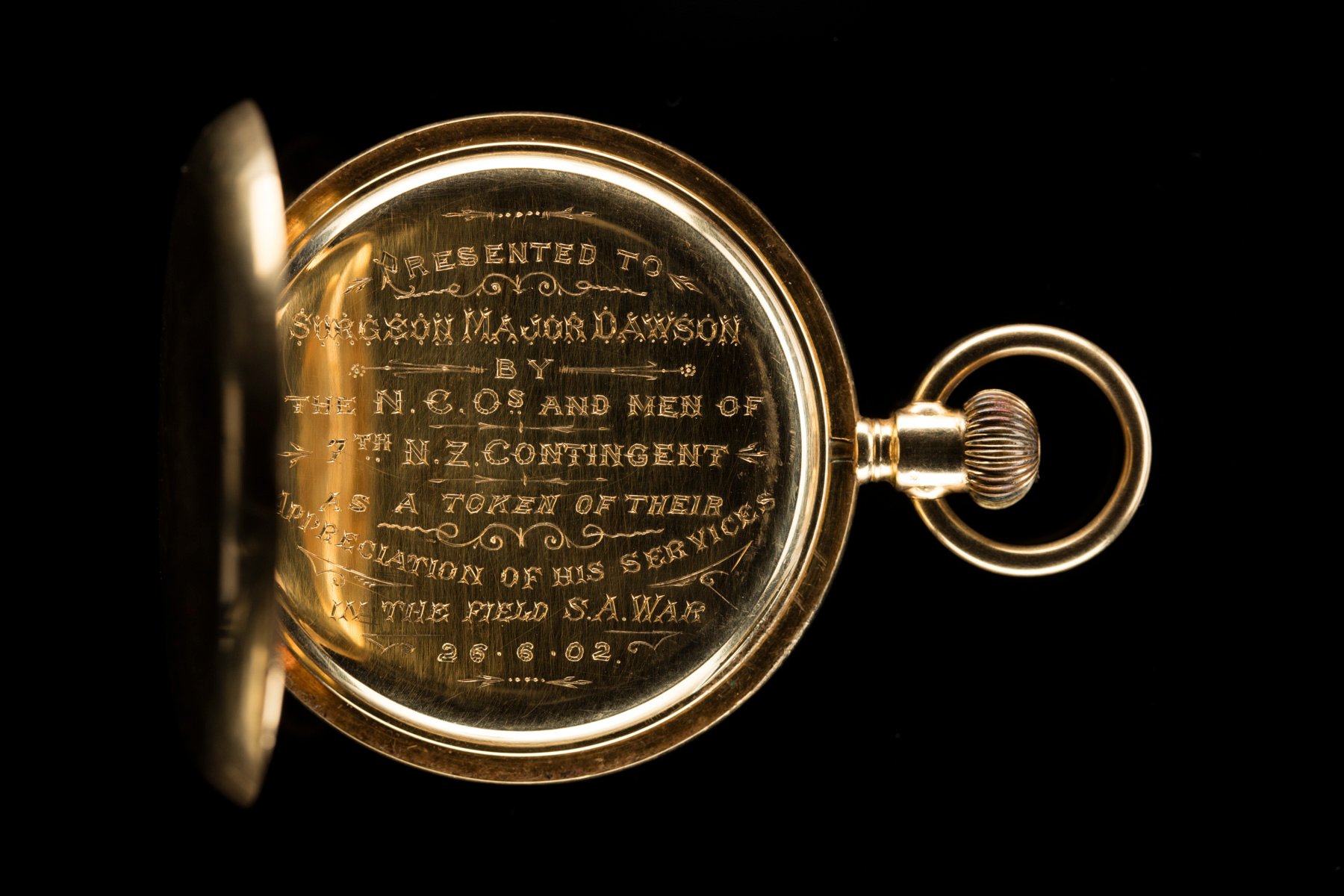
Surgeon Major Dawson’s pocket watch, South African War, 1902, 1994X1.345
A technical feat
Jen ditched the polarizing gels on the lights, keeping only the circular polarizer on her lens to fine-tune highlights. She set up three low-positioned strip boxes (creating long, thin rectangular light sources to avoid center-dial glare) and placed a curved white bounce card in front of the watch for fill. For the base, she chose a black acrylic board. The dark background eliminated distracting float, grounding the watches with a subtle, elegant reflection.
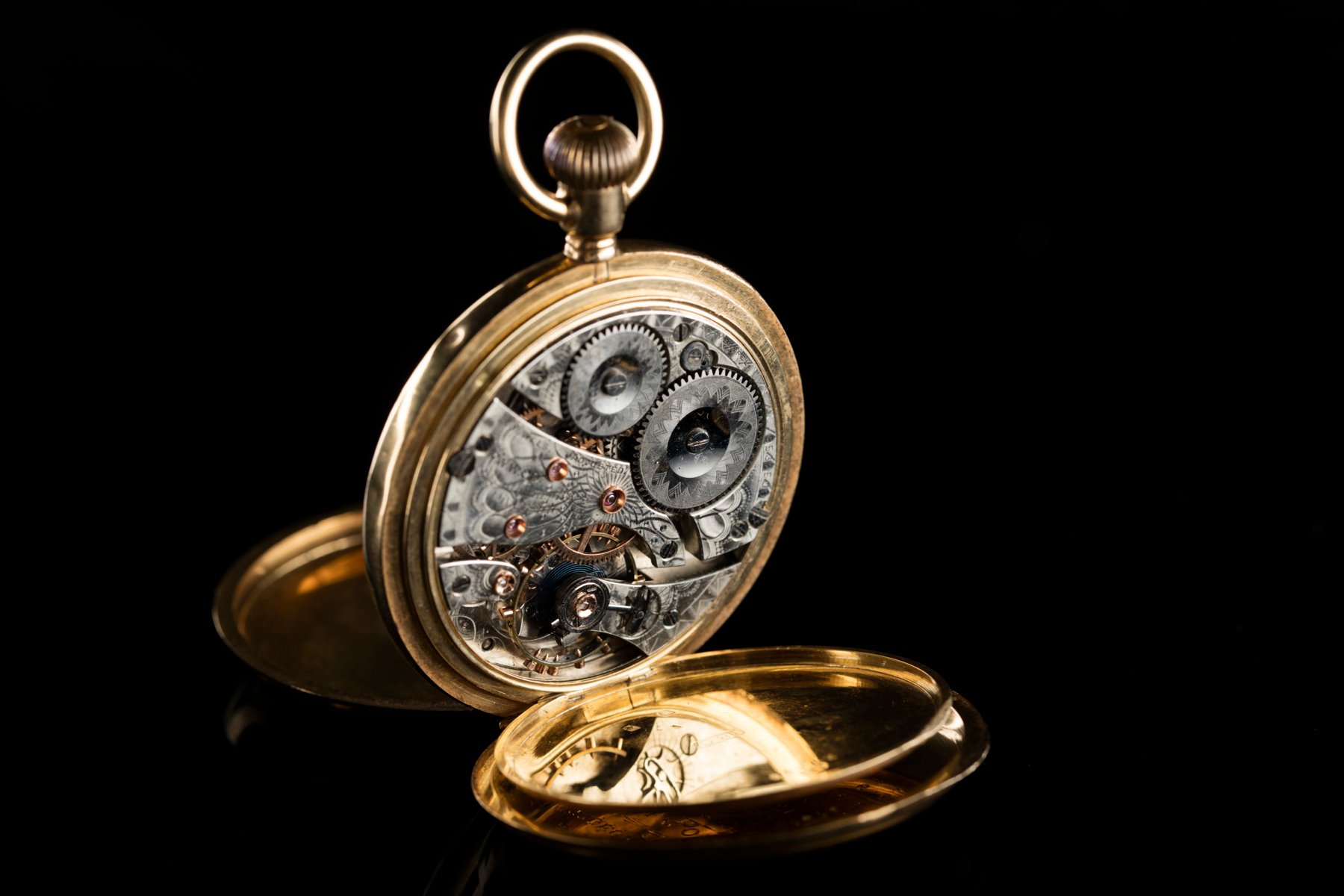
Surgeon Major Dawson’s pocket watch, South African War, 1902, 1994X1.345
Deciphering the language of 18th-century pocket watches
Before Jen could methodically work through the collection, she had to learn what she was actually looking at. Cataloging a watch movement requires documenting specific maker’s marks, escapements, and decorative elements. “I had to do a lot of research to familiarize myself with the mechanical structure and terminology,” she says. “Some of the words raised a few eyebrows — mine, anyway! Terms like ‘pierced cock’ or ‘beetles and poker hands.'”
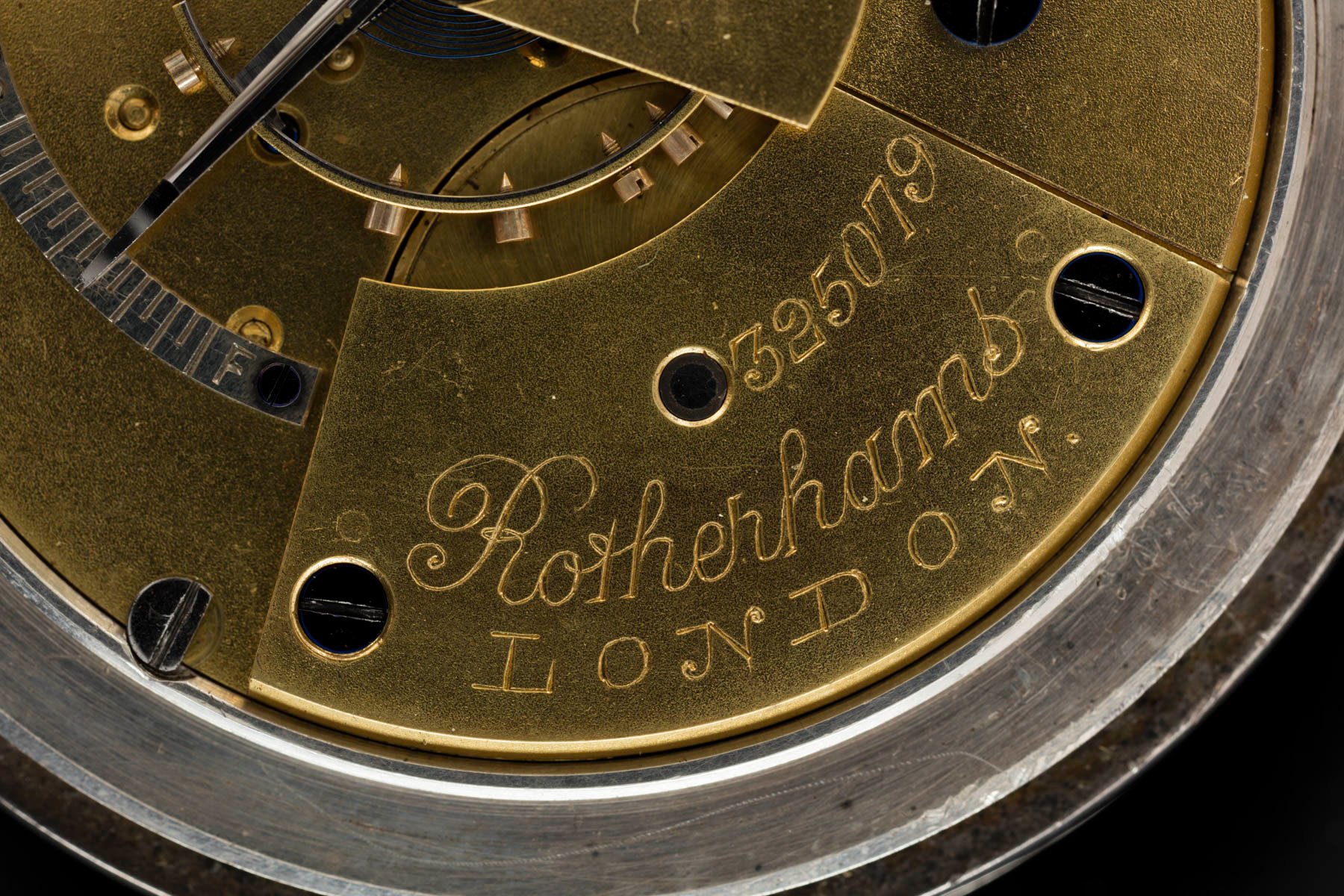
Rotherhams, 1912, London, H128
For those unfamiliar with early horological parlance, here is a little primer. Pierced Cock: The balance cock (the bridge holding the top pivot of the balance wheel), heavily hand-carved and drilled with intricate decorative scrollwork common in 18th-century English and French pocket watches. Beetles and Poker Hands: A distinct style of 18th-century watch hands. The hour hand features a bulbous, beetle-like loop, while the minute hand is straight and pointed like a poker.
Among the collection were 18K gold cases, hand-carved rubies, and unique complications. One standout piece from the 1920s featured a gunmetal case with a gilt push-piece on the side and a repeater movement designed to chime the hours and minutes in the dark. As Jen puts it, “Essentially, these were the smartwatches of their time.”
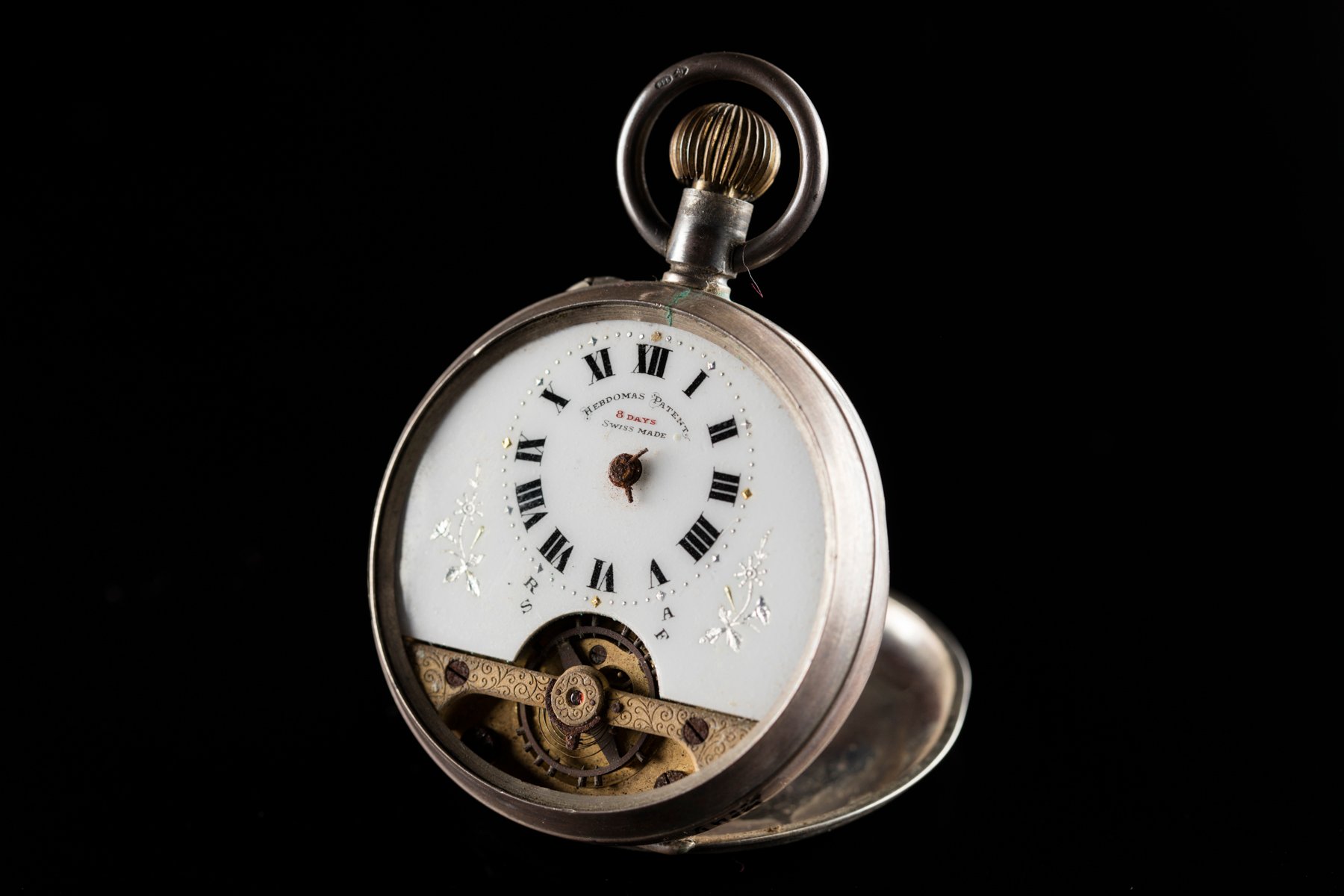
Hebdomas, 1918, Switzerland, H140
“To Lilly from Dad, May 1912”
While the mechanical diversity was fascinating, the human element of the collection left the deepest impression. “Watches are deeply personal objects,” Jen reflects. “Early pocket watches were symbols of status, but they were also personal treasures. Scratched service dates, hallmarks, or inscriptions are the threads of information that tell us about the maker and the person who wore it.”
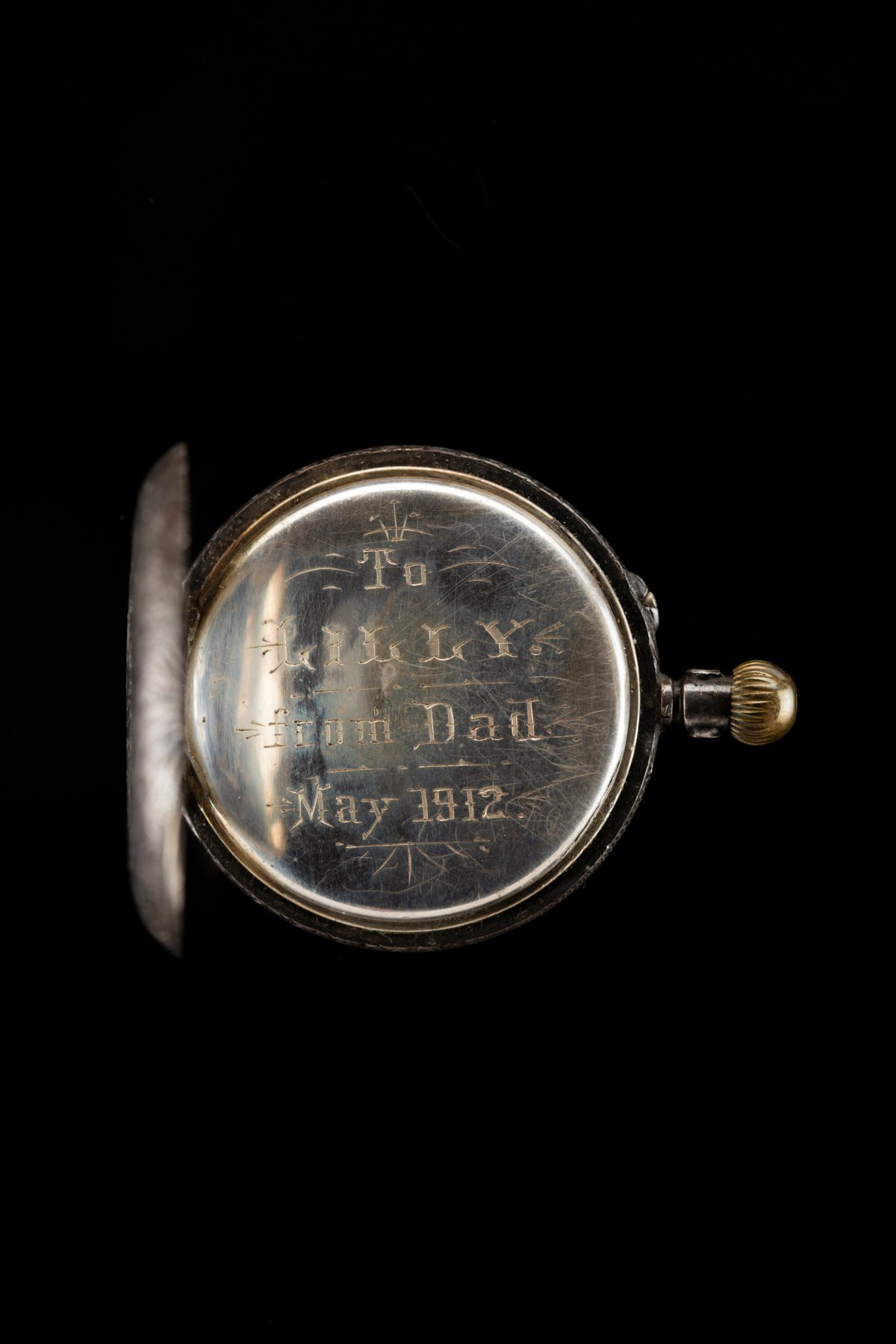
Unknown, circa 1912, Switzerland, H153.5
One moment during the shoot stood out above all others. “There was this one pocket watch, an early 20th-century piece with a pretty design that had the inscription ‘To Lilly from Dad, May 1912.’ It was the only one I could recall with a direct family connection. When I placed it on my studio table, it started to tick with a steady rhythm that didn’t stop until the photography was complete and it was tucked back into its box. I was hearing the sound of the past,” Jen says. “A watch over a hundred years old, made with such precision that one small movement brought it to life. Just maybe it’s an echo of the love that existed between a dad and his daughter.”
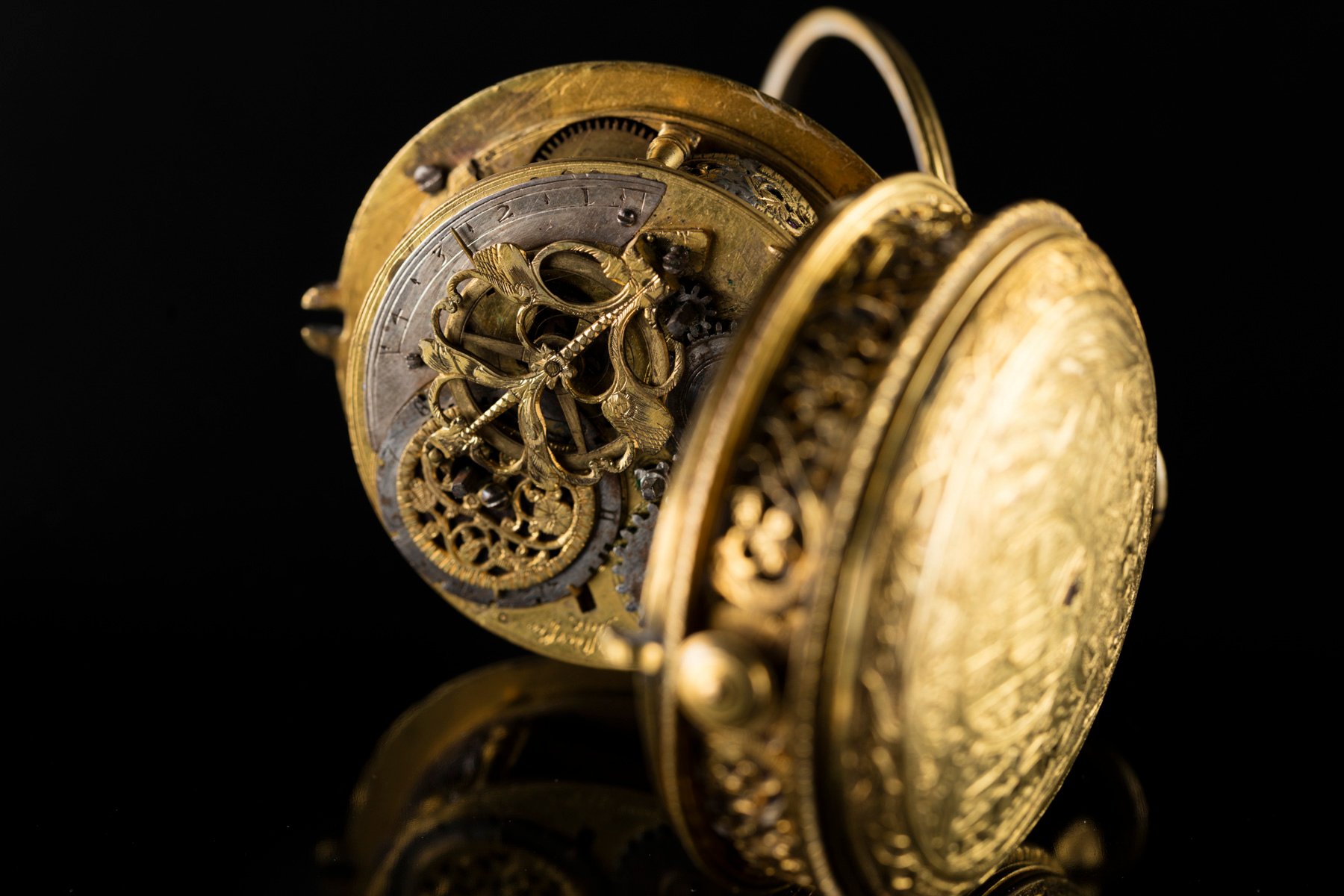
Johan Pöstdorfer, circa 1600, Dresden, H95, Mackelvie Collection
Preservation for a global audience
Digitizing museum collections isn’t just an internal housekeeping exercise. By capturing macro-level details of hallmarks, scratched service records, and movement architecture, the Auckland Museum opens its vaults to the world.


Whether it helps a horological historian study engravings on 18th-century balance cocks from across the globe or a descendant looking up a piece owned by a great-great-grandparent, high-resolution archival imagery bridges the physical gap.
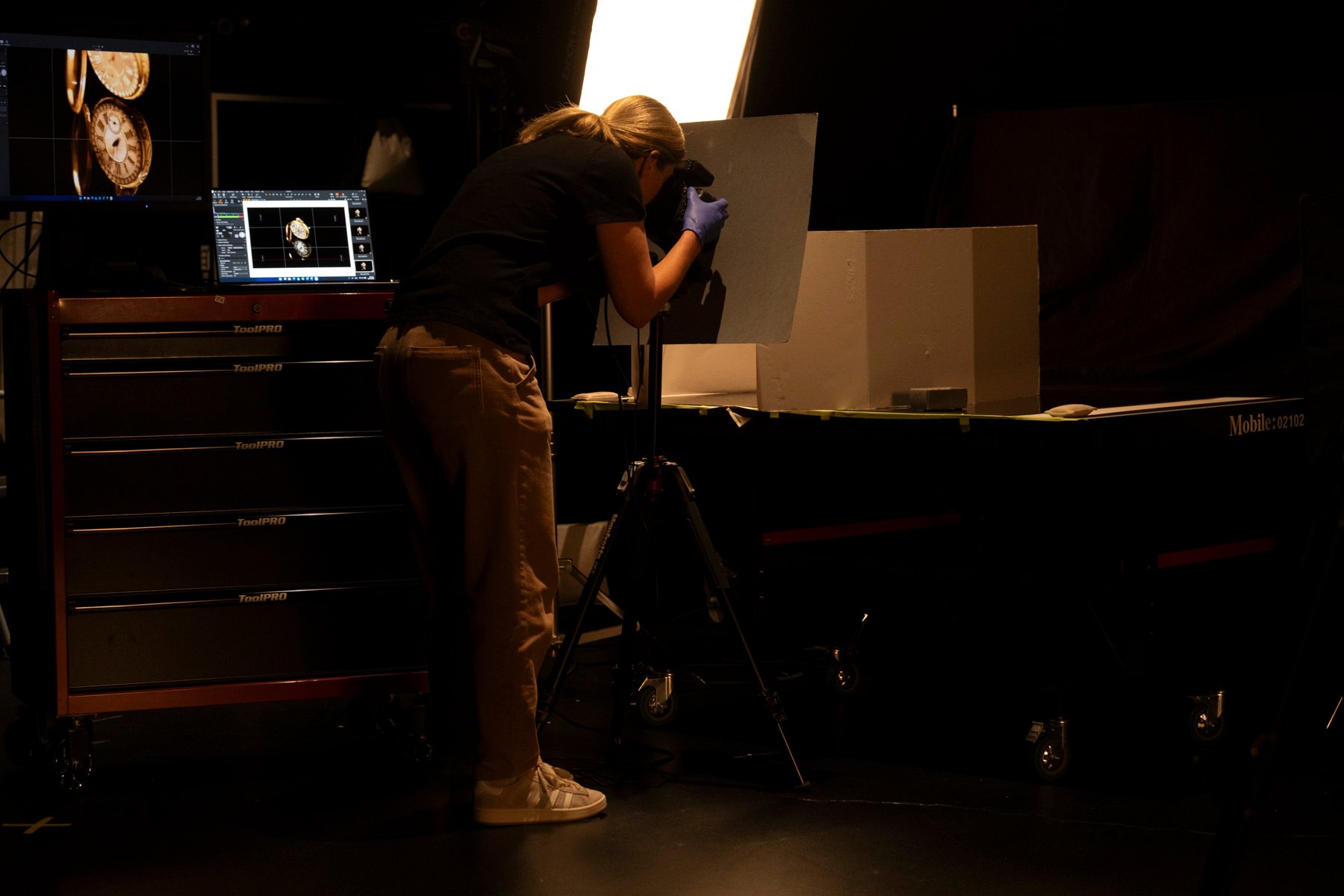
Jen at work
Concluding thoughts
For Jen, the technical headaches and lighting puzzles were well worth the result. “It’s a rare opportunity to see such an extensive collection that spans three centuries in such detail. As a creative, I want people to see what I see, to get pulled into these tiny objects and feel that same sense of wonder.”


Our thanks to Jen and the Auckland Museum for sharing this wonderful insight into the Museum’s pocket watch collection, as well as the creative and technical process behind photographically capturing these beautiful objects.


All pocket watch images are from the collection of Auckland Museum, made freely available under a Creative Commons 4.0 CC BY license. Auckland Museum is located in the Auckland Domain, Auckland, New Zealand.