We Had It So Good: The IWC Mark XV And The Rolex Explorer Ref. 114270

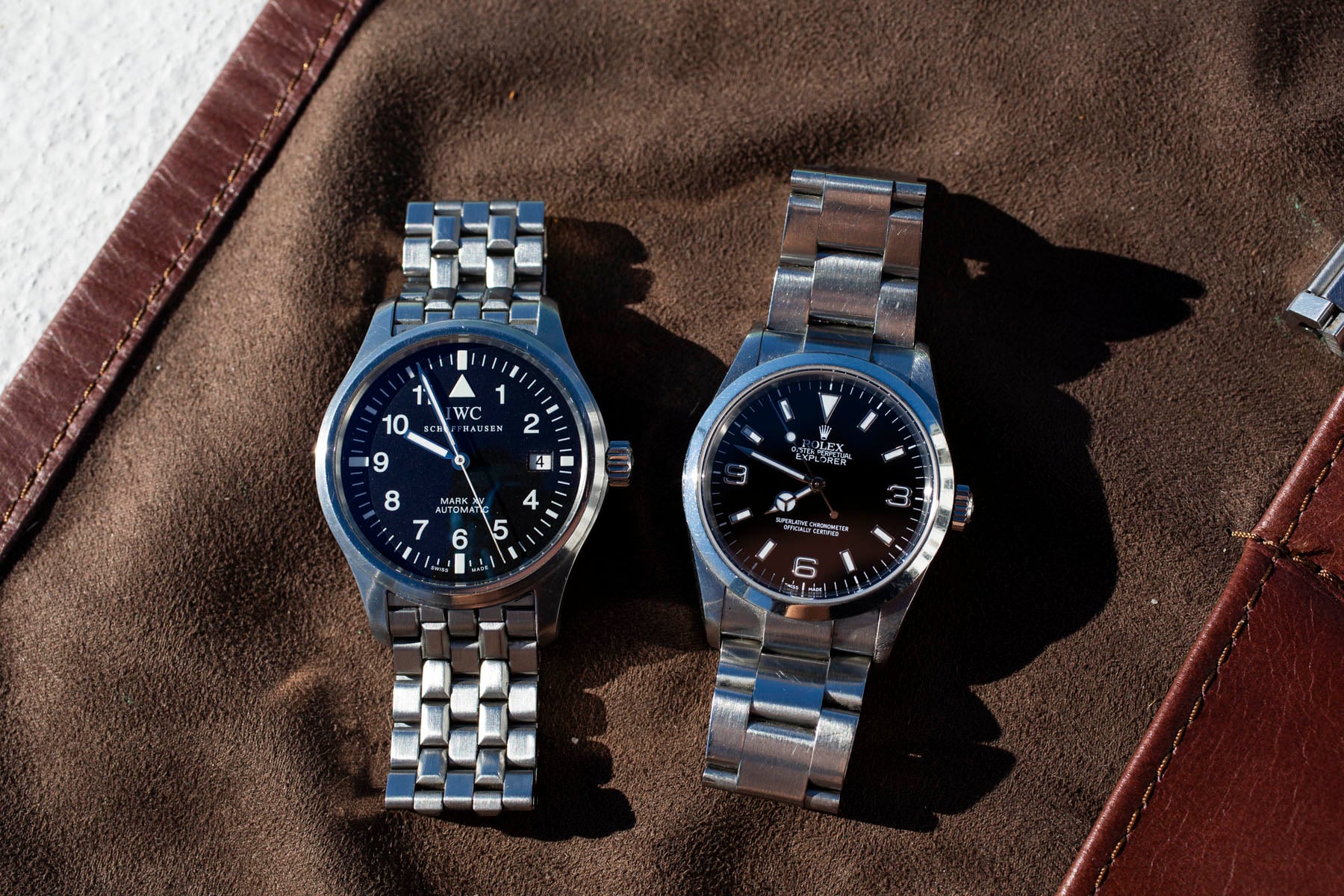
Put an IWC Mark XV next to a Rolex Explorer ref. 114270 on a table, and you might wonder why anyone would bother comparing them. One is a Schaffhausen pilot’s watch built around a military lineage. The other is Rolex’s purest expression of the no-nonsense sports watch, worn by mountaineers and geologists long before it became a fixture of wrist checks. And yet, spend real time with both, as I have with my Mark XV, a watch that has been down one of Australia’s deepest mine shafts and across Tasmania on the back of a vintage BMW motorcycle, and the kinship becomes obvious.
These are two watches born within a couple of years of each other, sharing the same understated confidence, and now sitting in the same pocket of the market. Both are recent enough to service easily but old enough to have some neo-vintage magic. I’ve come to think of the IWC Mark XV and the Rolex Explorer ref. 114270 as the definitive neo-vintage pairing, proof that watchmaking around the turn of the millennium got proportions right in a way the industry has only recently rediscovered.
The IWC Mark XV: my all-time set-and-forget watch
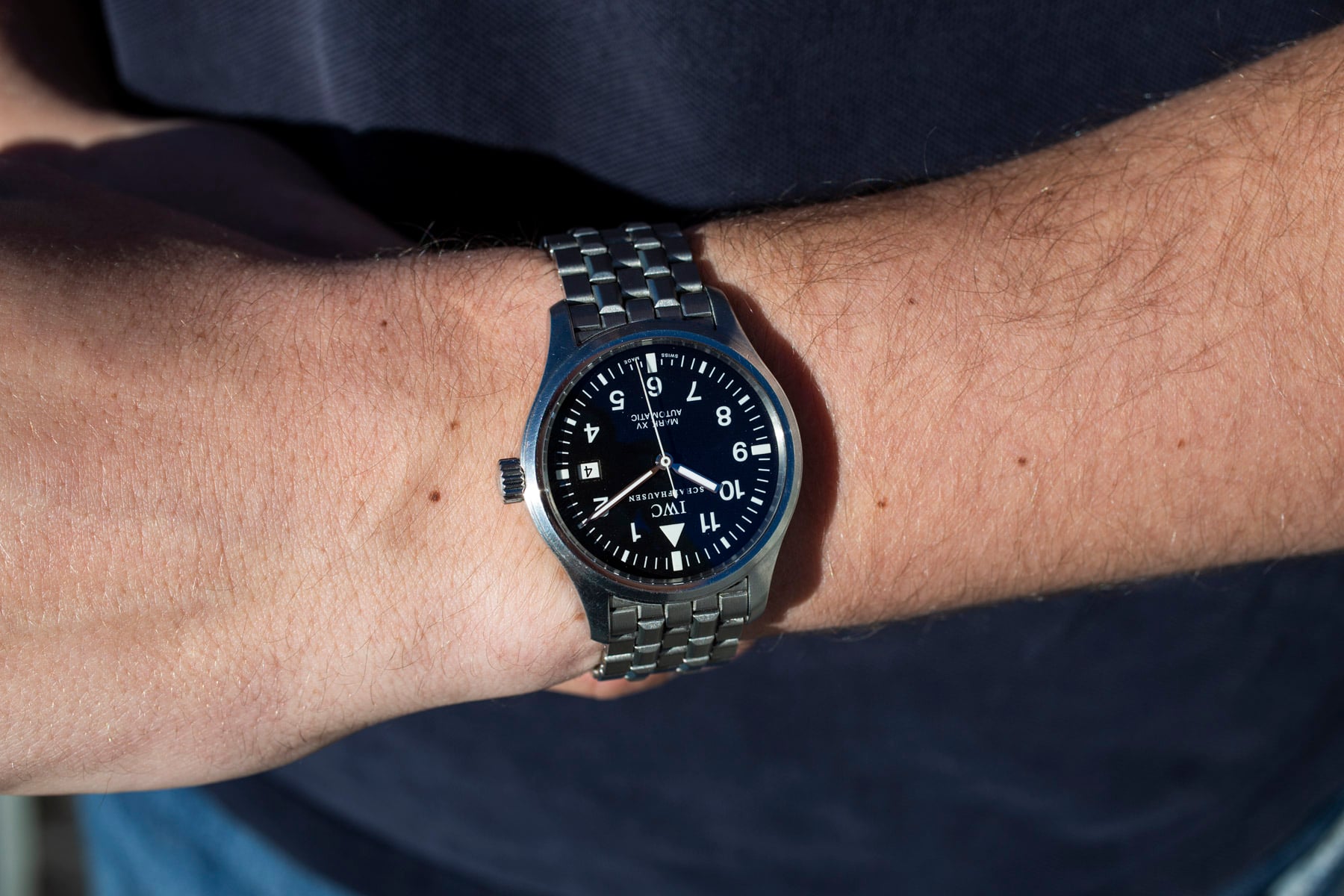
My Mark XV (ref. IW325301) didn’t come from a dealer or an auction house. My father gave it to me in 2017, right before I moved to Tasmania to take a job as a regional TV reporter. I’d only ever owned one other watch, a Seiko 5 he’d also given me a few years earlier when I moved to Southeast Asia. But I’d admired the IWC on his wrist for years before that. Something about its simple, legible dial always caught my eye, and handing it over was one of those quiet, generous gestures fathers make without much ceremony.
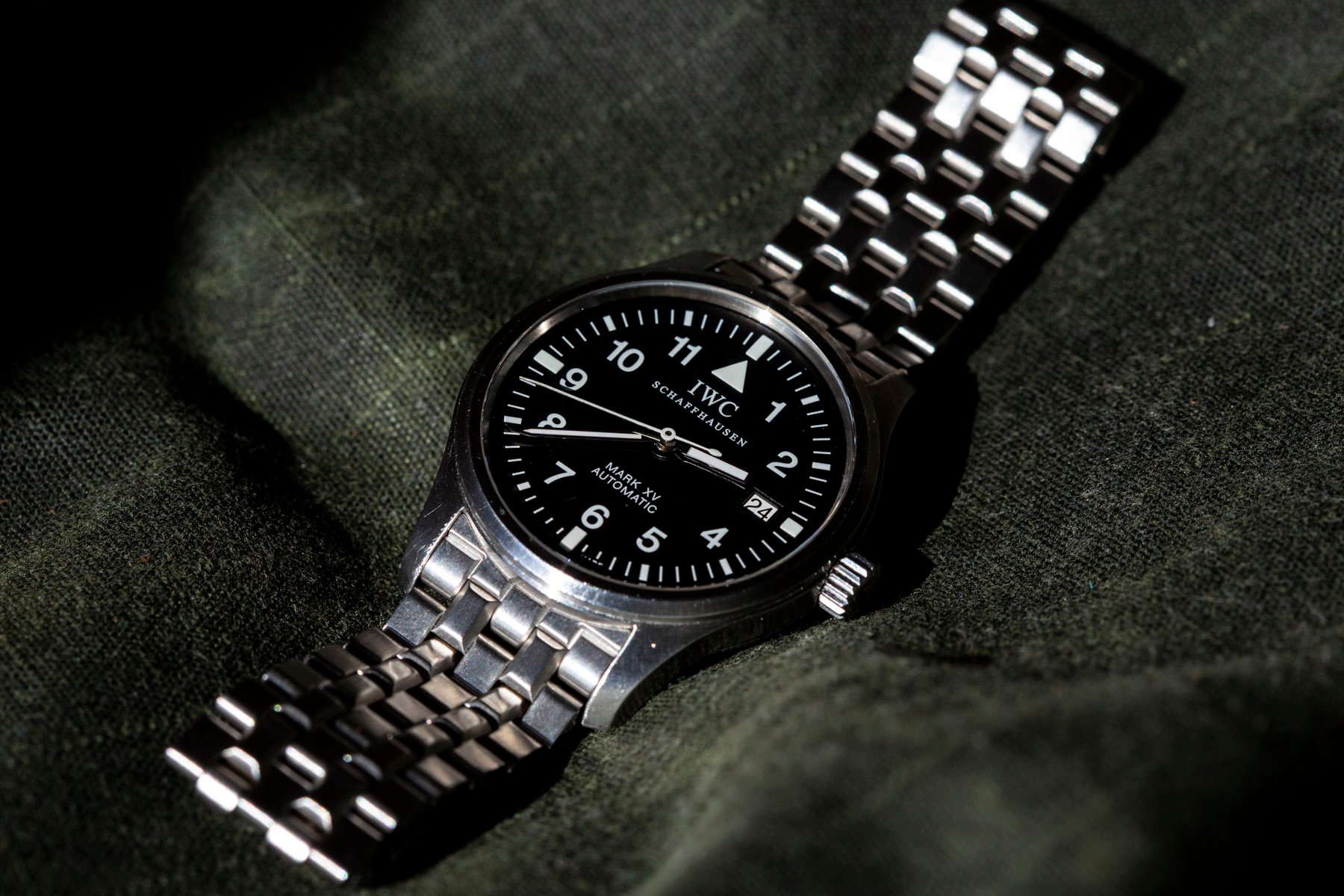
That watch has been everywhere with me since. It went 1,100 meters underground with me into the mothballed Mount Lyell mine, a site with a genuinely deadly and grim history, and it was still glowing reassuringly on my wrist when the lift finally hit the bottom. It rode the length of Tasmania, peeking out of my jacket sleeve on a 1985 BMW R80 during a return trip in 2025, a journey that had as much to do with processing a chapter of my life as it did with covering ground. Through all of it, the Mark XV has never once felt like the wrong choice.
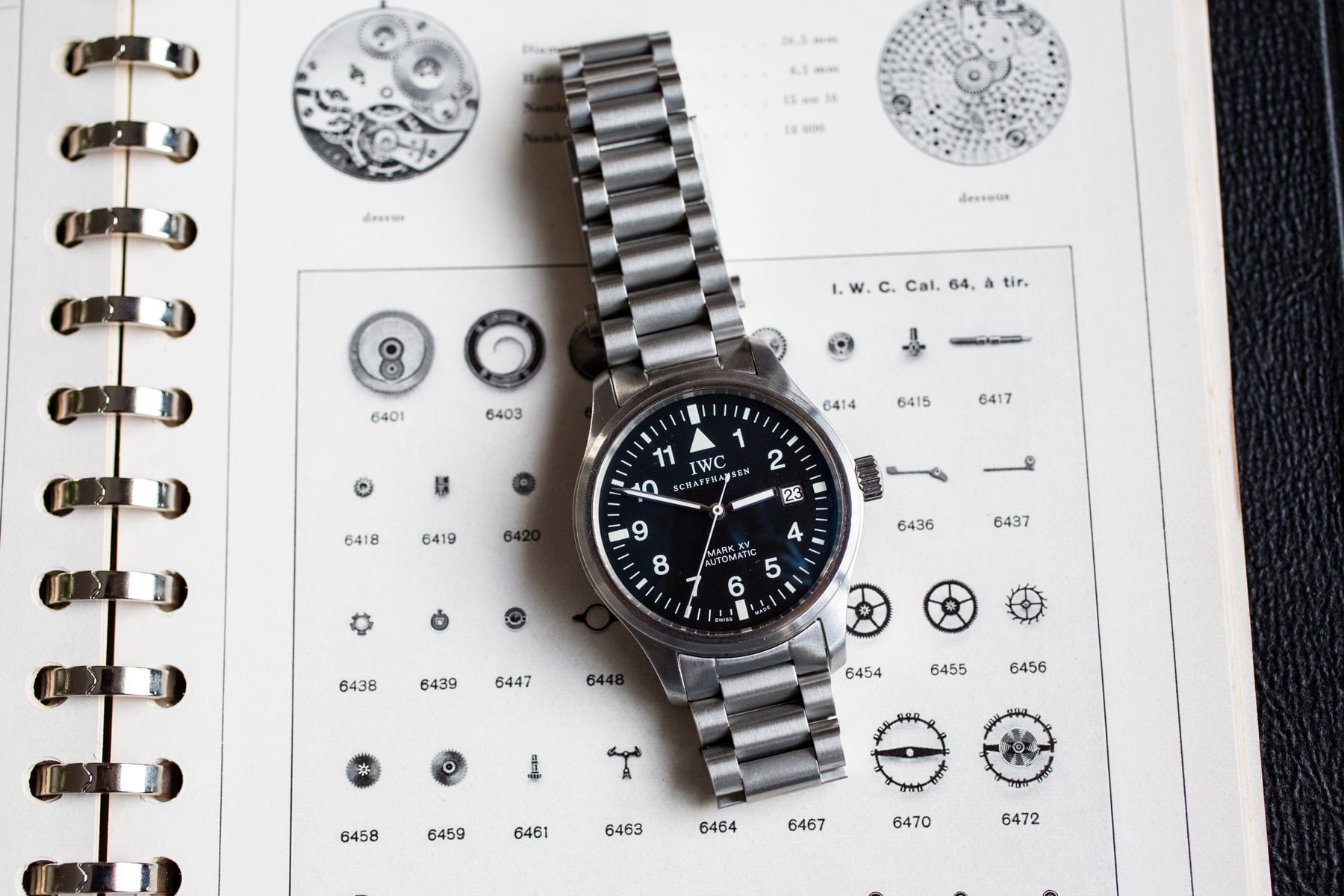
A wonderful era for IWC
On paper, it’s easy to see why. IWC’s Mark series traces back to the post-war Mark 11, and the Mark XV, produced from 1999 to 2005, making it properly neo-vintage now, pays homage to that heritage while being genuinely easy to own. The case has a 38mm diameter with a just-over 9mm profile (excluding the crystal) and a 47mm lug-to-lug. For me, at least, these proportions are simply… chef’s kiss.
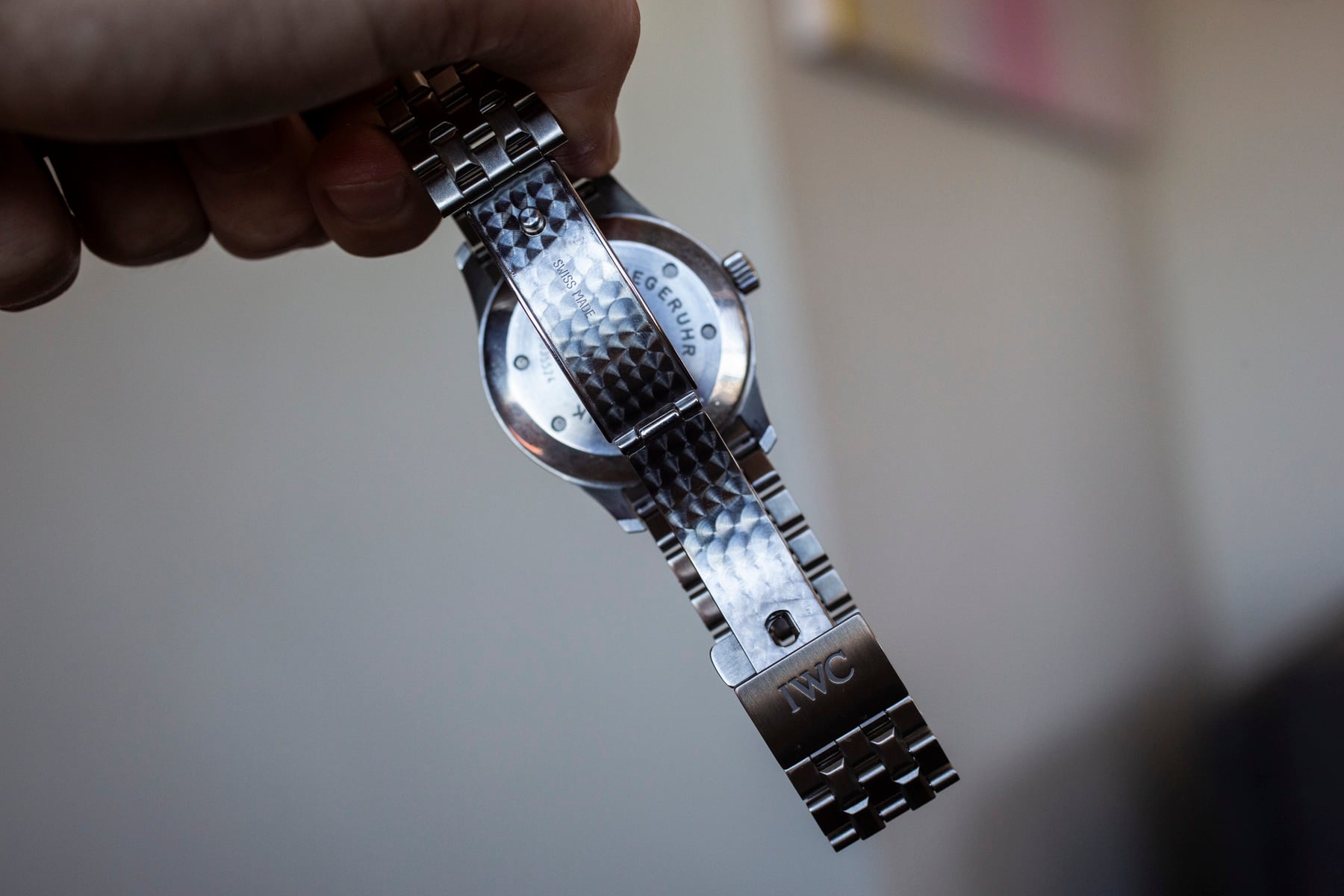
Inside is caliber 30110, IWC’s heavily modified take on the ETA 2892-A2, chosen specifically for long-term serviceability. Water resistance is rated to 6 bar, which, by IWC’s reckoning, is enough for snorkeling. Furthermore, the dial gives you exactly what you need — hour markers, hands, a date, and nothing else competing for your attention. The dial proportions are a lesson in restraint that modern IWC could learn from.
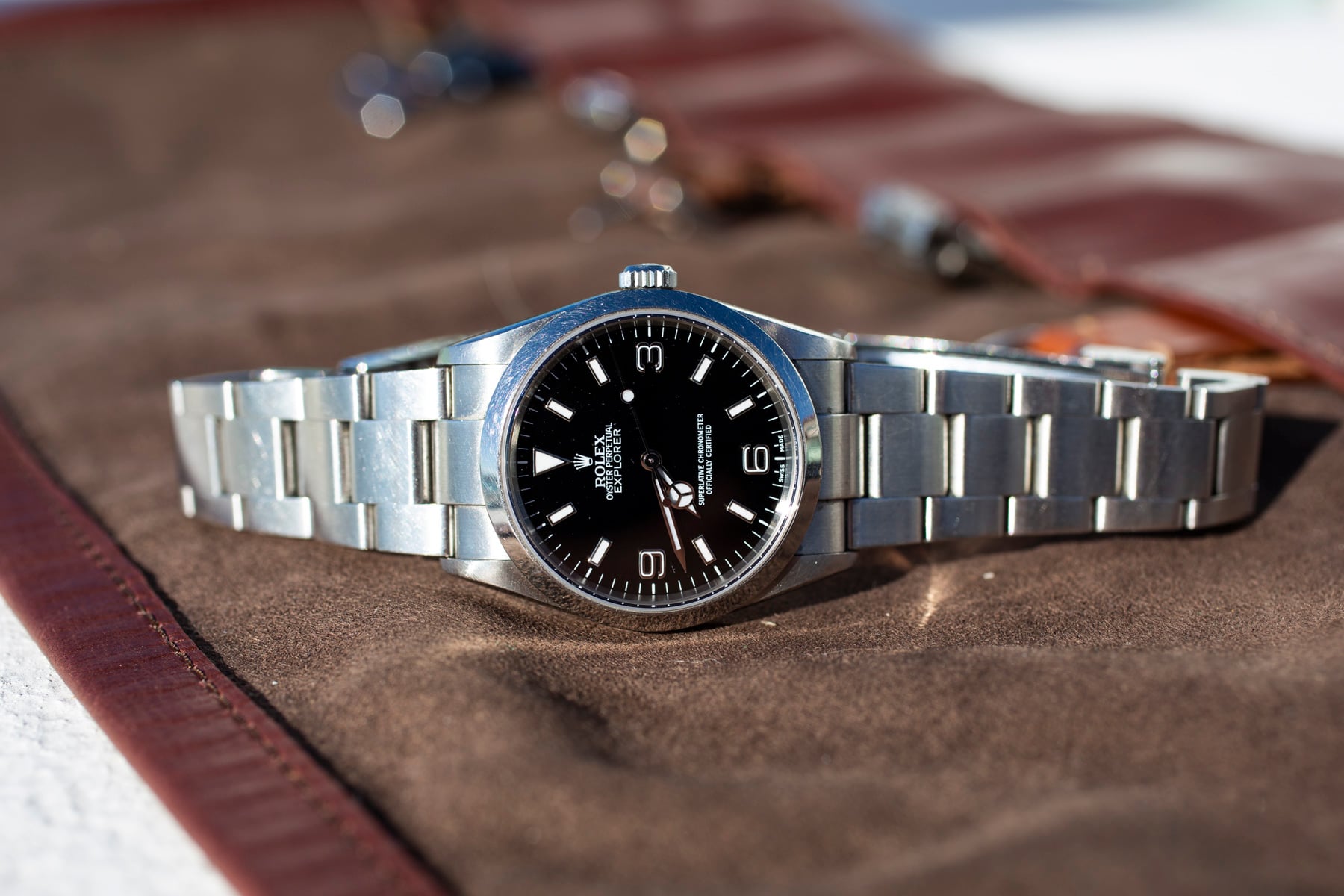
The Rolex Explorer ref. 114270: a colleague’s long way around
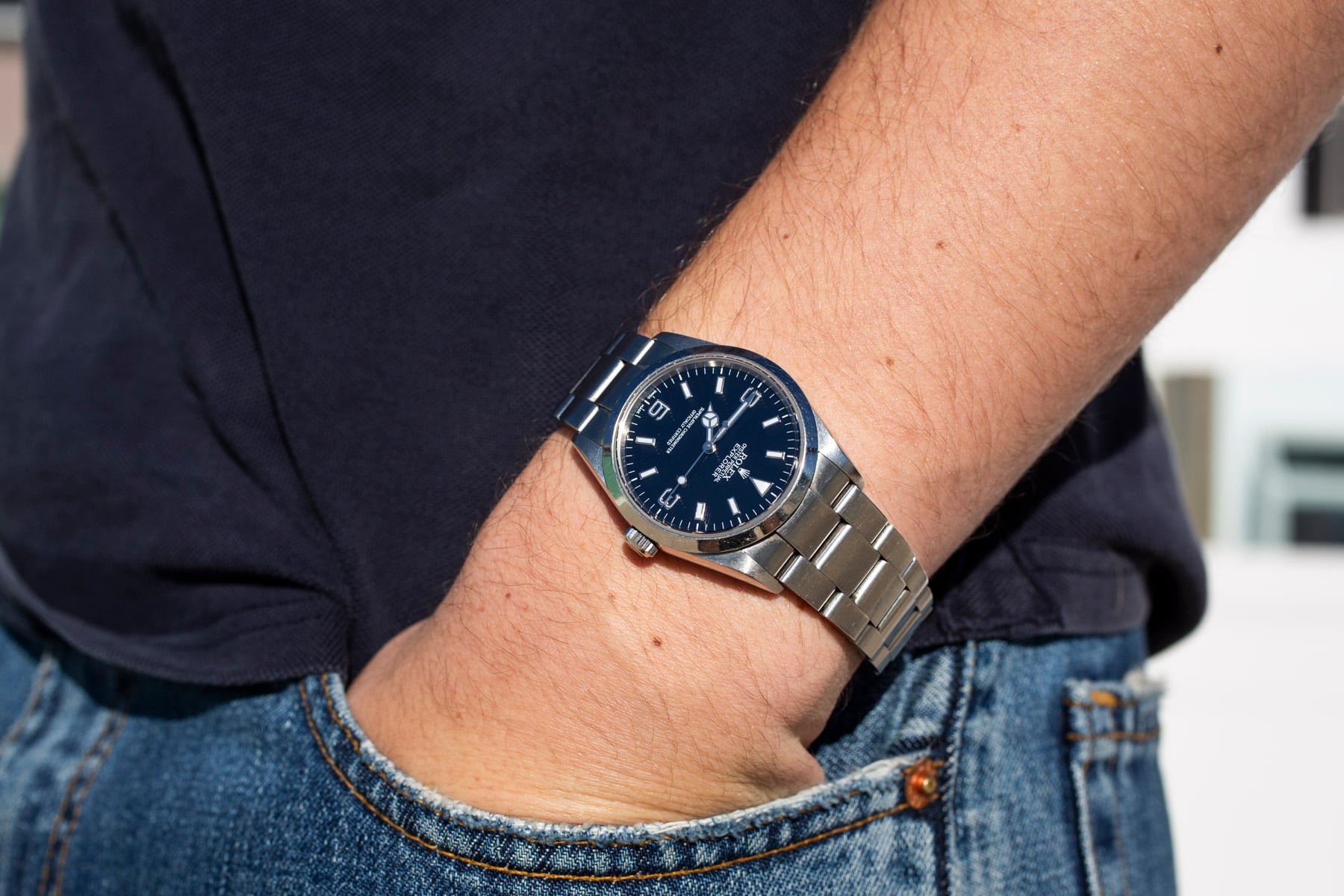
My Fratello colleague Daan owns the other watch I’m highlighting today, and his path to it says a lot about why the reference holds up. He bought a vintage Datejust ref. 1603 first, thinking it would suit him better, sold it after a few unsatisfying months, and only later realized the Explorer was the watch he’d actually needed the whole time. He’s owned his 114270 for a bit over three years now, and it has become one of his most-worn pieces. The Explorer’s story goes back to 1953, the same year Tenzing Norgay and Sir Edmund Hillary reached the summit of Everest, and the reference that eventually became the 114270 in 2001 still carries the black dial, 3-6-9 numerals, and Mercedes hands that defined some of the earliest versions.
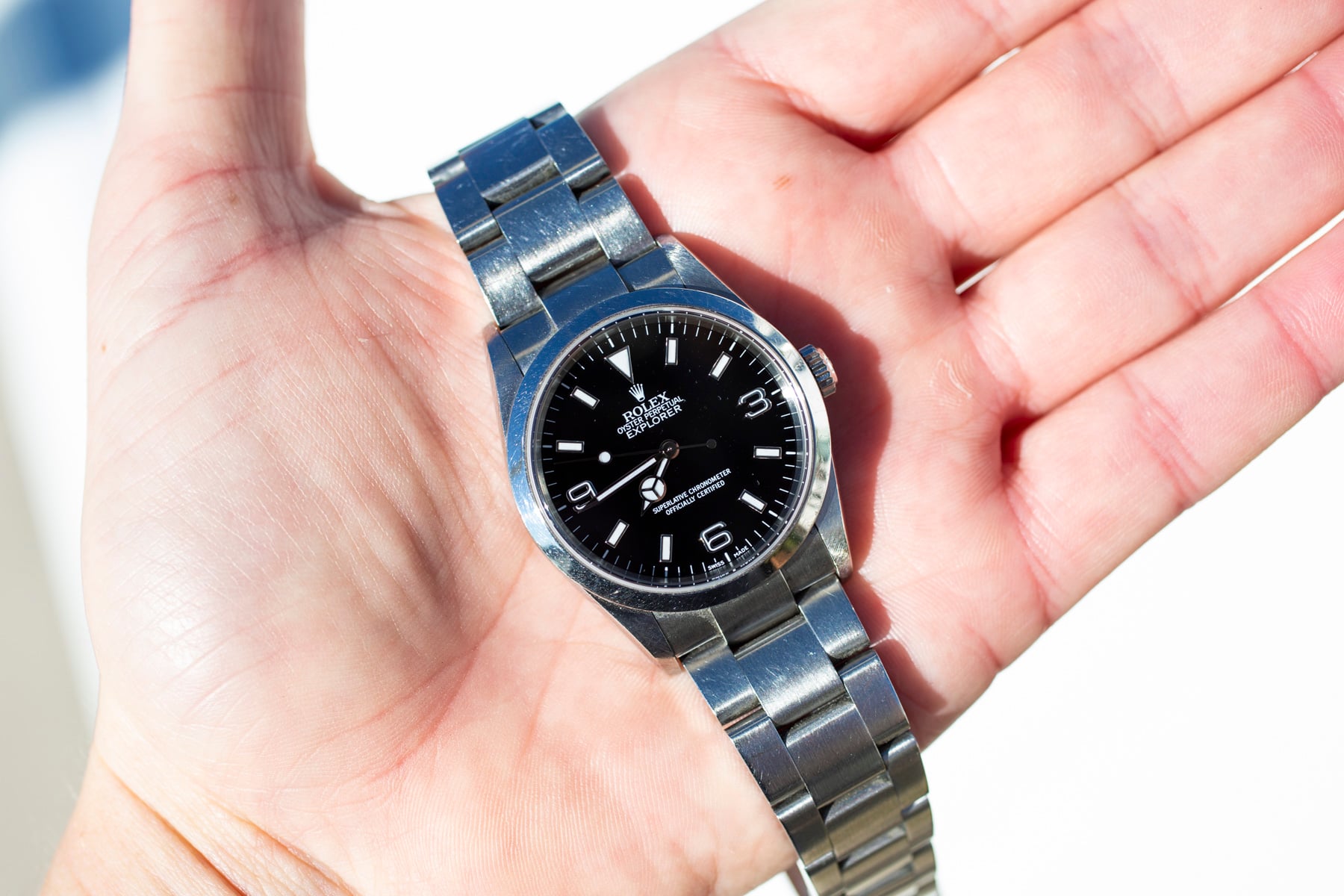
Compared to its immediate predecessor, the 14270, Daan’s watch added solid end links and the newer, more shock-resistant caliber 3130, a 31-jewel automatic running at 28,800 vph with a 48-hour reserve and a Parachrom hairspring. Rolex kept the 114270 in production until 2010, when the Explorer line moved to the larger 39mm 214270. One detail Daan often points to is the bracelet: his 114270 has a 20–16mm taper, compared to the 19–14mm reduction on the current 36mm Explorer. It’s a small difference on paper, but it gives the older reference noticeably more presence on the wrist. That’s part of why he chose it over the newer version despite the current model’s updated movement and clasp.
Why their 38mm and 36mm sizes are just right
Here’s where the two watches truly meet. Both the Mark XV’s 38mm case and the Explorer 114270’s 36mm form sit in a sweet spot that watchmaking spent much of the 2000s and 2010s abandoning in favor of considerably larger sizes, only to circle back years later.
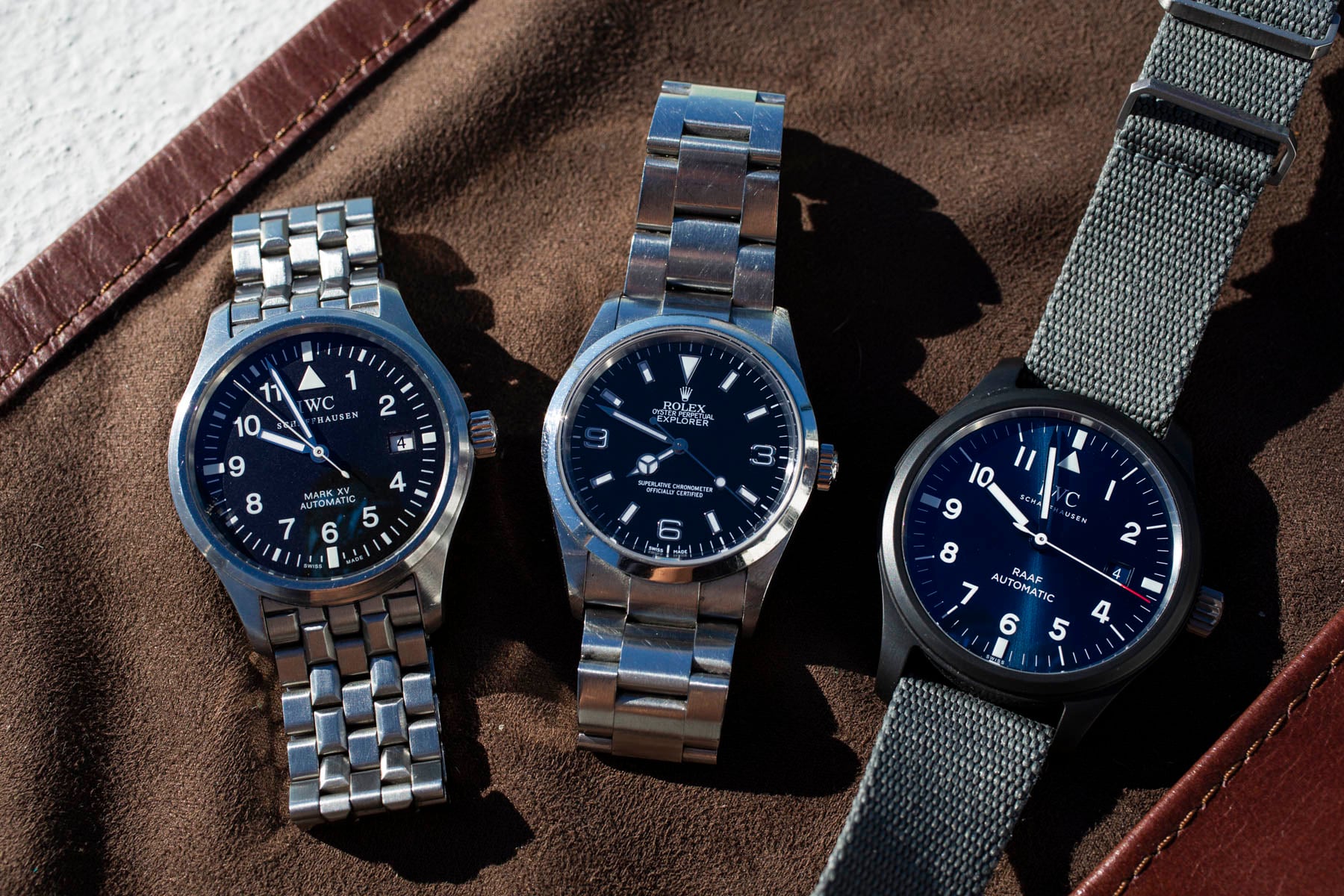
Neither watch drowns a smaller wrist or looks undersized on a larger one because both were designed with proportion, not diameter in isolation, as the governing idea. From lug-to-lug length to bracelet taper and dial-to-case ratio, every element of these watches was calculated to ensure the stated size wears correctly. Daan’s point about his Explorer’s wider bracelet is really about proportion as a whole system, not any single spec in isolation, and the same is true of the Mark XV’s short lug-to-lug relative to its case width.
The neo-vintage bargain
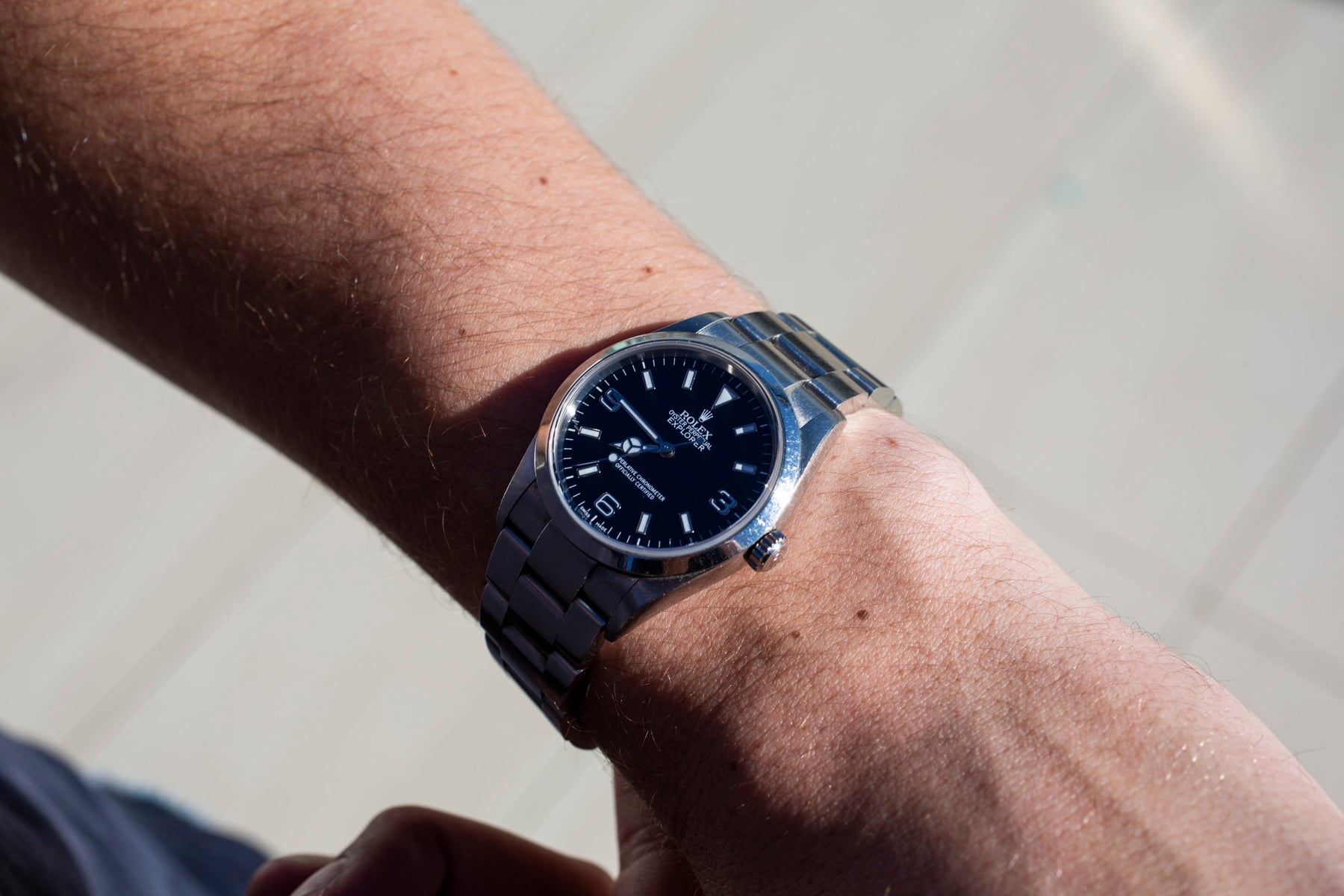
The economics back this up. You give up the newer Chronergy escapement, the extended 70-hour power reserve, and the on-the-fly clasp adjustment of the modern reference, but the Rolex caliber 3130 inside is still a proven, chronometer-capable movement, and a 48-hour power reserve has never been a real limitation for a daily watch. Compared to the current 36mm Explorer’s €7,800 retail price, around €5,700–6,000 on the secondary market is very fair indeed.
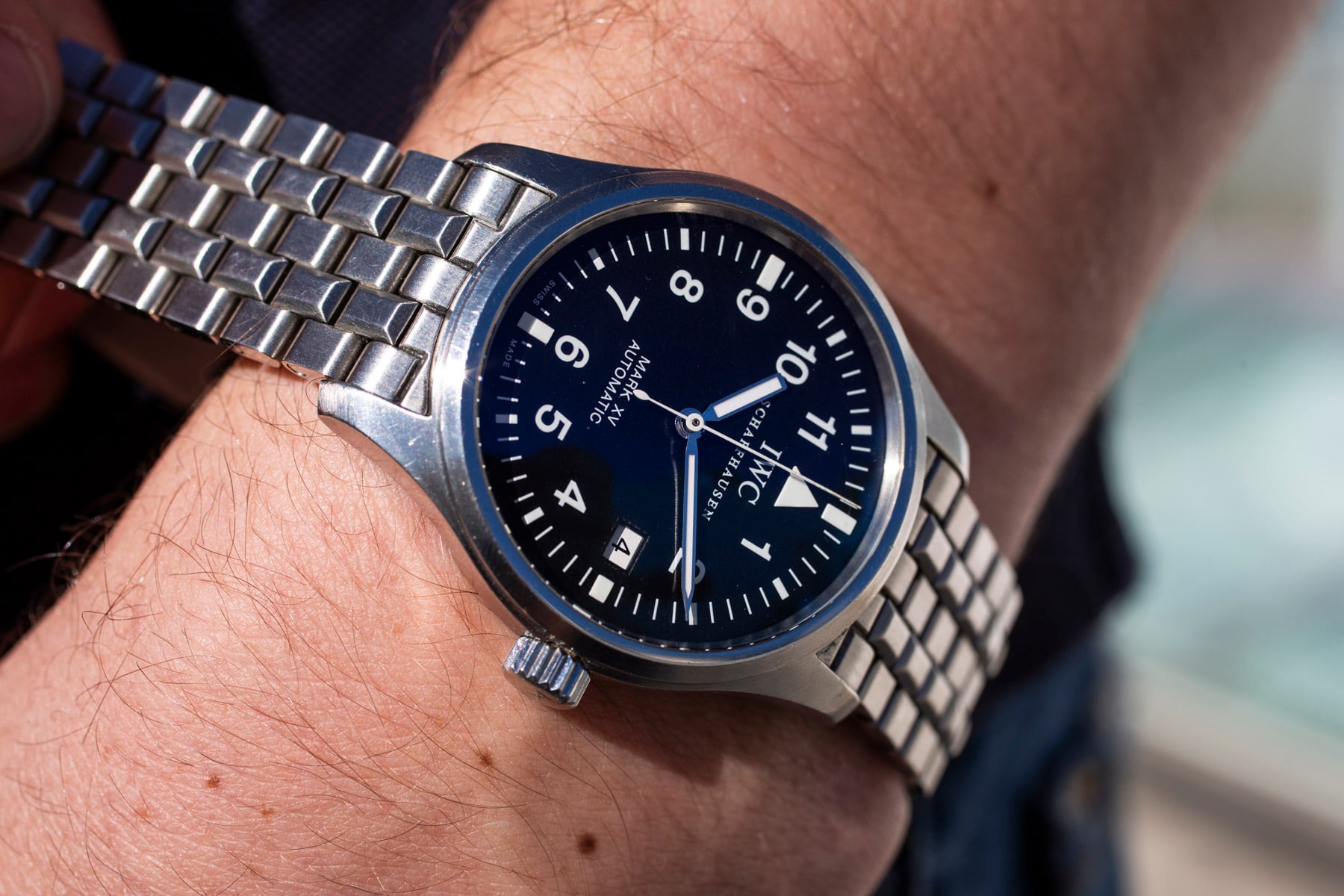
The Mark XV occupies a similar space in IWC’s catalog. In my opinion, the brand’s subsequent Mark models — the XVI onward, even the modern Mark XX — have never quite recovered the Mark XV’s proportions. IWC abandoned the simple, crisp font and handset design with the Mark XV, and things have never been the same. While the current Mark XX retails for €6,900, roughly €3,500–5,000 can buy you a nice Mark XV on Chrono24.
Closing thoughts
I didn’t choose the Mark XV because it was a smart buy; in a sense, it chose me, handed down from my father before I even understood much about Swiss watchmaking. But years of wearing it through mine shafts, ocean swims, and Tasmanian backroads, combined with watching a colleague arriving at the same conclusion about his Explorer after a Datejust detour, have convinced me that this specific window of watchmaking deserves all the attention it can get.
Both watches prove that clarity of design ages better than complexity ever will. If you’re hunting for real value today, look at what the years around the turn of the millennium got quietly, unassumingly right.