The Simple Pleasures Of Field Watch Design

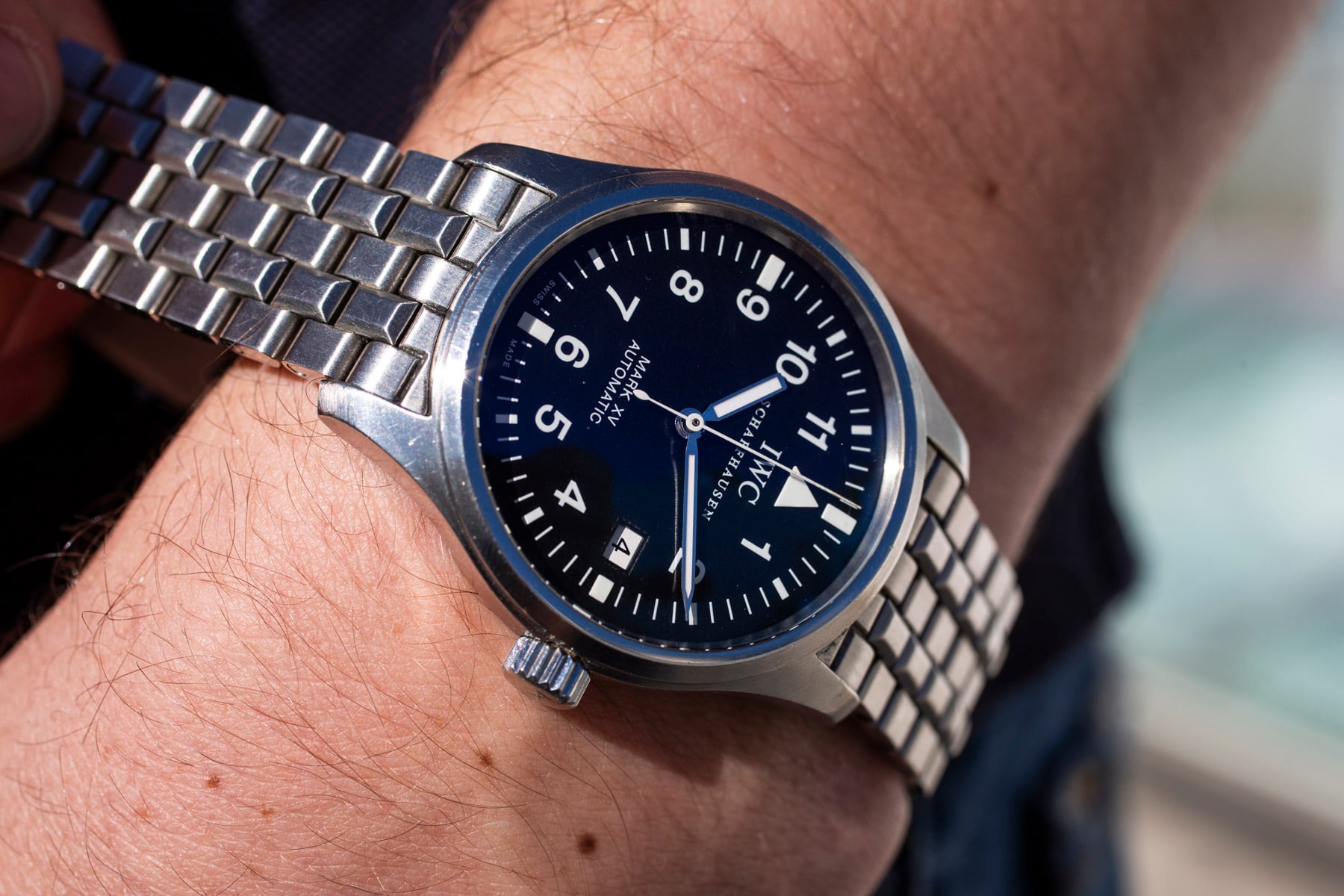
There’s a particular kind of contentment that comes from wearing a watch that asks nothing of you, and the master of this is the field watch. No complications to set, no bezel to align, no story to tell anyone who asks. Just a black dial, white numerals, two hands, and maybe a date. I feel it every time I clasp the strap on my IWC Mark XV. Lately, I’ve been trying to work out why a watch this plain gives me more satisfaction than almost anything else I own.
The answer, I think, is that field watches were never designed to be admired. They were designed to be trusted. The hobby increasingly rewards complexity for its own sake, and there’s something refreshing about a watch whose entire brief was simple: tell the time, survive the conditions, and disappear on the wrist.
Born of necessity, not fashion
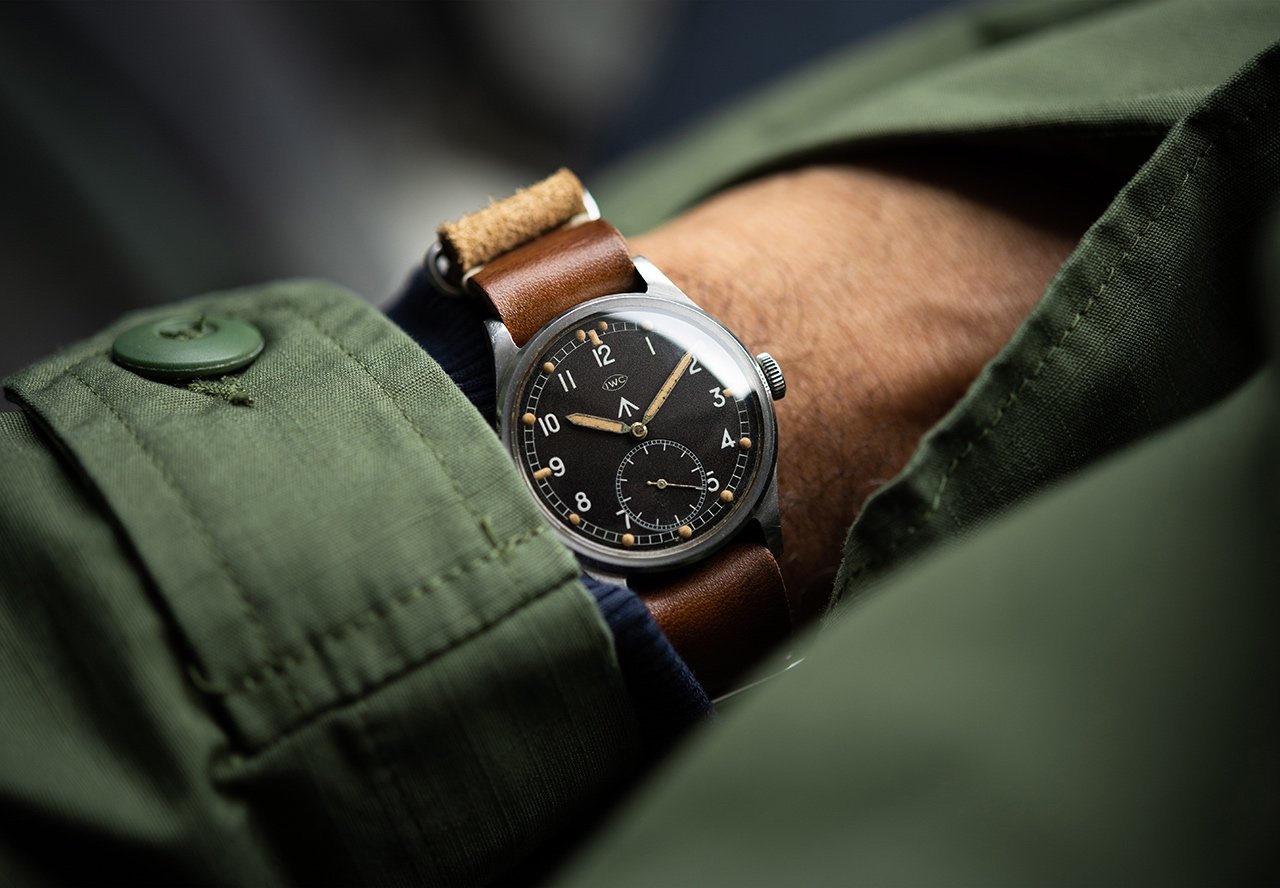
The field watch didn’t emerge from a design studio housed in a glass high-rise. It emerged from a battlefield. Officers in the First World War found that fumbling for a pocket watch under fire was inconvenient and could sometimes prove fatal. You needed both hands free for your rifle. When you’re coordinating under fire, you can’t take the time to reach into your pocket.
The trench watch was the compromise, a pocket movement strapped to the wrist with wire lugs. It was crude, but it worked. It set a precedent that has never really gone away. By the Second World War, the British Ministry of Defense had formalized the specifications for a soldier’s watch. The spec called for a black dial, luminous Arabic numerals, a railway-track minute scale, and a sub-seconds register. It also demanded a case robust enough to survive active service.
The IWC pilot’s watch
Twelve Swiss manufacturers were contracted to build it. Each case was stamped with the broad arrow property mark and the letters W.W.W, standing for Watch, Wrist, Waterproof. Collectors now call the group the Dirty Dozen, and it happened to include IWC. IWC’s Mark X later evolved into the Mark XI, then the Mark XII, and eventually my own Mark XV. It’s a nice thing to realize my watch shares a direct lineage with a tool built for RAF navigators eighty years ago.
The formula outlasted the war that produced it. American forces standardized their own version in the 1960s under specifications such as MIL-W-46374. These ranged from simple mechanical watches to disposable plastic-cased pieces issued to troops in Vietnam. Britain kept its own parallel tradition alive, moving from the tonneau-cased W10 of the early 1970s to the quartz G10 in 1980. The G10 was so ubiquitous that it was still being issued to British service personnel into the 2000s. None of these watches was made to be admired in a display case. They were made to be forgotten on the wrist, and that’s precisely the point.
Why “less” still works when it comes to a field watch
Coming back to this category as an owner rather than an admirer, I notice how little the formula has needed to change. A field watch succeeds or fails on legibility, proportion, and honesty of construction. There’s nowhere to hide a compromise. Case size matters enormously. My Mark XV sits at 38mm with a modest lug-to-lug, and that restraint is why it still wears comfortably today. IWC’s later Mark models crept upward in size and lost something in the process. There’s a discipline in staying small that a lot of modern watchmaking has quietly abandoned.
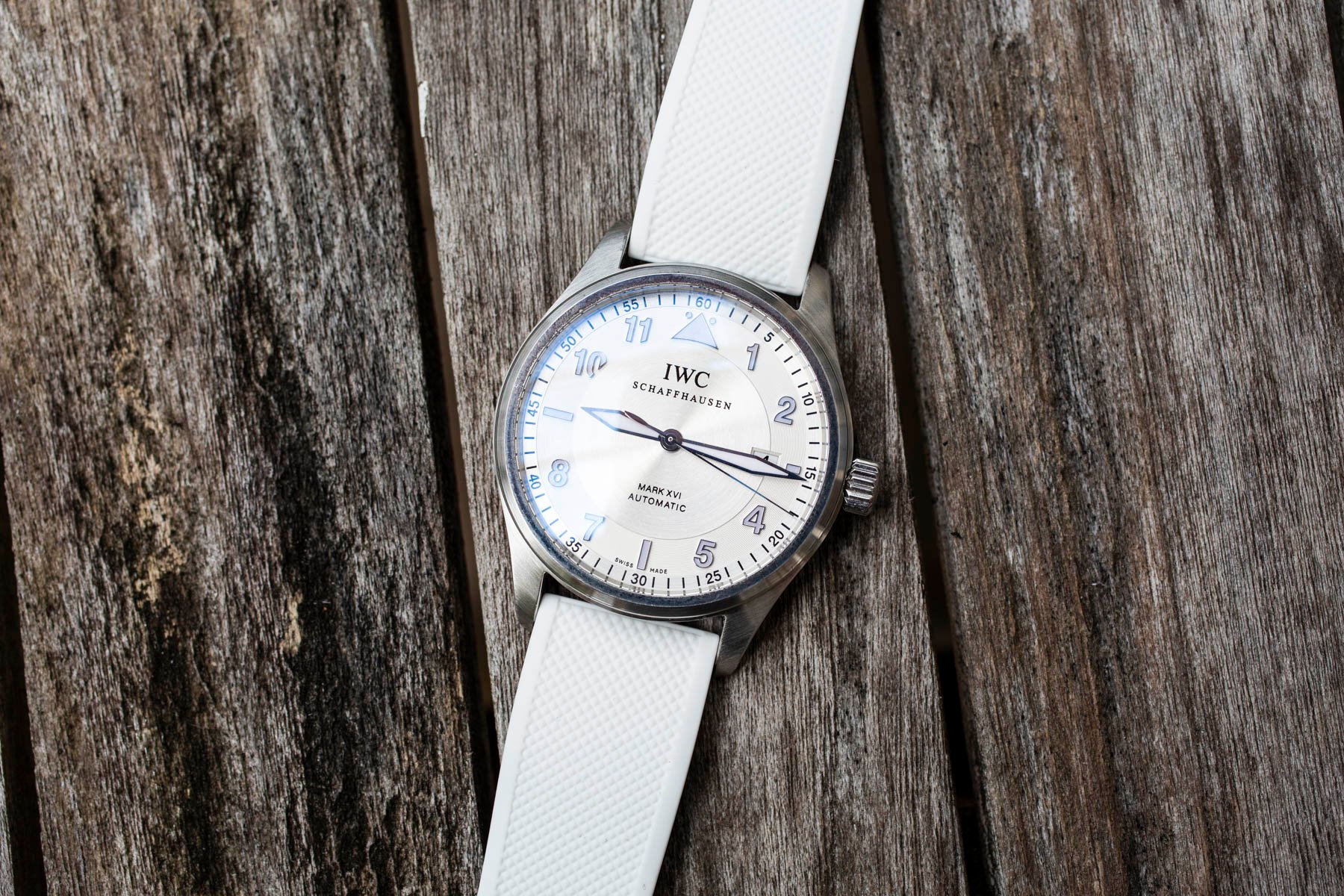
The Mark XV is also a good case study in why neo-vintage has become such an appealing term. It’s modern enough to wear daily, with a sapphire crystal, a soft-iron inner case for genuine anti-magnetic protection, and a serviceable ETA-based movement. It’s also old enough now to carry some patina in its story. IWC produced it only from 1999 to roughly 2005, before the line grew larger with the Mark XVI. It occupies that narrow, satisfying window where you get vintage proportions without vintage fragility.
The modern field watch, done properly
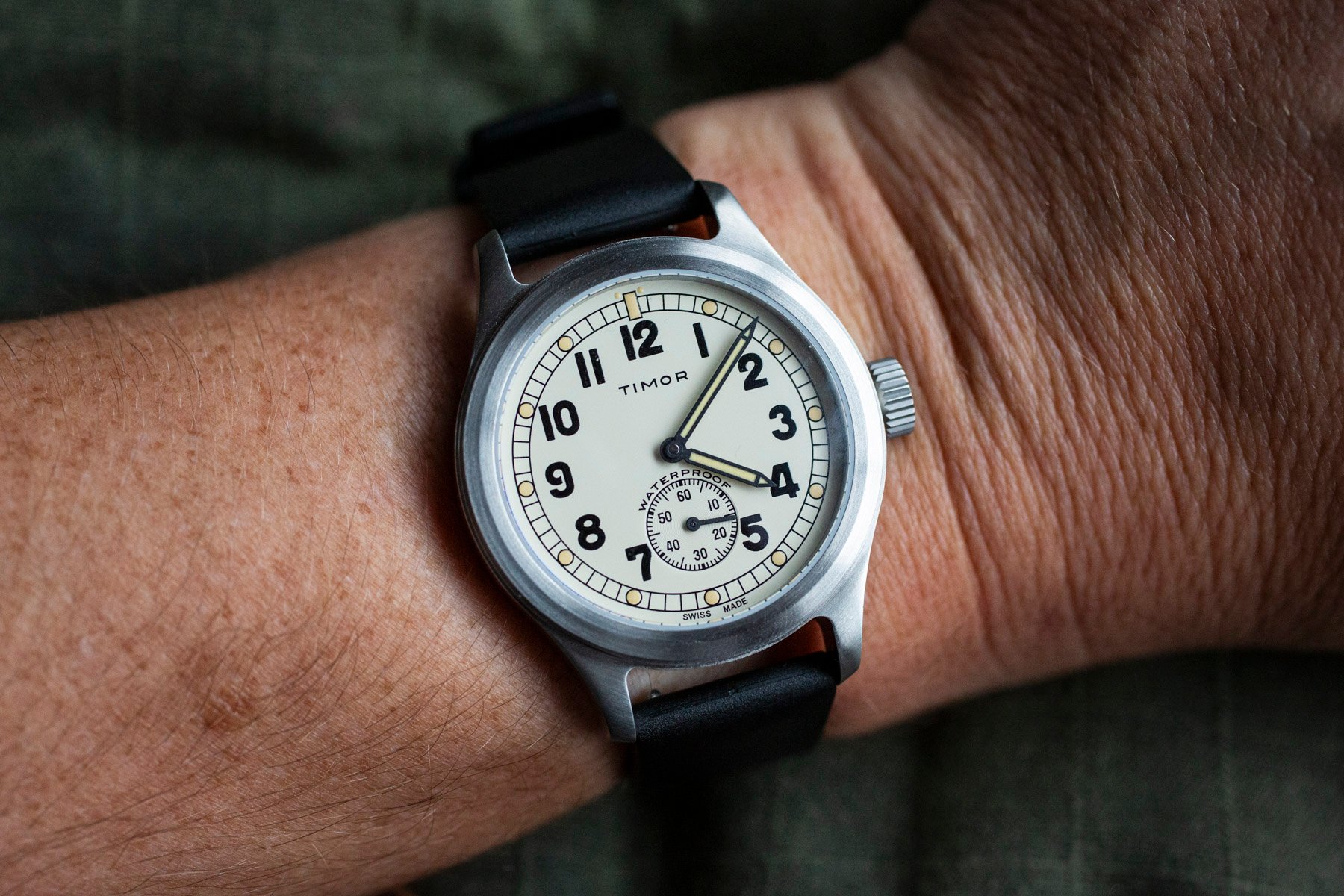
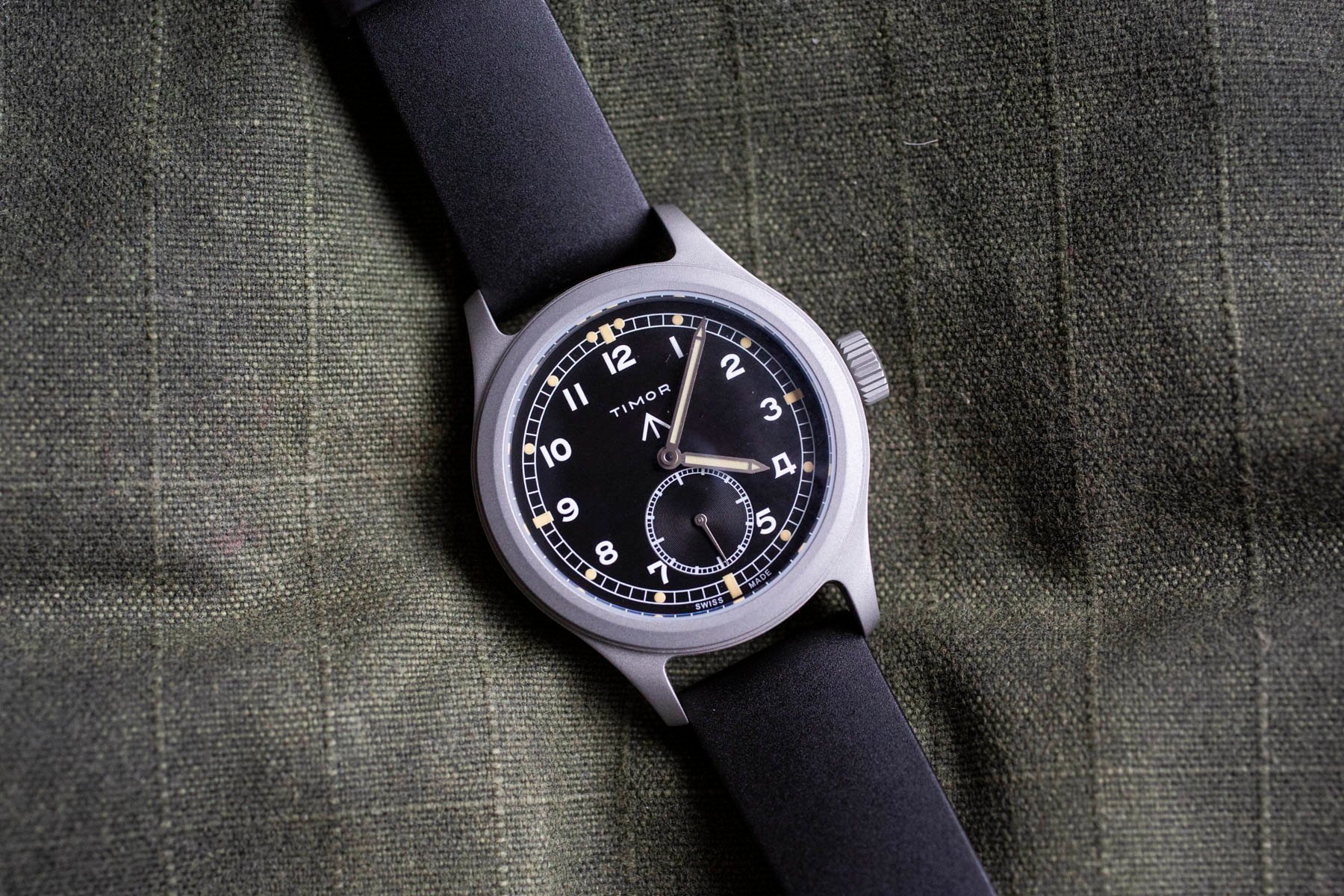
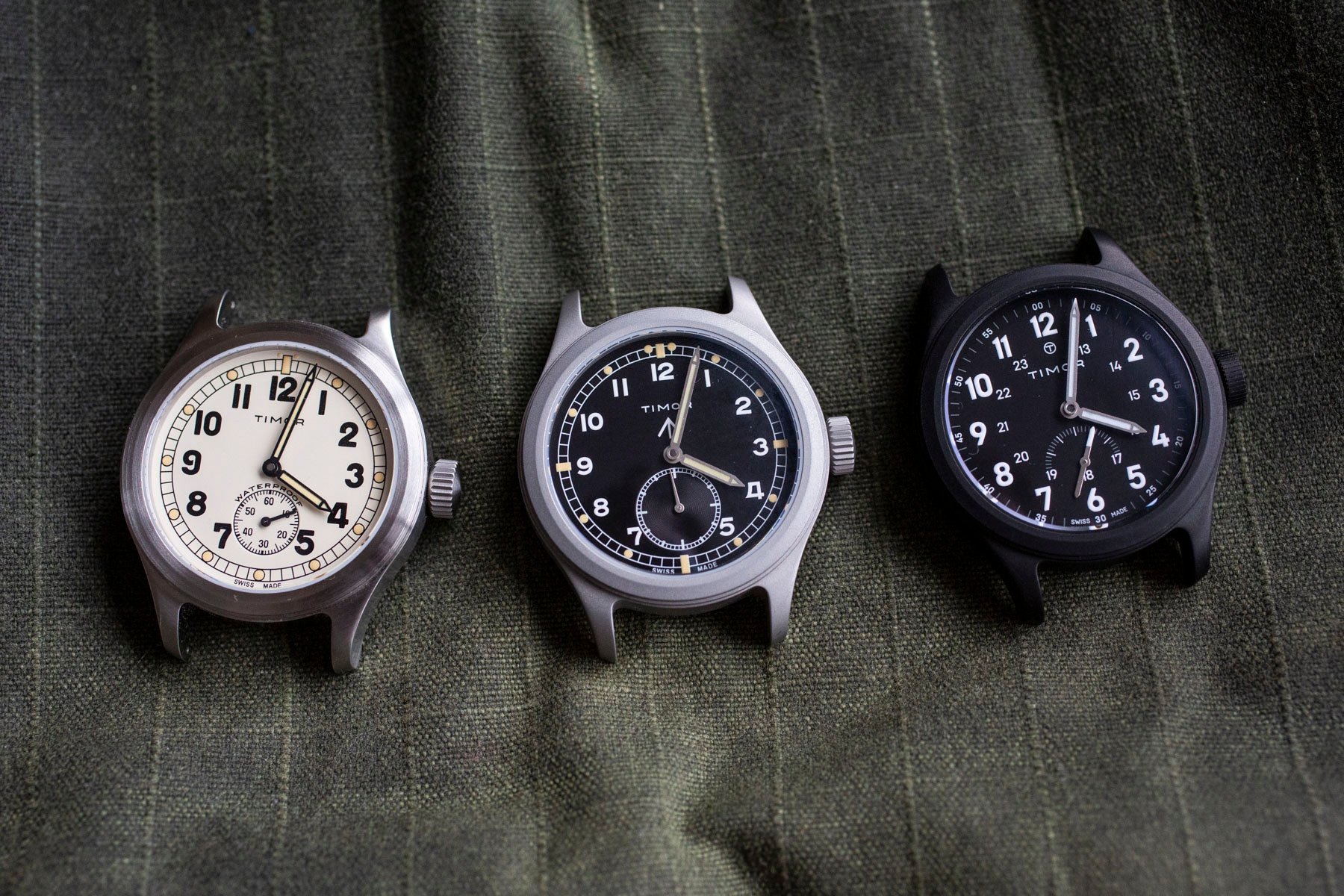
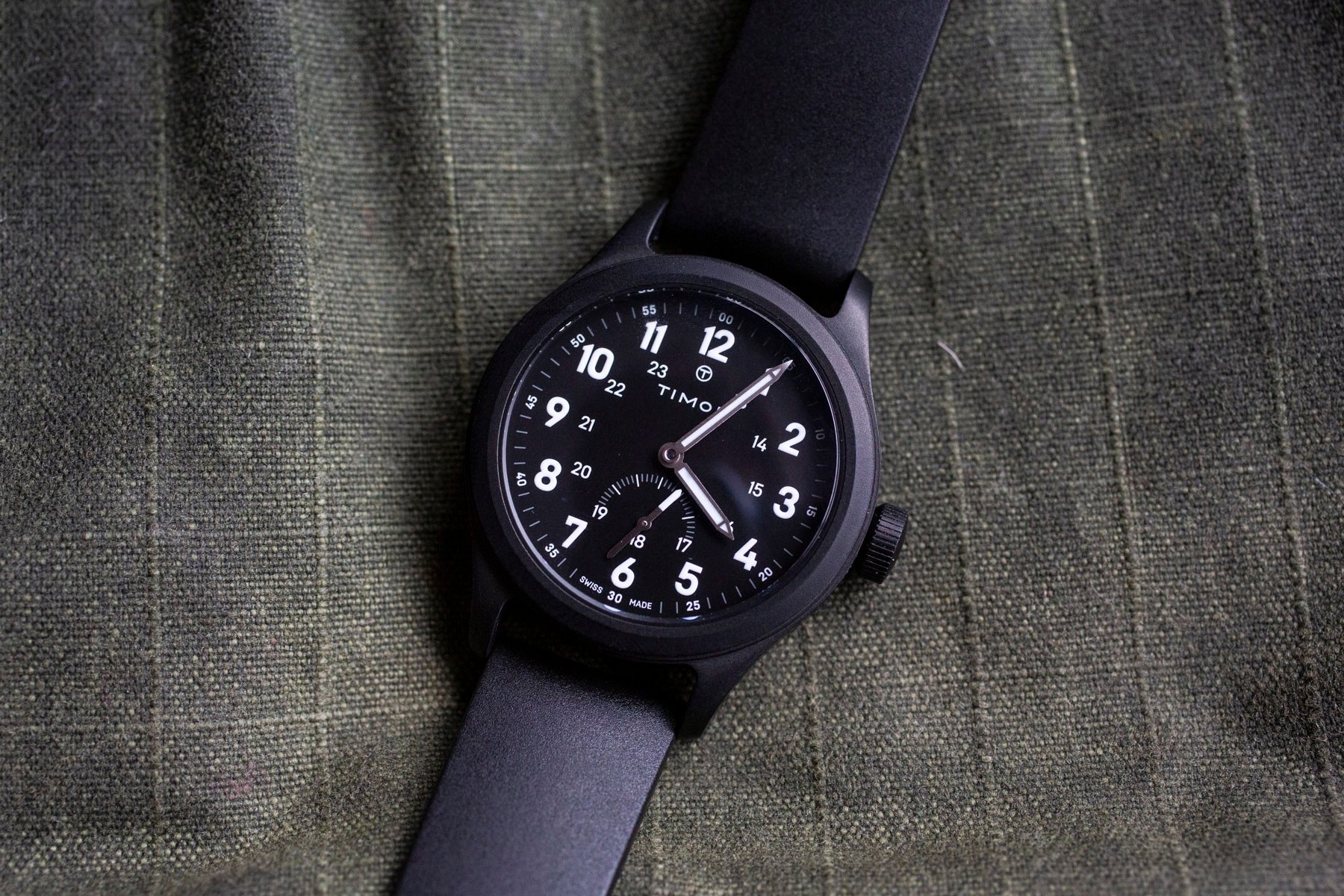
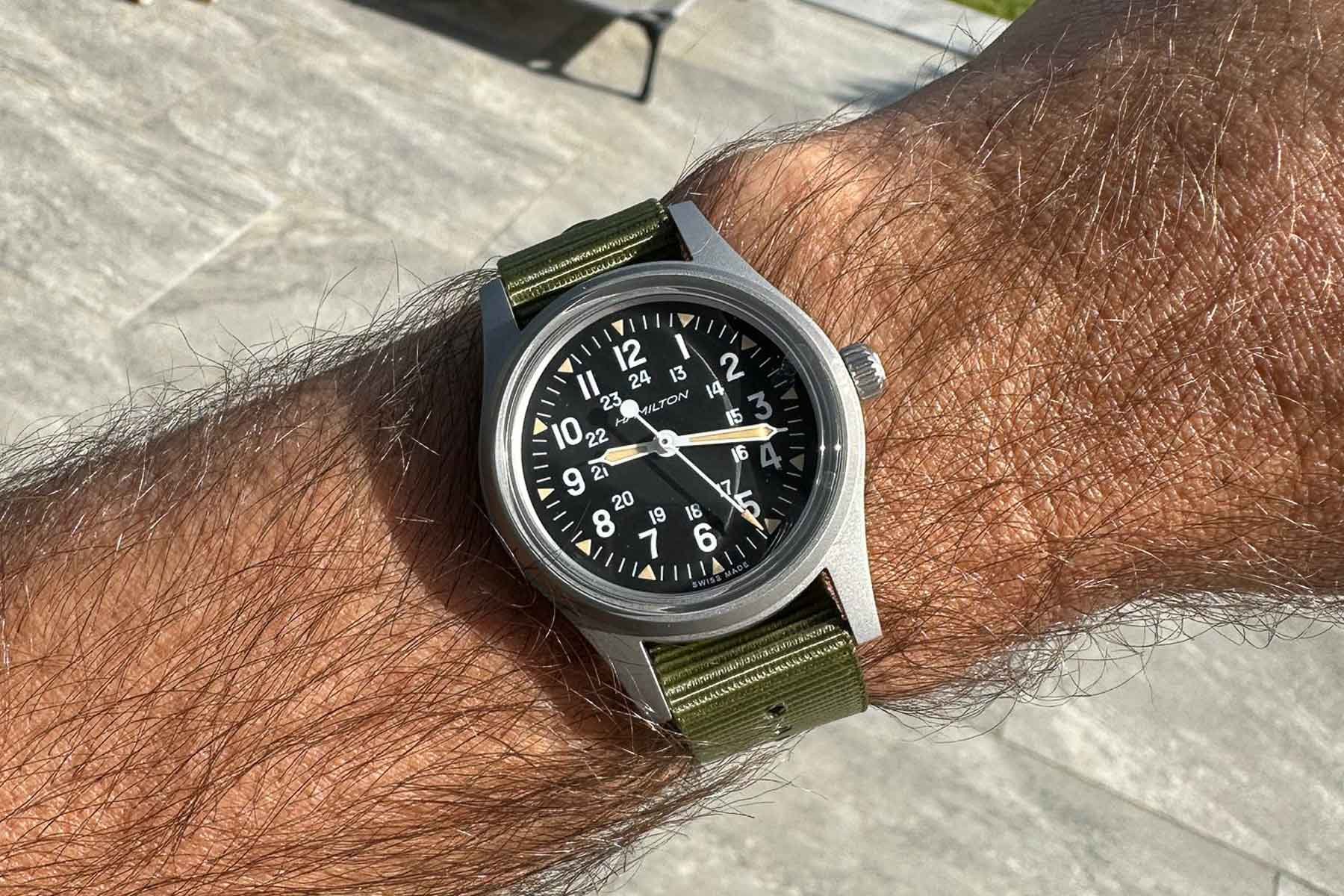
The good news for anyone chasing this feeling is that the category is in good health. Timor, a small watch brand based in the UK, focuses on field watches. Two of its three watches are heritage reissues (the ATP and a reissue of a Dirty Dozen watch the brand made in the middle of the last century). Whereas the final option is a more modern take on the field watch, featuring a black case, black dial, and stark white numerals. Another good option is Hamilton’s Khaki Pilot Pioneer Mechanical, reintroduced a few years back, which is the clearest recent example of a brand getting a reissue right. It faithfully recreates the W10 that Hamilton itself built for the British Ministry of Defense in the 1970s.
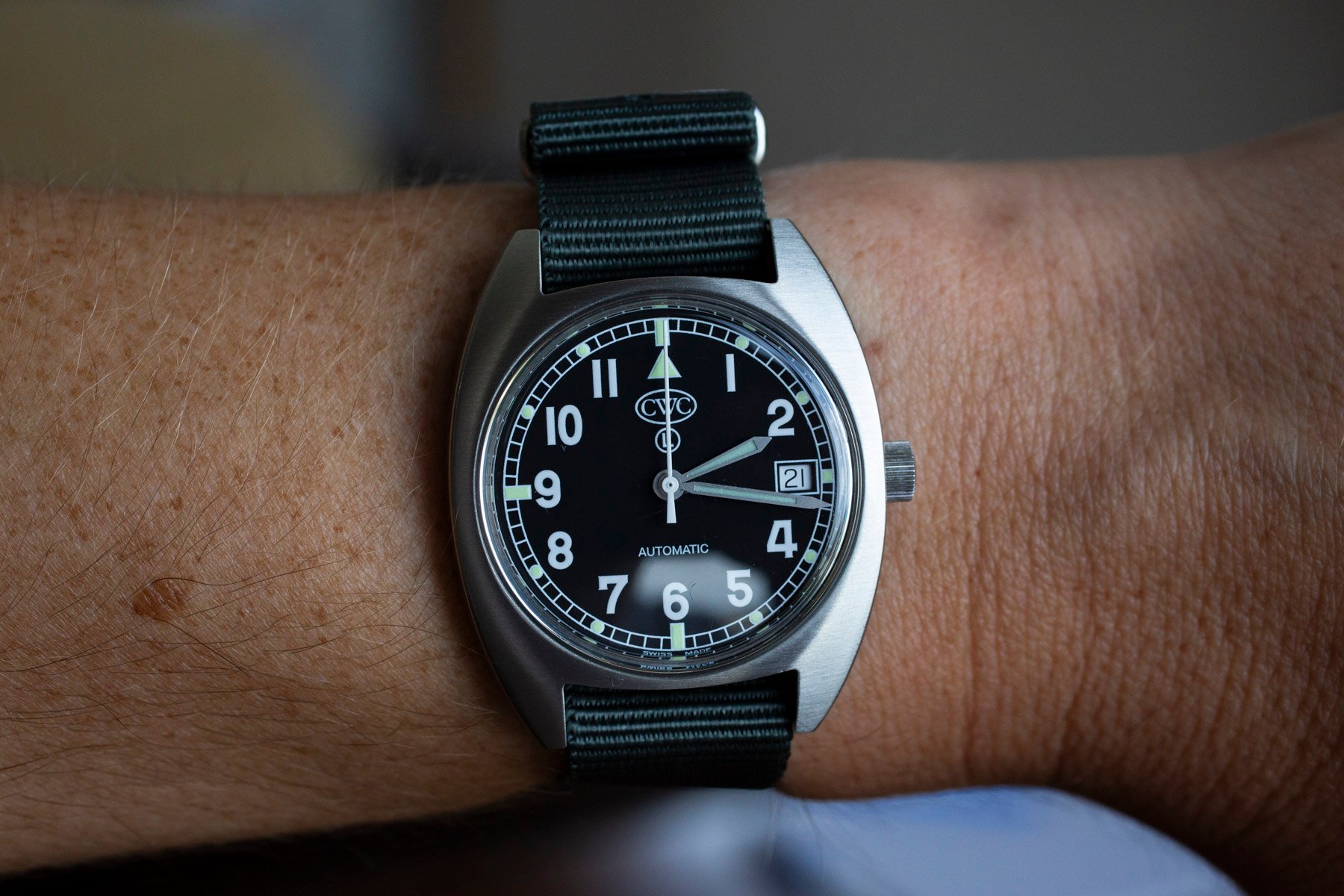
Same case shape, same recessed crown, same restrained 36mm proportions, right down to a hand-wound movement when everyone expects automatics. It would have been easy to enlarge it for modern tastes, but Hamilton didn’t, and the watch is better for it. Then there’s CWC, which barely needs the word heritage because it never stopped. Cabot Watch Company has supplied MoD-specification field and general service watches since the early 1970s.
The CWC G10 and W10 series
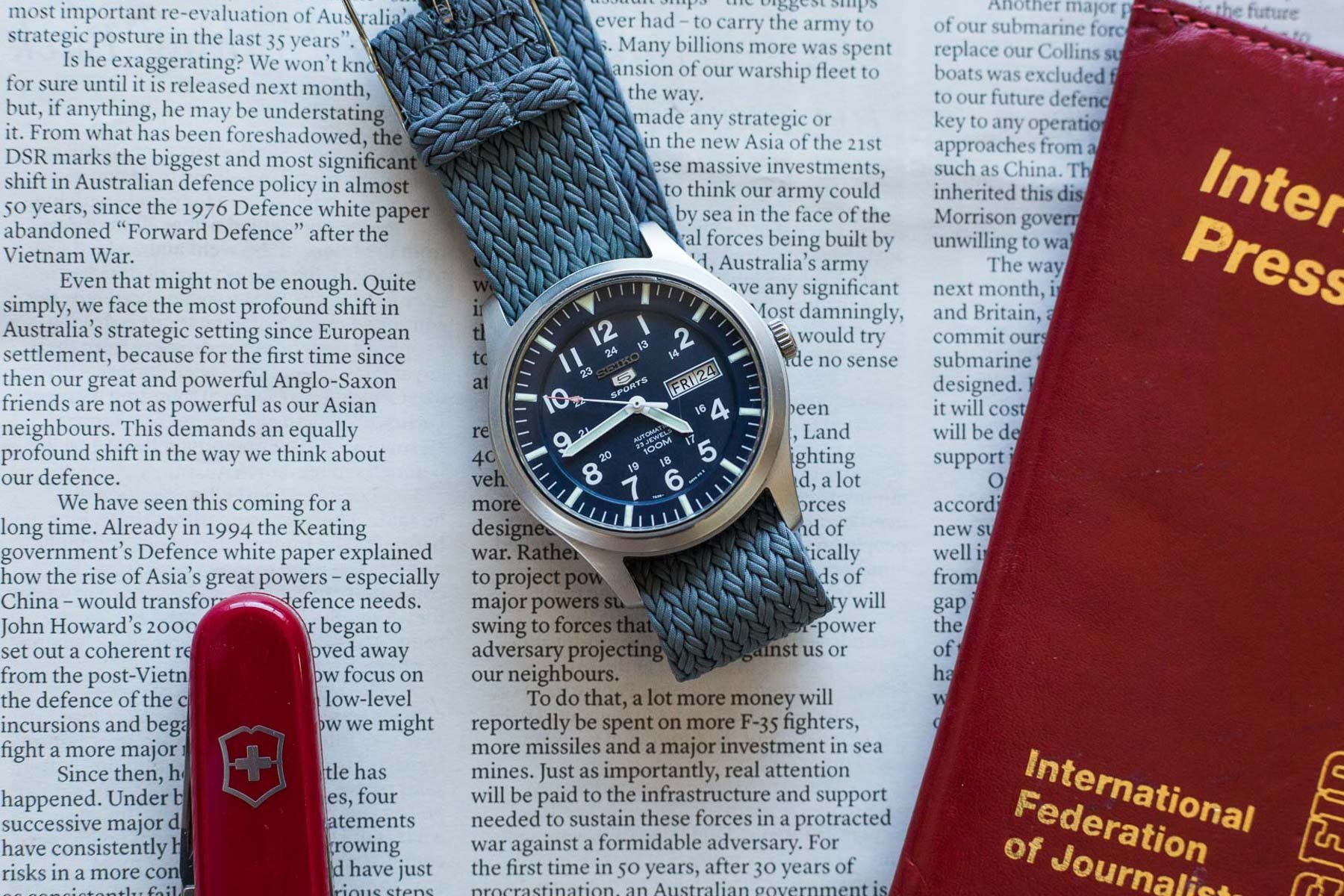
Its current G10 and W10 models aren’t tributes to a design language; they’re the continuation of one. The brief has been refined, not reinvented, for half a century. There’s an honesty to buying a watch from a company that still, in some form, supplies the actual military. My first mechanical watch was a Seiko 5, the SNZG, and it taught me most of what I still believe about this category.
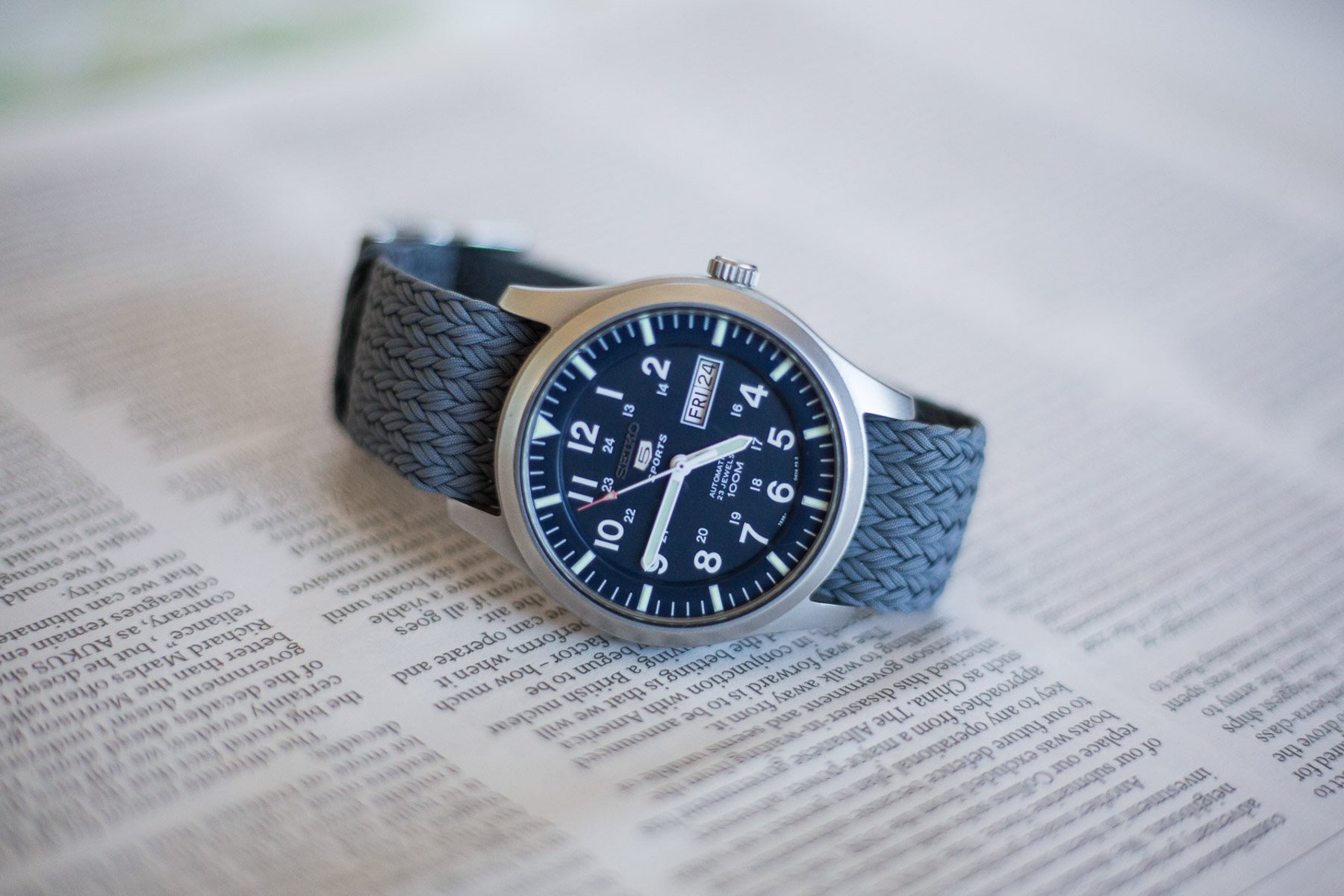
At 42mm with a robust case and a reliable automatic movement, it wasn’t refined, but it was honest. It cost next to nothing, took a beating without complaint, and made a hand-wound Hamilton or a soft-iron IWC feel like a natural next step rather than an intimidating one. There’s a reason so many collectors trace their obsession back to a Seiko 5.
Less really is more
And then the microbrands, which have arguably done more for this category in the last decade than anyone else. Freed from the margins and marketing demands of bigger houses, independent makers lean hard into surplus-inspired dials and honest case finishing. Prices rarely ask you to justify the purchase to anyone. Some lean explicitly military. Others simply borrow the grammar: legible numerals, minimal branding, a strap over a bracelet, and let the watch do the rest.
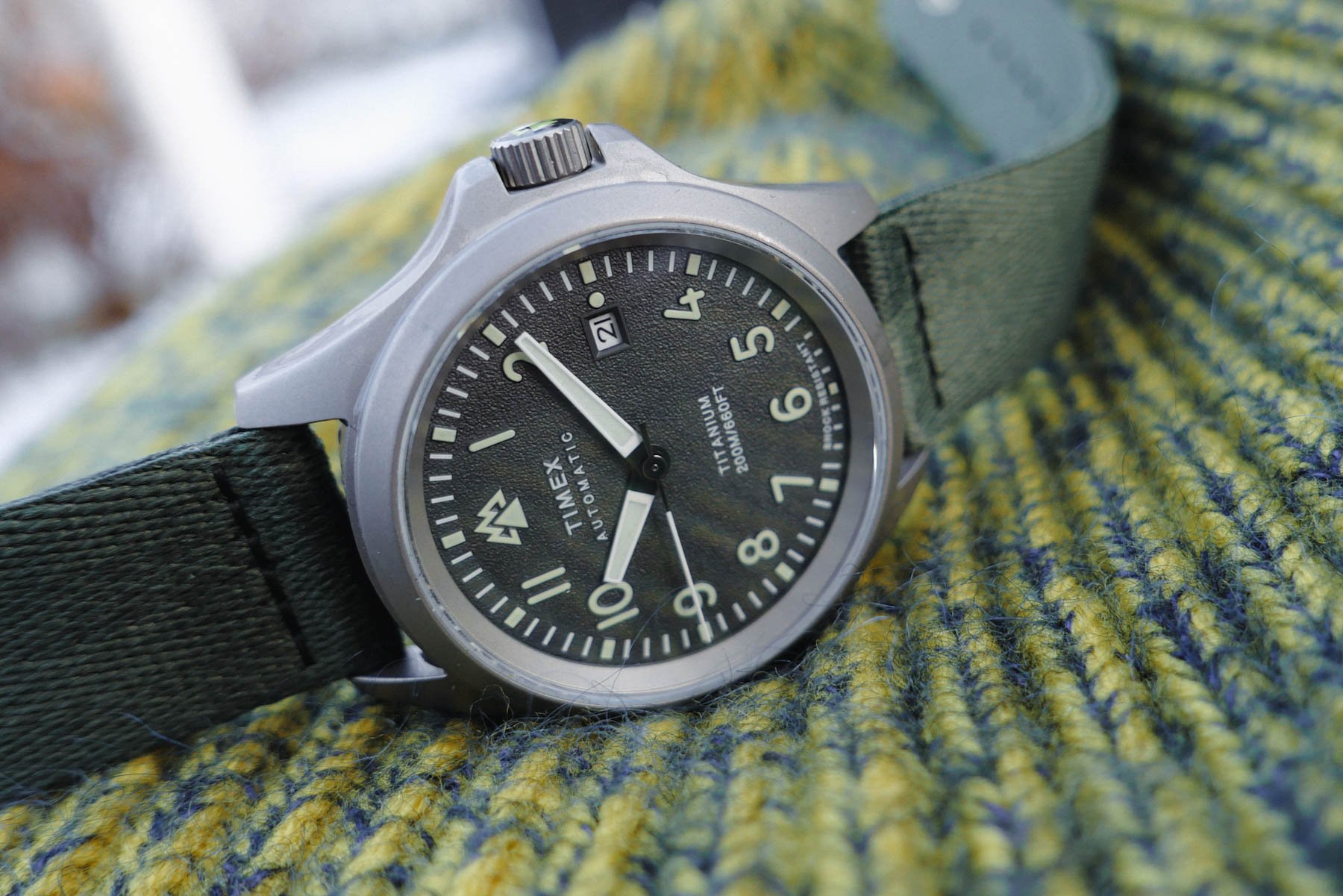
It’s worth remembering that this same discipline extends well below mechanical watchmaking, too. A Casio MQ24-7B2 or a Timex Weekender costs less than a strap for some of the watches above, yet keeps the same brief. A plain white dial, a 35mm resin case, and a battery that runs for years. That’s not a lesser expression of the field watch idea; it’s arguably the purest one, tracing straight back to the disposable ethos of MIL-W-46374 itself.
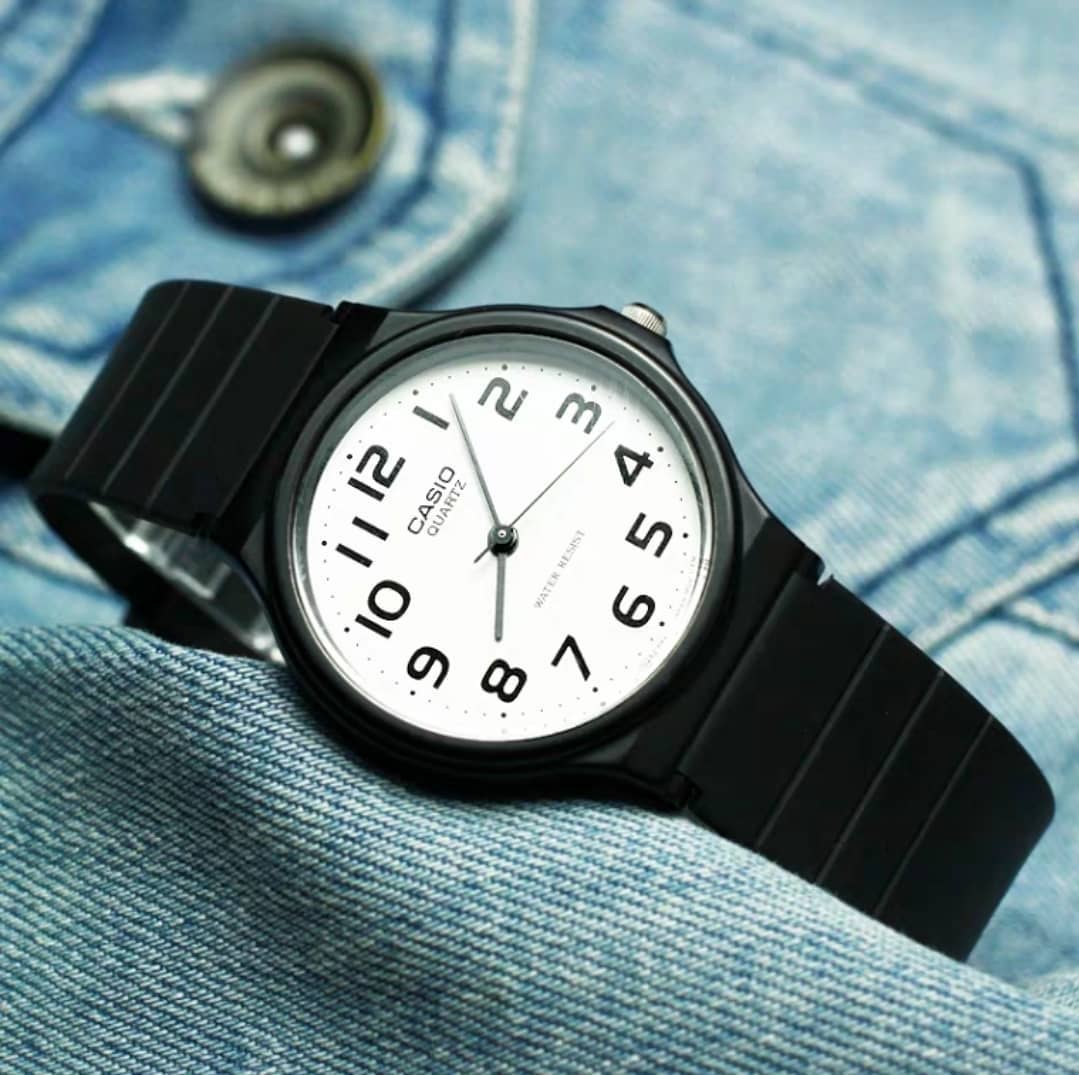
Courtesy of Casiofanmag.com
Concluding thoughts
A field watch doesn’t ask you to notice it, which is exactly why I keep noticing it. There’s no bezel to fiddle with at dinner, no chronograph pushers to justify, nothing to explain. It’s built entirely around one idea: the best tool is the one you stop thinking about. Strap one on, and for once, that’s the whole appeal. In some ways, then, a simple, basic Casio quartz watch is closer to the fundamental spirit of the field watch than Swiss luxury options.
Regardless of what you go for, there is something magical about a field watch design, because it represents the very core of what a tool watch was (and is) supposed to be. But what do you think, Fratelli? What’s your favorite field watch?