The Vacheron Constantin Traditionnelle Twin Beat Perpetual Calendar Returns With A 70-Day Power Reserve

Vacheron Constantin continues its quest to revolutionize the perpetual calendar complication with the 2026-upgraded Traditionnelle Twin Beat Perpetual Calendar. The revolutionary aspect here lies in its power reserve, which can last up to 70 days. This is not a novelty but a continuation of the efforts made for the 2019 GPHG Innovation Prize winner, which had a power reserve of up to 65 days. The Twin Beat system allows the watch to operate in two modes — Active and Standby — and the ingenuity behind this is one of the most intelligent interpretations of the perpetual calendar complication. But although the technical side is certainly breathtaking, the new openworked dial design makes this heavy piece much easier on the eye.
The perpetual calendar is arguably the most complete watchmaking complication, provided the movement has enough energy to keep running. We could say, then, that the power reserve is of the utmost importance for this kind of mechanical watch. As resetting a perpetual calendar isn’t the easiest of tasks, since 2019, Vacheron Constantin has been going above and beyond to make this complication easier to live with. With caliber 3610 QP, Vacheron’s watchmakers and engineers put the autonomy of the watch at the forefront of their priorities. However, optimizing an already impressive Twin Beat system to make the watch more user-friendly requires an absurd amount of technical innovation. And while it is a struggle to keep journalistic neutrality, I can confidently say that this is what Vacheron Constantin is all about. Let’s dig into that.
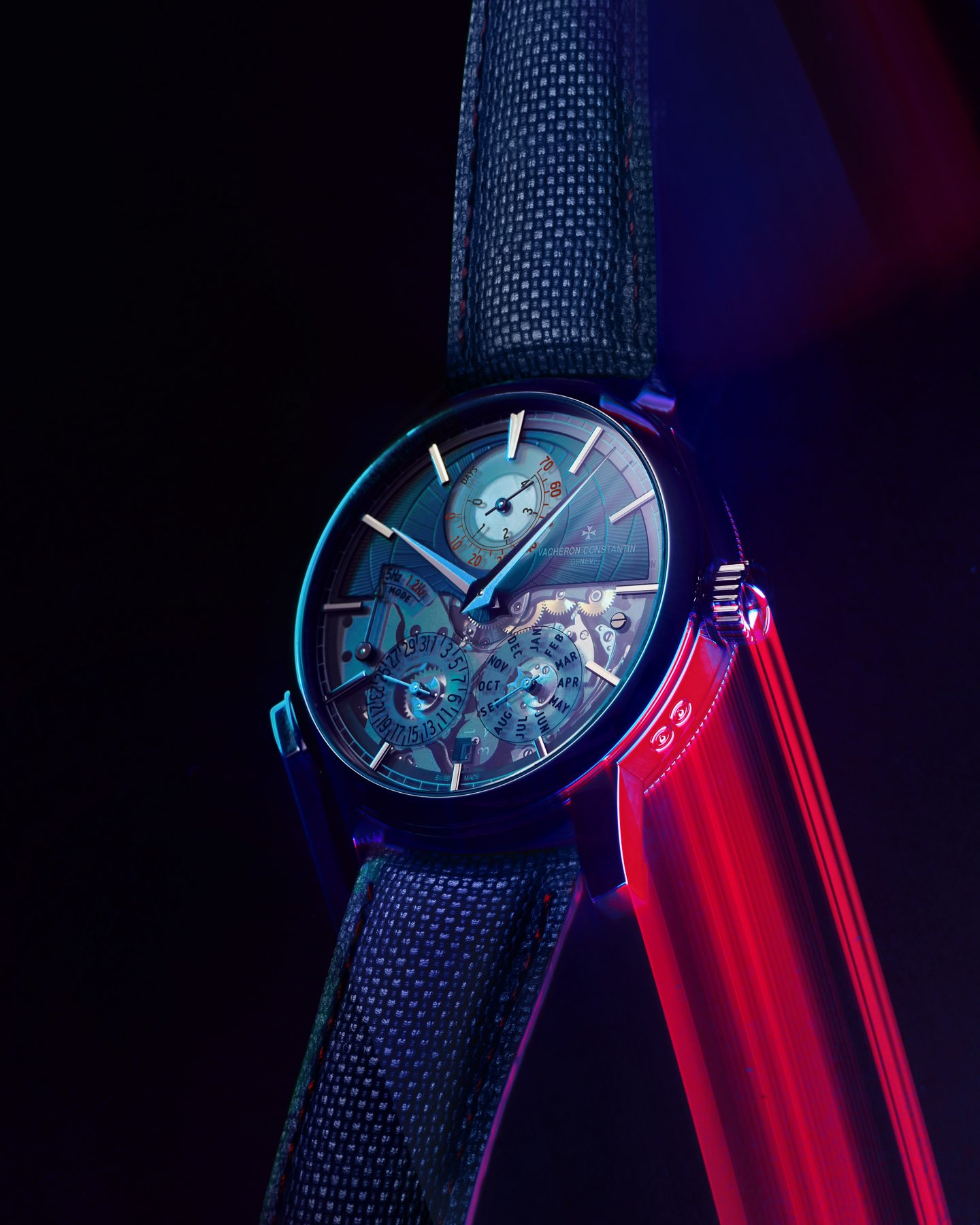
Active and Standby: the smartest solution for a perpetual calendar
The Vacheron Constantin Traditionnelle Twin Beat debuted in 2019 and won the GPHG Innovation Prize. This says a lot about the impact of the Twin Beat system. It solved a real problem and obstacle that the QP complication faces — autonomy. This is not just a hypothetical problem we, as watch journalists, discuss in articles. Many collectors think twice before acquiring a perpetual calendar because, if it’s not going to get their undivided attention and a lot of wrist time, it could become a serious liability. Visiting a watchmaker to reset your timepiece every month isn’t ideal.
Vacheron’s Twin Beat system addresses the practicality problem of the perpetual calendar. This is not only a technical milestone but also a human one. Owners can adapt the watch to their current use with a click of the pusher at 8. The watch then switches between a high-frequency Active mode and a low-frequency Standby mode. Precision remains uncompromised, and autonomy is extended, putting the “perpetual” in “perpetual calendar.”
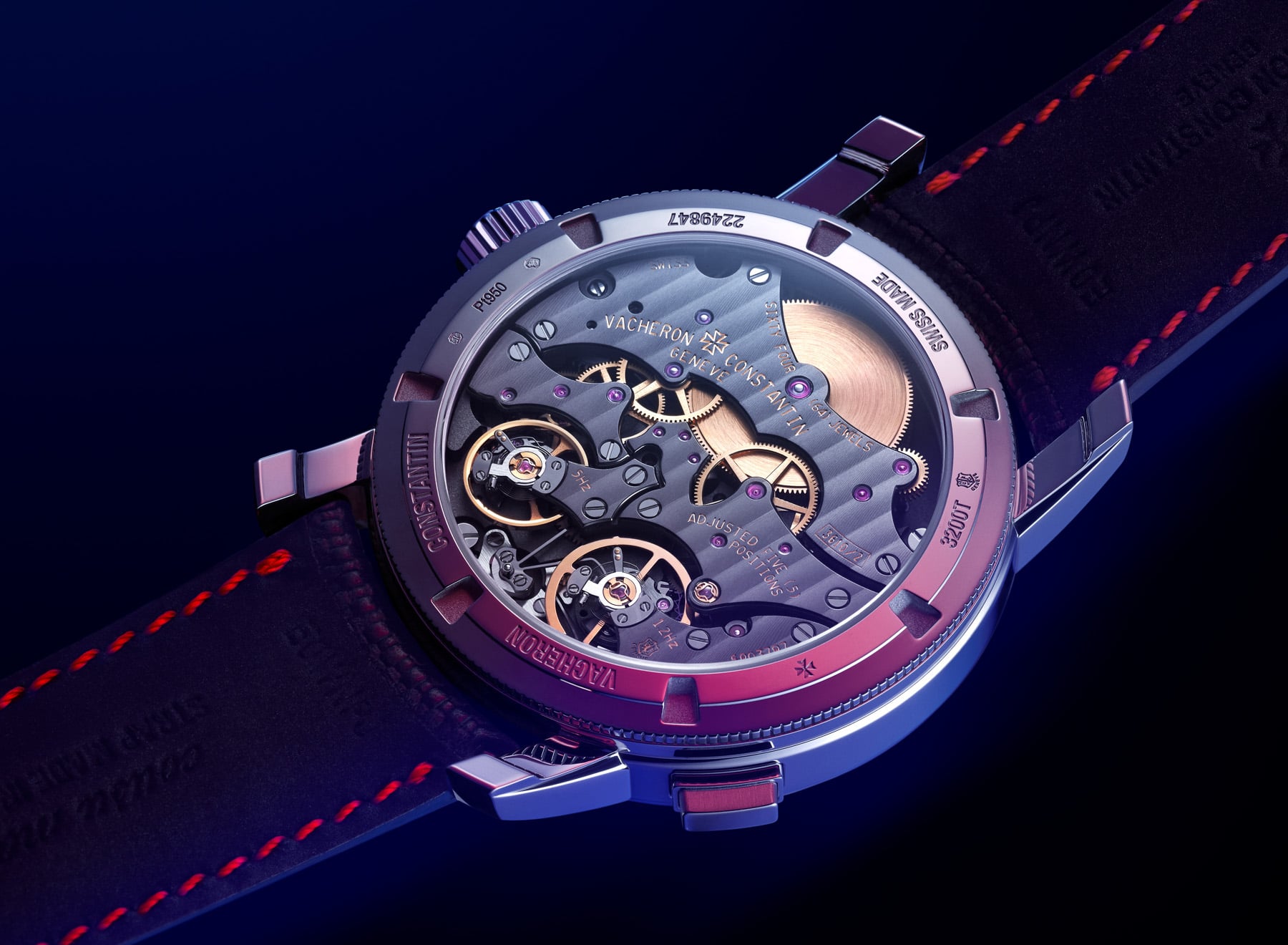
The Twin Beat system explained
As mentioned earlier, perpetual calendars are wonderful until you stop wearing them. They indeed require no manual correction until 2100, but God forbid yours doesn’t come with the Twin Beat system. The concept is simple — an Active mode with a high 5Hz (36,000vph) frequency and a Standby mode with a low 1.2Hz (8,640vph) frequency. Why? One frequency is for the wearer’s active phases and the other for the resting phases. How? Series-connected coaxial double barrels power two independent gear trains, one for the Active mode and another for the Standby mode.
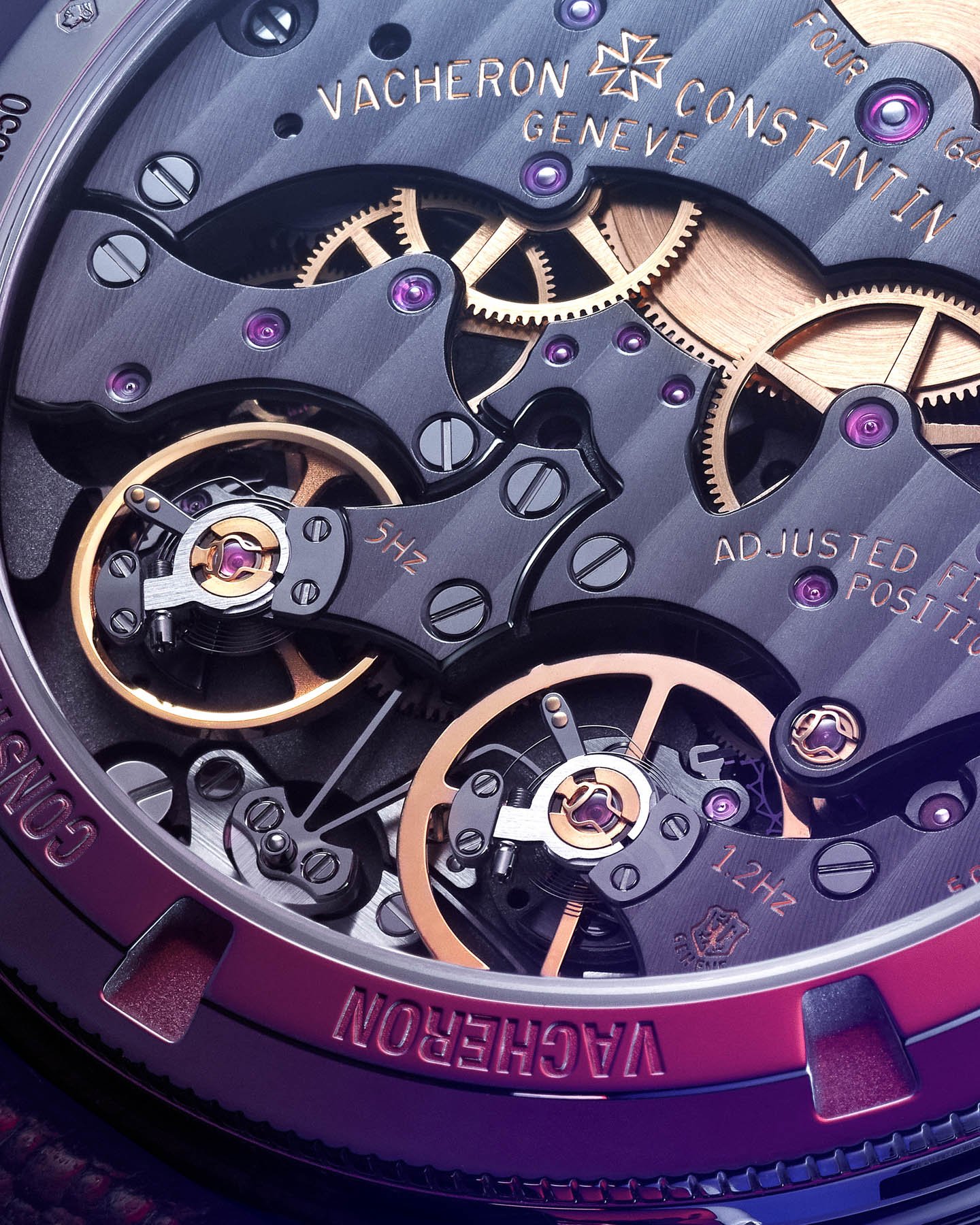
Two modes, two gear trains, one watch
We need to understand that Vacheron Constantin’s main goal was to reduce energy consumption. Caliber 3610 QP is a hand-wound, 6mm-thick, 480-component movement with a Geneva Seal certification. Since its introduction in 2019, this movement has moved Vacheron’s direction from a conventional range of oscillator frequencies. And although the display of the hours and minutes may seem to be the most straightforward part of the Traditionnelle Twin Beat, they are far from simple and conventional. The two balance wheels, only one of which is allowed to oscillate depending on the current mode, and the hour and minute hands must draw variable information from both gear trains for a precise and unified display of time. This is done thanks to a gear differential that allows the hands to follow more than one input source — the two gear trains.
By now, we understand that one mode is “faster” and the other is “slower.” One of Vacheron’s main challenges for this year was to figure out how much to slow down the oscillation of the Standby low-frequency regulator. The purpose, of course, was to extend the power reserve while the watch is not being used often. In the Standby mode, this results in a 70-day power reserve, while in Active mode, it means four full days.
“But how does all of this work in real life?” you might ask. This is a user-friendly watch, so Vacheron Constantin’s engineers implemented a push-button-operated switching system at 8, with a mode indicator on the dial (9:30). The switch is instantaneous and causes no interruptions in the caliber’s energy for the constant display of the time, date, month, and current year in the leap-year cycle.
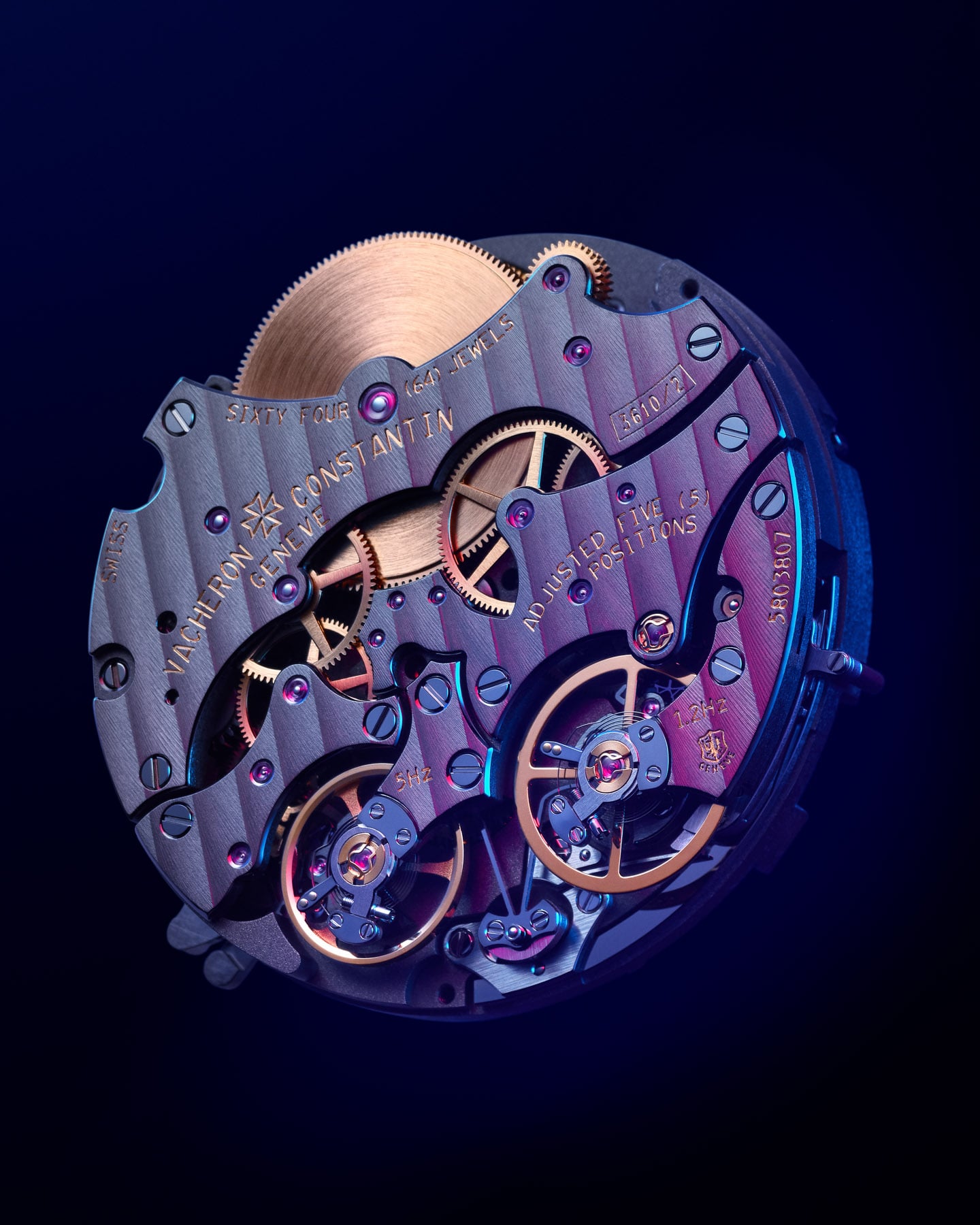
Caliber 3610 QP, improved for 2026
In 2019, the first version of caliber 3610 QP could keep ticking for up to 65 days. Today, as mentioned, it’s 70. How does Vacheron add five days to an already powerful power reserve? To sum it up, Vacheron’s engineers developed a new double-gear spring-winding mechanism. This is now more energy-efficient, as it requires four times less torque than other instant-jump mechanisms.
Of course, the short explanation makes it sound simple. It isn’t. Behind it all lies a seriously complex mechanical architecture built around three differentials. This is also where Vacheron focused most of its improvements for the updated hand-wound caliber 3610 QP.
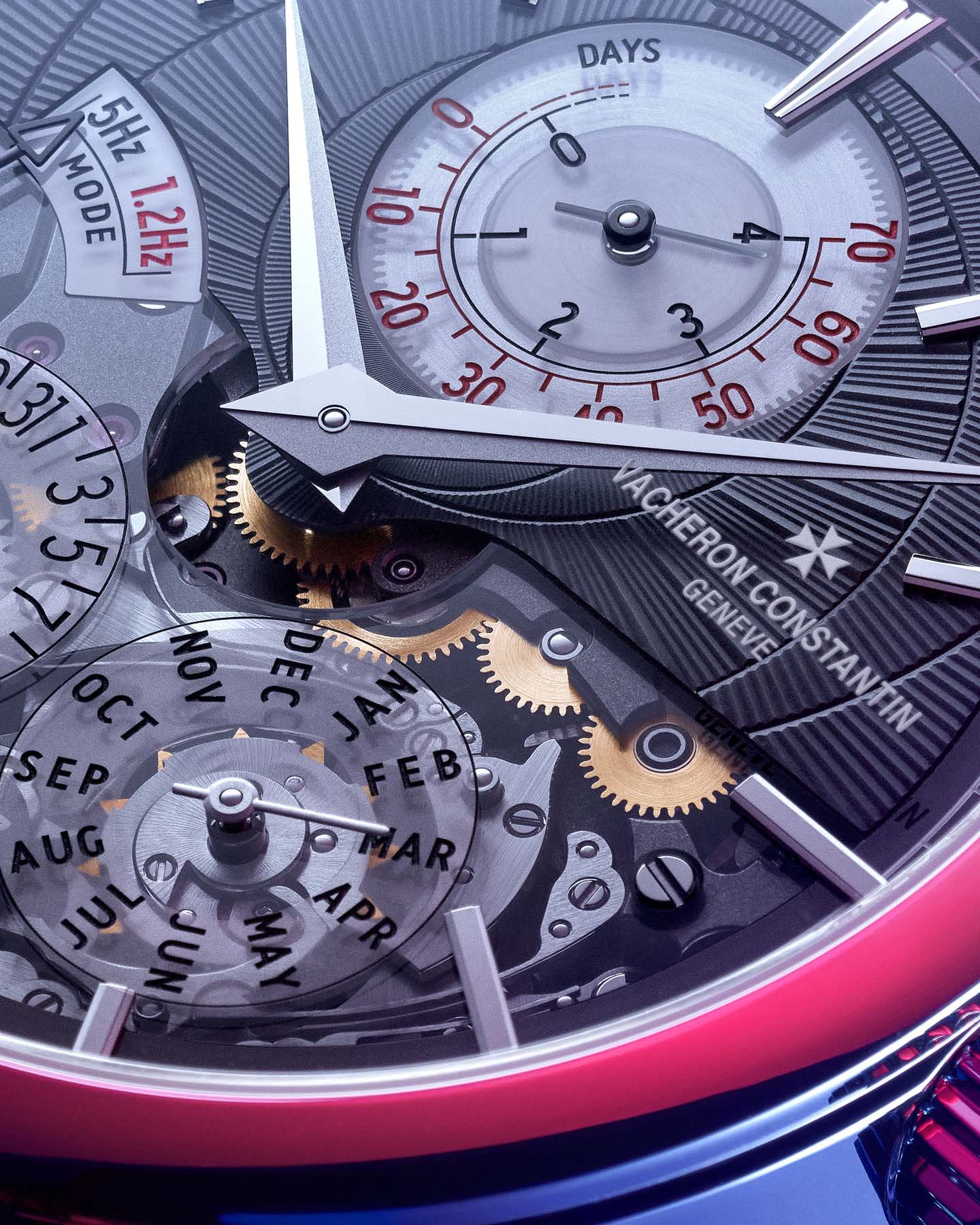
To facilitate reading of the hours and minutes, one differential helps navigate between the first and second gear trains. Another differential was specifically designed to split the energy from the mainspring, channeling it exclusively to the 1.2Hz gear train, which then powers the 1.2Hz balance wheel. This bigger balance wheel for Standby mode is fitted with a hairspring adapted to its rate. Its minuscule 0.015mm thickness is far thinner than a human hair. And finally, a third differential is used to indicate the power reserves. As energy storage is provided by a double barrel fitted with two springs, this construction allows, in addition to efficient energy distribution, the display of both power reserves by a single hand in a single counter featuring two scales, shown at 12 o’clock on the dial.
Making an energy-hungry caliber more efficient
This is where things get even more impressive. To extend the power reserve of its caliber 3610 QP, Vacheron Constantin didn’t simply add more energy storage. Instead, the brand focused on making the movement more efficient, specifically around the instantaneous perpetual calendar. That matters because instant-jump calendar indications are ridiculously energy-hungry. Every jump places a sudden load on the movement, which can affect balance amplitude and compromise precision. Vacheron tackled this with the newly developed patented double-gear spring-winding mechanism that requires four times less torque than conventional instant-jump systems. In simple terms, the calendar now consumes far less energy when switching indications. That improvement, combined with further refinements throughout the movement, especially in the 1.2Hz Standby mode, is what enabled the extra five days of power reserve.
A complete package: aesthetics and practicality
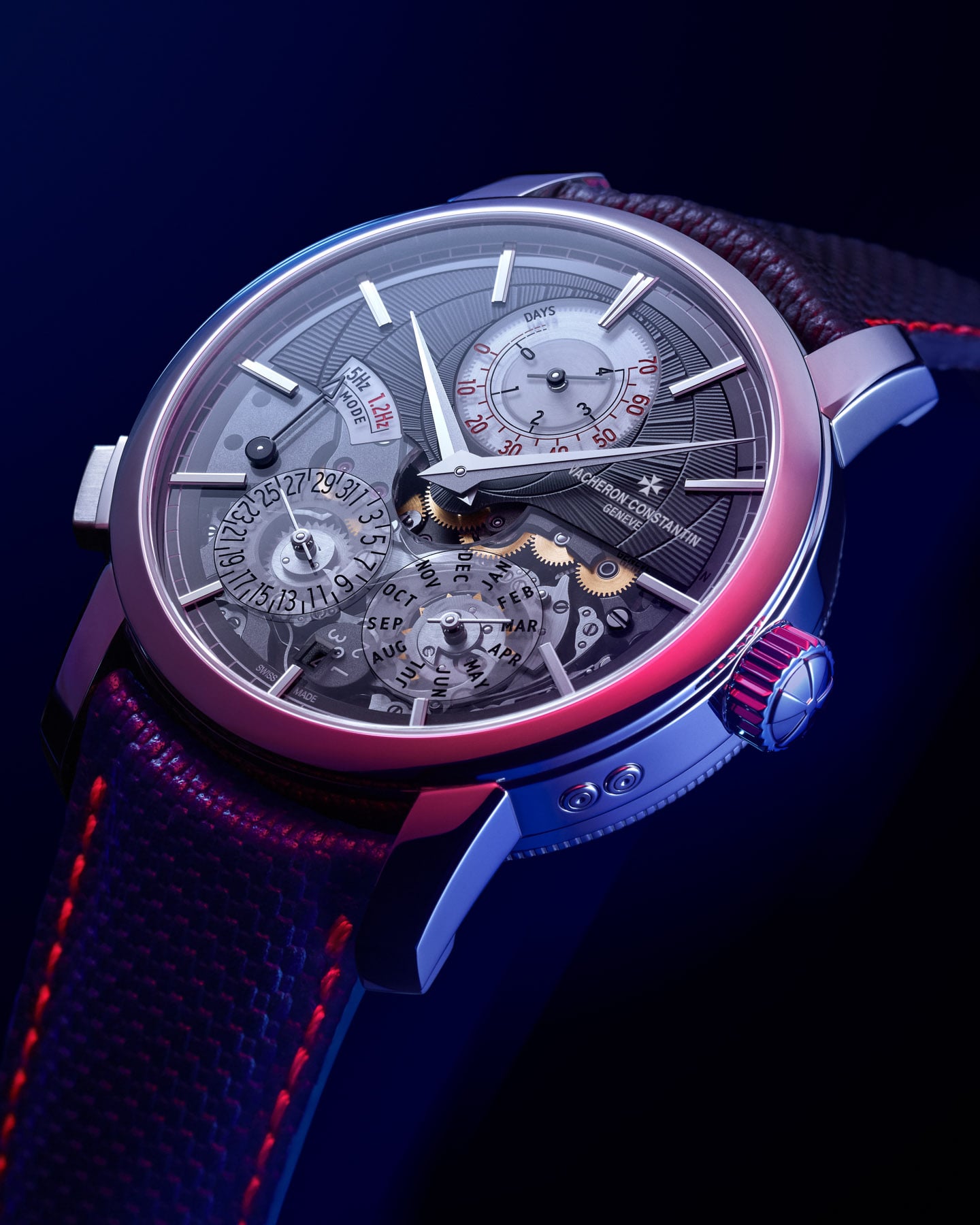
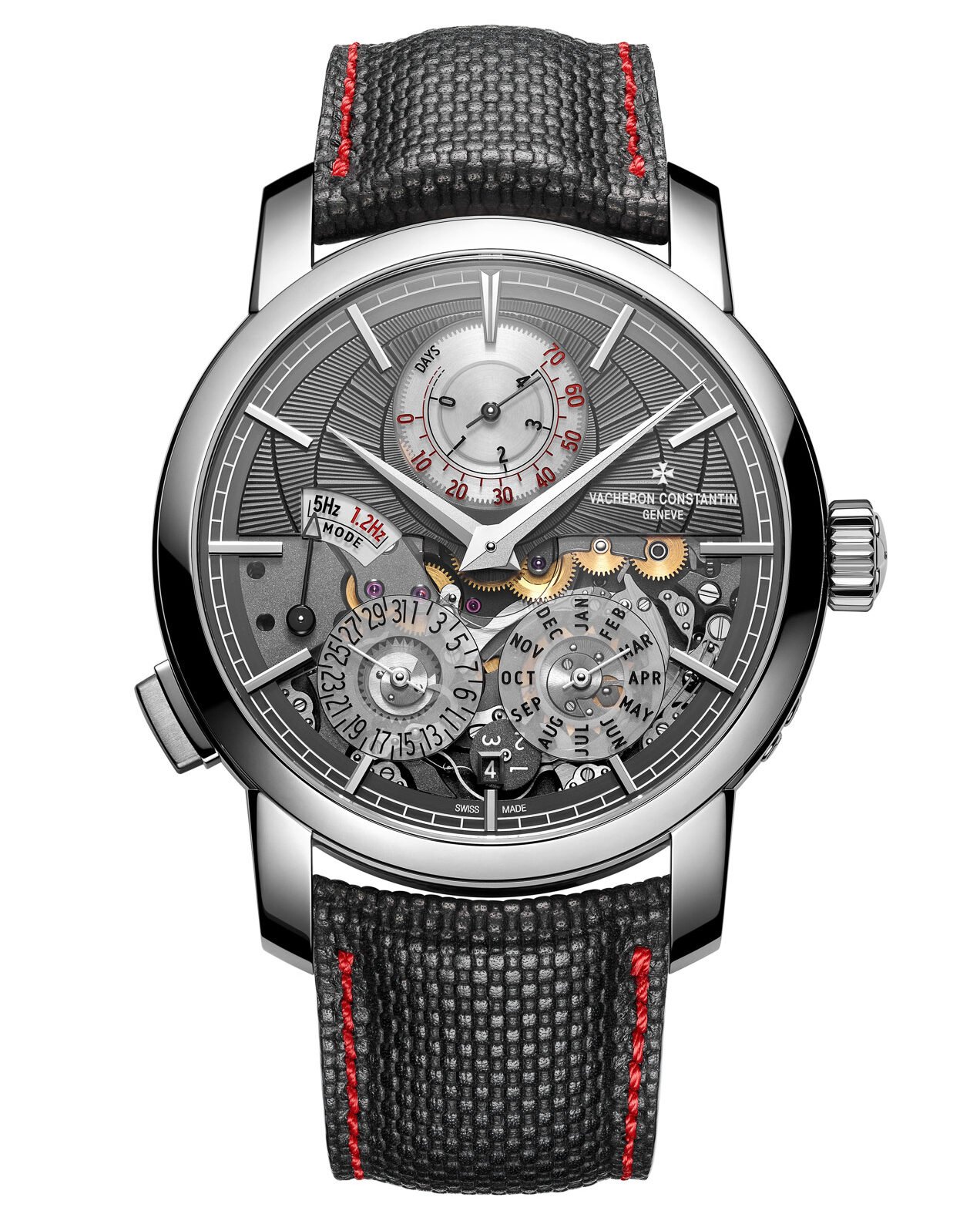
After all this technical salad, we should also realize that Vacheron did not ignore the design aspect of the 2026 Traditionnelle Twin Beat Perpetual Calendar. The case remains pure Traditionnelle, with its rounded profile, slim bezel, and fluted case back all intact. Crafted in platinum, its 42mm diameter and 12.32mm profile honestly seem pretty remarkable considering everything happening inside.
The real show is the dial. Vacheron Constantin has gone for a much more contemporary, technical aesthetic here, replacing some of the classical “restraint” or “shyness” of the original with a far more open mechanical presentation. The dial has two sections. Its lower one exposes the sandblasted NAC-treated mainplate, the date and month on separate sapphire sub-dials, and the indicator for the leap-year cycle. Meanwhile, the upper section features a slate-gray 18K gold plate finished with a hand-guilloché radiating pattern, a dual-scale sapphire sub-dial for the power reserve, and the mode indicator. It’s all about depth.
Takeaways: the Vacheron Constantin way
I suspect this is where collectors will be divided. The original Twin Beat had a quieter, more discreet elegance. This one feels bolder, more technical, and much more expressive. I feel that the more open architecture makes sense here because this watch’s movement deserves to be seen.
The rest remains very Vacheron — white gold dauphine hands, applied baton markers, beautifully finished bridges with Côtes de Genève, and the kind of subtle detailing you expect at this level. Even the reverse side continues the visual contrast, with dark anthracite fixed components playing against warm golden moving elements. It feels modern without abandoning the refined DNA that defines the Traditionnelle collection.
Indeed, it is very on-brand for a maison from the Holy Trinity. The Traditionnelle Twin Beat Perpetual Calendar is smart horology, as it tackles problems and obstacles in a way that will make people want to wear it. This watch has a very human purpose. No matter how big the words are and how complex the technical gymnastics get, this is made for the client. Seven years after the original Twin Beat debuted, I still think this is one of the most intelligent watches Vacheron Constantin has introduced in a long time. The Twin Beat might not be the most popular right away, but it’s definitely a problem for other high-end watchmaking companies.
What do you think about the new Vacheron Constantin Traditionnelle Twin Beat Perpetual Calendar? Do you agree that this is a necessary innovation/upgrade, or are we over-engineering something already complex enough? Dear friends, let’s chat in the comments.