Retrospective: Surprising Discovery Of Longines Boxing Timer

While searching for the Gallet Boxing Timer, I came across a surprising comment on one of my articles that sparked a discussion and led me to the one and only Longines Boxing Timer. The story behind the stop timer is unclear, but the watch seems authentic.
I am not particularly interested in pocket watches or stopwatches, but when I am in the mood, I search for them. It’s not a random search; my GCD syndrome (Gallet Completist Disorder) has me irregularly searching for Gallet-branded timers. In the early 1900s, Gallet was big in the US, and according to articles from that era, they were responsible for a large share of imported stopwatches. That would also explain the super wide range of timers across multiple disciplines, including many sports timing instruments.
Why keep searching
One of the most common is the yachting timer. Gallet offered about five different executions, and this one in particular is beautiful and pretty rare. Besides ice hockey and basketball timers, there was also my pocket Gallet grail, the Gallet boxing timer. I am constantly checking for one to pop up. To call the gods in my favor, I even mentioned it in my review article on the Gallet Basketball Timer. And here the Longines story starts.
Bait thrown
“I came across this article by chance. I discovered this Gallet timepiece for boxing matches. I inherited a similar timepiece from my father, who was a boxing coach in the 70s. Perhaps you know more about it,” the comment said, and you know what followed. I keep writing for such moments to happen. And repeat. The joy that sparks when such a discovery is on the horizon makes me the happiest and most excited person in the world. I sent Dany a message instantly.
The story begins to unroll
You can imagine my disappointment when I didn’t hear back from Dany. Since I never give up, I sent him another message two weeks later, and this time it worked.
“My father’s name was René Nicoulaz. He was a trainer at the Lucerne boxing club in Switzerland in the 70s. I inherited the watch, along with his old boxing gloves and some badges, as part of his estate. I’ve kept them aside for 10 years,” Dany explains, telling the story of a timer he decided to sell. After some thought, I accepted Dany’s asking price and could not wait to see the watch in person.
Unboxing
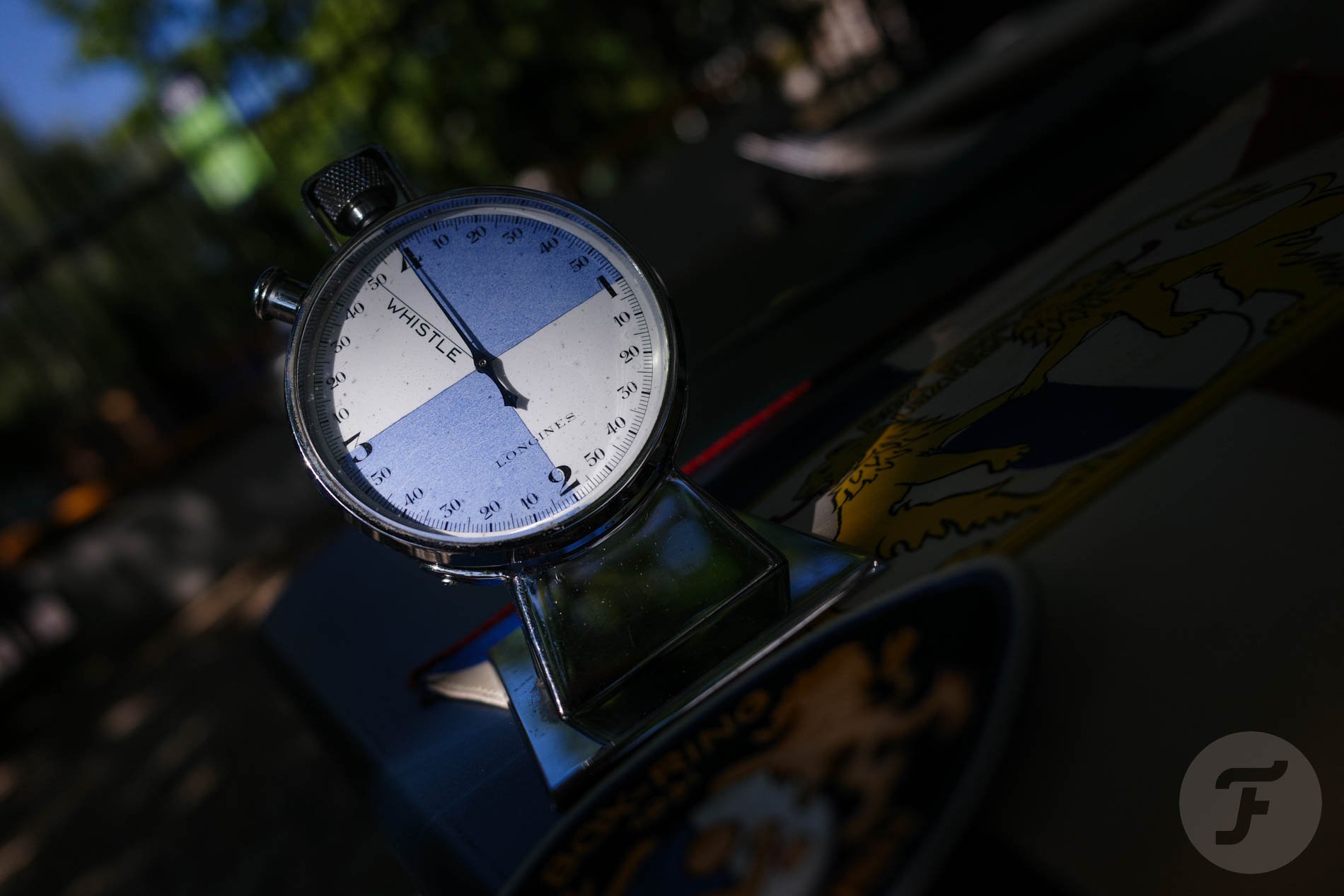
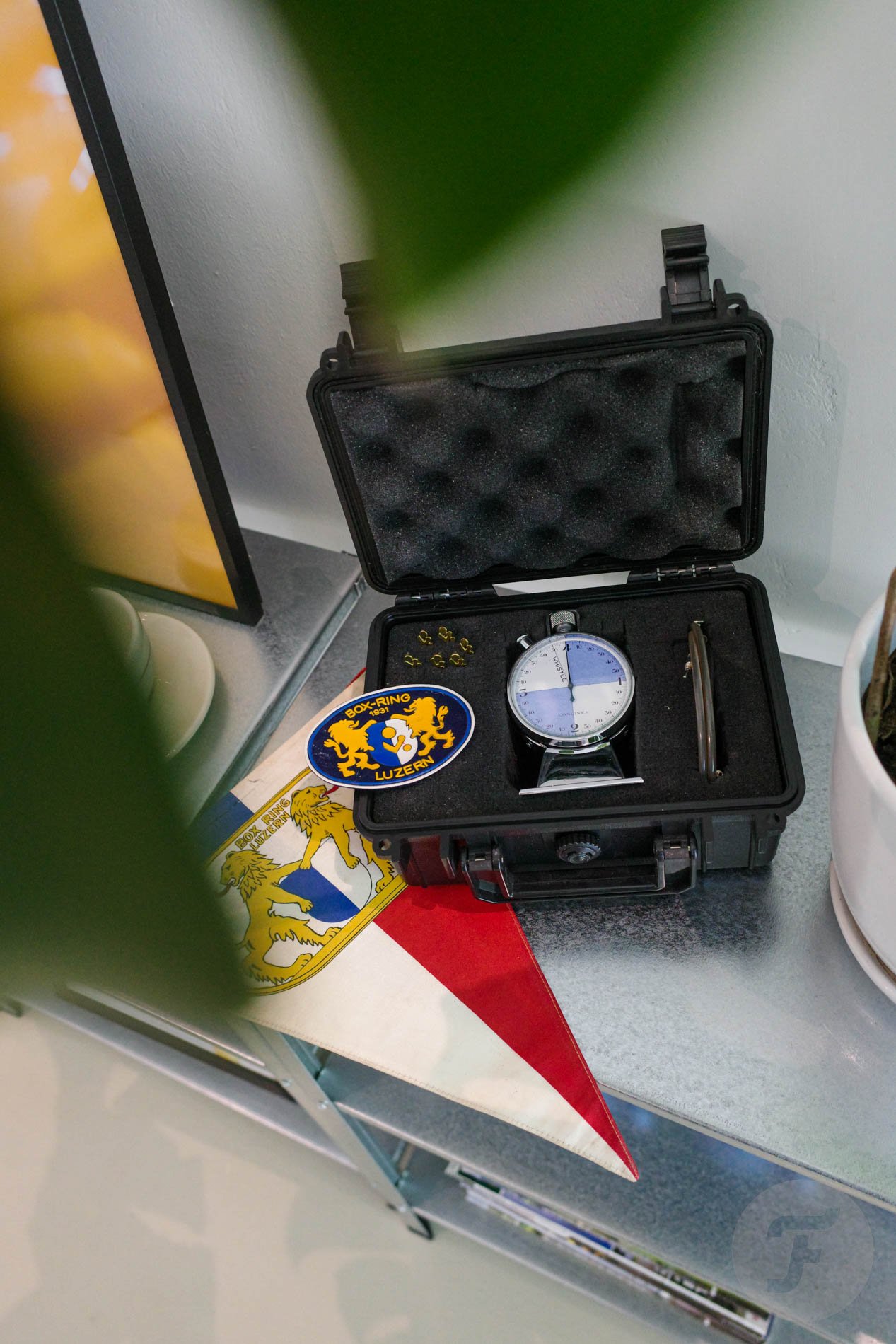
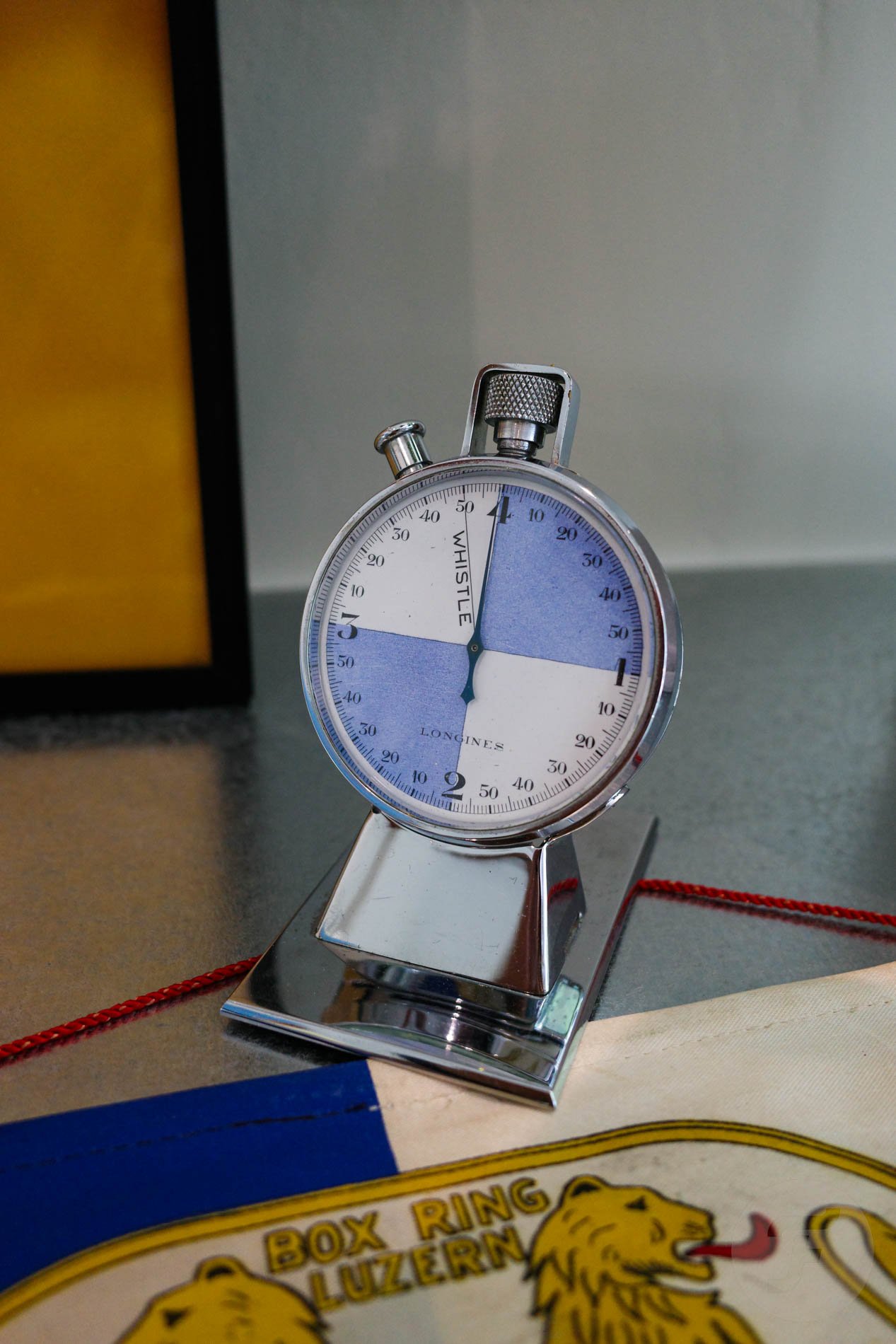
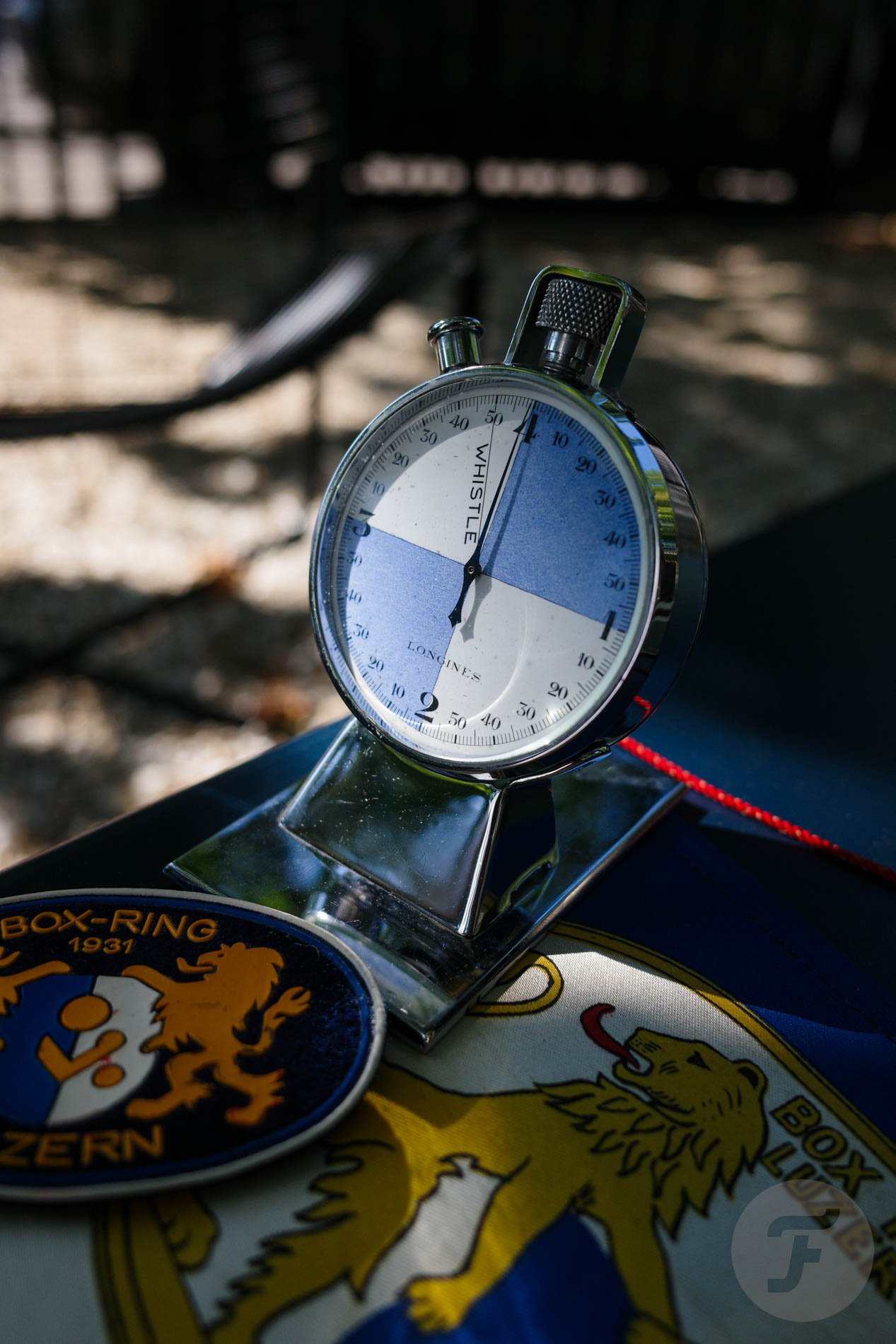
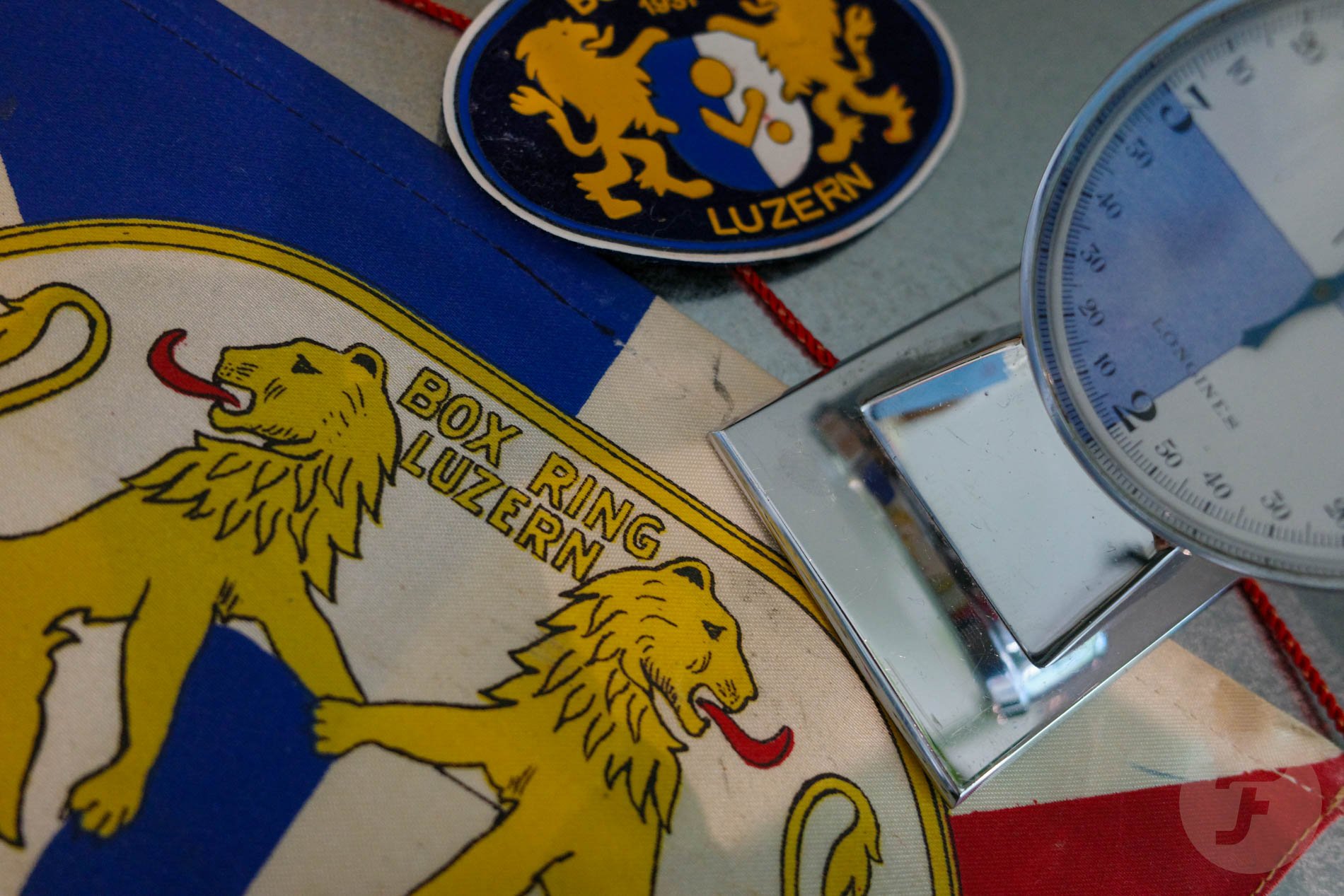
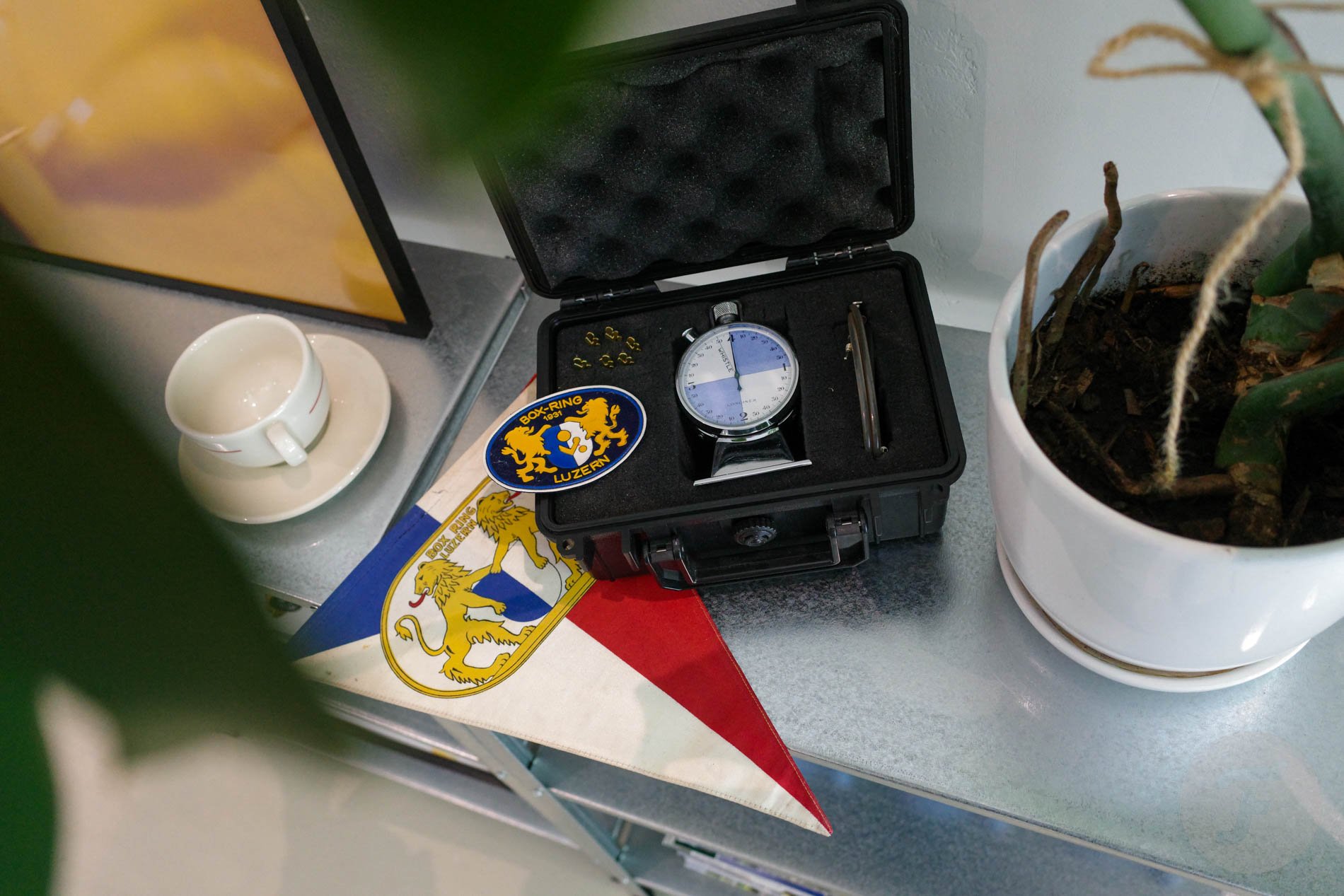
The timer arrived well-packed in a protective case. My heart skipped a beat when I saw a patch from the boxing club, the club pennant, a set of pins, and a remote release cable. I took the timer gently. It was screwed to the table stand with two screws. They match the case in finish and style, so I believe they are still genuine and original to the set. The watch is, to my surprise, quite heavy. I am no expert on pocket timers, but the case construction and overall look and feel suggest that the watch is not from the 1940s but from the seventies. In case you’re wondering, I don’t say “forties” randomly; that’s the decade when we could see this dial style advertised in old Gallet catalogs and prints.
Dial explained
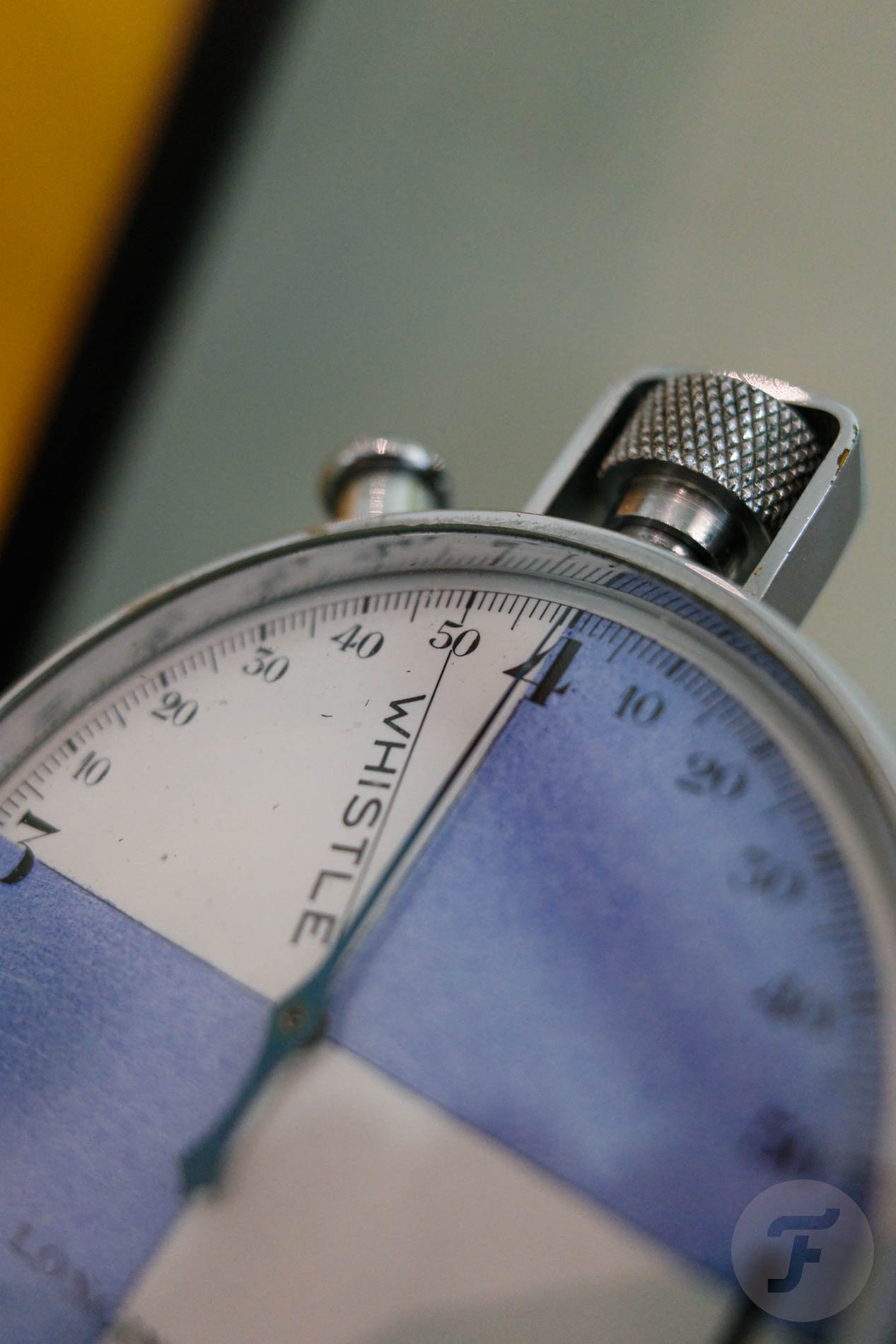
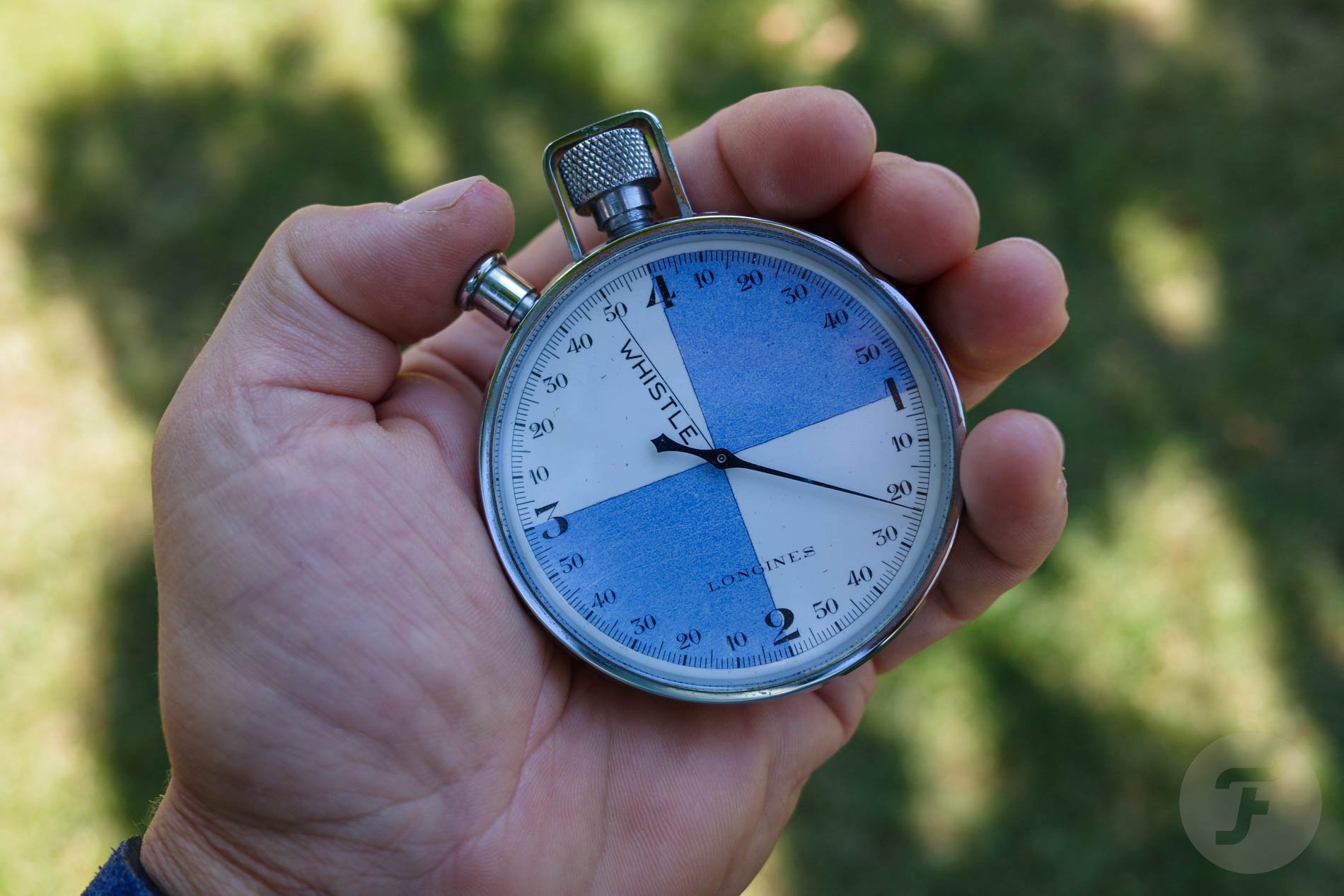
Before electronic countdown clocks took over ringside, boxing relied on purpose-built mechanical timers like this one. This Longines stopwatch tracks the full four-minute cycle of a professional bout: three minutes of fighting followed by a one-minute break. One full revolution of the hand lasts exactly four minutes, with the first three colored quadrants representing the round and the fourth marking the rest period. Just ten seconds before the next round begins, the hand reaches the “WHISTLE” mark, signaling the timekeeper to warn the boxers to get ready. Ten seconds later, the bell rings, the fighters step forward, and the hand begins another four-minute cycle. A beautifully simple piece of functional design from an era when timing was entirely mechanical.
Dead end
As a proper, curious vintage watch nerd, I did the obvious. I contacted both Luzern Boxing Club, which seems to be active today, and the Longines archive. Sadly, I have not heard back from Luzern Boxing Club, but I will be sure to visit there someday. In the meantime, is there anyone around who could stop by and help with research? Let me know.
No good news came from Longines either. “After having spent a lot of time checking our archives, I’ve found nothing on your boxing counter. Even if the movement is not signed, it could be interesting for us one day to take a look at this watch,” reads a message from Philippe Hebeisen, Longines Brand Heritage Historian.
Original or not?
As of today, we have no conclusive proof that the Longines Boxing Timer is 100 percent authentic, but my gut tells me it is. Since the same dial was available with Gallet branding, the most probable explanation is that a third party produced the timer, which was later branded with a respective watch manufacturer. I studied the printing on the dial under a magnifying glass, and the quality seems just fine. It doesn’t appear to be some dodgy job. And frankly, it would not make sense to do that for a stopwatch.
Play time
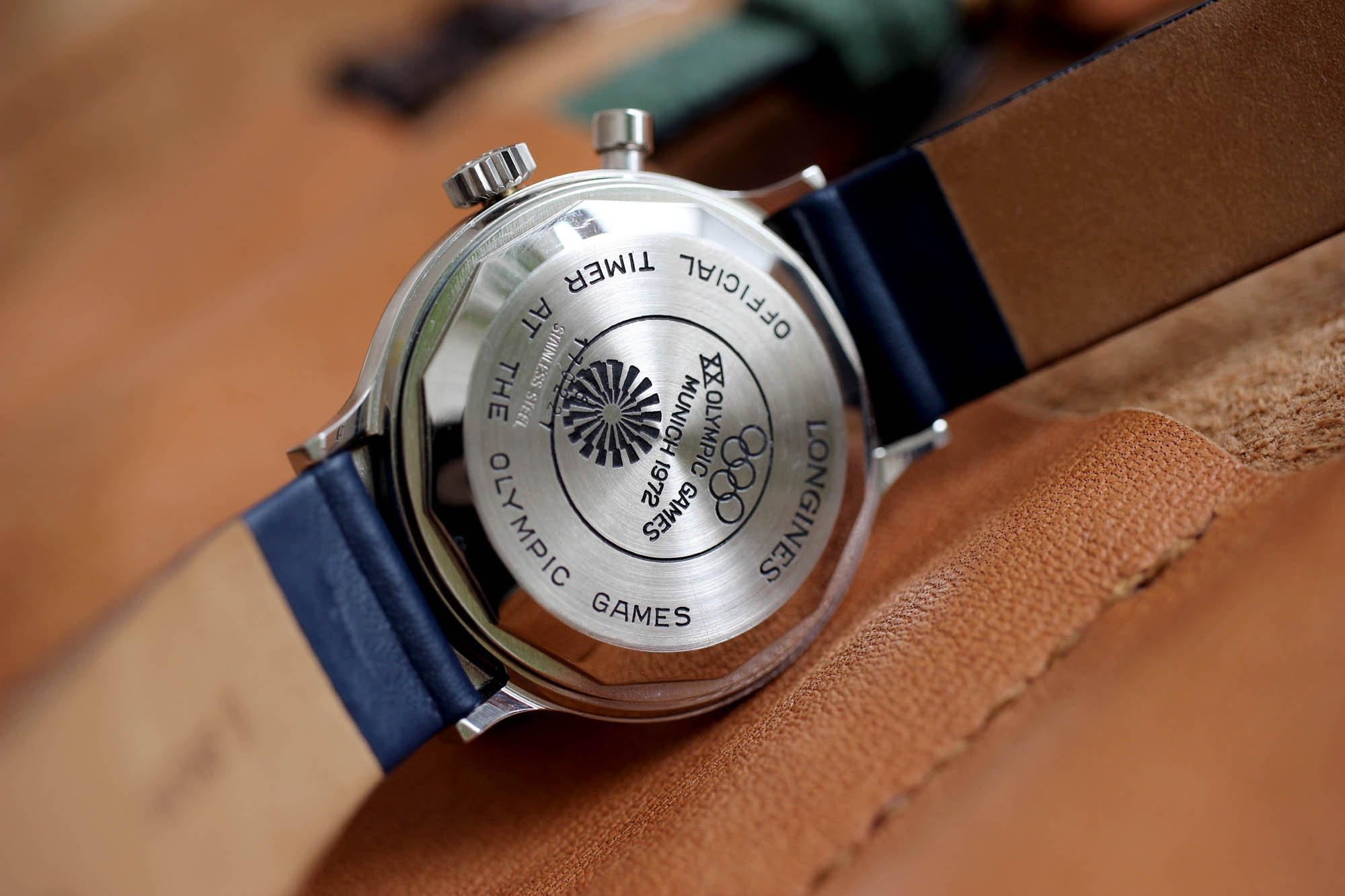
On the other side, we have a provenance story and a bunch of related memorabilia that come with it. The remote release cable is especially fun. You can screw one end to the protective bridge over the crown, and simply pressing the pusher on the other end starts and stops the timer remotely. We should also mention that Longines was also pretty big in timing many sports events, including swimming and gymnastics. The brand even served as the official timekeeper for the 1972 Summer Olympics in Munich (see above).
-

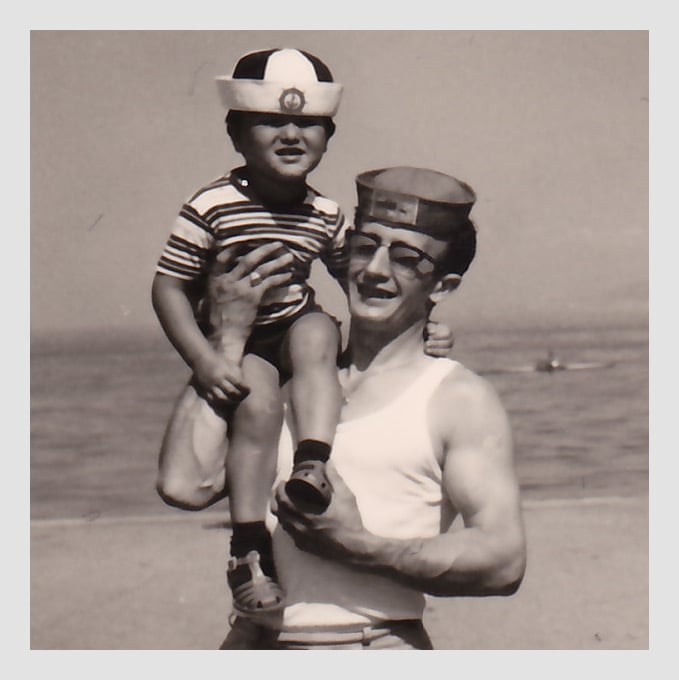
- Dany and his father René in sixties.
-
- Dany and his father two months before he died in 2015.

The more personal, the merrier
“I am adding a club pennant and meeting minutes from the 80s,” says Dany. He has no photos or other information about his father’s active years. That’s where the Luzern Boxing Club archive could fill the gap. “However, I have found a pair of boxing gloves and a glass crest. Both items were specially made for the European Amateur Boxing Championships in Luzern in 1959,” Dany adds. I am happy to find Dany’s father’s name in the documents he sent as a bonus to the timer. After a few more days, I got another email from Dany. He found two photos of him and his father. One is from the sixties, and the other is about two months before he died in 2015.
Last thoughts
A pocket timer will never be as exciting as a wristwatch. But if it comes with a personal story, a bunch of related memorabilia, and a bit of mystique, it can be equally exciting. Unusual quadrants and uniquely pale indigo-blue triangles make the dial almost magnetic. When we add a whistle sign and mark, we get a timer that differs from any pocket watch or timer we know. And I guess that’s the real value in today’s world, where almost everything becomes similar.
Oh, and that thin-lined Longines logo print, which is so wide that you have to read it slowly. A traditional name on such a playful dial is a real surprise. And the best part? It’s 2026, and we’re still finding new watches that keep our minds sharp. Happy hunting!