Unleash Your Inner Beast With The Vacheron Constantin Métiers d’Art Tribute To The Animal Kingdom Watches

You know you’re looking at something extremely exclusive if a watch is part of the One of Not Many Crafts Program. And that’s what the six Vacheron Constantin Métiers d’Art Tribute to the Animal Kingdom watches are. The project explores how crafts outside the traditional watchmaking repertoire can be adapted to the scale and technical constraints of a wristwatch. Six artisans were invited to reinterpret their respective disciplines on watch dials, with the animal kingdom serving as the common theme. The results are nothing short of stunning.
In a way, the six Vacheron Constantin Métiers d’Art Tribute to the Animal Kingdom watches are “Animal Style” timepieces. These new off-menu creations use an existing case and movement but have an exclusive, one-of-a-kind “topping.” But unlike at In-N-Out Burger, you can’t just walk into a Vacheron Constantin boutique to ask for an Animal Style watch. The sextet of new Métiers d’Art watches features six artisans who created six distinct dials, each depicting a different animal. And they took their time to do so. The One of Not Many Crafts Program is the absolute opposite of fast-food horology, no matter the fancy “toppings.”
Six Vacheron Constantin Métiers d’Art Tribute to the Animal Kingdom watches
Enough about off-menu burgers and more about the six Vacheron Constantin Métiers d’Art Tribute to the Animal Kingdom watches. VC’s One of Not Many Crafts Program showcases the brand’s involvement in decorative crafts, including engraving, guilloché, enameling, and gemsetting. This time, the brand looked beyond established horological techniques. For the Animal Kingdom project, six selected artisans worked with gold embroidery, featherwork, wood marquetry, glass sculpting, paper sculpting, and micro-origami. None had previously worked on watch dials, which made it challenging to meet the tight tolerances imposed by a watch. The challenge was therefore not simply to reproduce an existing craft in miniature. Instead, they had to rethink the techniques and tools required to make them compatible with horology.
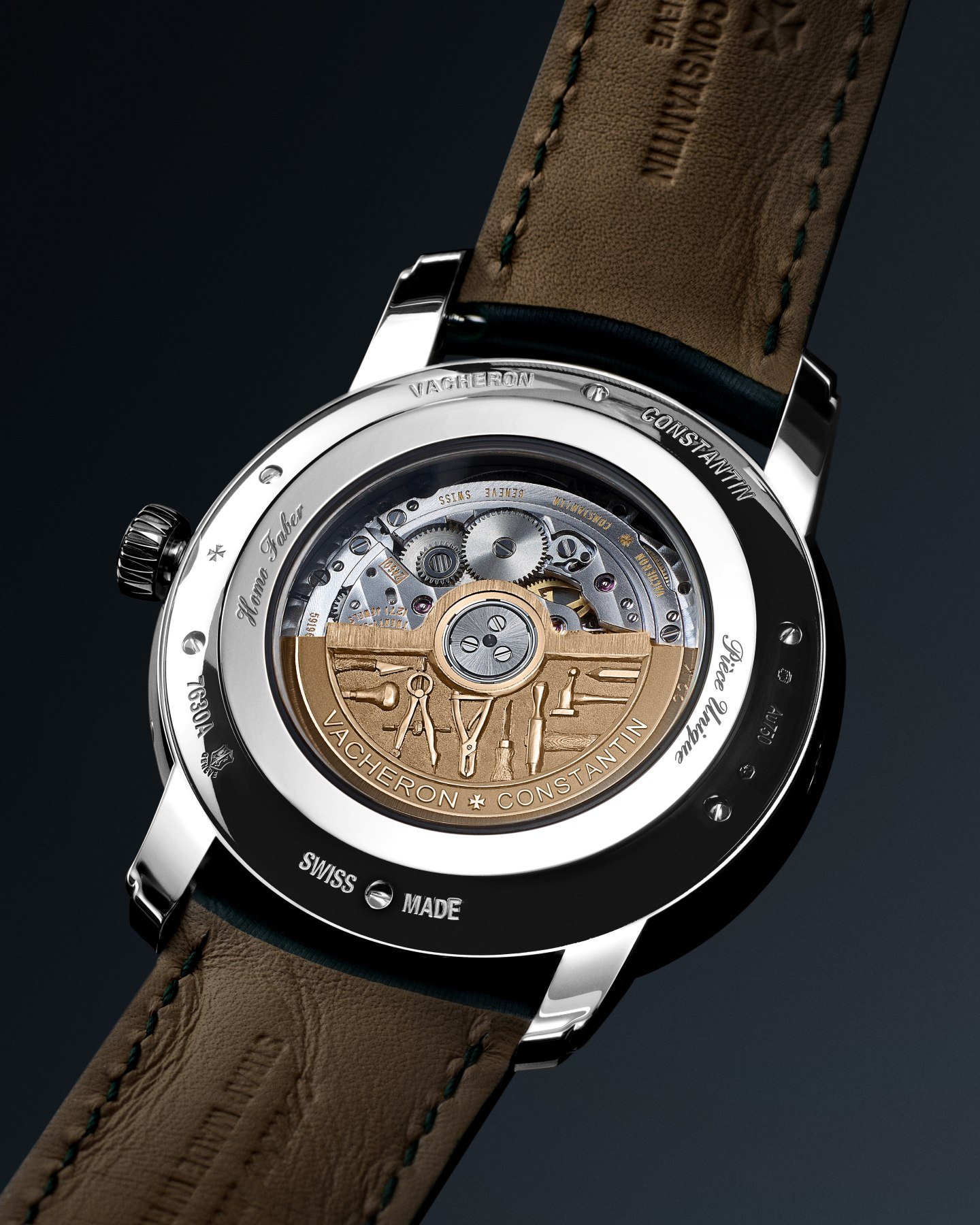
All six new watches feature a 42mm case with an approximately 4mm space between the dial and sapphire crystal. Within those confines, the artisans had to create sufficient depth and detail. It took years of experimentation, prototyping, and tool development to translate the six crafts into functional watch dials. The technical foundation for all six watches is Vacheron Constantin’s 237-part caliber 2460 G4. It’s unusual and very recognizable as a VC creation, as the display leaves most of the dial free for artistic expression. Rather than placing conventional hands and hour markers at the center, the movement indicates the hours, minutes, day, and date through four apertures positioned around the perimeter of the dial. This architecture effectively turns the dial’s center into a canvas for the six artisanal crafts.
From feathers to sculpted paper
The six dials each offer a different interpretation of the animal world. Featherwork, embroidery, marquetry, sculpted glass, paper sculpting, and micro-origami introduce materials and techniques you rarely see in a watch. The miniature scale also changes the character of these crafts. Details that might normally be visible from a distance have to withstand close inspection while remaining sufficiently thin and light for use in a wristwatch.
The collaboration also required considerable input from VC’s watchmakers and métiers d’art specialists. Integrating unfamiliar materials into a mechanical watch posed challenges related to thickness, weight, durability, and construction. The exchange between the invited artisans and the brand’s specialists led to new working methods and tools while also allowing VC’s traditional horological expertise to influence the artistic processes.
The tale of the Feathersnake
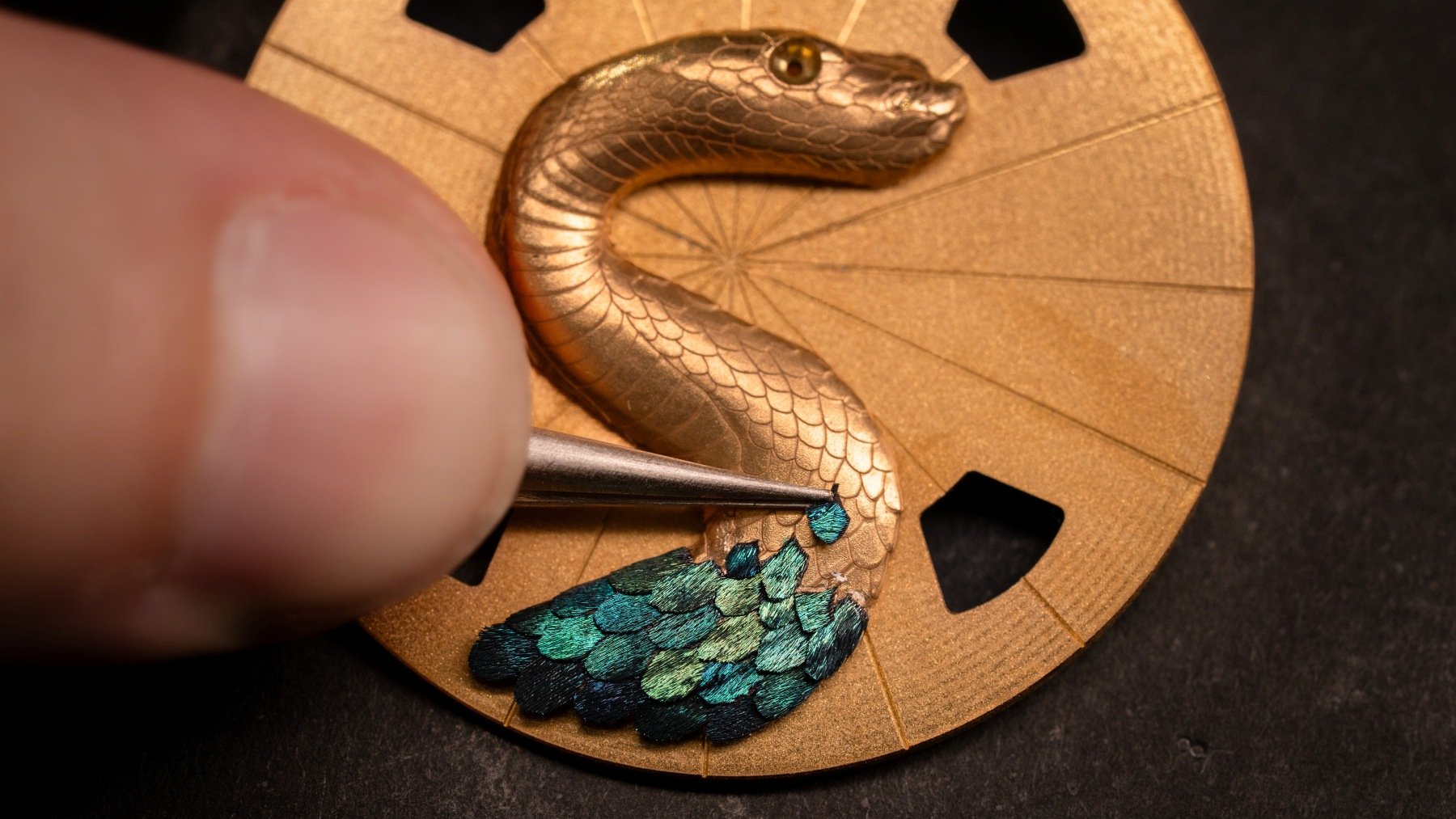
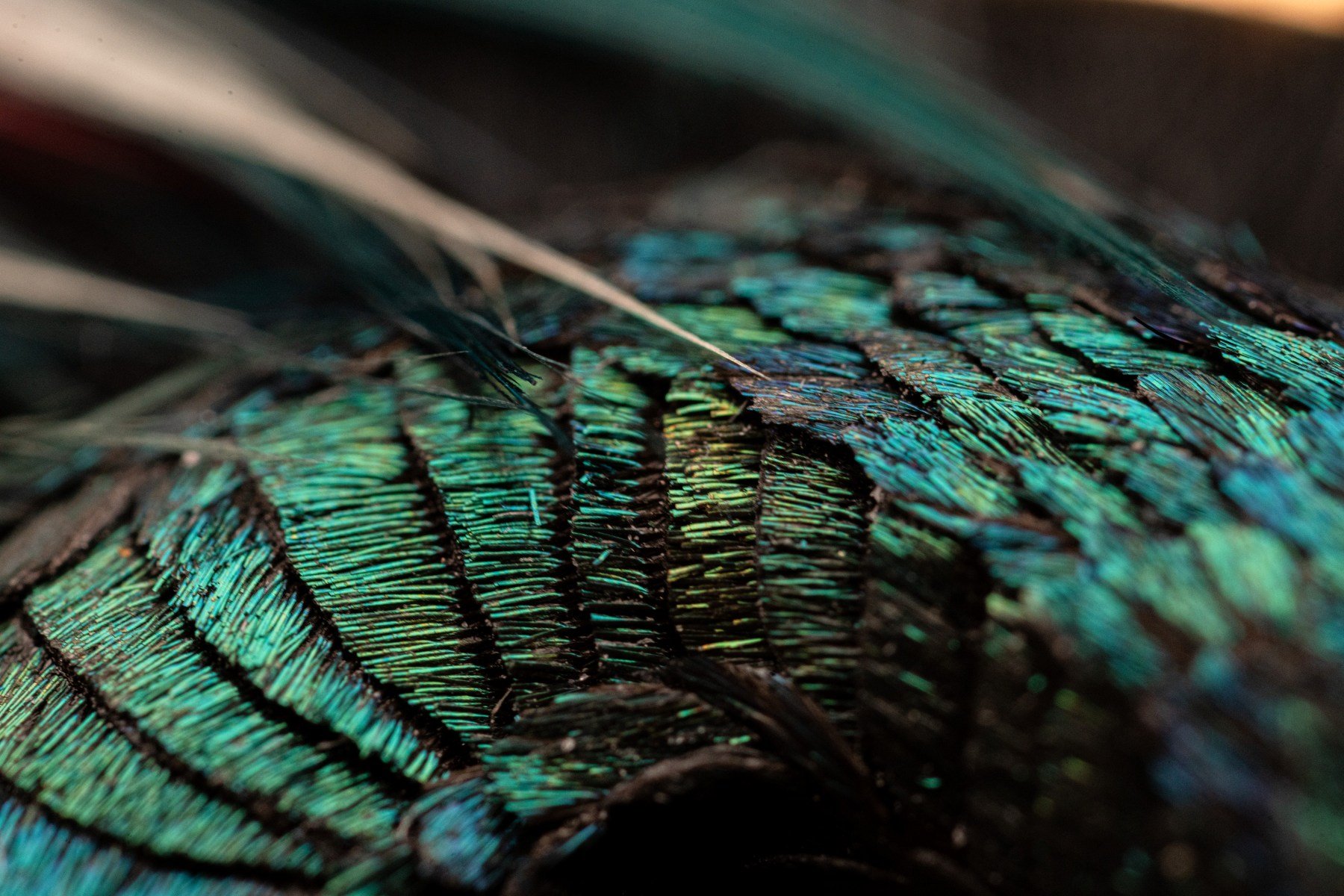
Have you ever heard of micro-plumasserie? Well, it’s this technique that gives you the Feathersnake. More than 200 small, iridescent feathers create an imaginary serpent winding through a fantastical landscape. The snake rises approximately three millimeters above the dial, giving the composition a surprisingly three-dimensional appearance. Its volume comes from a specially developed metal appliqué that supports the feathers, allowing them to retain their natural shape. Their iridescent blue-green reflections add another layer of depth, producing an effect reminiscent of living scales.
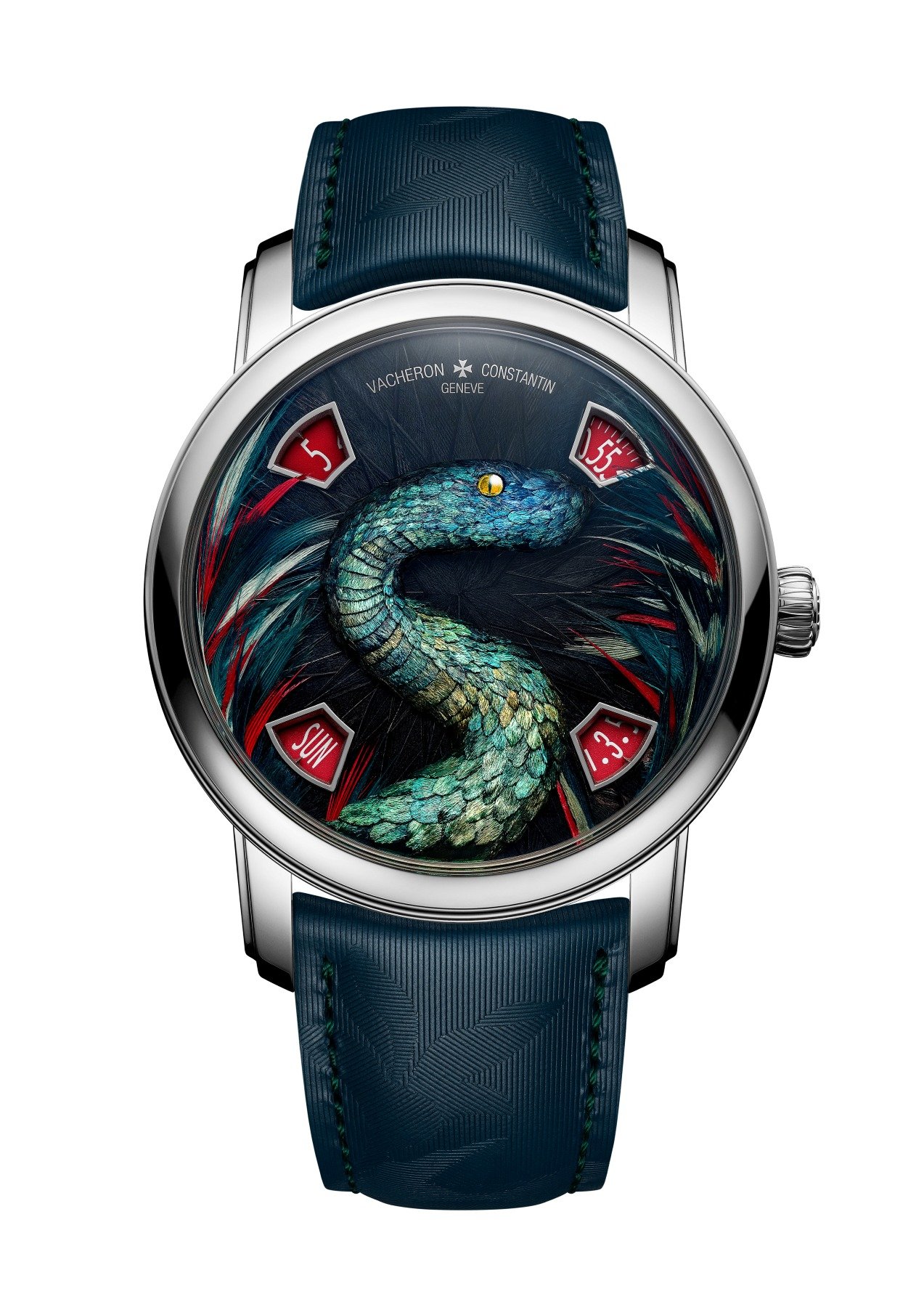
Feathersnake
More than 200 individual pieces sourced from seven Lophophore feathers make up the serpent. The surrounding foliage and background use goose feathers. Preparing the material required removing the central quill while preserving the delicate barbs, after which the feathers were mounted on silk paper. This provided a stable surface for cutting the tiny pieces before they were transferred to the metal appliqué and ultimately the dial. The extreme scale of the work also meant that conventional tools were of little use. The artisan developed a micro-scalpel from a reshaped needle and modified a sewing needle to apply minute amounts of adhesive. The entire composition took approximately 250 hours to complete, including research and prototyping.
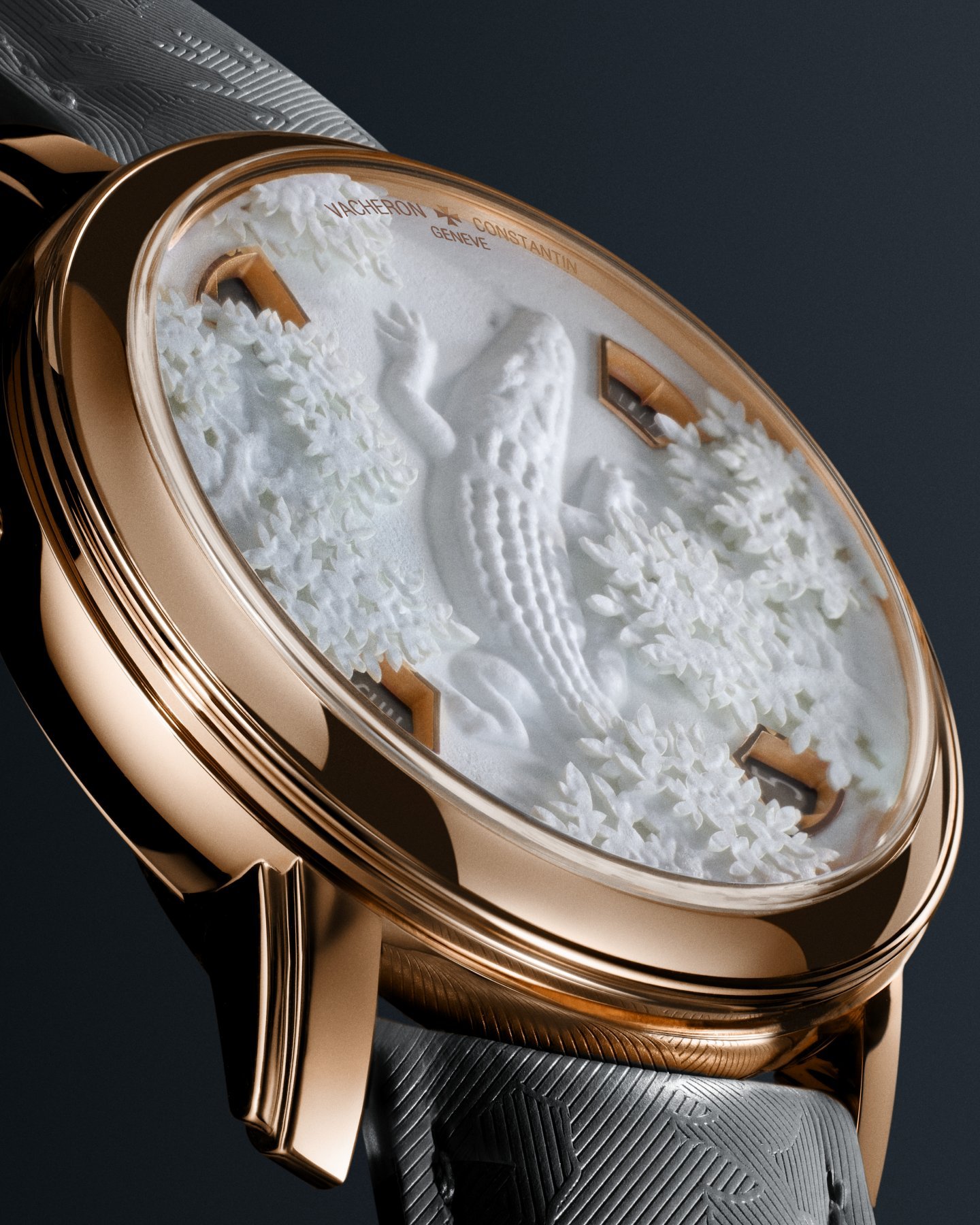
Paper tiger? No, paper crocodile
I’ve heard of paper tigers, but paper crocodiles? Not so much. Anyway, on the Papercroc’s dial, the all-white crocodile seems to emerge from what looks like a snow-covered landscape. Yes, this is no ordinary crocodile. At first glance, it could be mistaken for an ice sculpture. Only when you look closer does the material, white cotton paper, reveal itself. The scene is the result of microscopic paper sculpting, combining embossing, laser cutting, and painstaking hand assembly. Two types of paper, weighing 250 and 300 grams per square meter, are layered to create the scene, which measures just three millimeters tall. There is no color to provide an easy sense of depth. Instead, the relief does the work.
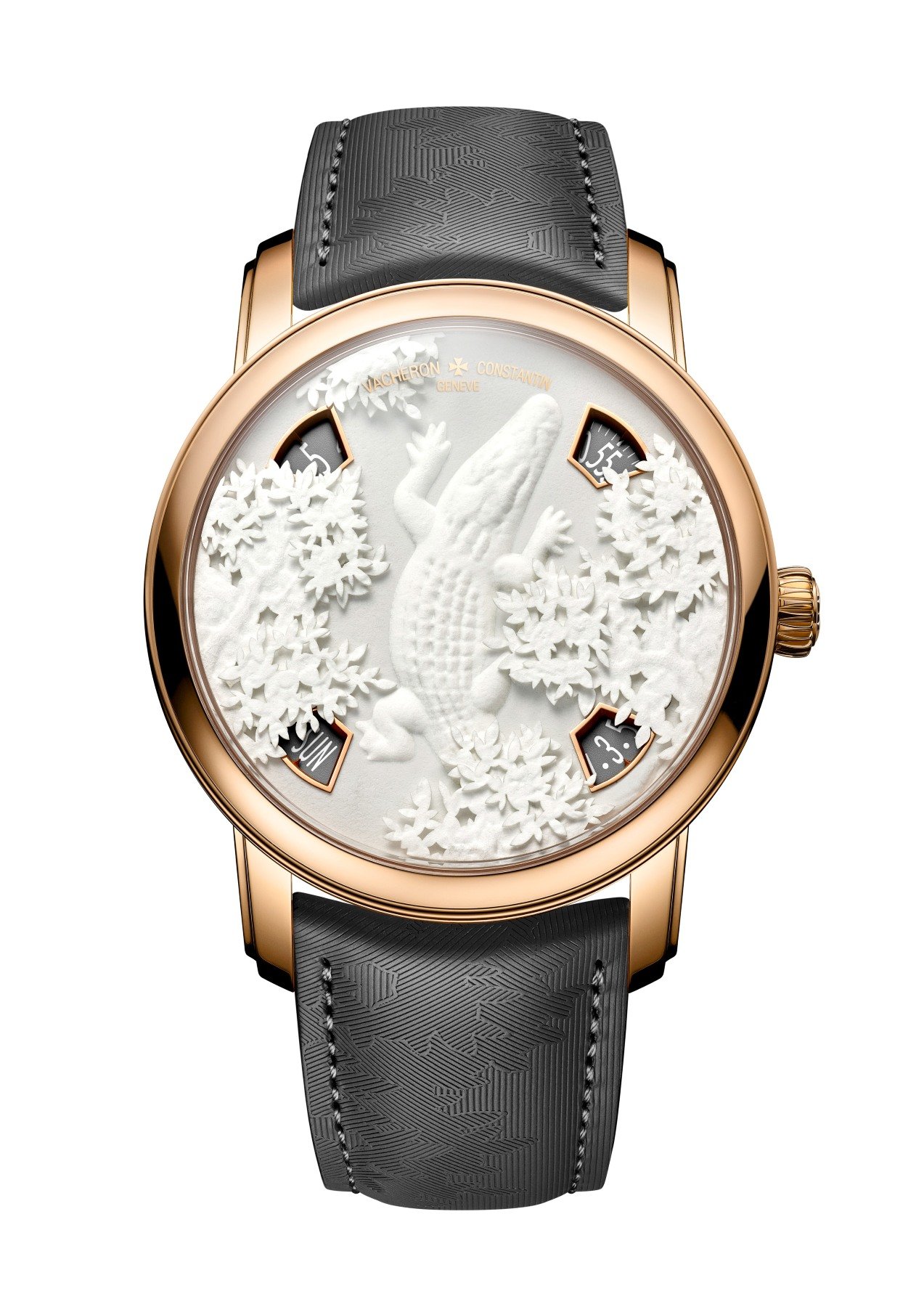
Papercroc
Getting to this point required months of experimentation and the development of bespoke embossing tools. Brass matrices engraved with the crocodile’s scales and the foliage were heated to 60–70°C and pressed into the paper under considerable pressure. The aim was to create sufficient relief to give the crocodile a convincing sculptural presence without exceeding the watch’s strict spatial limitations.
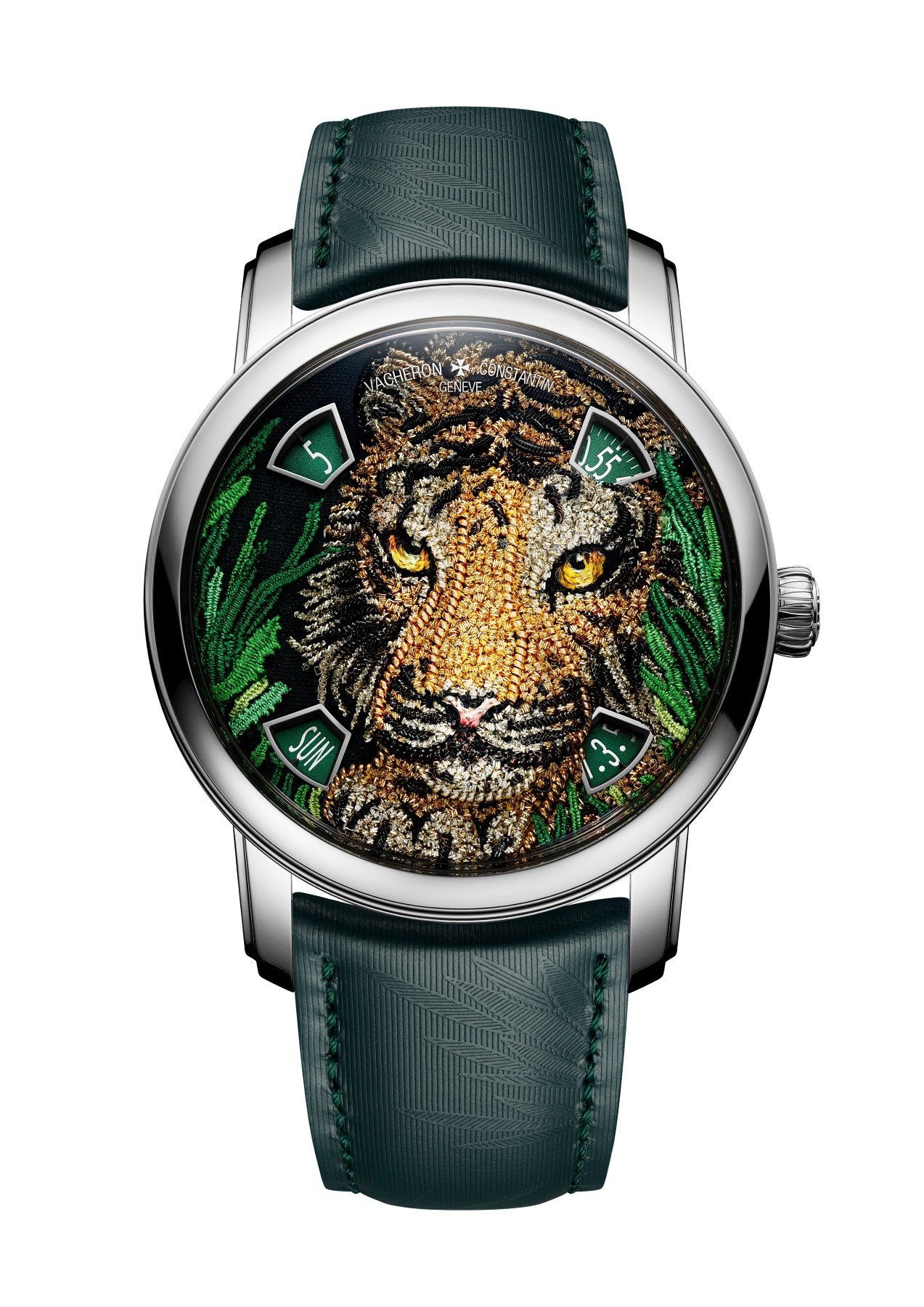
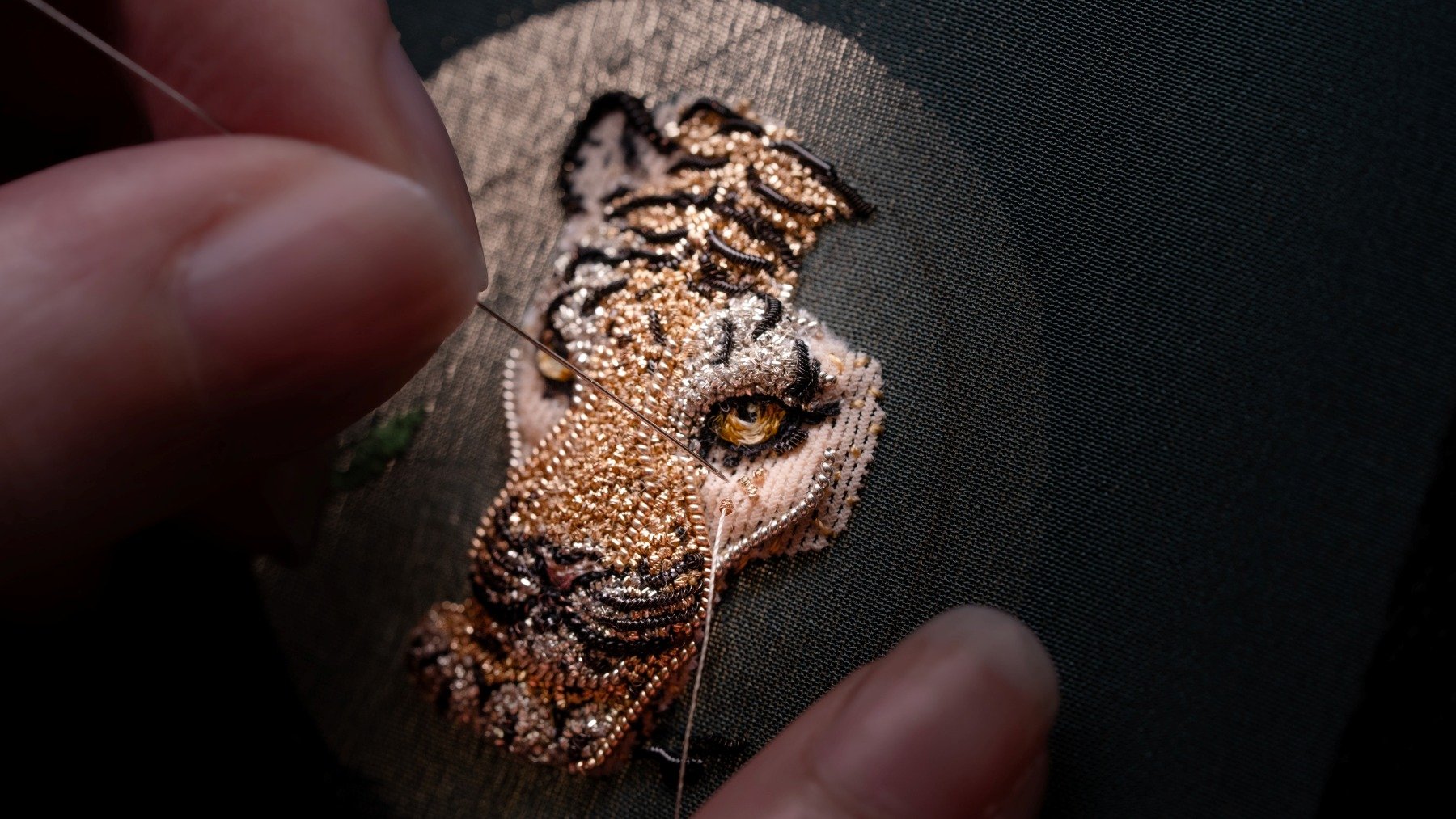
Tigerbroidery
The same but different
The other four watches — the Oraygami featuring micro-origami, the gold-embroidered Tigerbroidery, the sculpted Glassoctopus, and the Woodenwings falcon featuring wood marquetry — use the same movement but all feature a specific central rotor. The 22K gold oscillating weight features hand-engraved motifs inspired by artisans’ tools, providing a direct reference to the craftsmanship behind the six Animal Kingdom watches. Each timepiece also has a dedicated strap featuring embossed motifs that echo the corresponding dial.


The six Vacheron Constantin Métiers d’Art Tribute to the Animal Kingdom watches are extremely exclusive, price-on-request creations that serve as showcases of skills while also continuing a tradition. Nature and fauna have always been a part of the brand’s history, not only as a source of decorative motifs but also as a means to keep an open eye and mind and stimulate curiosity and reinvention. There are plenty of historical examples, and the new sextet fits perfectly into the tradition. A watch with an animal on the dial, well, it’s not for everyone. But for some, owning one of these Animal Kingdom watches could be a dream come true. They certainly are the stuff of unrestricted watch dreams.