Van Cleef & Arpels Celebrates 20 Years Of Poetic Complications: The Mechanics Behind The Magic

A magician never reveals his secrets. That would ruin the magic. Creating magical complications with a poetic soul is what Van Cleef & Arpels is all about. This year, the brand celebrates 20 years of the Poetry of Time philosophy, a way of thinking that led to a string of so-called Poetic Complications. The creations are unique timekeepers, miniature wrist automatons that tell a story in mechanical motion. These mechanics work behind the scenes so as not to distract from the spectacle on the dial. Now, the creators of lovers kissing on a bridge or flowers telling time allow us a look behind the scenes and explain the micromechanics powering the poetry in motion. Will it kill the magic?
Rainer Bernard, the director of watchmaking development at Van Cleef & Arpels, doesn’t like the word “complications.” For him, the word has far too many negative connotations: life can be complicated, problems are complicated, and so on. The problem is that, in the world of high horology, watch brands use this term to distinguish themselves. Bernard has searched for an alternative term but hasn’t found one yet, so he has no option but to stick with it. Luckily, adding “poetic” to the term drastically tempers the negative connotations. And when Van Cleef & Arpels celebrates 20 years of poetic complications, puts them all on display, and explains how they were made, there’s only room for enchantment, admiration, and respect for so much original technical ingenuity.

Van Cleef & Arpels Director of Watchmaking Development Rainer Bernard
Van Cleef & Arpels celebrates 20 years of poetic complications: Dazzling mechanical magic
Every poetic complication starts with a story. The story dictates the complication, and nine times out of 10, that complication never existed before. Unfortunately, that never-before-seen complication will do its work in the secrecy of a closed case. But luckily, during the visit to the Van Cleef & Arpels’ atelier in Meyrin on the outskirts of Geneva, Rainer Bernard “opened the watch case” for us and showed how some of the brand’s Poetic Complications work.
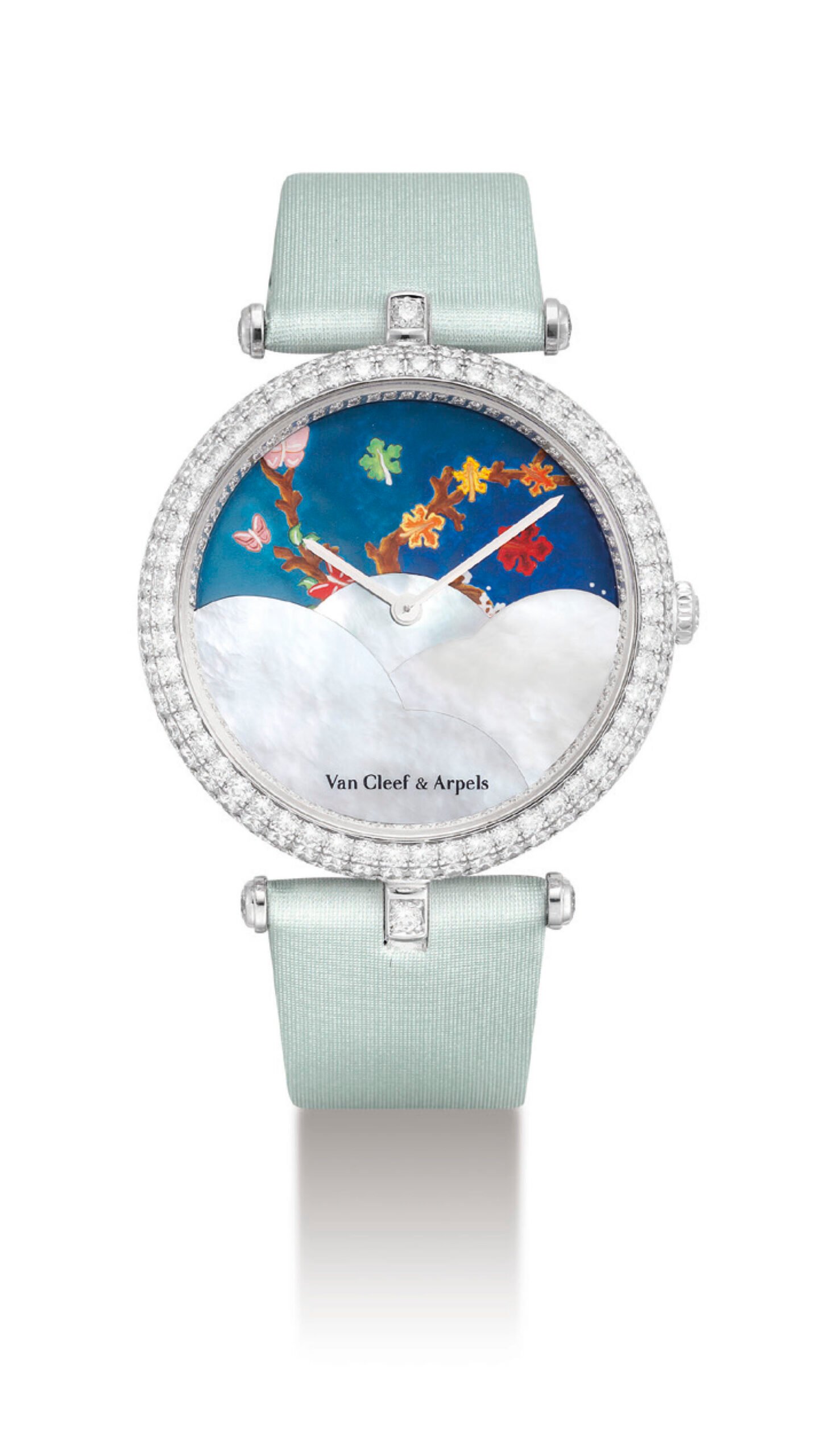
Lady Arpels Centenaire (2006)
Now, most complicated Van Cleef & Arpels creations are very feminine. The Poetic Complications collection debuted in 2006 to celebrate the brand’s 100th anniversary, and its first watch was the Lady Arpels Centenaire. Rather than merely displaying conventional hours and minutes, the watch also measured the changing seasons. A disc behind the dial completes one full rotation every 365 days, gradually revealing nature’s subtle transformations throughout the year. Beyond its original complication, the watch also showcases the brand’s artistic side with hand-painted and enameled scenes that capture the seasons’ passage. The watch exemplifies the Poetry of Time philosophy, in which emotion, craftsmanship, and storytelling take precedence over the straightforward reading of time. This philosophy has gradually evolved, and so have the levels of complications and craftsmanship.
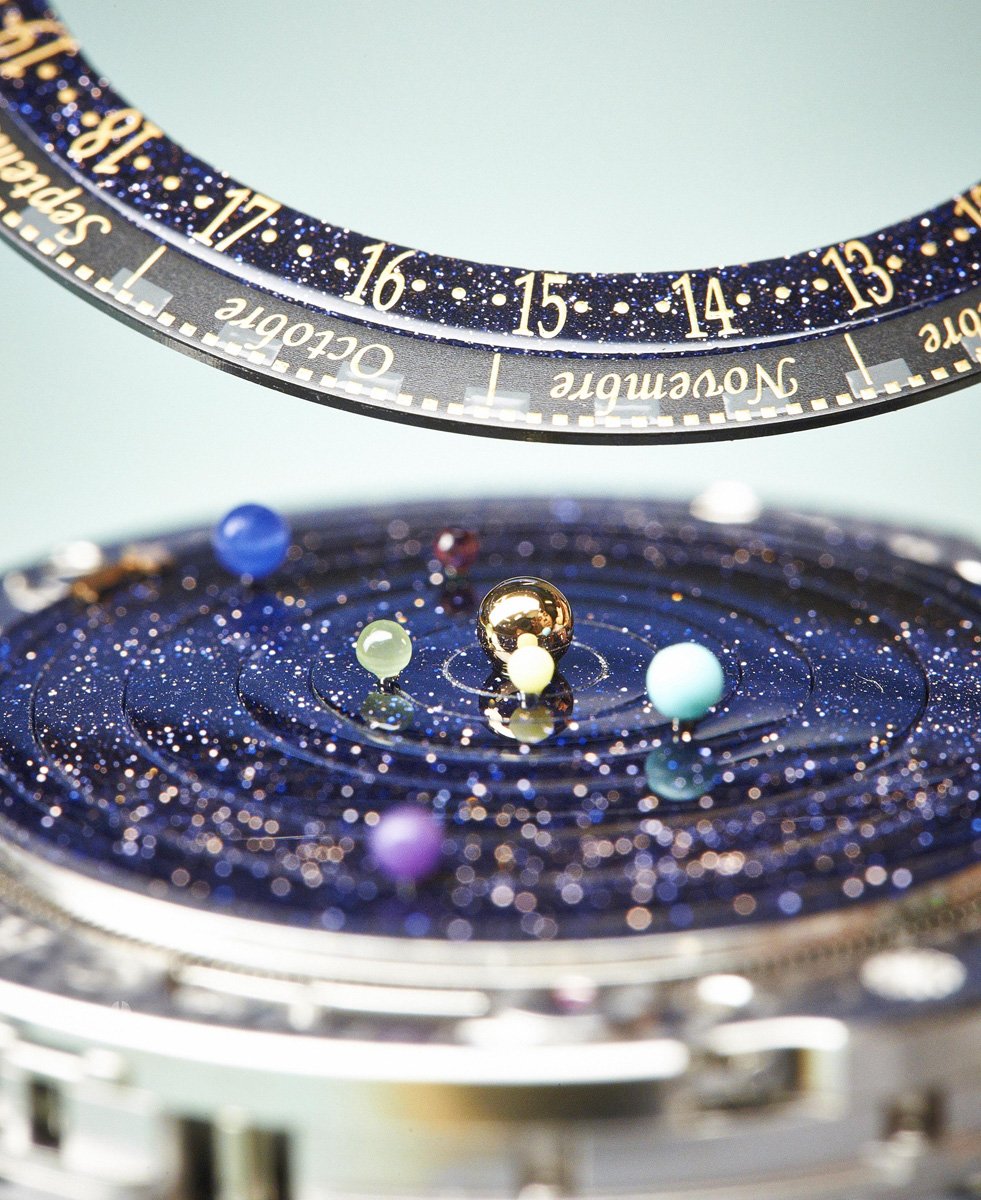
Midnight Planétarium (2014)
Ballerinas and butterflies
A few highlights include the Lady Arpels Pont des Amoureux (2010), which depicts two lovers meeting and kissing at midnight, and the astronomical Midnight Planétarium (2014), which brings a miniature solar system to the wrist, with the planets following their respective orbits.


The Ballerine Enchantée (2013) features a ballerina whose wings indicate the hours and minutes through a retrograde mechanism, while the Lady Arpels Heures Florales (2022) transforms timekeeping into a miniature garden, with flowers opening and closing to reveal the hours — the minutes are shown on the case side so as not to disturb the floral spectacle. And last but not least is the GPHG-winning Lady Arpels Brise d’Été from 2024, with its flowers swaying in a summer’s breeze and a pair of butterflies turning.

Lady Arpels Brise d’Été (2024)
A personal favorite is the Lady Arpels Papillon Automate from 2017. The watch features an automaton module in which a butterfly comes to life, beating its wings at random intervals, between one and four times in succession, depending on the available power reserve. The frequency of these movements is equally irregular: the butterfly flutters every two to four minutes when the watch is at rest, and even more frequently when it is being worn. The dial-side spectacle can also be activated by pressing a button. The randomness of the butterfly’s movement seems to bring this enchanting creation to life. Yes, the craftsmanship of the artisans working at the Meyrin atelier is mesmerizing, with the butterfly’s gold wings featuring plique-à-jour enamel and other dial details in champlevé and paillonné enamel, miniature painting, and gemstones. Still, the butterfly’s movement strikes me the most.
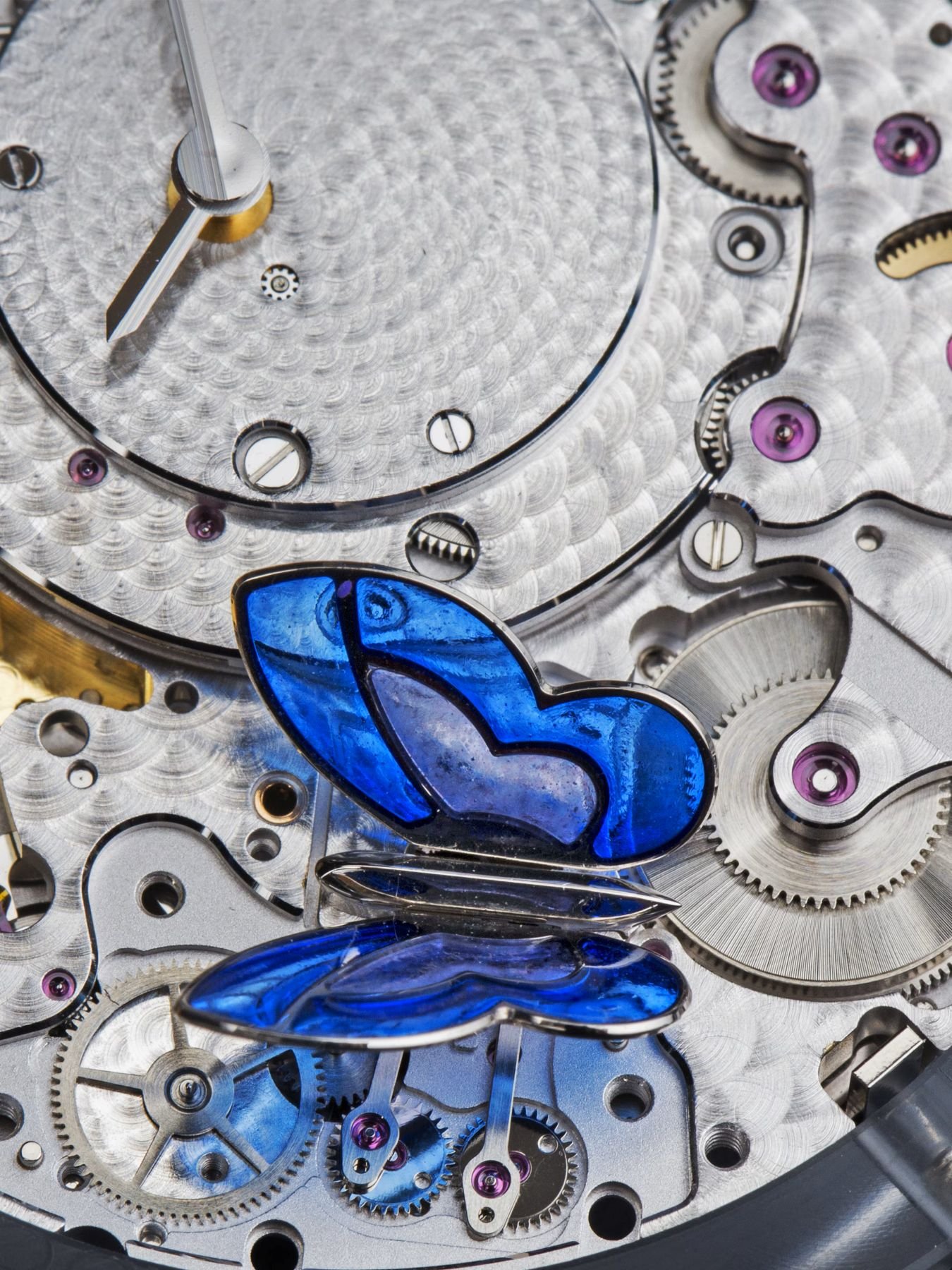
The butterfly of the Lady Arpels Papillon Automate (2017) on top of the movement
The patented butterfly
If you spend enough time in the world of high horology, you will discover how tourbillons, perpetual calendars, and minute repeaters work. But that knowledge means little when looking at the mechanism behind the Lady Arpels Papillon Automate. Luckily, Rainer Bernard takes his time to explain the automaton complication, which holds four patents. The butterfly flaps its wings at seemingly random intervals because of a mechanism using a 19-tooth sequencing wheel connected to the rotor of the automatic winding system. A differential helps to regulate the number and frequency of the wingbeats.
One of the four patents covers a specialized spherical joint with a 0.3mm opening. This construction allows the butterfly’s wing rods to slide up and down as the wings move. The automaton complication comprises 437 components on top of the 147 parts that make up the base movement. If this doesn’t get you excited about Poetic Complications, I’m afraid nothing will.
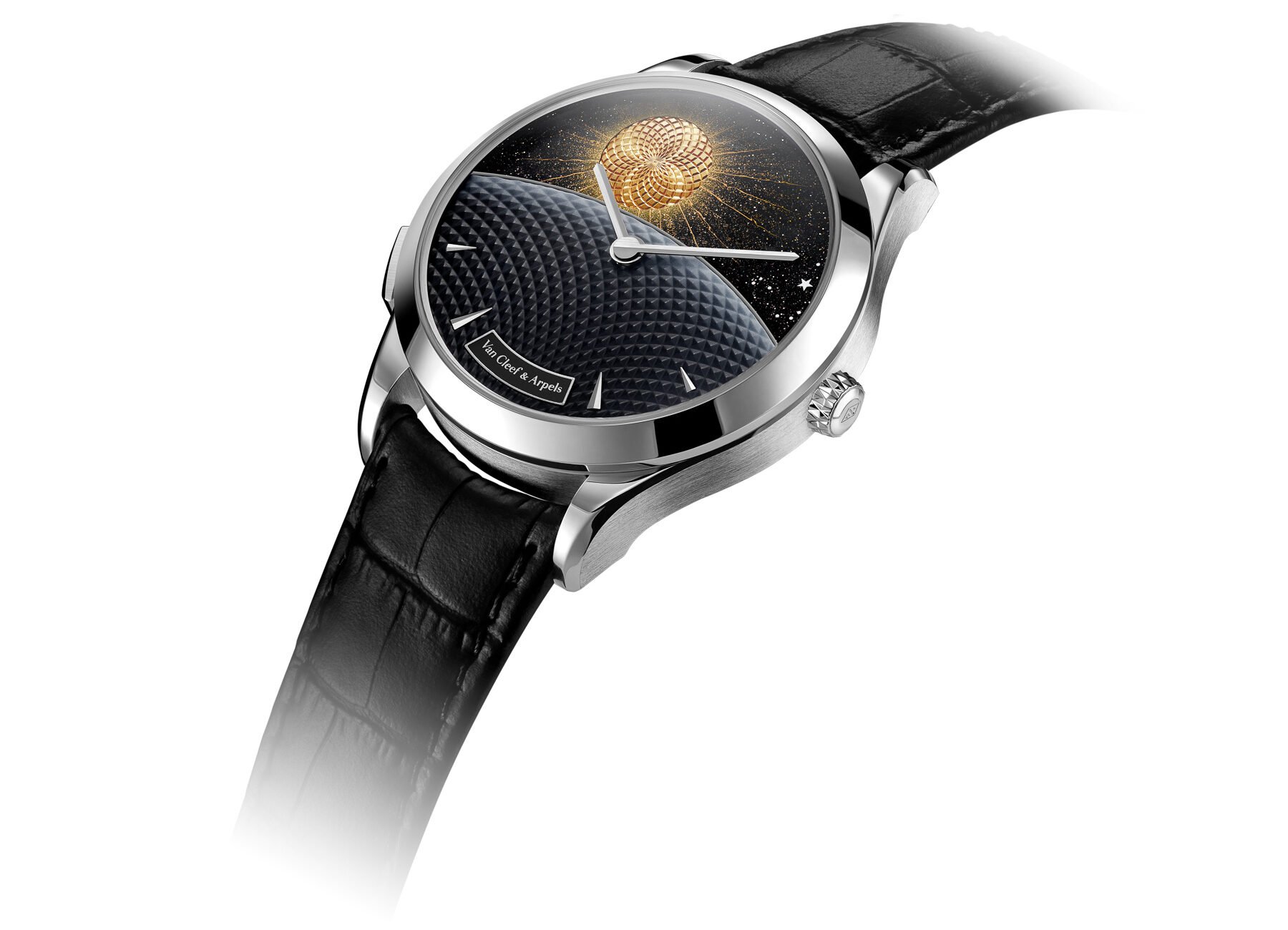
Midnight Jour Nuit Phase de Lune (2026)
More masculine watch poetry
Enough fairies and butterflies; it’s time for something a bit more masculine. Earlier this year, the Midnight Jour Nuit Phase de Lune debuted. The 42mm white gold case is meant for a substantial wrist, and the execution of the lunar story is rather manly. Let’s start with the in-house dial in black Murano aventurine glass. The material has a deep, almost inky appearance, with bronze-toned sparkles that catch the light like distant stars. It is an effective backdrop for the dial’s main attraction — a golden sun decorated with concentric guilloché. Traditional engine turning and celestial imagery make for a striking composition.

The moon takes a more subdued role. Rendered in white mother-of-pearl, it is surrounded by stars traced in acrylic rather than set with diamonds. There is less jewelry on display and more attention paid to the mechanics of the celestial scene.
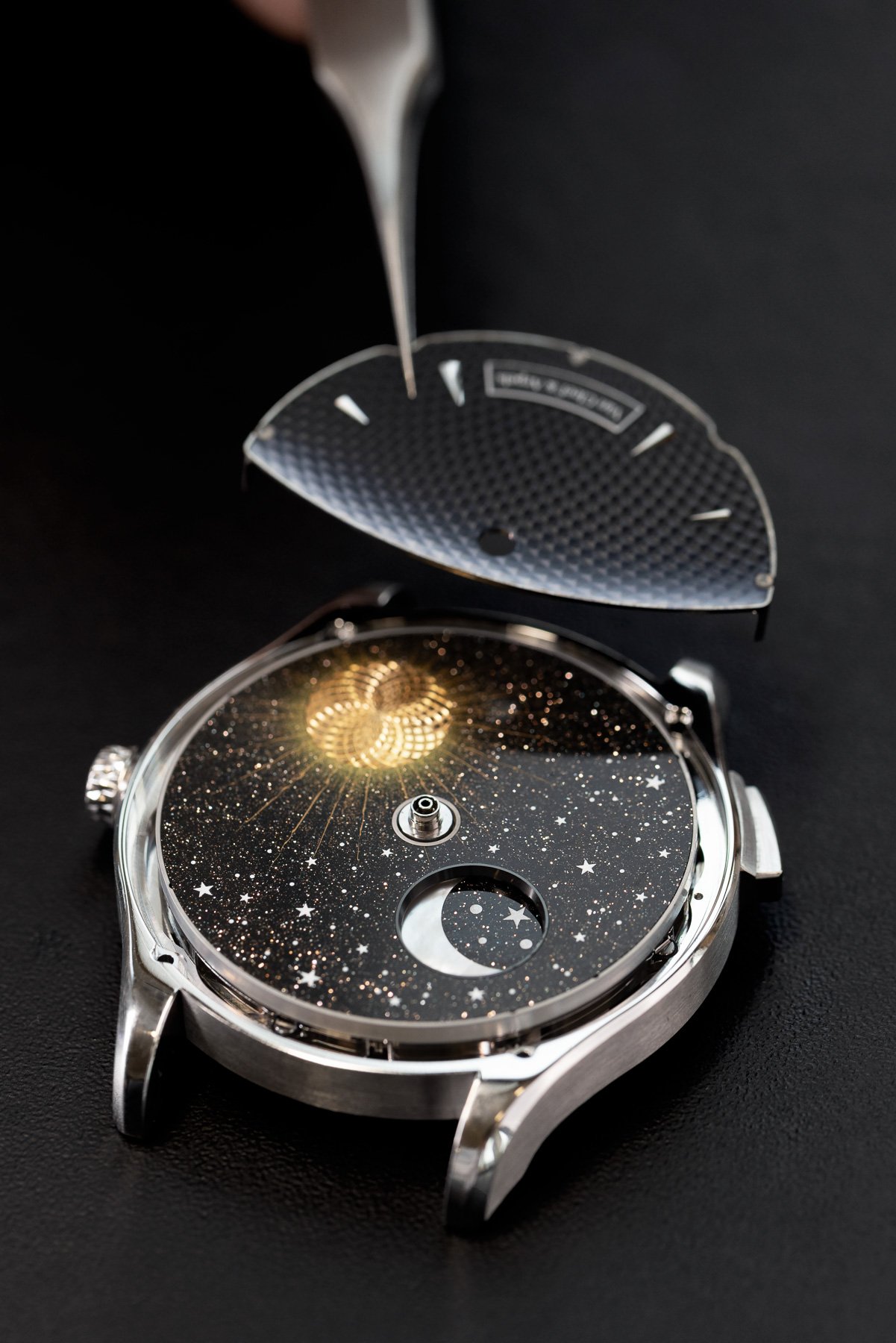
The miniature sun and moon travel across the dial, appearing and disappearing behind a guilloché mother-of-pearl disc acting as the horizon. Its gradient shifts from black to white, creating a natural division between night and day. A rotating 24-hour disc drives the animation. And apart from being poetic, the display follows our Moon’s phases. A secondary disc rotates over 24 hours, 16 minutes, and 27 seconds, gradually changing the moon’s appearance in accordance with the lunar cycle of approximately 29.5 days. As a result, it waxes and wanes rather than simply appearing daily. Even when this moon slips behind the horizon, part of it remains visible.
The dark side of the moon
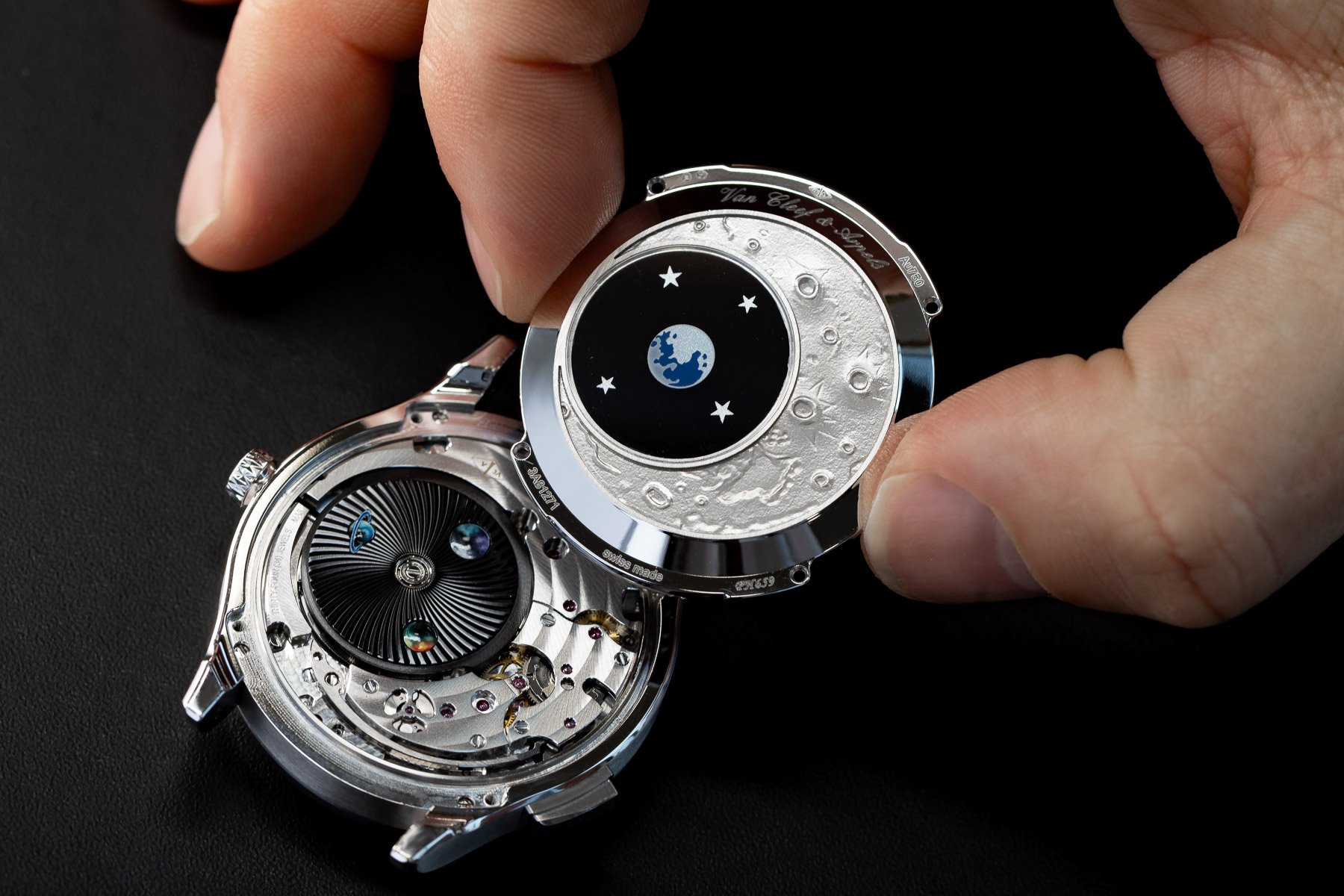
On the dark side of the moon, so to speak, the watch doesn’t reveal its secrets. Now, most high-end brands would have outfitted the watch with a display case back to showcase the complicated, delicate, and beautifully decorated movement. Not Van Cleef & Arpels. That doesn’t mean there’s nothing to see on the case back, though. Here, the astronomical theme continues with an engraving that mimics our Moon’s rugged surface. A small window also reveals the rotor’s oscillating weight. And it is like a miniature work of art: an in-house enamel depiction of Earth surrounded by miniature planets. The rotor is also engine-turned. And its pattern draws the eye inward, lending the composition a sense of depth that suits the subject matter.
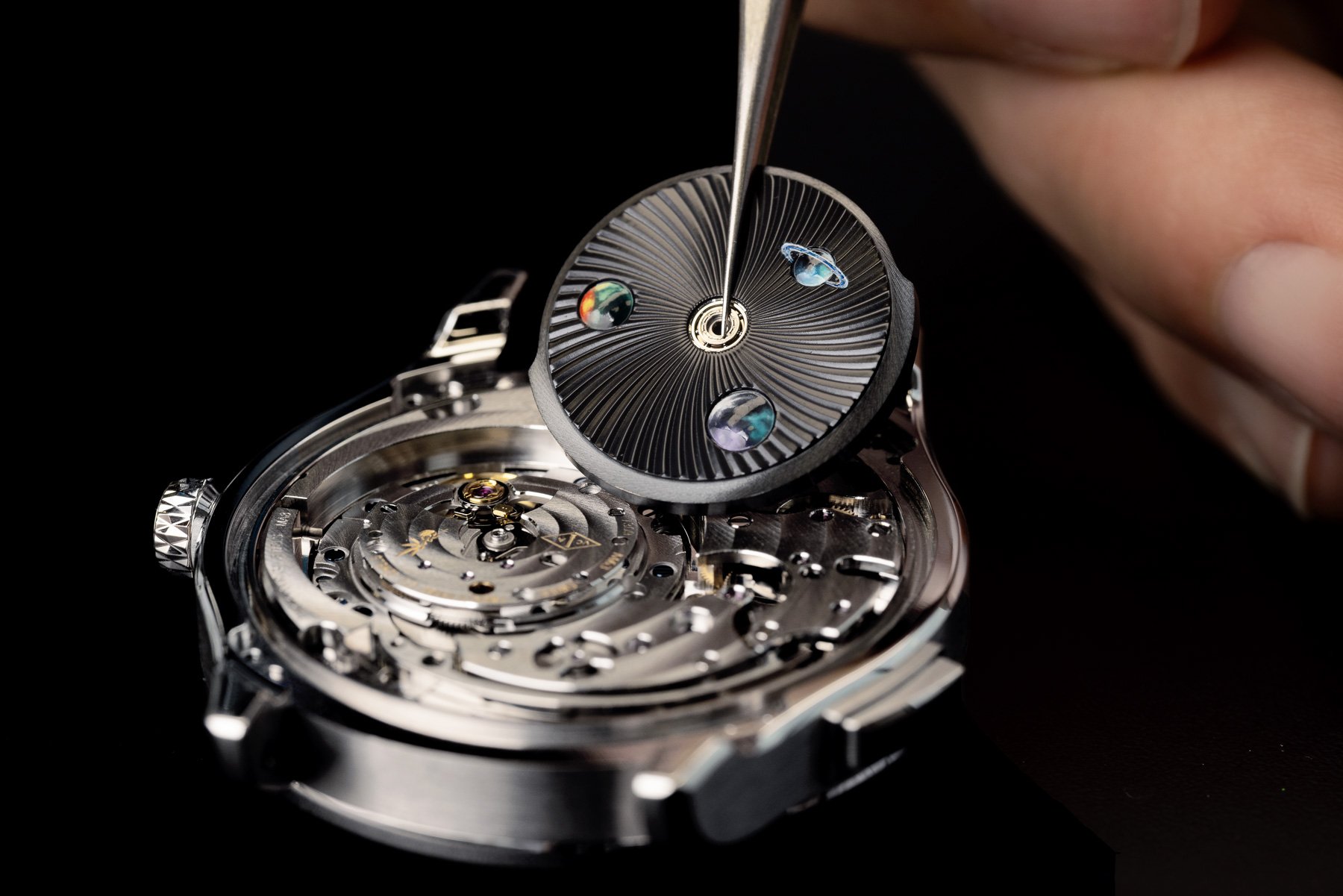
A lot of thought went into the watch as a whole, not just its construction and decorations. The watch offers two perspectives. On the dial, it shows representations of the Sun and Moon from the familiar viewpoint of standing on Earth. Turn the watch over, and the scene changes to a view of the cosmos as though observed from the Moon itself. It is a subtle conceptual detail, but it gives the front and back a shared purpose.

Experiencing magic
Now, after spending a day looking at the complicated mechanics that quite literally tell moving stories, did a look behind the scenes kill the magic? No, it did not. On the contrary, the fascination and respect for the original complications have only grown. Let me take the Midnight Jour Nuit Phase de Lune as an example. It just looked and felt good on my wrist. Despite the watch lacking kissing lovers or a delicate plique-à-jour enamel butterfly, its moving sun and moon are fine examples of decorative work. And there still is a touch of romance in the way it displays the astral spectacle.
But now I understand how much thought and calculation went into presenting everything correctly on the dial. My admiration for the way it looks only deepened as I learned about the unique work Rainer Bernard and his technical team at Van Cleef & Arpels did behind the scenes until they lifted the veil for just one day. And what a magical day it was.