True Classics Never Go Out Of Style: Four New Reissues Of The Ebel Sport Classic Chronograph

Storytelling has long been a powerful way to connect watch enthusiasts with a timepiece, but only a few watches immediately capture the spirit of an era. While many brands lean on obscure historical tales, the Ebel Sport Classic Chronograph has a wealth of stories that embody the 1980s. It is one of the defining chronographs of the decade. If you are over 45, you may remember Don Johnson wearing one as Sonny Crockett in Miami Vice. Now, this icon returns. Ebel has created a modern take on the classic chronograph in four variants. I had the chance to try them and see how they compare with the original.
For me, Ebel’s 1980s story is closely tied to tennis. As a young boy, I watched players like Boris Becker, Stefan Edberg, and Andre Agassi wear Ebel watches on court (I was never a fan of wearing watches while playing, as they mostly just annoyed me). I discovered Miami Vice later, as I was too young to watch it when the series debuted in 1984. I was seven then, and my father, a fan of the show, thought I wasn’t ready for it. When I was a little older and Miami Vice entered its final seasons, I caught up with Sonny Crockett and Ricardo Tubbs and their cool style, which became one of the defining looks of the 1980s.
The story of the Ebel Sport Classic Chronograph
If you are a regular Fratello reader, you will know that Robert-Jan owns a vintage Ebel Sport Classic Chronograph. He first wrote about it in 2023, shortly after buying the watch. This year, he followed up with an article asking whether this 1980s classic was worth buying. I also included it in a Top 5 list of El Primero-powered classics.
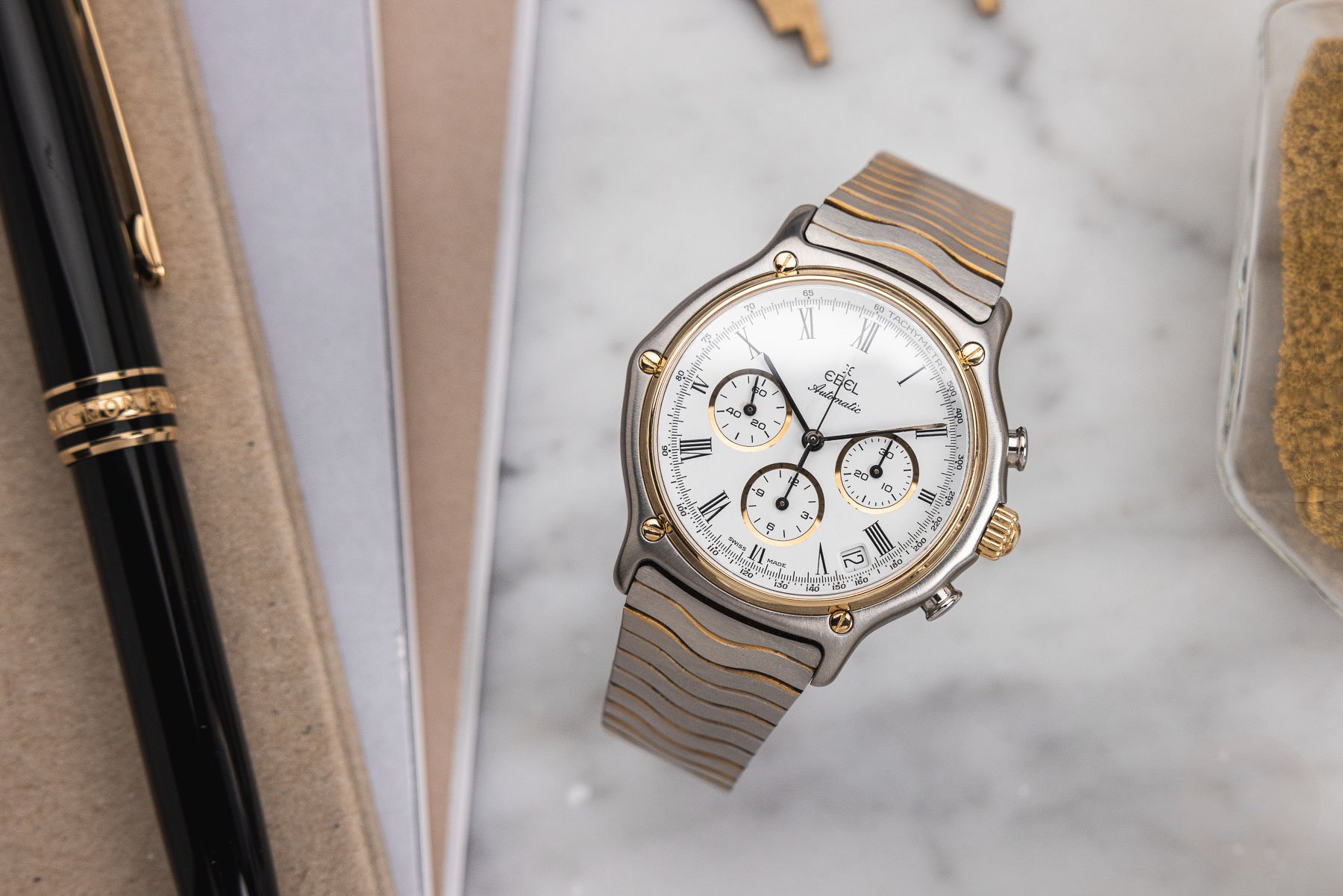
I suggest you read all these articles to understand the Sport Classic Chronograph and its rich history better. It’s probably no surprise that I am a fan of the watch, just like RJ. It represents so much more than just another classic timepiece from the ’80s. As you will understand, I was more than happy to take the new versions for a spin.
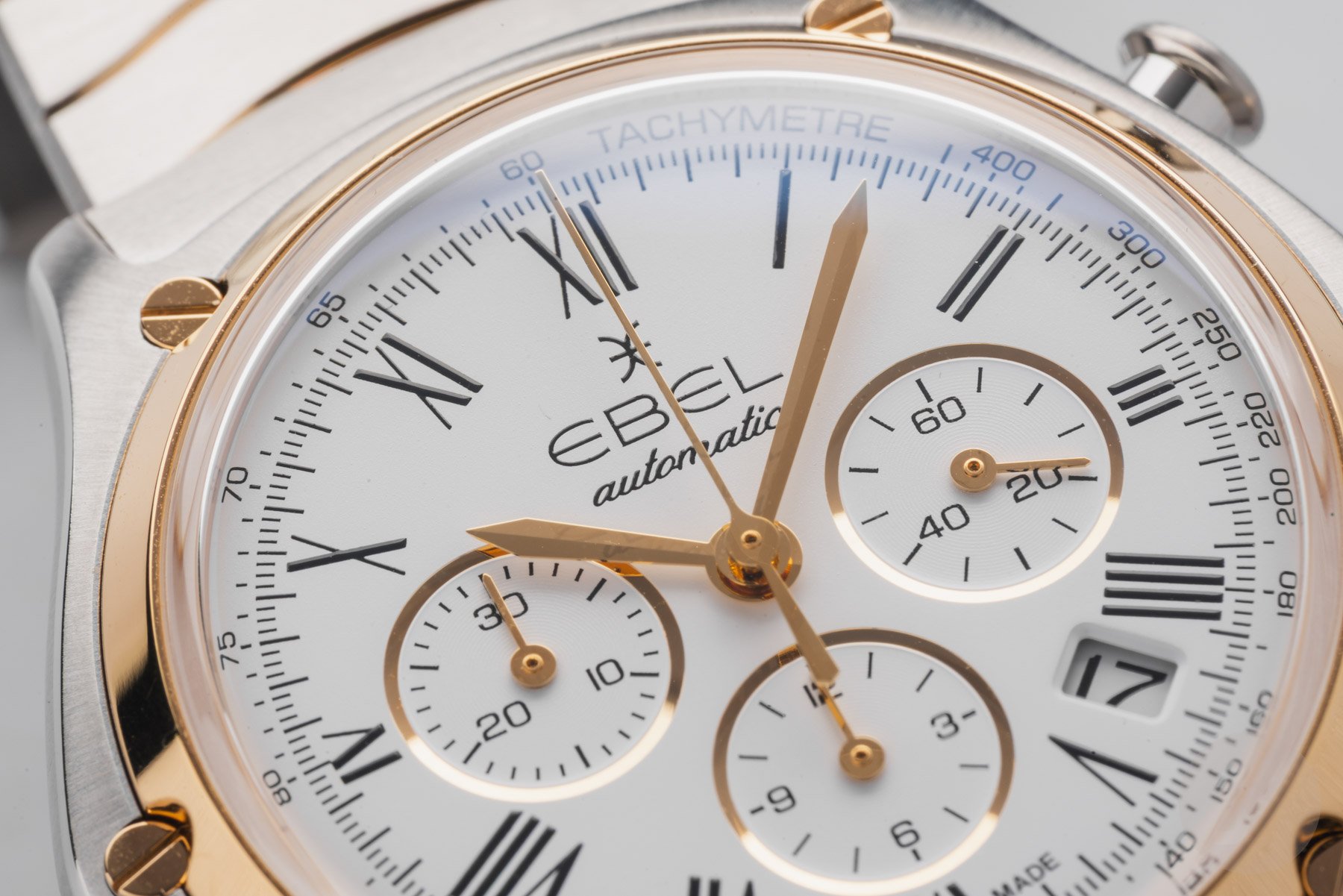
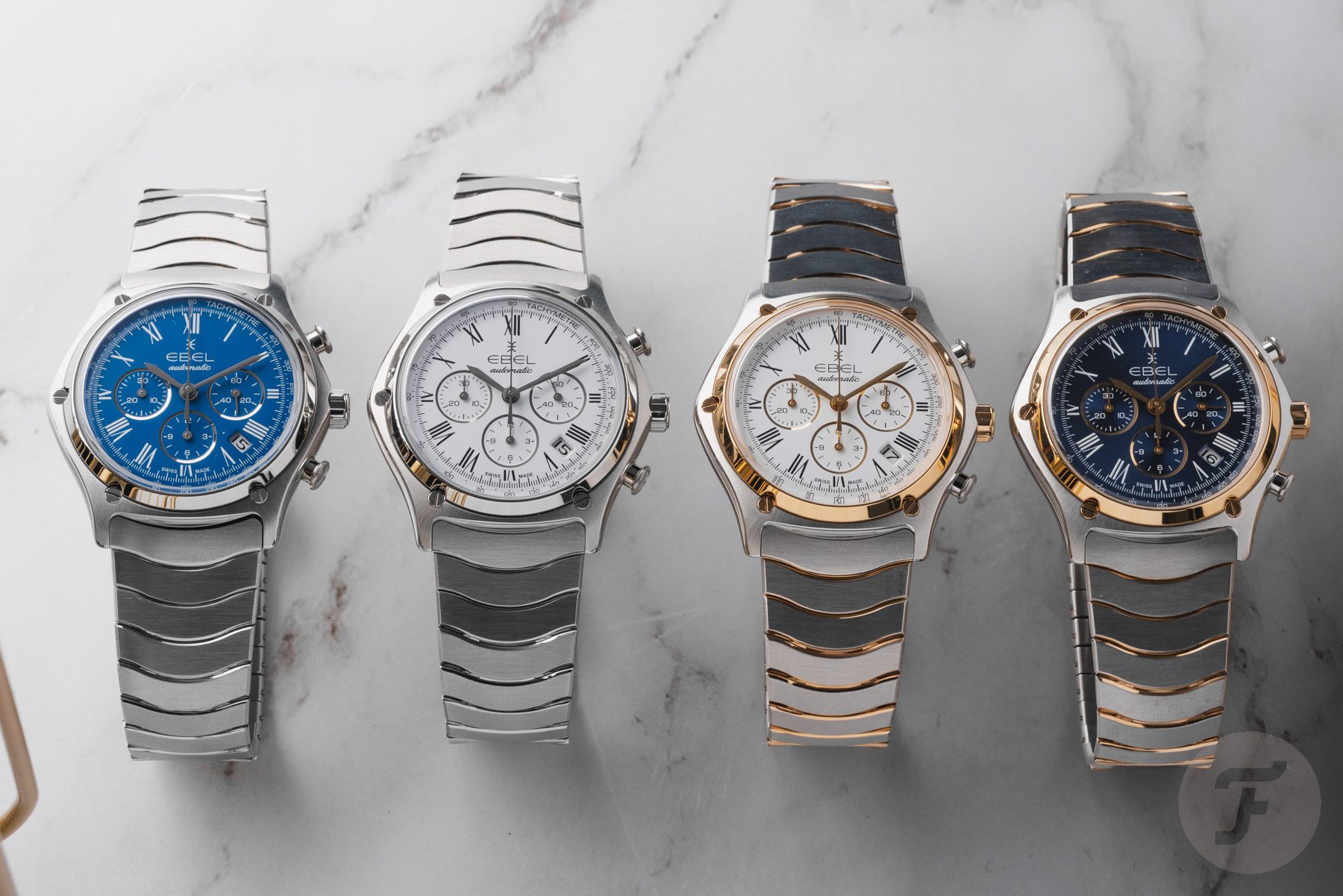
Ebel releases four variants of the Sport Classic Chronograph, each limited to 115 pieces to commemorate the brand’s 115th anniversary. Two come in stainless steel with either a white opaline dial (ref. 1216748) or a blue one (ref. 1216749).
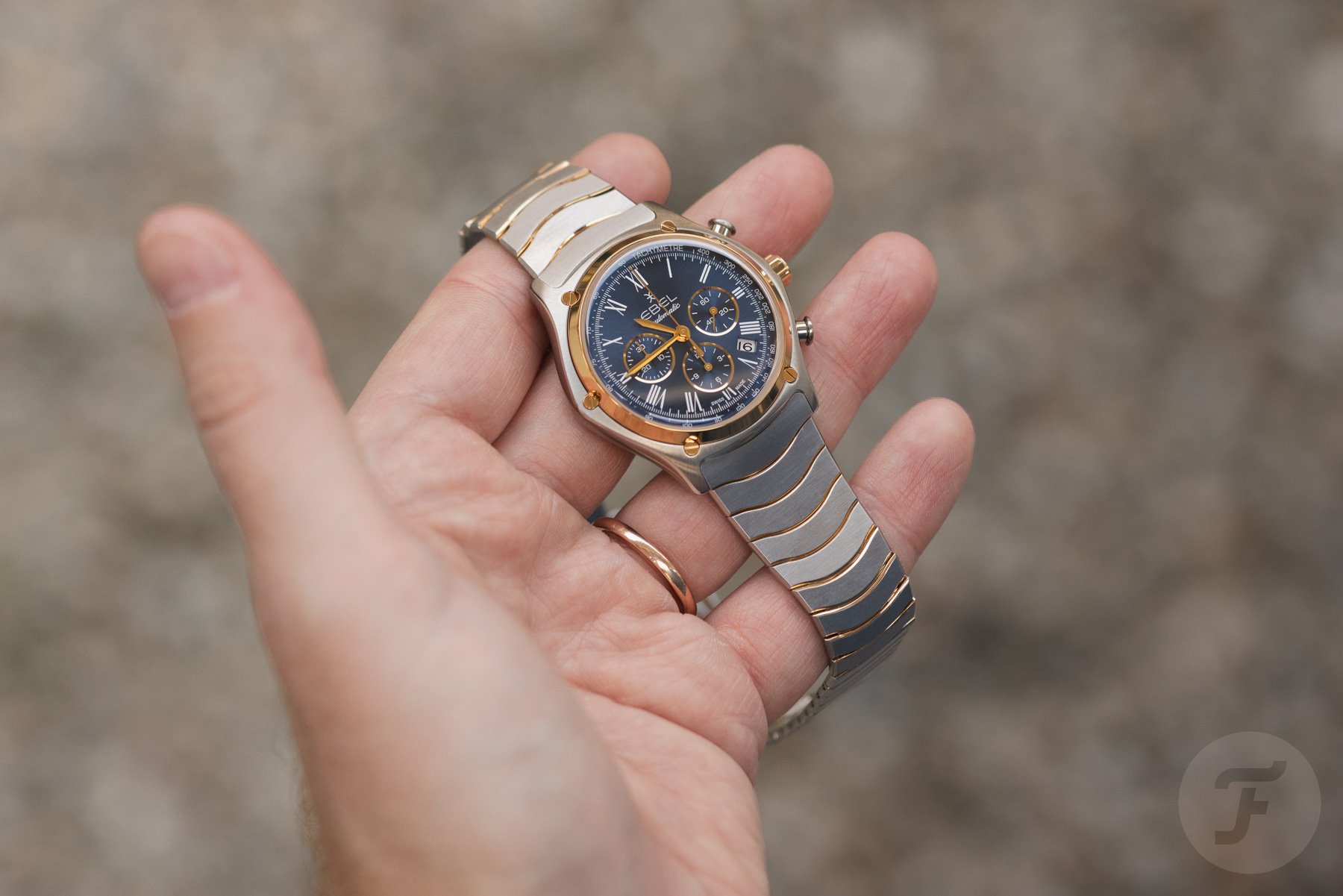
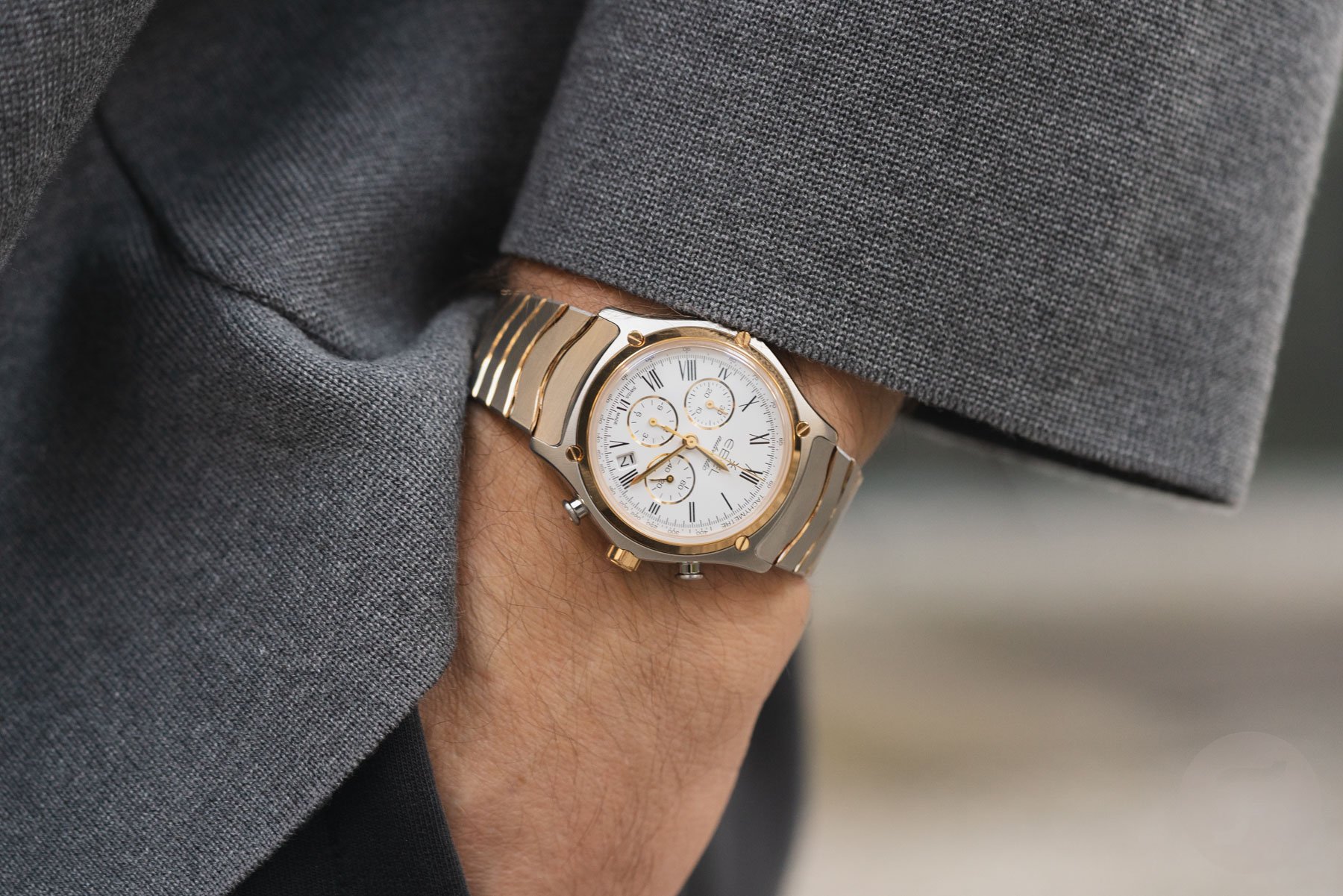
The other two combine steel and gold. One has a white opaline dial with gold-colored sub-dial frames and hands, while the other pairs a dark blue dial with the same elements. Together, they make a handsome quartet, showing that the Sport Classic Chronograph has lost none of its charm in modern form.
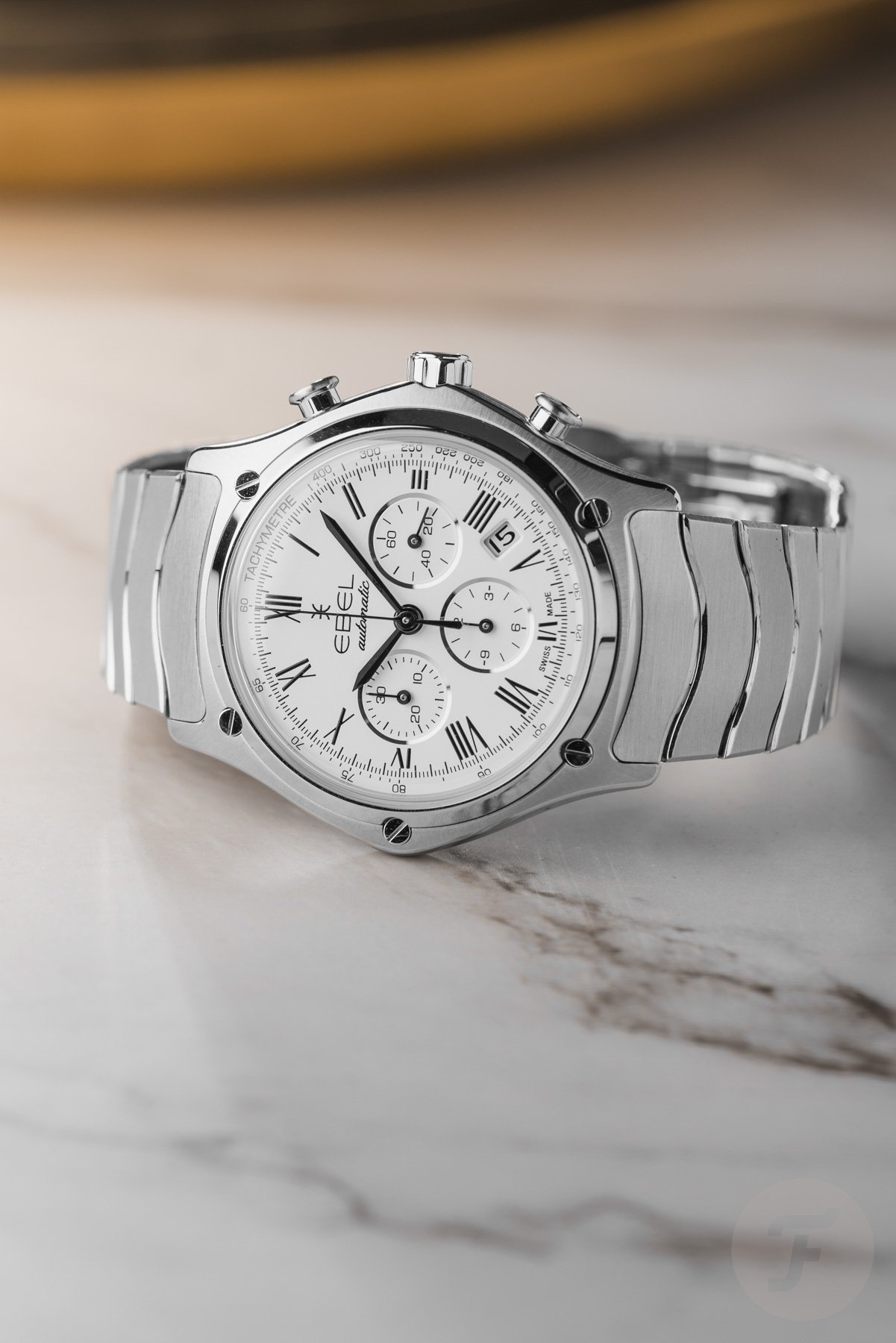
The details of the Ebel Sport Classic Chronograph
Let’s look at the details. All four feature a 40mm stainless steel case with a 11.6mm thickness, 44.5mm lug-to-lug, and 50m water resistance. That 11.6mm profile immediately stands out; it is impressively slim for a modern chronograph.
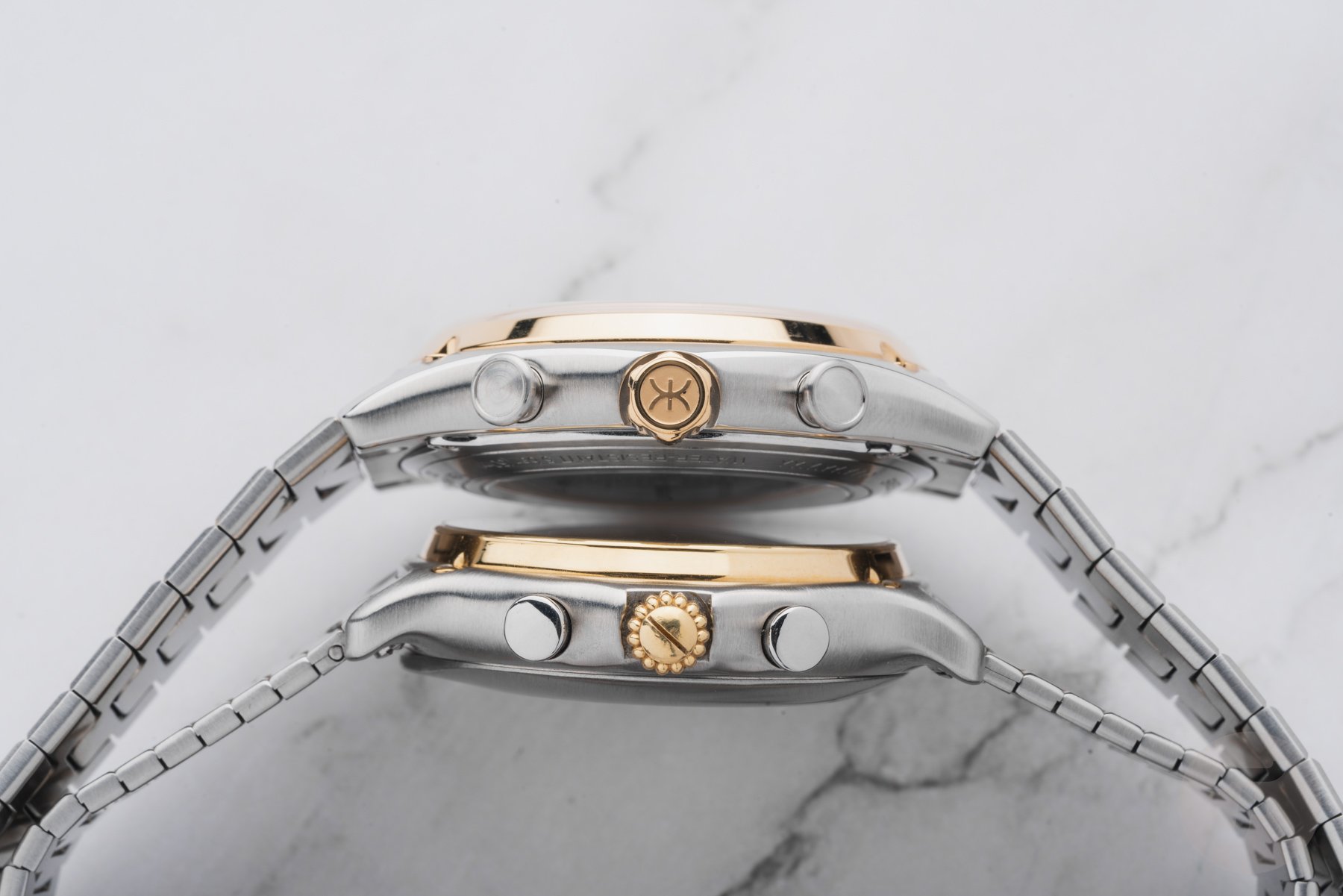
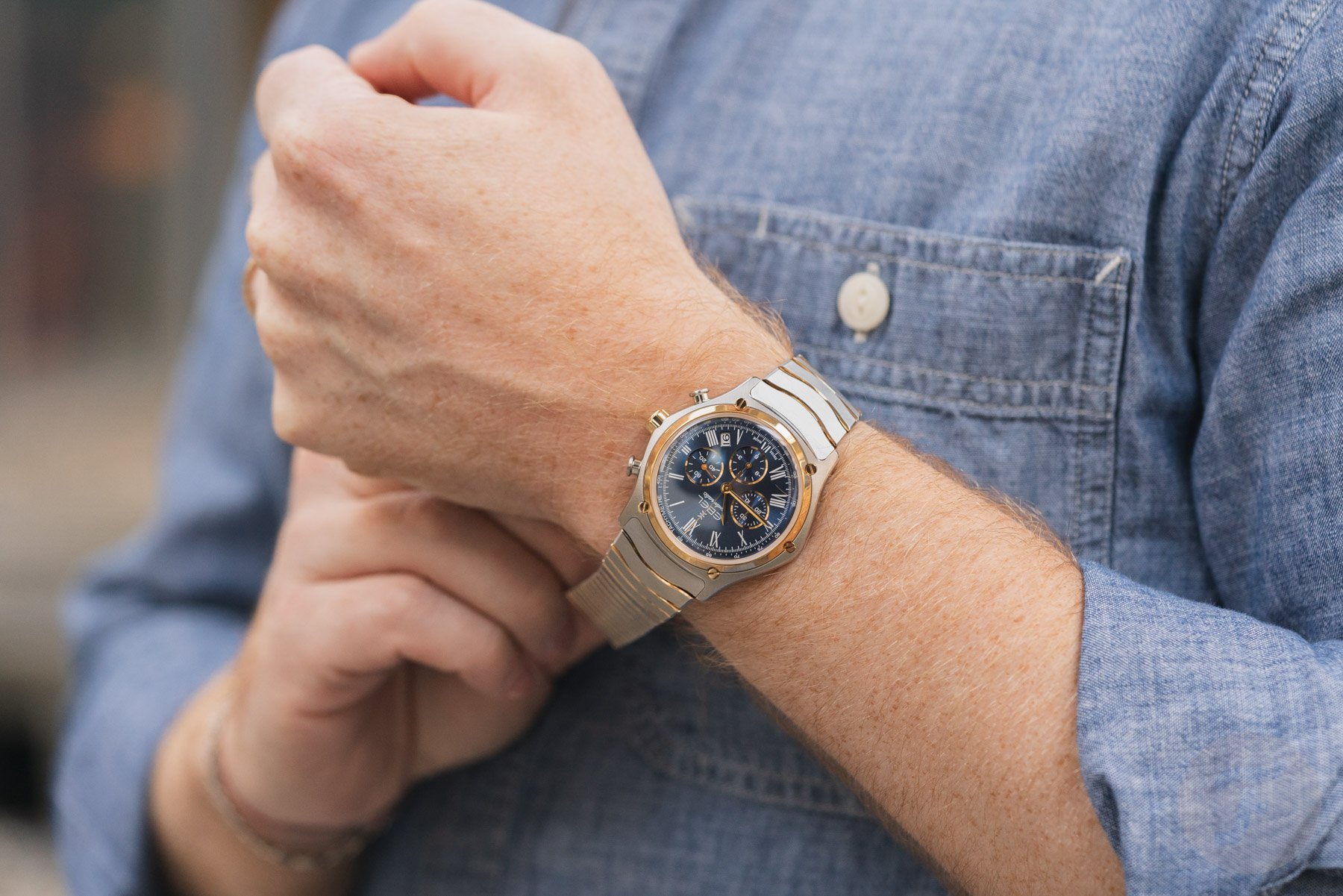
You hardly see any sub-13mm-thick chronographs these days, so wearing such a slim example feels like a breath of fresh air. The two-tone models feature an 18K yellow gold bezel, crown, and bezel screws, while the other versions are all steel. The finishing follows the vintage model’s lead, combining brushed and polished surfaces.
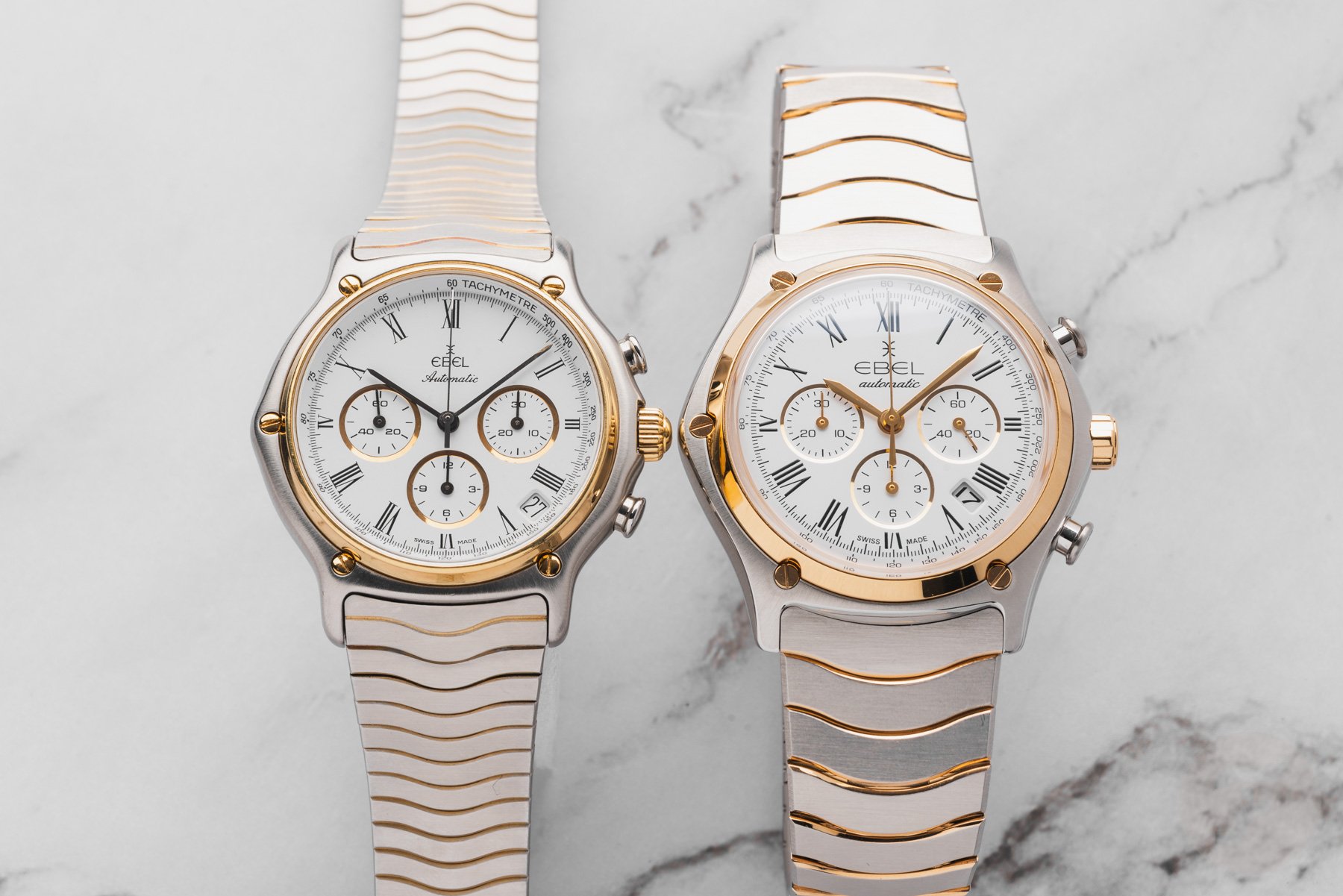
Compared with the 1980s model, the new case is not only 2mm larger but also rounder. The vintage Sport Classic Chronograph has steeper angles and a more angular character. Still, the new model feels like a natural progression, and Ebel has done a good job preserving the overall silhouette. The signature bezel screws and pusher style remain too. Together, those details immediately bring back the appeal of the Sport Classic Chronograph.
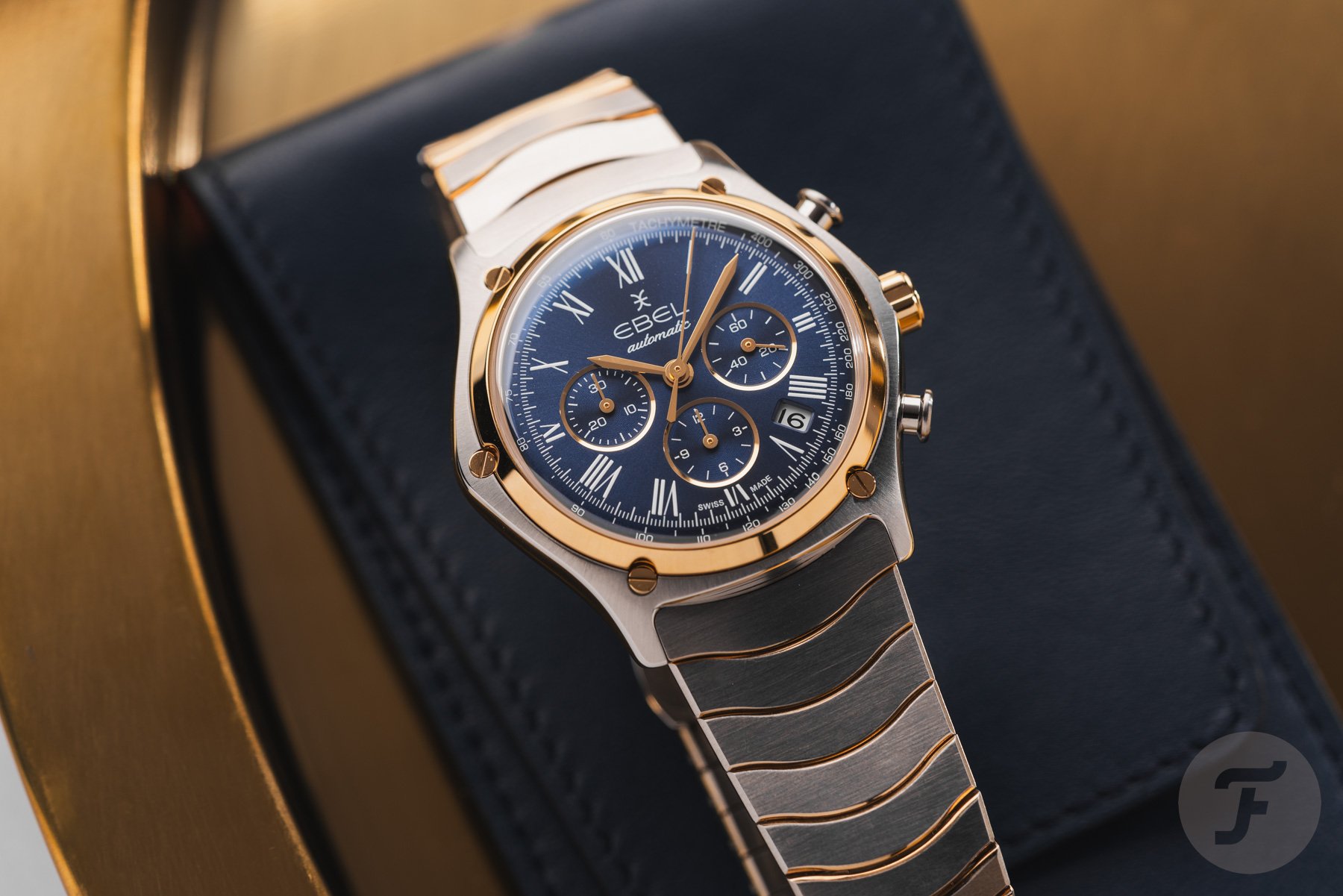
The dial design respects the original
The dial plays a big part in that appeal. All four feature a three-register layout with a date between 4 and 5 o’clock, just like the vintage model. On the new versions, the running seconds sit at 3 o’clock, the 30-minute counter at 9, and the 12-hour totalizer at 6. The result is refined and classically styled.
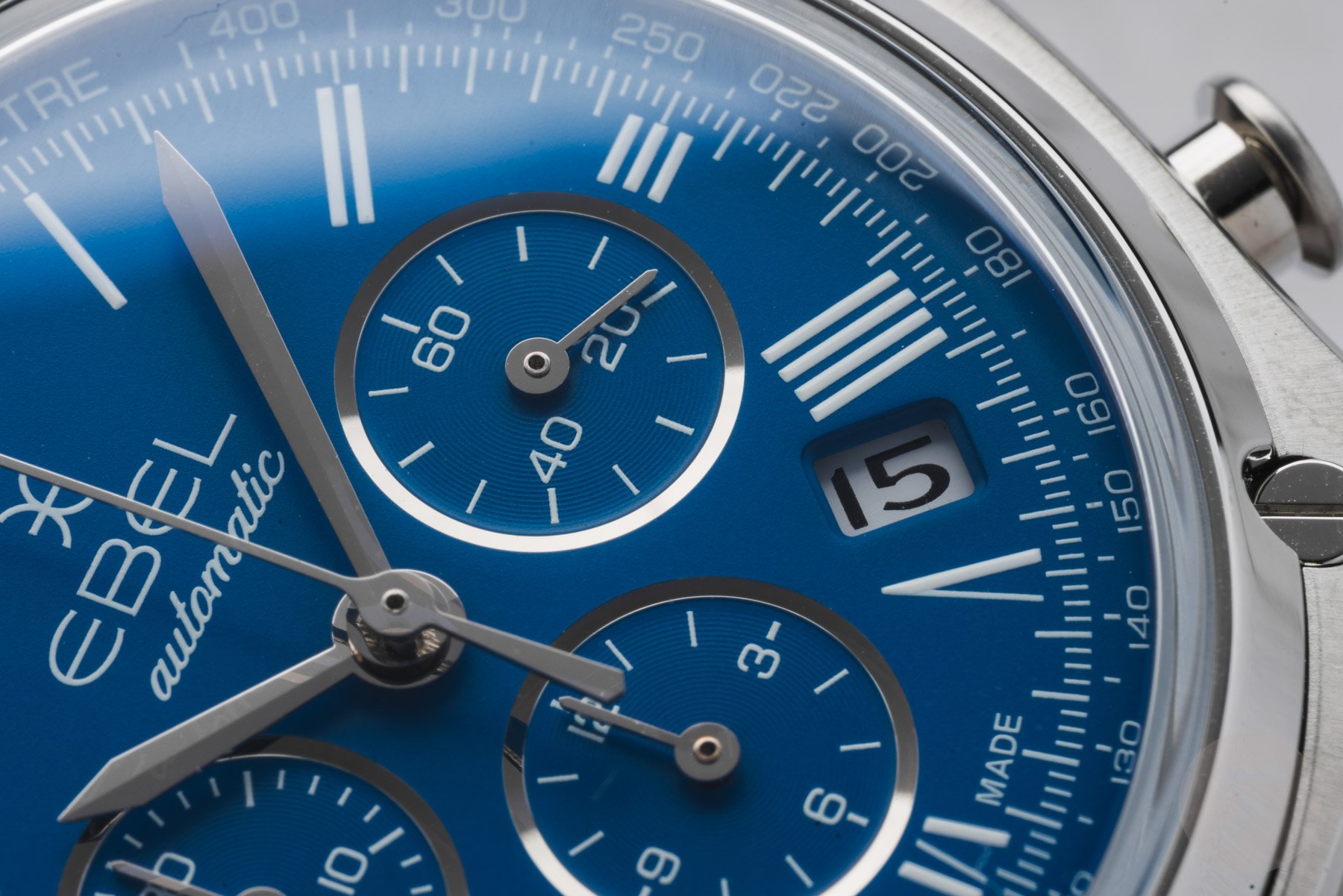
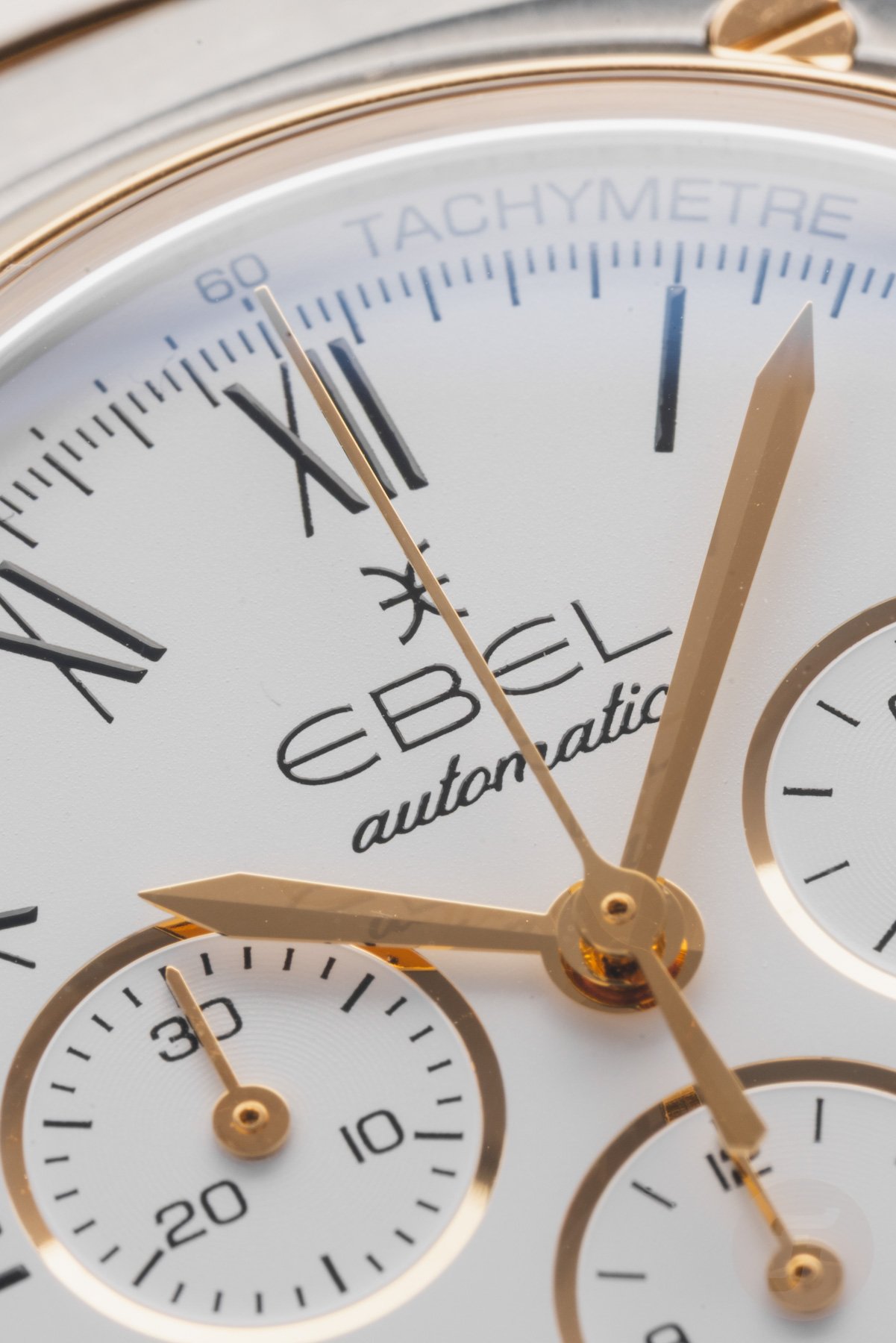
That is also where much of the charm lies. Each dial uses Roman numerals within the minute track. The main difference is the tachymeter scale, which now sits outside the minute track rather than on the rehaut as it did on the original. I don’t mind the change; I like the added refinement of all these elements working together.
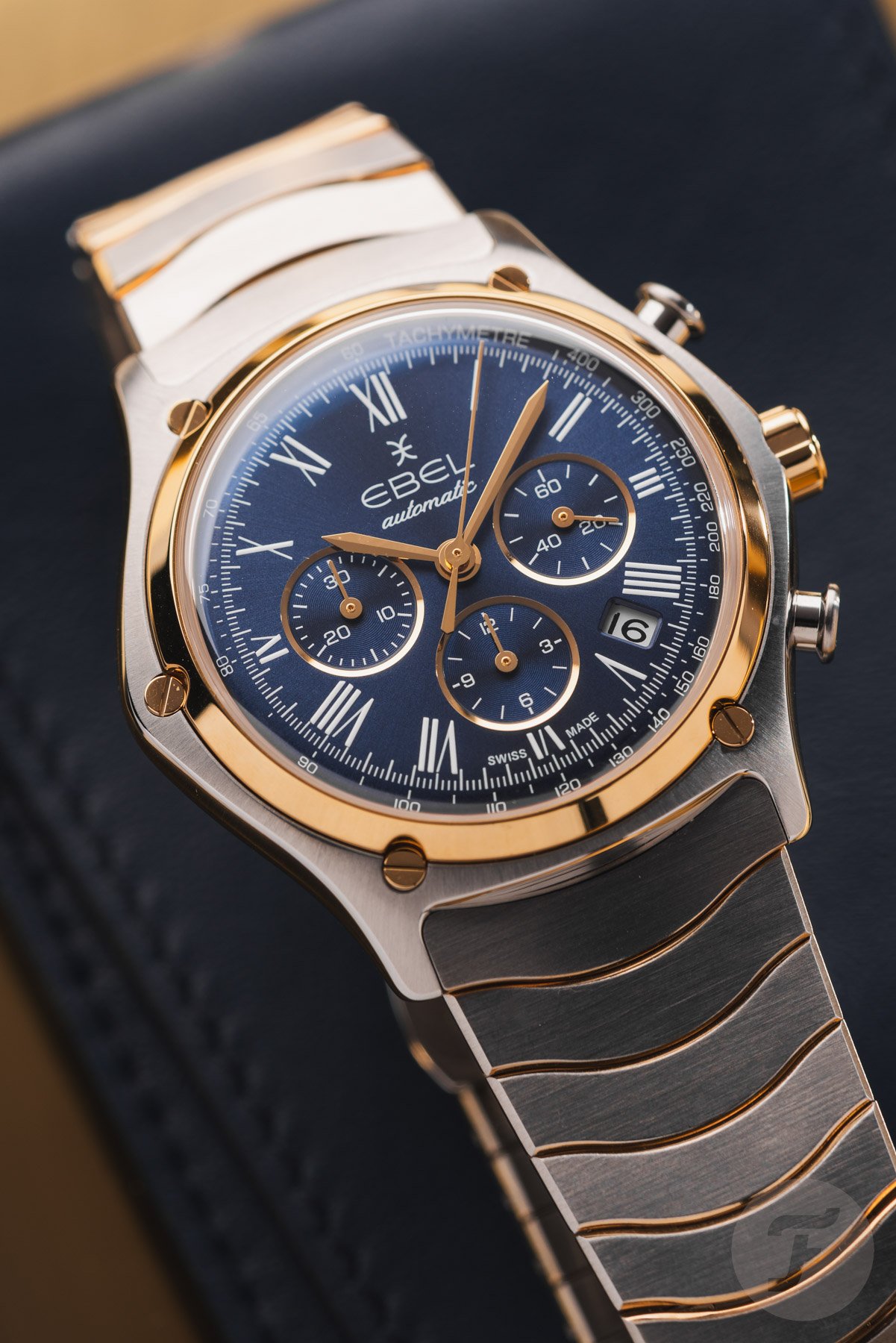
The two-tone models have yellow-gold-PVD counter rings, while the steel versions use rhodium-plated rings. The blue dials have white printed numerals and markings; the white versions use black printing. Interestingly, the two blue dials are markedly different. The one in the stainless steel model is a matte, vibrant blue, while the two-tone version’s dial has a glossy dark blue sunray finish.
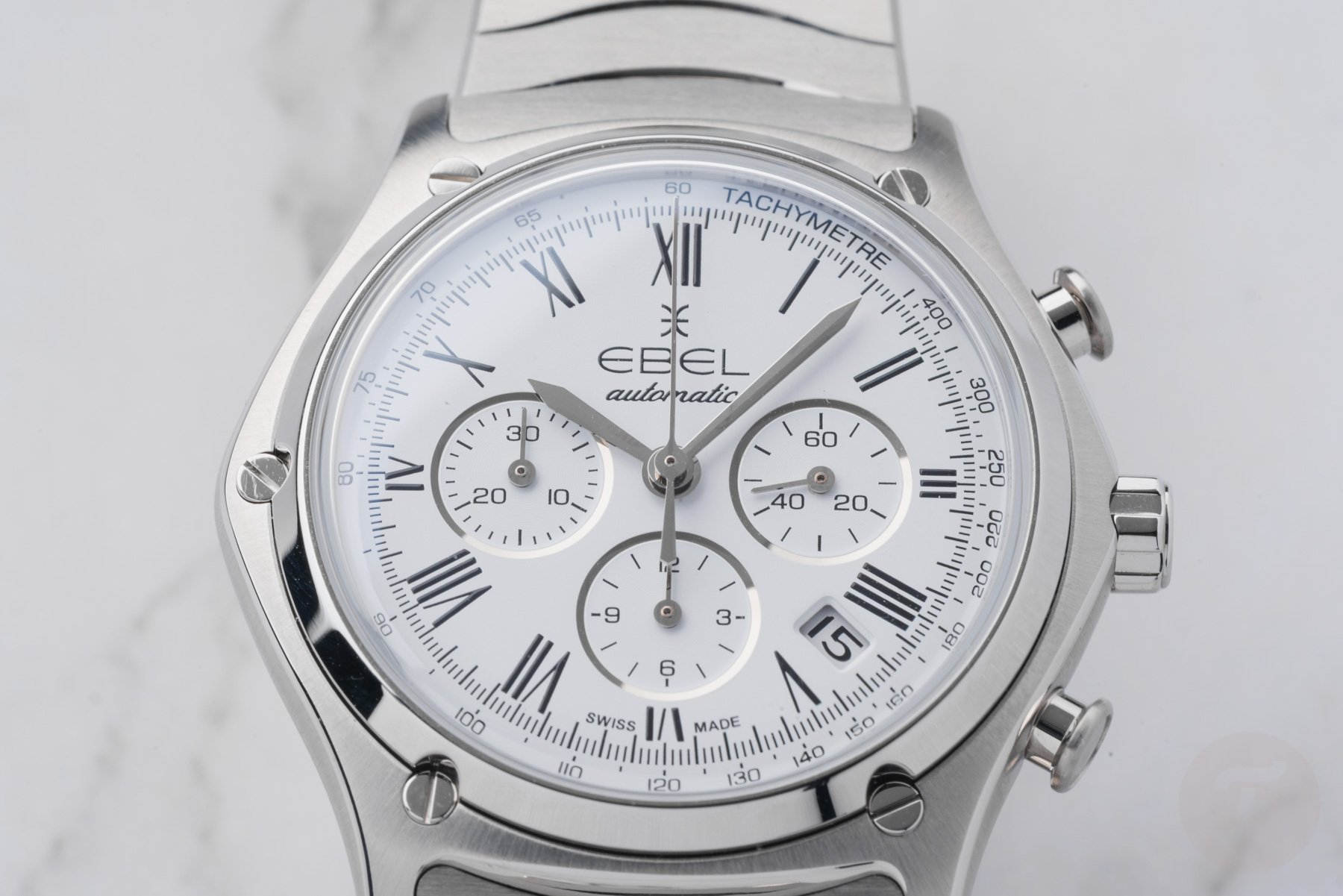
The white dials are essentially identical apart from their gold-plated and rhodium-plated details. One thing that caught my attention is the date font. Single-digit dates are noticeably wider than double-digit dates, and the width varies among some double-digit dates for visual compensation. This creates the impression of multiple fonts. Though the font is actually the same, the effect can be confusing.
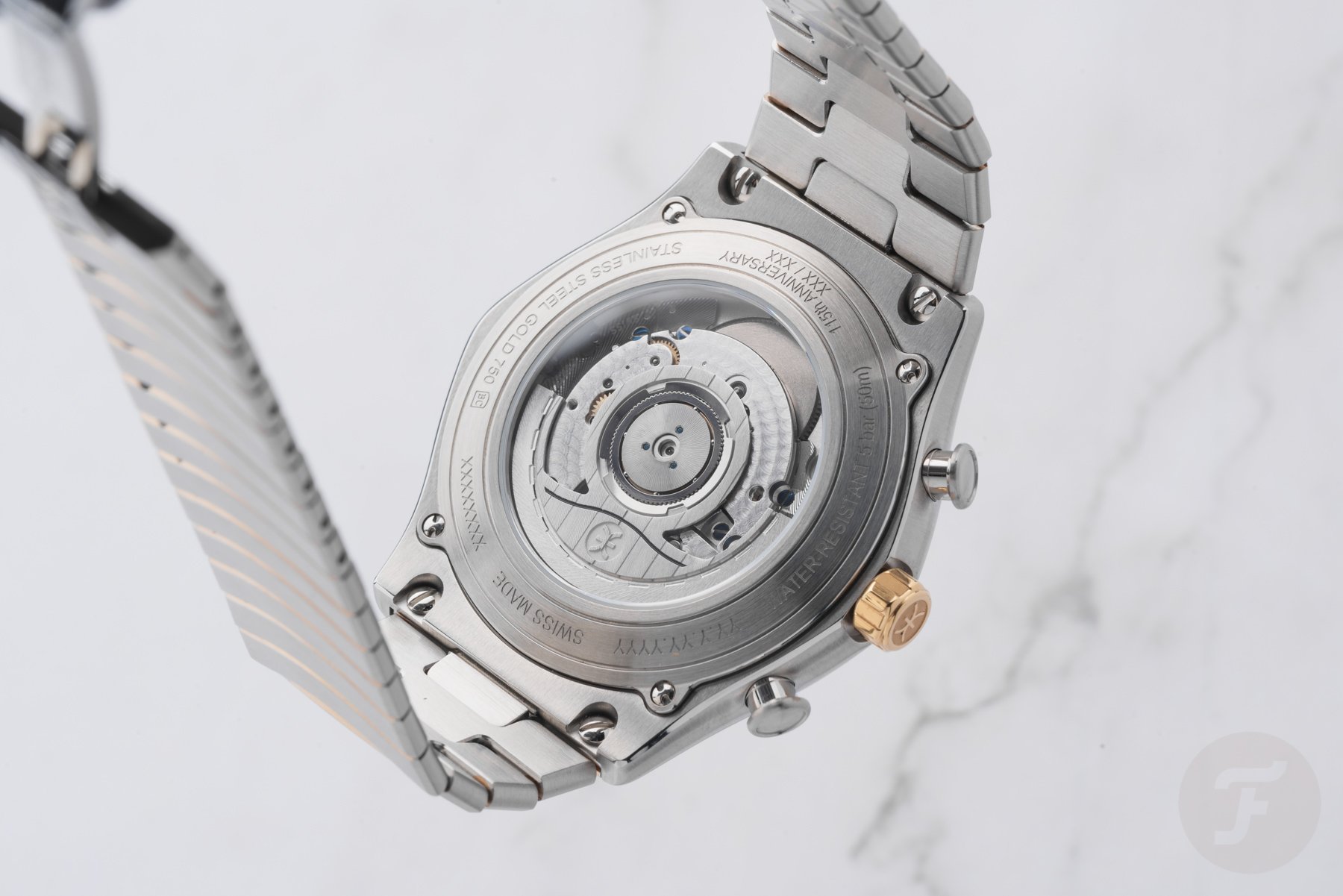
Sellita and Dubois Dépraz inside
Powering all four Sport Classic Chronographs is the Sellita SW300-1 with a Dubois Dépraz DD2222 chronograph module on top. This automatic movement is visible through the case back’s sapphire display. It runs at 28,800 vph and provides a 42-hour power reserve. It also has an impressively thin 5.97mm profile.
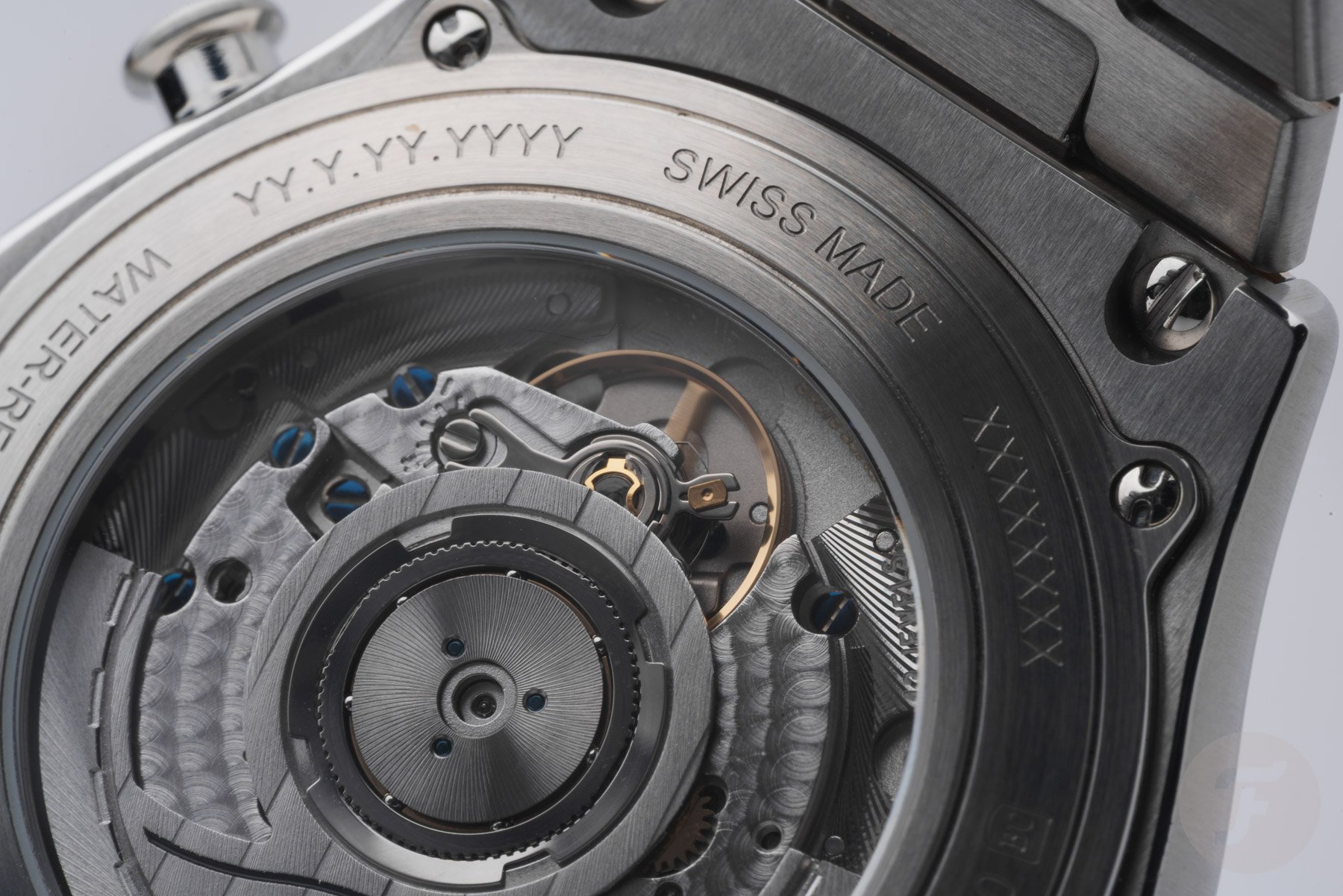
That compact movement is what helps keep the watch slim and highly wearable. It features a custom skeletonized Ebel rotor, and the finishing is decent. Still, it would be untrue to say that an SW300-1 with a DD2222 module matches the integrated El Primero movement in the vintage Sport Classic Chronograph. The Zenith movement is a big part of the original’s appeal.
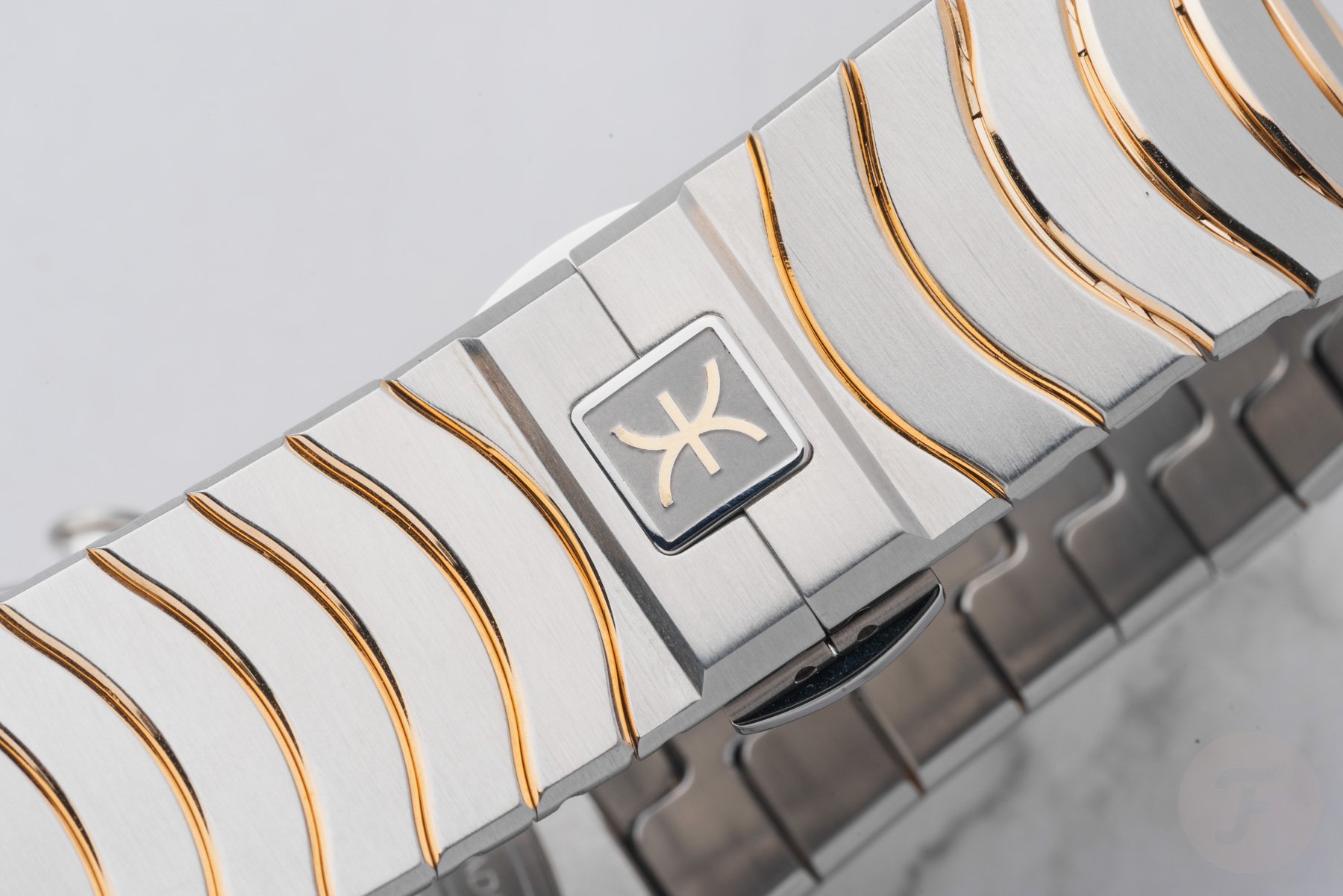
Speaking of the Sport Classic’s charm, we can’t forget its famous wave bracelet. As Robert-Jan explained in his articles about the 1980s model, the bracelet has always felt a little flimsy. Its flexibility, however, also contributes greatly to its comfort.
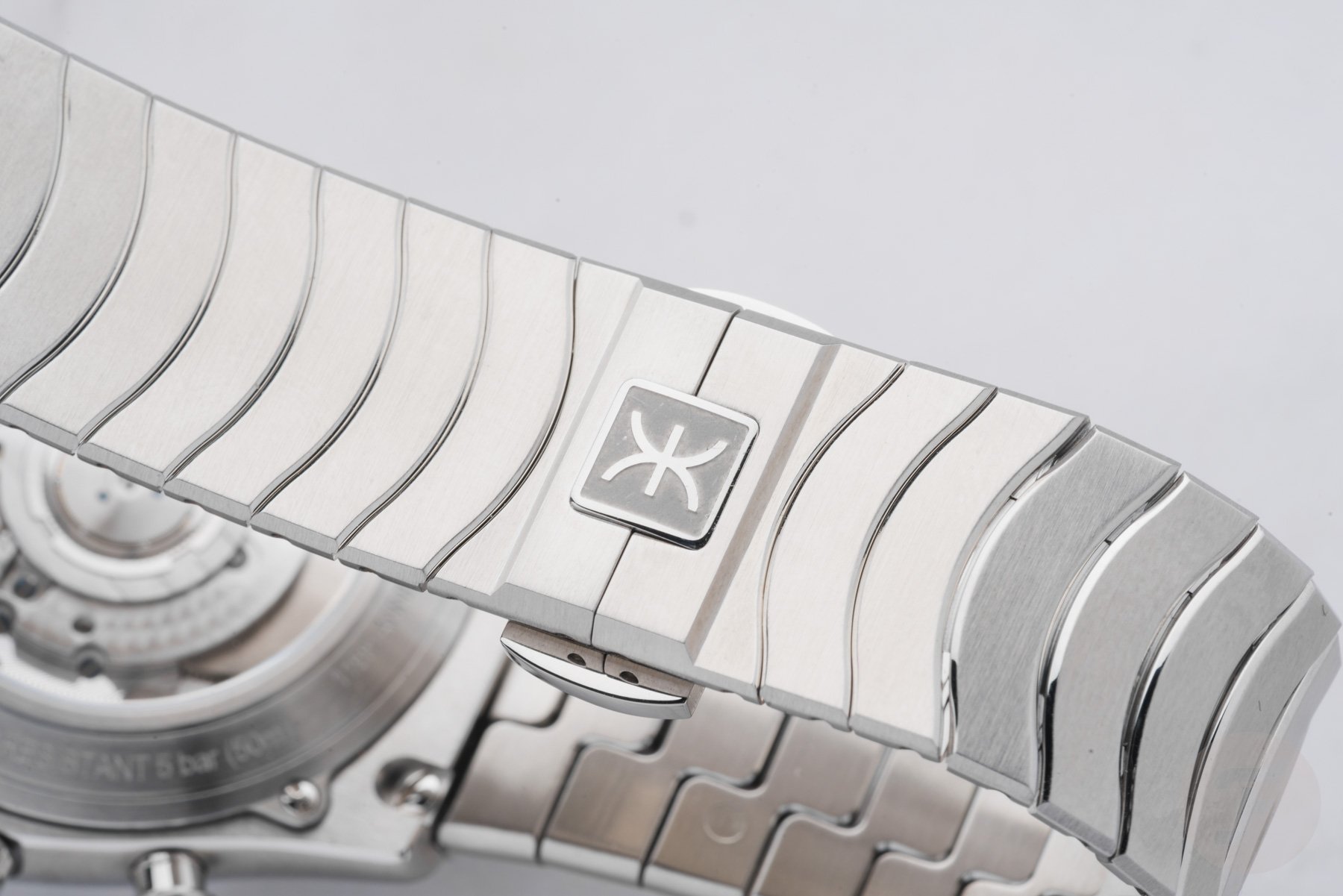
The new bracelet updates that familiar design with a sturdier, more modern feel. The links are larger, though, and the wave pattern is less intricate. You sacrifice some flexibility and comfort in return for a substantially better-built bracelet. It tapers from 22mm to 18mm at a hidden push-button butterfly clasp.
Wearing the new Ebel Sport Classic Chronographs
So, how do the new models wear? Let’s start with the clasp. One thing I don’t particularly like is that it can only be closed in one direction. You must first click the side without the logo into place, then close the logo side over it. I find the process counterintuitive. We often see this approach with branded butterfly clasps, and I understand the desire for visible branding. But it shouldn’t come at the expense of practicality. I found myself having to think about how to close the clasp every time, which I’d rather avoid.
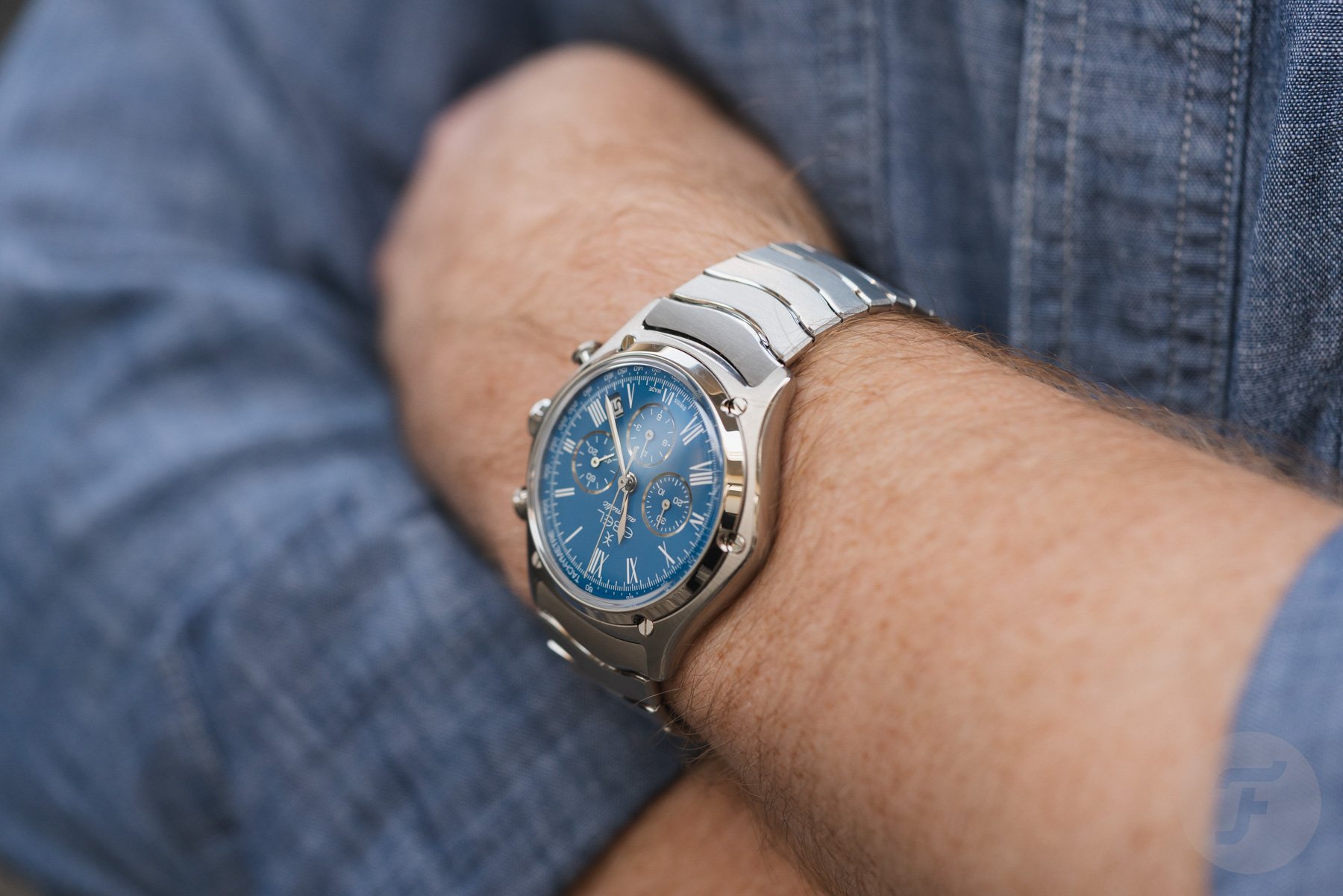
Once closed, the watch sits very nicely on the wrist. The slim profile and flexible bracelet make it comfortable and easy to wear every day. The larger links also cause the bracelet to flare out from the case quite a bit, so people with smaller wrists may find it wears large. That said, with a modest 44.5mm lug-to-lug, it doesn’t feel oversized at all.
Impressions of the reissues
Overall, I love the look of the new Sport Classic Chronograph models. Of the four, I naturally gravitate toward the white-dial two-tone version. It combines the materials and colors I like most. That said, the dark-blue two-tone model is certainly appealing too.
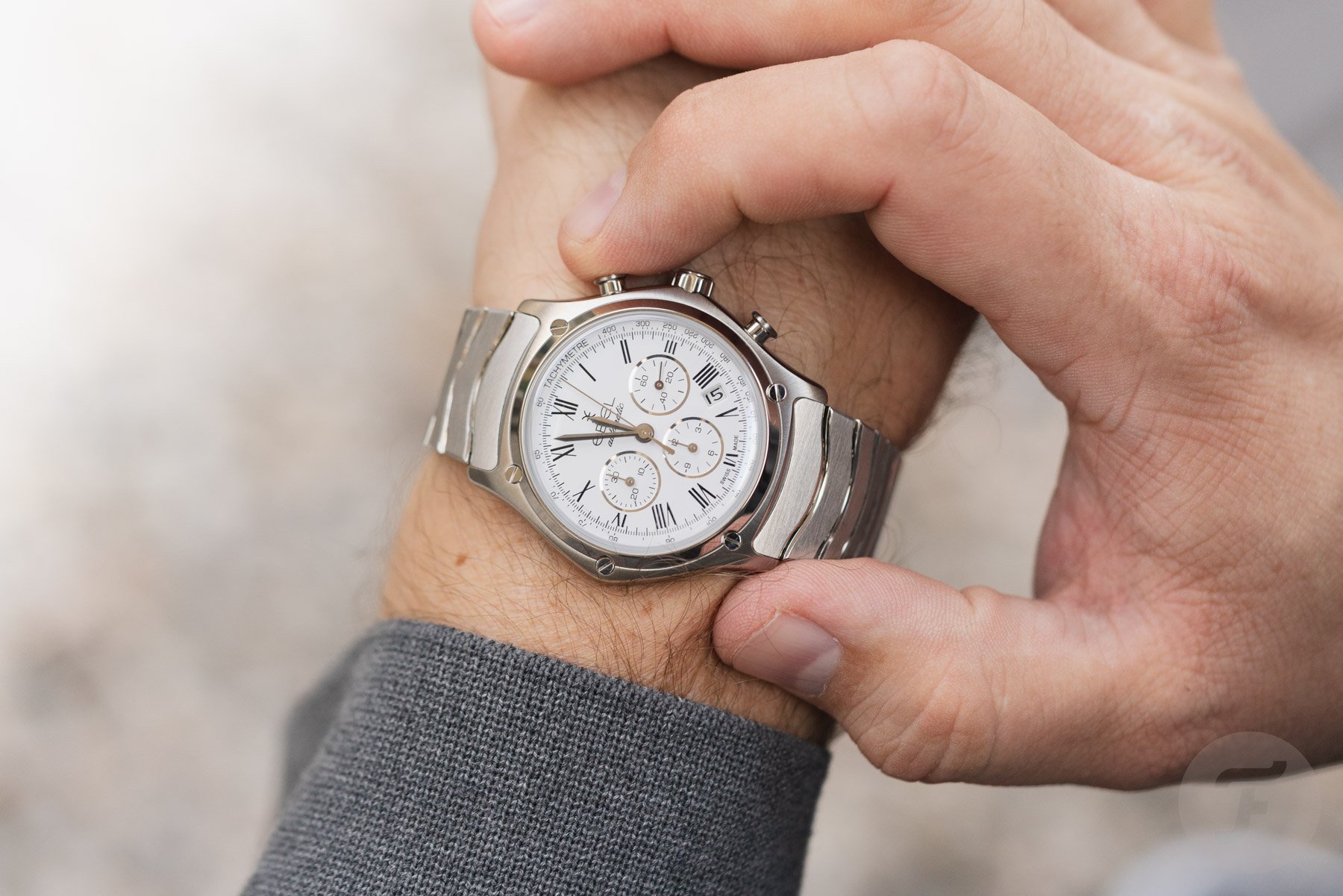
The two stainless steel models are more restrained and lack some of the visual brilliance of their steel-and-gold counterparts. Of those two, however, the white-dial version is a very appealing, wearable modern chronograph with a classic twist. The stainless steel model’s vibrant blue dial is less to my taste, but it will undoubtedly find its way to 115 happy customers.
I think Ebel made a smart move by offering all four models in limited runs of 115 pieces. They should appeal to brand enthusiasts who want to add a modern version of the classic Ebel chronograph to their collections. The stainless steel versions will cost €5,900, while the steel-and-gold ones will retail for €8,900. In return, you get a well-executed contemporary interpretation of the iconic Ebel Sport Classic Chronograph. It will be interesting to see how quickly the four versions sell.
Comparing the vintage to the modern Sport Classic Chronograph
Compared with the vintage Sport Classic Chronograph, these new versions are a convincing modern evolution. Still, the charm of the 1980s original is hard to ignore when the two are side by side. It has a slightly smaller 38mm case, better finishing, a more comfortable bracelet, and the classic El Primero movement. More importantly, it became one of the defining timepieces of its era. Given the prices vintage examples command, the 1980s Sport Classic Chronograph remains an appealing choice.
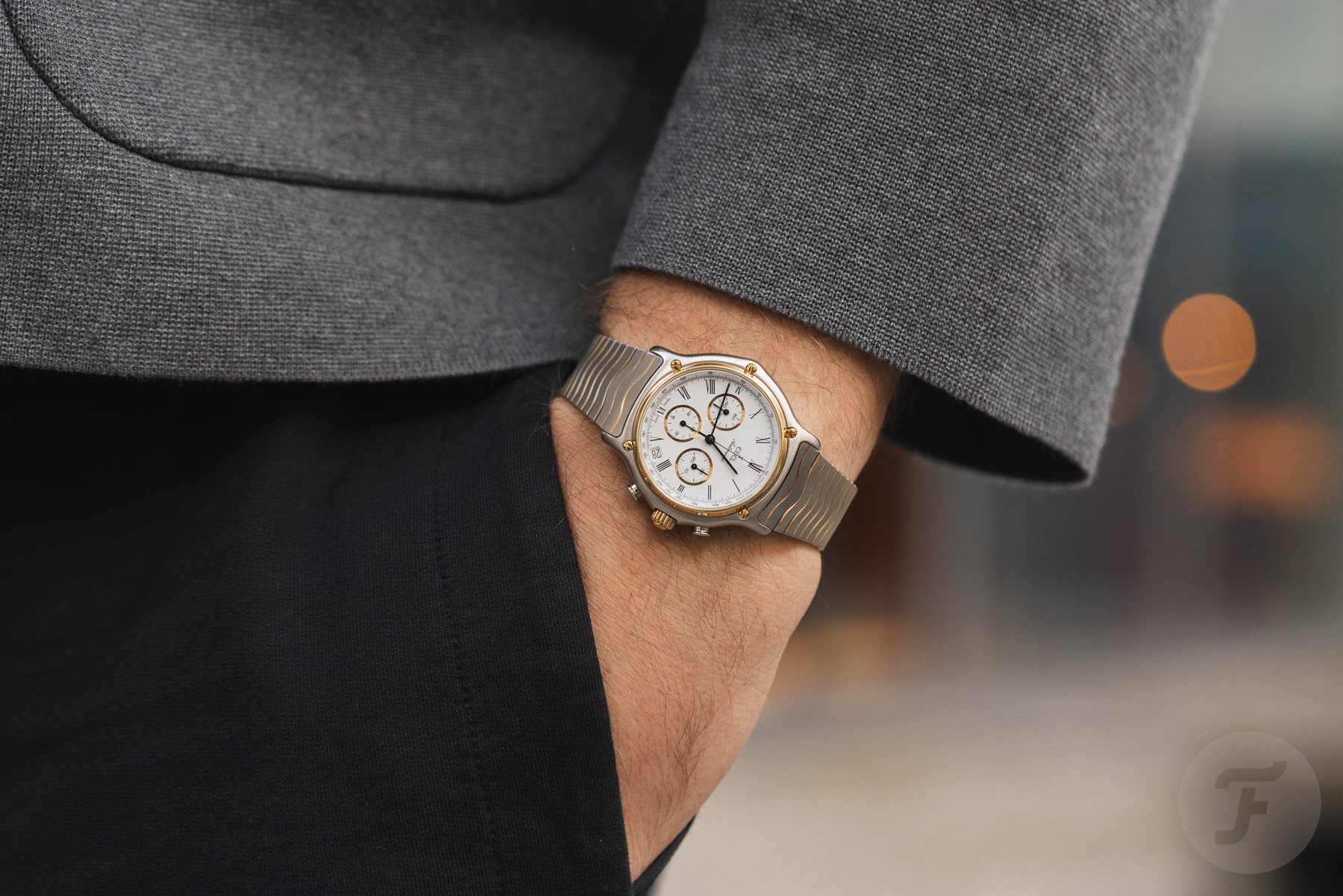
With all its vintage quirks, it isn’t objectively the better watch, but it is certainly the more charming one. Still, I love that Ebel is continuing the story of its classic with these new Sport Classic Chronographs. They have rekindled my appreciation for the brand, which makes comparing the two feel a little unfair. If you own the vintage version, this modern one is definitely worth checking out. And if you buy the new version, you need the vintage classic from the 1980s too. It’s that simple.
This is a partnership post. Learn more.