Hands-On With The Farer Pilot Series II Curtis — A Fresh Take On The Pilot’s Watch

When I think of Farer, I don’t necessarily associate the brand with pilot’s watches. Moreover, I don’t link it to any particular watch category at all, even though I’ve previously reviewed a couple of iterations of the Farer World Timer. Instead, the brand is best recognized for its compelling use of color. That said, the watch I’m looking at today is the Pilot Series II, which indicates that the folks at Farer are no strangers to aviation watches. So, how does the brand’s distinctive design language translate to a watch style that traditionally leans into practicality and function over form? I spent a couple of weeks with the new Farer Pilot Series II Curtis to find out.
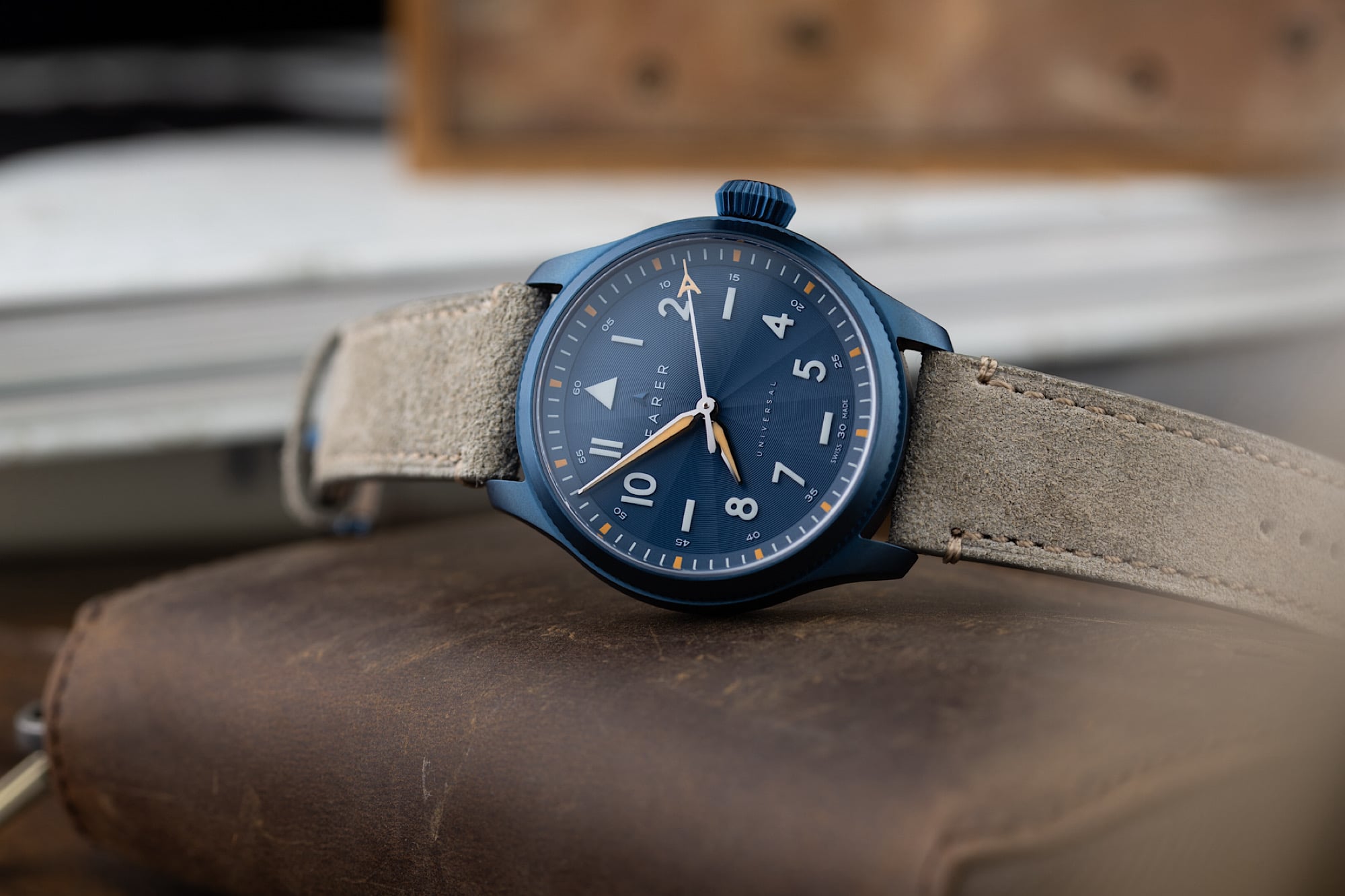
As is often the case with Farer, the recent launch of the Pilot Series II included multiple colorways. The brown-dial Barnwell and blue/white Hewlett are both attractive watches, but it’s the Curtis that caught my eye, and thankfully, it was the model that Farer swiftly sent out to me. At first glance, this one features some of the essential characteristics of a pilot’s watch — strong contrast between a dark dial and crisp indexes, Arabic numerals around the dial (for the most part) with a triangle in place of the 12-o’clock marker, and a large onion-shaped crown. Upon looking closer, you’ll begin to see the many ways that Farer has managed to stamp its identity on the watch without hampering its essence.
A propeller motif
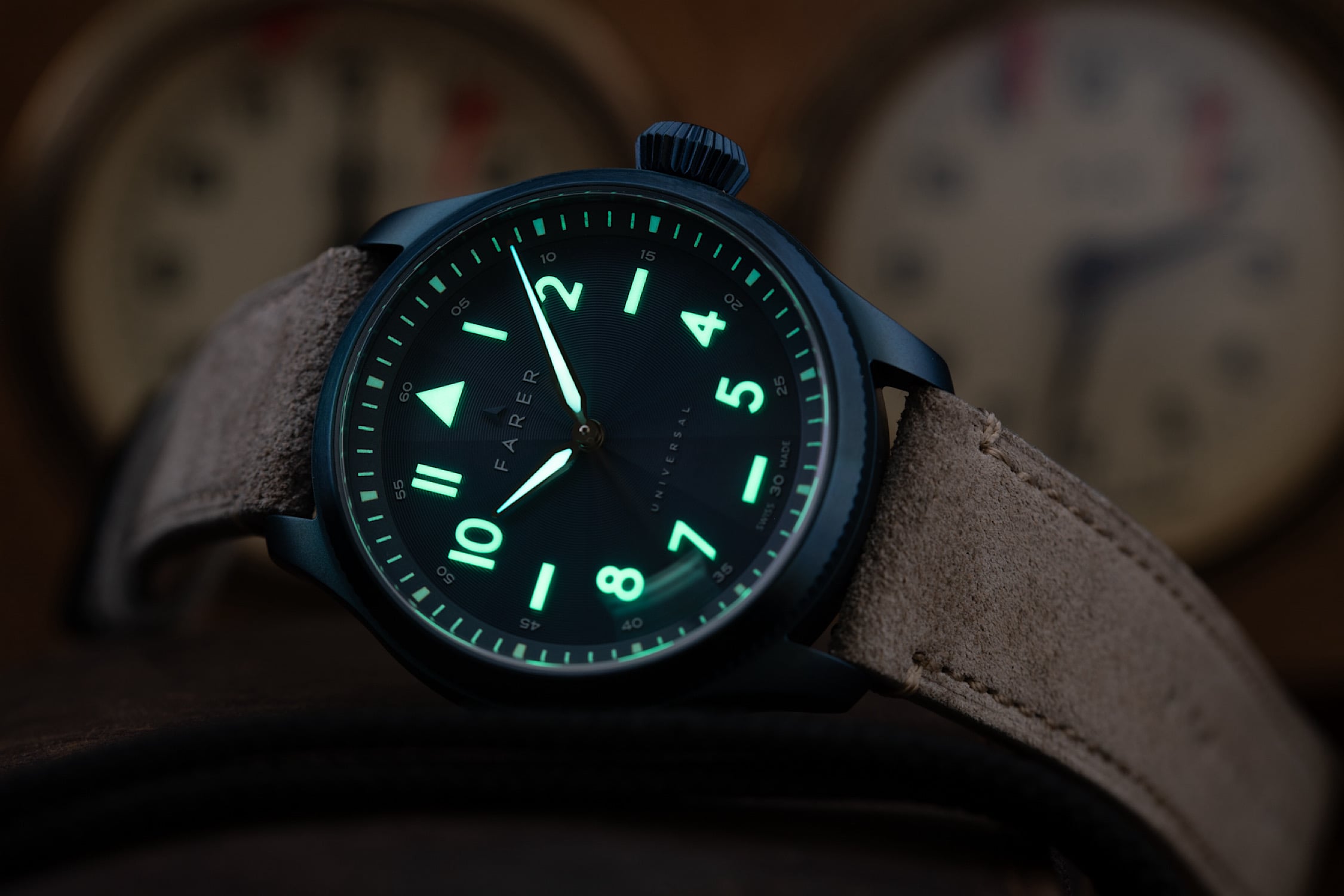
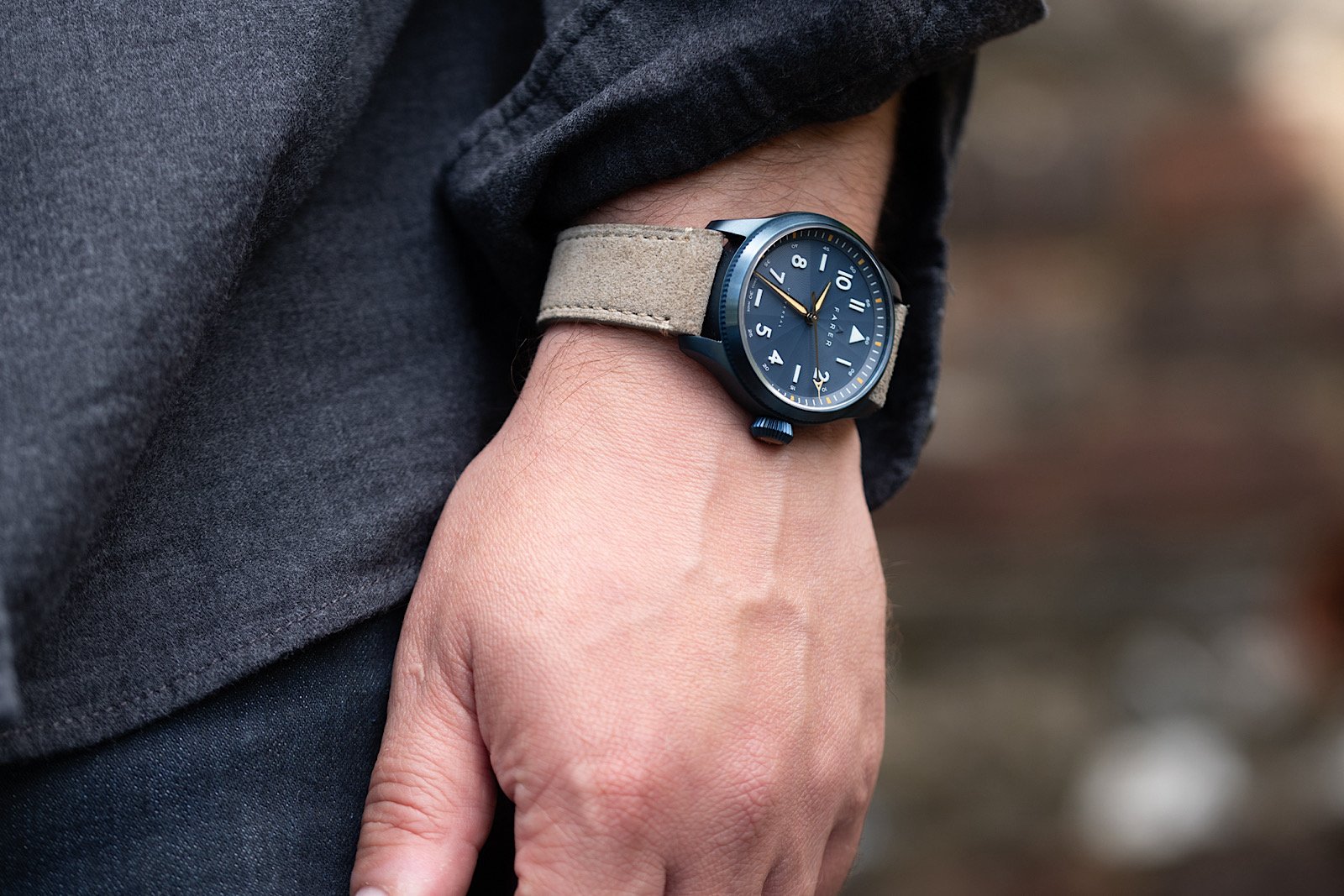
A blue-dial pilot’s watch isn’t revolutionary, but Farer’s interpretation here feels fresh. Arabic numerals rise above a deep blue dial, which has both a concentric texture and a radial guilloché-like pattern splitting it into 12 distinct segments. With any two adjoining areas absorbing and reflecting light differently, the dial is forever changing. Opposite sectors broadly match, resulting in a motion intended to evoke the turning of an aircraft propeller. This departure from a traditional, unembellished matte black surface ramps up the aviation theme rather than detracting from it. Large and clear indexes are still a key part of this watch, though, with Farer’s Lumicast blocks forming Arabic numerals around the dial, except for a triangle and three horizontal markers at the cardinal points. Crafted from a blend of ceramic and X2 Super-LumiNova, the three-dimensional indexes aren’t quite as towering as those on some other models from the British brand.
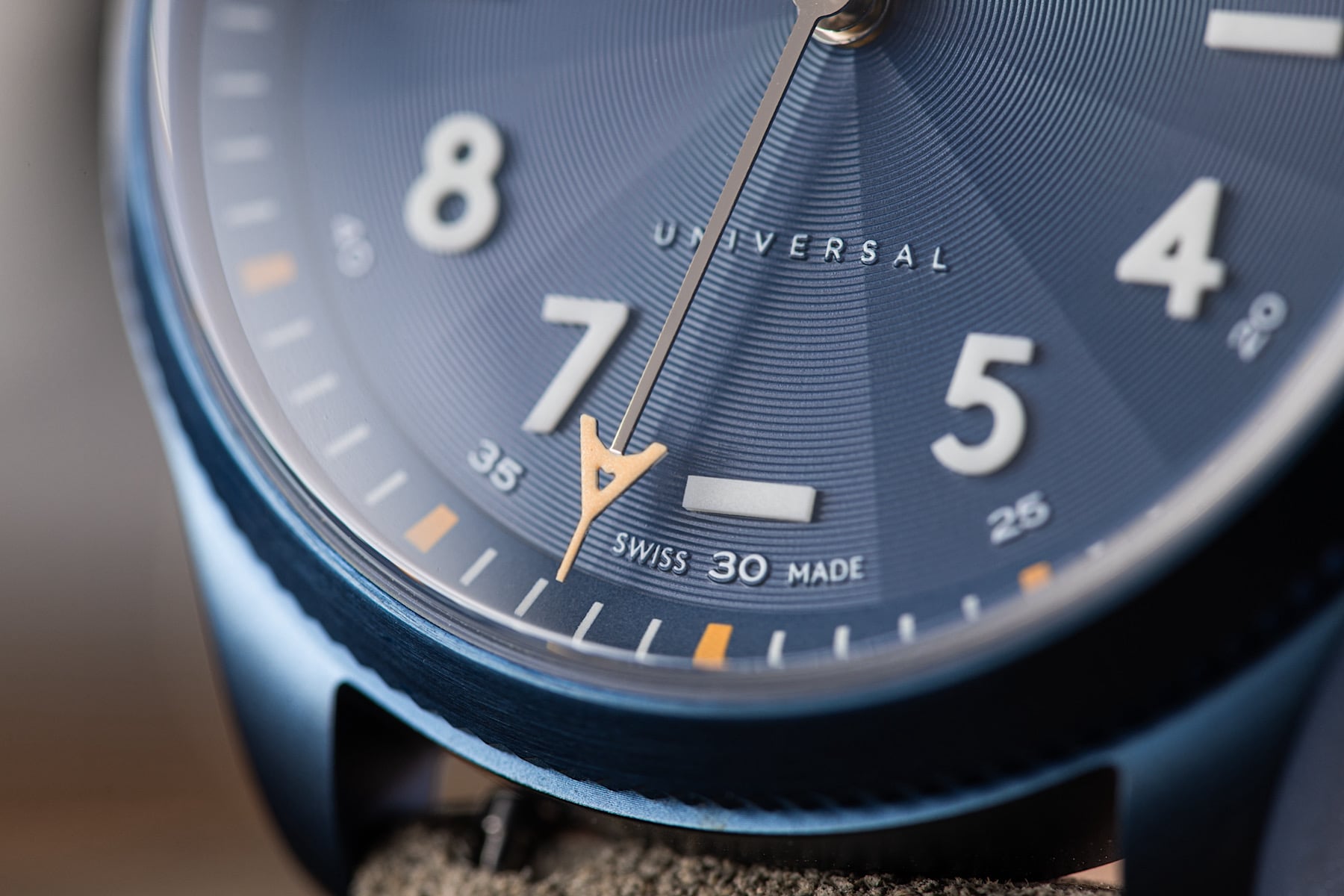
We find further small touches of Farer’s flair in the “A” at the tip of the seconds hand and the orange five-minute markers inside the chapter ring. The polished lozenge-shaped hour and minute hands feature a yellowish X2 Super-LumiNova, a shade that contrasts nicely with the dial’s dull blue and hints at the pop of orange at the outer edge. In darkness, the indexes and hands produce the same green glow.
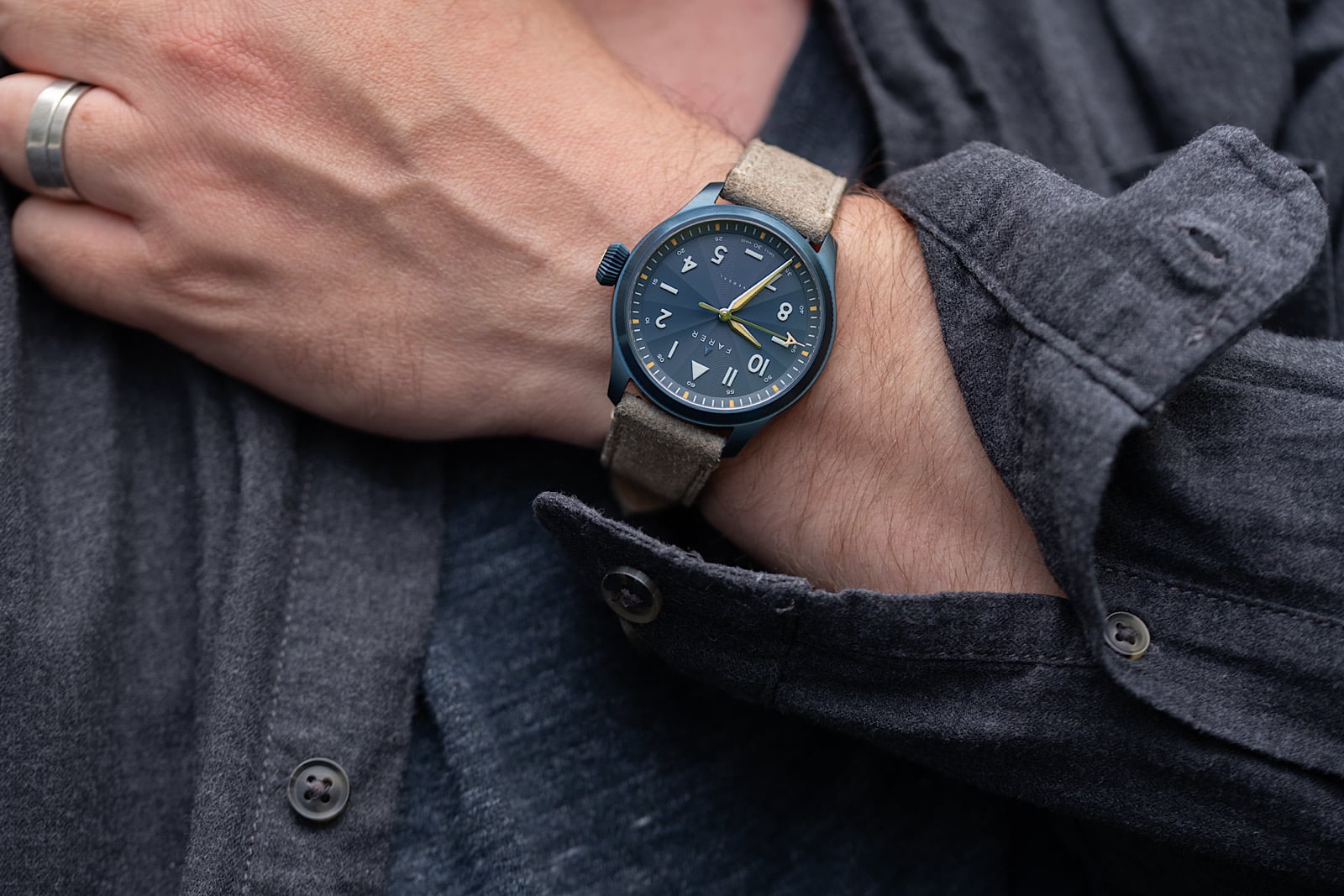
The Farer Pilot Series II Curtis — blue-sky thinking
When it comes to the case, it has quite a few things going on, all of which tie back to that battle between the functionality of a pilot’s watch and Farer’s flair. First, the titanium case has a dark blue PVD coating. I’m more used to seeing titanium in a dull gray hue, so the Curtis’s case, with a similar shade of blue to the dial, is surprising. The deep blue isn’t bright enough to be obvious from across a crowded room, but the color’s continuation feels very in keeping with the brand. If the PVD coating threw me for a second, the fact that the Pilot Series II Curtis just doesn’t feel like a titanium watch on the wrist intrigues me further. More on that later.
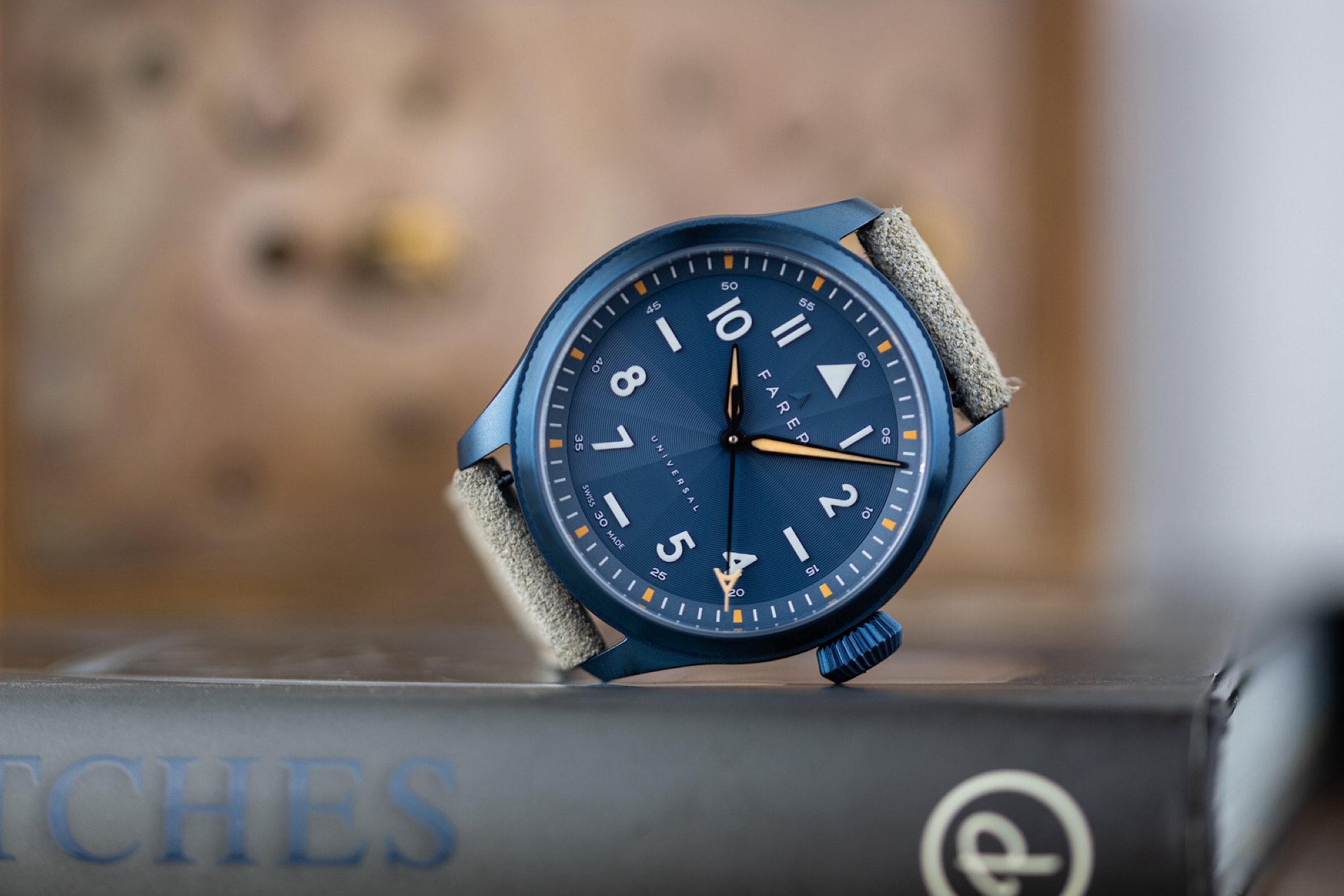
As alluded to above, one archetypal feature of a pilot watch is a large onion crown. Something which was originally easy to grip with a gloved hand is now a marker for what a watch in this style should include. The crown on the Pilot Series II Curtis, finished in blue with a bronze inlay, takes a traditional form without being oversized. During the many days I’ve spent with the watch on my wrist, I’ve never felt pressure from the crown in the back of my hand.


The non-display case back, also in blue-coated titanium, gives away why I’m not experiencing the lightness I usually associate with the material.
A soft-iron cage
Hiding beneath the dial and inside the titanium case is a soft-iron Faraday cage that protects the movement from magnetic fields up to 500 gauss. The Curtis has no date window, as this would compromise the antimagnetic properties and the dial’s aesthetics. Whether this level of protection is useful is debatable, but it explains the use of titanium to keep the watch from feeling heavy on the wrist. As a former Rolex Milgauss owner, I know all too well how that much dense metal can affect comfort.
Inside the cage is the Sellita SW300-1 in Elaboré grade. This Swiss-made automatic caliber is probably the most common movement in this price category and offers hacking seconds, manual winding, and a 56-hour power reserve. Although the SW300-1 normally has a date display in addition to the three hands, the date complication and accompanying crown position are absent here.
Sizing up the Pilot Series II Curtis
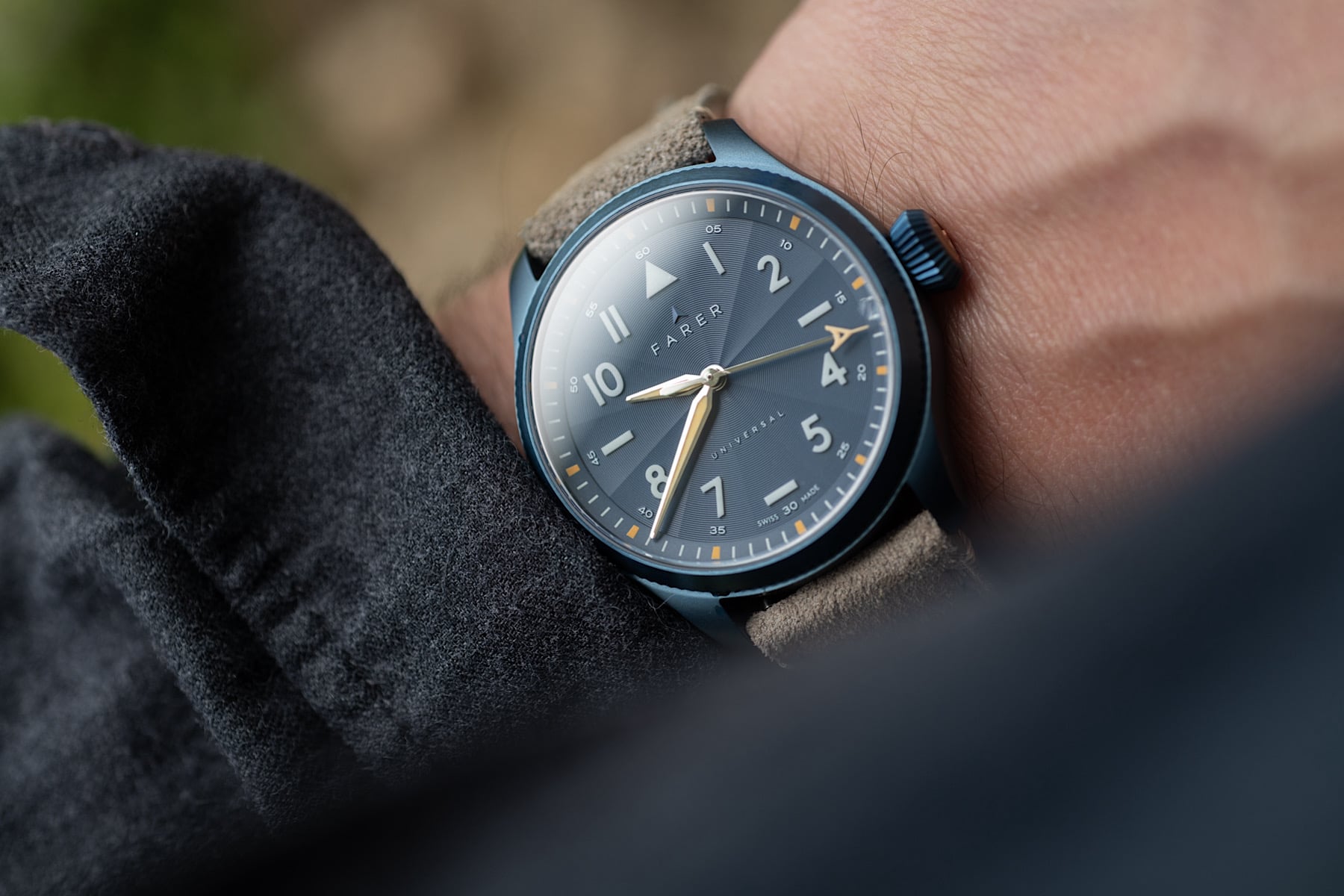
So far, I haven’t mentioned the watch’s dimensions, and that’s largely because they are “just right” for my 17.75cm (7″ wrist). It’s not a historically accurate and large dial, nor would many consider the watch small. Farer pairs a 40mm diameter with a 43mm lug-to-lug distance. Perhaps the mere 10.9mm thinness is the only surprising measurement, considering the presence of the Faraday cage within. A 20mm lug spacing is again both unsurprising and welcome. A wide range of aftermarket straps would be a suitable alternative, though the contrasting gray suede strap with a blue PVD-coated pin buckle is a safe and suitable option.
Final thoughts
The Farer Curtis is a curious exercise in subtlety. It has the functionality of a pilot watch while successfully exhibiting the panache of the Farer brand. While the dial has color, texture, and dynamism, it still keeps legibility at its core. The case also balances form and function. Any additional weight from the soft-iron Faraday cage is offset by the use of titanium, with a muted PVD coating that masks the material and matches the dial. I find that almost all of the design choices, whether intrinsic to a pilot’s watch or emblematic of the Farer brand, are reined in. Rather than either theme being watered down, they meet in a harmonious conjunction.
If you’re interested in purchasing the Farer Curtis, the price is €1,555 / US$1,525 / £1,350. If you want to learn more about the Pilot Series II variants, visit the Farer website.