The New Louis Moinet 1816 Tourbillon Chronograph — Sleek Looks, Edgy Mechanics

There’s something special about combining a chronograph and tourbillon. One complication measures elapsed time, while the other uses a rotating cage to counteract the effects of gravity on the regulating organ. Bringing them together is no small feat, as both mechanisms demand considerable energy. Starting or stopping the chronograph also changes the load and torque in the gear train, potentially affecting the tourbillon’s balance amplitude. Space and weight add further challenges. Where, for instance, do you fit a rotating tourbillon cage alongside a complex monopusher chronograph mechanism with a column wheel and horizontal clutch? Getting everything right takes real watchmaking skill. Fortunately, Louis Moinet works with movement maker Concepto, which developed the movement for the 1816 Tourbillon Chronograph. The result is a haute horlogerie creation with sleek looks and edgy mechanics. Just look at that striking blue off-center tourbillon cage!
Louis Moinet, a brand named after the man who invented the chronograph, is at it again. Following the 1816 Chronograph, a modern timepiece with a satin-brushed Grade 5 titanium case, a dial inspired by the 1-6-11 sub-dial layout of Louis Moinet’s original Compteur de Tierces from 1806, and a classical chronograph movement, the brand now takes things a step further. The 1816 Tourbillon Chronograph retains the elegant case and integrated bracelet of its three-register sibling but adds an off-center flying tourbillon while doing away with one pusher and one sub-dial.
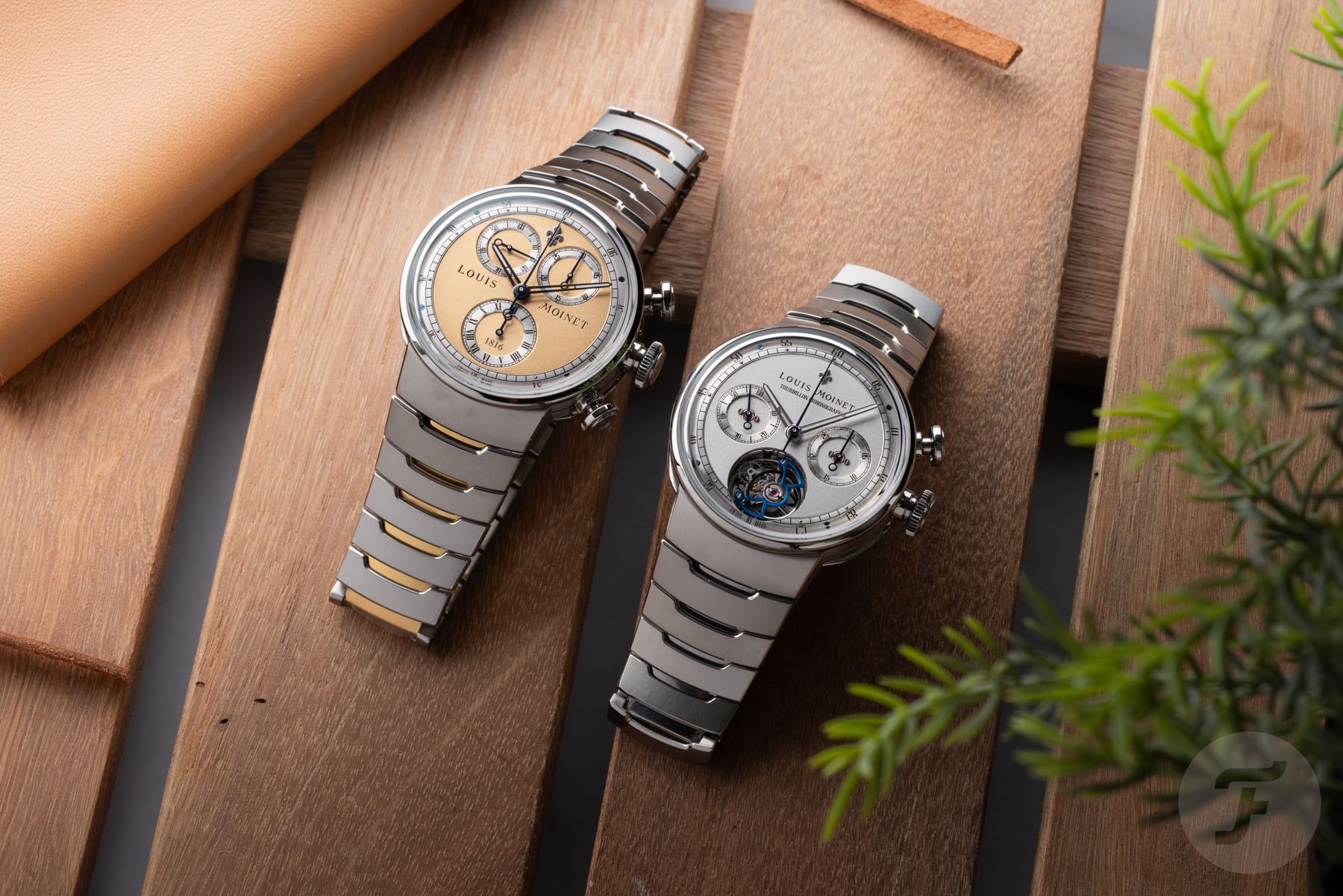
Louis Moinet 1816 Chronograph Champagne (left) and the 1816 Tourbillon Chronograph
Going hands-on with the Louis Moinet 1816 Tourbillon Chronograph
The 1816 Tourbillon Chronograph shares much of its exterior with the simpler monopusher chronograph, including the 40.6mm, 51-part case. Executed in Grade 5 titanium, it features alternating polished and satin-brushed surfaces, a treatment that continues across the smoothly integrated bracelet.
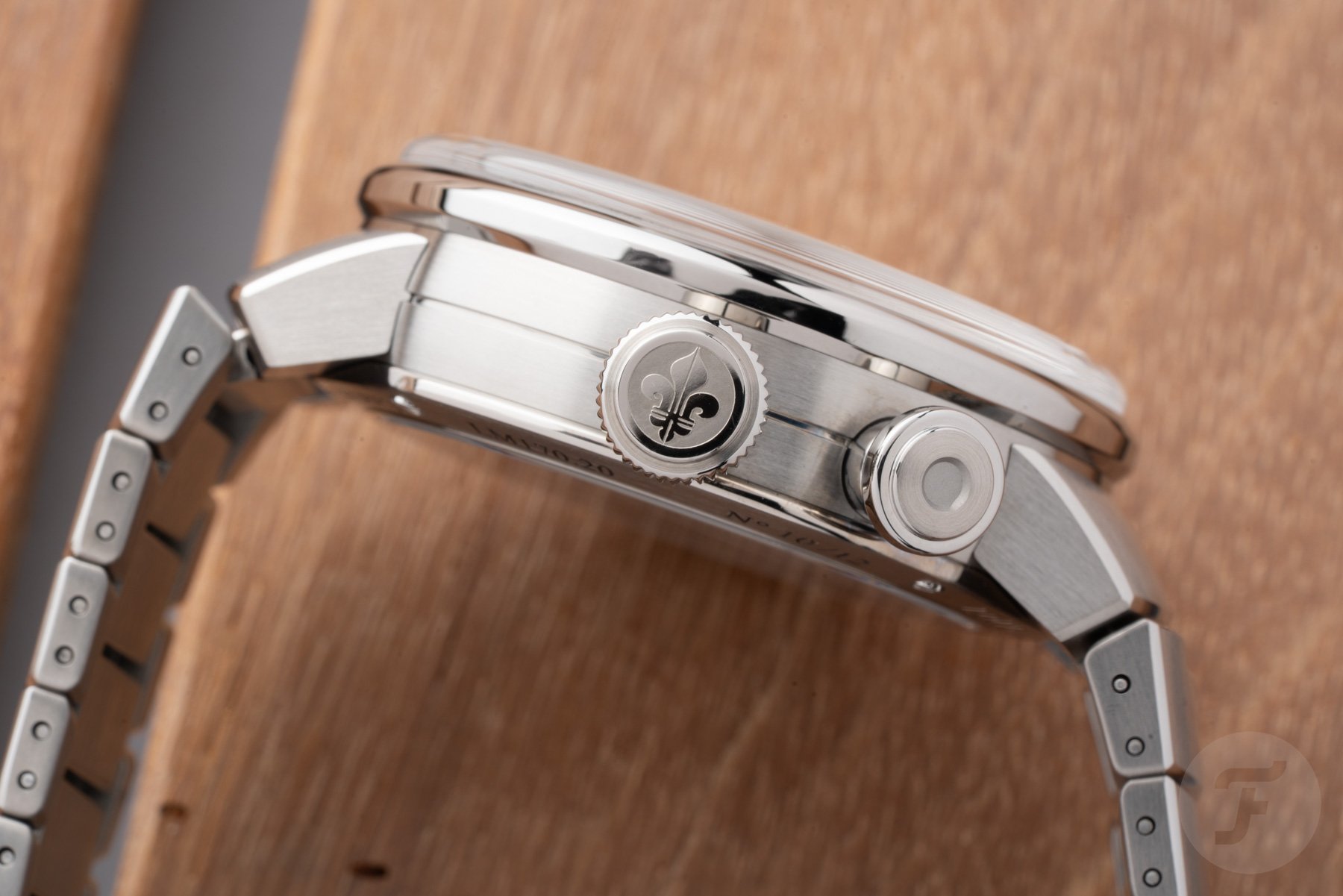
The polished elements lend the watch a classic touch, enhancing its understated, contemporary character. The large pusher, which starts, stops, and resets the chronograph, and the crown, which handles winding and setting duties, both have a distinctly traditional appearance. Pleasingly, despite their contrasting shapes and finishes, these details come together in a balanced, attractive ensemble.
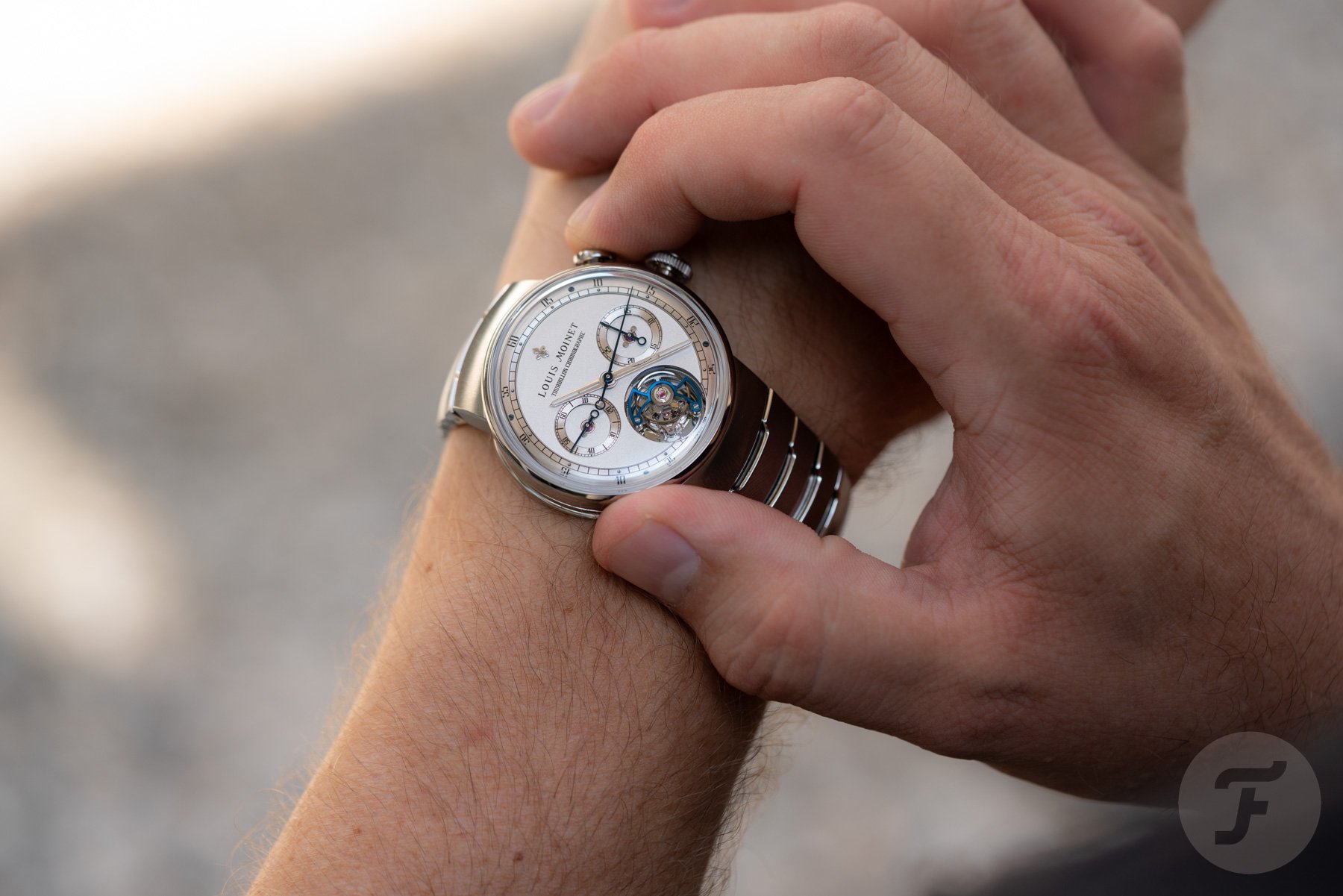
The case diameter remains unchanged from the 1816 Chronograph, but the added tourbillon makes the movement and, in turn, the case slightly chunkier. While it grew from 14.7 to 15.1 mm thick, the extra 0.4 mm didn’t stop me from loving how the 1816 Tourbillon Chronograph felt and looked on my wrist.
Not new, but still quite something
The additional thickness comes from the 301-part LM114 movement, developed in collaboration with Concepto. This hand-wound monopusher chronograph caliber features a column wheel, a horizontal clutch, and a tourbillon regulator. It also beats at 28,800 vibrations per hour, while a double-spring barrel delivers a 96-hour power reserve. Given how much energy its complications require, I dare say that’s impressive.
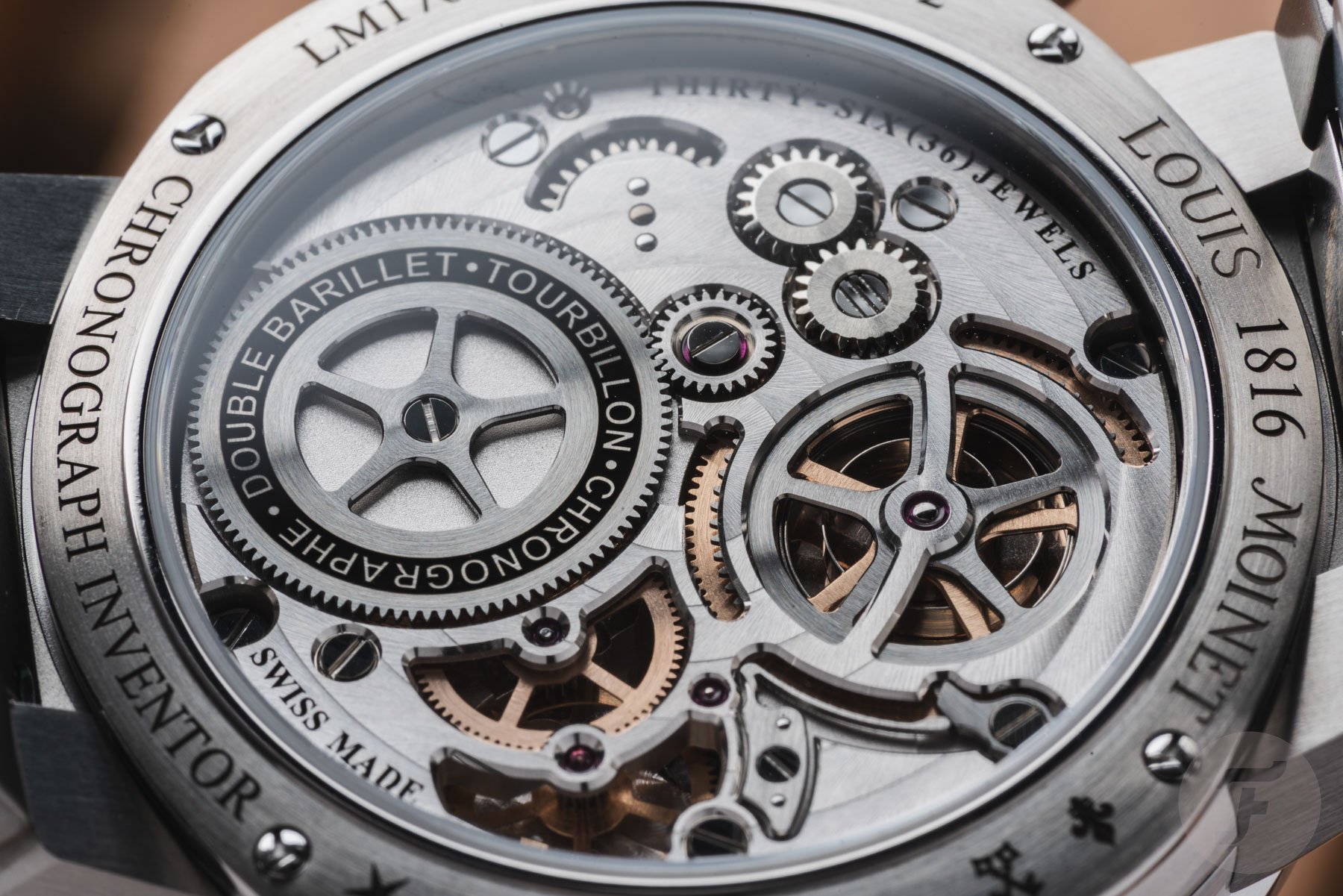
The movement itself is not new. Louis Moinet previously used the LM114 in the Impulsion Tourbillon Chronographs released in 2023 and 2025. It looks modern and is well finished, although I find it less attractive than the 1816 Chronograph’s LM1816 movement, whose bridges and mainplate feature contrasting 3N gold finishes. Still, the LM114 is hardly an off-the-shelf Sellita, so this is a minor gripe — especially when you turn your attention to the flying tourbillon on the dial side.
Flying blue
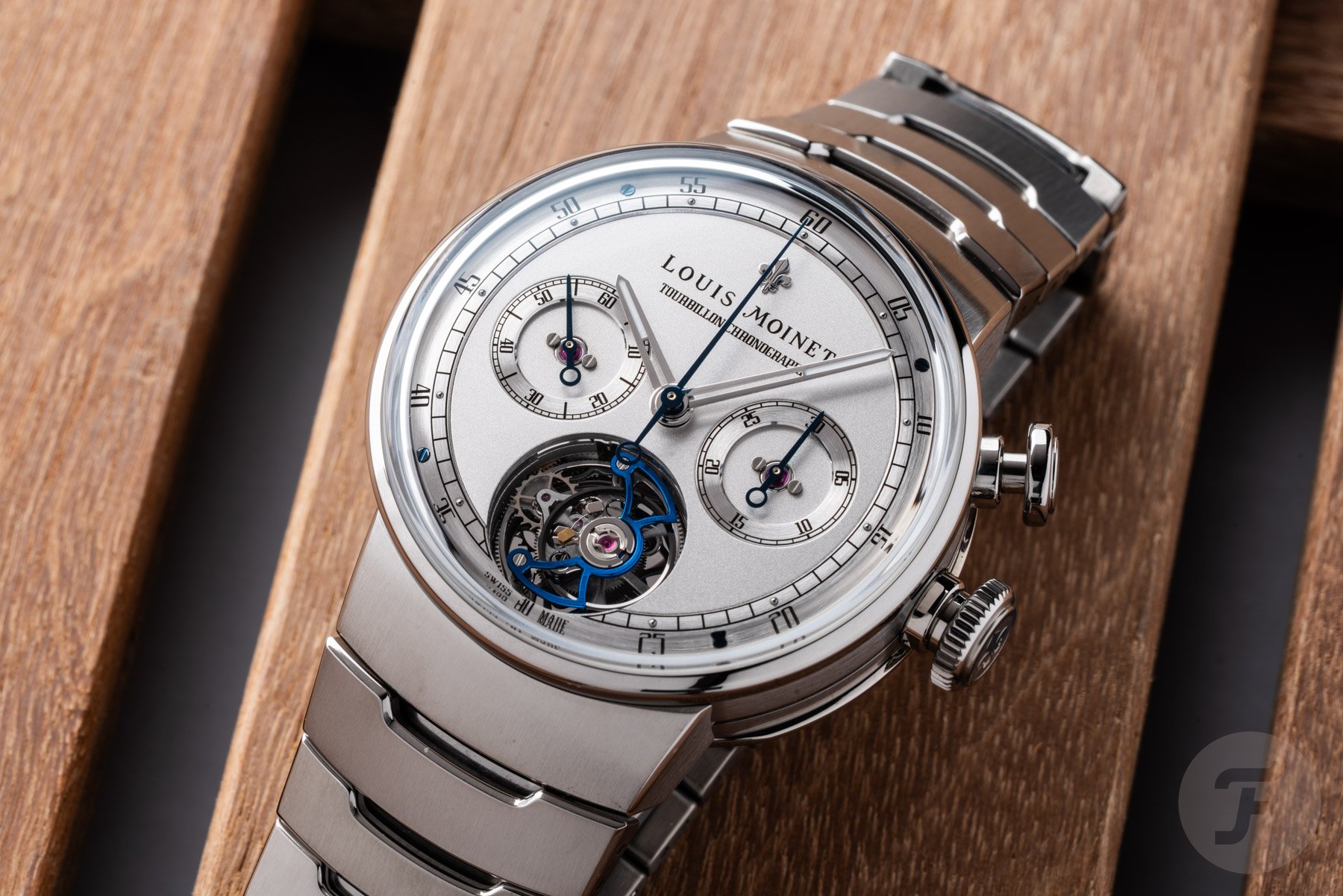
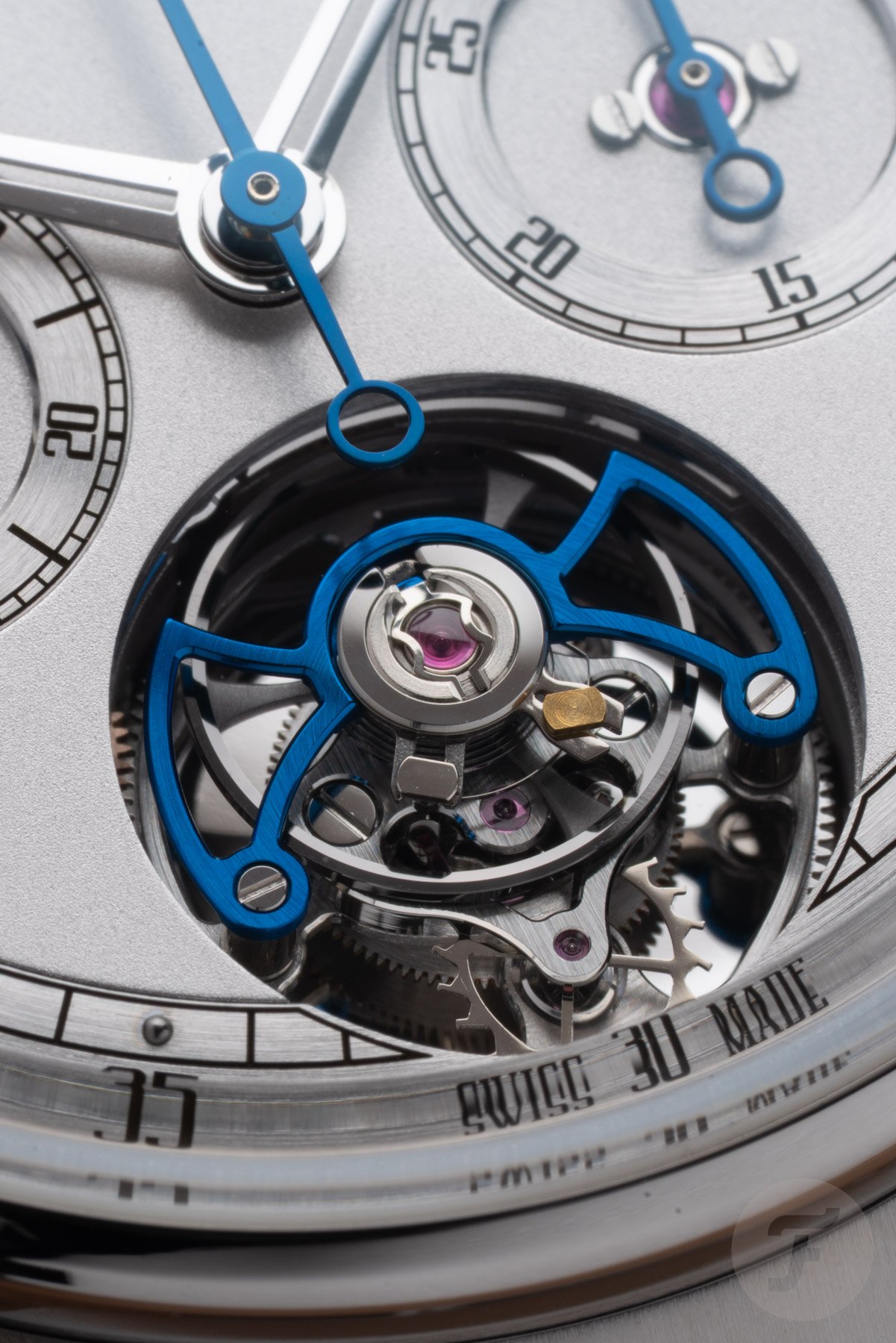
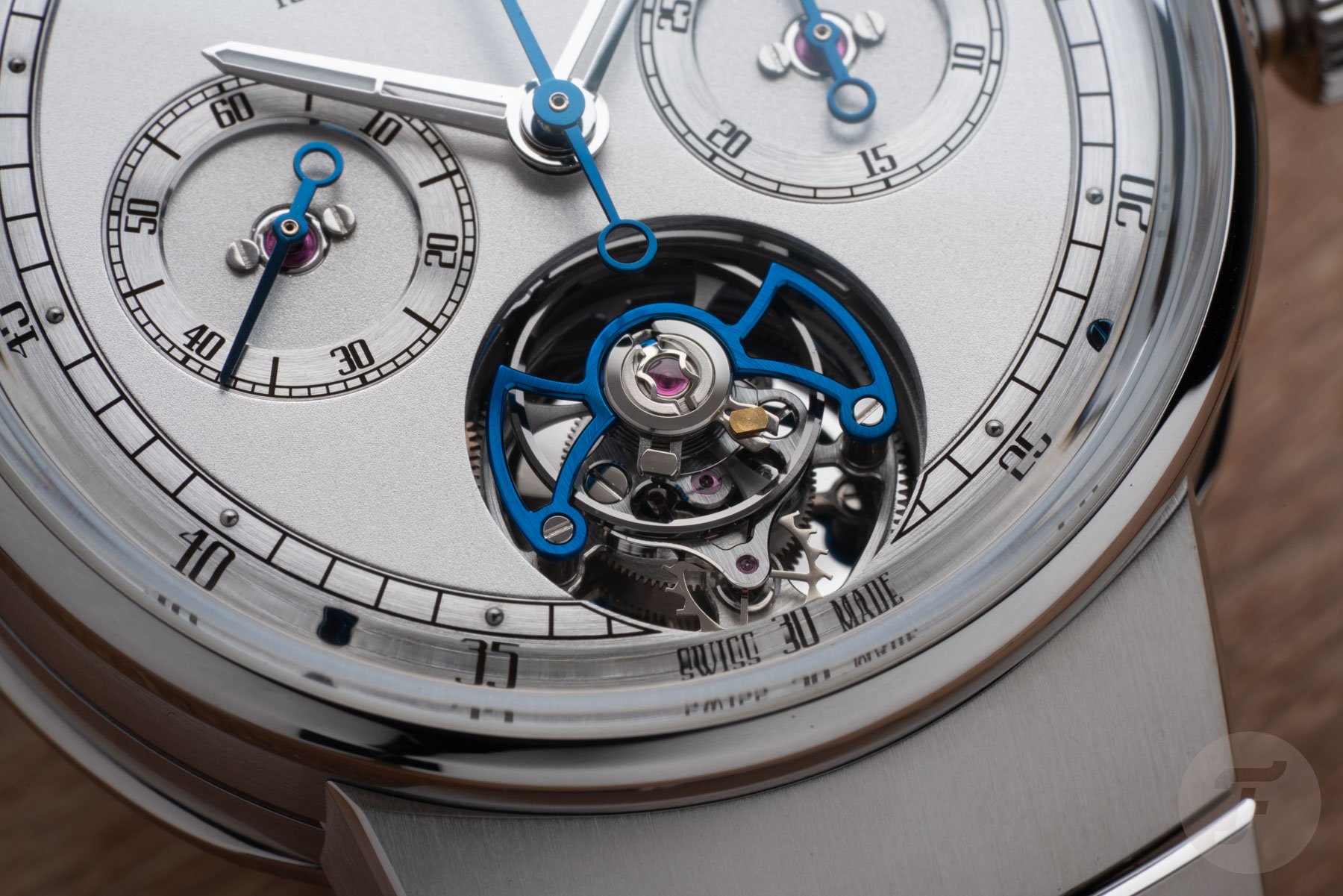
It flies, it’s blue, and it has nothing to do with KLM’s frequent-flyer program. The flying tourbillon sits at 6 o’clock, its cage coated in blue DLC and positioned off-center. Its vivid hue matches the blued hands in the sub-dials, the central chronograph seconds hand, and the screws securing the dial. The color pops against the otherwise sober-looking gray rhodium-plated surface, which remains highly legible. With the tourbillon occupying the 6 o’clock position, the dial has room for just two sub-dials — the 30-minute chronograph counter at 3 and the running seconds at 9. Arabic numerals keep the display easy to read.
Wearing the Louis Moinet 1816 Tourbillon Chronograph
Wearing a tourbillon chronograph is always special, and this Louis Moinet 1816 is no exception. The combination of complications is part of the appeal, but so is its exclusivity: the brand will make just 12 examples. That limited production adds to the watch’s sense of occasion and will certainly give each owner that warm, fuzzy feeling.


Then, there is the way it looks. Several high-end indies have introduced integrated-bracelet watches in recent years. Some are excellent, while others feel, well, a bit redundant. This Louis Moinet avoids that trap. Its blend of modern, flowing lines and traditional details works for me. I particularly love the large pump-style pusher, the instrument-like, neoclassical dial, and the eye-catching tourbillon with its wacky, off-center cage in electric blue.


Sadly, for my wallet, the price is harder to love. Still, US$135,000 for a haute horlogerie creation with a flying tourbillon and a monopusher chronograph isn’t crazy in today’s watch market. What do you think of the titanium Louis Moinet 1816 Tourbillon Chronograph, with its large pusher, blue “whirlwind,” and flowing lines? Let me know in the comments below.
This is a partnership post. Learn more.