Handmade Imperfections Turn The Anoma A1 Prehistoric Into A Beautiful, Wearable Timekeeping Sculpture

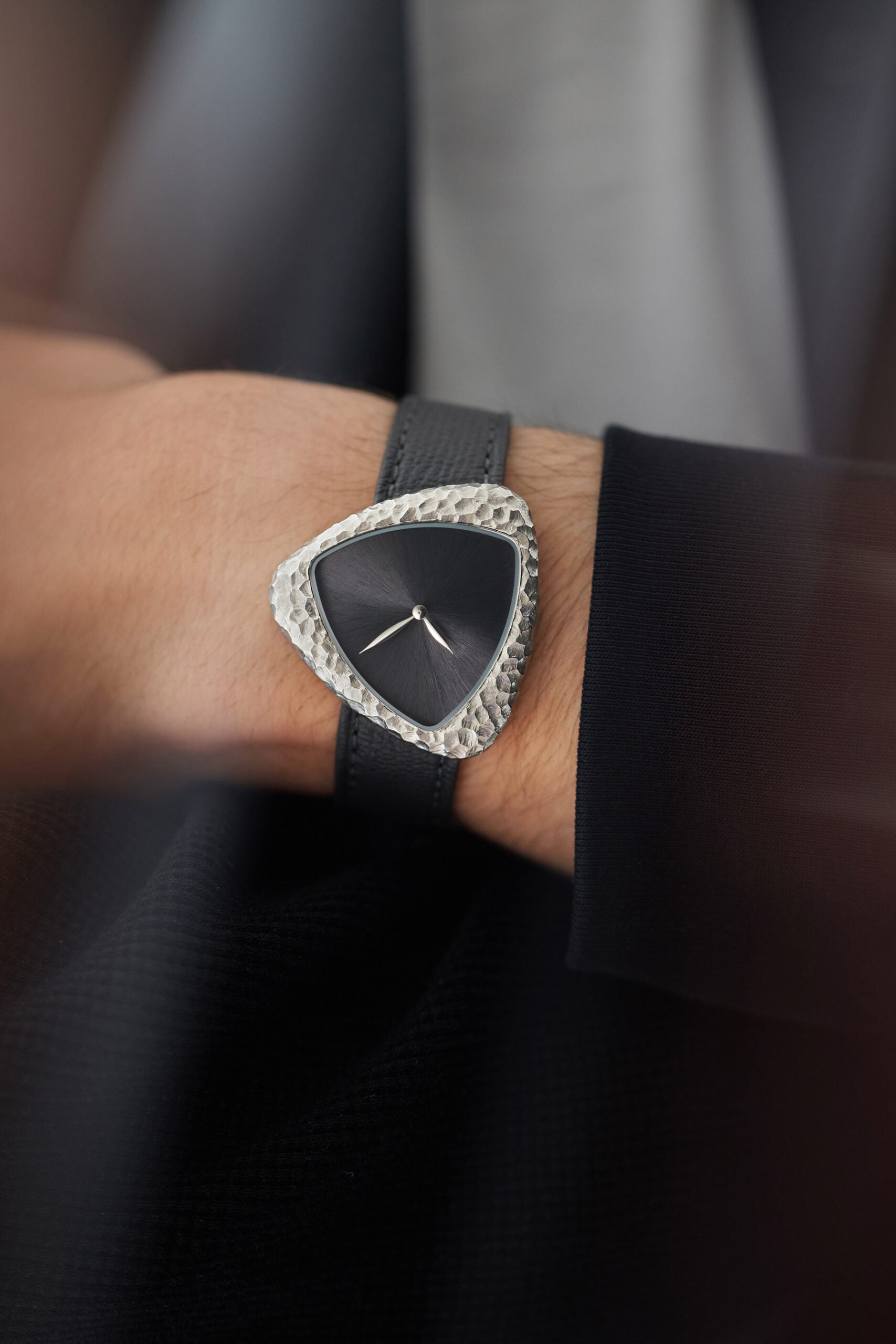
Usually, watches are all about perfect symmetry and flawless finishing. The case is often round with even lugs, and carefully applied mirror polishing and brushing are combined to create contrast and accentuate the watch’s shape. Things are a little different with the new Anoma A1 Prehistoric, though. Of course, it already starts with its signature asymmetrical, rounded, triangular, and lugless case. But this time, it isn’t fully polished like previous iterations, oh no. This time, it features a texture inspired by prehistoric tools, hand-applied by French engraver Steven Brunel.
Anoma founder Matteo Voilet-Vianello came up with the idea after visiting a Constantin Brâncuși exhibition at Centre Pompidou in Paris, France. The iconic Romanian sculptor collected primitive artifacts because he saw them as one of the earliest and purest forms of human creativity. When Matteo saw the tools, he was struck by how, after so many years, he could still clearly see that they were made by human hands. That led him to the design of the new Anoma A1 Prehistoric.
The Anoma A1 Prehistoric
Until now, every Anoma watch has had a fully polished, rounded, triangular stainless steel case. In my hands-on article from last year, I mentioned that the accuracy of the CNC machining on the case had been improved. That made the different parts fit better and resulted in an overall more refined feel. The funny thing is that every Anoma A1 Prehistoric begins as one of these perfectly CNC-machined examples. The case, of course, is not perfectly polished, but its construction is identical to that of the brand’s most recent releases.


Matteo then sends the cases to the atelier of engraver Steven Brunel in Mornand-en-Forez, France. Brunel was brave enough to take up the challenge of transforming the Anoma A1’s smooth case into a more primitive-looking object. That wasn’t as easy as you’d think, though. When you look at Brunel’s Instagram, you can see that his work is actually very refined. However, this wasn’t the look Matteo was aiming for with the A1 Prehistoric. He wanted it to look more like a raw, primitive object shaped by human hands.


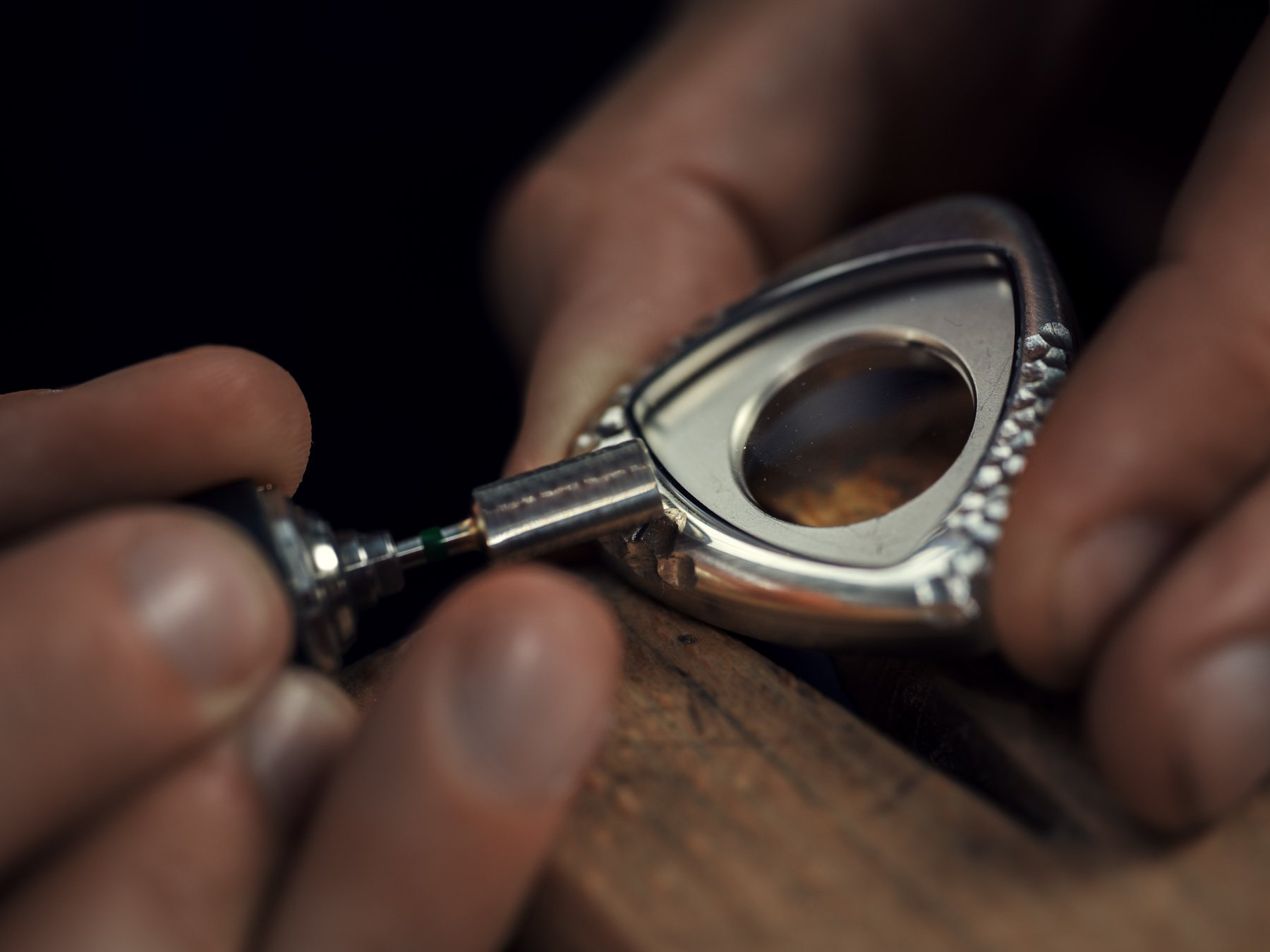
Consequently, Brunel had to unlearn his perfected engraving skills and turn them into something a little more brutal. That’s exactly what he did with an electric cylindrical engraving tool, carefully applying it by hand to the Anoma A1’s case. It took him five hours to finish one case and almost a full year to complete the whole series of 100 cases.
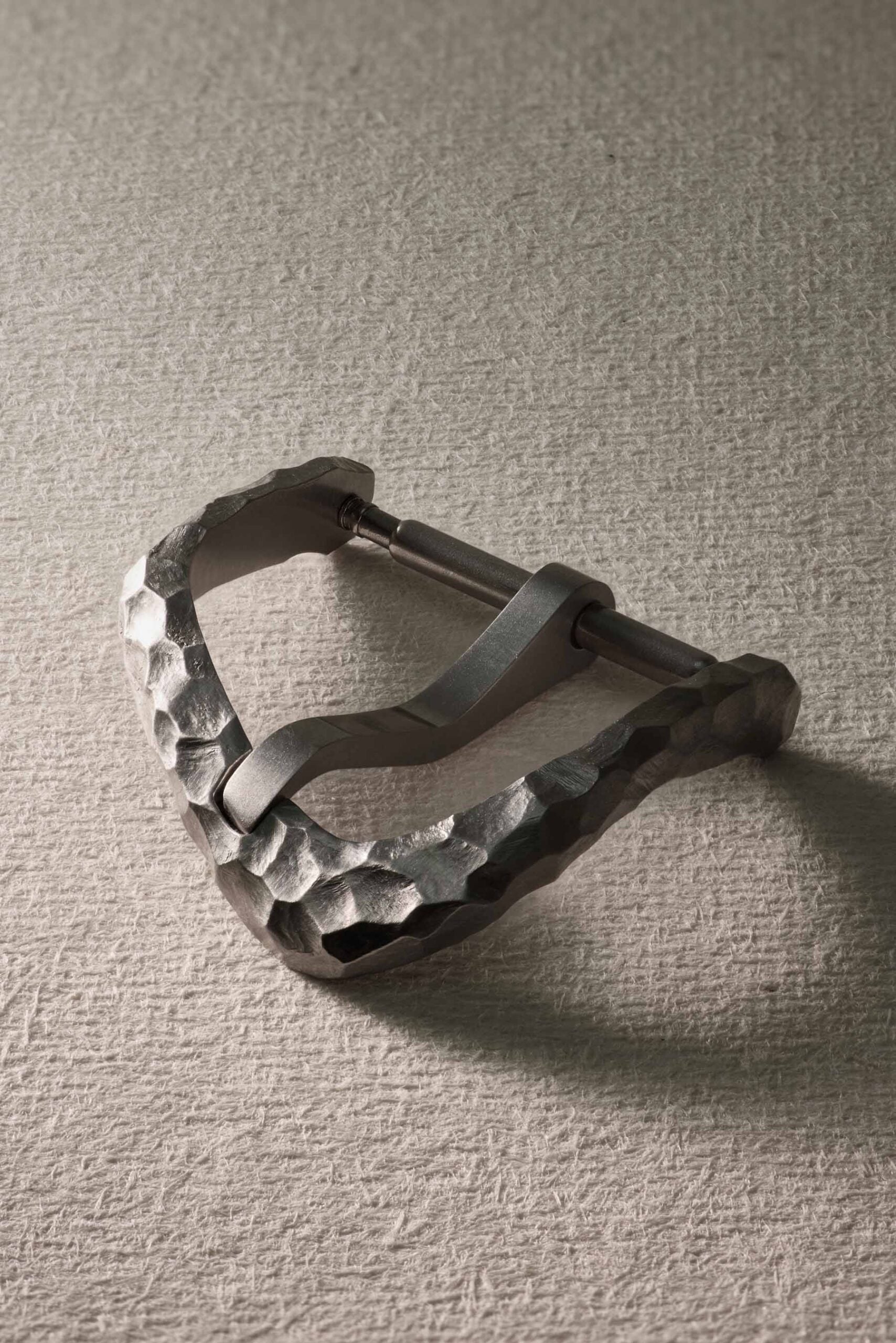
Oh, and he applied the same texture to the A1’s buckle.


An anthracite sunburst dial with 600 hand-cut lines
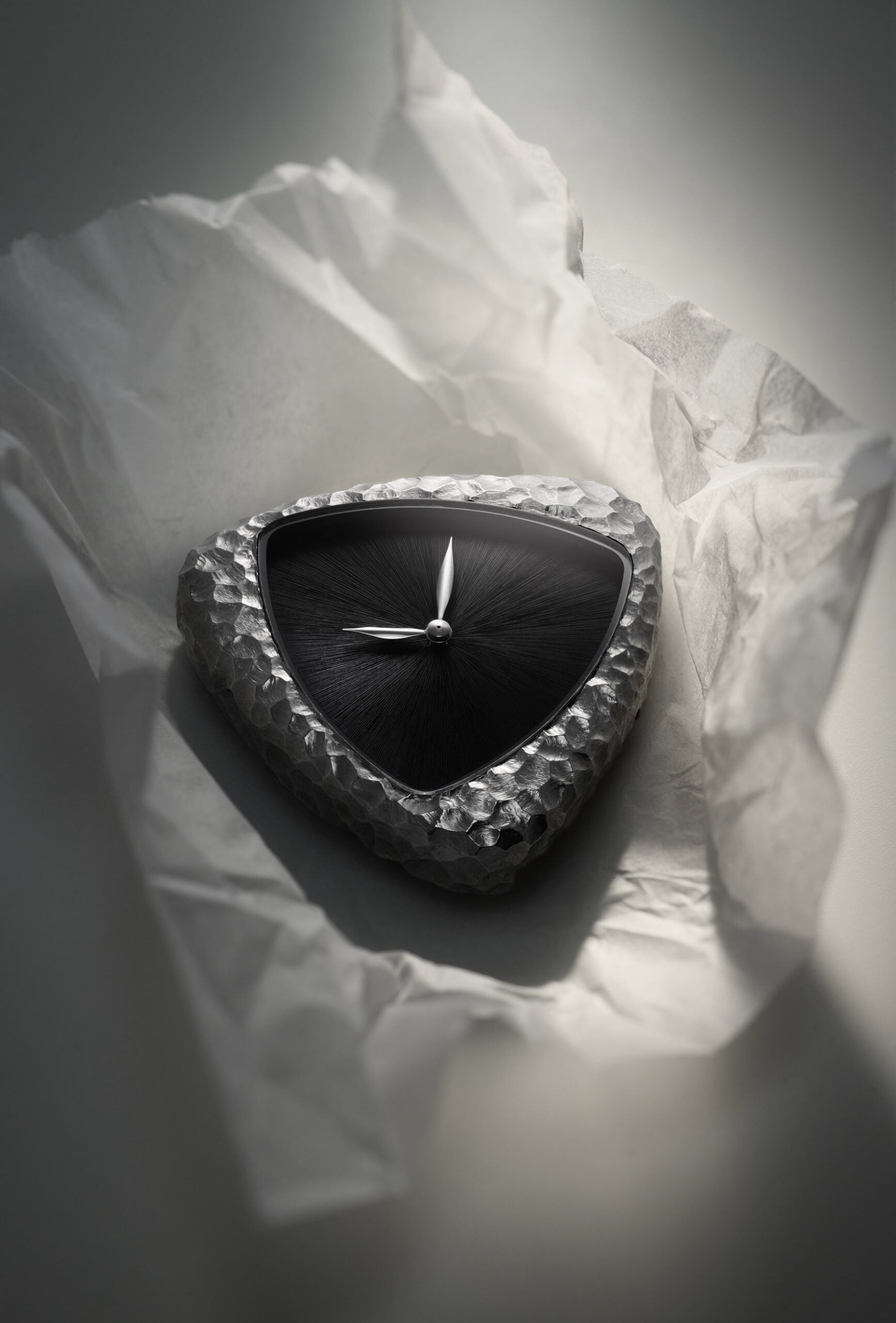
But that’s not all. After that, Matteo also asked if Brunel could use his engraving skills on the brass dial. There, he wanted a hand-cut sunburst pattern to contrast the case’s more aggressive texture. So, yes, the texture, featuring 600 hand-cut lines, is much less raw than on the case’s exterior, but it’s still a very labor-intensive process, of course.


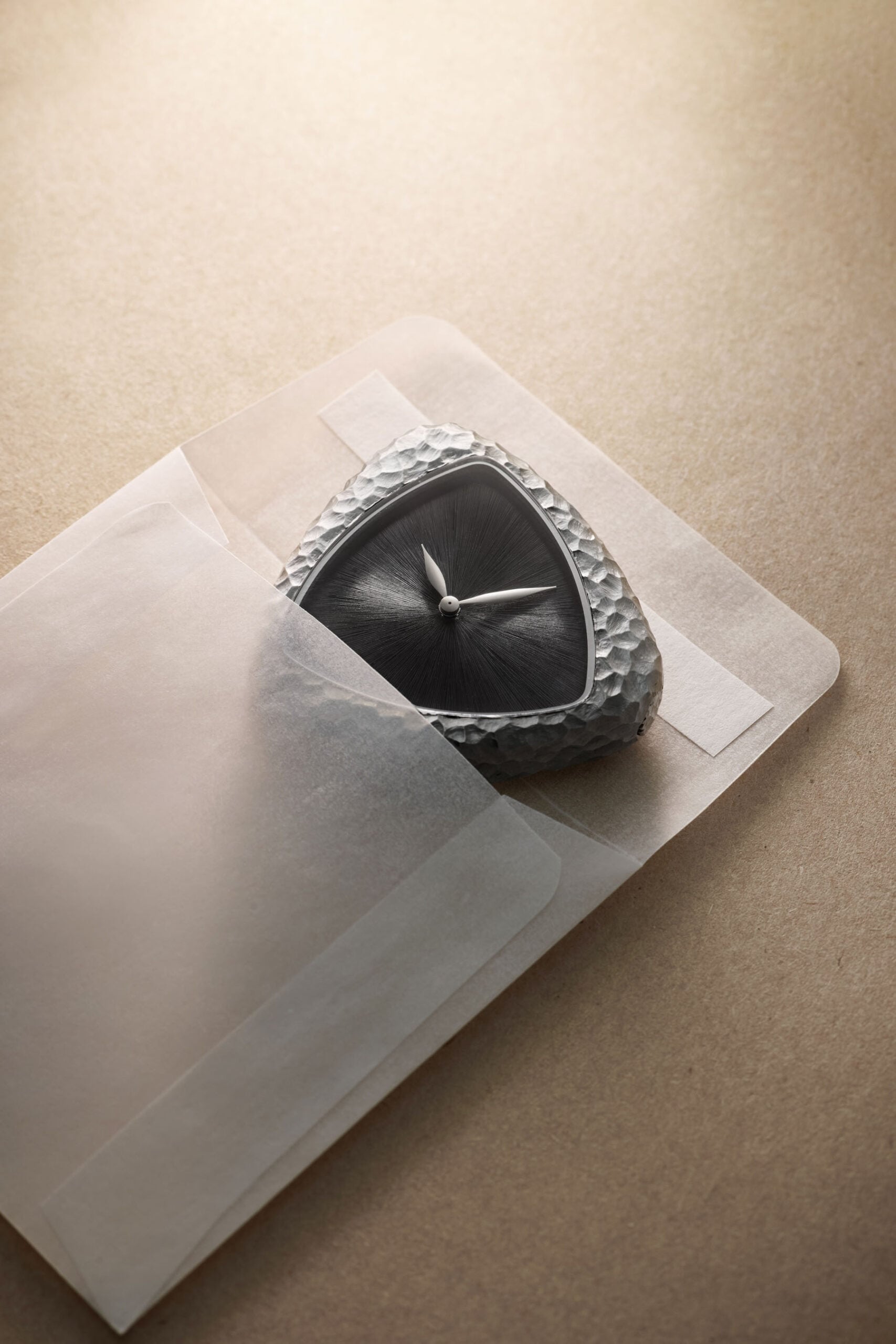
After Brunel finishes the dials, a thin layer of anthracite is added, referring to the dark stone and flint used to craft prehistoric tools. Other than that, there is no further printing on the dial, not even a logo or hour markers. This allows you to fully appreciate the hand-applied textures surrounding the signature polished and domed leaf hands.
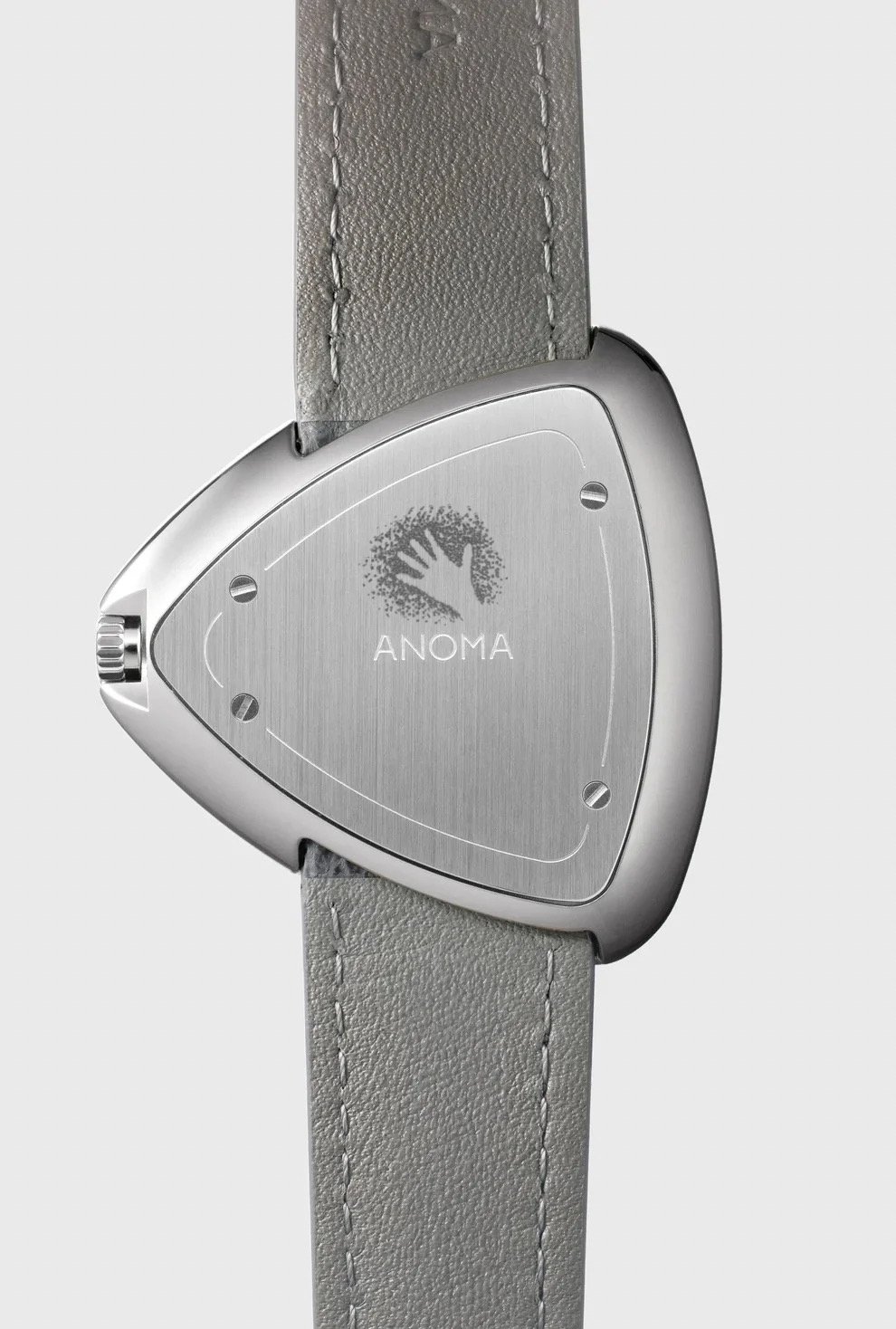
Inside the Anoma A1 Prehistoric is the tiny 17.5mm automatic Sellita SW100 movement. It runs at 28,800 vph, features 25 jewels, and has an approximately 40-hour power reserve. Usually, this movement has both a date and a central seconds hand, but neither is present on the Anoma A1. The movement sits behind a slightly curved, vertically brushed case back that attaches to the case with four screws. This helps keep the watch water resistant to 50 meters.


Every case back features a so-called “shadow hand” manually engraved by Steven Brunel. It’s a reference to one of the earliest human signatures ever recorded: people would place their hands against the wall, then throw pigment over them, leaving shadow-hand signatures.
An actual wearable timekeeping sculpture shaped by human hands
I’m not sure if you can still call the new Anoma A1 Prehistoric a watch. “A wearable timekeeping sculpture” could actually be a better term for it. Whatever you call it, though, I like it a lot. Anoma’s ambition has always been to create wearable sculptures inspired by the rich world beyond watchmaking. I think the Anoma A1 Prehistoric is the perfect example of that. I love how the case finishing looks very raw, while the hand-applied sunburst texture on the dial is a little more refined, and finally, the ultra-clean hour and minute hands turn the whole sculpture into a perfectly elegant dress watch.


The other thing I truly enjoy is how the engraved case makes the A1 look even more like a rock than the “regular” polished, pebble-like A1. Let me explain. When you look at the polished A1, it still has rather slab-like flanks. In addition, there’s a line that goes all around the case. The hand-engraved Anoma A1 Prehistoric loses those slab sides, and the line around the case almost completely disappears. Another great detail is that even the recessed crown was hand-finished by Brunel.
Not so practical, but should it be?
Sure, telling the time might be a little difficult with the asymmetric dial and the lack of printing. I can also imagine dust might collect over time right around the sapphire crystal. However, a true sculpture doesn’t always need to be practical, right? It should draw your eyes to its beautiful finishing and daring shapes. Most of all, it should leave enough room for your imagination. That’s exactly what the Anoma A1 Prehistoric does.
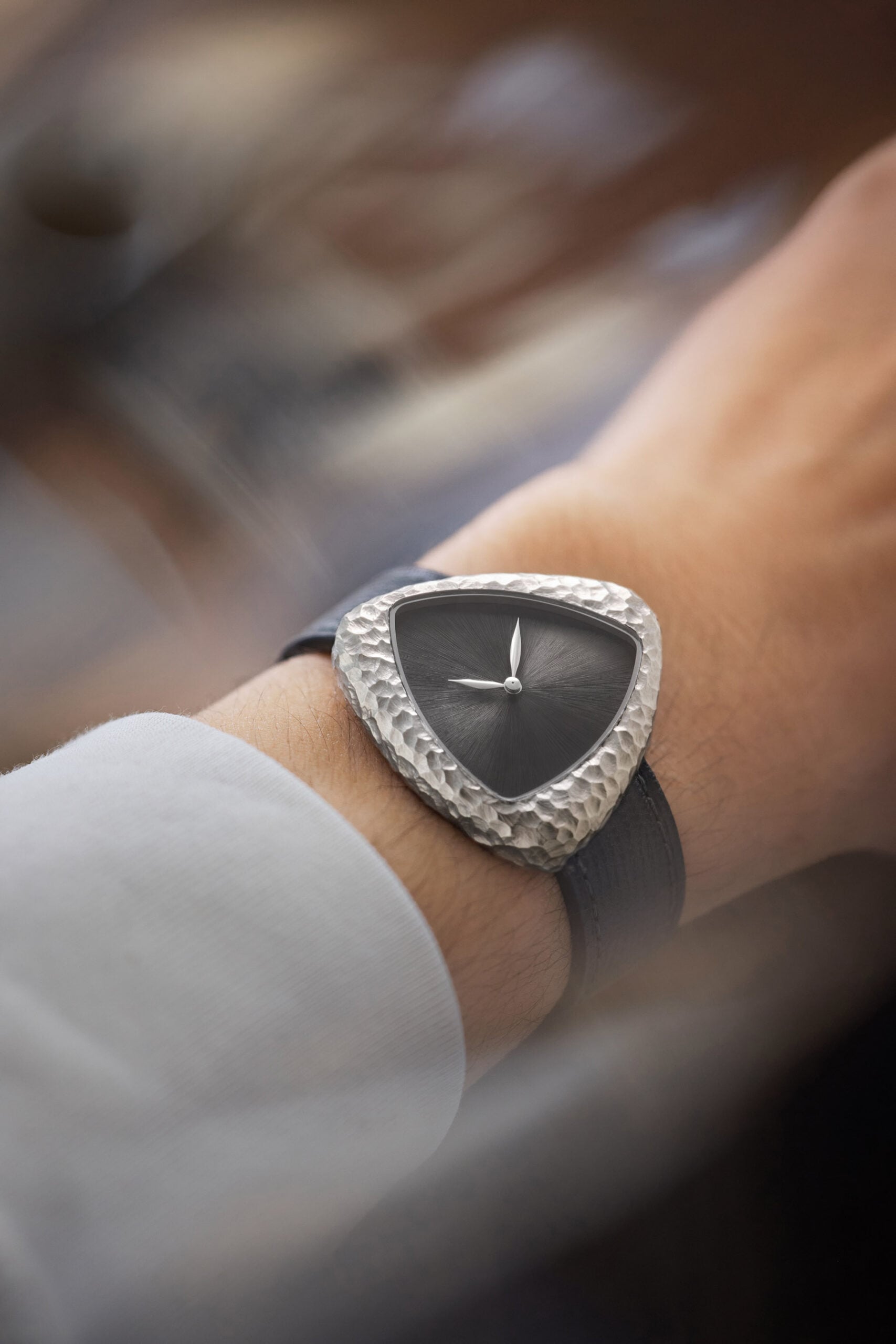
To me, for example, it doesn’t look prehistoric whatsoever. I’m actually happy there’s a non-polished A1 now. The randomly but very carefully hand-engraved case almost makes me think of a completely iced-out version. Luckily, though, it’s probably not as blingy, but it’s almost just as bold and a lot more wearable. In combination with the hand-cut dial and the clean hands, it strikes exactly the right balance between brutalism and refinement.
Available for pre-order today
The new Anoma A1 Prehistoric costs £2,900 (excluding taxes) and is limited to 100 pieces for this year. It’ll be available for pre-order today at 15:00 CEST from the brand’s official website. While it costs £700 more than an Anoma A1 from the core collection, considering the amount of manual labor involved, that seems like a reasonable price to pay.
What do you think of the hand-engraved Anoma A1 Prehistoric? Let me know in the comments below.