The Piaget Polo Signature Brings Gadroons To The Contemporary Polo Line

The new Piaget Polo Signature models introduced at Watches and Wonders 2026 bring a historically inspired design element back to the contemporary Piaget Polo line. Two sets of his-and-hers versions and three rose gold variants get the gadroon treatment, a direct visual link to the original 1979 Polo concept.
While it is perhaps a subtle update, it carries significance for the brand. Piaget is not simply adding texture; the brand is basically putting the Piaget signature into the Polo — or emphasizing it, at least. The return of the gadroons, combined with a renewed focus on matching his-and-hers sets, makes this a relevant step for Piaget.
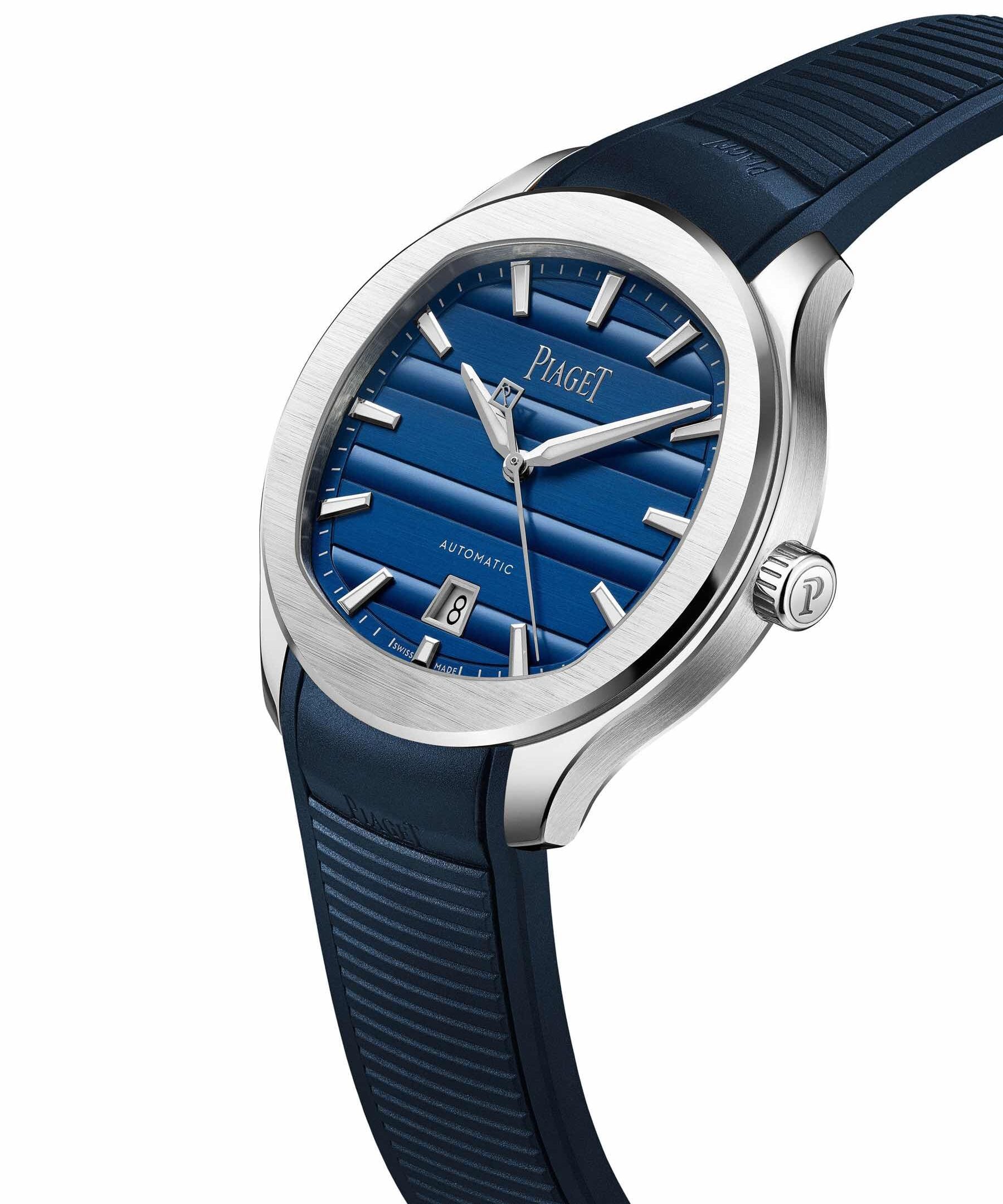
The Piaget Polo Signature gets the gadroon treatment
With this Polo Signature release, Piaget introduces gadroons to the modern Polo Date models. These horizontal embossed lines trace their origins to 1971. They are, however, perhaps most notably reminiscent of the 1979 Piaget Polo, in which they defined the entire watch. That original concept was described as a bracelet featuring a watch, not a watch featuring a bracelet. The gadroons were central to that idea, running across the case and bracelet as one continuous pattern.
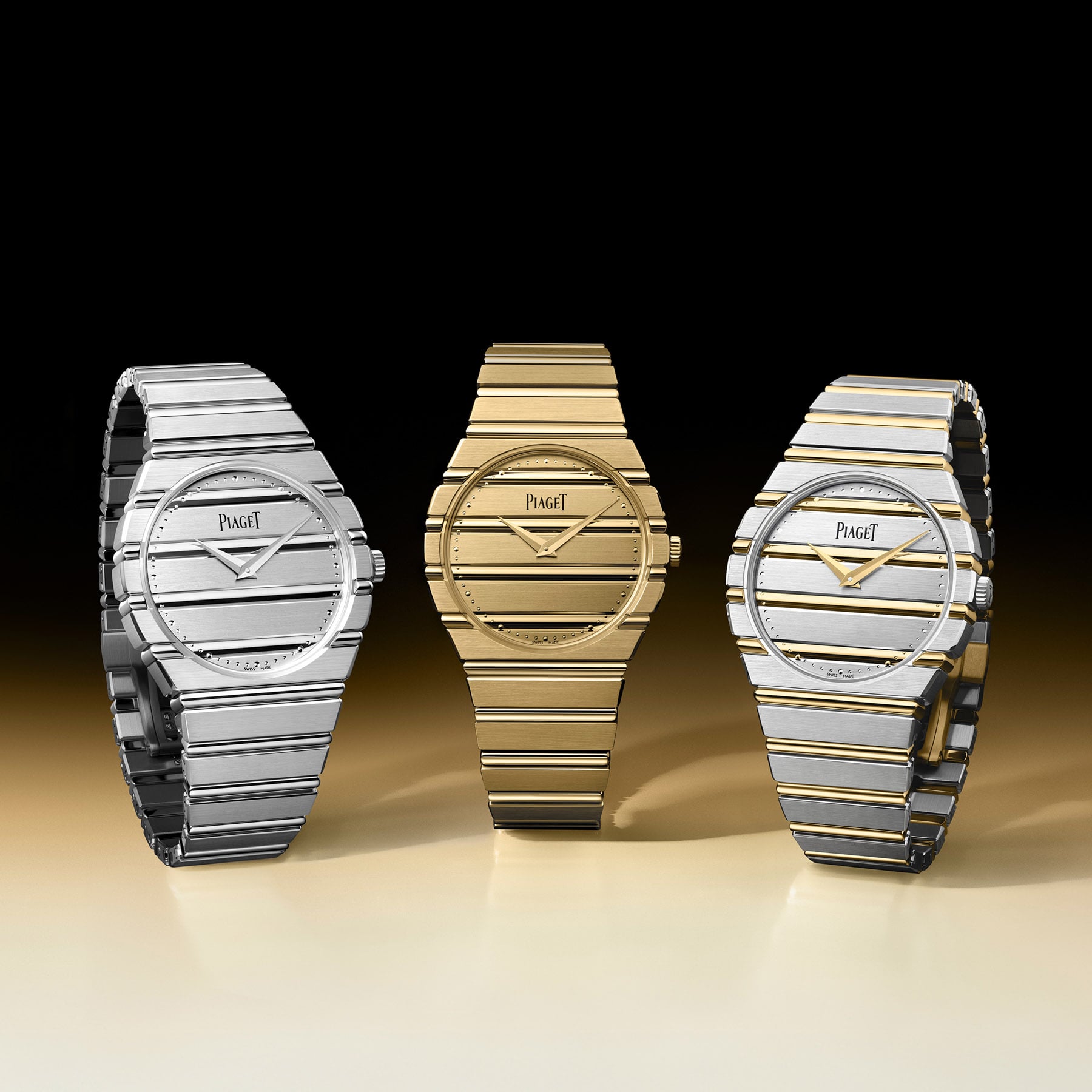
The Piaget Polo 79 with gadroons galore
For the latest releases, Piaget translates that signature into a more restrained, modern format. The gadroons now sit exclusively on the dial. The execution feels subtler than on some of the brand’s vintage watches or the current Polo 79. If it looks familiar, though, that could be because Piaget did this before in a 150th-anniversary limited edition from 2024.

This Piaget Polo Signature also highlights the case architecture. The round case with its cushion-shaped dial opening becomes more pronounced against the horizontal dial striping. It adds mild visual tension without breaking the aesthetic cohesion. Compared to earlier flat dials, this feels “more Piaget.”
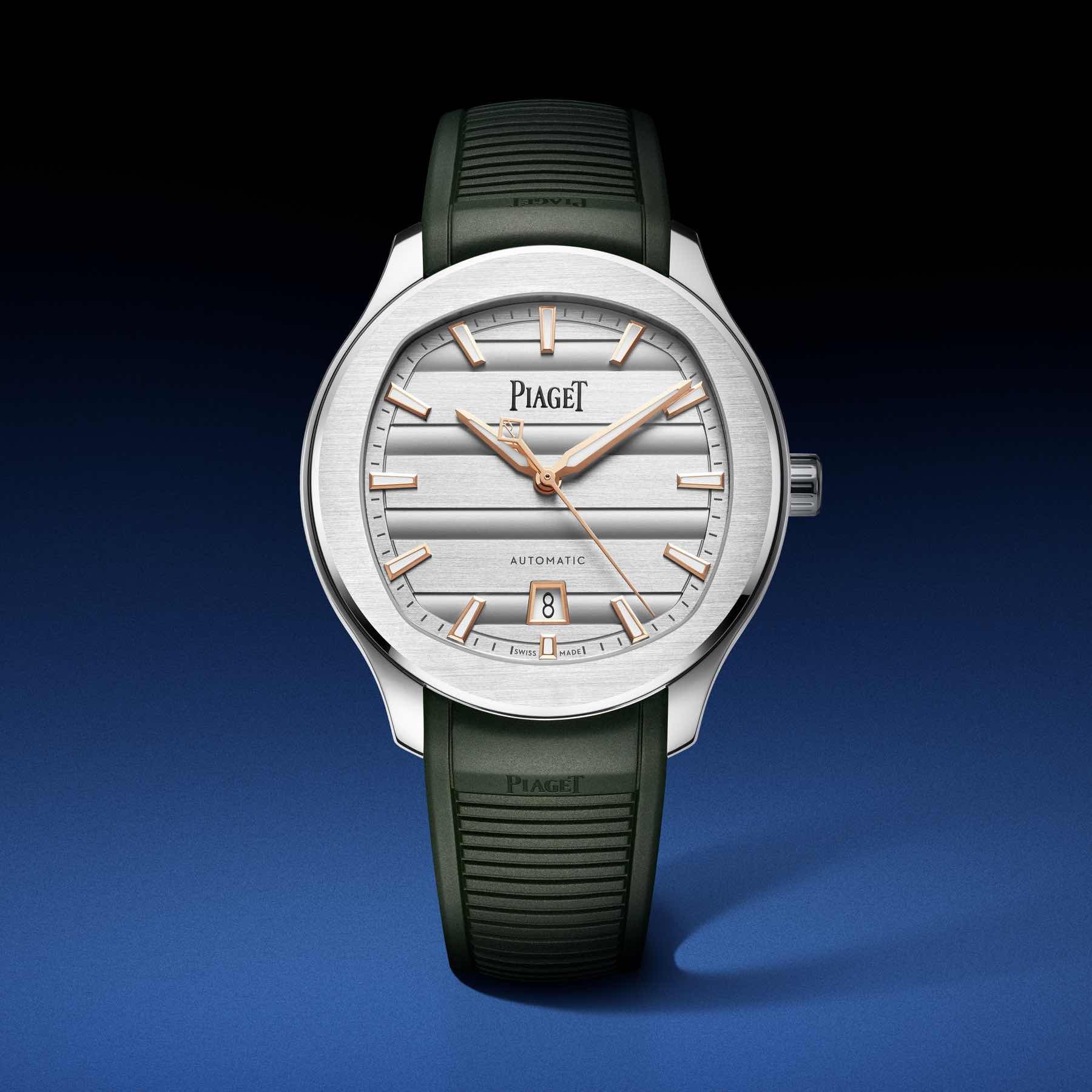
Piaget Polo Signature Date men’s models
Piaget, rather against the trend, clearly defines his-and-hers sets. The men’s Piaget Polo Signature watches each have a 42mm stainless steel case with a 9.4mm thickness and a 100m water resistance rating. Both the blue- and silver-dial versions follow the familiar case design, with a mix of brushed and polished surfaces. The blue model is available on a rubber strap for €13,700 / US$14,000 / £11,400 or on a steel bracelet for €15,800 / US$17,200 / £13,200. The silver version comes exclusively on a rubber strap for €13,700 / US$14,000 / £11,400.
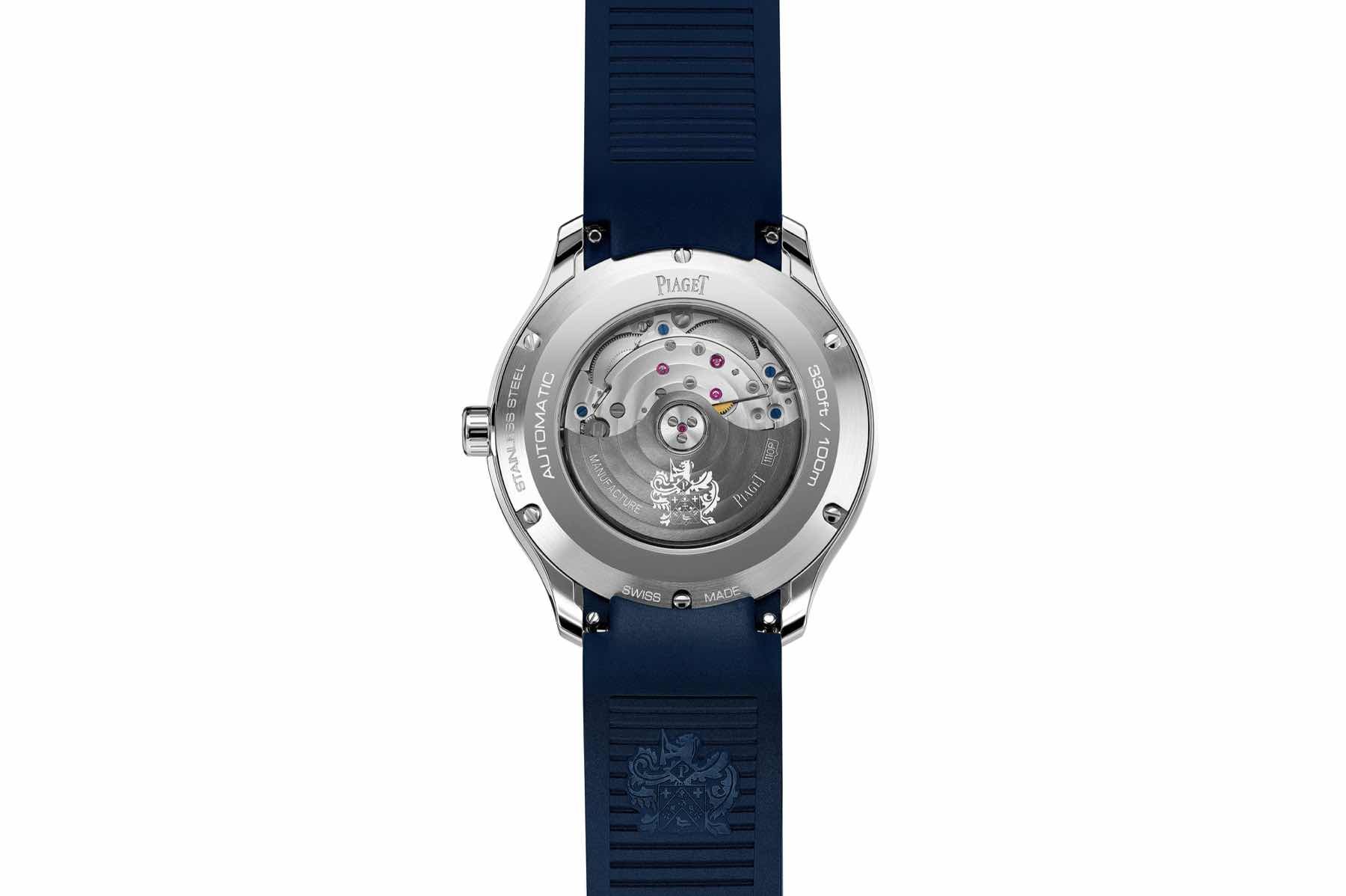
Inside ticks the ValFleurier-based automatic caliber 1110P. This movement operates at 4 Hz and offers a power reserve of approximately 50 hours. It is finished to Piaget’s usual standards, with circular Côtes de Genève, blued screws, and a slate-gray rotor. The movement remains relatively slim, which helps keep overall case thickness under control.
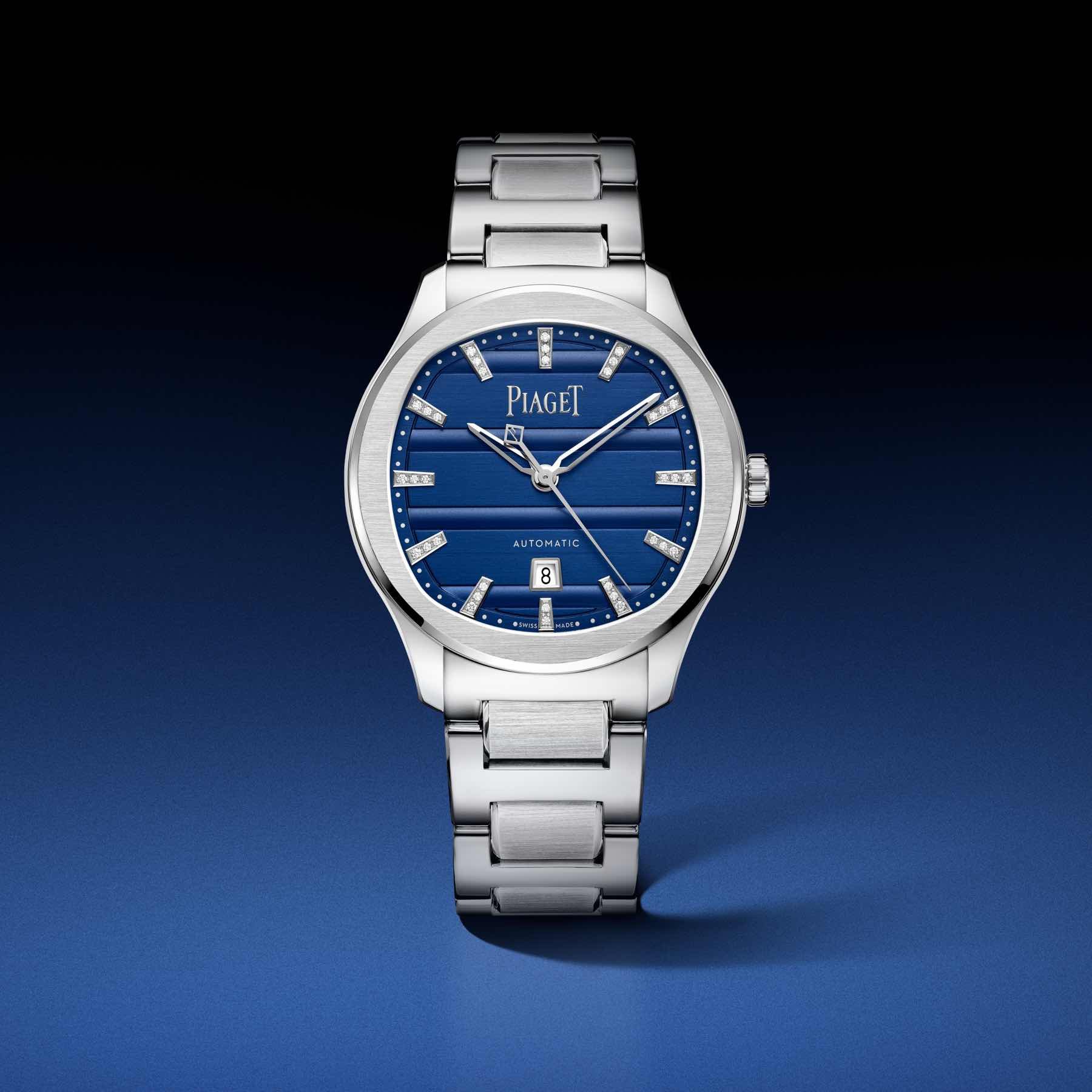
The dial defines the character of this Piaget Polo Signature. It features matte-finished gadroons over a horizontally brushed base, which should create some dynamic behavior. The silver dial uses rose gold accents for some added warmth. Both dials feature applied hour markers, Super-LumiNova on hands and indexes, and a date window at 6 o’clock that integrates cleanly into the horizontal layout.
Piaget Polo Signature Date women’s models
The women’s Piaget Polo Signature variants feature a 36mm stainless steel case with an 8.8mm profile and 50m water resistance. A blue-dial version with diamond-set indexes is delivered on a stainless steel bracelet and priced at €16,900 / US$17,200 / £14,000. The silver-dial variant comes on a beige rubber strap and costs €23,300 / US$23,700 / £19,300, reflecting the addition of 96 brilliant-cut diamonds set on the bezel. Lastly, there’s another blue-dial version with a stainless steel bracelet and diamonds on the bezel and indexes. This one retails for €25,200 / US$25,700 / £20,900.
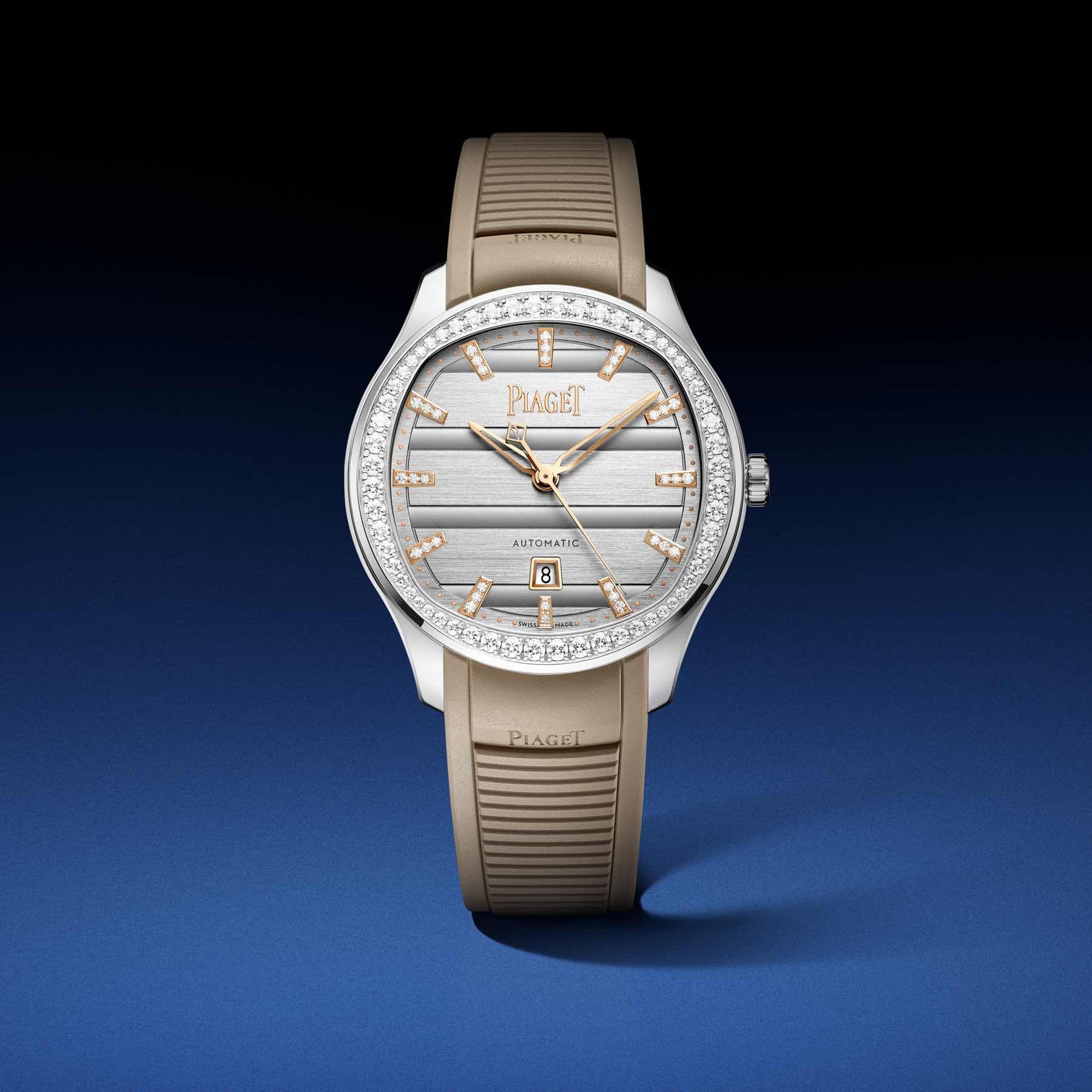
All are powered by the automatic caliber 501P. This movement runs at 3 Hz and delivers a power reserve of around 40 hours. The finishing remains consistent with the brand’s standards, visible through the case back’s sapphire display.
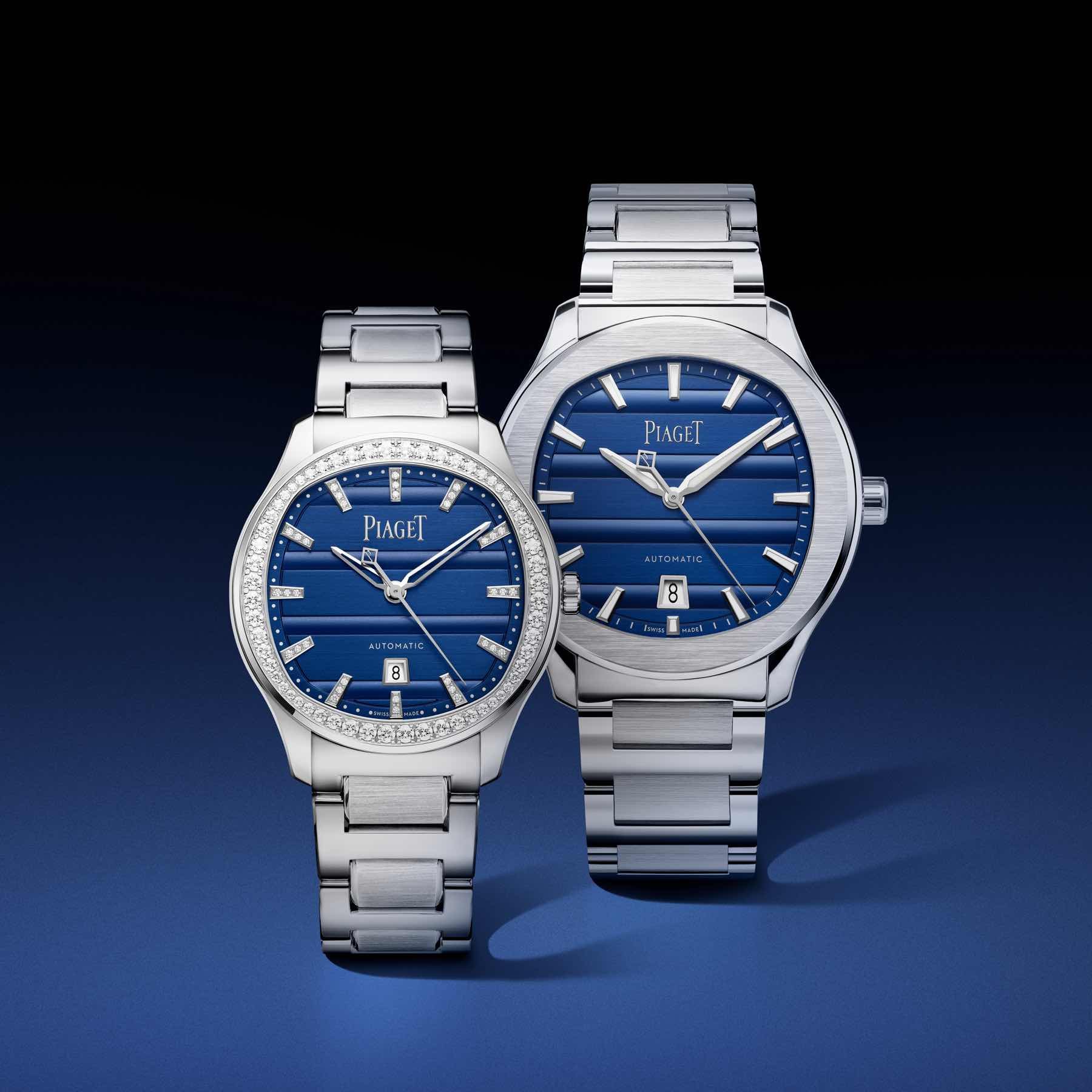
On the dial, the gadroon pattern behaves slightly differently than on the men’s models. Due to the three diamonds in each applied hour marker, the pattern takes a back seat. The overall aesthetic is busier and a bit less cohesive, if you ask me.
Closing thoughts on the new Piaget Polo models
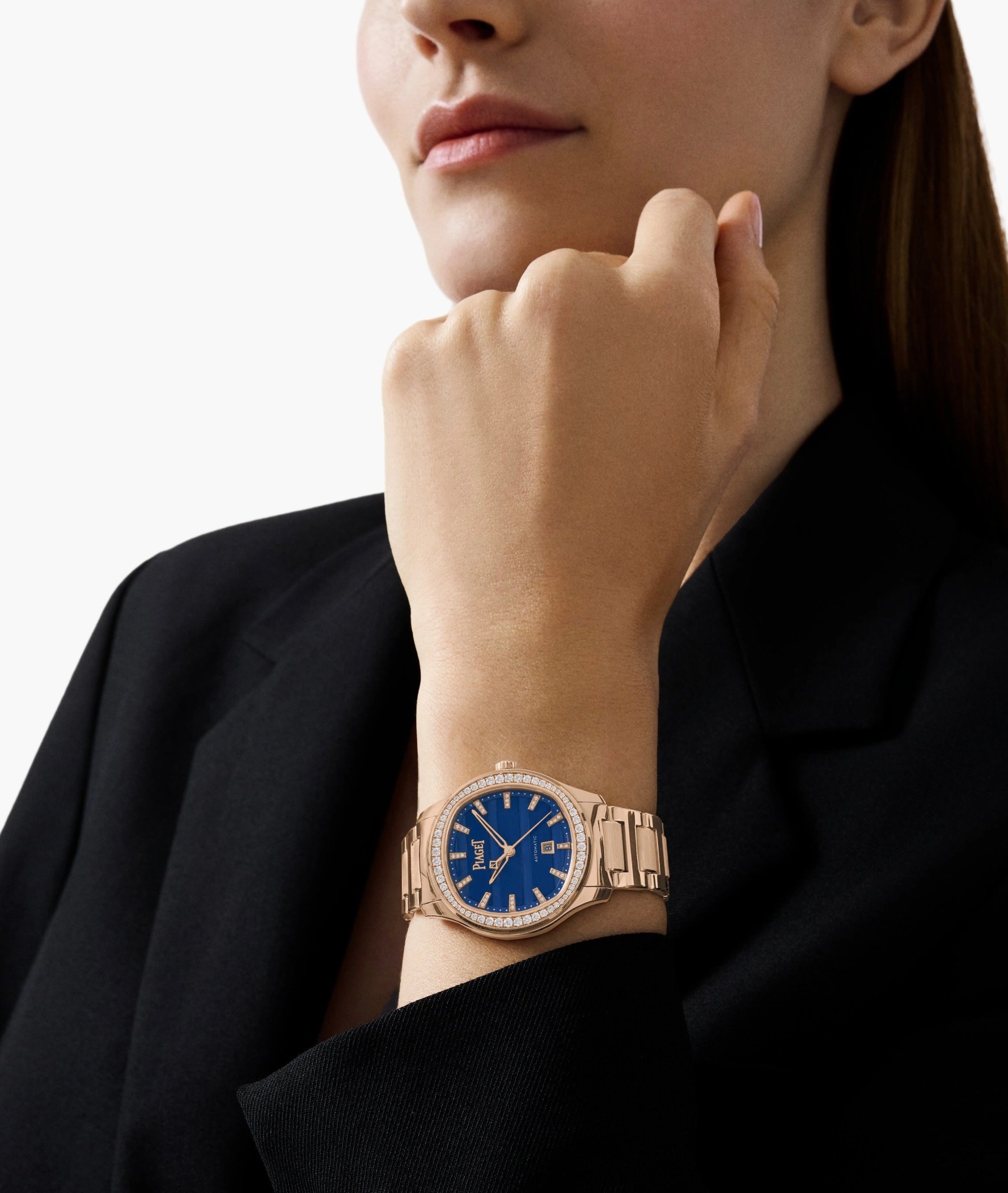
If steel is a tad too mundane for you, the blue-dial versions also come in 18K rose gold cases. For men, you can choose between a non-diamond-set bezel (€37,000 / US$37,700 / £30,700 on rubber) or a diamond-set bezel (€58,000 / US$59,900 / £48,000 on rubber). The women’s version comes with diamonds on the bezel and indexes and an 18K rose gold bracelet for €62,500 / US$64,000 / £52,000.
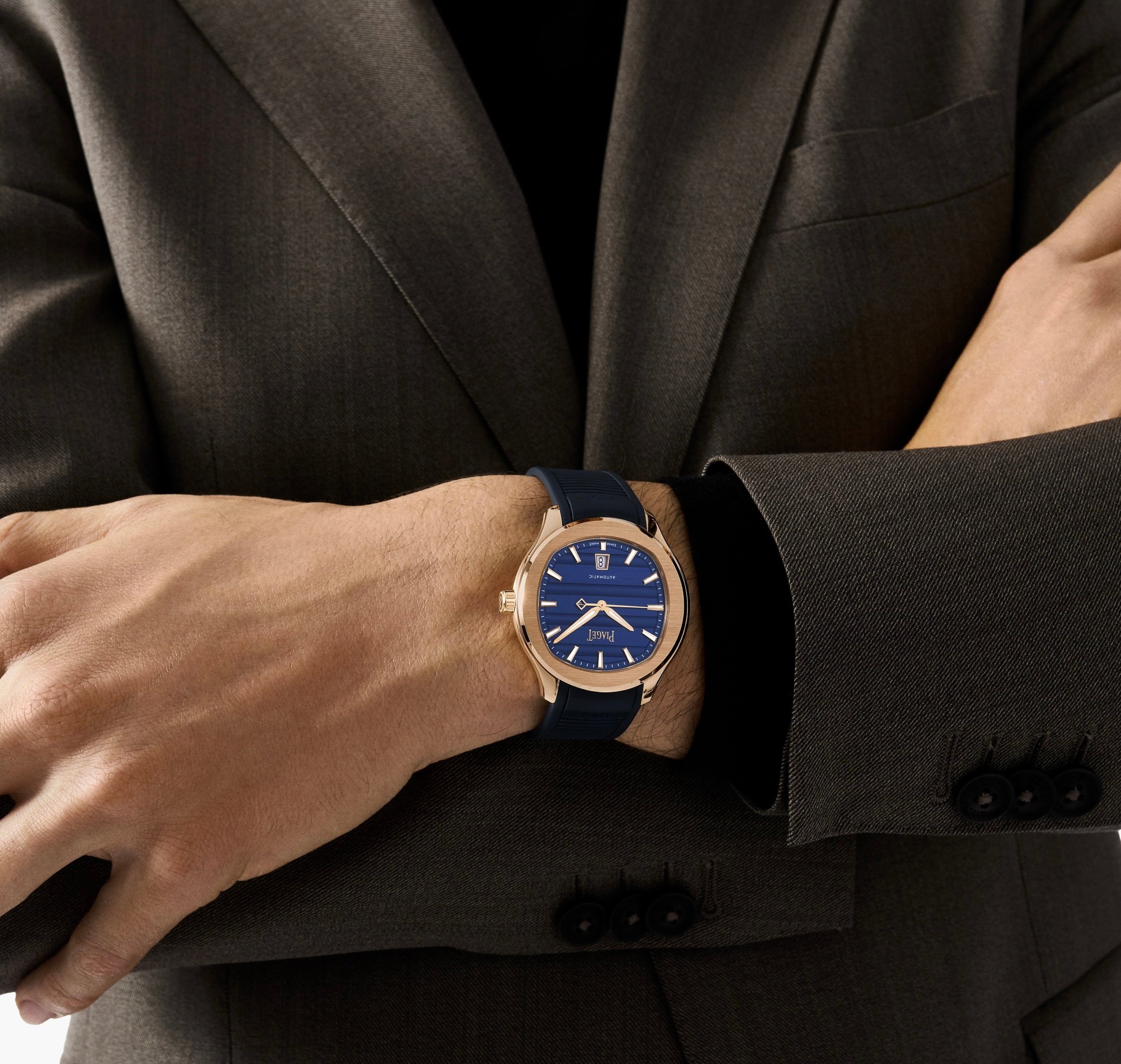
I feel the addition of a gadroon dial makes a ton of sense for the modern Piaget Polo Signature. It adds one of the brand’s characteristic design elements, bringing the watches more in line with the house’s heritage and Polo 79 models. As a design aficionado, I find that such characteristic identifying visual cues tend to resonate with me. In the case of the Piaget Polo Signature, I also feel the addition works out very well. It anchors the design a bit better than the narrow striping of previous versions.
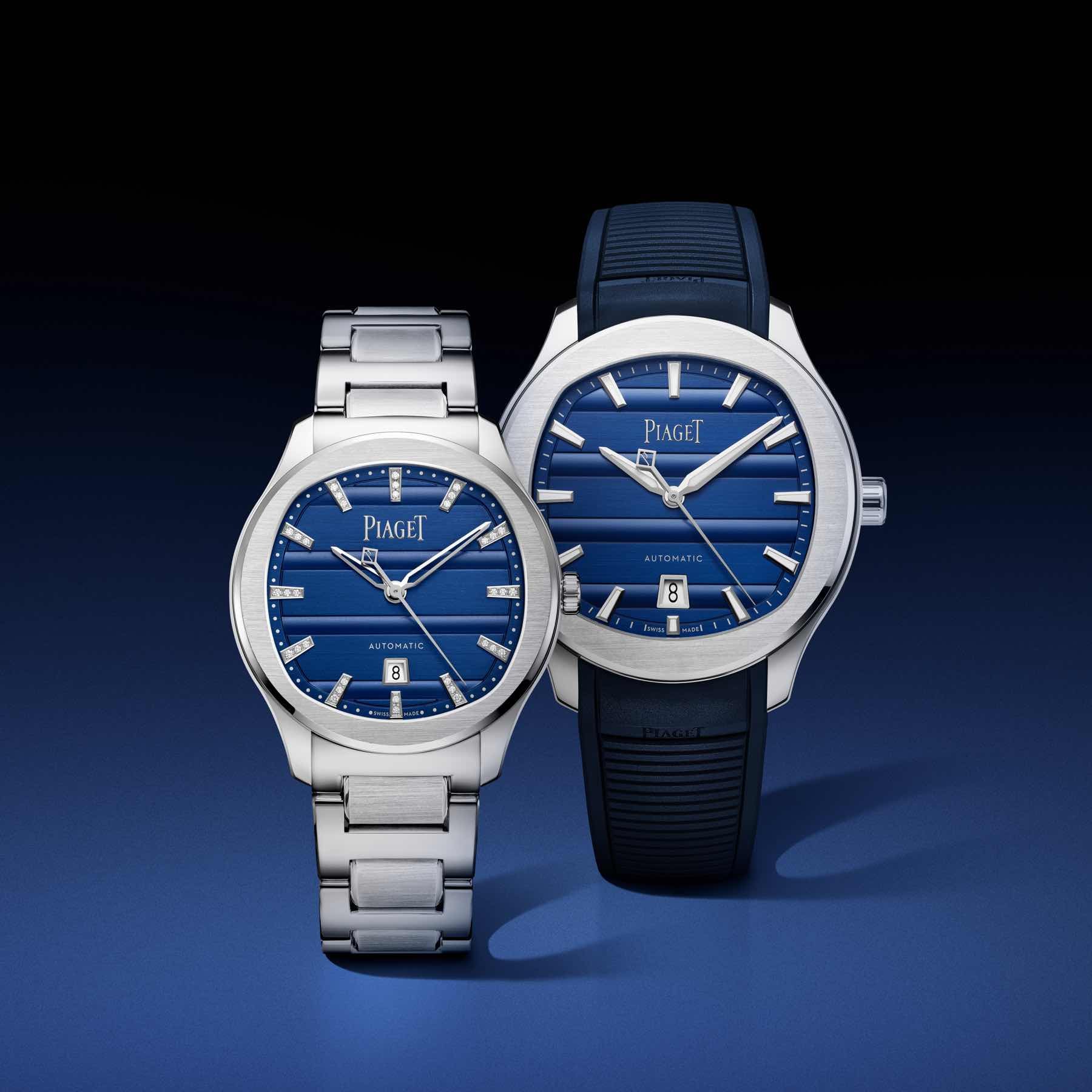
I usually make an effort to refrain from comments on sizing, as this is subjective and sensitive to trends. However, I do feel that a 42mm diameter is too large for this design. You need seriously beefy wrists to pull off the men’s Polo Signature with some elegance. That said, this latest addition to the Polo line feels well considered and befitting of Piaget.
What do you think of the new Piaget Polo Signature? Let us know in the comments section below!