The Oris ProPilot Calibre 111 Returns More Than A Decade After Its Introduction

Oris revives one of its most distinctive in-house movements with the return of the ProPilot Calibre 111. More than a decade has passed since the 2015 launch of the original Big Crown ProPilot Calibre 111, powered by a manually wound movement boasting an impressive 10-day power reserve. That watch followed the release of the Oris’s caliber 110 in 2014, which marked the brand’s return to in-house movement development after a 35-year absence.
The calibers in the series build on the same architecture, with various complications added over time. The 111 introduced a date function positioned at the unconventional 9 o’clock location. For 2026, however, Oris relocates the date aperture to a more traditional position at 6 o’clock, integrating it neatly into the lower portion of the dial.
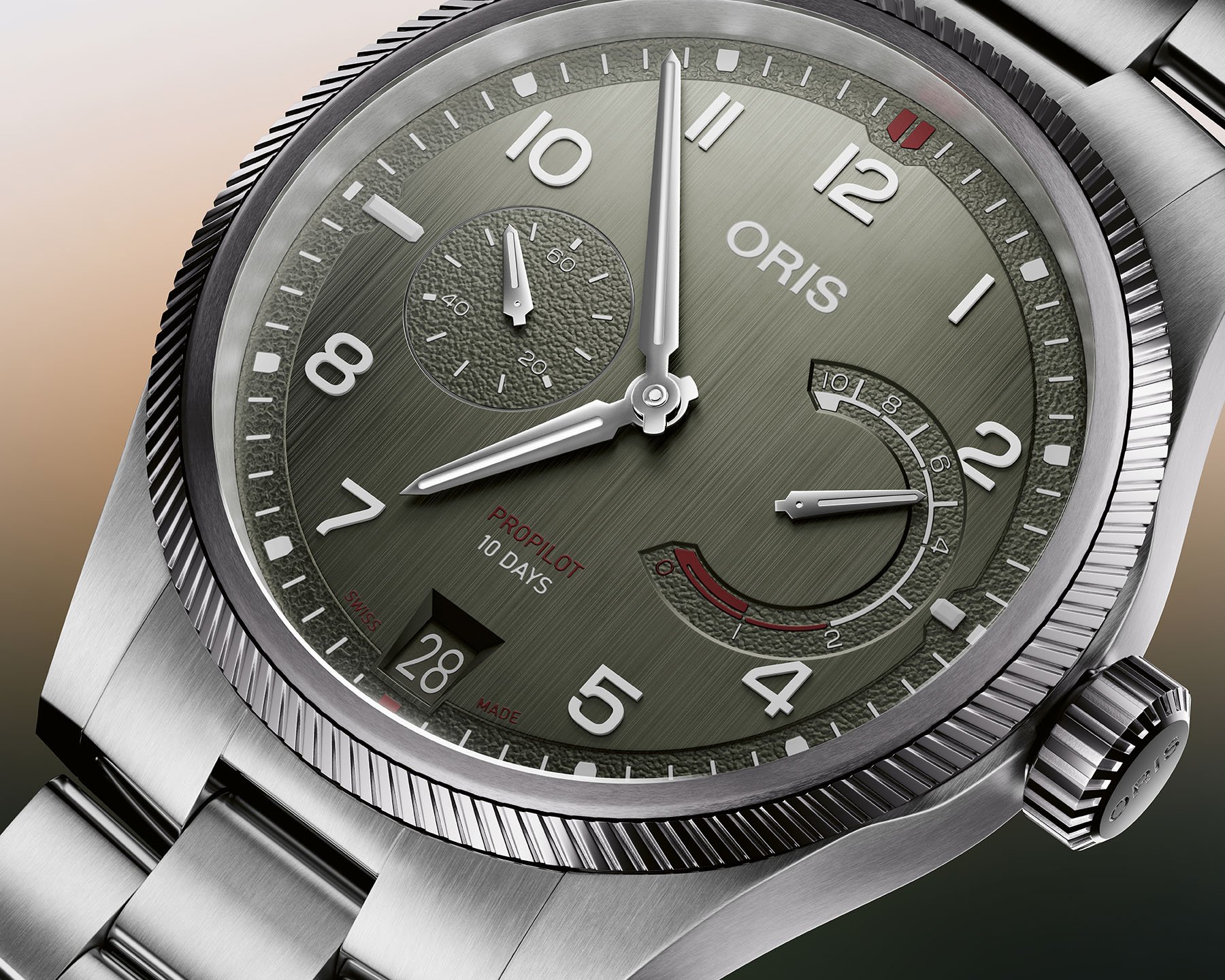
The new ProPilot Calibre 111 also continues the warmer, earthier aesthetic introduced by last year’s ProPilot Date. That shift has broadened the collection’s appeal, helping it evolve from a specialist pilot’s watch into a more versatile everyday companion. Even so, this remains a substantial piece of machinery. The original 2015 model measured 44 mm in diameter. Its successor trims that figure to 43 mm. It’s a modest reduction, certainly, but it becomes more impressive when you consider the enormous mainspring barrel required to store 240 hours of power.
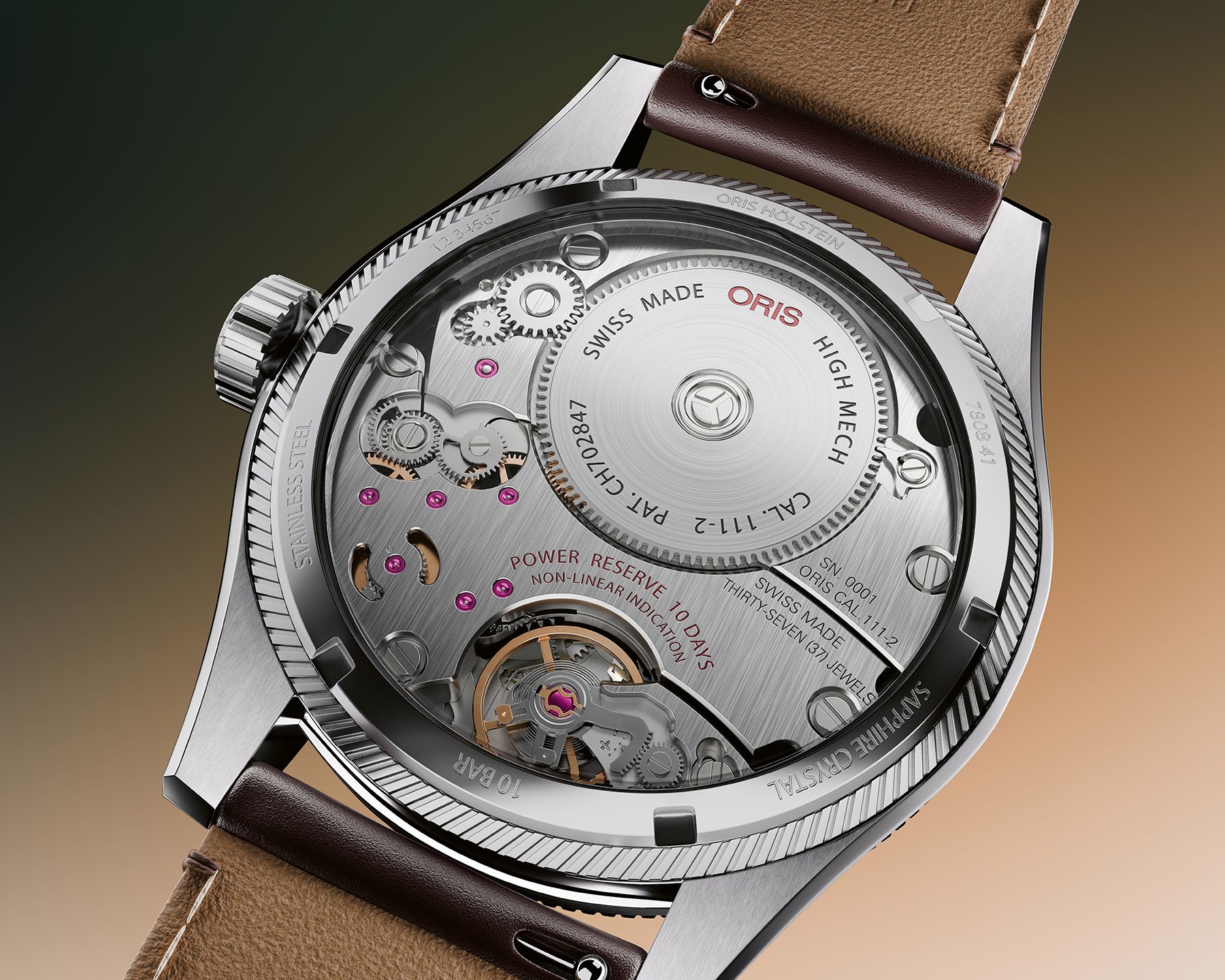
As the display case back reveals, the Oris caliber 111 fills much of the available space. Reducing the diameter further would likely compromise the proportions and structural integrity expected of a robust pilot’s watch.
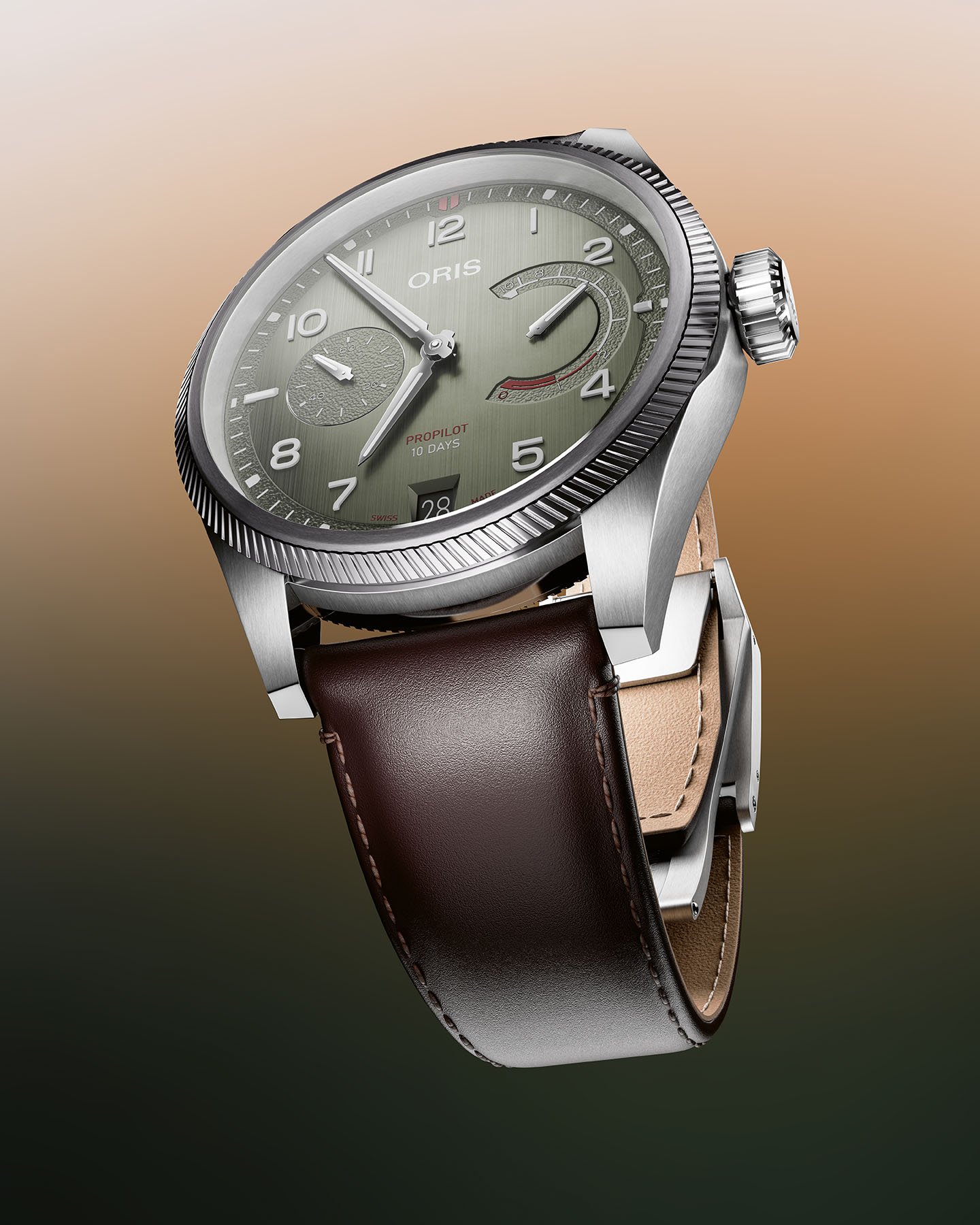
Oris ProPilot Calibre 111
The more meaningful improvement comes in the watch’s 13.2mm profile, a drop from the previous generation’s 14mm+ measurement. That may not sound dramatic on paper, but it contributes significantly to wearability. Combined with its smaller diameter, the ProPilot Calibre 111 feels better suited to daily wear than to occasional adventures.
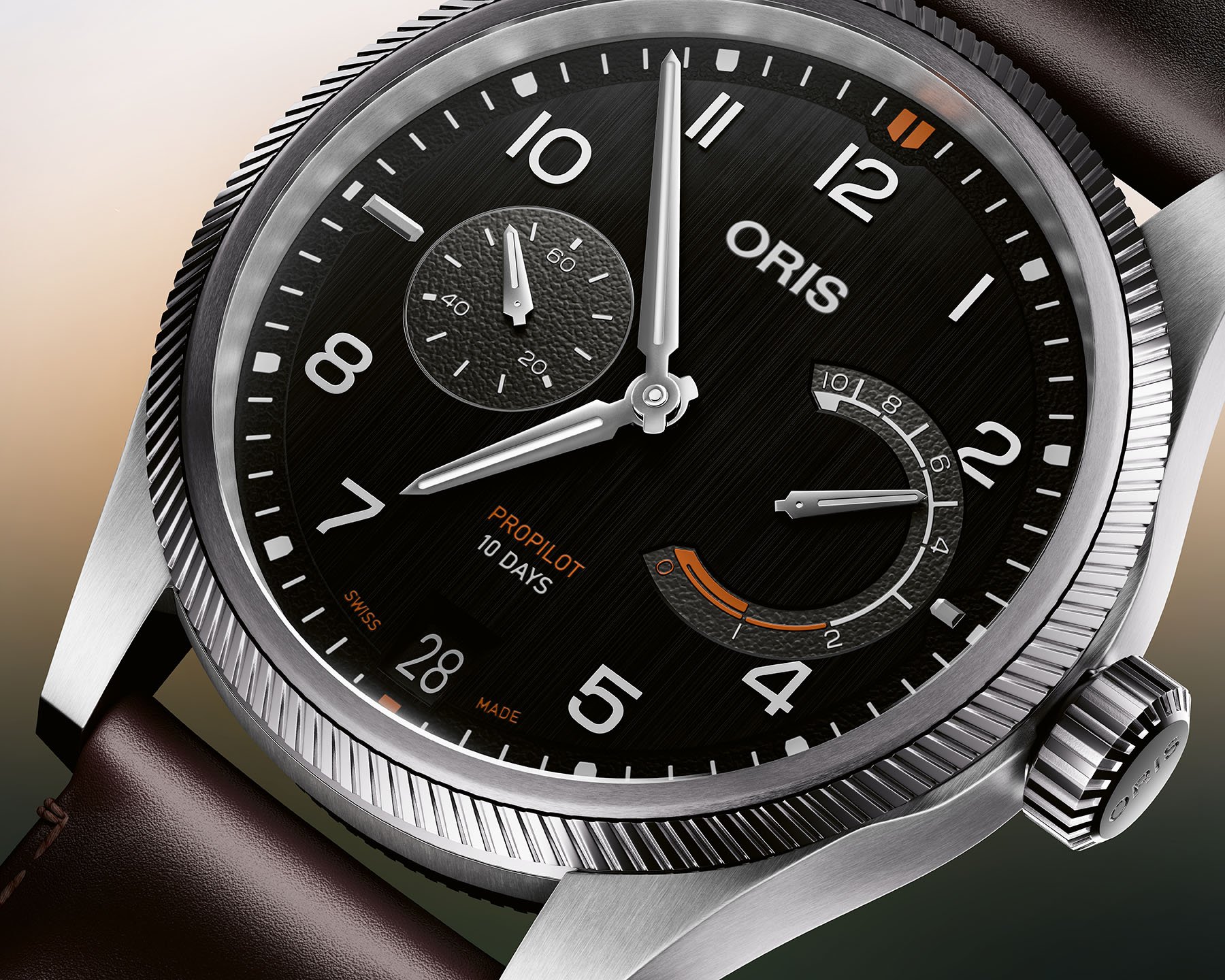
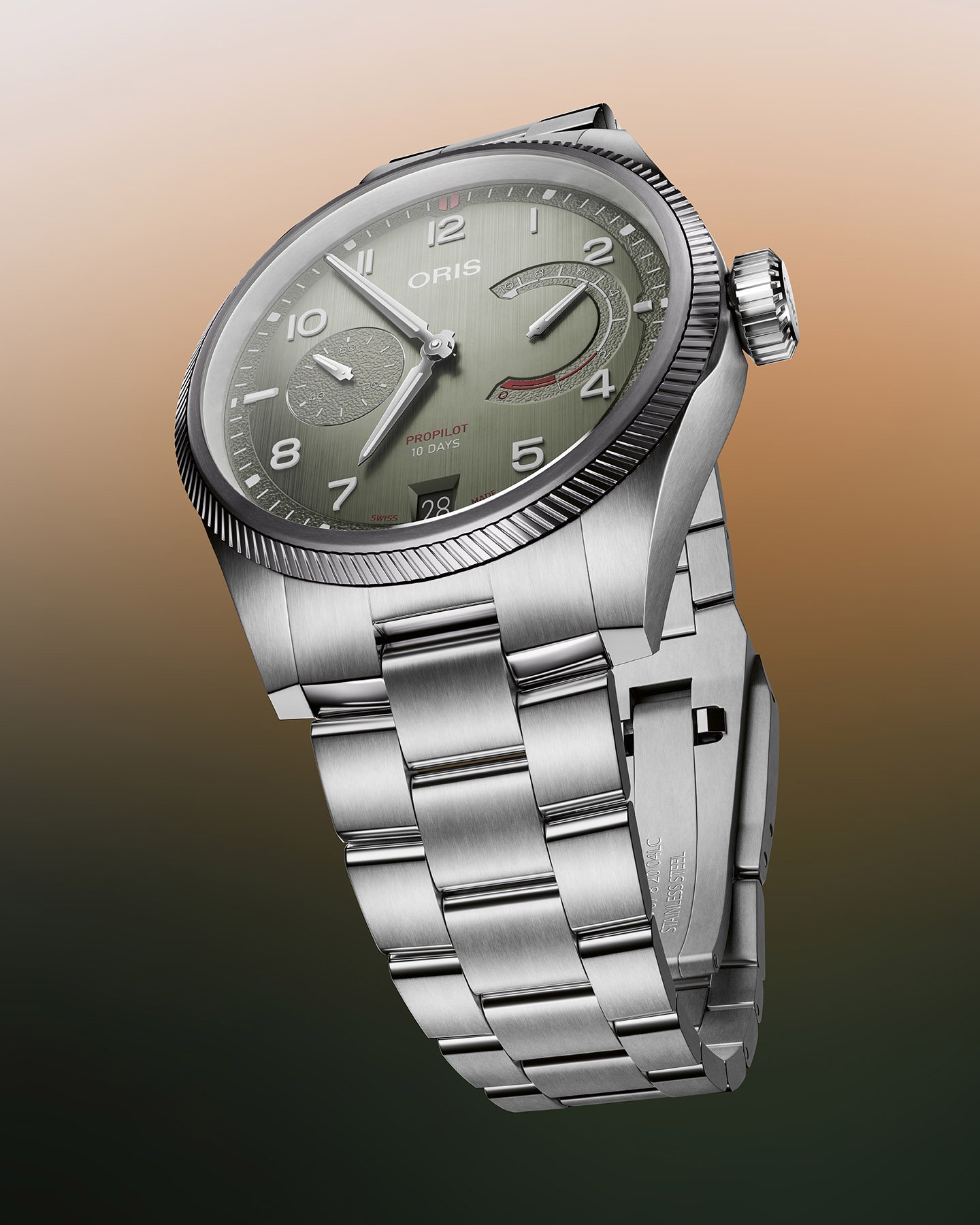
The signature fluted bezel remains, with its jet-turbine-inspired grooves providing a familiar touchpoint for the collection. The bigger story lies in the dial. While the ProPilot Date debuted a heavily textured aesthetic across its entire surface, the Calibre 111 adopts a more nuanced approach.
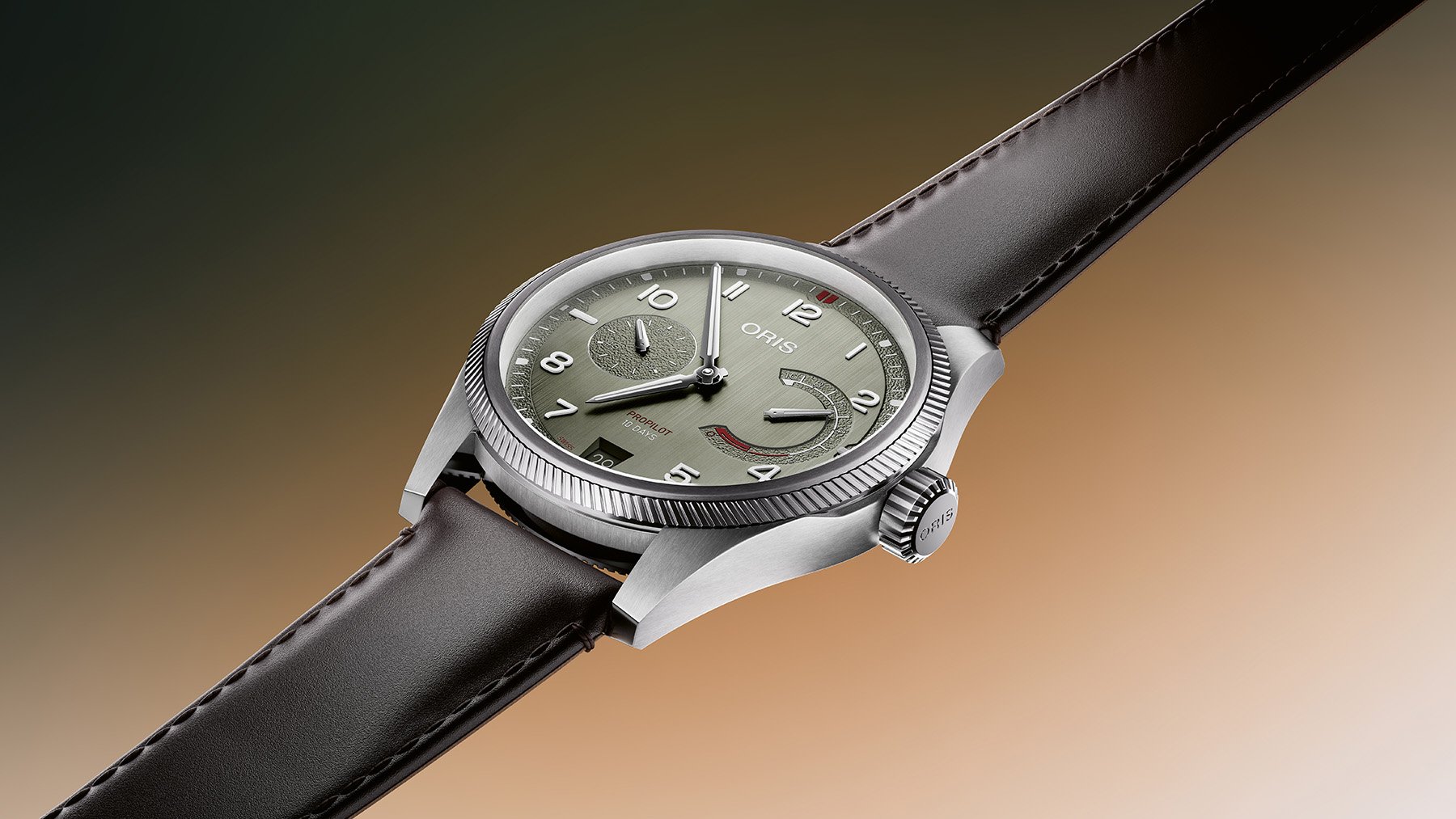
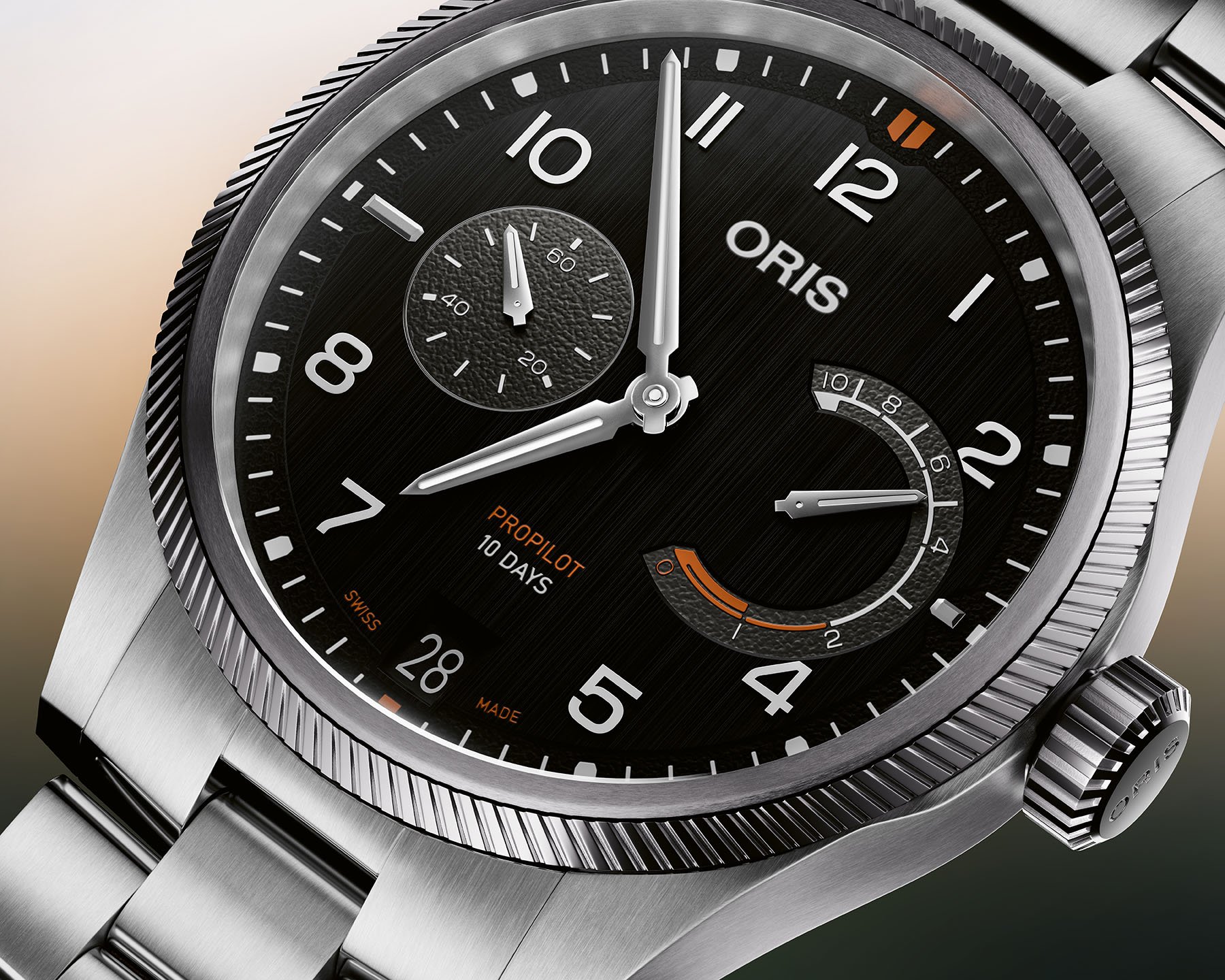
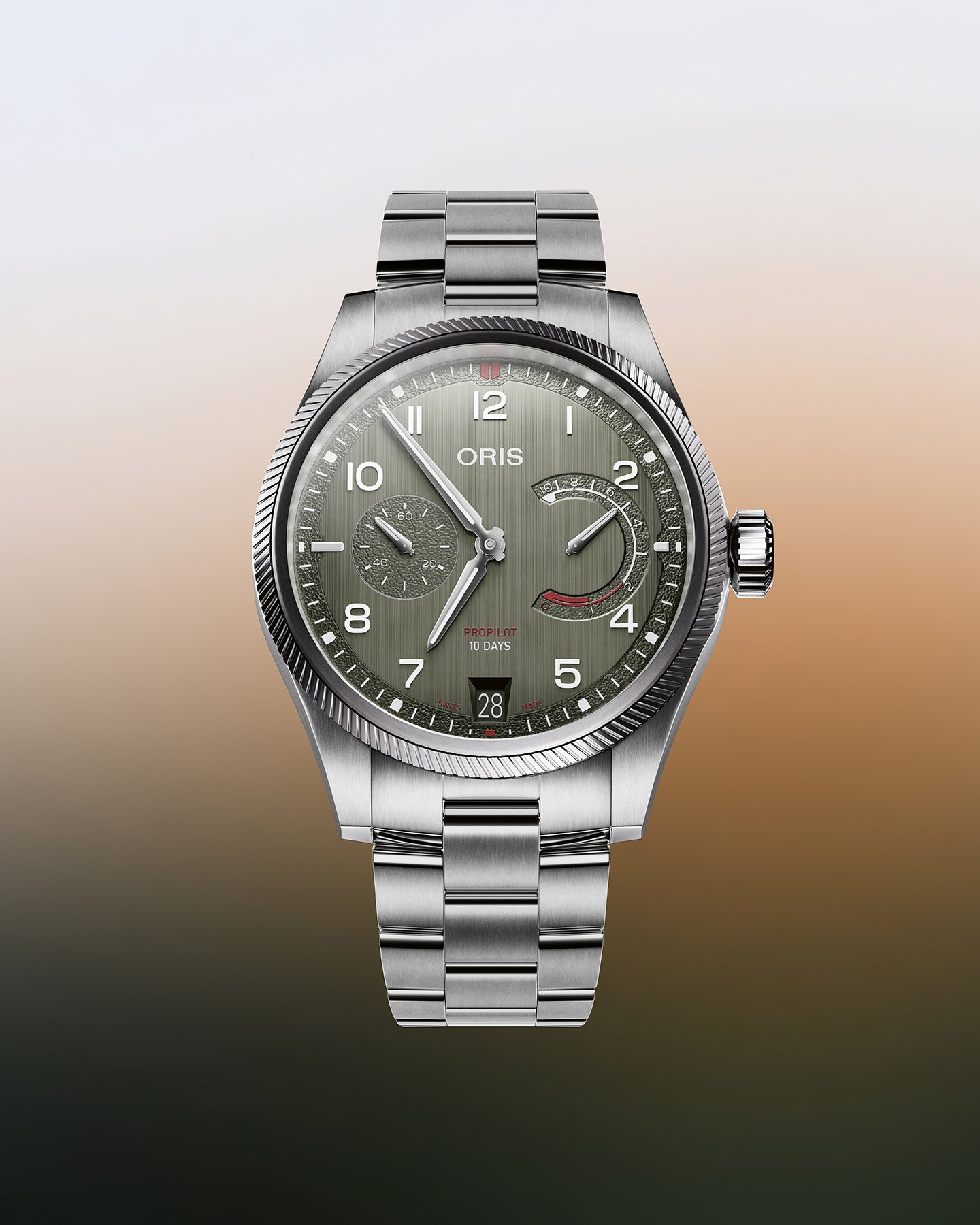
A vertically brushed dial surface provides the foundation, while grained textures highlight the various indications. The hour markers and minute track sit within a recessed outer ring rather than a stepped chapter ring. Both the small-seconds display at 9 and the non-linear power reserve indicator at 3 o’clock receive the same coarse-grained treatment. The result feels more balanced and visually interesting than the ProPilot Date’s all-over texture.
For me, this variation in finishing works far better. Different textures help separate the information while preventing the dial from feeling overly busy.
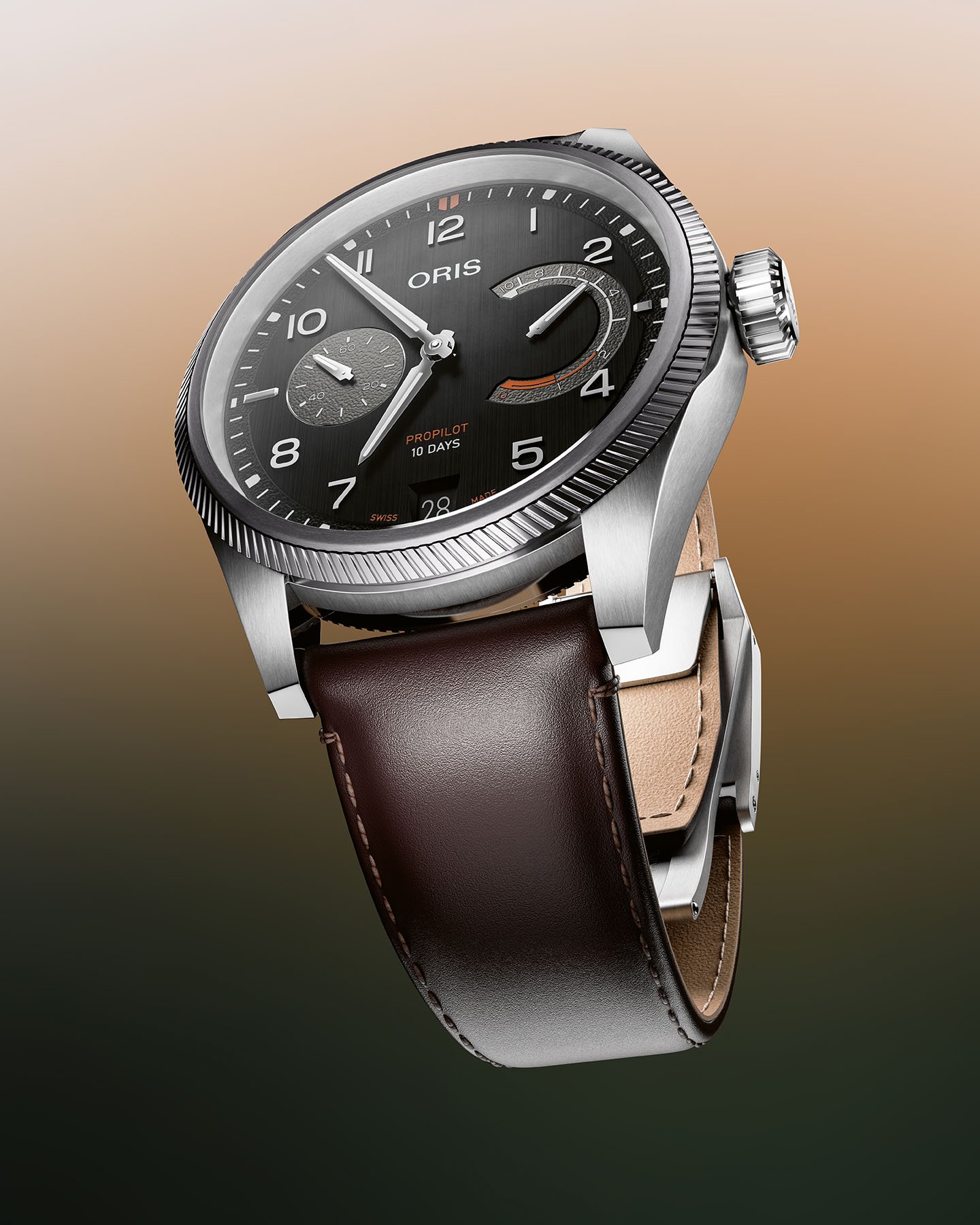
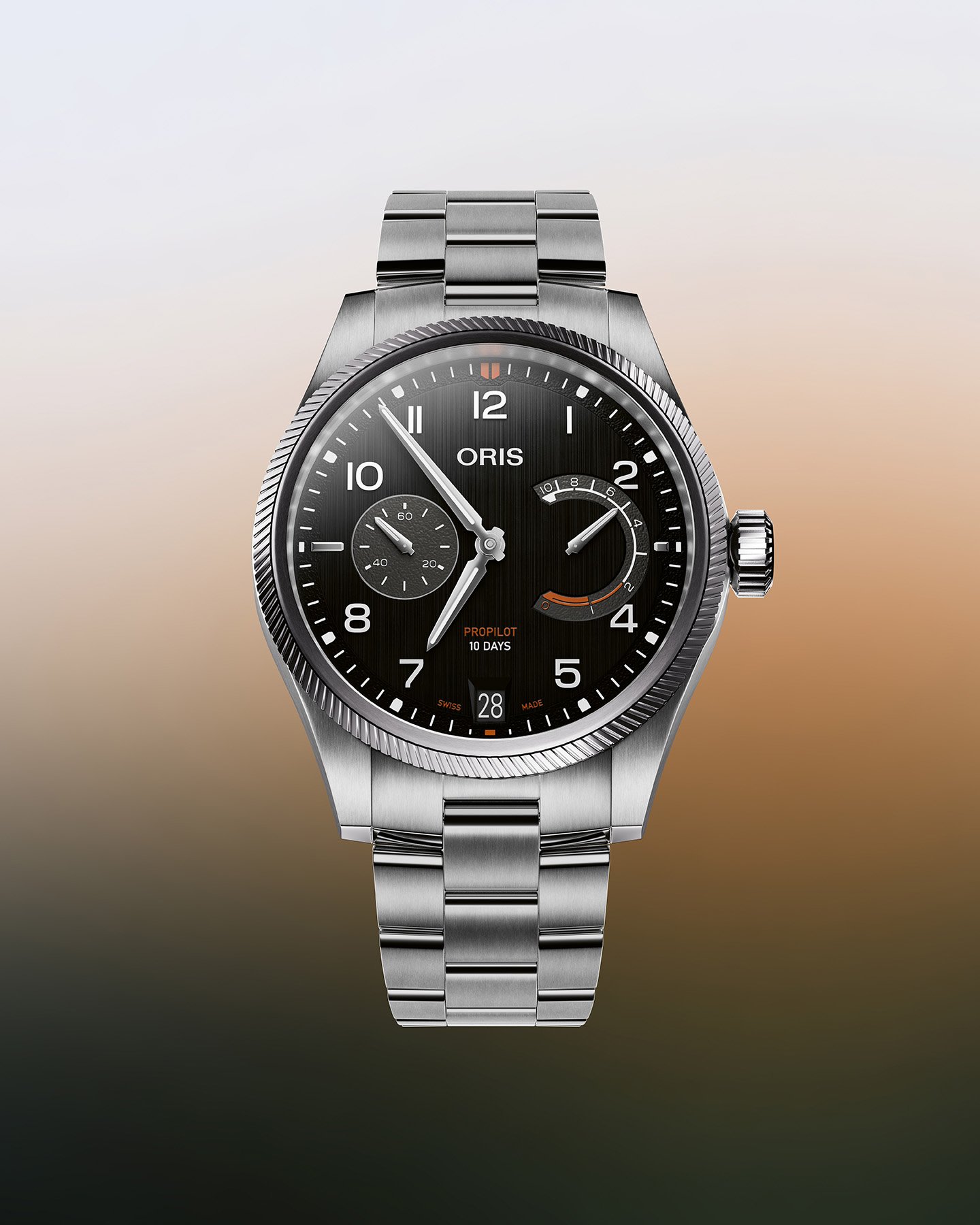
Applied Arabic numerals filled with Super-LumiNova add depth while increasing the available luminous surface area. This is a big improvement over the ProPilot Date’s brushed numerals. Both dial colors feature the same texture combination, though their accent colors differ. The pine-green version uses red highlights for the low-power warning, logos, and orientation markers at 12 and 6 o’clock, while the black dial substitutes those elements with orange details.
Straighten up and fly right
Of the two, the black dial with orange accents speaks more clearly to the ProPilot’s aviation roots. The contrast feels purposeful and highly legible. The pine-green version leans more toward grounded adventures, though its muted tone prevents it from becoming overly stylistic. Compared to the emerald green seen on the recent Artelier Calibre 113, this shade feels considerably more subdued.
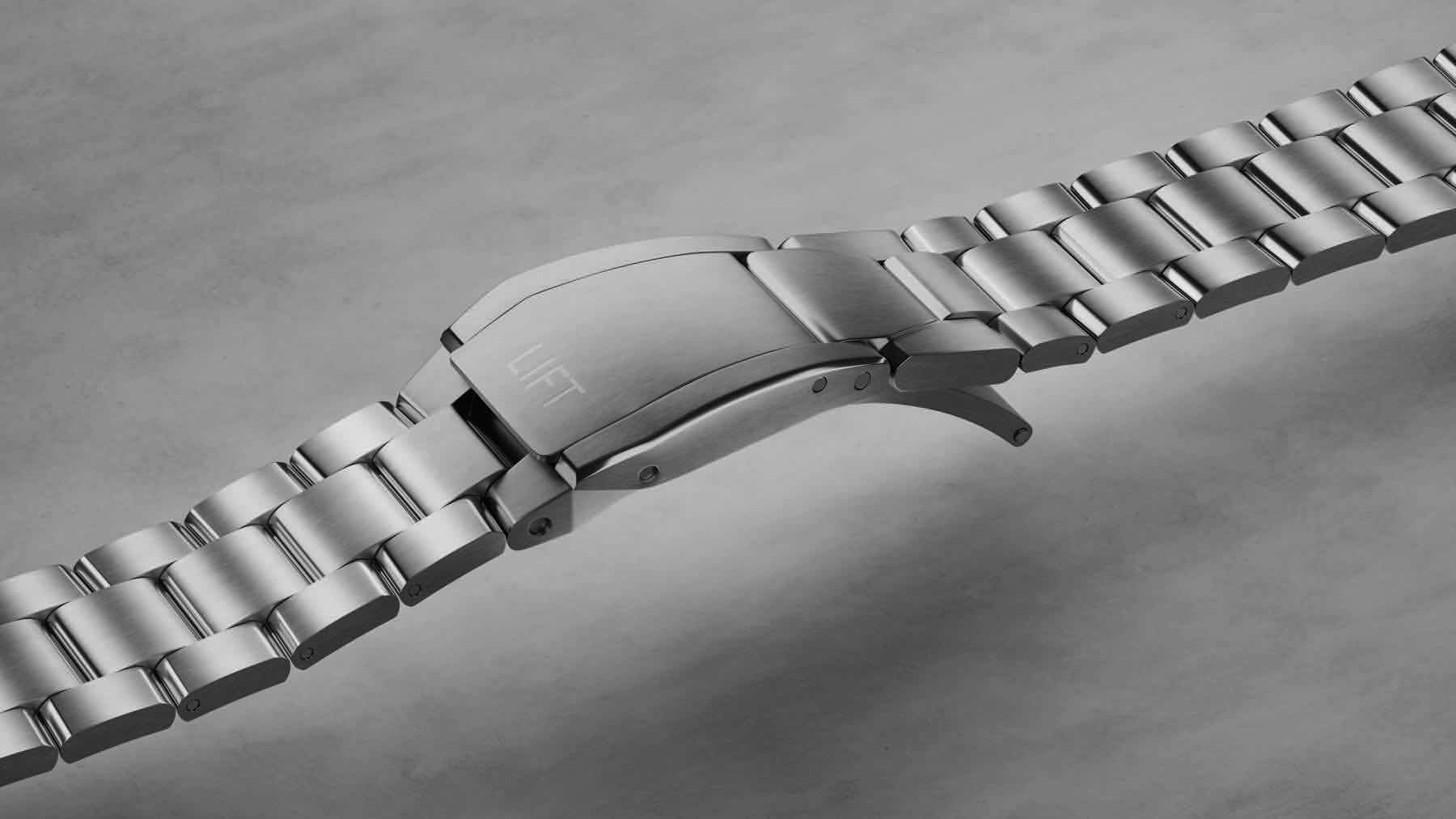
Both models are available on a dark brown Cordovan leather strap with Oris’s distinctive folding “LIFT” clasp. Alternatively, buyers can opt for the stainless steel bracelet, which also incorporates the seatbelt-inspired “LIFT” mechanism. Both options feature a built-in fine-adjustment system for increased comfort throughout the day.
One interesting specification is the 20mm lug spacing. For a 43mm watch, that sounds relatively narrow. The previous 44mm ProPilot had a 22mm lug gap, which was perhaps more proportional.
The bracelet itself prioritizes comfort with its straightforward three-row design and entirely brushed finish. The clasp received some thoughtful ergonomic refinements too. A subtle upturned lip makes it much easier to operate, allowing more space for the release mechanism to articulate.
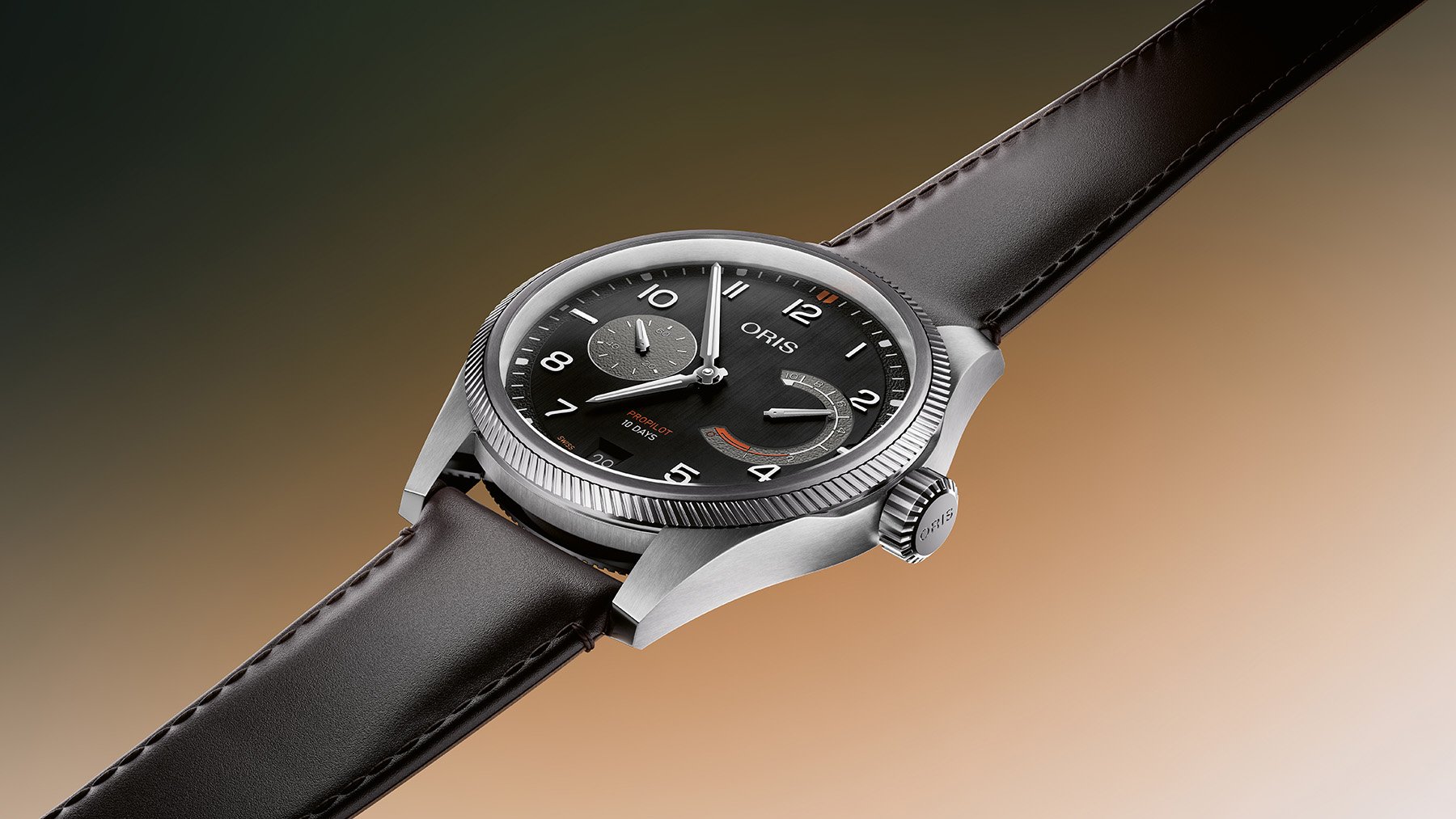
The oversized crown remains another ProPilot hallmark. Deep knurling provides excellent grip when winding the movement or setting the time. The crown also screws down, helping maintain the 100m water resistance.


Final thoughts, specs, and pricing
It’s great to see the ProPilot Calibre 111 return to the lineup. Applying many of the improvements introduced by the ProPilot Date to Oris’s flagship manually wound movement creates a far more cohesive collection. More importantly, it gives one of Oris’s most impressive calibers a case and dial worthy of its capabilities.
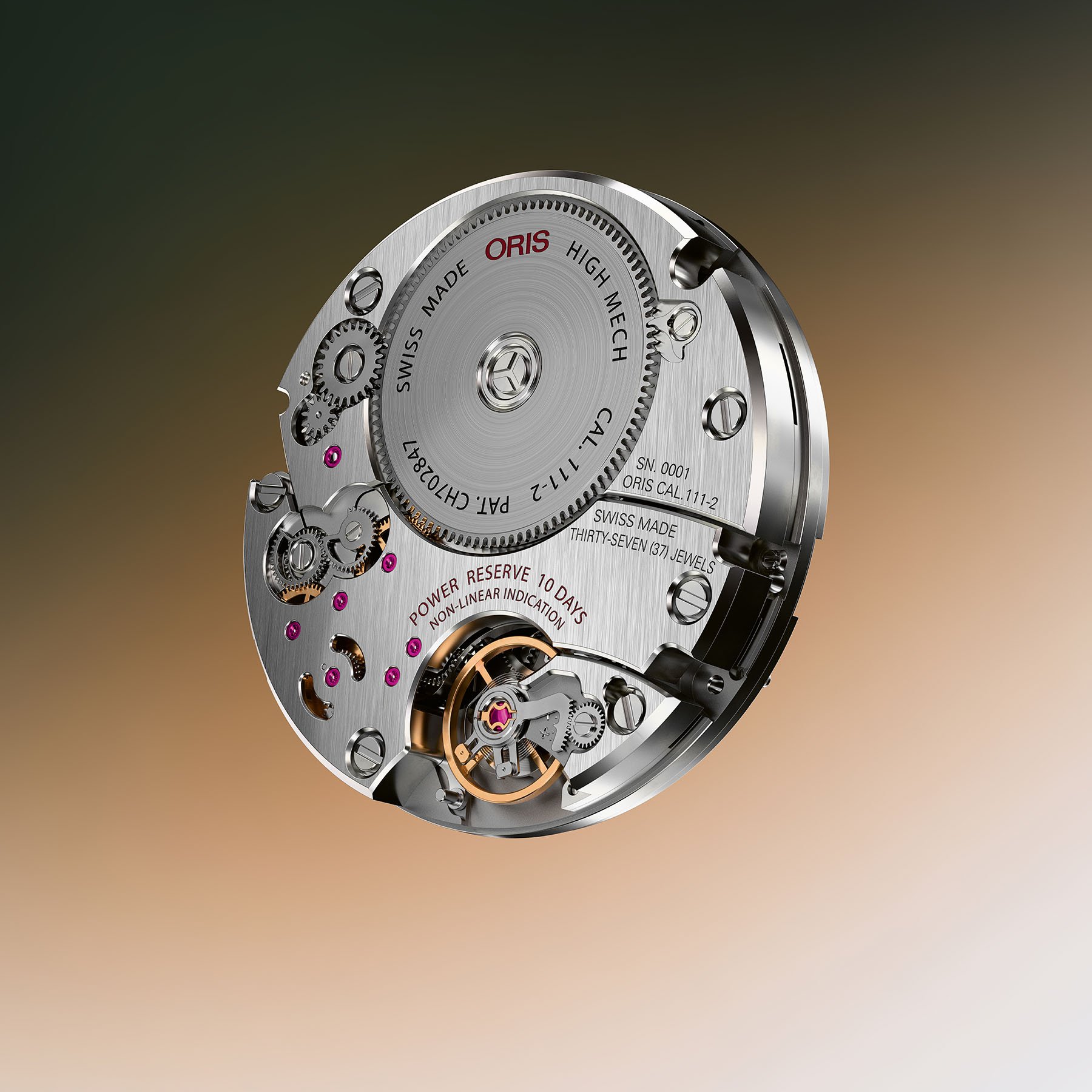
Having previously owned an Oris Artelier Calibre 112, I’m particularly fond of its non-linear power-reserve display. Few watches communicate remaining energy quite so elegantly. Replenishing a 10-day mainspring reserve takes some winding commitment, but the generous reserve means you rarely need to think about it. A single winding session can comfortably see you through an entire week and beyond. The movement also features hacking seconds and a 3Hz beat rate.
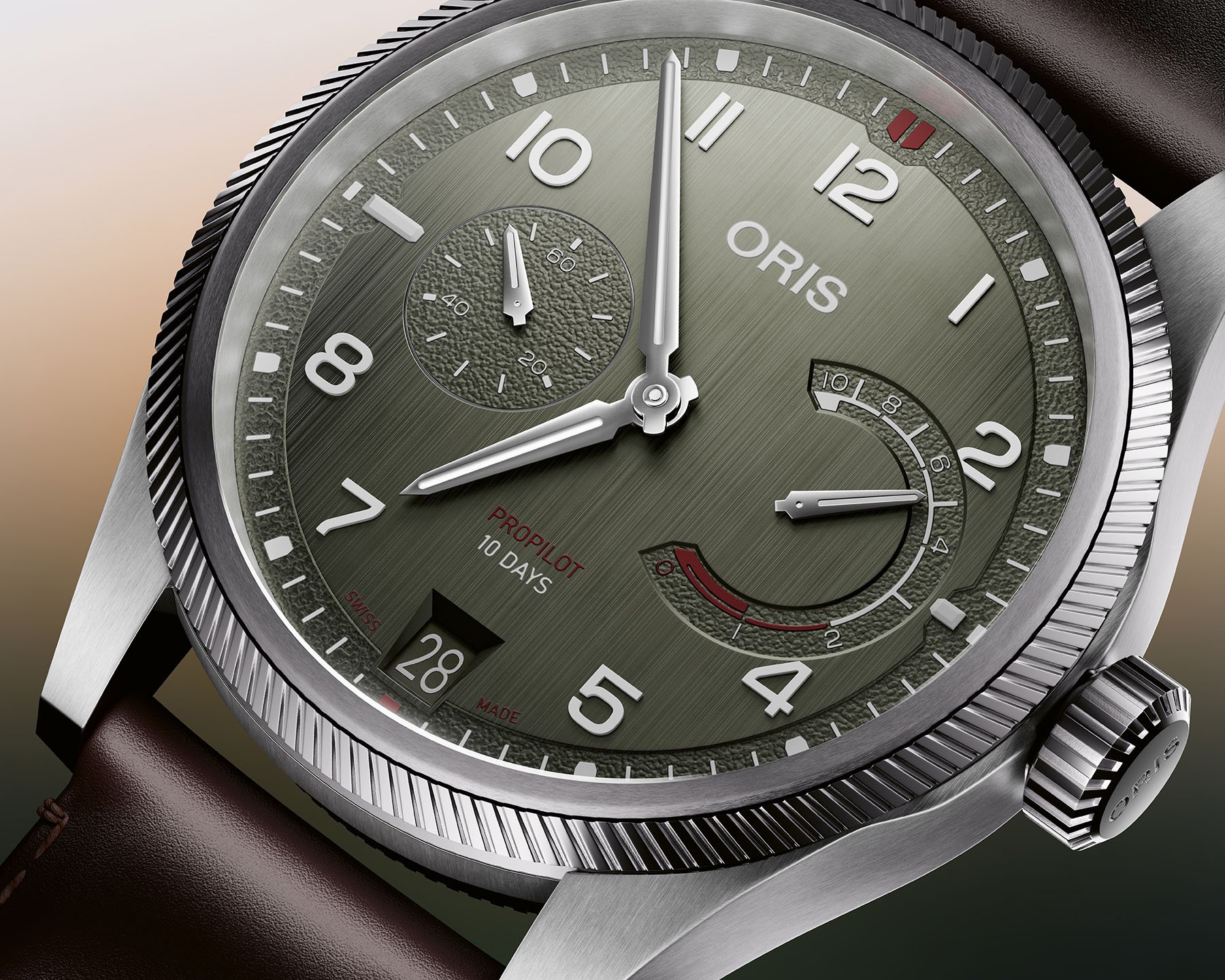
The Oris ProPilot Calibre 111 is priced at CHF 5,900 with the Cordovan leather strap and CHF 6,100 with the stainless steel bracelet. Both versions are available now. For more information, visit the Oris website.
This is a preferred-position post. Learn more.