Rolex GMT-Master Ref. 6542: The World’s Most Infamous Watch, 1959–1960

The 1950s ushered in the golden age of commercial aviation. Modern jetliners revolutionized international travel, connecting distant cities and continents faster than ever before, proving the Sherman Brothers and Walt Disney’s notion that “it’s a small world after all.” As pilots and passengers increasingly crossed multiple time zones, the ability to simultaneously track time both locally and in another part of the world became an increasingly valuable feature in a wristwatch. Then, during the 1959 Christmas season, a remarkable Rolex wristwatch developed specifically for pilots and international travelers unexpectedly captured headlines around the world. That watch was the Rolex GMT-Master ref. 6542.
Today, the Rolex GMT-Master remains one of the most iconic and instantly recognizable watches ever created. Its distinctive red-and-blue 24-hour bezel, affectionately nicknamed the “Pepsi” for its resemblance to the famous soft drink’s color scheme, became one of the most celebrated design signatures in horological history. Equally innovative was its additional 24-hour hand, which completed a single revolution around the dial each day. Working in conjunction with the rotating 24-hour bezel, this ingenious feature allowed the wearer to simultaneously keep track of two time zones.
The development and debut of the Rolex GMT-Master ref. 6542
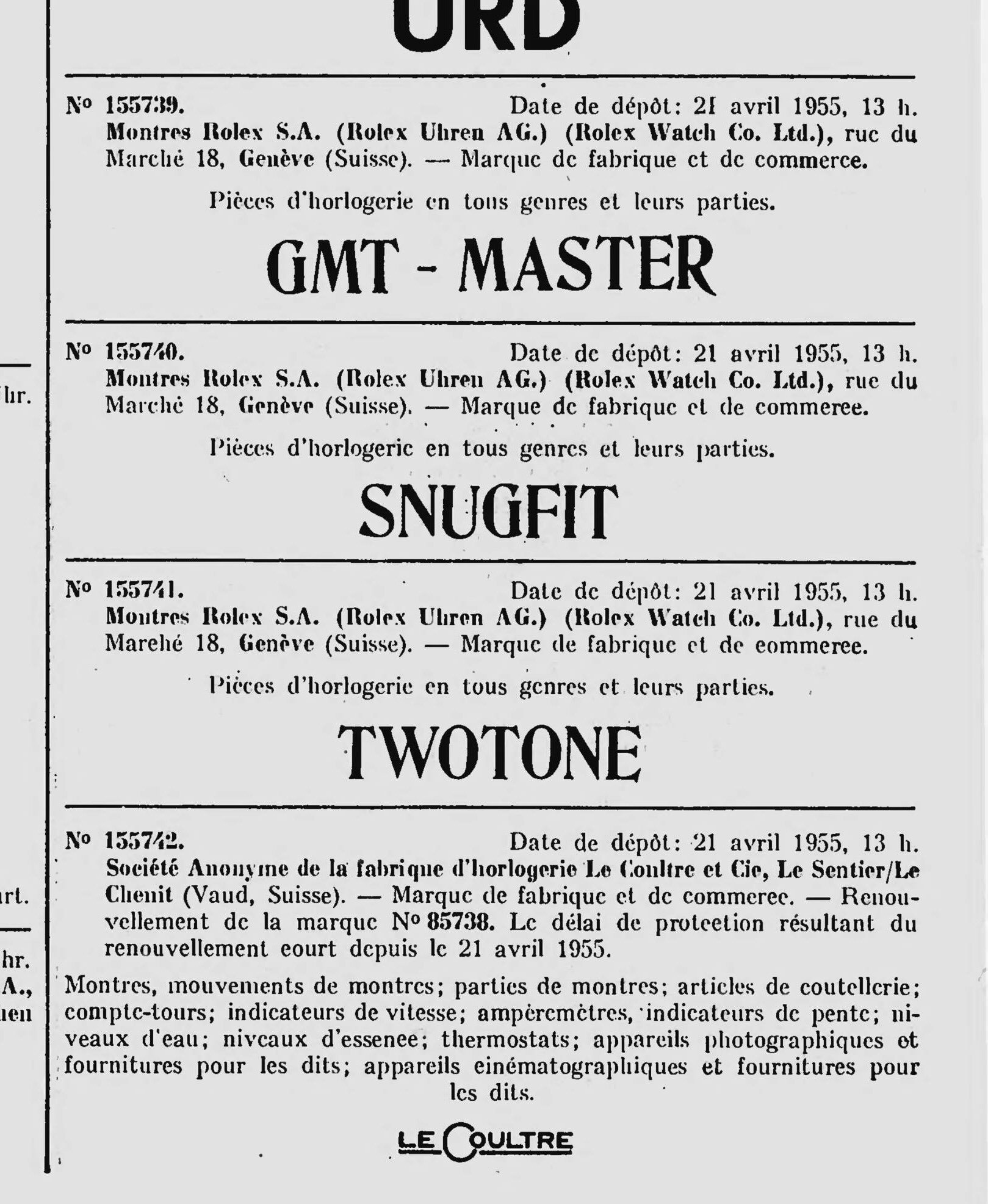
Historical evidence suggests Rolex began developing the GMT-Master in late 1954. Several important patent applications and trademark registrations followed in the first half of 1955.
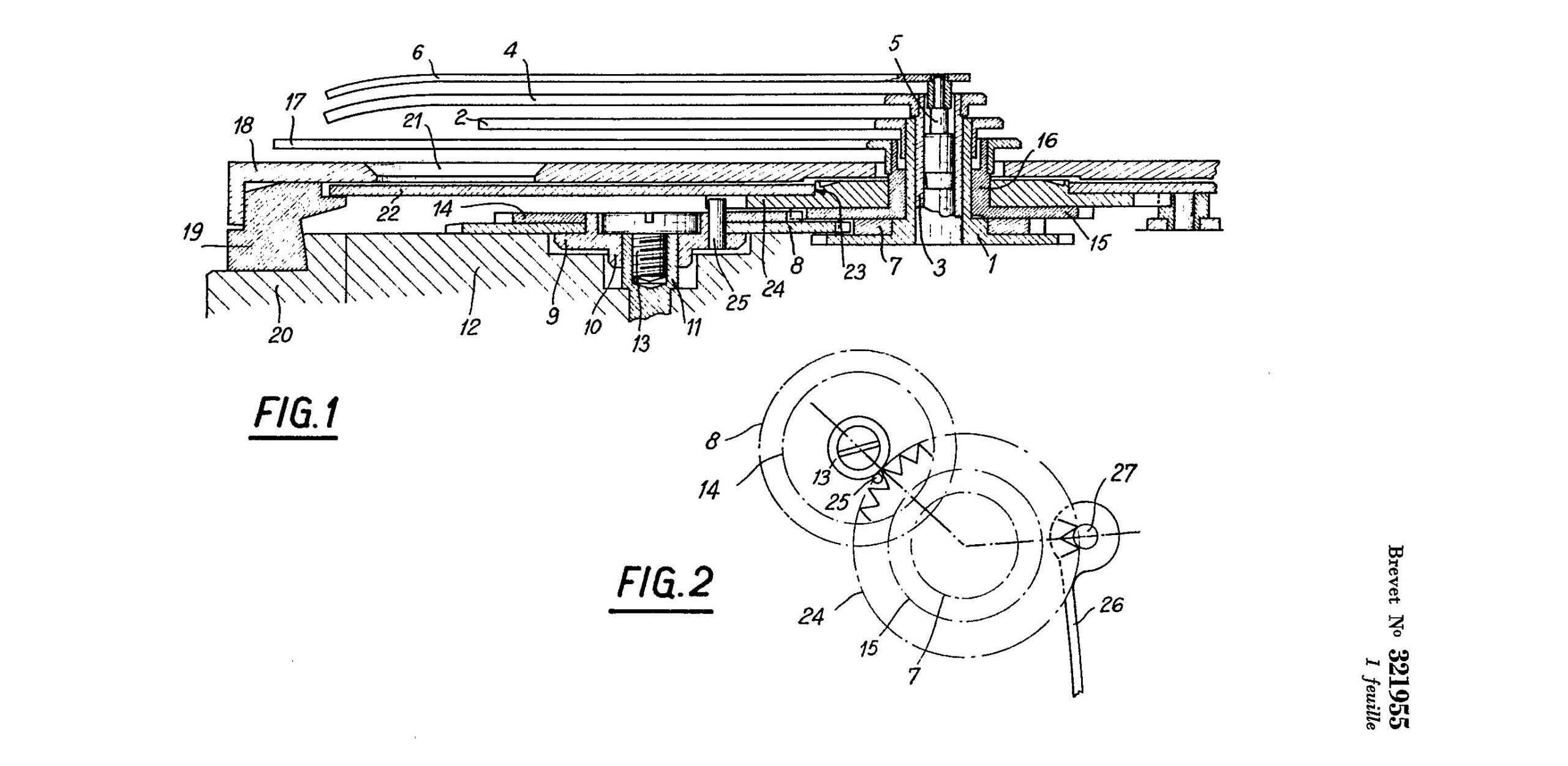
On January 28th, 1955, Rolex filed a patent application for its innovative luminous plastic bezel. Less than three months later, on April 21st, the company registered the GMT-Master name. Then, on May 16th, 1955, Rolex filed another patent application covering a 24-hour-hand mechanism ingeniously linked to the watch’s date display. Together, these developments laid the foundation for one of the 20th century’s most enduring and influential wristwatch designs.
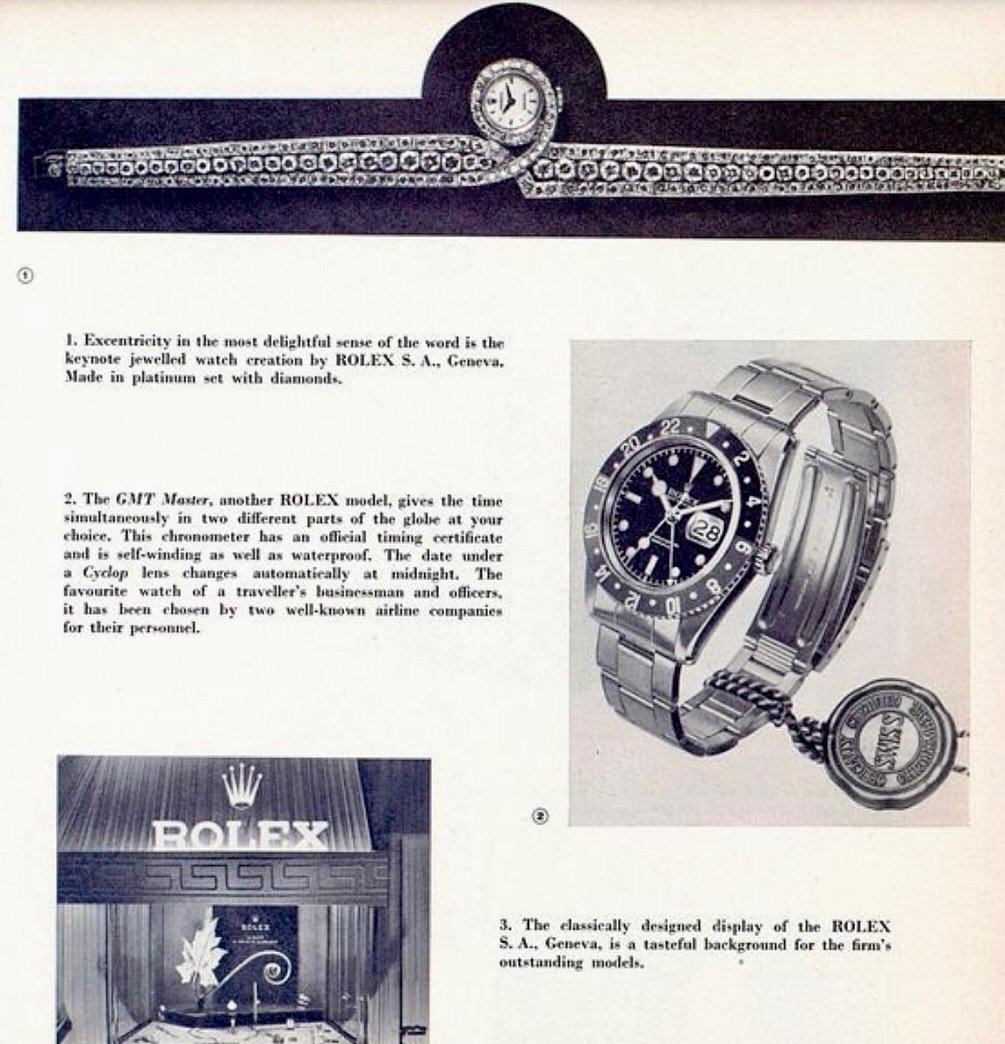
Rolex GMT-Master ref. 6542 in Europa Star Asia, Issue #42, 1957
Hans Wilsdorf mentioned the watch during his 75th birthday celebration in March 1956, and it would appear Rolex soft-launched reference 6542 in late 1956 before officially unveiling it at the 1957 Swiss Industries Fair in Basel.
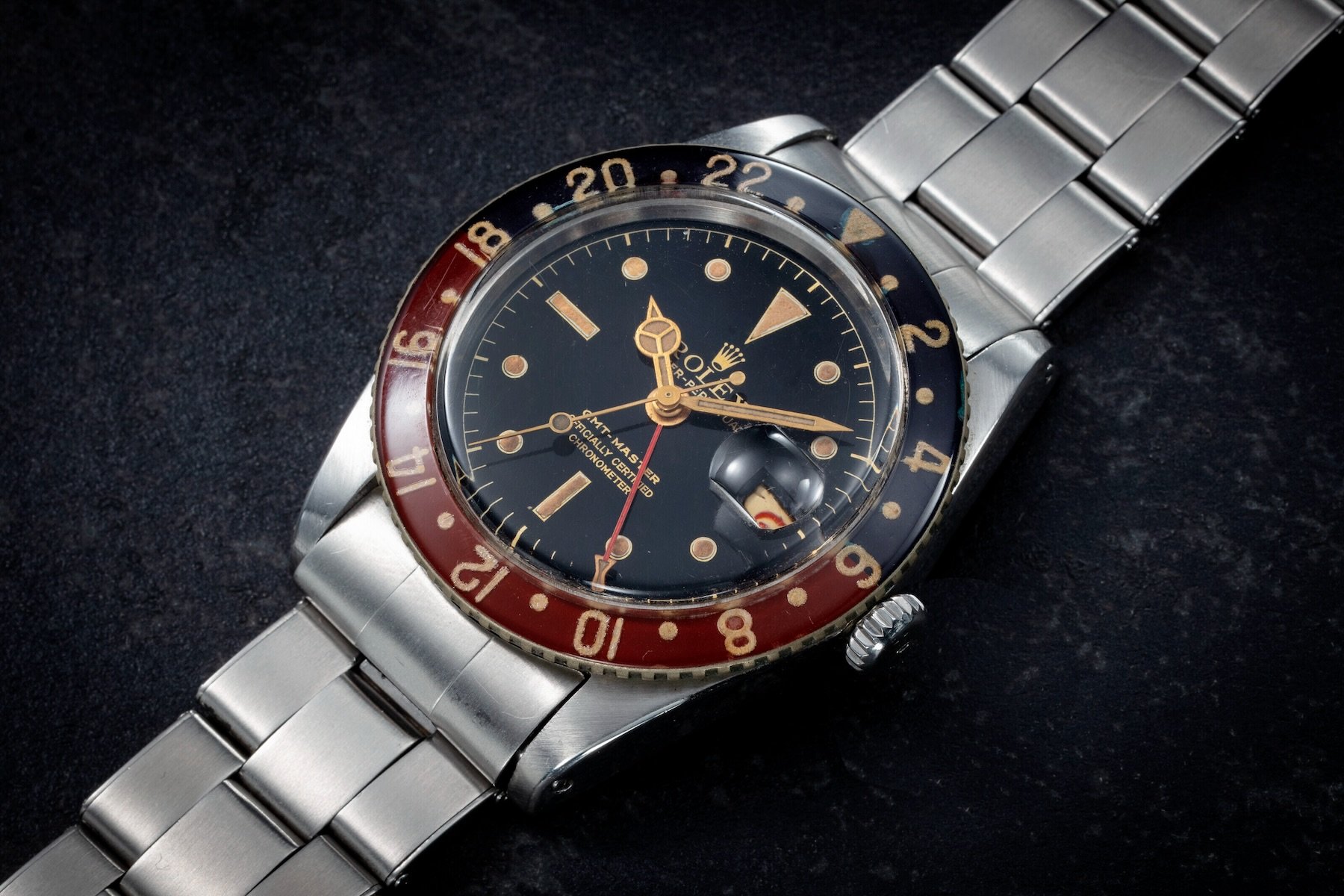
Image: Christie’s
The GMT-Master hits the market
One standout feature of the GMT-Master was the blue-and-red Bakelite 24-hour rotating bezel insert with luminous numerals to aid in nighttime reading. Another was its fourth hand, which made one revolution around the dial every 24 hours. The gold version of the GMT-Master featured a brown plastic luminous bezel insert. The steel version retailed for US$240 and the gold version for US$600.
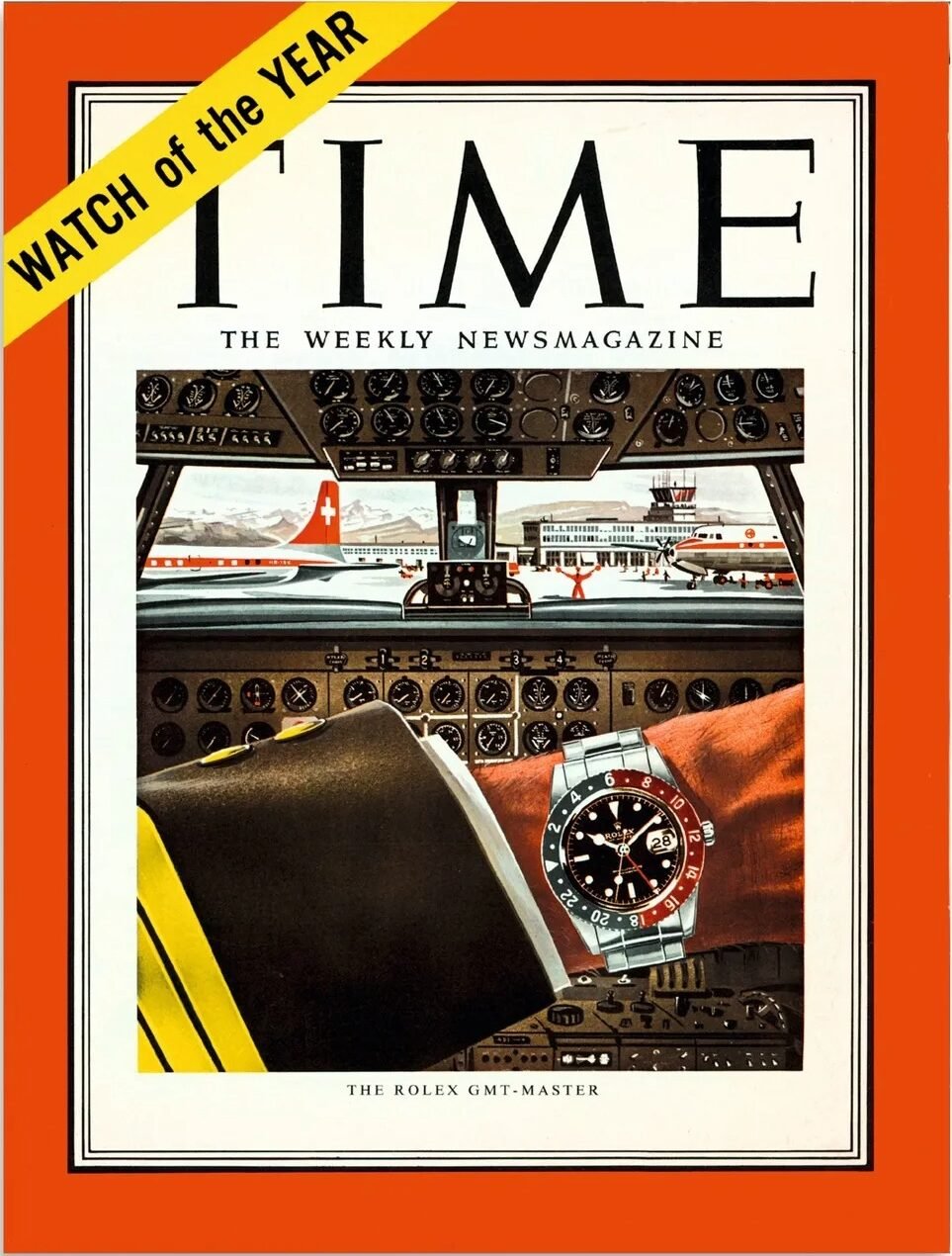
To boost marketing efforts of the new watch, Rolex produced a pamphlet, with the front mimicking the famous Time magazine “Person of the Year” cover. It featured the watch on a pilot’s wrist in the cockpit and declared it was the “Watch of the Year.” Famous owners of the watch at the time included the trumpet player Dizzy Gillespie and American test pilots Charles “Chuck” Yeager and Scott Crossfield.
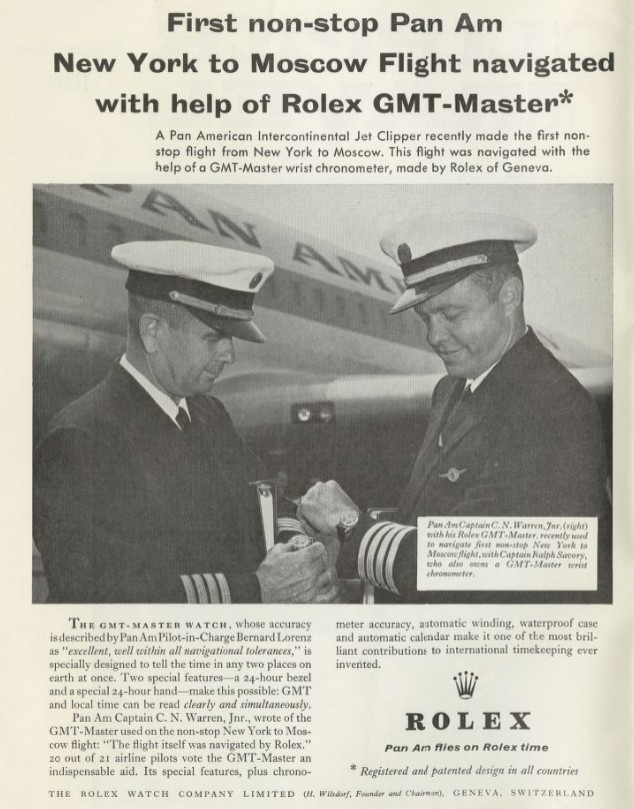
In December 1959, Rolex signed an agreement with Pan American Airways, and the first Rolex/Pan Am advertisement appeared in Clipper Travel, the official magazine of the airline, to celebrate the first non-stop Pan Am flight from New York to Moscow. Both pilots wore GMT-Masters for the flight.
Unbeknownst to The Crown, just before Christmas of 1959, the watch would make headlines around the world due to the luminous rotating bezel. I discovered the full story in the May 1960 issue of the Metal Progress magazine.
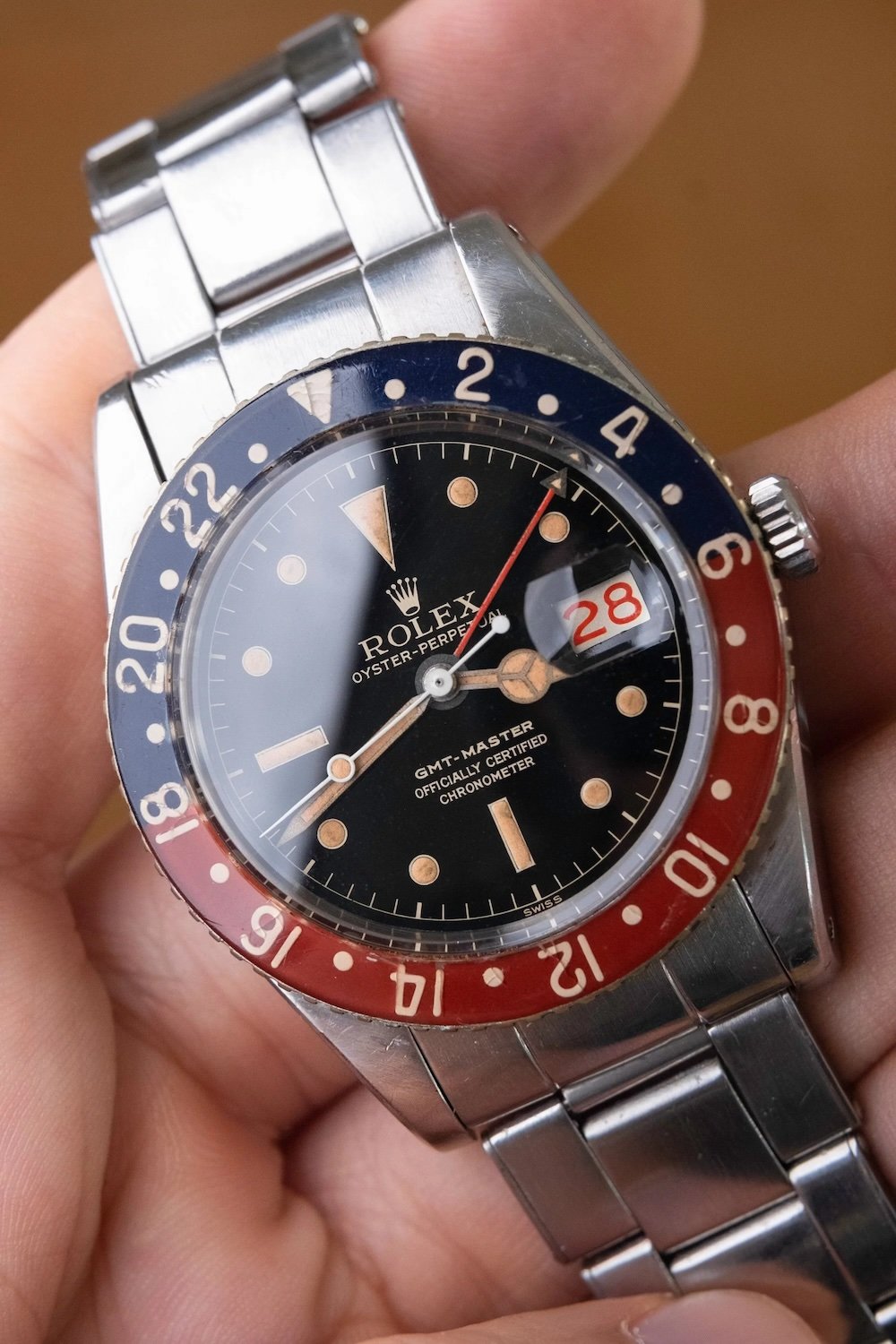
Image: Wind Vintage
Brewing controversy
The St. John X-Ray Laboratory of Califon, New Jersey, USA, ran a film-badge service and was monitoring personnel for radiation exposure in a large metallurgical plant. Only X-ray equipment was in use at that plant, and exposures that were cause for concern had never arisen. A worker’s film badge had registered a higher reading associated with radioisotopes, not X-rays, as the source of the radiation. The plant’s health supervisor noted the person, whose badge had registered the higher reading, had been wearing his newly purchased wristwatch, a Rolex GMT-Master which he had purchased in September 1958 in Singapore. The watch was left overnight between two film badges. Both registered high readings.
Around November 1959, the president of the St. John X-Ray Laboratory, Herbert R. Isenburger, had two visitors from the U.S. Atomic Energy Commission (AEC), and he mentioned the radioactive watch to them. After tracing its origins, the AEC discovered the Rolex GMT-Master’s bezel contained strontium-90 to illuminate the numerals. Strontium-90 is a product of nuclear fission and is obtained from nuclear fallout and testing.
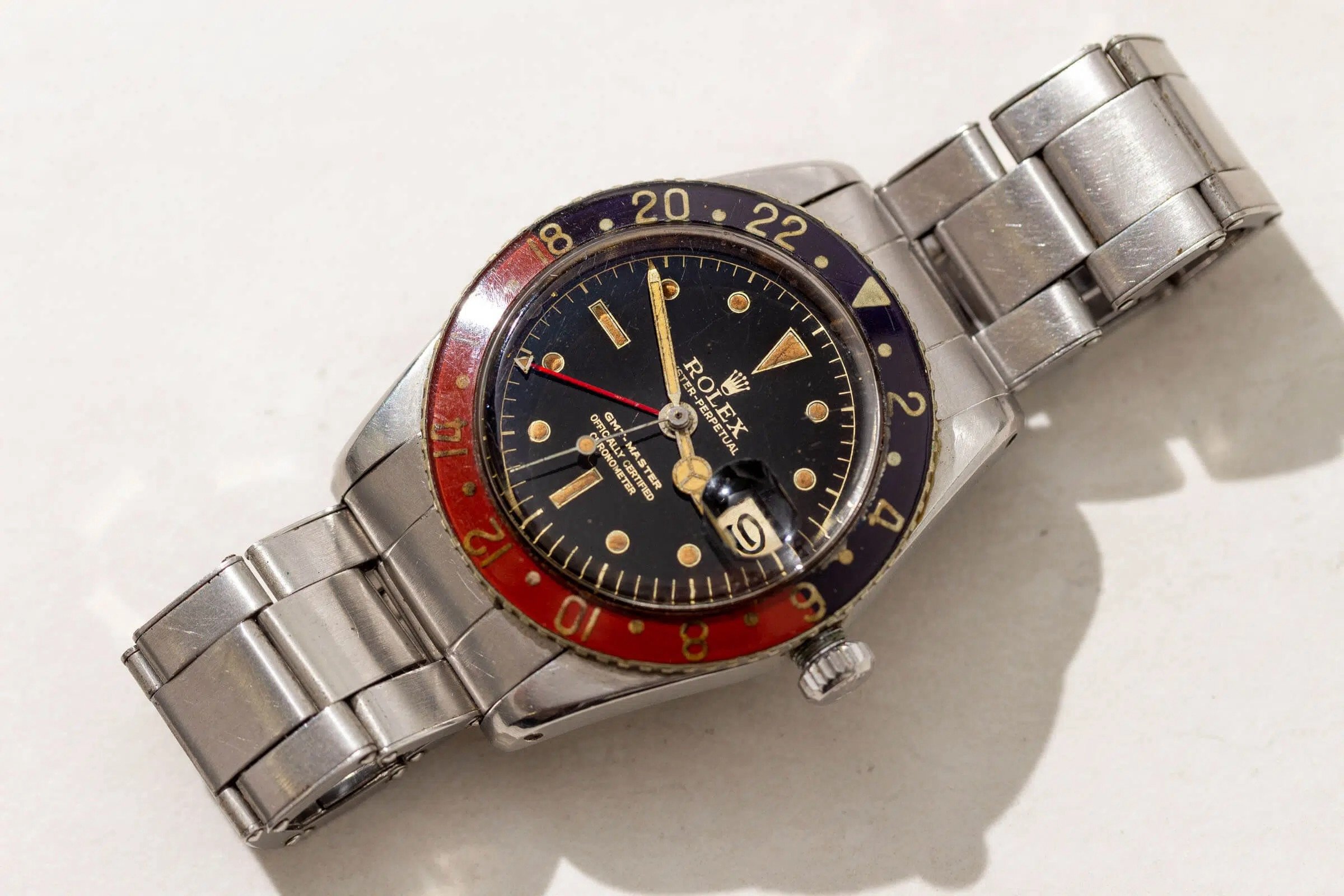
Image: Precision Watches
Warnings and fallout
Earlier, in May 1959, some watch companies in the United States received warnings about some of their dials containing strontium-90. The July/August 1959 edition of Journal Suisse d’Horlogerie also contained an article on watch dials and luminescence. According to that, when mixed with zinc oxide, strontium-90 produced a reaction 30 times stronger than radium mixed with the same substance. The article recommended that manufacturers not use strontium-90 on watch dials.
However, the strontium-90 in the GMT-Master’s bezel exceeded the amount exempt from licensing under AEC regulations. The Commission issued a statement on December 17th, 1959, giving Rolex USA a temporary licence to recall any watches affected, and Rolex would swap the bezels out free of charge. Following this, major newspapers in the United States and around the world picked up the story. This was the first time a wristwatch had received major news coverage.
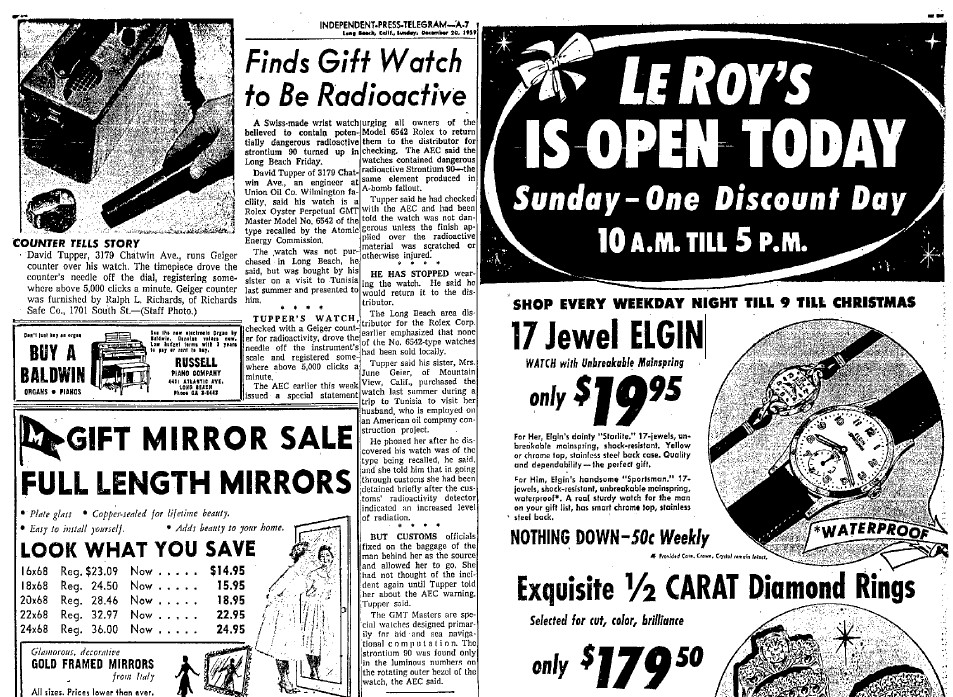
A story published on December 20th, 1959, in the Independent Press-Telegram in California stated that the owner had received the watch as a gift from his sister, who had purchased it the previous year in Tunisia. According to the story, the watch had set off the U.S. Customs radioactivity meter, but the agents let the man’s sister through, assuming the luggage of the man behind her caused the spike.
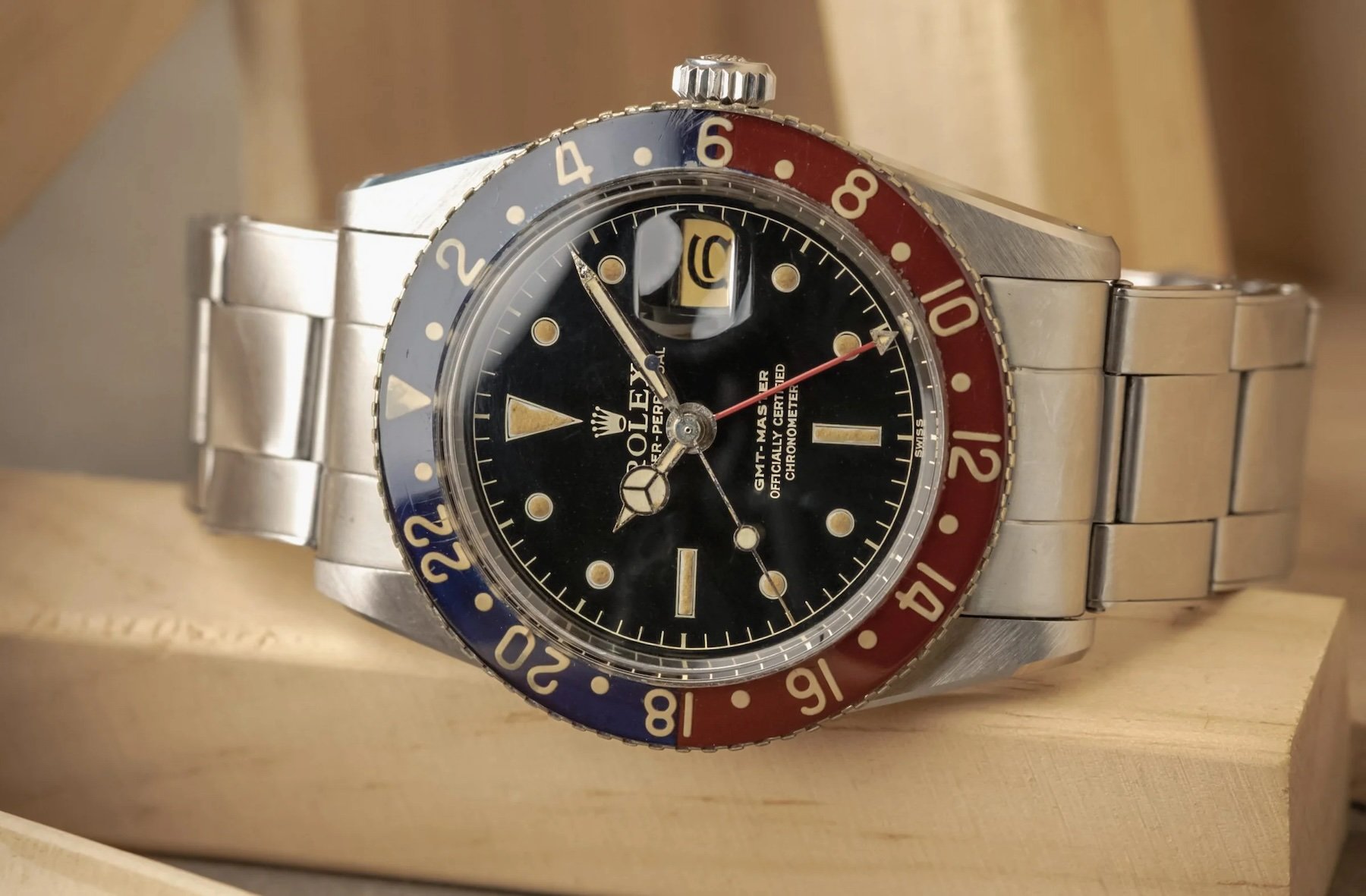
Image: Hairspring
Rolex’s response
Rolex founder Hans Wilsdorf said at the time that the AEC was “making a mountain out of a molehill.” The company also stated that, while no employees had known about strontium-90’s unsuitability for watches at the start of 1959, Rolex had only used it for one year in the bezels of the GMT-Master. To ease the concerns of owners whose watches did not contain strontium-90, Rolex issued a detailed advertisement.
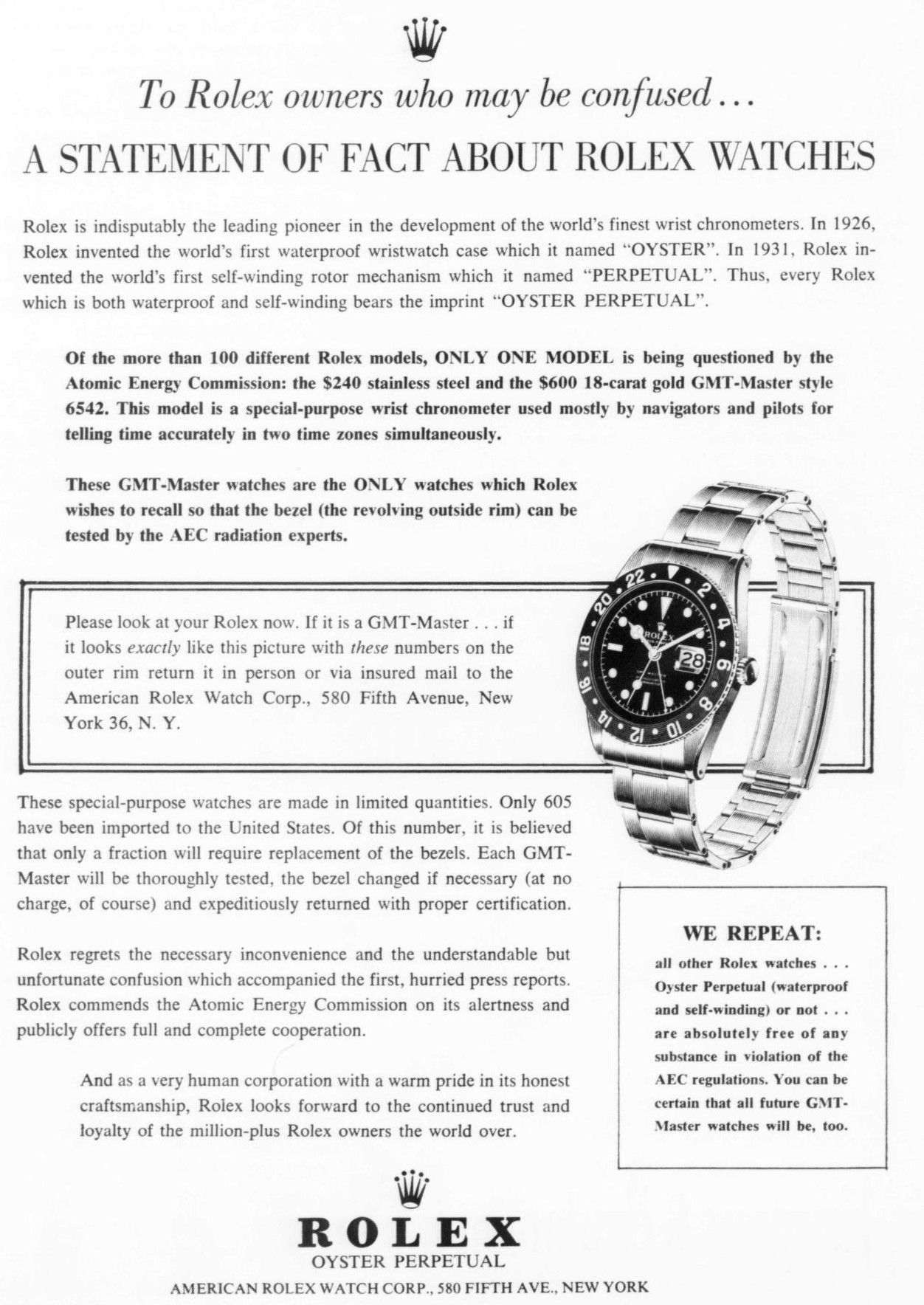
It stated that the GMT-Master was the only model affected and that 605 of these watches had been directly imported into the United States (605). Then, in January 1960, the story about the recalled watches made the front page of two newspapers in the Netherlands.
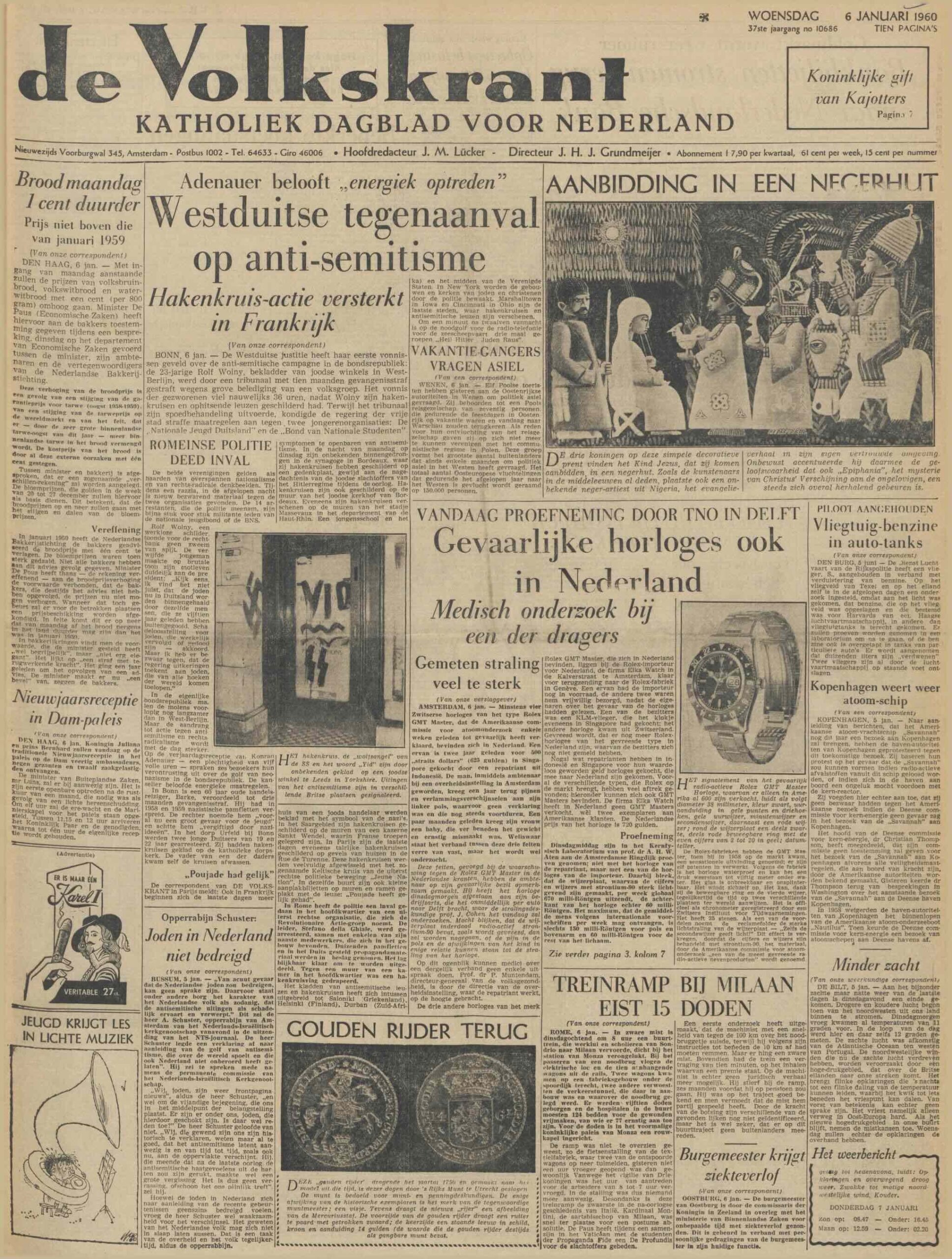
Upon reading about the recall, one Dutch family suspected the watch had contributed to their health problems. In the USA, the chairman of the United States Federal Communications Commission was ordered to have a medical checkup before departing on a break, as he had worn his affected GMT-Master for a year.

By February 1960, the AEC recovered 569 GMT-Masters, 432 of which contained strontium-90. Of the 569 recovered watches, 230 had been sold in the United States. The May 1960 issue of Metal Progress also disclosed the source of the strontium-90 in the bezels — the Atomic Energy Establishment at Harwell in the UK. A year later, in 1961, a family in the United States filed a lawsuit against Rolex, stating the watch had caused them health issues.
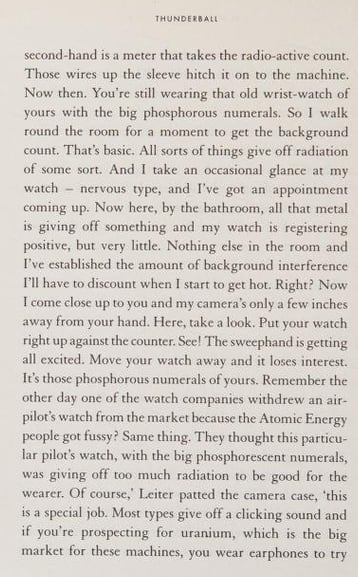
The AEC recall of the GMT-Master also made it into the 1961 James Bond novel Thunderball. In the book, CIA agent Felix Leiter mentions it to Bond while testing out a Geiger counter.
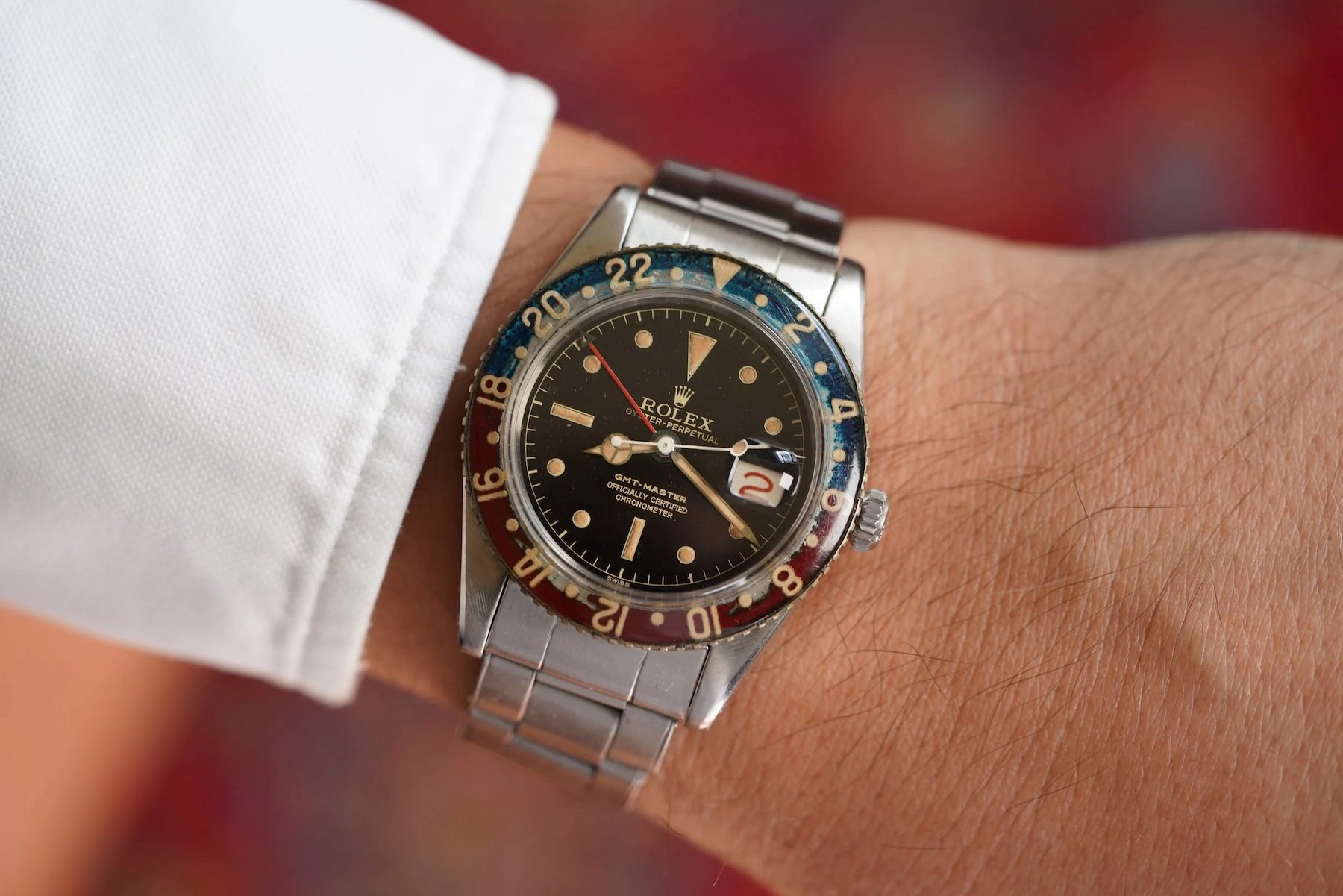
Image: Wind Vintage
What effect did the GMT-Master bezel recall have on the watch industry?
For Rolex, the consequences were immediate. The company quickly phased out the GMT-Master’s original luminous plastic bezel insert, replaced it with a more durable, non-luminous red-and-blue aluminum version. Although the distinctive two-tone appearance remained, this eliminated the radioactive luminous material from the bezel.
The controversy also prompted authorities to investigate the potential health hazards of radium-based luminous materials, which the watch industry had used widely on watch dials and hands for decades. During the GMT-Master recall, another brand’s dive watch was reportedly submitted for radioactive testing. Remarkably, its Geiger reading exceeded that of the GMT-Master’s luminous bezel. I suspect the watch in question may have featured a fully luminous rotating bezel containing radium.
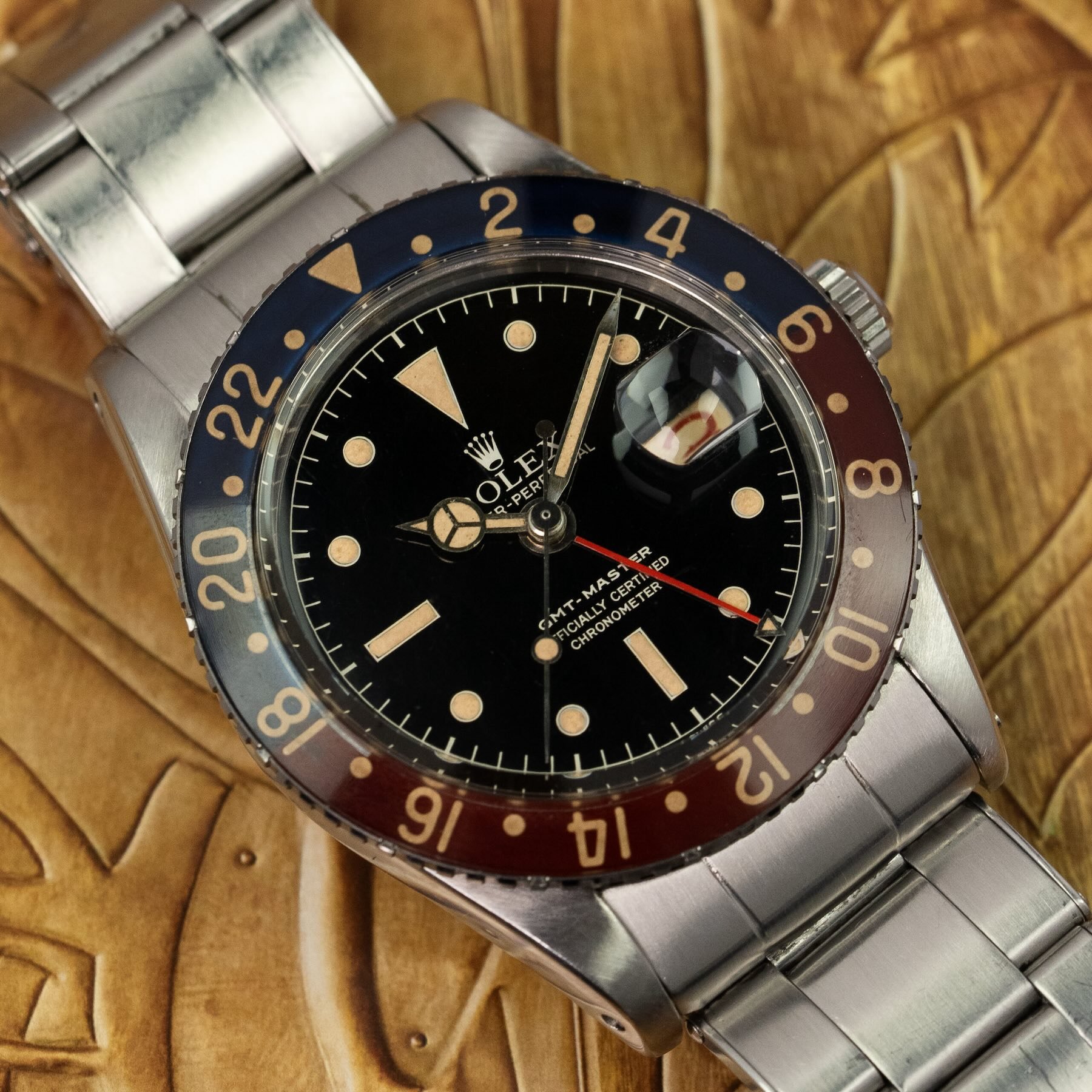
Image: Amsterdam Vintage Watches
Concerns surrounding radioactive wristwatches continued to escalate. In 1962, the New York City Health Department banned the sale of pocket watches featuring radioactive luminous dials, citing concerns about the potential dangers of radiation exposure to reproductive organs. By 1963, the watch industry had largely transitioned away from radium in favor of tritium, a radioactive isotope of hydrogen that emitted significantly less hazardous radiation. Tritium provided a safer alternative for illuminating watch dials, hands, and bezels in low-light conditions.
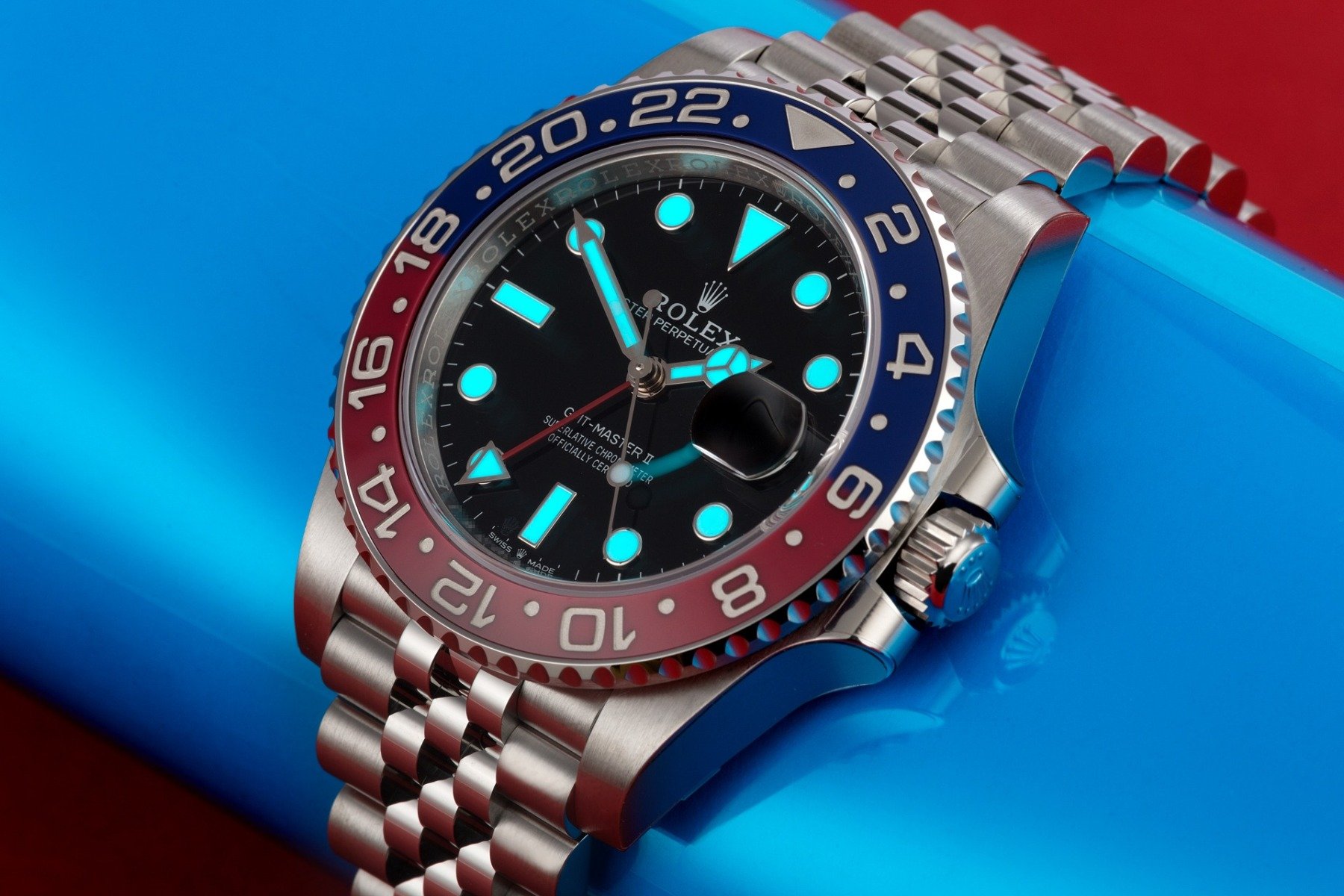
A Rolex GMT-Master II ref. 126710BLRO with Chromalight luminescence — Image: The Watch Club
Today, modern watch manufacturers have largely abandoned radioactive luminous materials altogether and replaced them with sophisticated photoluminescent compounds. These specially formulated pigments absorb energy from sunlight or artificial light and subsequently emit a visible glow in darkness without relying on radioactive decay.
In retrospect, the radioactive-bezel controversy surrounding the original Rolex GMT-Master ref. 6542 represented more than an isolated product recall. It was part of a broader turning point in the watch industry’s understanding of radiation safety, helping usher in a new era of safer luminous watchmaking technology.
Header image: Wind Vintage