Sunday Morning Showdown: Grand Seiko’s Hi-Beat 9SA5 Vs. Spring Drive U.F.A. 9RB2

Good morning, everyone, and welcome to another Sunday Morning Showdown. I don’t know if it’s due to the heatwave we’re experiencing here in Europe, but this week, we’re doing things a little differently. On the other hand, it might simply be that Grand Seiko launched new Evolution 9 models that left us rather impressed. However, they also made us question whether we would choose a purely mechanical Grand Seiko Hi-Beat caliber or a quartz-regulated Spring Drive Ultra Fine Accuracy movement. That’s exactly the dilemma we’re presenting you with this morning.
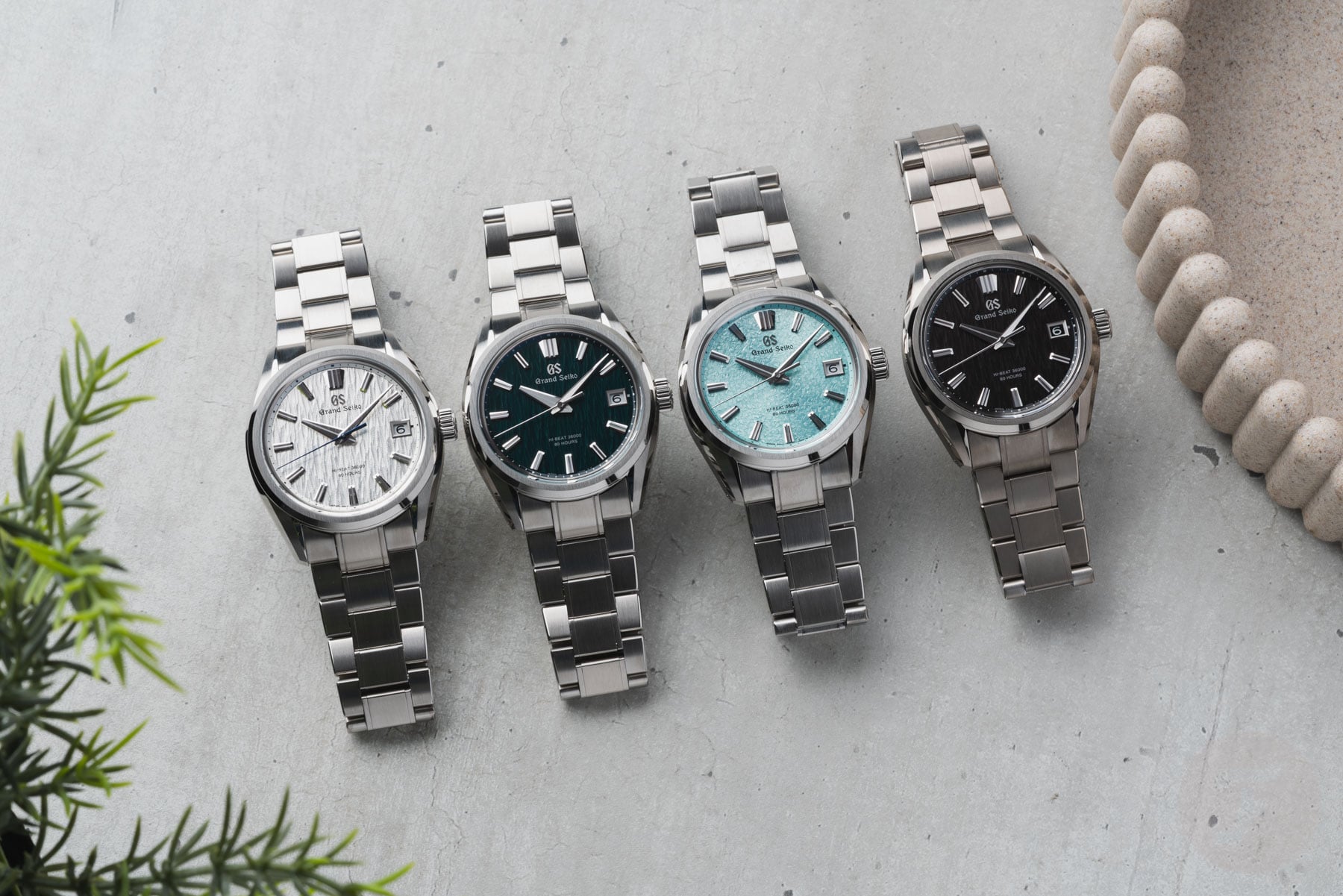
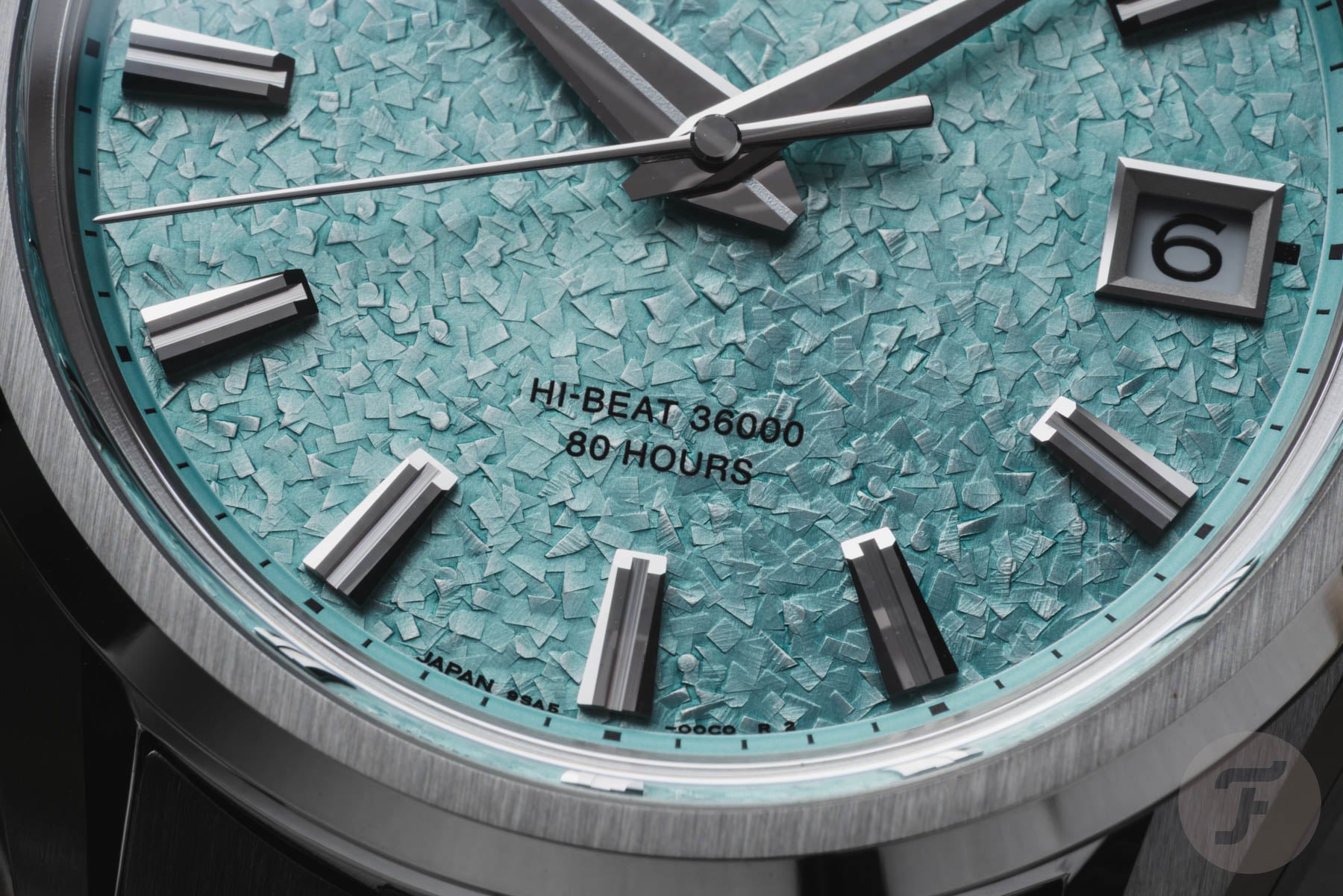
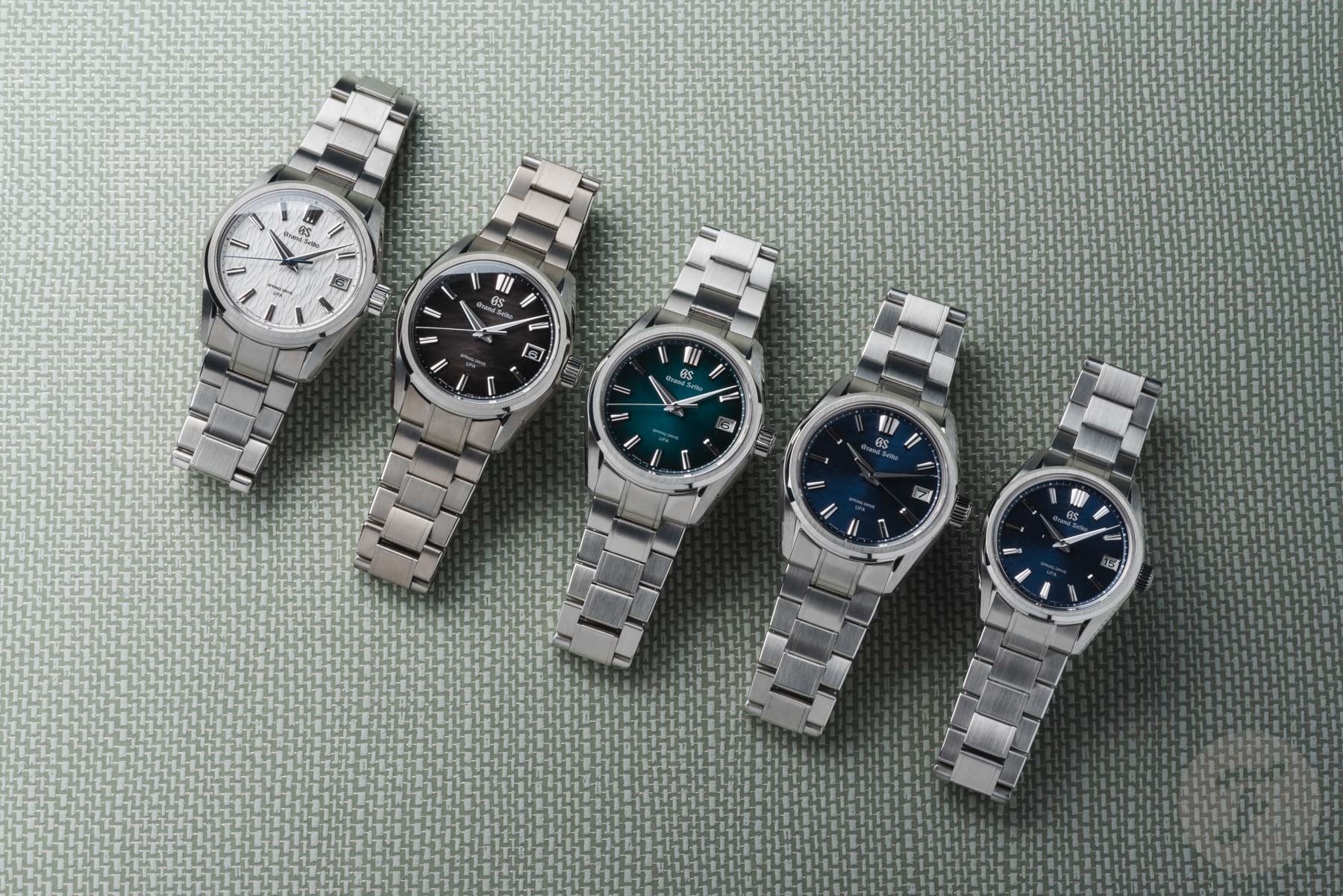
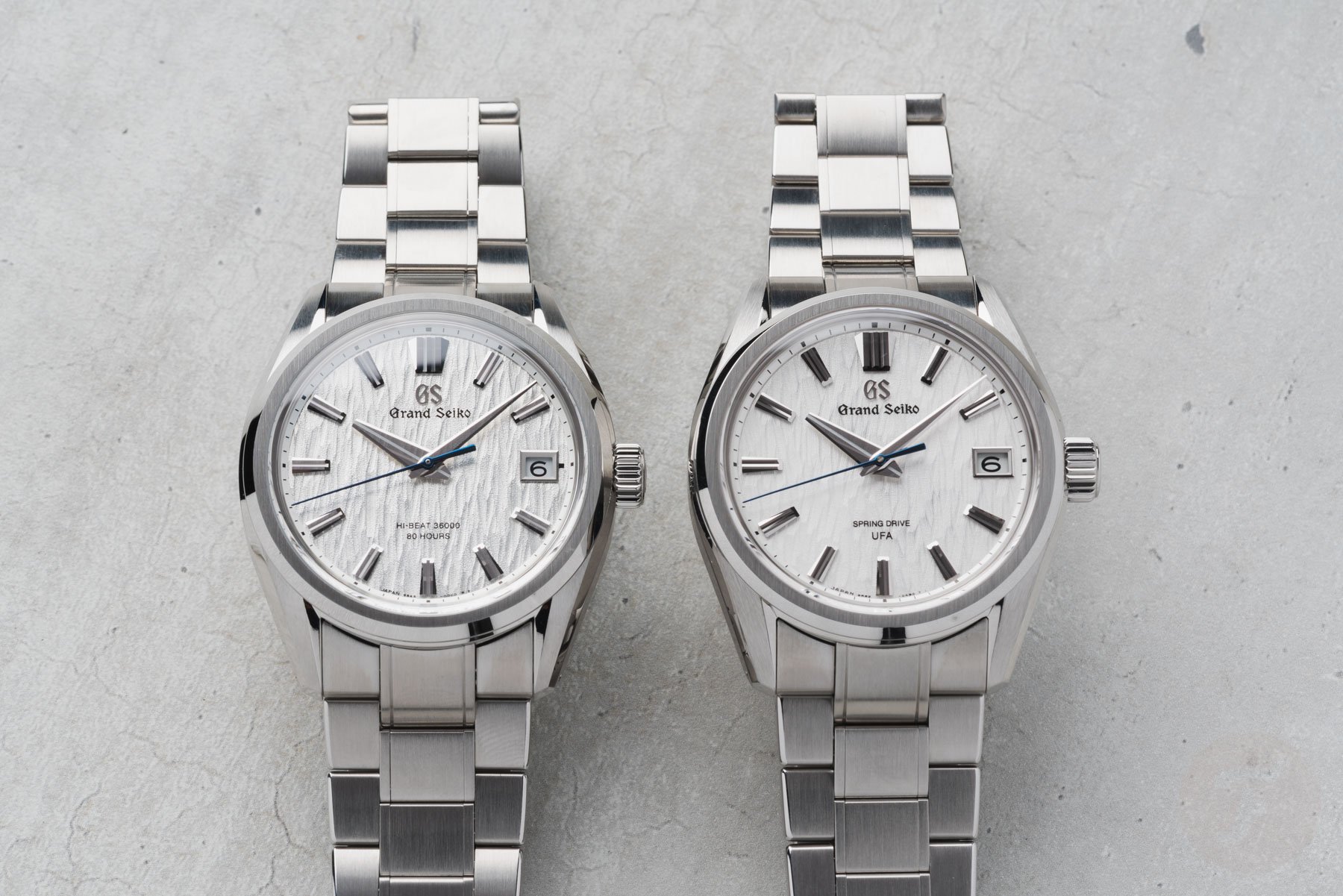
If you haven’t seen Grand Seiko’s new Evolution 9 references yet, then make sure to check out Mike’s intro to the Hi-Beat models and Thomas’s article on the Spring Drive variants. The TLDR is that both ranges offer 40mm watches for either €10,400 in steel or €11,700 in titanium. That’s why we think it’s interesting to see whether, for the same money, you’d go for the purely mechanical 9SA5 or the quartz-regulated 9RB2 movement. Daan will defend the Hi-Beat side, while Thomas will do the same for Grand Seiko’s Spring Drive. But before we get into it, let’s recap what happened last week.
Last week, on Sunday Morning Showdown…
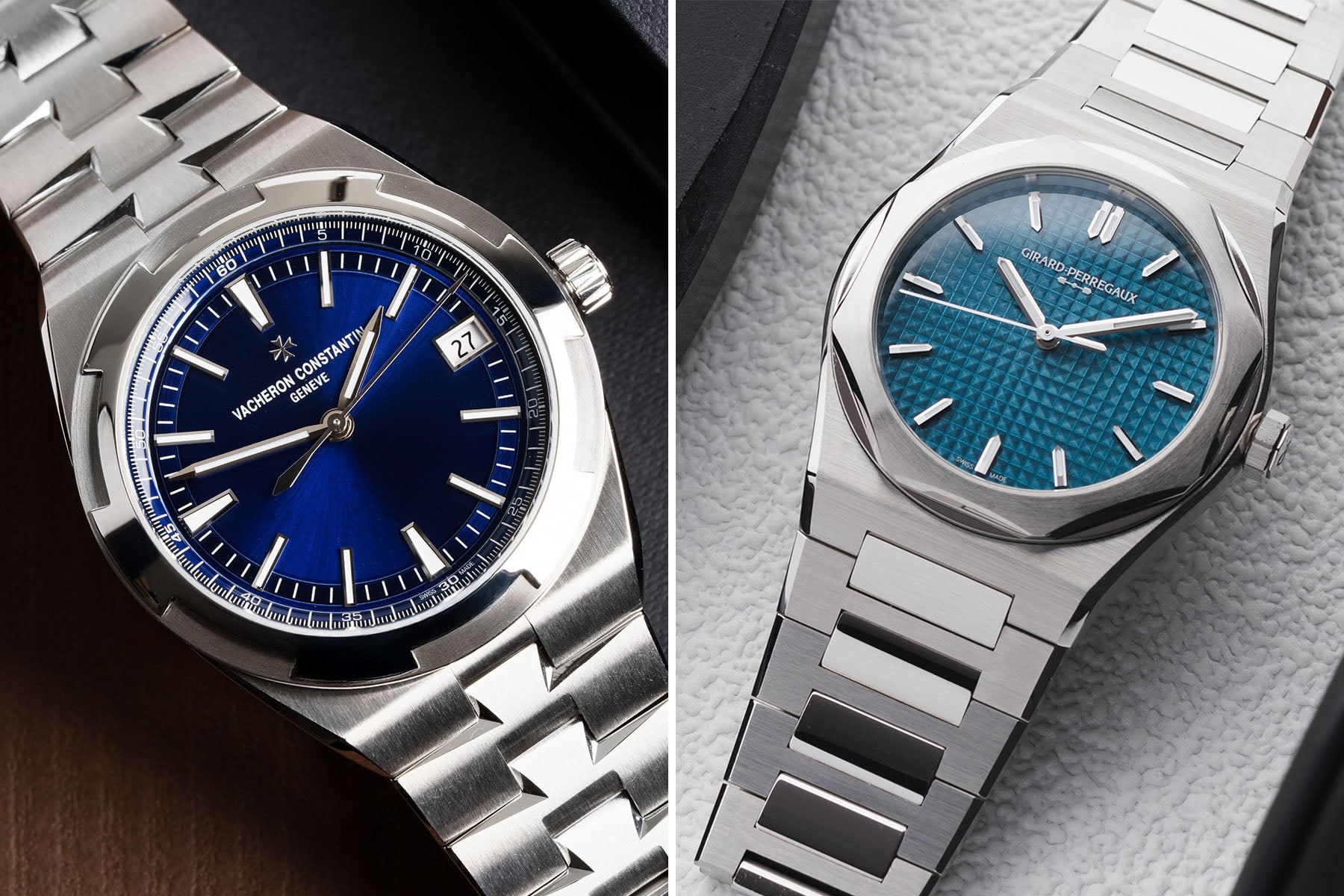
In the previous bout, we put two fairly similarly priced steel integrated-bracelet sports watches up against each other. In one corner was the Vacheron Constantin Overseas Self-Winding, and in the other was the brand-new Girard-Perregaux Laureato Fifty 39mm. Of course, some of you see Vacheron Constantin as one of the Holy Trinity watch brands and, as such, untouchable. However, we were happy to find that others among you pointed out that Girard-Perregaux has quite a heritage to stand on. Some even claimed the Laureato, with its enamel dial, solid-gold indexes, and a silicon escapement, is the superior watch. In the end, though, the VC Overseas won with a clear majority of the votes, at 62%. Let’s see what will happen during this week’s battle of movements.
Daan: Grand Seiko’s Hi-Beat 9SA5
All right, here we go, although I feel this is a done deal before we’ve even started. Nevertheless, I thoroughly enjoyed the research that went into preparing this article, and I think you’ll enjoy reading about these movements too. That’s because Grand Seiko honestly tries to go the extra mile when it comes to the ultimate goal — accuracy. Of course, the 9RB2 Spring Drive movement is the more accurate of the two here, with an accuracy of ±20 seconds per year(!) versus an average accuracy of +5/-3 seconds per day for the 9SA5. However, I still feel it’s interesting to look at how Grand Seiko tried to make its Hi-Beat movement as precise as possible.
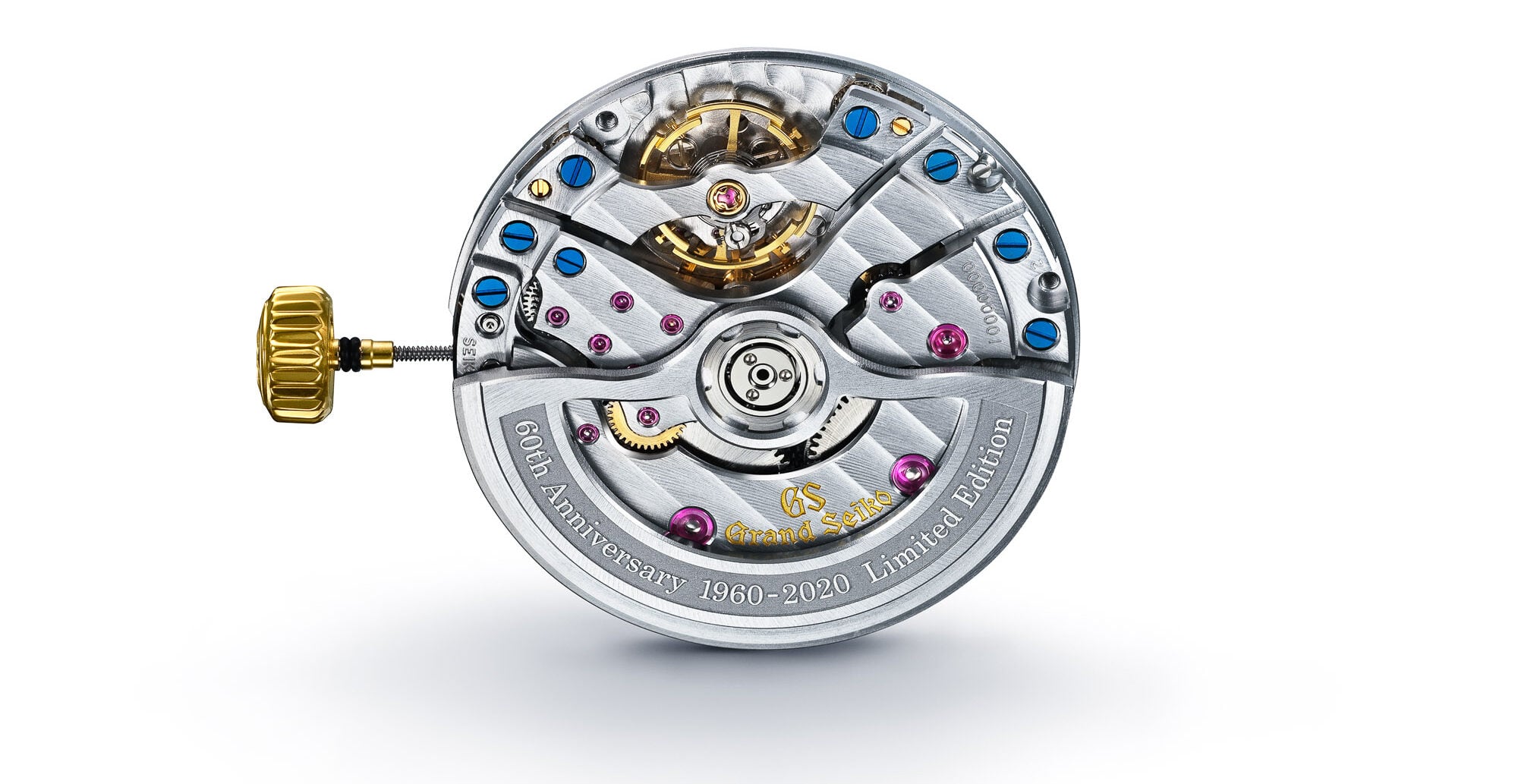
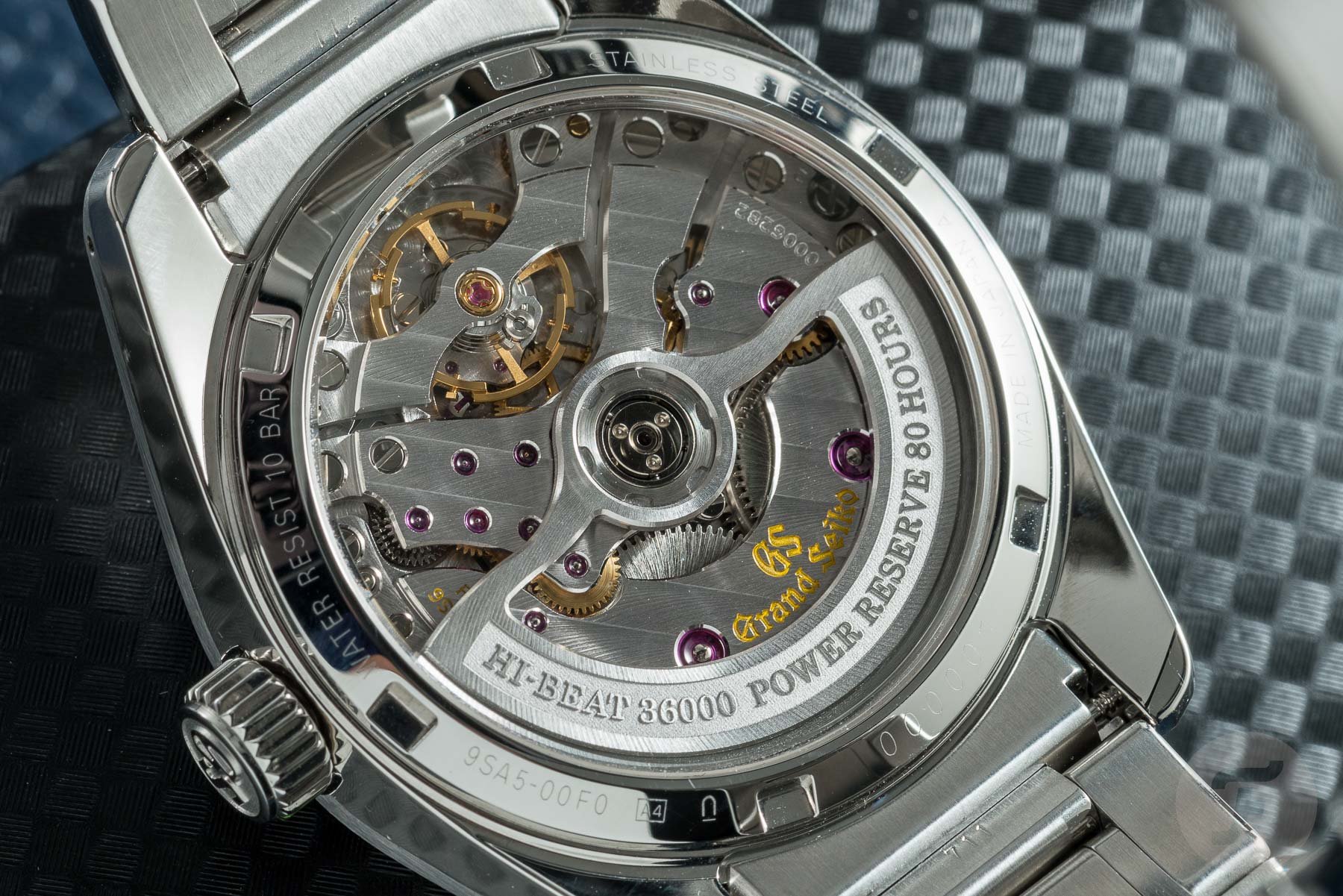
Rob Nudds wrote a very informative article when the 9SA5 movement debuted in 2020. It’s worth checking it out if you’re interested in this kind of stuff. I’ll try to give you a fairly simplified and summarized version here. Let me start by saying that watchmakers like Hi-Beat movements, such as the 9SA5, for their superior shock resistance. After a shock, the balance wheel recovers its steady rhythm much faster than a slower-beating watch, resulting in better real-world accuracy.
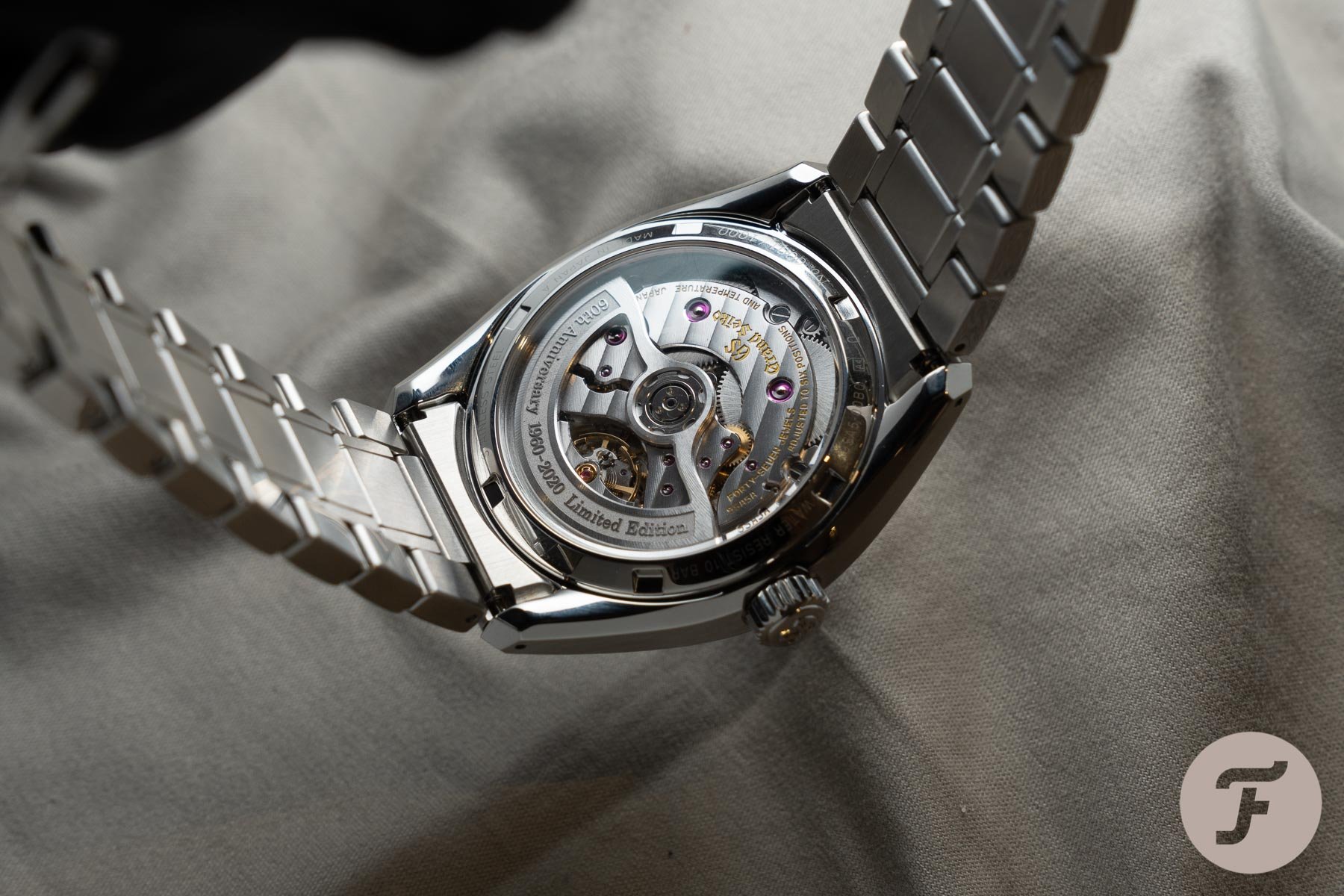
In addition, movements that run at 36,000 vibrations per hour, instead of the more common 28,800 vph, have greater resilience to positional and temperature changes. Therefore, they can maintain a more consistent rate. A nice bonus is that the seconds hand ticks five times per second instead of the more common three or four times. That makes it sweep much more smoothly than lower-beat movements. Admittedly, though, it’ll never sweep as smoothly as the seconds hand in a Spring Drive-powered watch.
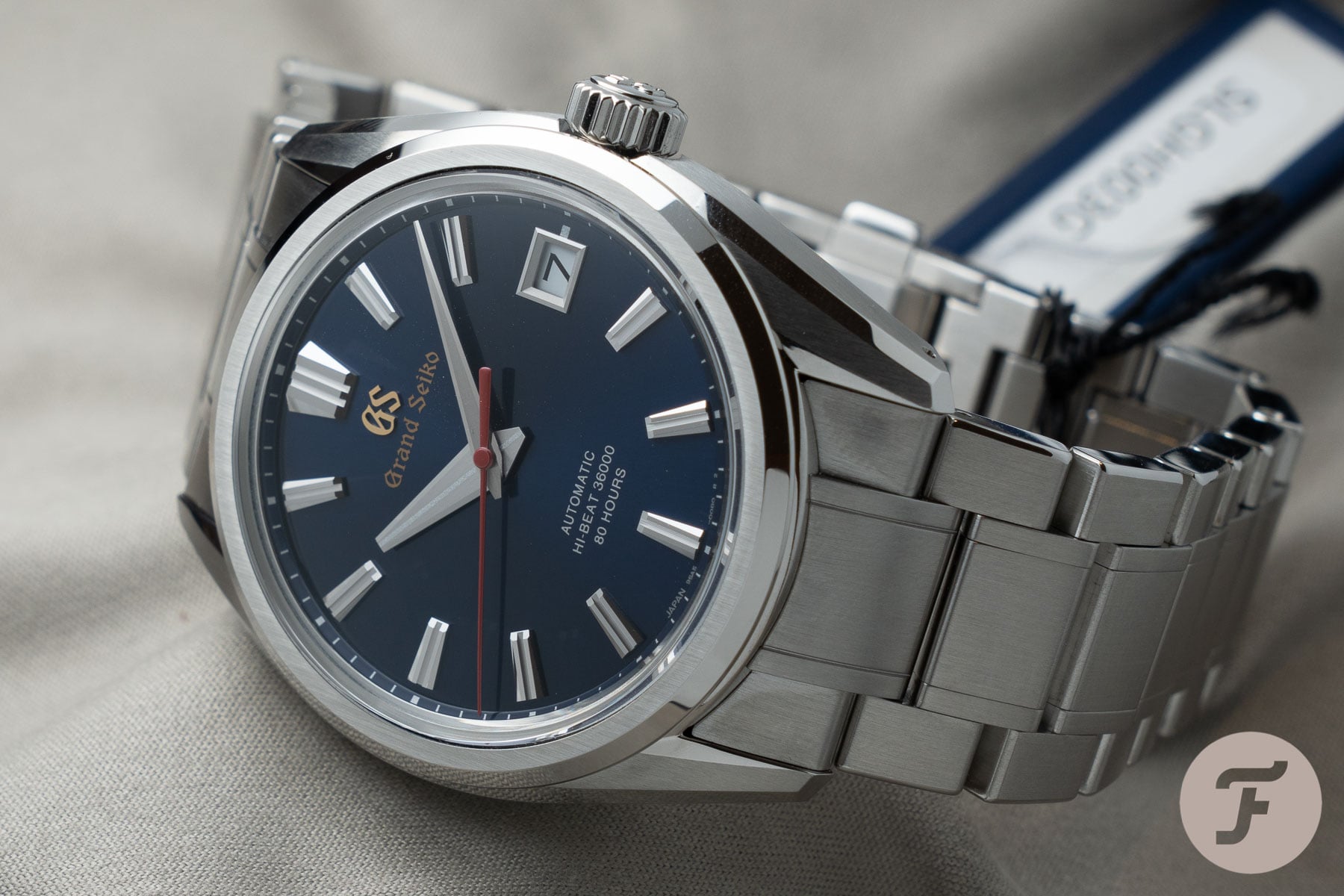
The Hi-Beat 9SA5 caliber debuted in Grand Seiko’s SLGH003 in 2020
Reducing wear and tear while improving efficiency
Unfortunately, 5Hz (36,000vph) movements also have their trade-offs. As these movements run at a higher frequency, they experience more wear and tear over time. To compensate, Grand Seiko manufactures highly resistant micro-engineered materials that are more durable. But Hi-Beat movements also need a larger power reserve, as they consume power more rapidly than lower-beat movements.
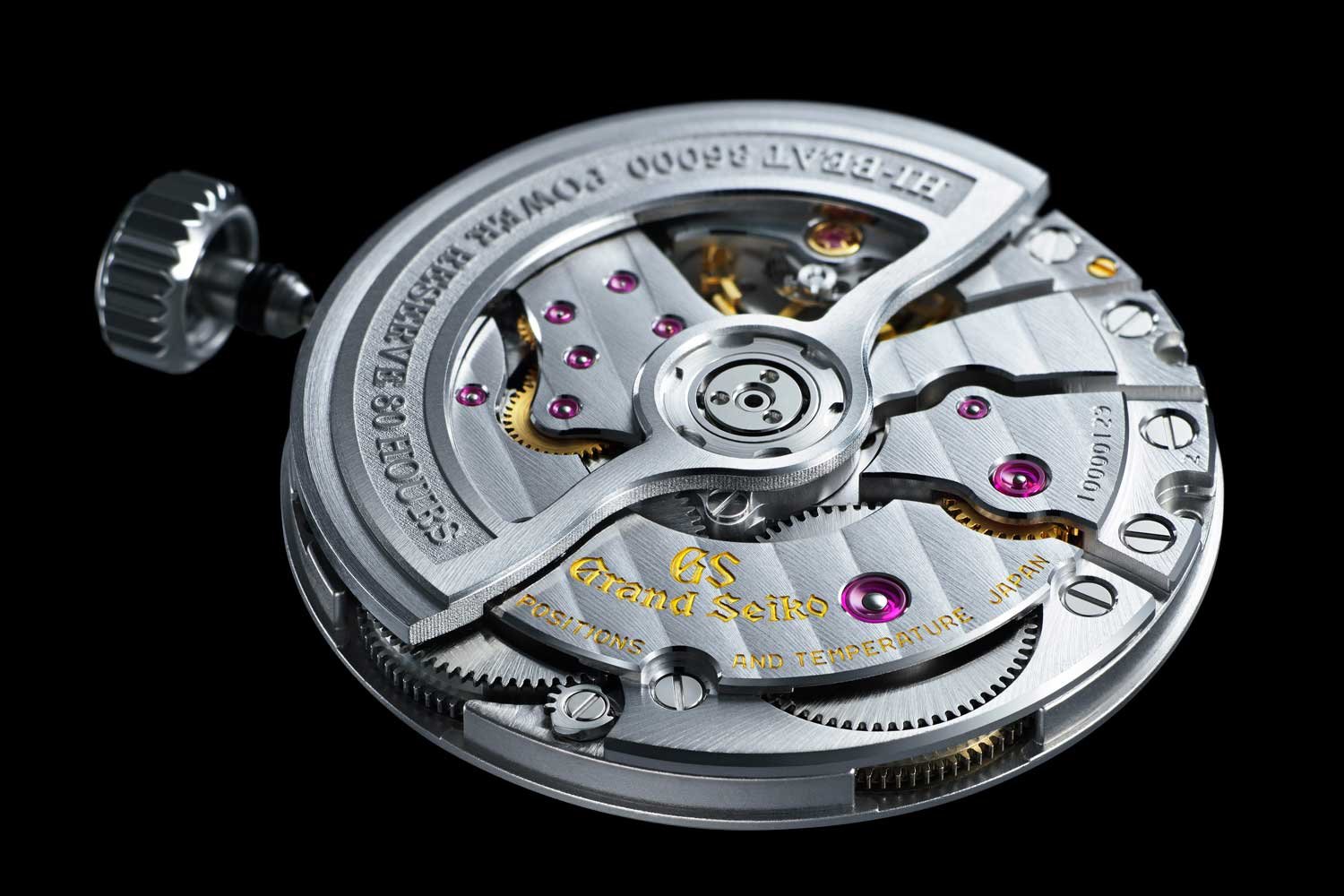
Grand Seiko mitigated this by using two barrels. However, implementing twin barrels isn’t always easy, especially if you want to keep your watches thin and wearable. That’s why the work that Grand Seiko put into the 9SA5’s compact architecture deserves so much respect. And the brand didn’t stop there.
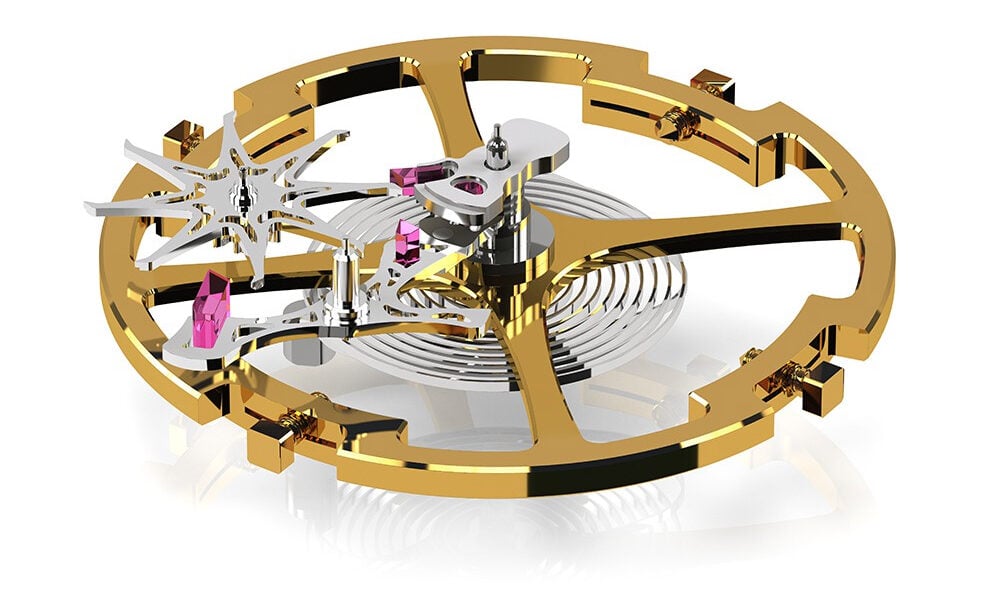
Grand Seiko’s Dual Impulse Escapement
To get the most out of those two barrels, Grand Seiko developed a new Dual Impulse Escapement. It transfers energy from the mainspring both directly to the balance wheel and indirectly through a pallet fork. This dual-direction transmission drastically reduces friction and increases energy efficiency, allowing the Hi-Beat movement to achieve an extended 80-hour power reserve. In addition, the Dual Impulse Escapement requires less lubrication than more conventional escapements.
That’s not all…
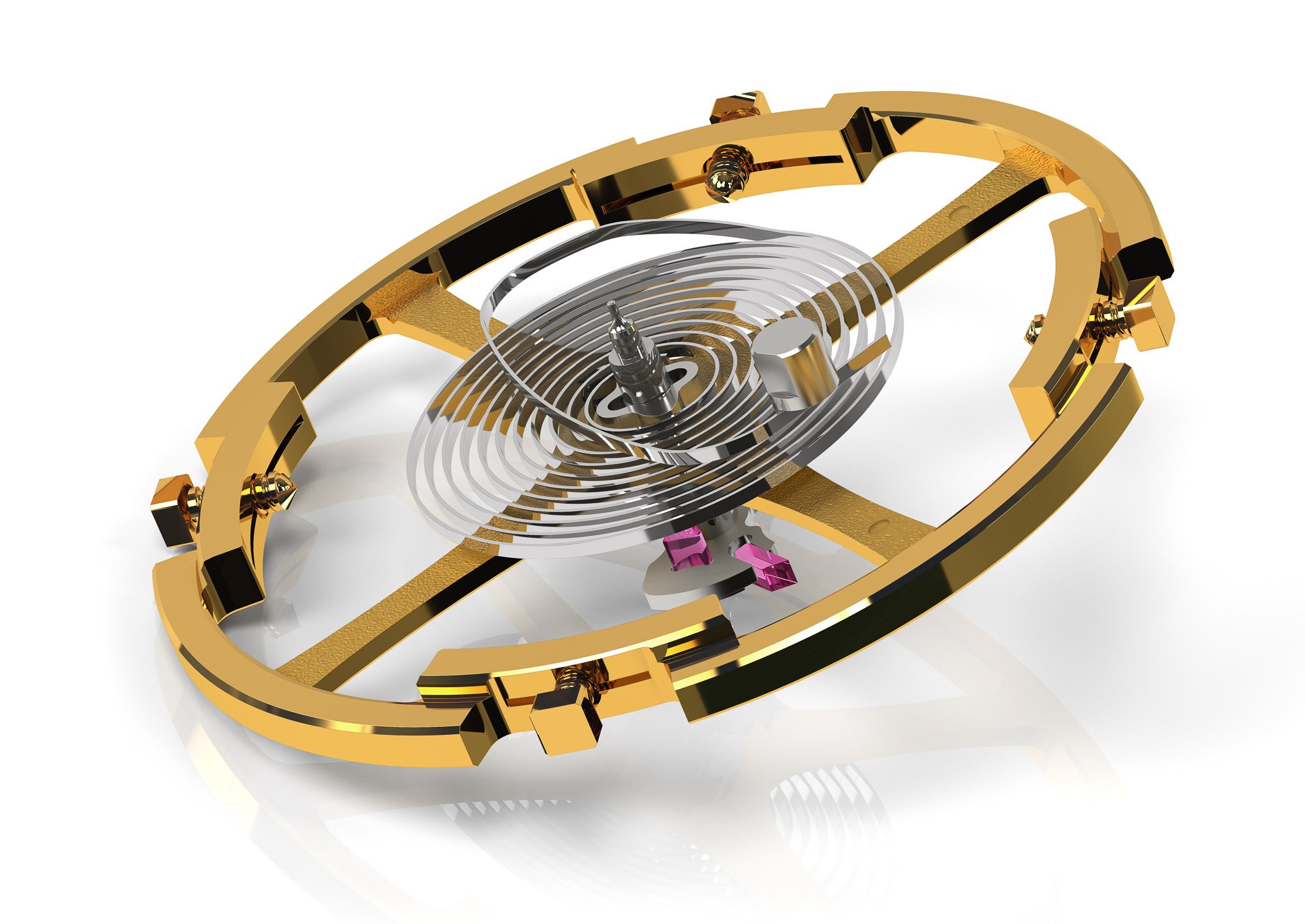
Finally, the 9SA5 also features a new free-sprung balance, with four screws that can be turned to fine-tune it. That way, it retains its precision for longer and is more resistant to shocks. While other 9S calibers use a flat hairspring, the 9SA5 uses an overcoil. After an impressive 80,000 computer simulations, Grand Seiko found that the spring’s performance improved in every position, thereby enhancing the watch’s isochronism. This means the balance wheel completes its oscillations in equal amounts of time, and the watch will keep time just as well whether it is fully wound or almost dead.
Grand Seiko’s Spring Drive movement uses a quartz-regulated electromagnetic brake. Therefore, it overcomes most of these typically mechanical problems. However, I have the utmost respect for the people at Grand Seiko for also trying to solve all these issues in a purely mechanical way. Offering both movements at the same time also shows that one isn’t “better” than the other. They’re both very impressive in terms of the effort and technology that went into developing them.
I hope I was able to convey why the Grand Seiko Hi-Beat 9SA5 is one of the absolute pinnacles of fully mechanical watchmaking. I will now let Thomas take the stage, but don’t forget: his Spring Drive movement isn’t fully mechanical. It’s almost as if he’s cheating a bit. I mean, it’s still impressive, but there are non-mechanical forces at work. All right, take it away, Thomas!
Thomas: Grand Seiko Spring Drive Evolution 9 U.F.A. 9RB2
Haha, thanks, Daan! Calling me a cheater just before the finish line sure drove your point home! In any case, good morning, Daan! And good morning, Fratelli!
Now, I could engage Daan and counter with a similarly technical analysis of Spring Drive. I could explain how this quartz-regulated brake works exactly and why it is horologically significant. I think, however, this discussion should be viewed from a slightly higher-level perspective. Let me elaborate.
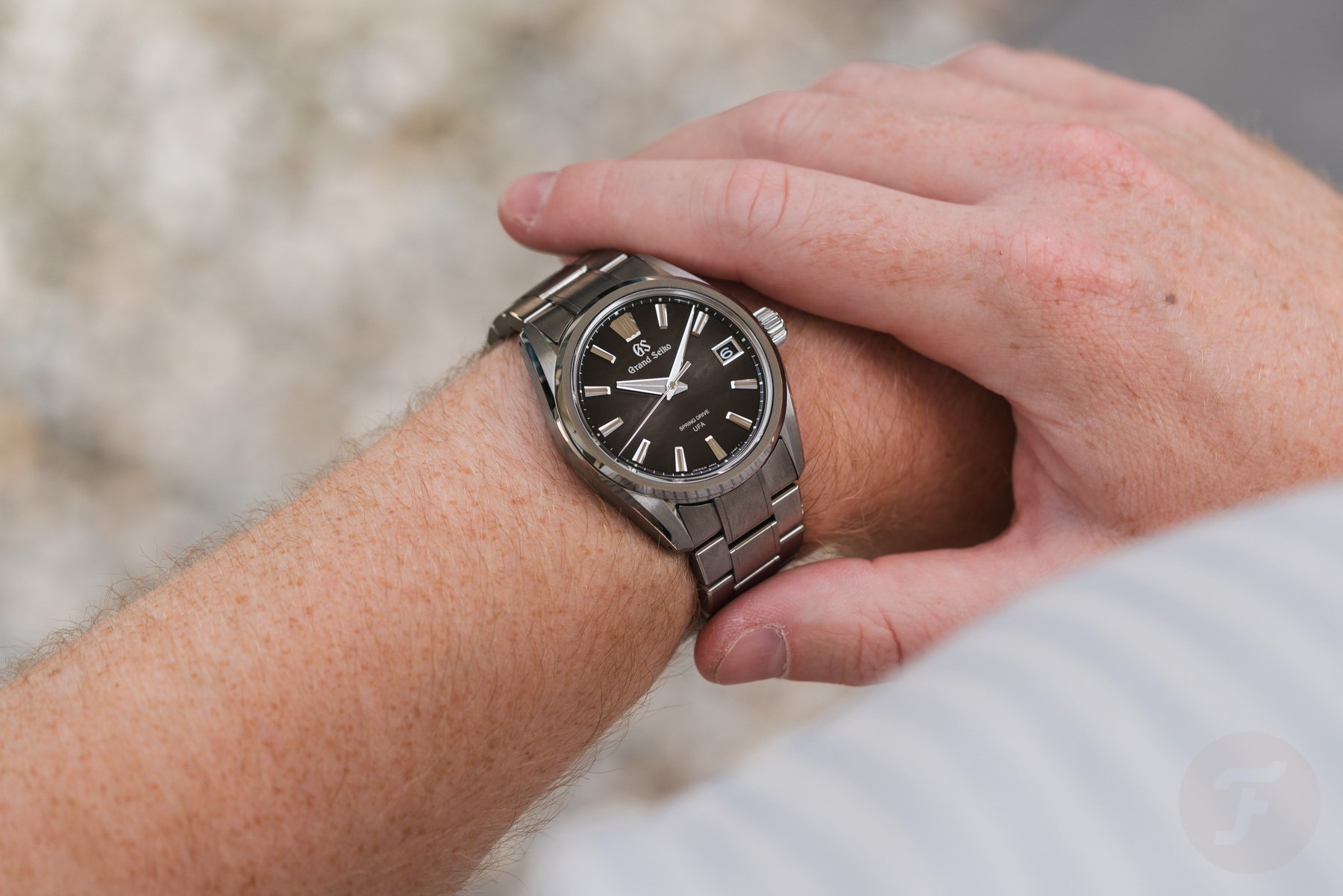
Grand Seiko clearly gives you a very direct choice here. The watches are virtually identical, even down to the price. So, you are presented with a choice between a more traditional and a more advanced version in the Hi-Beat vs. Spring Drive offerings. I will argue that there really is only one that makes sense.
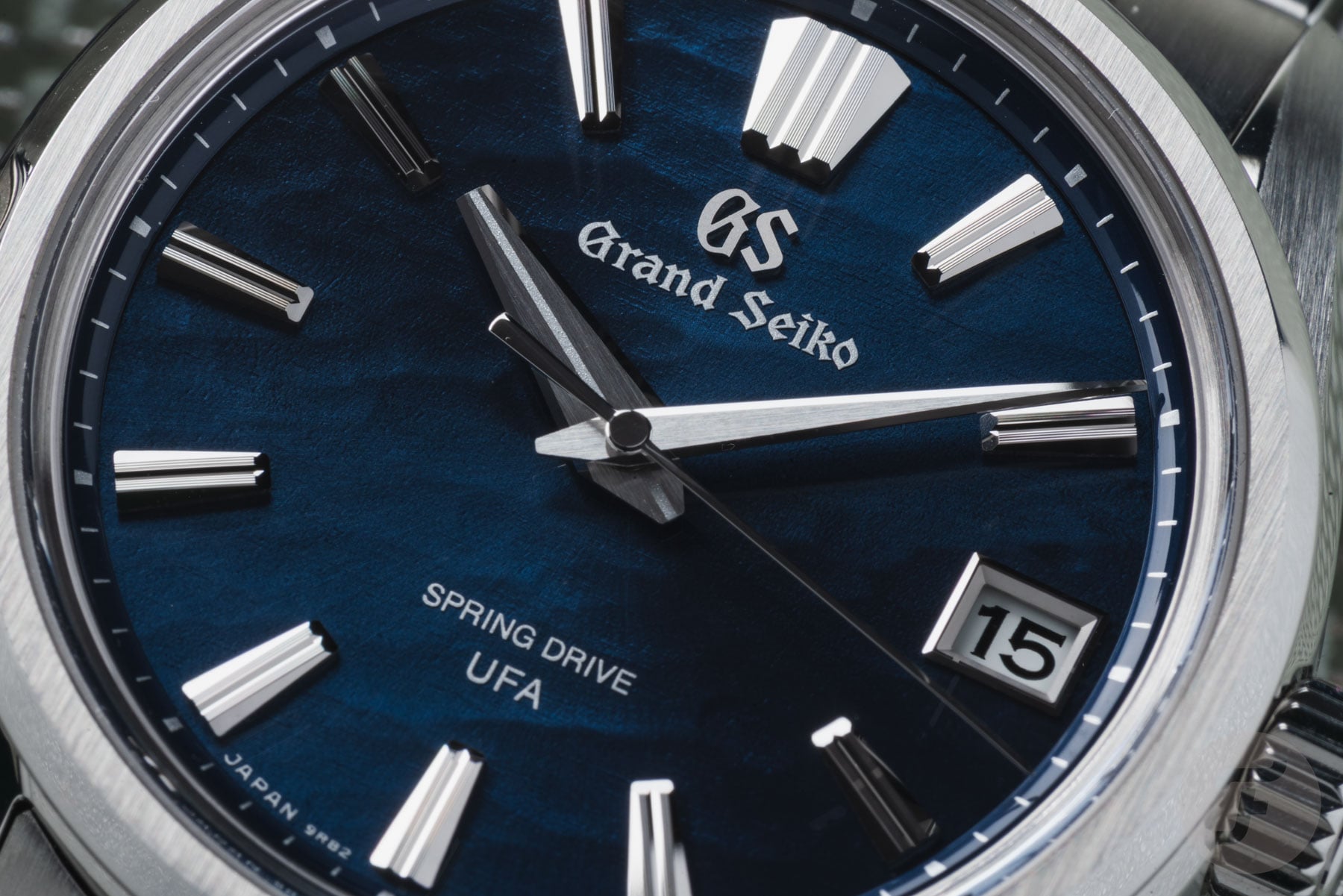
Hi-Beat vs. Spring Drive
Let’s zoom out and look at these watches on a conceptual level. Grand Seiko is about highly technical horology, executed to fantastic standards. The first part is key here. Grand Seiko speaks to the watch nerds in us. Even though the house claims plenty of history and some great designs, you don’t tend to buy a GS watch for those factors — or not a new GS, at least. I reckon the heritage and design buffs will seek out an old 44GS or something similar.
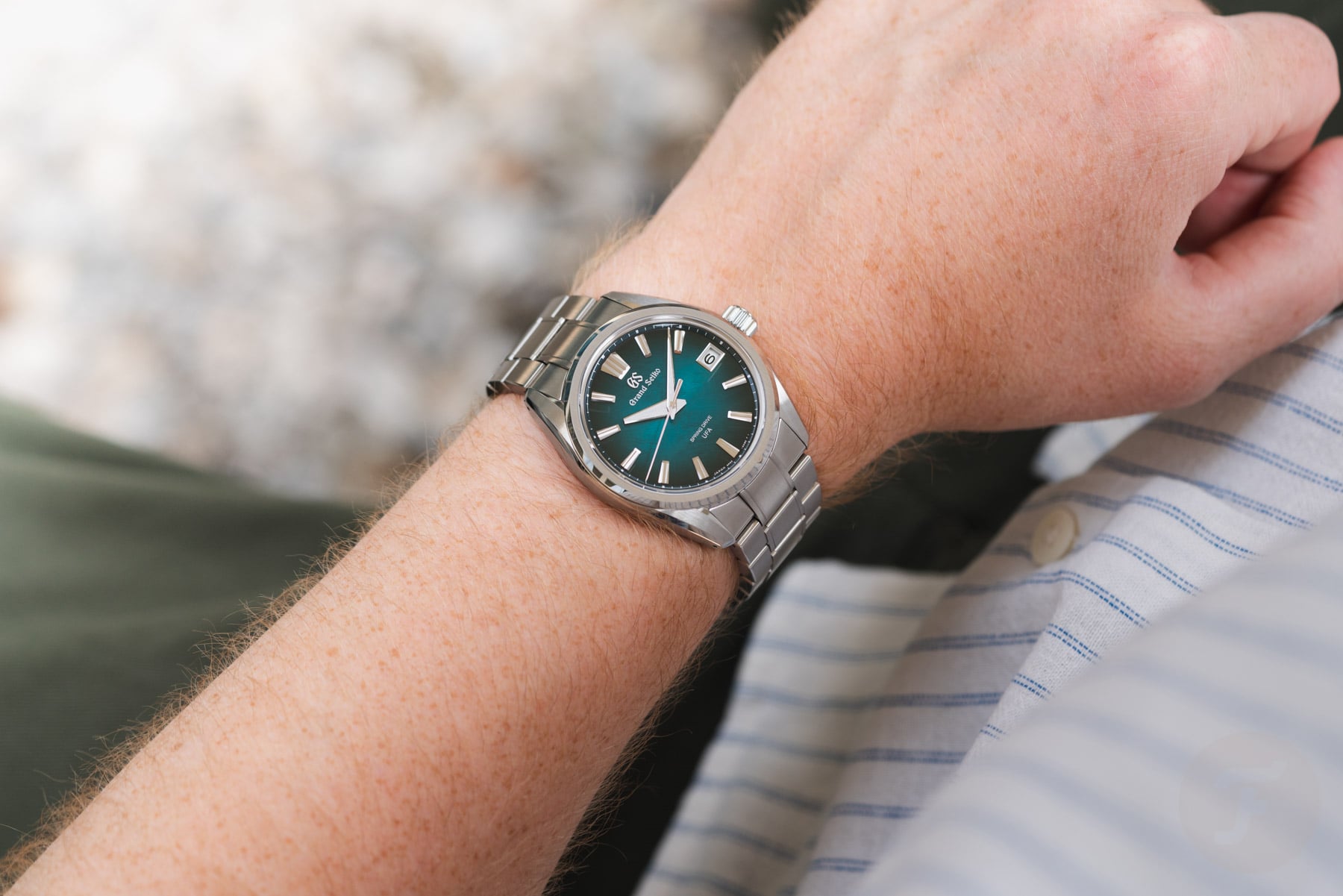
If you find yourself willing to drop €10k on a GADA-style watch, and Grand Seiko speaks to you, chances are you enjoy the techy side of things. In this respect, Spring Drive technology is probably right up your alley.
After all, the truly smooth sweep, hybrid technology, and ridiculous accuracy are a joy to interact with. It is one of those horological innovations that you can see and feel when handling the watch. A Spring Drive GS offers an experience unlike any model from competing brands.
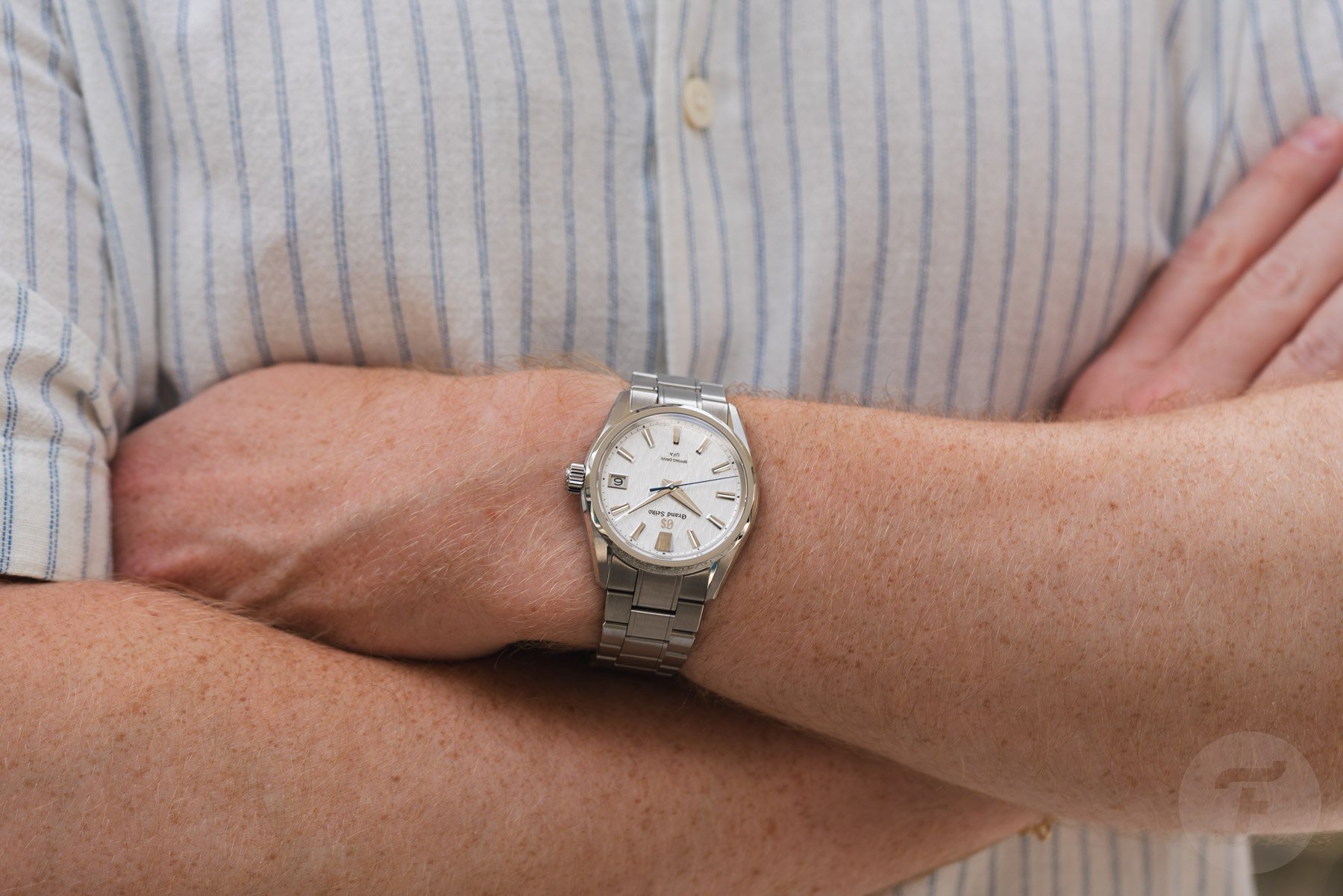
Hi-Beat vs. Spring Drive leaves just one obvious choice
The question of Hi-Beat vs. Spring Drive, at this point, becomes almost reversed: why would you ever not pick the Spring Drive variant? I am not arguing against any of Daan’s points. I agree that the Hi-Beat calibers are great. But they’re playing the same games as the competition, while the Spring Drive variants form a whole separate niche.
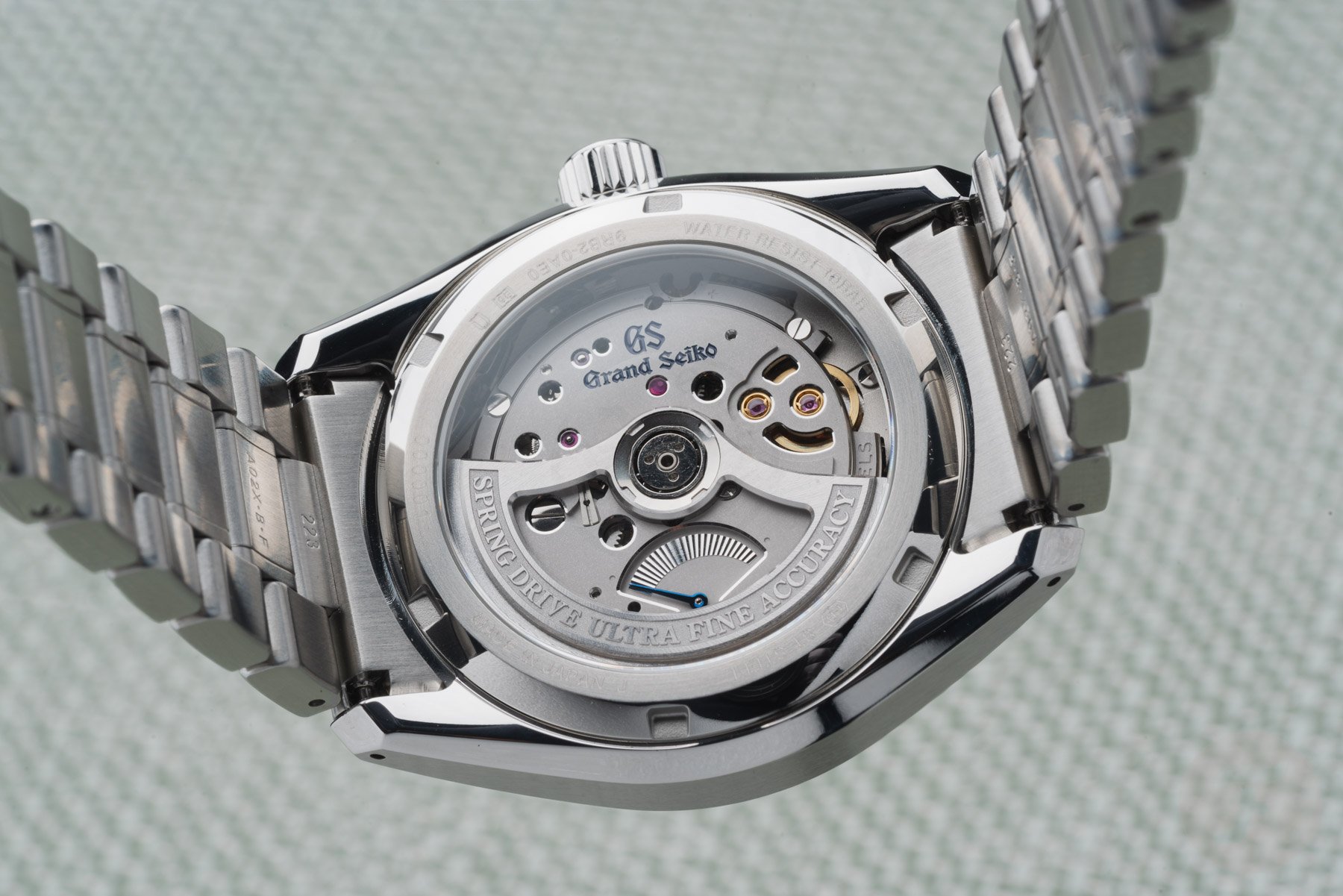
To me, it sounds a bit like “I want a Ferrari, but I don’t want it to be a sports car”. While I am sure Ferrari’s SUV is great, it isn’t where the brand excels against the competition, is it? Spring Drive is any Ferrari sports car, while the Hi-Beat is the SUV in this admittedly limping comparison. I am unsure you would go for a €10k Grand Seiko if you were looking for a simple, mechanical, versatile everyday watch. In my humble opinion, a few other brands probably play that game a bit better. Spring Drive completely turns that comparison on its head.
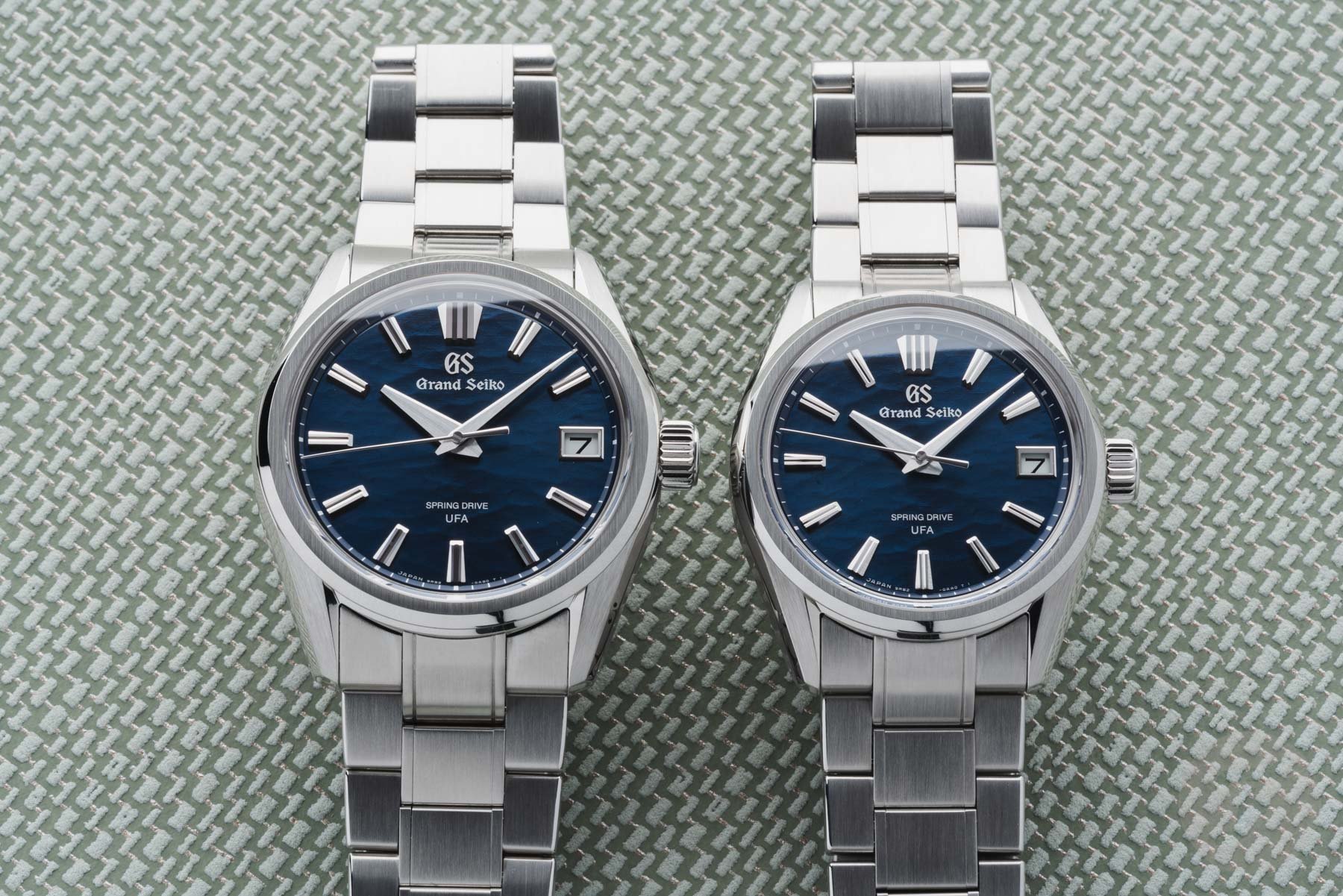
One final nail in the coffin of this debate is the availability of a 37mm option if you opt for Spring Drive. For the smaller-wristed among us (and those simply preferring smaller watches), the omission of this version from the Hi-Beat line settles the debate at the get-go.
Cast your vote
There you have it — Grand Seiko Hi-Beat vs. Spring Drive. Which would be your choice of the new Evolution 9 models presented this week? Cast your vote, and don’t forget to share your motivations in the comments section below!