The Best Watch I Have Ever Owned: The Jaeger-LeCoultre Geophysic Universal Time

The option of being like Thomas and picking the Rolex Explorer II for the best watch I have ever owned was tempting. I thought about it, and yes, my Explorer II 16570 “Polar” was a very good watch in many ways. But it wasn’t the best one I have ever owned. The biggest flaw? The way-too-white, almost lifeless dial. My white-dialed Grand Seiko Tough Quartz SBGX341 delivers on what I wanted from the Explorer II way better. Now, you may be wondering: why isn’t that “GS” the main topic of this article? The answer is simply: it’s because my Jaeger-LeCoultre Geophysic Universal Time is in every way the superior watch.
There are a few watches in my modest collection that I wouldn’t ever dream of selling. My glow-in-the-dark Chronoswiss Timemaster, for instance. I will never get rid of that seldom-seen hand-wound behemoth. The same goes for my Omega Speedmaster Replica 3594.50 because the combination of elements, such as the Broad Arrow hands and the steel-colored bezel, makes this watch a somewhat odd, yet perfect-for-me “Speedy.” The way the Grand Seiko Tough Quartz SBGX341 came into my possession was nothing short of watch karma, and besides that, it did what the Explorer II “Polar” couldn’t do: quench my thirst for a white-dialed allrounder. But none of them has what the best watch I have ever owned has. My Jaeger-LeCoultre Geophysic Universal Time has what all the aforementioned watches have, and then some. I will tell you what the extras are.
The best watch I have ever owned is the Jaeger-LeCoultre Geophysic Universal Time
Like the Chronomaster, you rarely see it. Like my Speedy, it has a couple of quirks. And like my quartz GS, the watch was destined to be mine. My Jaeger-LeCoultre Geophysic Universal Time combines all those elements. It was in 2015 (when the model was introduced in Brussels) that I first saw it. And it immediately touched my horological heart. First, because it has that hard-to-describe appeal of a world time watch. The dial with the world laid out in front of you is the stuff of dreams. As a kid, long before Google Earth/Maps, I could leaf through an atlas for hours looking for exotic names in faraway places. And my trusty globe also functioned as a reading light. My fascination with worldtimers is hardly surprising. When I got the chance to acquire a world time watch from a very reputable Swiss manufacturer, outfitted with a very interesting movement and a quirky touch on top, I had no choice but to fulfill a horological dream.
Inspirational world time watches
When you think about worldtimers, you think of Patek Philippe. It has long been one of the manufacturer’s defining specialties, with roots stretching back to the groundbreaking work of Genevan watchmaker Louis Cottier (1894–1996). His ingenious world time mechanism formed the basis for Patek Philippe’s first Heures Universelles wristwatch, the reference 1415, introduced in 1939. More recently, the 2000 ref. 5110 was the first serially produced world time reference and the stunning ref. 5130 made its debut in 2006. Ten years later, another beauty debuted, the ref. 5230. Unfortunately, these three, including the fantastic references that came after, are way out of reach.
Yes, I know there are affordable world-time watches from brands like Frederique Constant and Christopher Ward, but I’m sorry if I sound snobbish, but certain complications shine better when made by the grand names in watchmaking. A brand like Jaeger-LeCoultre, for instance.
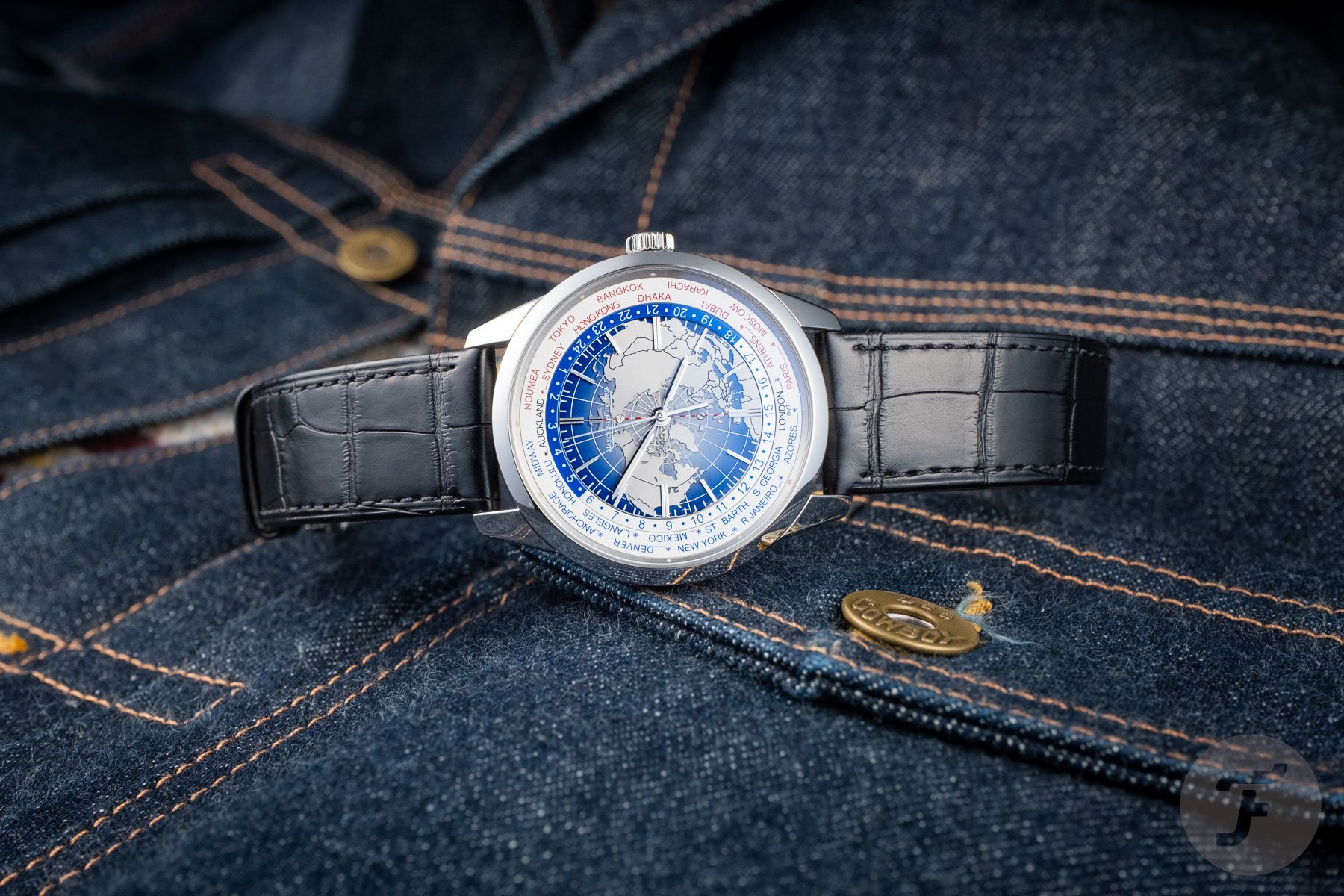
Another case of watch karma
The origins of JLC’s Geophysic collection trace back to 1958. The original Geophysic ref. E168 was only in production for less than a year. It was a timepiece specially constructed for scientific research missions to some of the world’s harshest, unexplored regions. I first encountered the modern interpretations of that adventurous watch in 2015 in a not-so-unexplored place, Brussels, Belgium. This is where a quartet of Geophysic watches was introduced to the BeNeLux press. Both the three-handed Geophysic True Second and Universal Time in steel and rose gold impressed me a lot. Especially the Universal Time in steel, a watch outfitted with a practical complication and adorned with a world map in fresh colors, with blue dominating its face. Unfortunately, upon learning the price of €14,600, I had to put my desire on hold.
Still, the memory of the watch’s sophisticated yet powerful appearance, its interesting movement with a Gyrolab balance wheel, and its solid-gold rotor lingered. Ten years after the watch’s introduction and six years after its discontinuation, I came across the steel Geophysic Universal Time under different stars. Now I could afford it, and so I didn’t hesitate for a deadbeat second and bought the watch.
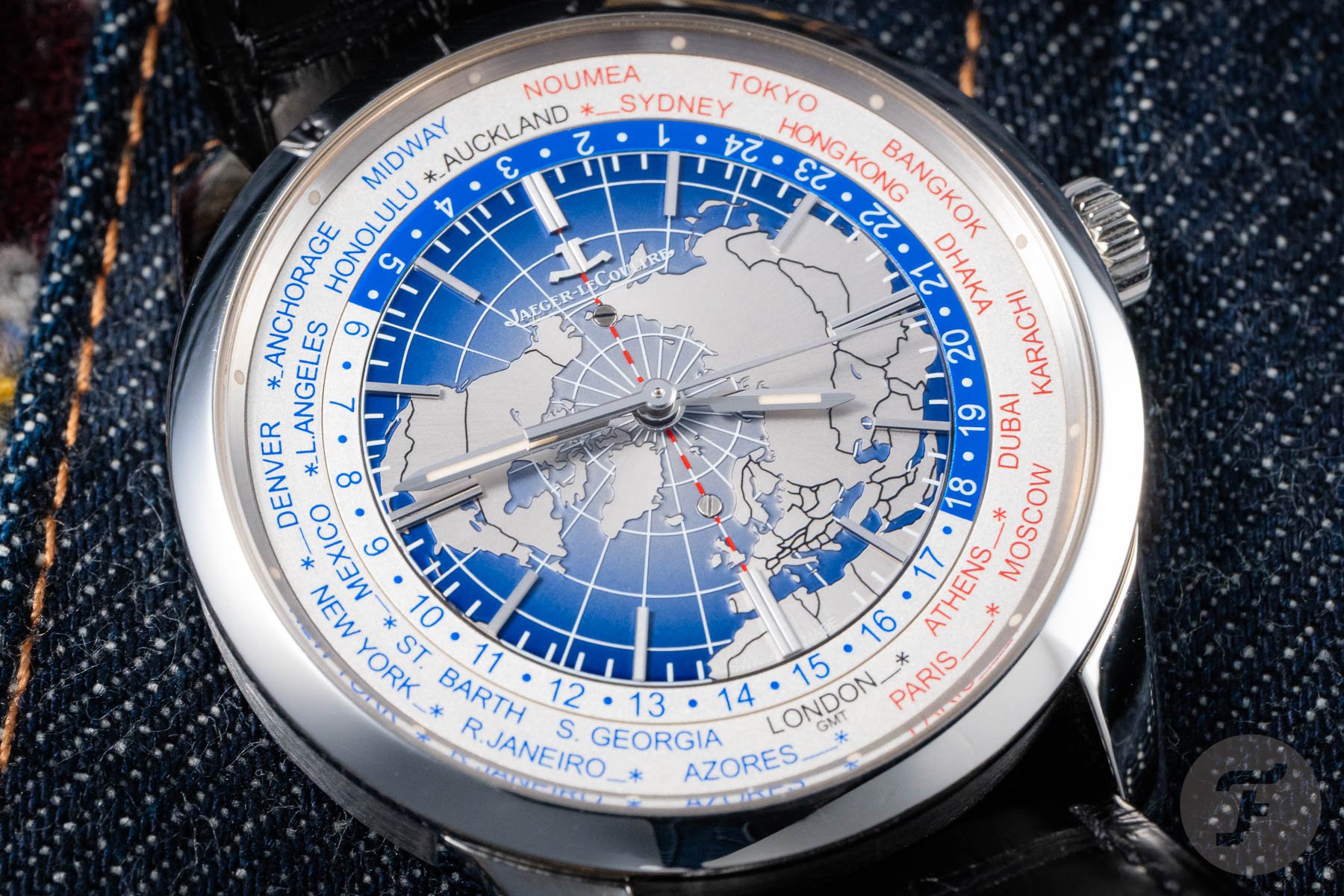
Living with the Geophysic Universal Time
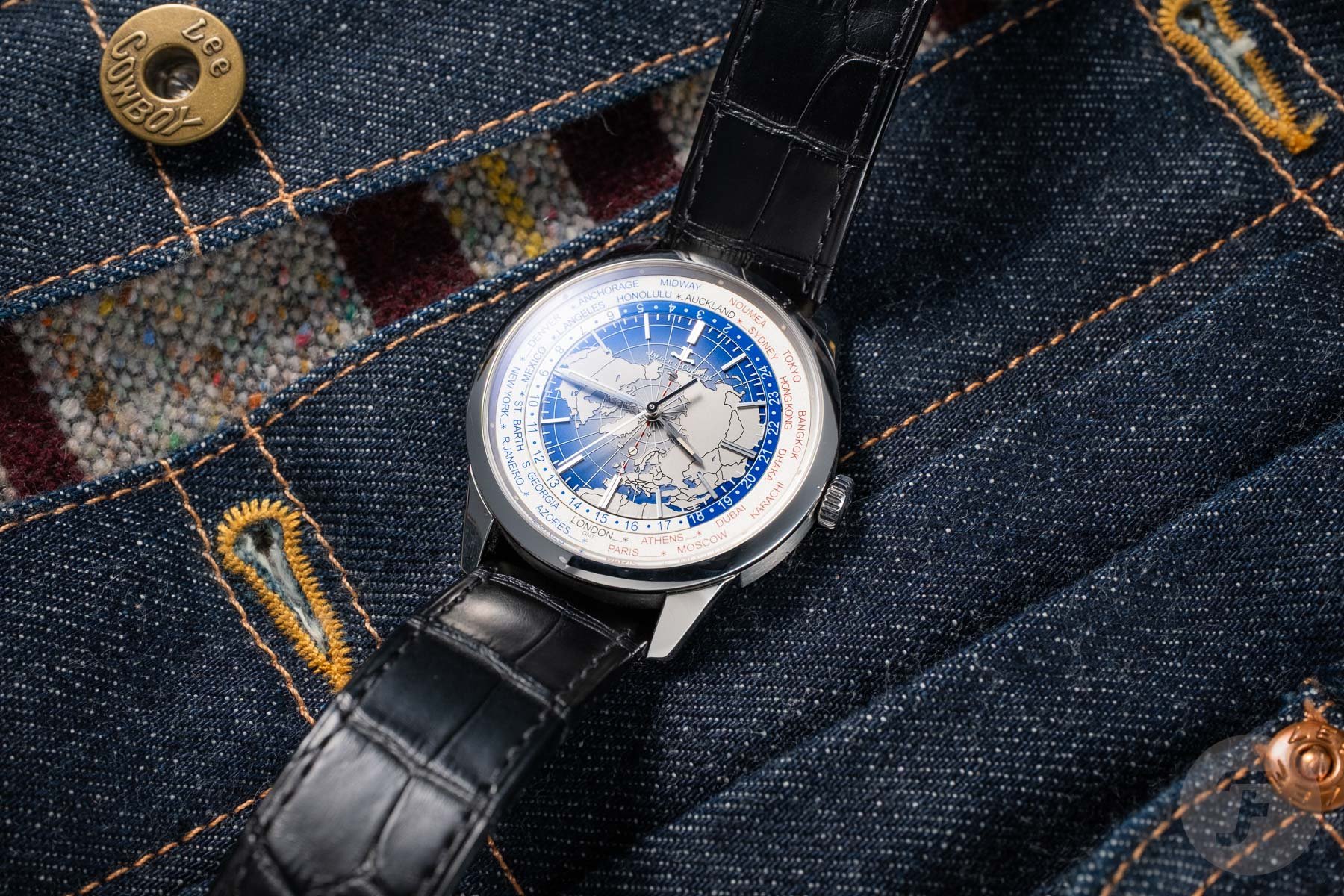
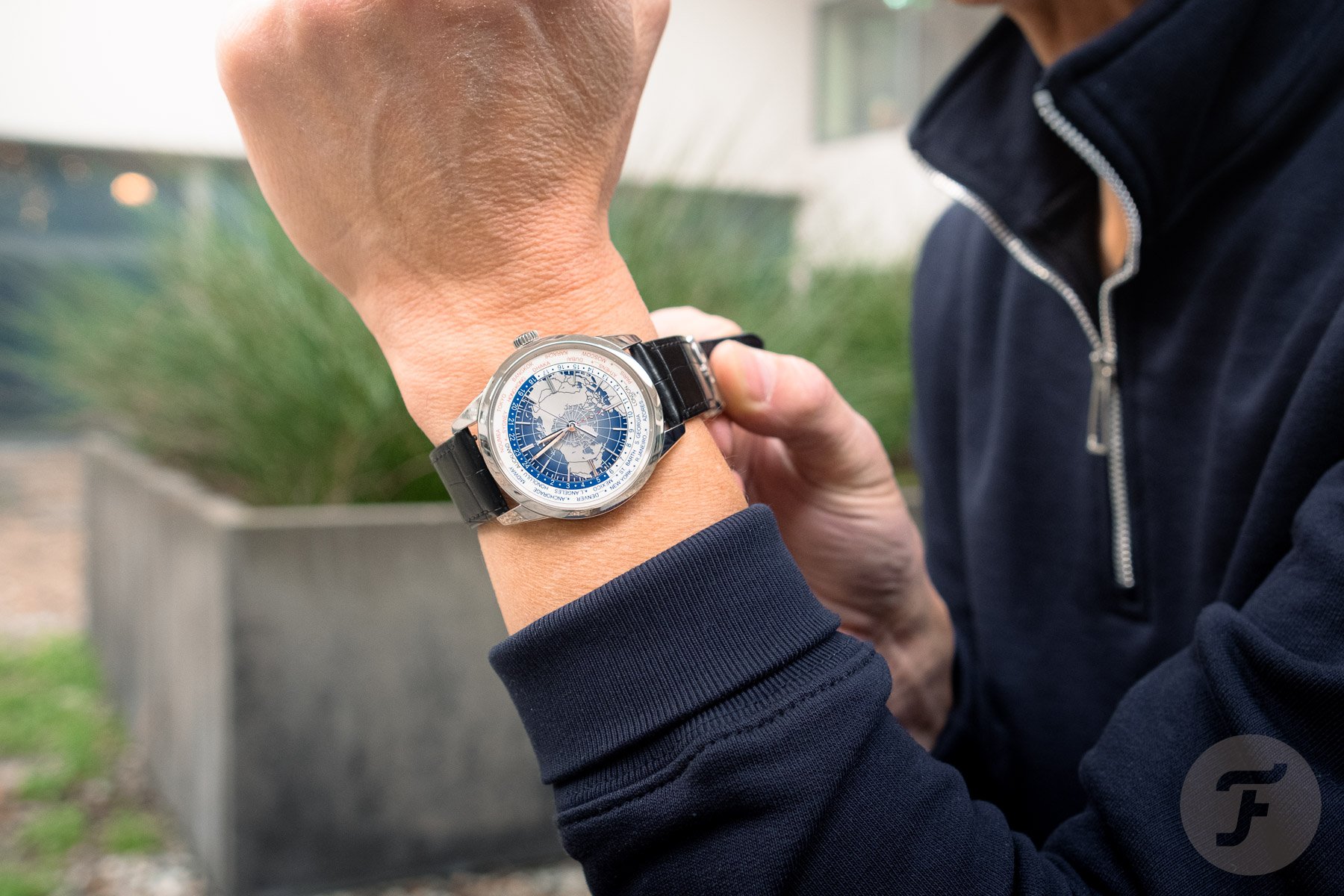
Did the Geophysic Universal Time live up to its expectations and years of consciously and unconsciously thinking about it? Well, yes! Let’s start with the watch’s most noticeable feature, the world-map dial. It shows oceans and seas in multiple shades of lacquered blue, and the continents feature a sunburst finish. Applied hour markers help you read the time easily, paired with the rather straightforward, elegant hands filled with just the right amount of luminous material.
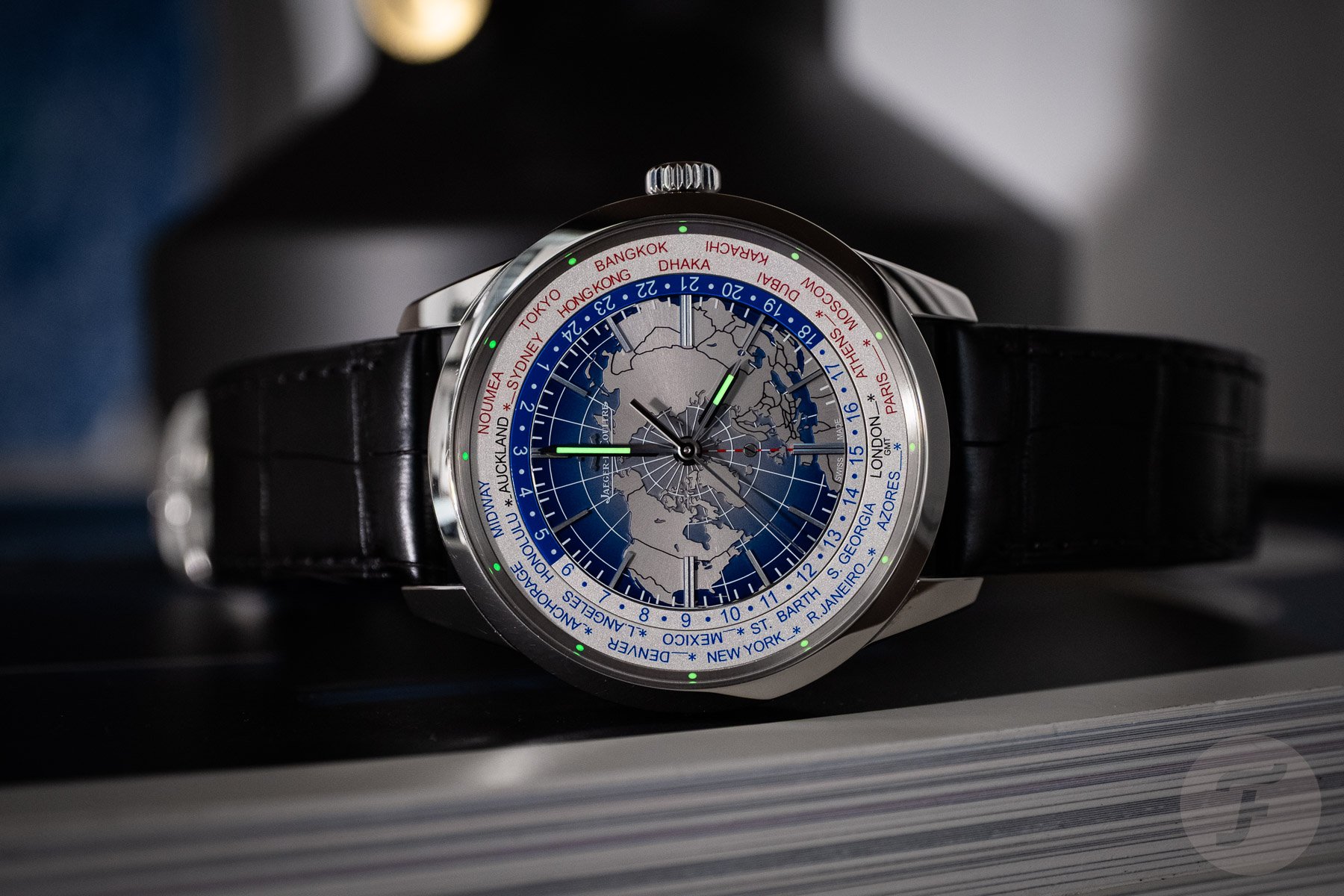
A central 24-hour ring rotates continuously in sync with the hour and minute hands, which you operate via the crown rather than a separate pusher, borders the dial featuring a fixed city ring. This feature lets you read the time in 24 major world time zones simultaneously. Once the “universal time,” or second time zone, is set, it won’t need to be adjusted during travel. You simply adjust the local time by moving the hour hand backward or forward. And it moves independently of the minutes and deadbeat seconds JLC calls “true seconds,” to prevent loss of precision.
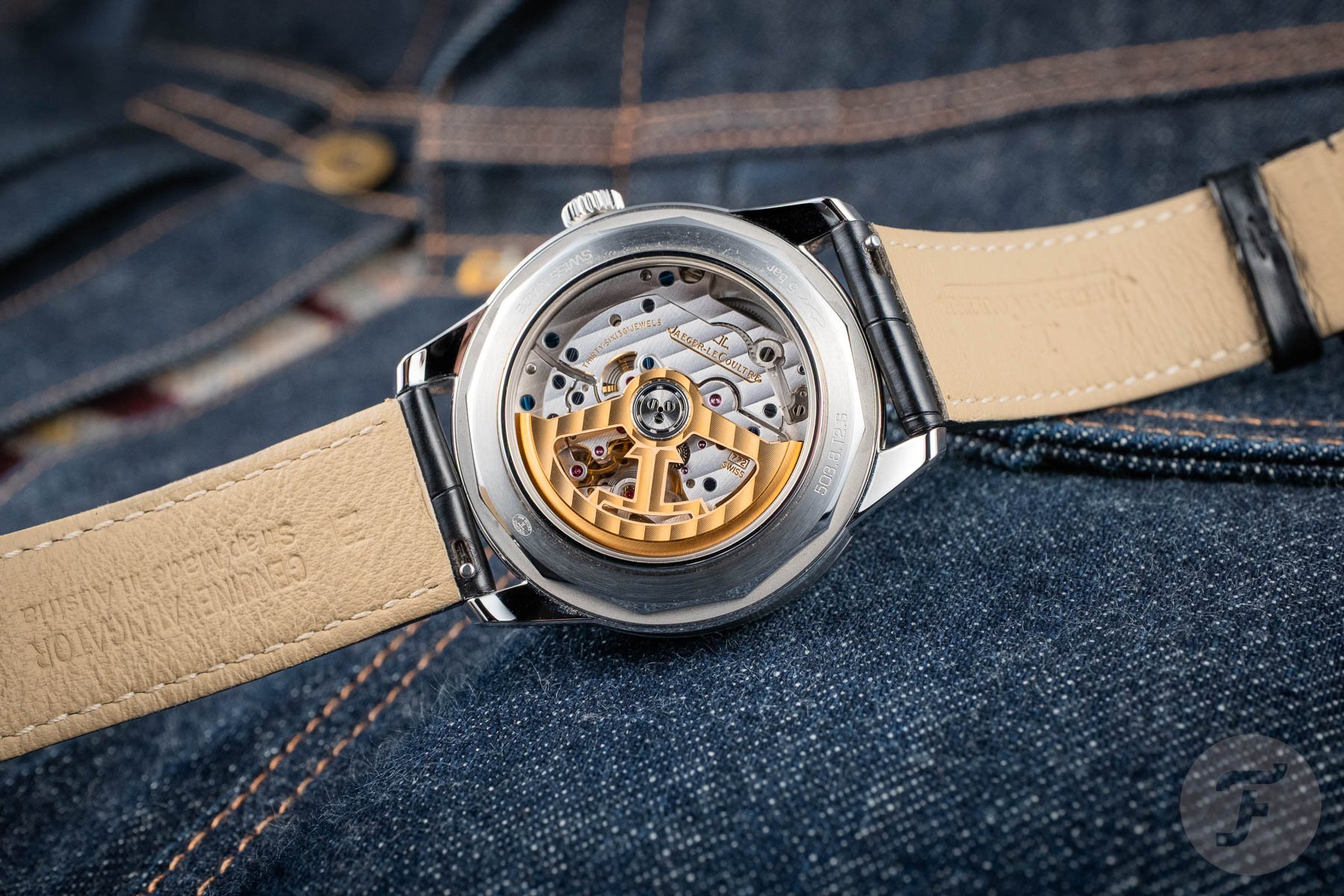
Emotion through (a) movement
Apart from having a very appealing, prominent world map and all those exotic destinations on the moving city disk to daydream about, the watch has a second feature that quite literally ticks a horological box: deadbeat seconds. JLC renamed the concept of a seconds hand that moves in steps of exactly one second to make it sound less morbid, I guess. Still, deadbeat seconds sounds better to my ear. Anyway, it’s JLC’s automatic in-house Caliber 772 that makes everything happen. You can take a look at it through the see-through case back, and it looks the part. It’s pretty obvious the watch doesn’t use a glorified ETA clone or something like that. The finishing is at a very high level, and also the 18K gold, gloriously finished rotor, which spins on ceramic ball bearings, is a sight to behold.
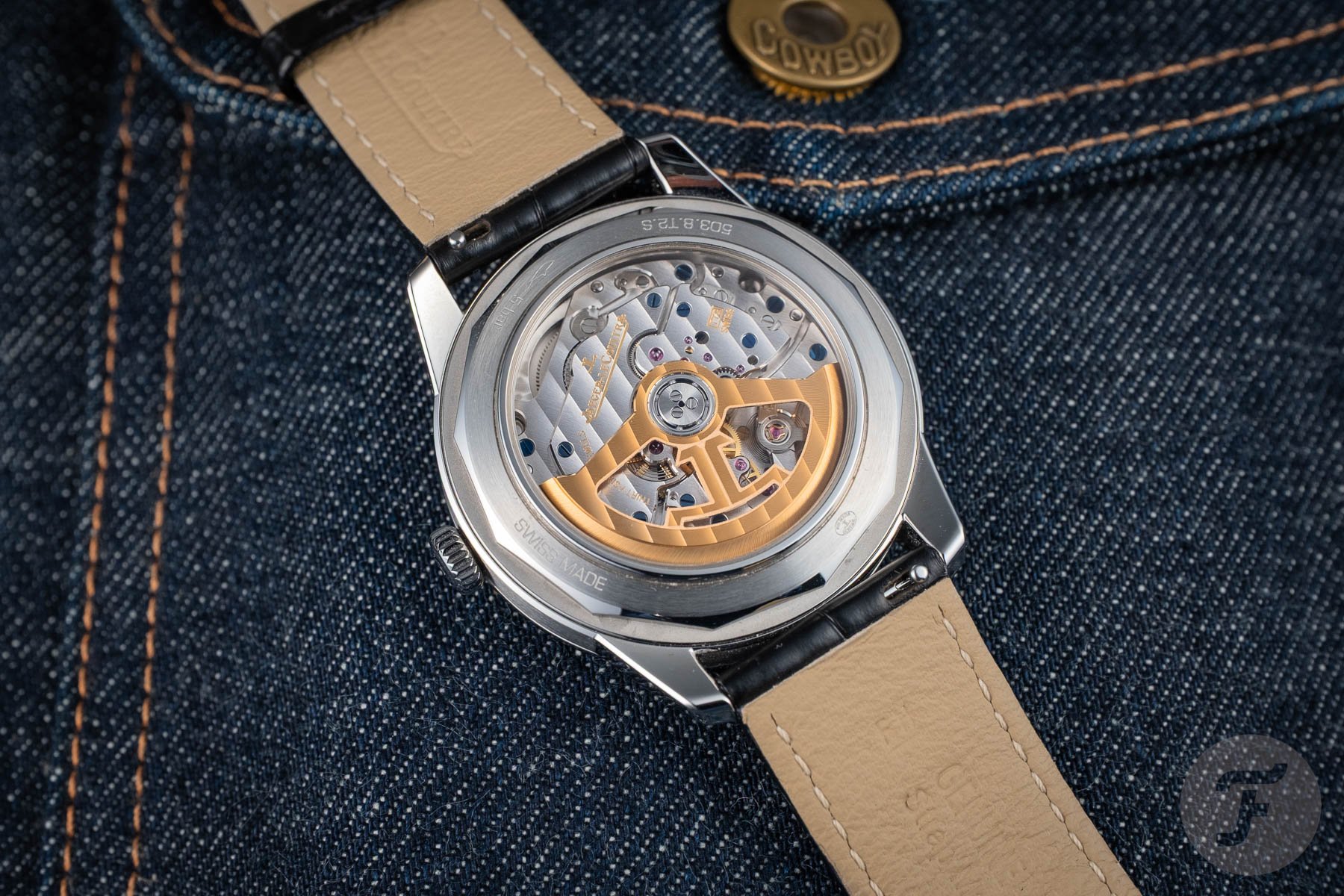
Probably the most interesting and fascinating feature of the Caliber 772 is the Gyrolab balance wheel. It’s not your ordinary round balance wheel; instead, it’s shaped a bit like a TIE fighter from Star Wars. The Gyrolab balance wheel first appeared in 2007 in the experimental Master Compressor Extreme Lab 1 watch. And the Geophysic collection marked the balance wheel’s debut in a series of regular-production watches. The idea behind the semicircular balance wheel is that a smaller size and more aerodynamic shape improve energy management and increase accuracy. According to JLC, the balance wheel offers a 15% performance improvement over a traditional balance.
How it wears
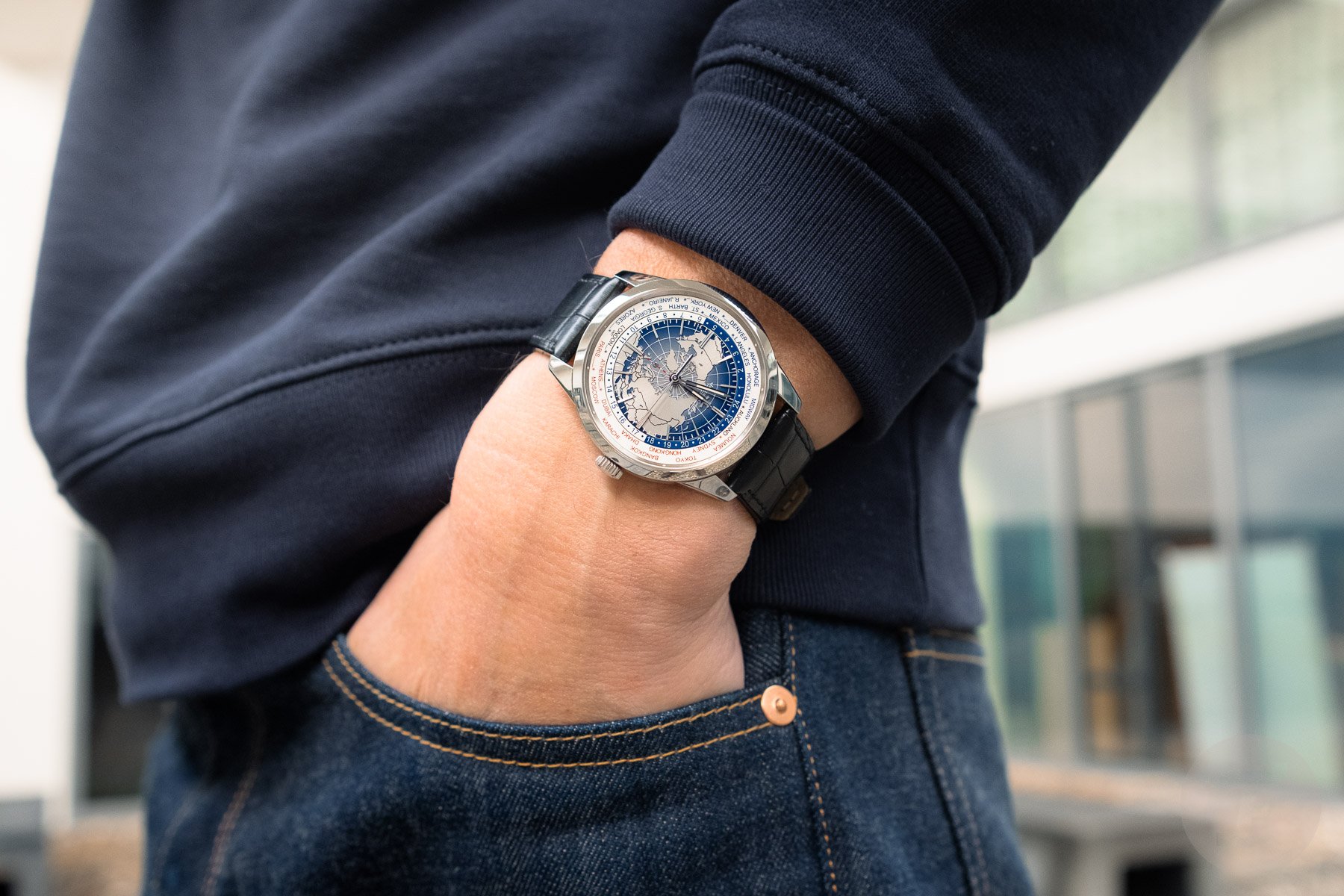
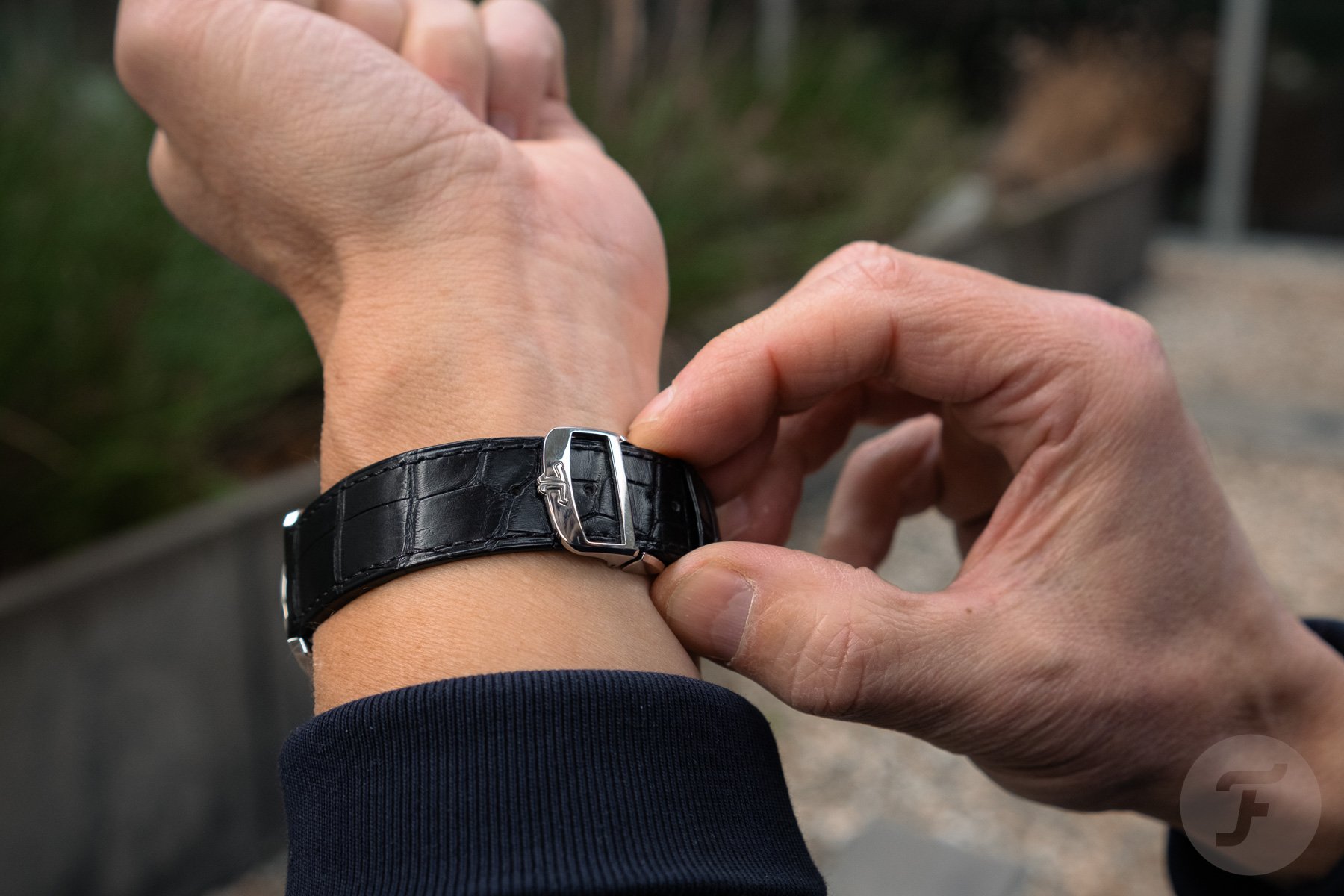
With a 41.6 mm diameter, an 11.84mm thickness, and a 49.5mm lug-to-lug length, the watch can be labeled medium to large depending on the size of your wrist. On my 18 cm circumference wrist, it’s an M/L, and that size works for me. You can wear it discreetly and a bit under the cuff, but with short or rolled-up sleeves, it becomes a hard-to-ignore timepiece. It’s not just the dial that catches the attention. The lugs, for instance, are highly polished and they contrast brightly with the brushed finish of the case side. The watch came with a black alligator leather strap and a folding clasp, but to change the character a bit, I very recently switched it to a denim-blue goat-leather strap. It makes the watch a bit sportier, but it doesn’t beat the original look. A look that might seem a tad conservative, but looks quite timeless in real life.
What makes it the best watch I’ve ever owned
The looks, heritage, complications, finishing, and brand perception are the main reasons the Jaeger-LeCoultre Geophysic Universal Time is the best watch I have ever owned. The second is the story of how I went from admiring it in 2025 to acquiring it a decade later: a veritable case of watch karma. The third is the fact that every time I wear the watch, I fall in love with it all over again. It feels just right on the wrist in every single way imaginable. I feel proud to own, wear, and enjoy it. And I don’t think I will ever get bored with looking at the world on my wrist and thinking of destinations to explore.
What’s the best watch you’ve ever owned? Let me know in the comments section below.