Sunday Morning Showdown: Orient Star Sakigake Three Hand Vs. Tissot Gentleman 38mm

It’s Sunday morning, which means it’s time for another installment of Sunday Morning Showdown. This week, we’re pitting two affordable daily wearers against each other. They represent different sides of the watchmaking world, with one hailing from Switzerland and the other from Japan. But both brands have gained a lot of respect from watch enthusiasts globally over the past few years with their releases. This makes today’s matchup between the Orient Star Sakigake Three Hand and the Tissot Gentleman 38mm an interesting one. Grab a nice cup of coffee and get ready to vote!
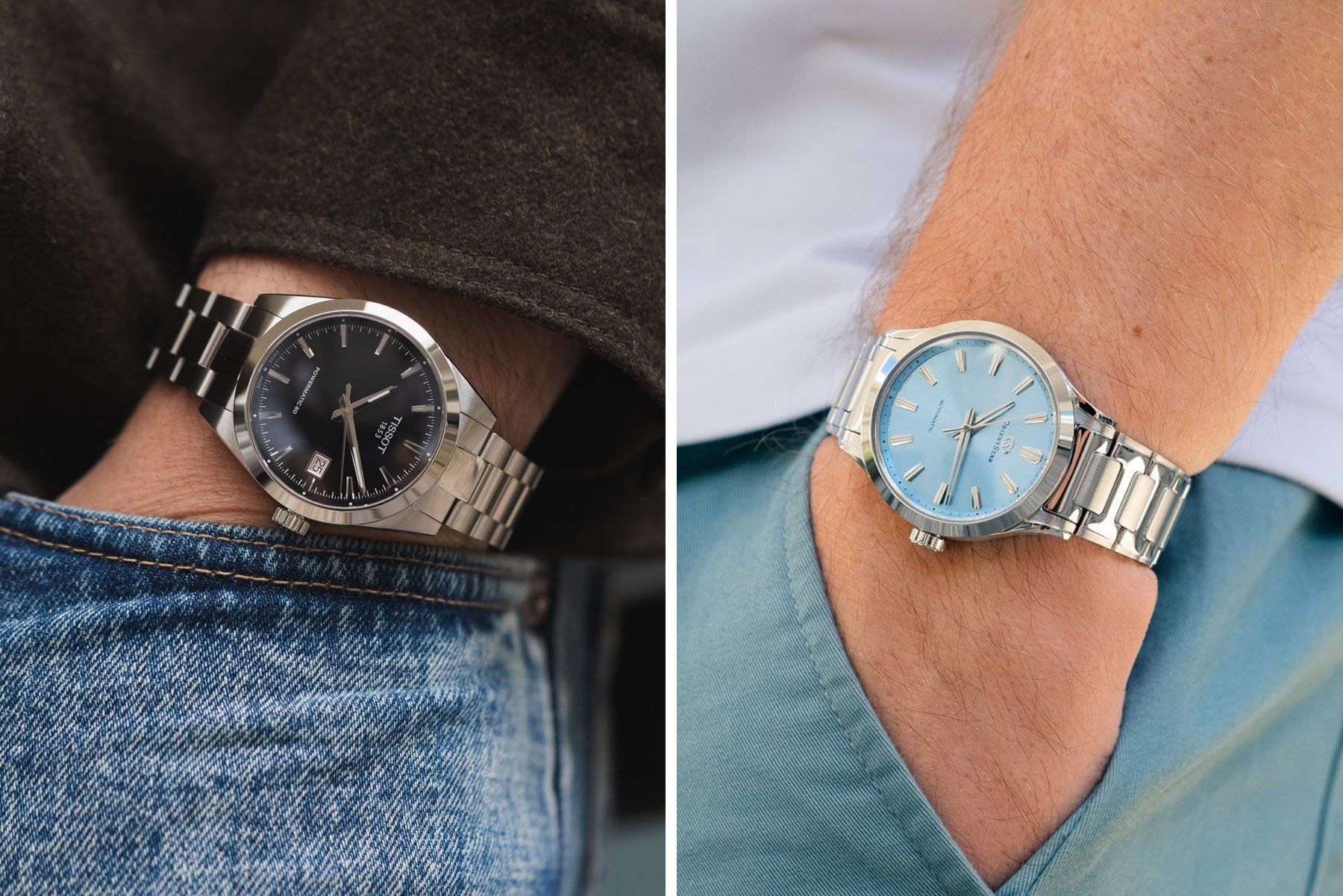
Today, Robert-Jan returns to the series for the first time in quite a while. He goes up against Jorg with the Tissot Gentleman 38mm. The watch came out this spring and is the smaller brother of the popular 40mm Gentleman. As Thomas explained in his review, the new series also features slightly different dials, but the overall style and friendly €795 price have remained. Today, it goes up against the Orient Star Sakigake Three Hand that Ben reviewed last week. Orient Star unveiled this brand-new series to celebrate its 75th anniversary. The Sakigake strips down the usual dial design, which often includes a power reserve indicator. The dial is paired with an intriguing overall design, and the watch costs €880. Can the Japanese Sakigake beat the Swiss Gentleman? You decide!
Last week, on Sunday Morning Showdown…
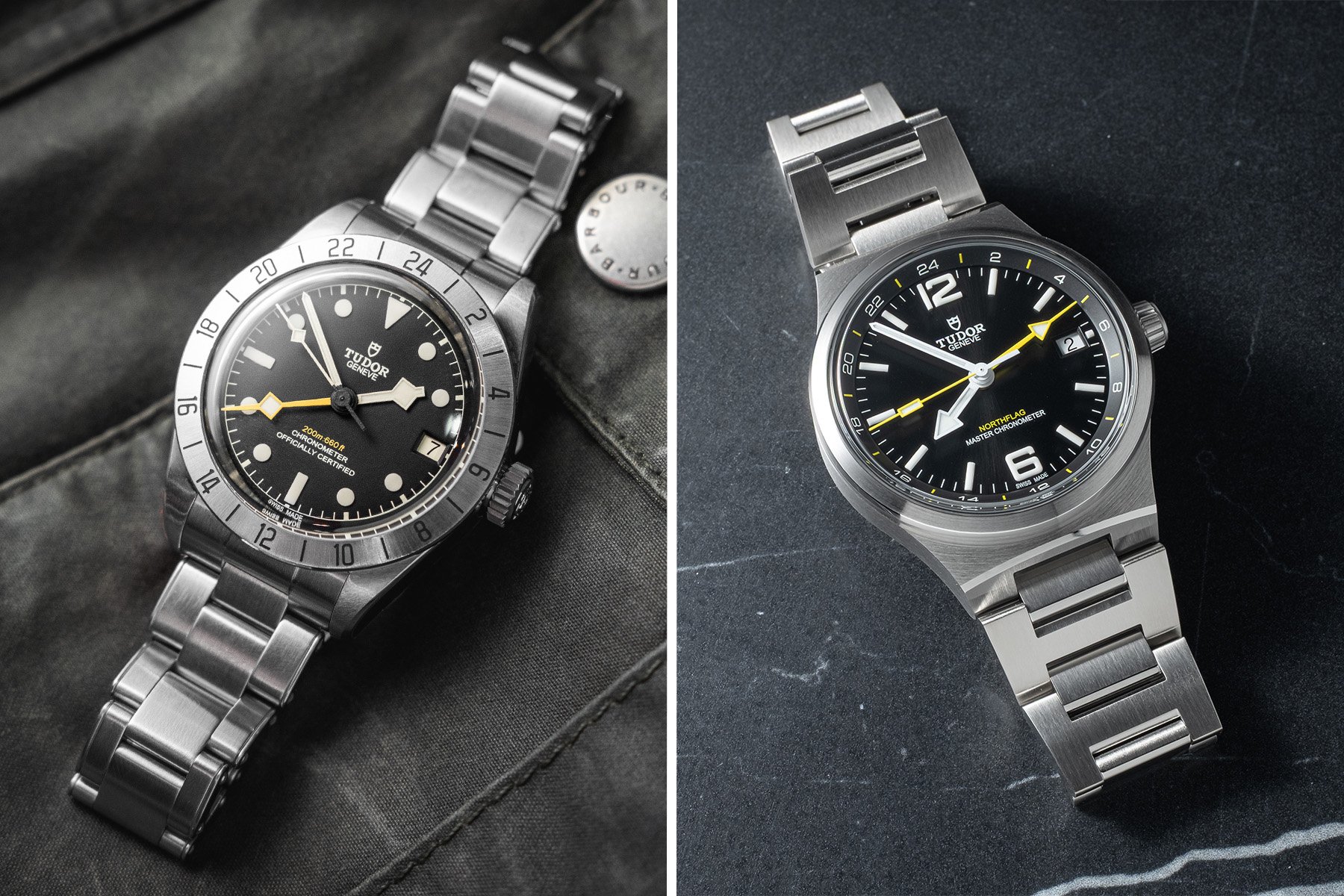
Before we get into today’s showdown, let’s briefly look at last week’s results. In that battle, we put two Tudor GMTs up against each other. The new Northflag, which debuted during Geneva Watch Days, stood its ground against the Black Bay Pro, a favorite among Tudor enthusiasts. We don’t see a tie all that often in our Sunday Morning Showdown series, but last week’s battle ended up with both watches taking 50% of the votes. Each has a dedicated following for several reasons, and it shows there is room for both in the Tudor collection. It will be interesting to see how well the Northflag does commercially for Tudor, but that is all in the future. For now, we’ll pass it over to Jorg and Robert-Jan for this week’s battle.
Jorg: Orient Star Sakigake Three Hand
Welcome back to the Sunday Morning Showdown series, Robert-Jan! It’s been a while since we battled it out. When we talked about this week’s contestants, I was a bit conflicted at first. While I like the Tissot Gentleman quite a bit, the new 38mm model was somewhat disappointing when it arrived at our office. On the other side, we have the Orient Star Sakigake Three Hand, which I like, but it does have a few quirks that raised an eyebrow or two. In the end, I chose to defend the quirkiness of the Orient Star over the dullness of the Tissot. Yes, you read that correctly. I’m sure I’ll anger quite a few people with my assessment of the Tissot Gentleman, but winning this one requires a couple of sharp observations.
Let me start by saying that the Gentleman is an understandably popular series of daily-wear watches. Let’s be honest, though: it doesn’t hold a candle to the Tissot PRX. I am a proud owner of a black-dial PRX, and the character of that series is completely absent from the Gentleman. Whereas the PRX recalls a classic model from the brand’s history, the Gentleman is simply a modern watch. A quick peek at the press materials shows that lack of character. The brand states, “The Gentleman 38 is designed for individuals who appreciate well-balanced design and approach daily life with patience and composure, a reliable piece made to follow them naturally from one moment to the next.” It reads almost like, “If you are looking for a watch, we have one for you.” But why would you pick it?
The Tissot Gentleman 38mm feels sterile
You choose the PRX because it has a history worth checking out and a design that oozes ’70s character. So when a friend of mine was contemplating buying a green-dial Gentleman 40mm, I told him to try the 40mm PRX with the same dial color. It took him all of five seconds to change his mind and roll with the PRX, and he hasn’t looked back since. Why am I telling you this?
Well, in general, we like a bit of character, and I find that lacking with the Gentleman 38mm. It feels too perfect, which makes it sterile. As humans, we often appreciate quirks and defects because they evoke emotion. It’s as simple as understanding that what people remember most about Cindy Crawford isn’t just her stunning looks. Rather, it’s the mole on the left side of her upper lip that most people point out, making her more than just pretty.
Quirks make a design feel human and give it emotion
We love quirks and imperfections like this, and that extends to watches. Just look at the world of Rolex collecting, which is built on quirks, misprints, defects, and, of course, scarcity. People love these things because they add emotion, and the Tissot Gentleman 38mm lacks that human touch for me. Or it hides it well, actually. You see, the one 40mm model I love is the green-dial Gentleman Powermatic 80 with the crosshair dial. Two simple lines that add some detail make all the difference for me.
And what did Tissot’s designers do for the smaller model? They created imaginary crosshairs by using a finish the brand calls pyramidal sunburst. It cuts the sunburst pattern into four pizza slices, each with a different direction. If you ask me, they should have stuck with the crosshairs. At least that is a visible quirk, whereas the pyramidal sunburst is a hardly visible, odd design choice.
The progress of Orient and Orient Star
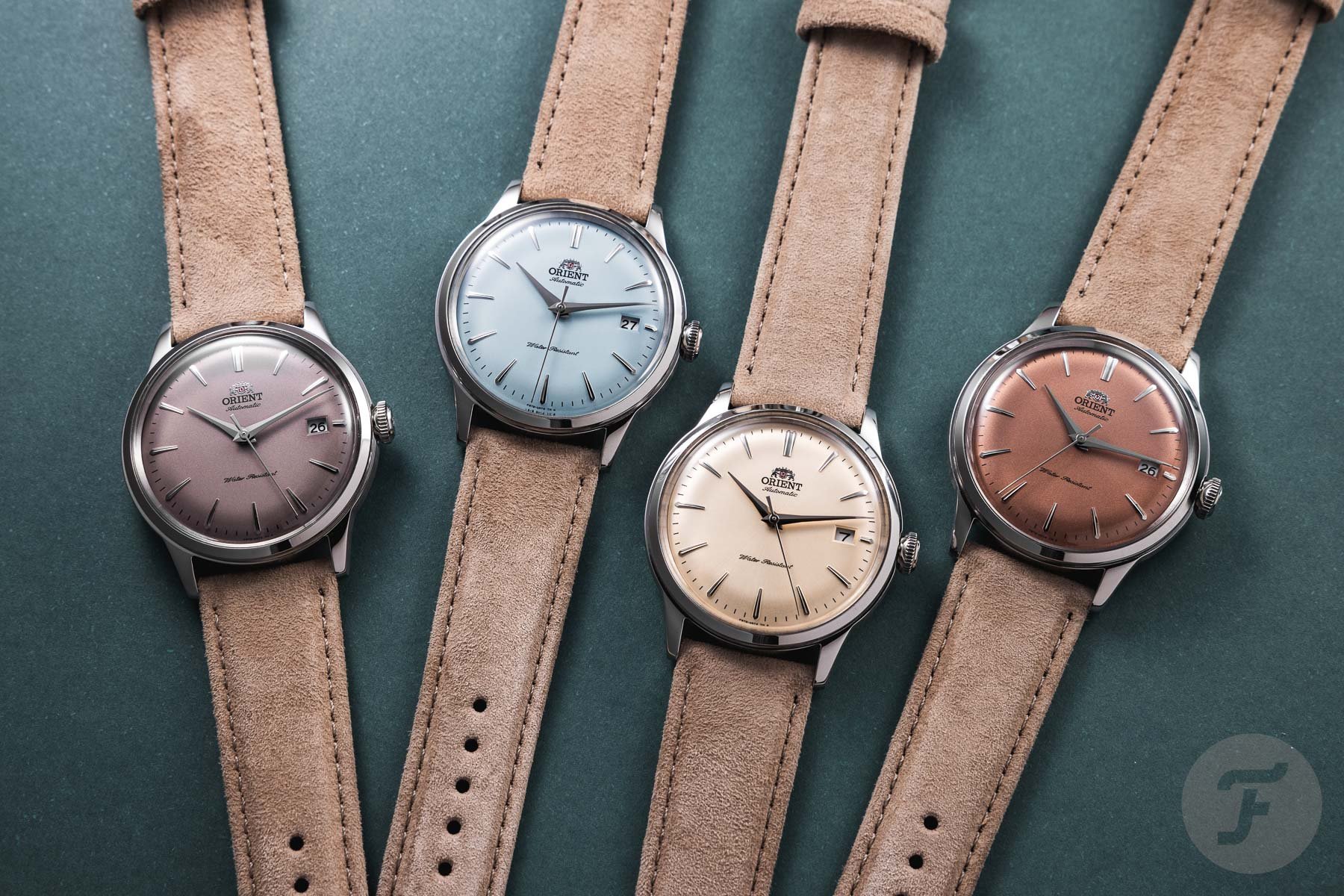
Over the past few years, Orient and Orient Star have steadily built momentum and gained widespread praise from watch enthusiasts worldwide. As most of you know, Orient is the entry-level brand, with a catalog that includes some of the best budget-friendly watches out there. I love what the brand has done with the Bambino and Mako collections. Some of my favorites include the Bambino 38 models with the special dial colors from 2023, the Bambino 38 Small Seconds, and the recently introduced Mako 40 models with gradient dials. If you are looking for an affordable watch, Orient has definitely become a go-to brand.
Orient Star is a step up in terms of quality and calibers, resulting in more premium offerings. While the prices are still reasonably affordable, the watches show great attention to detail in build quality, assembly, and finishing, which is often done by hand. But the one thing that always hindered my enthusiasm is the design of many Orient Star timepieces. In particular, the signature power reserve indicator at 12 o’clock is just not for me. I know the brand’s fans celebrate this signature element, but that is not the kind of quirk I am after.
The design of the Sakigake Three Hand makes more sense on the wrist
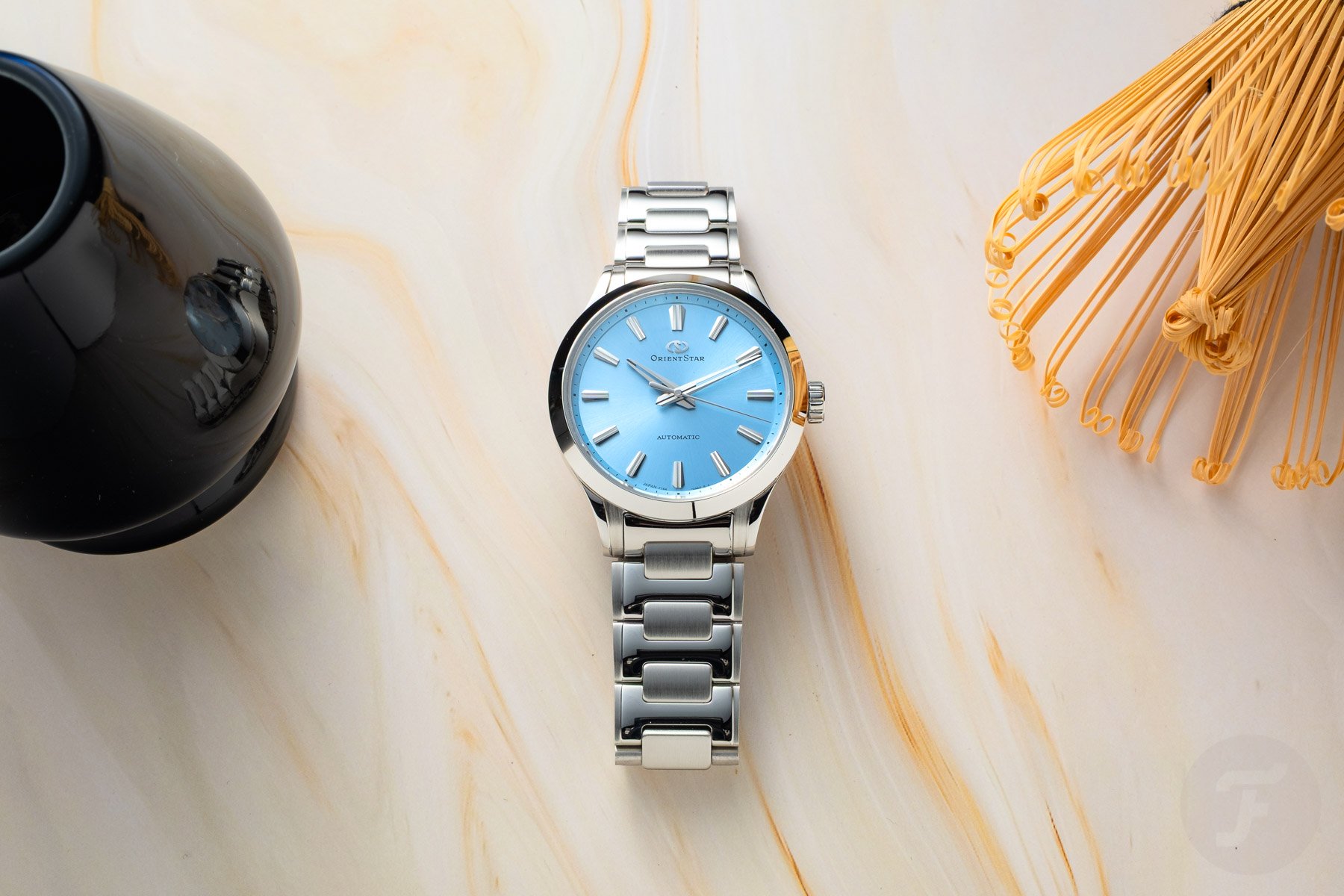
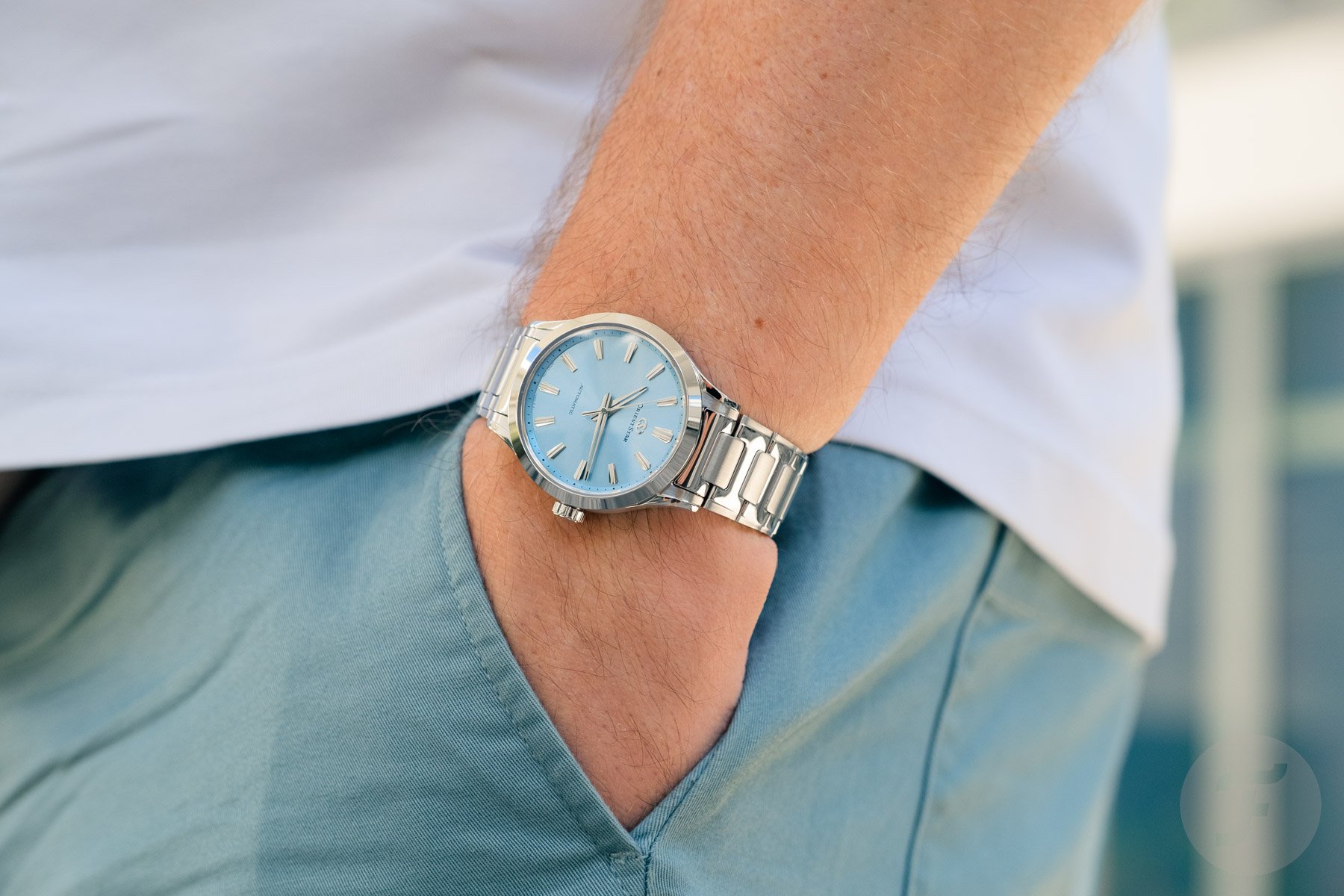
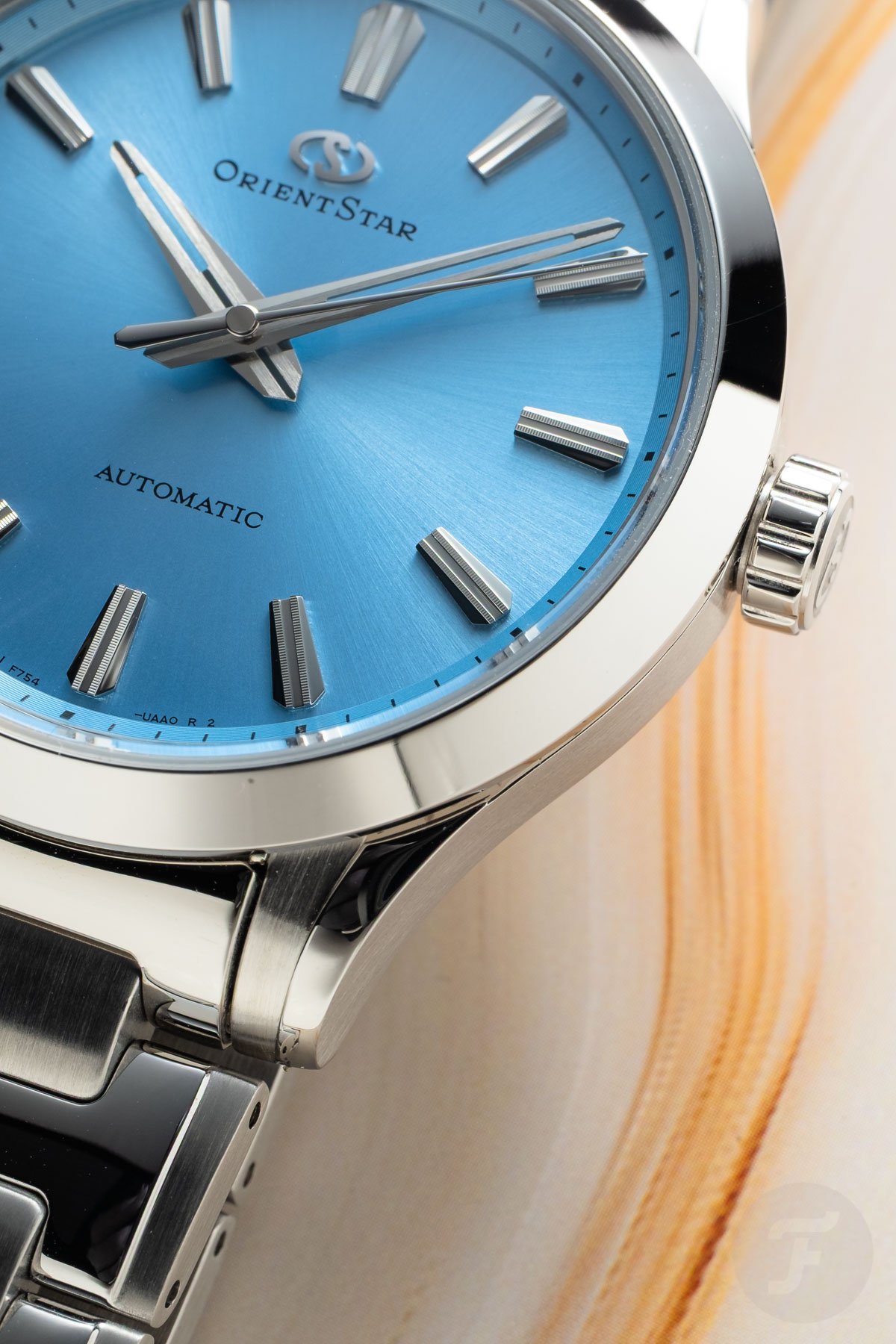
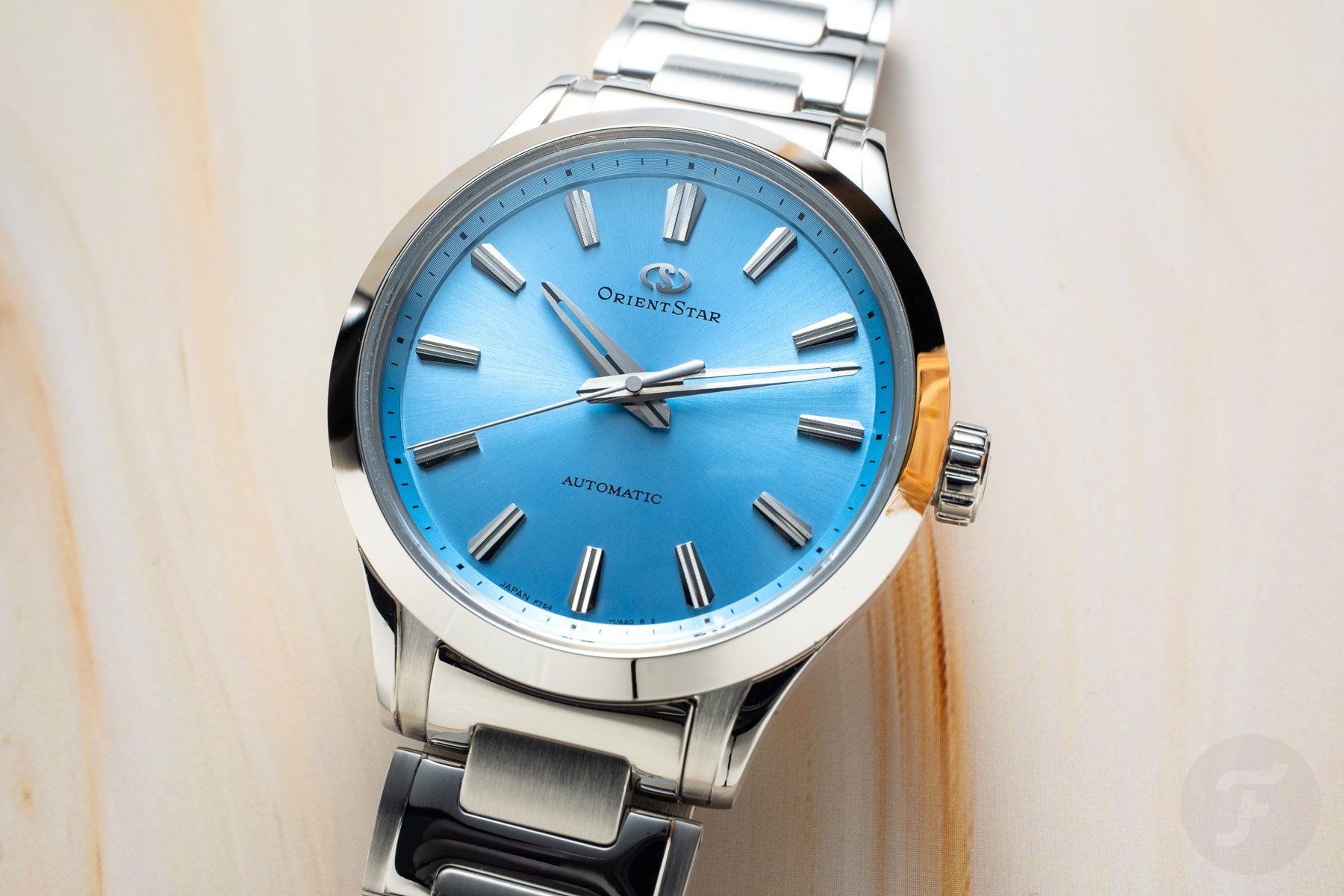
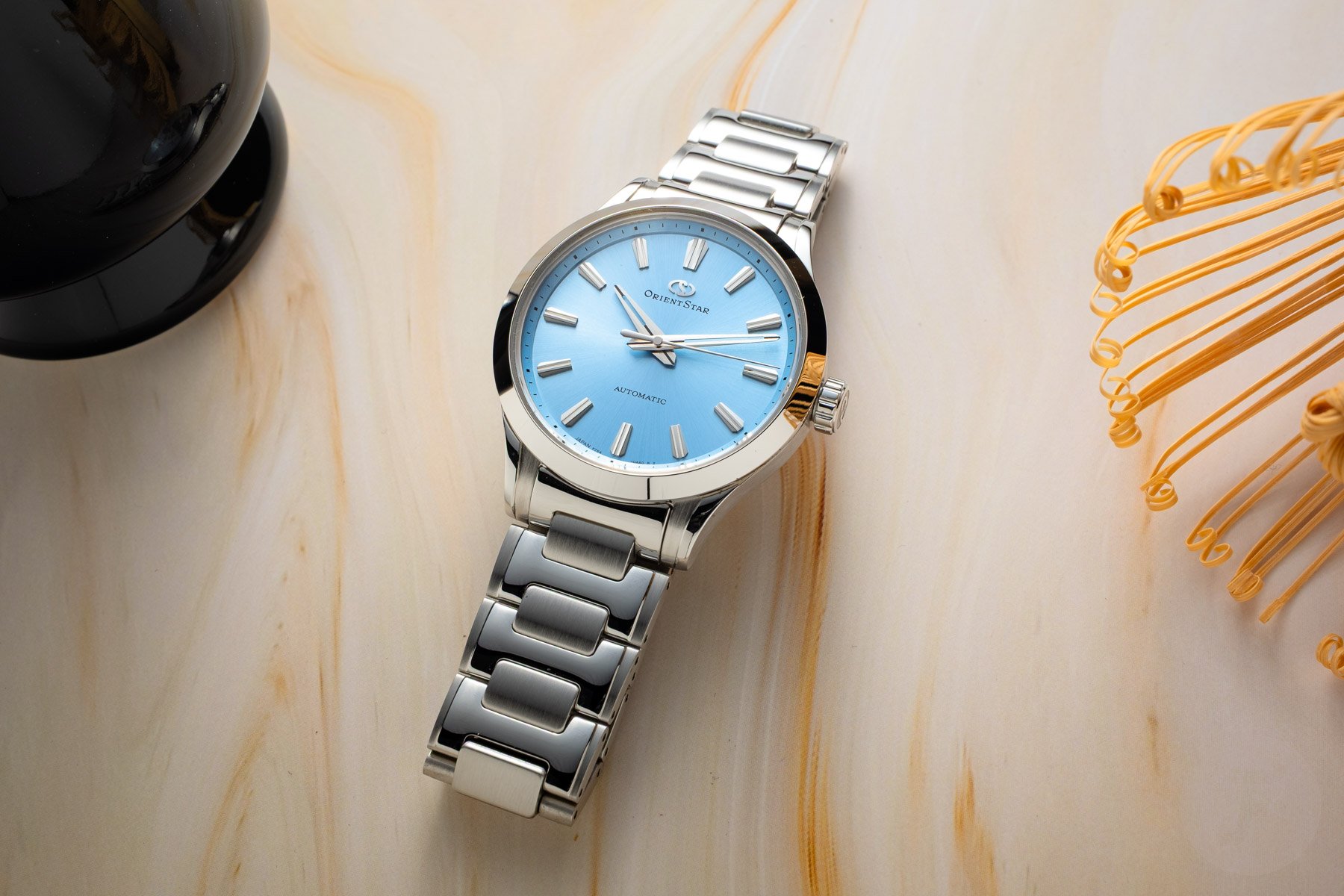
As you will understand, I was happy to see the new Sakigake Three Hand series eschewing the power reserve indicator in favor of a very clean, crisp sunburst dial in silver, gold, or ice blue. Orient Star also created a limited-edition copper-dial version with darker indexes that I love. Each dial gets a soft sunburst pattern, and all the elements fall nicely into place.
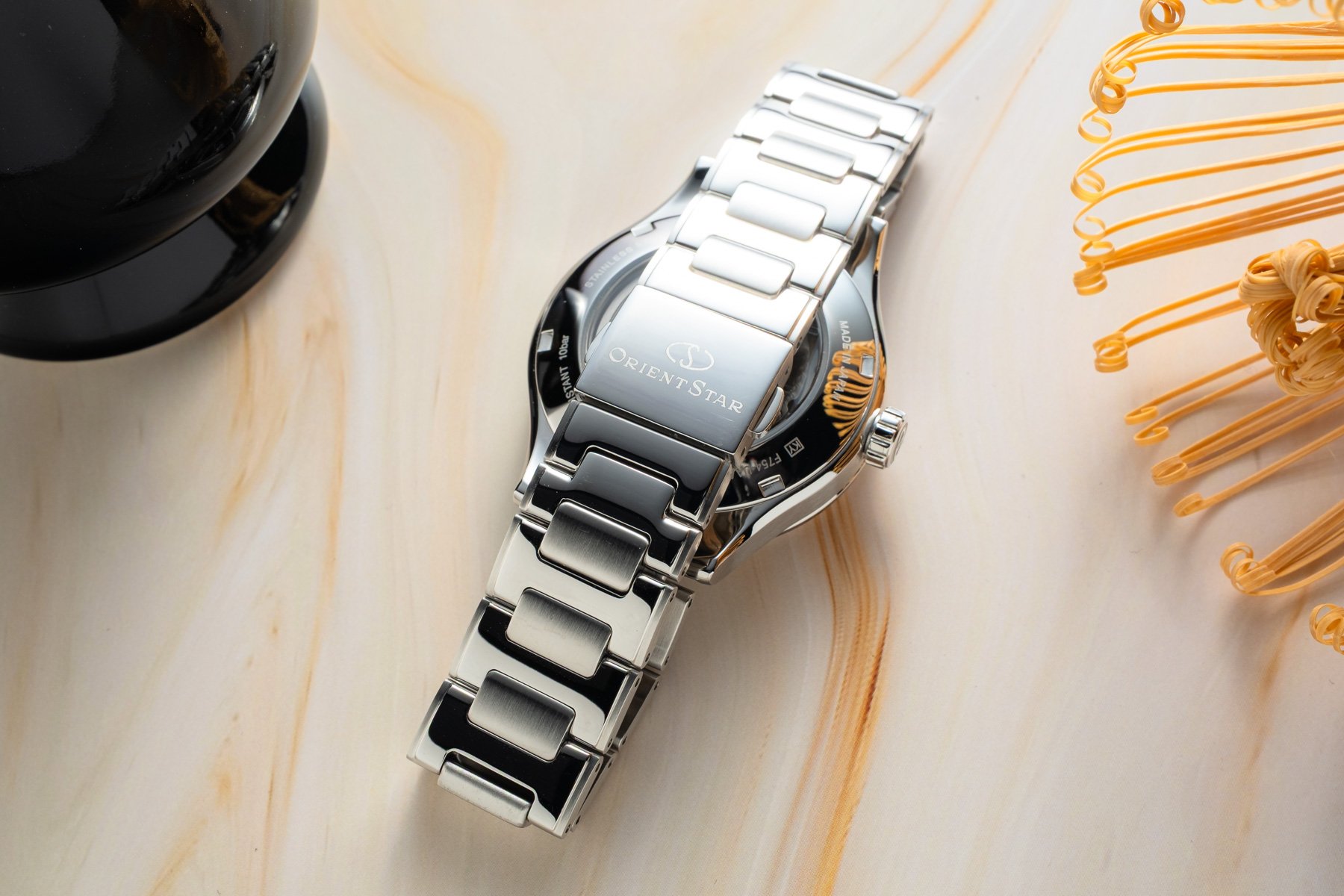
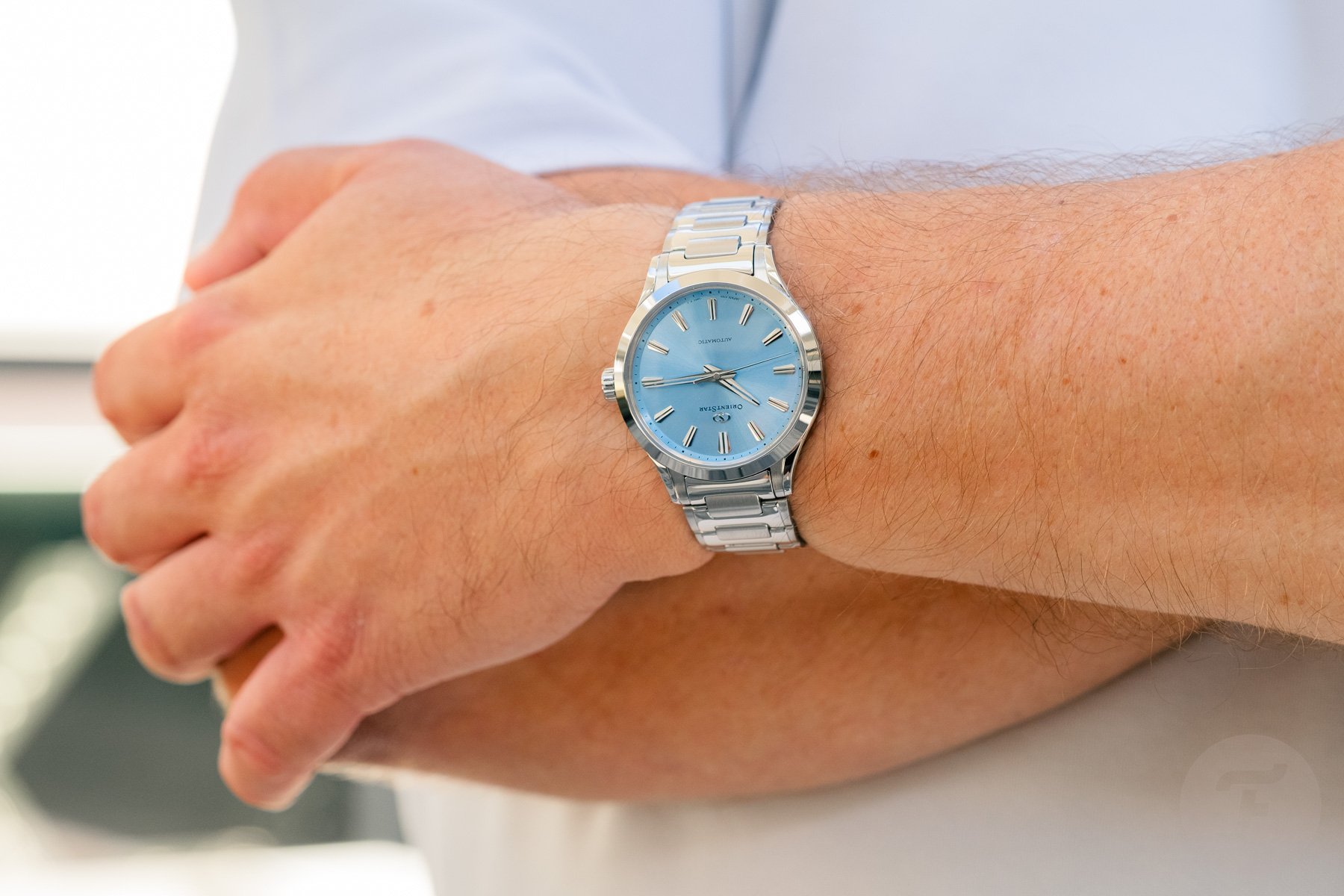
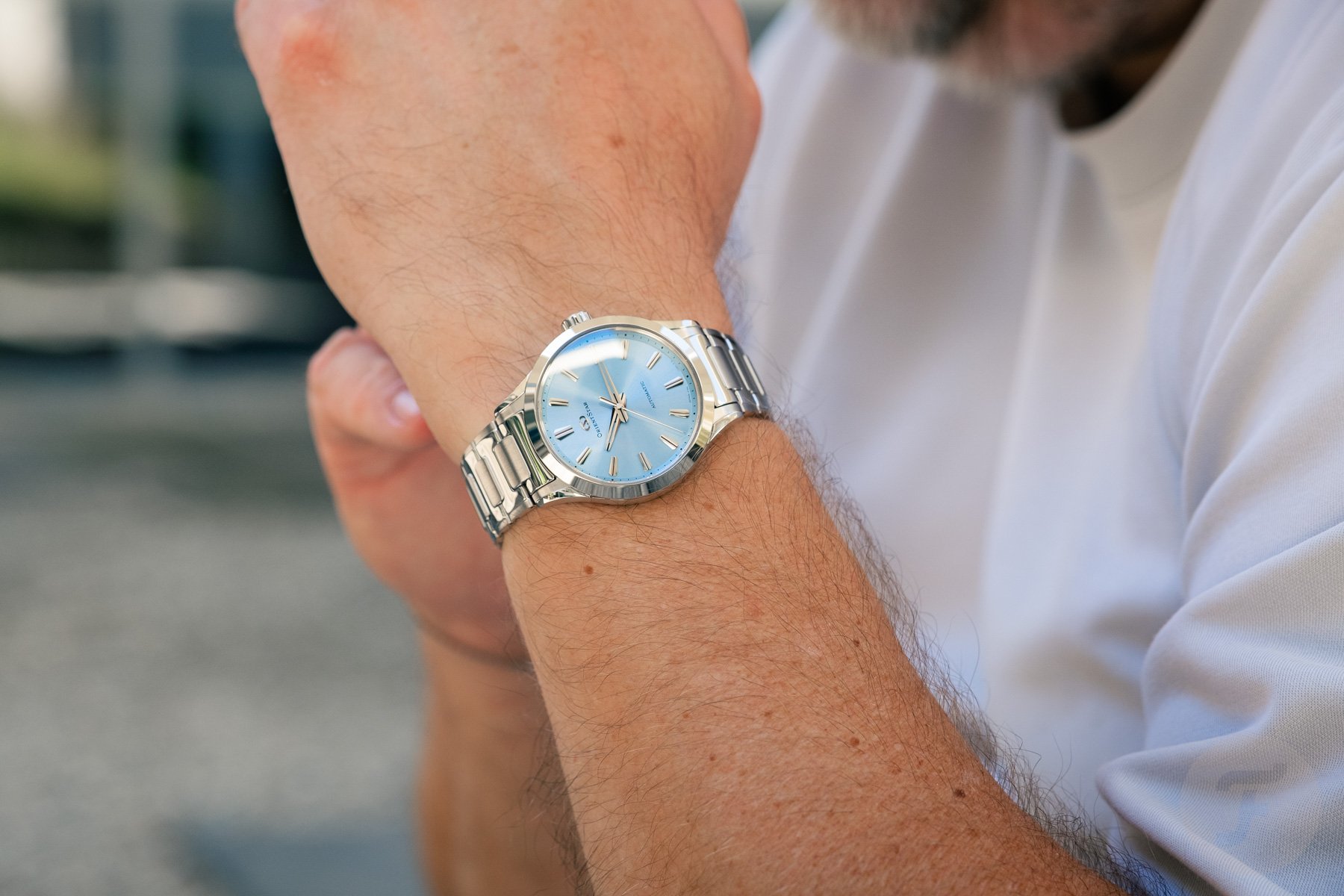
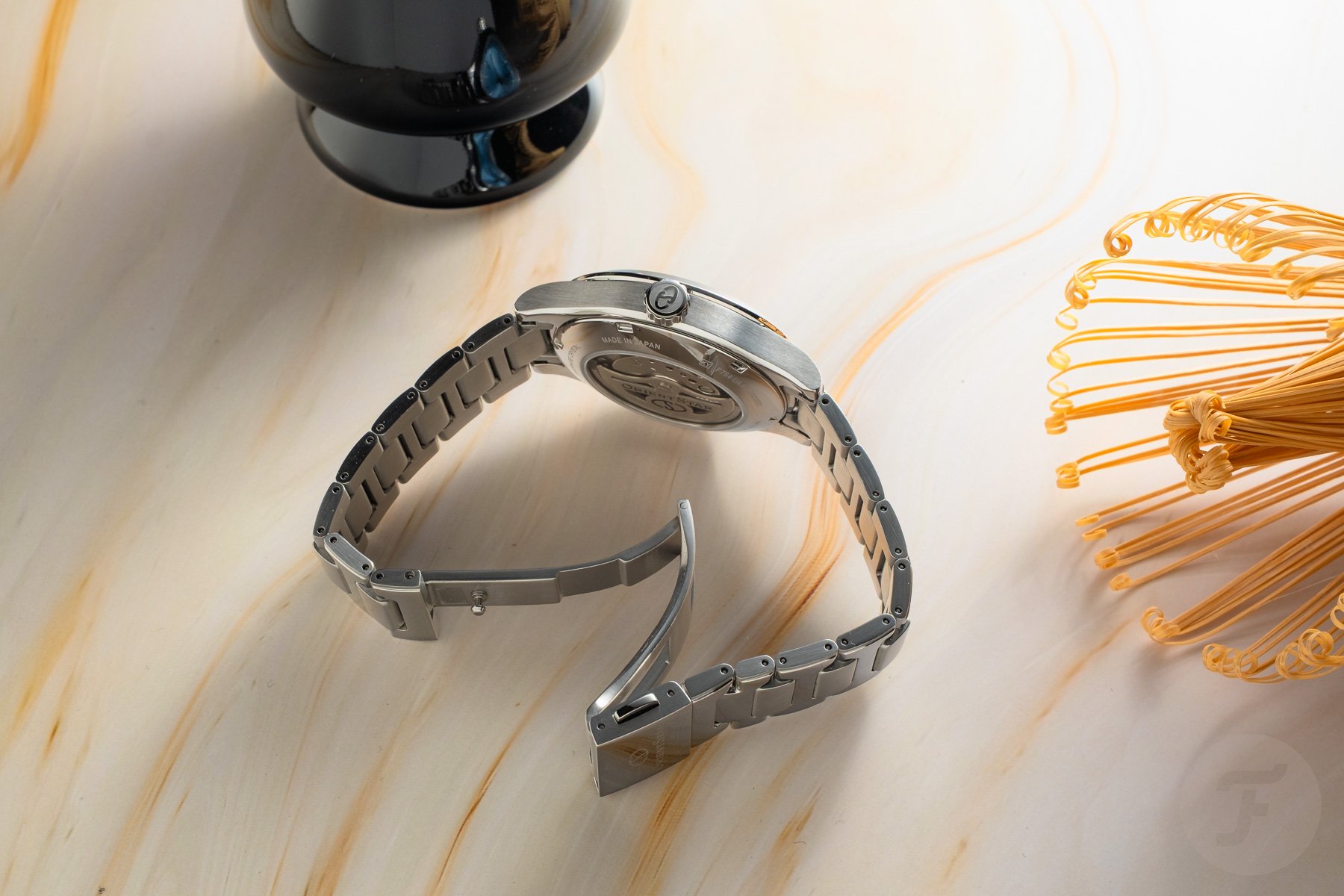
The clean dials are paired with a round 38.7mm case that flows seamlessly into a stainless steel H-link bracelet. But there is a bit of visual trickery happening here. As Ben explained, the contrasting finishes on the lugs shift from polished outer surfaces to hairline-brushed inner sections. These inner sections extend the brushed finish of the bracelet’s outer links and match the brushed center links. It looks quirky at first glance, especially in the flat-lay images.
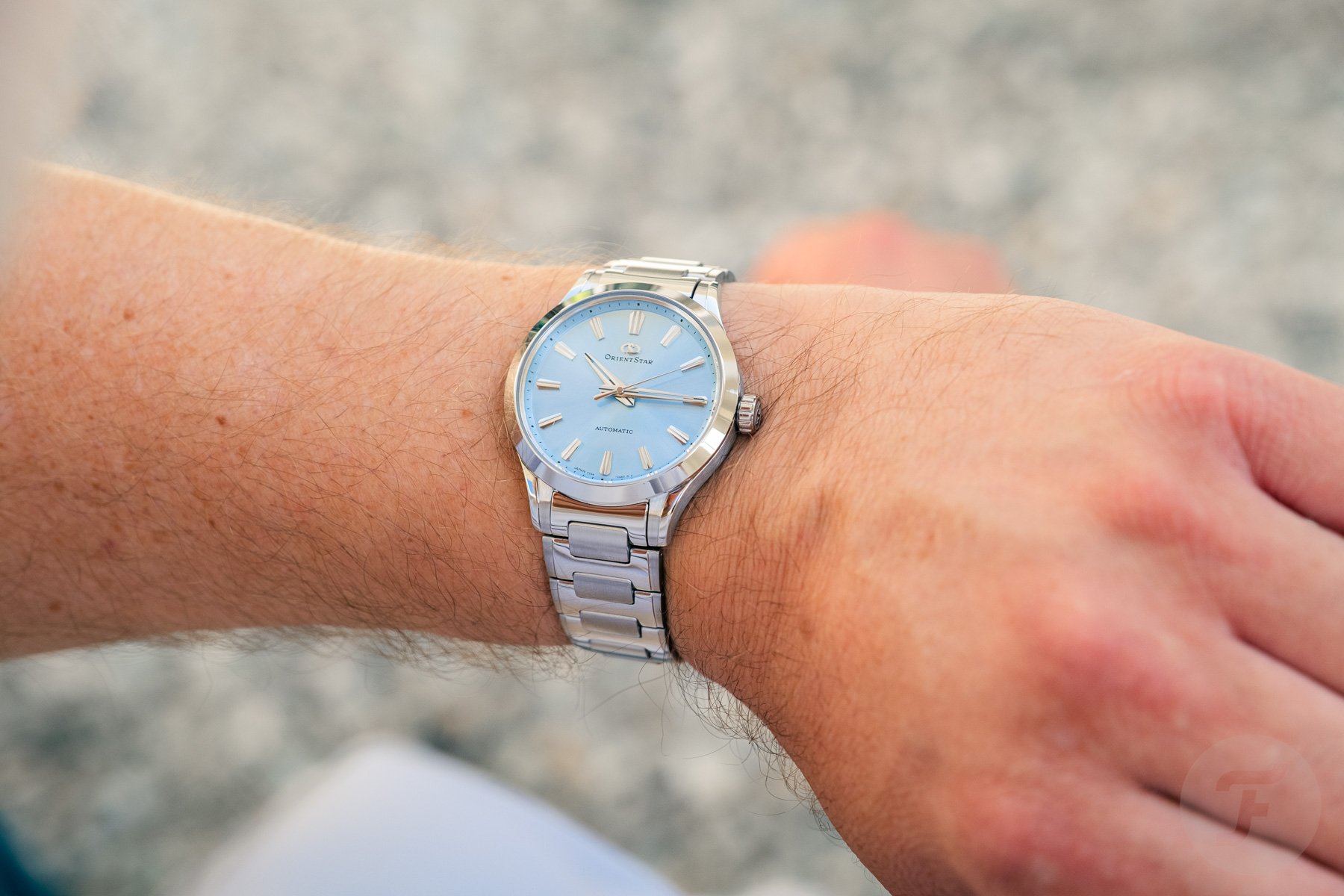
But on the wrist, the design makes a lot more sense. It has a natural flow that feels far more logical than you would expect. It also injects the watch with much-needed character, making it far more intriguing than the Gentleman 38mm. While I was a bit apprehensive at first, I can say that wearing the Sakigake Three Hand made me a fan of how well it sits on the wrist. At 38.7mm wide and 11.8mm thick, it is the perfect size. On top of that, the build quality is very good and can definitely keep up with Tissot’s already impressive standard.
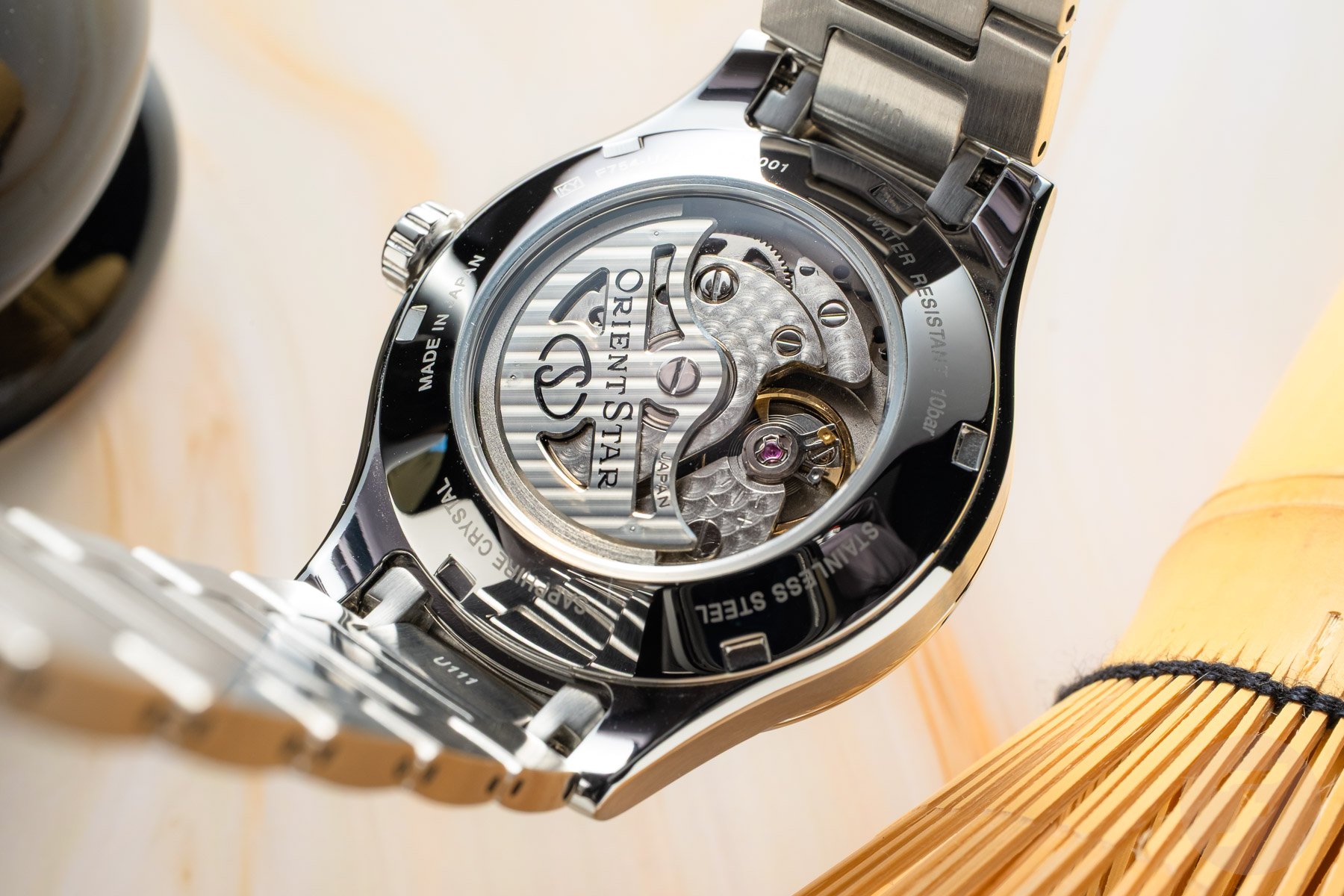
The Orient Star caliber F7542
Turning the watch around, you’ll see the in-house Orient Star F7542 movement. This automatic caliber operates at 21,600 vph and offers a 50-hour power reserve. While that is no match for the 80-hour power reserve of Tissot’s Powermatic 80, it shouldn’t be a deal-breaker. Plus, Orient Star’s movement decoration is far more impressive than Tissot’s industrial finishing. This further emphasizes the sterility of the Gentleman 38mm and the far more human feeling behind the Sakigake Three Hand.
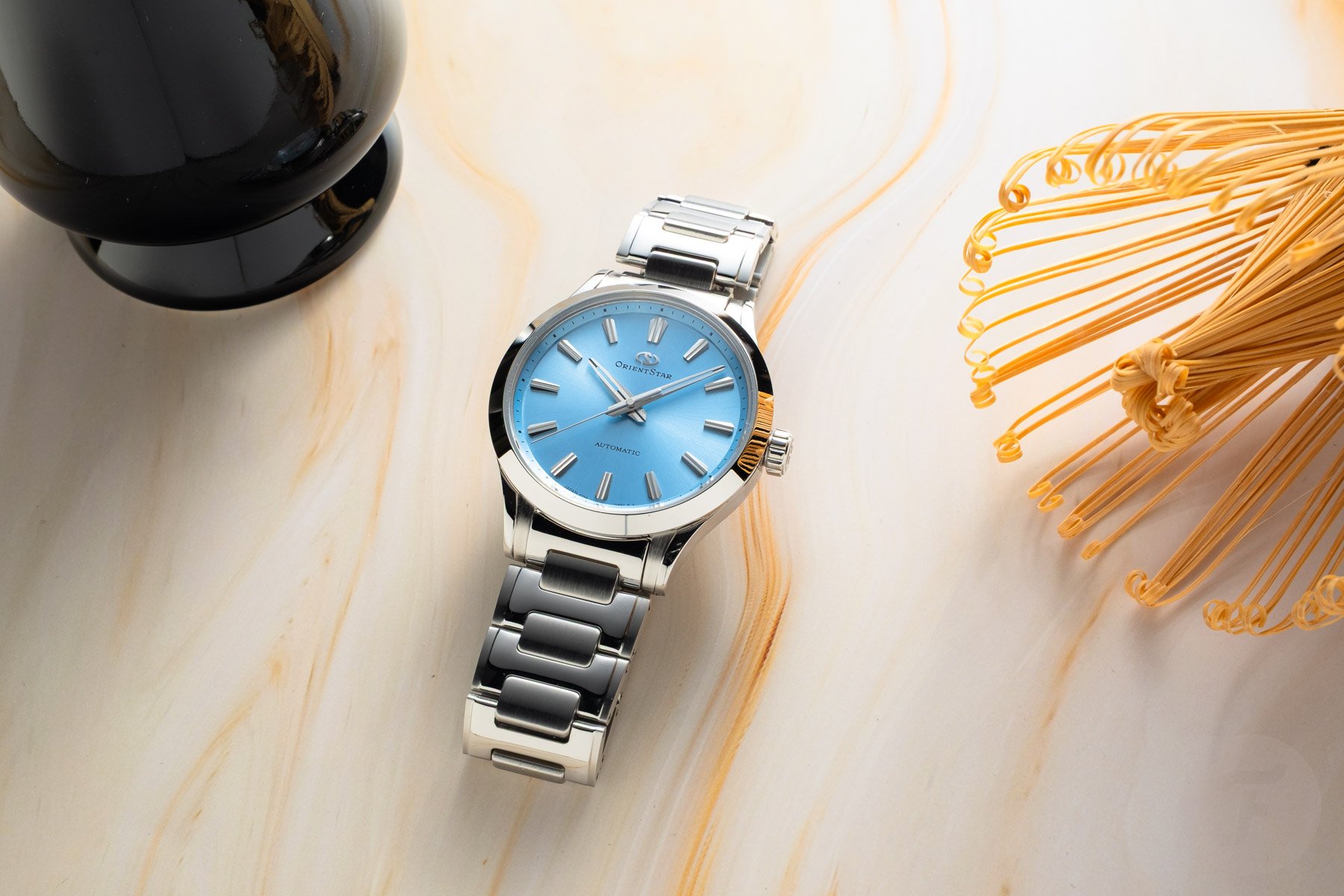
That’s also what makes the biggest difference between the two. I connect more to the Orient Star Sakigake Three Hand because I feel something. Its more human approach to design evokes emotions, whereas the Tissot leaves me cold. And when looking for my next watch, I want to feel that human connection, not nothing at all. That is why the quirky Orient Star Sakigake Three Hand is my pick in this week’s battle.
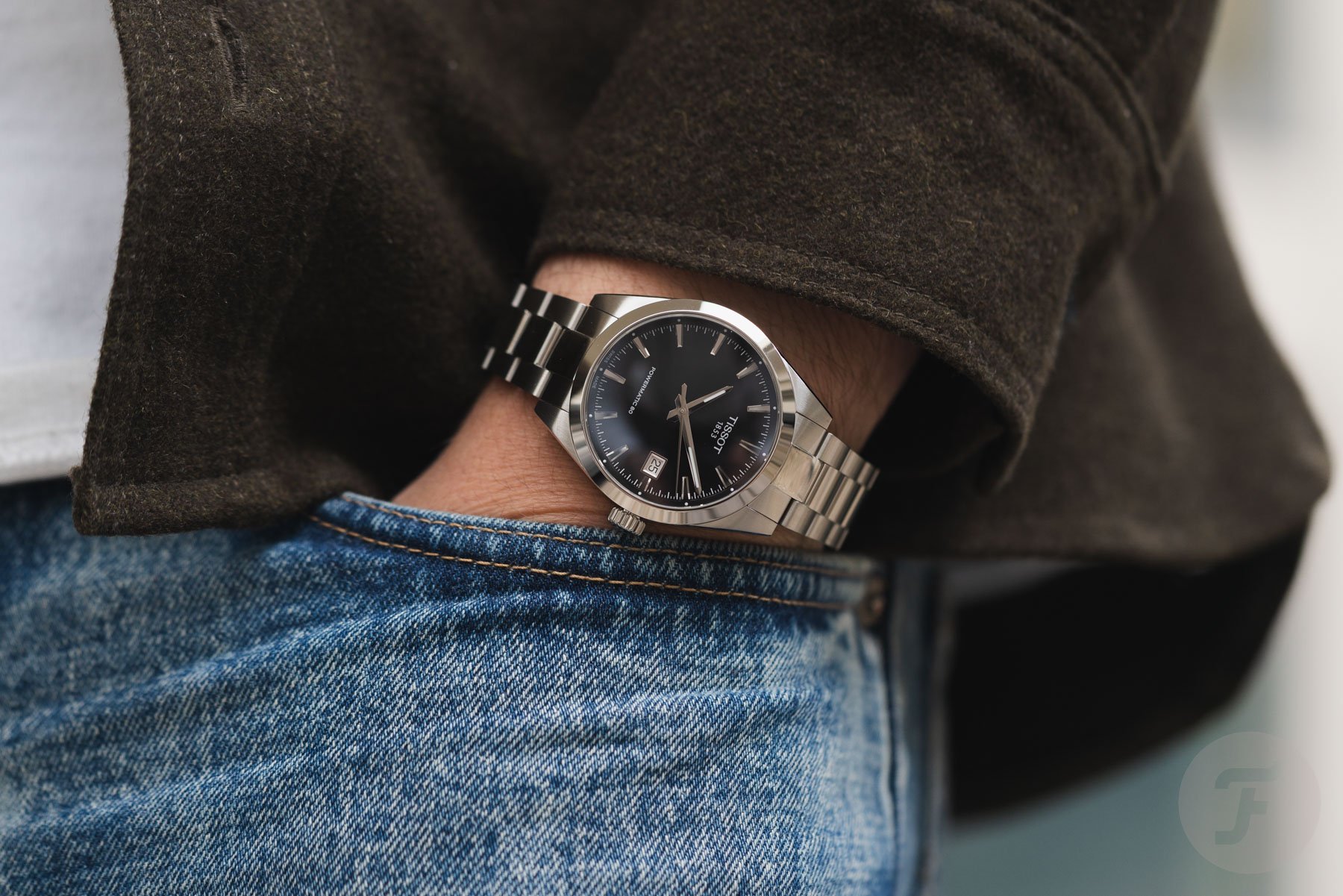
RJ: Tissot Gentleman 38mm
It has been a while since I took part in a Sunday Morning Showdown, but when we discussed this week’s battle with the Fratello team, I volunteered to defend the Tissot Gentleman 38mm against the Orient Star Sakigake Three Hand. At first glance, the specifications, dimensions, and prices make these watches seem very similar. However, as you can see, there are significant aesthetic differences between today’s contenders. What I find interesting, Jorg, is that you featured the Orient Bambino watches in this article, which clearly show what is wrong with your glitzy Orient Star Sakigake. The Bambino watches look pretty neat, but the Sakigake case and bracelet are just painful to look at.
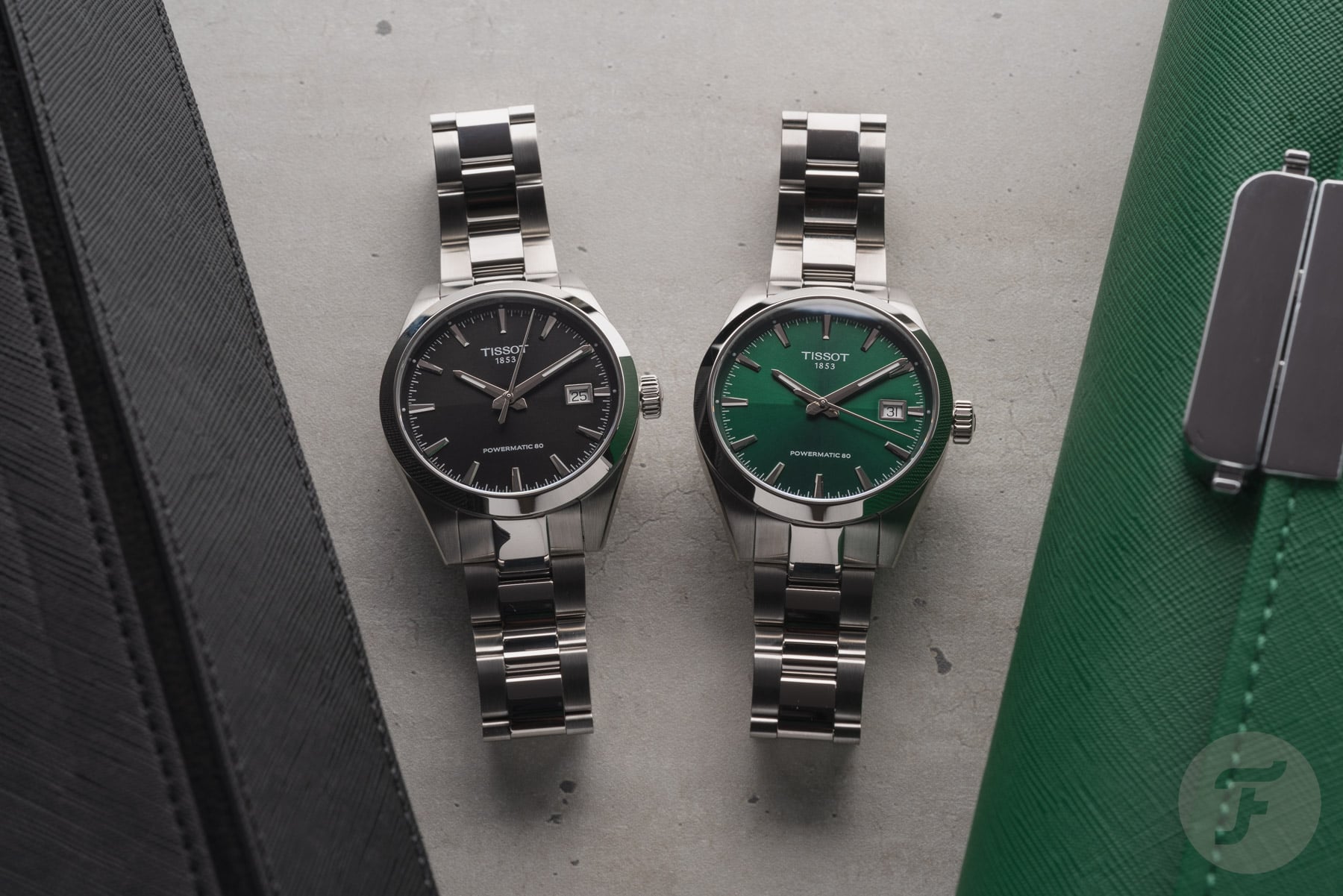
Oyster-style bracelet
This also comes down to taste, making it simply a matter of personal preference. I am not a fan of too many polished surfaces and rounded shapes, which the Orient Star has. A PCL (polished center link) is already pushing it for me on most bracelets, but Orient Star decided to invert it, making the center link brushed (a BCL?) and the H-link polished. Again, it’s purely personal, but I would immediately disregard the entire watch if I were looking for one to wear on a bracelet rather than a leather strap. And if you wanted to wear the Sakigake Three Hand on a leather strap, you’d be screwed because it has a 16mm lug spacing due to the “integrated” look Orient Star tried to establish here. So you really need to be a fan of this polished H-link bracelet. Tissot doesn’t win the originality prize with the Gentleman’s bracelet, but at least the Oyster style with the classic “PCL” finish is a proven concept.
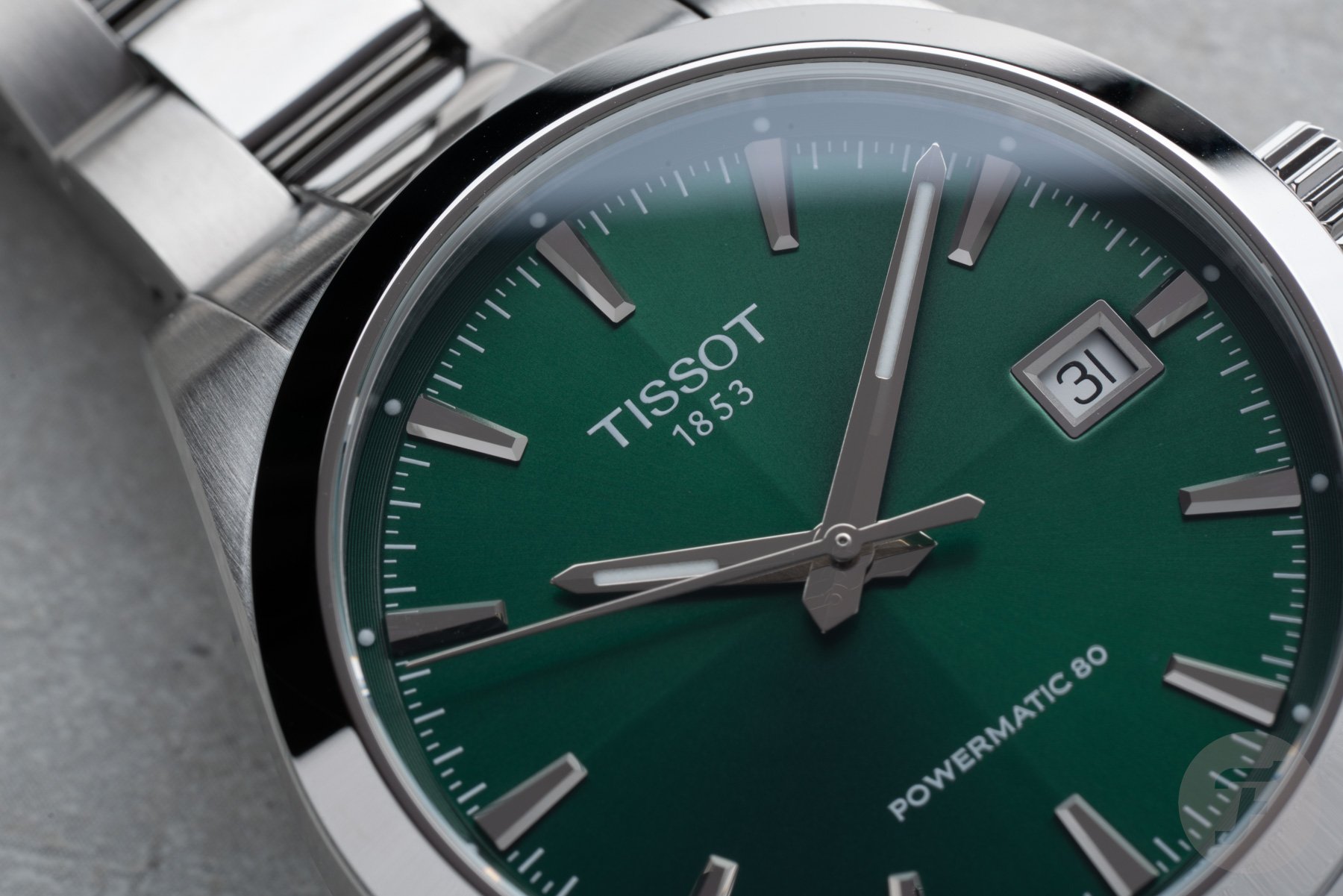
A playful dial
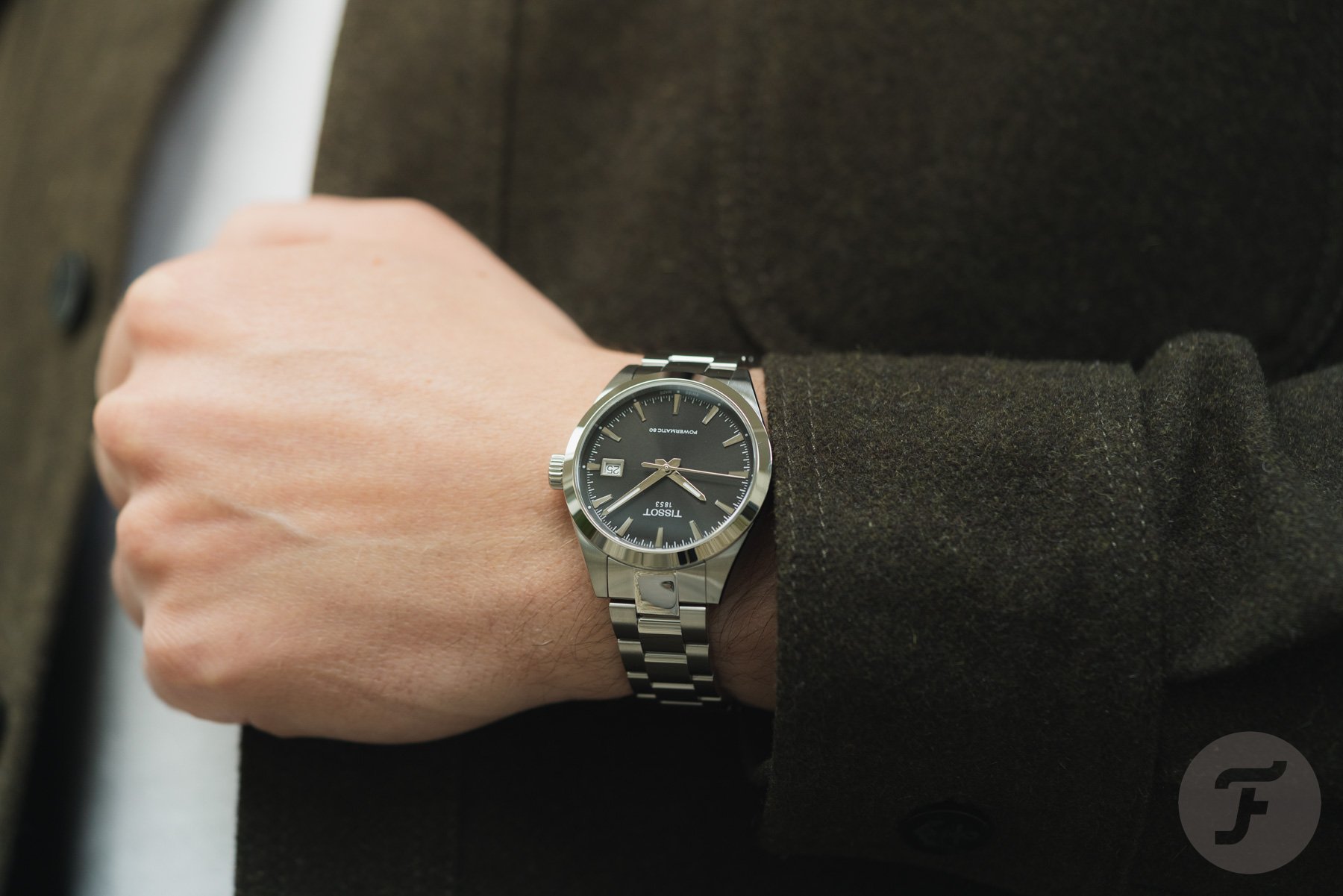
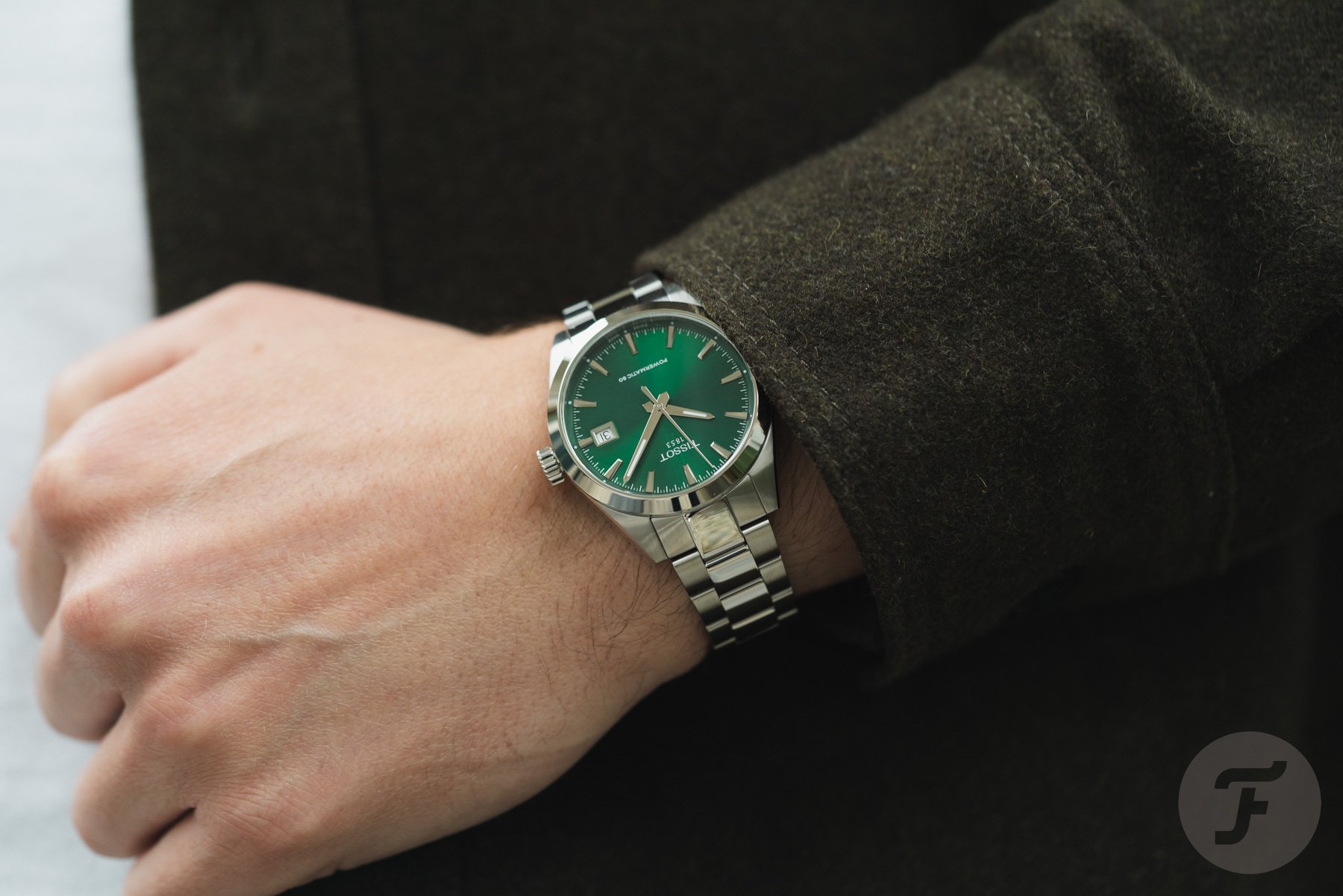
The Orient Star Sakigake Three Hand has no date (or power reserve indicator), resulting in a clean dial. But it also lacks a bit of playfulness, which Tissot managed to add with this pyramidal sunburst in different colors. As Thomas stated in his hands-on review, “It looks as if subtle crease lines run across the dial’s horizontal and vertical axes. The sunburst is cut into four pizza slices. As you angle the watch, the light reflects from each quarter slightly differently.”
The Tissot Gentleman also adds a date aperture at 3 o’clock. This is a pretty useful complication for a daily wearer, and it’s nicely positioned on the dial, with a frame that matches the other applied elements. A color-matching date disc would have been nice, but I must admit that my 49-year-old eyes (and I know Jorg’s eyes are the same age) require a contrasting date disc. Also, the Sakigake’s hands, hour markers, and Orient Star logo are a bit too futuristic for my taste.
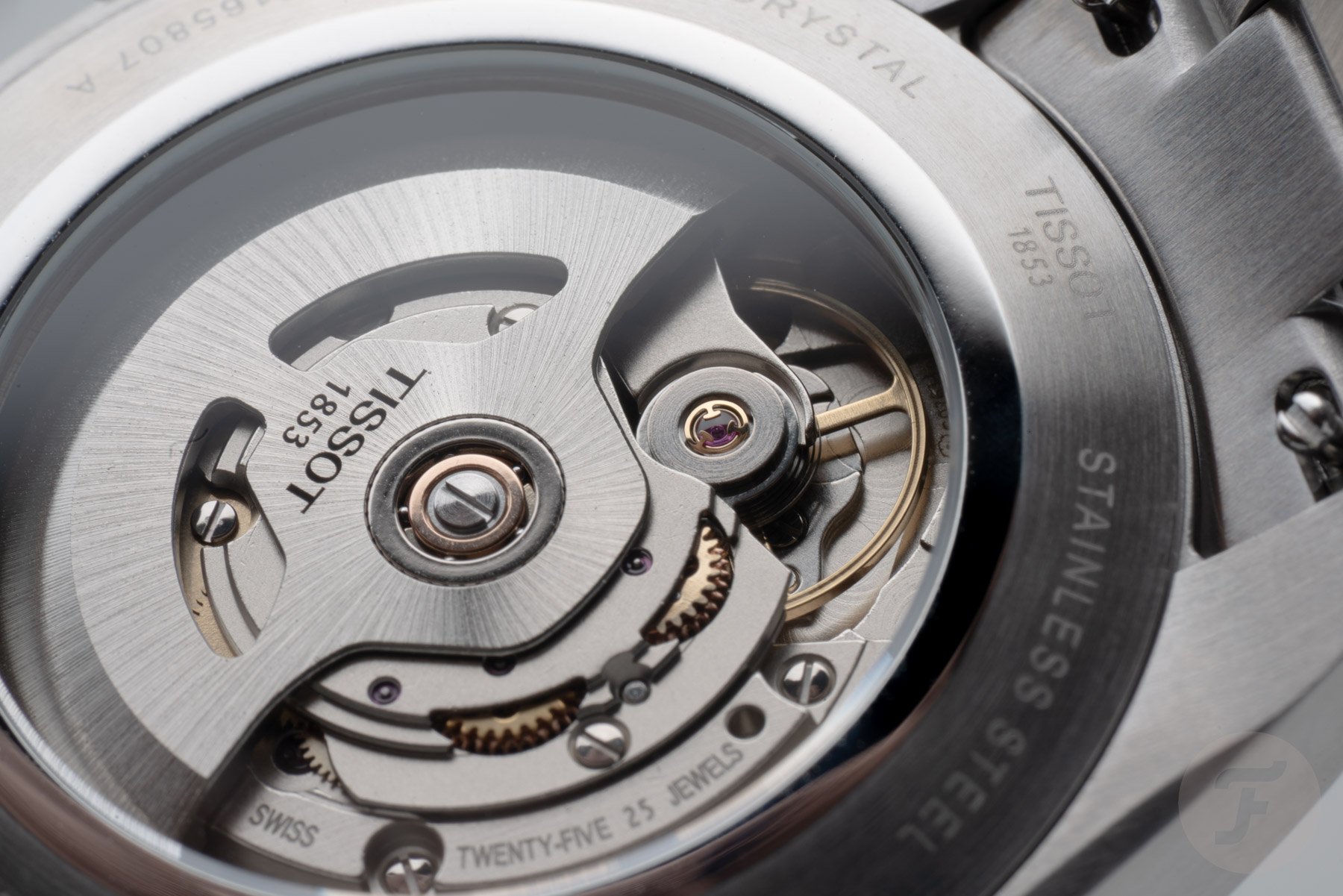
Powermatic 80
Inside the Gentleman 38mm, we find the ETA Powermatic 80 movement. This version has a Nivachron hairspring, while the one in the Gentleman 40mm (€925) uses a silicium balance spring. Those models also have “silicium” written on the dial, which I’d prefer not to have. In a nutshell, each has pros and cons. A silicium balance spring is completely unaffected by magnetism, whereas the Nivachron version is only partially protected from it. Nivachron balance springs handle shocks very well, while silicium balance springs are very sensitive to (very) hard impacts. The Orient Star F7542 caliber offers none of this, though. The other main differences between these movements are as follows:
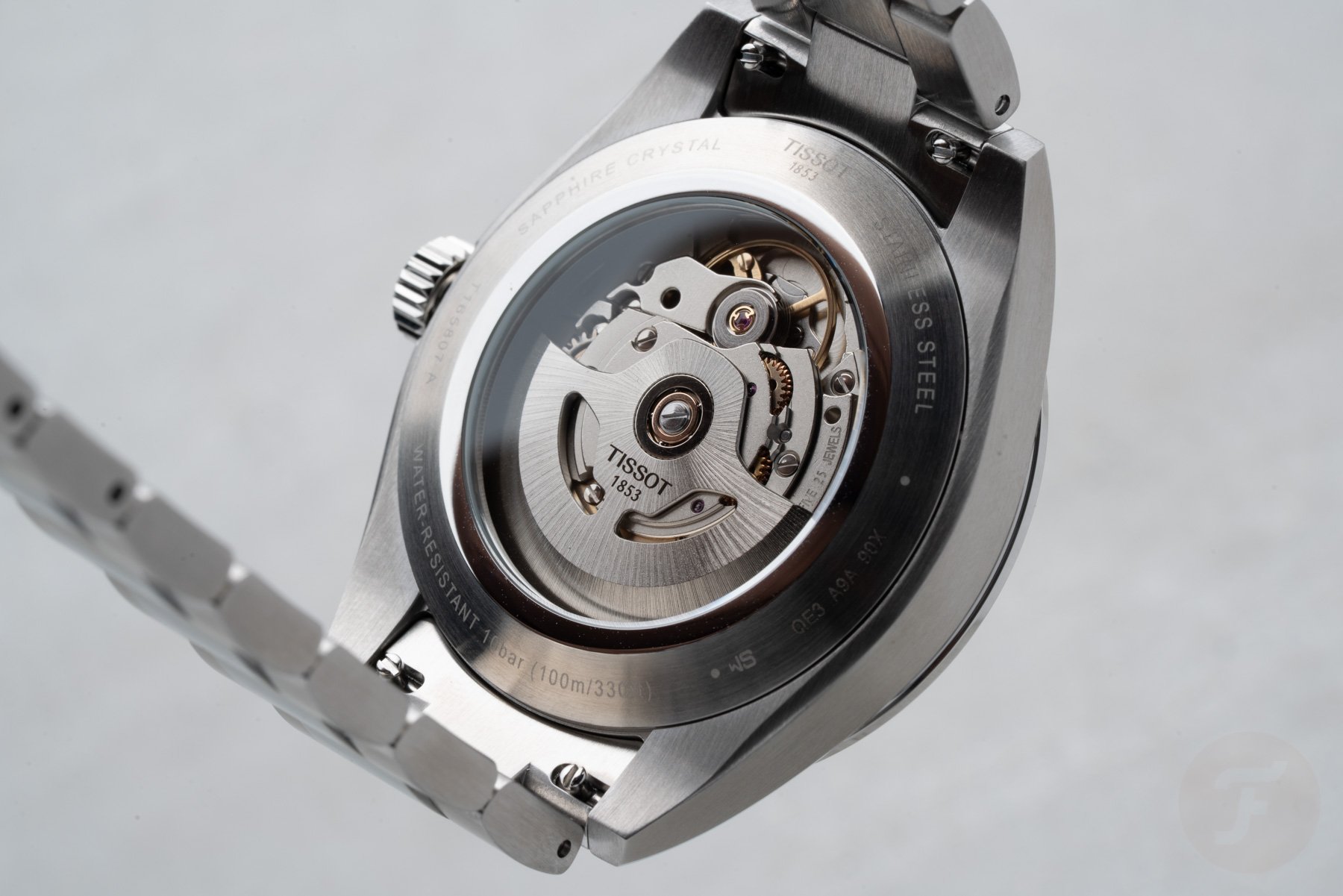
The Tissot offers an 80-hour power reserve, whereas the Orient Star is limited to approximately 50 hours. Orient Star’s caliber F7542 has some decoration, using perlage on the plates and ribbing on the rotor. While the Orient Star F7542 movement uses a conventional regulator system, the Powermatic 80 has a laser-regulated balance wheel.
ETA in Boncourt
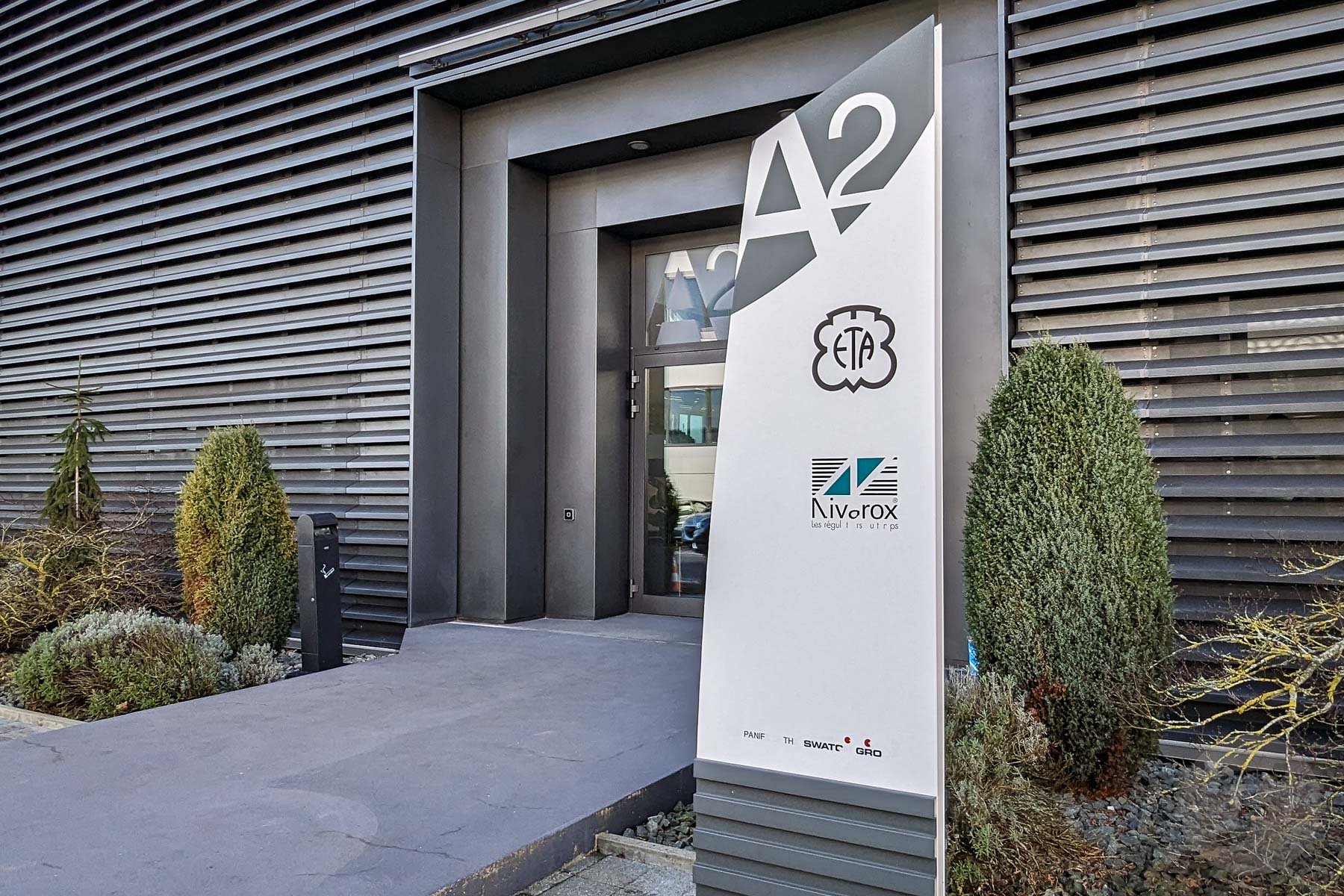
I recently visited ETA in Boncourt and saw the machines used for this laser-adjustment process (no pictures were allowed!). A large machine scans and analyzes the balance assembly’s performance. Based on those measurements, the system then makes extremely precise adjustments to the oscillator with a laser. The result is measured and analyzed again, with further adjustment possible if necessary.
The process allows ETA to produce and adjust large numbers of movements with a high degree of consistency, without relying on conventional manual regulation. Also, because the Powermatic 80 lacks a traditional regulator, it has no regulator index that can be displaced by shocks or gradually affected by wear. This is one reason that ETA says the system provides improved long-term rate stability. It also helps maintain more consistent performance as the mainspring approaches the end of its power reserve.
For a watchmaker servicing the movement, this means the rate cannot simply be adjusted in the traditional manner by moving a regulator. Instead, the movement’s regulator-free balance system requires a different approach. In everyday use, however, that is part of the appeal: once correctly adjusted at the factory, there is one less conventional regulating component that can be disturbed over the movement’s lifetime.
It’s more than just the caliber that makes the difference
My apologies for zeroing in on the movements during this Sunday Morning Showdown, but ultimately, this is where these two watches truly stand apart, beyond aesthetics. As mentioned, the dimensions are quite similar, so they likely won’t sway your decision. Unfortunately, the Orient Star Sakigake Three Hand’s many polished surfaces make it look a bit cheap to me. While the Tissot Gentleman’s design isn’t overly original, the two dial finishes/decorations make it interesting nonetheless. I’d happily recommend the Tissot Gentleman 38mm to people looking for their first proper mechanical watch at a very friendly price. You can’t go wrong with this Tissot, and I wonder how long it will take someone to get fed up with the very shiny Orient Star.
Time to vote!
All right, you’ve heard from Jorg and RJ, and now it’s time to cast your vote. Which of these stylish everyday watches will you choose? Will it be the Swiss Tissot Gentleman 38mm with its whopping 80-hour power reserve? Or will you go for the Japanese Orient Star Sakigake Three Hand with its nicely decorated movement? Be sure to vote, and please share your reasons for picking your champion in the comments!