A Difficult Question That Needs Answering: When Are Watches Art?

During lunch with Aurel Bacs and Alex Ghotbi from the auction house Phillips, I started wondering out loud, “When are watches art?” What sparked my question was last month’s Phillips auction, which was the highest-grossing watch auction in US history. The sale made a record US$75.8 million, and every single lot was sold. No fewer than 16 timepieces sold for over US$1 million each, and the highest-selling watch was an ultra-rare F.P. Journe Chronomètre à Résonance “Souscription, No. 007,” which sold for US$13.92 million. It became a very interesting conversation, not just about money but also about intention, rarity, and several other aspects. After digesting the Lebanese lunch and processing the conversation, I started writing this article.
Spend a little time visiting the major auction houses hammering off watches, and one thing quickly becomes clear: watch auctions are no longer straightforward sales. They increasingly resemble art-world auction sessions, where an electrifying atmosphere, in-depth storytelling, and feverish anticipation are every bit as important as the lots themselves. How did this change happen?
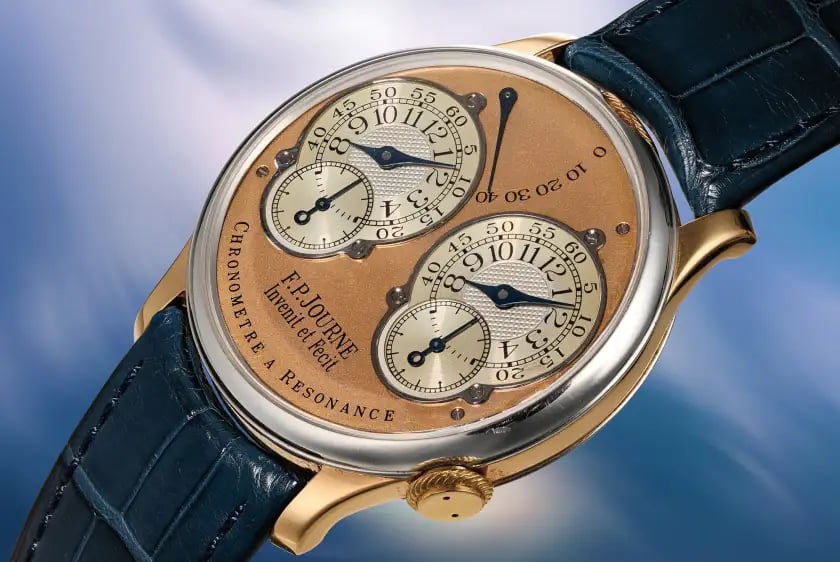
F.P.Journe Chronomètre à Résonance “Souscription, No. 007 — Image: Phillips
When are watches art? Setting the scene
The shift from uneventful, repetitive sessions to heated events isn’t accidental. Watches have never been more in the public eye than they are now. Who or what’s to “blame”? The internet? Social media and Instagram in particular? That’s possible, but other factors also have watches taking a premium spot in the auction world. Within the last 20 years, watches moved beyond being objects of craftsmanship alone. Today, many high-rolling collectors, especially those considered investors, view exceptional timepieces as tangible assets. These watches sit comfortably alongside fine art, classic cars, and rare wine in diversified portfolios.
Several trends have fueled this evolution. First, there is the investment angle. Trophy pieces from long-established brands, Rolex and Patek Philippe, and more recently, newcomers like Richard Mille and F.P.Journe, have become established stores of value for high-net-worth collectors. Like art, these watches benefit from scarcity. There’s only one real “Paul Newman” Rolex Daytona, and the Chronomètre à Résonance “Souscription, No. 007 is also a rarity. Furthermore, limited-production watches and enduring demand create the kind of exclusivity economists associate with Veblen goods — the rarer and the more desirable, the higher the hammer price. According to Aurel Bacs, co-founder of Bacs & Russo, a consultancy and auctioneering firm that works in partnership with auction house Phillips, watches are now “sitting side by side on the podium with fine art, extraordinary jewelry, historic rare motorcars at the top of the collecting world.”
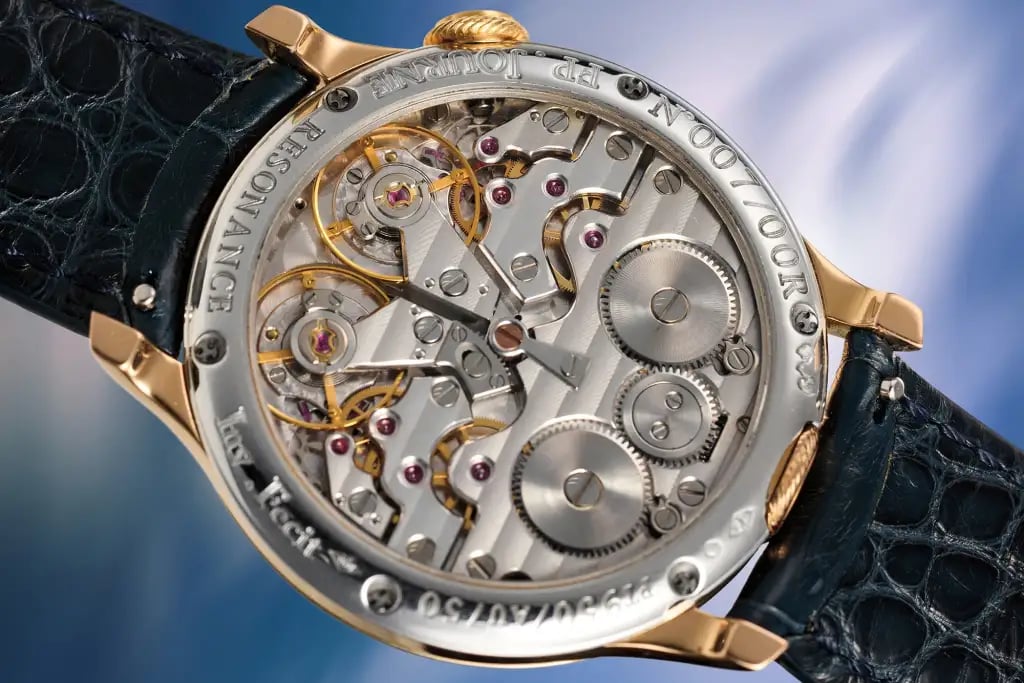
Movement inside the F.P.Journe Chronomètre à Résonance “Souscription, No. 007 — Image: Phillips
Paul Newman vs. René Magritte
Virtually sitting next to a Modigliani doesn’t make a watch art, though. What is art, anyway? Well, unfortunately, art resists a single, definitive description. It evolves with every generation, shaped by changing ideas, techniques, and perspectives. What is undeniably true is that art, at its core, is the expression of human creativity and imagination. Art is an attempt to create something that resonates beyond its physical form. Whether admired for its beauty, its emotional impact, or the ideas it provokes, art invites us to look more closely, think more deeply, and ultimately find personal meaning within it. Does this also apply to watches? Not to all of them, that’s for sure, but some exceptional ones might qualify.
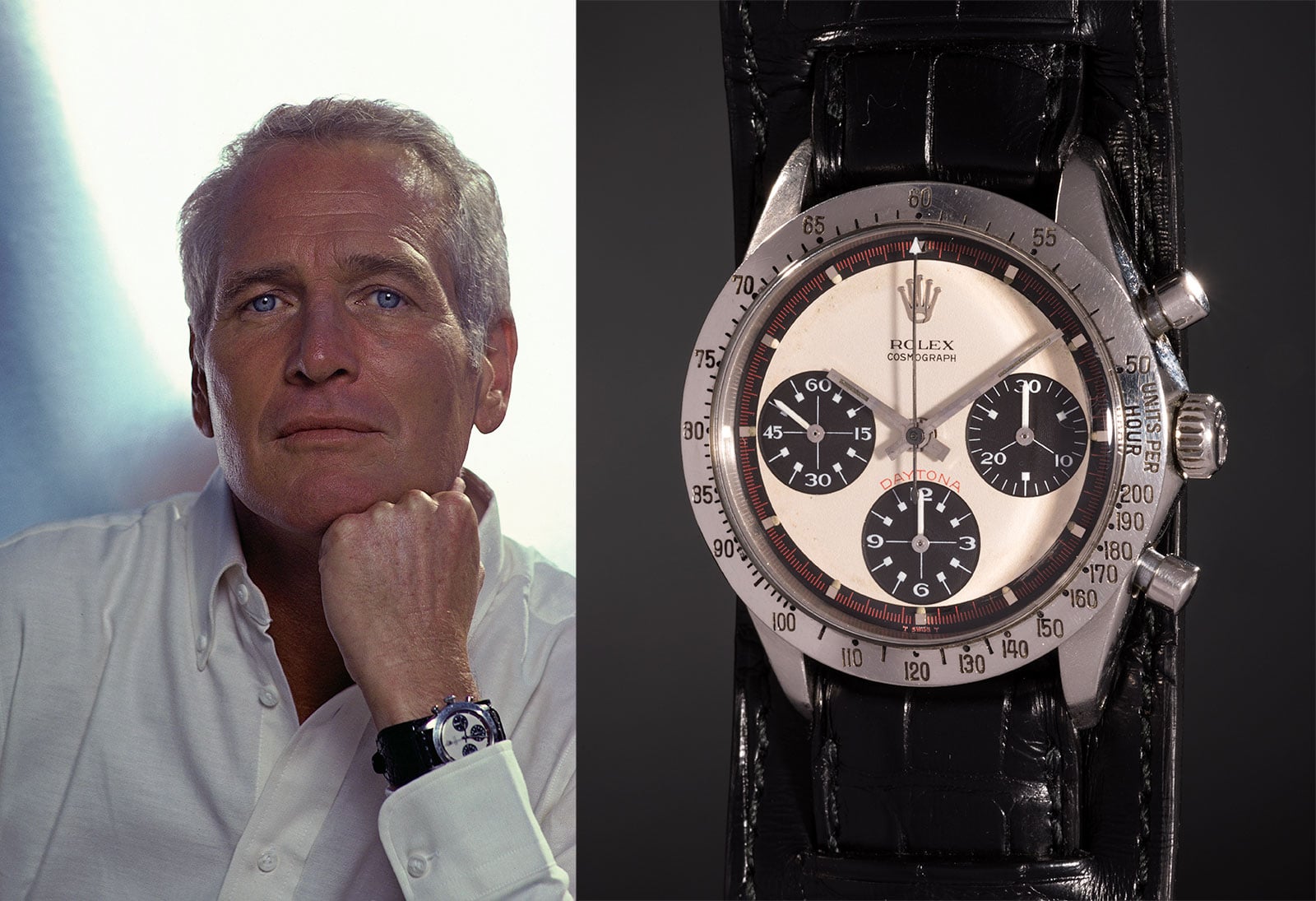
Paul Newman and his Daytona ref. 6239 with an exotic dial
Paul Newman’s personal “Paul Newman” Rolex Cosmograph Daytona (reference 6239) is the most expensive Newman Daytona in history, which sold for US$17,752,500 at a Phillips auction in New York on October 26th, 2017. That money also could have bought the collector the 1957 painting Le Seize Septembre by Belgian surrealist René Magritte, which was auctioned for over US$17.7 million six years ago. But the price of the actor’s chronograph doesn’t make it art. In the end, Rolex produced approximately 14,000 units of the Daytona ref. 6239 between 1963 and 1969. Between 1956 and 1958, René Magritte revisited Le Seize Septembre (The Sixteenth of September) on four occasions. The inaugural version, completed in 1956, remains the definitive interpretation. And since this is the painting most closely associated with the series, it would fetch even more than US$17.7 million.

The inaugural version from 1956 of Le Seize Septembre by Belgian surrealist René Magritte
Why did you make it?
Why did Rolex make the Daytona? For commercial reasons. Why did Magritte paint? Because he had to. The Dadaists, a loose collective of artists, writers, and performers who emerged in the early 20th century as a direct response to the devastation of the First World War, stated that something is art according to the artist’s definition. That does make sense to me, so I will go along with the Dadaists. Rolex never said the Daytona is art, so if you adhere to the Dadaist philosophy, it isn’t, not even if it sells for art-like prices at auction. But what about watches made by François-Paul Journe, Rexhep Rexhepi, Dominque Renaud, Bernhard Lederer, and Kari Voutilainen, to name but a few?
An artist creates art for several possible reasons. Processing emotions and communicating complex thoughts and ideas that are impossible to capture in words, but fulfill an inescapable, deep internal drive, could also be a motivation. You could claim that the watchmakers I mentioned earlier create their watches for the same reasons.
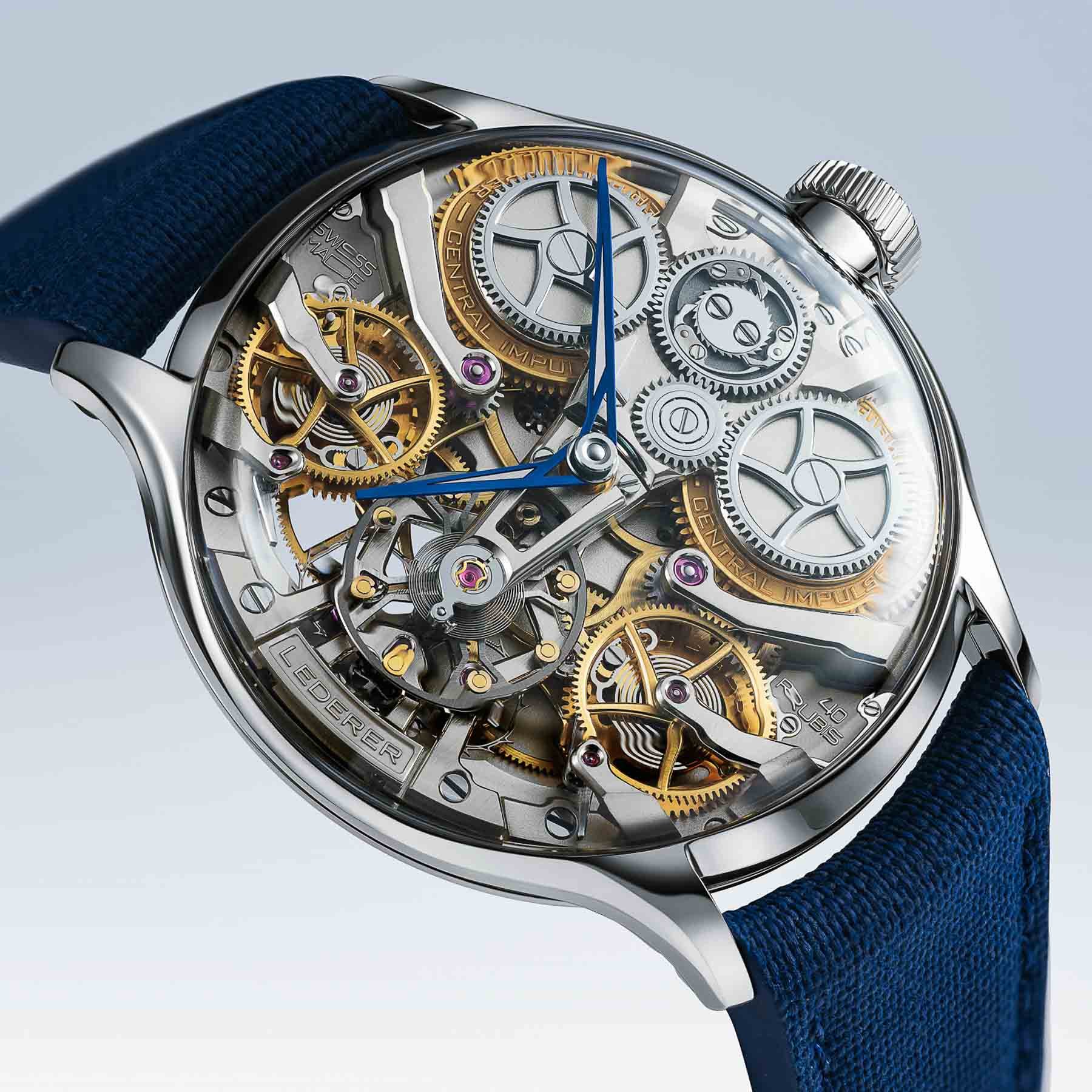
Lederer Inverto Titanium
Enjoyed for its own sake
At first, watches were designed to be functional. That ship sailed a long time ago. With accurate time all around us, mechanical timekeeping on the wrist has become ornamental. Art, in the Dadaist sense, is art by the artist’s own definition and is enjoyed for its own sake. Uniqueness and authenticity are also important. Art is, by its very nature, inward-looking. It begins with the artist and finds its expression in the work itself, existing not to solve a problem or serve a function but to be experienced on its own terms. Can you enjoy a watch in the same way? Some, you can, but others, you can’t.


It’s hard to draw an exact line, but a watch made in series, no matter how small, is a design object at most, not art. Watches could very well be artisanal, meaning made by hand or on a small scale using traditional, non-industrial methods, but they’re not art. That’s because when a watch is not an expression of personal expression/exploration/struggle, it can’t be. That’s especially true when a faceless commercial entity puts something on the market. No miniature replication of a Renaissance masterpiece, straw marquetry tiger head, or triple-axis tourbillon with a Westminster carillon can change that. I’m not saying that artists don’t put their work up for sale; they do. But if they create from within, not just to please an audience, what is wrong with that? Everybody’s got to eat, right?


The personal signature matters
In the end, it all boils down to the creator. Is the watch the result of a personal quest? Is it part of a series that reflects personal explorations? Does the watch bear the unmistakable signature of the watchmaker? In other words: this is clearly a Journe and nothing but a Journe. If so, a watch can be considered art. And, as with art, the value people place on these types of watches depends on how they relate to them. Like in art, there doesn’t have to be a relationship between the cost of the raw materials and the outcome. The value is a highly subjective blend of different components. Emotional appeal, cultural significance, and market economics also come into play. Furthermore, value is determined by the watchmaker’s reputation, historical context, and craftsmanship. And last but not least, previous auction sales create value.
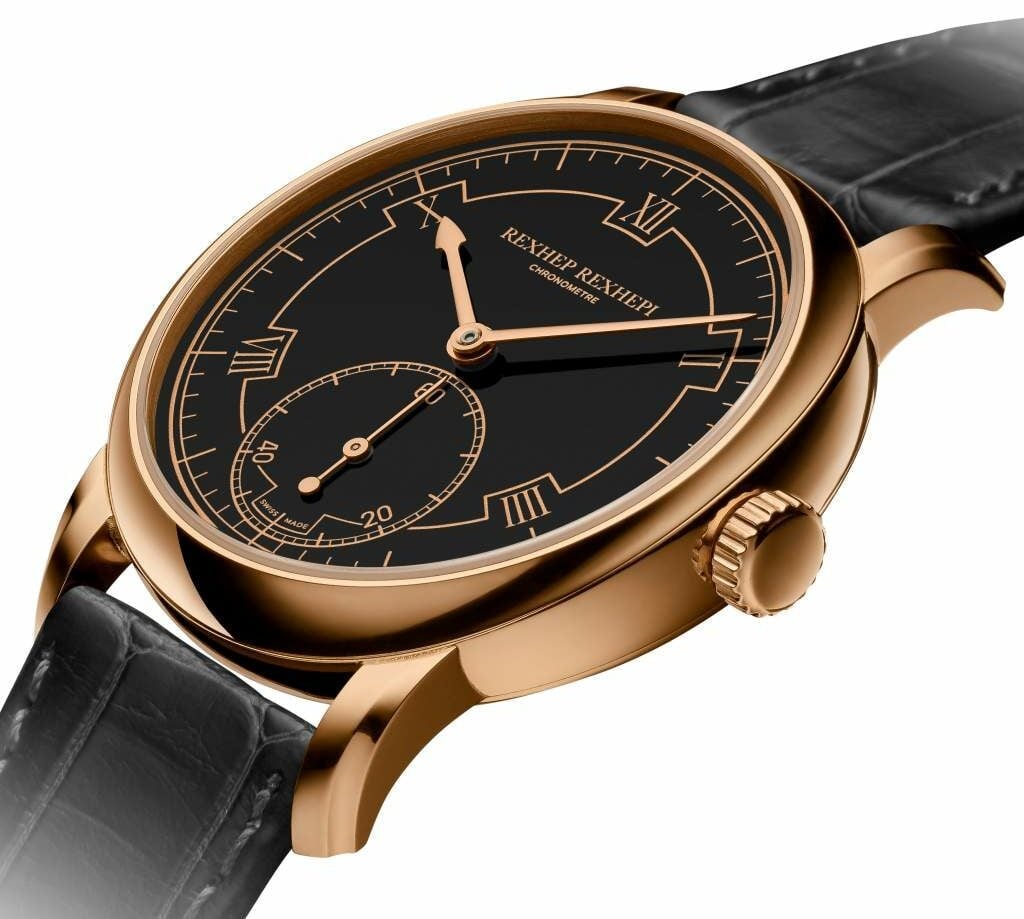
Rexhep Rexhepi Chronomètre Contemporain
When are watches art? We need an answer now
It’s about time for a definitive answer to the question of when watches are art. Watchmaking is often referred to as the Twelfth Art, as it sits at the intersection of engineering and artistry, where mechanical ingenuity meets hand-finished decoration. If art is about uniqueness, intention, expression, and perception, then some watches can be considered art. Exceptional craftsmanship is a bonus.
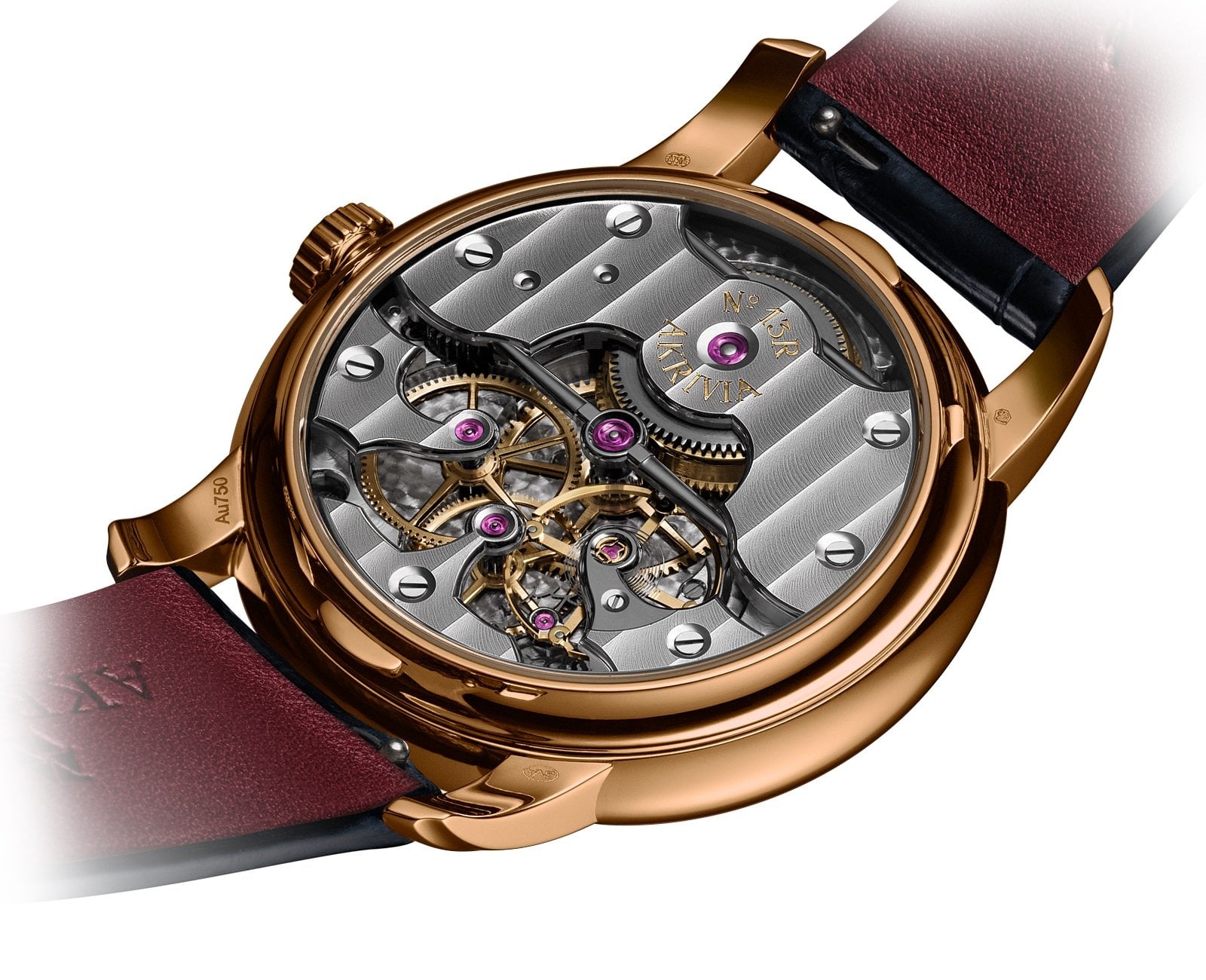
Movement inside the Rexhep Rexhepi Chronomètre Contemporain
Like fine art, watches can also exist in limited numbers, but the reasons behind that scarcity matter. A painting is unique by definition, while limited-edition prints are widely accepted because the printing process itself imposes practical constraints. Watches are different. A watch limited by technical complexity and painstaking craftsmanship feels more authentic than one whose scarcity is simply a marketing decision. After all, a limitation born of necessity tends to carry far more meaning than one created by intent alone.
My very subjective conclusion is that a watch can be considered art if, above all, it is personal. A watch is art if it reflects the vision, perspective, and intent of the individual watchmaker who created it.
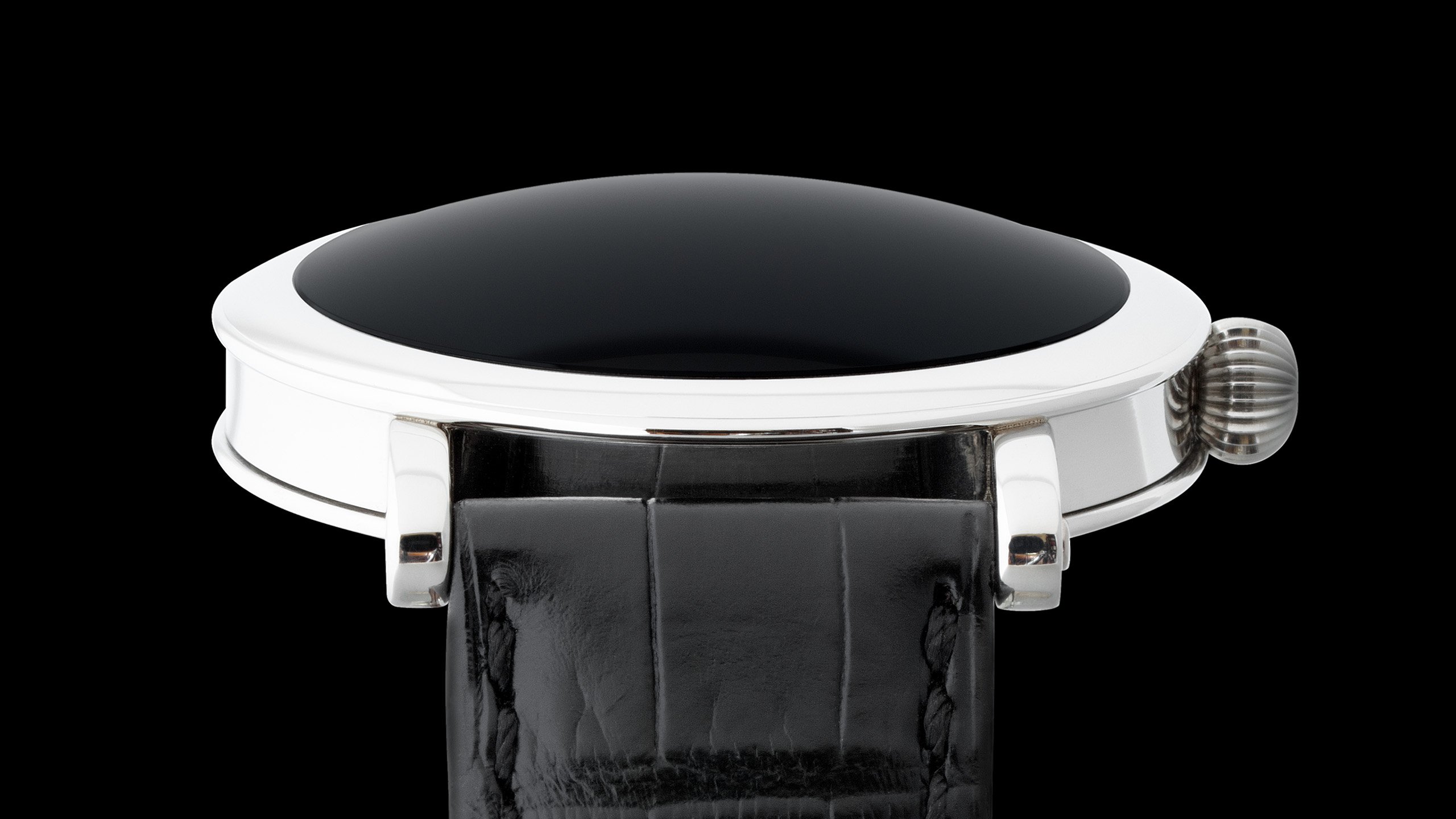
Haldimann H9 Reduction
An example of art
I think the Haldimann H9 – Reduction (CHF 209,000) is a good example. Beat Haldimann created a watch in the Swiss town of Thun that ticks all the boxes. The H9 is a 39mm platinum watch that asks you a question: what if time didn’t have to be seen to be experienced? Hours and minutes are still there, driven by an in-house triple-barrel central flying tourbillon movement, but they remain hidden behind an opaque crystal. Instead of presenting time as something to be read at a glance, the H9 invites you to imagine it. In doing so, the watchmaker shifts the focus away from timekeeping and toward reflection. He transformed the watch from a mechanical instrument into a thought-provoking object. This is an object of art, if you ask me.
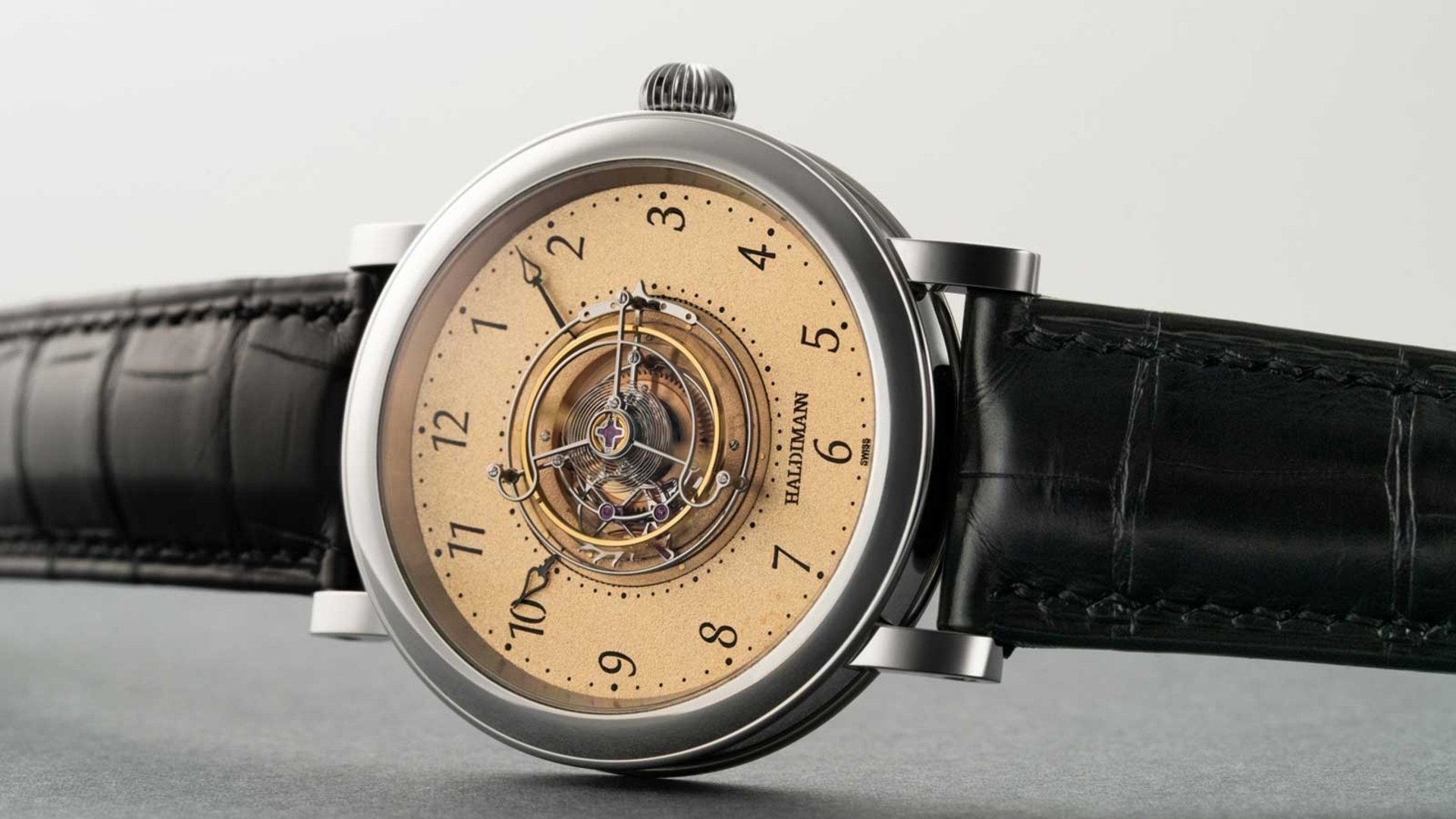
The H1 Flying Central Tourbillon GMT Milano Edition, a more conventional creation from Beat Haldimann
Do you agree with the statement that a watch is art when it’s a personal creation, or do you have a completely different opinion? Please share your thoughts in the comments section below