Buying A Watch Tool Kit And Fitting A Sapphire Case Back To A King Seiko 44-9990

There is a moment in every watch enthusiast’s journey when admiration turns into curiosity. You stop merely wearing watches and begin to wonder what lies beneath the dial, behind the polished steel, and under the engraved case back. For me, that moment arrived with a vintage King Seiko 44-9990.
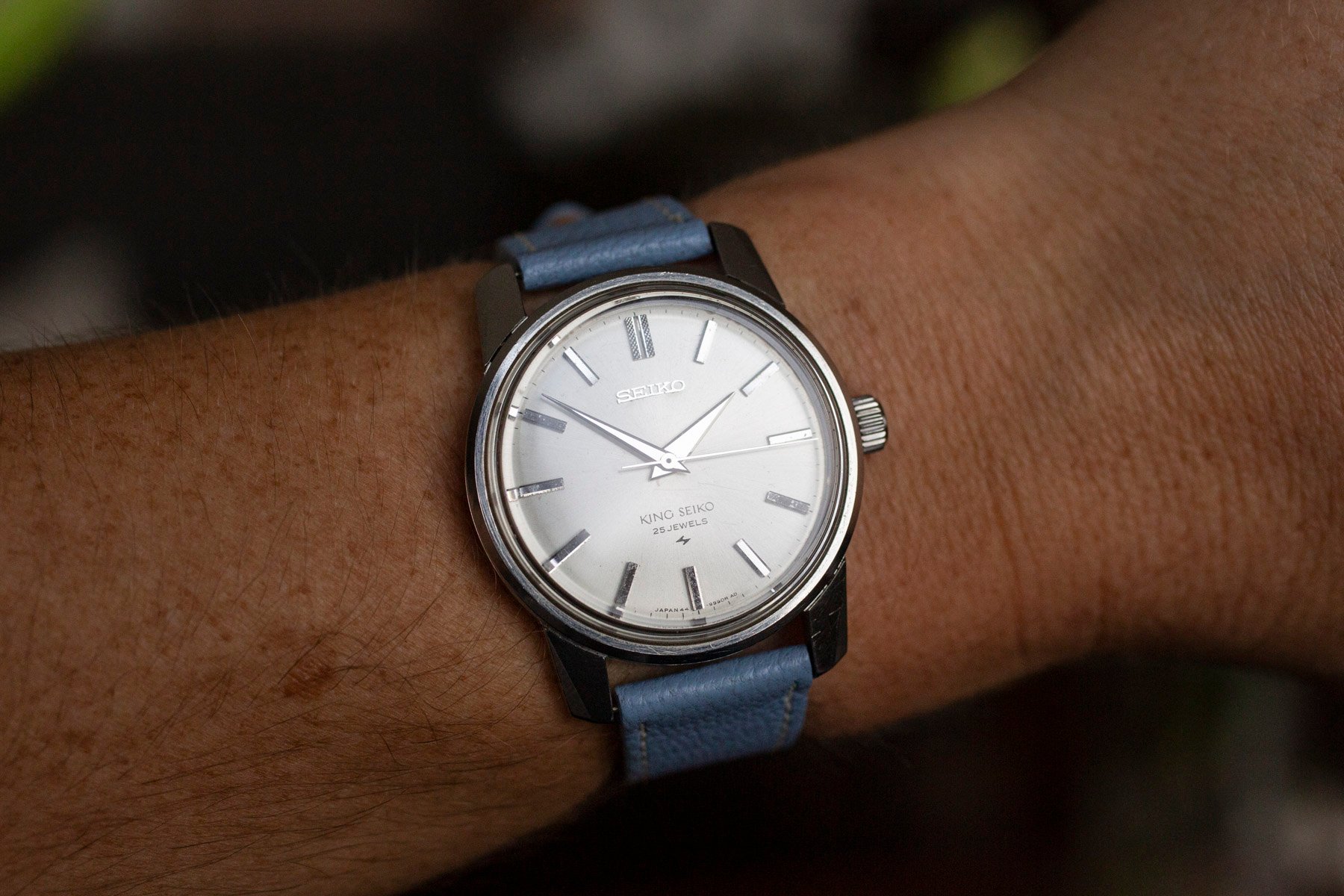
The King Seiko 44-9990 already occupies a special place in Seiko history. Produced during the 1960s, it represented a part of the confident rise of Japanese watchmaking and showcased many design cues that would eventually define the brand’s famous Grammar of Design philosophy. Sharp lugs, mirror-polished facets, elegant dauphine hands, and a beautifully restrained silver dial all combine to create one of the finest vintage dress watches Seiko ever produced, period. Yet despite all that external beauty, an important part of the real magic sits hidden inside the case.
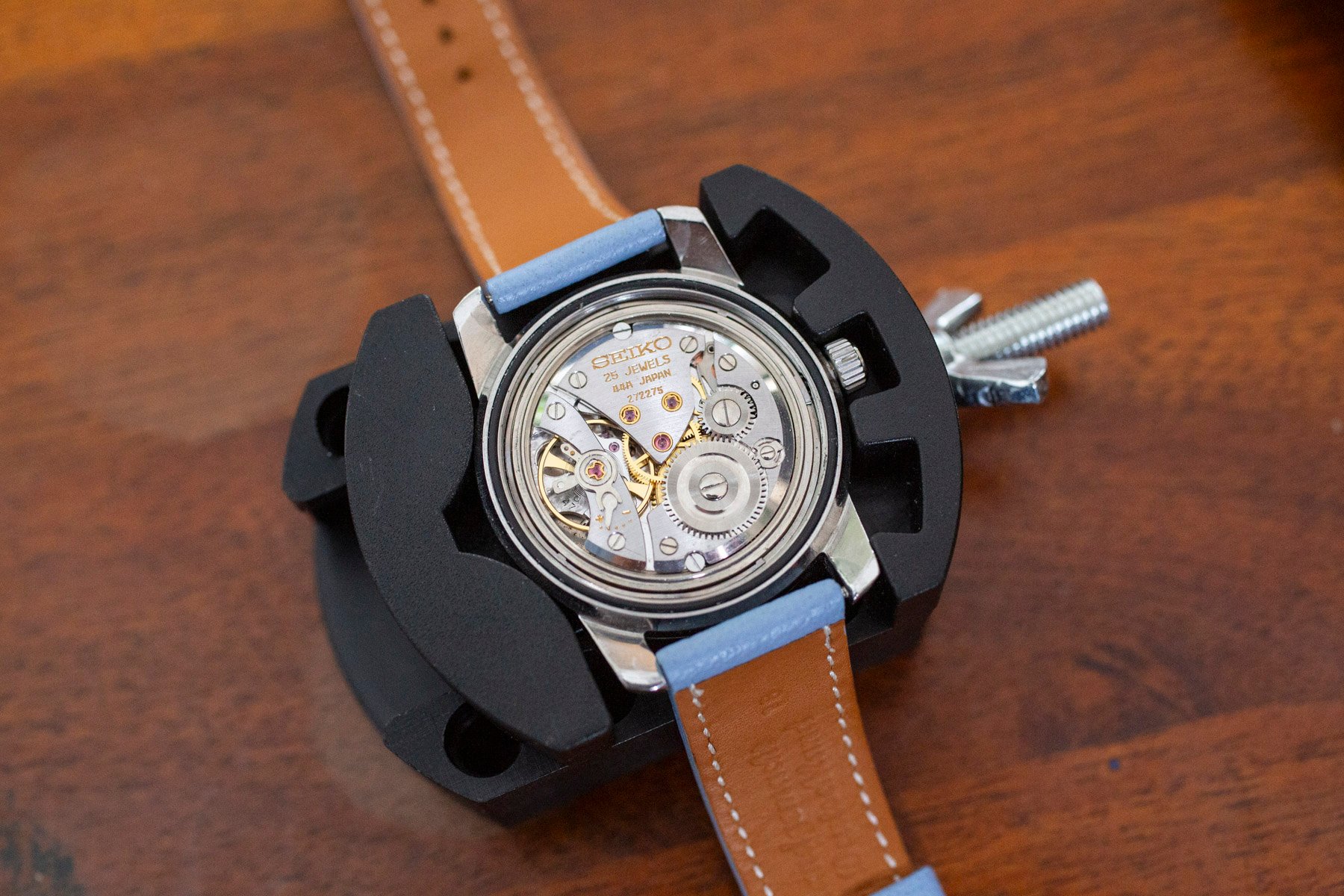
The manually wound 44A movement deserves to be seen. Unlike modern mass-produced calibers that can sometimes appear industrial and anonymous, the 44A has warmth and personality. It is mechanically straightforward in the best possible way, a movement from an era when hand-wound watches were still daily companions rather than nostalgic luxuries. Winding it each morning becomes a ritual, and watching the gears engage through a sapphire display back somehow makes the experience even more rewarding. That realization led me down a familiar enthusiast path — buying a watch tool kit and attempting a simple modification at home.
The slippery slope begins with a tool kit
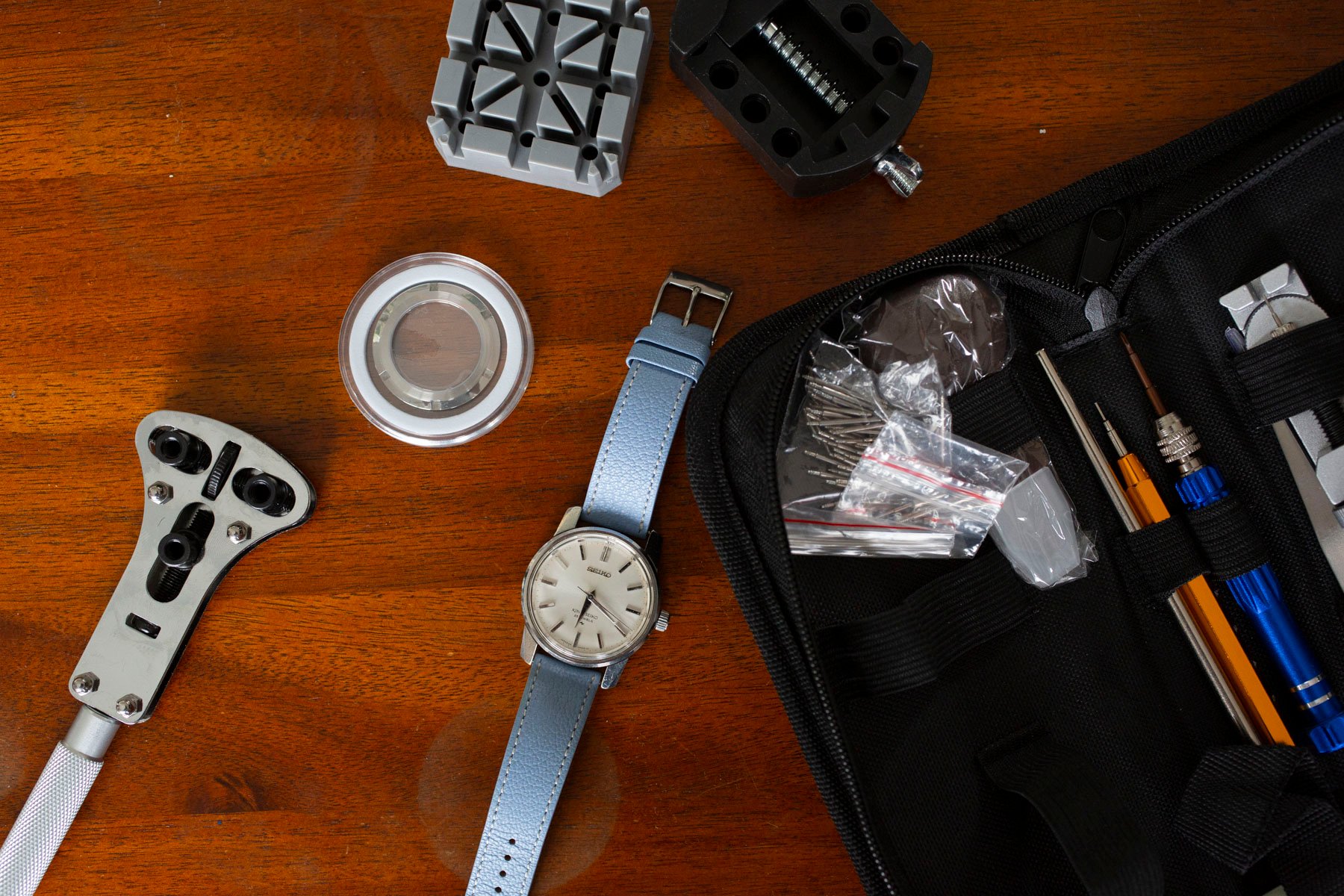
Watch tool kits occupy an interesting place in the hobby. On paper, they are practical purchases. In reality, they are gateways to obsession. Most enthusiasts begin with one because they want to resize a bracelet or swap a strap. Soon enough, though, curiosity grows. They start researching spring bar tools, case back openers, hand levers, movement cushions, and loupe magnifications with alarming seriousness.
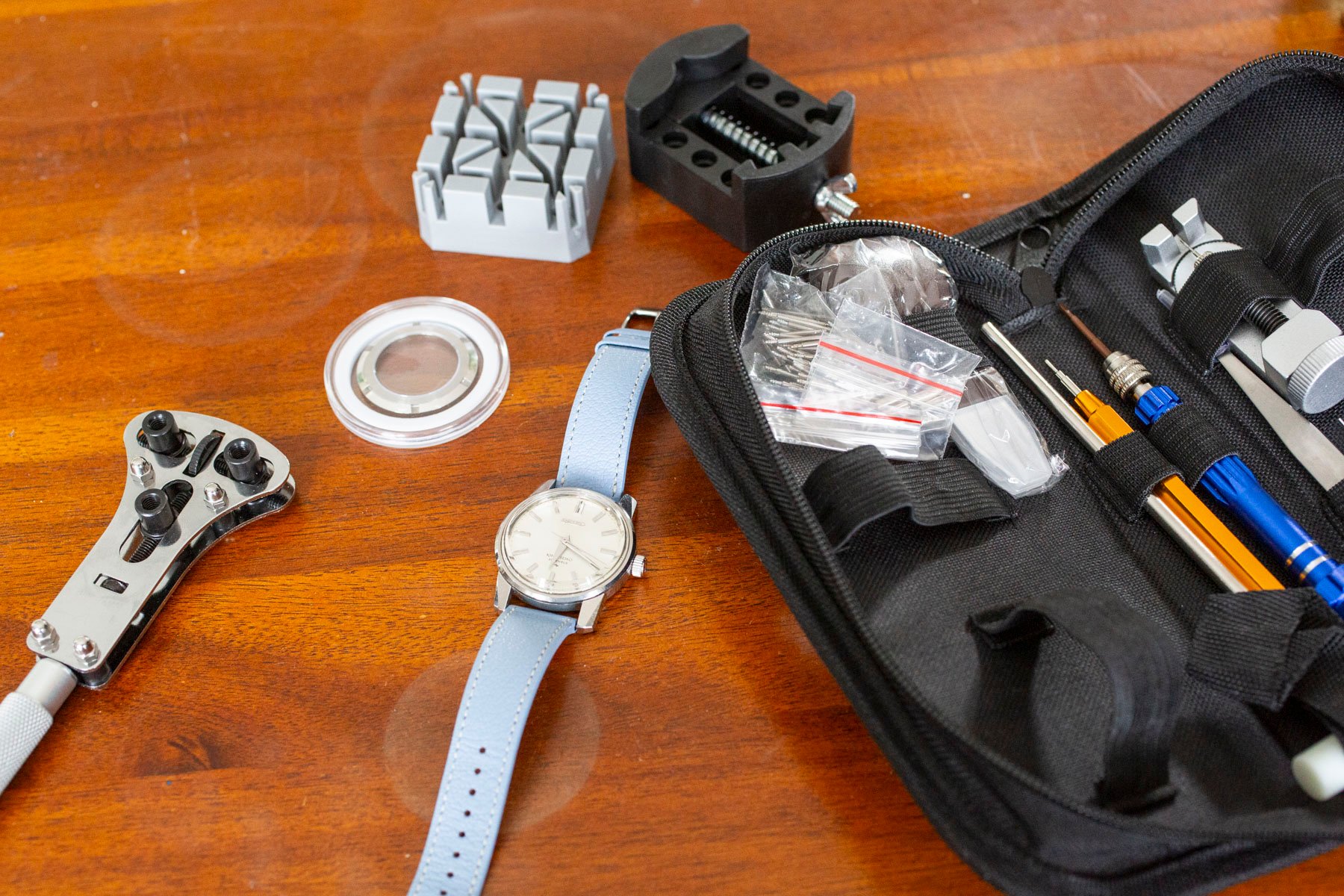
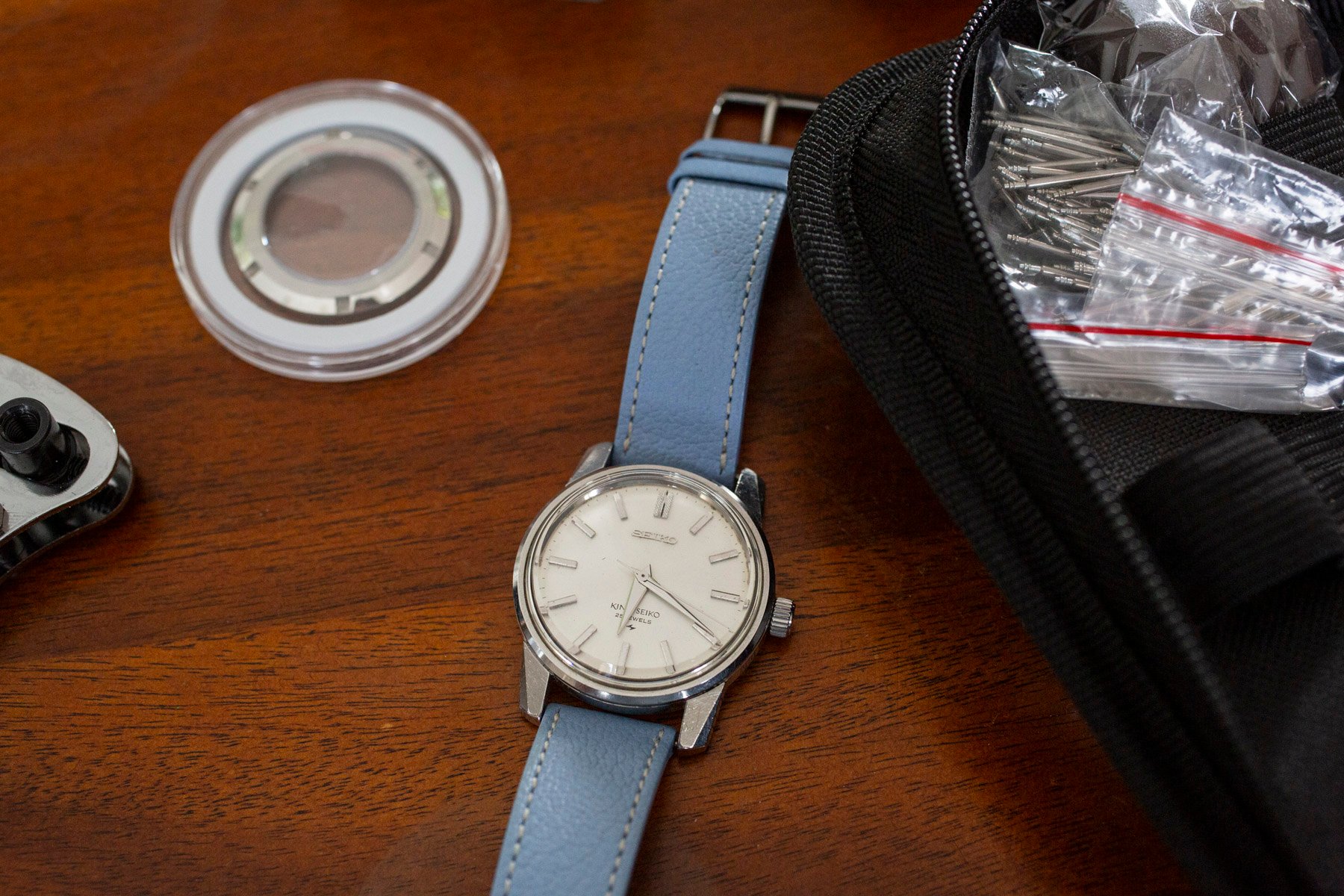
The good news is that you do not need to spend a fortune to begin. A solid starter kit should include a spring bar tool, a case holder, microfiber cloths, a case back opener, tweezers, finger cots, and a dust blower. A soft movement cushion is also useful whenever a watch case needs to be turned upside down during handling. Most affordable kits online include far more tools than a beginner actually needs, but that is part of the fun. I think I spent around 40 Australian dollars for this entry-level kit from Amazon.
The journey begins
For a vintage King Seiko, however, quality matters. The 44-9990 is not a disposable watch. The case features beautifully sharp lines that slipping tools can easily scar. Cheap case back openers with poor tolerances are often more dangerous than helpful. The smartest approach is buying a few good individual tools rather than the absolute cheapest all-in-one kit available.
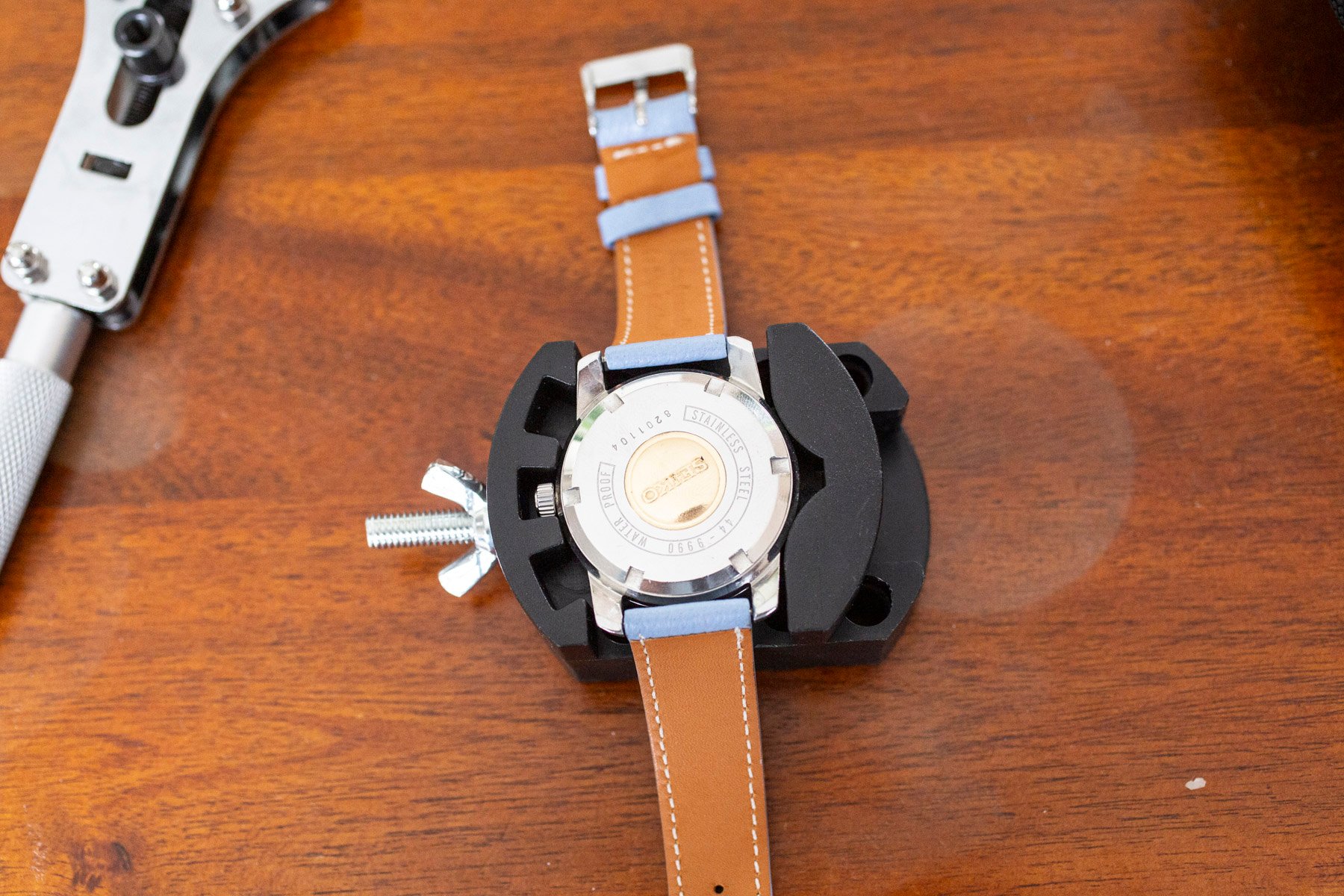
A proper Jaxa-style case back opener, a reliable case holder, and quality screwdrivers will immediately make the experience less stressful. There is also a psychological shift that occurs once the tools arrive. The watch no longer feels like a sealed mystery. It becomes an object you can interact with mechanically. That can be intimidating at first, especially with a vintage piece carrying decades of history, but it is also deeply satisfying.
Why replace the original case back?
Purists may recoil slightly at the idea of replacing an original King Seiko case back. In fairness, they are not entirely wrong. The stock screw-in case back on the 44KS is lovely in its own right. Many examples feature the famous gold medallion, and preserving original parts always matters in vintage collecting. Fortunately, fitting an aftermarket sapphire display back does not require permanently altering the watch. The original case back can simply be stored safely and reinstalled whenever desired. That reversibility is important.
The motivation here is not modification for the sake of novelty. The 44A movement deserves visibility, as it is quite attractive. Seiko’s vintage manual-wind calibers possess an understated elegance that often goes unnoticed because owners rarely see them. Bridges are thoughtfully shaped, the architecture feels balanced, and the slower 18,000vph beat rate creates a wonderfully relaxed visual rhythm.
The aftermarket sapphire display back from The Time Collective preserves much of the original watch’s character while finally allowing the movement to breathe. More importantly, it transforms the wearing experience. A vintage watch can sometimes feel fragile and distant, like an object to preserve carefully. Seeing the movement through sapphire creates a stronger emotional connection. You become more conscious of the mechanical life inside the watch every time you remove it from your wrist.
Preparing the workspace
Before touching the watch, preparation matters. This is not surgery, but patience and cleanliness go a long way. A clean desk with soft lighting is ideal. A microfiber cloth should sit beneath the watch to prevent scratches. Finger cots or gloves help avoid fingerprints on the movement and inner crystal surface.
The first task is removing the strap. This gives easier access to the case back and prevents unnecessary strain while securing the watch in the case holder. Once secured, the King Seiko immediately reveals one of the pleasures of vintage construction. Unlike modern watches that sometimes feel over-engineered and hostile to entry, the 44KS was built during a period when servicing remained central to watch design.
Still, caution matters, and the key is applying firm, even pressure with the case back opener while ensuring the watch remains stable. Slipping across those razor-sharp lugs would be heartbreaking. After a slight initial resistance, the case back begins to loosen, and then comes the moment every enthusiast remembers.
First sight of the 44A caliber
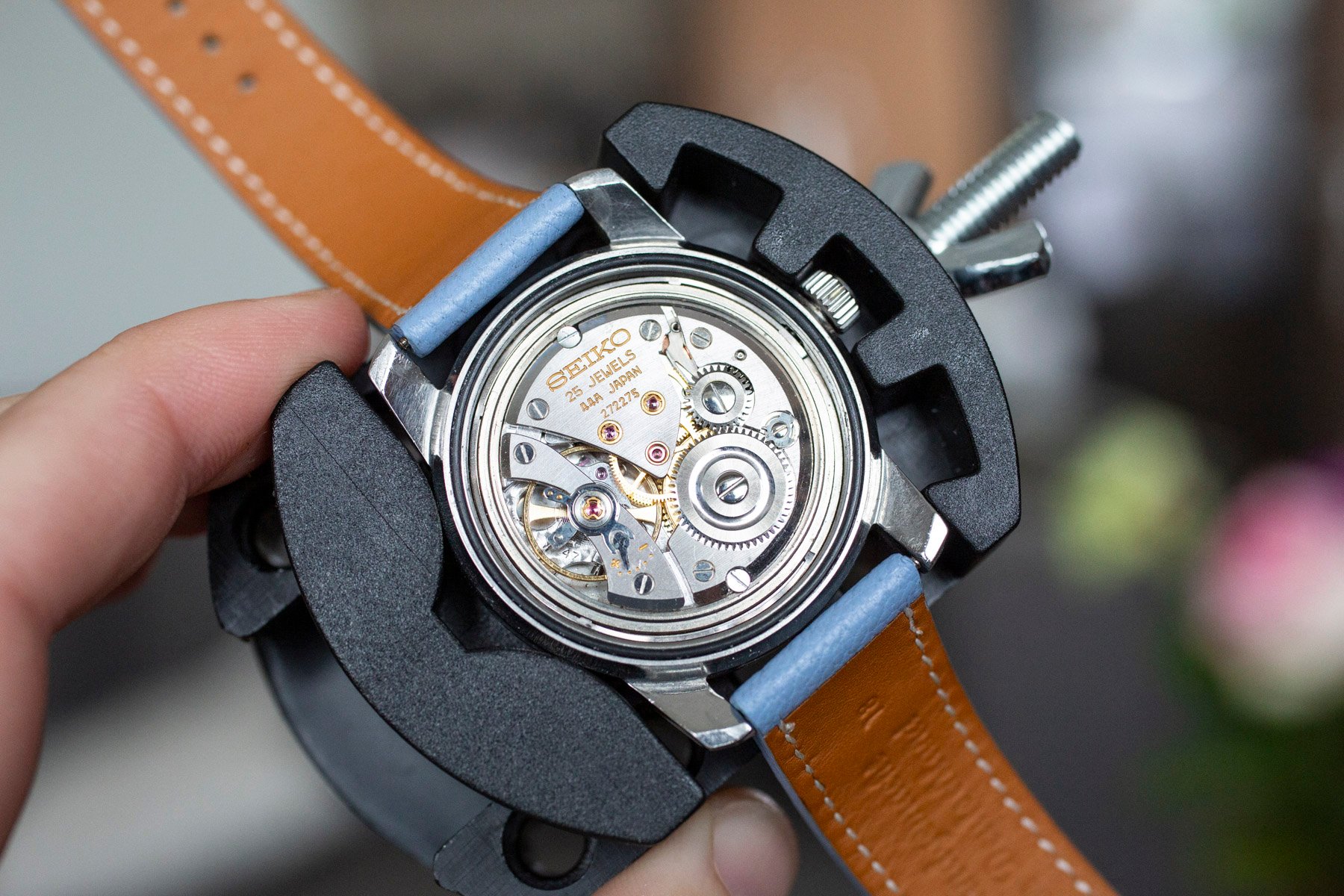
Opening a vintage watch for the first time feels strangely intimate. Suddenly, a machine that has quietly measured time for half a century sits exposed in front of you. In the case of the 44A, the movement immediately communicates purposefulness. There is no unnecessary decoration and no attempt at theatrical finishing, but it is, without doubt, a well-made and handsome movement. The bridges display clean industrial beauty. Its jewel settings catch the light, and the balance wheel oscillates with calm confidence. Everything looks engineered to function reliably rather than merely impress in photographs.
That honesty is part of vintage Seiko’s enduring appeal. Swiss watchmaking often leaned heavily into romanticism and decorative excess. Seiko, especially during this era, approached precision with a slightly different mentality. The emphasis sat firmly on robust engineering, practical accuracy, and disciplined design.
Watching the movement operate while gently winding the crown creates a deeper appreciation for the people who originally assembled it decades ago. This is also the point where restraint becomes important. Opening a watch case can tempt enthusiasts into doing more than they should. Unless you are trained, this is not the moment to begin poking around inside the movement itself. Dust, magnetism, and accidental contact can quickly create problems. The goal here is admiration rather than amateur watchmaking.
Installing the sapphire case back
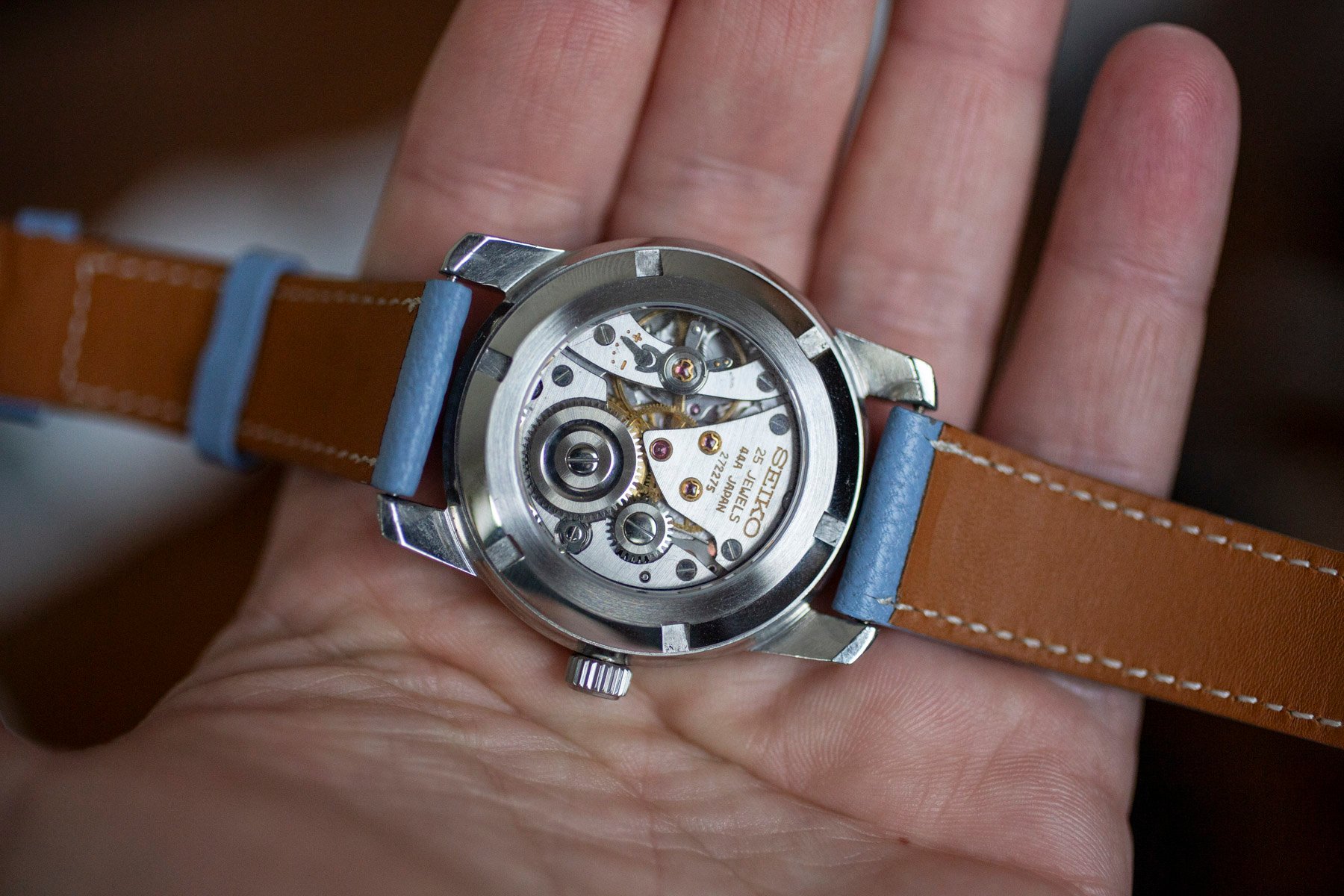
The installation of the aftermarket display back itself is refreshingly simple. This sapphire case back from The Time Collective arrives with the correct threading and gasket arrangement for the 44KS case. Before installation, it is worth inspecting the gasket carefully and ensuring there is no dust trapped on the sapphire crystal. A small dust blower becomes surprisingly useful here. Once aligned properly, the display back threads smoothly into place. The most important thing is avoiding cross-threading by rushing the process. Vintage steel threads deserve patience.
As the case back tightens, the transformation becomes immediately apparent. Flip the watch over, and the formerly closed-off King Seiko 44-9990 suddenly feels alive in a completely different way. The 44A caliber now sits fully visible beneath sapphire, turning a historically significant dress watch into something unexpectedly interactive. It changes the emotional rhythm of ownership. You find yourself removing the watch just to glance at the movement. Morning winding becomes more engaging. Even the soft ticking feels newly noticeable once a visible mechanical heartbeat accompanies it.
A more personal vintage watch?
There will always be debates within vintage collecting about originality versus personalization. Those discussions are healthy because they reflect a genuine passion for preservation. But reversible modifications like a sapphire display back occupy a relatively harmless middle ground. The original case back remains untouched in storage. Meanwhile, the watch becomes more enjoyable daily. That matters.
Vintage watches should not exist purely as museum artifacts. The best examples continue living on wrists, developing new stories while carrying traces of old ones. If a carefully chosen aftermarket component enhances your appreciation for the watch without permanently altering it, that is entirely reasonable. In many ways, buying the tool kit became just as meaningful as fitting the sapphire case back.
Concluding thoughts
The process creates a stronger connection with the object itself. You stop viewing the watch as an inaccessible luxury item and begin understanding it as a mechanical system assembled by human hands. That perspective deepens appreciation not only for the King Seiko 44-9990 but for watchmaking overall. And like most enthusiast rabbit holes, it probably will not end there.
Today, it is a sapphire display back and a basic tool kit. Tomorrow, it may be regulation tools, vintage chronographs, or learning how to service a manual-wind caliber in its entirety. That is the “danger” of mechanical watches: the deeper you look, the more fascinating they become.