Hands-On: The New Doxa Sub 200 T.Graph II — An Iconic Dive Chronograph Returns

Few brands wear their history as comfortably as Doxa. While many heritage-driven watch companies seem trapped in endless cycles of archival recreation, Doxa has spent the better part of the last decade refining a formula that already worked. That consistency is precisely why the debut of the Doxa Sub 200 T.Graph II matters.
The modern Doxa Sub collection has gradually become one of the strongest and most coherent offerings in contemporary dive watches, colorful, functional, unmistakably shaped, and refreshingly unconcerned with trends outside its own lane.
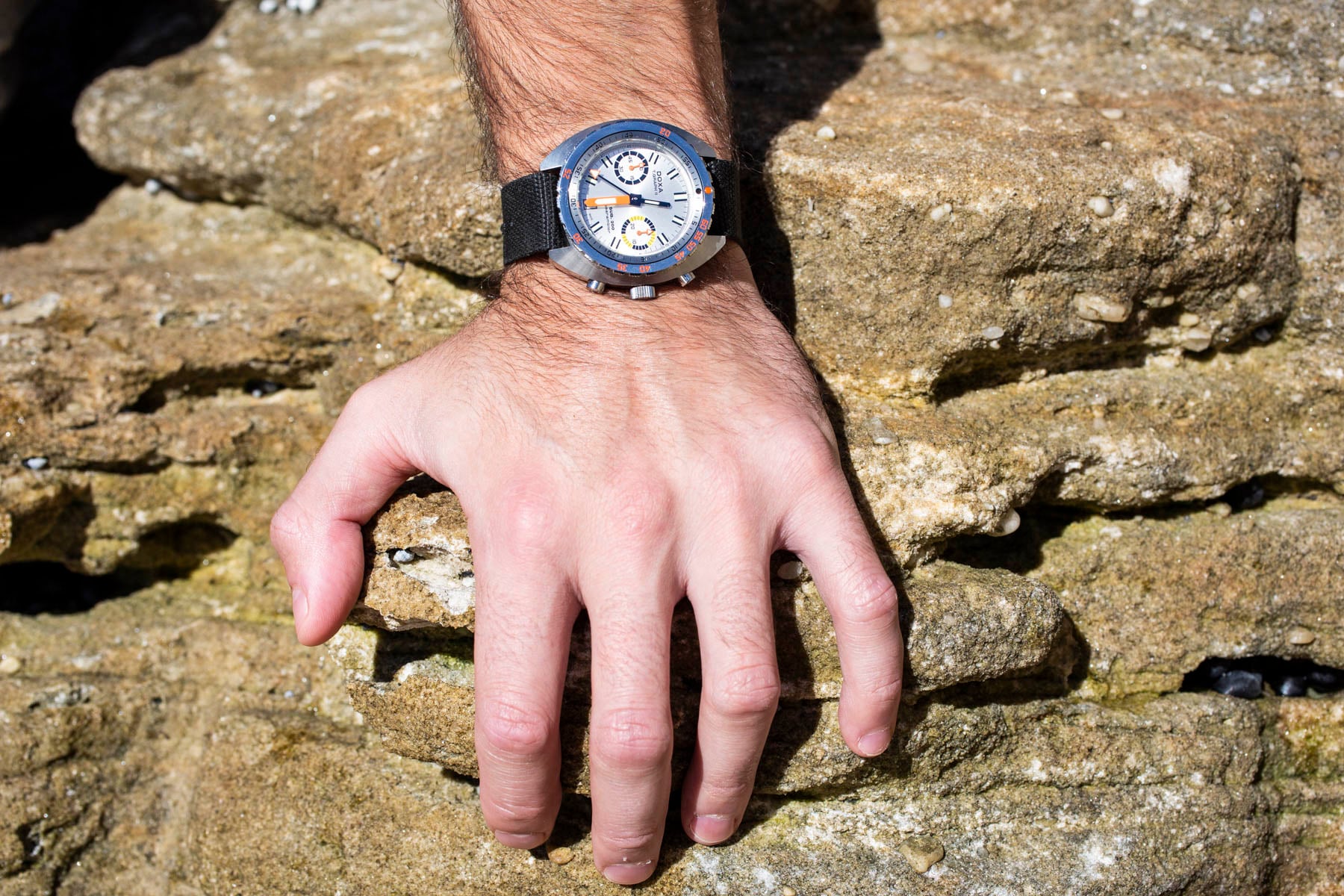
Doxa’s earlier special edition with a larger 43mm case and a Valjoux 7734 movement, limited to 300 watches
The original Sub 200 T.Graph from 1969 occupies a special corner within Doxa lore. It was not simply another variation on the Sub platform but one of the earliest examples of a dive watch integrating a chronograph complication in a genuinely usable way.
At a time when the professional dive watch was still finding its identity, Doxa approached the category from a practical standpoint rather than a luxurious one. The company’s cushion-cased Sub models already prioritized underwater legibility, decompression timing, and robust usability. Adding a chronograph could easily have disrupted that clarity. Instead, the T.Graph managed to preserve the visual directness that made the Sub line so effective. Now, nearly 60 years later, the concept returns as the new Doxa Sub 200 T.Graph II.
A more restrained evolution
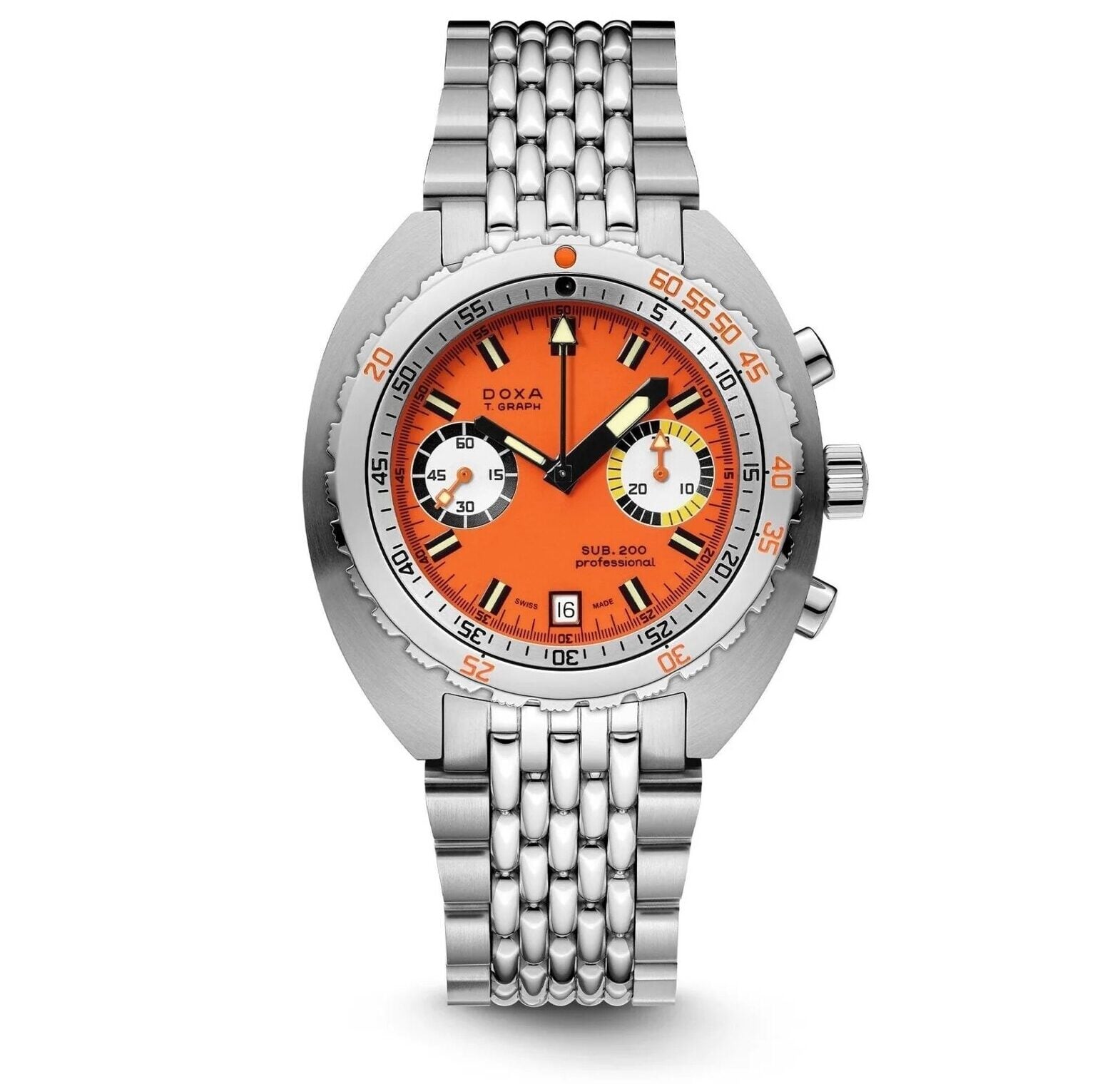
At first glance, the new Doxa Sub 200 T.Graph II looks reassuringly familiar. The asymmetrical cushion case, brightly colored dials, bold handset, and unmistakable beads-of-rice bracelet remain integral to the formula. This latest generation is less about nostalgic revivalism, though, and more about subtle refinement.
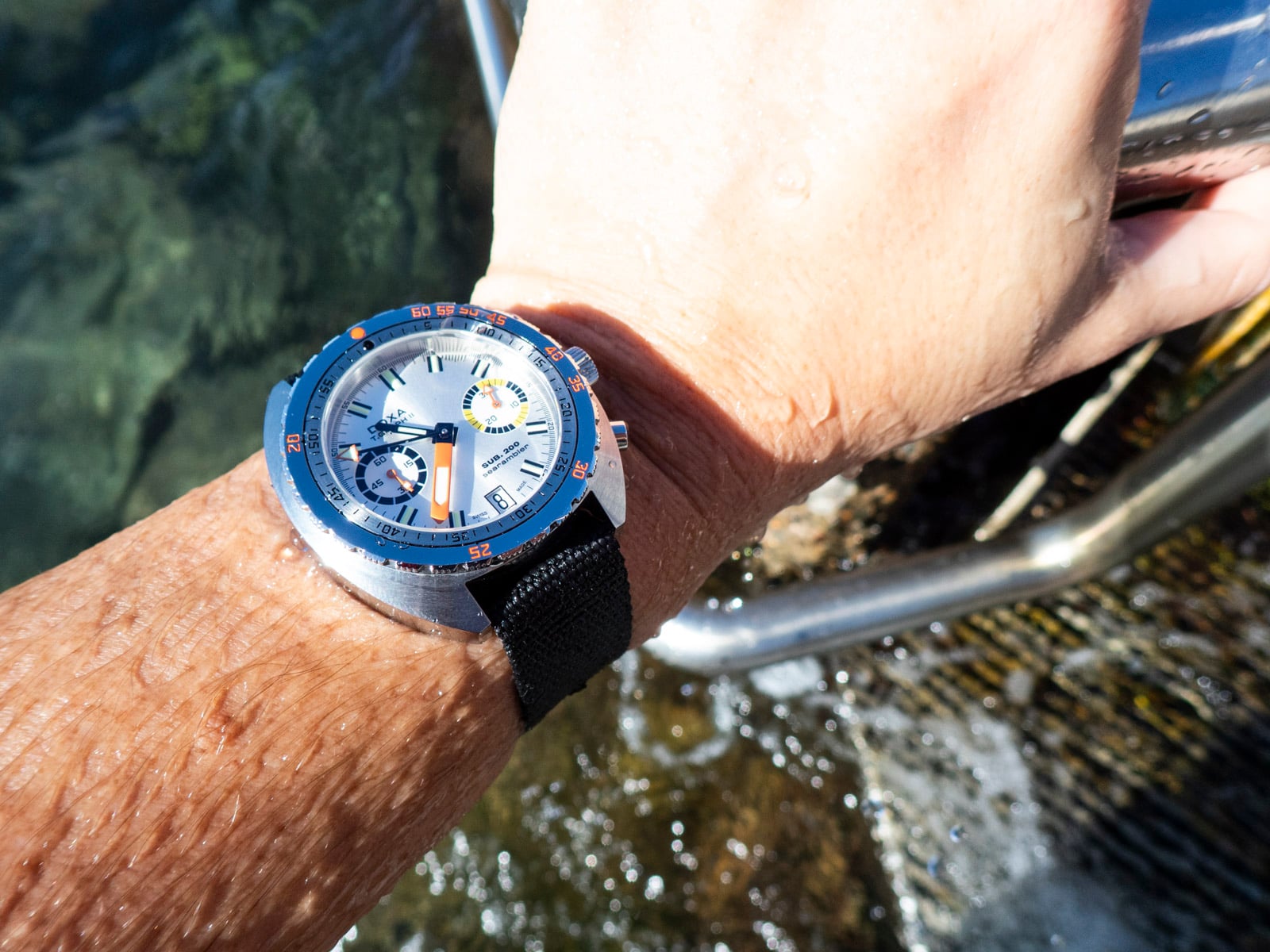
Doxa has slightly reduced the case’s dimensions, bringing the diameter down from 43mm to 42mm while trimming the thickness from 15.15mm to 14.6mm. On paper, those numbers may sound incremental, but anyone who has spent time with previous Doxa Sub 200 T.Graph executions will understand why the change matters.
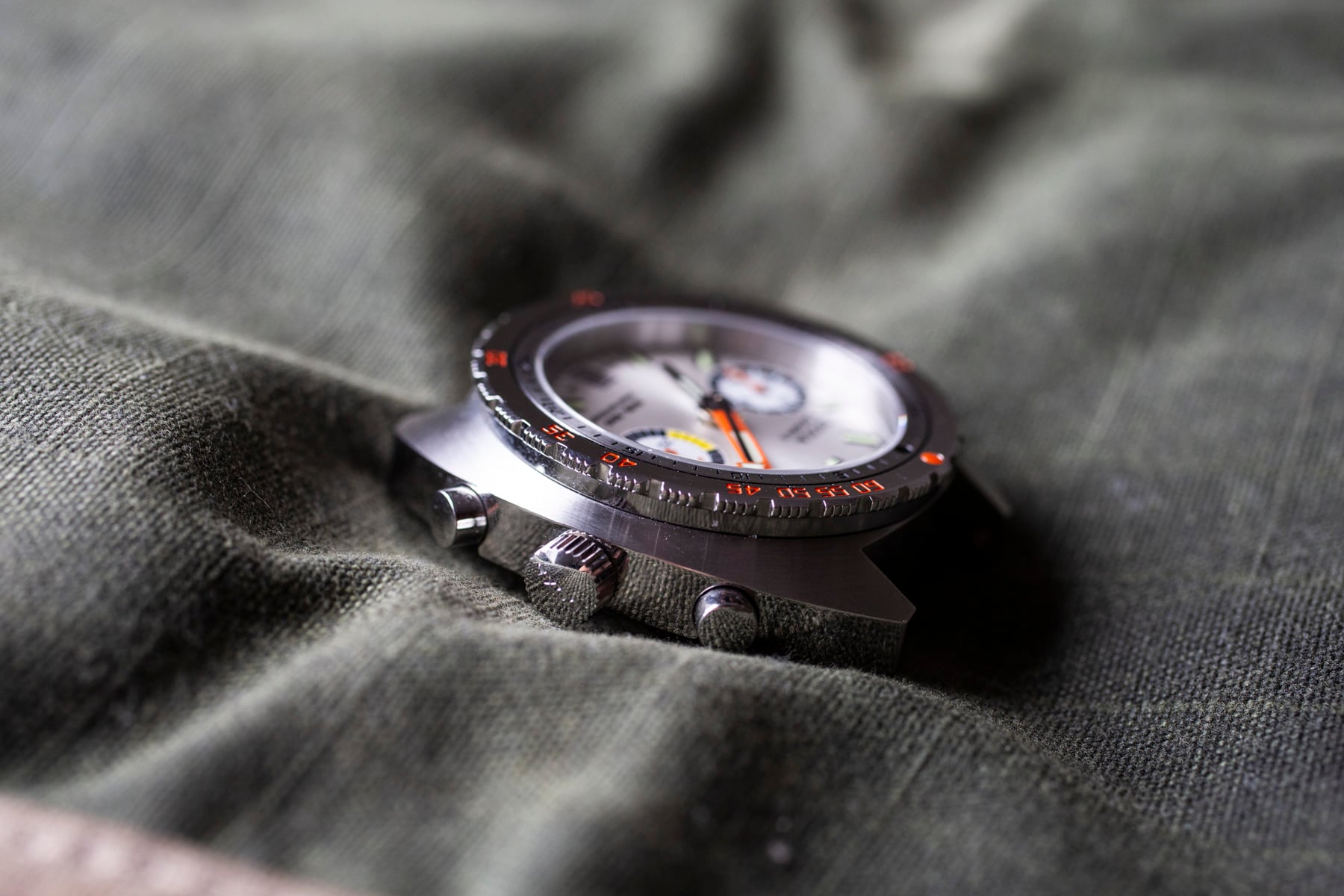
Refined dimensions for the Doxa Sub 200 T.Graph II
The older versions had plenty of charm but also substantial physical presence. This new case feels more controlled and balanced without losing the purposeful stance that defines the Sub family. This watch is still undeniably a Doxa, but it appears better calibrated for daily wear.
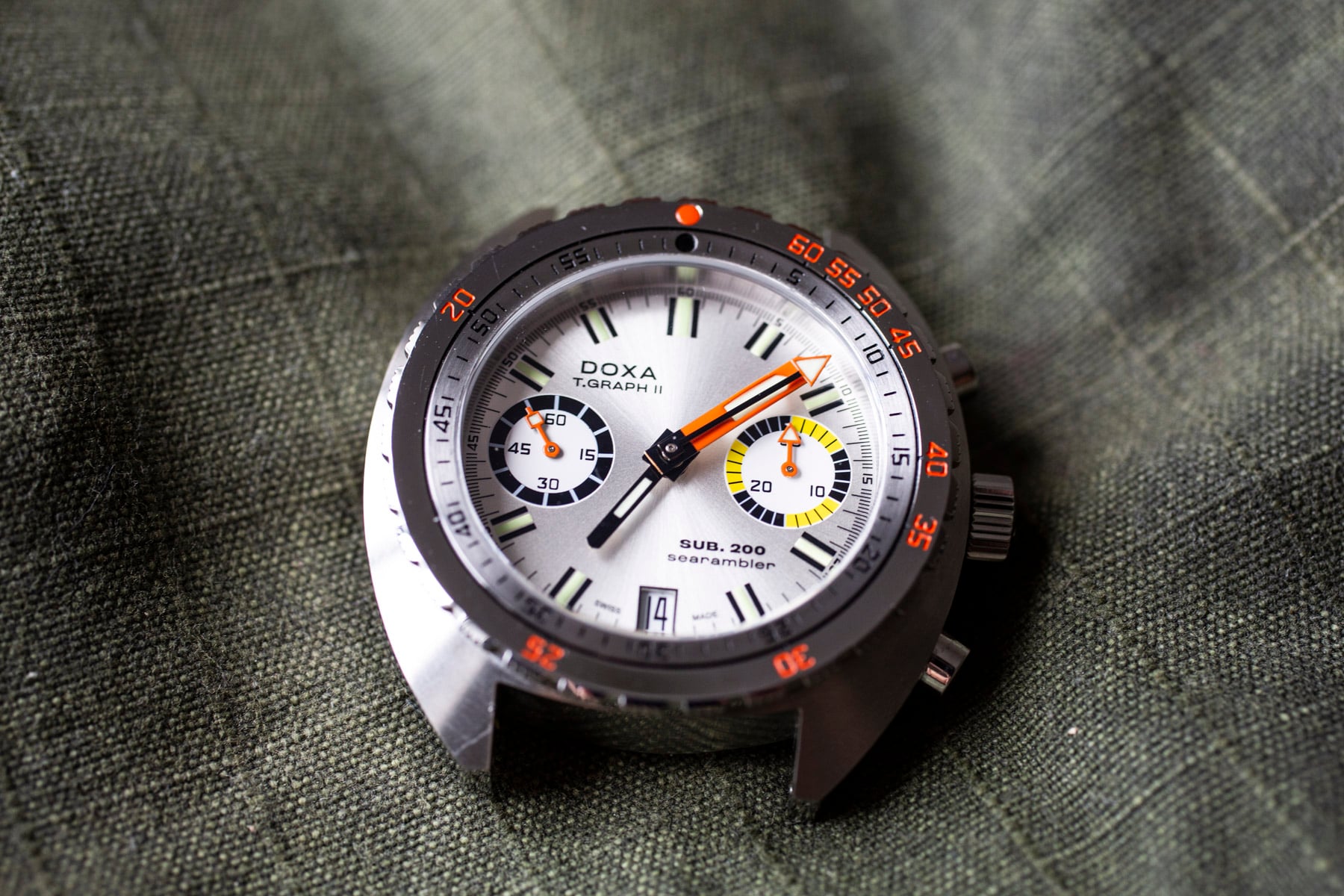
That balance is important because modern enthusiasts increasingly expect versatility from sports watches. Even committed dive-watch fans are rarely using these pieces underwater. Instead, watches like the Doxa Sub 200 T.Graph II spend most of their lives moving between offices, airports, cafés, and weekends away. Doxa seems fully aware of that reality. The updated proportions should allow the watch to sit more naturally across a broader range of wrists while preserving the visual impact that makes the Sub line instantly recognizable.
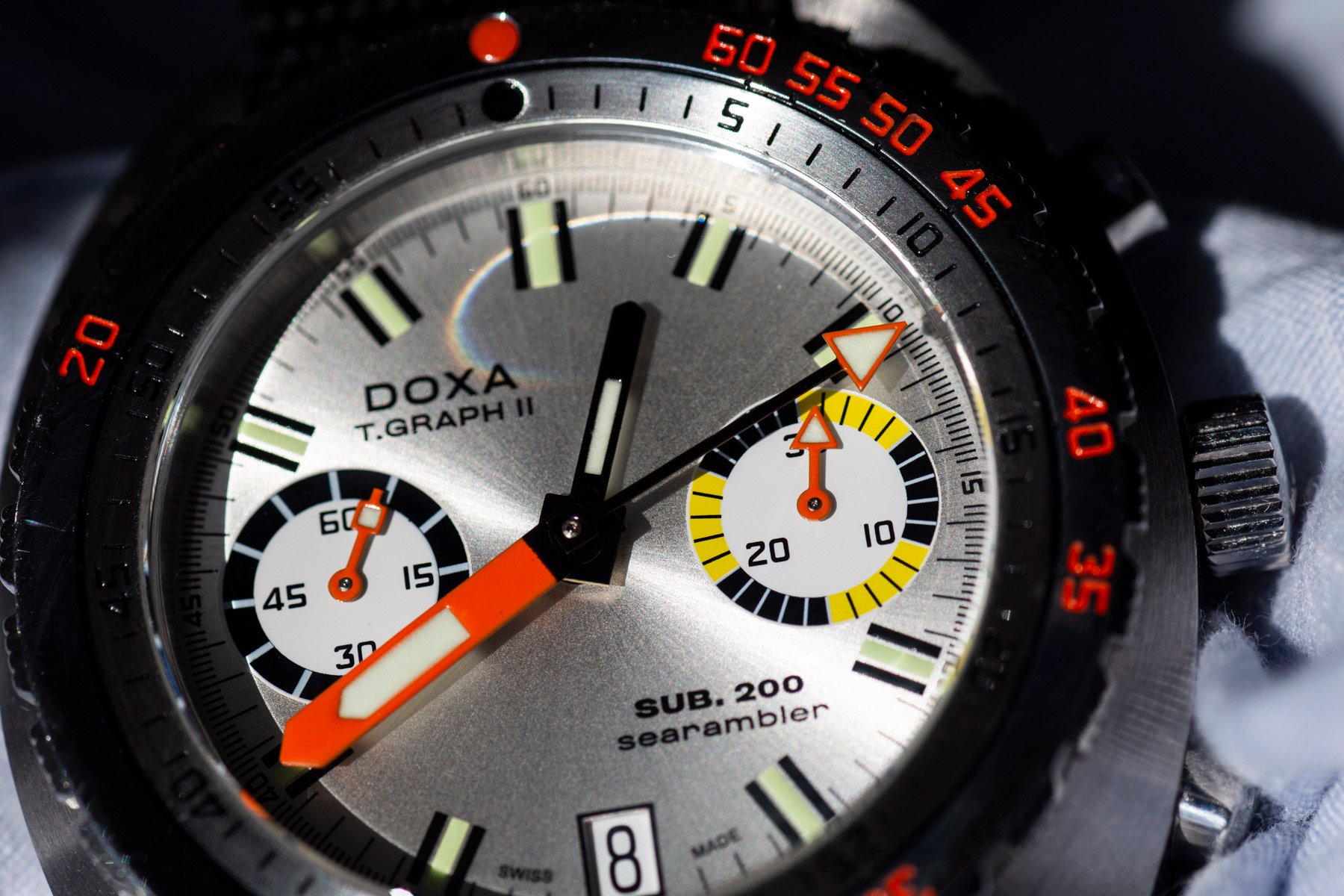
The chronograph, Doxa style
Perhaps the most interesting aspect of the Doxa Sub 200 T.Graph II is how carefully Doxa frames the chronograph complication itself. The brand describes the watch not as a dive chronograph in the strict sense but as a dive watch that incorporates a chronograph. That distinction may sound semantic, but it speaks directly to the philosophy behind the watch.
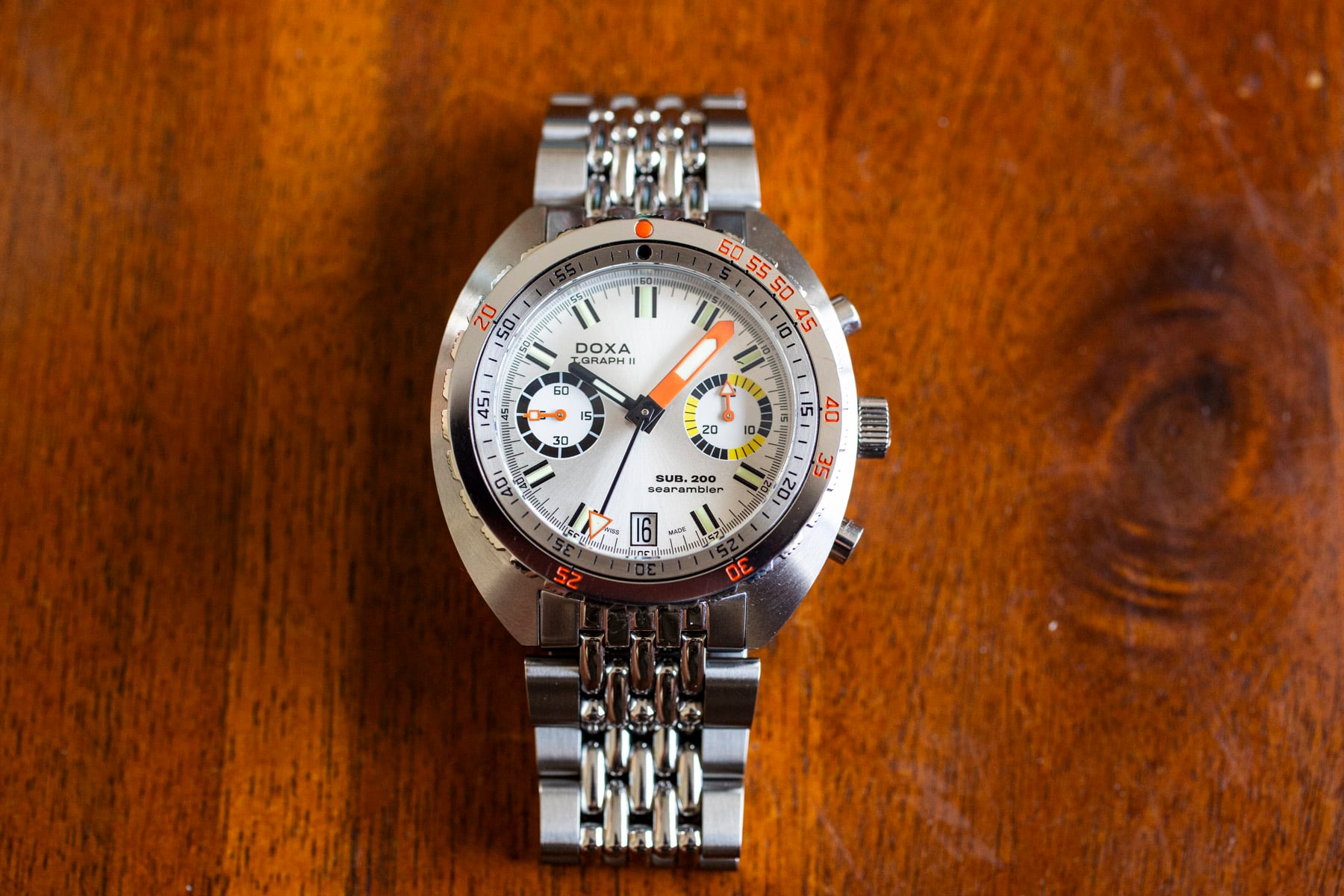
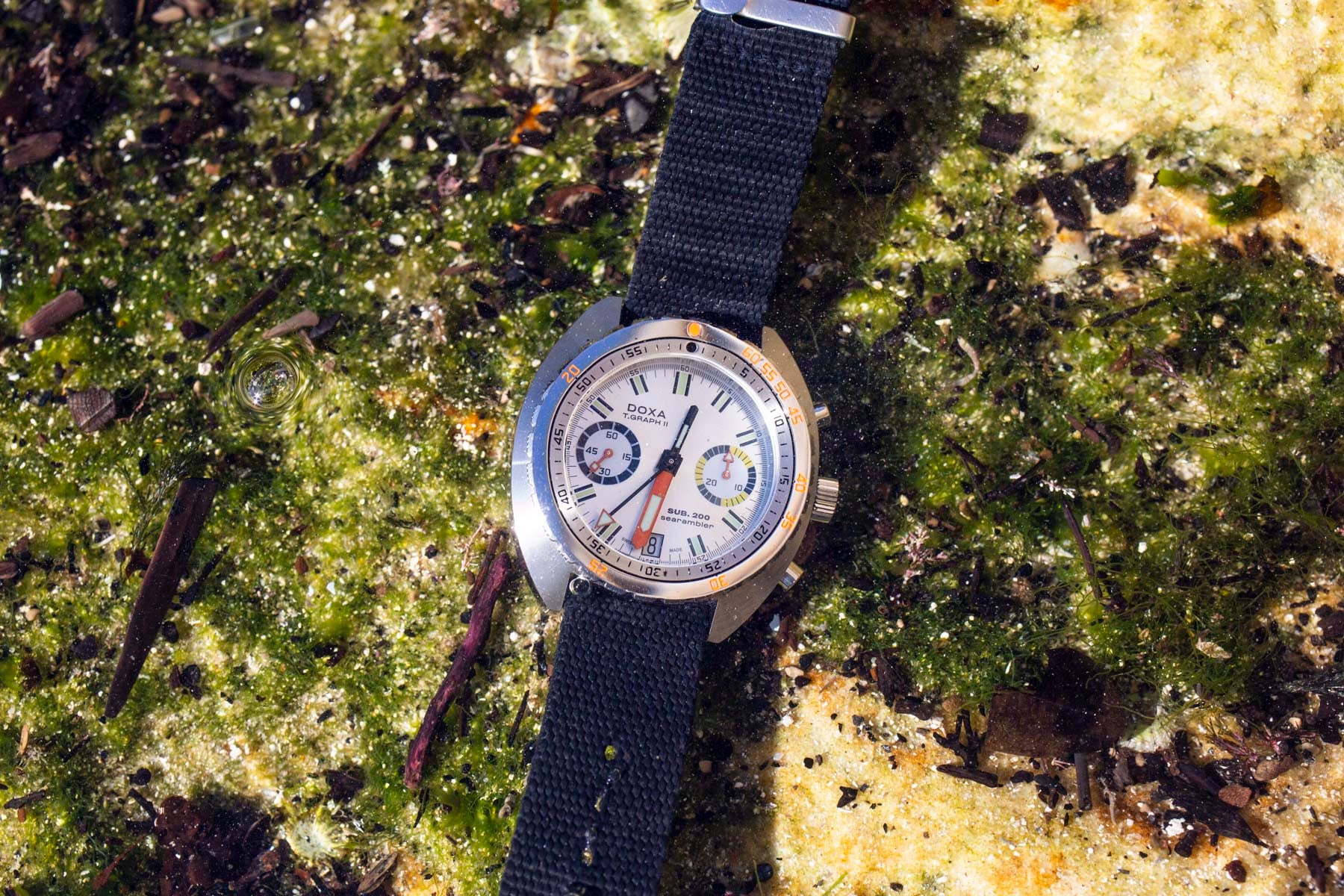
Underwater, the unidirectional bezel remains the primary timing tool. The chronograph exists as a complementary function for surface timing and shorter intervals. In other words, the complication does not overpower the watch’s original purpose. That functional hierarchy is reflected in the dial layout. The Doxa Sub 200 T.Graph II uses a balanced two-register layout with a 30-minute counter at 3 o’clock and a running seconds at 9 o’clock, while the date sits neatly at 6. Importantly, the display remains clean and highly legible despite the added information.
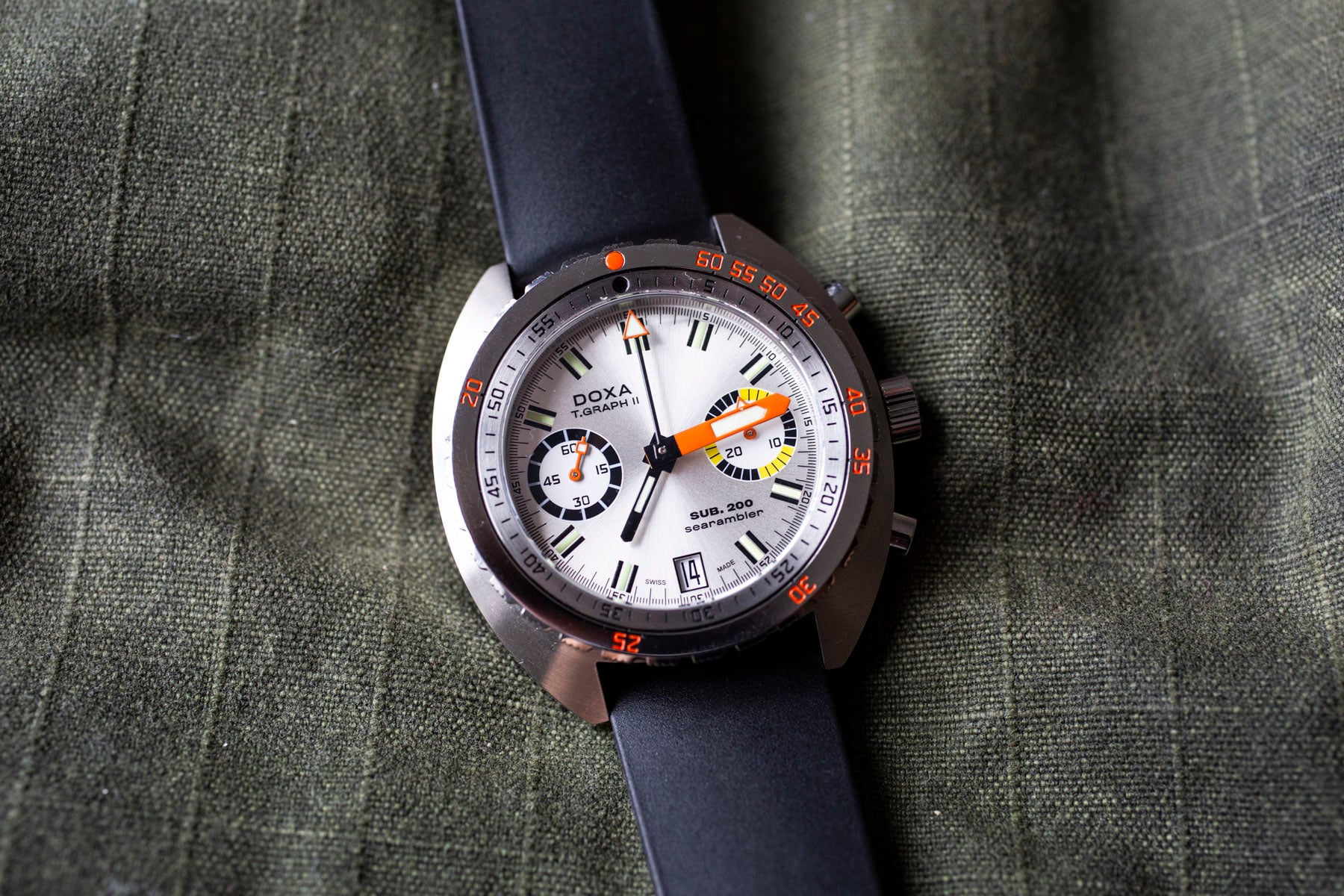
The watch is powered by the automatic Sellita SW510 chronograph movement operating at 4Hz with approximately 56 hours of power reserve. It is a practical and proven caliber choice that suits the watch’s straightforward character. There is no attempt here to transform the Doxa Sub 200 T.Graph II into a precious object through exotic movement architecture or unnecessary finishing. Instead, the focus remains squarely on utility and reliability.
A unique design language and colorway new to the T.Graph
Design has always been one of Doxa’s strengths. Even the brand’s more colorful models rarely feel visually chaotic. The broad hands, strong contrast, and simple geometric markers prioritize quick reading rather than decorative flourish.
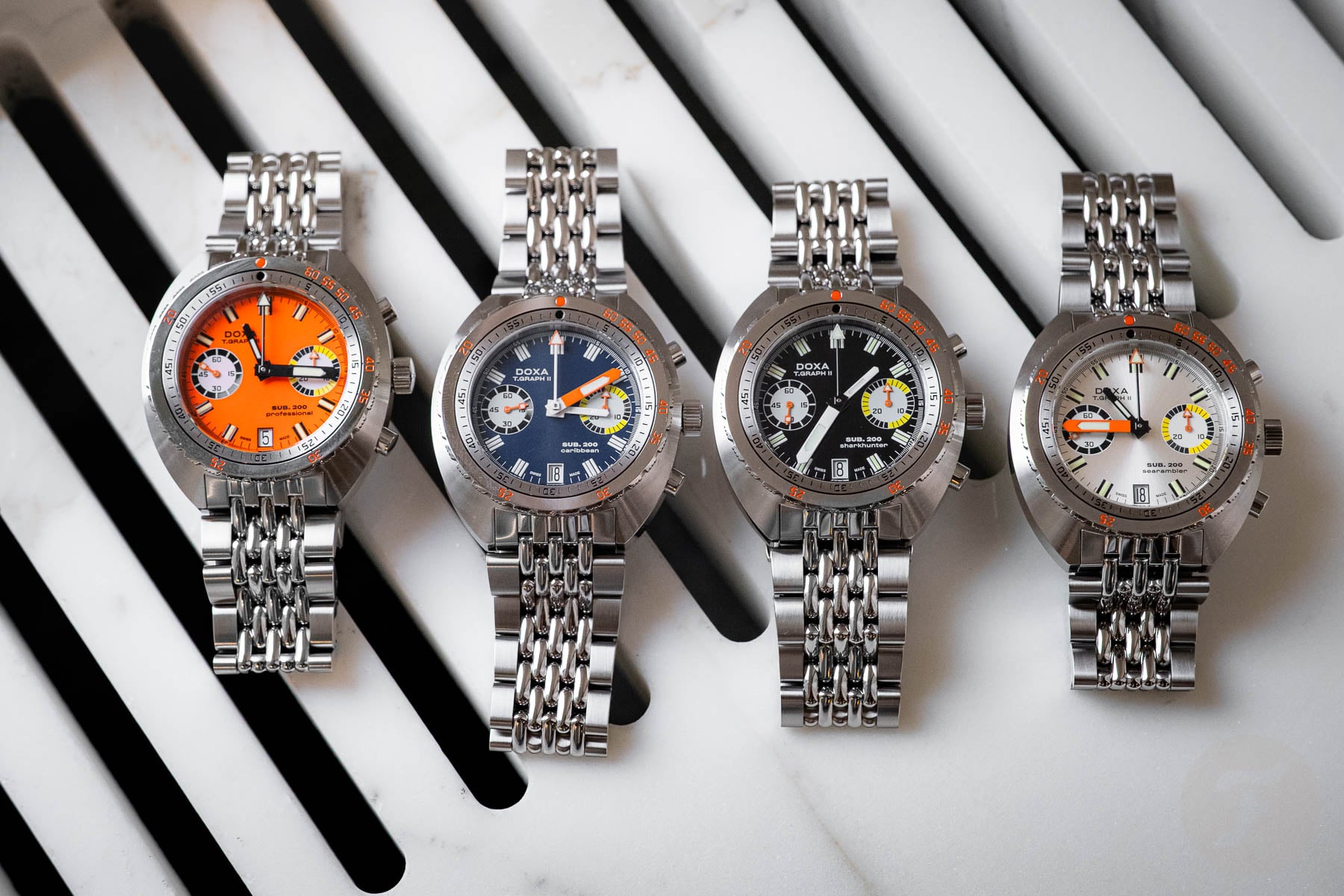
The biggest visual news within the collection is undoubtedly the introduction of the Caribbean dial. Alongside the familiar Professional orange, Sharkhunter black, and Searambler silver configurations, the Doxa Sub 200 T.Graph II now arrives in Doxa’s deep Caribbean blue. Longtime Doxa enthusiasts will already understand the significance of that color.
The Caribbean dial has become one of the strongest expressions within the broader Sub lineup over recent years. While the Professional orange remains the emotional centerpiece of the brand, Caribbean blue often feels slightly more versatile and contemporary without sacrificing personality. On the Doxa Sub 200 T.Graph II, the blue works especially well because the chronograph layout naturally introduces more visual complexity. The cooler tone calms the composition slightly and gives the watch a more relaxed personality than the high-energy orange variant.
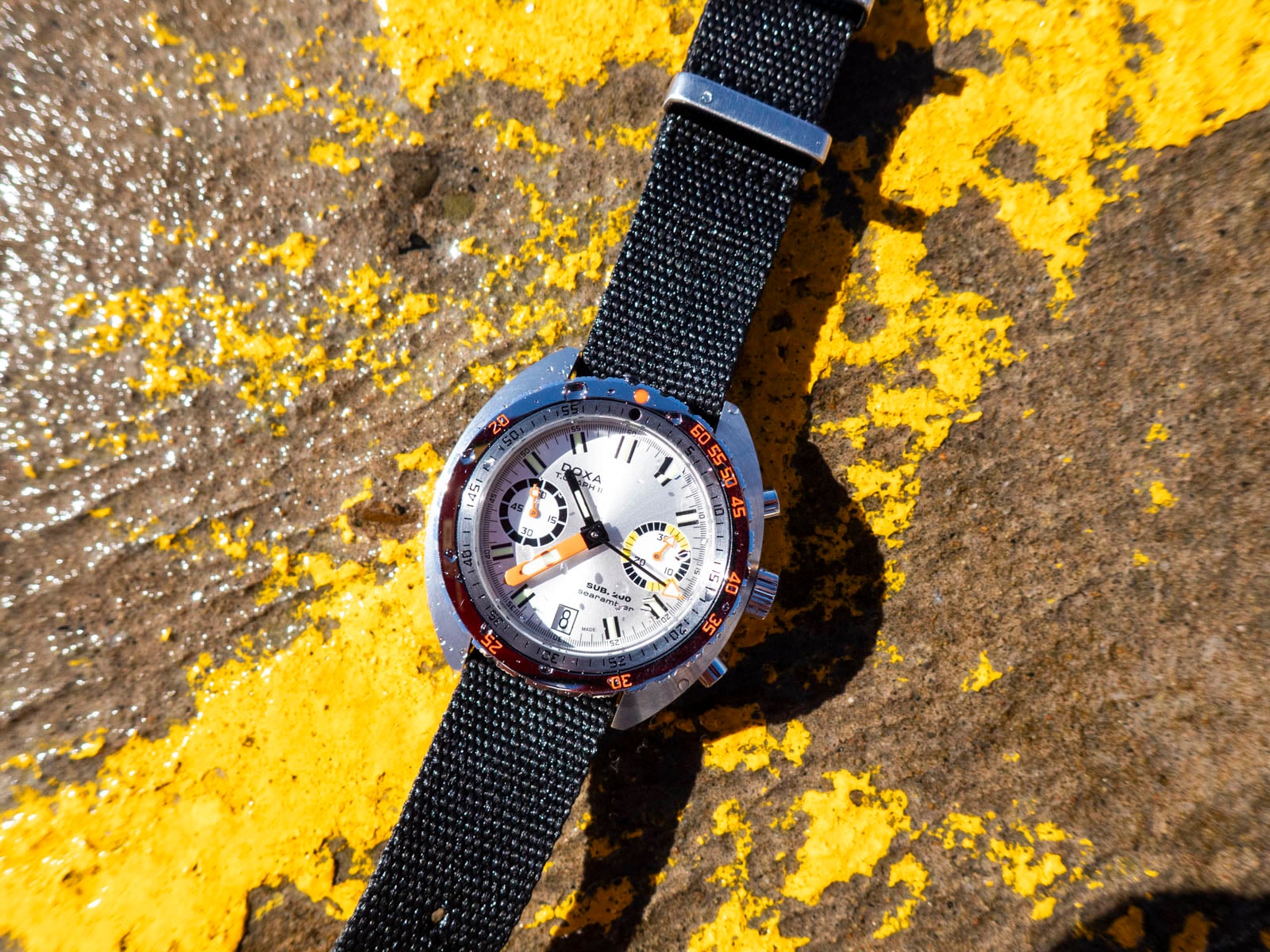
Silver Searambler for me, please
That said, the Professional version will likely remain the purist’s choice. There is something deeply satisfying about a bright orange Doxa chronograph. It taps directly into the late-1960s optimism that shaped the original Sub era, a period when dive watches represented exploration, adventure, and technical innovation rather than luxury signaling.
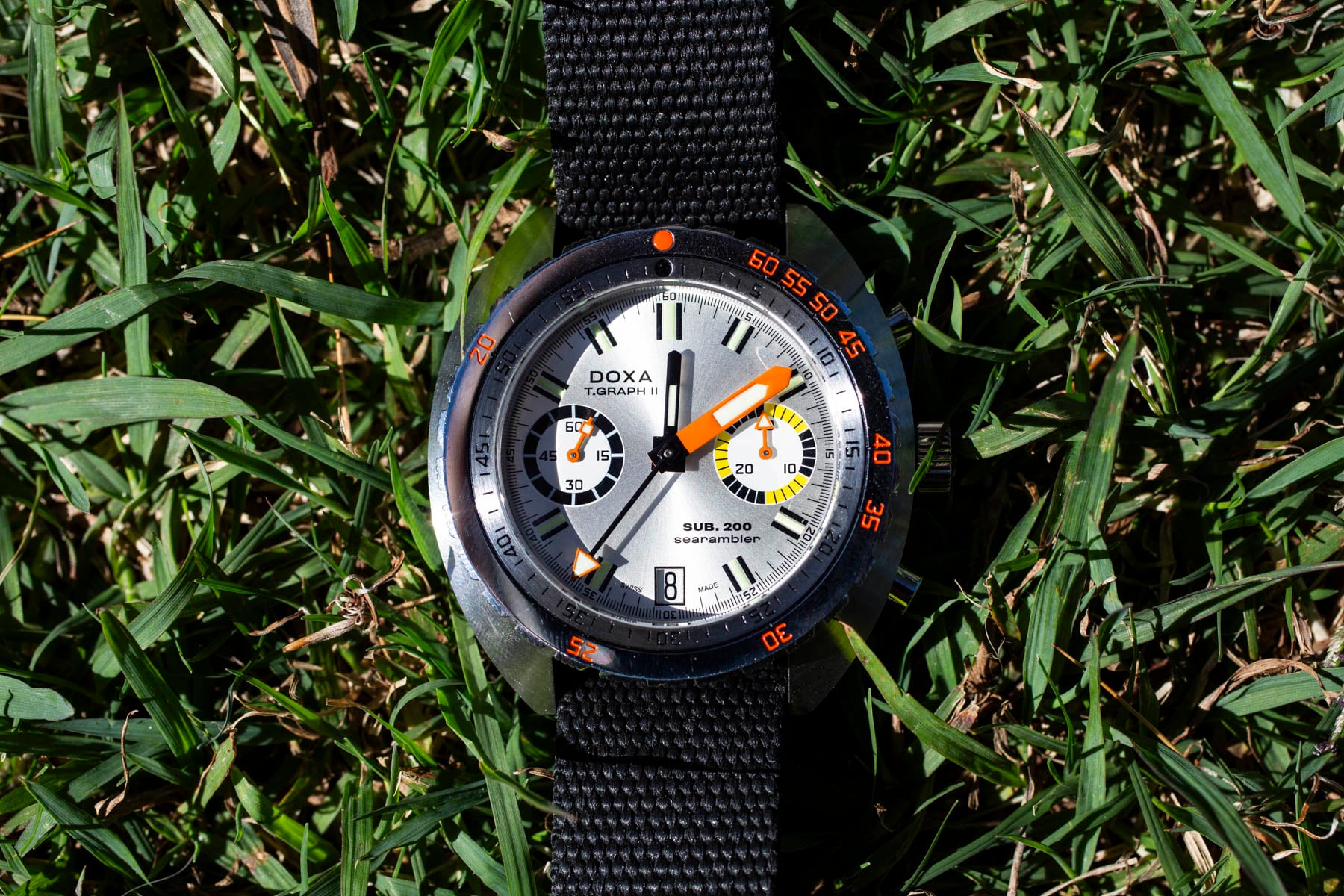
My favorite, the silver Searambler option, arguably feels the most vintage-inspired of the group, while the black Sharkhunter dial provides the most understated execution for those wanting a more conventional sports-watch aesthetic. In truth, Doxa’s color strategy has become one of the brand’s greatest strengths. Most companies would struggle to make bright orange, turquoise, yellow, or silver feel like coherent parts of the same collection. Doxa somehow manages exactly that.
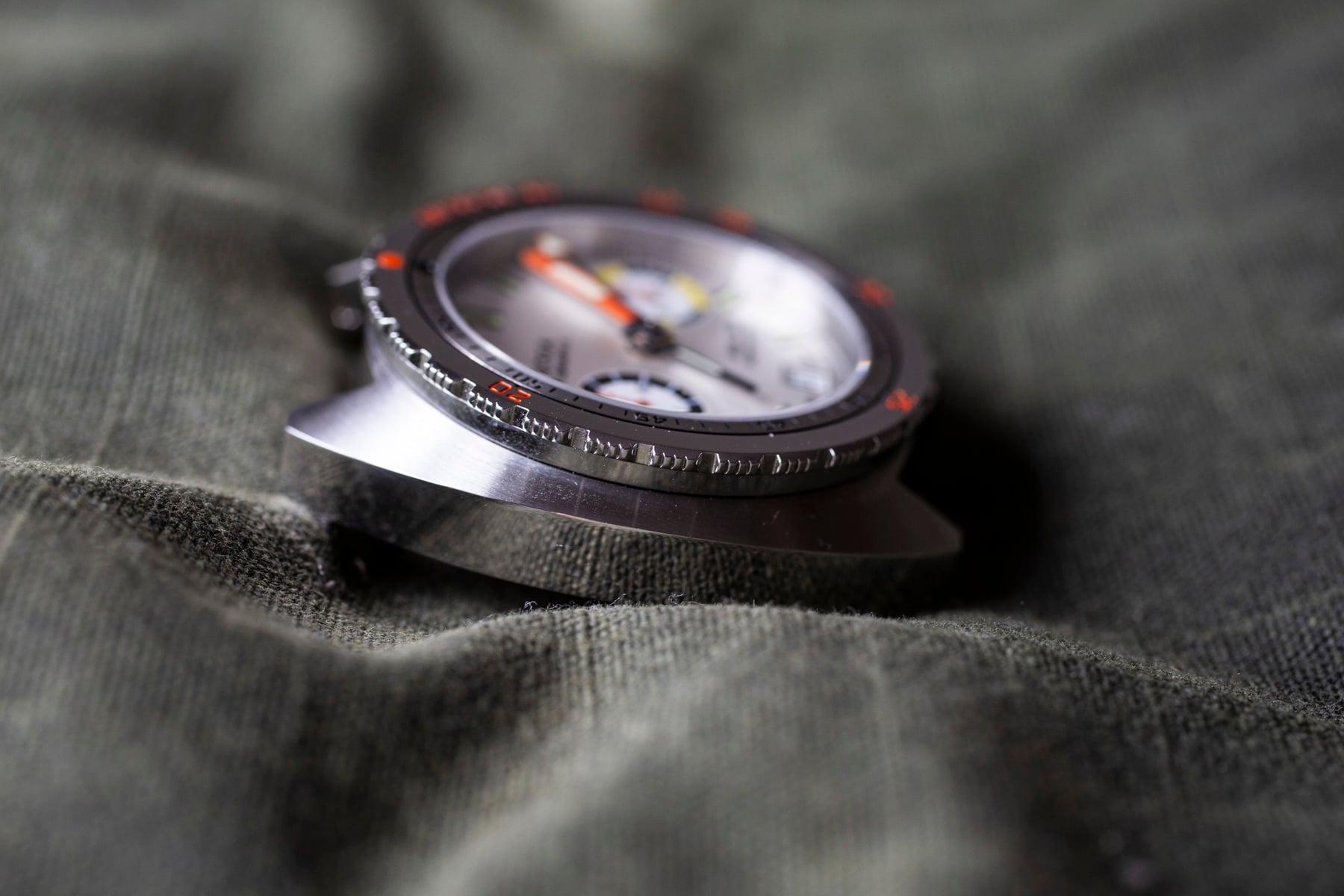
The importance of proportion
One detail worth emphasizing is how much modern Doxa Sub 200 T.Graph II has improved its sense of proportion. Over the last several years, the company has quietly refined the ergonomics of its watches without compromising the visual DNA that enthusiasts expect.
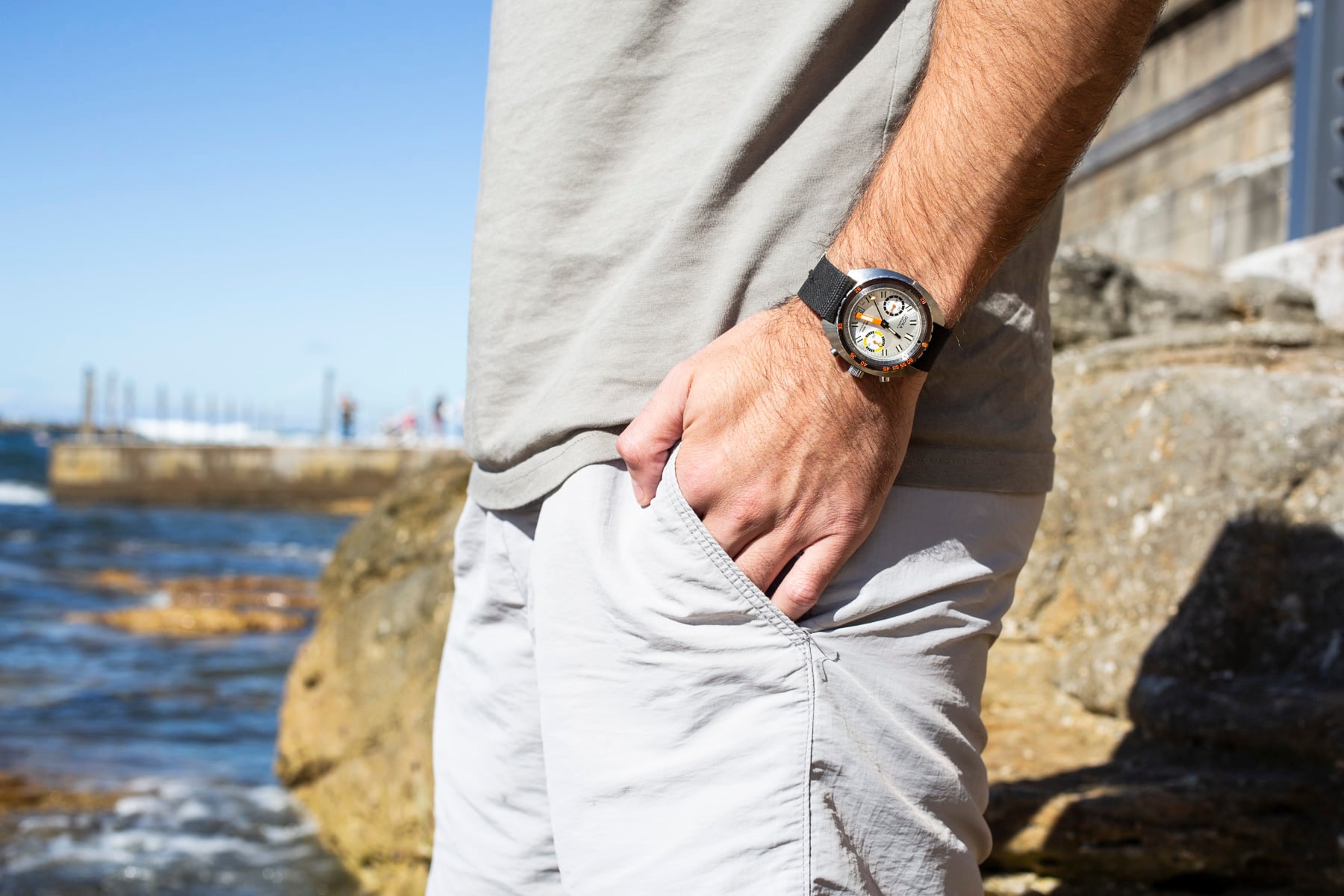
The reduction in thickness may ultimately prove more important than the modest decrease in diameter. Chronographs are naturally chunkier due to their movement architecture, but the reduction to a 14.6mm profile should make the Sub 200 T.Graph II noticeably easier to wear than earlier generations. Combined with the compact 44.5mm lug-to-lug measurement and the flowing profile of the case and bracelet, the watch appears likely to wear more compactly than its specifications suggest.
This is particularly important because Doxa watches tend to deliver their impact through dial presence rather than outright case size. The large minute track, oversized hands, and broad bezel already create substantial visual heft. Trimming unnecessary bulk only improves the experience.
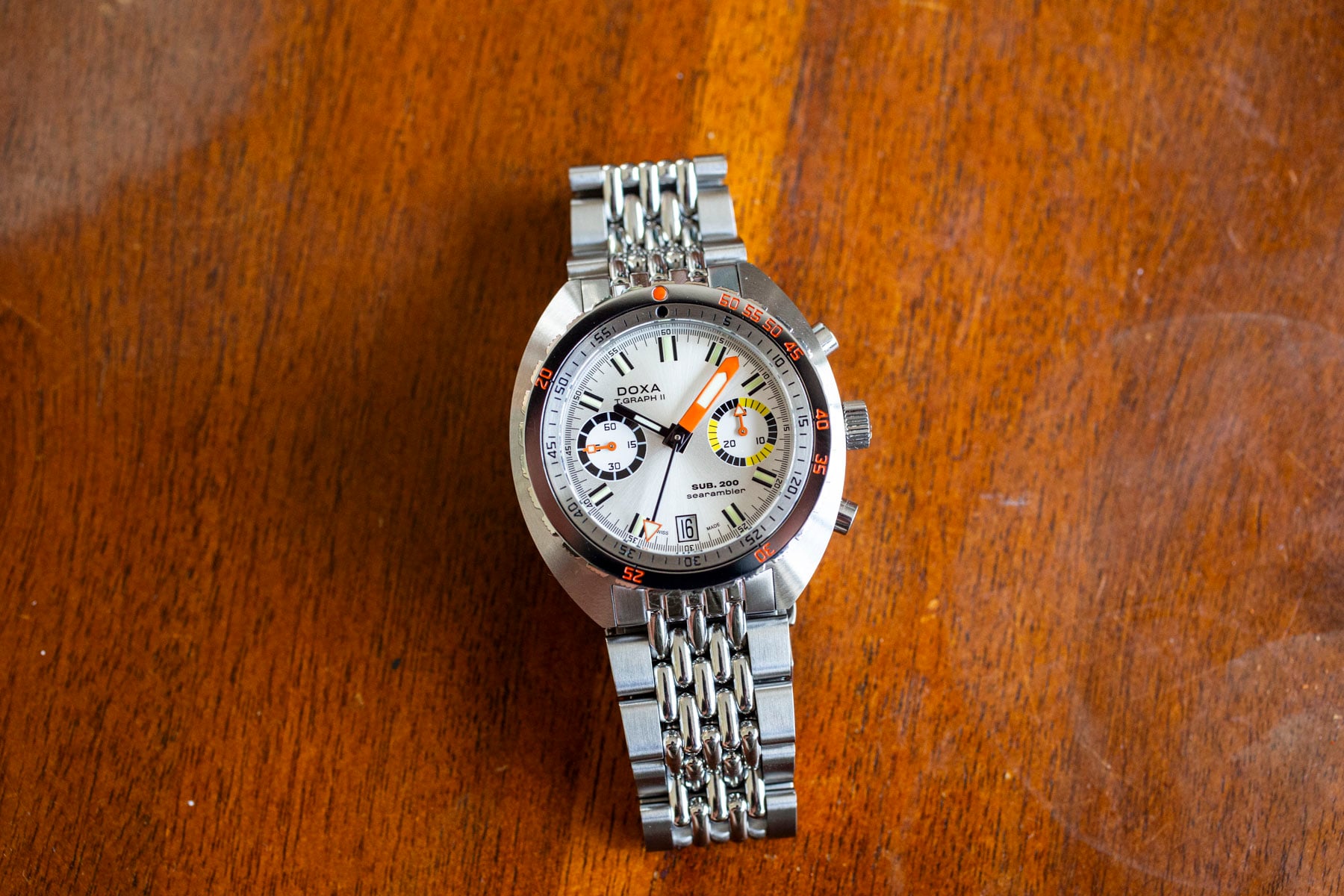
Design cues familiar to Doxa fans
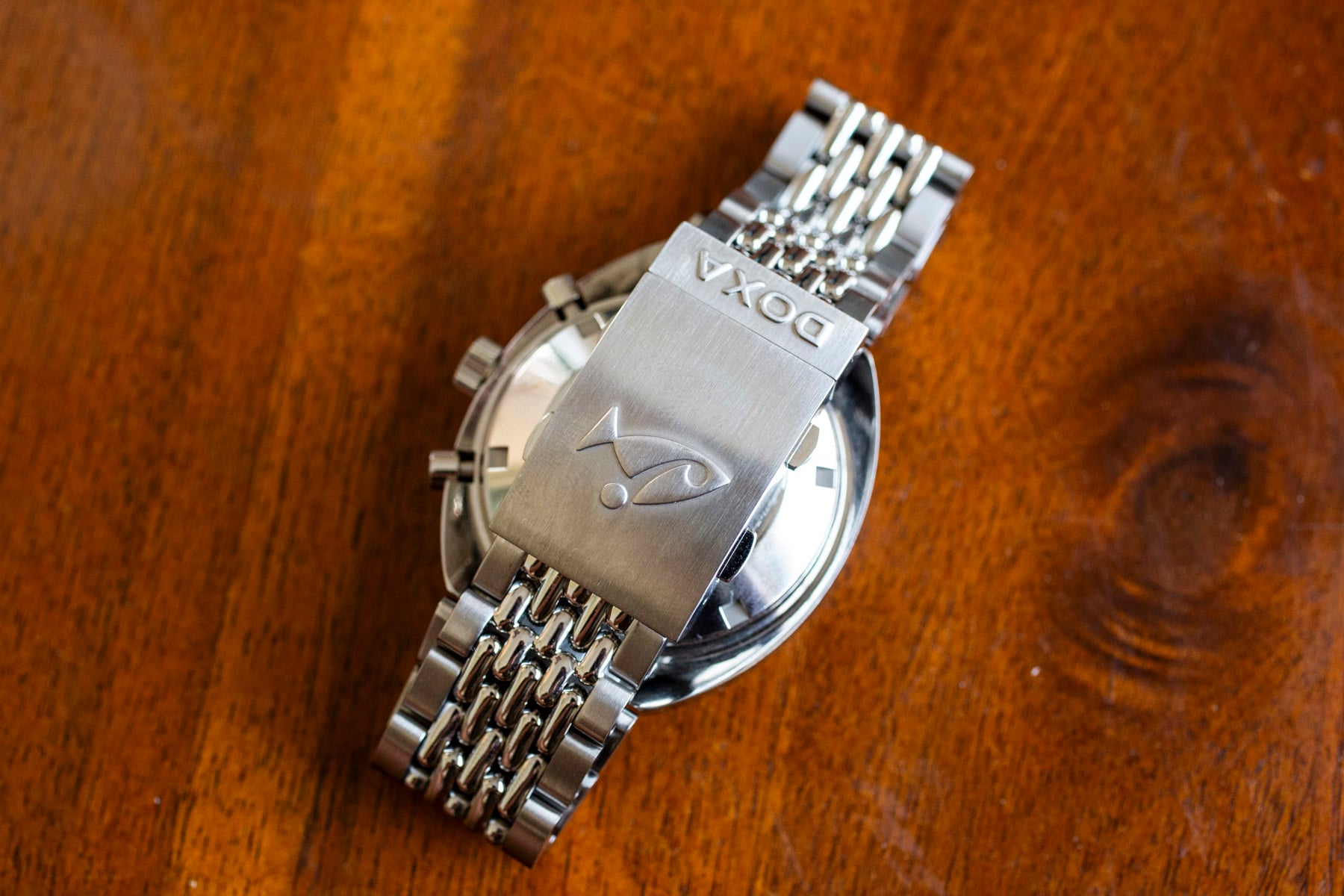
Of course, no discussion of a modern Doxa feels complete without mentioning the beads-of-rice bracelet. In an era when countless brands have adopted increasingly angular and aggressively machined bracelet designs, Doxa’s softer approach remains refreshingly tactile. The bracelet contributes enormously to the watch’s character.
It also reinforces something often overlooked in conversations about vintage-inspired sports watches: comfort matters. The rounded links and fluid drape of the beads-of-rice design suit the ergonomic philosophy of the Doxa Sub 200 T.Graph II case perfectly. It is one of those bracelets that immediately changes how a watch feels on the wrist. Alternatively, buyers can choose a rubber strap, including color-matched options for the Professional and Caribbean models, but the bracelet feels inseparable from the full Doxa experience.
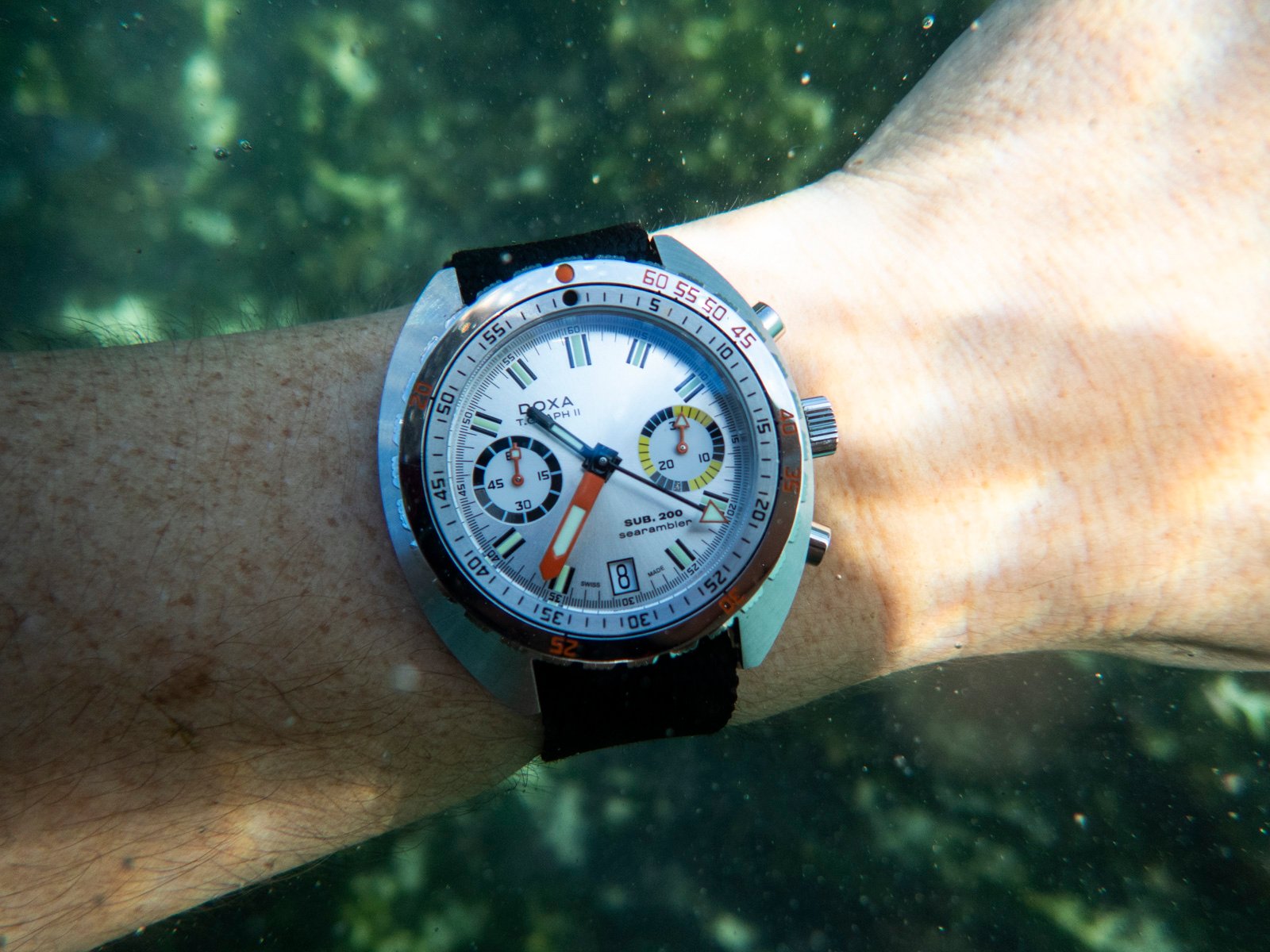
Doxa’s increasingly confident identity
What makes the Doxa Sub 200 T.Graph II particularly compelling is how little it tries to impress outside the established Doxa universe. Many contemporary sports watches seem designed around market expectations first and brand identity second. Specifications dominate the conversation. Case materials become more exotic. Water resistance climbs ever higher. Marketing language grows increasingly dramatic.
Doxa, by contrast, appears increasingly comfortable focusing on refinement rather than escalation. With a 200m depth rating, the Doxa Sub 200 T.Graph II offers more than enough capability for realistic use. The Sellita movement is robust and serviceable. The case finishing remains functional rather than flashy.
And yet, the watch possesses something many technically superior competitors lack — personality. You can identify a Doxa Sub 200 T.Graph II from across a room. The shape, colors, bezel, and dial layout all communicate a clear point of view. In today’s crowded sports-watch landscape, that kind of identity matters more than ever. The Doxa Sub 200 T.Graph II strengthens that character rather than diluting it.
Final thoughts
The return of the Doxa Sub 200 T.Graph could easily have become an exercise in excessive nostalgia. Instead, Doxa has delivered something more interesting, a measured evolution of one of its most historically important references. The Doxa Sub 200 T.Graph II retains the eccentric charm that makes Doxa watches so appealing while improving the aspects that matter most for modern wearability. The revised proportions feel thoughtful rather than performative, the chronograph layout remains admirably legible, and the addition of the Caribbean dial broadens the collection in exactly the right way.
Most importantly, the watch understands its purpose. This is not a luxury chronograph pretending to be a dive watch, nor is it a hyper-engineered specification monster chasing internet attention. It is simply a Doxa Sub with a chronograph, practical, colorful, slightly unconventional, and entirely self-assured. And honestly, that restraint may be the most attractive quality of all.
The Doxa Sub 200 T.Graph II joins the permanent collection, retailing for €3,990 / US$4,290 / CHF 3,690 on the beads-of-rice bracelet and €3,950 / US$4,250 / CHF 3,650 on a rubber strap. Bravo, Doxa.