Hands-On With The Tudor Monarch — Are You Down With The New King?

This year is a regal one indeed, as both Tudor and the Rolex Oyster case celebrate their 100th anniversary. For this grandiose occasion, Tudor presented a completely new model during Watches and Wonders 2026 to underline the significance of its century of existence. The Tudor Monarch is a hard-to-define watch, but when you look at it for a while longer and keep in mind that 2026 also marks 100 years of the Rolex Oyster case, it becomes a bit clearer. The Monarch you see before you is a celebration of both anniversaries. I went hands-on with the Tudor Monarch to find out if I’m down with the king.
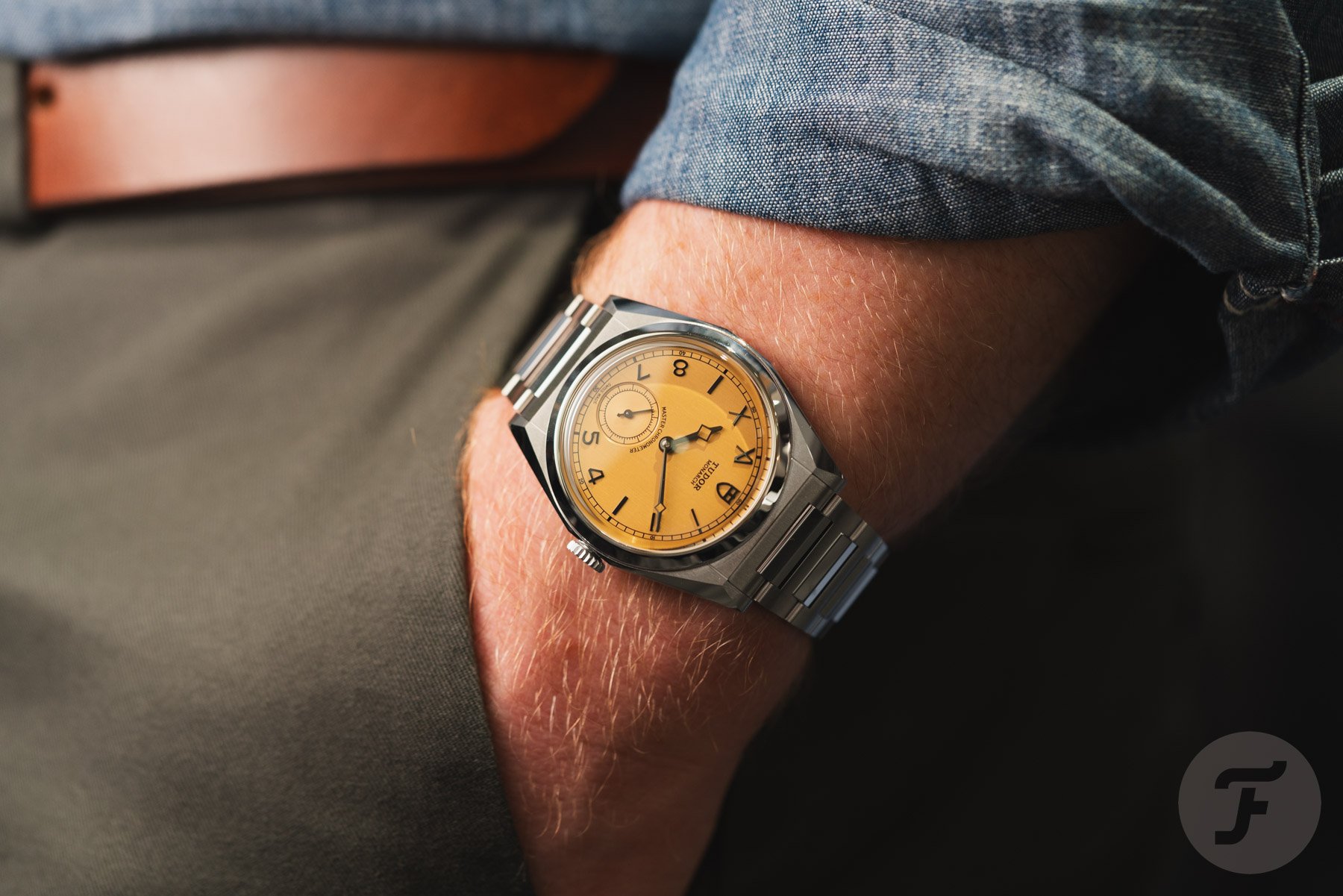
Once you see it, you can’t unsee it. And it also starts to make more sense. The new Tudor Monarch is a celebration of both the brand’s 100-year existence and the 100th birthday of the Rolex Oyster case. Look at the subtly squared case sides at 3 and 9 o’clock and tell me you don’t see a reimagined 1926 Rolex Oyster. Look at the dial of the century-old Oyster and then at the dial of the new Monarch. Where did Tudor get the inspiration for its new Monarch, do you think? As you know, Rolex doesn’t do retro, but Tudor does, and its designs are rooted in Rolex watches. The Monarch is both a celebration of the Tudor brand and a modern homage to the original Oyster. It also has plenty of contemporary touches, such as a smooth bezel, a papyrus-colored California-style dial that mimics a weathered tropical one, and a solid H-link bracelet.
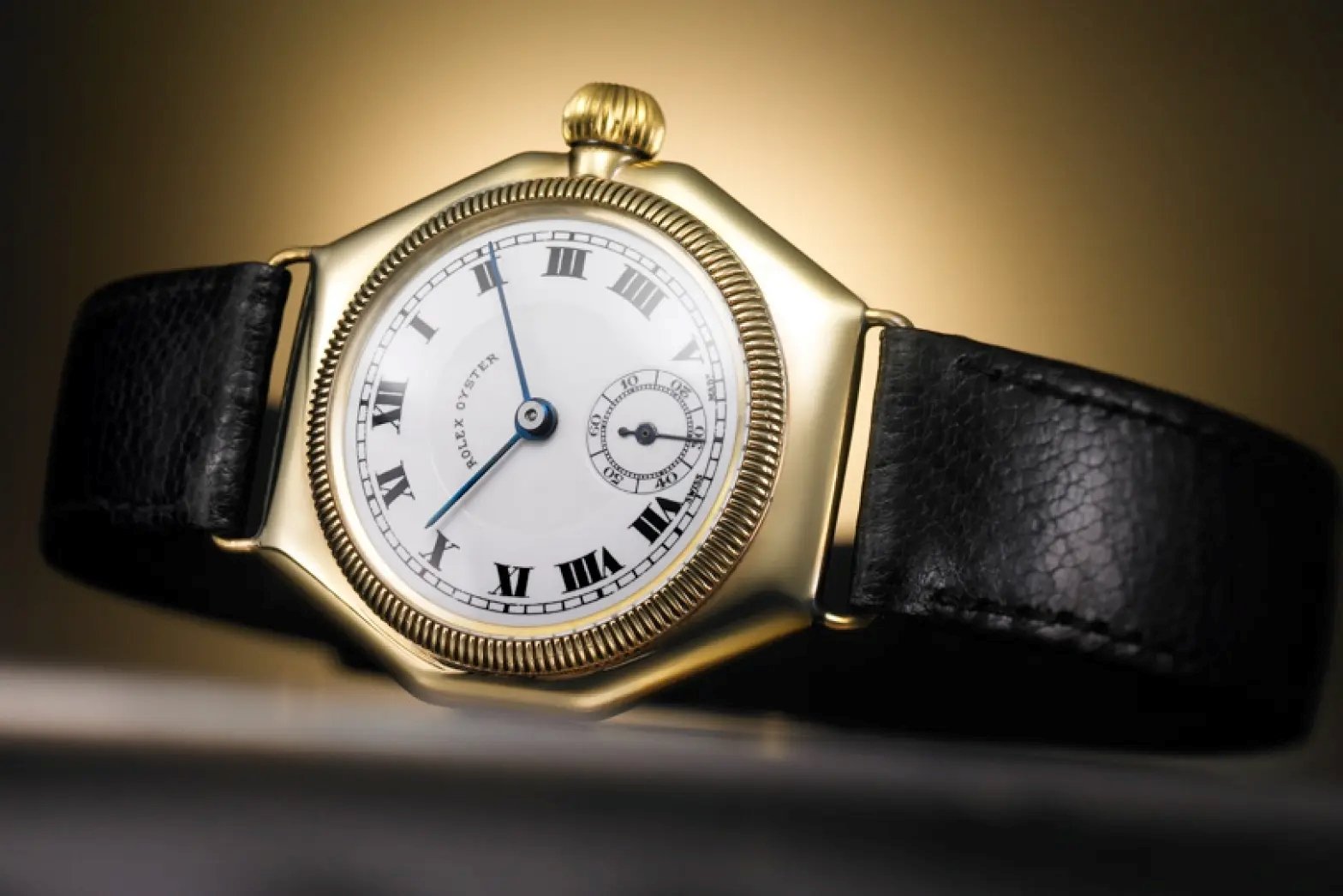
1926 Rolex Oyster
The Tudor Monarch: Are you down with the new king?
The Tudor Monarch has a lot of weight on its shoulders. How is this homage/celebration watch in the metal, though? Well, I remember being very surprised when I first caught sight of it in the showcase outside Tudor’s Watches and Wonders 2026 booth. It doesn’t make you think about the all-time Rolex greats immediately. At first glance, it appears to be a completely original design with distinctive classical features to mark Tudor’s 100th anniversary. But when you let the design sink in and look at the watch again for a little longer, the 100-year-old Oyster watch becomes visible. That’s not necessarily a bad thing, and it’s very much in line with the way Tudor operates. Now, how does the watch feel and look in real life?
The tactile Monarch
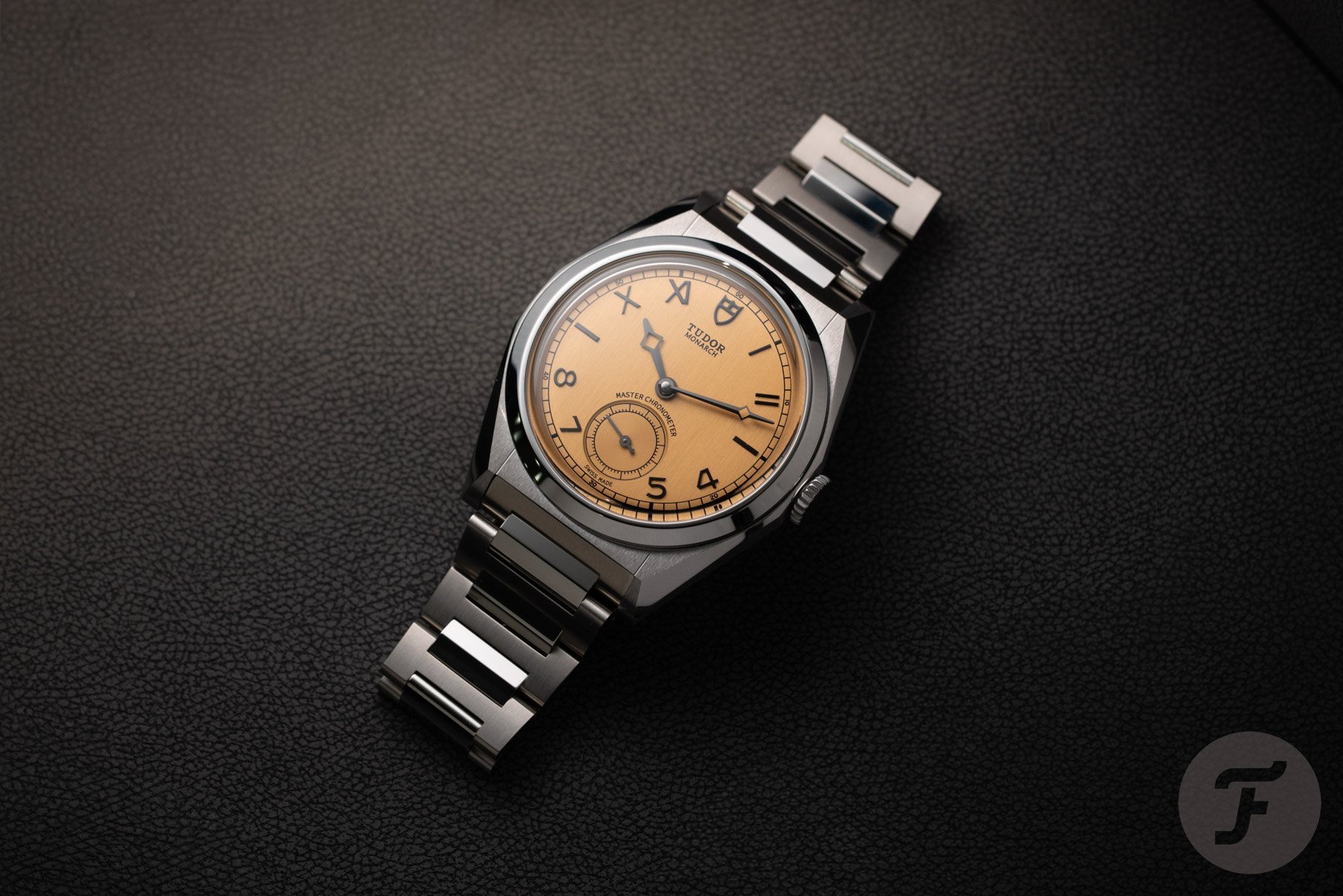
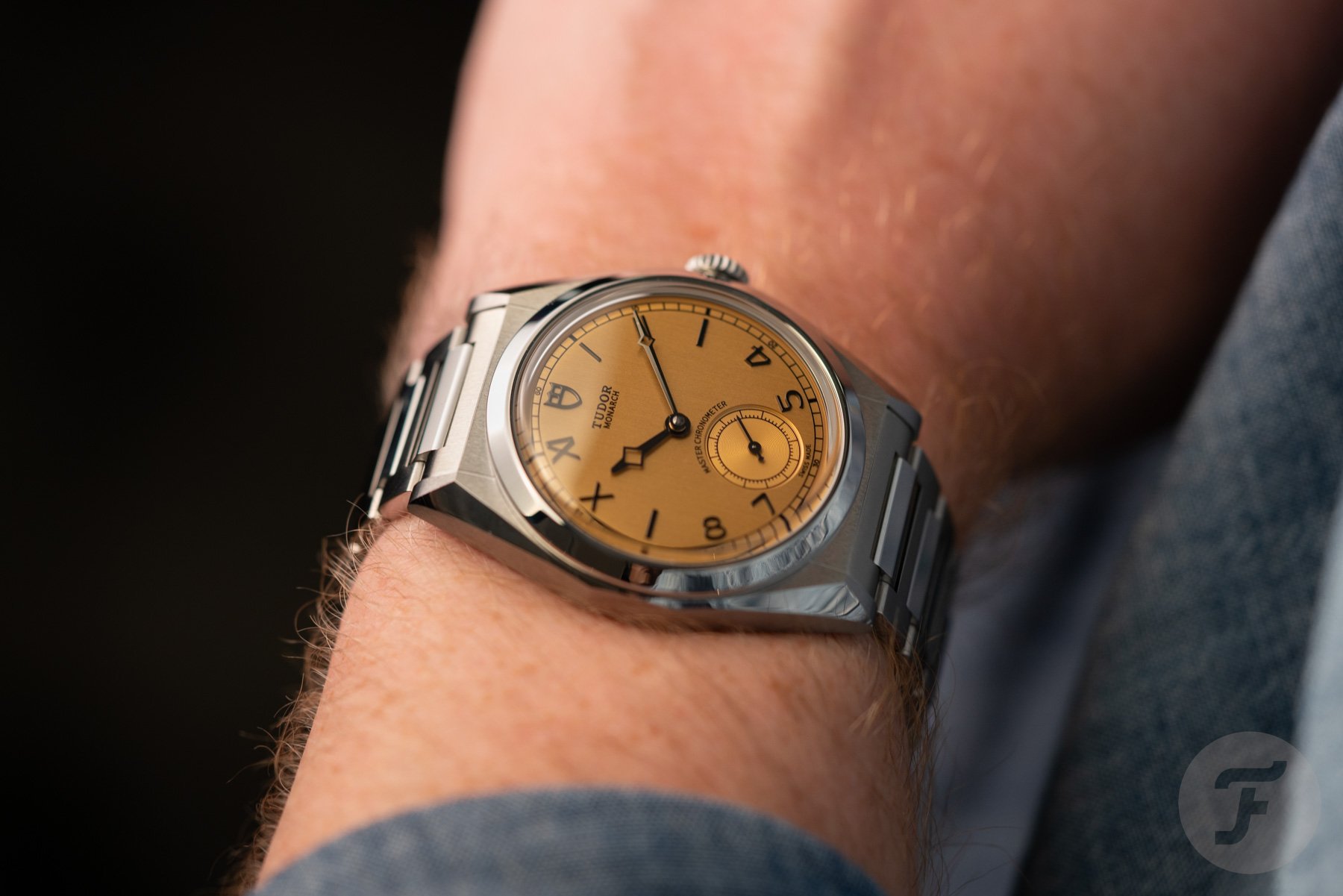
What struck me when going hands-on with the Monarch is the way it feels. The sharp, faceted lines of the case, featuring a mix of satin-finished and polished surfaces, look crisp, and the feel is great thanks to the high level of finishing. Despite the historic inspiration, it also looks modern. And the new, solid-feeling H-link bracelet emphasizes that. It comes with the brand’s signature T-fit clasp for easy micro-adjustments. The links feature a mix of satin and polished finishes, keeping them in line with the case. Choosing a bracelet over a leather strap enhances the contrast between the Monarch’s modern and classic stylistic details.


Not only does the Monarch make a strong visual impression, but it also feels impressive. And on the wrist, the 39 × 46 × 11.9mm stainless steel case looks neither too small nor too big. The original Oyster from 1926 came in a 28mm case for ladies and a 32mm version for men. Tudor buffed up the original dimensions but kept it proportionally sound. With the original Oyster in mind, a 32mm version of the Monarch bearing the name Queen Regnant could be an option. Maybe we’ll see one later this year. For now, though, we’ll stick to the 39mm version.
A dressy tool
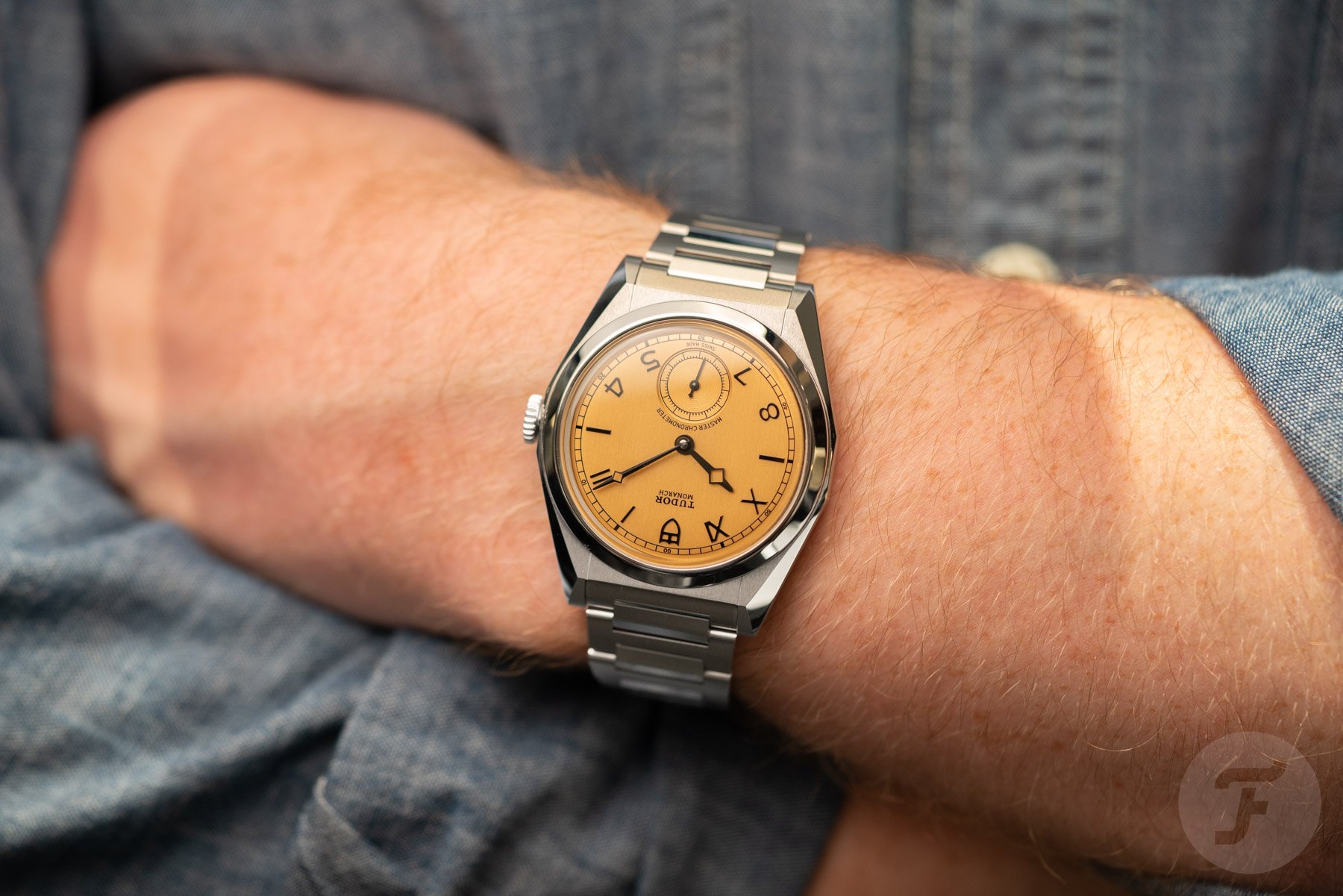
The Monarch, with its 100m water resistance rating and a screw-down crown, is a tool watch with dressy qualities. The “papyrus-toned” dial features a vertically brushed finish. The color looks retro, the finishing more contemporary. The same mix of classic and modern continues with a black railroad minute track, a set of applied black hour markers, and a set of slim black Snowflake hands with a neoclassical design. The hour markers on the upper half are Roman numerals, whereas those on the lower half are Arabic numerals, making this a California-style dial. Additionally, just like the original Oyster, the dial features a sub-seconds register at 6 o’clock. On the Monarch’s dial, the sub-dial is slightly recessed and displays concentric engraving for extra detail. And right above it, the text “Master Chronometer” appears, which hints at the watch’s very accurate caliber.


Like Patek, Tudor thinks the combination of a dark-champagne dial with black markers and hands is the 2026 way of styling a dressy timepiece. I don’t think the designers are wrong. The Monarch’s black hands are a refreshing yet classically styled take on the brand’s signature Snowflake hands. Also, they match the California-style dial very well. When you read the dial’s description, you might think it is a hodgepodge of styles from different eras and, therefore, neither this nor that. But I don’t think that’s the case. Tudor managed to strike a balance between old and new elements, creating a look that is very contemporary with a sense of history.
High-tech beats
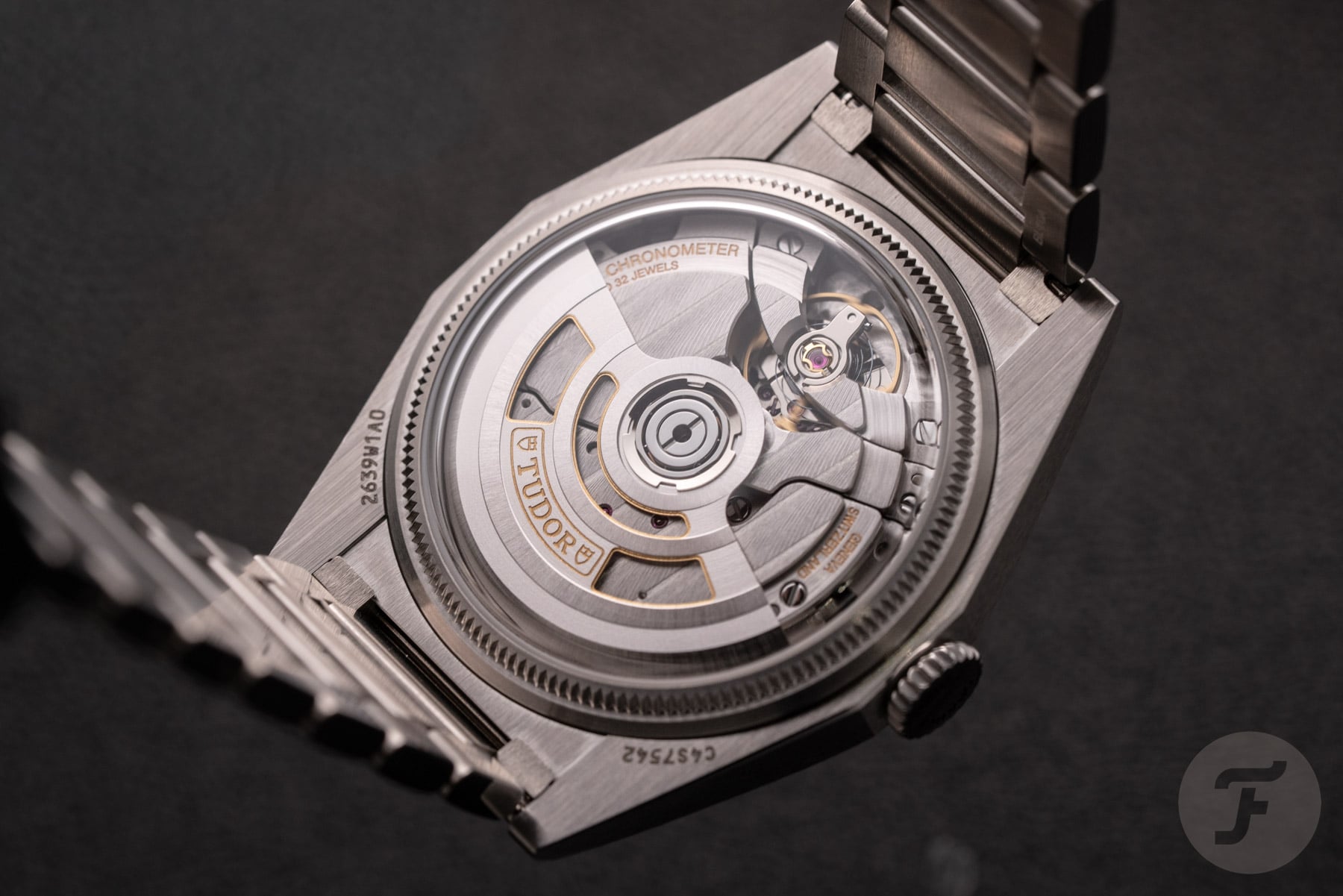
The Monarch has a sapphire-equipped case back, allowing a view of the Kenissi-made movement, the new MT5662-2U. This 32-jewel automatic caliber operates at 28,800 vibrations per hour and provides a 65-hour power reserve.
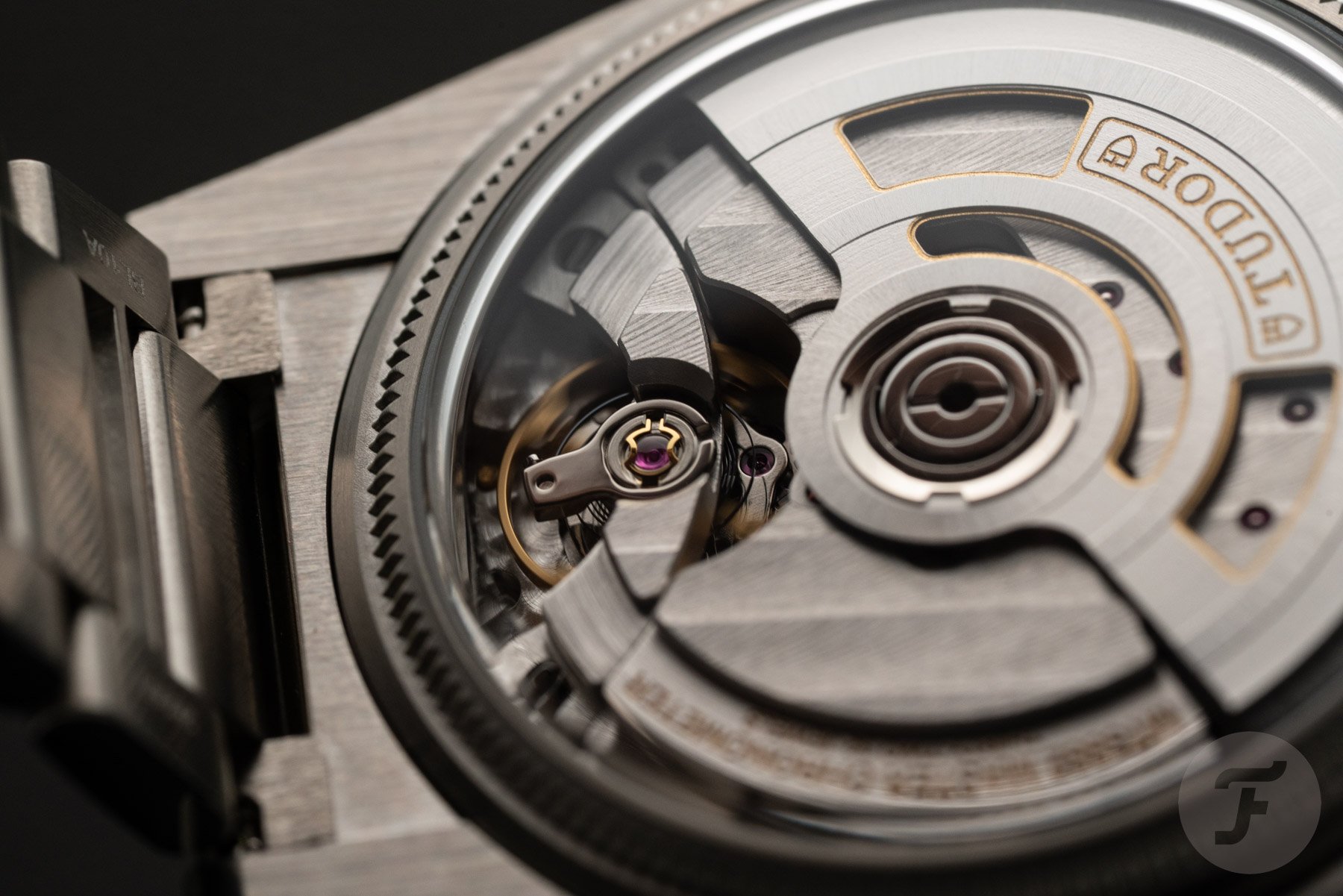
A display case back is not a common Tudor feature, but this time, there’s a reason to have one. The caliber shows perlage on the mainplate, Côtes de Genève on the bridges, and (thin) inlays of 18K gold on the rotor. All this makes it the best-decorated movement in the current Tudor lineup. Furthermore, the MT5662-2U features a variable-inertia balance wheel and a silicon balance spring to meet modern-day standards. Lastly, it is a METAS-certified Master Chronometer, which translates to an accuracy of 0/+5 seconds per day and resistance to magnetic fields of up to 15,000 gauss.
Long live the House of Tudor!
You might remember from history class that the House of Tudor was an English and Welsh dynasty that ruled England from 1485 to 1603. The Tudors transformed England from an insignificant state into a powerful Renaissance nation. Elizabeth I was the final Tudor ruler. She was the daughter of Henry VIII and Anne Boleyn and ruled for 45 years during the Elizabethan era. After her death in March 1603, the crown passed to James I, marking the beginning of the House of Stuart.
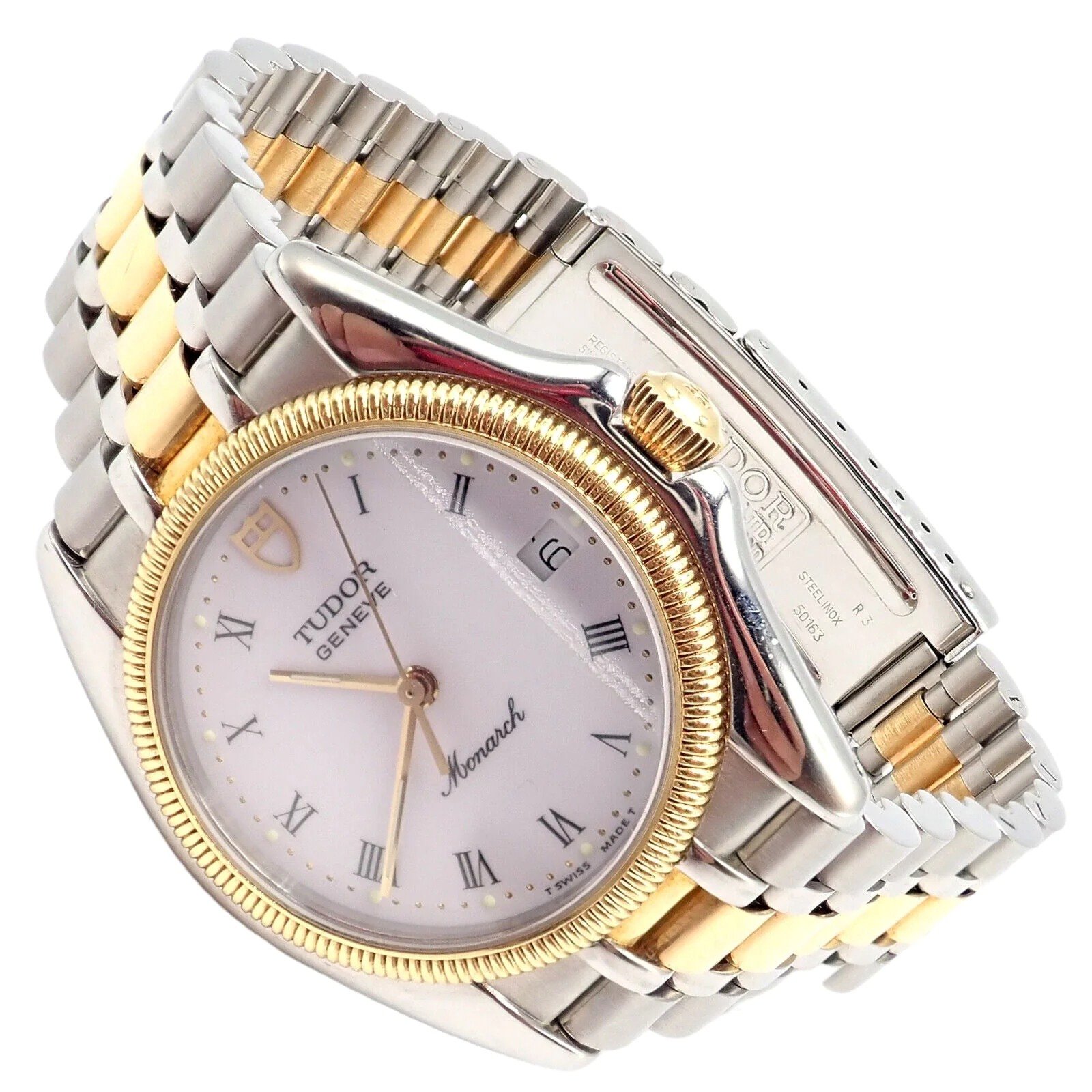
1991 Tudor Monarch
Hans Wilsdorf started Tudor a century ago as an affordable yet qualitative alternative to his first brand, Rolex. Symbolically, it has also been the shield that defends the crown. Now, Tudor launches the Monarch. What are we to think of that? I ask this because a monarch is a ruler who serves as the head of state of a kingdom or empire and is not in the service of another person. In other words, the Tudor Monarch is not here to protect “The Crown.” Is the celebratory Tudor a coup d’état? Is it defying the absolute power of Rolex? Of course it isn’t. The name is a tribute to the historic Tudor dynasty of England, and it reflects ideas of prestige, heritage, and enduring authority. Also, in the 1990s and early 2000s, Tudor used the Monarch name for a collection of dress watches.
Final words on the Tudor Monarch
Besides the interesting, dare I say “eclectic,” neoclassical design built to modern-day standards, the new caliber powering the Monarch is also a noteworthy feature that defines the watch. Because of these two characteristics, the new Monarch not only celebrates and pays homage to an important, century-old Rolex invention, but it also demonstrates its relevance as a modern watch through its METAS-certified movement visible behind a display case back. The Monarch is the top Tudor in many regards. It follows the strategy of using historical designs as a starting point and creating them with modern technology. But the Monarch dares to stray further from the original design than any other watch in the lineup, and on top of that, Tudor outfits it with a superior movement for accuracy.
So, am I down with the king? Yes, I am. I think the watch looks and feels great. It has historical features subtly reworked in a modern design. The faceted yet elegant case design is nicely proportioned and executed, and the dial captures both vintage and contemporary styles without making you feel like it’s trying too hard.
The Tudor Monarch retails for €5,400 / US$5,875 / £4,600, which seems fair for a well-finished, very robust full-steel watch with a METAS-certified movement. The price of this 100th-anniversary model is in line with the other recent Tudor releases. Still, what do you think of the new Monarch from a design and a price perspective? Please let me know in the comments section below.