A Brief History Of The Seiko Astron GPS Solar — Including Some Of The Best Models Made So Far

Time from space. The light-powered Astron GPS Solar, which Seiko launched 14 years ago — this article is indeed a brief history of the Seiko Astron Solar GPS, not the groundbreaking Astron from 1969 — was the world’s first wristwatch to use satellite signals to set the correct time automatically. A 47 × 16mm case was needed to house the technology, making the first-generation Astron GPS Solar watches impressive in every way. Over time, the cases grew smaller, the design matured, and the technology became more compact. Here’s a brief history of the Seiko Astron GPS Solar to enlighten you and help you enjoy some of the highlights. Beware, these are highlights I picked, so the list is very subjective.
Let there be light. Light was first used to power a watch movement in the early 1970s. You might think Seiko was the first to use the technology, but it wasn’t. The first commercially available light-powered wristwatch is generally considered to be the Synchronar 2100 from 1972, created by American engineer Roger W. Rieh. Seiko entered the solar arena five years later with its first light-powered quartz wristwatch, a year after fellow Japanese brand Citizen introduced the world’s first analog solar watch. What set the Seiko watch apart was the way it caught the light. Rather than covering the entire dial with photovoltaic cells, Seiko’s solution discreetly positioned small solar panels around the hour markers. It was an elegant approach that hinted at what was to come as solar-cell efficiency improved. And a lot was still to come.
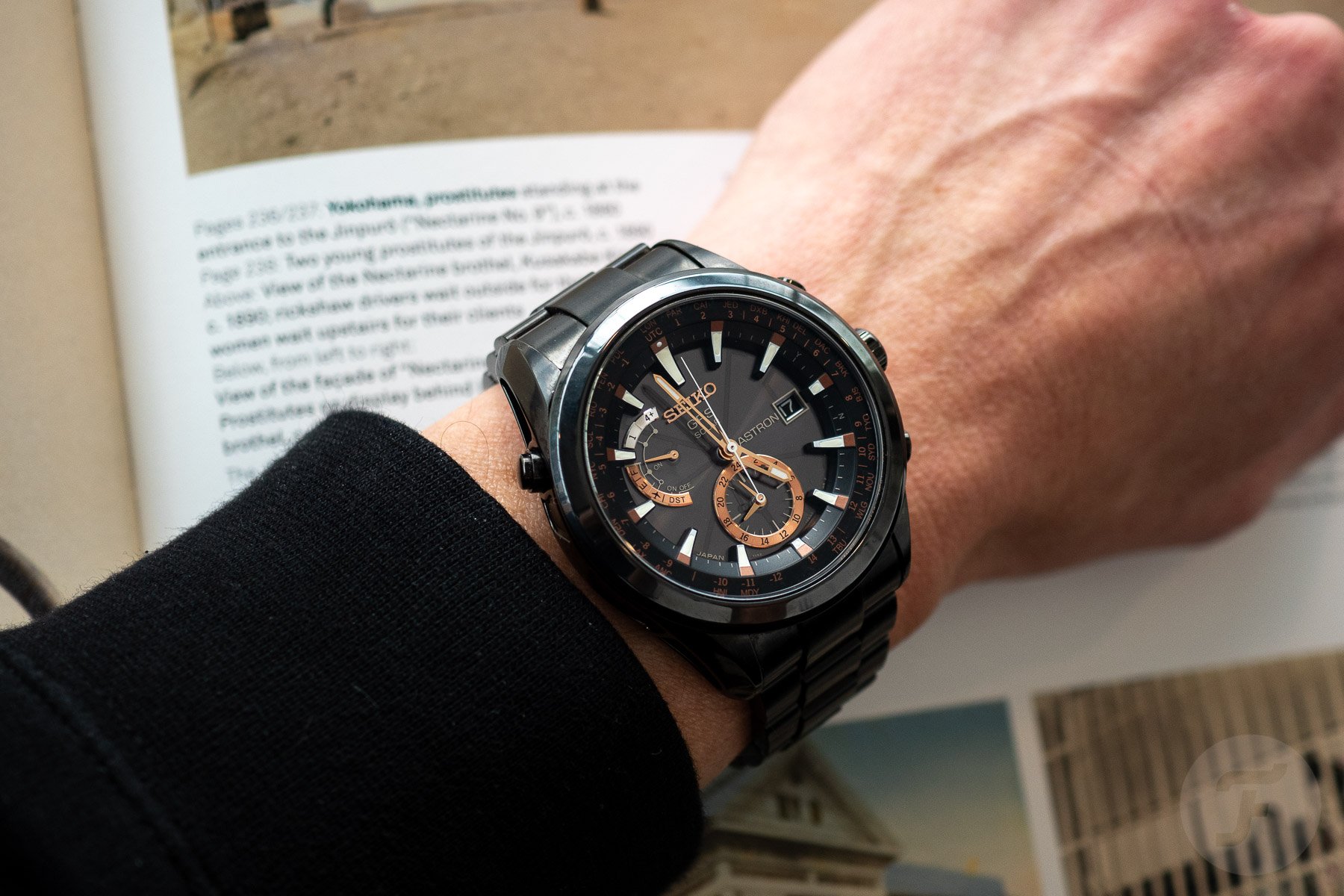
47mm Seiko Astron GPS Solar Limited Edition SAST001 from 2012
A brief look at the history of the Seiko Astron GPS Solar
Right from the start, Seiko intended to make a solar-powered watch look like a normal one. Indeed, the technology that harvests the light was to become invisible. And steady evolution made it possible to hide it beneath the dial. Fast-forward to 2012, when Seiko pushed the boundaries of watchmaking with the Astron GPS Solar, a watch powered by light and capable of communicating with GPS satellites to keep time accurate. The Astron GPS Solar was the world’s first wristwatch to automatically recognize its location and adjust to the correct local time anywhere on Earth. Much like the original Quartz Astron of 1969, the GPS Solar marked another defining moment in Seiko’s long history of technological innovation.
What’s not to like about a watch that determines the correct time zone from the wearer’s location, automatically adjusts to the correct local time, and is powered entirely by light, eliminating the need for regular battery changes? Well, there’s the look and size of it, for instance. And those only matter if you can get over the fact that an Astron GPS Solar is not a mechanical but a quartz watch. But since the Fratelli are not narrow-minded watch fans, it boils down to design, size, specs, and price. So, what are the most striking Astron GPS Solar watches since 2012?
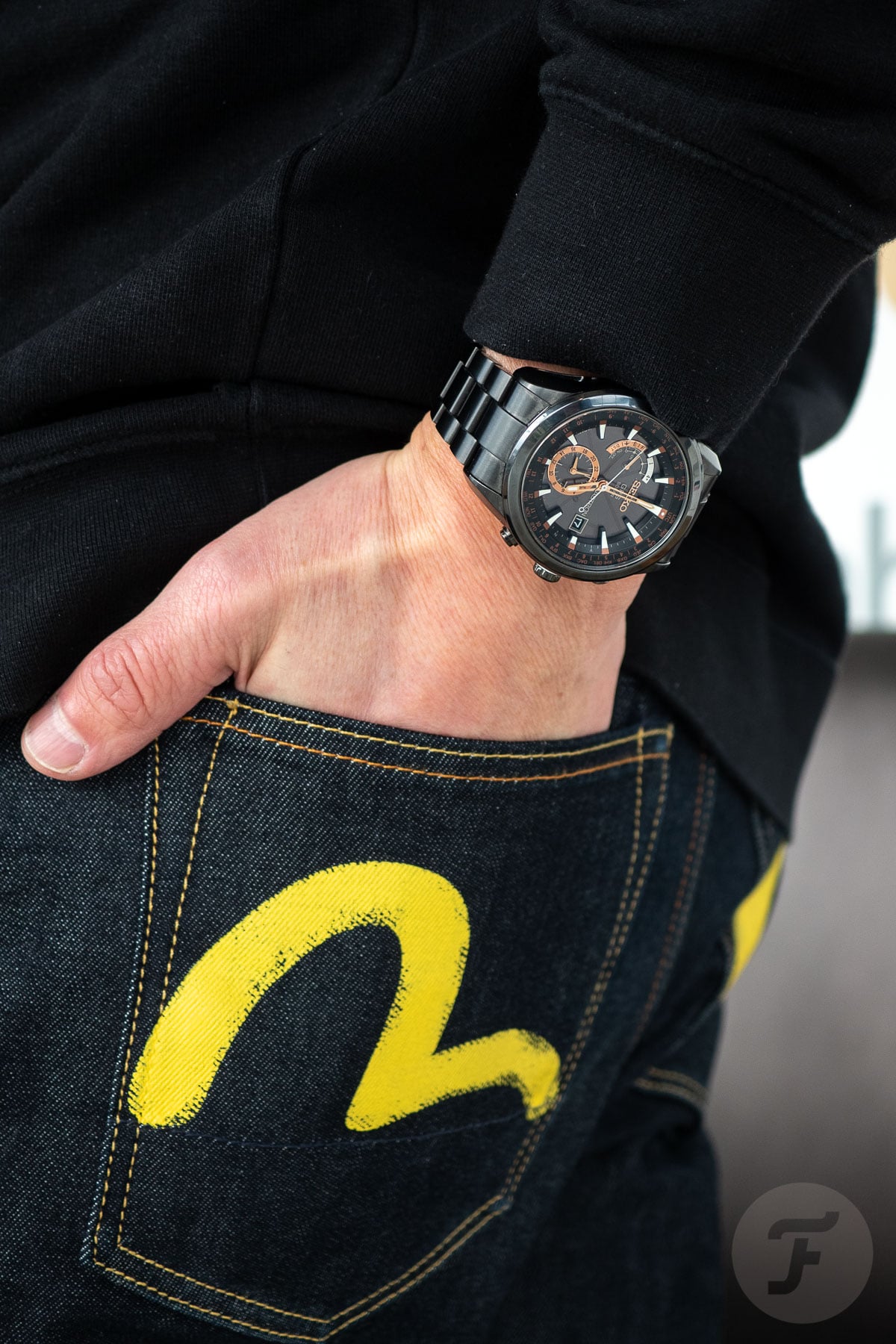
Seiko and Evisu, both Japanese
In awe of the “OG” — The massive SAST001
When the Astron GPS Solar debuted in 2012, it came in six executions, and the black SAST001, a numbered limited edition of 2,500 pieces, was one of them. Because the watch has a mammoth 47 × 16mm case, it’s a good thing it’s made of lightweight titanium and black ceramic. At 125 grams, it’s around half as heavy as a full-steel Astron. And it’s that lightness that makes it wearable, although the short lugs also deserv credit for that. Let me tell you, it wears like a 44mm watch.
What I still find impressive 14 years later is the finishing and build quality of the case, bracelet, and clasp. They’re on a level that leaves no room for complaint. And the dial’s depth also continues to look good. It did take a bit of time to get used to the color combination, but that slowly grew on me. Having said that, I did and do appreciate the evolution of the Astron GPS Solar. Smaller cases and more refined designs made the watch rise above gadget status and become a “proper” watch.
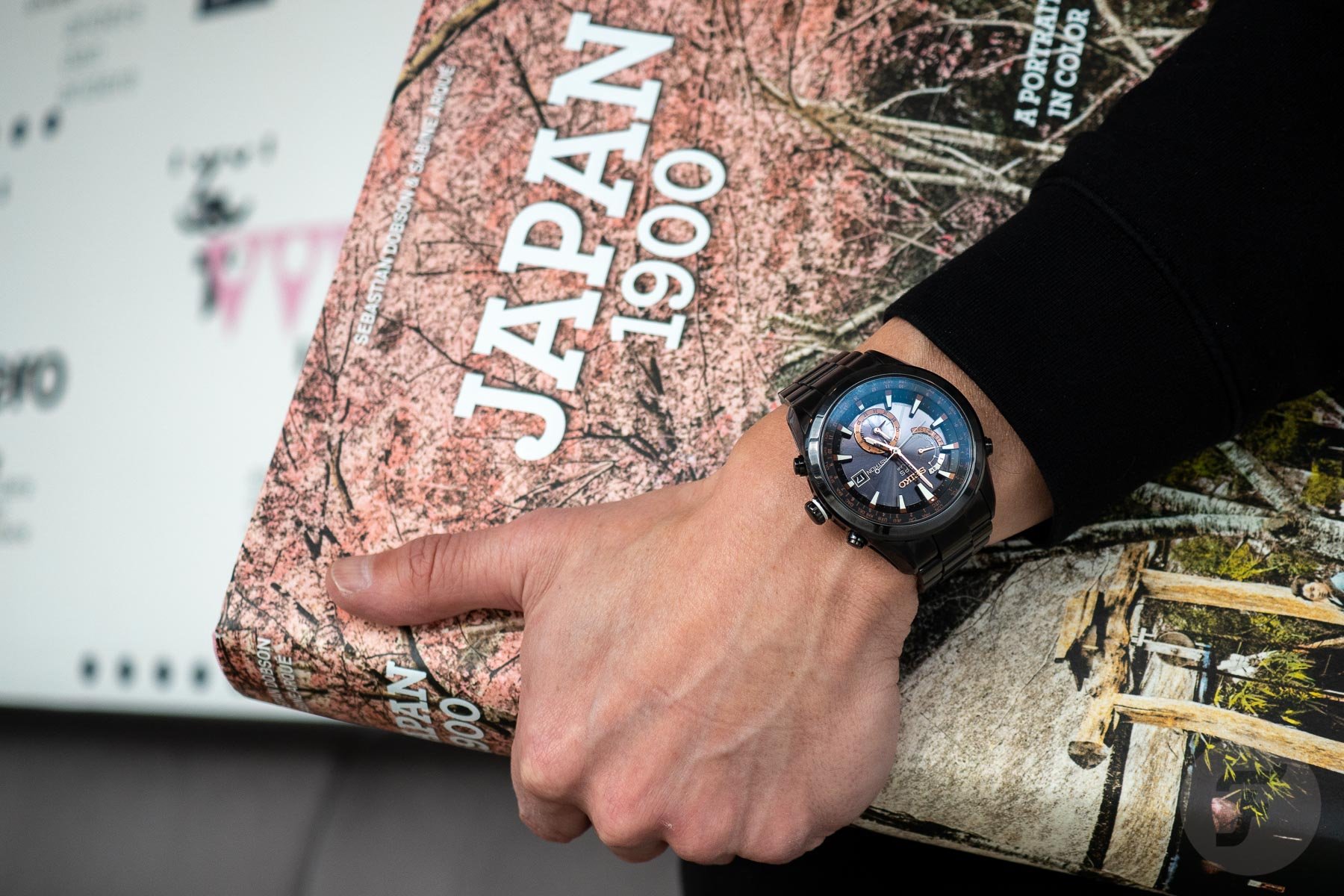
Movement evolution
Inside my beloved SAST001 “beats” a movement from the 7X series. The reason it is placed inside an XXL 47mm case is because Seiko also needed to use a 38mm ring antenna. Two years later, the 8X series debuted, which used a 35.5mm ring antenna, allowing noticeably smaller cases. The 5X series, which first appeared in 2018, was an even bigger technical leap forward. Seiko replaced the ring antenna with a 10 × 10mm patch antenna, enabling steel bezels, much faster operation, and significantly improved energy efficiency. The ultra-compact, thin 3X series from 2019 had the antenna integrated into the movement bridge, allowing for Astron models under 40mm. The 5X63, which debuted this year and replaces the 2023 caliber 5X83, is Seiko’s most advanced GPS Solar caliber to date.
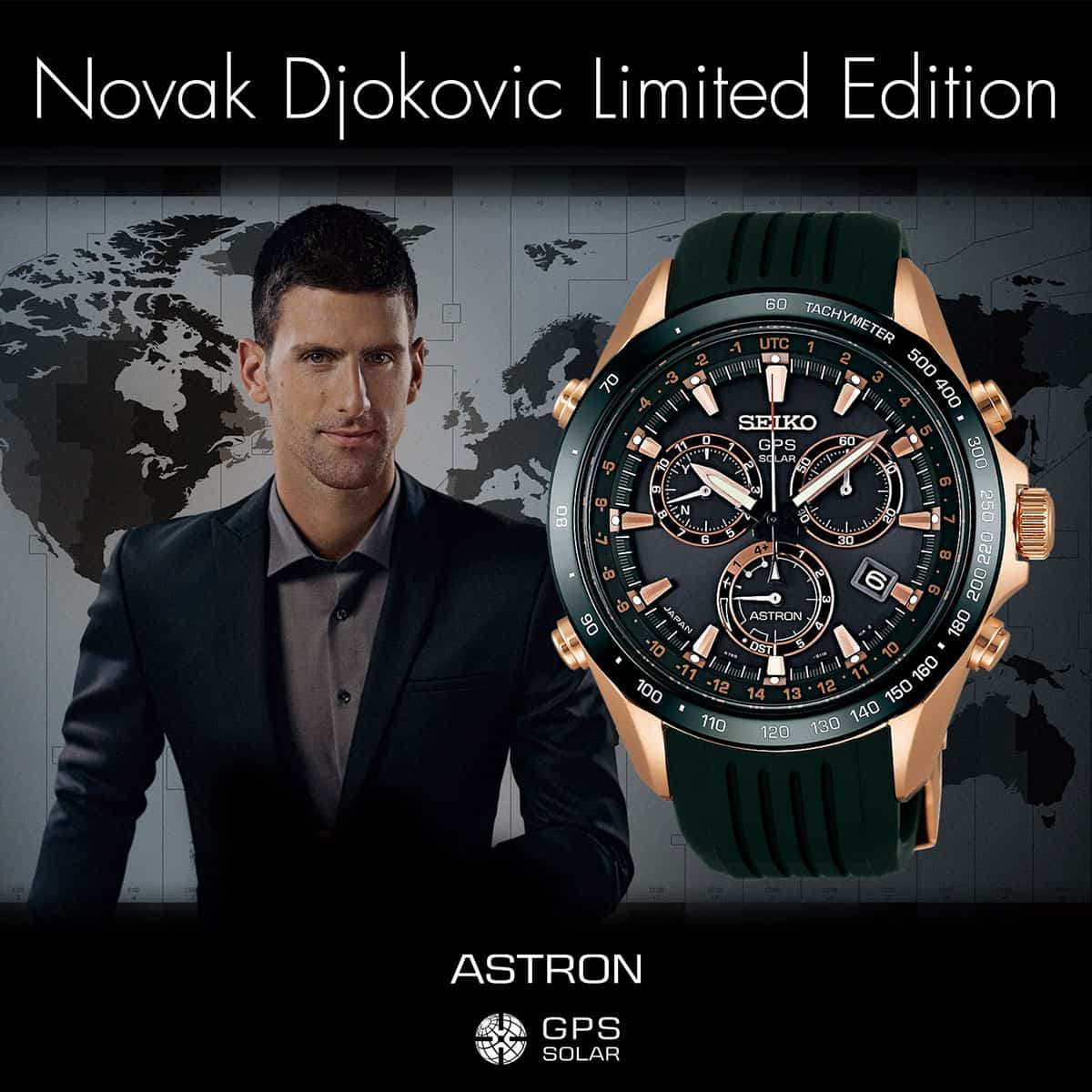
2014 Astron GPS Solar Chronograph Novak Djokovic Limited Edition
Now, my favorite Astron GPS Solar outfitted with the caliber 7X52 is, of course, my massive SAST001. But what are some noteworthy models with the evolutionary movements that followed? I think we should start with a watch outfitted with the 2014 caliber 8X82, the Astron GPS Solar Chronograph Novak Djokovic Limited Edition SSE022. This watch debuted in November 2014, and its movement was not just light-powered and GPS-controlled; it also served as a chronograph and perpetual calendar, recognized 40 time zones, and supported Daylight Saving Time (DST). And it did so in a slimmed-down 44.6mm case. In 2015, the watch made a big appearance on Djokovic’s wrist when the Seiko ambassador won Wimbledon, beating Roger Federer 7-6, 6-7, 6-4, 6-3.
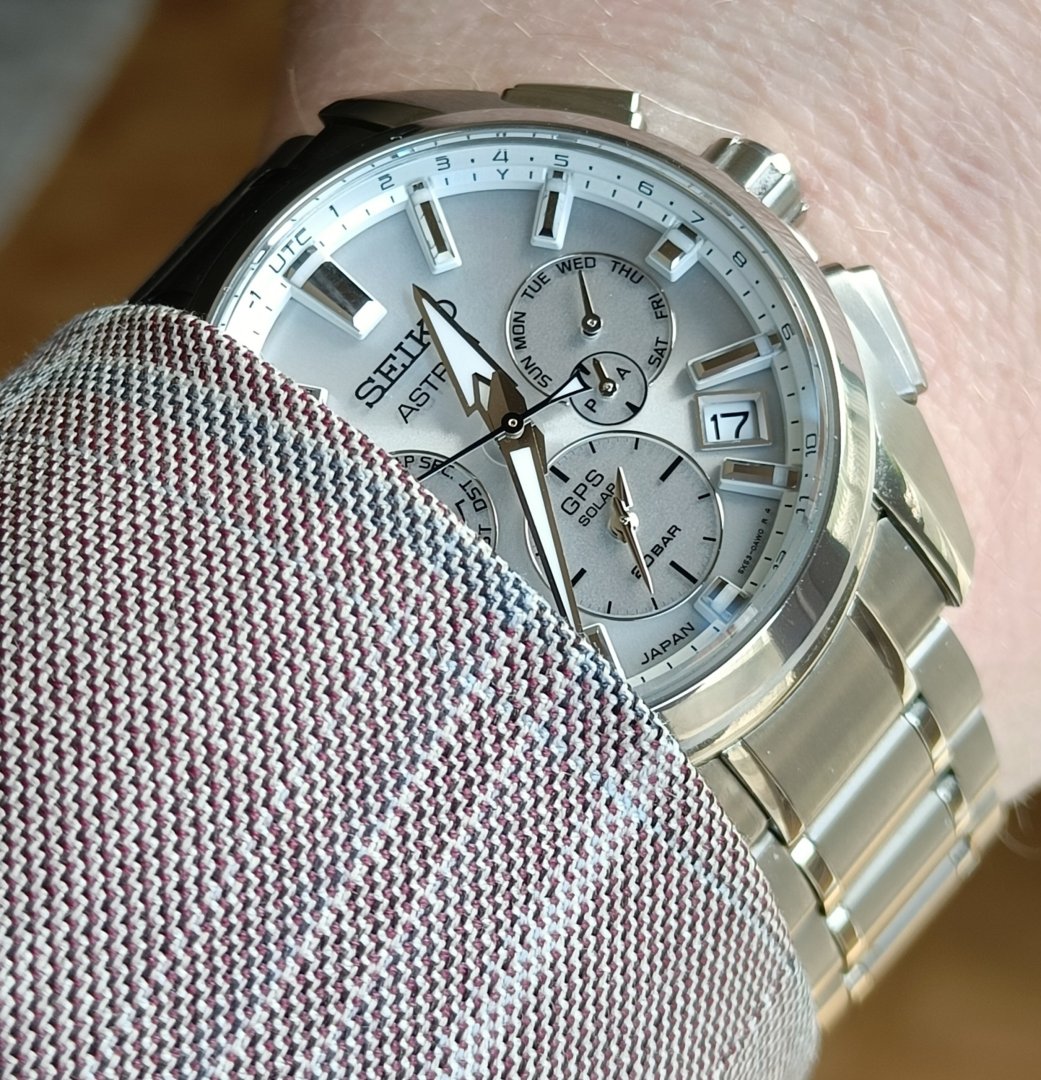
Astron GPS Solar SSH063 — Image: Tidssonen
The icy-white SSH063 from 2020
Caliber 5X53 debuted in 2018, but it’s a watch from 2020 outfitted with this movement that makes it to this article. The clean and crisp white-dial Astron GPS Solar 5X53 Dual-Time Sport Titanium SSH063 features a titanium bracelet with a push-button folding clasp. The use of titanium for the case and bracelet makes it light on the wrist at 105 grams.
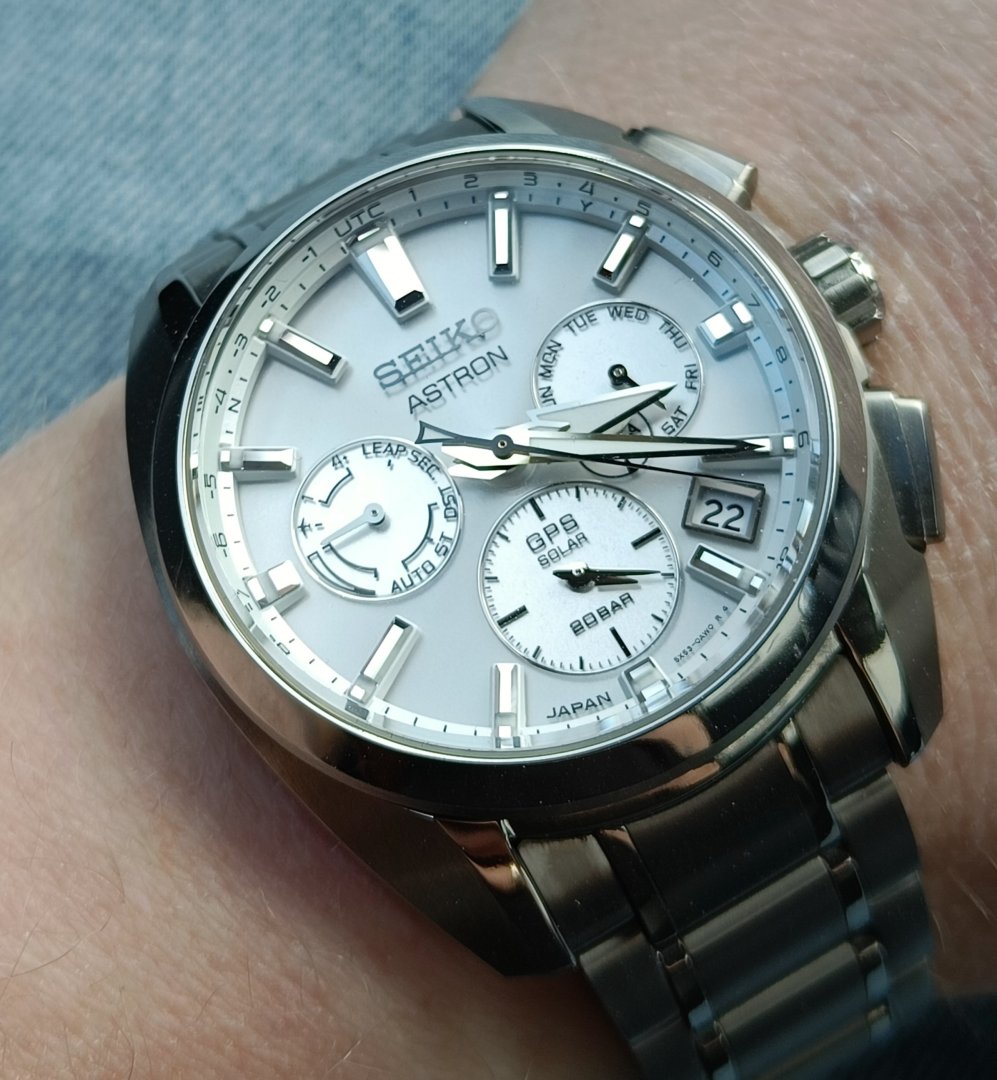
Image: Tidssonen
The ergonomic case has a comfortable 42.8mm diameter, a substantial 14.6mm thickness, and a 50mm lug-to-lug measurement. It’s an ideal travel watch because with one push of a button, the SSH063 displays the local time.

Astron GPS Solar SSJ017
An Astron that reminds me of my Grand Seiko
Equipped with the Seiko 3X22 caliber from 2019, the silver-dial 2023 Astron GPS Solar SSJ01 reminds me of something. The titanium SSJ017 has an edgy 41.2 × 12mm case that reminds me of my 40mm Grand Seiko Tough Quartz SBGX341. And that’s a good thing, because I love that watch. The SSJ017 makes good use of the compact 3X-series movement, with its antenna integrated into the movement bridge.
This average-sized watch may not have a chronograph function, but it is still a potent travel watch. Its movement seeks out a GPS signal multiple times per day when the watch senses sunlight, maintaining an accuracy of ±1 second every 100,000 years. If, however, the watch cannot receive the signal, the movement is accurate to 15 seconds per month. Also, the movement will automatically update the time upon arrival in a new time zone. And it has an airplane mode to avoid receiving the signal at an inopportune time. While adjusting only a local-hour hand on a mechanical timepiece is ideal, simply pressing a button is even more convenient. And especially on a relaxing holiday, comfort and convenience are very welcome.
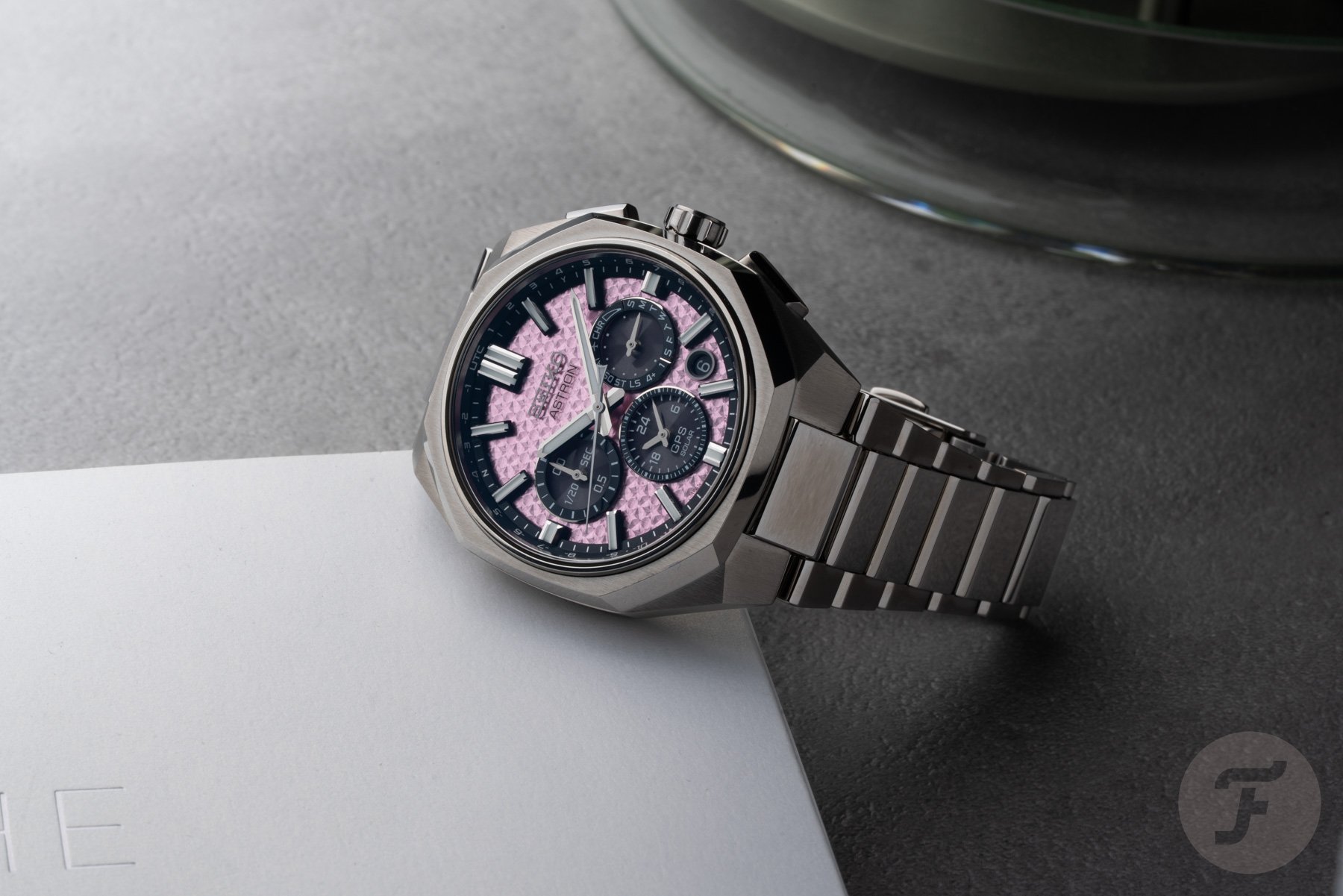
The “Crystal Pink” Astron GPS Solar Dual-Time Chronograph HAB006
This year, Seiko released the Astron GPS Solar Dual-Time Chronograph HAB006 as part of its 145th anniversary. This is a limited edition of 1,200 pieces with a redesigned exterior and the most advanced movement so far. The 43.4 × 50 × 12.4mm case is crafted from titanium with a super-hard coating on all four sides. This case looks sharper and more refined than its predecessors. A newly designed two-piece octagonal bezel adds visual depth, combining a brushed upper surface with polished, faceted sides that catch the light. The interplay of finishes gives the watch a dynamic presence.


The watch is powered by the latest-generation Astron movement, the caliber 5X63, which replaces the outgoing 5X83. And that’s why the dial layout is completely different. Gone is the previous generation’s unconventional 6-9-12 sub-dial arrangement. In its place is a more harmonious 3-6-9 layout that immediately feels cleaner and easier to read. Updated ergonomics and a sharper look give this watch, which also sports a high-end-looking dial, a spot on this very subjective shortlist.
If you want to find your favorite Astron GPS Solar, just click on “Seiko Astron” and take your pick from all the watches Fratello covered over the years. And don’t forget to tell me which one it is in the comments section below.