It’s Easy To See Why The Updated Royal Is Tudor’s Best Release Of 2026

Most watch enthusiasts would agree that Tudor’s introductions during Watches and Wonders 2026 were not very surprising, apart from the Monarch and maybe the black ceramic Black Bay. Overall, it was a year of updates, and they tend to be less exciting. Just as a reminder, we got a new dial color for the Black Bay 54, a slimmed-down version of the Black Bay 58, and an updated design for the Royal series. It might not seem all that memorable. But after writing the introduction article for the Tudor Royal, I became curious to find out more about the updated design. In particular, the new dial using stick markers looks like it could be a hit for Tudor.
Talk to watch enthusiasts about the Tudor Royal, and you will probably hear two modern Rolex models come up in the conversation. Some people compare it to the Land-Dweller because of its integrated bracelet, while others think it resembles the Day-Date. The latter association stems from the largest version of the Royal, which has a day/date display reminiscent of The Crown’s flagship watch. With the introduction of the new Royal series, I would love to add two more references that could be the key to making the Royal a hit. Tudor introduced a new-style dial featuring stick markers instead of the Roman numerals we were used to. As a result, the new models with this dial feel more like a classic Datejust or even the famous Oysterquartz.
The details of the updated Tudor Royal collection
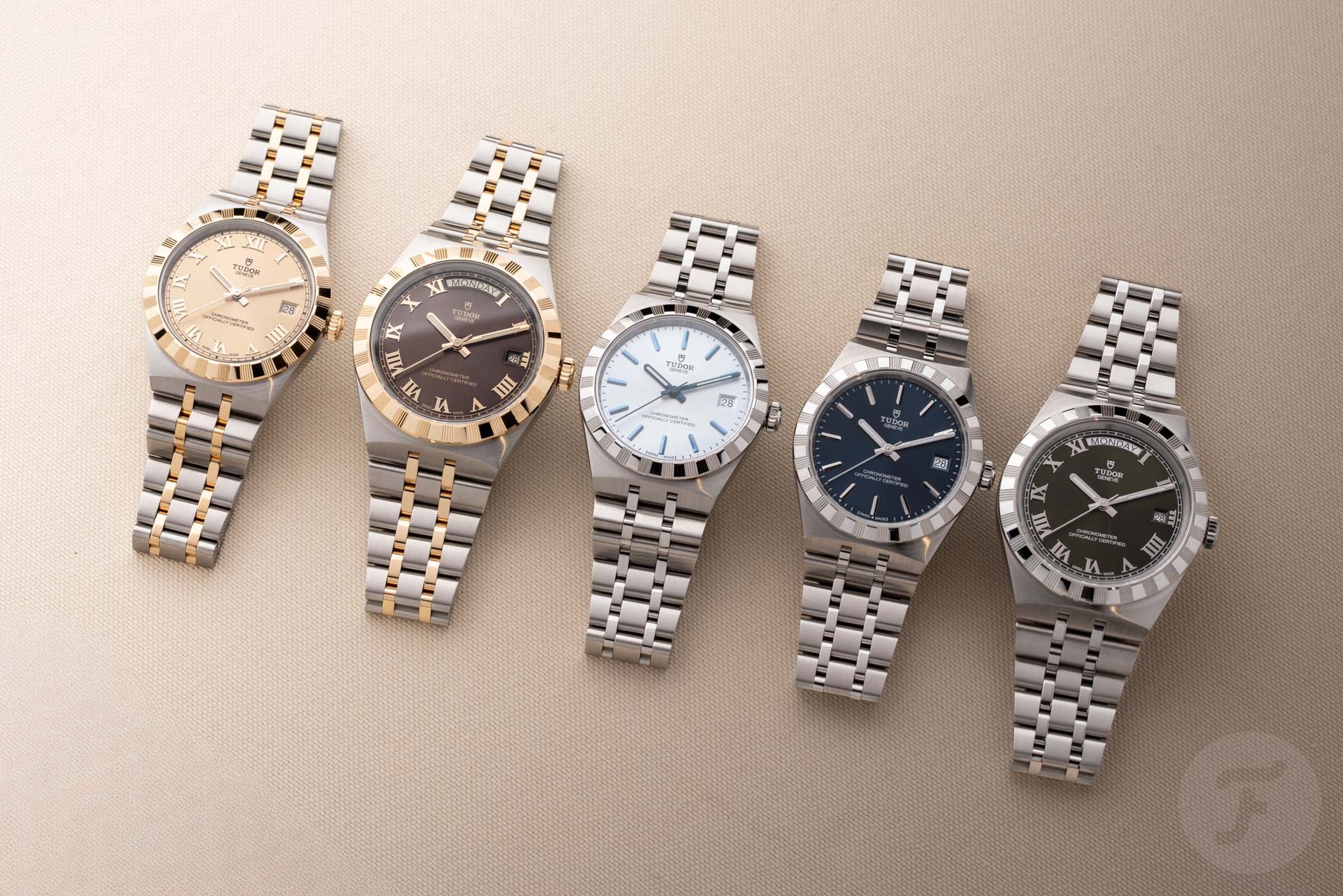
As I explained in the introduction article, Tudor updated the Royal collection in a rather clever way. It all started with trimming the offerings down to three sizes instead of the 28, 34, 38, and 41mm models that were available before. With 30, 36, and 40mm options, the brand perfectly covers a wide range of wrist sizes.
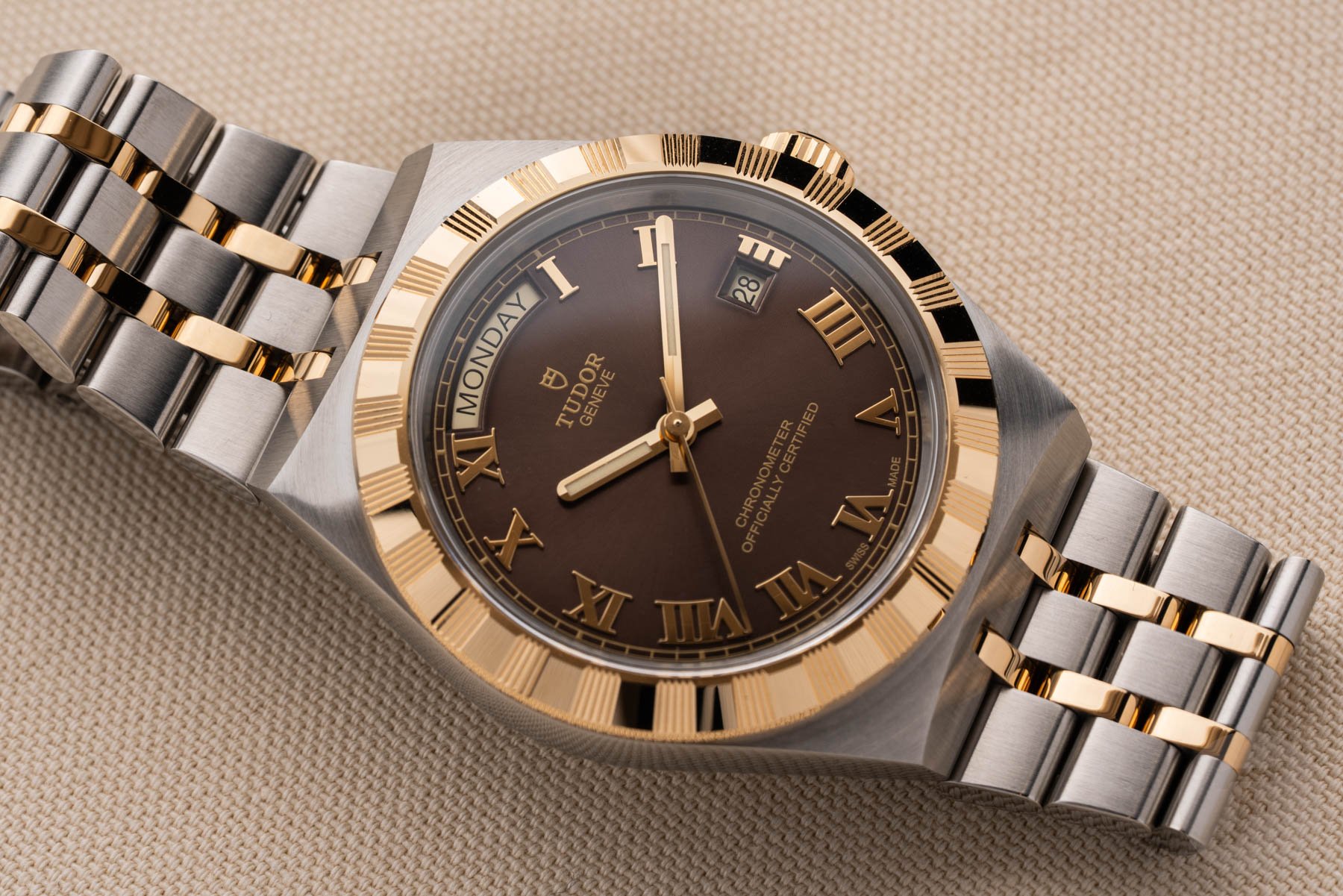
The two smallest Royals feature a date window at 3 o’clock, while the largest model also has that plus a day display at 12. Though the case sizes are different, the layout still corresponds with the previous generation, in which the 41mm Royal had the day/date layout, and the other three sizes only showed the time and date.
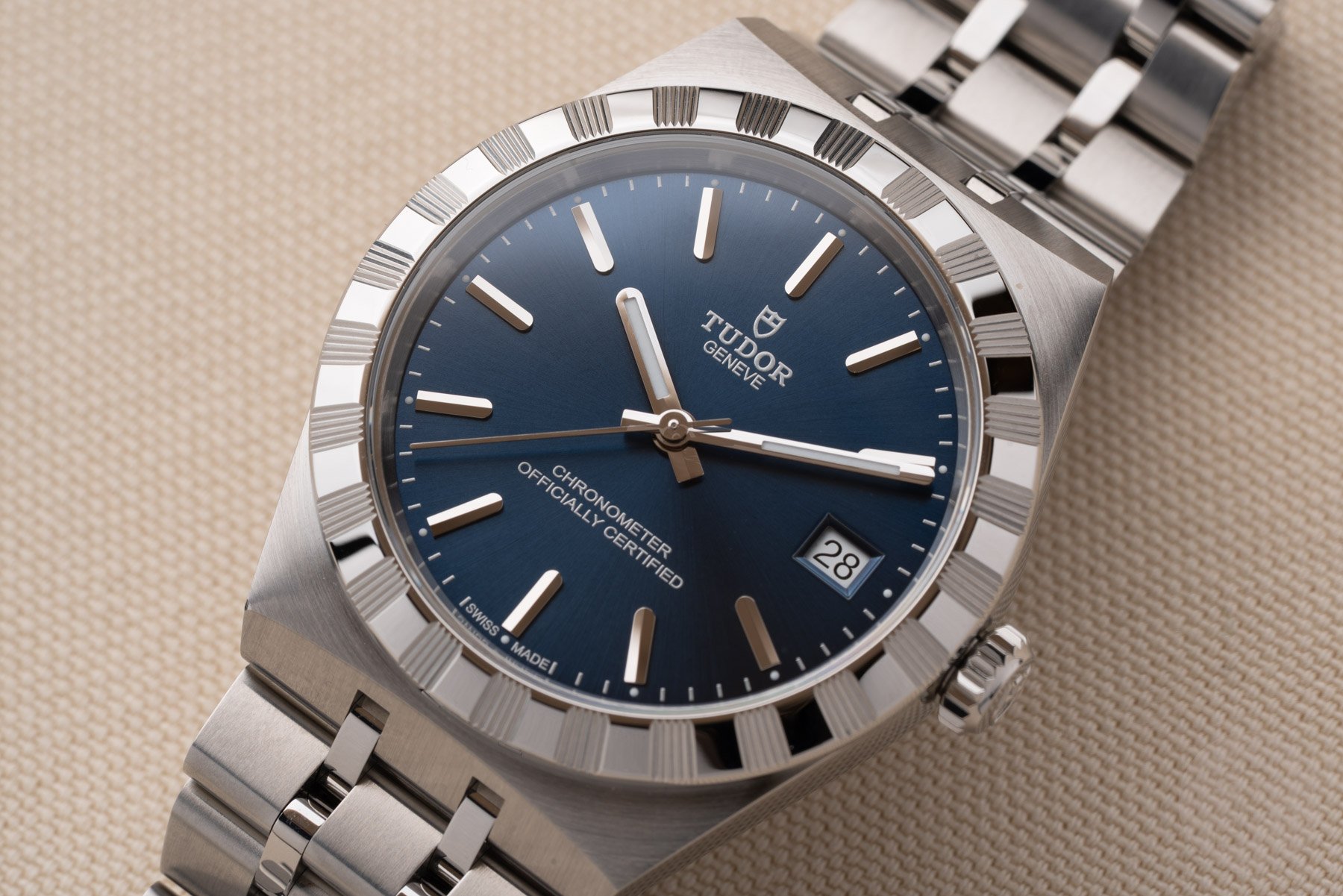
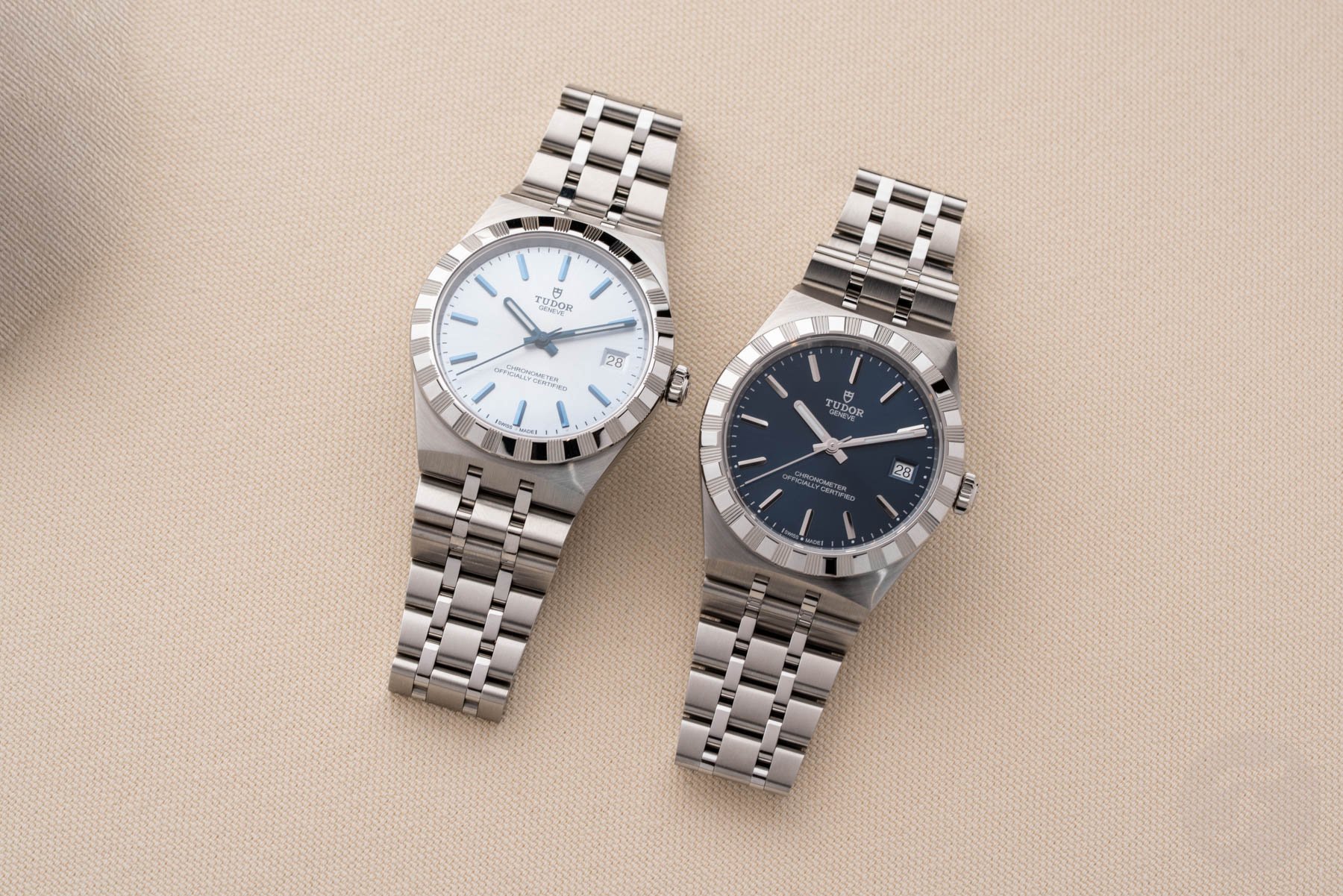
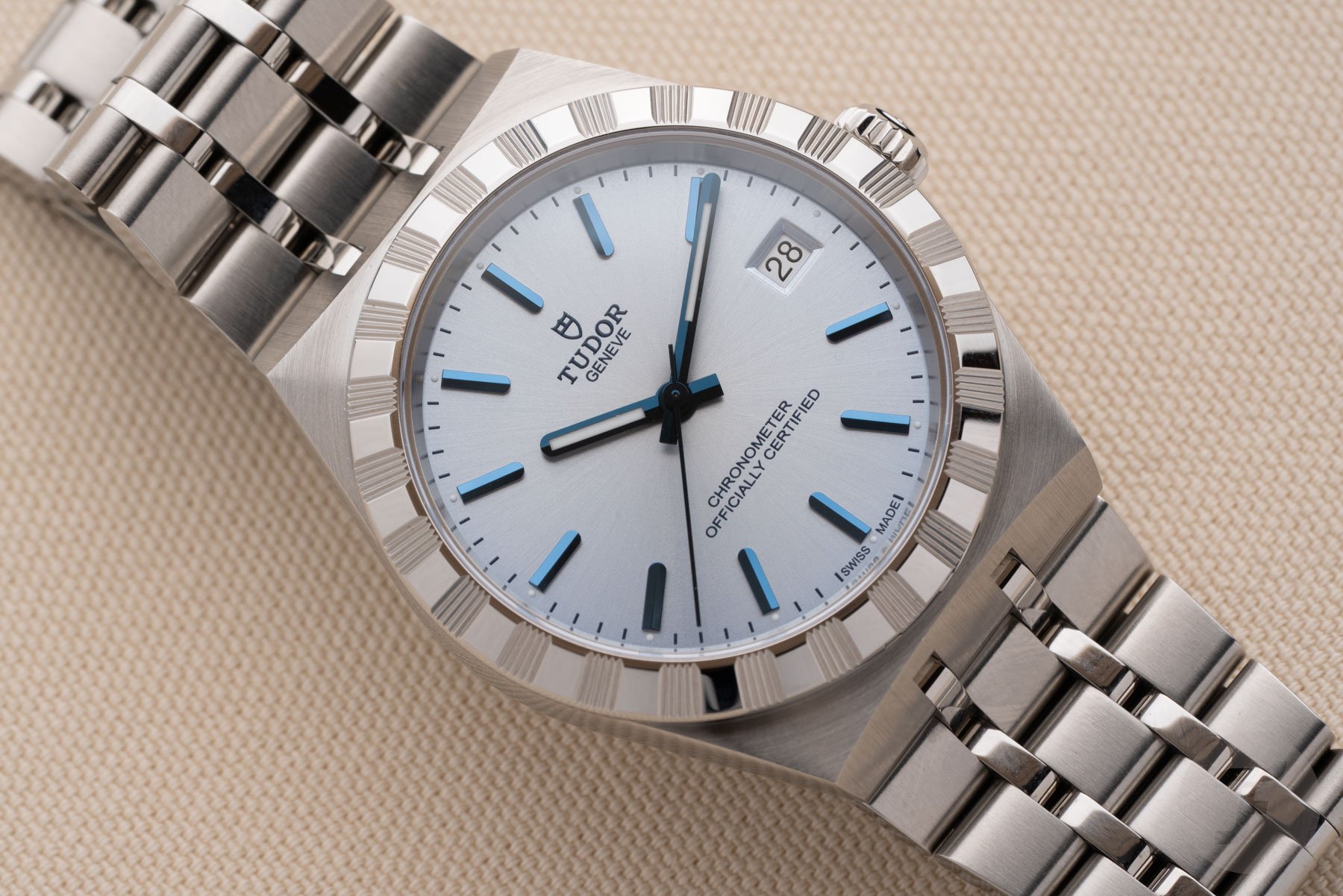
The big news, however, is the addition of a “new” dial design that features stick markers. That’s the one dial version that immediately caught my eye. Previously, Tudor only offered the regular dials with Roman numerals that, in all fairness, are a bit of an acquired taste. For me, a comparison to the Datejust would tell the story of these two dials.
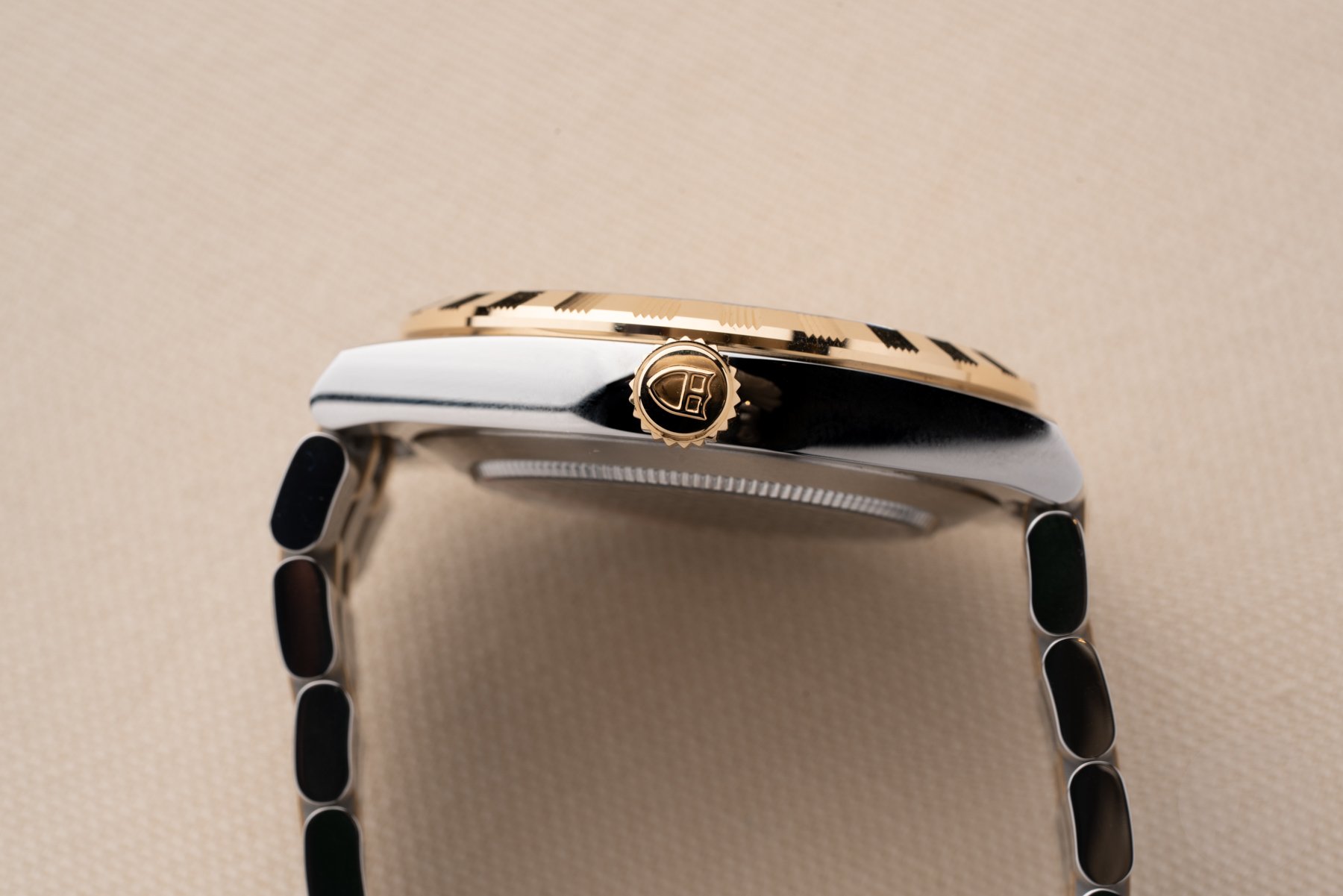
I like a nice Datejust dial with Roman numerals but generally prefer one with stick markers. And that’s why I like seeing this new dial design for the Tudor Royal. While the Roman numerals look good on the salmon-dial option, I naturally will always gravitate towards the simplified dial design with stick indexes. I can tell that this new dial will attract many new fans to the Royal series.
There is more to the story than new dials…
While my main attractions to the new Royal are the new sizes and the added dial variation, it is worth noting that Tudor also upgraded the calibers, which are all COSC-certified chronometers. Both the MT5412 inside the 36mm versions and the MT5633 that powers the 40mm models have an accuracy of -2/+4 seconds per day and provide a 70-hour power reserve.
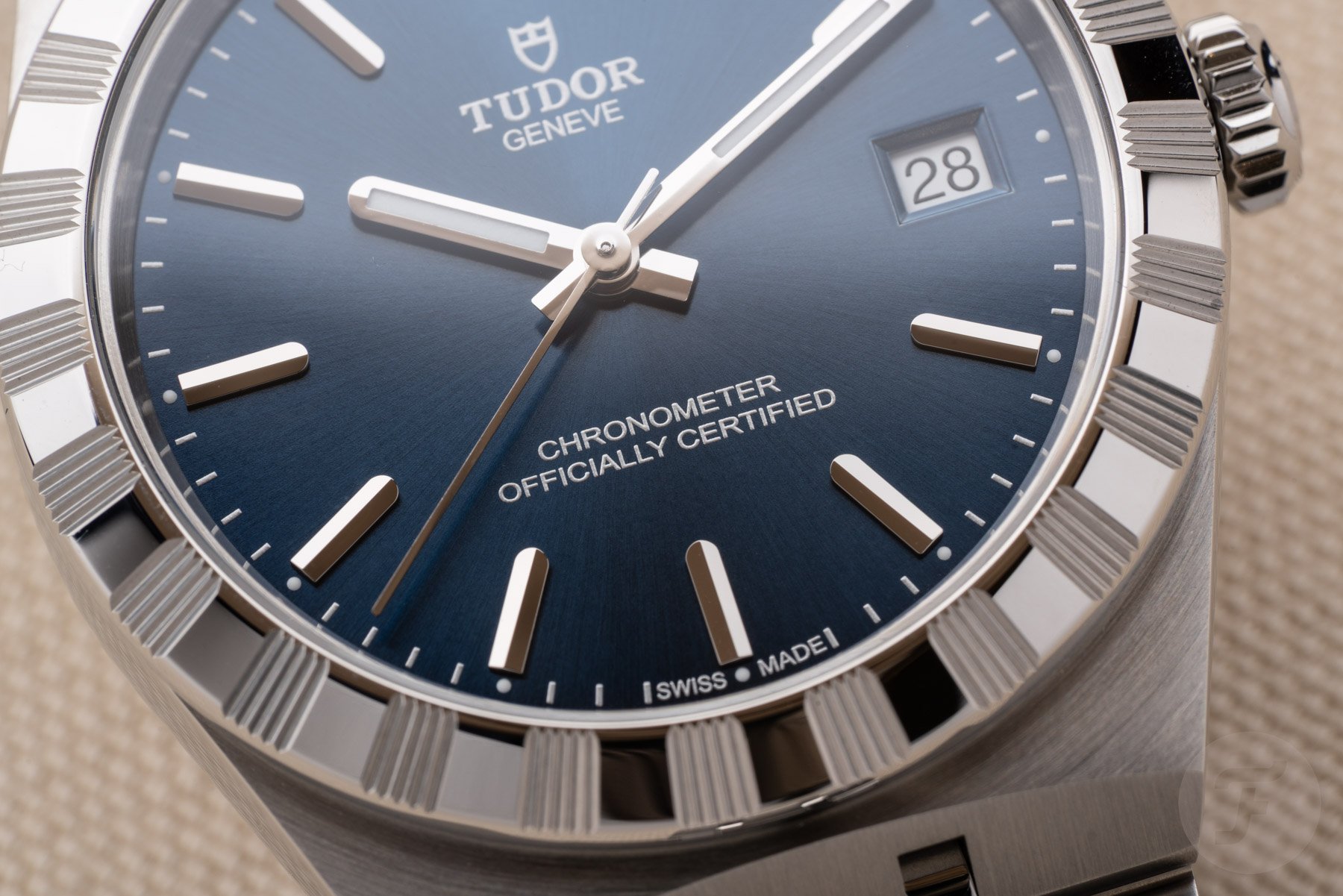
These updated movements are another welcome upgrade to the Royal series. Hinting at the caliber, the designers added the text “Chronometer Officially Certified” in two lines along the lower half of the dial. This text brings adds a welcome visual element to the lower half of the dials. The previous versions of the Tudor Royal, including the that 41mm model RJ reviewed and the 34mm version Lex tried, didn’t have any text on the lower part, which made it feel somewhat empty.
The final thing worth mentioning is that the prices are tempting considering what you get for the money. To get an idea, the 30mm steel models cost €2,990 / US$3,250 / CHF 2,650, the 36mm steel versions go for €3,160 / US$3,425 / CHF 2,800, and the 40mm steel variants retail for €3,390 / US$3,675 / CHF 3,000. If you prefer a bit of gold added to the mix, the 30mm two-tone Royal is €4,980 / US$5,400 / CHF 4,400, while the 36mm variants in steel and gold are €5,830 / US$6,300 / CHF 5,150, and the 40mm models cost €5,820 / US$6,325 / CHF 5,150. If you ask me, it is hard to find a better series of daily wearers for that money.
Getting a feel for the new Tudor Royal
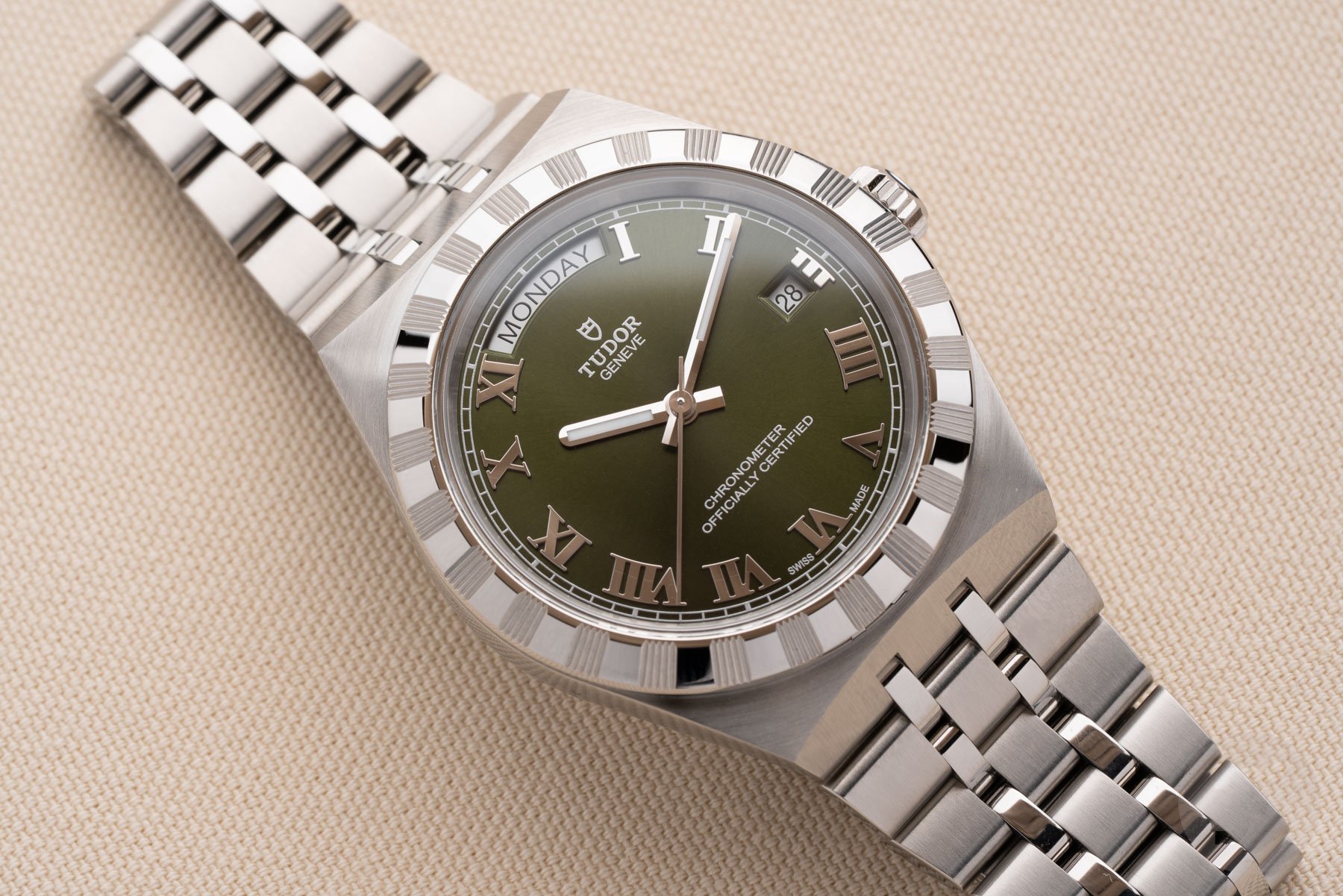
It all sounds nice on paper, but the best proof is getting a feel for how the watches wear. That’s why I was more than happy to try the new 36mm and 40mm models at the Rolex offices a few weeks ago. Not only did the experience allows us an overview of the new collection, but it was also the perfect opportunity to compare the different sizes and dial variations. I was most curious to learn more about the 36mm steel versions with the new dials. On top of that, I wanted to find out how the 36mm Royals compare to the 40mm ones. While the smaller ones have a 36 × 42.2 × 9.7mm case, the larger ones feature a 40 × 47 × 11.4mm exterior. Still, we know that dimensions do not tell the entire story.
As some of you might have read in my review of the new Datejust models with the green ombré lacquer dials, the visual differences between the 36mm and 41mm versions are rather striking. It left me with a strong preference for the classic 36mm Datejust. Would that story repeat itself with the new Royals? I am happy to say that it wasn’t the same experience, as the 40mm Royal looks and feels much better size-wise than its Rolex counterpart. As a result, the 40mm Royal feels like a perfectly proportioned, bigger version of the 36mm one.
The new dial variation of the Tudor Royal
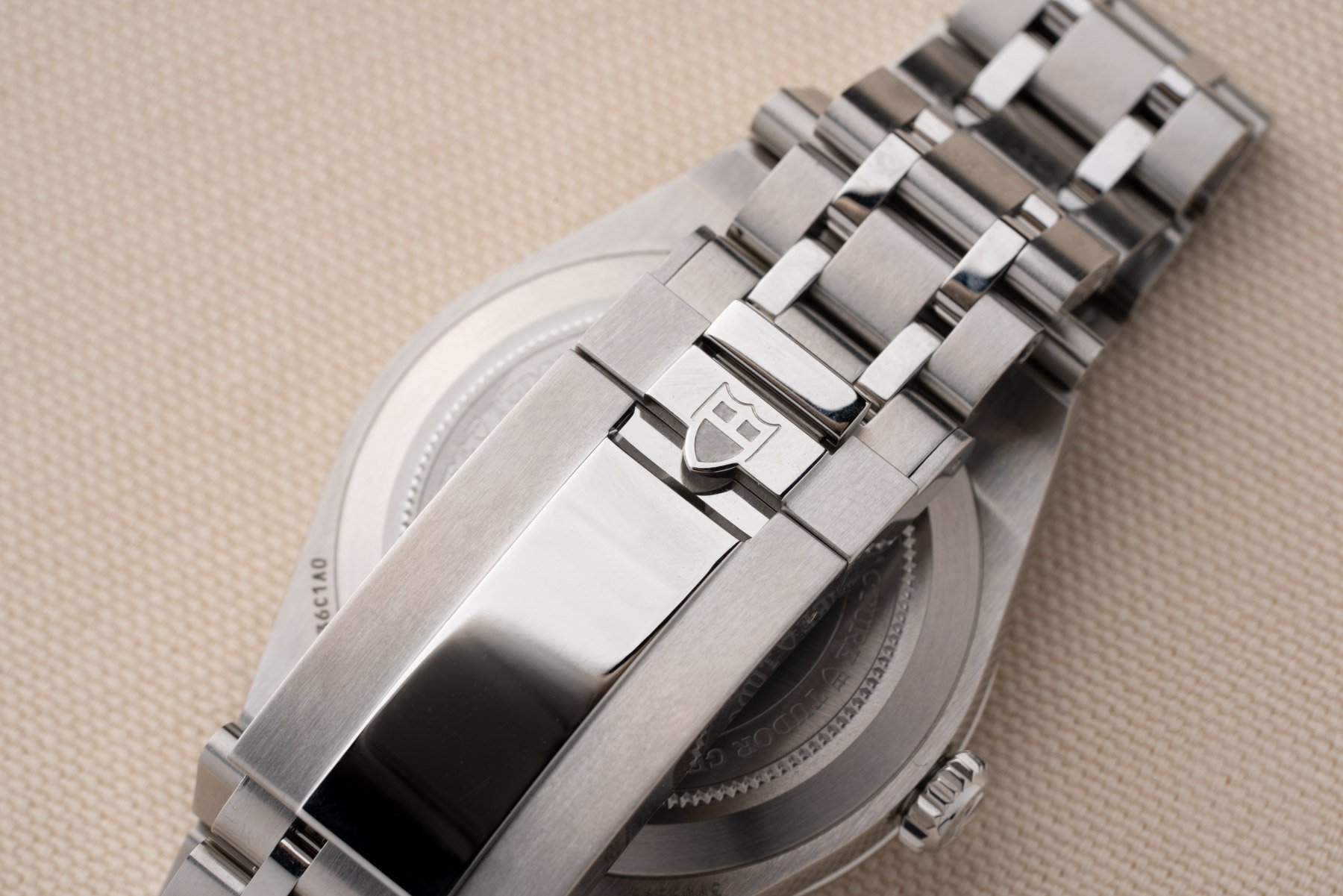
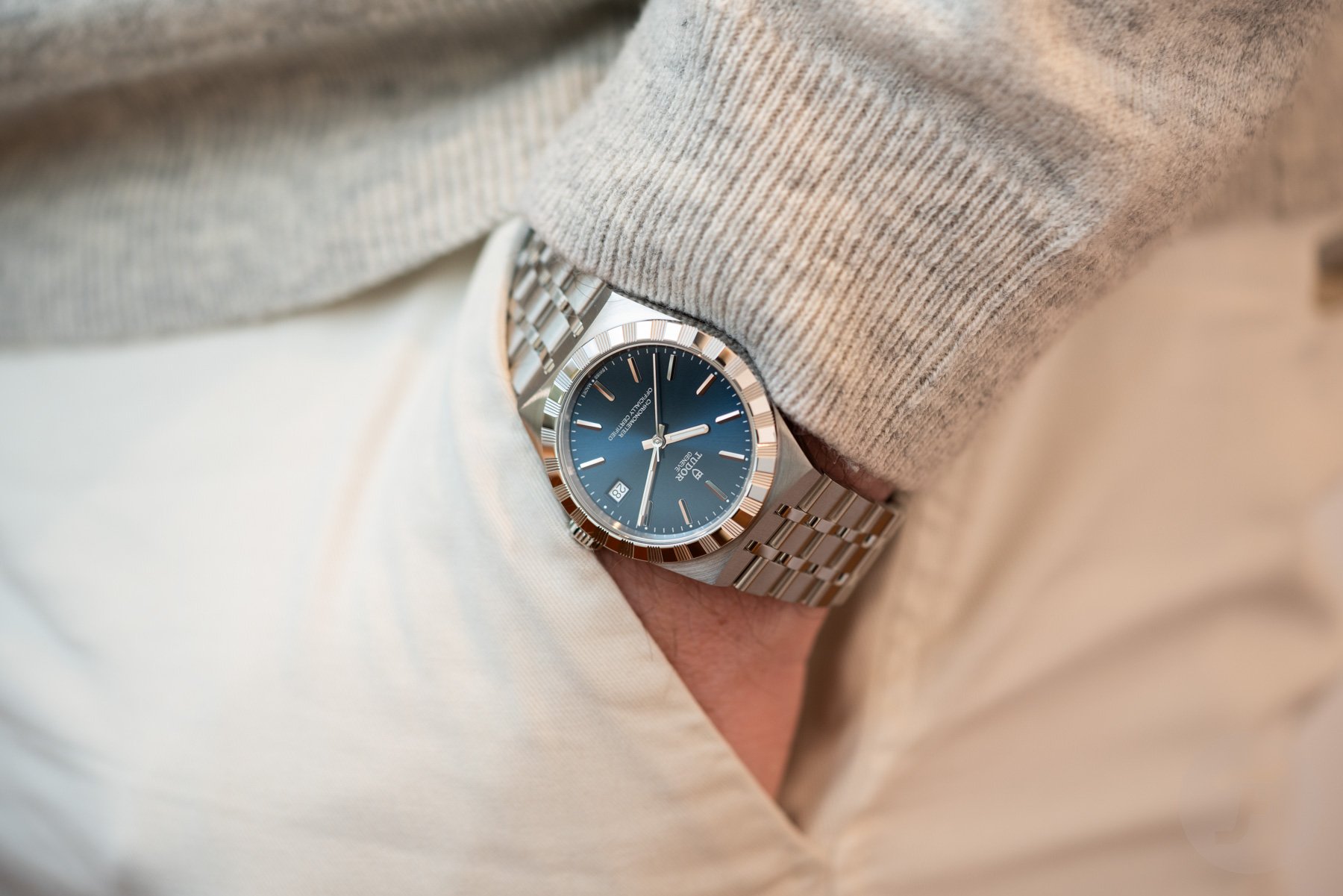
Before I get into wearing the two sizes, let’s talk dials. Straight out of the gate, I knew I had found my favorite Royal — the new blue-dial version in steel. It perfectly captures the spirit of the classic Rolex Oysterquartz and Datejust while adding a necessary modern twist. Speaking of which, the Tudor designers nicely updated the Royal’s look. They redesigned the “lugs” and connecting links of the integrated bracelet to ensure these parts don’t make unwanted contact. The result is an ultra-comfortable bracelet that wears like a charm and nicely tapers towards the signature T-fit clasp.
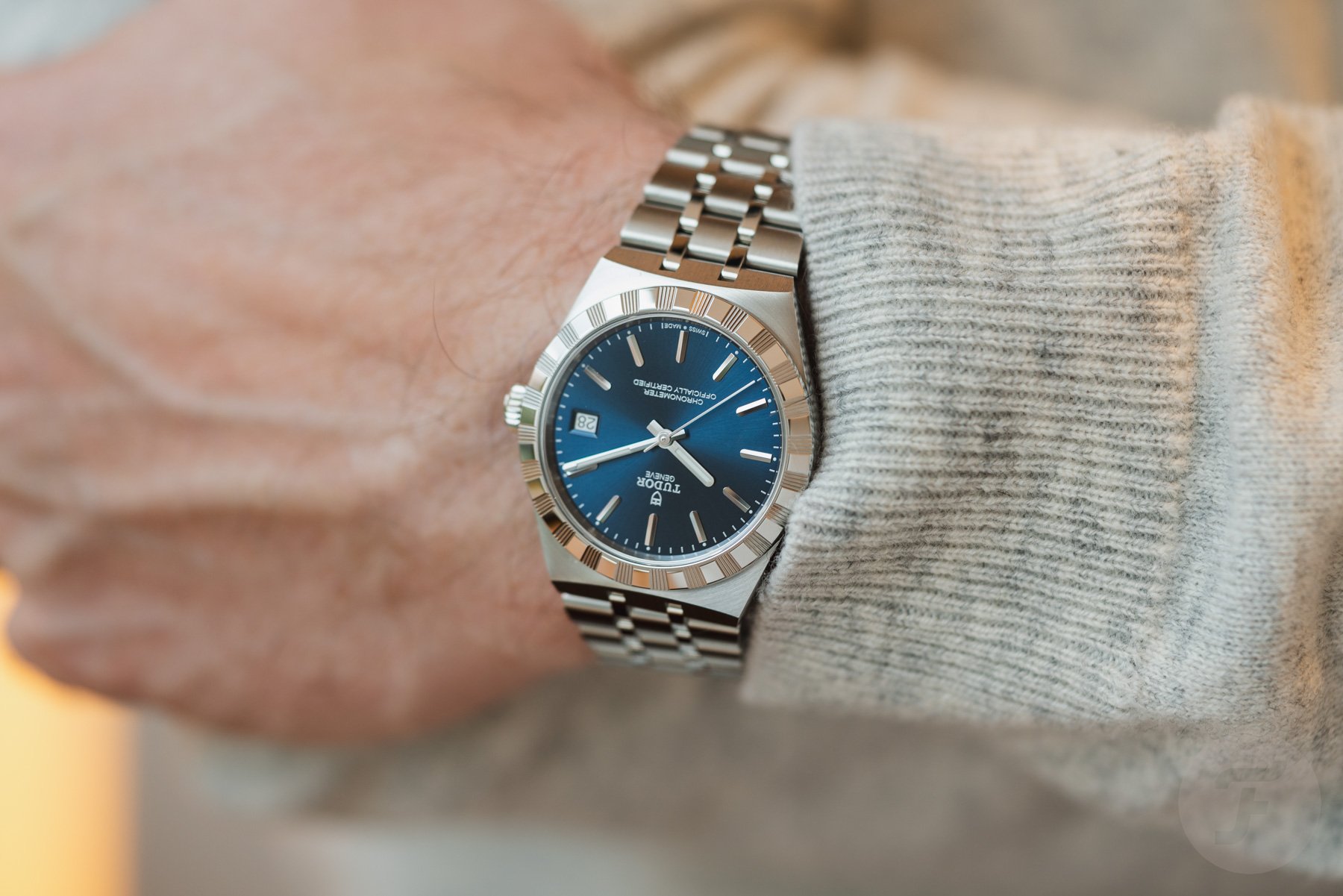
I was seriously impressed by the new dials that we got to see in light and darker blue. They bring a relevance to the Royal that I thoroughly appreciate. The Royal is an often-overlooked series in the Tudor collection. While I always had a soft spot for the two-tone versions with brown dials, the brand had other watches I much preferred over the Royal. The new, simplified dials immediately changed this. Tudor got a lot of things right with the new Royal. With this new dial variation, the brand offers a simplified version of its Royal that will appeal to those seeking the classic Rolex charm.
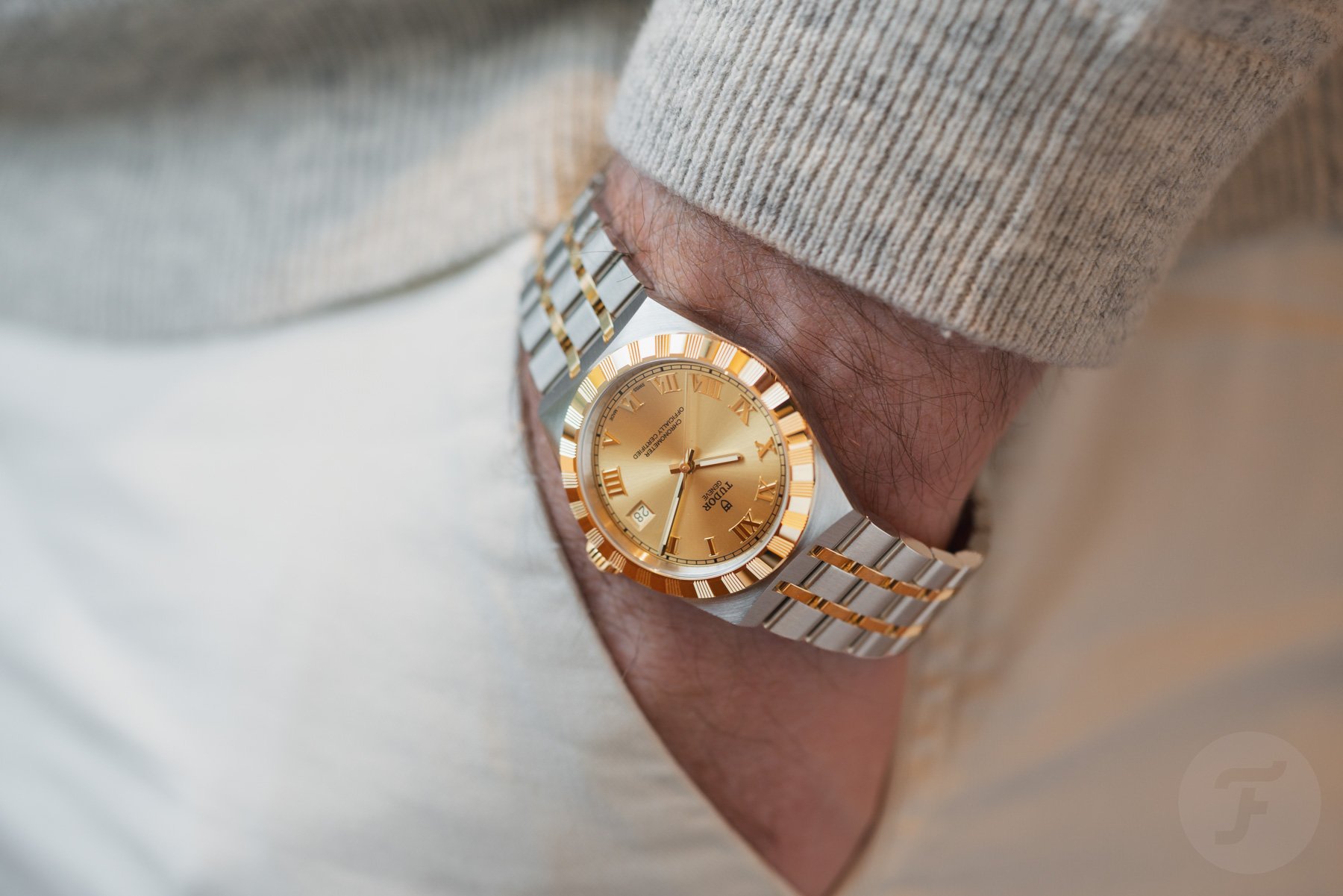
The two-tone versions have a great charm as well
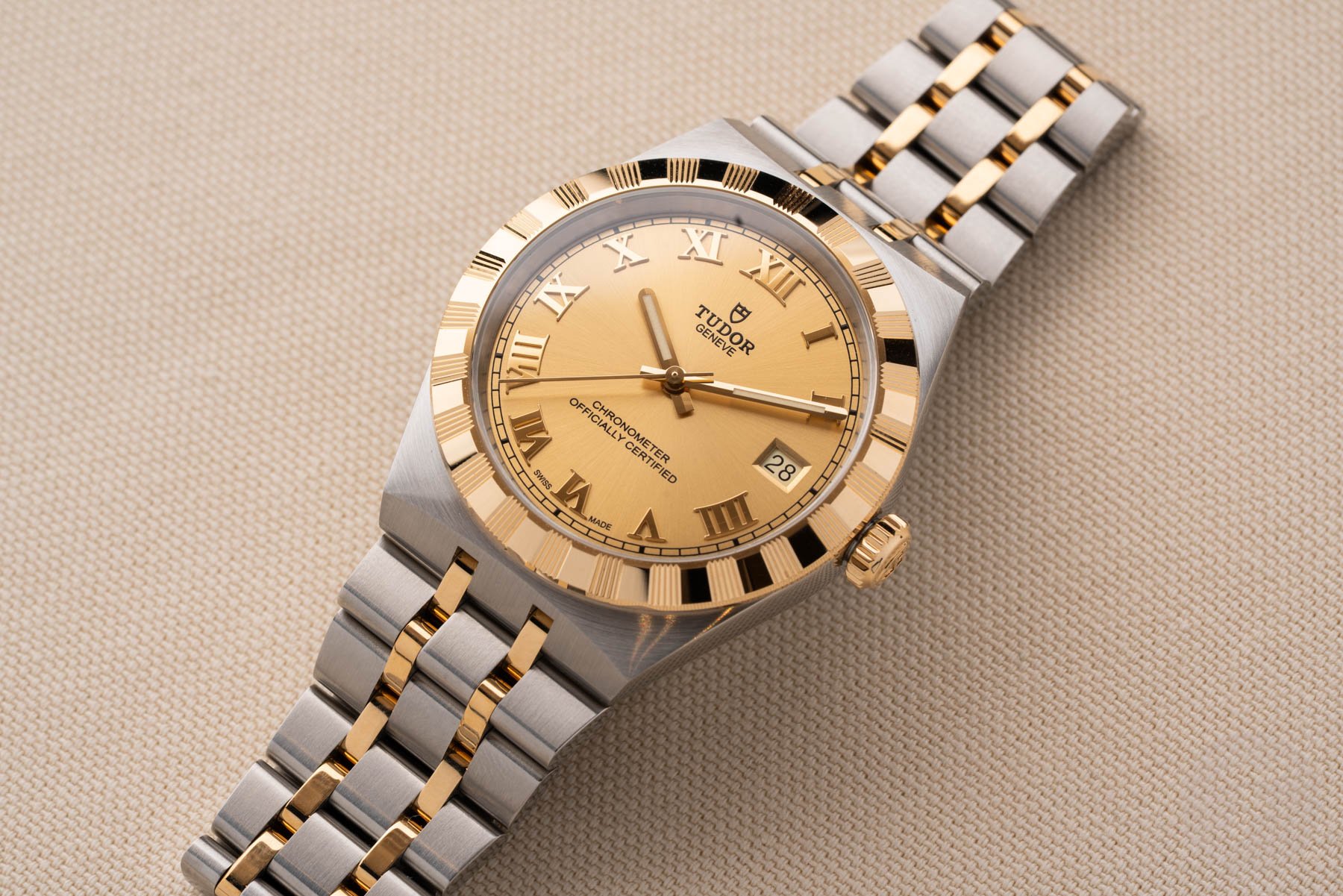
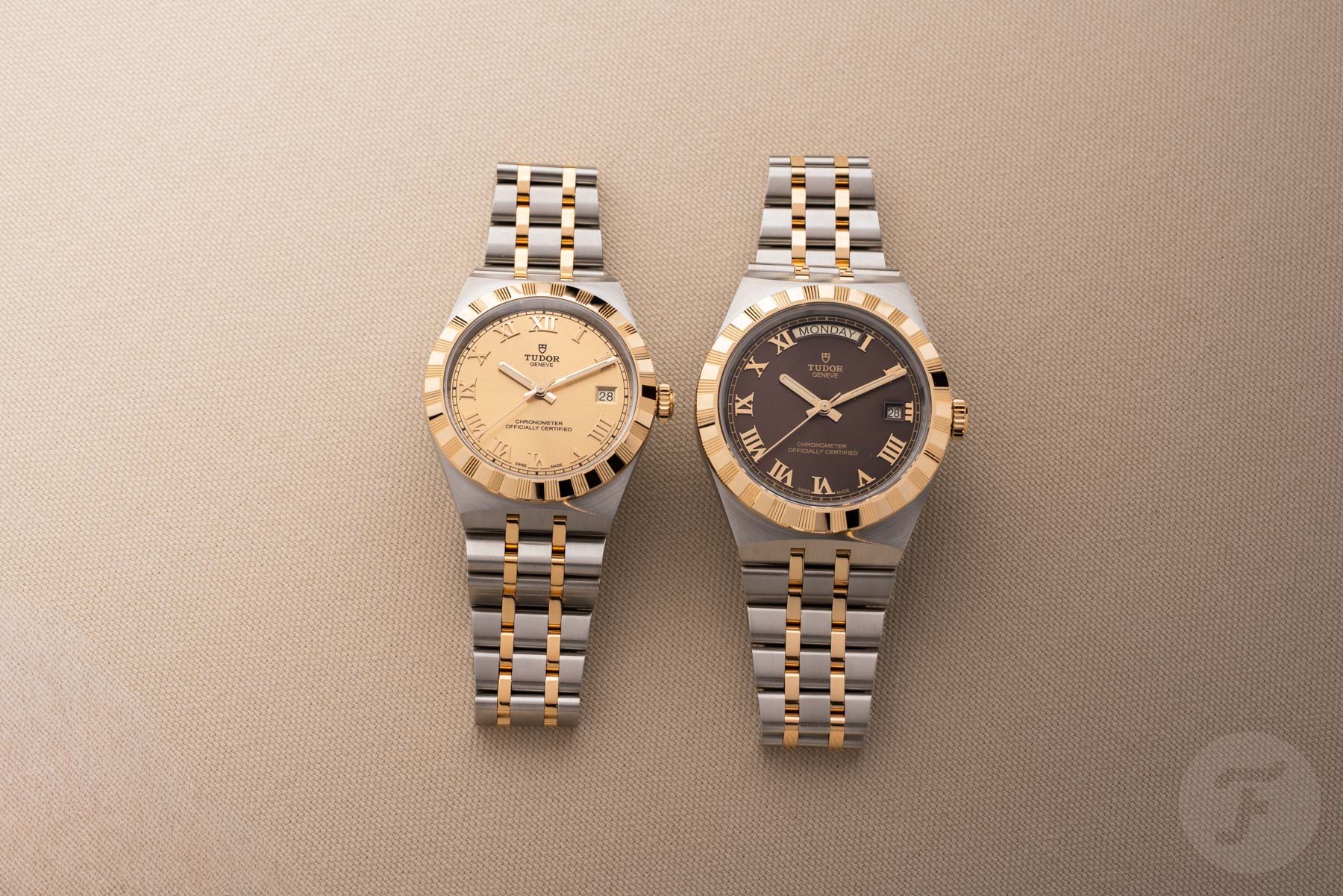
While I prefer the full steel versions, I have to say the 36mm two-tone Royal has tons of retro appeal. If anything, it has only gotten better than the previous versions. In particular, the gold-dial version with Roman numerals stood out and nicely captured the allure of the classic Oysterquartz. While we have seen Oysterquartz variants with either gold dials or Roman numerals, Rolex never combined those elements in the two-tone Oysterquartz. Gold dials with Roman numerals were reserved for the full-gold Oysterquartz Day-Date models.
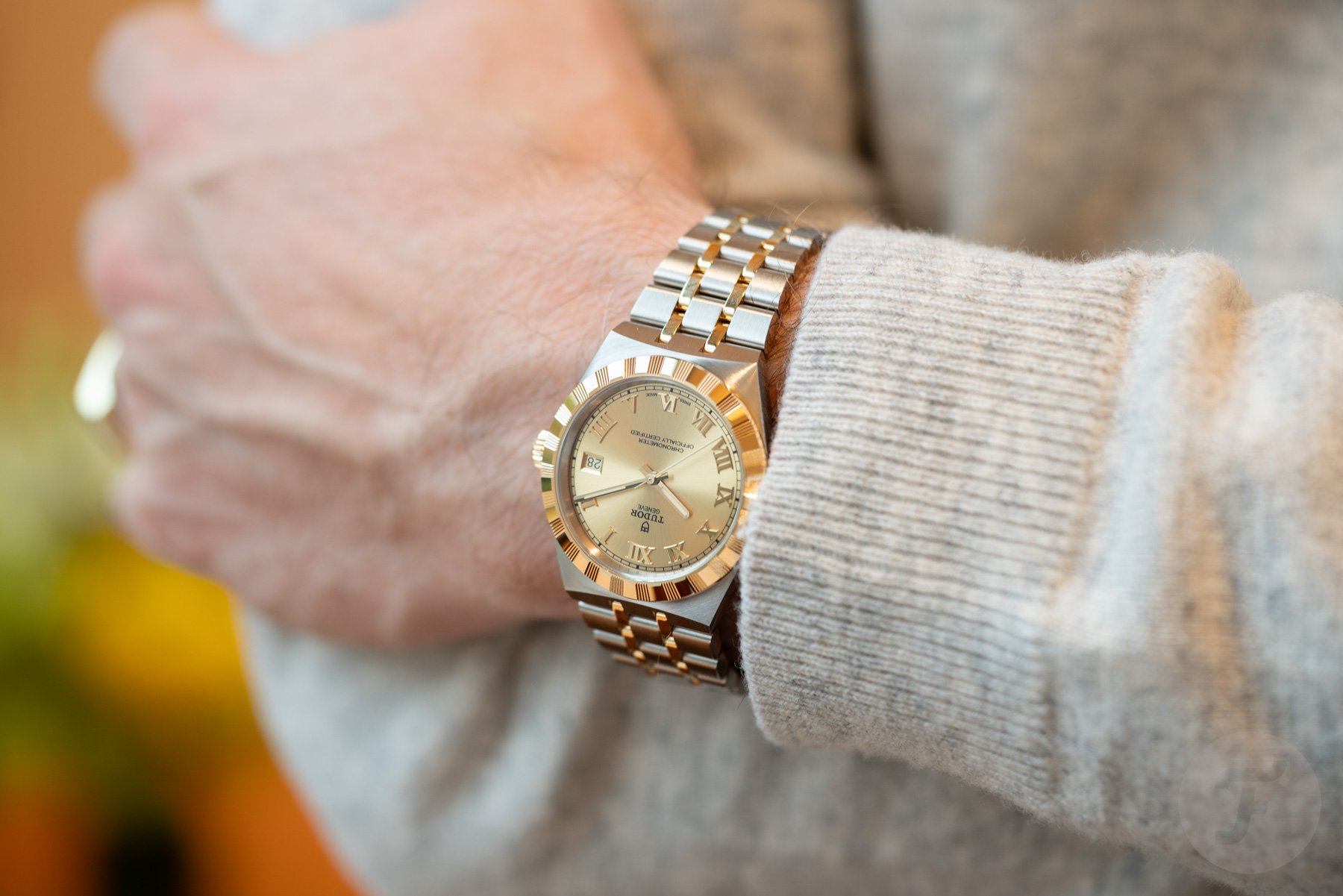
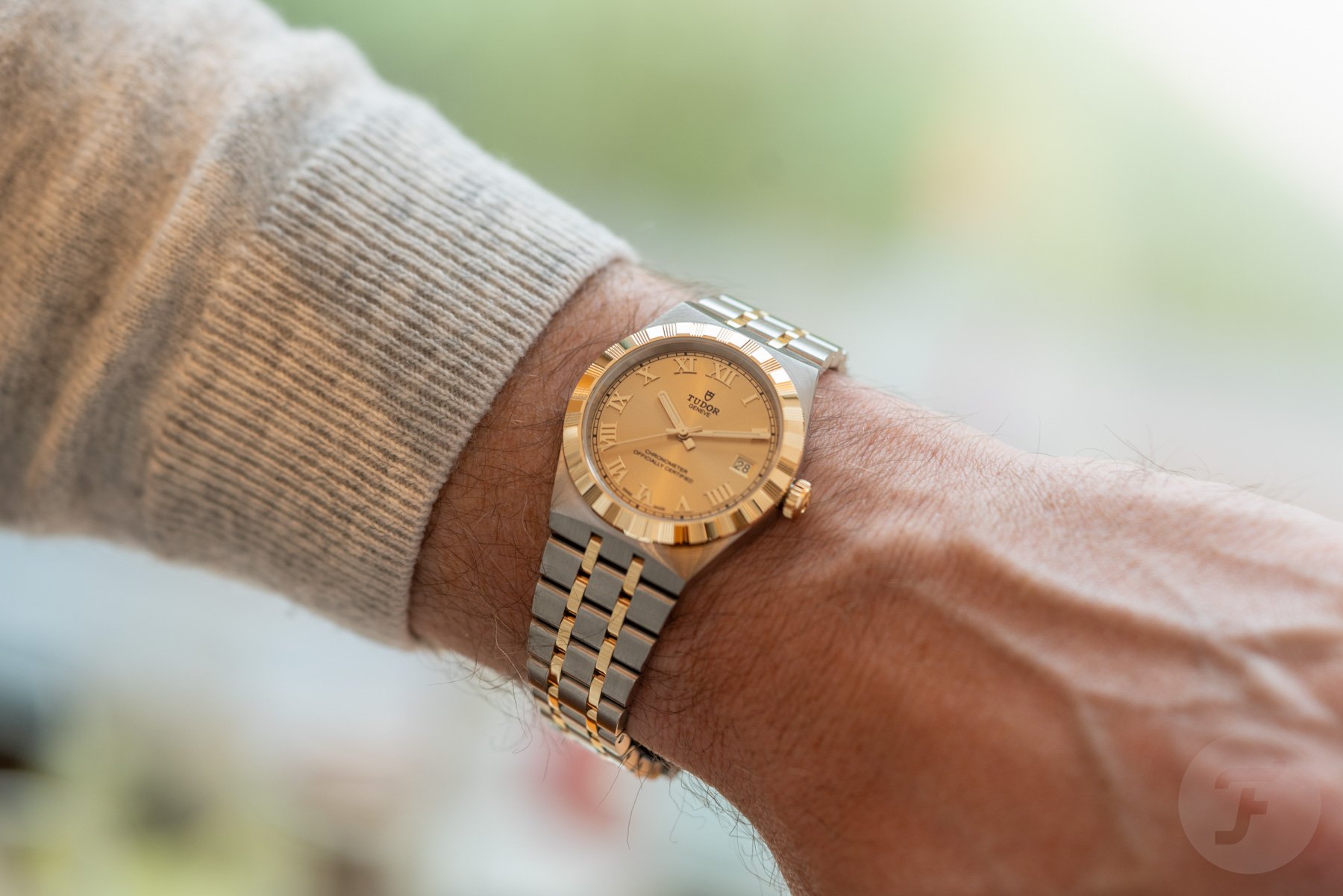
But it’s an aesthetic that works well for the new 36mm Royal. This is also the size that best captures that classic Rolex feel. Having said that, the 40mm Royal is a perfect fit for people looking for something a bit bigger. Also, it resembles the classic Oysterquartz Day-Date a bit more with the day display at 12 o’clock.
Overall thoughts on the new Tudor Royal collection
All in all, it was great to try the new Tudor Royal models. The design updates and the new dial layout make it an inherently more interesting collection. The sweet spot for me was the 36mm Royal, as it just feels perfect compared to the classic Rolex watches from the past. Having said that, I also greatly enjoyed the 40mm versions. Unlike with the Datejust, I didn’t think the larger Royal felt out of proportion. If anything, it is a perfect larger version of the two smaller Royals with an added day display.
But my preference for the 36mm Royal is not just due to the visual romance of the classic Rolex Oysterquartz and Datejust models. With a 9.7mm profile, the 36mm Royal is also nice and slender. The 40mm version’s 11.4mm-thick case also makes a big difference in how the watches wear. On top of that, the 36mm Royal doesn’t feel small thanks to its integrated bracelet, which gives it more visual mass.
Creating significance for the Tudor Royal
But the biggest win for me is the new simplified dial design. It immediately gives the new Tudor Royal a relevance I didn’t expect to see. Just like so many Tudor fans, I generally focus on the Black Bay and Pelagos lines. But with this updated Royal, the brand has created my favorite release so far in 2026. It may sound like a weird statement with the Monarch in mind, but I honestly like this new Royal a lot more.
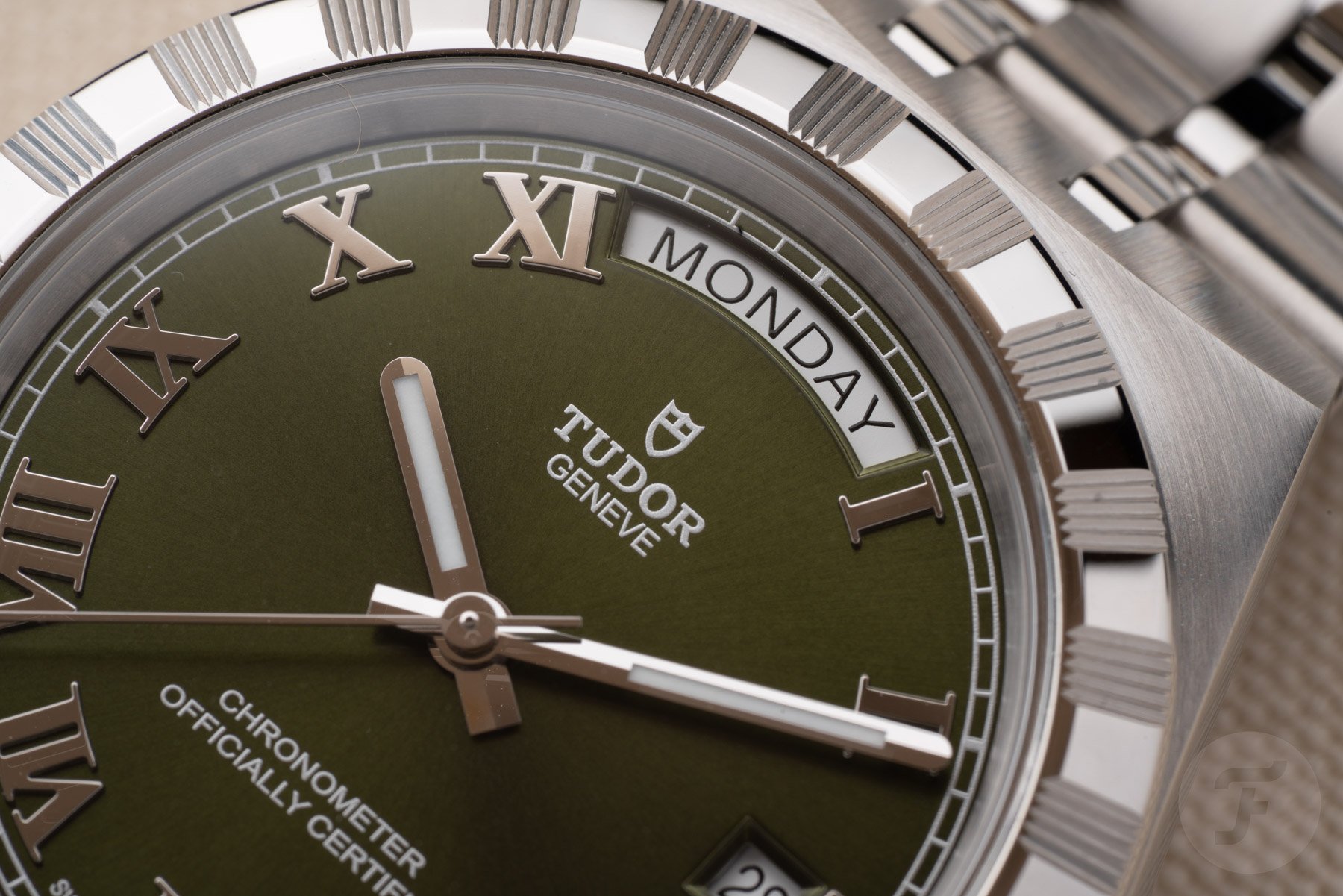
The new Tudor Royal perfectly captures the classic Rolex feel. Even though I’m a diehard fan of the Datejust and Oysterquartz, Tudor’s updates brought a smile to my face that I never thought I would have while wearing the Tudor Royal. Don’t get me wrong; the modern Tudor Royal will never be those Rolex classics. If you want a Datejust or an Oysterquartz, that’s what you should chase. But if you want a modern, affordable option from Tudor that captures a similar spirit, I suggest you check out the updated Royal collection. It really is that good.