225 Years After The Tourbillon’s Invention, The Breguet Tradition Tourbillon 7047 Spins In The Best Of Traditions

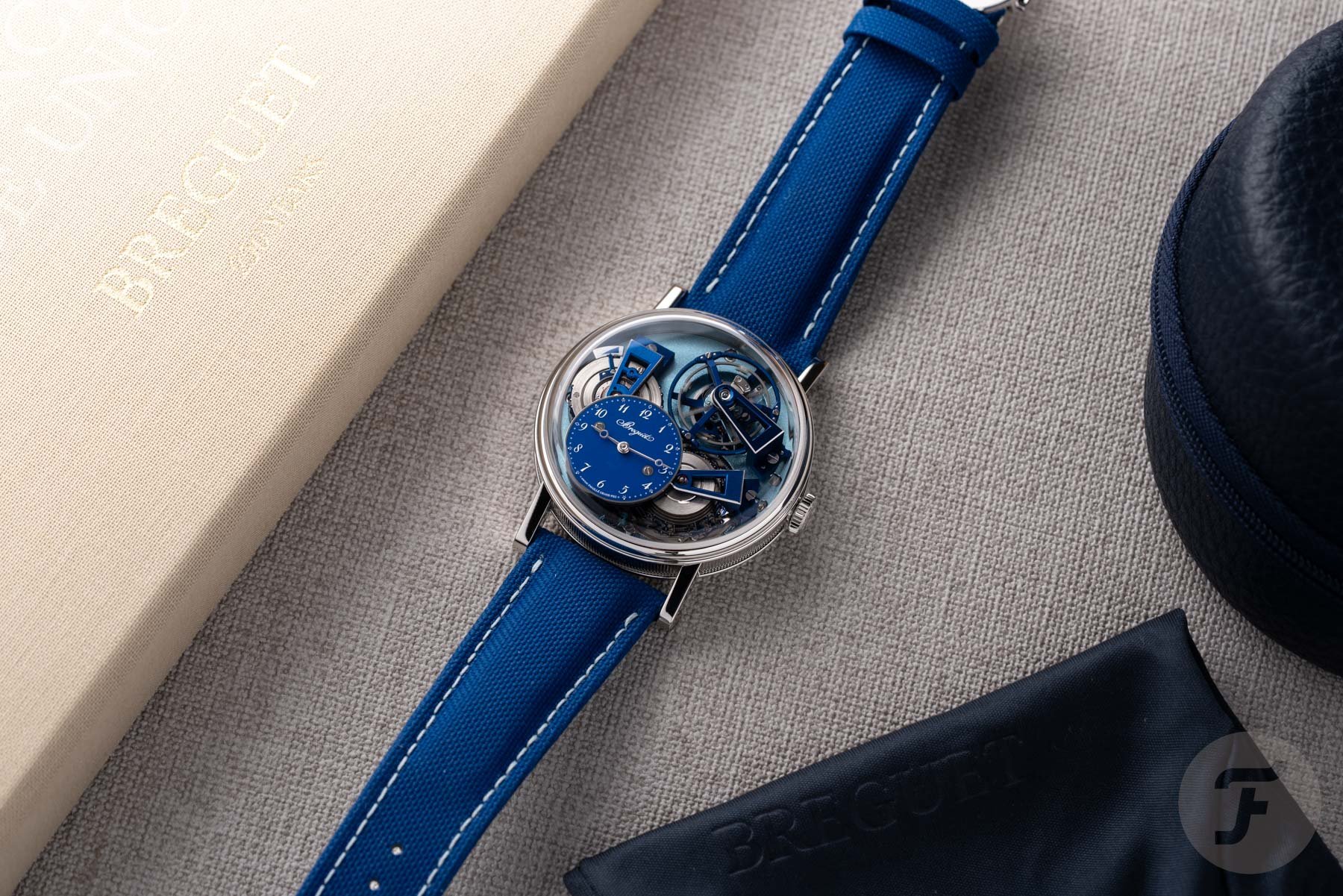
The year after Breguet turned 250, the brand celebrates another big milestone, the 225th anniversary of the tourbillon. It does so with several gravity-defying watches, and we had the chance to experience the newest Breguet Tradition Tourbillon 7047, a platinum 25-piece limited edition outfitted with a spinning one-minute tourbillon and a fascinating fusée-and-chain mechanism. The watch celebrates its place of origin — Abraham-Louis Breguet received the patent for his groundbreaking invention on 7 Messidor, Year IX of the French Revolutionary calendar, corresponding to June 26th, 1801, in Paris — in a striking Bleu de France colorway.
Abraham-Louis Breguet (1747–1823) pondered his revolutionary tourbillon while back in his birthplace, Neuchâtel, after fleeing Paris in 1793. The revolution left the French capital in turmoil, and because of his ties to royalty, Breguet, unsure of his future, left his home and atelier behind. Just two years later, he went back to save his business on Quai de l’Horloge and continue his work. He did so successfully, and on June 26th, 1801, his most remarkable watch invention, the tourbillon, was patented in Paris. Six years passed between the patent’s approval and the first sales. Breguet and his employees went on to produce 40 pocket watches outfitted with a tourbillon movement between 1796 and 1829, making them rare and highly sought-after creations. Around 25% of these tourbillon watches were sold to ship owners, navigators, and others for naval purposes, enabling accurate navigation.
Breguet Tradition Tourbillon 7047: A joint effort from Abraham-Louis and Leonardo
Today, Breguet honors the invention and its place of origin with the Tradition Tourbillon ref. 7047PT/YY/5ZU SL, a contemporary creation that incorporates several traditional elements, including a fusée-and-chain mechanism. It was Abraham-Louis Breguet who gave us the tourbillon, but another genius introduced the fusée-and-chain mechanism to the world. That genius was none other than Leonardo da Vinci. He didn’t invent it, though. While the concept dates back centuries, the fusée-and-chain system that elegantly regulates power delivery was visualized and explained by him in the late 15th century.
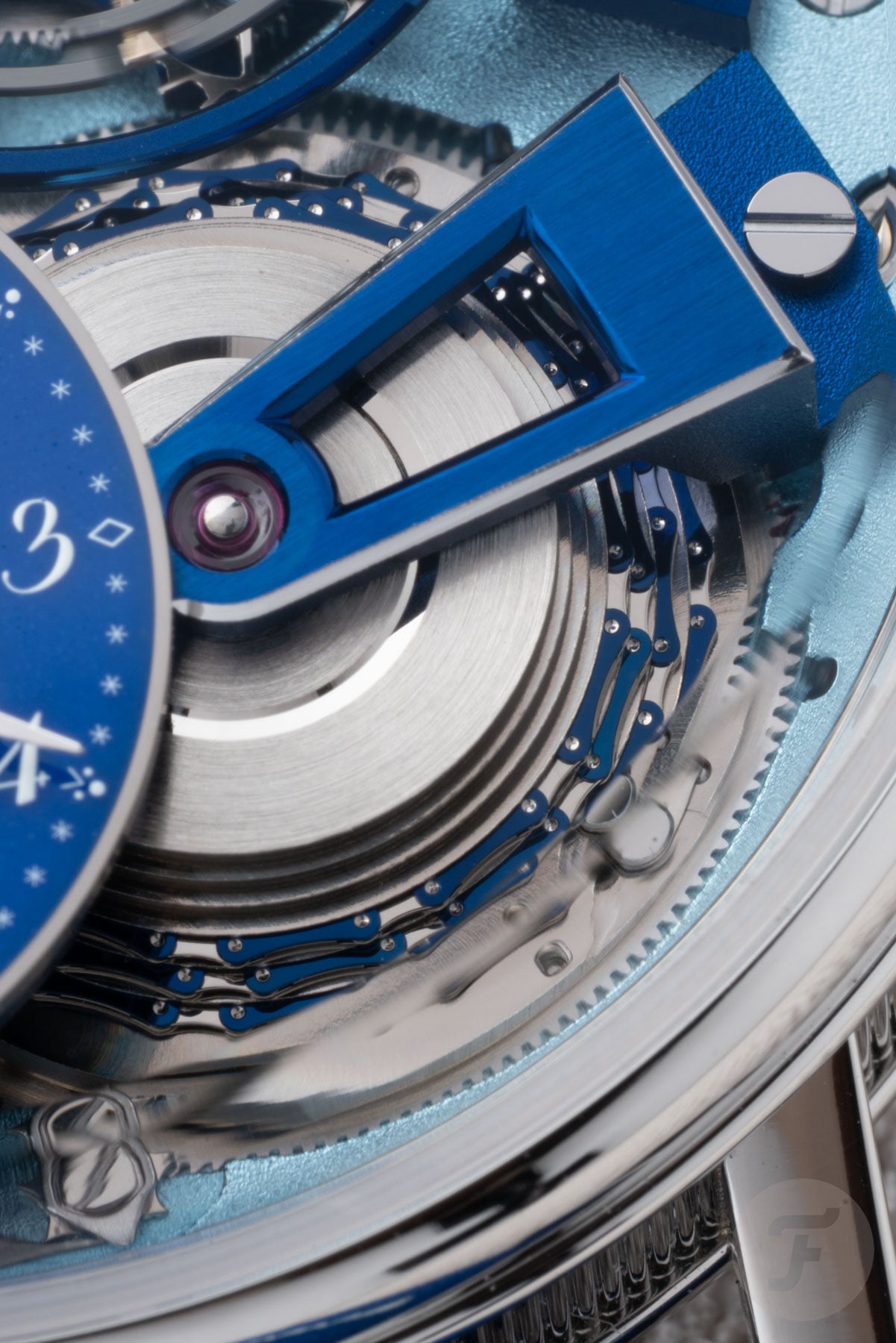
In 1994, the fusée-and-chain mechanism debuted in a wristwatch movement to compensate for the natural decline in torque as the mainspring unwinds. A fine chain connects the barrel to a cone-shaped pulley known as the fusée. When the mainspring is fully wound and producing its greatest force, the chain pulls from the narrow top of the fusée, where the leverage is smallest. As the mainspring releases energy and torque gradually decreases, the chain moves toward the wider base of the fusée, increasing leverage — cyclists will immediately recognize this as they have to shift to an easier gear when going uphill. The opposing effects of a falling mainspring torque and increasing fusée leverage balance one another, allowing the movement to receive a more consistent flow of power throughout the running time. The result is improved rate stability and chronometric performance.
A veritable machine
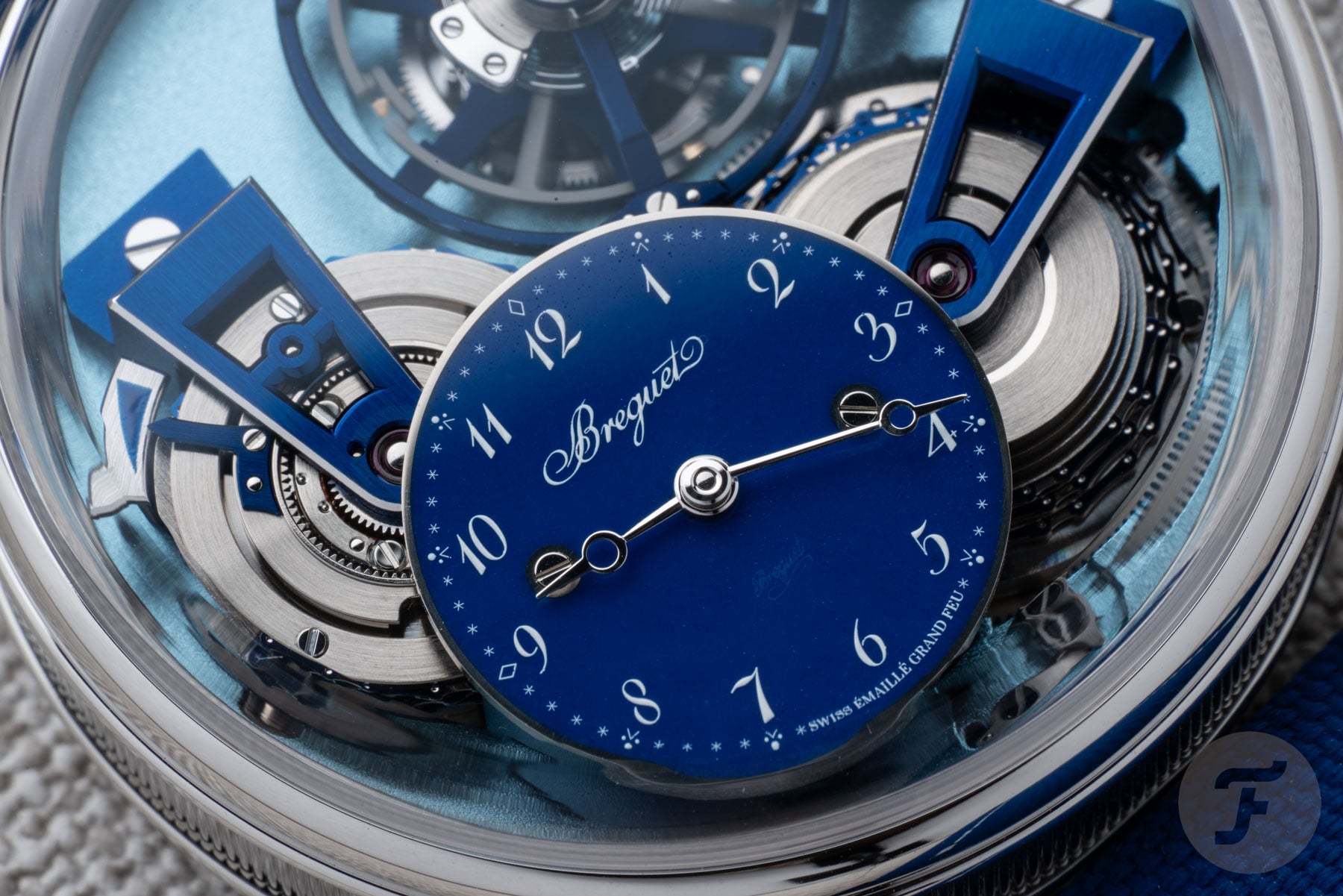
Caliber 569 is not a mere watch movement; it’s a micromechanical 499-part machine. With a 10.8mm thickness and 36mm diameter, it is a marvel of watchmaking genius and craftsmanship. The 2.5Hz manual-winding movement with a glacier-blue shot-blasted mainplate is outfitted with a Breguet silicon balance spring pulsating inside a tourbillon cage in Bleu de France-treated titanium.
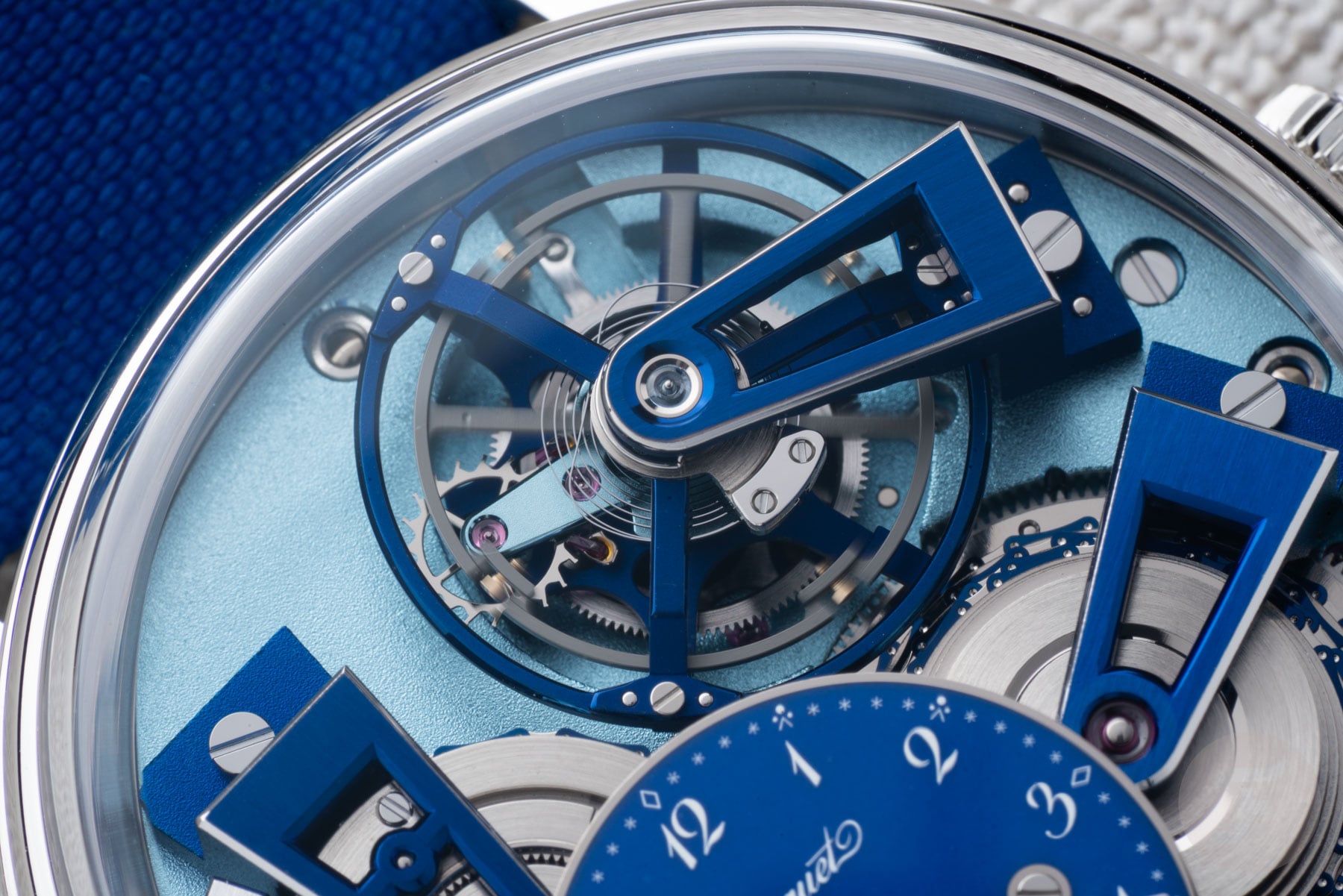
There are more touches of blue to enjoy, like the spinel on the robust, openworked steel tourbillon bridge. The fusée bridge and double barrel, plus 77 of the 232 links of the chain, also received the bright Bleu de France color treatment. This watch proudly shouts “vive la France!” through Swiss watchmaking excellence.
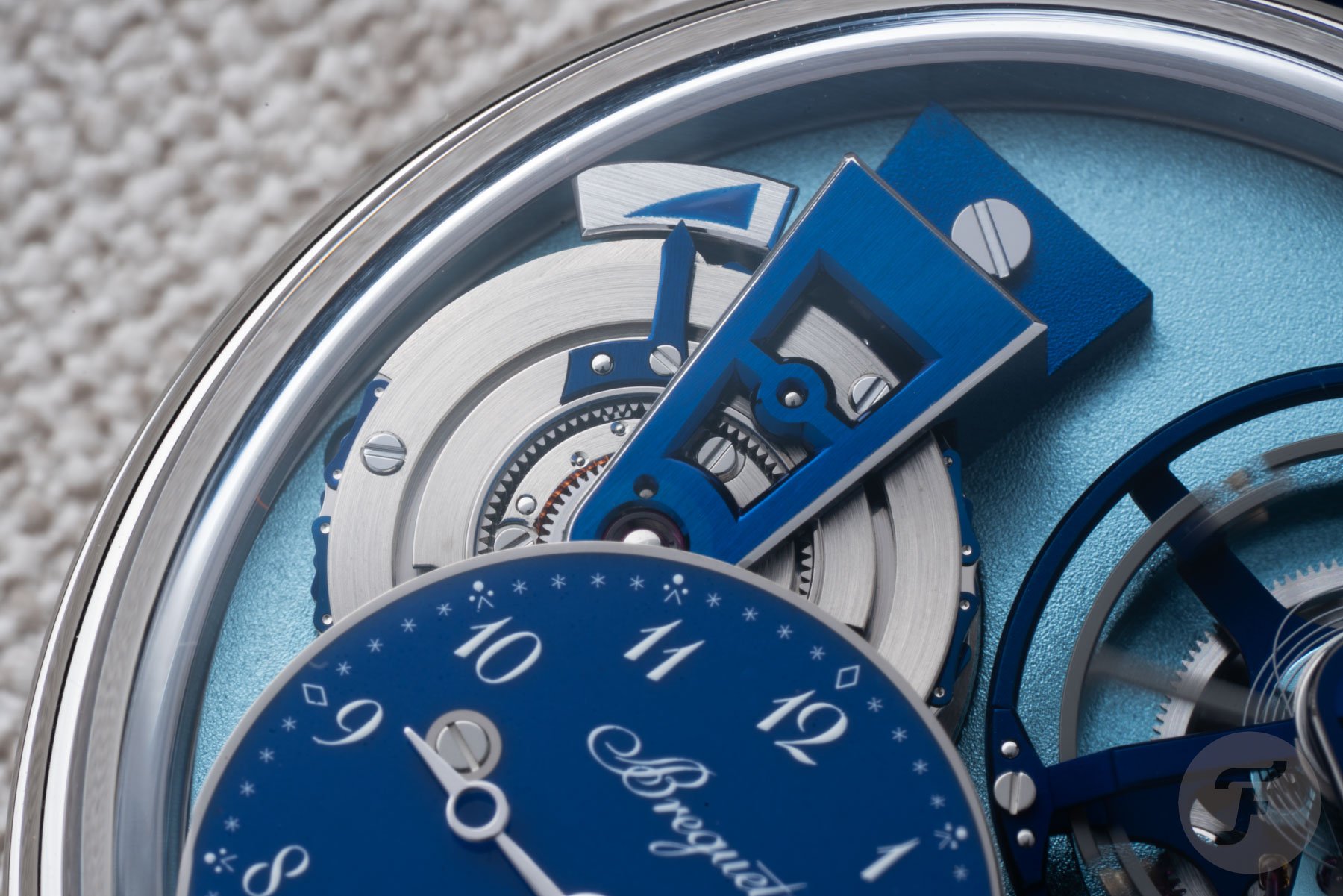
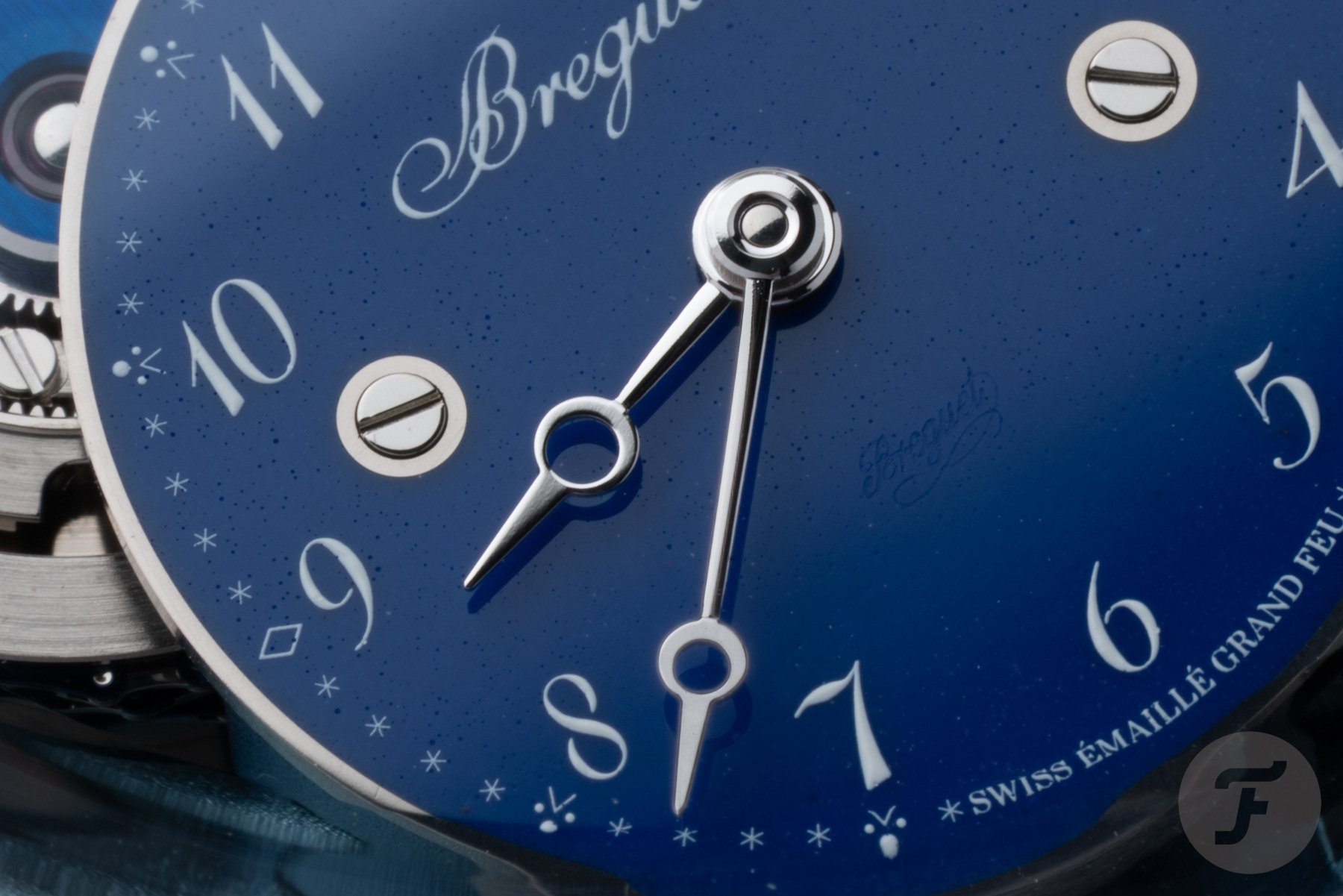
The small dial that displays the movement’s workings has a palladium-gold base with Bleu de France grand feu enamel on top. White Breguet numerals and rhodium-plated 18K gold Breguet hands show the hours and minutes. The one-minute tourbillon is on seconds duty.
Premium platinum
The 25-piece Tradition Tourbillon, featuring a secret, hand-engraved signature made with a pantograph, has a fluted 950 platinum case with welded lugs. This 41mm housing has a 50.5mm length and 16mm profile, including the large, domed, double-AR-coated sapphire crystal. The crystal allows a panoramic view of the movement, letting you dive into it from many angles.
Now, the Tradition Tourbillon isn’t a completely new creation. In 2007, Breguet introduced the first reference 7047, but the concept is so complex, fascinating, and rare that any watch outfitted with this type of movement deserves admiration.


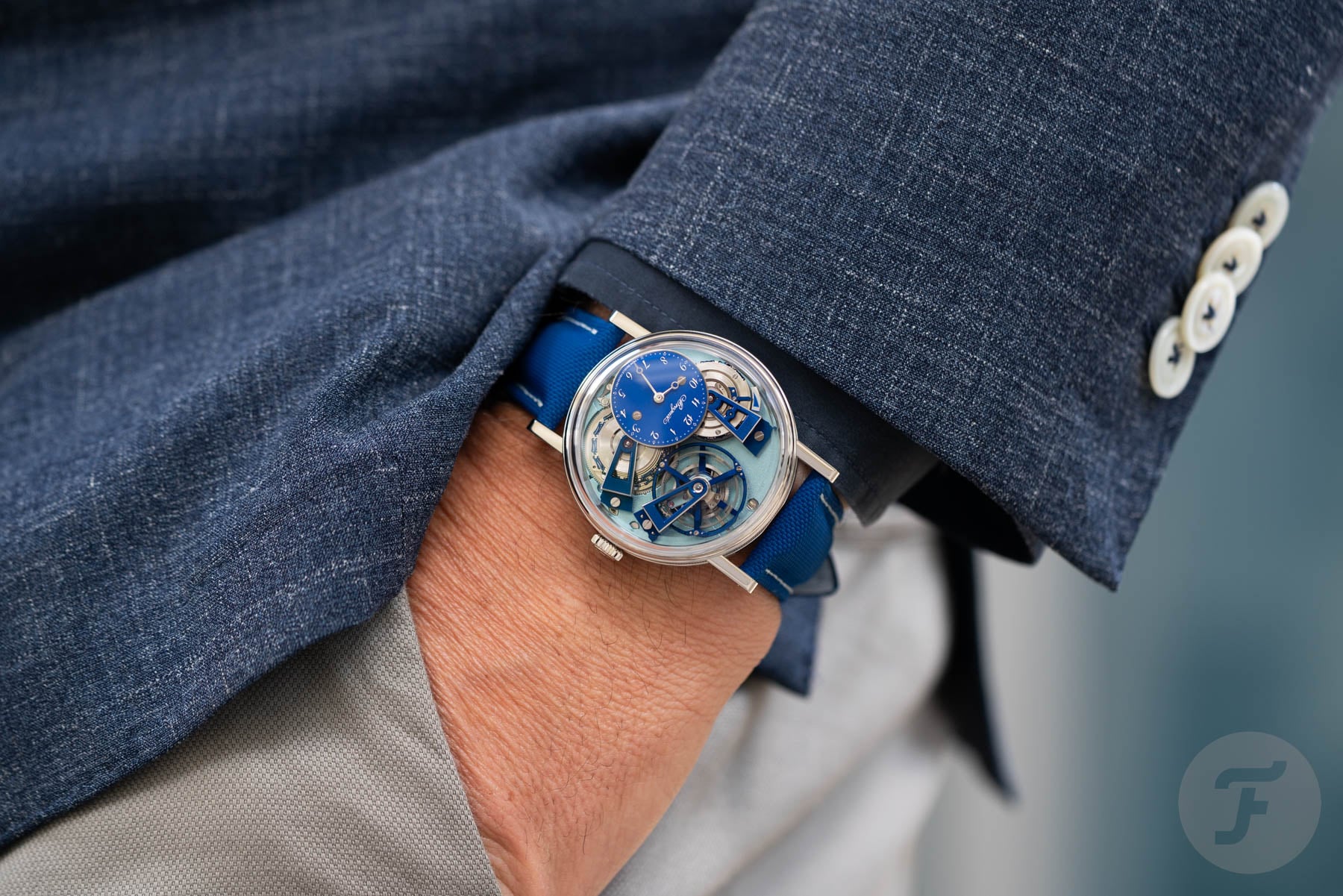
The new reference 7047PT/YY/5ZU SL is a rather exuberant variant of the 2007 original, and it comes fitted with a Bleu de France rubber strap with glacier-blue contrast stitching that matches the mainplate. You can close it with a lavishly B-decorated triple-blade folding clasp in 950 platinum.
How does the Breguet Tradition Tourbillon wear?
Wearing the Breguet Tradition Tourbillon is like walking around with a monument on the wrist. Not only does the watch have monumental meaning as a Breguet tourbillon, but it’s also a showcase of the highest form of Haute Horlogerie. Once it’s on the wrist, it’s hard to look away. The movement architecture and use of color demand attention, and the watch-loving eye simply can’t resist. Because the platinum watch weighs just under 100 grams, you also feel it on the wrist. This watch truly causes sensory overload in the best possible way. The construction allows for a detailed view of the different components, and the domed sapphire crystal invites you to take your time to look at every one. My favorite part is the chain, followed closely by the tourbillon.
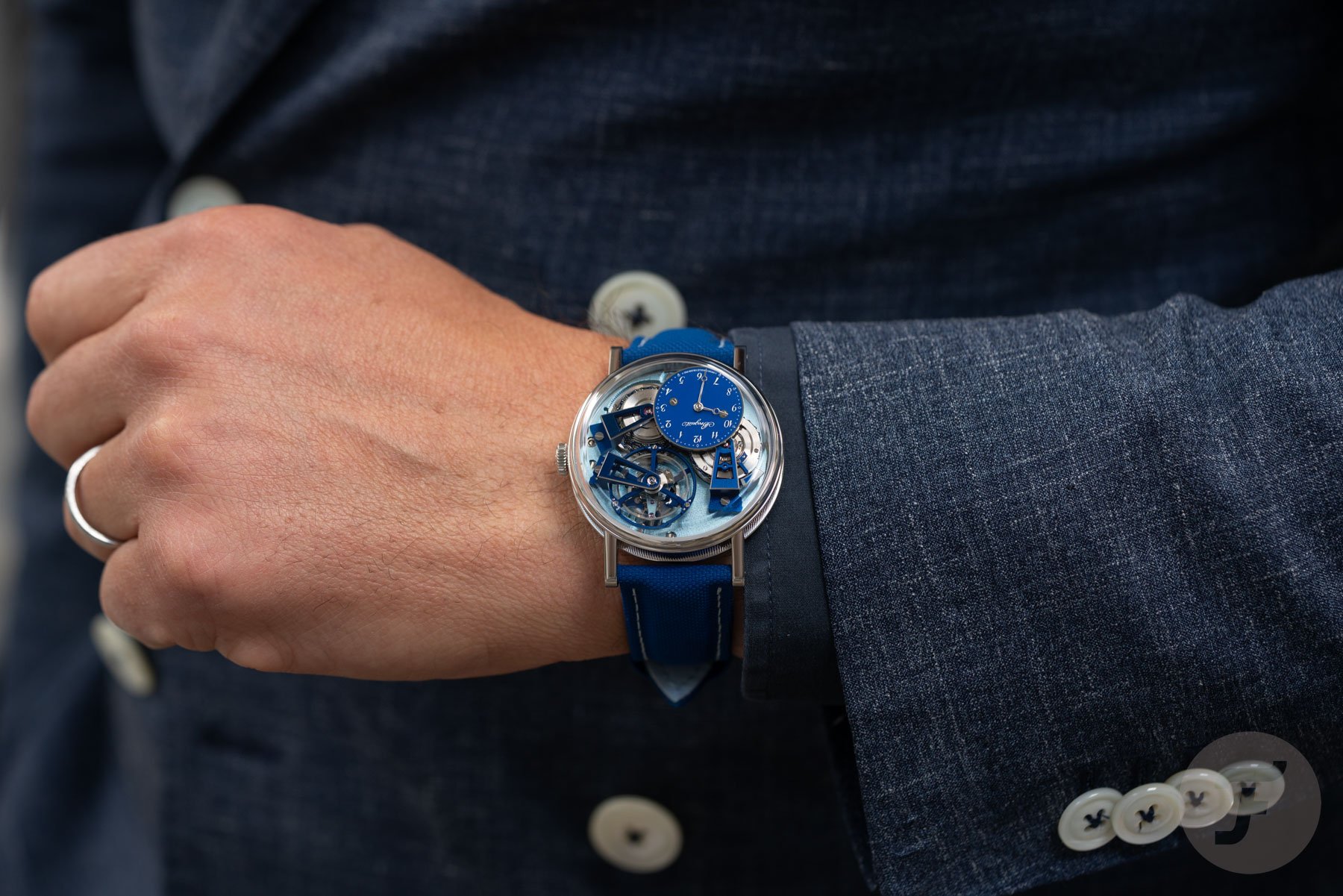
What I love about the Tradition Tourbillon 7047PT/YY/5ZU SL is that it is unmistakably a Breguet. It is completely original. What I don’t like is that I will never, ever own one. The price is on request, and that means it’s out of my reach, even if I start saving money for the next 225 years. This watch is like functional art; you can use it, but it’s also very enjoyable to study in detail, learn about it, and look at it again.


What do you think? Is the Breguet Tradition Tourbillon 7047PT/YY/5ZU SL a worthy homage to the 225-year-old mechanical antigravity device? And what about the very distinct Bleu de France colorway? Please let me know your thoughts in the comments.