The New Nodus Obscura II — Helping You Take Great Pictures With An Exposure Gauge Complication

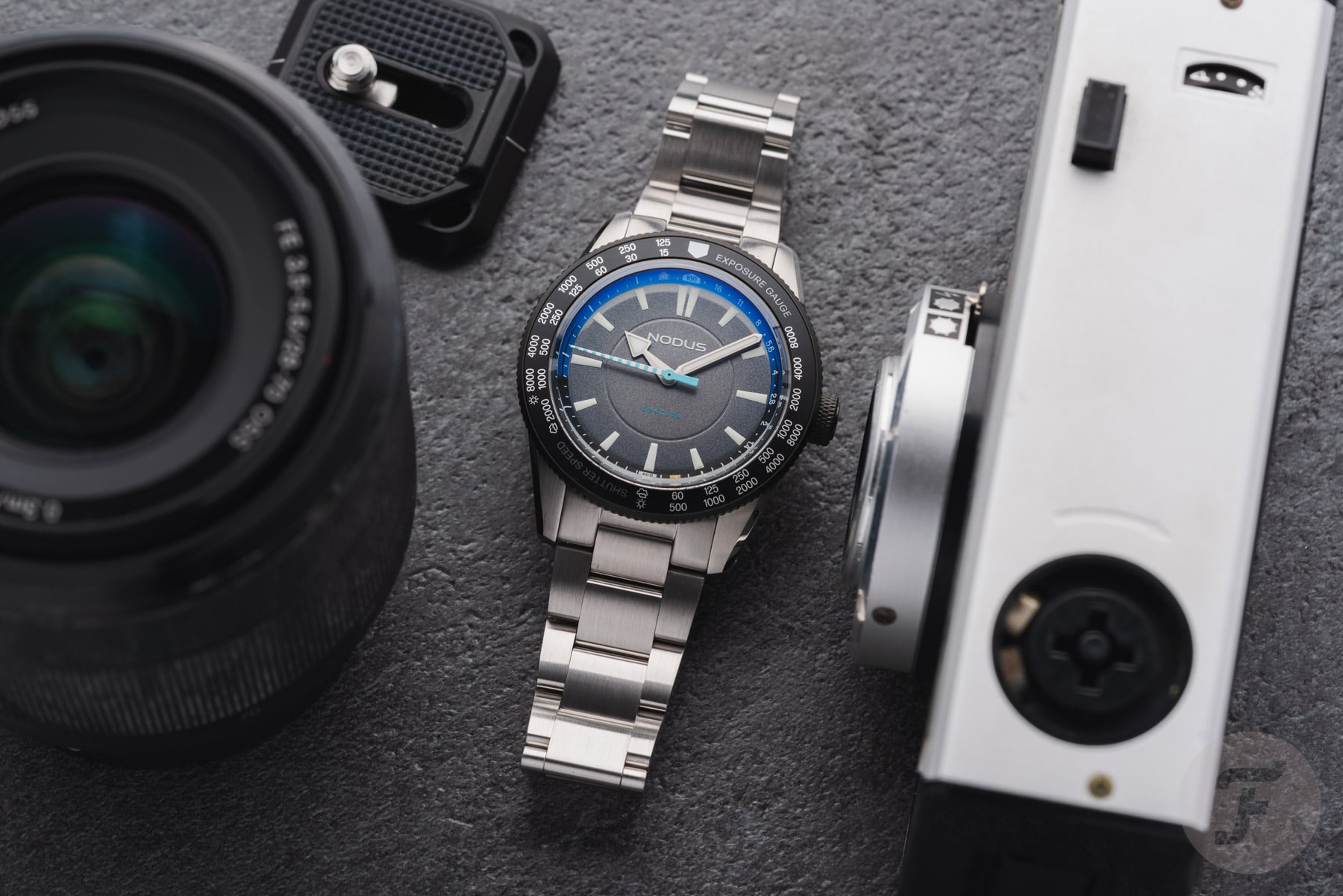
Nodus is one of the most interesting young watch companies today. Along with offering a regular collection of excellent, affordable tool watches, the Los Angeles-based brand has created the Nodus Design Lab for its more experimental collaborative efforts. A great example is the brilliant Trailtrekker that I reviewed in 2024. Another standout collaboration was last year’s Nodus Obscura with Beers & Cameras founder Juan Martinez, who designed and patented its unique bezel layout. For the Obscura II, the overall design was slightly altered to look cleaner, and the bezel and clasp were improved. The result, at first glance, looks like a regular watch until you zoom in on the bezel. I had the chance to go hands-on with it and learn more about this niche timepiece.
Let me start by saying that I am nowhere near as dedicated or talented a photographer as some of the other Fratello team members. It might be weird, then, that I’m reviewing this watch. But I do have a healthy obsession with the more old-school approach to hi-fi equipment and analog photography. That is largely due to my father’s interest in both. I can still see him walking through the many European countries we visited on our family holidays, his camera bag on his shoulder. In the bag, you would find his trusted Minolta camera and a wide selection of lenses, and he now has an extensive collection of slides of our many family trips.
The story of the Nodus Obscura II
For some reason, I didn’t inherit my father’s dedication to photography at birth. While I have a great passion for photographs and imagery in general, the technical challenges of photography have always been more my brother’s forte. He is the more technical of the two of us, so that makes total sense. As I’ve gotten older, though, I’ve also become more interested in the technical aspects of audio equipment, photography, and mechanical watches, so it makes sense that the Nodus Obscura II piqued my interest when it was announced.
Let me briefly explain the idea behind the watch so you get a sense of what Juan Martinez had in mind when developing it. Besides being the founder of the Beers and Cameras photography community, he is also a watch enthusiast, which explains why he wanted to create this watch.
It took him five years to develop the concept and file the patent in the United States and China in 2024. A year later, the first Nodus Obscura debuted as a 100-piece limited edition. The watch offers an Exposure Gauge complication based on the Sunny 16 Rule. It is a clever, time-tested method for determining proper exposure without a light meter.
The details of the Nodus Obscura II
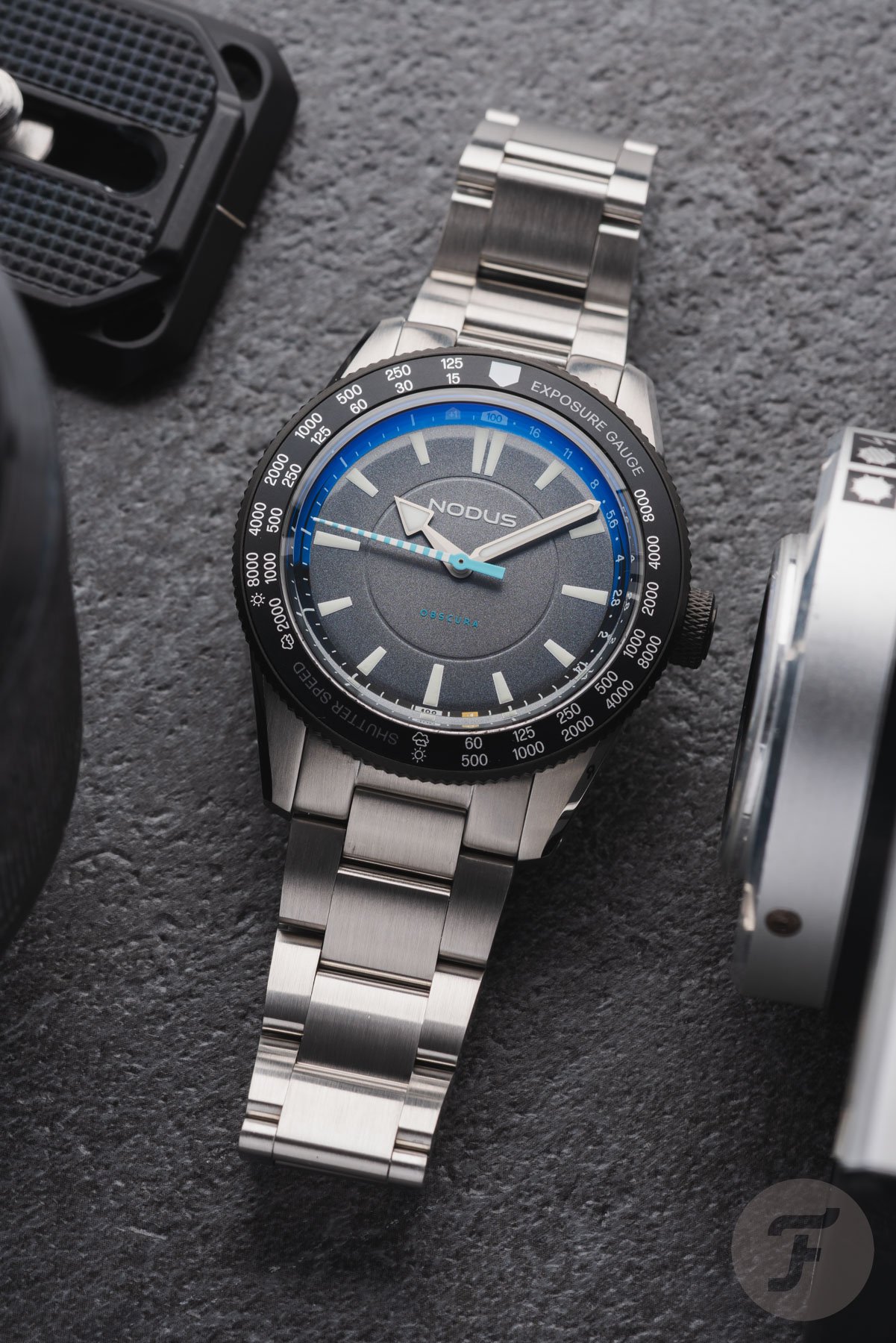
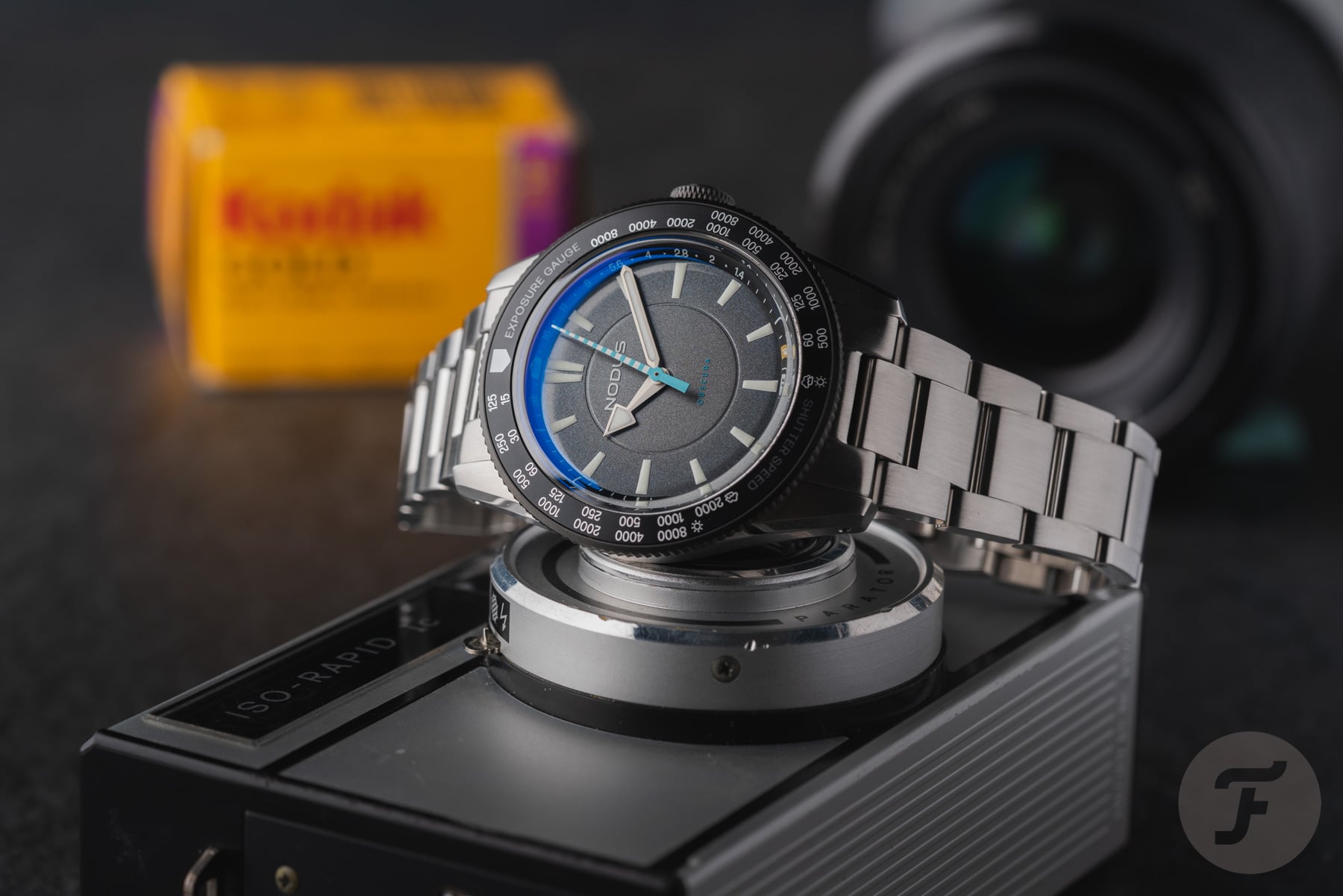
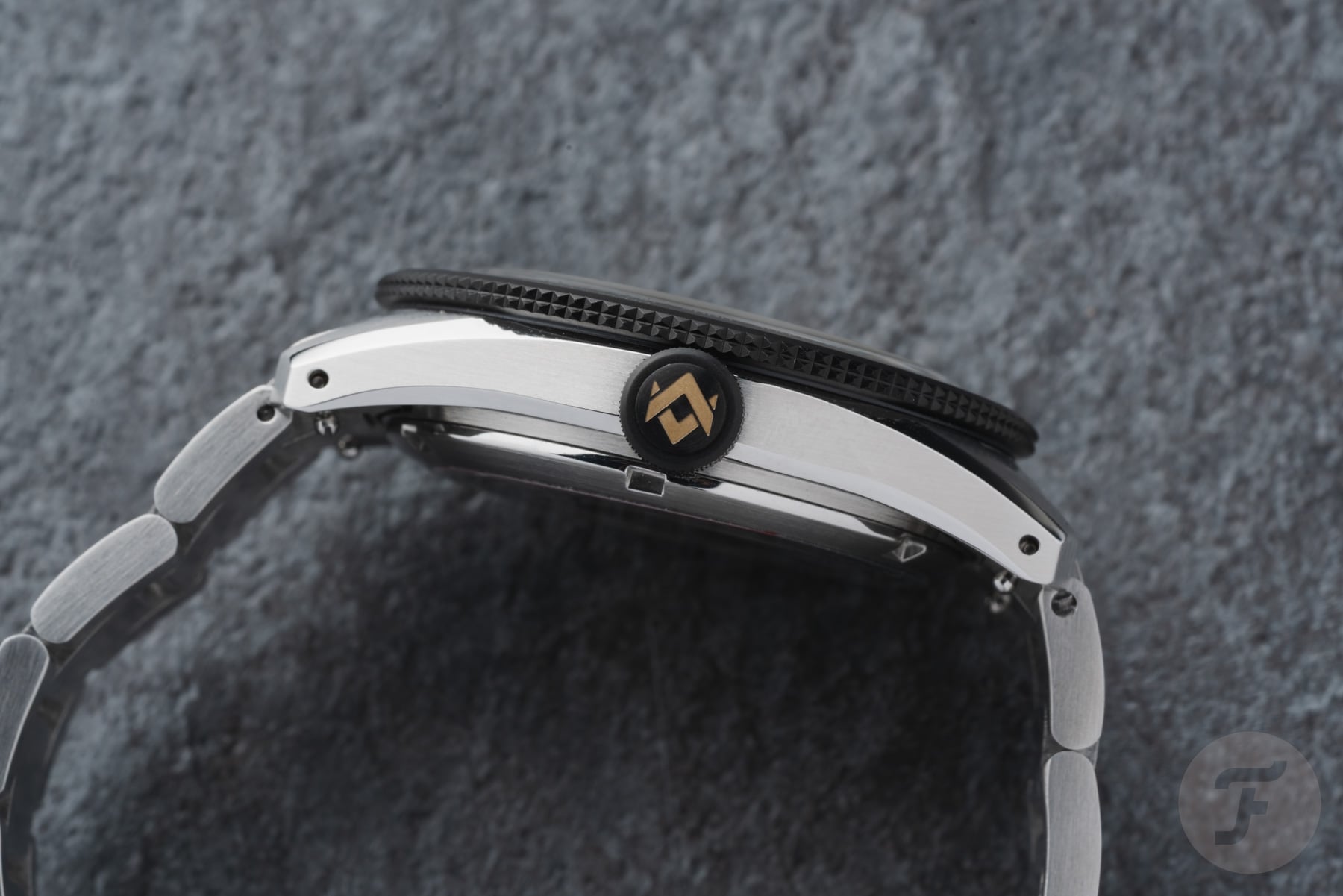
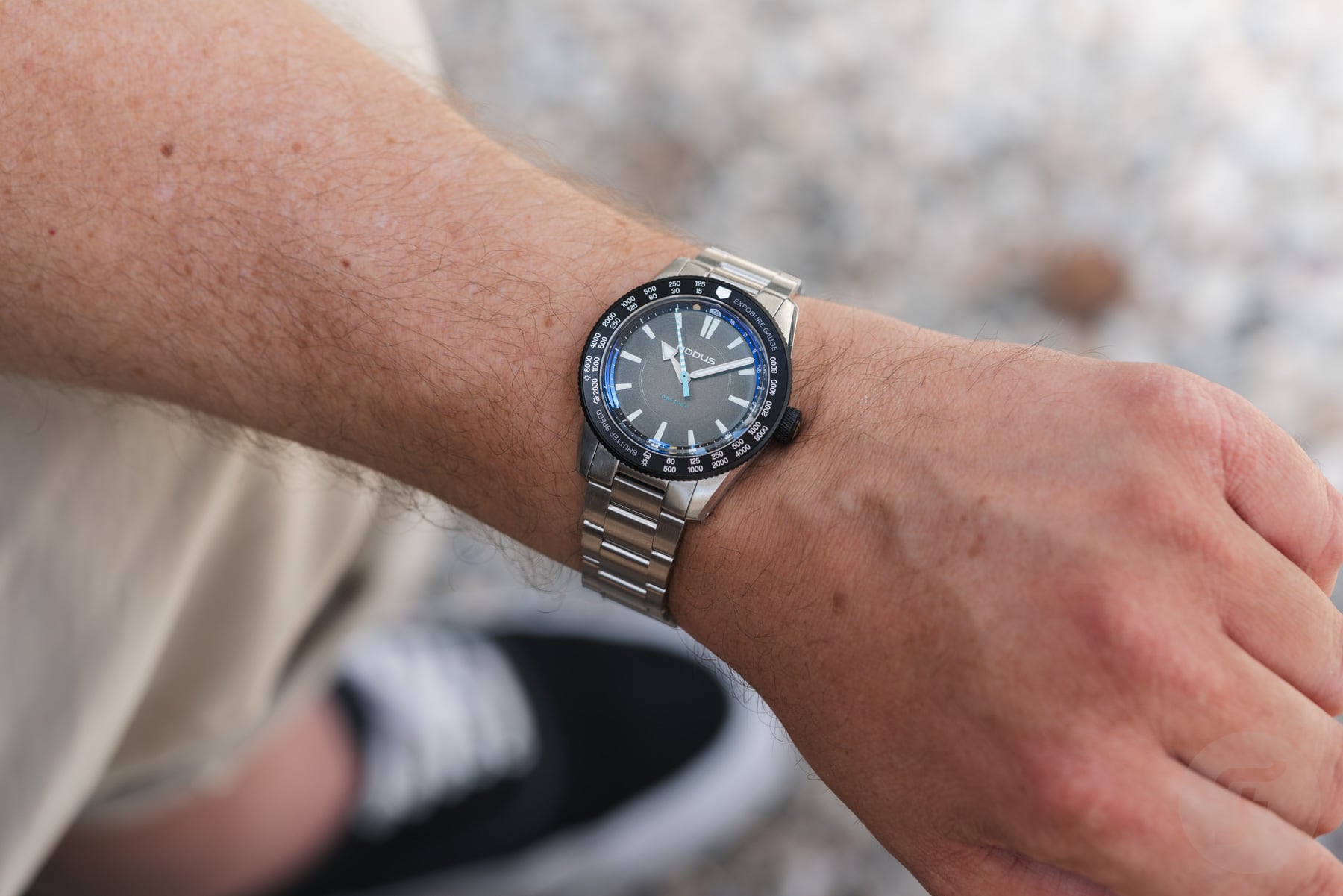
We’ll learn how it all works in a minute, but first, let’s discuss the specs of the Obscura II. The watch was released in two variations. The first is the regular stainless steel one we received for review. The second is an all-black DLC-treated version that instantly changes the watch’s presence. Both have a 38mm stainless steel case with a slightly wider 40mm bezel. The Obscura II also has an 11.7mm profile, a 47mm length, and a 20mm lug spacing. On the right side, you’ll find a bronze crown with a black DLC coating, except for the Nodus logo.
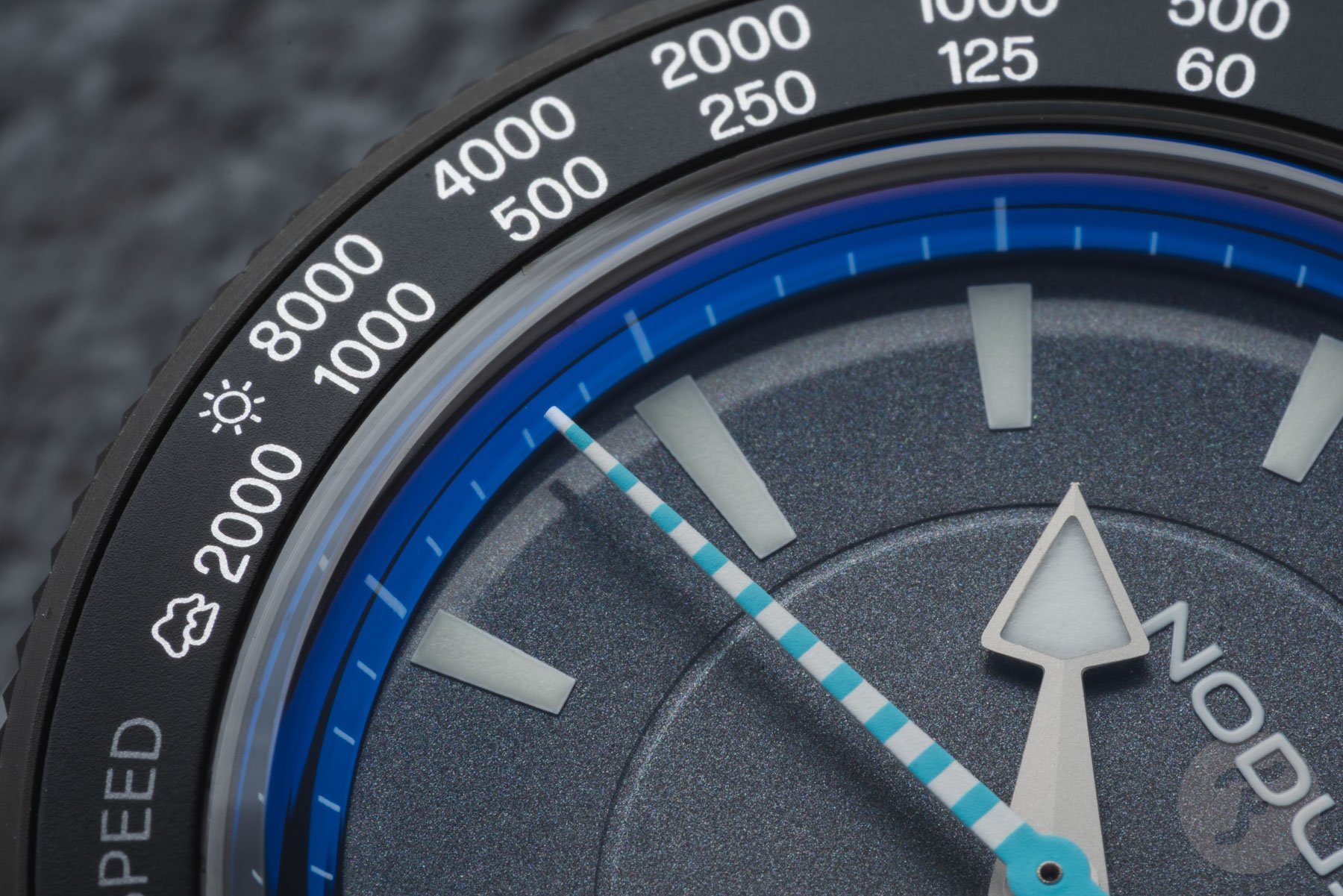
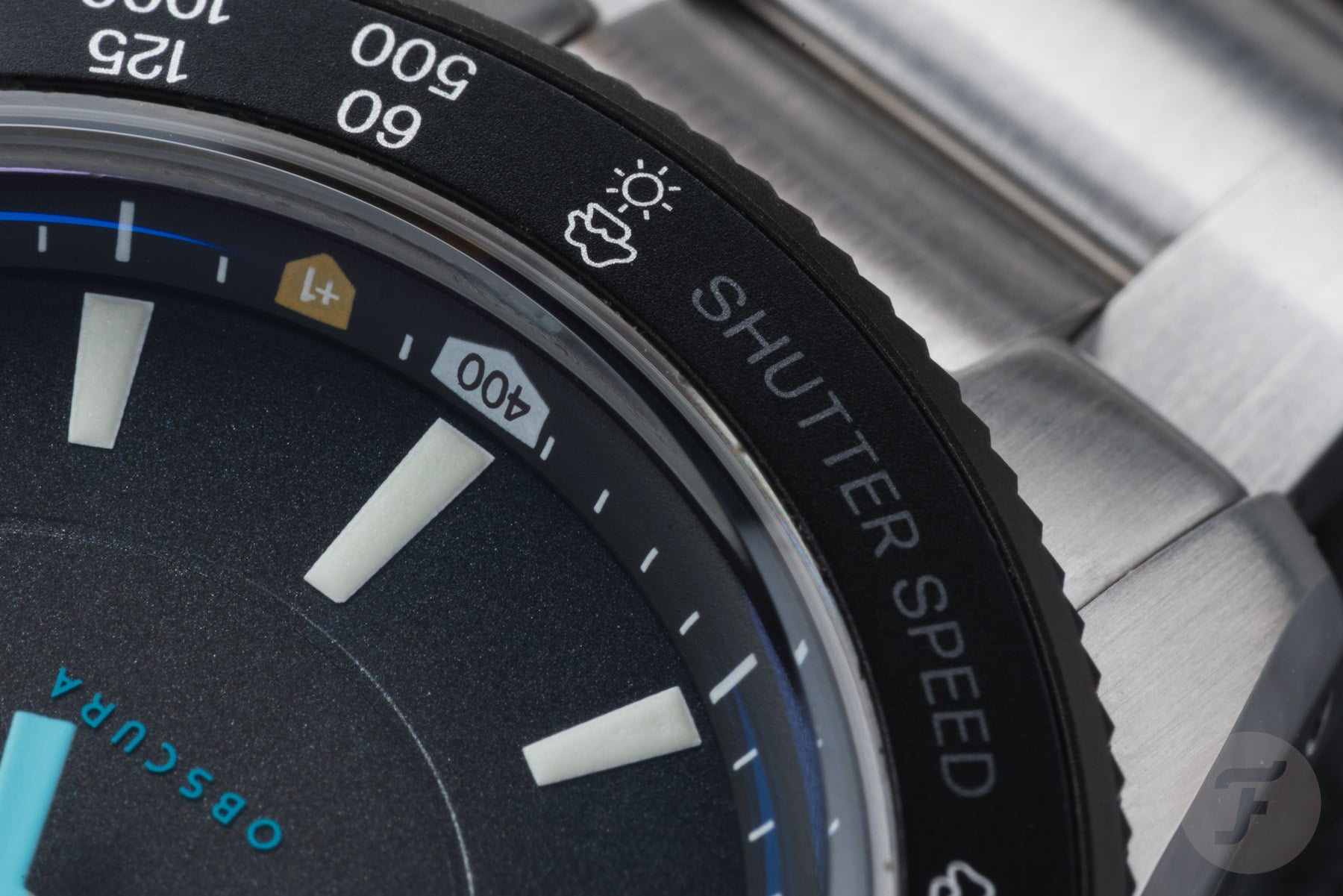
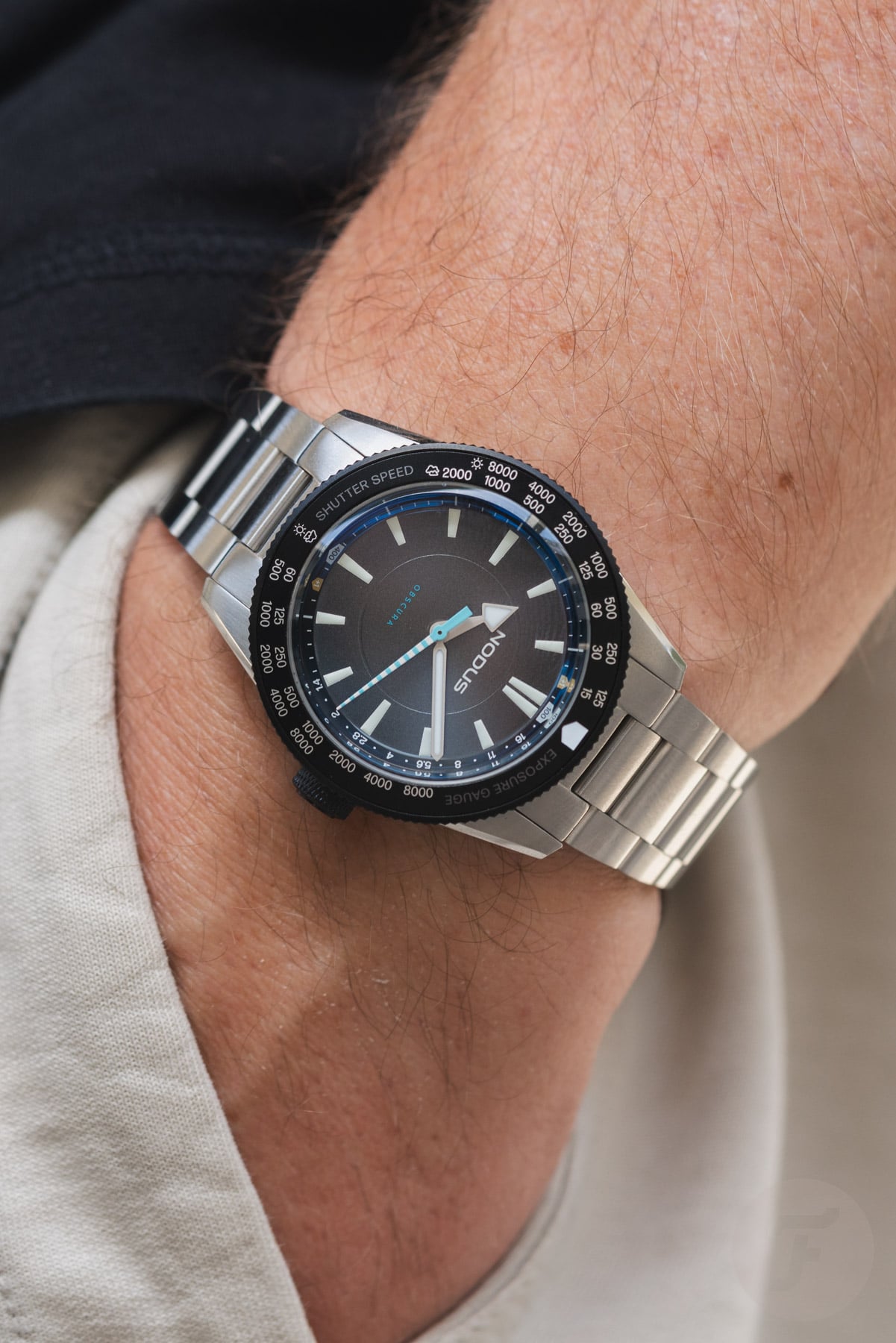
The first element that Nodus optimized is the bezel. This special 16-click bezel is now easier to rotate for a smoother overall experience. The black bezel insert is made of aluminum, and the bezel itself is made of copper with black DLC coating. The markings on the bezel are printed in white.
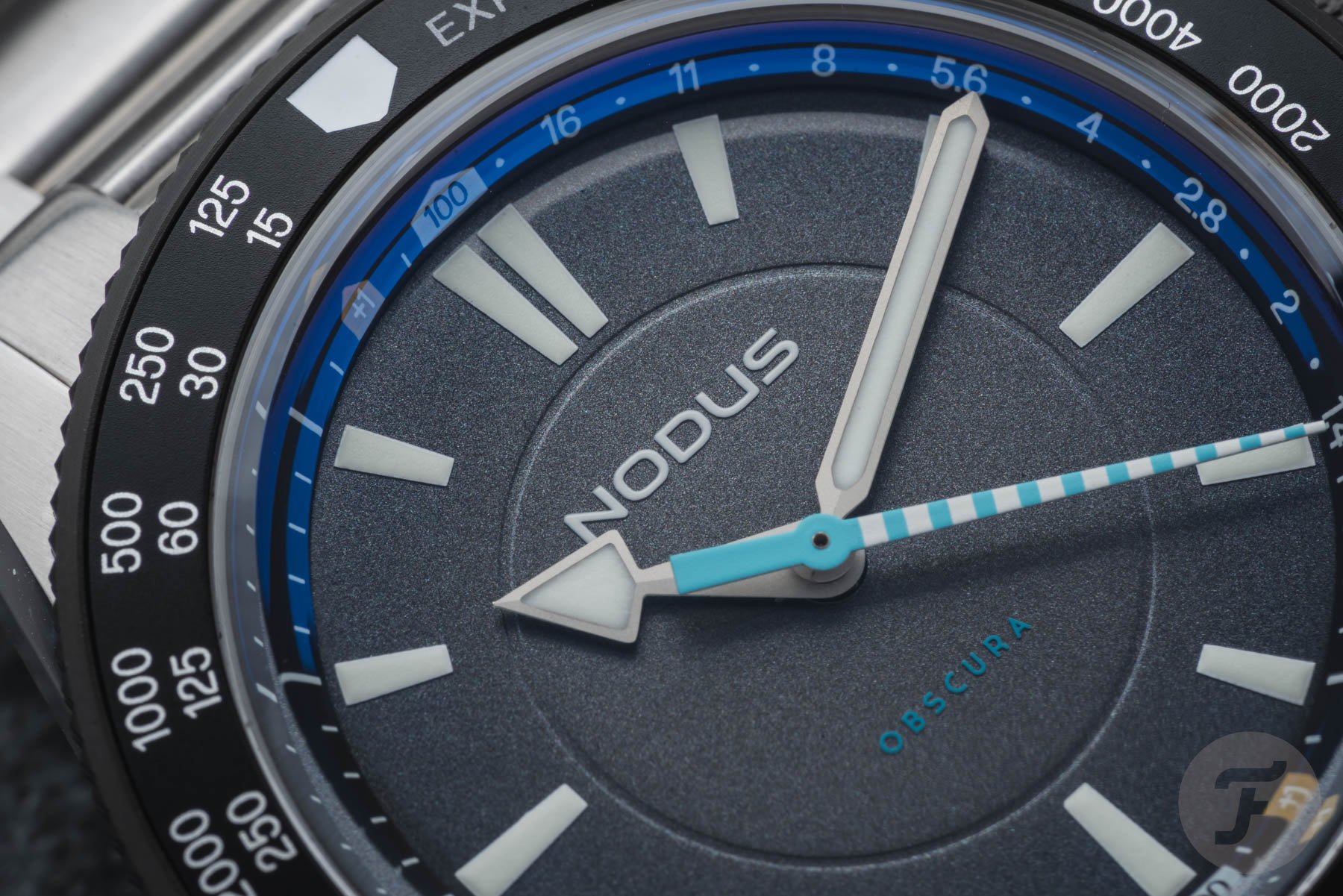
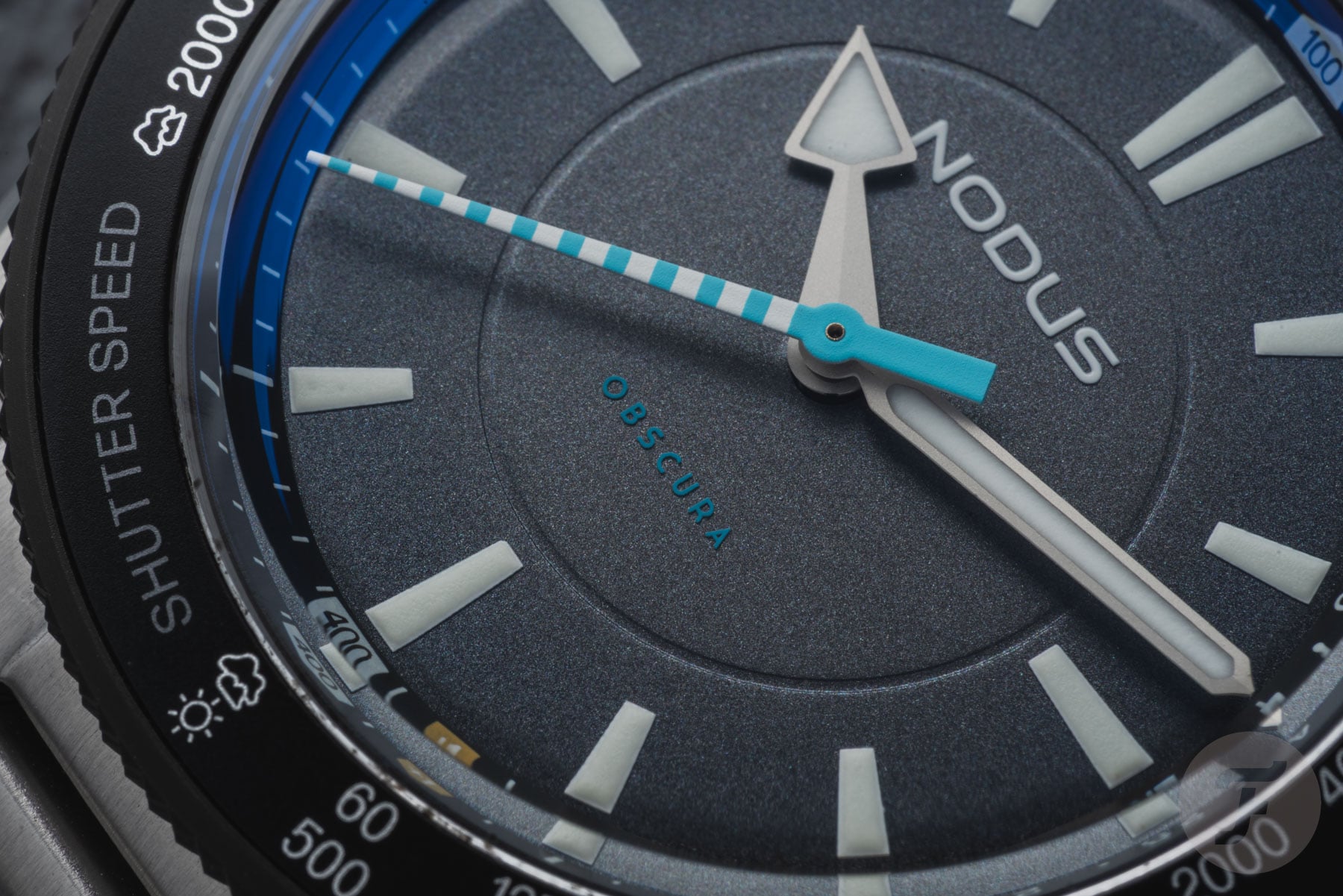
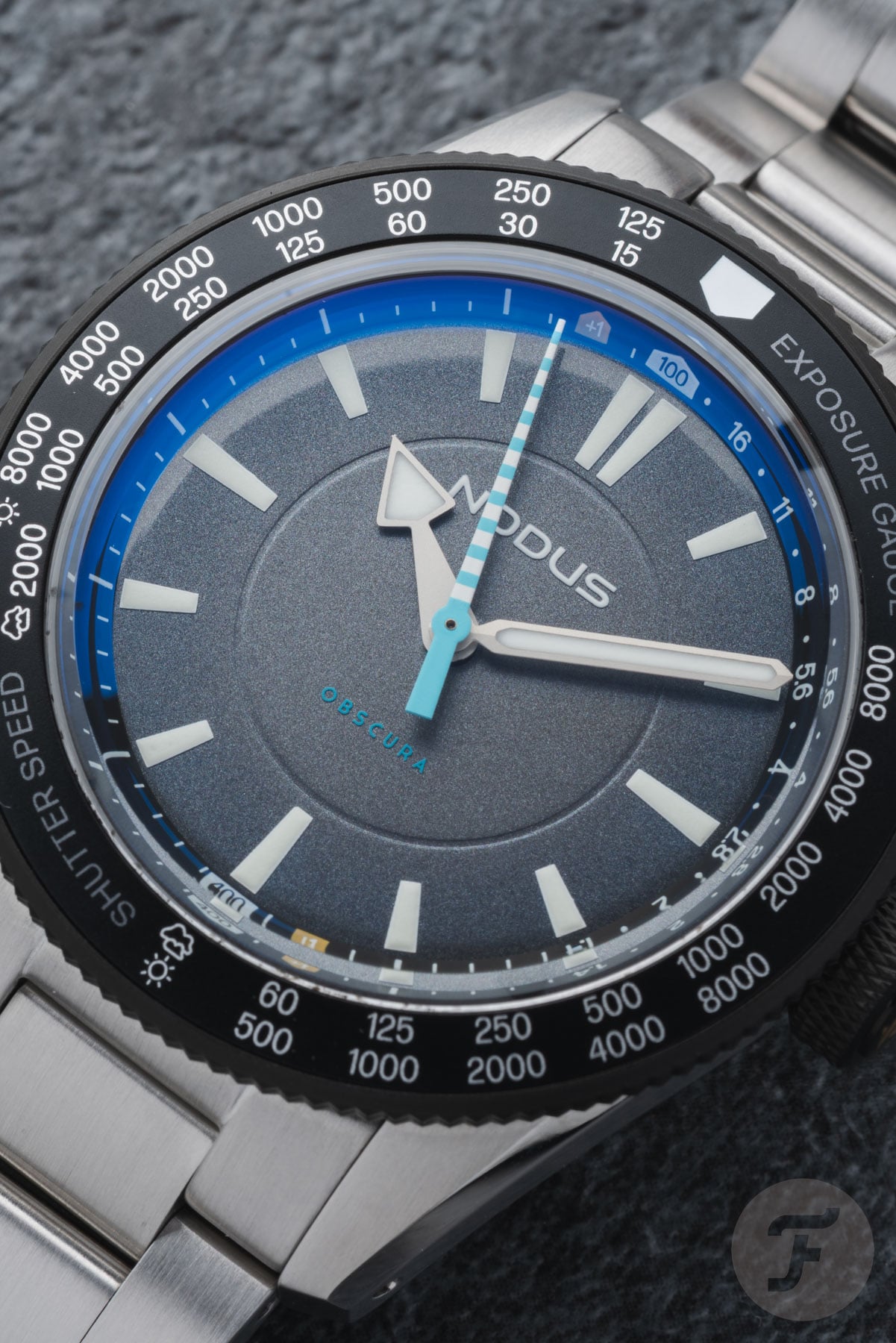
The case is paired with a black fumé dial inspired by classic film. It incorporates a grainy texture that mimics the silver halide crystals of film grain. Compared to the smooth black dial of the version that came out last year, it adds a nice bit of depth and detail. Also, the Beers & Cameras logo has disappeared for a cleaner look. This dial features luminous indexes, the Nodus logo in white, and the Obscura name in bright blue. Hovering over the dial are an arrow-shaped hour hand, a sword-style minute hand, and a blue-and-white striped seconds hand. This last one hand adds a fun, colorful touch to the overall design.
The movement
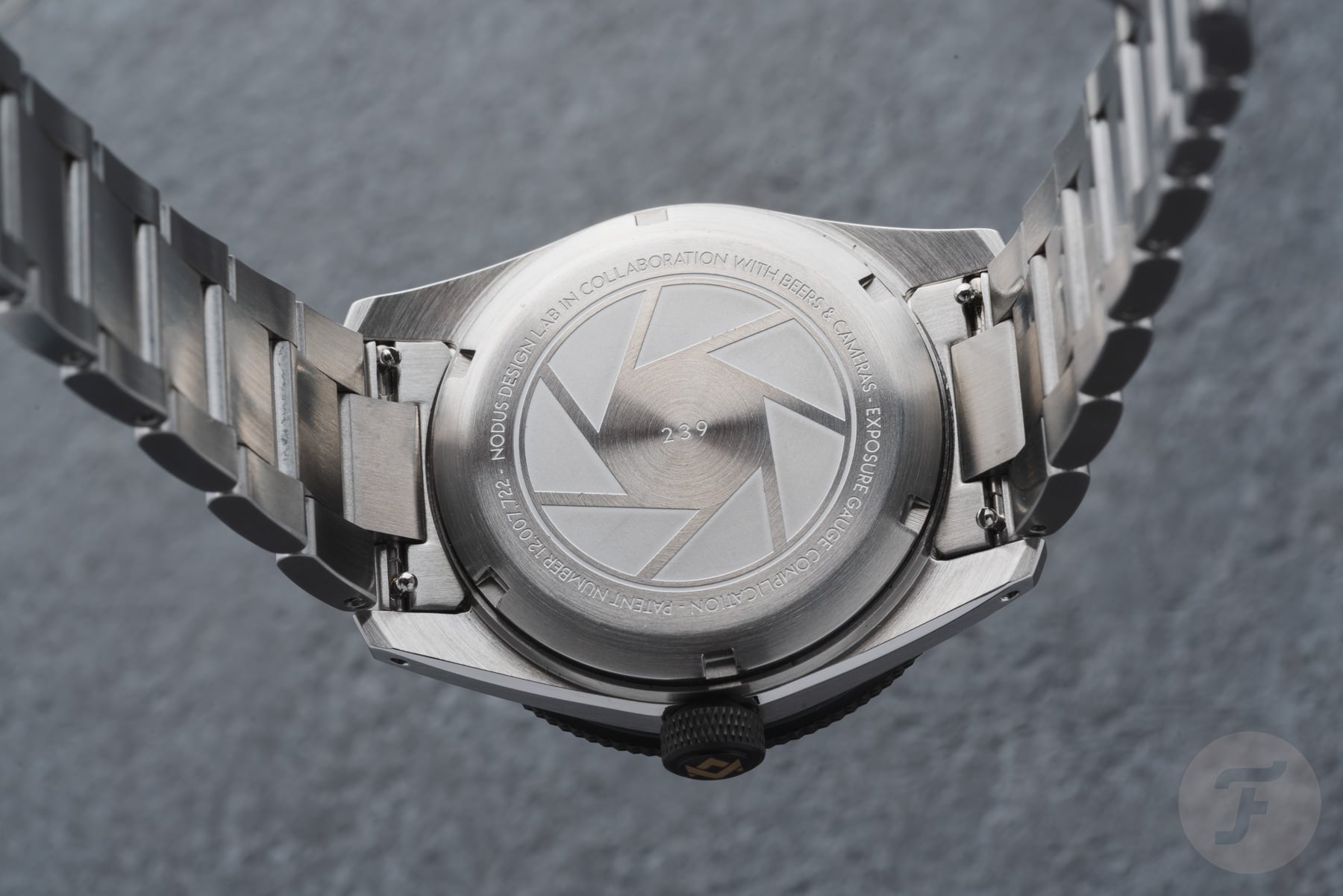
Powering the watch is the TMI NH38 caliber, which is also known as the Seiko NH38 because Time Module Inc. is a Seiko Group Corp. subsidiary. This automatic movement operates at 21,600 vph, features 24 jewels, and offers a 41-hour power reserve. Nodus regulates the caliber to run within ±10 seconds per day. We know the NH-series of movements as reliable and inexpensive, which is why they power many affordable watches.


Completing the watch is a 20/16mm stainless steel three-row bracelet featuring the latest Nodus Extension Module (NEM) clasp. This clasp features a toolless micro-adjustment mechanism, as seen on other Nodus models, and is super easy to use.
Explaining the Exposure Gauge
This brings us to the Exposure Gauge complication. While it might seem puzzling to the untrained eye, it is not that complicated, but you do have to understand something about photography to appreciate its function. In the days of analog photography, many cameras lacked built-in light meters or automatic exposure modes.
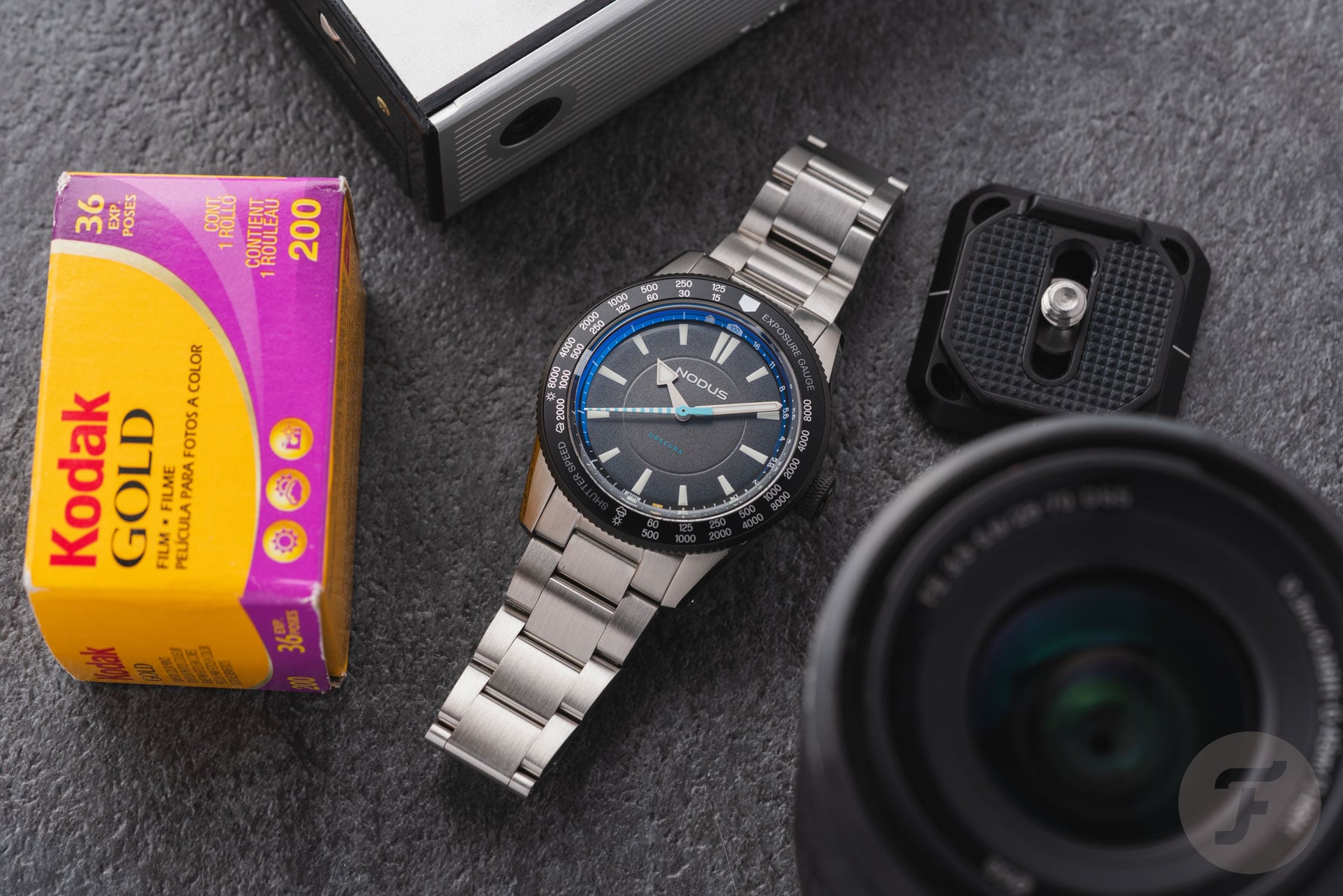
This is why my dad was constantly running around with his light meter. To me, that was fascinating because when I was really young, I had no clue what it did. Only when I got a little older did my father explain that it helps set the exposure to ensure the elements aren’t too bright or too dark for the image you want. If you don’t have a light meter, the Obscura II can help you out with a method called the Sunny 16 Rule. The bezel operates as a sliding scale, calibrating shutter speed and aperture (f-stop) settings to match your film’s ISO rating.
The elements of the complication
Nowadays, with digital cameras, you can adjust ISO settings. When you are shooting with film, though, the ISO is fixed. As a result, you’ll need to dial in the aperture (the volume of light entering through the lens) and the shutter speed (the duration the shutter stays open) based on the brightness of your environment.
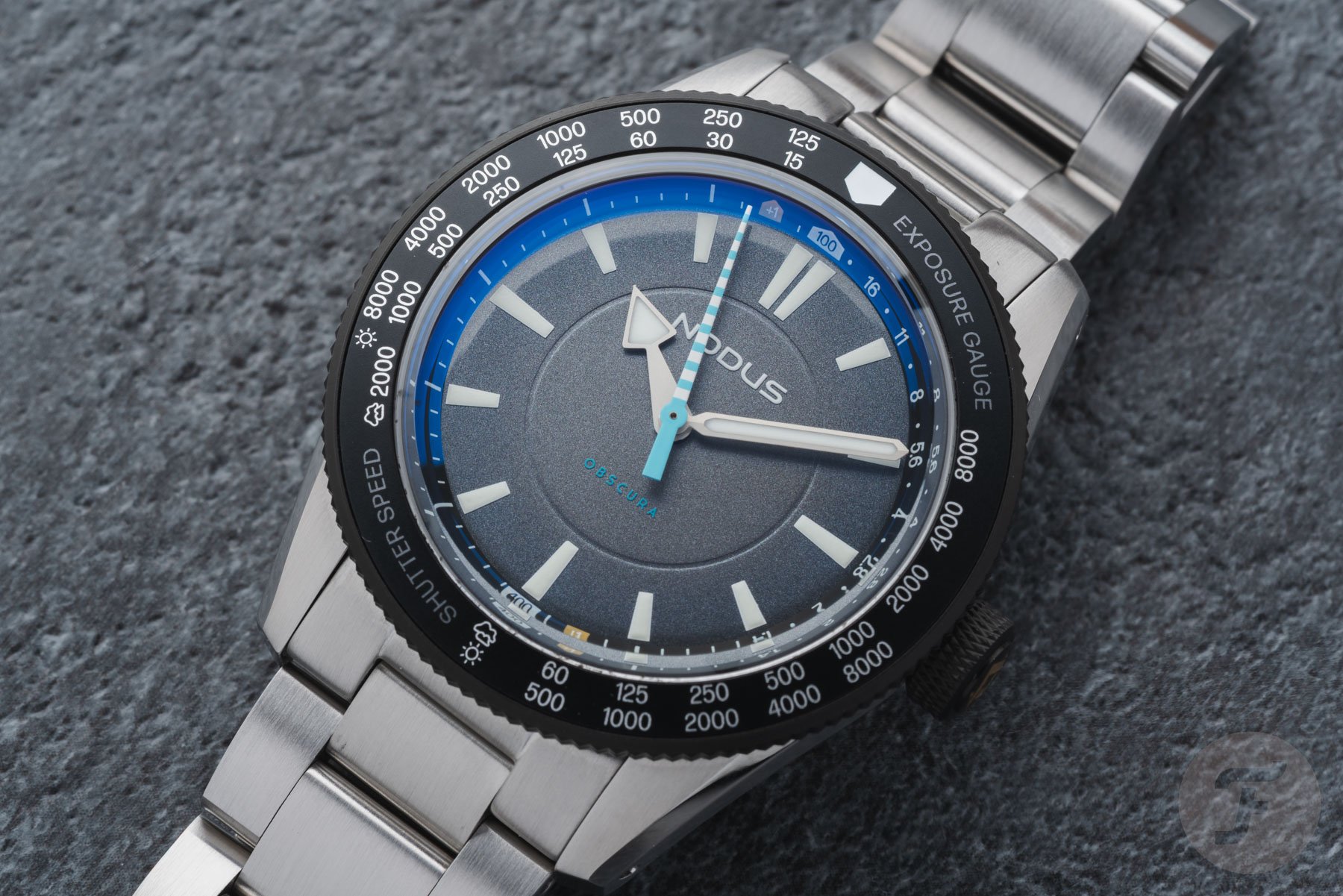
The Obscura II helps you determine the optimal shutter speed by aligning the desired aperture on the bezel with the corresponding ISO values located on the rehaut at 12 and 6 o’clock. Furthermore, the rehaut features a series of aperture settings. They run from F/16 (a narrow aperture that lets in very little light) to F/1.4 (a wide aperture that lets in much more).
As you will understand, the darker the surroundings, the wider the aperture (and/or slower the shutter speed) must be to let in enough light for a proper exposure. In street photography, the Sunny 16 Rule simplifies exposure adjustments and avoids the delay of relying on an external light meter.
Using the Exposure Gauge complication
So, how do you use the watch to help you find the right shutter speed? The bidirectional bezel rotation is limited to 16 clicks between 12:00 and 4:00 to ensure shutter speed settings align with the ISO indicators. As you can see, 100 ISO is at 12 o’clock, and 400 ISO is at 6 o’clock. The “+1” indicators relate to 200 ISO and 800 ISO, respectively.
As Nodus explains, to use the complication, “Turn the bezel indicator clockwise to match your lens aperture with the corresponding value on the chapter ring. Then, find the correct ISO marker on the rehaut based on your film speed: ISO 100 or +1 (ISO 200) / ISO 400 or +1 (ISO 800). The ISO marker points to the corresponding shutter speed. Based on lighting conditions (sunny or cloudy, with minimal shadows), use the shutter speed on the bezel to adjust your camera settings and make your image.”
Wearing the Nodus Obscura II
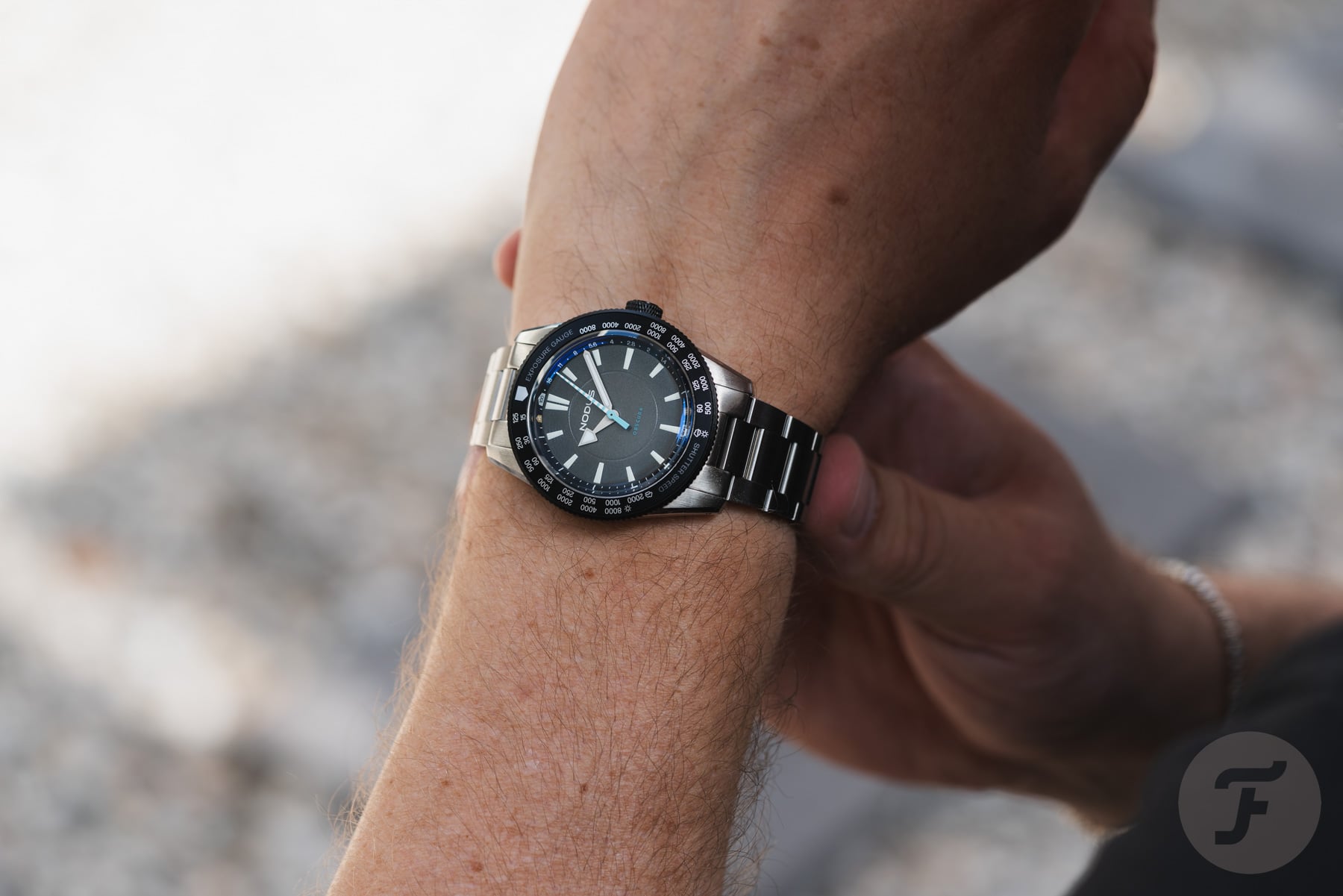
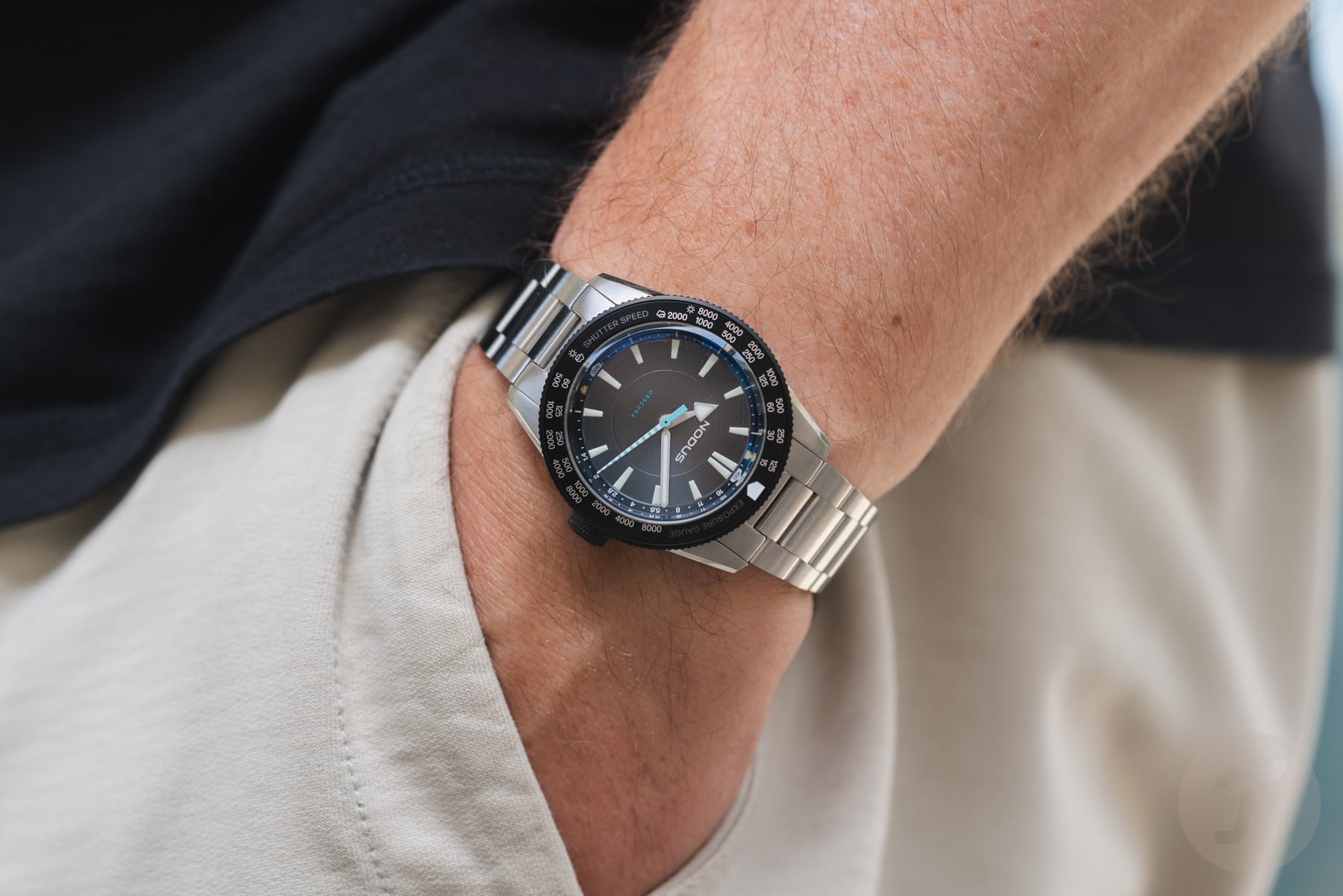
Hopefully, the explanation makes sense to you because that is a big part of the fun of wearing the watch. On top of that, the Nodus Obscura II is a joy to wear. The size and dimensions are perfect, and the build quality is great, as we have come to know from Nodus.
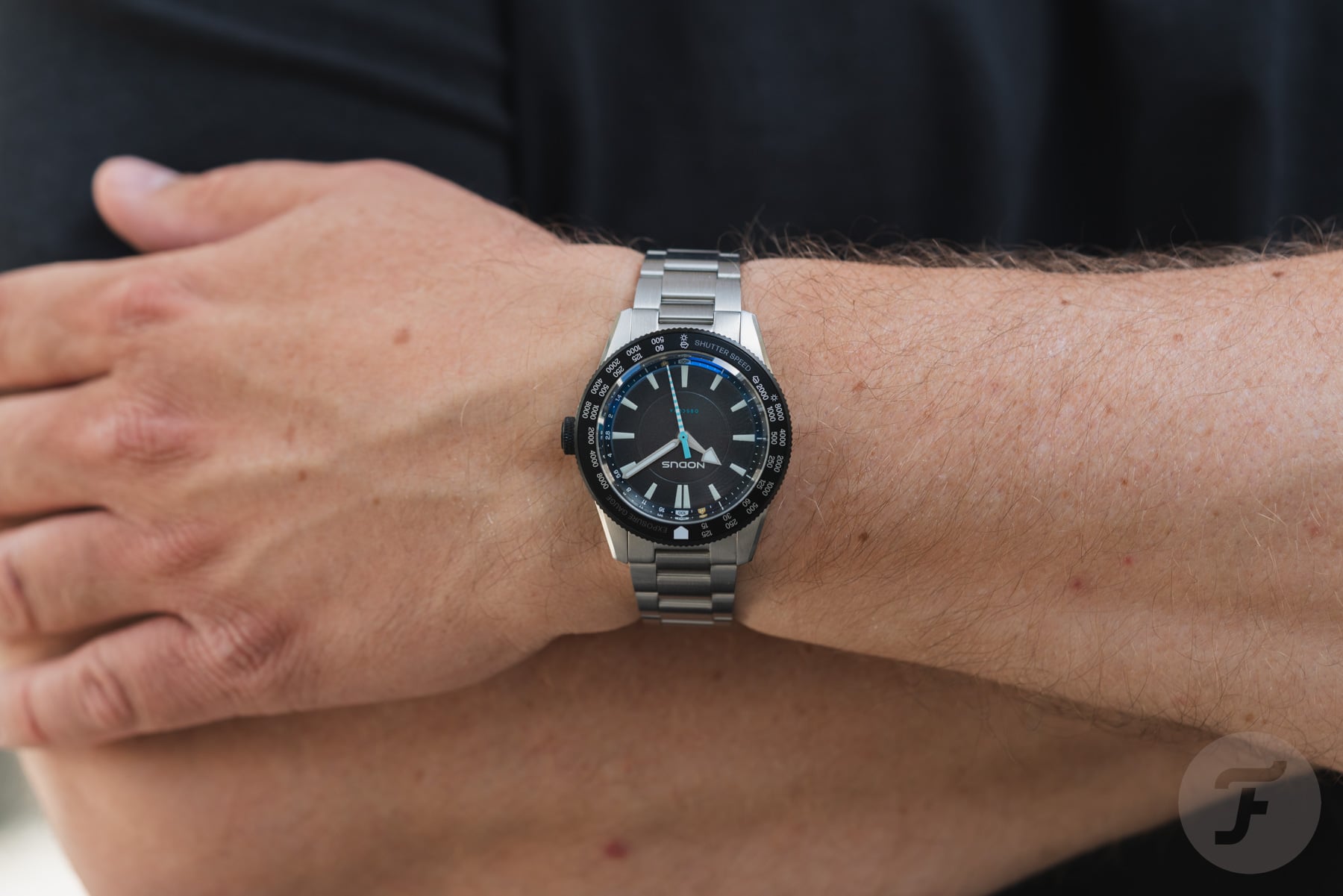
Add the attractive looks, and it makes it easy to like this remarkable creation. Granted, you have to be a photography fan or, even better, a photographer with an analog camera to appreciate the Obscura II’s functionality fully. This makes it, by definition, a niche product. But it’s a watch that plenty of photography fans love.
Final thoughts on the Nodus Obscura II
Nodus produced 100 pieces of the first Obscura last year, and all of them sold out. I completely understand why, because apart from being a proper tool watch, the Obscura is also a storyteller. Many people who love mechanical watches also love photography, and those who shoot on film or have memories of those days when it was the standard will find romance in this optimized version of the Nodus Obscura.
I happen to be one of them, as the watch took me back to my family vacations and my father’s passion for photography. That is a story that not many watches tell, and that is why I love this Nodus Obscura II. Both the stainless steel version, which costs US$650, and the black DLC variant, at US$725, are available on the official Nodus website. The Nodus Obscura II is not just a fun, niche timepiece but also an affordable one, making it even more likable, just like the other Nodus Design Lab projects. I can’t wait to see what Nodus comes up with next. In the meantime, I will definitely have a nice conversation with my dad about his passion for photography.