Hands-On With The Ollech & Wajs Astrochron — A Dive Chronograph That Earns Its Saltwater Stripes

There are timepieces that cosplay as tool watches, and then there are those that feel genuinely overbuilt for reasons completely unrelated to marketing. The Ollech & Wajs Astrochron belongs firmly in the latter camp. It’s a watch that seems to exist because somebody in Zurich genuinely thought a 500m-rated dive chronograph with a regatta timer and a compass bezel was a perfectly reasonable thing to wear every day.
That kind of unapologetic niche enthusiasm makes this watch from Ollech & Wajs feel refreshing. And after spending several weeks with the Astrochron, including taking it for a plunge in the Pacific Ocean off Sydney, I’ve come away convinced that this is one of the most compelling modern tool chronographs on the market.
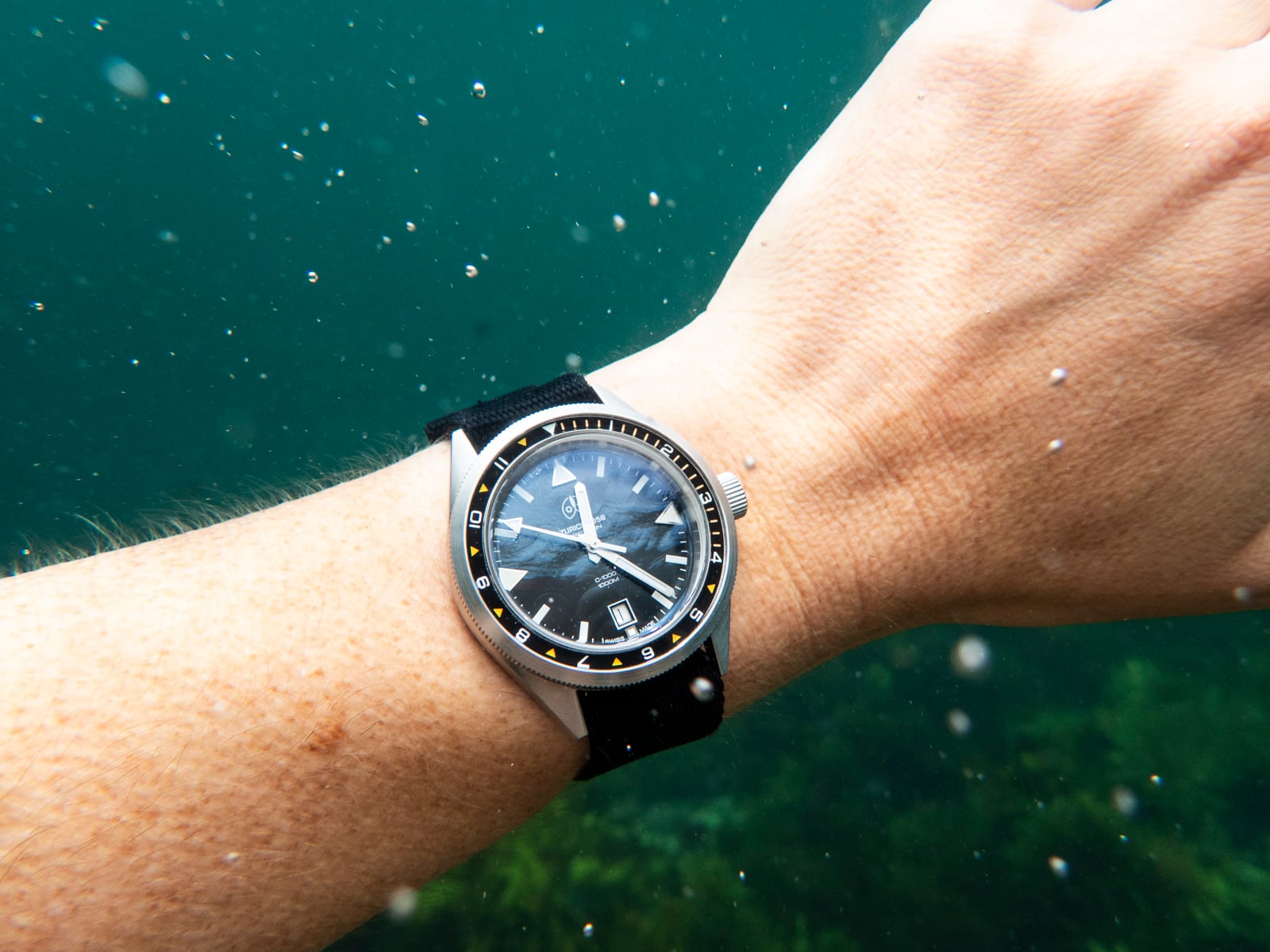
The Ollech & Wajs C-1000 A
Having owned two modern Ollech & Wajs watches and done a fair bit of reading into the brand’s history, I have a fascination for this Zurich-based outfit. I’m drawn to the way the OW seems to approach its tool watches with a sense of directness and dedication to quality that is wonderful to realize when you handle one. I have spent considerable time with Ollech & Wajs’s previous dive watches, including the C-1000 A pictured above.
The weight of history
The original Astrochron arrived in 1967, during an era when watch brands were still inventing categories in real time. Dive chronographs were rare then because combining chronograph pushers with meaningful water resistance was technically difficult and commercially risky. Despite this, Ollech & Wajs managed to produce a 200m-water-resistant watch that housed a Valjoux chronograph movement.
That alone would have secured its place in vintage-watch lore, but the Astrochron also picked up associations with NASA’s scientific staff and military PX culture during the Vietnam era. Vintage examples have become increasingly difficult to source, particularly in good condition.
A modern reinterpretation
The modern Astrochron doesn’t attempt a line-by-line recreation of that original. Instead, it feels more like a continuation of the same philosophy: build a serious instrument. With a 39.5mm diameter, the size initially sounds conservative. On the wrist, however, the Astrochron feels substantial. That’s largely due to the 16.8mm thickness, a consequence of both the Valjoux 7753 movement and the engineering required to achieve 500m water resistance in a chronograph case.
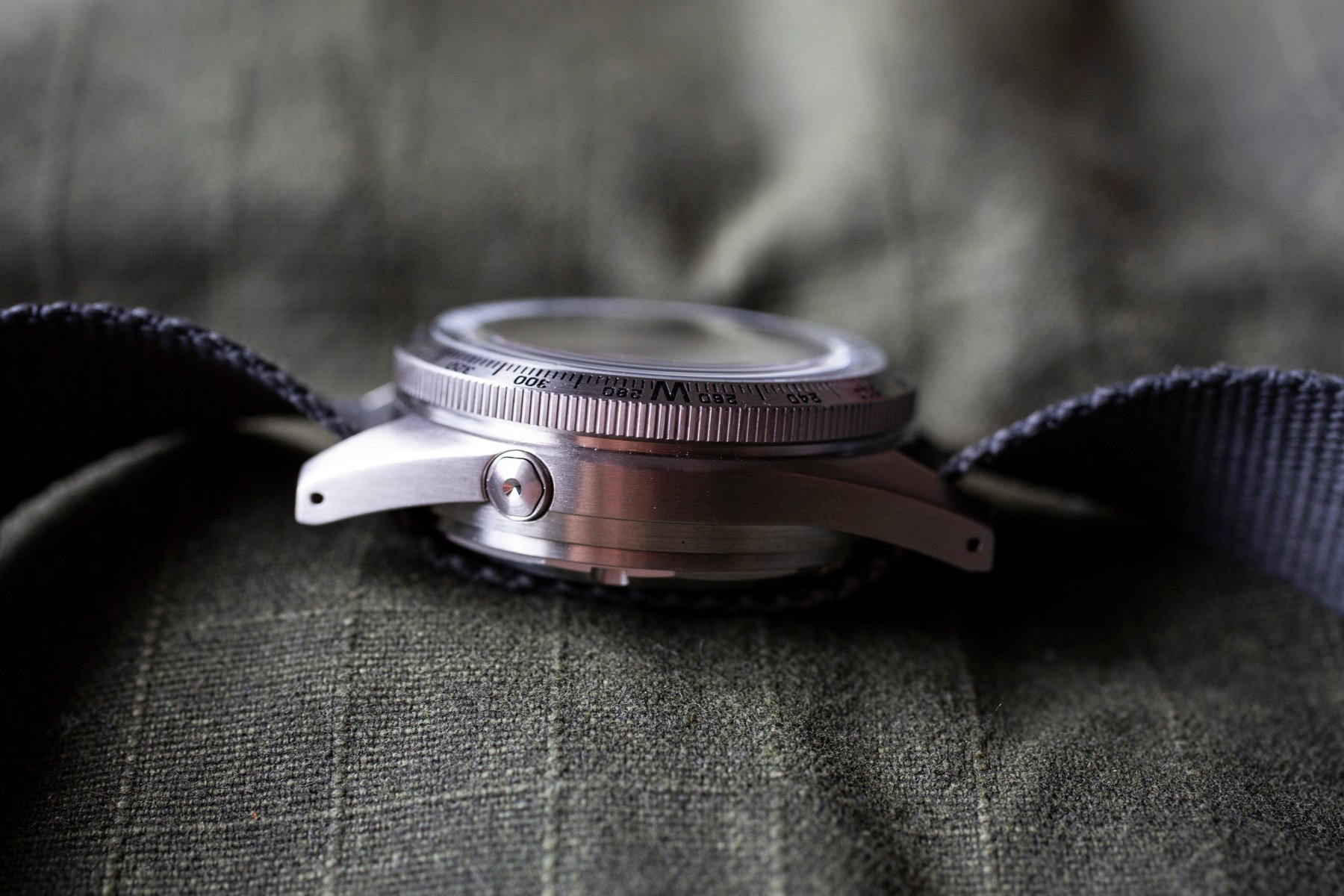
Usually, thickness like this becomes a dealbreaker. Here, somehow, it works. The fully brushed steel case gives the watch a utilitarian honesty that suits its personality. Nothing about the finishing screams that this is a luxury object. This is a watch designed to be knocked around on boat decks, scraped against dive ladders, and rinsed off under a beach shower afterward.
A great bracelet option from the factory
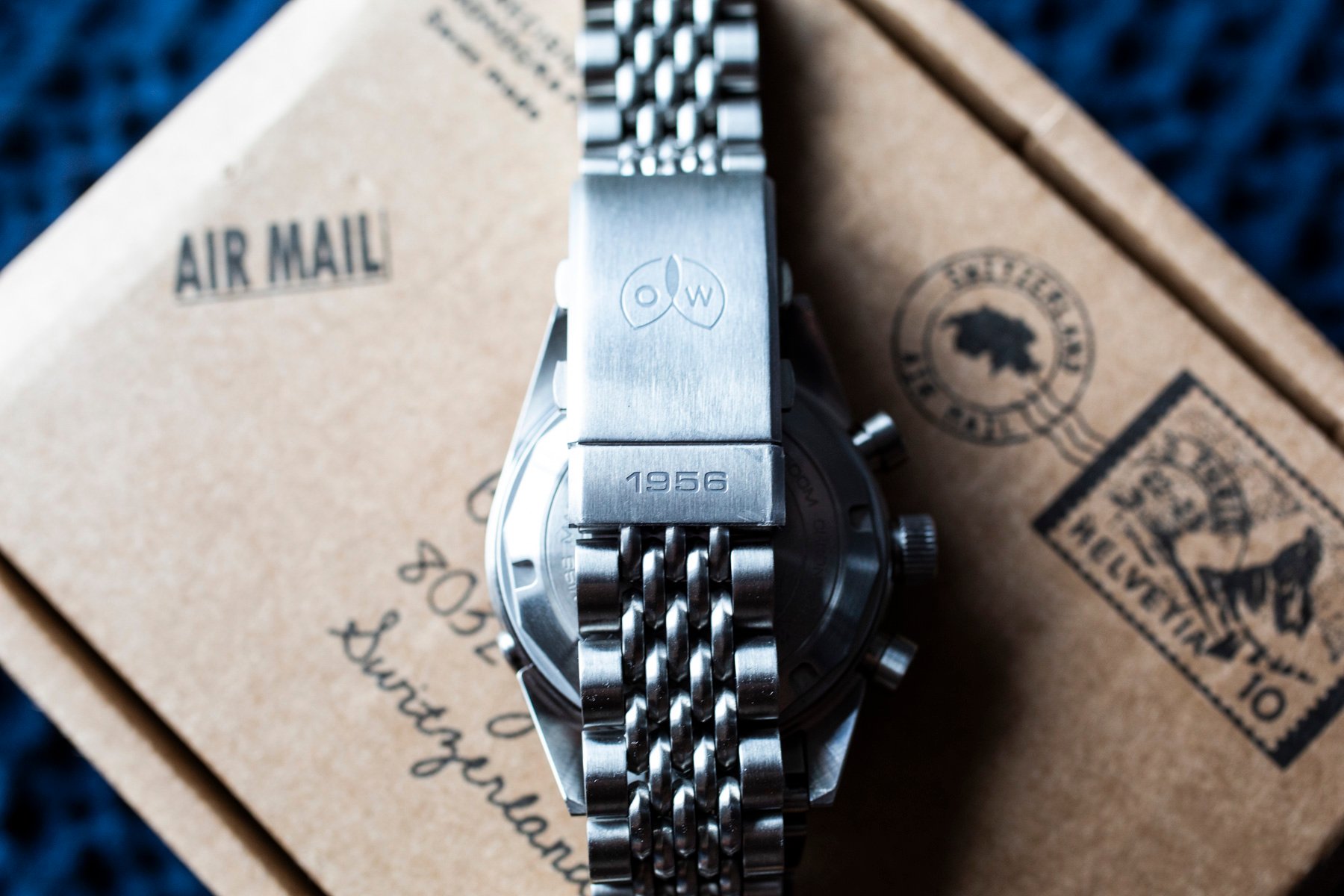
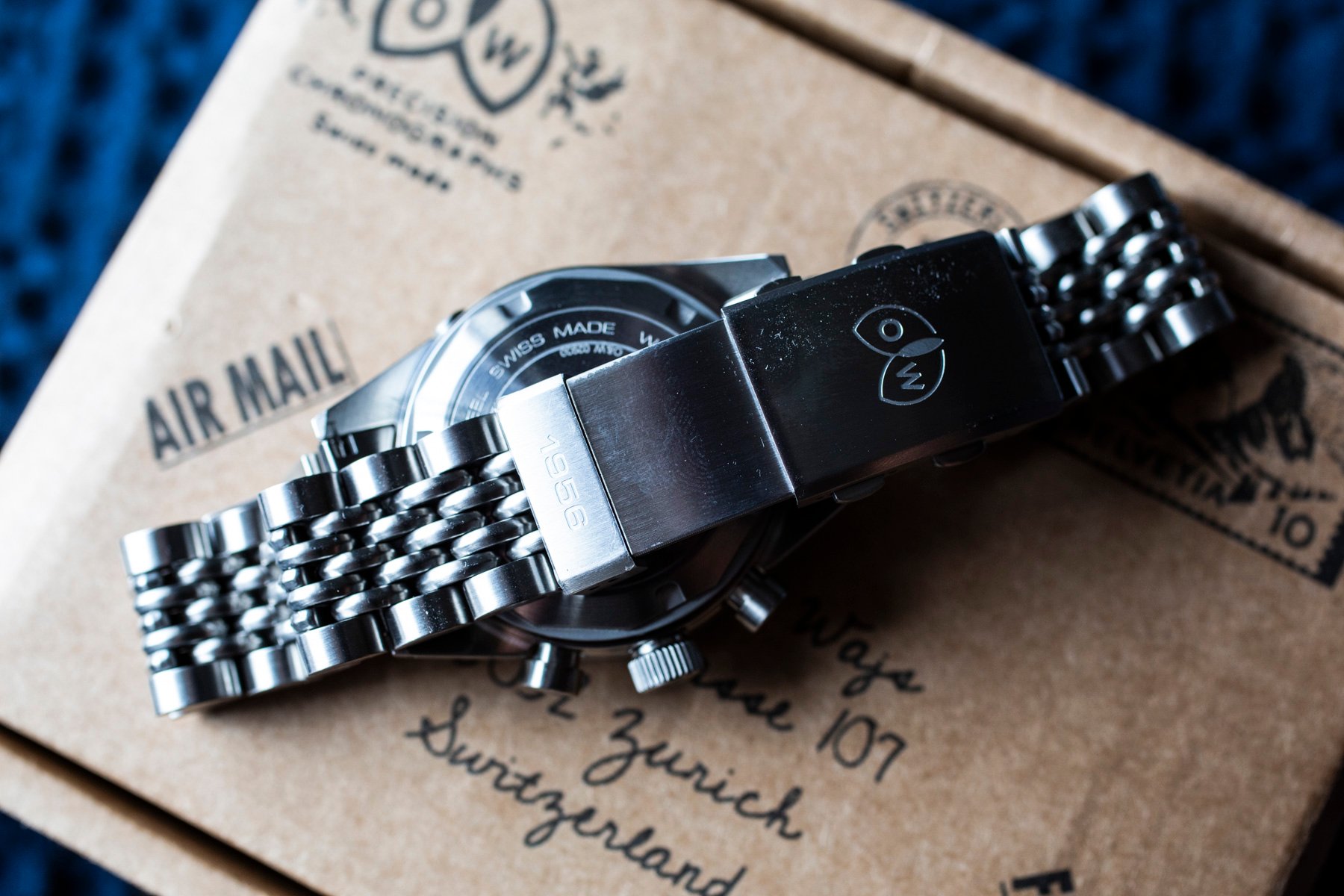
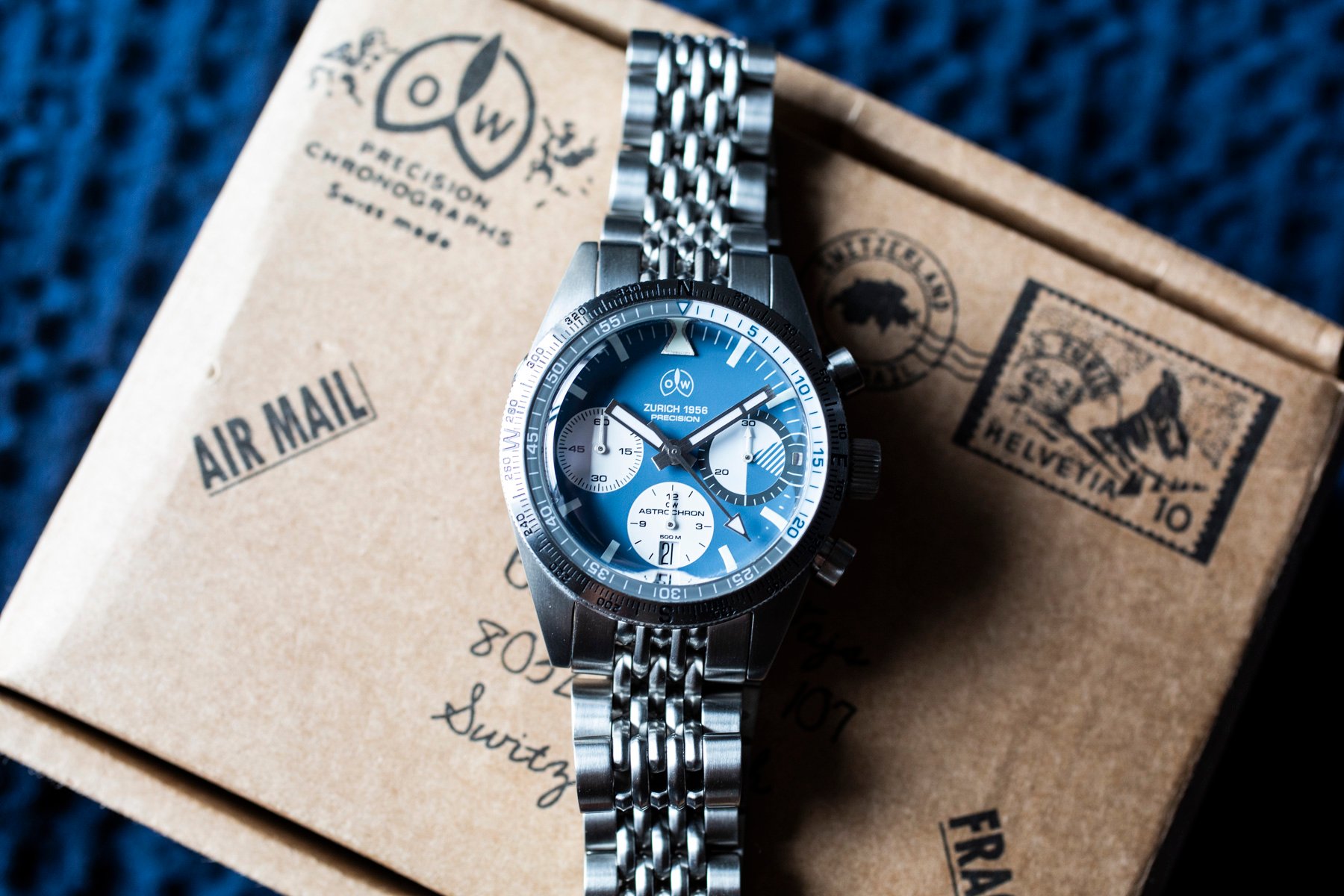
Luckily for me, Ollech & Wajs sent this review unit with the brand’s beads-of-rice bracelet. This bracelet deserves special mention because it dramatically changes the character of the watch. On the standard perlon strap (not pictured here), the Astrochron feels slightly top-heavy. On the bracelet, though, it becomes more cohesive and wearable. The bracelet has enough articulation to keep the hefty case balanced, and its old-school construction perfectly matches the vintage-tool aesthetic.
This is a fantastic bit of kit, and I would recommend spending the extra to get it with your Ollech & Wajs. The bracelet is much like those offered by Doxa, but it’s brushed and has a more slender but equally as practical clasp with a dive extension. The extension is activated by pressing two buttons beneath the OW logo. The bracelet is supremely comfortable and feels well built for any adventure. I also like the look of the brushed bracelet on this watch, as it plays with the blue dial nicely.
A dial packed with purpose
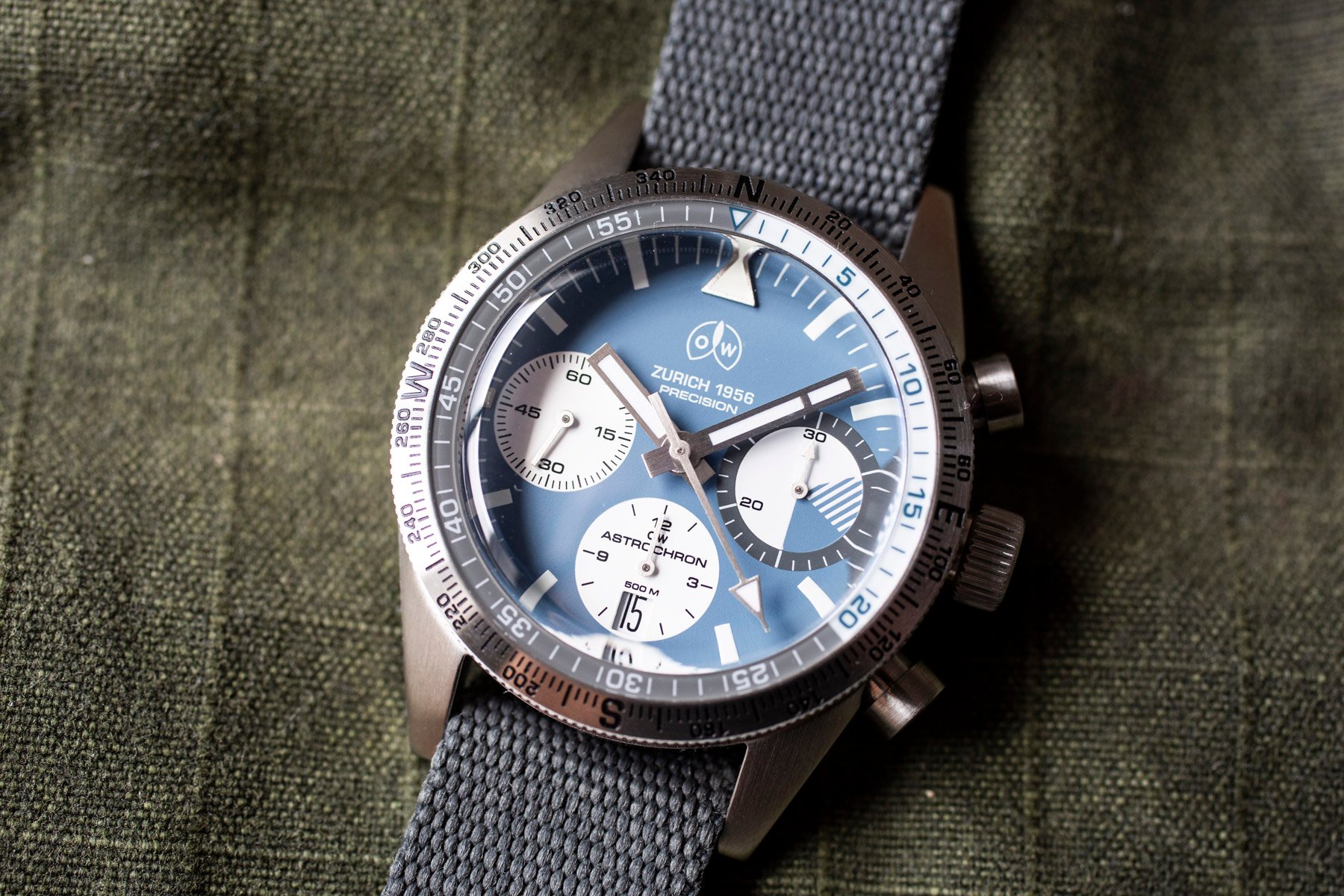
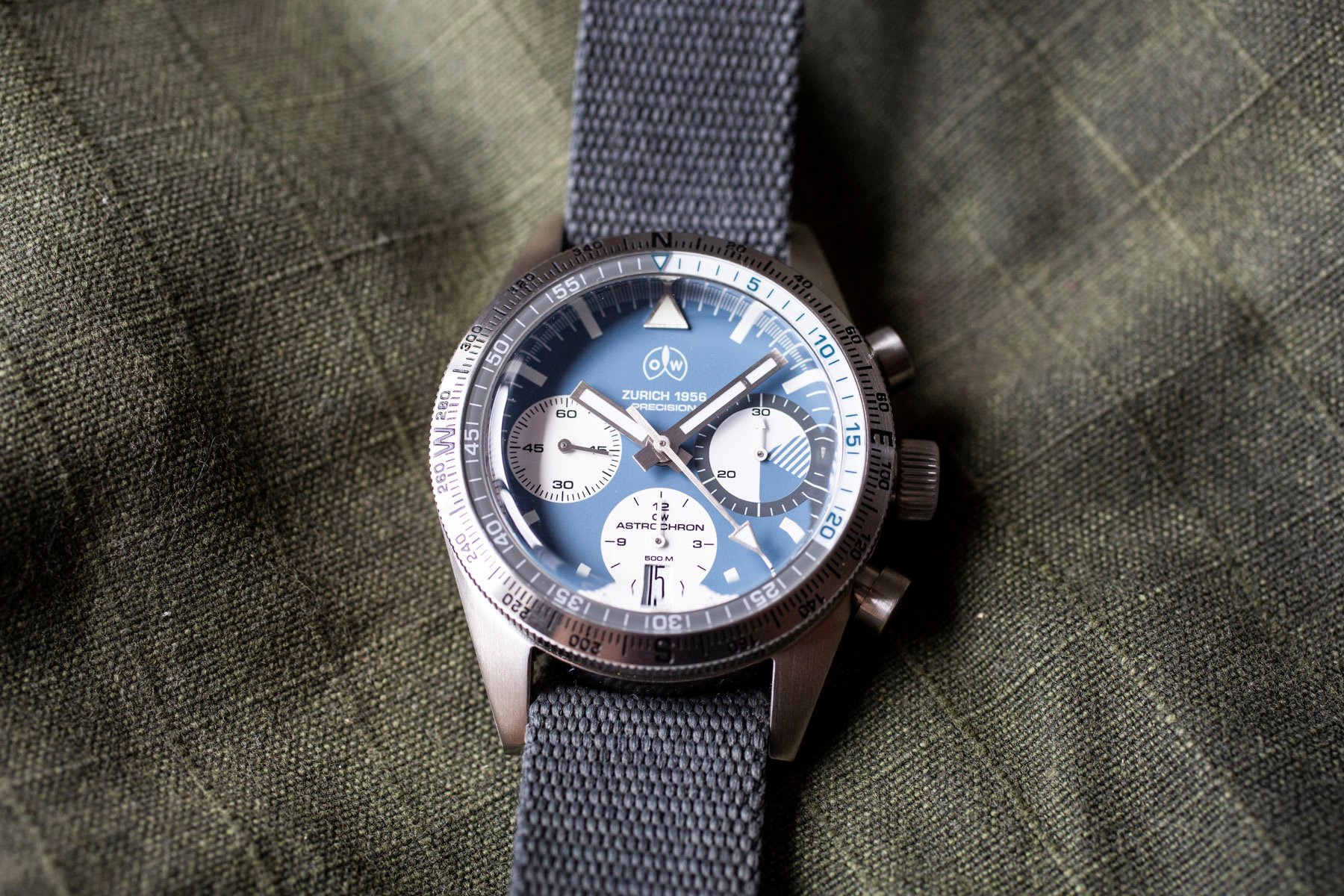
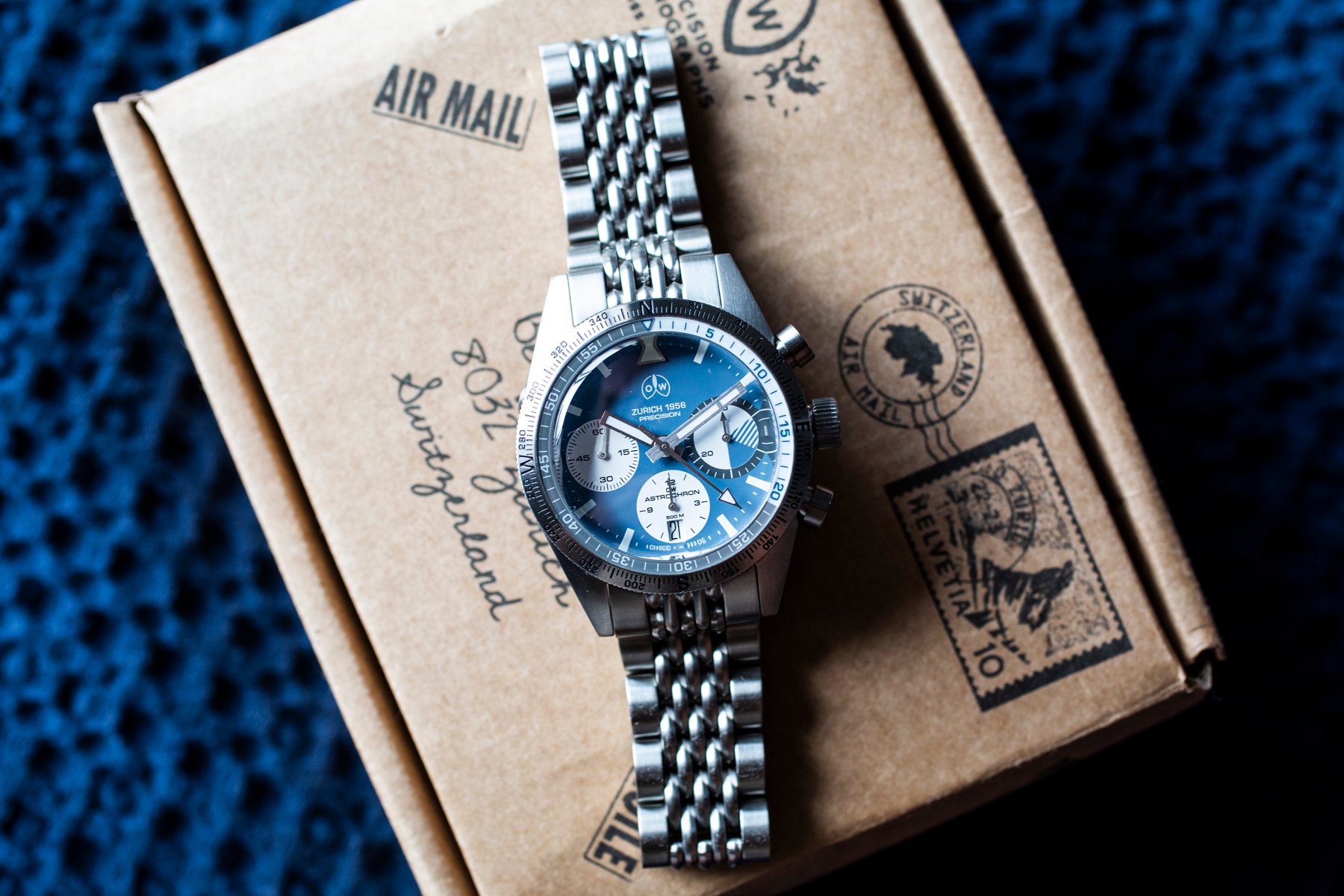
The Astrochron’s dial is busy, but crucially, it’s busy with intent. The matte North Atlantic blue surface plays host to contrasting white sub-dials in a reverse-panda layout, giving it a distinctly late-1960s look. The enlarged registers are easier to read than those on vintage Astrochrons, and the subtle date integration inside the 12-hour counter avoids disrupting the symmetry too severely.
What really separates this watch from the endless parade of heritage chronographs is the sheer density of functionality. There’s a regatta timer integrated into the 30-minute counter, a rotating compass bezel with cardinal markers, and an internal dive scale tucked beneath the sapphire crystal. Any one of these features could have become gimmicky in lesser hands, but the Astrochron somehow keeps everything coherent.
A watch that doesn’t second-guess its design
That’s partly because the Astrochron never tries too hard to explain itself. It simply presents these functions matter-of-factly, as though expecting the wearer to figure things out over time. I particularly enjoyed the compass bezel while walking Sydney’s coastline trails around Watsons Bay. Is it objectively more practical than checking a phone? Of course not. But using physical tools for orientation and timing is part of the charm of watches like this. Mechanical tool watches remain compelling precisely because they ask us to engage physically with our environment.
The Super-LumiNova application is excellent, especially on the rectangular hour markers. Legibility underwater and at dusk remains strong, which matters because this is not a watch pretending to be dive-capable purely for brochure copy.
Into the Pacific with the Ollech & Wajs Astrochron
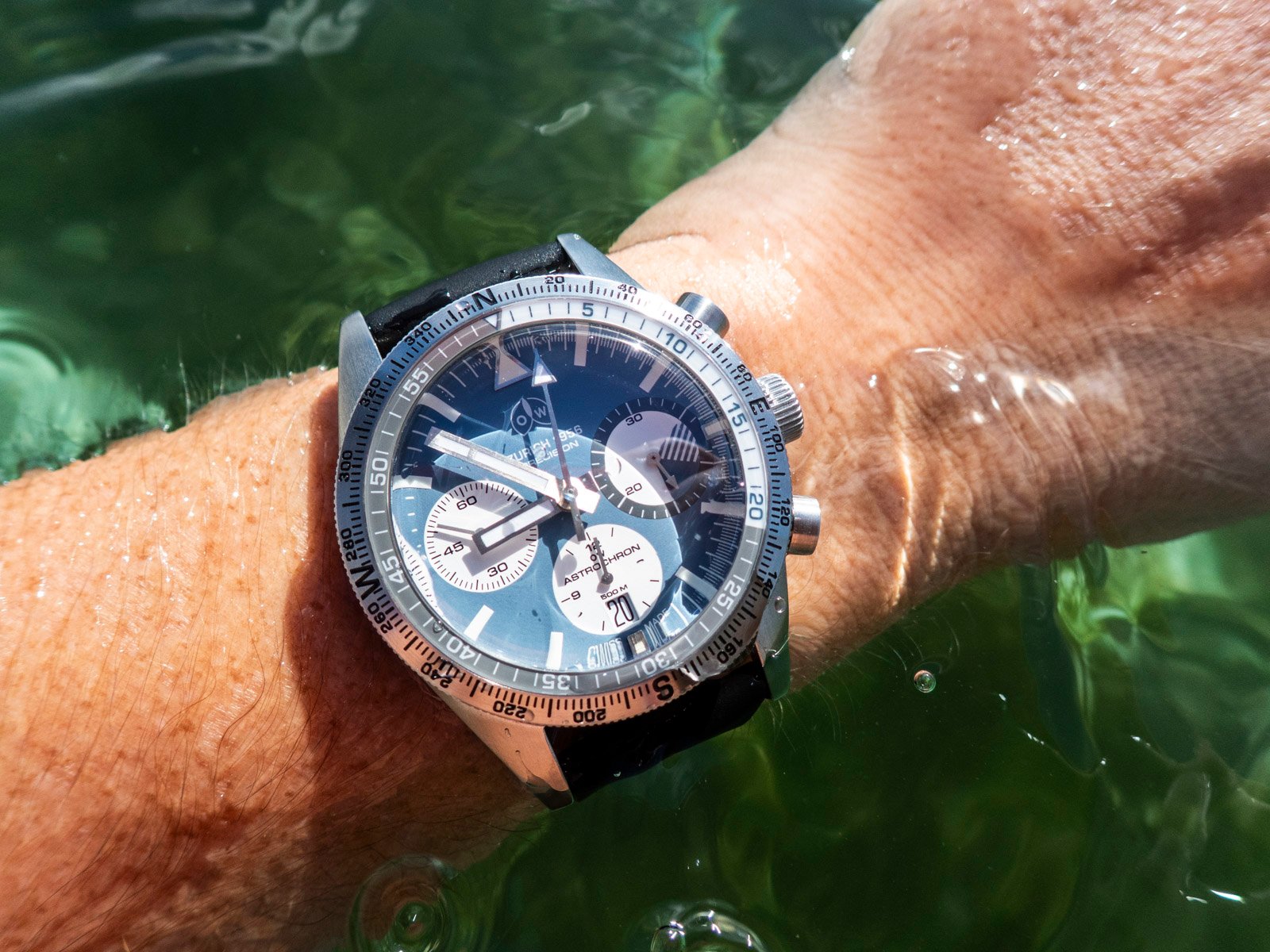
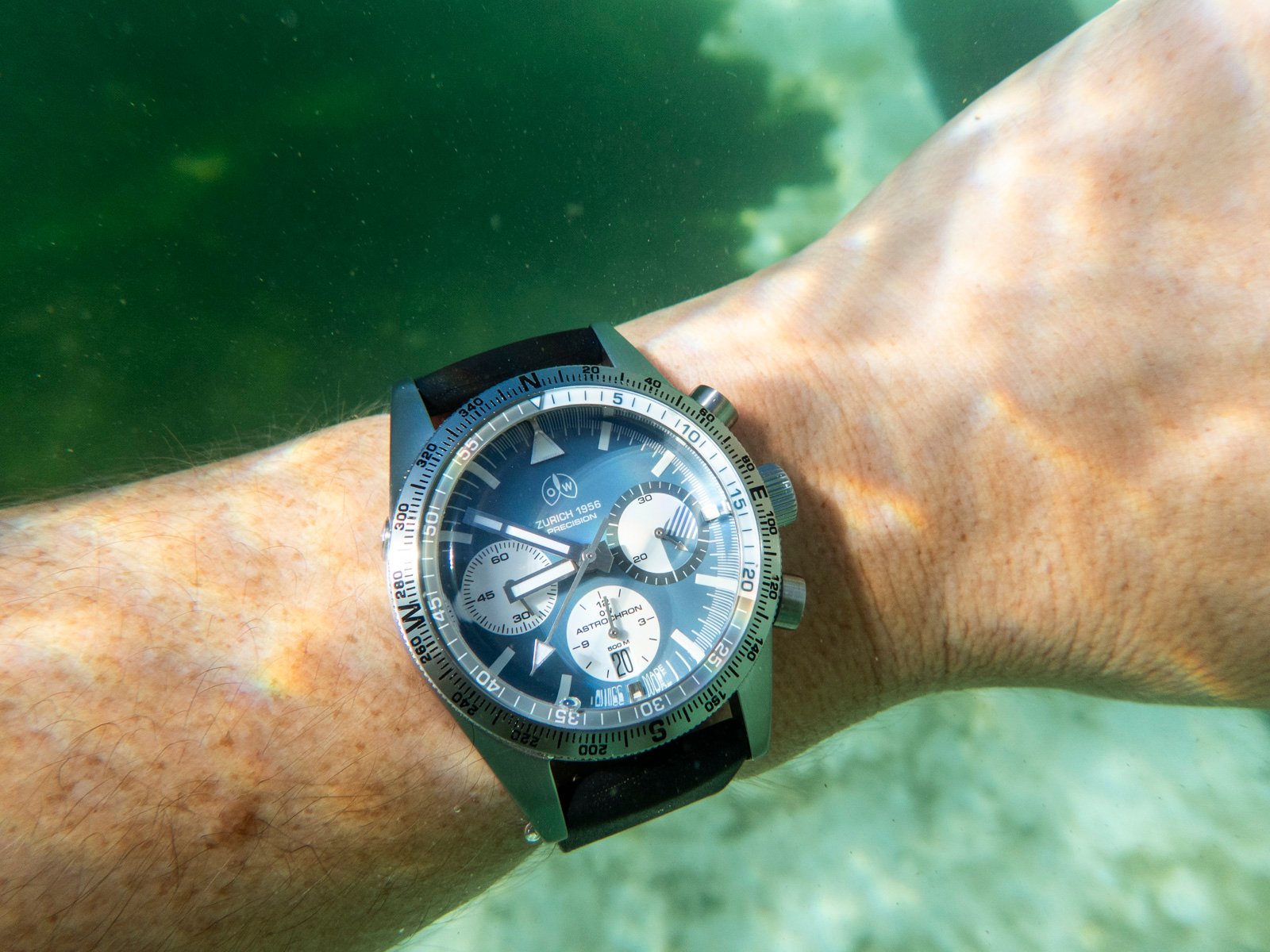
Reviews of tool watches too often stop at desk-diving metaphors, so I wanted to see how the Astrochron behaved in actual ocean conditions. One bright autumn morning, I took it into the Pacific just off Sydney’s eastern coastline. Conditions were classic Sydney, with a brisk offshore breeze, clear water, and enough swell rolling through to remind you the Pacific is never entirely relaxed.
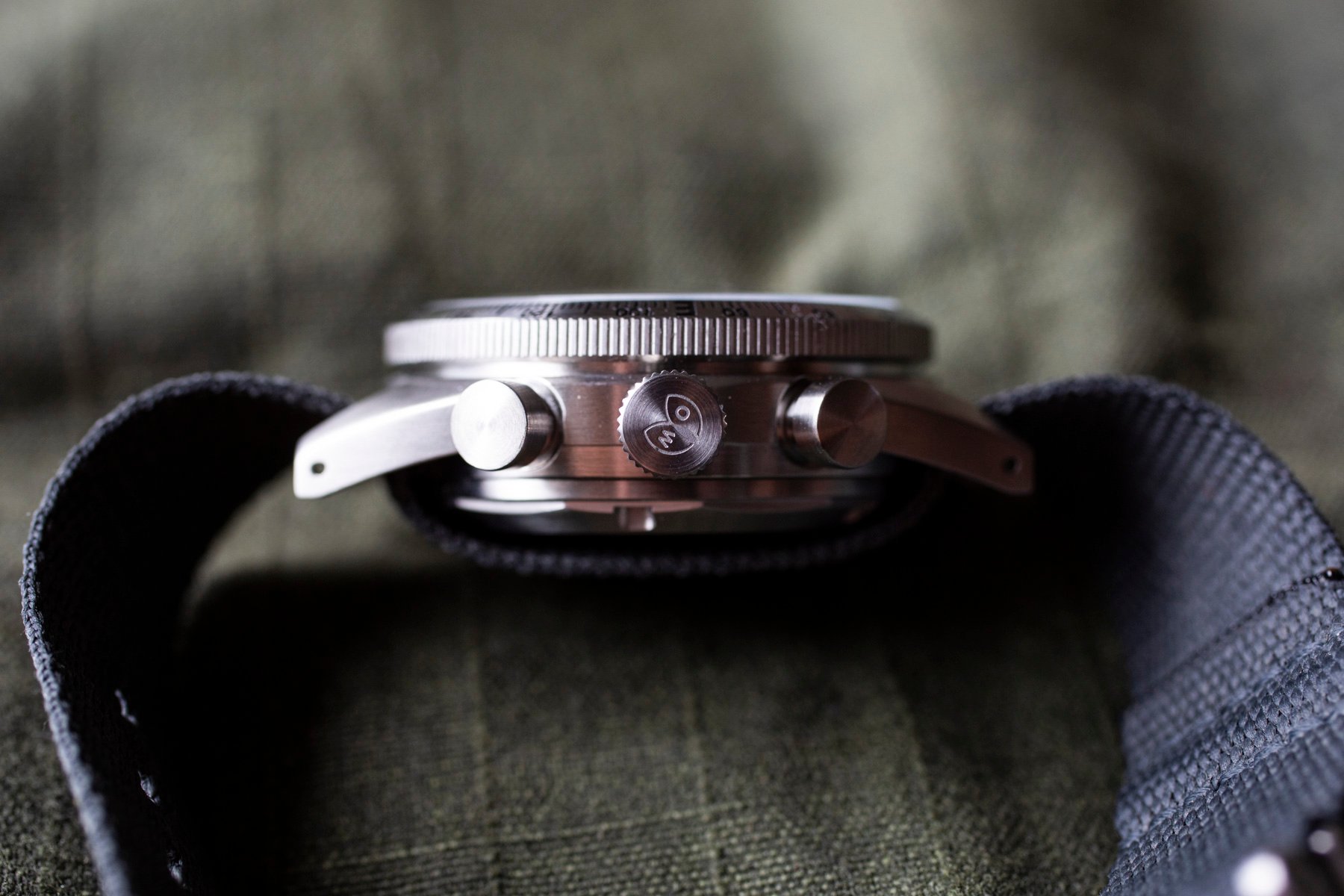
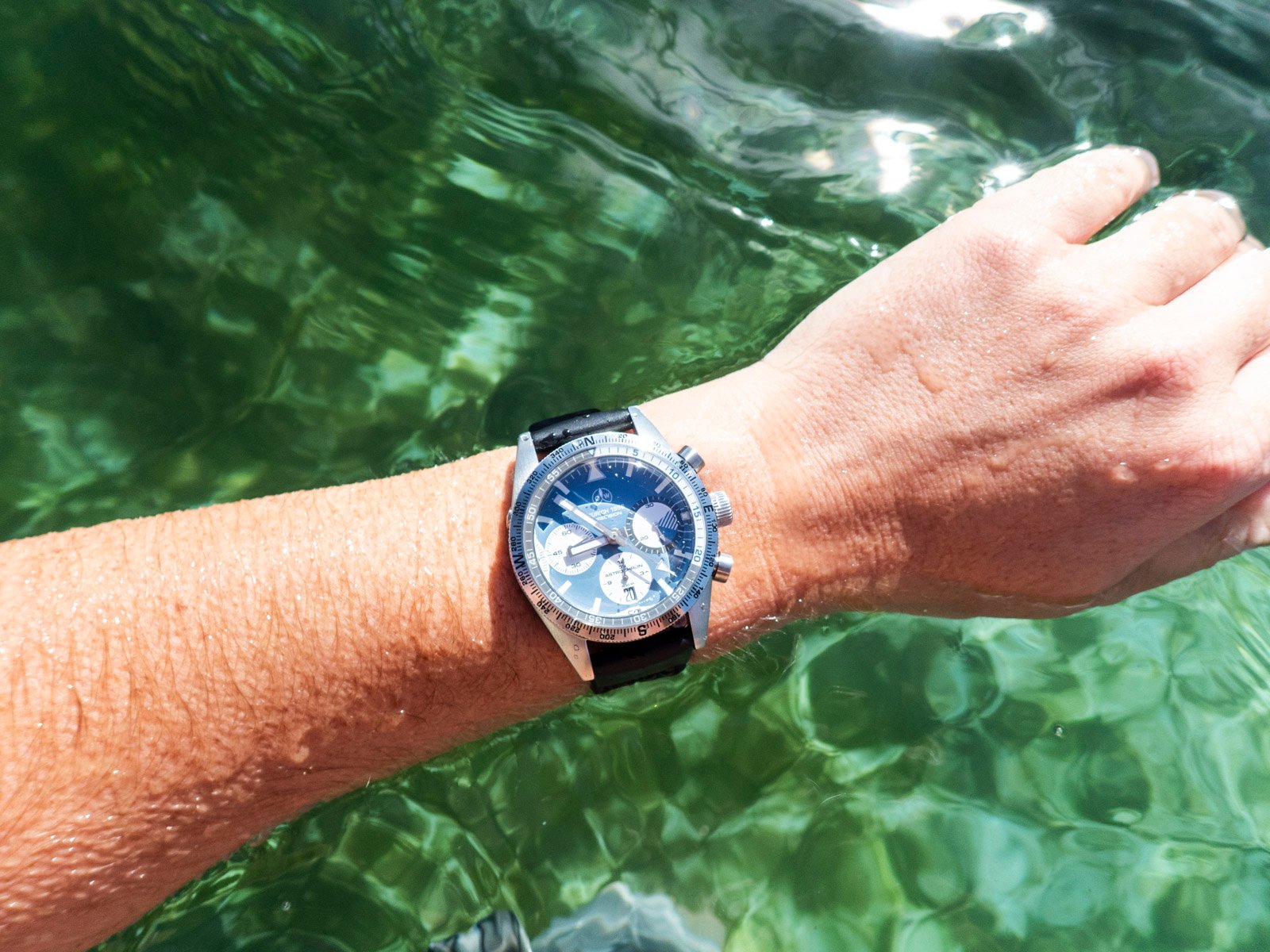
This is where the Astrochron made complete sense. The oversized pushers are easy to operate with wet hands. The brushed surfaces never become slippery. The bezel grip remains excellent even after repeated exposure to saltwater. More importantly, the watch feels reassuringly indifferent to the ocean.
A brilliant watch for underwater adventures
Some dive watches make you aware you’re wearing an expensive object in the water. The Astrochron doesn’t. It behaves like equipment. The 500m rating is excessive for recreational use, obviously, but that excess contributes to the watch’s confidence. There’s no fragility here, no hesitation.
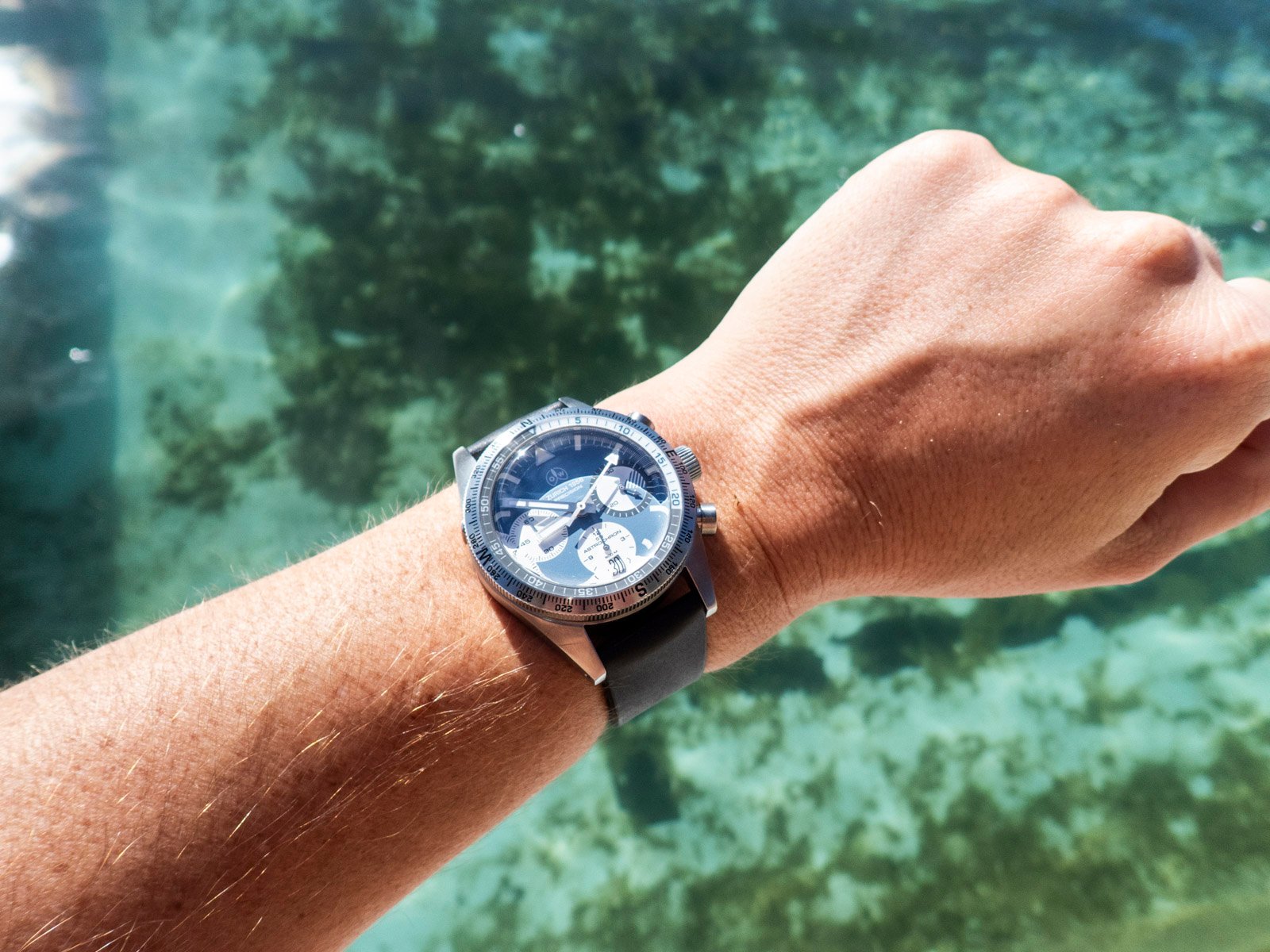
After 40 minutes in the water, the crystal remained totally clear, the lume stayed highly visible beneath the surface, and the chronograph pushers retained their satisfyingly mechanical click. Even transitioning from cool seawater back into the warm Sydney sun, the watch never fogged or lost clarity. What impressed me most, however, was how naturally the Astrochron suited the rhythm of the beach. Sydney has a deeply practical relationship with watches. This is not a city where preciousness survives long. People swim before work, surf during lunch breaks, and throw expensive dive watches into saltwater without ceremony. In that environment, the Astrochron feels entirely at home.
A Valjoux mechanical heart
Inside sits the Valjoux 7753, regulated by Ollech & Wajs in-house to its OW Precision standard. The movement choice is sensible rather than romantic. Purists may lament the absence of a column-wheel chronograph, but the cam-actuated 7753 perfectly suits the Astrochron’s personality. It’s robust, proven, serviceable, and capable of absorbing punishment.
The chronograph action feels mechanical in the best possible way — slightly firm, deeply tactile, and satisfyingly agricultural. There’s no buttery smoothness here, but there is confidence. Over the review period, accuracy remained consistently strong at roughly +5 seconds per day. The 54-hour power reserve also proved genuinely useful during weekend rotation. Importantly, the movement never feels like a compromise. At this price point, many brands would have opted for a thinner but less characterful modular solution or chased exclusivity with an immature in-house caliber. Ollech & Wajs instead chose reliability. That decision aligns perfectly with the brand’s broader ethos.
A unique design for those with particular tastes
The Astrochron is not a universally appealing watch. It’s thick. The dial is busy. The functionality borders on obsessive. The vintage styling can feel severe depending on the strap choice. If you want a sleek luxury chronograph to wear beneath a cuff, there are dozens of better options. But none of those watches would be this interesting. The Astrochron succeeds because it refuses to dilute itself. It remains stubbornly committed to being a hardcore mechanical instrument in an era increasingly dominated by lifestyle positioning.
There’s also something admirable about Ollech & Wajs itself. The brand occupies a strange and compelling corner of modern horology, being historically significant enough to matter, obscure enough to avoid hype, and independent enough to take risks. That independence radiates through the Astrochron. No focus group would have requested a compass-bezel dive chronograph with a regatta counter and 500m depth rating. Yet, here it is.
Final thoughts
After wearing the Astrochron through city streets, coastal walks, and Pacific saltwater, I kept returning to the same conclusion: this watch feels authentic in a way many modern tool watches no longer do. It isn’t trying to evoke adventure; it’s built for it. The modern luxury-watch market often rewards refinement over personality, but the Astrochron unapologetically prioritizes character. It wears like a machine conceived by engineers who cared more about capability than elegance. And honestly, that’s exactly why I enjoyed it so much.
The Astrochron will never be a mainstream darling. It’s too eccentric, too specialized, and too uncompromising for that. But for collectors who appreciate mechanical honesty and actually intend to take their watches into the ocean rather than merely photograph them beside cups of coffee, the Ollech & Wajs Astrochron (CHF 2,760) delivers something increasingly rare — a genuine sense of purpose. After emerging from the Pacific with salt drying across the case and the chronograph still ticking away happily, it felt less like I had been testing a luxury product and more like I had been using a very good tool. That distinction matters.