Hands-On With The Stylish And Practical Patek Philippe Calatrava Ref. 5396R-016 Annual Calendar Moon Phase

In 1996, Patek Philippe launched a watch to bridge the gap between its dress watches and perpetual calendars. The brand needed more sales; the Nautilus was not a hype watch yet, so what did Patek do? It launched a classic calendar watch that looked like a perpetual calendar, but it actually was a watch with a patented calendar that only needed to be adjusted once a year. Ref. 5035 was the world’s first annual calendar wristwatch, and since it looked every millimeter a veritable complicated Patek, it did what it had to do — sell, and at nearly half the price of a ref. 3940 “QP.” Thirty years later, the annual calendar has become a staple. The latest iteration, the ton-sur-ton Patek Philippe Calatrava ref. 5396R-016, celebrates the 30th anniversary of the complication, and I went hands-on with it.
When the ref. 5035J annual calendar debuted three decades ago, the reception was enthusiastic. Not only did people applaud the watch’s aesthetics, but they also welcomed the launch of a truly useful, simple, and entirely new complication with open arms. The annual calendar Patek Philippe created sits between the complete calendar, which must be adjusted five times a year for months with fewer than 31 days, and the perpetual calendar, which requires no correction, even in leap years.
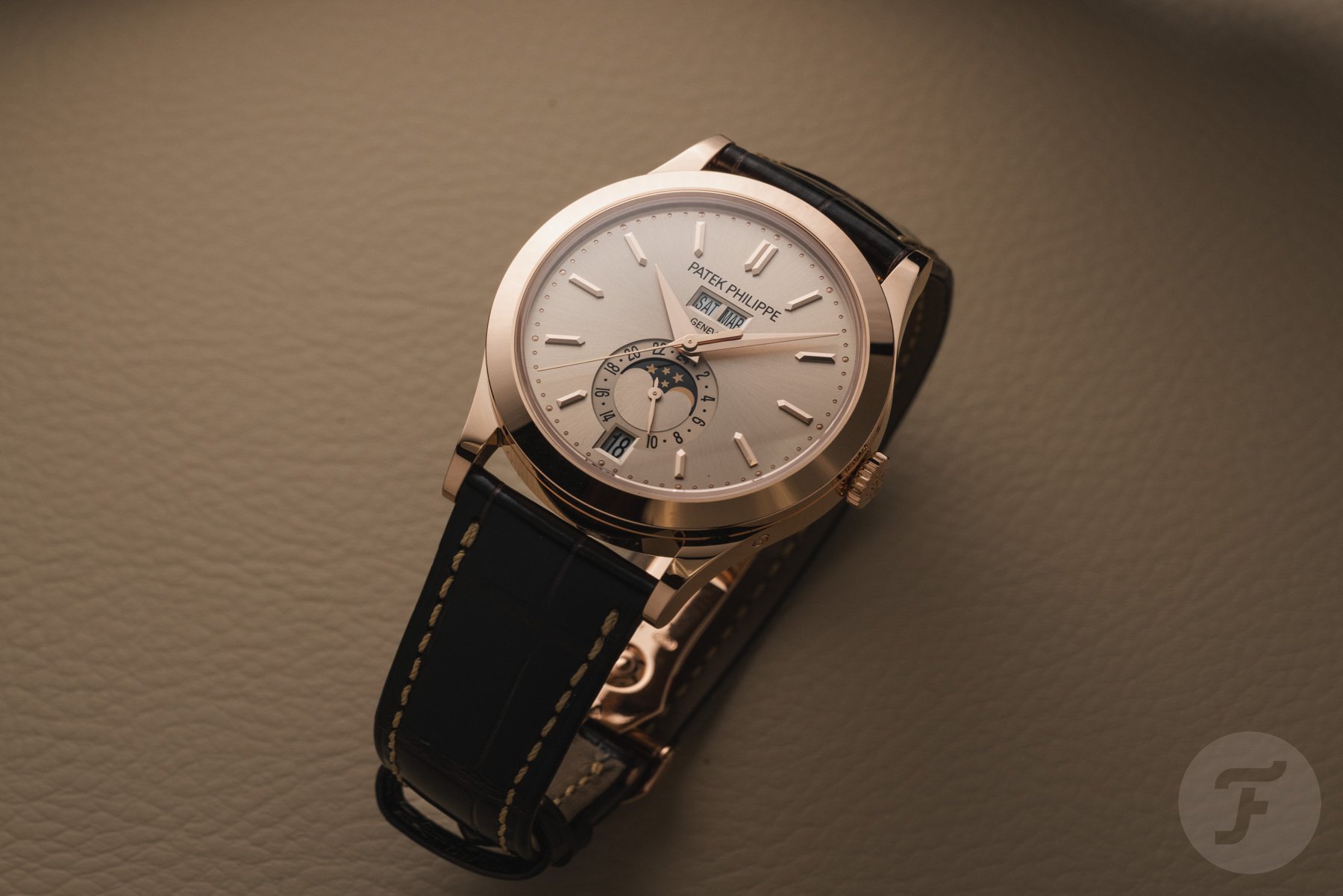
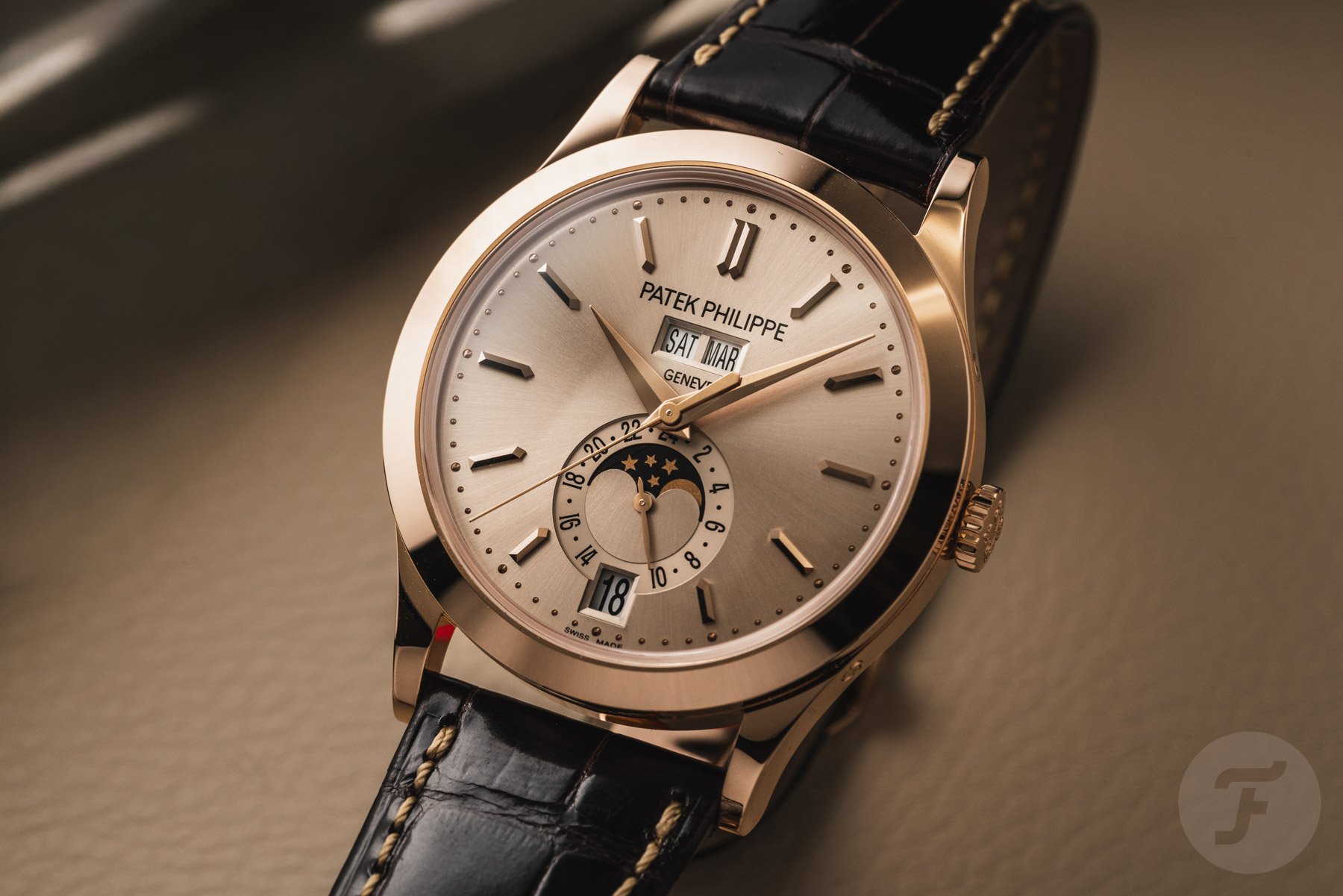
The stylish and practical Patek Philippe Calatrava ref. 5396R-016 Annual Calendar Moon Phase
The complete calendar is too simple for Patek and its owner. And the “problem” with a quantième perpétuel is that it has an exclusive price. The patented annual calendar, which only needs adjusting once a year and looks an awful lot like a QP, is thus a veritable Patek in every sense. So is the ref. 5396, an annual calendar in a Calatrava case that debuted in 2006. The ref. 5396R-016, which came out during Watches and Wonders 2026, is the latest version.
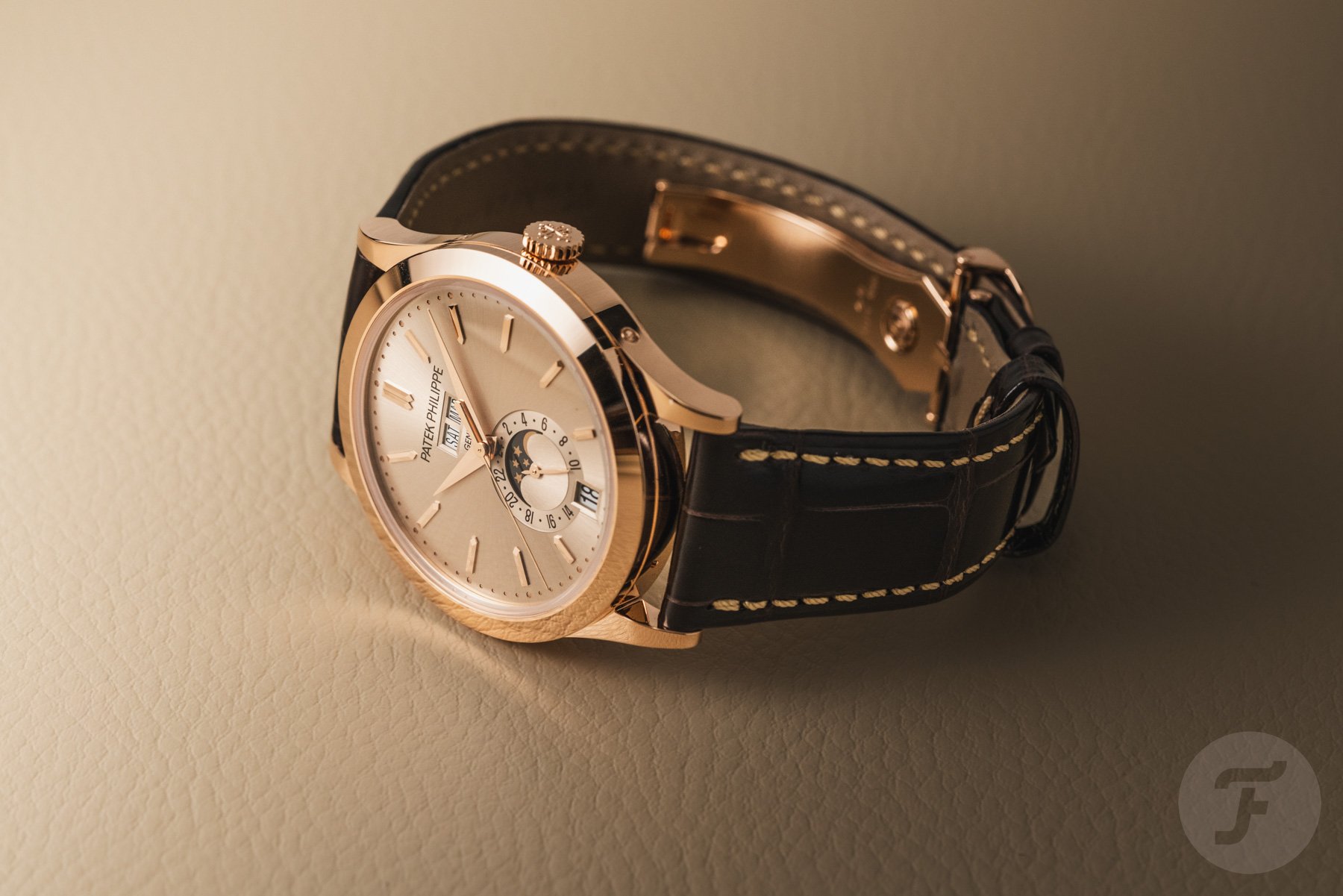
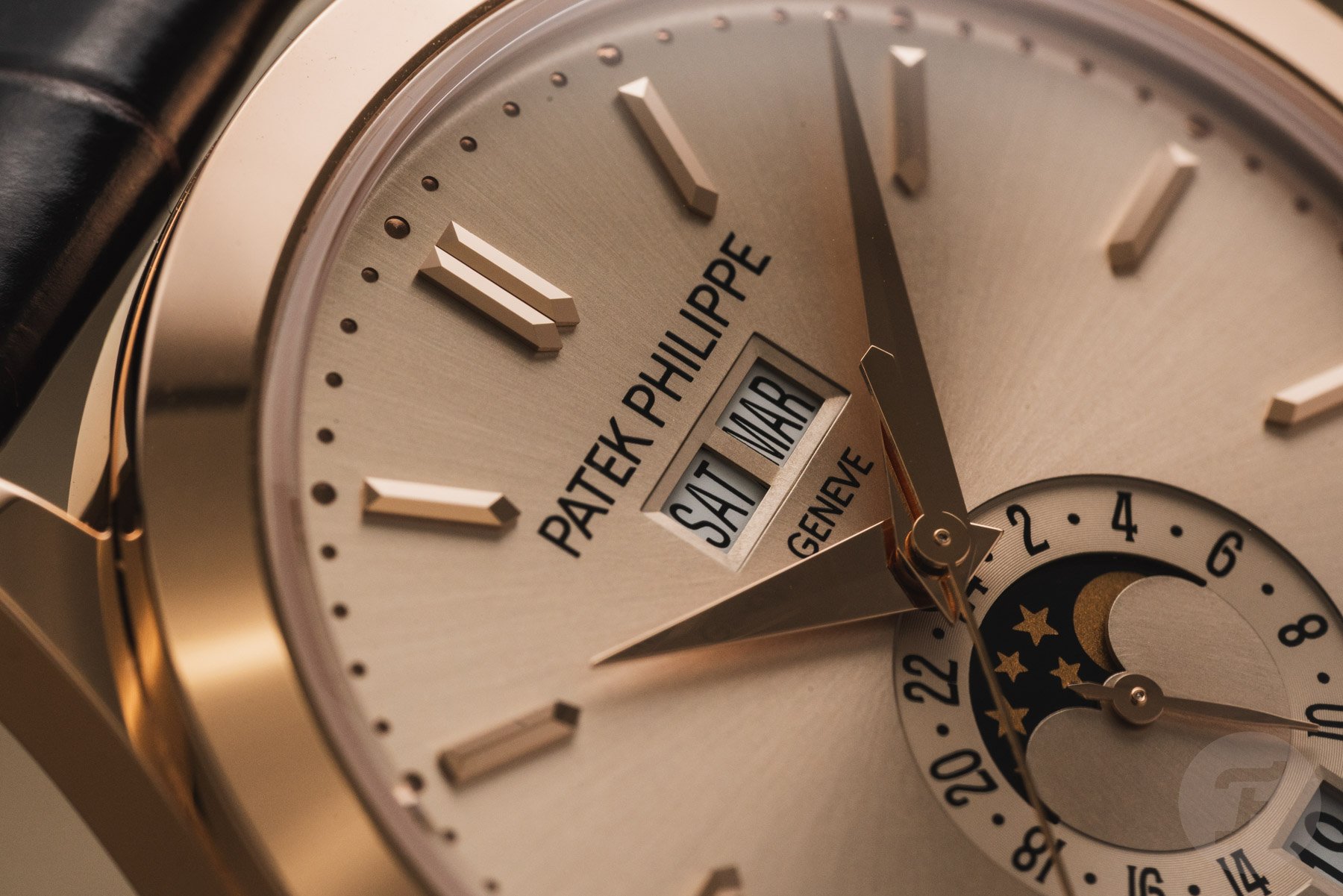
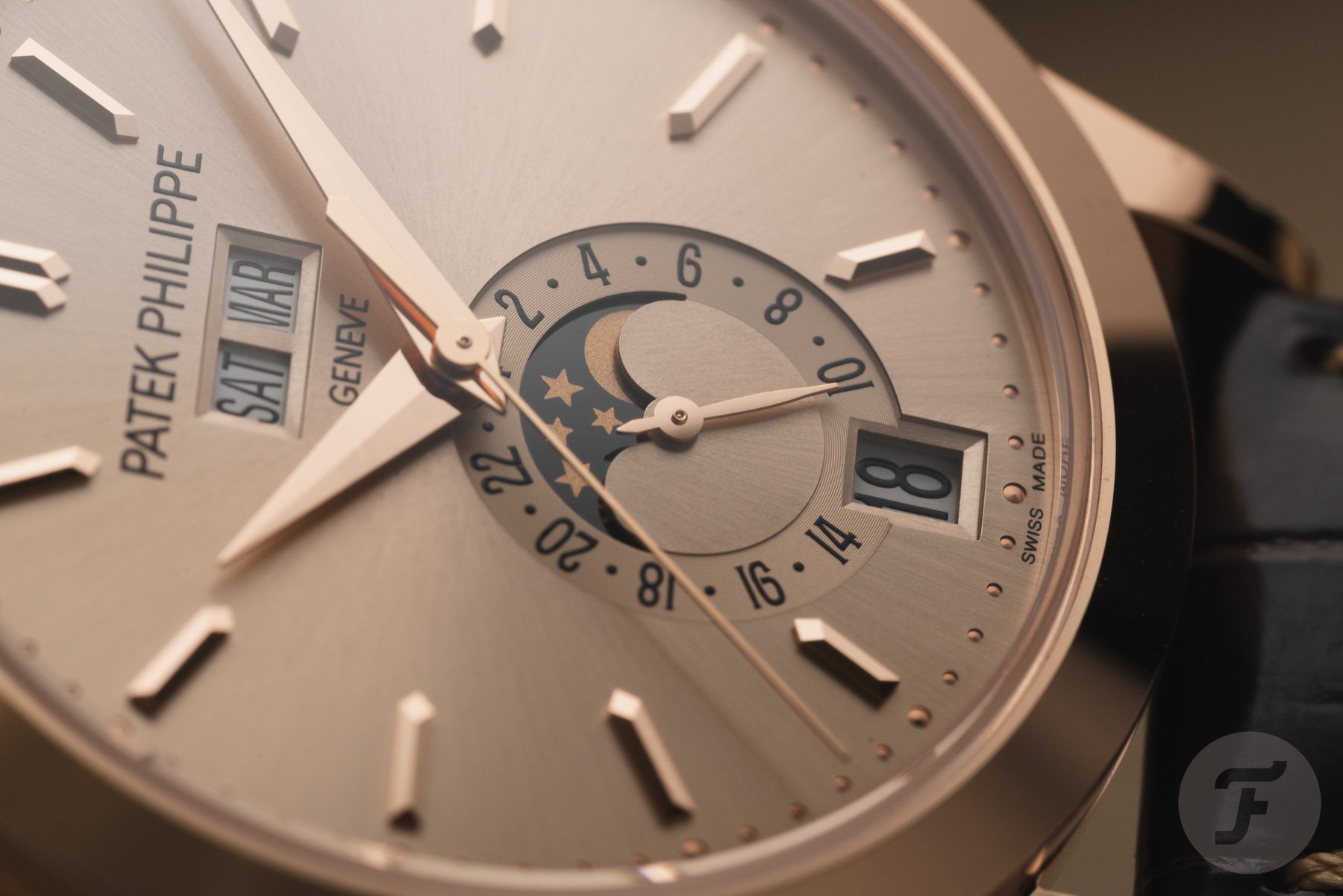
The original ref. 5035 showed up with a traditional triple-register layout. Ten years later, the ref. 5396 debuted with a 38.5mm case and its now-famous twin-aperture day/month display at 12 o’clock and a date window intersecting a sub-dial at 6 o’clock containing a moonphase display and a 24-hour indicator. The new pink gold Calatrava ref. 5396R-016 has the same layout but offers, I would say, a classic-contemporary guise. The warm dial color features a sunburst pattern and is officially called “sand beige.” It blends in very nicely with the rose gold case, creating a harmonious, uninterrupted look.
The first versions of the 38.5mm ref. 5396 came in rose gold and then white gold. Also, the earlier models featured crisp sector dials that gave the watches a distinct vintage appearance. Patek later introduced versions with the classic Calatrava dial, applied baton hour markers, and dauphine hands, just like the latest ref. 5396R-016.
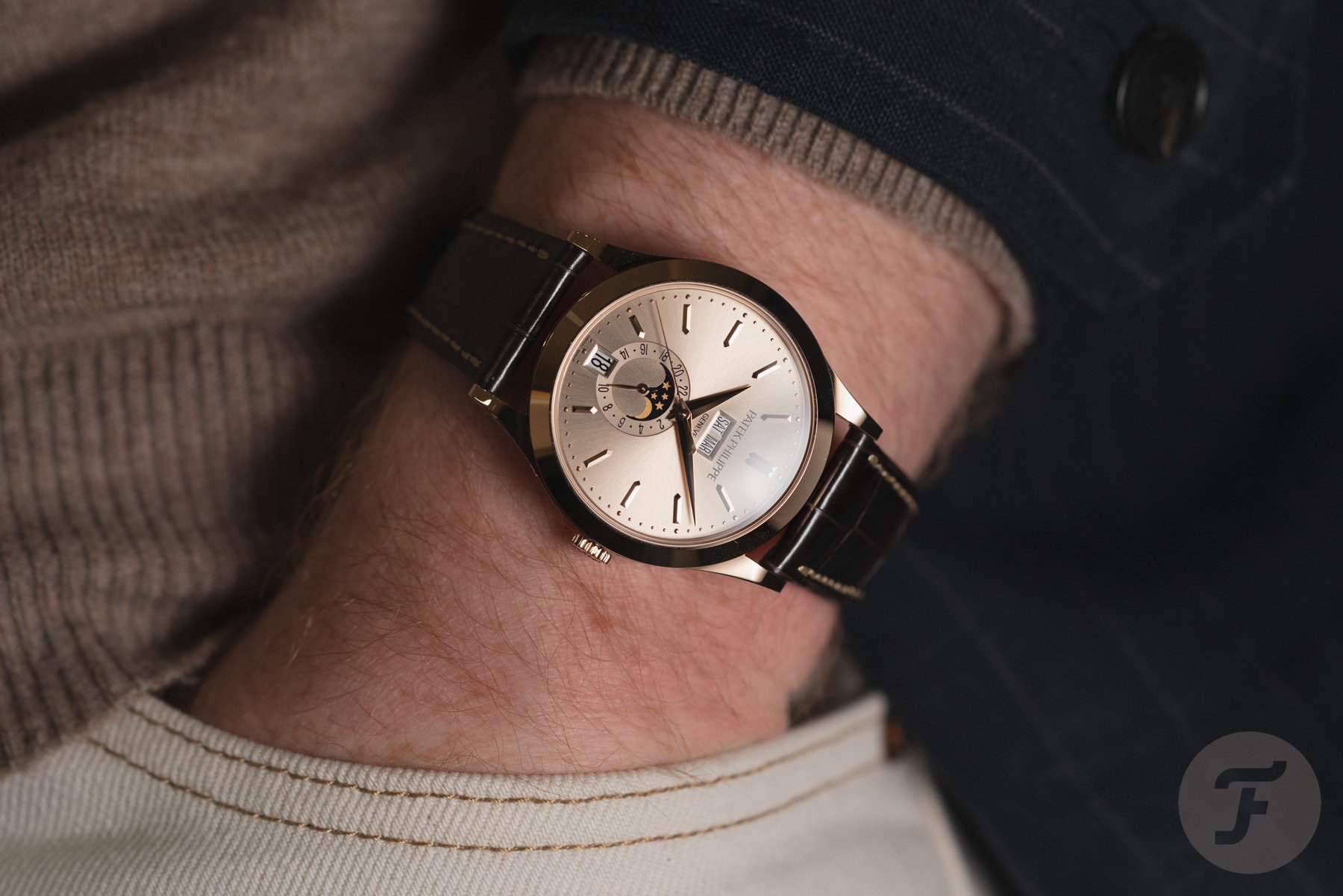
Trying on the Calatrava ref. 5396R-016
The new ref. 5396R-016 features a fully polished, nicely proportioned 38.5mm rose gold case with an 11.2mm profile. Like almost every new watch that Patek launched at Watches and Wonders 2026, this annual calendar comes with a strap featuring contrast stitching. The shiny, dark chestnut alligator strap with square scales features beige stitching, the same color as the dial.
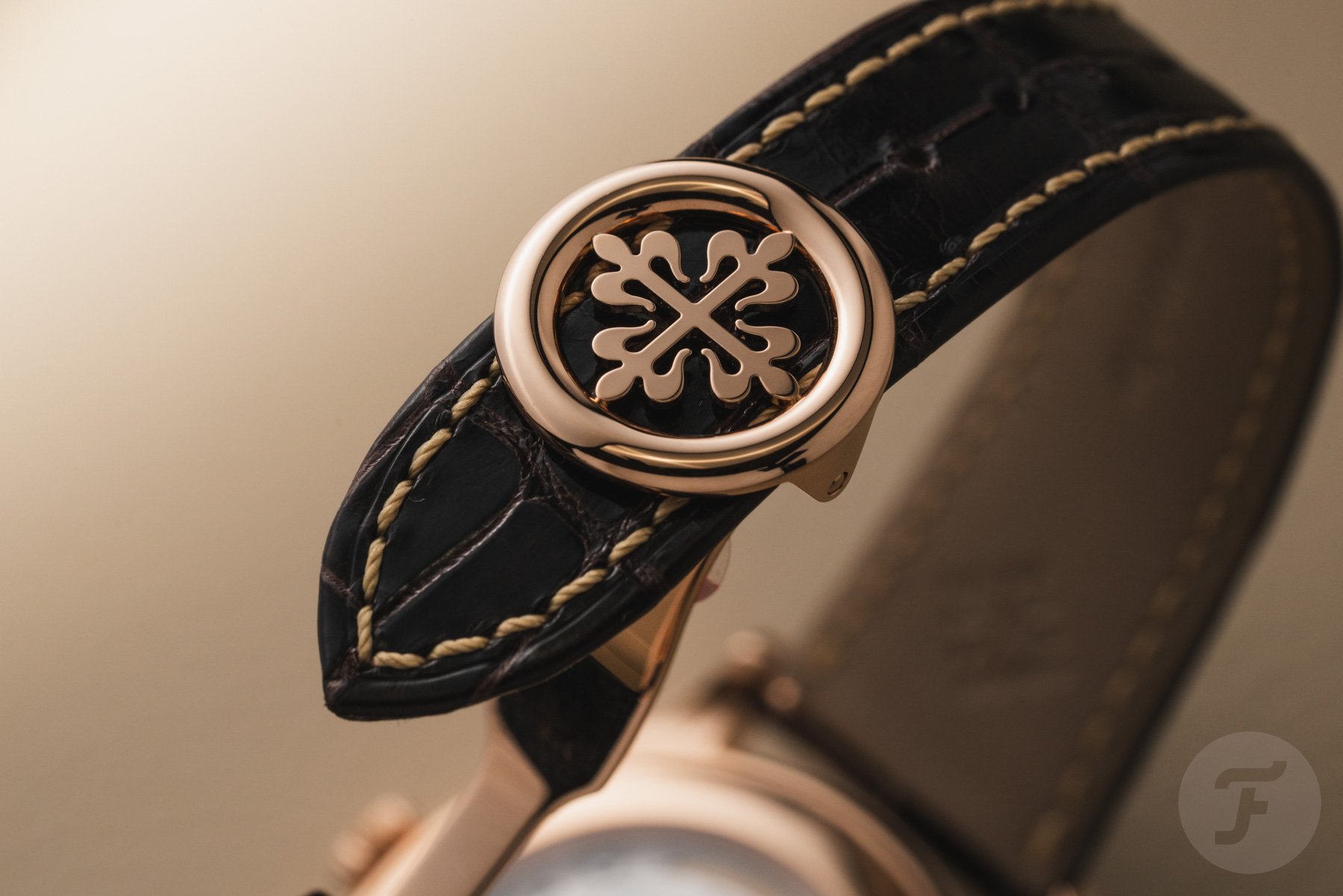
The watch secures itself to the wrist via a rose-gold folding clasp featuring the Patek Philippe logo. Yes, that’s quite an opulent buckle, but it’s also beautifully made and very much in line with the rest of the watch. You get a timeless gold case, traditional high-end finishing, and a ton-sur-ton understated design.
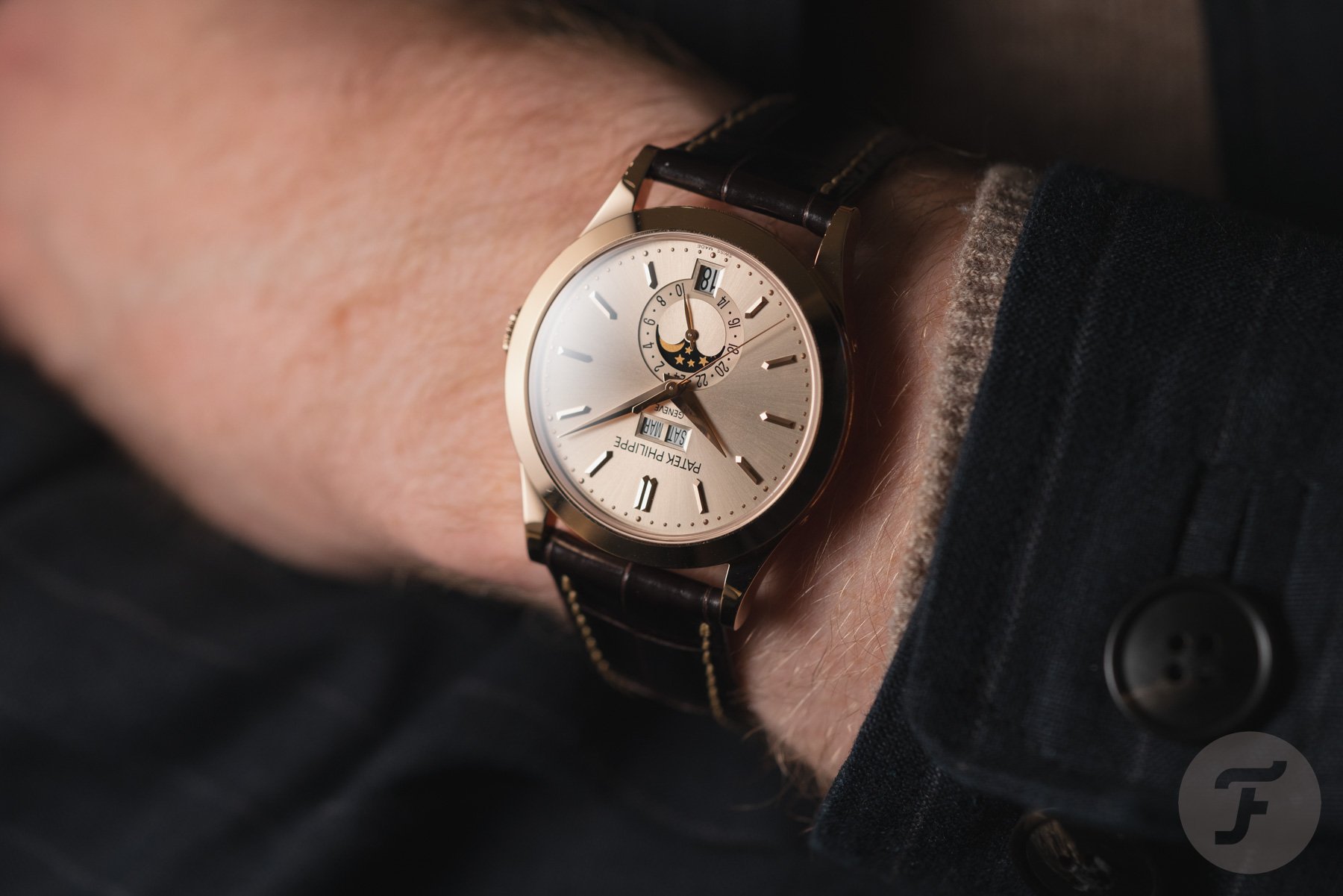
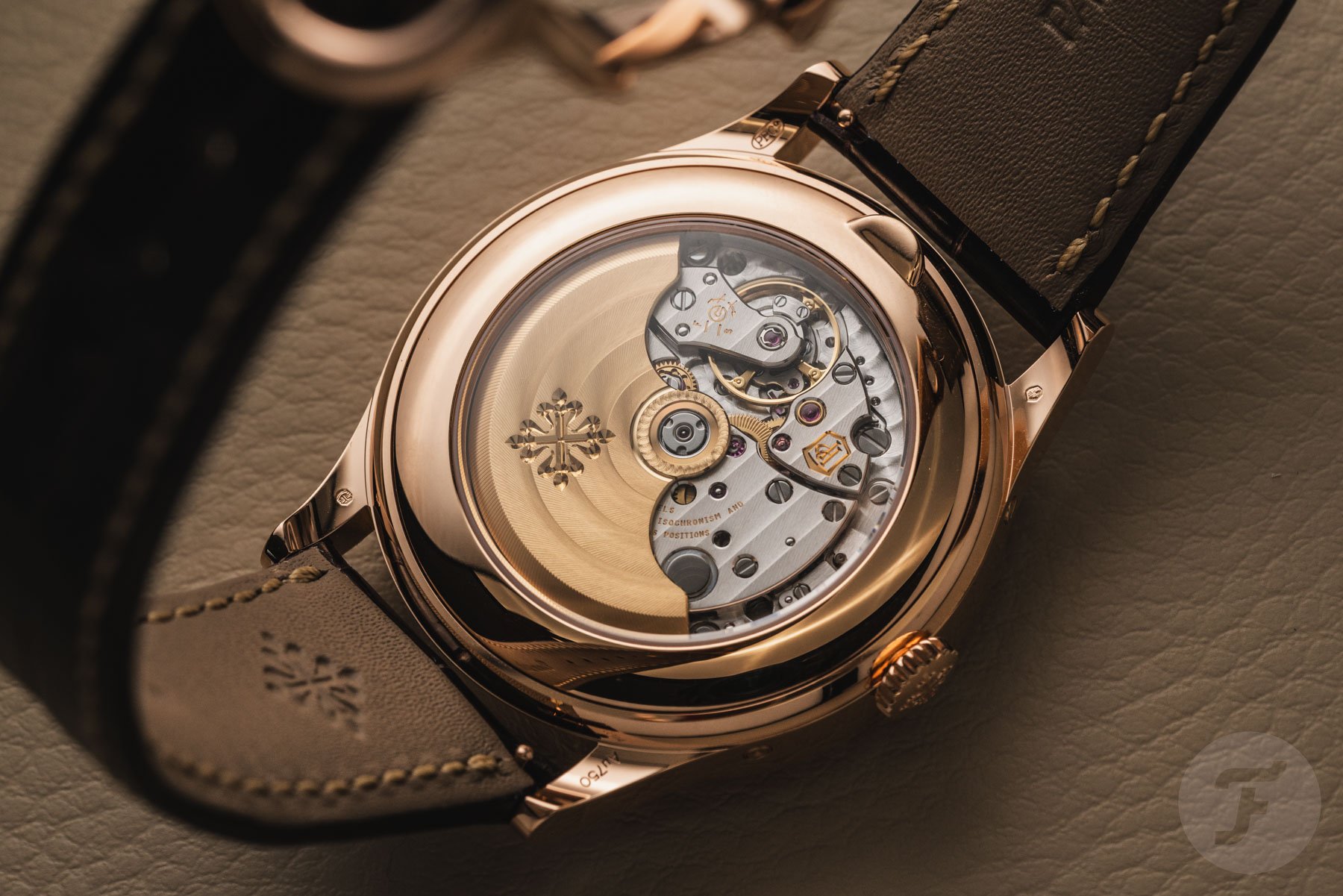
As you would expect, a 38.5mm watch with an 11.2mm-thick case wears effortlessly. The understated colors keep the look discreet but also give it a sophisticated wrist presence. The dial’s sunburst finish and beige tone look soft, and the applied rose gold “obus”-style hour markers blend in while standing out just enough to create a legible dial. The powerful rose gold dauphine hands also help in this regard. The watch features sapphire crystals on both sides, ensuring a clear view of the dial and the movement.
Automatic all year round
Inside the 30m-water-resistant rose gold case beats the self-winding caliber 26-330 S QA LU 24H. It runs at 4 Hz and uses a 21K gold central rotor with the same crest as the folding buckle. Yes, an annual calendar is less complicated than a perpetual calendar, and it’s easier/less pricey to service, but it’s also certainly not uncomplicated.
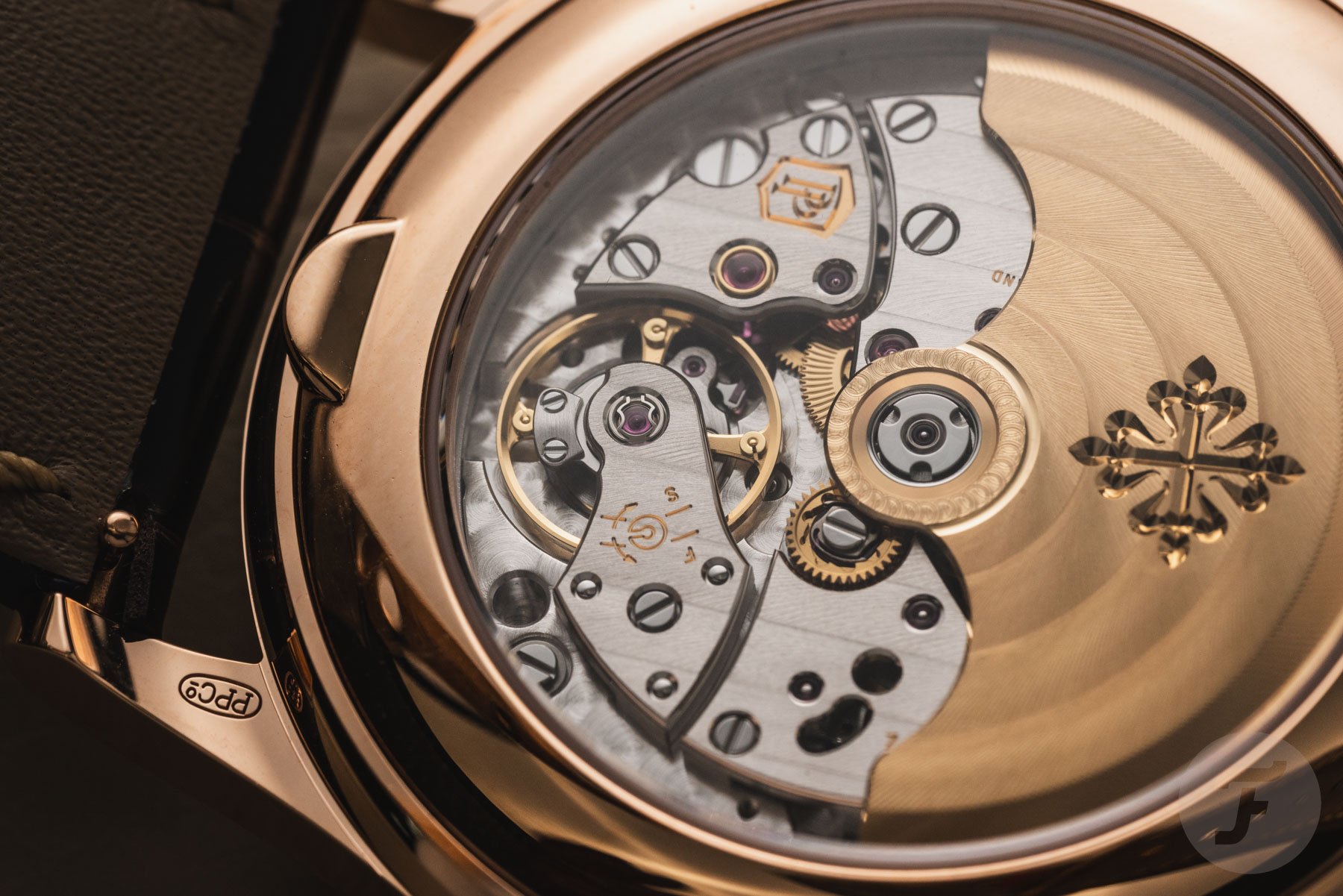
The annual calendar mechanism doesn’t use the QP’s intricate system of jumper springs, cams, racks, and levers. Instead, a rotary stack of geared wheels and pinions mounted on a calendar plate between the base movement and the dial does the trick.
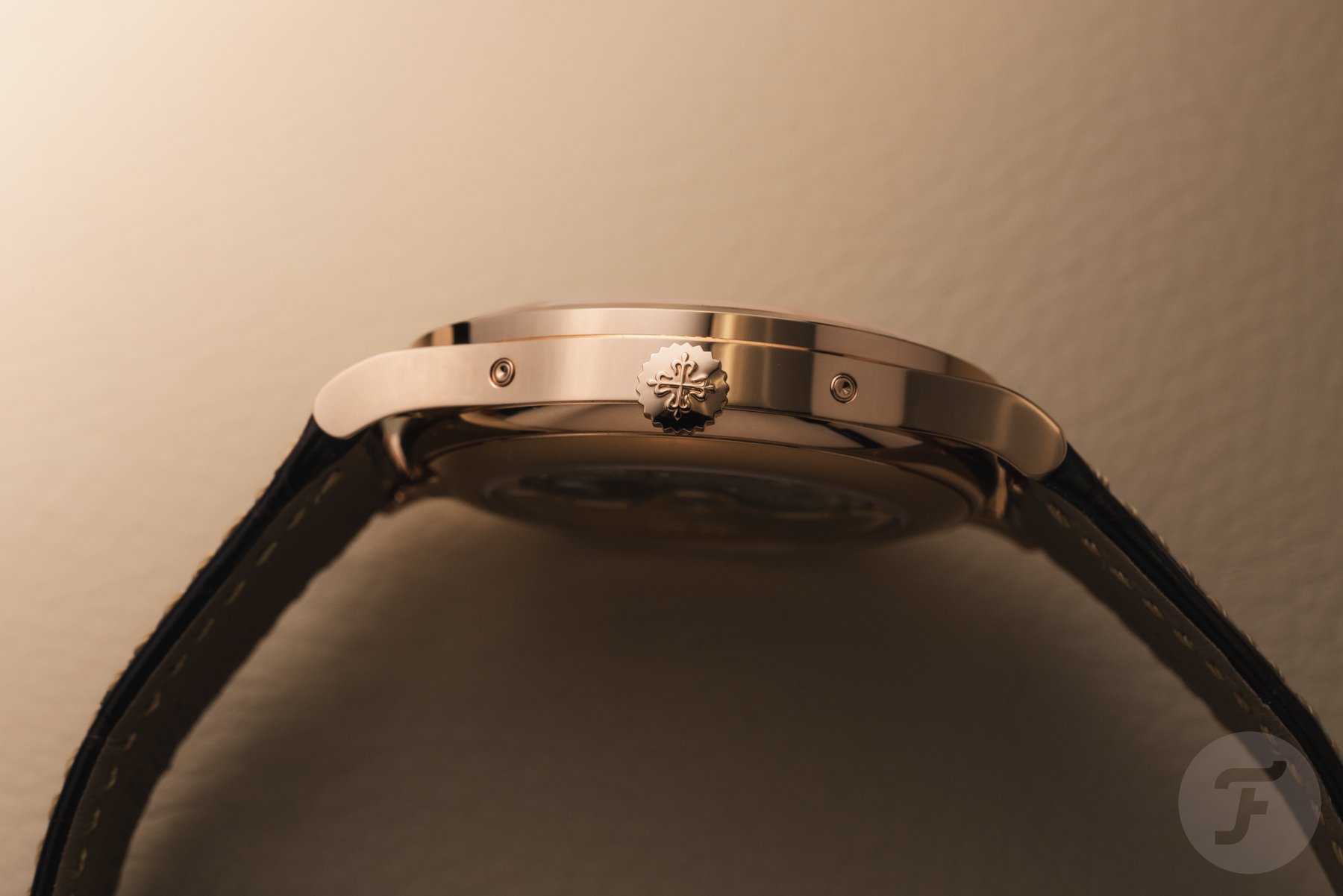
The movement inside the Calatrava ref. 5396R-016 consists of 339 components. It’s a user-friendly micromachine you set via the crown, with additional correctors on the case for adjusting the calendar or moonphase indications. It’s not the most powerful movement, though, with its autonomy of roughly 35–45 hours.
Still going strong after three decades
The 5396R does and doesn’t do what the first annual calendar was meant to do in 1996. This version, with its monochromatic look, seems designed for a new, younger audience, but it doesn’t reinvent itself. Thirty years ago, Patek launched a watch invention that helped the company through the ’90s and proved to be a worthy complement to its impressive collection. The new colorway looks relaxed, and that’s how you can wear it — as a classic watch with a design language that remains firmly rooted in Patek Philippe’s established calendar aesthetic, in touch with current taste.
The annual calendar debuted as a relatively affordable complication. Back in 1996, the ref. 5035J cost US$19,500, half the price of a ref. 3940 QP back then. To put that price in perspective, using U.S. Consumer Price Index inflation data, US$19,500 in 1996 would be worth roughly US$41,000 in 2026. When you compare the Calatrava ref. 5396R-016 with the QPs in Patek’s current collection, its price still sits comfortably below those timepieces, at €63,600 / US$67,517 / CHF 54,000. That price doesn’t make it a watch for everyone, but it does keep the hope that you can one day own a complicated Patek Philippe alive. And not just any Patek, that is, but one with an in-house-invented complication.
What do you think about the Patek Philippe Calatrava ref. 5396R-016? Does the annual calendar concept still speak to you even though it’s three decades old? And if so, do you hope/intend to own one someday? Please let me know in the comments.