Six Omega Stopwatches And A Lost NZ Racetrack

Here at Fratello, we get to cover all manner of watch-related stories. These include so many different watchmakers, from Rolex to Seiko to IWC. Omega, however, occupies a special place within the pantheon of watch brands for us. Today, we have a slightly different Omega story featuring stopwatches and a slice of New Zealand history.
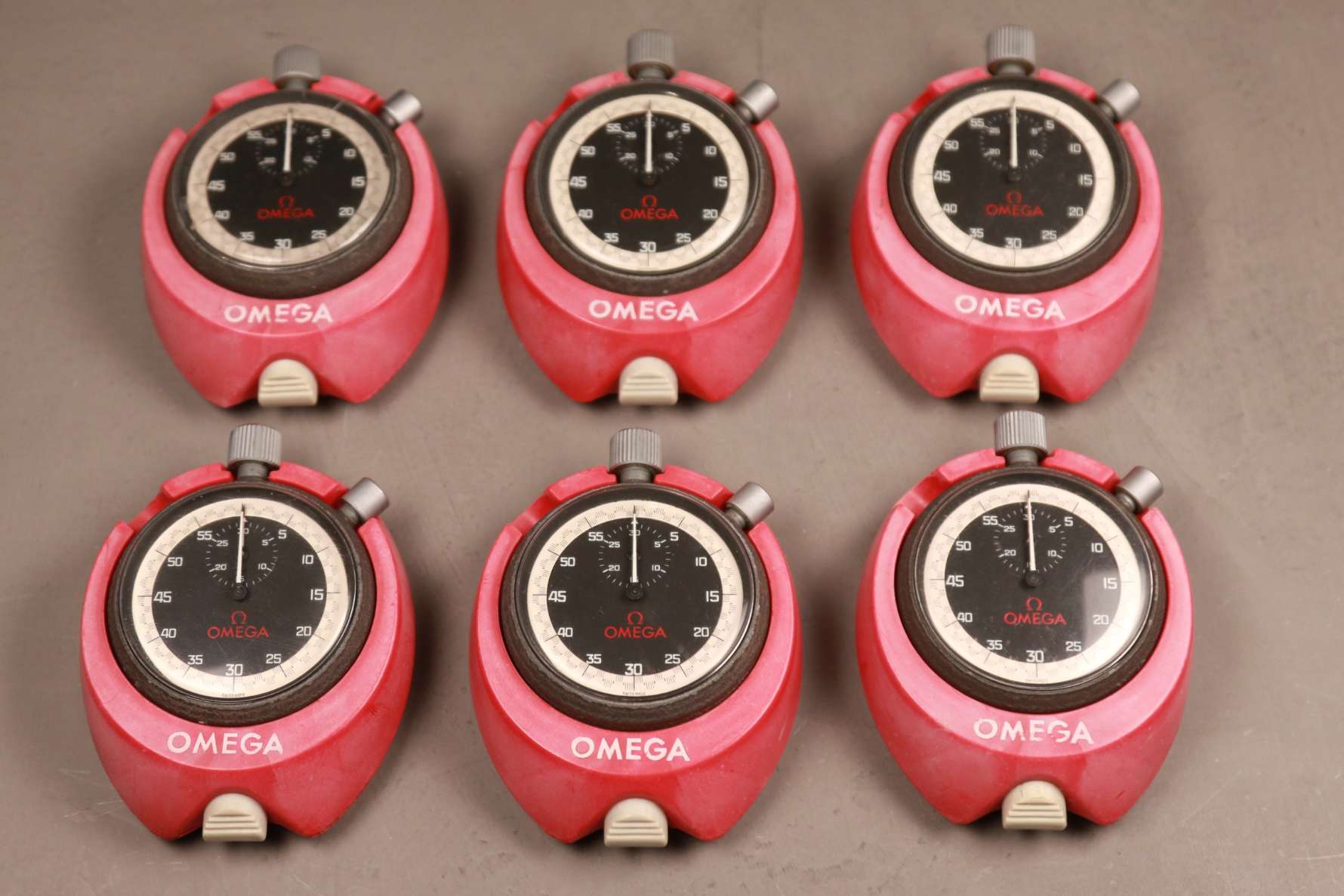
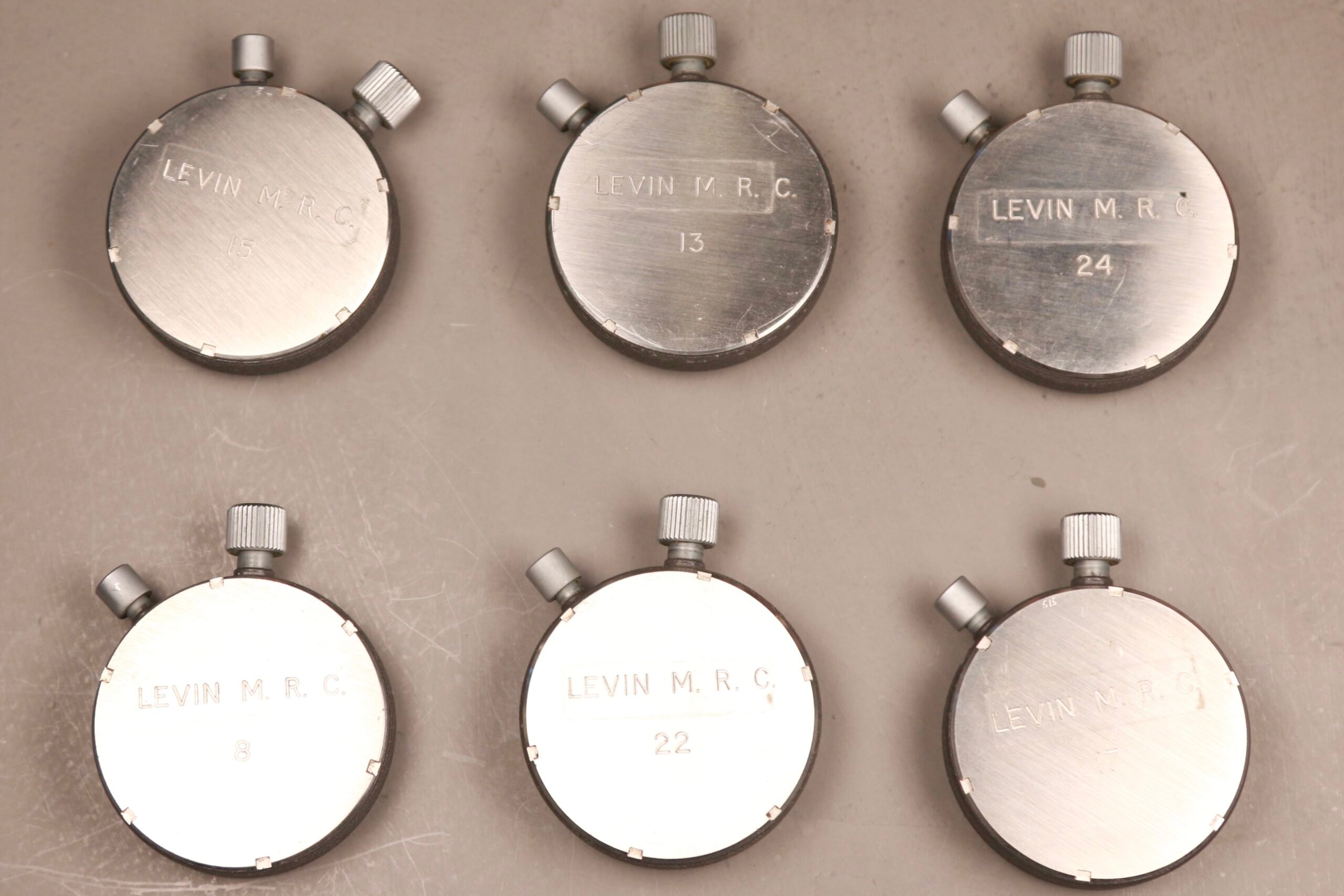
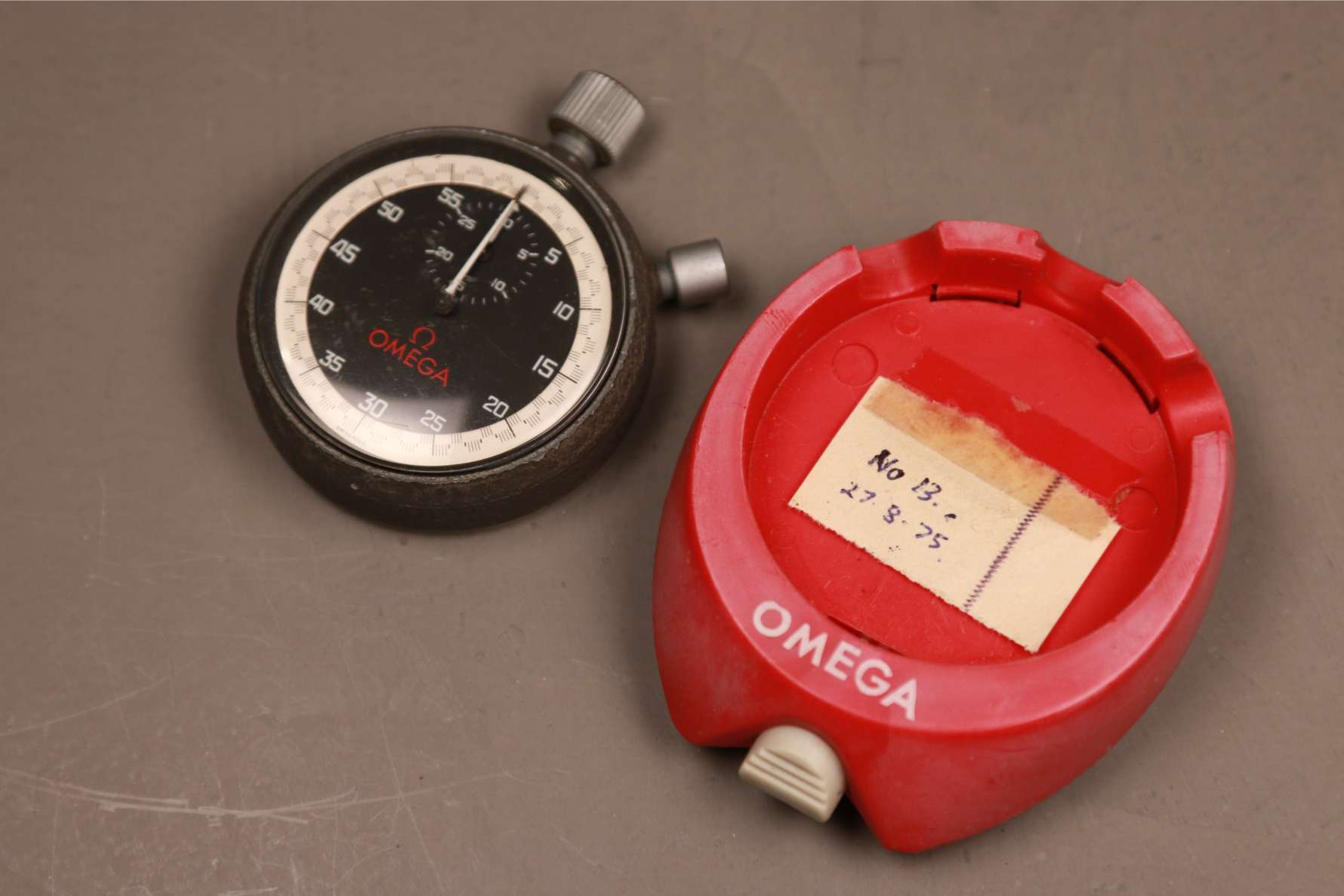
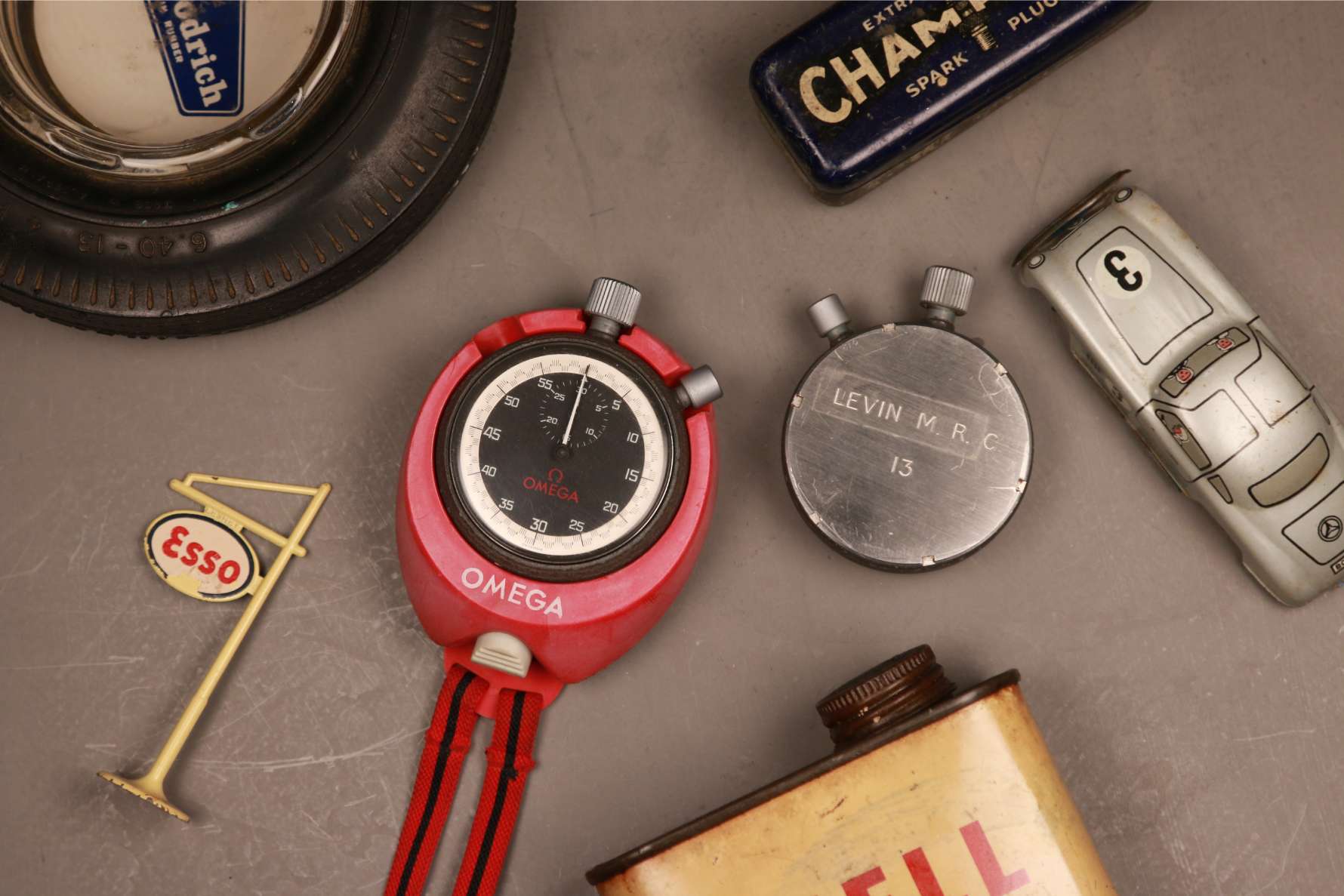
A collector friend of mine, Antonio, who runs a vintage-watch-related Instagram account called Tempo Archive, recently stumbled across a set of six Omega professional mechanical stopwatches. They all had an interesting engraving on the back — “LEVIN M.R.C.” All were individually numbered, still sitting together in their original fitted six-position wooden timing box, complete with their red Omega protective holders and lanyards. He flagged this with me, and we started digging, uncovering an interesting backstory.
Vintage Omega stopwatches turn up reasonably often. A complete, numbered institutional set, still together with its case, is a different matter entirely, and the club it belonged to has a history considerably longer than its size would suggest.
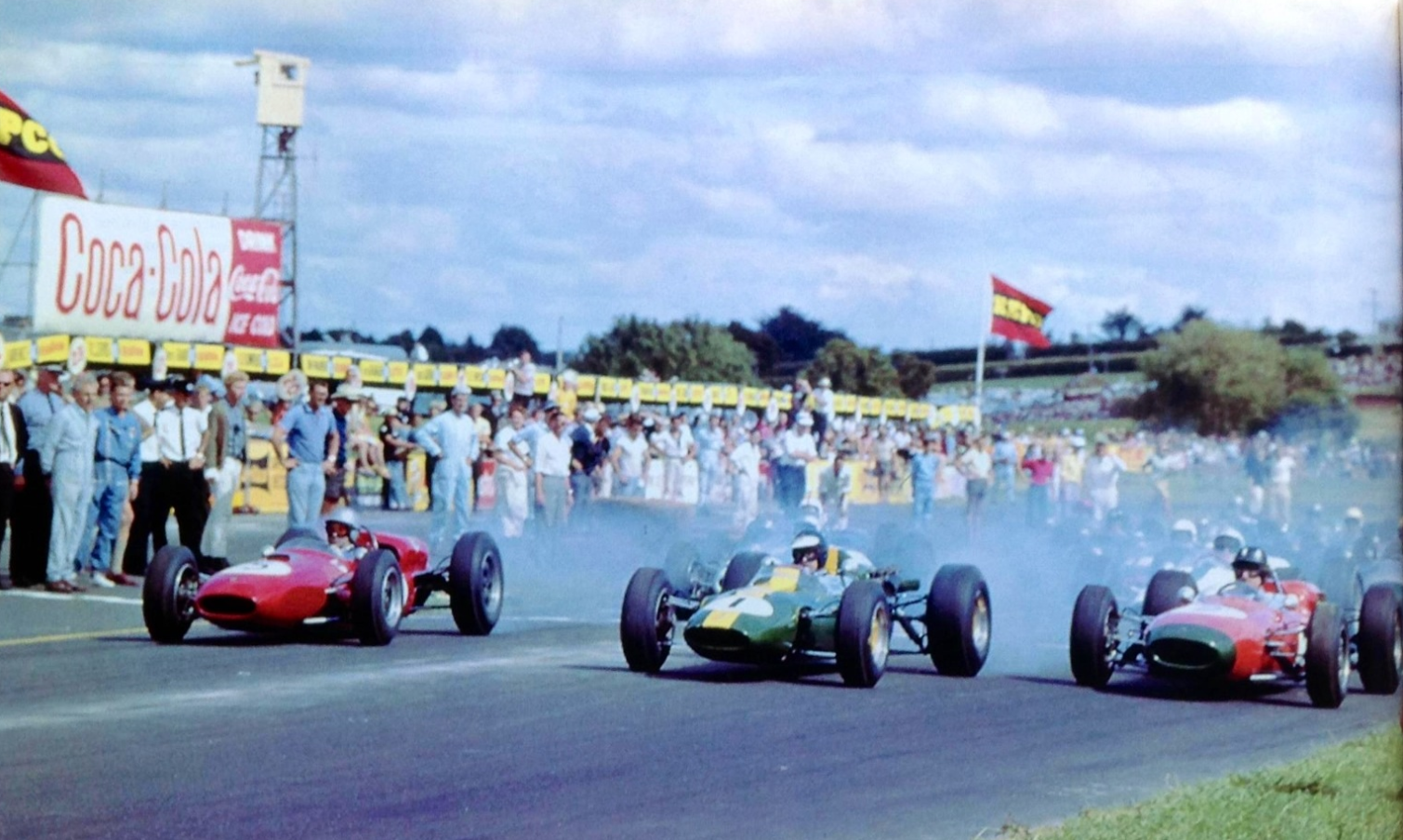
Image: Wikimedia Commons
New Zealand’s first permanent circuit
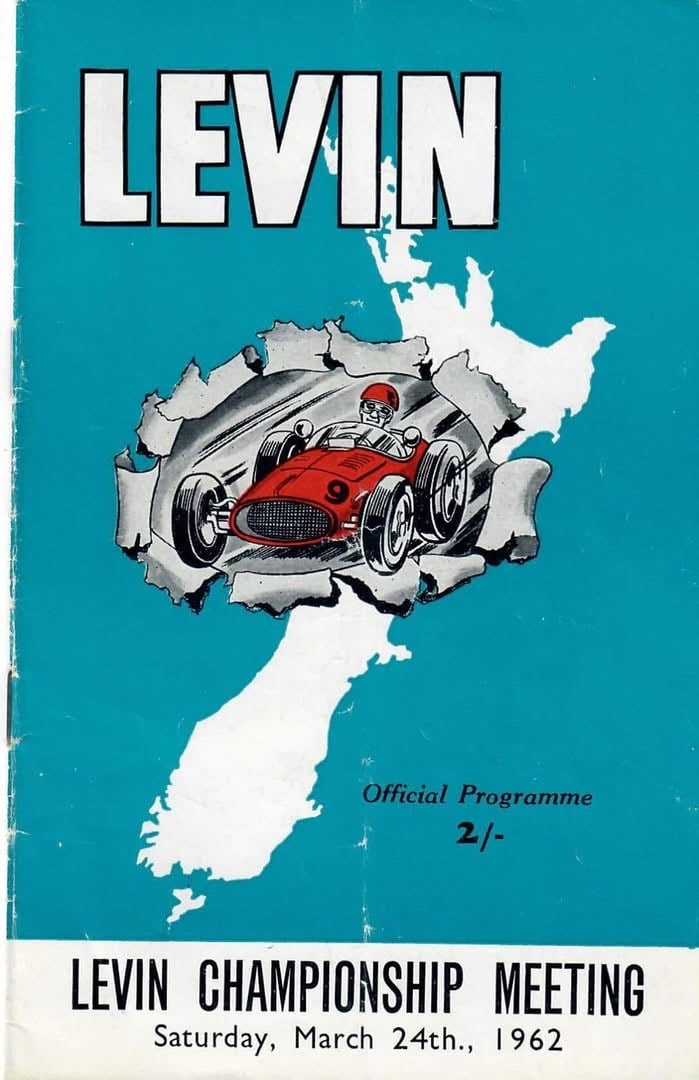
The Levin Motor Racing Circuit opened in January 1956. Built inside an existing horse-racing course on New Zealand’s North Island, it holds a genuinely important place in the country’s motorsport history as its first permanent, purpose-built racing circuit. Before Levin, New Zealand racing relied on temporary road courses and disused airfields. The inaugural meeting alone reportedly drew around 18,000 spectators to a town of roughly 8,000 people, driven largely by the efforts of English-born enthusiast Ron Frost, who brought a deliberate Brands Hatch influence to the layout.
What followed was two decades of a small circuit punching enormously above its weight. From 1964, Levin hosted a round of the Tasman Series, the summer championship that drew Formula One teams south during the European off-season. Over its roughly 25-year life, Levin saw Bruce McLaren, Jack Brabham, Stirling Moss, Jim Clark, Graham Hill, Jackie Stewart, Denny Hulme, and Chris Amon all competing on New Zealand soil, alongside dominant local talents like three-time Levin winner Graham McRae.
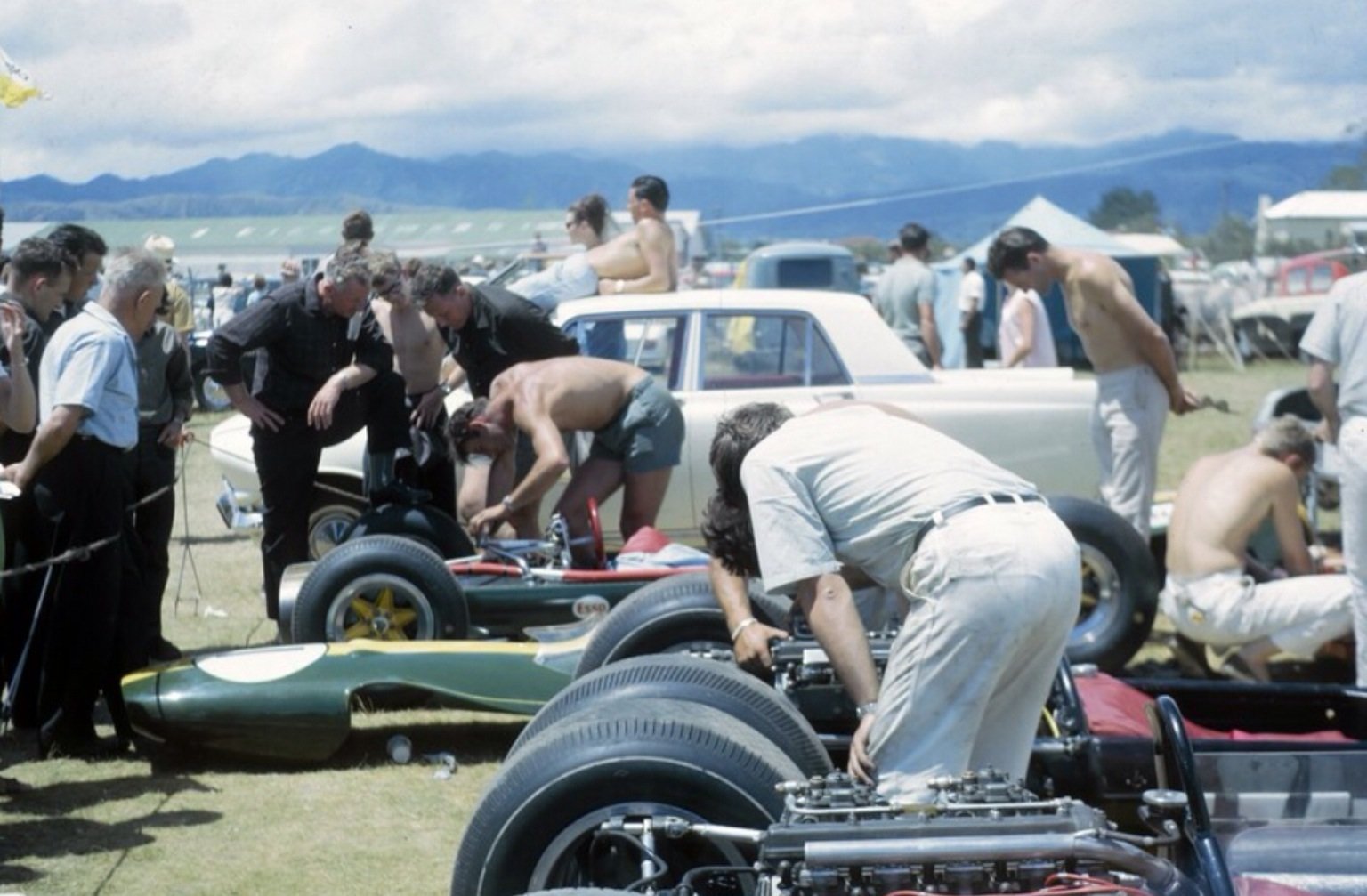
Image: Fistonic
Illustrious motorsport history
Bruce McLaren’s connection is a nice detail here. In January 1958, years before founding the team that carries his name, he finished third in the first Levin International driving a Cooper-Climax.
The circuit’s final years were arguably its most spectacular. As the Tasman Series moved into the Formula 5000 era from 1970, five-liter single-seaters brought a different kind of drama to Levin’s tight layout. McRae won three years running, from 1971 to 1973, en route to consecutive Tasman titles sandwiched between Graeme Lawrence’s wins in 1970 and 1975. Future five-time Le Mans winner Derek Bell was also among the international names who competed at Levin.
Club equipment, not a collector’s assembly
According to Antonio’s research, what makes this particular set of stopwatches significant is exactly what keeps it from being just six similar vintage Omegas that someone assembled after the fact. Every watch carries the same club engraving and an individual number. This strongly suggests they served as official club timing equipment and were checked out and tracked just like any piece of shared professional gear. Multiple stopwatches in the hands of different officials would have allowed a small club to record separate cars, laps, and intervals at once in the years before any of that could be done electronically.
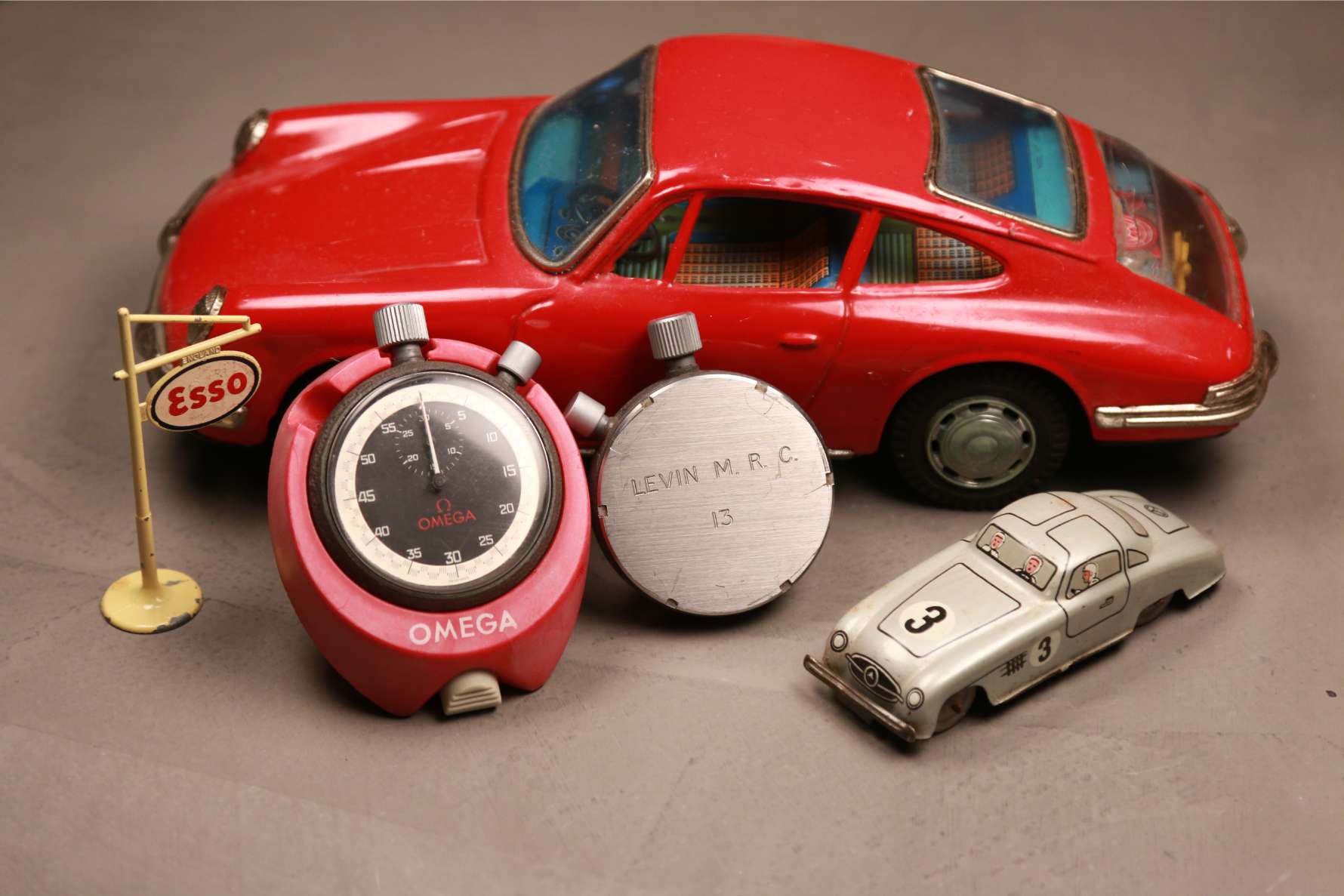
Still, a genuine mystery surrounds this set. The inside of the box lid carries a second marking, “HVMC.” This may point to a Hutt Valley motorsport connection, along with some old handwritten shipping material referencing Hutt. Antonio has admitted this part of the story needs more archival digging before anyone can say definitively how or when the equipment moved between organizations. He’s equally careful not to claim that any specific watch in the set timed any specific driver without documentary proof.
Omega’s long relationship with the stopwatch
None of this exists in isolation from Omega’s history, which had been intertwined with professional sports timing since long before Levin’s first race. Omega served as timekeeper for the Gordon Bennett Cup balloon race as early as 1904, and its work at the 1932 Los Angeles Olympics, using 30 chronometer-certified split-second stopwatches, marked the first time a single company had handled timekeeping duties across an entire Olympic Games. That sports-timing operation eventually grew into Swiss Timing in 1972, a joint venture with fellow Swiss watchmaker Longines. Long before that formal merger, though, Omega’s chronometer-grade stopwatches had already built a reputation across dozens of federated sports worldwide. That’s precisely the pedigree that would make a small overseas motor-racing club trust its official timing to Omega equipment specifically.
That context matters for a set like this one. Before electronic timing systems took over, the accuracy of an entire race meeting rested on this kind of equipment, a handful of individually numbered, chronometer-grade stopwatches distributed to trained officials who knew precisely how to use them. A watch built to that standard, marked and tracked as club property, was a genuine working instrument rather than a keepsake. That is exactly the role Antonio’s research suggests this particular set played at Levin.
Why the survival matters
Levin closed for good in December 1975. Unfortunately, its lease had expired, and new circuits elsewhere in the country had outpaced its facilities. There is no active circuit today from which comparable equipment could still emerge, which makes a complete, correctly marked set like this one considerably harder to come by than an anonymous Omega stopwatch on its own.


If the exact movements and references can eventually be dated, there is a real possibility of narrowing down the years this particular set was active. That window may even line up with Levin’s biggest international meetings.
Concluding thoughts
However, Antonio has been careful throughout not to overstate what the currently available documentation can prove. That restraint is worth respecting rather than working around. What we can confidently say is that this is a genuine, physically marked piece of Levin Motor Racing Club’s timing operation, from a circuit where some of the greatest drivers of the 20th century once raced, built using exactly the kind of Omega equipment that defined professional sports timing for most of the last century. Whatever further research turns up about the “HVMC” marking or the set’s precise years of service, the six stopwatches already tell a genuine story about how racing was timed before anyone thought to make it electronic.
Do you own or know of any surviving club timing equipment with a story like this set of stopwatches? Let me know in the comments!