Every Second Belongs To Someone: Inside Silverstone With H. Moser & Cie.

My team finished dead last. We had one job — or three, technically, which turned out to be the whole point. During a visit to Enstone, the Alpine F1 team’s factory, with H. Moser & Cie., the team ran a pit-stop challenge for the visiting journalists — teams of three, one tire, against the clock, with one person on the wheel gun, one pulling the old tire off, one fitting the new one. I started on the gun. One of my teammates was struggling with the tire’s weight, so we swapped. This felt noble for about four seconds, which is how long it took me to discover the gun is heavier than the tire.
The swap didn’t save us. One position in the sequence faltered, and the whole operation came apart around it. Not dramatically, just inevitably. Our best time was 6.5 seconds. Alpine’s actual crew can change all four tires in less than two.
What’s stuck with me isn’t the gap in speed. It’s the shape of the failure. Nobody on our team was slow at everything. We failed because a pit stop isn’t a task. Rather, it’s a mechanism — three narrow jobs that only produce a result when each one happens in exact relation to the others. If one component is out of tolerance, the output isn’t “slightly slower.” It’s wrong. If you’ve ever stared at a movement through a case back, you know where I’m going with this.
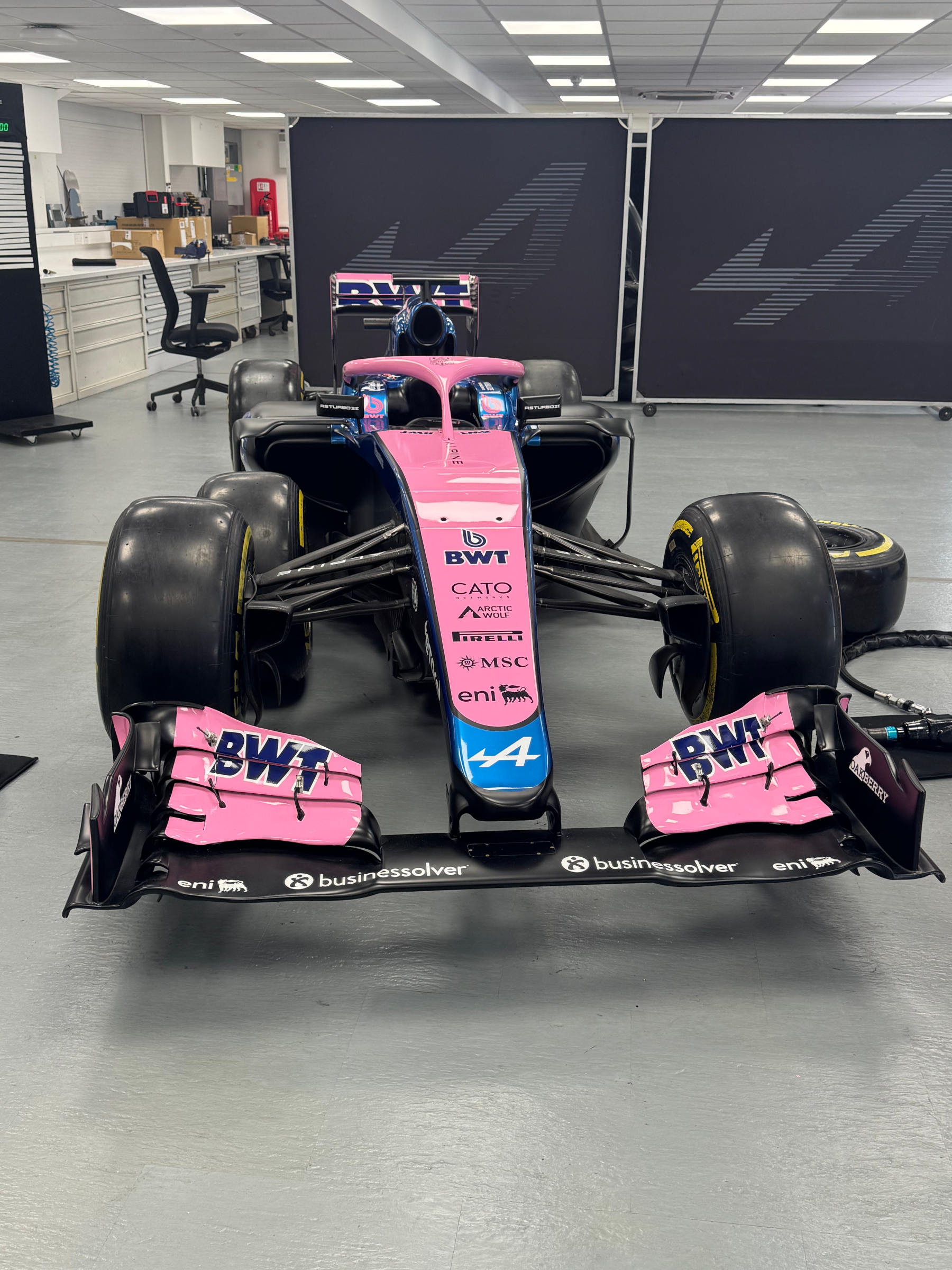
The scene of the crime: this is where the failed pit-stop challenge took place…
The comparison everyone makes, and the one worth making
Every watch brand that’s ever sponsored a racing team reaches for the same line: F1 and watchmaking are both about precision. This is true in the way brochure copy is true, which is to say vaguely, without teaching you anything. TAG Heuer said it. Richard Mille says it. It’s a wash.
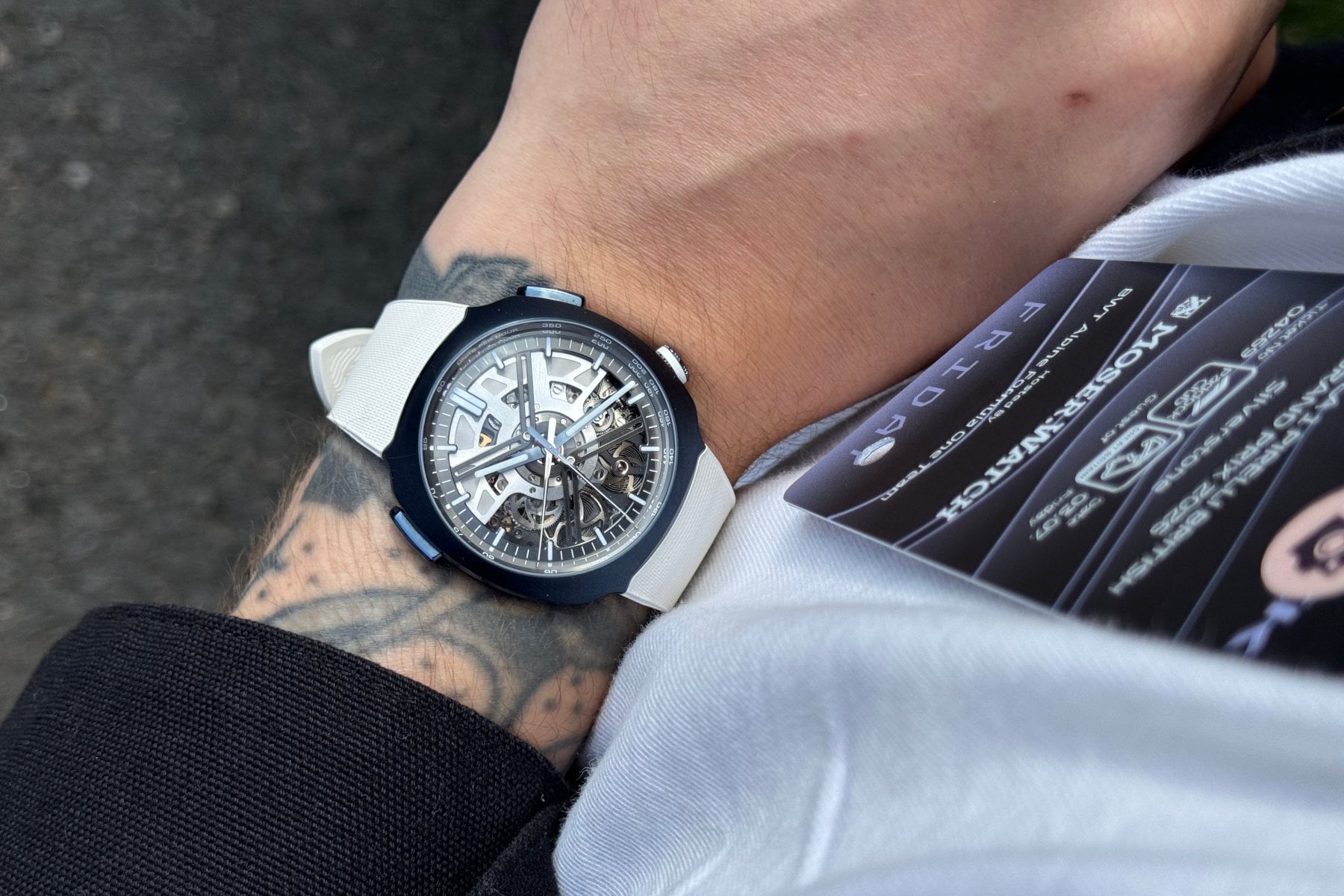
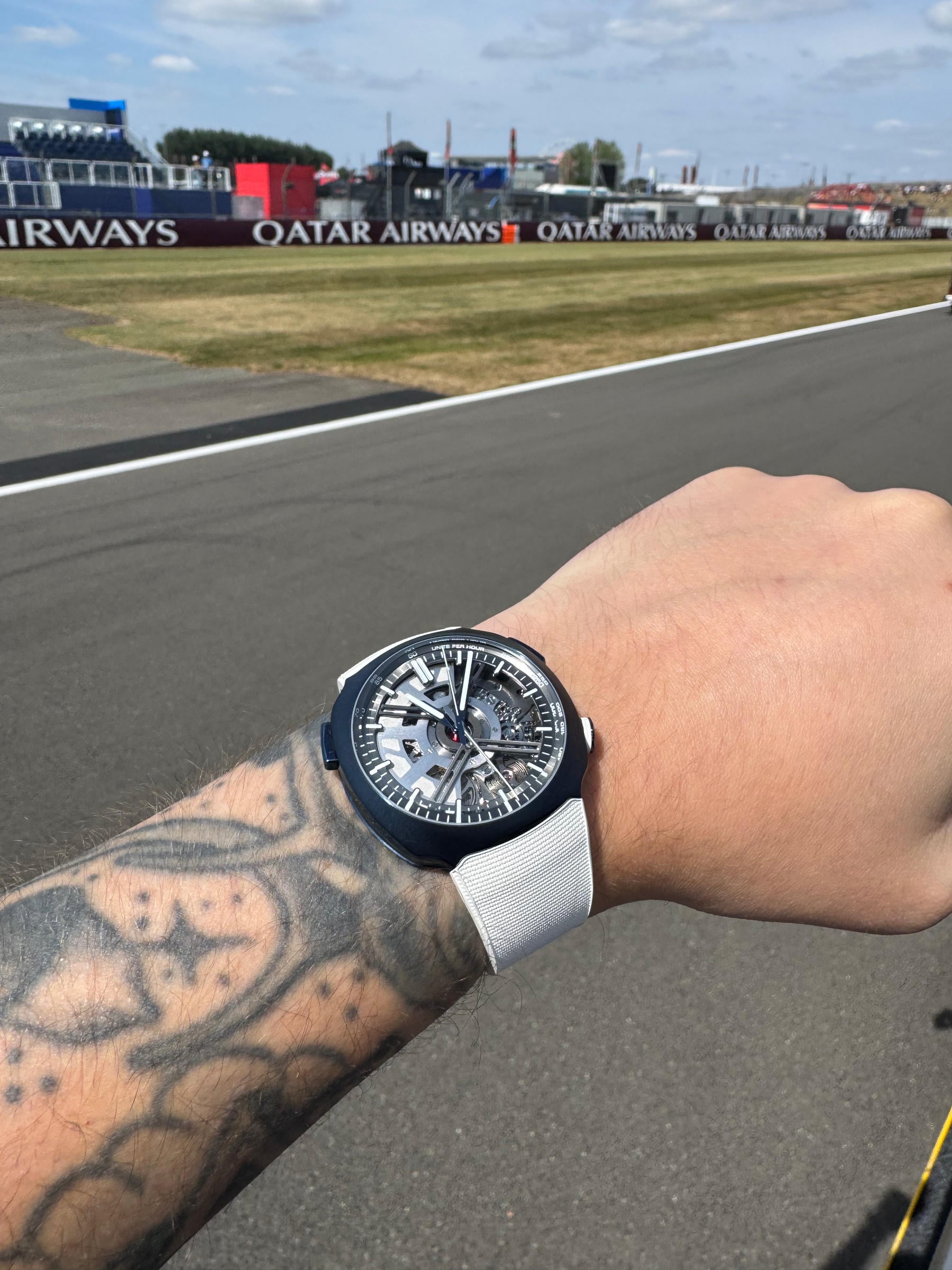
My watch for the day, the H. Moser & Cie. Streamliner Flyback Chronograph Driver’s Watch
A weekend inside Alpine’s operation shows you something more specific. A race team is an assembly of specialists, each responsible for one exact function, synchronized against the clock, with zero tolerance for individual error. That’s not a metaphor for a mechanical movement. That’s a description of one. The escapement doesn’t cover for the gear train on a bad day. Each part does its one job in time, or the whole thing stops telling the truth.
H. Moser & Cie., the official watch partner of the Alpine F1 Team, presumably didn’t sign the deal on the strength of that observation. But it’s the connection that actually holds up.
Why this weekend specifically
A quick word on format, because it shapes everything that follows. Silverstone ran as a Sprint Weekend, one of a handful of rounds each season with a compressed schedule. Instead of three practice sessions across Friday and Saturday, teams get exactly one, called P1. Then it’s straight into Sprint Qualifying, a short Sprint race, then qualifying and the Grand Prix proper.
For viewers, that means more competitive sessions. For the team, the preparation window collapses. Everything they’d normally learn across three sessions has to be learned in one: how the tires behave on this track, in this temperature, with this fuel load. There’s no second session to fix a wrong guess.
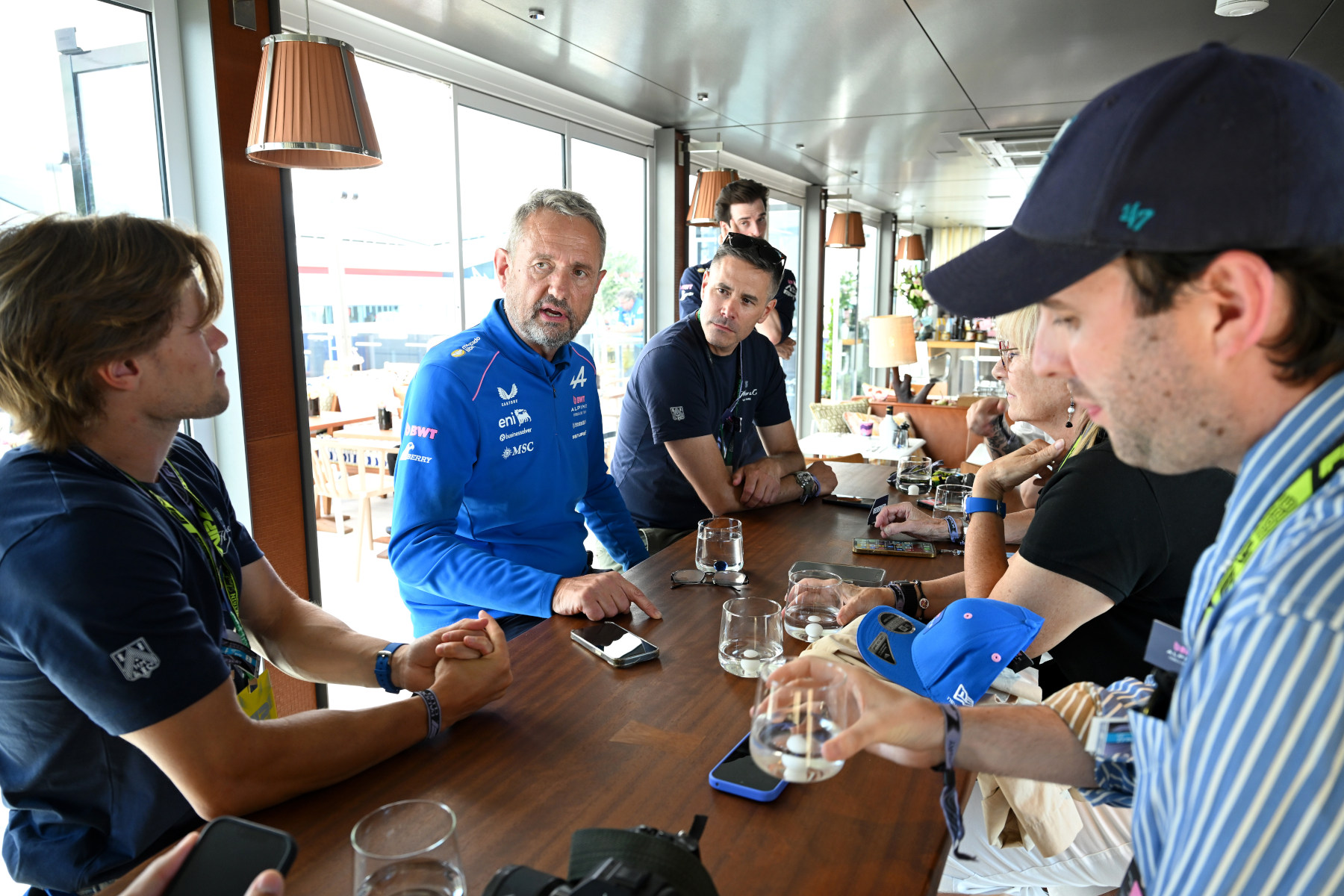
For Alpine, the stakes carry extra weight. “Last year, we were unfortunate enough to finish last,” Steve Nielsen, Alpine’s managing director, told our group over the weekend, with the understatement of a man whose first season in the paddock was 1985. “We’re doing better this year.” That means fifth in the standings, leading the midfield. By Sunday evening at Silverstone, that lead stood at a single point over Racing Bulls, defended by bringing both cars home in ninth and tenth.
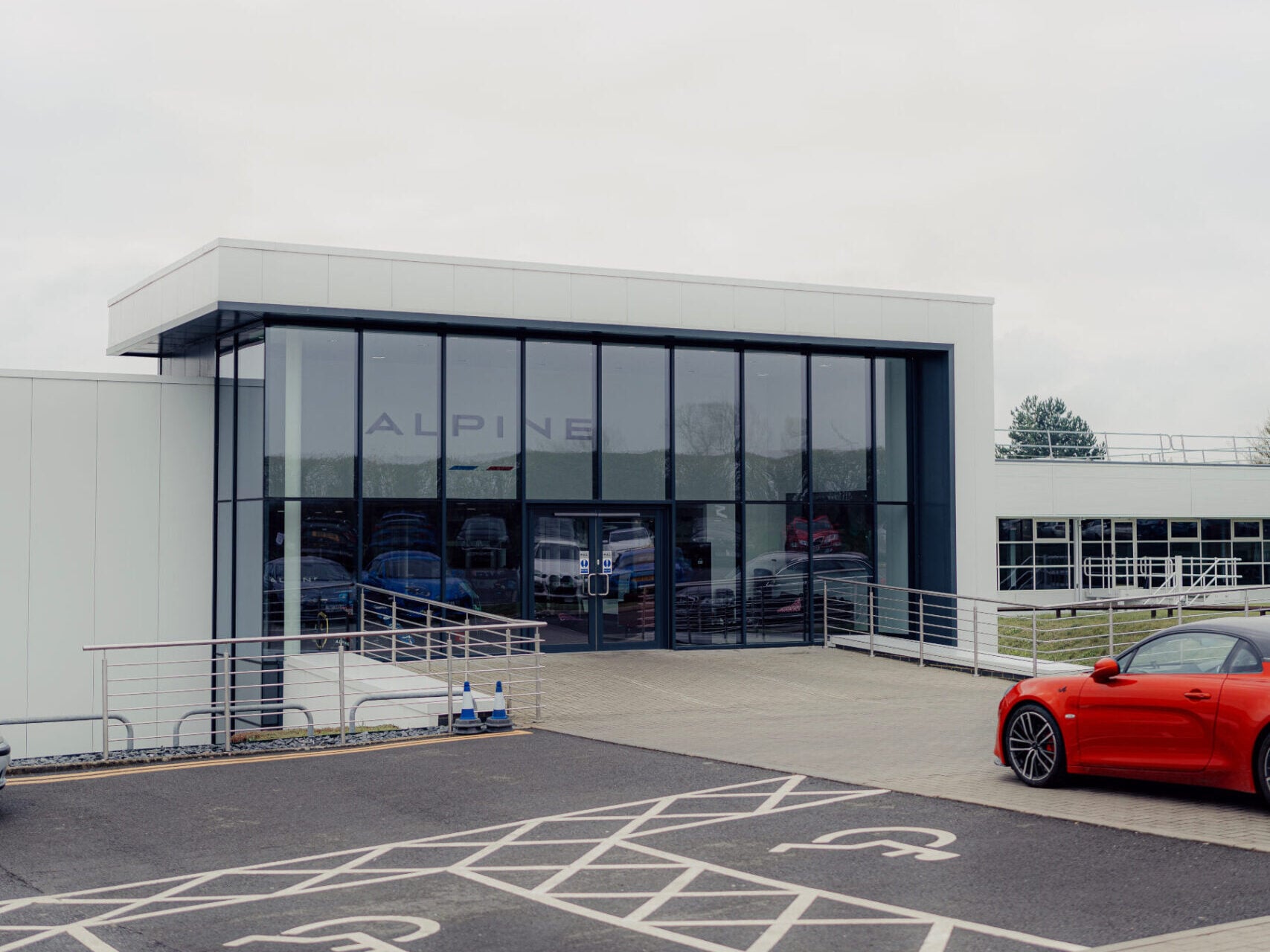
Enstone, where the specialists are made
The trip started at Enstone, Alpine’s technical headquarters in the Oxfordshire countryside, where the cars are designed and built, and where our pit-stop humiliation took place. I won’t pretend a factory tour is a revelation. It’s a factory tour. But walking it with the race weekend still ahead changed how I watched everything after.
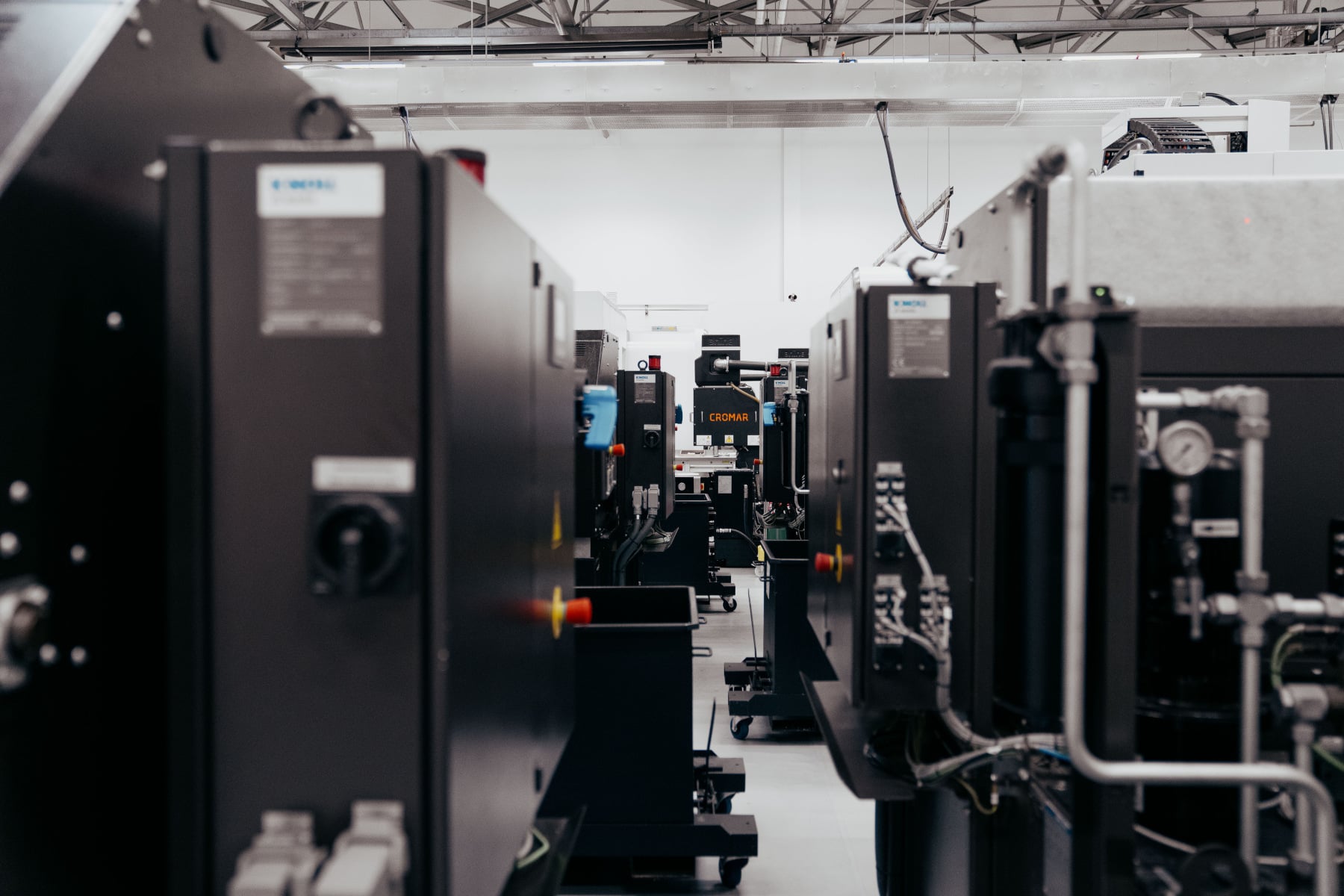
What stayed with me from Enstone wasn’t any single machine or room. It was the degree of subdivision. Nobody at Enstone works on “the car.” Each person works on one system of the car, often one component of one system, next to colleagues whose entire professional existence is the part beside theirs. The pit crew I’d fail to imitate isn’t an exception to how an F1 team works; it’s the most compressed version. The whole organization is a pit stop running at different speeds.
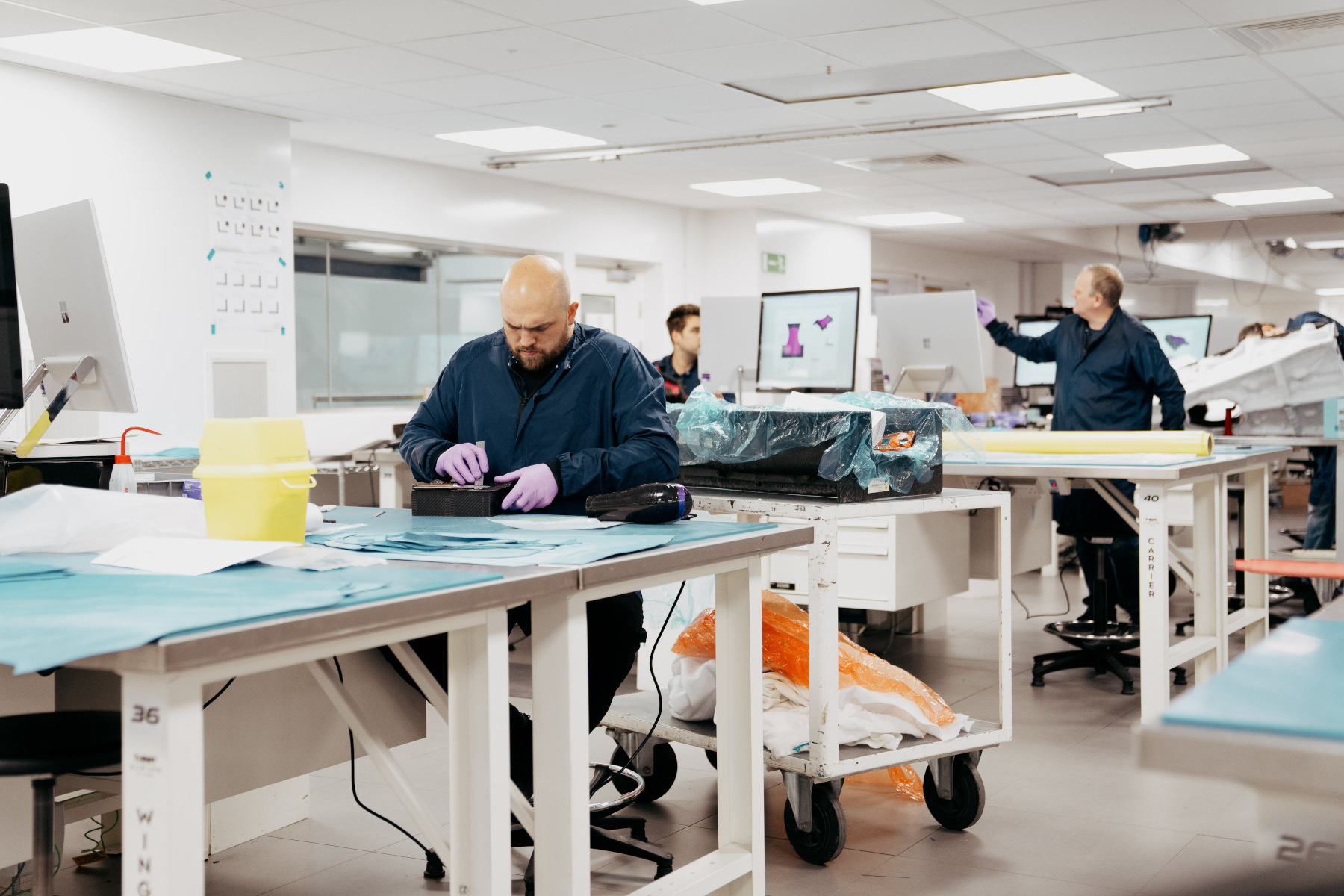
The human factor
Alpine Head of Partner Experience Luca Mazzocco, who walked us through the factory, described the balancing act at the heart of it. “In an F1 team, you need individuals who are very competitive and ambitious on one side but who also possess the quality to play as a team on the other, pursuing a common mission rather than individual targets,” he said.
And that tension only sharpens as the margins shrink. “When you are chasing hundredths of a second while locked in a cycle of constant innovation, the human energy and the way team members work together become defining factors,” Mazzocco continued. “I do believe that this drama between technology and human qualities is what makes Formula One the unique sport it is.”
That drama is visible everywhere at Enstone. The people we met were plainly ambitious, but none of them introduced themselves by their achievements. They introduced themselves by their function.
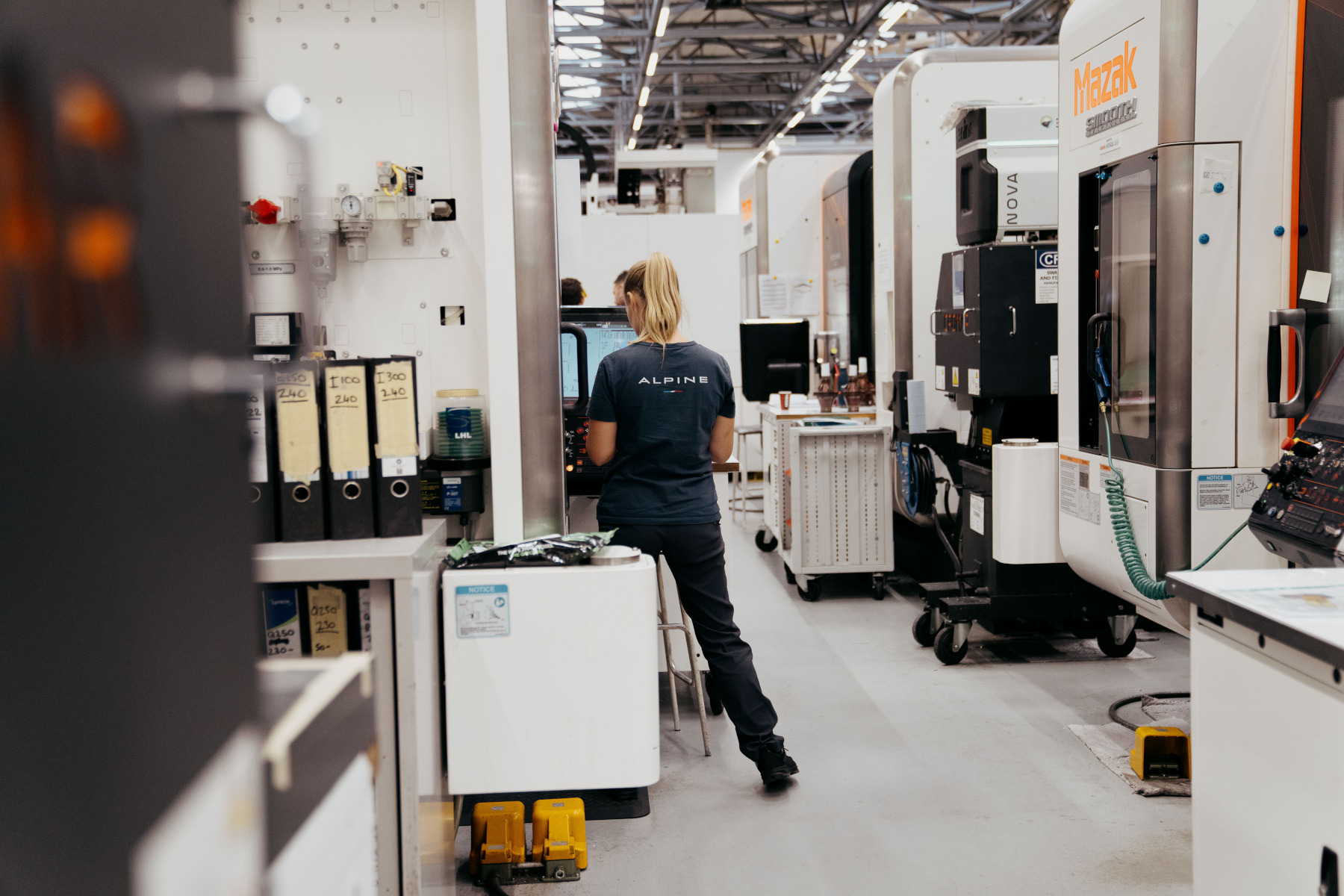
There’s more to this partnership than meets the eye
And here’s the detail from Enstone I didn’t expect: the knowledge flows in both directions. When the specialists at Alpine were developing ultra-thin titanium parts that were pushing the limits of their processes, for the A110 S Enstone Edition, a 300-piece limited-run road car built alongside their F1 work, they consulted H. Moser on a machining approach that balanced manufacturing precision with the distinctive aesthetic qualities of a luxury timepiece.
Sit with that for a second. It’s not the watchmaker learning from the race team, which you’d expect, but the race team’s people asking a watchmaker how to machine metal. It’s the clearest sign that the two industries share more than a color scheme. The partnership everyone assumes is a logo on a car turns out to be a genuine exchange between two disciplines solving the same problem at different scales — impossibly precise components in difficult materials.
One session on the radio at Silverstone
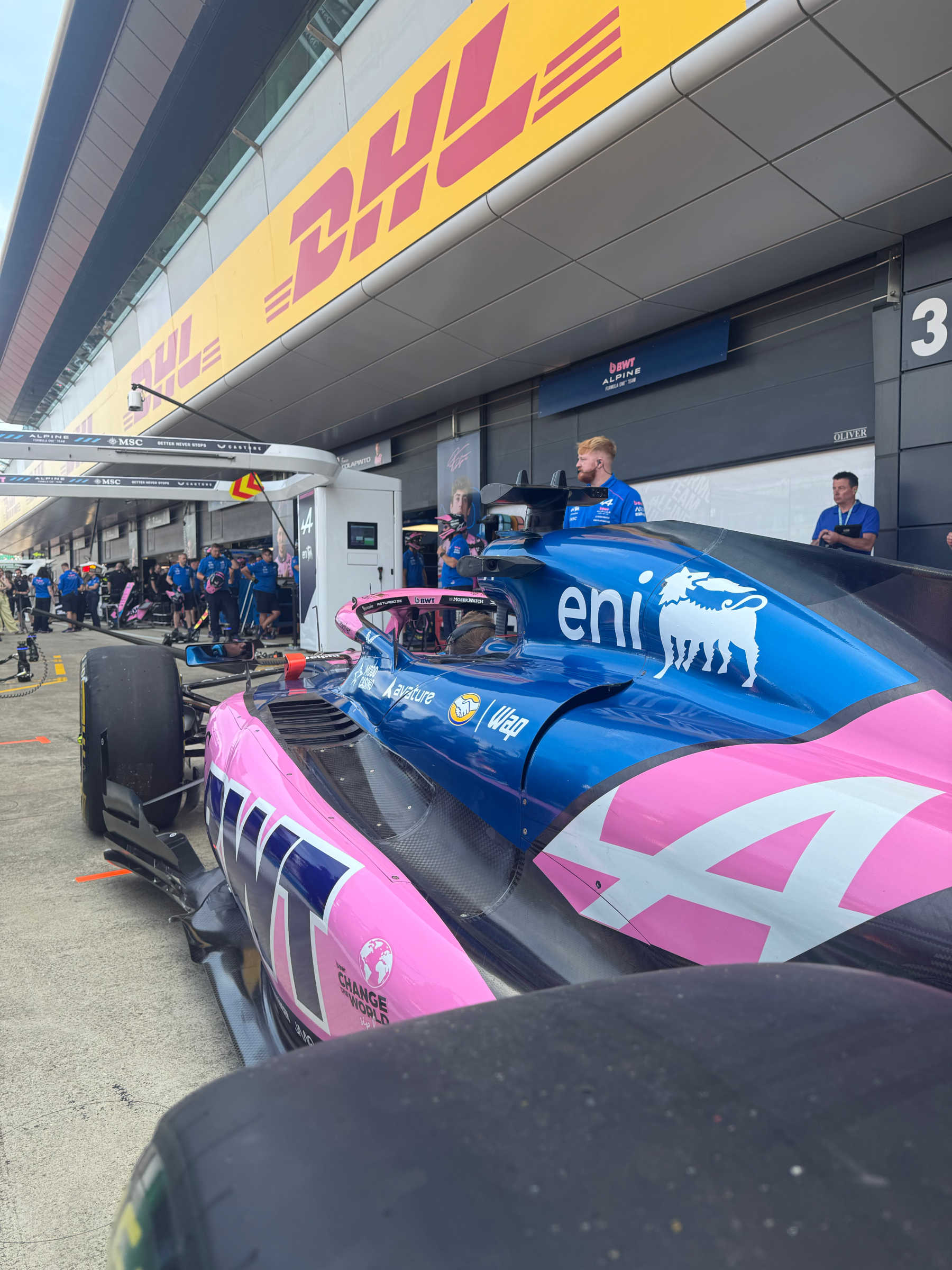
The most instructive part of the weekend was spent standing in Alpine’s garage during P1, listening in on team comms. Unfortunately (for obvious reasons), there was no photography at this point. Secrecy remains the name of the game.
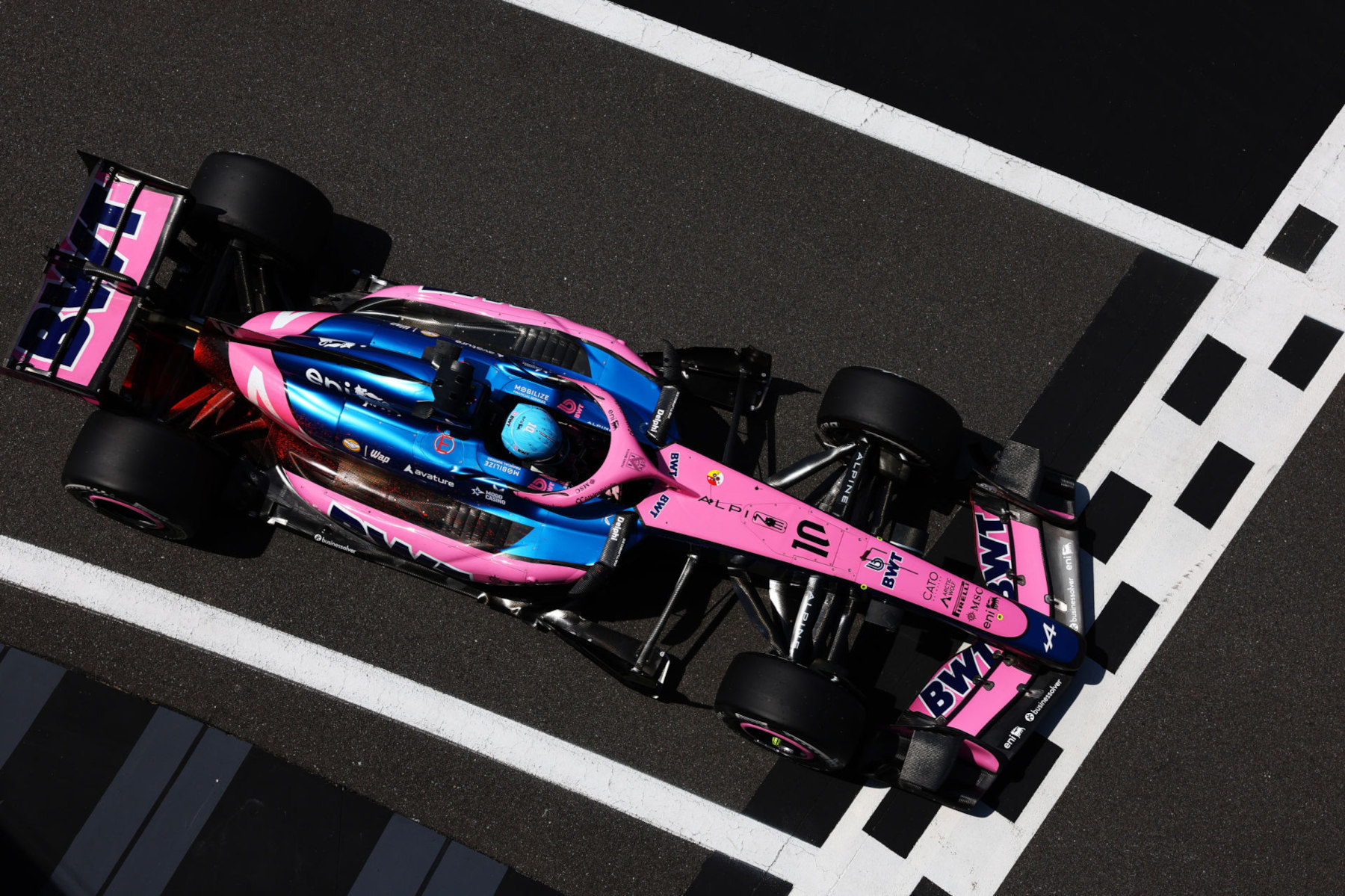
From the grandstand, practice looks like cars driving around. From inside the garage, it’s closer to a live negotiation with incomplete information. The car goes out, data comes back, and a group of engineers converts that data into decisions in real time. Setup changes, run plans, and tire choices are all made with the knowledge that there’s no second session to correct a bad call. Every exchange on the radio is short, specific, and addressed to the person who owns that decision. Nobody editorializes. The channel is built for zero wasted motion.
And the pressure has a particular texture. It isn’t frantic. It’s dense. The session is only so long, the track evolves lap by lap, and the team is trading one irreplaceable resource for another, spending laps to buy information, with the exchange rate constantly shifting.
The two-second mechanism
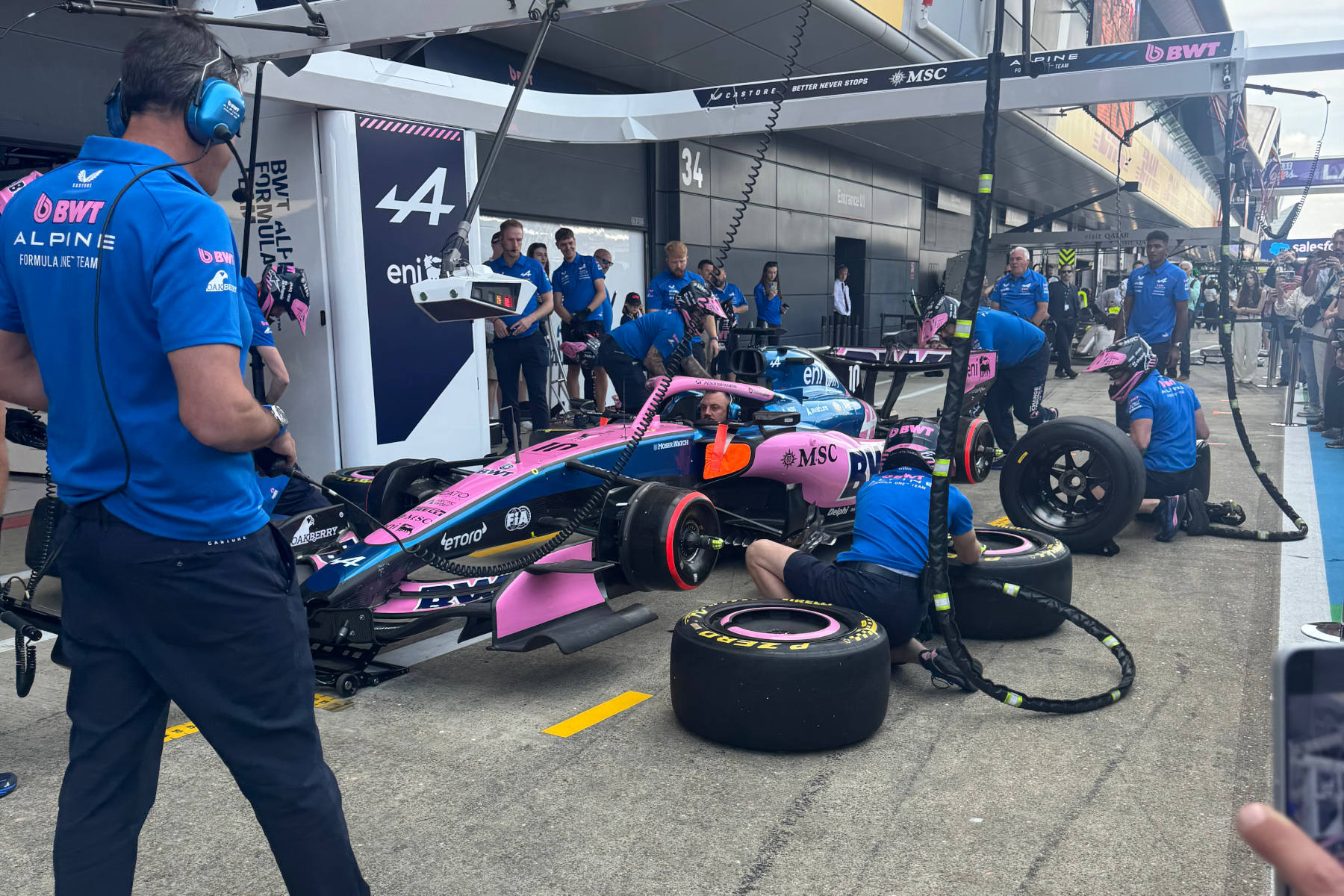
Back to the pit stop — the real one this time. Watching Alpine’s crew work after having attempted the job myself was humbling, but the humbling part wasn’t the speed. It was the choreography. Around each wheel were the same three roles we’d botched at Enstone — gun, tire off, tire on. Except here, it’s happening at all four corners simultaneously, with others on the jacks and others steadying the car. Every person owns one movement, drilled through endless rehearsal, and no movement means anything on its own. The crew member fitting a tire can’t go faster than the one with the gun. The jack can’t drop before all four corners confirm. Two seconds isn’t a time so much as a tolerance: it’s the window inside which every part of the mechanism has to fire in exact relation to the rest.
Hours to save a tenth
Nielsen spent years as this team’s sporting director before becoming its managing director, and those two seconds were part of his job. “I’ve sat in meetings, and you talk for hours and hours and hours about how to save a tenth or a couple of tenths of a second in a pit stop,” he told us. “You’re talking about tiny amounts of time, but you spend hours doing it.” This is hours of specialist labor invested to move a mechanism a tenth closer to perfect. There are watchmakers in Schaffhausen who would describe their week the same way.
This is where the watchmaking connection stops being sponsor copy and becomes something you can’t help but notice. A hand-finished movement of the kind H. Moser & Cie. builds is exactly this — dozens of components, each with one narrow function, each useless alone, producing something remarkable only through synchronization. When my teammate struggled with one tire, we didn’t lose a few tenths. The operation failed. Our 6.5 seconds against their two isn’t a speed gap. It’s the difference between a precise mechanism and a group of people holding tools.
Silverstone qualifying, with the margin removed
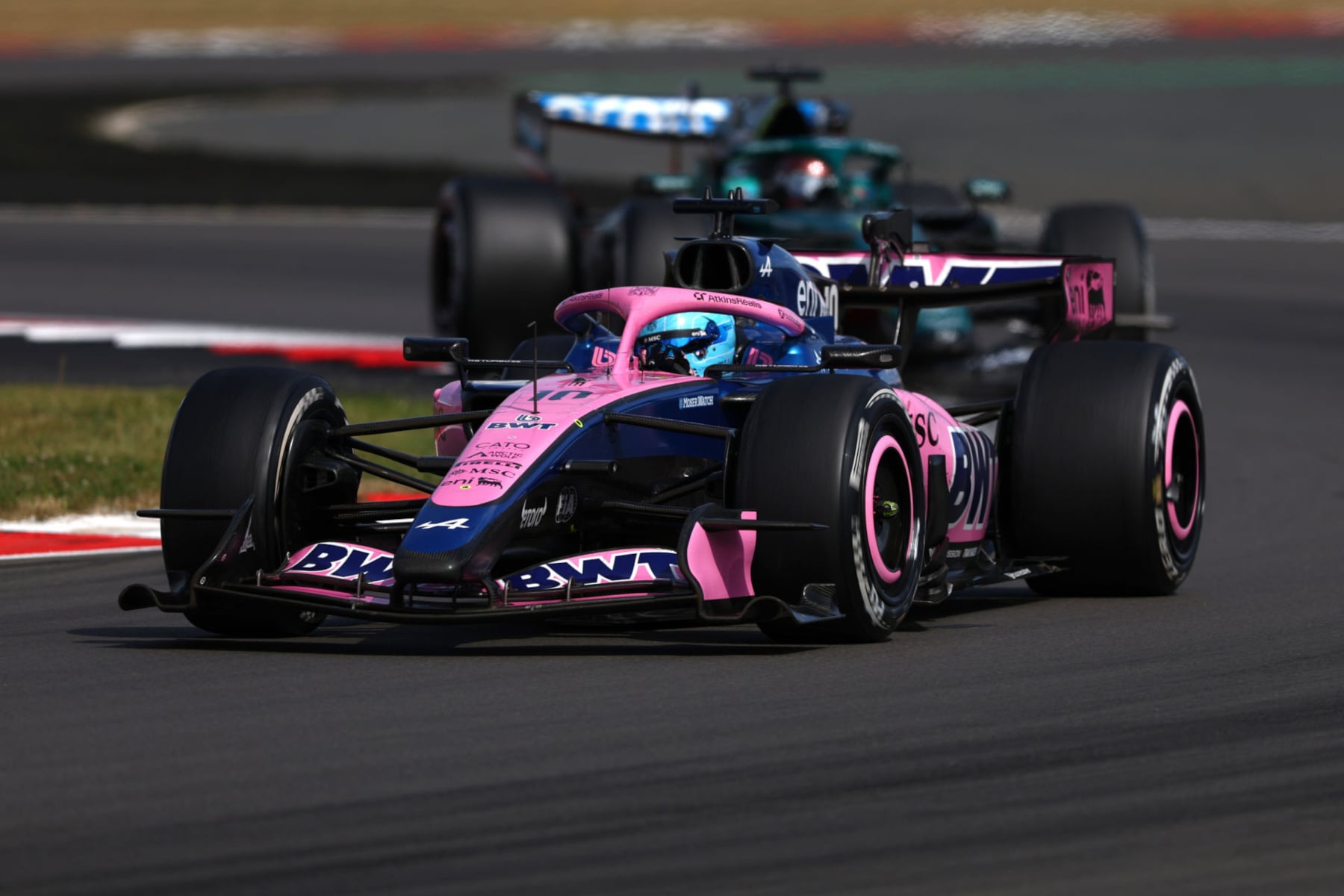
Sprint Qualifying, watched from inside the operation rather than on a screen, is the same mechanism under maximum load. The session is short, the track keeps evolving, and every car has a handful of laps in which to produce one that counts. Everything I’d watched all weekend compresses further — the narrow jobs, the dense radio, the rehearsed sequences. Out-laps are timed to the second to find a clear track. Tire preparation becomes a science. A team that’s done everything right all weekend can lose it here to one slow release from the garage, one lap ruined by traffic, or one call made a few seconds late.


And the margins involved aren’t a figure of speech. In SQ1, the first elimination segment of Sprint Qualifying, where the slowest cars are knocked out, Carlos Sainz, in 16th, posted a time of 1:31.073. Oliver Bearman, 17th, got 1:31.083. There was one hundredth of a second between them, and it was the cutoff: Sainz continued, but Bearman’s Sprint Qualifying was over. Watch people will appreciate the unit, as it’s the smallest increment most chronographs can even display. An entire weekend of hundreds of specialists doing their one job exactly right, and the difference between staying in the fight and packing up comes down to an interval you can time but not perceive.
Nielsen had already given us the exchange rate for margins like that. “Ten kilos in the car makes a difference of three-tenths of a lap,” he explained. “In Austria, we missed going to Q3 by a tenth, and a tenth is probably three kilos.” Run his rough math down to a hundredth, and you’re talking about 300 grams. The gap between those two cars, in other words, weighed about as much as a couple of wristwatches.
Somewhere in that session, I stopped thinking of F1 as a sport punctuated by engineering and started seeing it as engineering punctuated by sport.
The partnership, earned
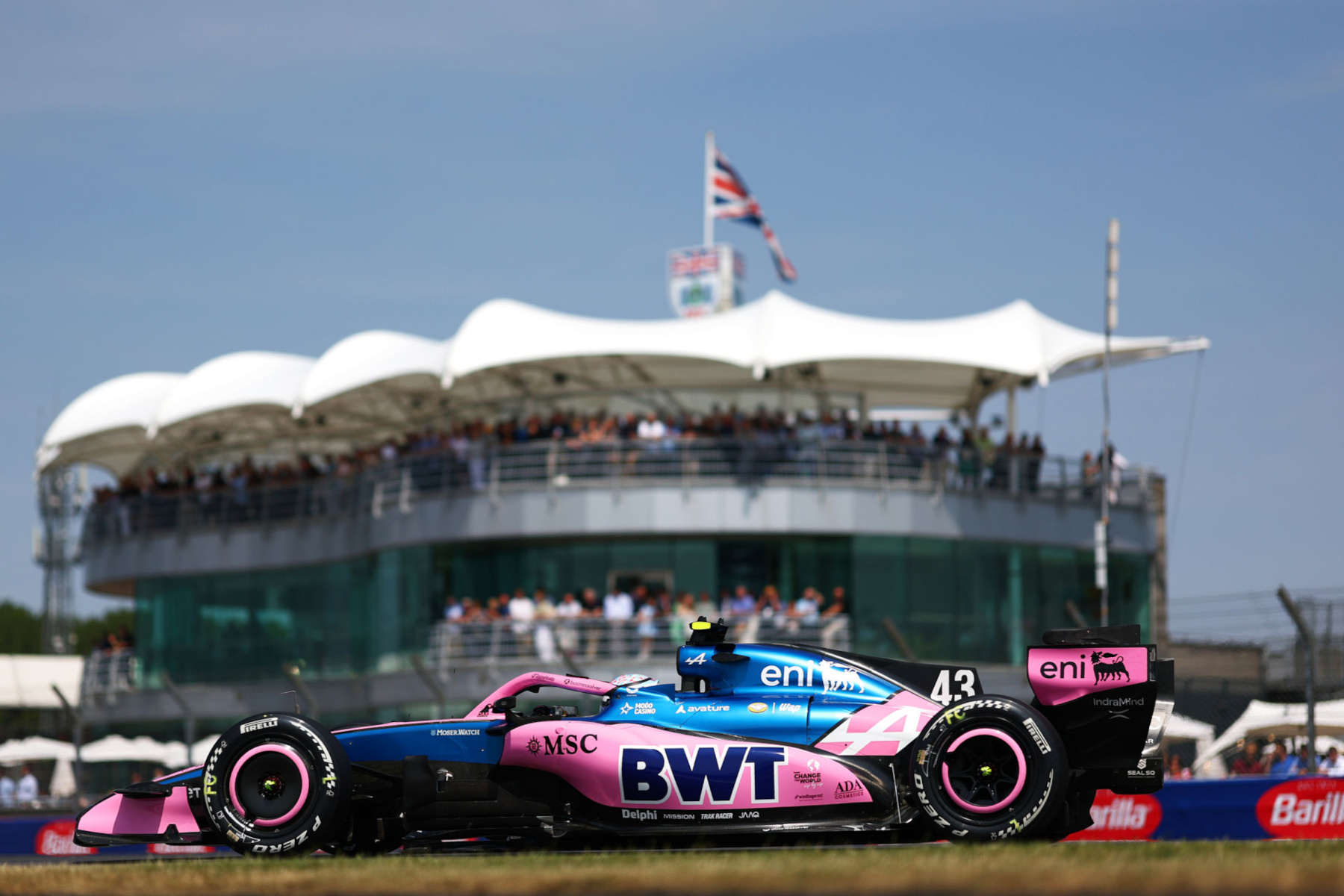
Racing partnerships in watchmaking usually run on adjacency, with speed, glamour, and a shared word like “performance” doing a lot of unpaid work. Alpine and H. Moser & Cie. support something more literal on two levels. Structurally, one builds a mechanism from hundreds of specialists whose narrow, exact contributions only work in synchronization, at a scale you can walk around; the other does the same thing at a scale you wear on your wrist. And practically, they share actual machining technology, and at least once, the expertise has flowed from Schaffhausen to Enstone rather than the other way. That’s not a sponsorship. That’s a supplier relationship wearing a sponsorship’s clothes.
My pit crew finished dead last, and I’m glad we did. A clean run would’ve taught me nothing. Failure showed me the mechanism. The only way to really see how something is synchronized is to watch what happens when one part of it isn’t.