Full Jaeger-LeCoultre Immersion: Three New Marc Newson Atmos And Memovox Designs, Milan Design Week, And Homo Faber

Jaeger-LeCoultre had a pretty impressive Watches and Wonders, with several high-horology releases and a new range of integrated-bracelet Master Control models. The team would surely have been forgiven for taking a few days off in the lovely Vallée de Joux to catch its breath. Instead, JLC flew straight to Milan, Italy, for the Salone del Mobile (Milan Design Week). Here, the brand presented three new Atmos and Memovox creations drawn by the renowned designer Marc Newson.
This would have been reason enough for me to fly out, but Jaeger-LeCoultre had more to offer. The three new releases — two Atmos clocks and a Memovox Travel Clock — were launched against a backdrop of JLC’s “The Perpetual Timekeeper” exhibition. And, last but not least, we got a taste of upcoming talent in metiers d’art at the Homo Faber exhibition. All in all, despite the lack of wristwatches, there is still plenty of fascinating stuff to get into. Let’s dive straight in!
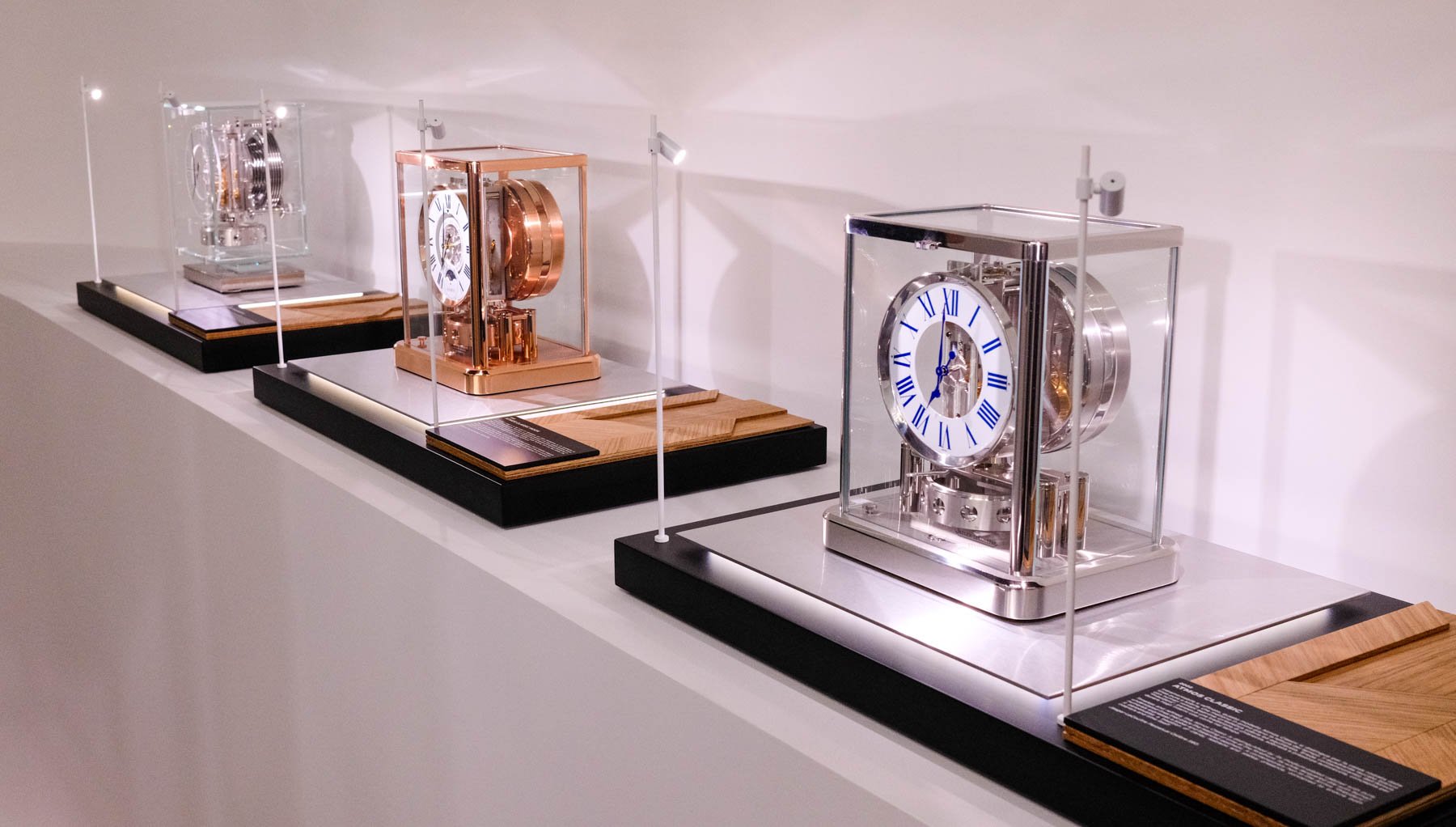
But first, a few words on Jaeger-LeCoultre’s Atmos
I assume most of Fratello’s readership is familiar with Jaeger-LeCoultre’s Atmos technology. Still, let’s revisit the basics here for a second before delving deeper. After all, this is one of the most fascinating non-wristwatch horological technologies out there.
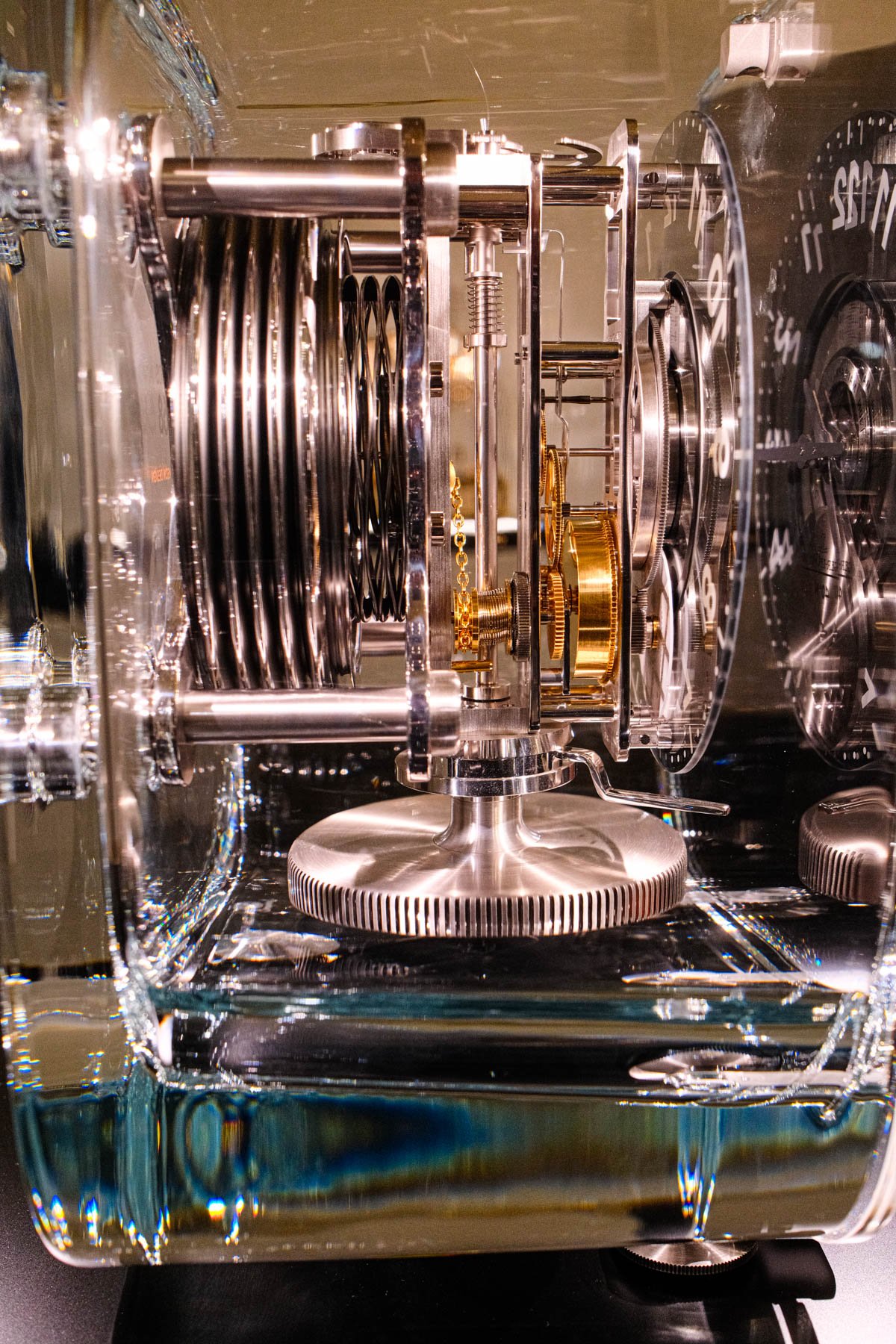
A side view of the innards of an Atmos clock, with the bellows far left
The story takes us back to the 1920s, when Jean-Léon Reutter invented a timekeeping mechanism that required virtually no power. His prototype in 1926 led to a patent in 1928. Jaeger-LeCoultre adopted the technology and the patents in the mid-1930s, developing what was very early-stage tech into a marketable product.
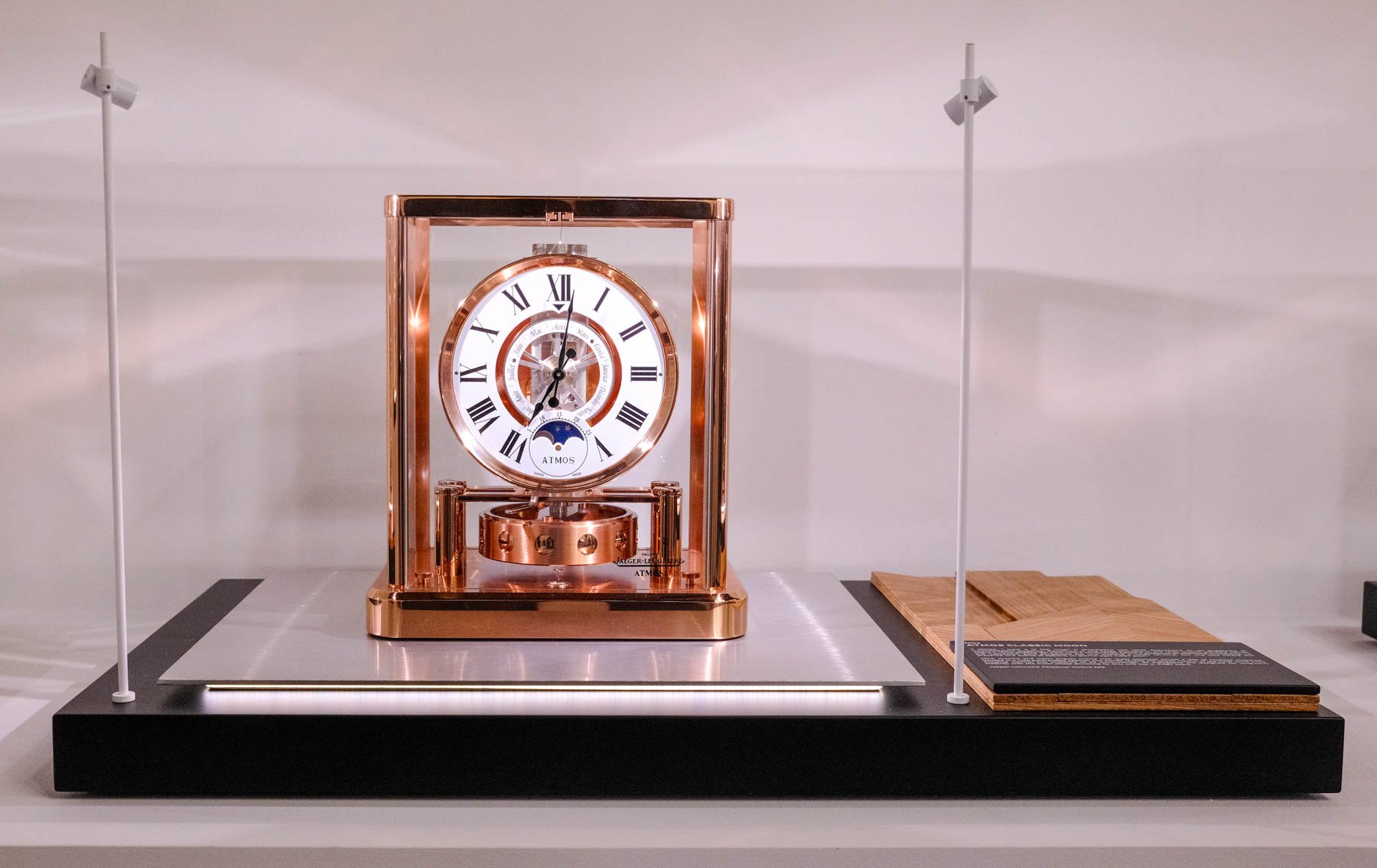
At its core, the Atmos takes fluctuations in atmospheric temperature and converts them to movement. A gas-filled bellows (first with a mixture of mercury and ammonia, later ethyl chloride) expands and contracts under temperature changes. This winds a mechanical timekeeping mechanism. You see a torsion oscillator hanging from an ultra-thin wire. This oscillator turns half a cycle per minute, acting like an escapement would in a watch. All of this runs on the smallest imaginable amounts of energy. A single-degree temperature change gives the mechanism two whole days of power. As JLC CEO Jérôme Lambert explained to me, it requires 200 times less energy than a watch movement while weighing 100 times more. This is about as close to a perpetuum mobile as humans have come.
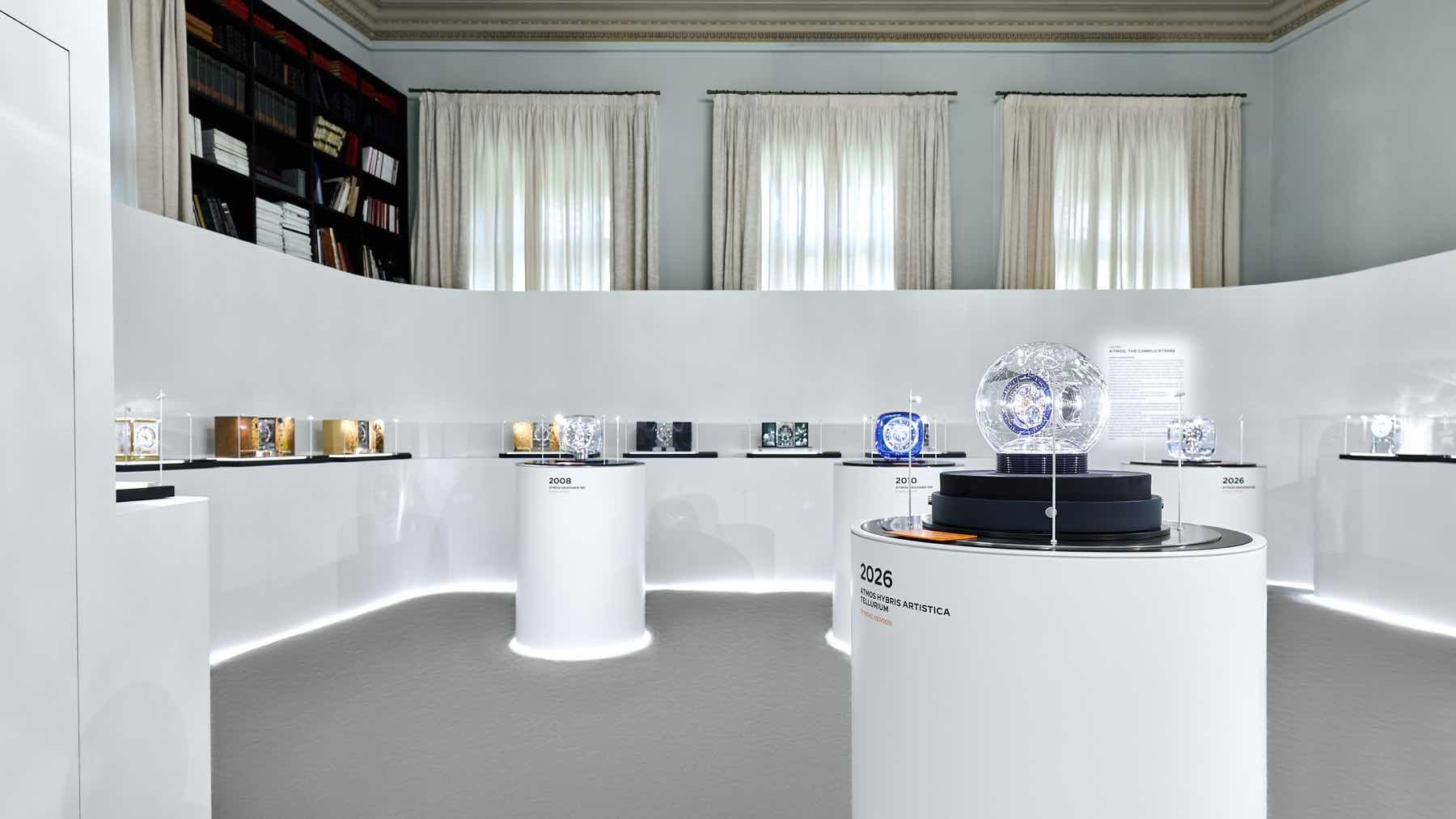
The Perpetual Timekeeper exhibition
Jaeger-LeCoultre hosted the Perpetual Timekeeper exhibition as part of Milan Design Week. This shows how the positioning and audience for Atmos differ from those for wristwatches. The “Salone del Mobile” sees furniture and design brands exhibit all across the stunning city of Milan, attracting press and enthusiasts from all over the globe. Most of the events are open to the public, and the addition of plenty of cocktail parties creates a fun festival vibe across the city. If you love design, put this on your to-do list.


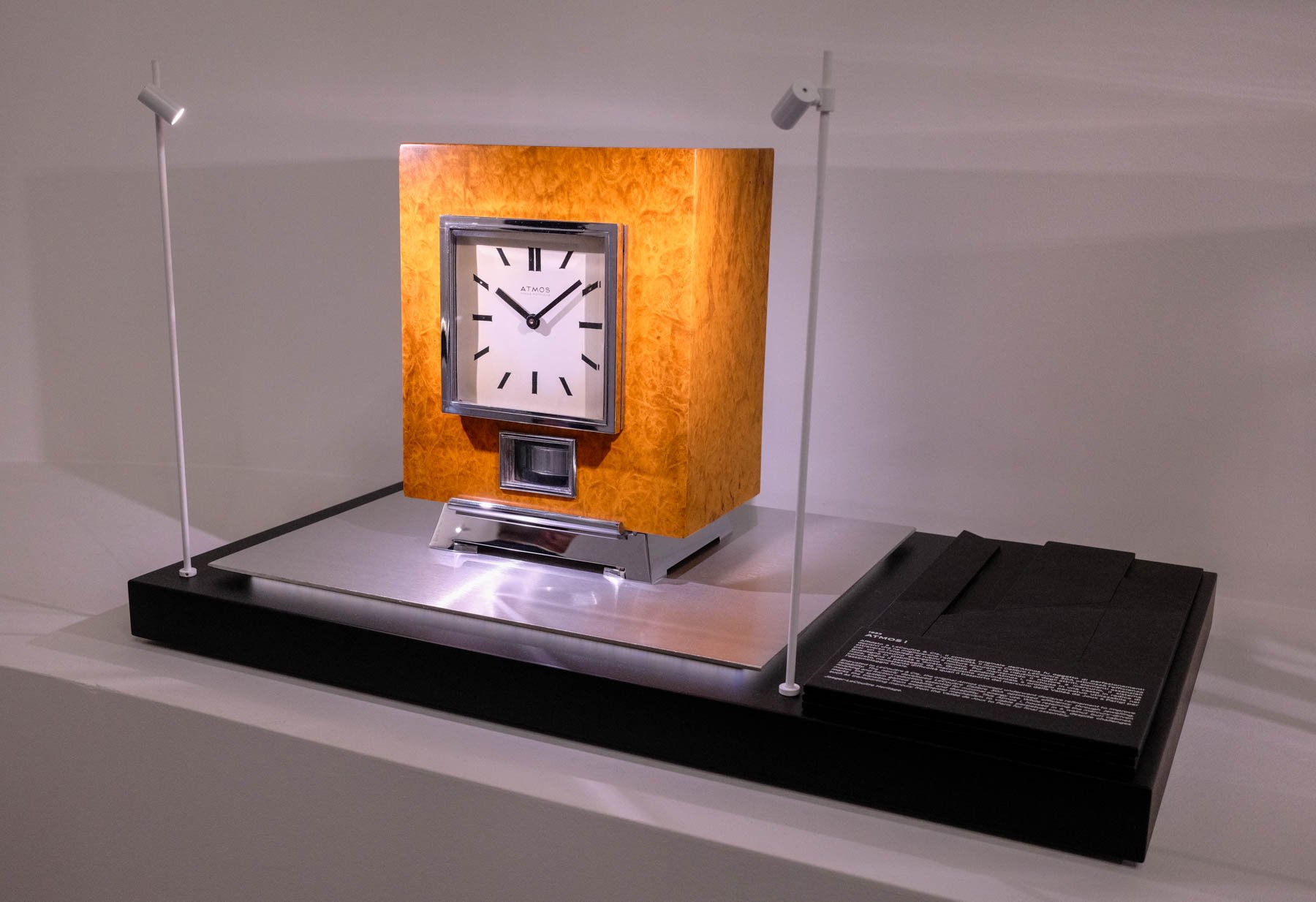
Jaeger-LeCoultre took residence in the beautiful Villa Mozart for its Perpetual Timekeeper exhibition. The maison showcased 53 timekeeping devices from its archives, including travel clocks and unique horological objets d’art. Among them, 32 historic Atmos clocks completed a very appealing collection. These gave visitors a great taste of not only the technical development of Atmos through the decades but also how the clocks served as vessels for design and expression through metiers d’art.
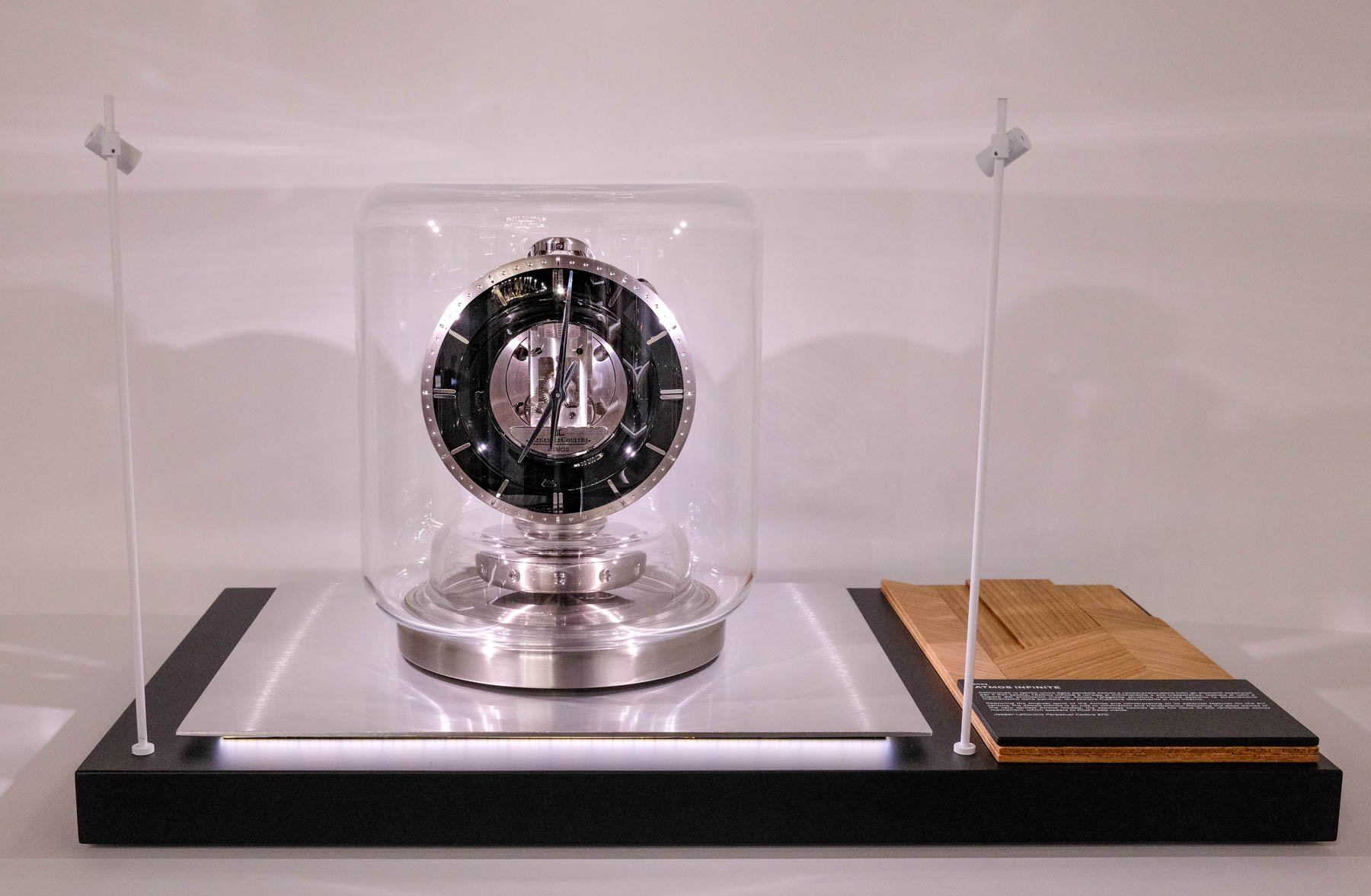
A key role within the exhibition went to Australian-born industrial designer Marc Newson. As you may know, he has designed several Atmos clocks over two decades. His creations for JLC, including three new introductions, were on prominent display here. Let’s have a closer look at those three new designs — two Atmos clocks and a travel clock.
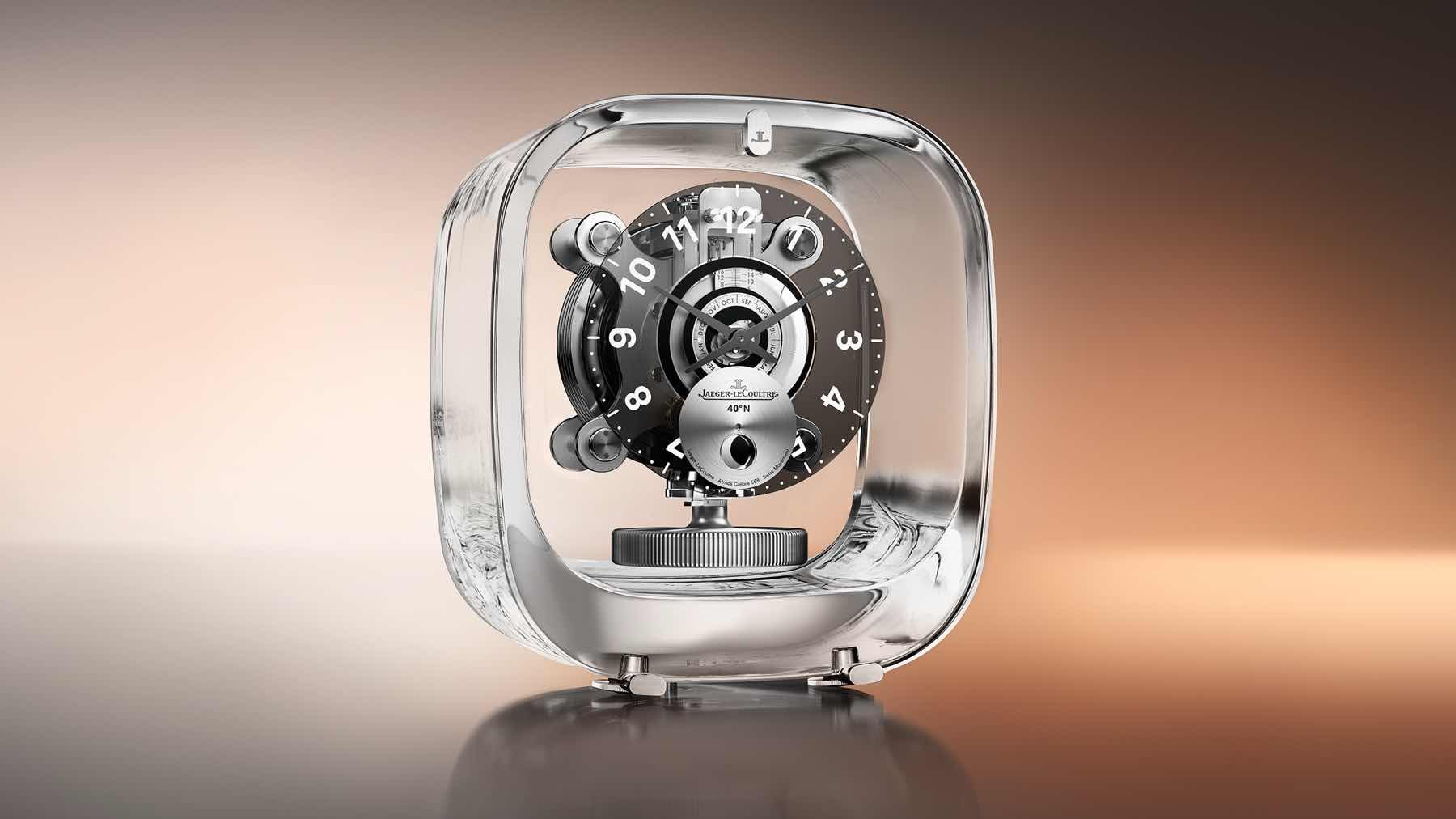
Atmos Designer 568 and its mouth-blown Baccarat housing
The first new product introduced here is the Atmos Designer 568. This Marc Newson design keeps the focus on the movement and removes as much visual weight as possible around it. The Baccarat crystal case is key here. It is fully transparent and shaped as a rounded cube, reminiscent of a melting ice cube. Mind-blowingly, it is mouth-blown and then cooled into a mold to get to this exact shape.
That case also has a structural role. It supports the movement while maintaining the impression that everything floats. To achieve that, Jaeger-LeCoultre uses four mounting points instead of the usual three. You only really notice them from the back, but they create a more balanced layout and draw attention to the intricate mechanics inside.
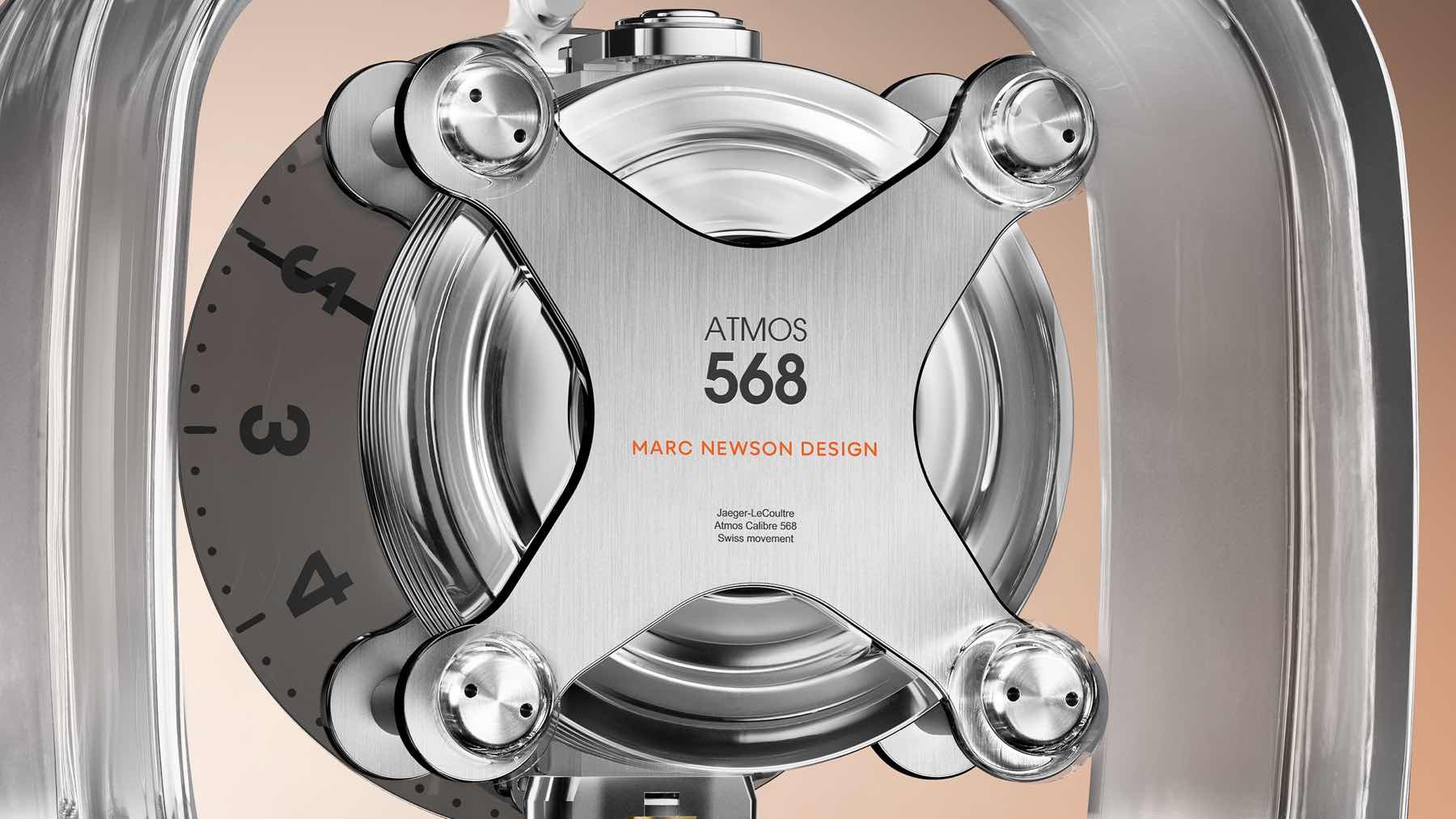
The 568 adds some complications to the familiar Atmos mechanism. Sunrise and sunset times appear on a rotating sapphire disc, while the equation of time is shown as an elliptical scale around the center. Each clock is calibrated for a specific latitude, which is an unusual detail in this context. The moonphase mechanism is ridiculously accurate, with a one-day deviation in 4,087 years. The Atmos Designer 568 costs €44,800.
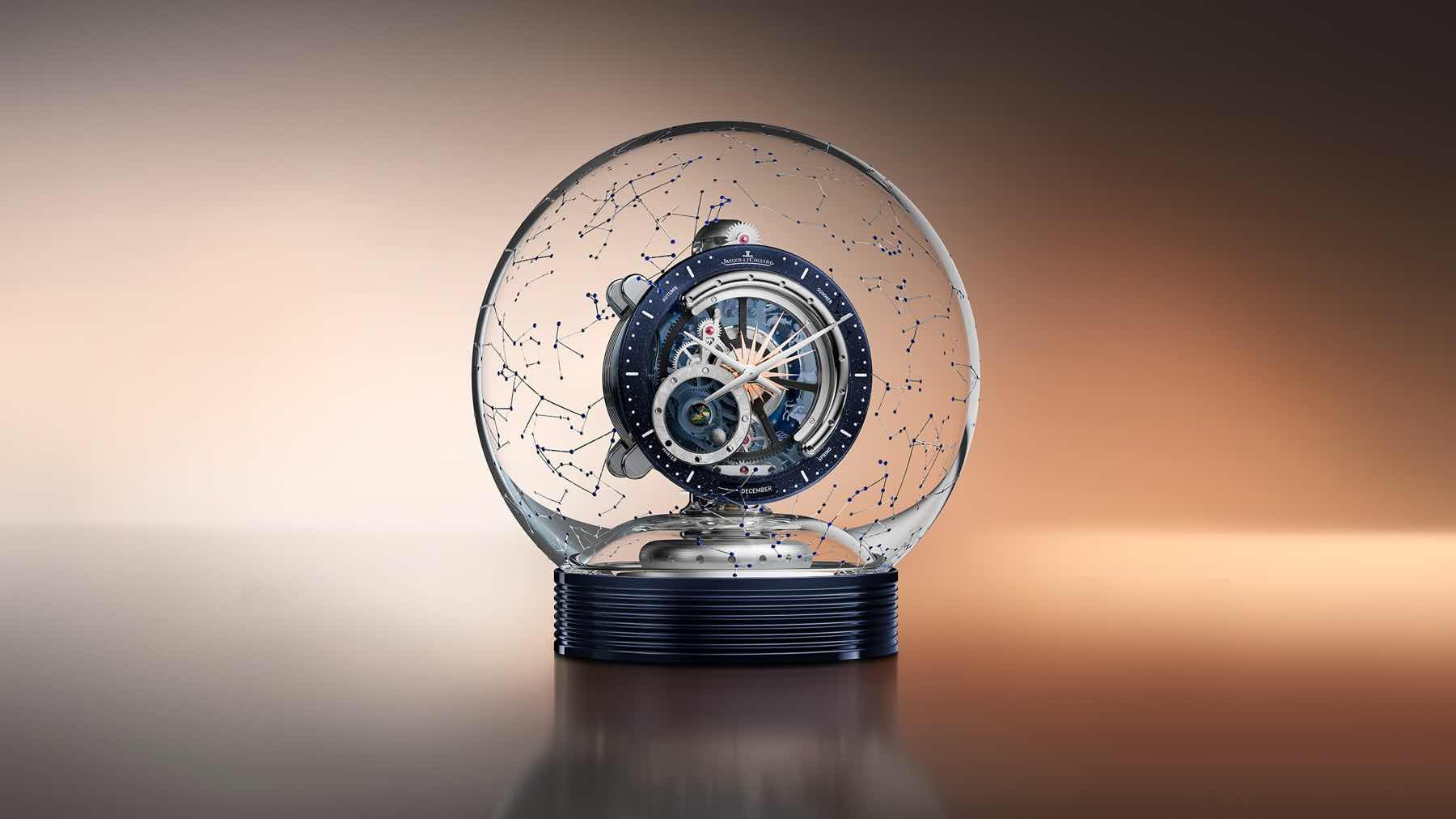
Atmos Hybris Artistica Tellurium: Mechanical cosmos under glass
The Marc Newson Atmos Hybris Artistica Tellurium builds on the 2022 caliber 590, still the most complex Atmos movement, but packages it in a very different way. The Tellurium construction remains the core, with the earth, moon, and sun moving in relation to each other. What changes is how you experience it. Instead of a traditional cabinet, the entire mechanism sits inside a glass globe engraved with constellations and set with 539 sapphires, representing the stars.
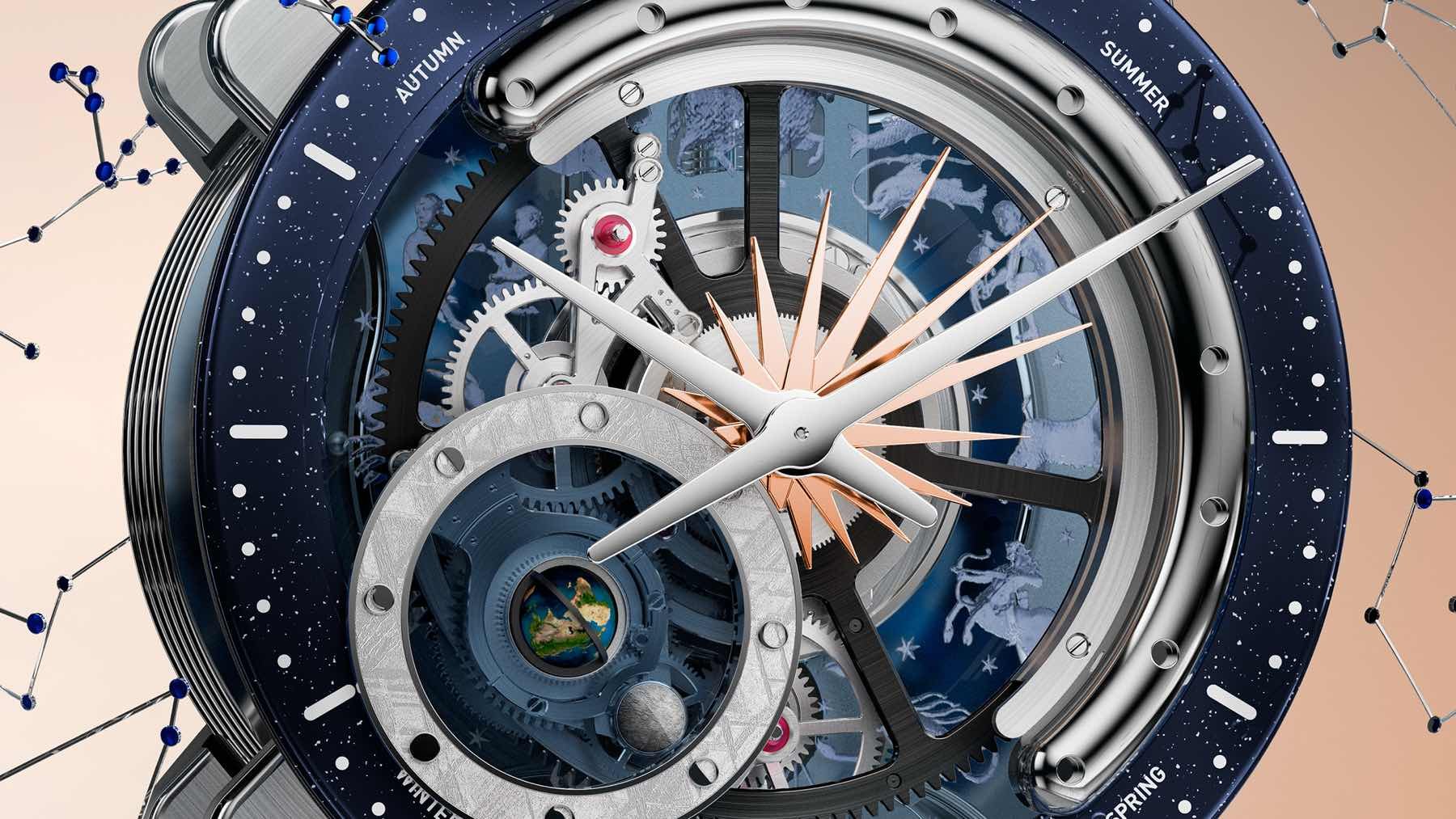
That outer shell is more than decorative. Setting gemstones directly into glass, without visible mounts, required a great deal of experimentation. This is something Marc Newson is known (perhaps even notorious) for; his designs often require new processes and technology to bring them to life. The sapphires catch light in a way that gives the globe depth, especially when the mechanism moves behind it. It turns what is already a complex display into something more layered. I have admired it up close, and I can report that it is awe-inspiring.
The system tracks the lunar cycle with a one-day deviation in 5,770 years, while the annual cycle is accurate enough to run for centuries without correction. Around that, Jaeger-LeCoultre mixes finishes quite deliberately. You get a hand-painted earth, as well as meteorite inlays next to brushed aluminum for a modern aesthetic. Newson masterfully pushes JLC into new territories here without ever losing touch with traditional aesthetics. Jaeger-LeCoultre is producing only three of these, with a price on request.
Last but not least, a Marc Newson Memovox Travel Clock
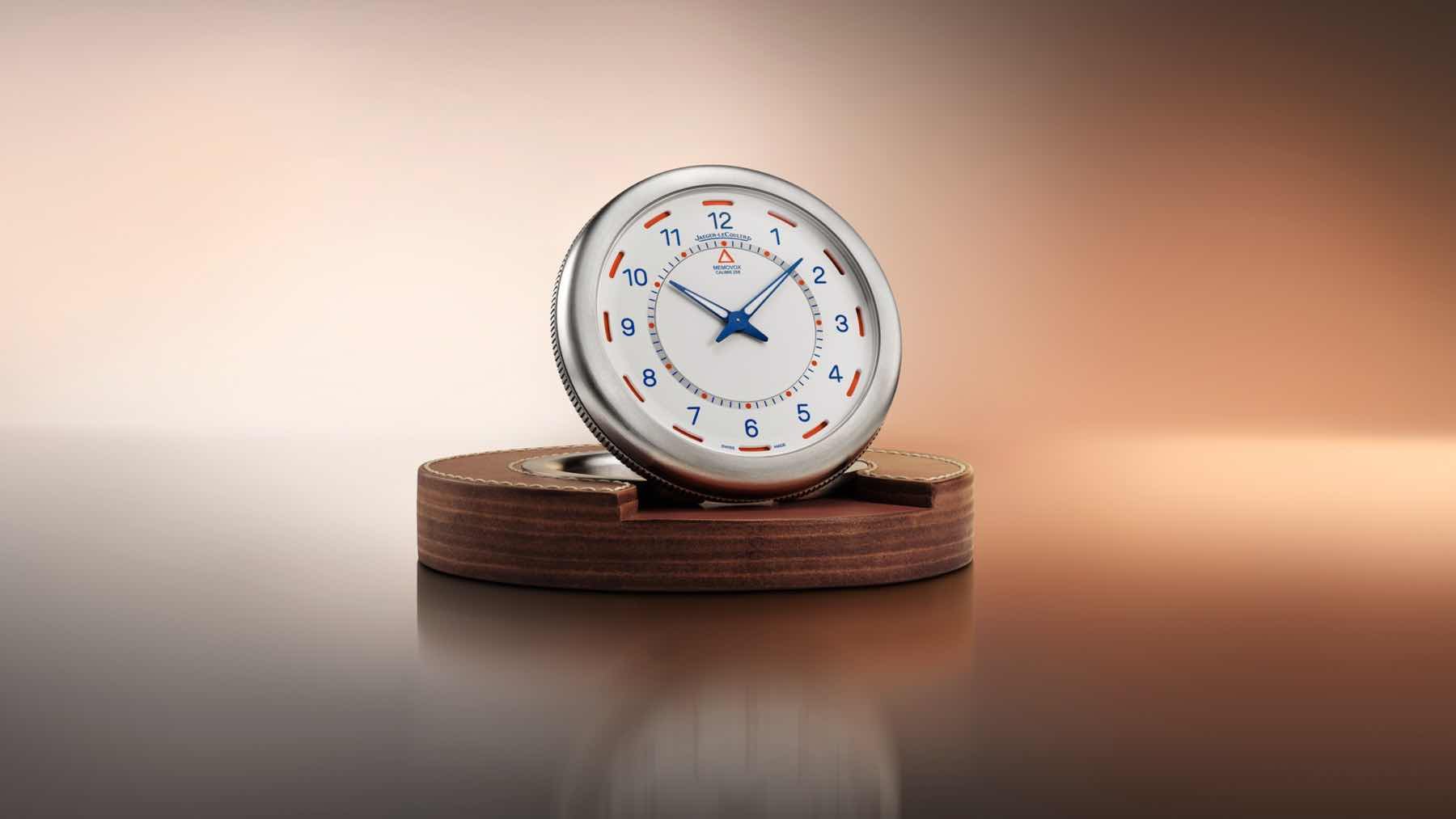
The third Newson design presented here has a significantly smaller footprint. The Memovox Travel Clock puts usability first, which makes sense for something you carry rather than display. As a result, it feels very different from the two Atmos releases. The case is compact, light (titanium), and easy to position thanks to the integrated stand. Controls stay out of sight. A single peripheral crown handles winding, time setting, and the alarm, selected via a push mechanism. It is a very clever way of steering clear of a traditional crown.


Inside, we find the newly developed manually wound caliber 256. The 12-day power reserve stands out straight away. For a travel clock, that removes the need to think about winding too often. The movement uses two barrels for timekeeping and a third for the alarm, which helps maintain stable performance across the full reserve. The Memovox function itself remains familiar, both in layout and in sound. It rings loudly enough to wake you up, yet softly enough not to trigger you to jump out of bed instantly.
The power reserve display is where things get interesting. Instead of a standard indicator, Jaeger-LeCoultre uses two overlapping helicoidal rings. Visually, you see small apertures changing from orange to blue over time. One day of reserve equals one hour on the dial. It is an unusual solution that looks simple at first glance, but it feels original nonetheless. Jaeger-LeCoultre will limit production to 100 units per year, with the price on request.
The new generation of artists at the Homo Faber exhibition
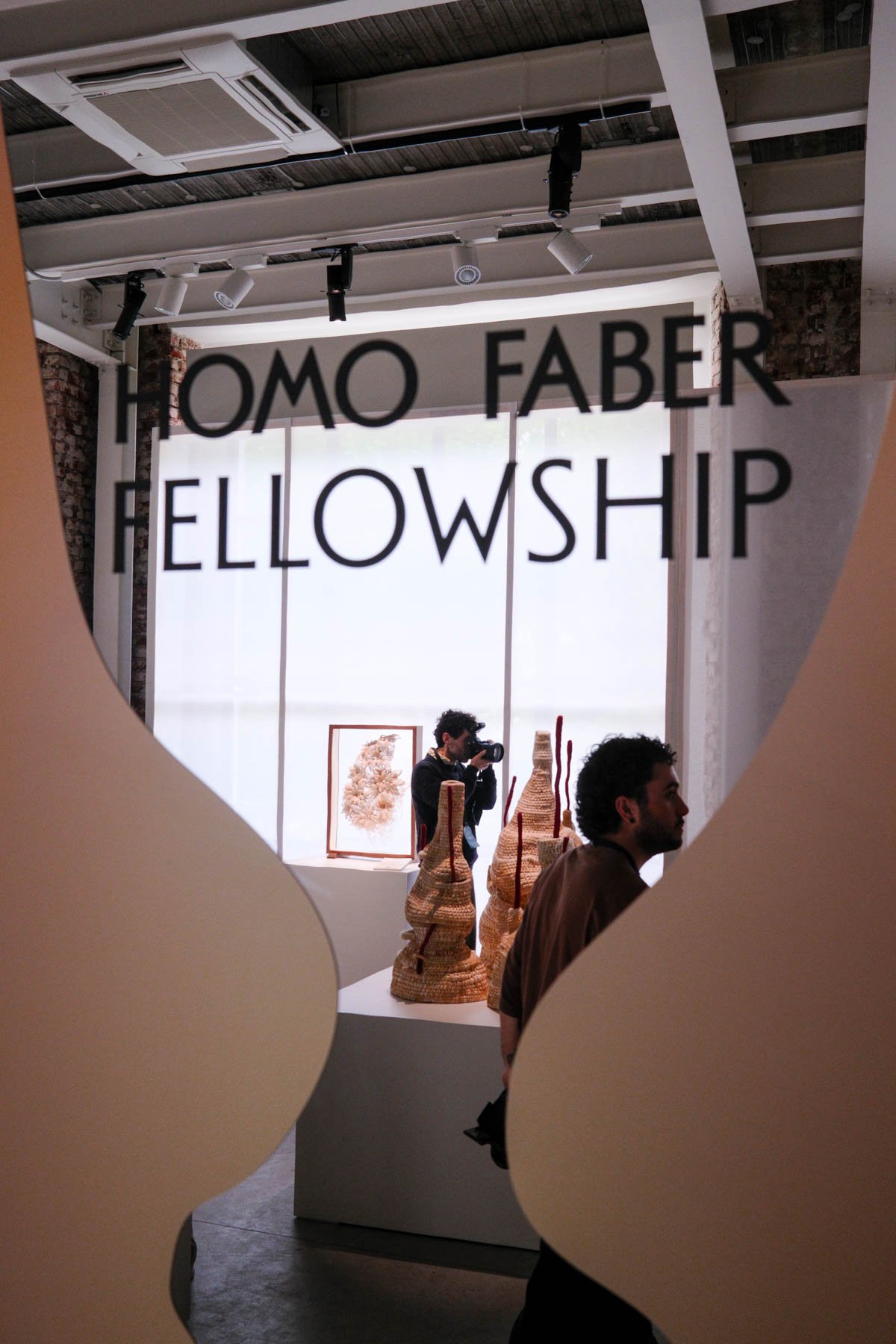
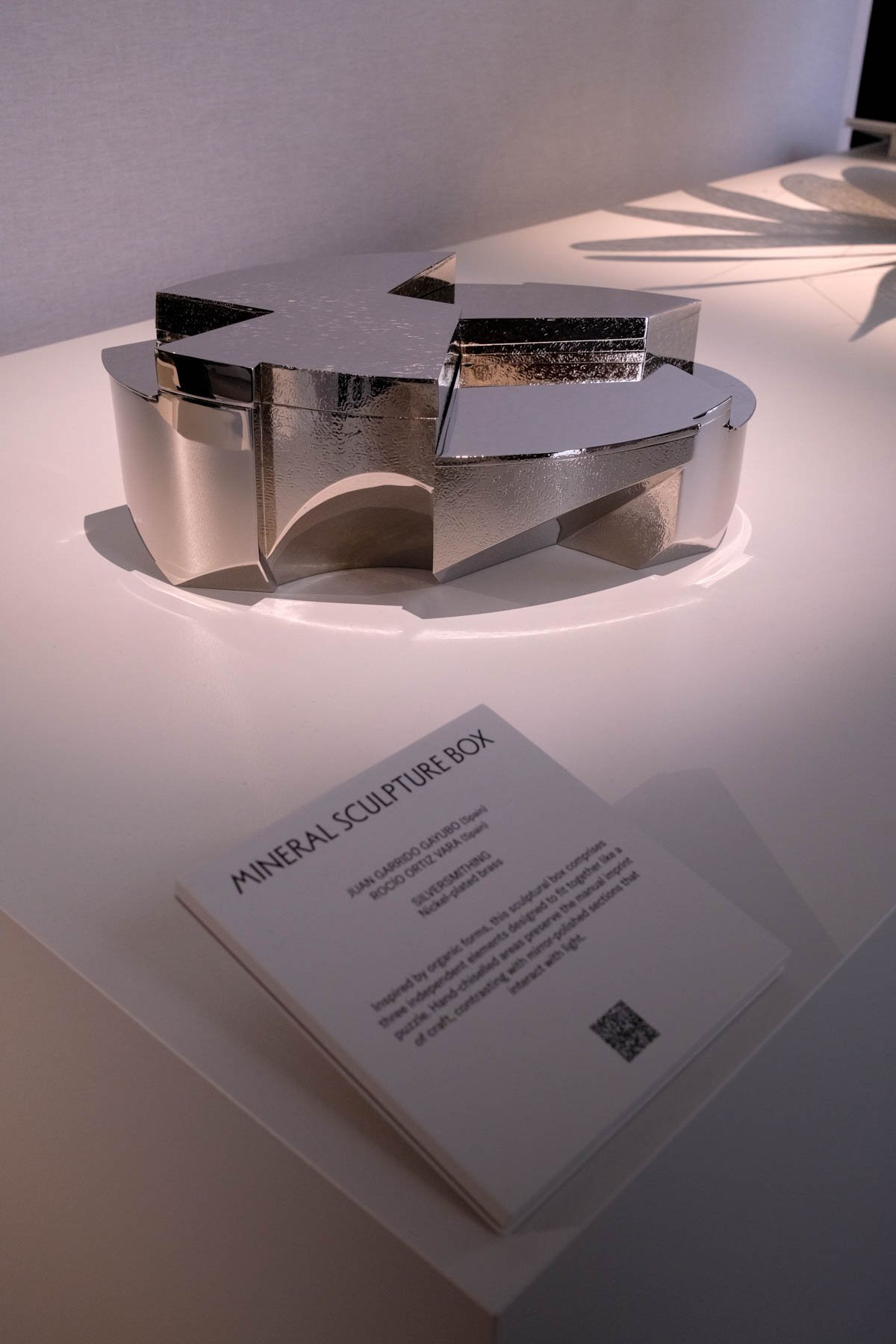
I also got to visit the Homo Faber (The Maker Human) exhibition in the Casa degli Artisti in Milan. Here, pairs of artisans, each consisting of a fellow and a master, exhibited projects from a wide range of metiers d’art. This exhibition is organized by the Michaelangelo Foundation, founded by Johann Rupert and Franco Cologni of Richemont Group fame. This non-profit aims to promote crafts and metiers d’art at the highest level.


Although this event was not directly related to watchmaking or timekeeping, seeing unique works and meeting the people behind them is inspiring. You immediately feel how different crafts might cross-pollinate and how closely the watch world is monitoring this.


Among the works were creations in ceramics, wood, paper, and metal. Some of the highlights include a work by a master-and-fellow pair of bookbinders, a set of violins, and a side table completely encased in straw marqueterie. It doesn’t take great imagination to see some of these artisans end up in Jaeger-LeCoultre’s metiers d’art departments, working on dials, cases, or Atmos housings, for that matter.
Two intense days of Atmos, objets d’art, and craft
Jaeger-LeCoultre highlighted a different side of itself at the Salone del Mobile than we usually get to see. The Perpetual Timekeeper and Homo Faber exhibitions provided a different context that feels very on brand but also miles apart from the Watches and Wonders efforts from just a few days prior.
It is great to see that the maison continues to develop its Atmos line, even if it probably makes less commercial sense. I can only imagine how hard it must be to spend years developing a new Atmos clock, only to see a simple new dial color for a Reverso outsell it many times over. That said, these events underlined the importance of both the Atmos and the metiers d’art for JLC, a sense that I also got when I visited the manufacture in 2024. These matters sit at the very core of the company, which nourishes them accordingly.


It is hard not to come away feeling inspired. From the watchmakers present to Marc Newson and the masters and fellows at Homo Faber, these folks reminded me that creation is a key human endeavor. I feel like shutting my laptop and getting my hands on some clay, wood, or paint. Or should I just stick to my craft as a writer? One doesn’t exclude the other, does it? And we all need to reset those weary brains of ours with some contrasting activity now and then…
What do you think of the new Jaeger-LeCoultre Atmos and Memovox creations? Let us know in the comments section below!