Introducing: The IWC Pilot’s Venturer Vertical Drive — A Watch Made For Space

Space — the final frontier. Well, with the recent launch of Artemis II and a host of space-related tech advances, there is a renewed cultural interest in exploring the stars. IWC has partnered with Vast, which is building the world’s first commercial space station, to develop its take on what a space watch should be. This is the IWC Pilot’s Venturer Vertical Drive.
The Pilot’s Venturer Vertical Drive (ref. IW328601) is an example of IWC wanting to flex its engineering muscle, and I’m here for it. You see, IWC does not have the same connection to space ventures as a brand like Omega with the Speedmaster. But it doesn’t have to stay that way, and it seems the brand is making a conscious effort not only to push the bounds of technical watchmaking but also to develop a watch for space first and Earth second.
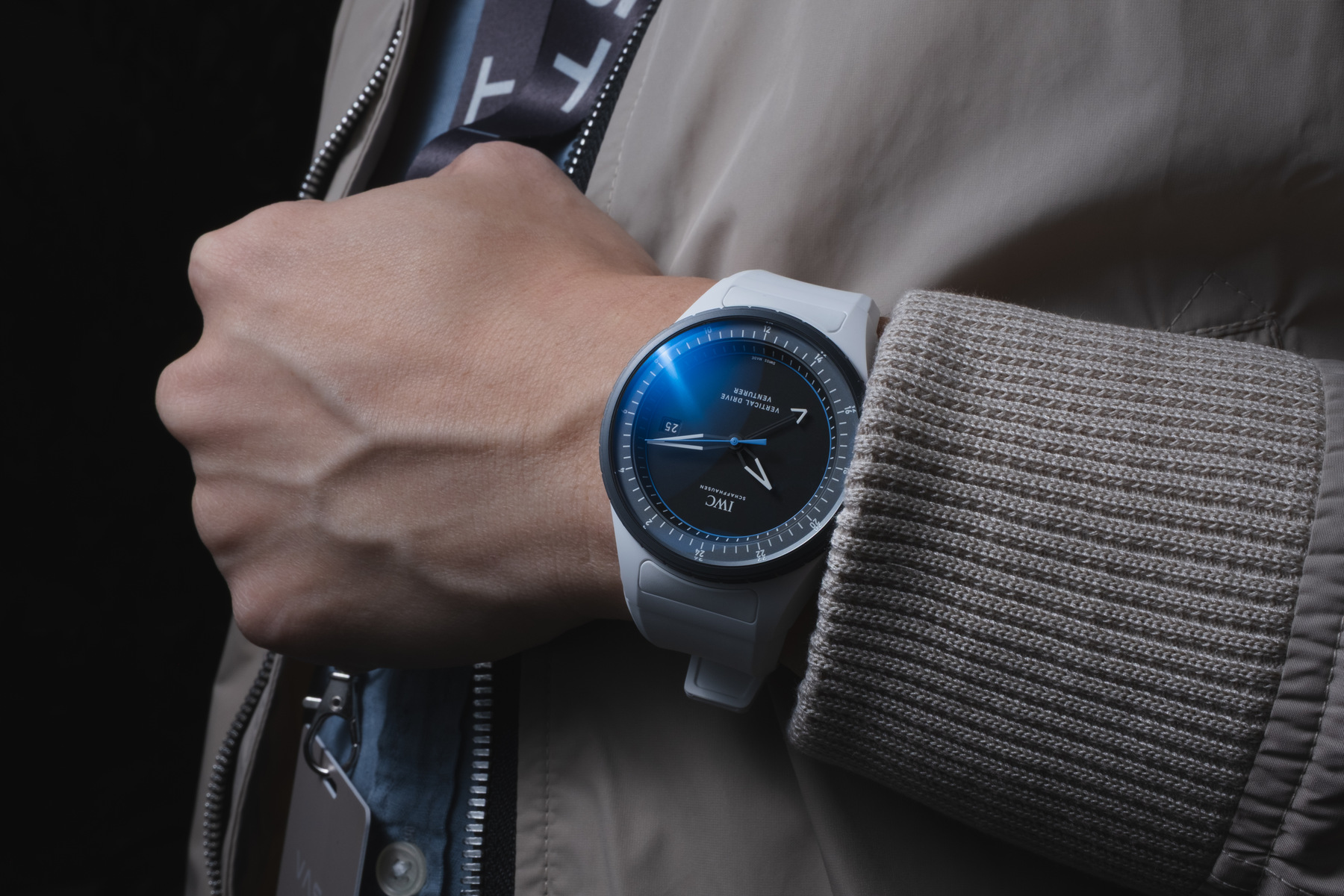
The IWC Pilot’s Venturer Vertical Drive
This is the first watch IWC has designed and built specifically for human spaceflight. “They took a blank sheet of paper and worked to define from scratch what a tool watch for astronauts would have to offer in terms of functionality, ease of operation, time display, and material execution,” Chris Grainger-Herr, CEO of IWC Schaffhausen, said.
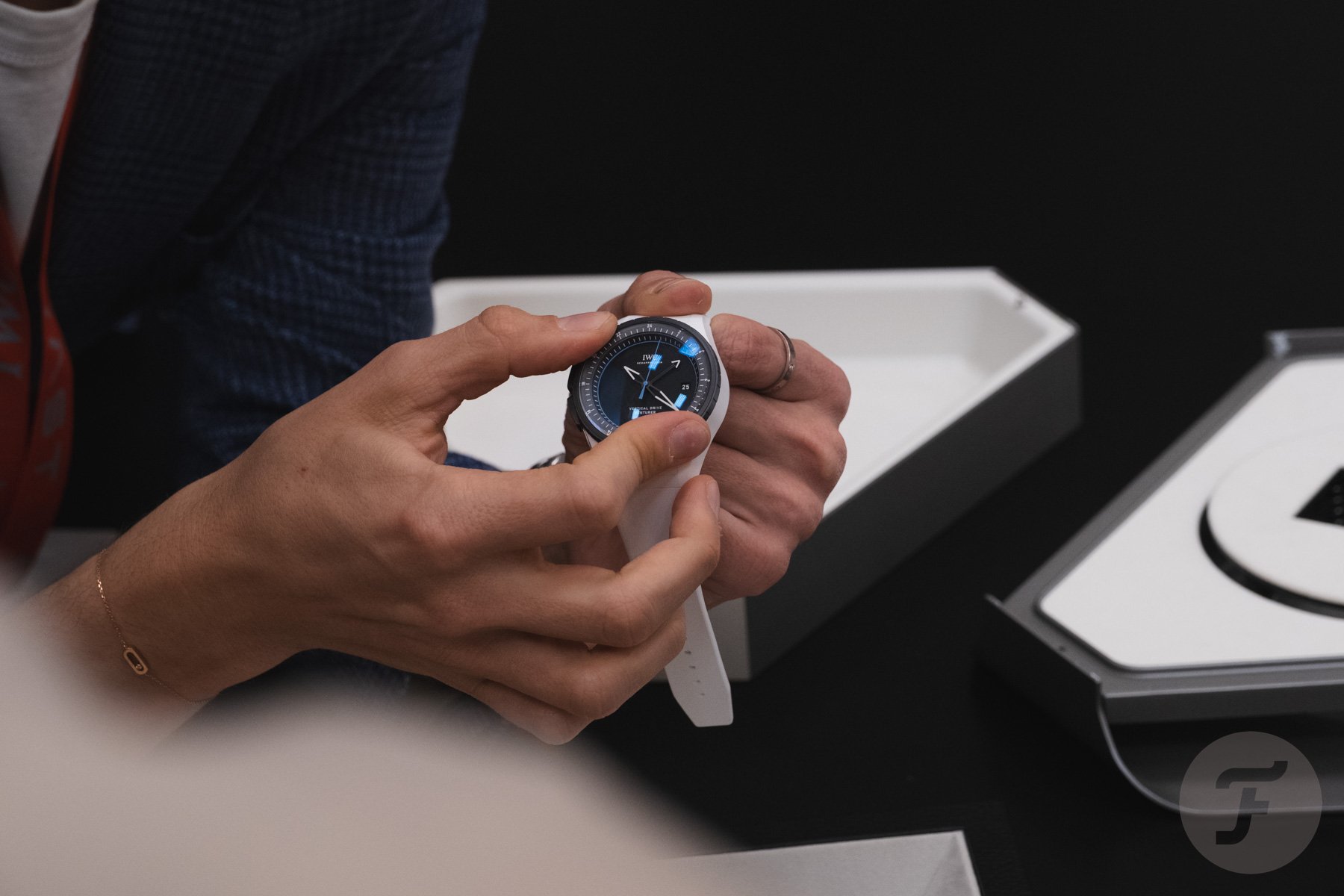
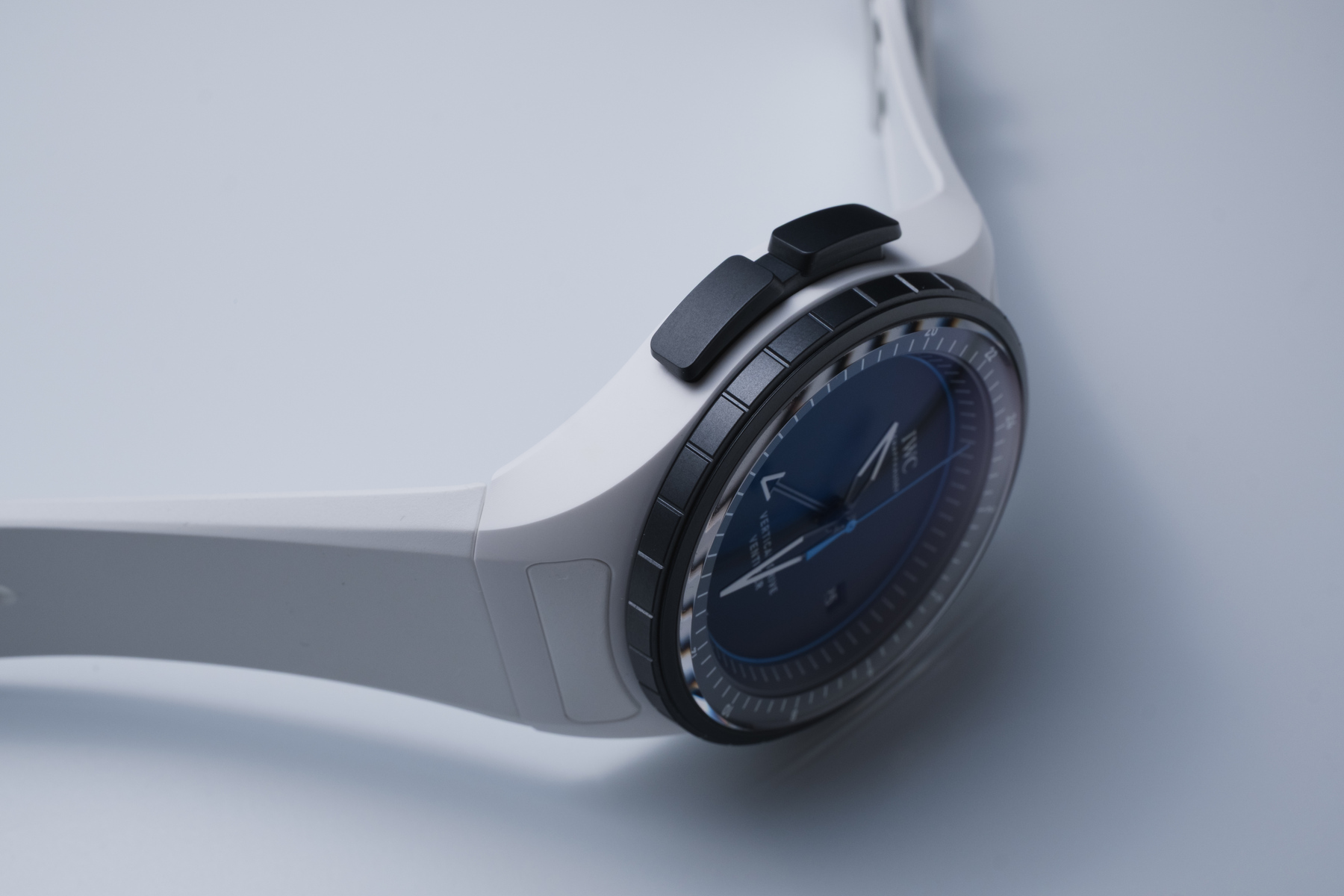
How does this play out in real design decisions? The Pilot’s Venturer Vertical Drive uses a patent-pending rotating bezel system that allows the wearer to control all the watch’s functions without using a crown. IWC said this was inspired by the notion that astronauts would be wearing a thick space suit during spacewalks and, therefore, would need to adjust the watch while wearing protective gloves. Apparently, a clutch system transmits the movements of the bezel to the winding stem. This is what the brand is calling “vertical drive,” hence the name of the watch.
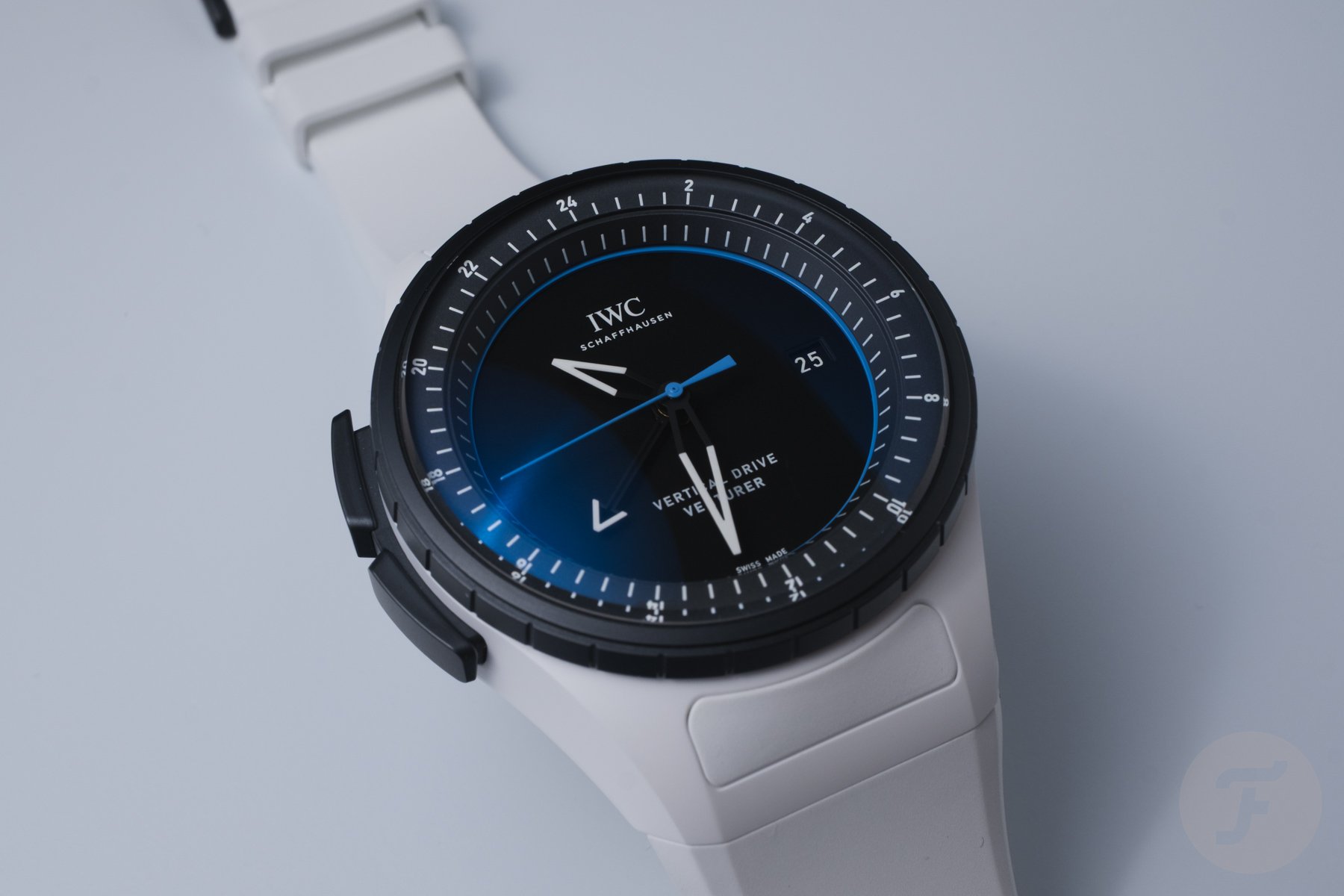
A rocker switch on the case’s left side allows the wearer to change between different functions, such as setting different time zones or winding the movement.
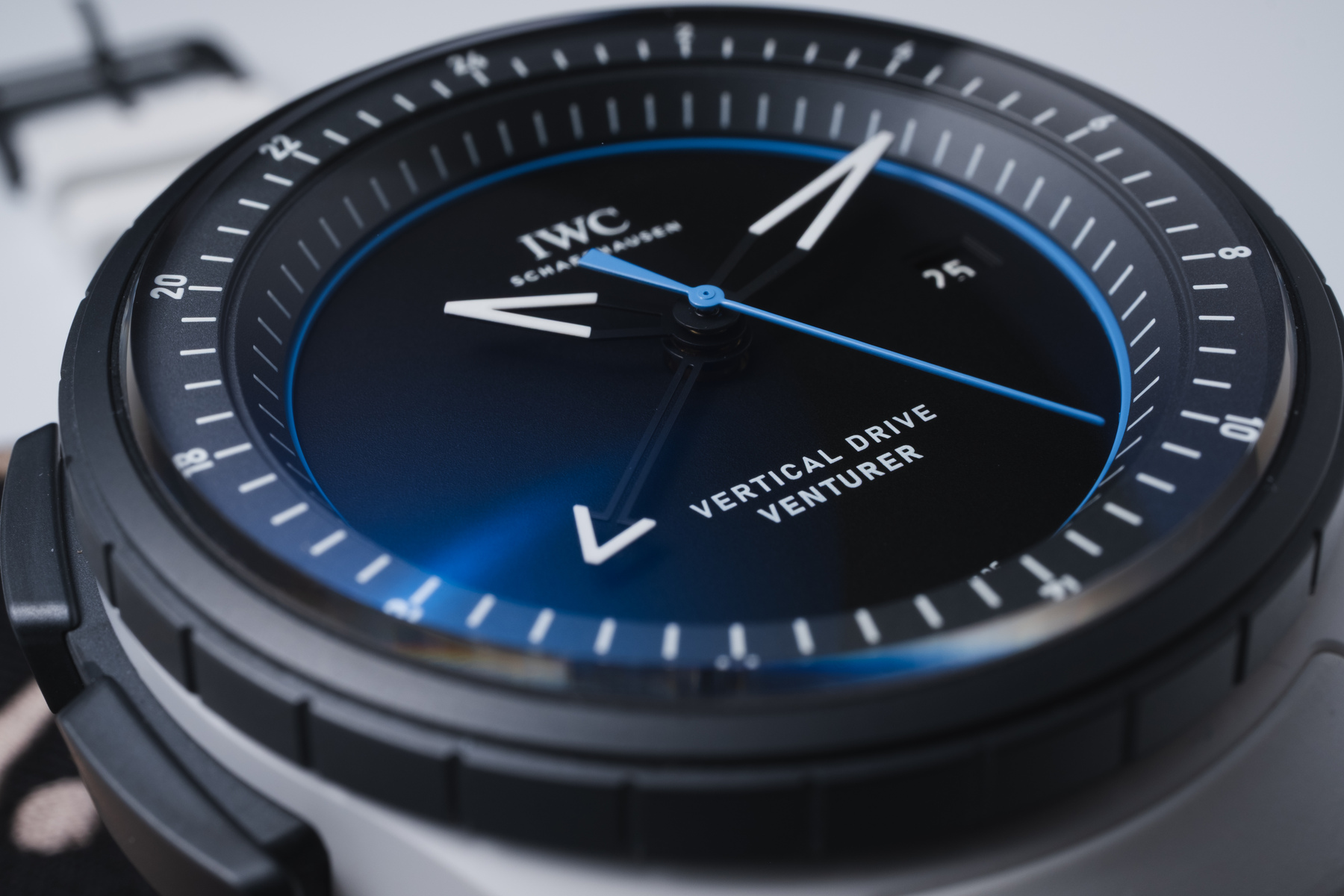
Technical watchmaking on display
The wearer can manually wind the watch by rotating the bezel counterclockwise. However, the caliber also has a traditional oscillating rotor for automatic winding. Of course, this winding system functions both on Earth and in a zero-gravity environment. That said, despite what some assume, the absence of gravity does not prevent the rotor from spinning and winding the watch. A rotor’s rotation relies on inertia, a force just as present in space as on Earth.
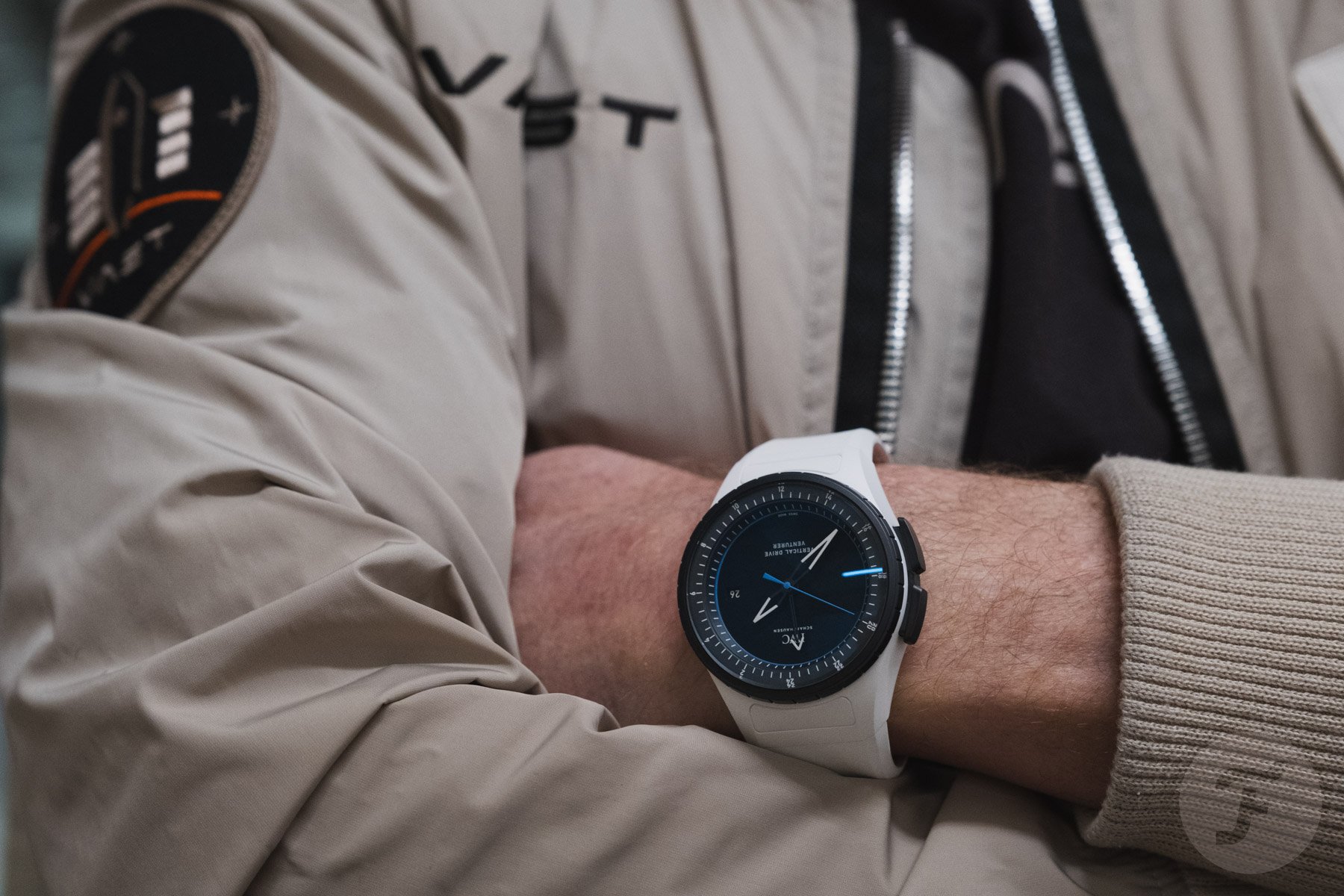
The IWC Pilot’s Venturer Vertical Drive on the wrist of Andrew J. Feustel, veteran NASA astronaut and current Human Spaceflight Advisor at VAST
The Pilot’s Venturer Vertical Drive goes heavy on the matte black, not least of which is the dial. IWC said the focus was on the absolute essentials and avoiding light reflections. Also, according to the brand, “The mission’s reference time is indicated by the central hour and minute hand, and also in 24-hour format by a dedicated hand on the outer dial scale, which runs from 00:00 to 24:00.”
A new IWC caliber
It makes sense to have this function, because a space station or spacecraft can complete an orbit around the Earth in just one and a half hours. This could mean that astronauts spending a full 24-hour day in space would see as many as 16 sunrises and sunsets. To properly keep track during this quick shift from sunrise to sunset, in space, they stick to UTC (Coordinated Universal Time).
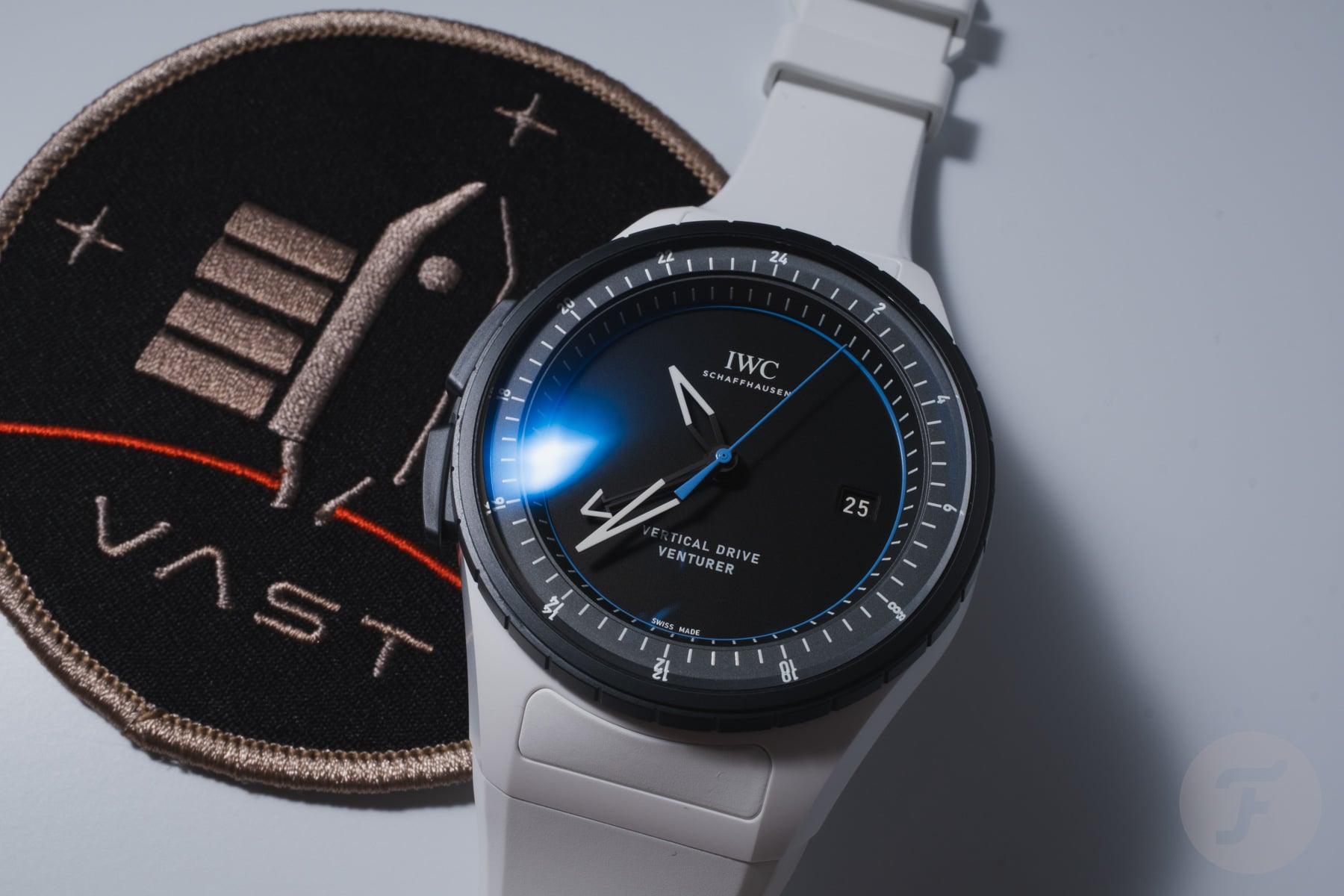
This retains the 24-hour rhythm of time on Earth, helping the astronauts develop a consistent routine. But the brand says that if necessary, the wearer can adjust the hour hand in one-hour increments to display another time zone. The new IWC-manufactured 32722 caliber provides a 120-hour power reserve and includes an integrated GMT module and a date indicator. The caliber has 21 jewels and beats at 28,800 vibrations per hour.
Exotic materials
The edges of the hour and minute hands have a coating of green-glowing Super-LumiNova, whereas the 24-hour hand glows blue in the dark. The difference helps provide added readability. The blue second hand points to the inner scale, featuring a thin ring, also in blue. The color, IWC says, is a design nod to the oceans on Earth seen by astronauts in space.
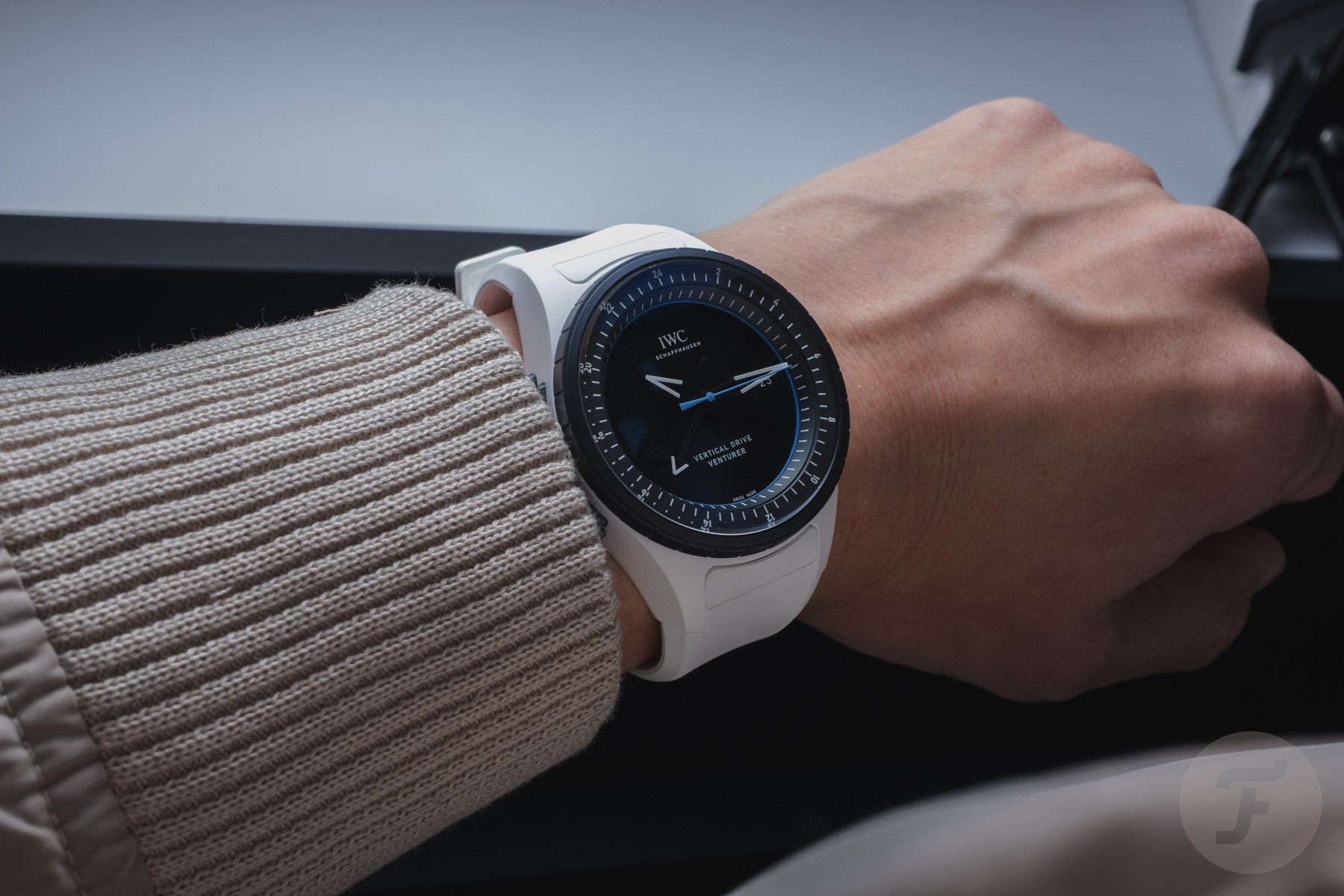
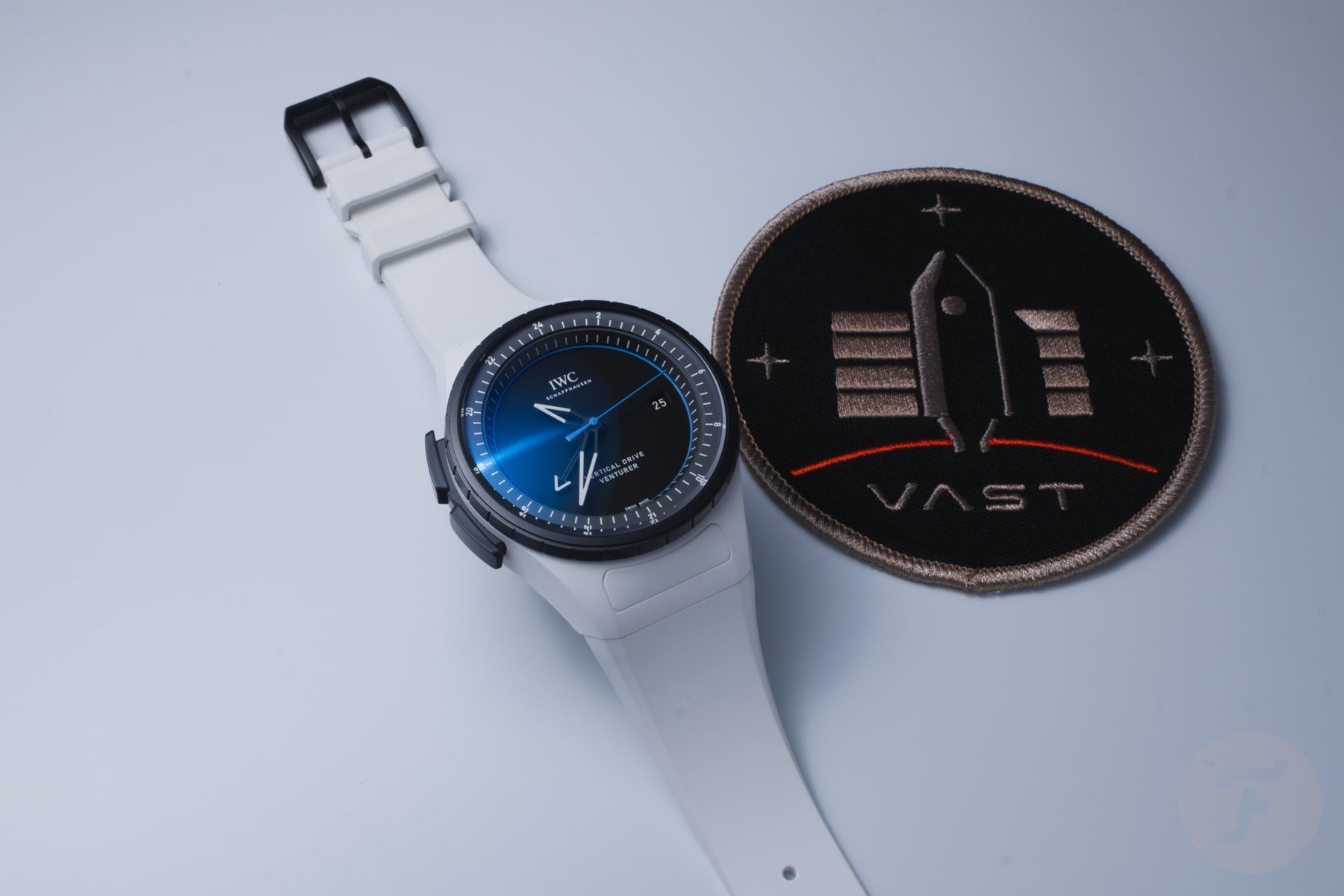
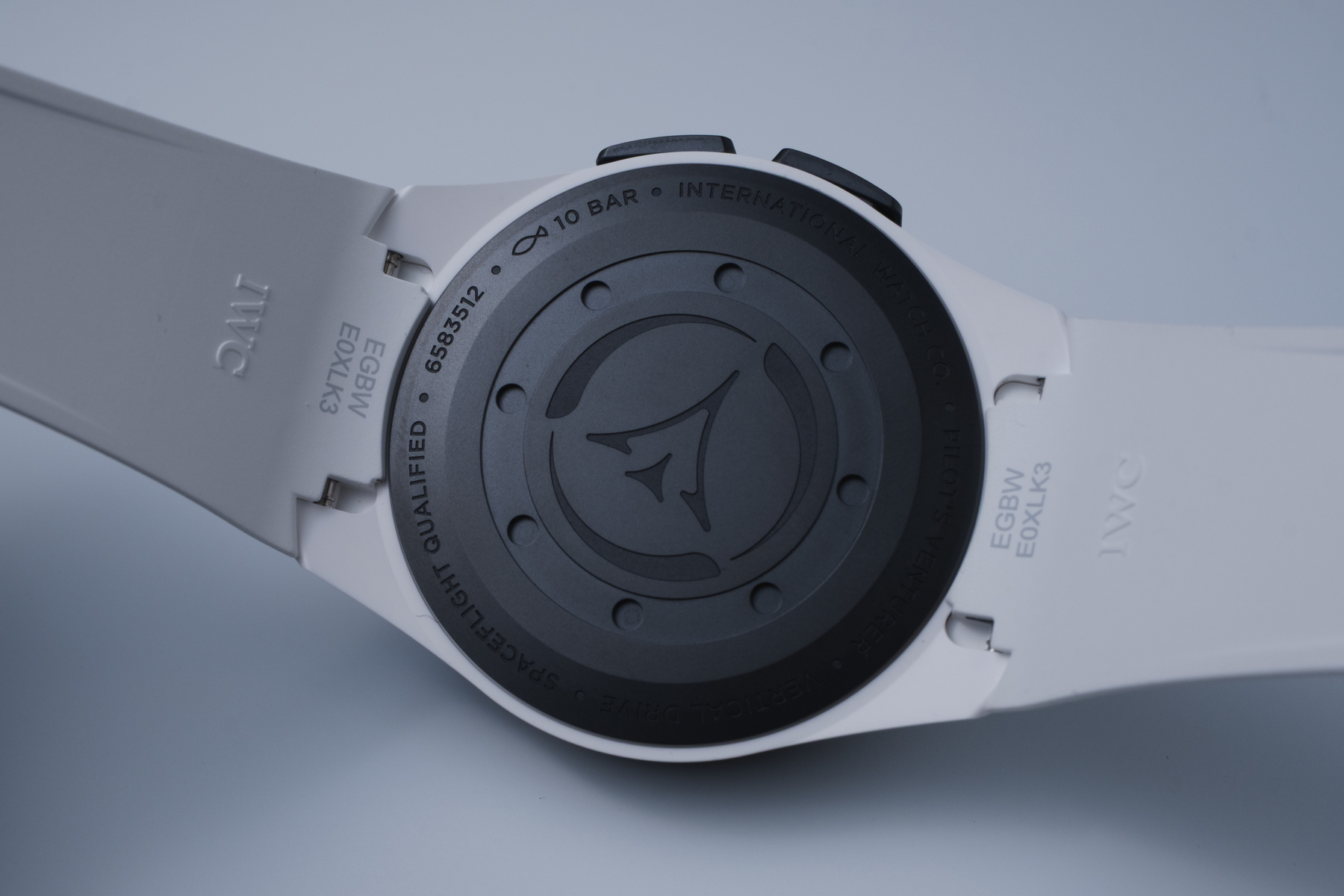
The watch is made of a host of exotic materials, showcasing IWC’s penchant for technical watchmaking. The 44.3mm case is lightweight ceramic, which is good considering the watch’s 16.7mm thickness. Its bezel and case back are made from Ceratanium. This material provides the best strengths of titanium with the scratch resistance of ceramic. The watch is water resistant to 10 bar, making it perfectly suitable for any aquatic adventure.
Pricing and final thoughts
In a nice touch, the case back features an engraved space vehicle. The brand says this reflects “humanity’s curiosity and spirit of exploration.” The Pilot’s Venturer Vertical Drive also comes fitted with a white integrated FKM rubber strap. The watch retails for €28,900 / US$28,200 / £22,600 / CHF 24,000.
I must say, this is an impressive piece. Yes, I am a fan of IWC, but it is nice to see the brand double down on its strengths, coupling technical watchmaking with innovative design. I hope you’ll let me know what you think of the new Pilot’s Venturer Vertical Drive in the comments below!