Sunday Morning Showdown: Grand Seiko Evolution 9 Spring Drive U.F.A. Ushio 300 Vs. Rolex Yacht-Master 42 In Titanium

Grand Seiko surprised friend and foe at Watches and Wonders when the brand released a smaller, more accurate dive watch at a lower price than its predecessor. The Ushio 300 diver, naturally, was met with applause. So, for this week’s showdown, we thought we’d stack it up against a watch so popular that it is literally unobtainable — the titanium Rolex Yacht-Master 42. Welcome to another Sunday Morning Showdown!
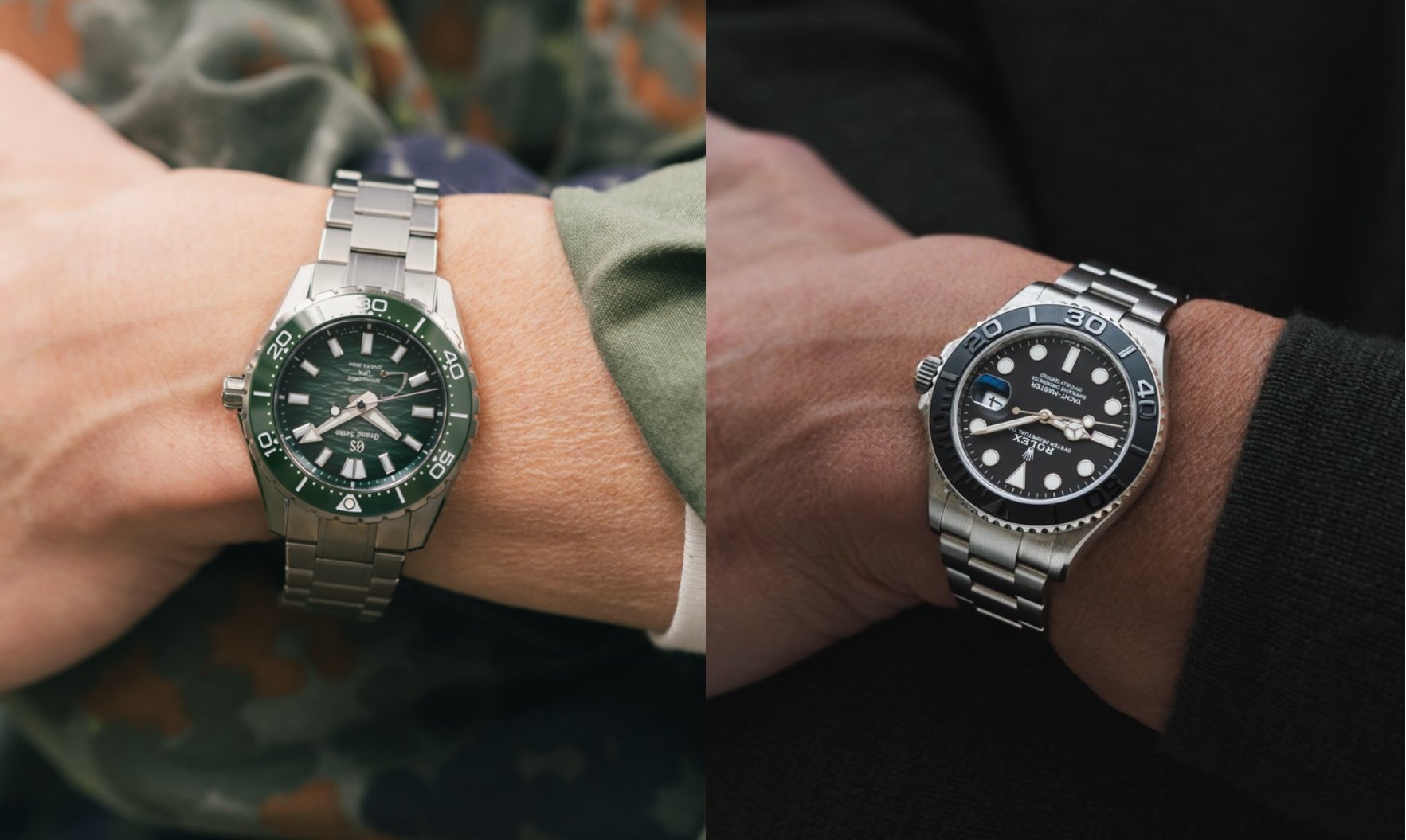
Granted, these technically don’t occupy the same segment. After all, the Ushio 300 is a dive watch, while the Yacht-Master is a yachting watch. Still, both roughly adhere to the traditional dive-watch layout. They’re also both aimed at aquatic activities and made of titanium, including their bracelets. There is plenty of overlap to cause one to pause before ordering one and consider the other. At the time of writing, the Grand Seiko costs €12,500, while the Rolex demands €15,750 (at retail, anyway). Thomas will defend the Grand Seiko, while Daan will represent The Crown.
But first, last week’s results
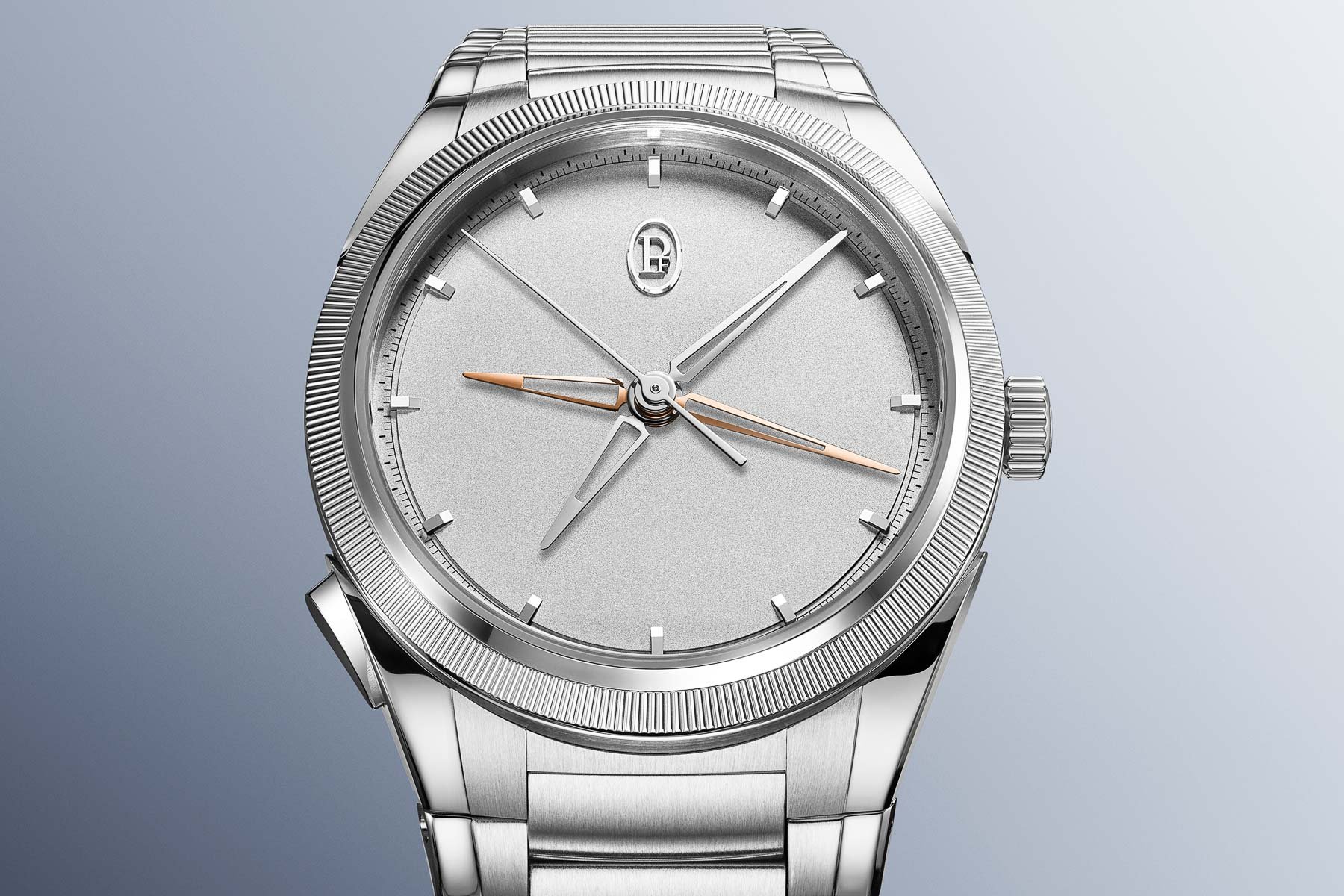
Before we get into all of that, we have to take the customary look at last week’s results. Ben and Mike pitted the H. Moser & Cie. Endeavour Perpetual Calendar Concept Tantalum against the Parmigiani Fleurier Tonda PF Chronographe Mystérieux. These two watches differ in virtually every way except for their ambition to be mysterious. Both keep their complications to themselves, like guitar hero Robert Johnson turned his back on the crowd when people inspected his fingerwork too closely.
Well, Fratelli, it seems you were nearly unanimous about this one. You formed a united front for the Parmigiani, bringing it a whopping 79% of the votes.
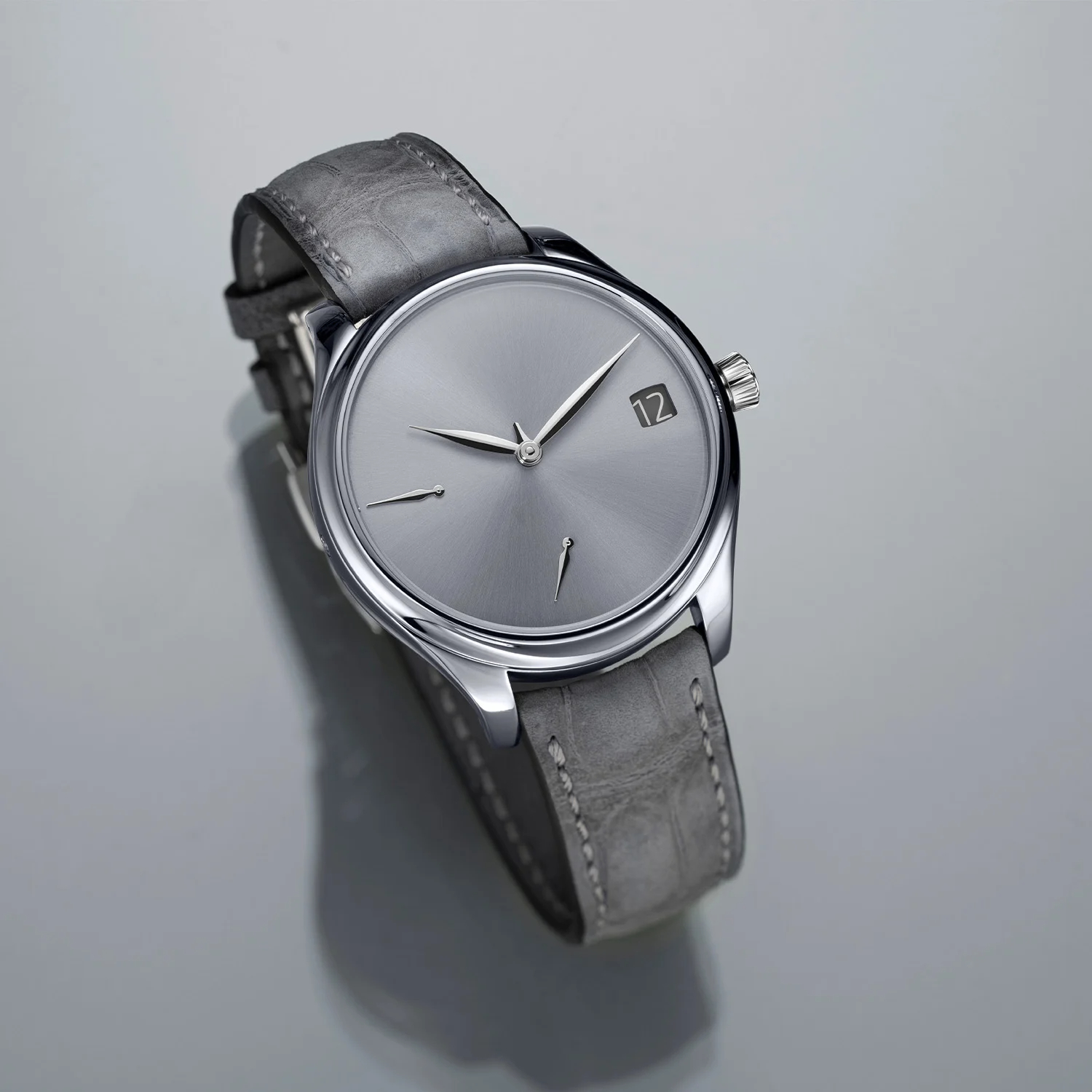
Judging from the comments, this was primarily due to its opponent’s divisive nature. Conceptual and contrarian as ever, Moser released a jarring take on the traditional perpetual calendar. While it sure has its devoted admirers, it still pushed most voters towards the more palatable Parmigiani. Now, with that out of the way, let’s dive into today’s face-off.
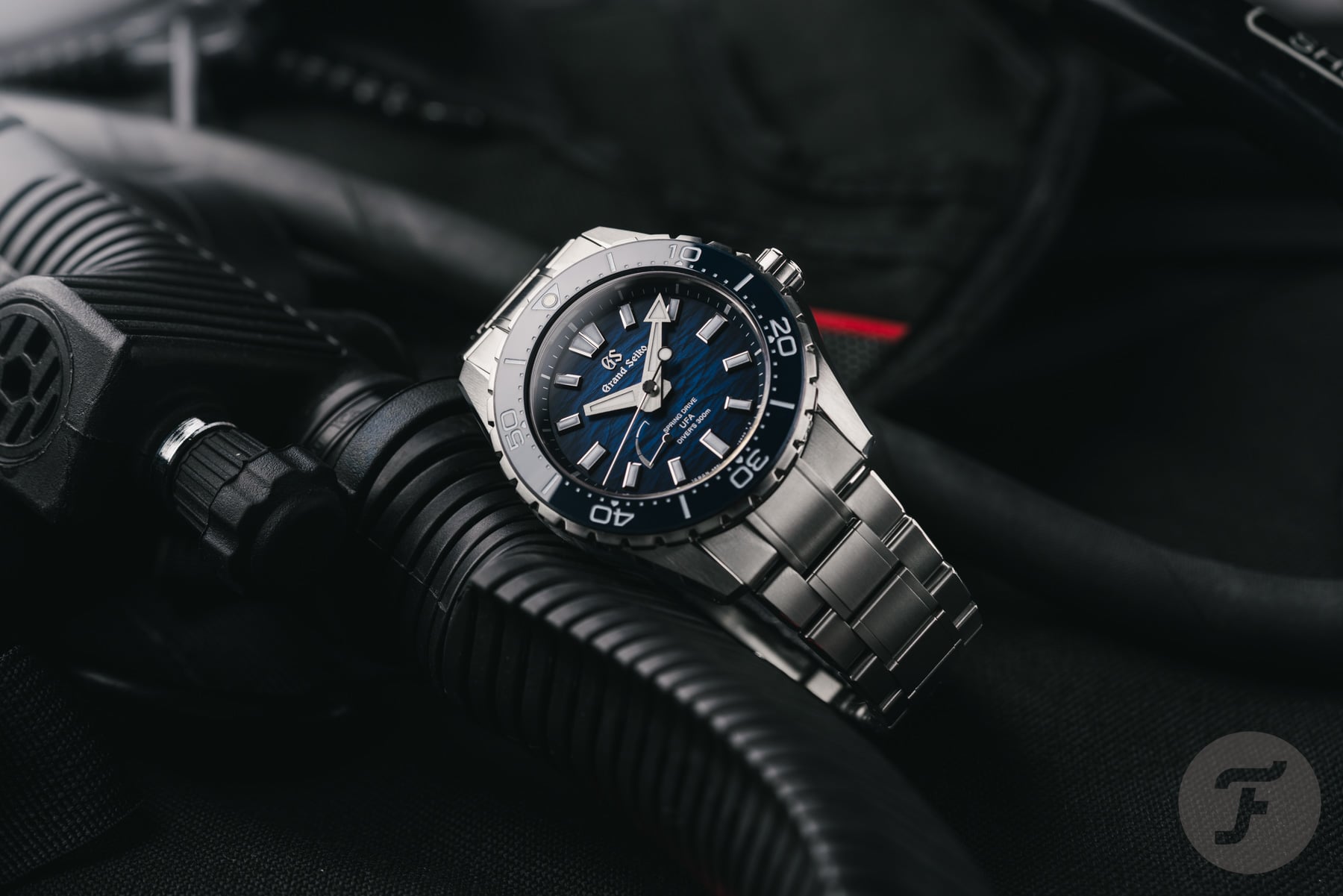
Thomas: Grand Seiko Evolution 9 Spring Drive U.F.A. Ushio 300
Good morning, Fratelli! And good morning, Daan! This is a tough one. Even though these watches have many commonalities, they somehow feel miles apart. I reckon most of our readers will have an instinctive preference for one over the other, regardless of what we write. Still, for the undecided among you, let me make a case for the Ushio 300!
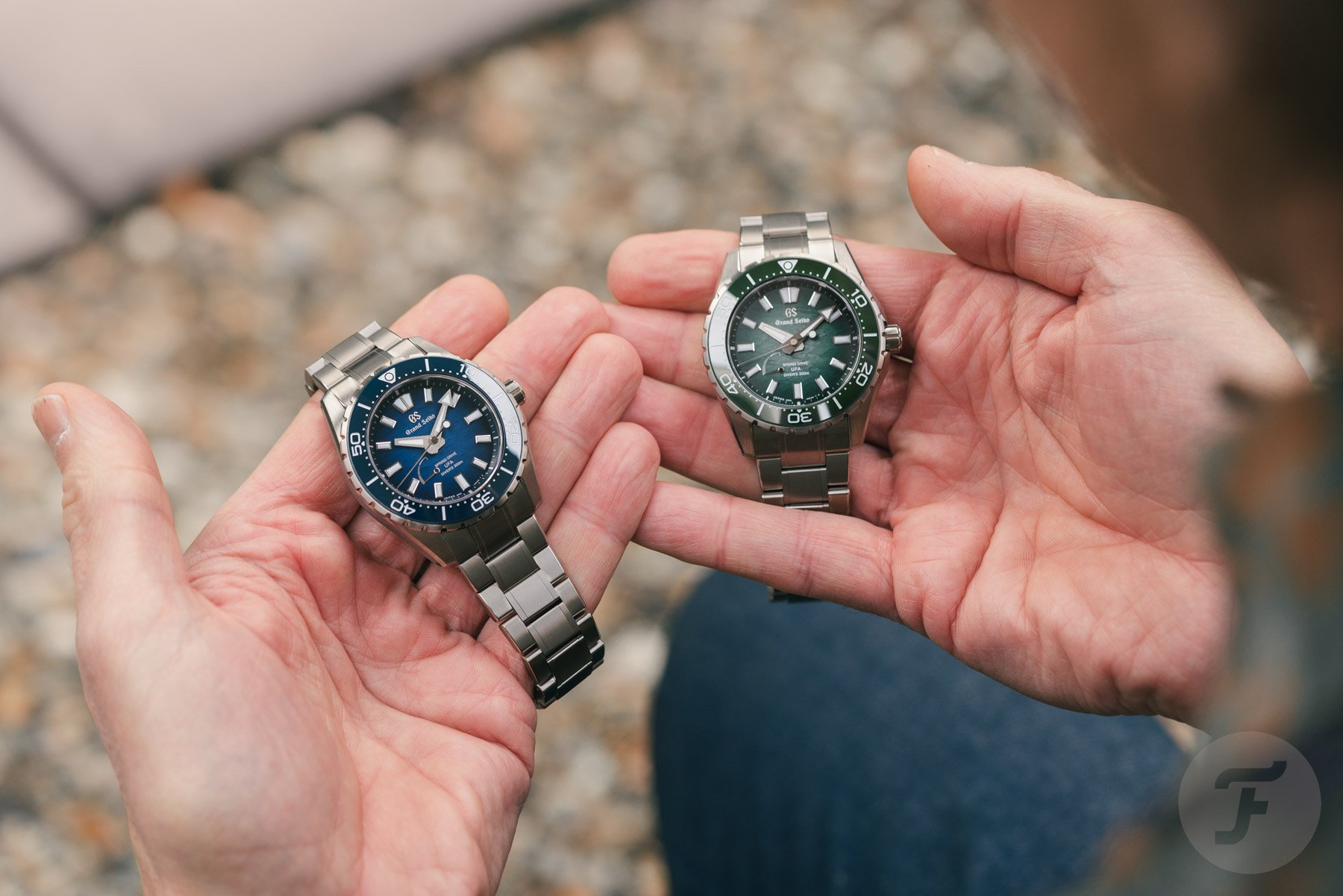
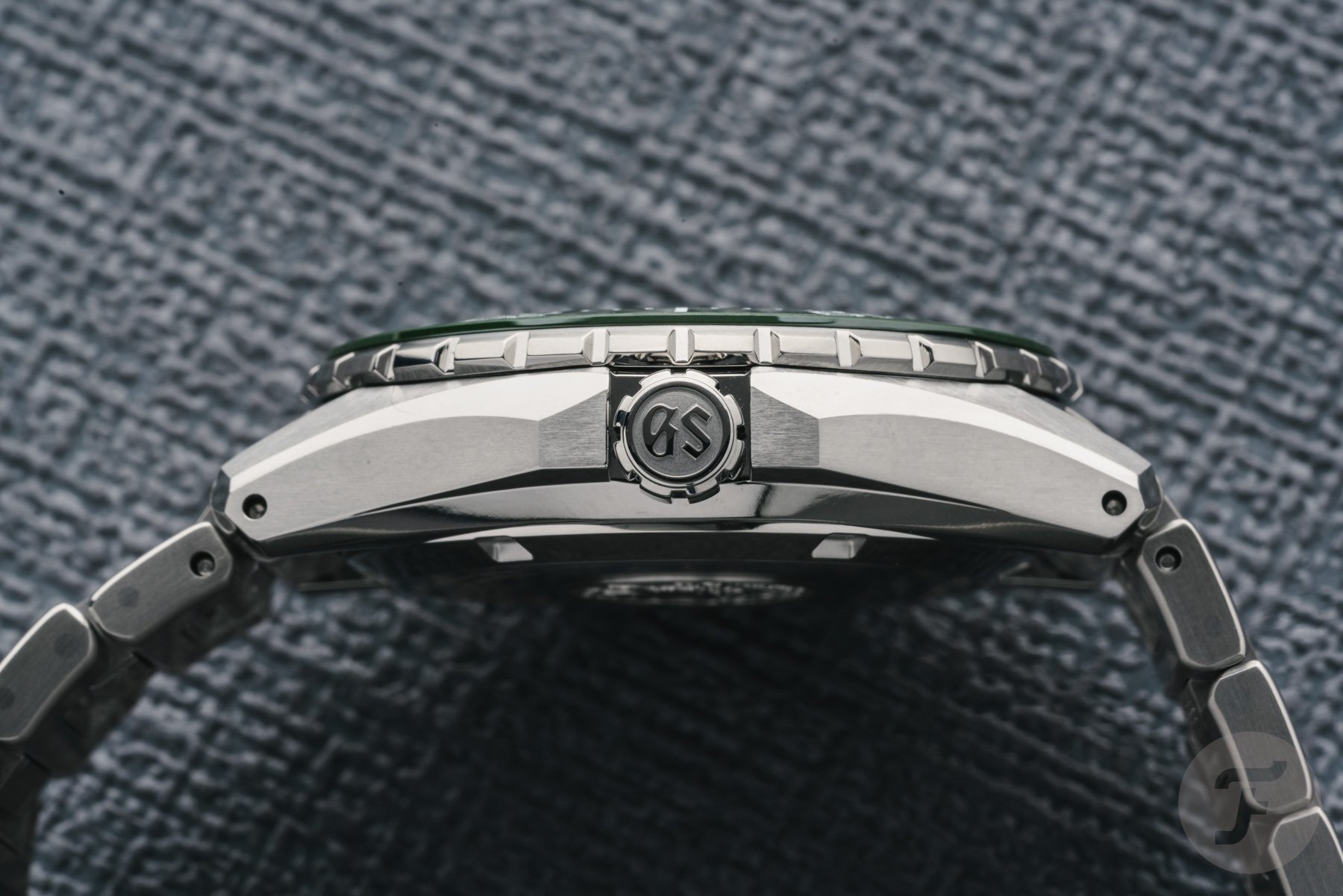
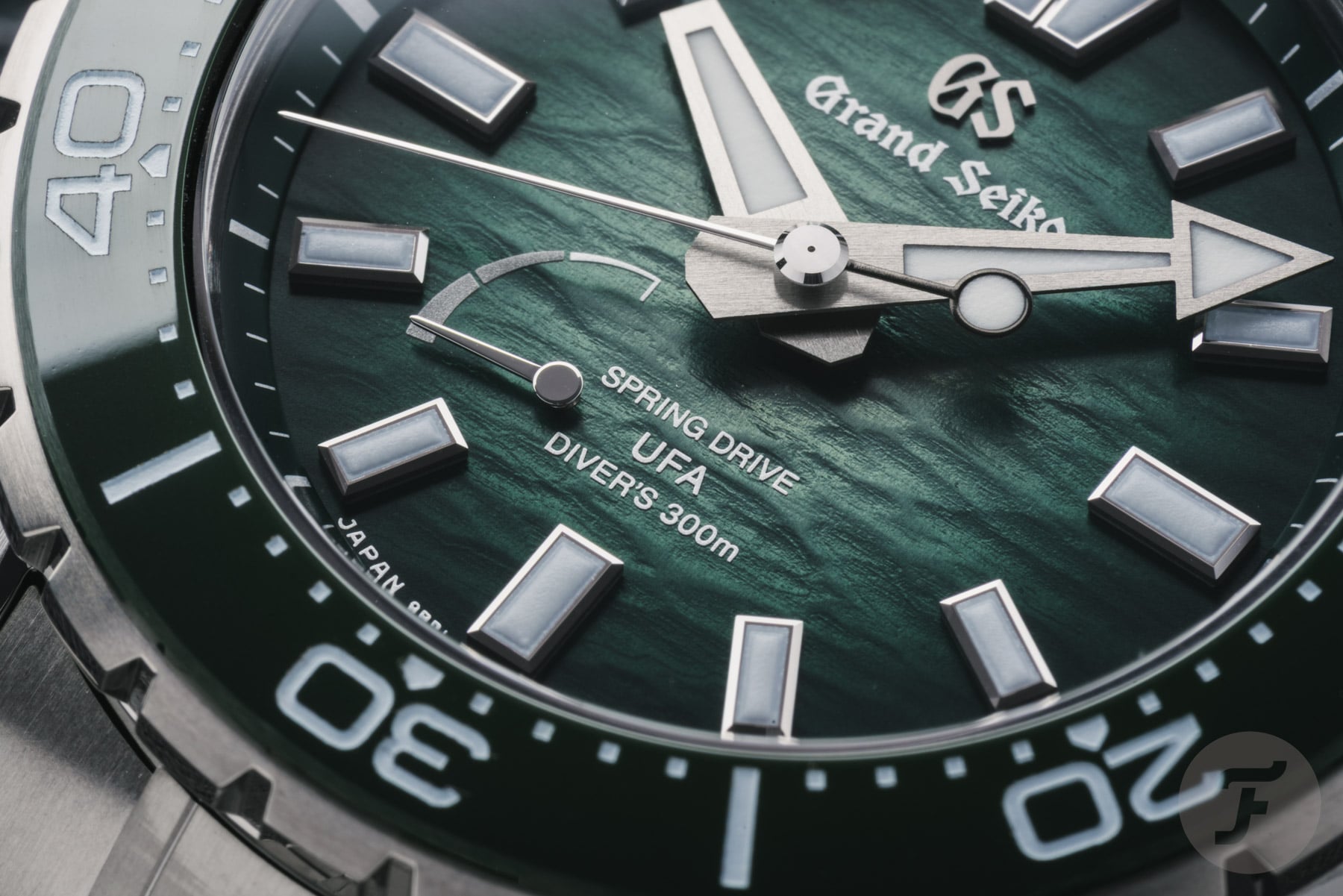
My first point relates to value. Now, I don’t know about you, but I tend to compare luxury dive watches to the Rolex Submariner. As a point of reference, it always feels bold for other brands to position their divers above the mighty Sub. It takes something special to justify it, and Grand Seiko delivers in spades here. For starters, you get a U.F.A. (Ultra Fine Accuracy) Spring Drive caliber. As far as horological innovation goes, U.F.A. Spring Drive is up there, with its smooth-sweeping seconds hand and accuracy of just ±20 seconds per year. Second, you get Zaratsu polishing, one of the few finishing techniques that can beat Rolex in this segment. Last, you get that typical fancy Grand Seiko dial work. So, while the Ushio 300 is far from affordable, I’d say it justifies its price.
Now, on to the Yacht-Master. What exactly justifies its 50% premium over a Submariner? The lesser water resistance and the 0.7mm-thinner exterior? The titanium construction? Nope. It is the Yacht-Master name on the dial. That’s some expensive positioning you are paying for! And that’s assuming you can even get one. Those serious about purchasing probably need to fork out closer to €25k on the pre-owned market. Hype is a beautiful thing…if you can afford it.
The Ushio 300 is the more original choice for confident enthusiasts
While I would never argue against the Rolex Yacht-Master in terms of build and quality, the Grand Seiko Ushio 300 runs rings around it. It is quite simply more horologically interesting. Granted, you have to appreciate that complicated, maybe even contrived design language. Side by side, the Rolex appears cleaner and more to the point. This difference, however, traces its roots to differences in European and Japanese design culture and philosophy. These designs draw on different schools of thought and aesthetic values. As a result, you will have your preference, but to state one is better is to miss the point.
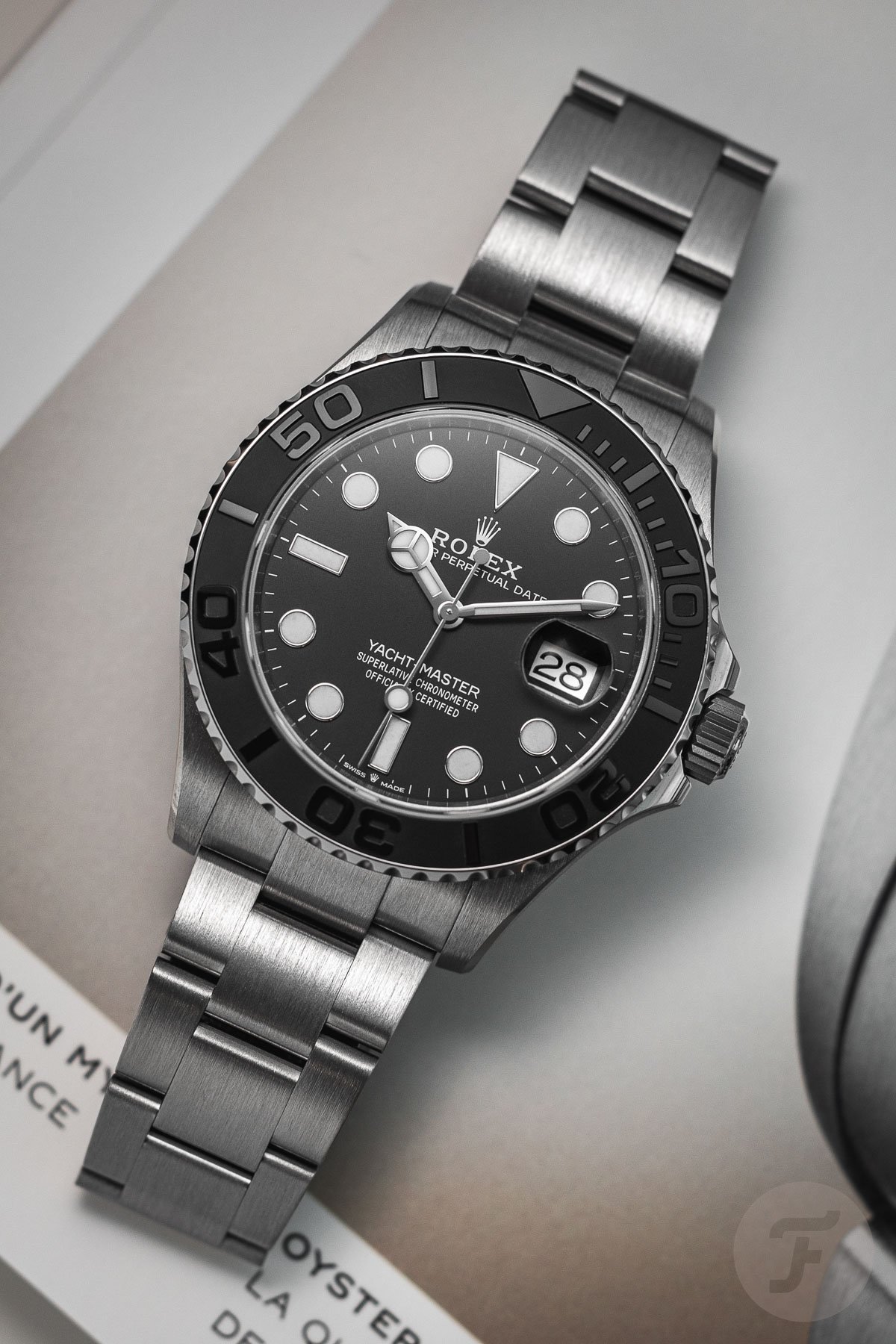
Something less relative is the current cultural image these watches evoke. I cannot help but feel that the Rolex is an outward-focused item, a statement of success: “Look at what I got. You can’t have one, even if you can afford it.” While there are other, nobler reasons to admire and/or own one, I cannot help but feel this has become too much of Rolex’s story. You can actually see it when you look at the Yacht-Master. It is a conceptually flawed watch. The Yacht-Master was always the luxury Submariner, offering more bling and less bang. This one, though, got the tool-watch treatment on the outside, but it stopped short of a legible bezel. It is cool for coolness’s sake.
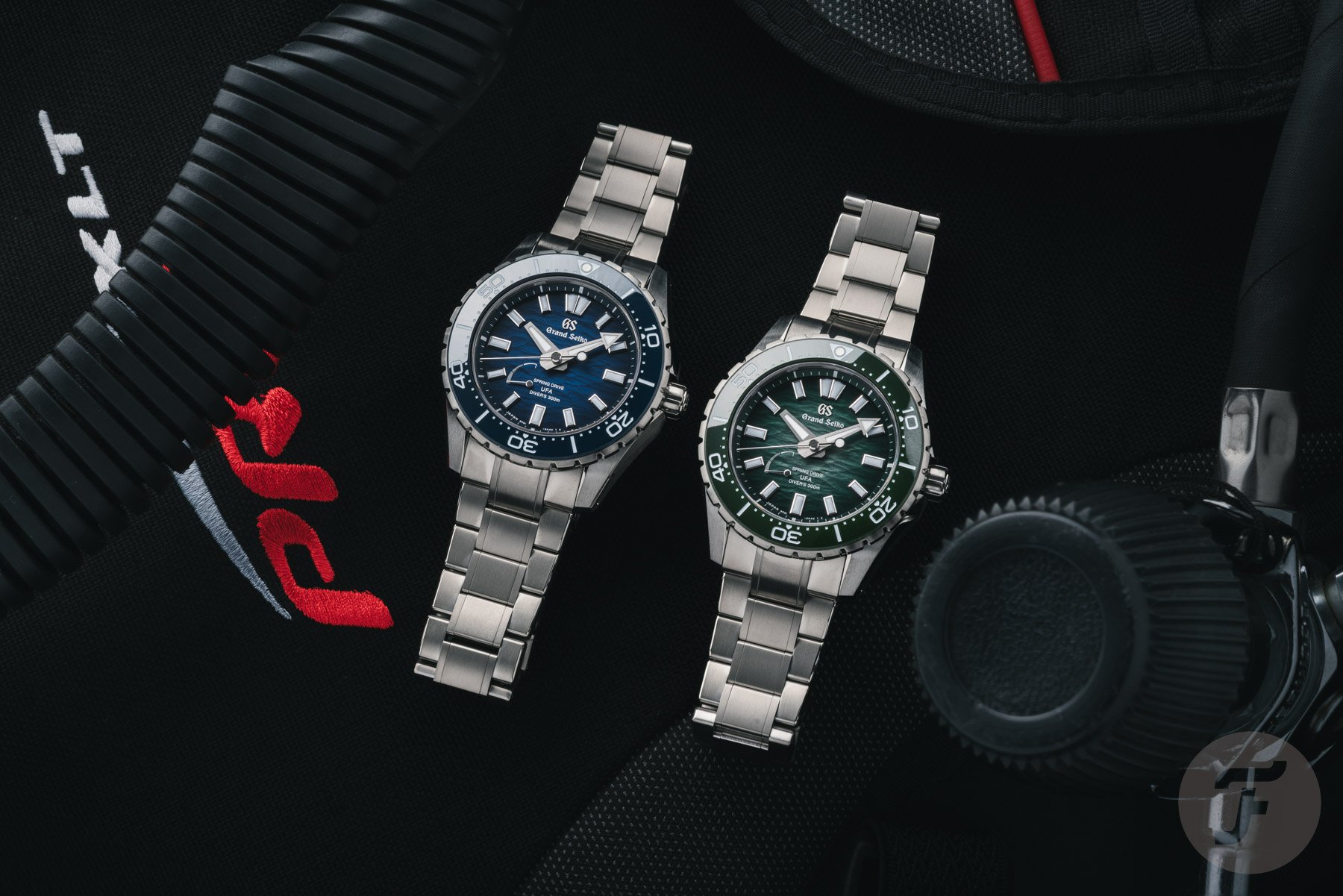
The Ushio 300 couldn’t be more different. It is a bit nerdy and slightly too technical. And that’s exactly where it shines. It takes that typical Grand Seiko approach to refinement: if something can be 1% better through some dauntingly complicated intervention, let’s do it. That’s why Spring Drive and Zaratsu polishing exist. This watch is for confident enthusiasts who don’t need to prove anything and simply want something truly special. All right, let me leave it at that. Daan, tell the good people why I am wrong!
Daan: Rolex Yacht-Master 42 in titanium
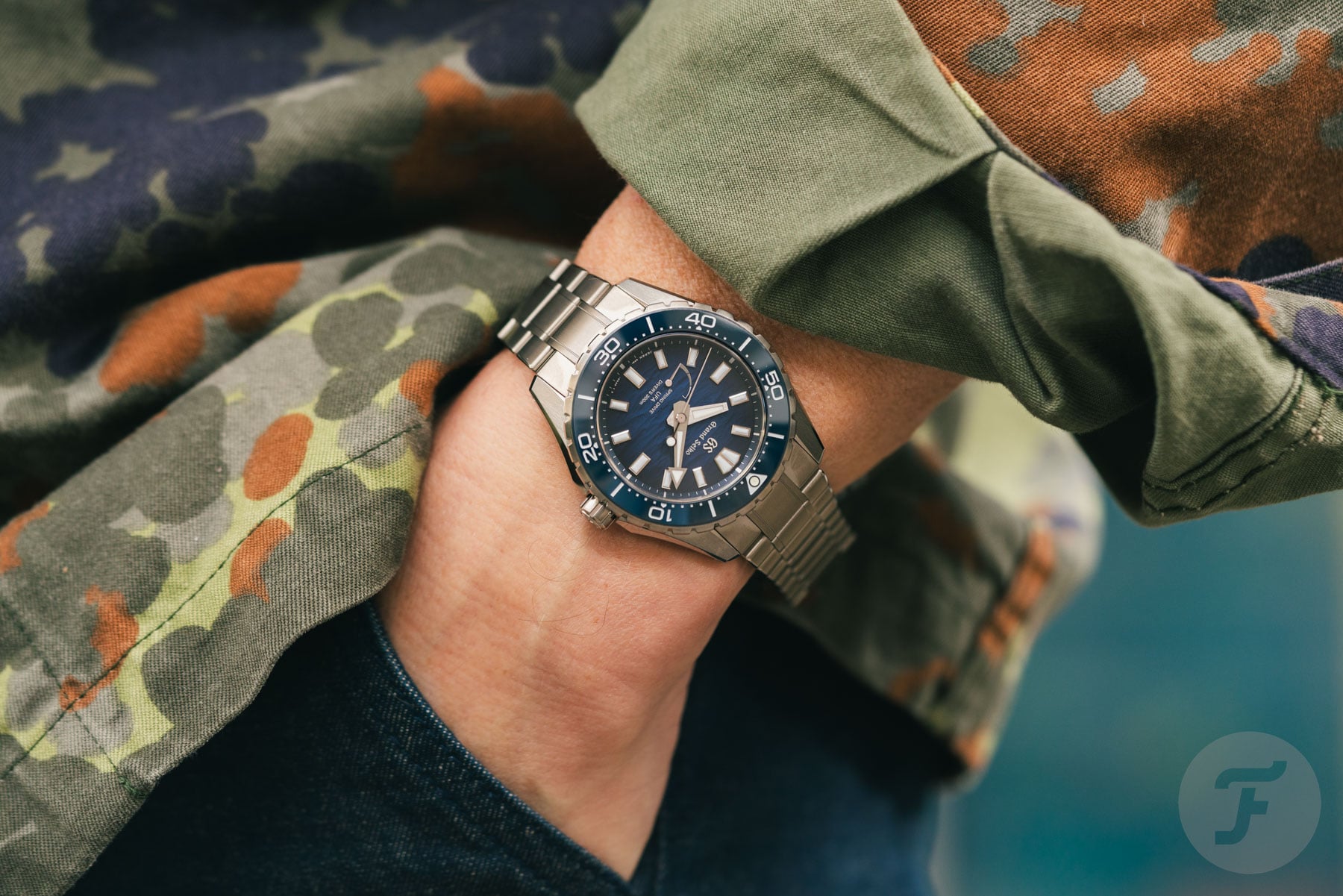
Thanks, Thomas, and good morning to you too. Let me say right away that I greatly appreciate what Grand Seiko did with the new Ushio 300 divers. The smaller 40.5mm case wears great, the proportions of the bezel, dial, and case all make sense, and the bracelet finally has a taper and matches the case design. I also like how the rectangular hour markers remind me of my vintage Seiko 6105-8000 diver. Still, it’s not perfect, but I’m very fond of the Ushio, especially because it shows that Grand Seiko is trying to improve things we have all criticized in the past.
As you already mentioned, Thomas, the Ushio 300 offers a lot, and, as is often the case with Grand Seiko, maybe it’s a bit too much. First of all, I’m not a fan of the glossy green or blue ceramic bezel insert. You fault the Yacht-Master for its illegible bezel, but legibility isn’t much better on the shiny Ushio 300. Then, there’s the wavy dial finishing. Was that really necessary on a dive tool like this one? You also failed to mention, Thomas, that it features a fumé finish. That’s strange… I thought you were fed up with those.
Another thing you carefully circumnavigated was the completely unnecessary and obnoxious power reserve indicator on the dial. During Watches and Wonders, I asked the Grand Seiko people why it’s there. According to them, it’s to see whether your watch has enough juice during your dive. I’ll just leave that there for you to judge.
Nearly perfect
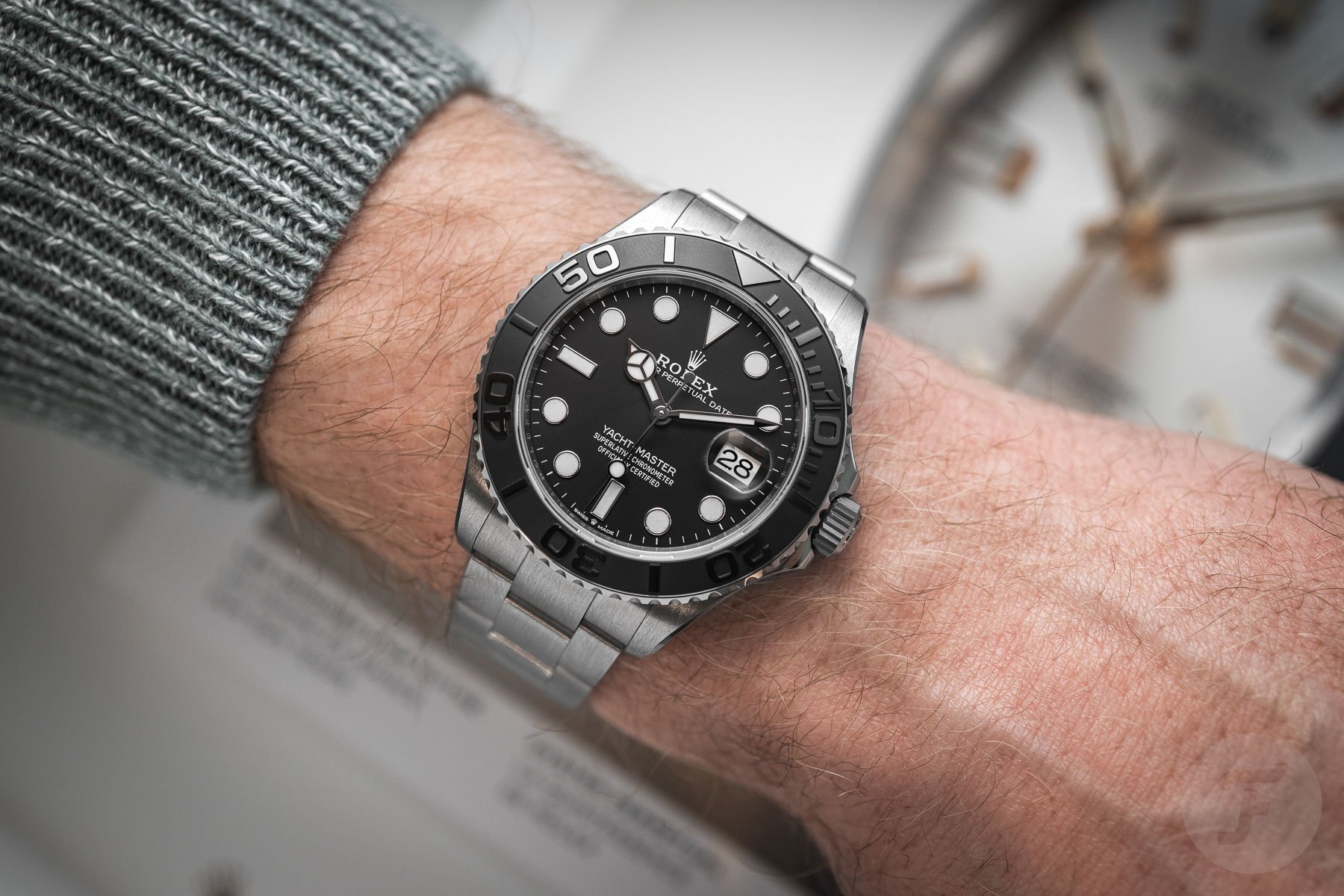
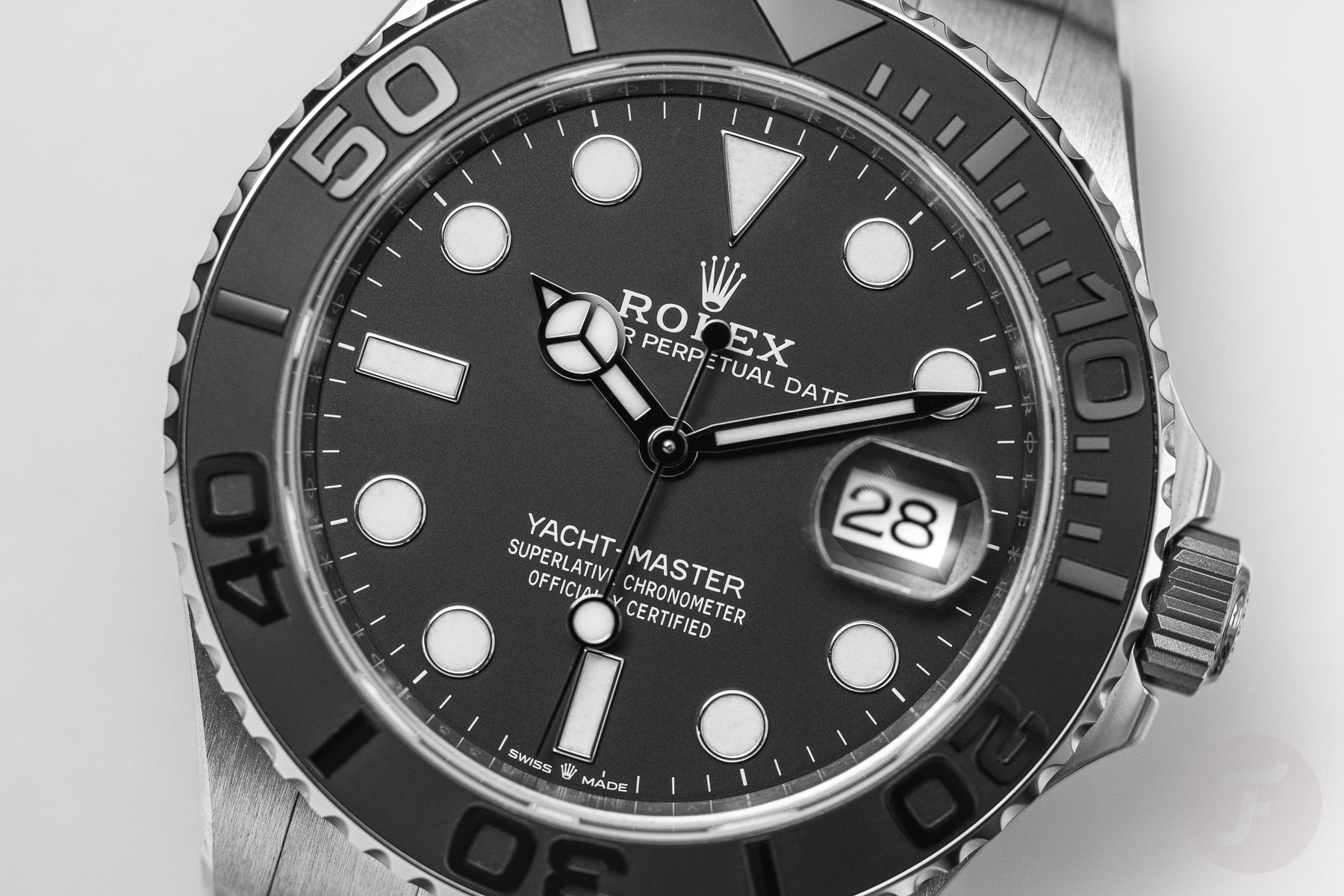
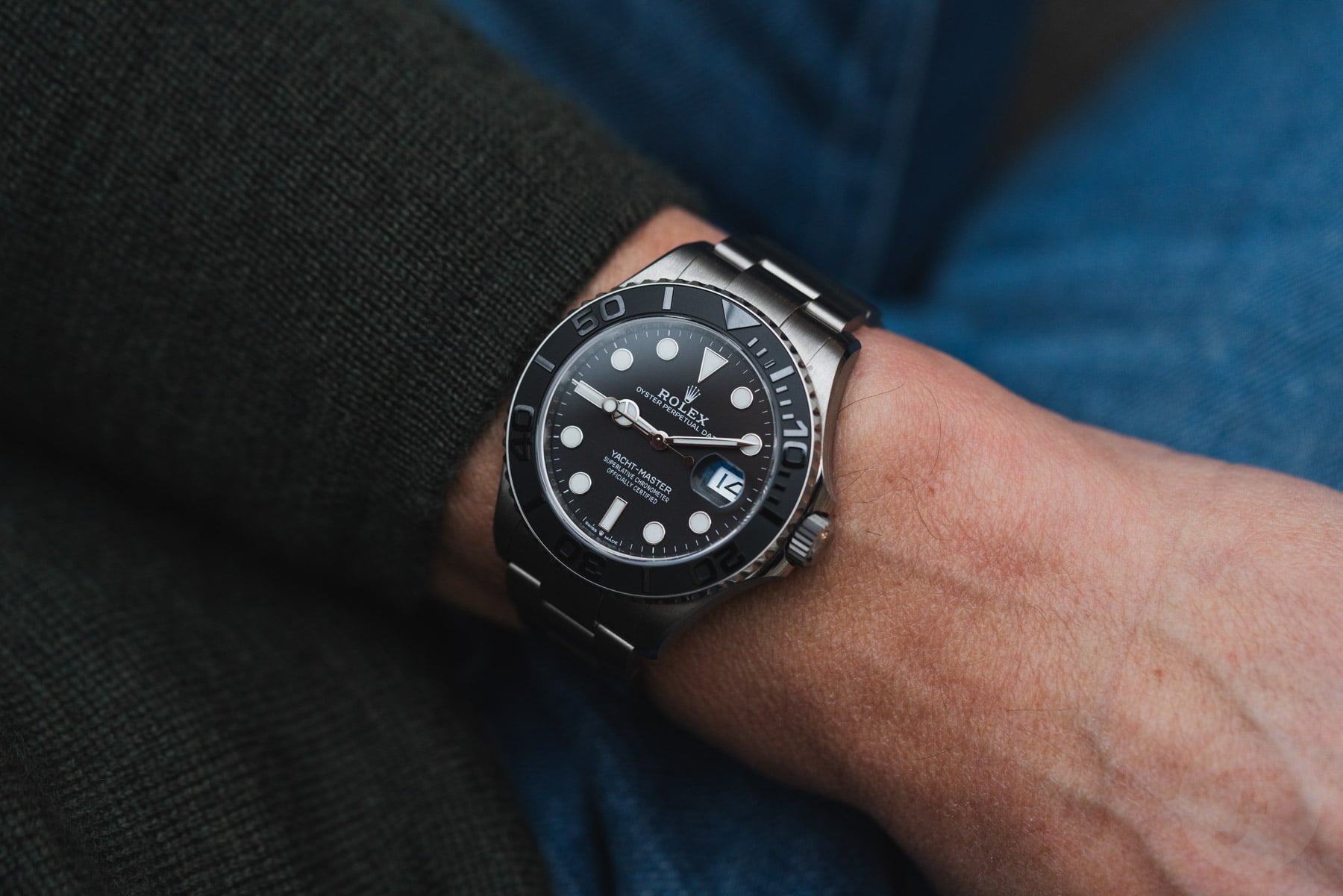
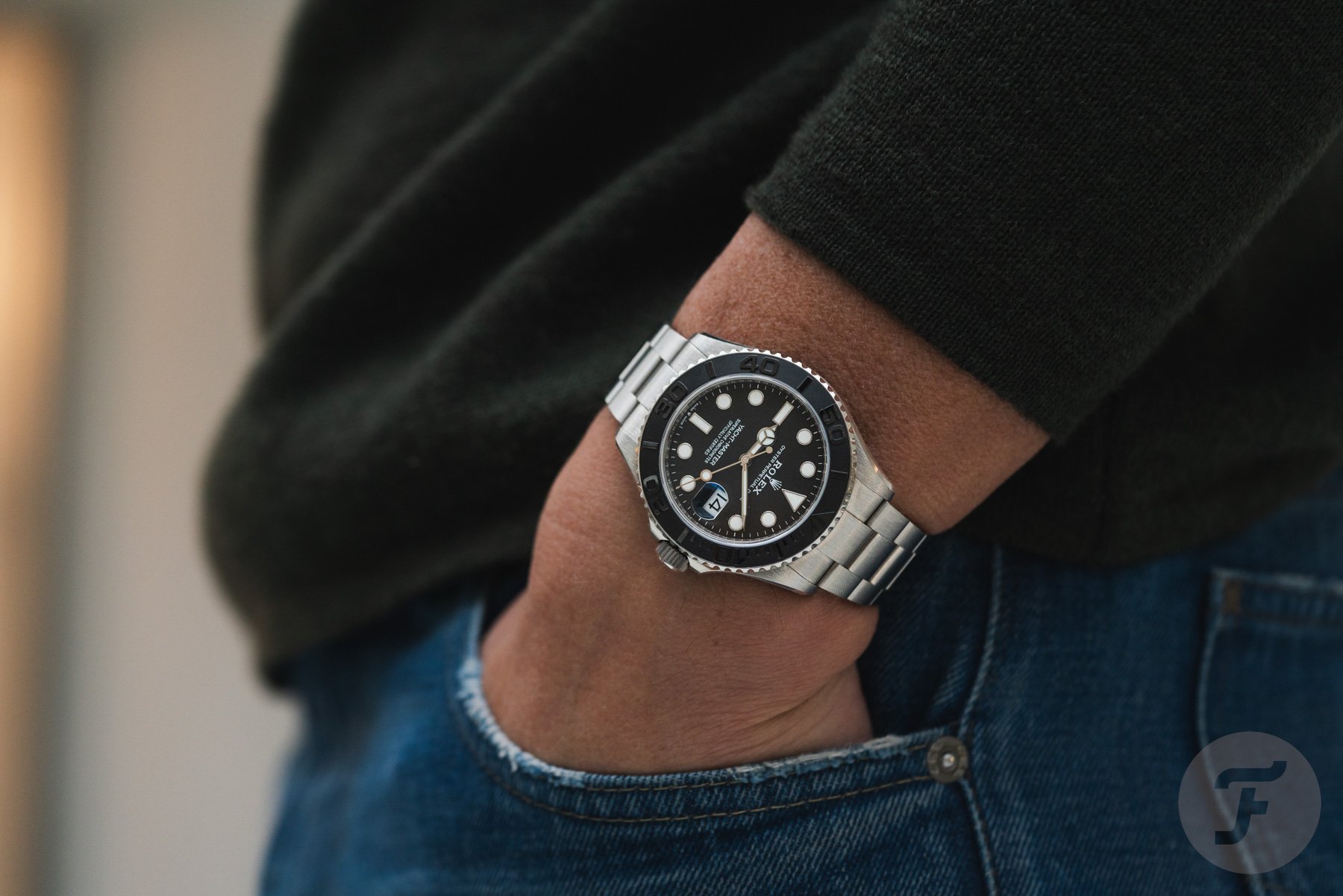
The Rolex Yacht-Master 42 in titanium, on the other hand, is close to perfect in my eyes. There are no unnecessary power reserve indicators or colors here, just plain, monochrome coolness. Sure, the all-black Cerachrom bezel insert with relief markings might not be all that functional underwater. However, above the surface, it reflects light in a way that blends in perfectly with the rest of the gray, black, and white aesthetic.
Of course, Grand Seiko is known for its case finishing, but I don’t think the almost all-brushed Yacht-Master is far behind in that respect. You can see the coarse brushing on the case from a distance, which makes the watch look like a proper, badass tool.
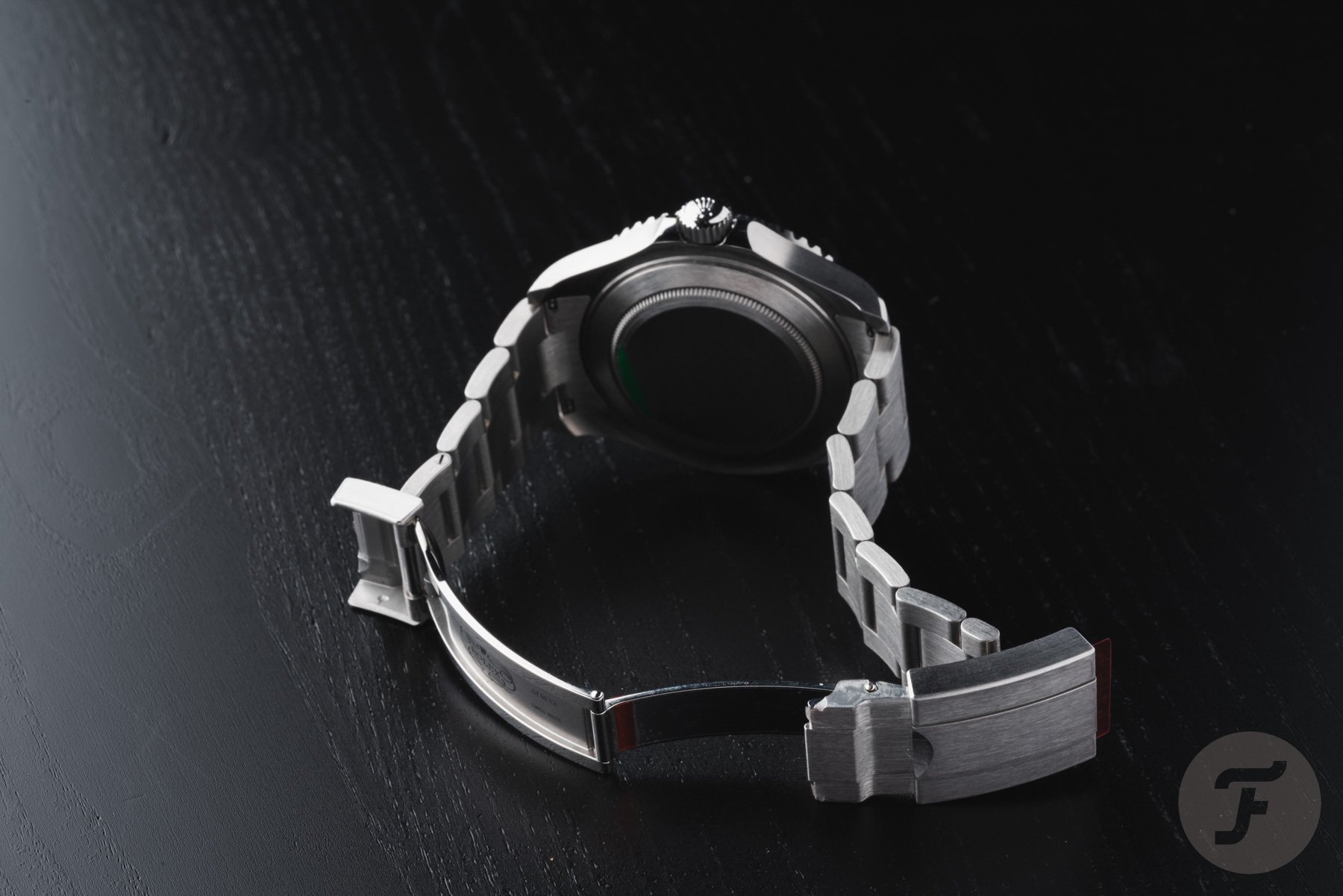
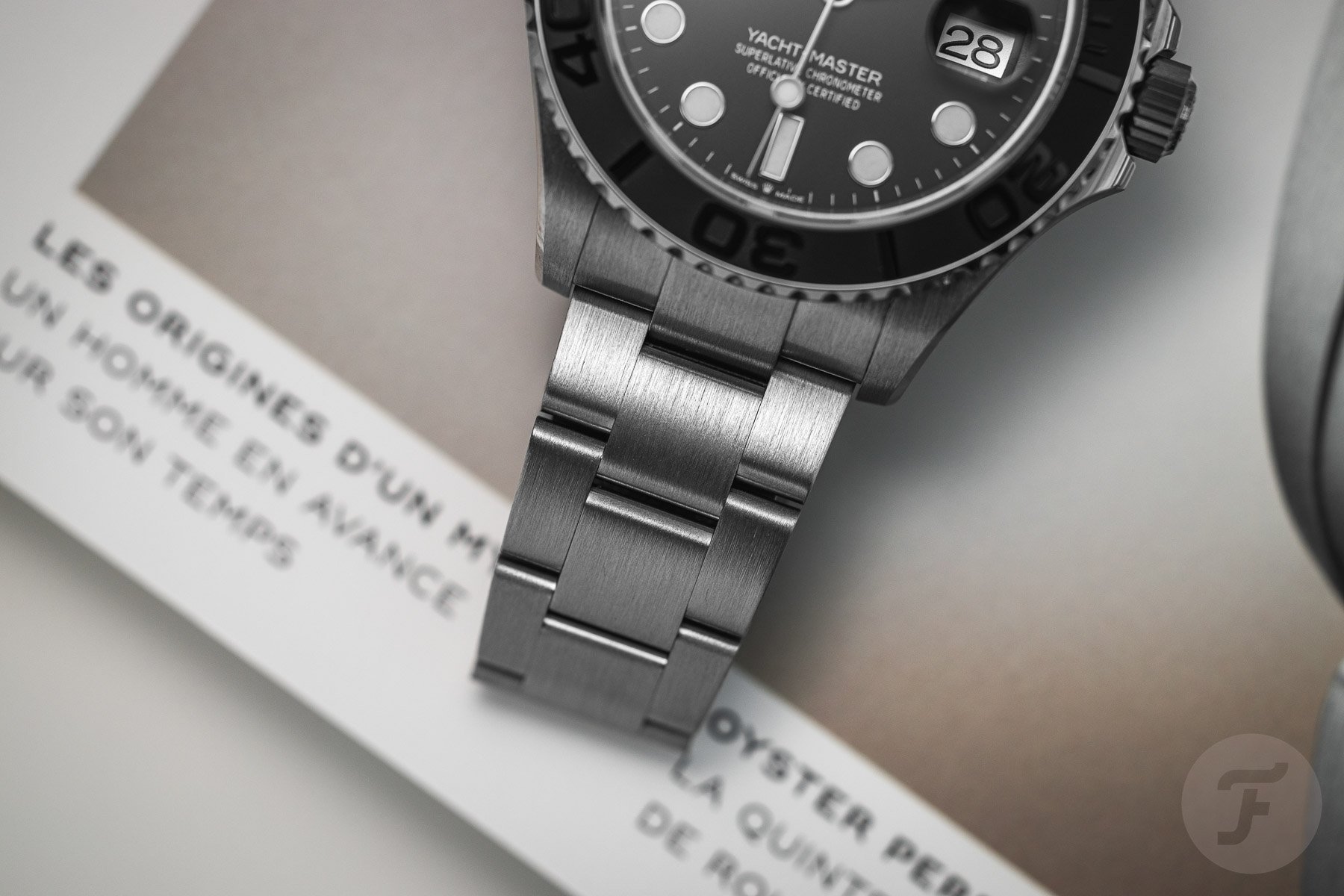
While I applaud Grand Seiko for the new bracelet, Rolex is still the king of bracelets for me. The titanium Oyster bracelet on the Yacht-Master is as simple and good-looking as on all the other Rolex models. It also feels rock-solid while being rather lightweight for a metal bracelet. The links even feature patented ceramic inserts inside to enhance the bracelet’s flexibility and longevity. That means it won’t stretch for the foreseeable future.
Progressive vs. conservative
In the end, the Ushio divers might be more innovative with their Spring Drive movements and enhanced clasp. Even their overall design is more daring and advanced. The Yacht-Master, on the other hand, is much more conservative and is only a few adjustments away from its older brother, the Submariner. In that sense, it’s quite a reserved watch, but its familiarity and recognizability are so damn attractive. It almost feels like you don’t have to get used to it once you put it on your wrist. It feels good right away.
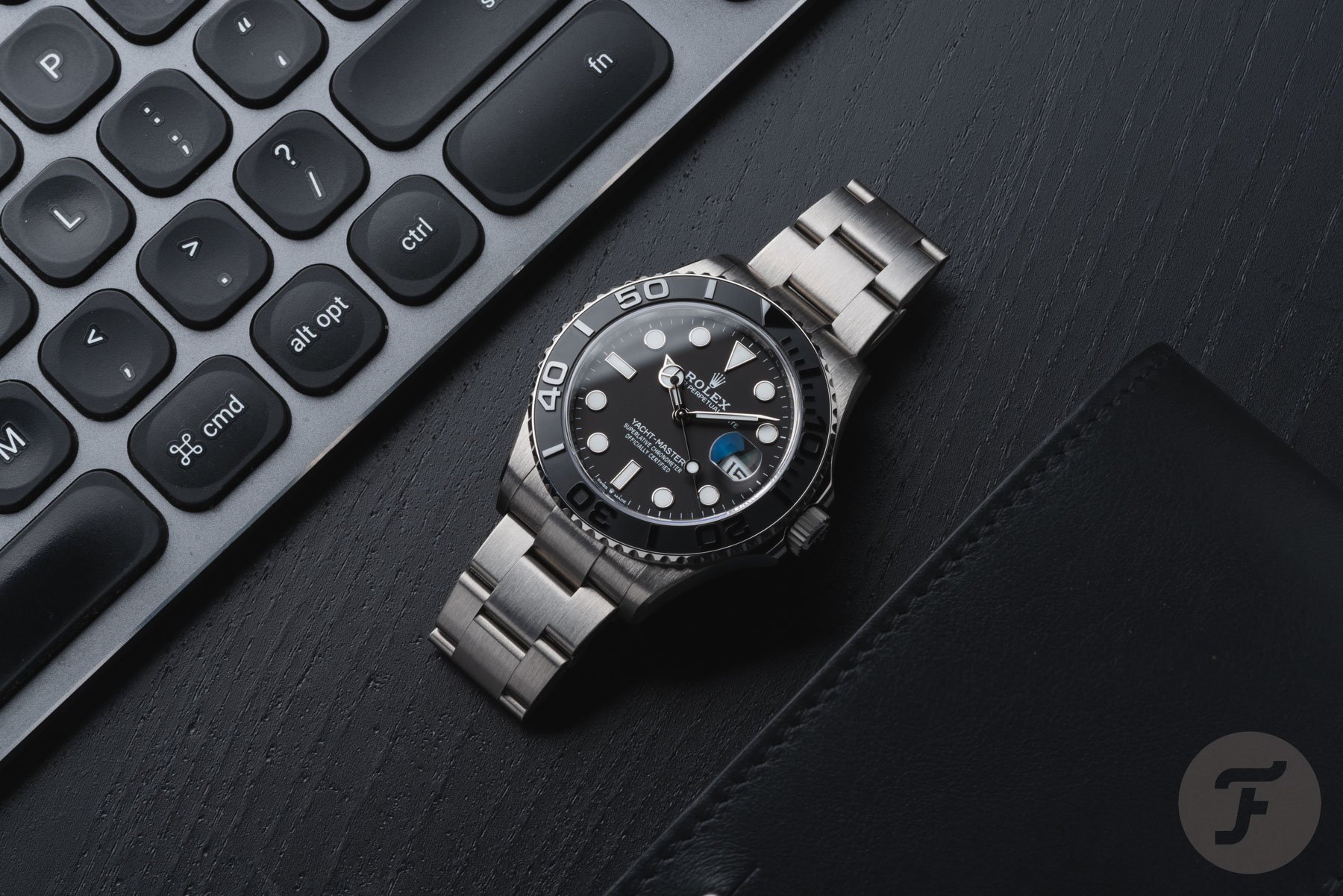
For some reason, with Grand Seiko watches, I always need some adjustment time. I need to get used to the quirks, and I often fail to connect with them. That’s a shame because, as you said, Thomas, the overall package is very compelling. For me, though, the titanium Rolex Yacht-Master is the perfect combination of contemporary, reliable technology and perfectly balanced looks.
Time to cast your vote
So, there you have it — another Sunday Morning Showdown. Make sure to cast your vote below and tell us in the comments why you voted the way you did!