Sunday Morning Showdown: Ianos Amfivios Vs. Doxa Sub 300 Ti5

It’s Sunday morning, so it’s time for a nice cup of coffee and another watch battle. This week, our Sunday Morning Showdown is a contest between two divers that immediately stand out in a crowd. In the saturated world of dive watches (no pun intended), both the Ianos Amfivios and the Doxa Sub 300 Ti5 are instantly recognizable thanks to their distinct styling. But it’s also a battle between David and Goliath. Ianos is a relatively new, small brand from Greece, while Doxa has a rich history in the world of diving. You might assume that this would give Doxa the edge. But over the past six or seven years, Ianos has become a favorite among microbrand enthusiasts, so the outcome is certainly not set in stone. Which of the two will triumph today — Daan’s Ianos or Jorg’s Doxa?
At first glance, today’s matchup seems like an oddball pairing. But if you look more closely, you will see that our picks have a lot in common. Both are lightweight titanium dive watches and darlings among enthusiasts. Both also cost less than €3,000. The Doxa retails for €2,990, while the Ianos is a little more affordable at €2,620. Lastly, both watches present a distinct style that immediately stands out. That is a big part of what makes these two watches so beloved. It’s also why both Daan and Jorg picked their respective contenders. Which of the two will win? Let’s find out!
Last week, on Sunday Morning Showdown…
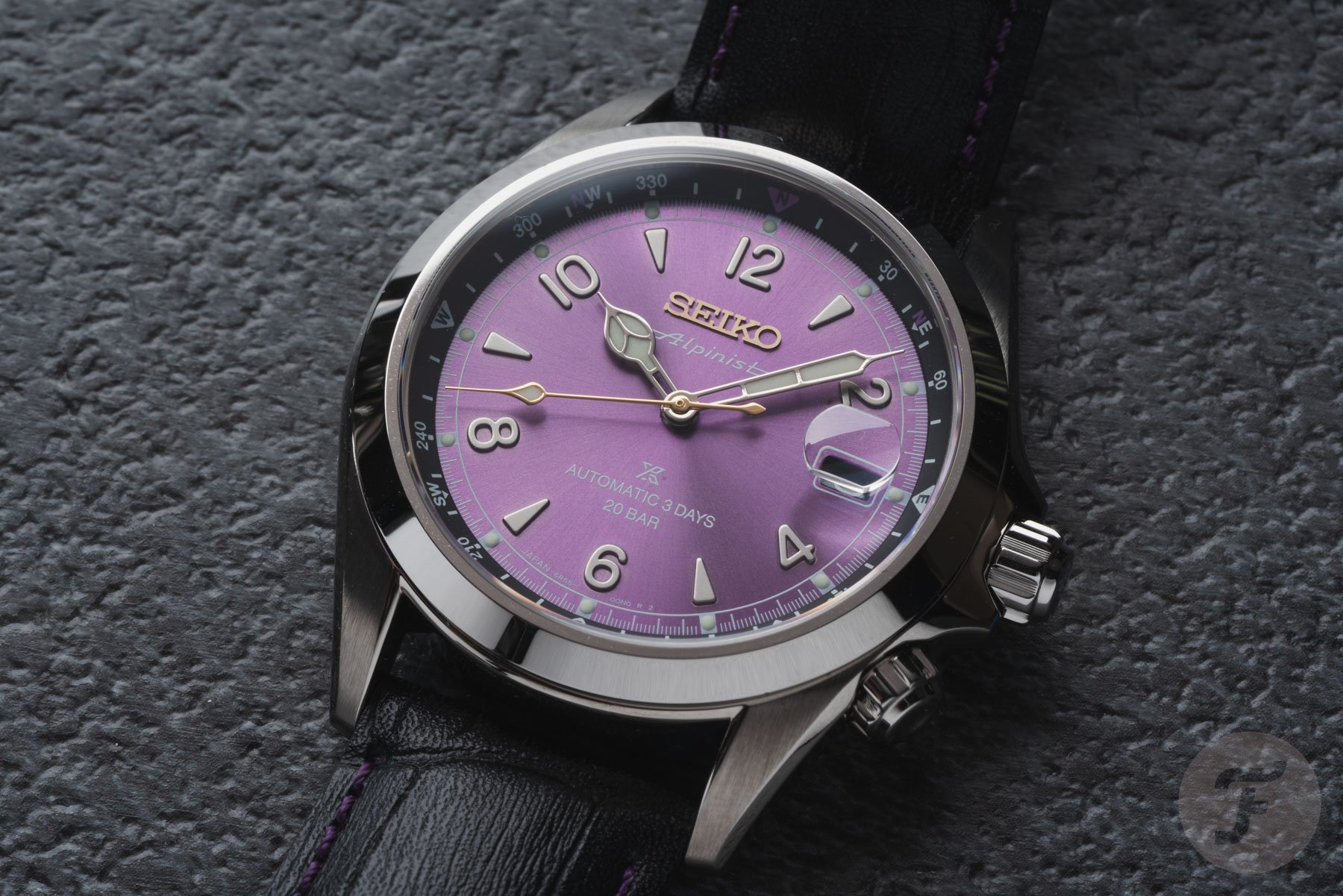
Before we do, though, let’s quickly look at last week’s results. Last Sunday, in a battle of explorer’s watches, Daan picked the Hamilton Khaki Field Murph 38mm, while Jorg chose the Seiko Prospex Alpinist. In the end, the Alpinist claimed victory with 56% of the votes, leaving the Murph with 44%. It was a pretty close contest throughout the week, and the comments reflected that. People praised Seiko’s rich history, while others preferred the Hamilton Murph’ cleaner look. In the end, you can’t go wrong with either watch, but the Alpinist was victorious. Let’s find out whether the underdog can beat the favorite in today’s matchup.
Jorg: Doxa Sub 300 Ti5
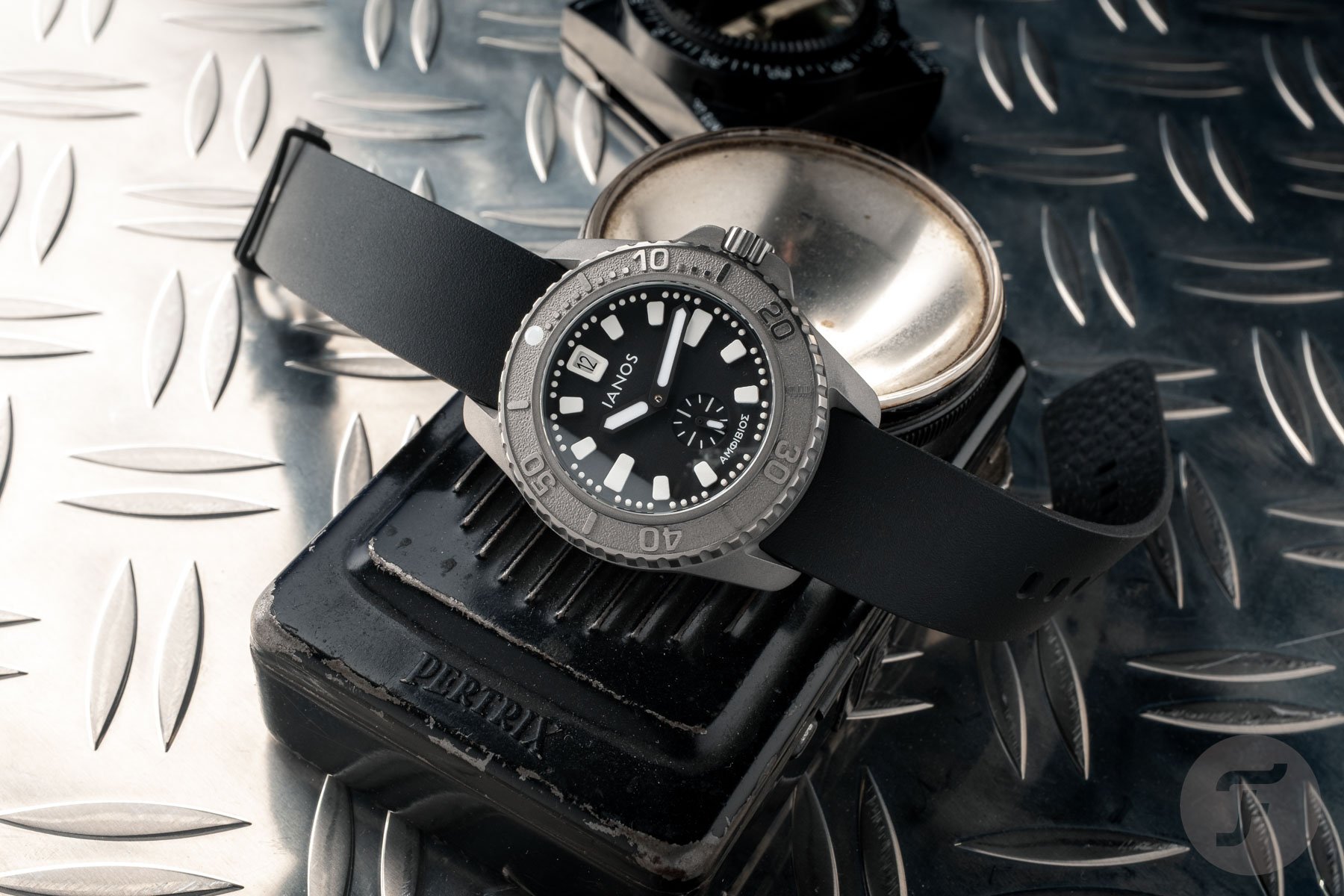
Today’s matchup is tough. I had the opportunity to spend some time with the Ianos Amfivios, and I really liked its beautifully sculpted case with the signature strap channel on the case back and the fixed strap bars. The dial also features massive solid lume blocks that add character and light up like a Christmas tree in the dark. Maybe the most important aspect is that the watch wears like a dream. From the second I put it on, it felt like it was made for my wrist. So, yes, there is a lot to love. But after wearing the watch for a day or two, I noticed a few things I would have liked to see executed differently. Those became the deciding factors in why I would not pick it in today’s matchup and choose the Doxa Sub 300 Ti5 instead.
My main issue with the Ianos is the date window at 12. We don’t see this feature often, but it’s not unique either. Most of you will be familiar with Heuer’s Carrera “Dato 12” from the late ’60s, which explored the design. And TAG Heuer brought it back a few years ago for the Carrera Chronograph Glassbox. But there is a reason why not many designers think to place the date there: it’s far too prominent a position for a date window. In my book, the date should never have a leading position in a design, as it’s simply not the first thing I check on a watch. On top of that, I generally don’t consider a date window to be a pleasing aesthetic element. That’s why I prefer it integrated at 3 o’clock or neatly tucked away between 4 and 5.
A different hierarchy of elements
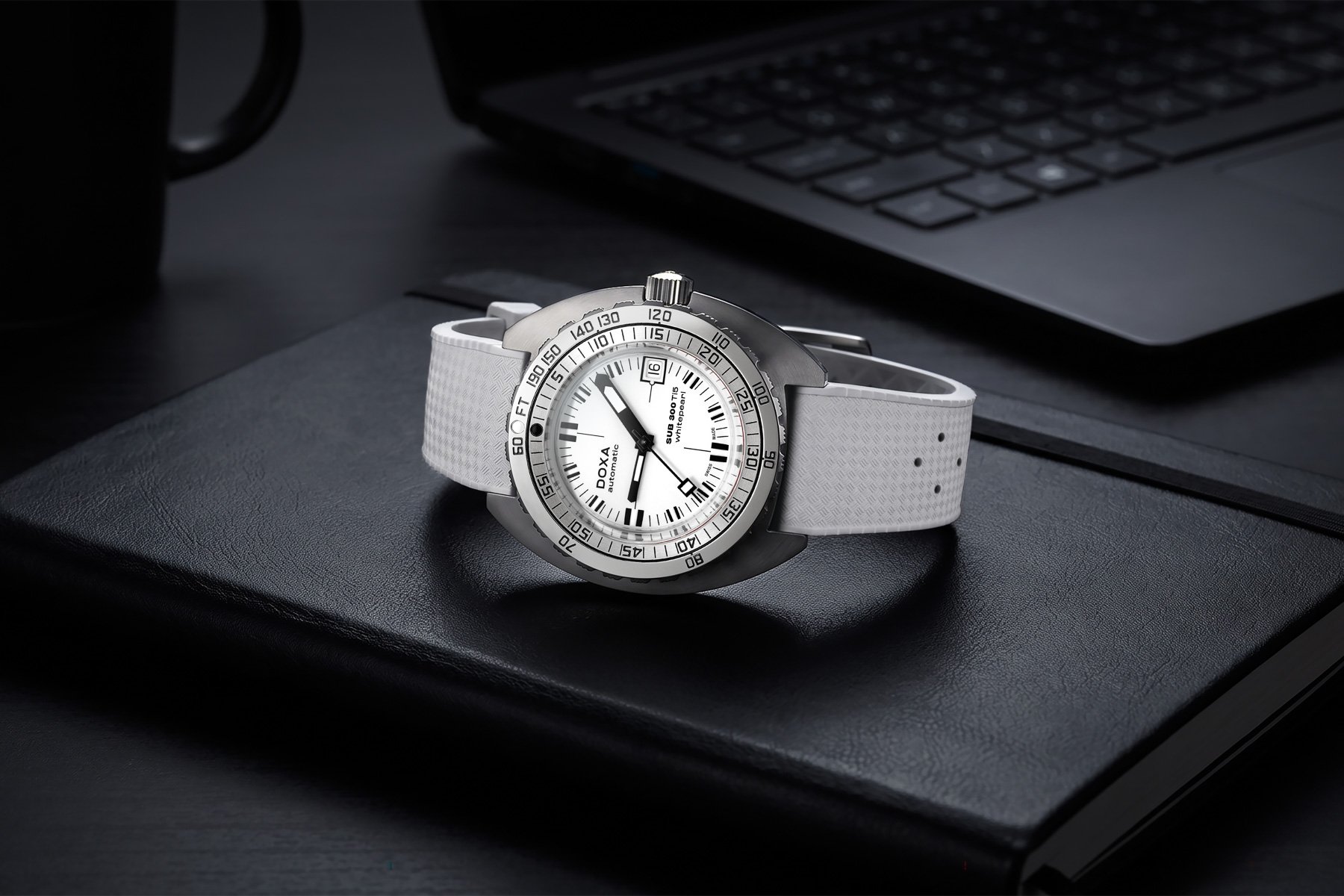
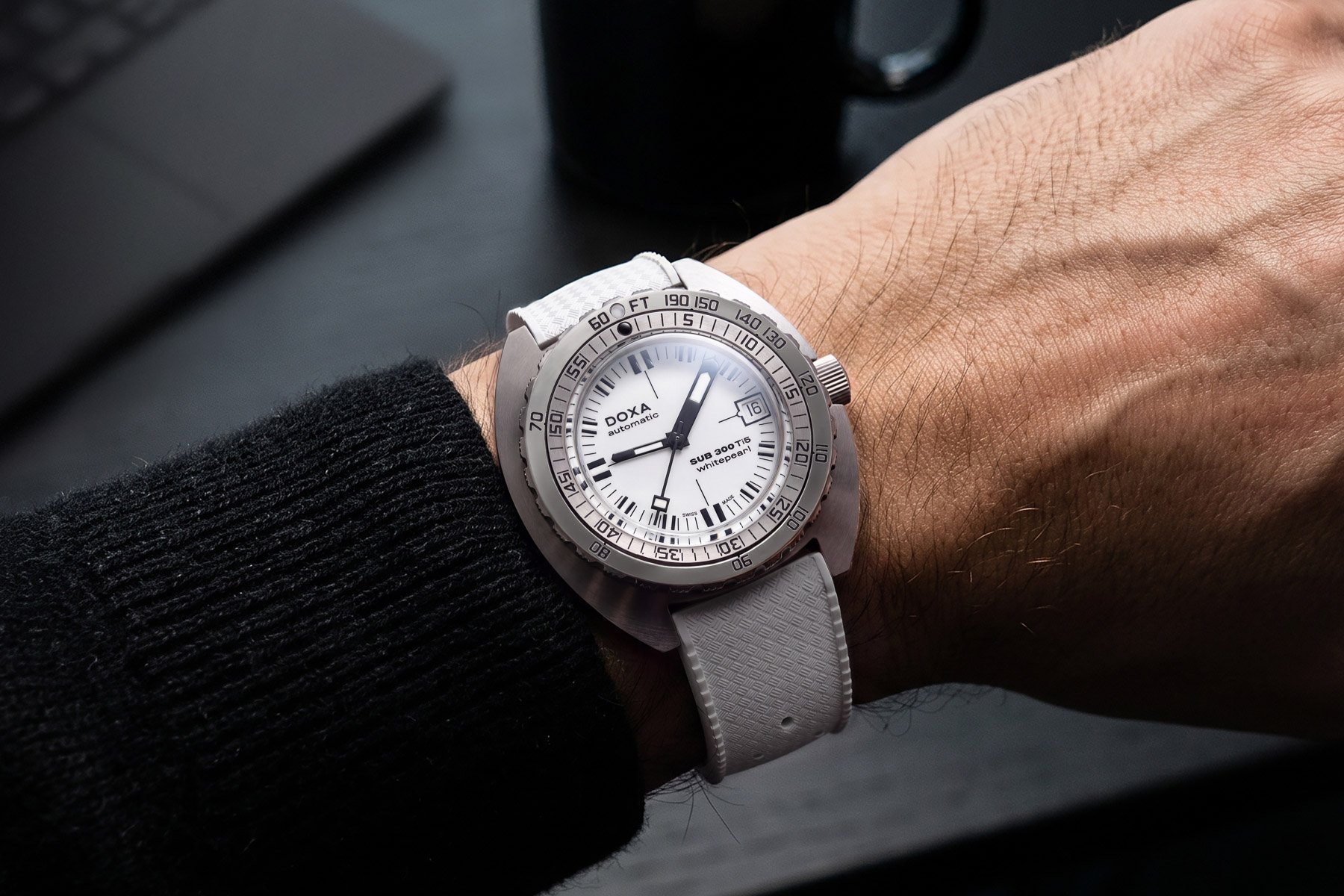
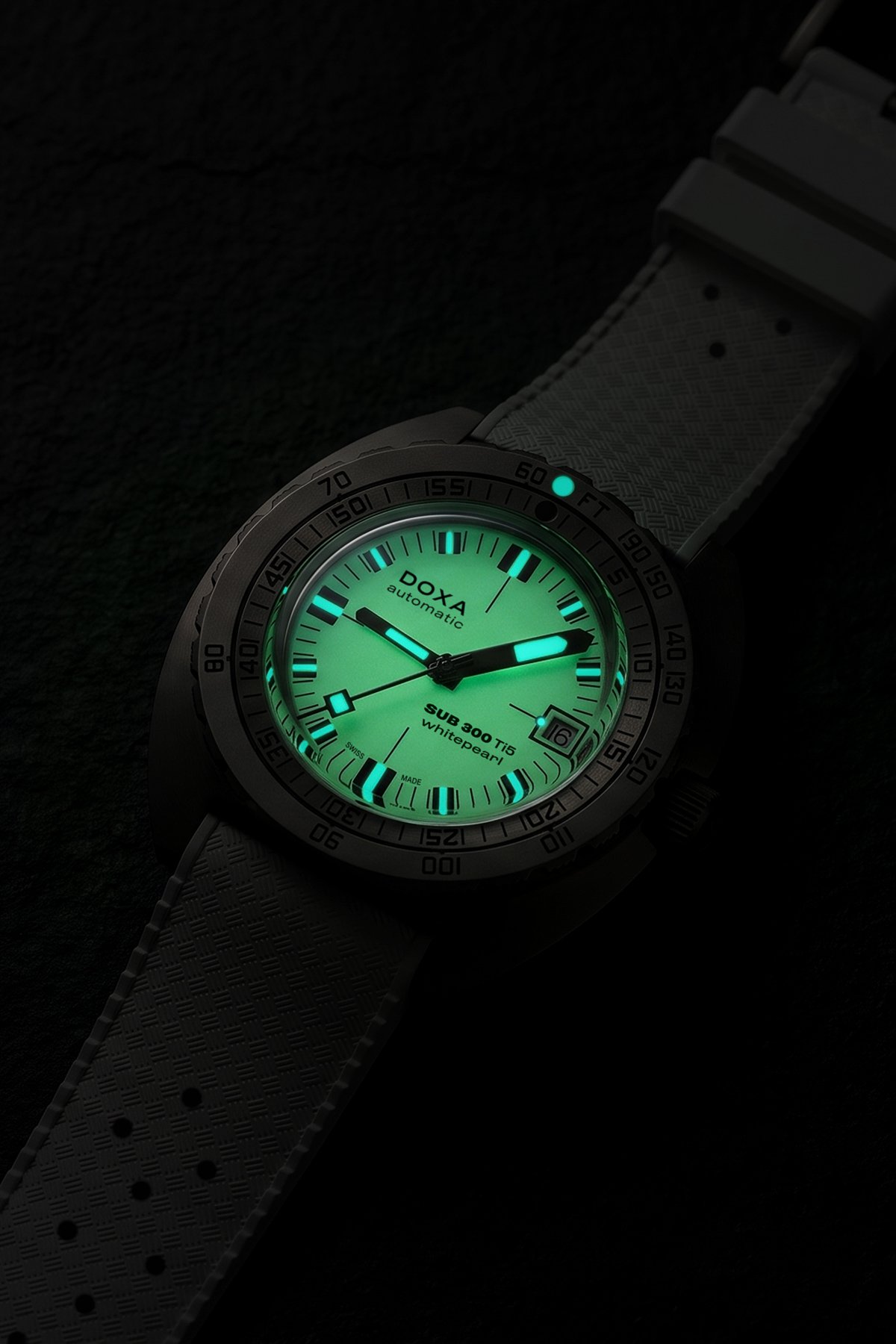
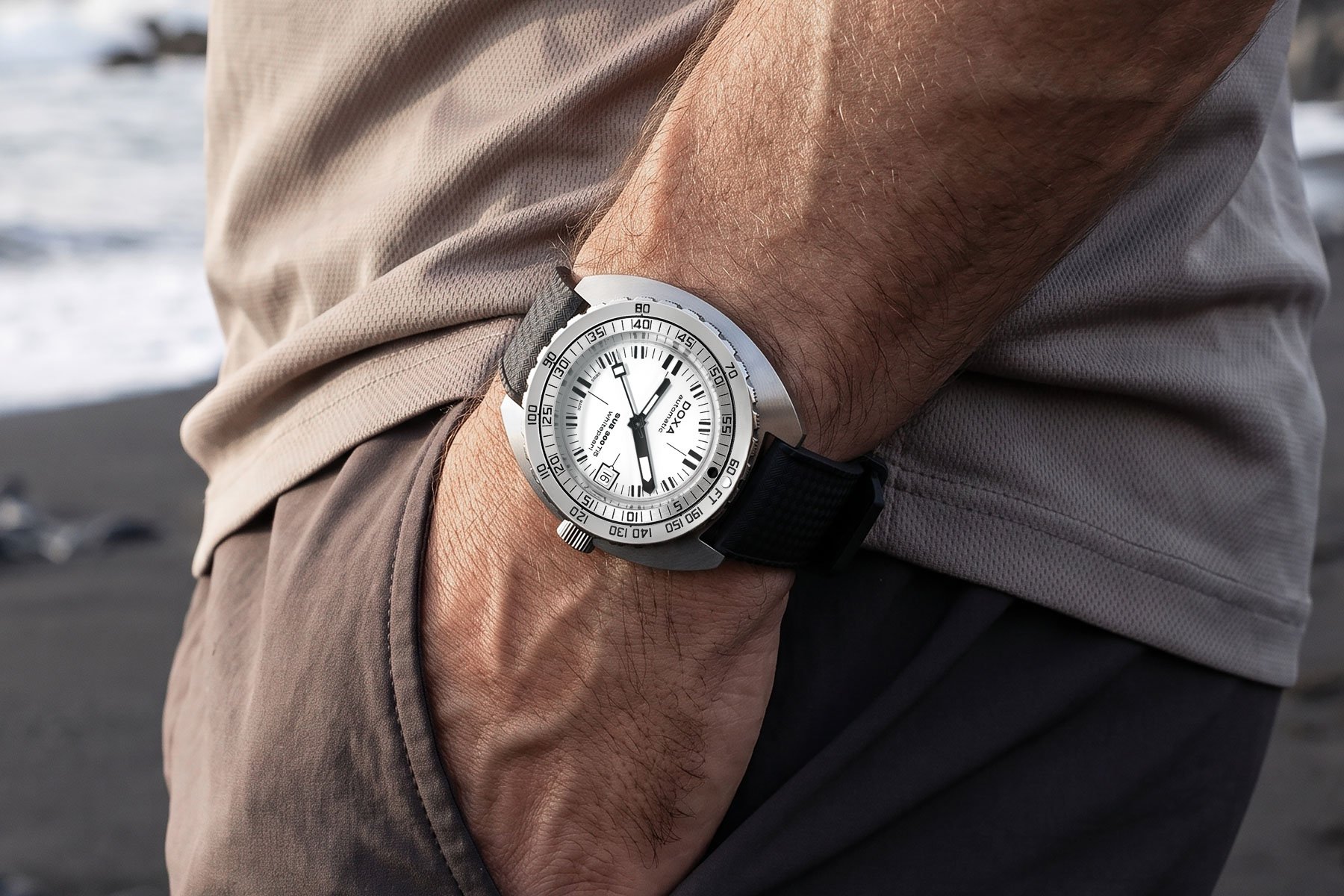
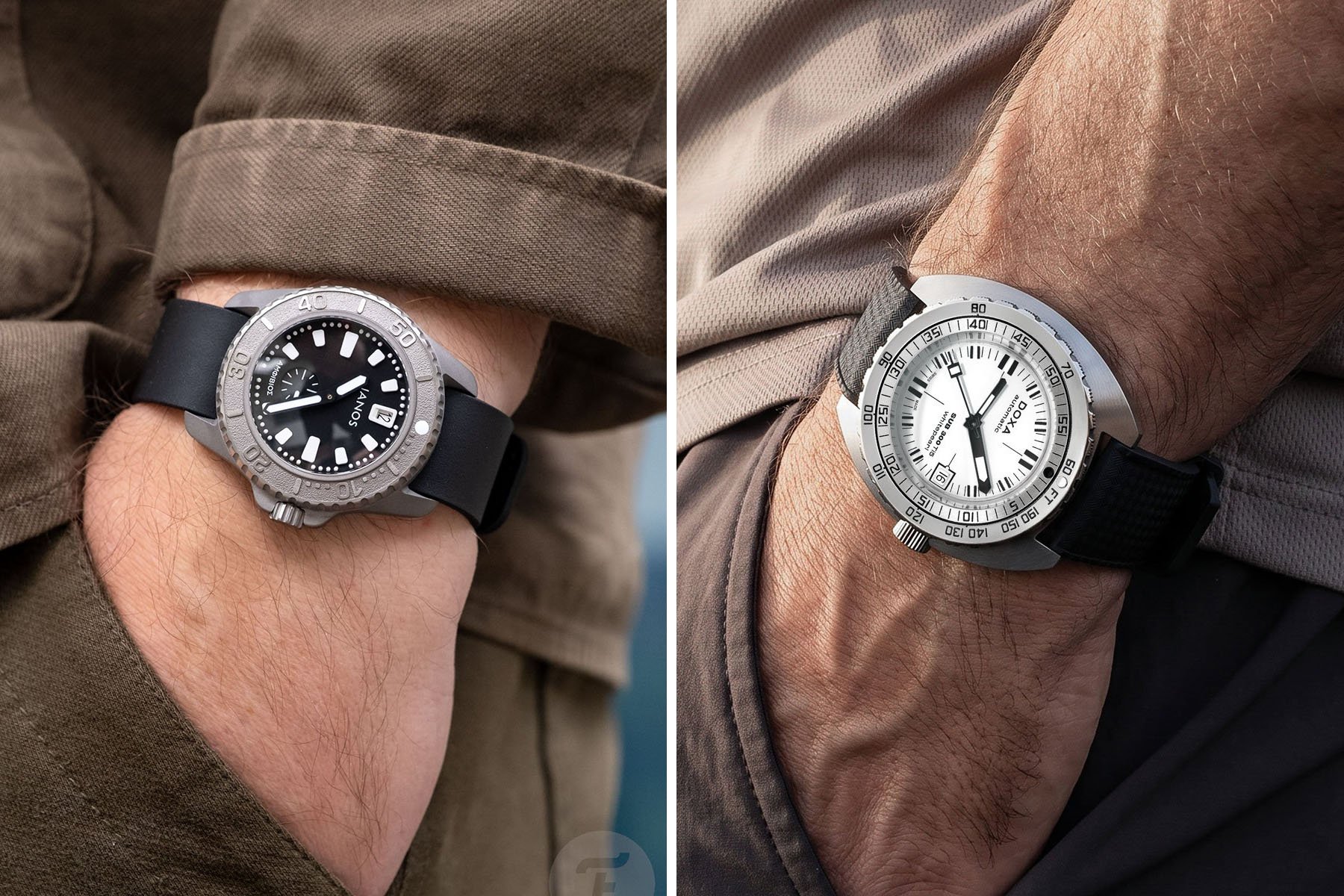
And I understand why Ianos chose that solution for the Amfivios. The dial design keeps its symmetry with the date at 12 and the small seconds at 6 o’clock. But these elements are so prominent that they’re impossible to ignore. The date window constantly distracted me, and despite how much I adore the rest of the design, it would be a dealbreaker. Looking at the Doxa Sub 300, I see a clever, well-balanced overall aesthetic. The branding is smartly placed at 4 and 10 o’clock, and the oversized minute hand is functional for diving purposes and a lovable stylistic quirk. Add the bezel with its depth and dive-time scales, and you get a design created to be functional yet also recognized as a stylish pick among dive watches.
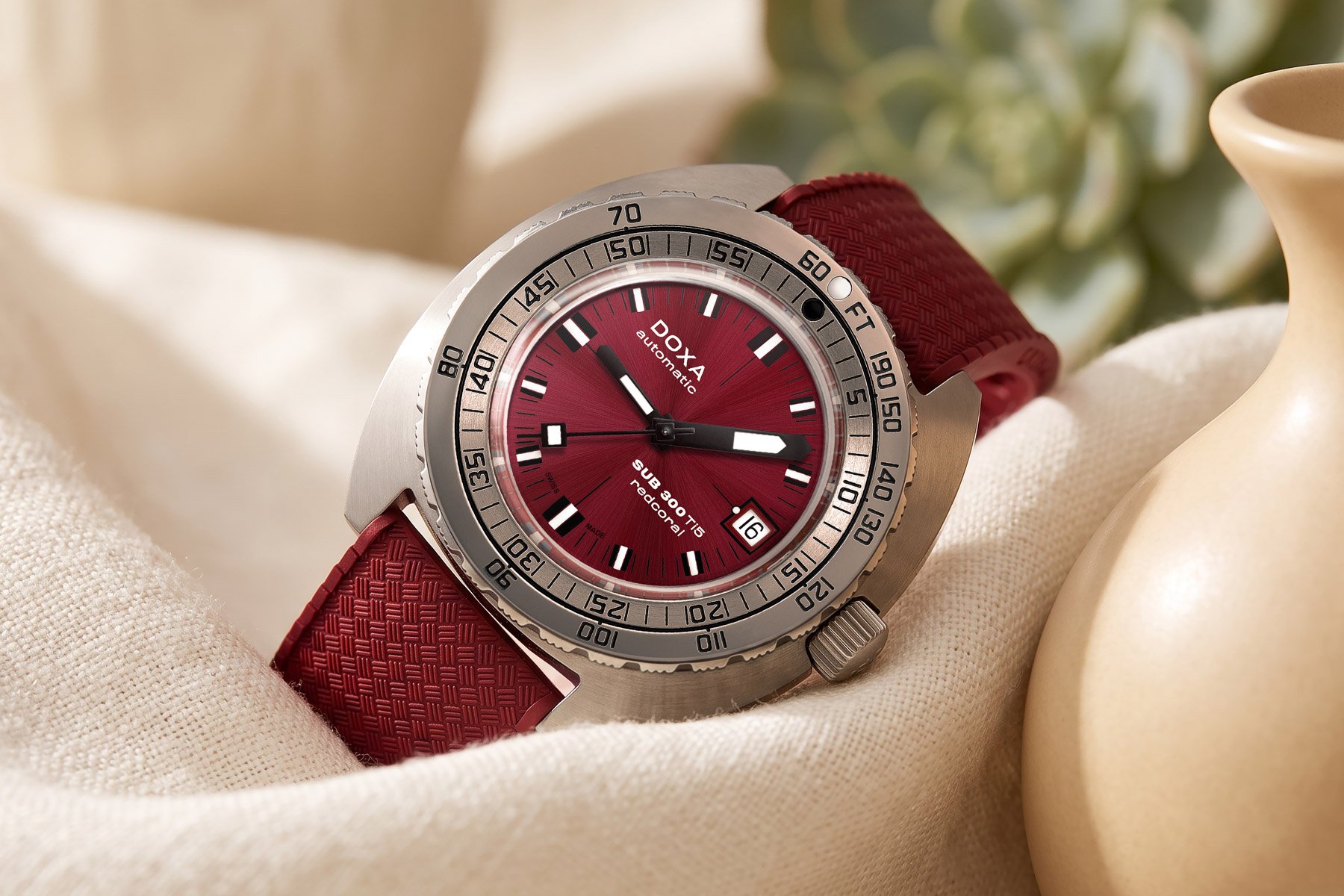
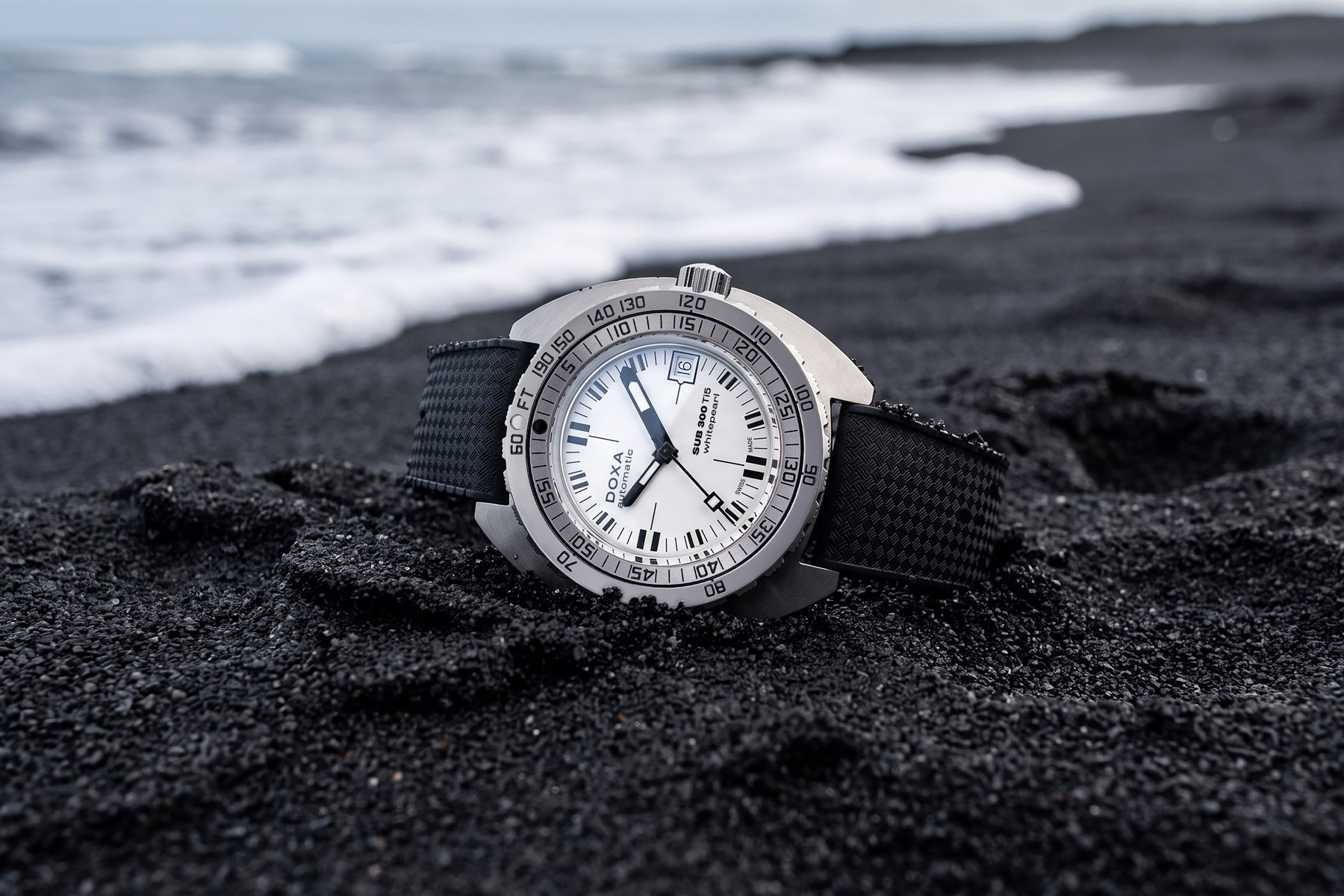
The Sub 300 Ti5 presents a fairly safe, lightweight take on the familiar Sub 300. But it’s a version that I have been waiting for. If there’s one impression that constantly returns when I put a Doxa Sub 300 on my wrist, it is that it feels like a big chunk of steel, both in weight and in its presence. The new Grade 5 titanium case presents a nuanced take on that familiar recipe, spot-on for what I want it to be. And with the Whitepearl model, the brand also added the fun of a full-lume dial. It became an immediate favorite along with the intriguing Redcoral variant, which has a dark cherry-red dial for a completely different overall look.
The details of the Doxa Sub 300 Ti5
Besides the more balanced dial design, Doxa’s choice of Grade 5 titanium is another welcome one compared to the Grade 2 titanium Ianos uses. As most of you know, Grade 5 is harder. This helps it resist surface wear and minor scratching significantly better than Grade 2. With a daily watch, that is exactly what you want. On top of that, Grade 5 titanium allows for more defined finishing, and you can see that in the way the two watches feel. The Ianos has a rougher, more textured finish, while the Doxa feels more refined.
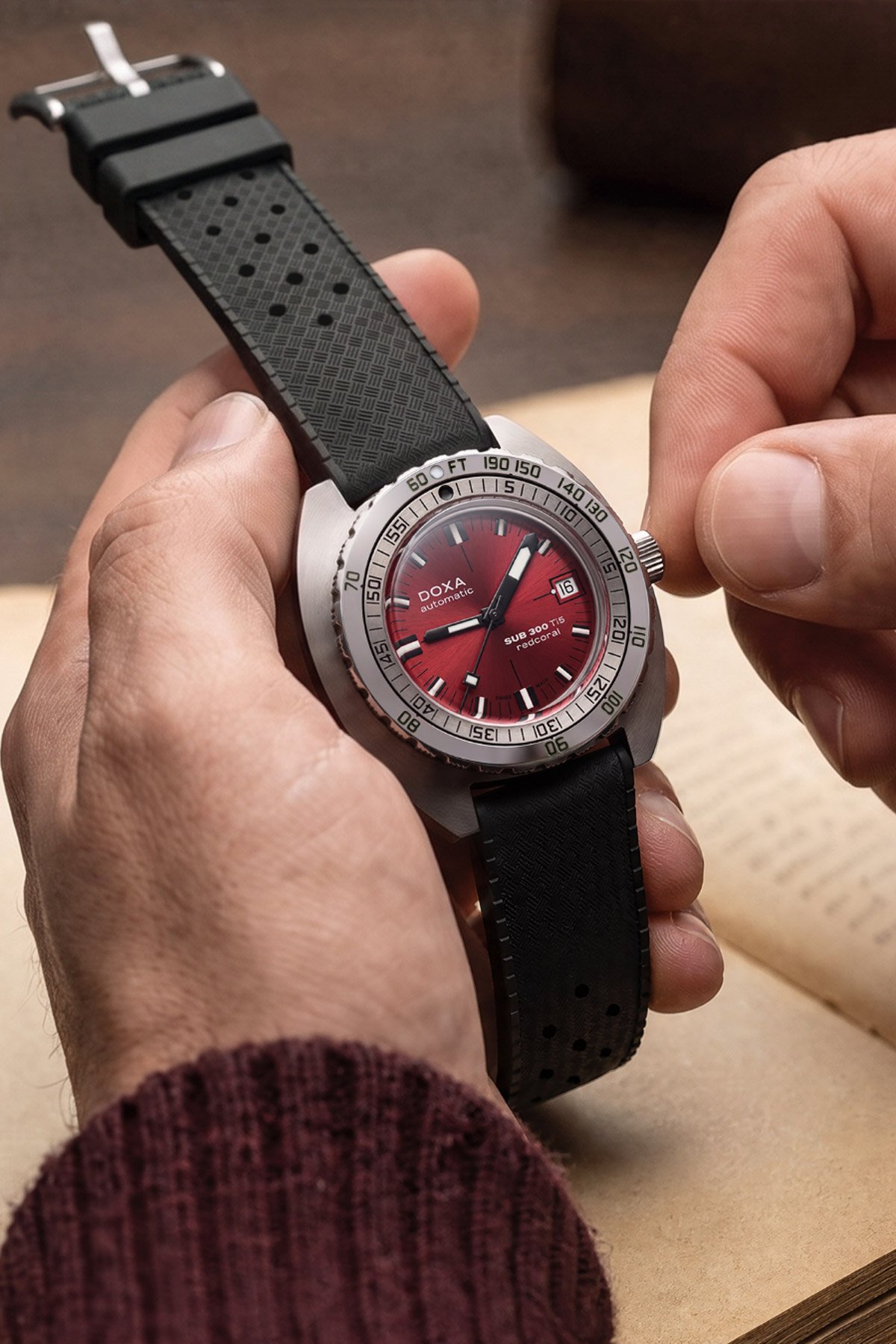
As Nacho explained in his introductory article, the Doxa’s 42.5 × 45mm × 13.4mm case follows the finishing of the steel models. It features polished flanks, brushed lugs, and dual finishes on the bezel. This is one of the things I love about the Sub 300. As you will understand, I am glad to see it return in the titanium version. Now, compared to the SW360-1 in the Amfivios, the Sub 300 Ti5 uses the less impressive Sellita SW200-1. However, it is a COSC-certified chronometer, guaranteeing greater accuracy than the standard rating of the SW300 series.
In the end, design solutions primarily drive my preference for the Doxa Sub 300 Ti5. I could drag my argument out and talk about Doxa’s rich history in diving, but that is not what it’s about in this battle. The truth is, I really want to love the Ianos Amfivios because it’s the underdog. I have a soft spot for underdogs in battles like this. But sometimes, the obvious choice wins. And for me, in today’s matchup, it’s the Doxa because it simply looks better. But let people know why I am wrong, Daan.
Daan: Ianos Amfivios
Thanks, Jorg, and good morning, everyone. I’ll be honest, before I wrote the hands-on introduction article for the Ianos Amfivios, I wasn’t very familiar with the brand’s watches. Of course, to prepare for writing the article, I read up on the brand and its previous releases. Some are a bit larger than others, but they all roughly share the same case shape. That means they all feature the nifty channel on the back for the single-pass rubber strap, and almost all have fixed bars in between the lugs.
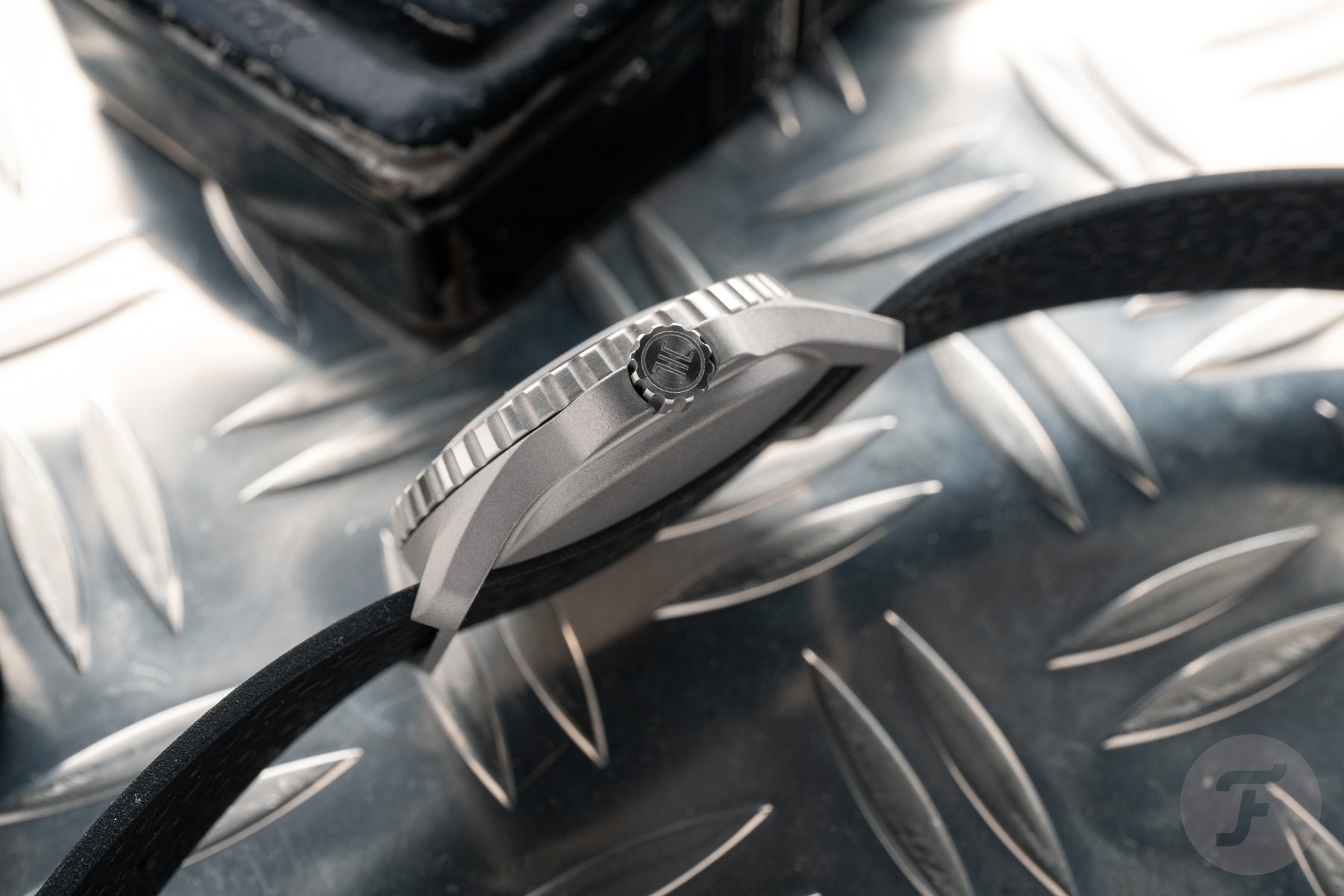
I really like those features, as they are what make Ianos watches stand out among the many dive watches on the market. However, I wasn’t a huge fan of the plain, shot-blasted bezel featured on previous Ianos models. I felt that it turned them into more of a design experiment than functional dive watches. Of course, the relief bezel on the new Amfivios isn’t the most practical either, but at least you could try to use it as a proper dive watch. In addition, the bezel’s texture and numerals make the watch look better overall, I think, especially with the bold dial.
Lumed diving stones
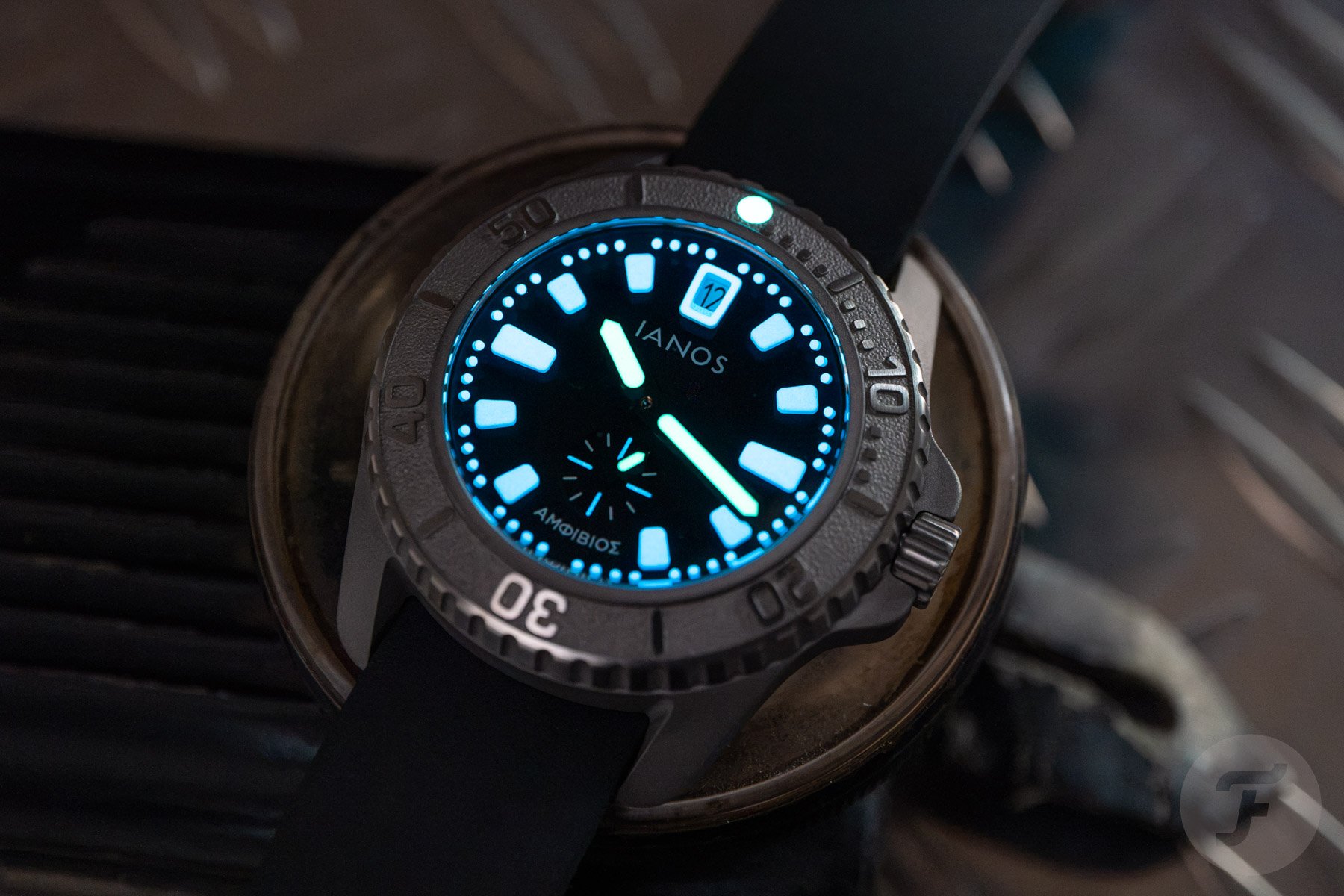
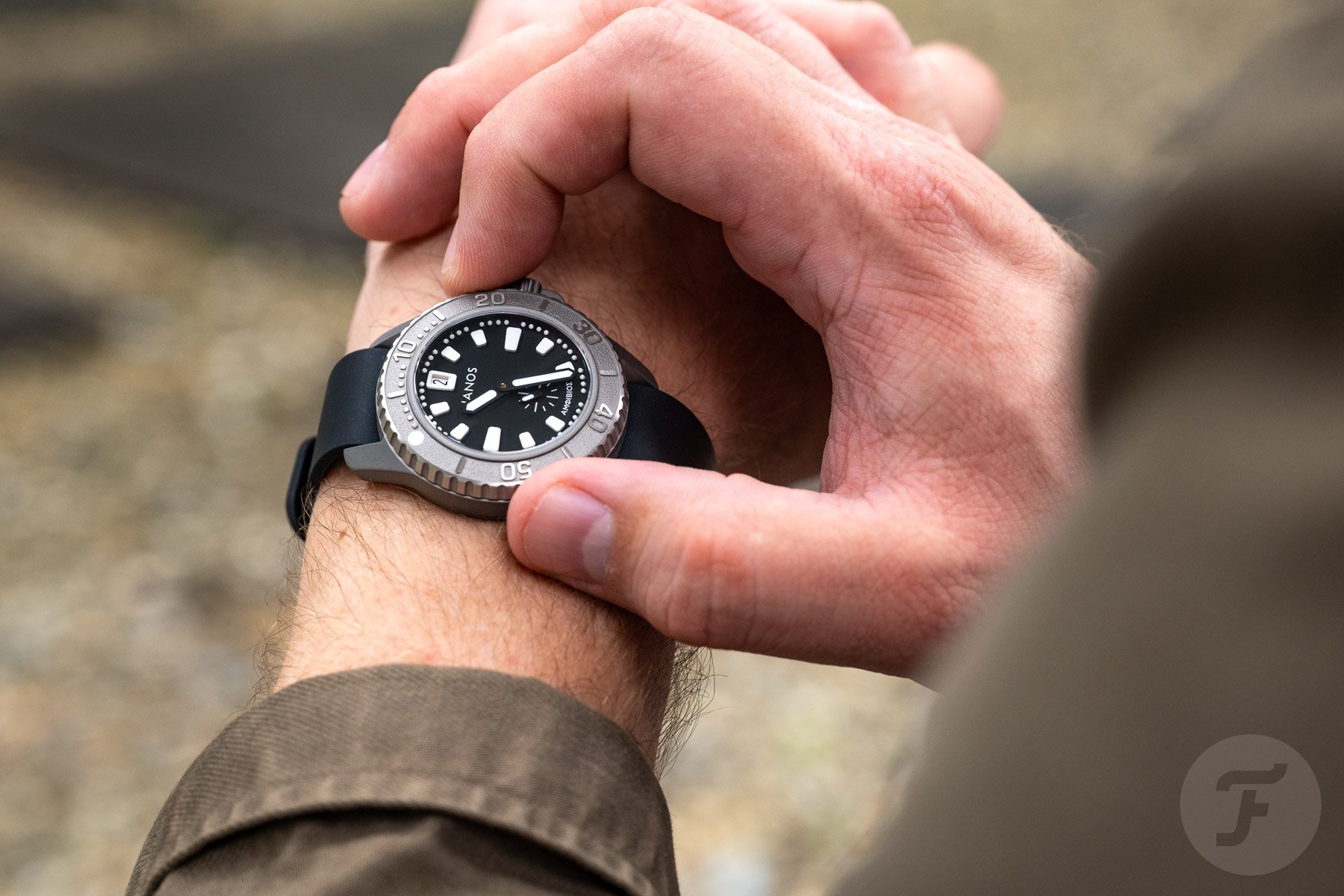
Unlike Jorg, I thoroughly enjoy the Amfivios’s dial. It’s almost the opposite of a lume dial, as all the elements except for the base contain or are made of luminous material. As you can see in the picture above, the Amfivios becomes a spectacle in darker conditions. The hour and minute markers are the most impressive, as they’re made of full blocks of Super-LumiNova. However, there’s also a large amount of SLN on the hands, corresponding with the lume pip in the bezel.
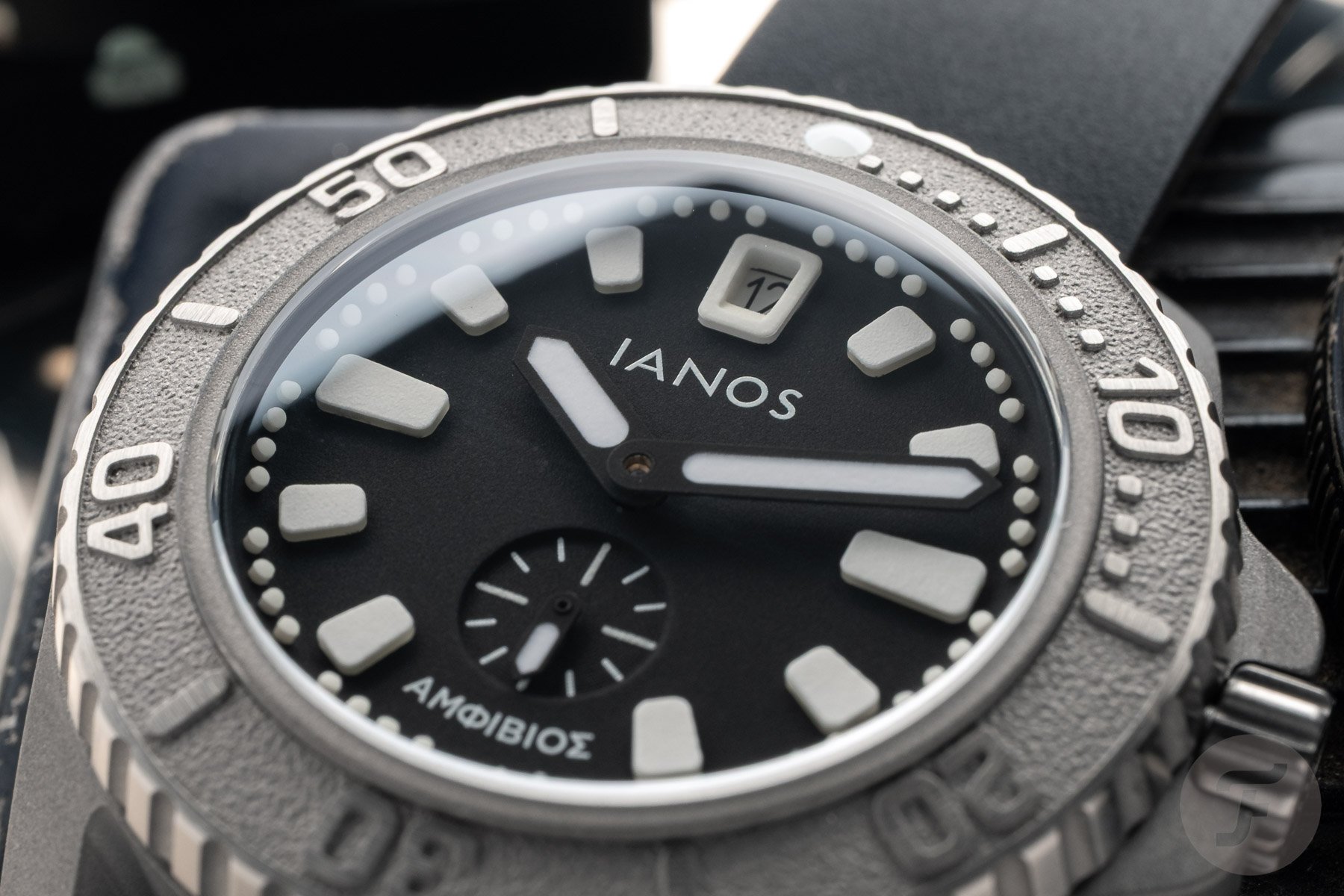
And, yes, there’s a date window at 12 o’clock in one of the diving-stone-inspired lume blocks. Just like on the TAG Heuer Carrera Glassbox, I actually like the date there. It might even work better in this watch because there’s no central chronograph hand constantly blocking it. Sure, the Doxa’s layout is all asymmetrical with the branding at 10 and 4 o’clock, so the date window at 3 doesn’t really mess with the dial’s balance. However, on the Ianos’s dial, the date at 12 feels right at home, and the company logo, model name, and sub-dial all nicely occupy the central axis as well.
A utilitarian shot-blasted finish
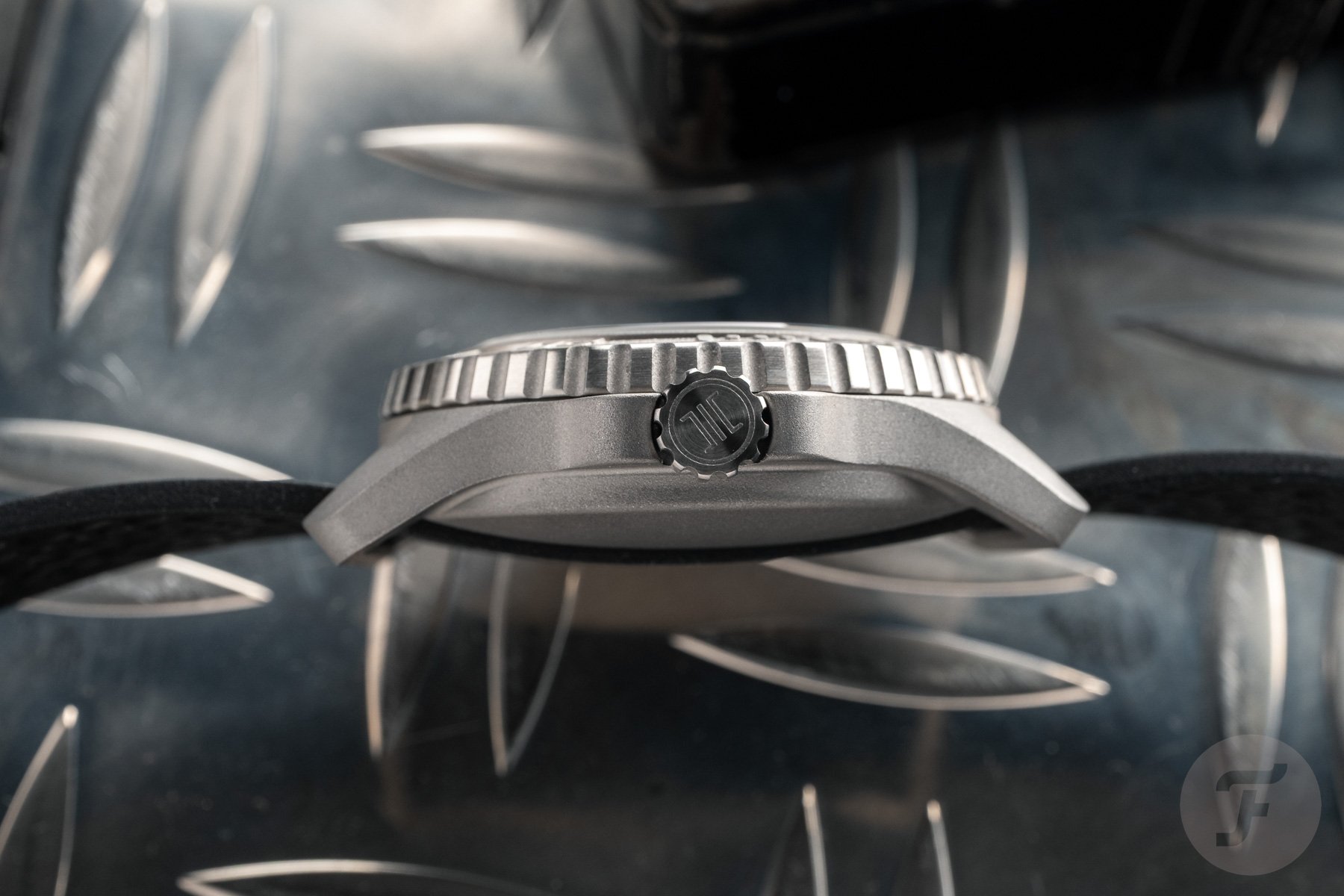
Then, there’s the difference in case material. There’s always this debate about whether Grade 2 or 5 titanium is better. I still haven’t heard a definitive conclusion from that discussion, and in this case (no pun intended), I feel the shot-blasted finish on the Amfivios pairs well with its utilitarian character. Sure, it’s a little rough, and the edges aren’t that sharp. But you must keep in mind that the Ianos OYK, the watch on which the Amfivios is based, was made for the Underwater Demolition Teams of the Greek military.
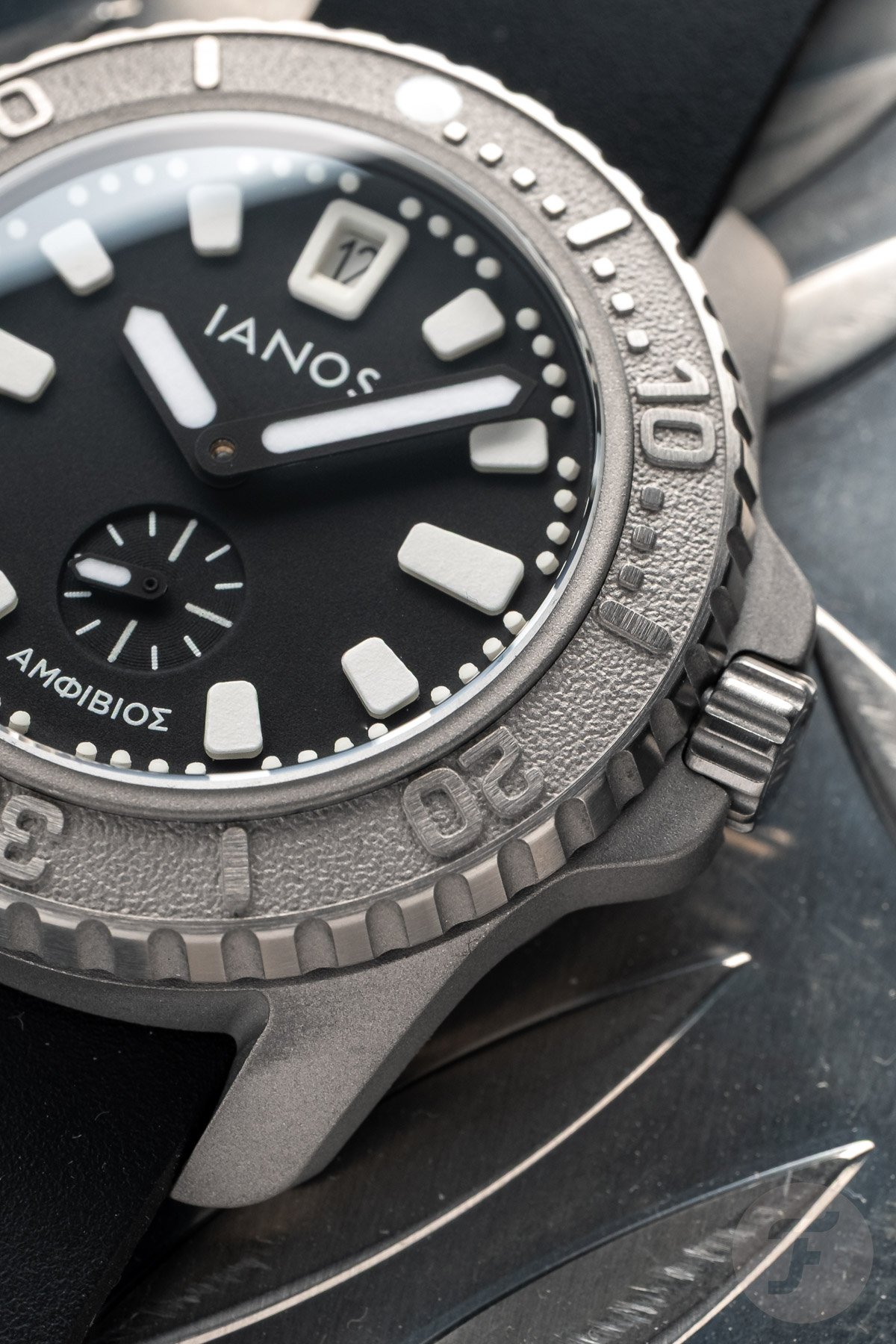
Those watches don’t need sophisticated brushed and polished finishes. They get properly worn and bumped into all kinds of surfaces all day, every day. All right, the people buying the Ianos Amfivios might wear it with a little more respect. But when they look at their wrists, at least they’ll feel like a member of that Underwater Demolition Team, even if only for a moment.
A watch you’ll want to wear
It’s true, both these watches are quirky in many ways. Like Jorg, I also like both of today’s contenders. I enjoy the Doxa’s eccentric look, especially the small dial in the shield-shaped case. However, as much as I enjoy its aesthetic, I somehow can’t get used to it on the wrist. It simply feels too awkward.
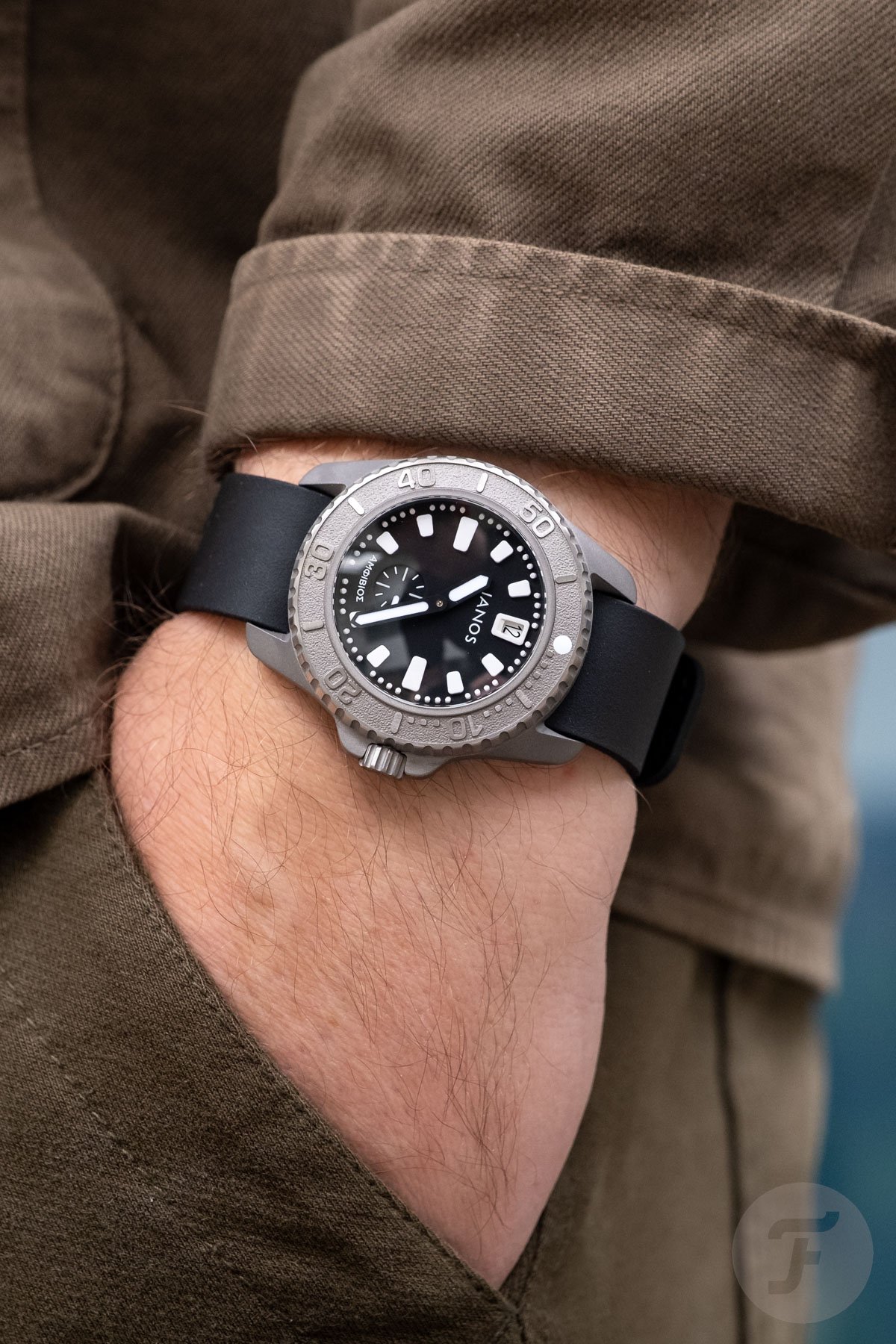
That’s absolutely not the case with the Ianos Amfivios. It also sports a quirky look, but as Jorg already said, the wearing experience is great. Thanks to the strap channel on the back, the Ianos sits flush against the wrist and follows its shape, unlike the Doxa’s C-shaped case. In the end, that might be the most important argument here. If a watch doesn’t sit well on your wrist, you likely won’t want to wear it, even if you enjoy how it looks. I’m glad to say that both the Ianos Amfivios’s physical form and wearing experience are truly enjoyable.
Cast your vote
There you have it — another Sunday Morning Showdown. This time, you get to choose between two quirky dive watches. Are you team Grade 2 or Grade 5 titanium? And are you a Doxa fanboy, or do you support the lesser-known Ianos? Make sure to cast your vote below, and let us know in the comments section why you voted the way you did. Tune in next week for another Sunday Morning Showdown!