Watch Strap Review 73 — The Amazing Ming Polymesh

My admiration for Ming is well documented on Fratello. Aside from the articles, I have talked a lot about the brand with Mike in many episodes of Fratello On Air. It is no surprise, then, that I’m excited to see all of Ming’s releases. The latest announcement of the Polymesh – Straight reminded me that, although I’ve posted about it a lot and discussed it on the podcast, I haven’t written a proper review of the Polymesh bracelet yet.
Since Watch Strap Review just got a new lease on life, what better platform to share my thoughts on this than another WSR article? I’ve been wearing the Ming Polymesh – Curved since last November, but now that the Straight version is out as well, it makes perfect sense to review the bracelet. Let’s take a closer look.
Ming
Whether what Ming or any other watch brand does tickles your fancy or not is a subjective matter. For me, seeing the brand’s novelties is highly enjoyable, and I find Ming’s creations (not just timepieces) bold and innovative. When Mike, Dave, and I sat down with brand founder Ming Thein and CEO Praneeth Rajsingh last year during Geneva Watch Days, we got to peek behind the scenes a bit. Aside from the aesthetics, which I admire, the complications, movements, colors, and materials Ming uses are pushing the boundaries, which is great for the industry. Don’t get me wrong; Ming is not the only one doing that. Luckily, we see more brands making bold moves, but this is a Ming bracelet review, after all.
Polymesh
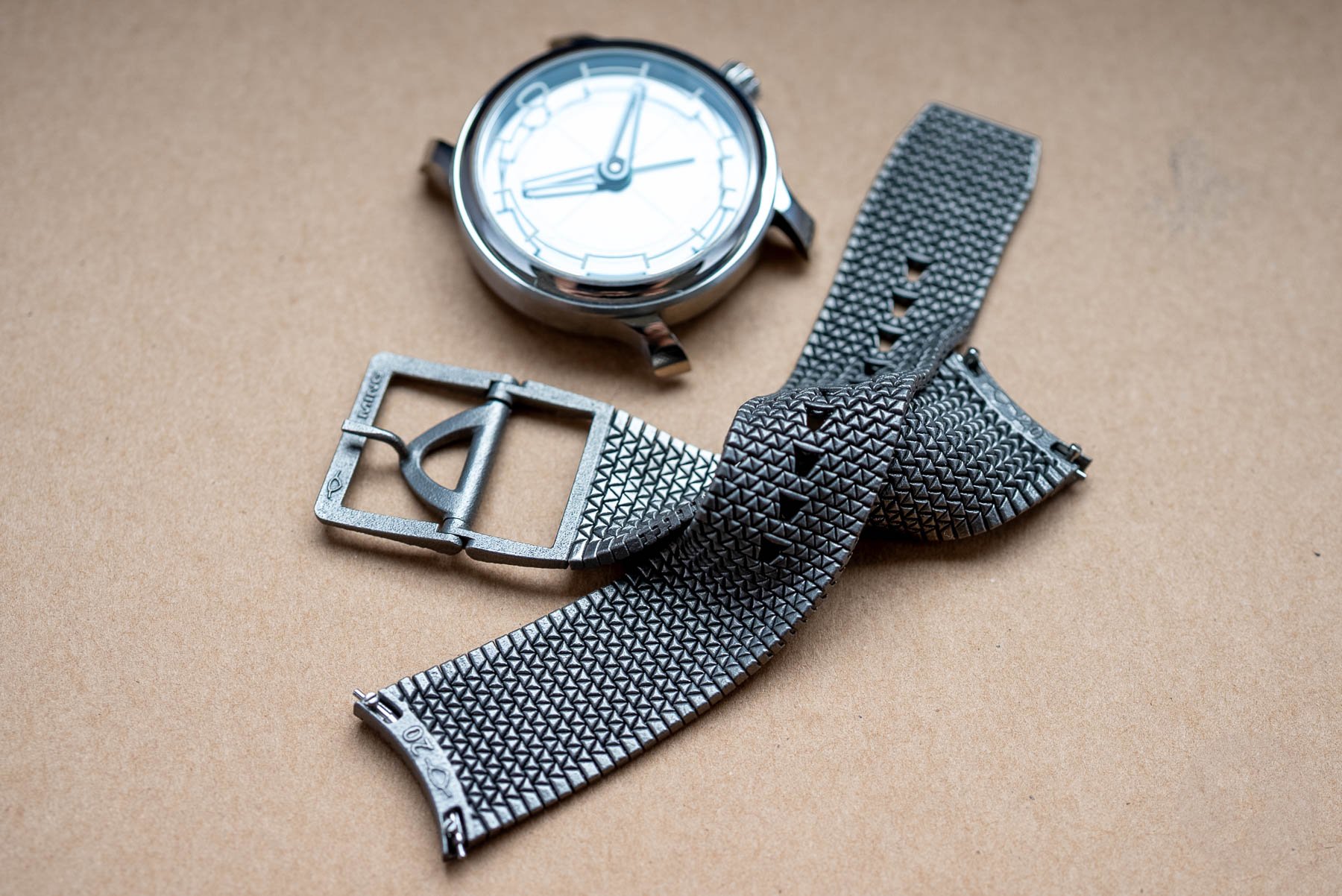
I can’t remember when the Polymesh – Curved came out, but I remember seeing it in person for the first time at WatchTime in New York in October 2025. What struck me the most was its weight. I remember holding the two pieces in my hand, and I could not believe how light they were. A titanium bracelet, of course, is not expected to be hefty; still, at 21 grams, it is similar in weight to a leather strap.
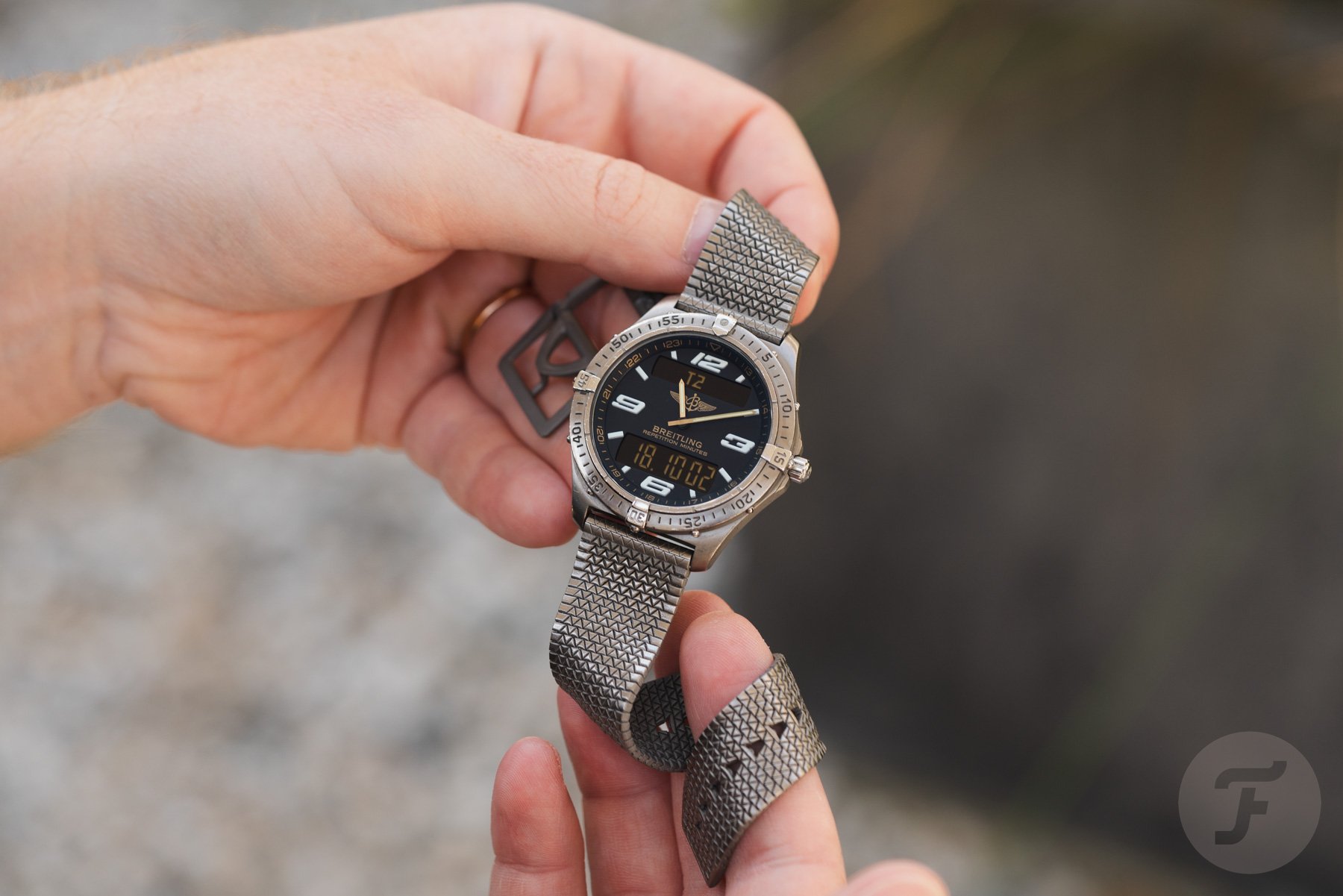
Put it on a titanium watch (not only a Ming), and you have a sturdy yet feather-light combination. Titanium has another great feature aside from its weight: it is extremely durable. So much so that, according to Praneeth, the steel spring bars would give up before the bracelet itself. This means that, in theory, you could hang a regular-sized human on the strap, and it would not break.
How do they make it?
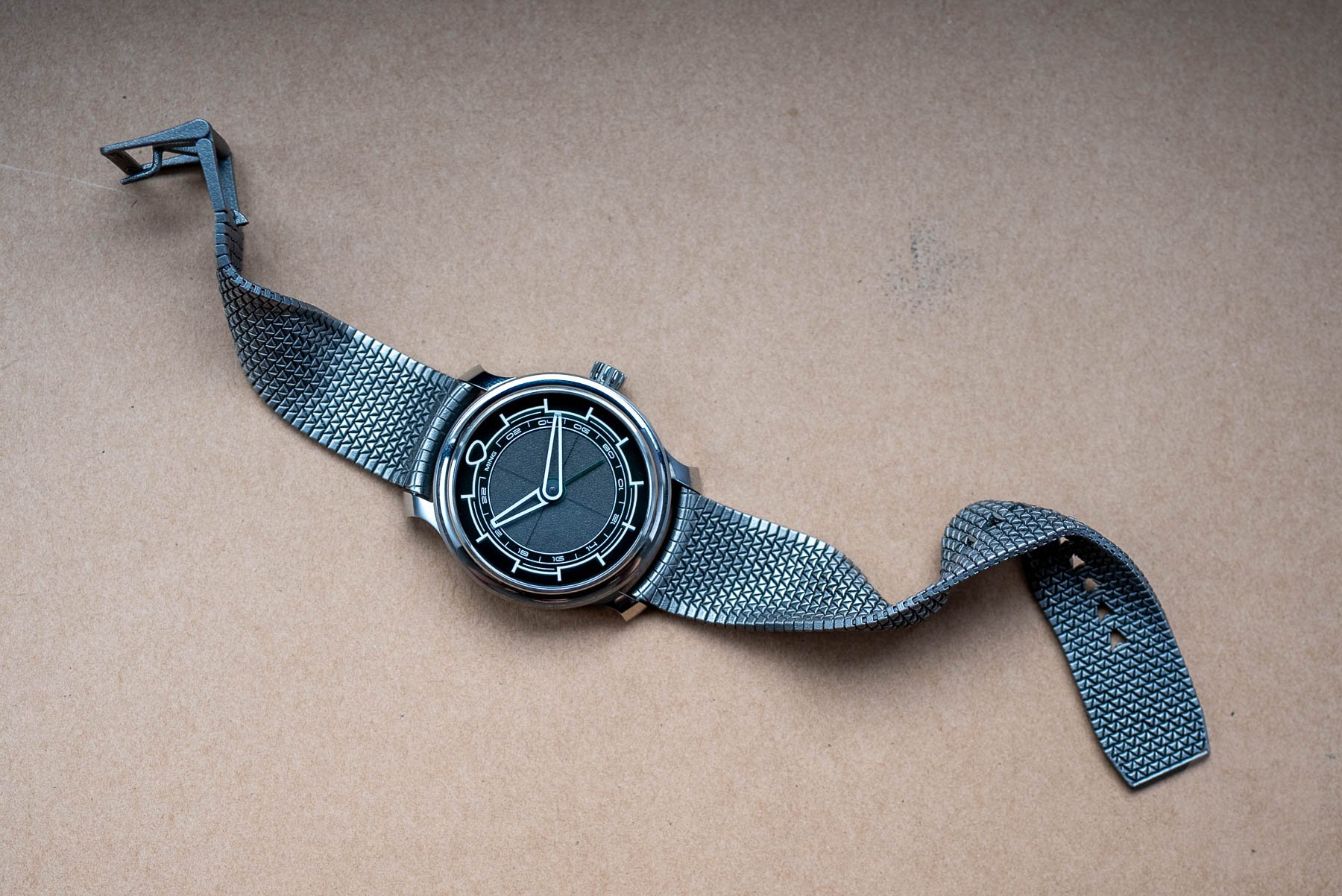
I know it’s unlikely I’ll ever use my Ming Polymesh to zipline off a building. It’s also unlikely I’ll ever dive 100 meters deep. For an average watch fan, this bracelet is indestructible, and that’s good enough for me. What makes it even more impressive is how it’s made. Ming calls it “the world’s first 3D-printed titanium bracelet-strap hybrid.” That claim is not just marketing. The Polymesh is made via laser sintering, a process in which a high-powered laser fuses titanium powder layer by layer. There’s no machining or link assembly, just raw material turned into a finished piece straight from the printer.
DMLS
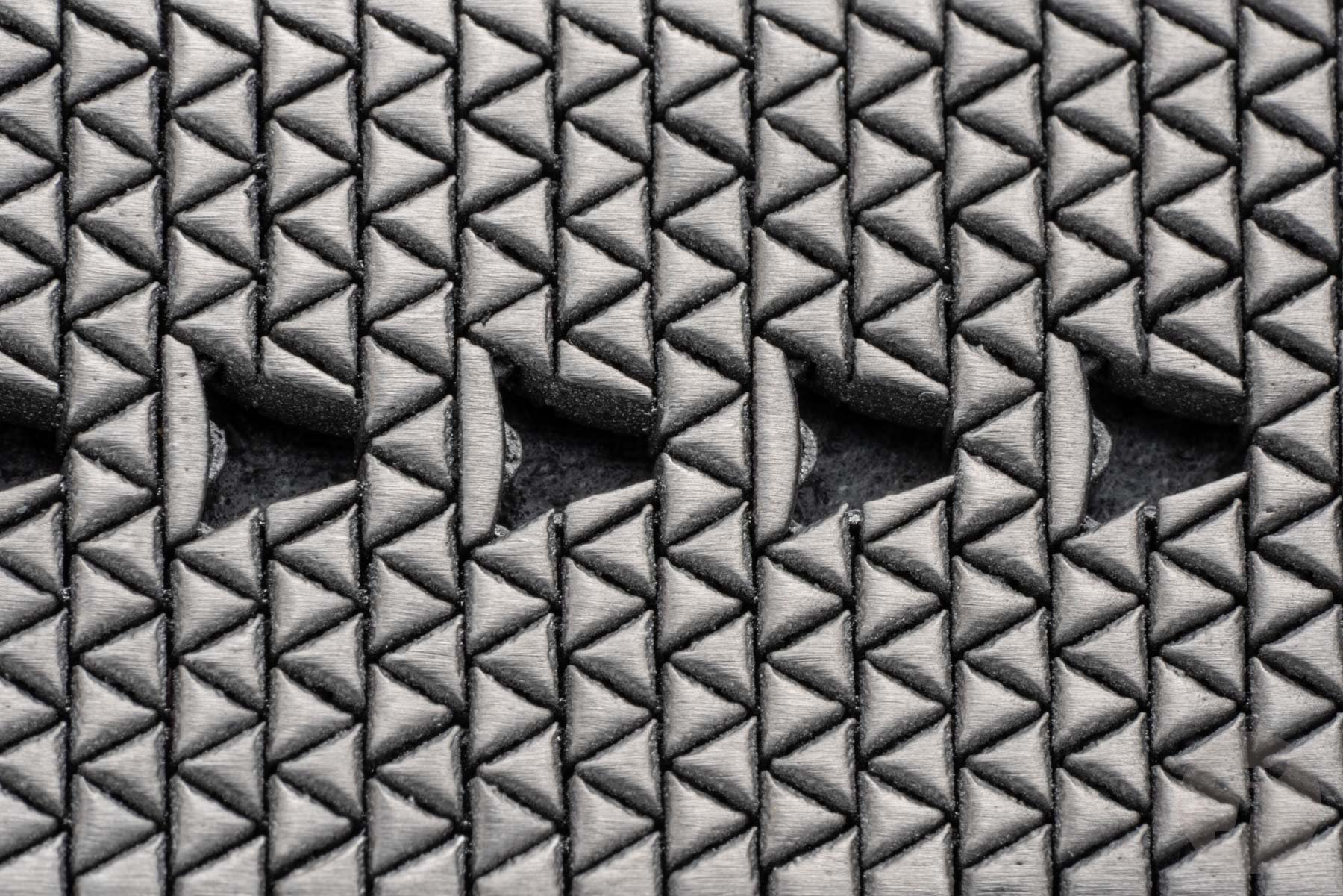
Laser sintering, or Direct Metal Laser Sintering (DMLS), is not new in the industry. In DMLS, very fine layers — about the thickness of a human hair — of titanium powder are spread across a build platform. A laser then precisely traces and fuses the powder according to the design’s cross-section. After each layer is fused, the platform lowers a small fraction, a new layer of powder is added, and the laser repeats the process. This layering continues thousands of times until the bracelet forms into a single continuous object. There is no soldering, no separate polishing of links, and no risk of parts misaligning. The mesh structure, its curve, and its texture all come out of the machine at once. The result is a bracelet that traditional manufacturing can’t produce.
Titanium or nothing
Ming’s choice of Grade 5 titanium for the Polymesh bracelet is not accidental. Grade 5 titanium is an alloy of titanium with 6% aluminum and 4% vanadium. Aerospace and medical implants use the same alloy, which offers an exceptional strength-to-weight ratio (how strong it is relative to its weight) and biocompatibility (its compatibility with the human body). On the wrist, that means it feels extremely light yet shows no flex, no give, and no reason for concern about long-term wear. The Polymesh design takes full advantage of what DMLS allows.
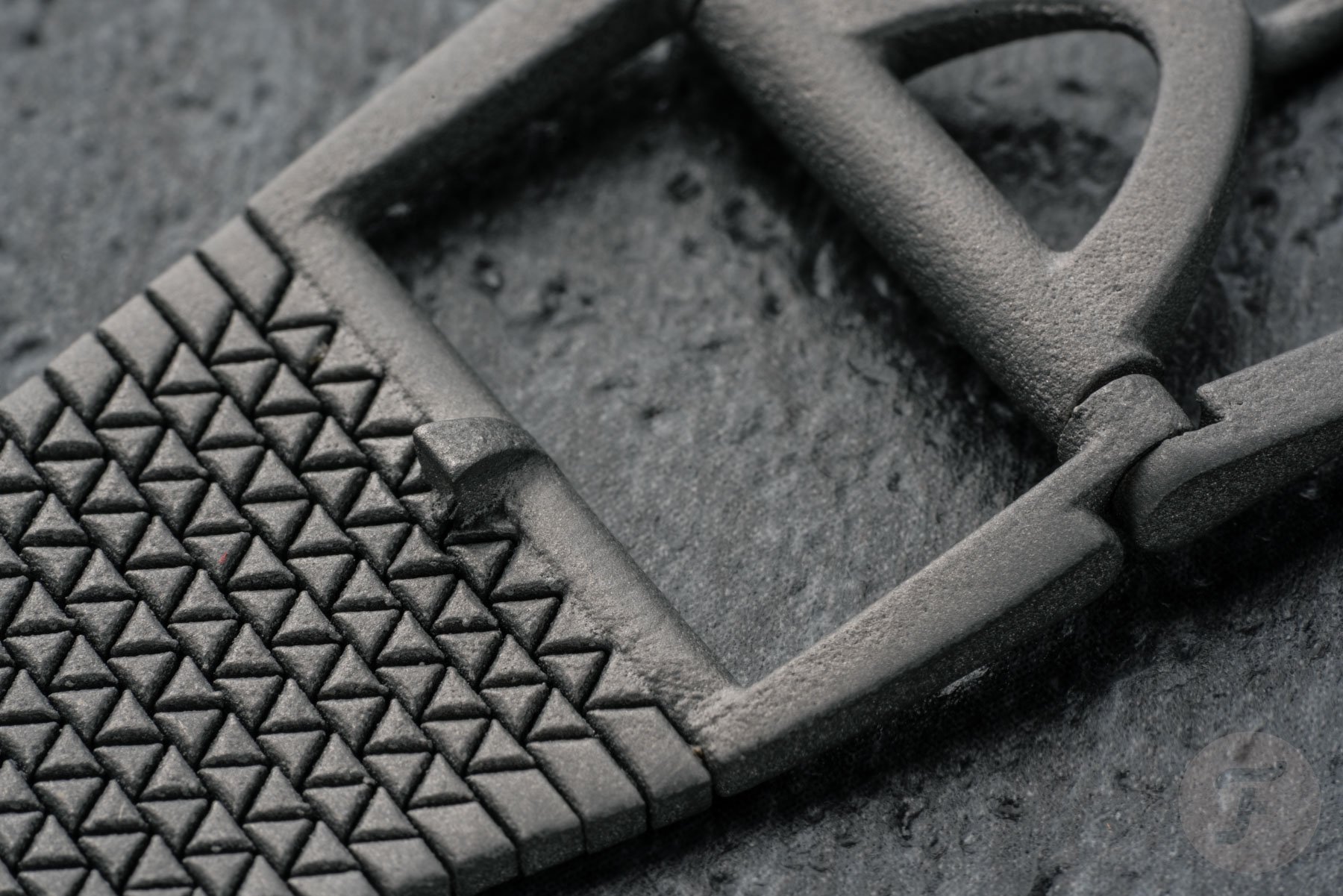
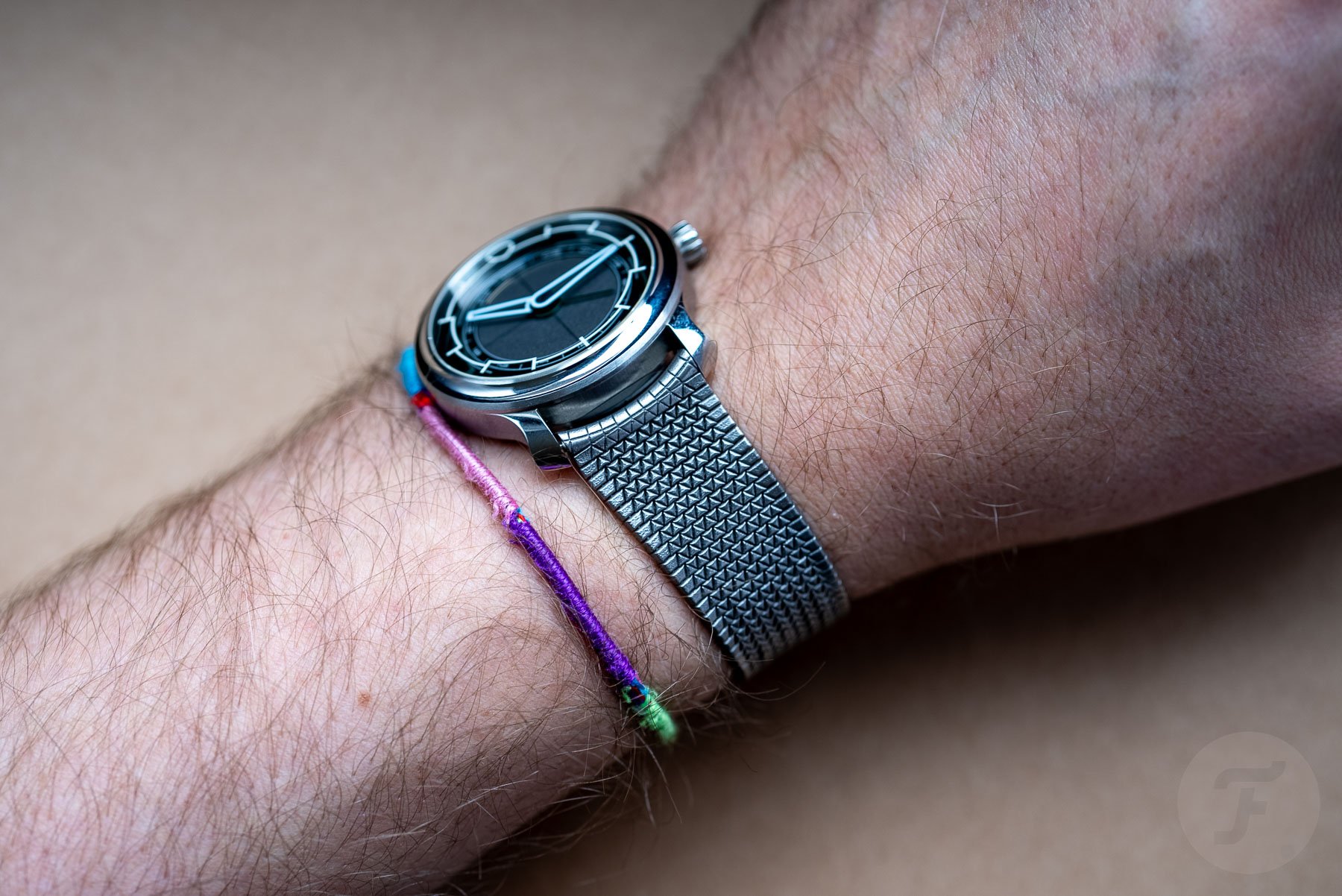
As mentioned, the interlocking mesh geometry cannot be achieved through conventional link-by-link construction. It distributes tension evenly across the structure, which is also why it drapes over the wrist so naturally, like a fabric. Since May 2026, Ming has offered the bracelet in two configurations — with straight or curved end pieces — to accommodate different wrist profiles. Both follow the contour of the wrist from the moment you put them on. There’s no break-in period and no stiff links that need time to smooth. They simply fit, which, for a bracelet, is everything.
Pair it with whatever
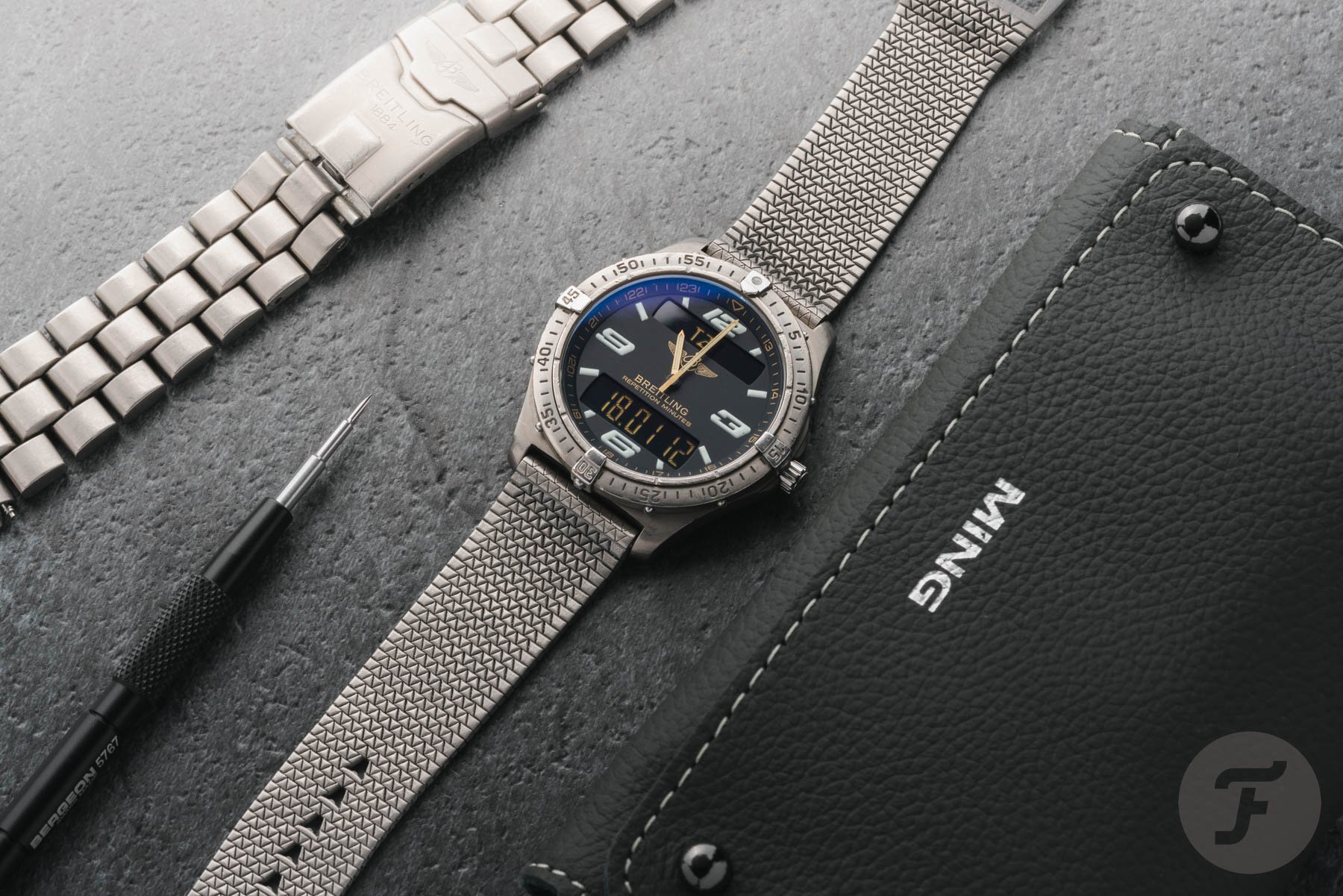
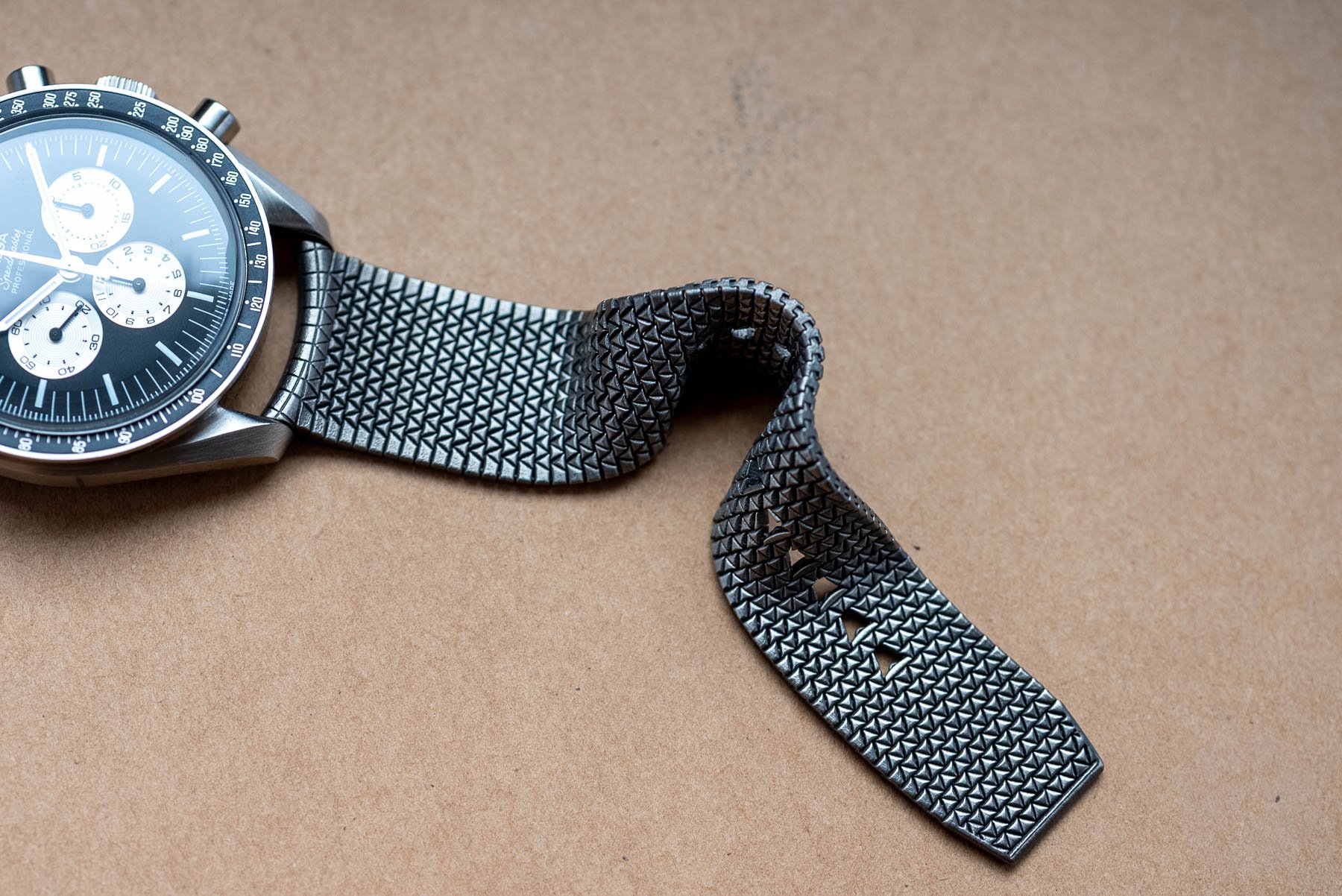
Whether you opt for the curved or straight version, pairing it with watches beyond the Ming lineup is straightforward. As you can see in the photos, aside from the Ming 22.01 GMT Kyoto, I used my Ming Polymesh – Curved with my Speedy Tuesday 1, while the Straight one made its way onto Nacho’s Breitling Aerospace. While the Omega, unlike the Breitling, is not titanium, the brushed case matched the bracelet perfectly. Furthermore, Ming encourages future owners of the Polymesh to use it with other timepieces — again, something not many brands will do.
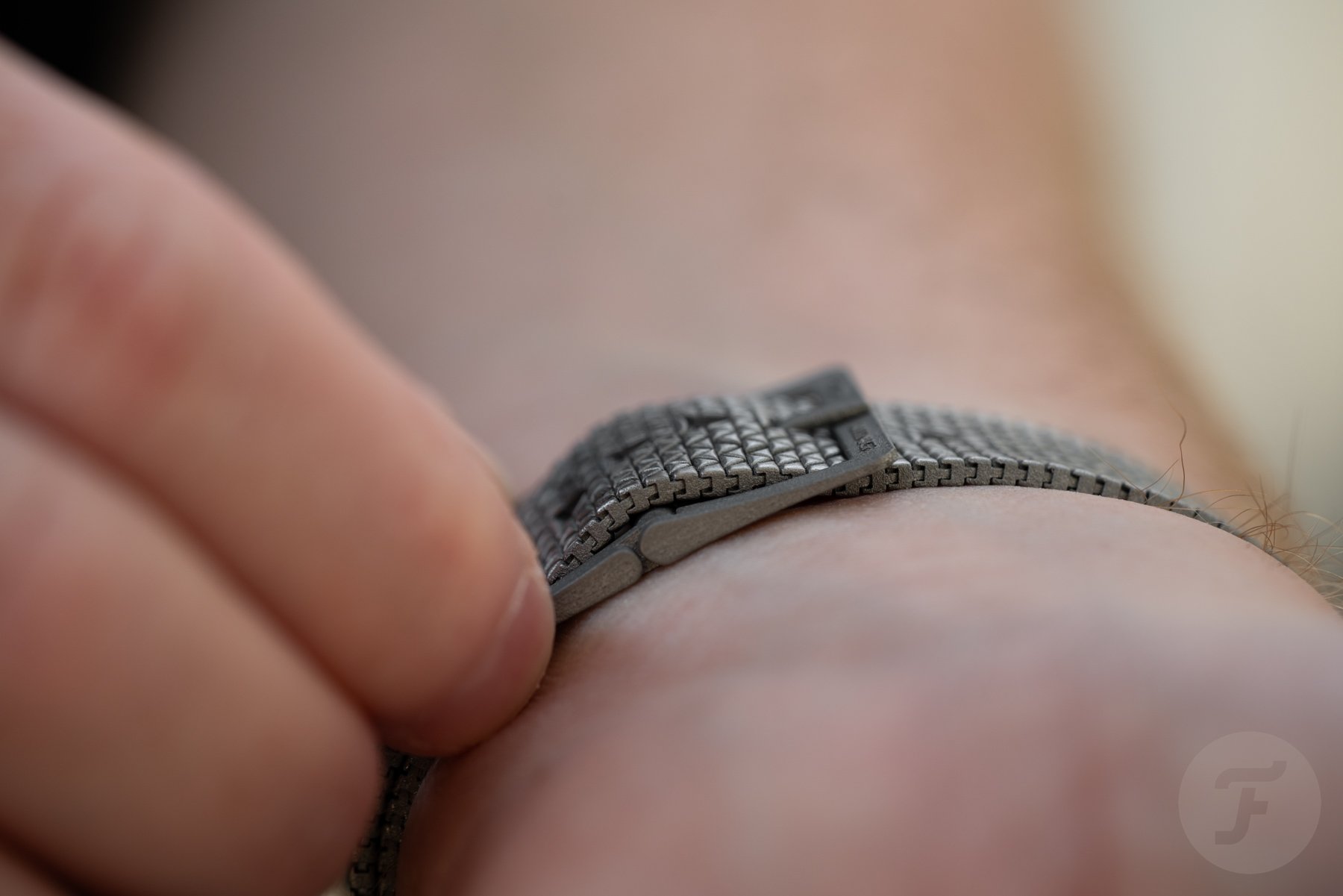
Remember, not too long ago, we saw an influx of interchangeable-bracelet watches coming to the market. That was the newest thing about six or seven years ago. There was a catch, though. You could only use the bracelets/rubber/leather strap on the watch that the brand itself sold. Did this move make these watches more exclusive or more of a pain to use? You tell me. Regardless, I salute Ming’s encouragement to use the Polymesh on other makes.
On the wrist
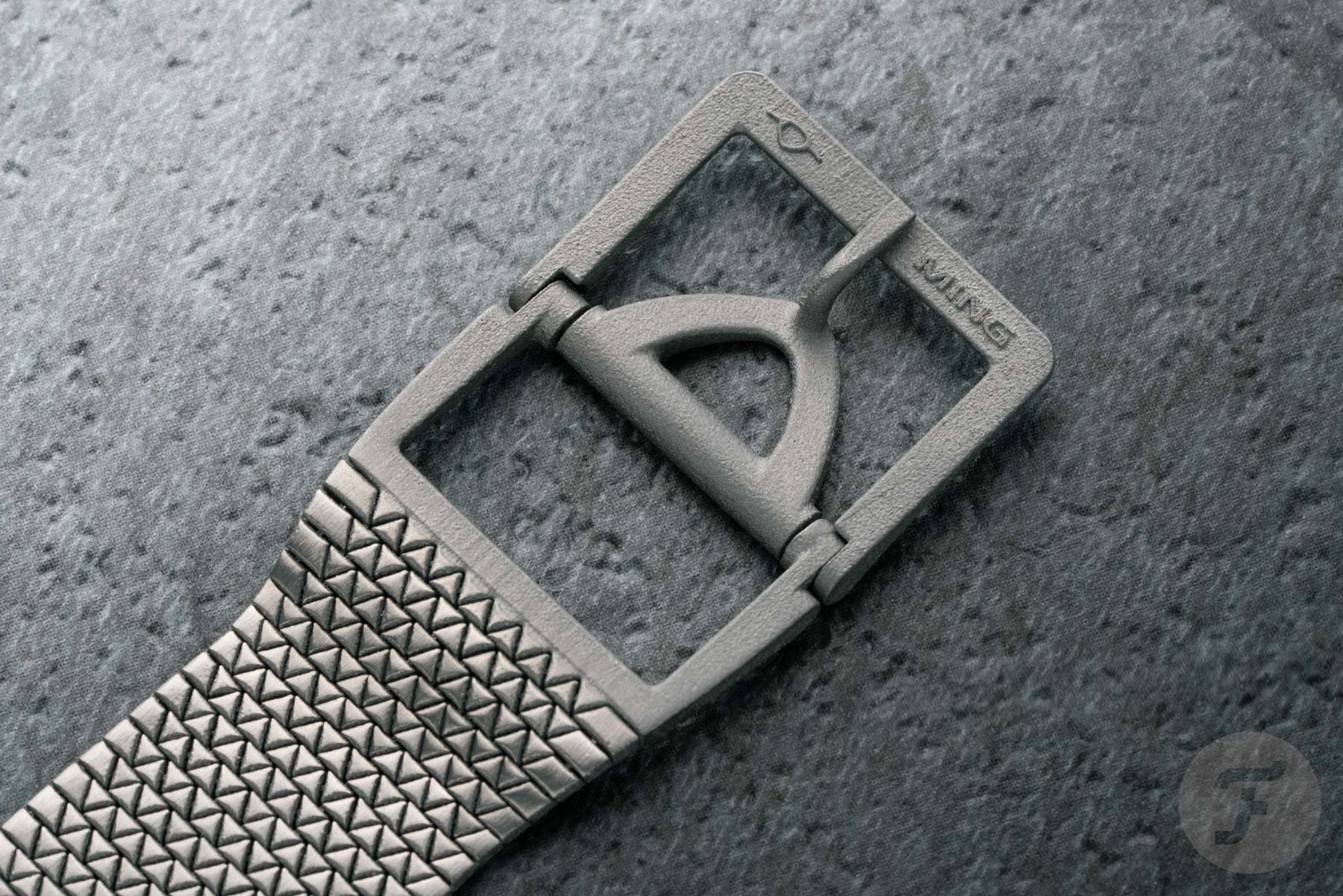
Whatever watch I used the Ming Polymesh on, the result was the same — ease of use, comfort, and lightness. There is a trick to buckling it, and it may take a few tries to get the hang of it. Once you do, though, it’s as easy as pie. It also explains why the buckle is two parts and why the upper part folds up. While our job is to explain what you should experience with words, I can encourage you to check out this bracelet if you have the chance. Words cannot give you the feeling you will feel.


Now, it’s worth noting that Ming sells both versions of the bracelet on its site, and neither is cheap. At CHF 1,500 (excluding tax), the Ming Polymesh is not for the faint of heart. However, after reading the article, I hope you now understand what justifies this price. This is a bracelet that transfers cutting-edge technology onto your wrist and essentially any timepiece, Ming or otherwise. Furthermore, you get a close-to-indestructible option that you can use as a bracelet, though it feels like a strap. It is as unique a design as bracelets can get, and this is what I love about it.