Patek Philippe Introduces The Reference 6105G-001 Celestial Sunrise And Sunset

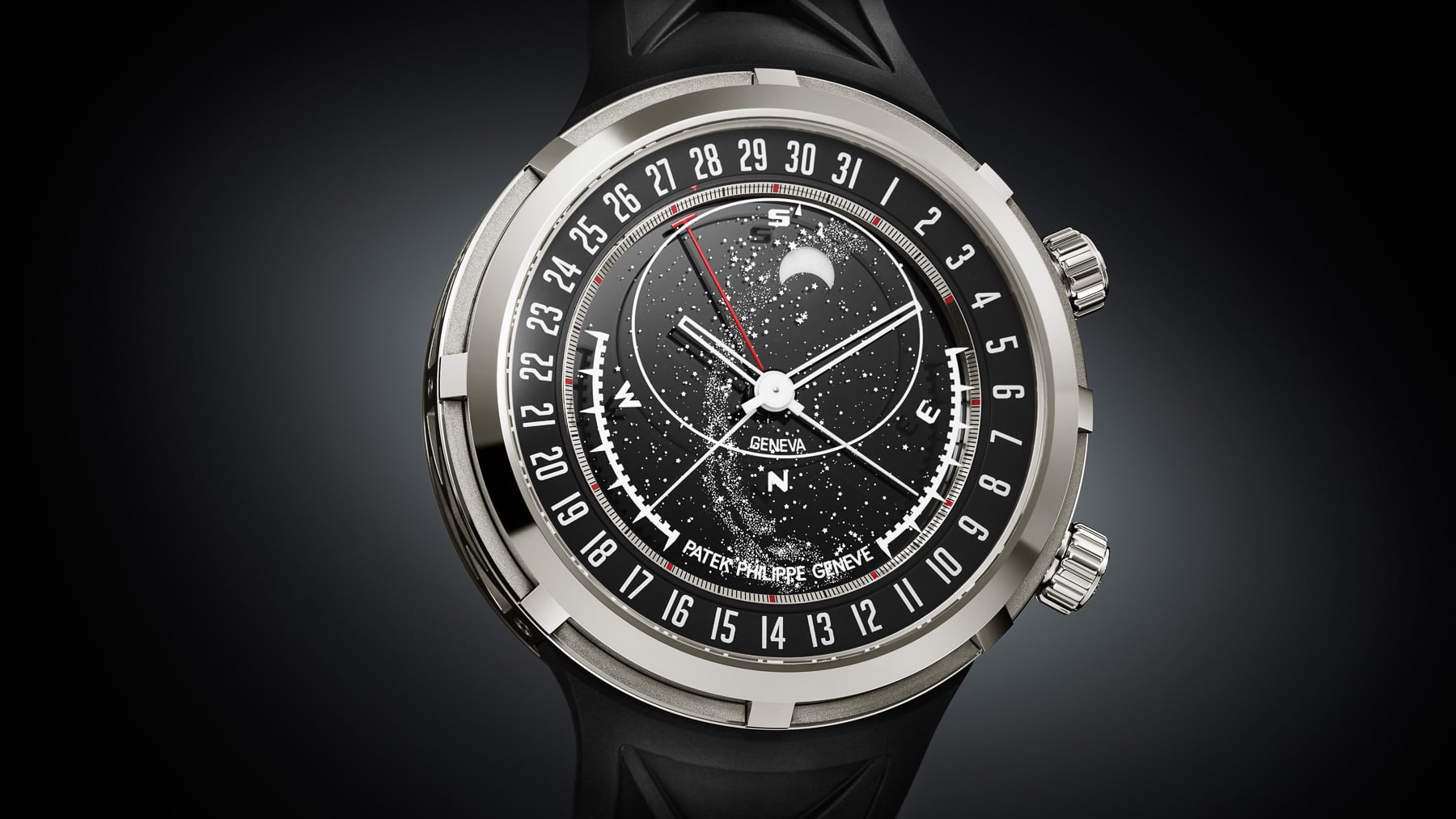
At Watches and Wonders 2026, Patek Philippe expands its astronomical watchmaking with the Celestial ref. 6105G-001. The new model builds on the existing Celestial line, which has long focused on representing the night sky through a rotating sky chart and lunar indications. This latest reference adds a new complication to the series with a display of sunrise and sunset times calibrated for Geneva.
Astronomical displays have appeared regularly in Patek Philippe’s most complex watches, from historical pocket watches to the Sky Moon Tourbillon and the Celestial introduced in 2002. The new 6105G-001 continues that lineage while introducing a functional interpretation of solar cycles. The brand states that the watch required more than five years of development and resulted in six patent applications. These cover the sunrise/sunset display, the daylight-saving correction system, and several mechanical solutions related to setting and integration.
The result is a new interpretation of the Celestial concept that combines a rotating sky chart, lunar information, date, and civil time, along with annual sunrise and sunset indications. The watch also features a synchronized correction system that maintains alignment between civil time and solar displays during seasonal time changes.
Rundown: Patek Philippe Celestial ref. 6105G-001
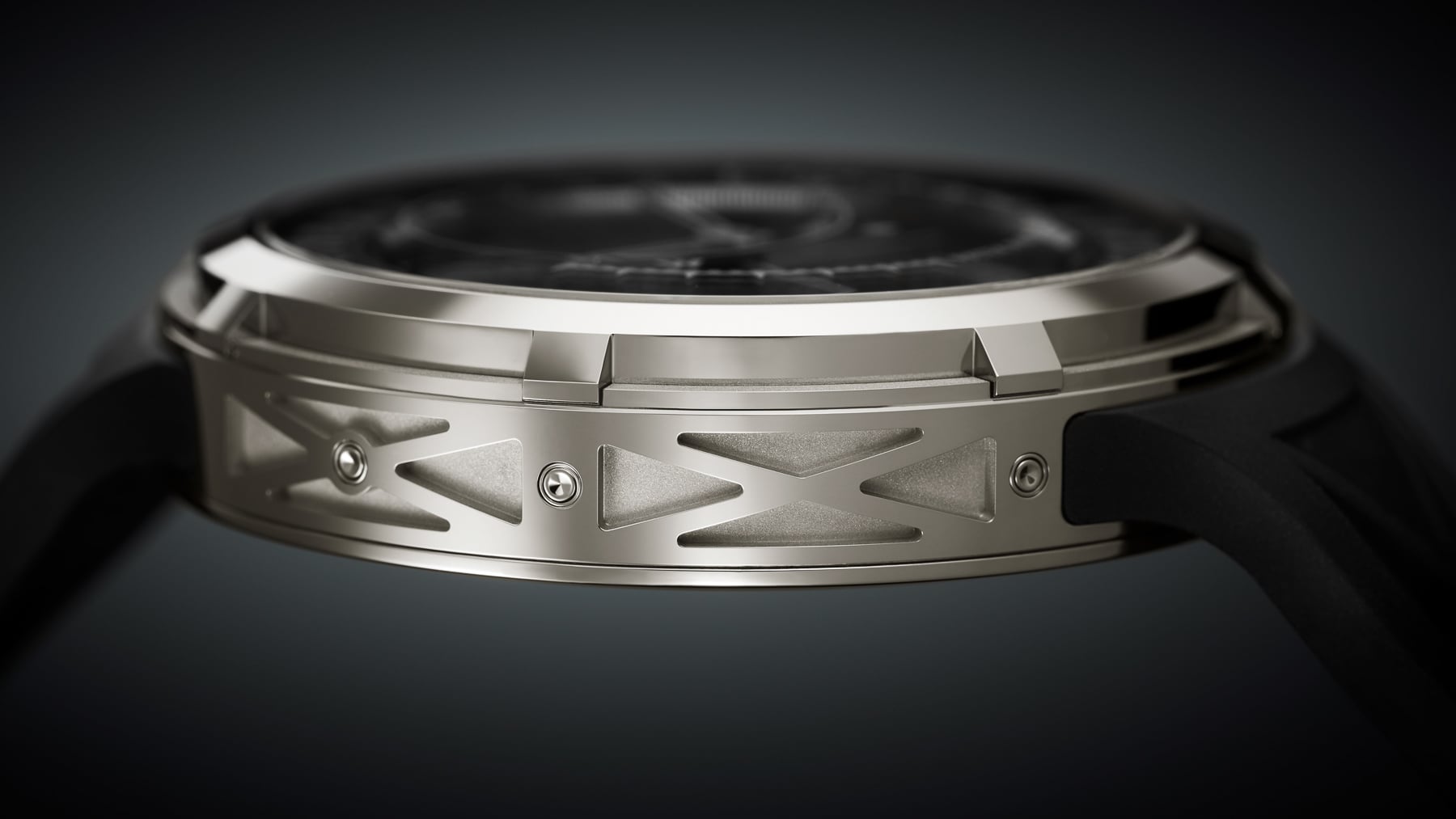
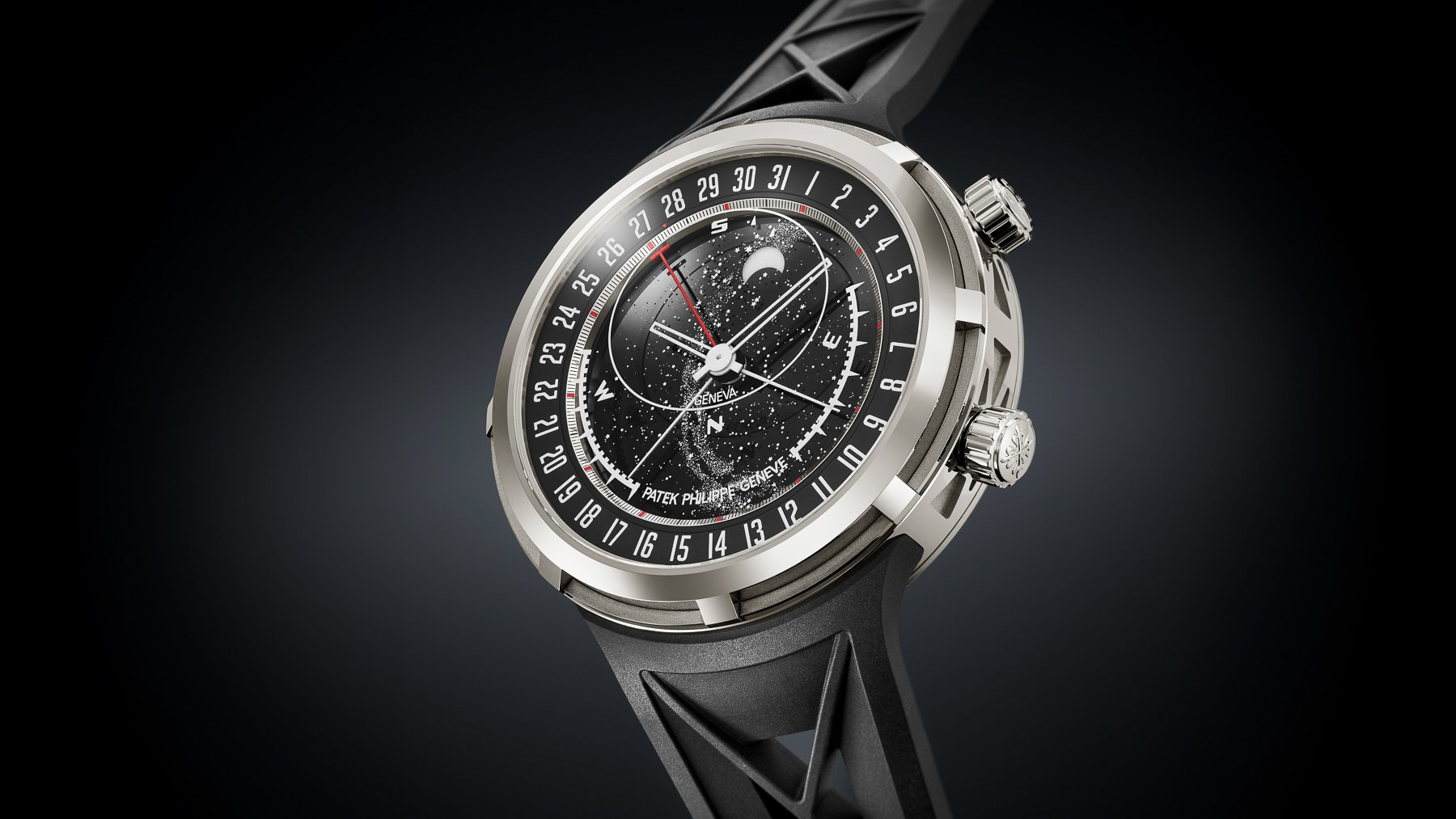
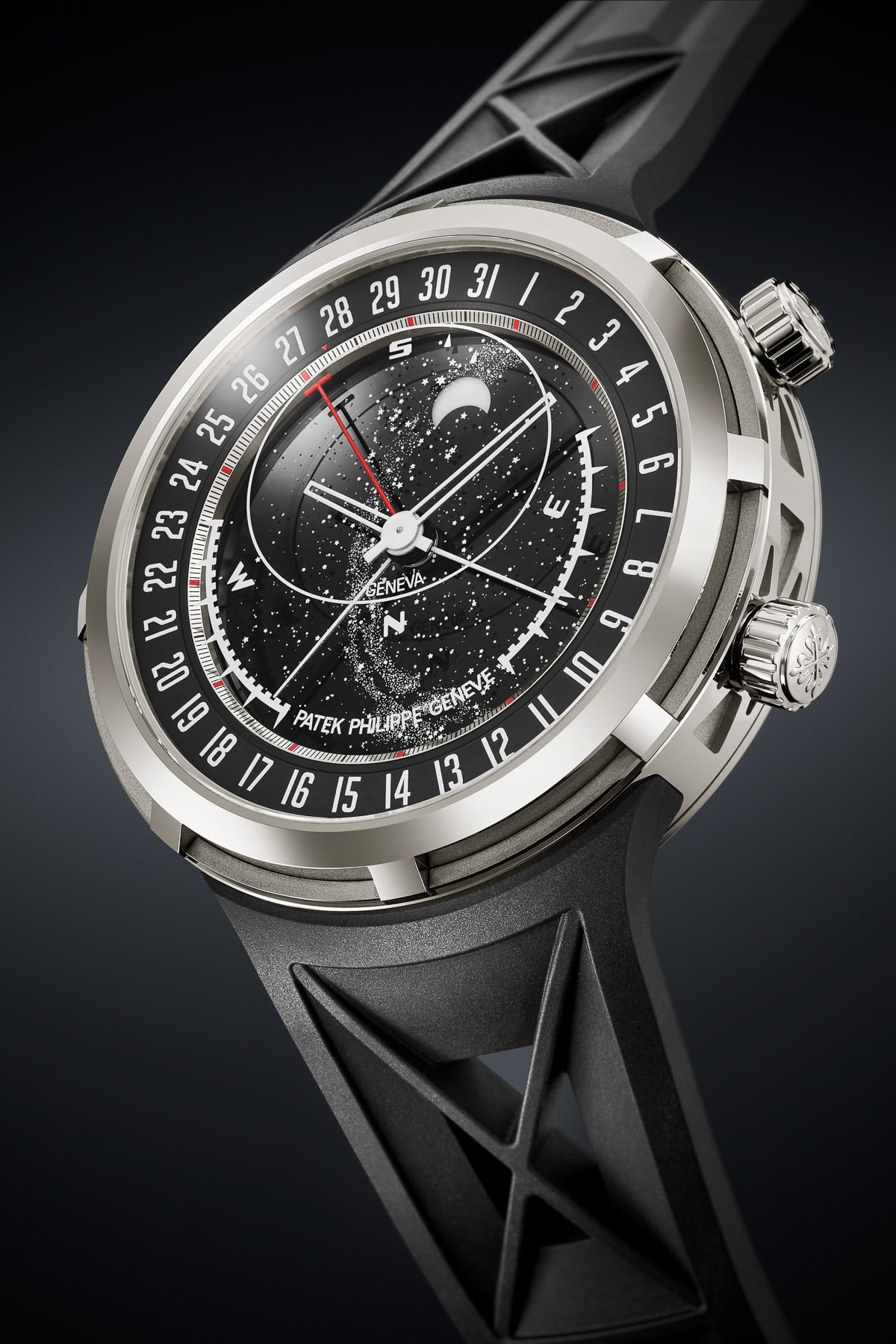
The Celestial ref. 6105G-001 boasts a 47mm by 12.39mm 18K white gold case. This case features an X-shaped structural motif engraved into the side and continued onto the solid case back. The design removes traditional lugs, integrating the strap directly into the case. Two crowns sit at 2 and 4 o’clock, supported by multiple pushers in the case band for date and seasonal corrections. Patek rates the water resistance to 30 meters.
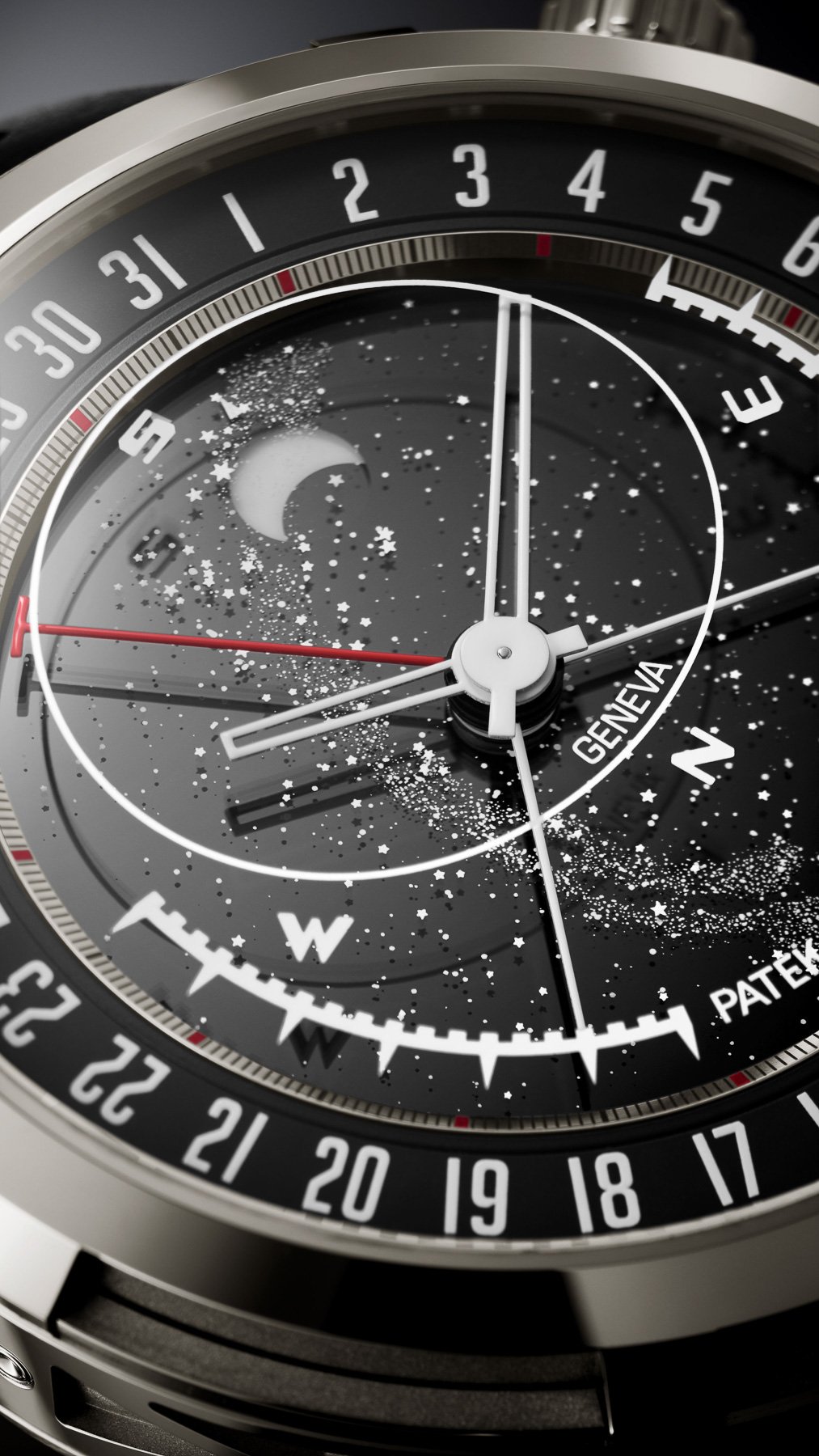
The dial construction follows the layered architecture associated with the Celestial series. A transparent sapphire disk carries a sky chart with printed stars and the Milky Way. This disk rotates once per sidereal day to simulate the apparent movement of the heavens. Beneath it, a darker disk rotates according to the lunar day, representing the Moon’s motion. A third disk reveals the lunar phases, with long-term accuracy that requires correction only after several millennia. An ellipse printed on the sapphire crystal marks the portion of the sky visible from Geneva or locations sharing the same latitude.
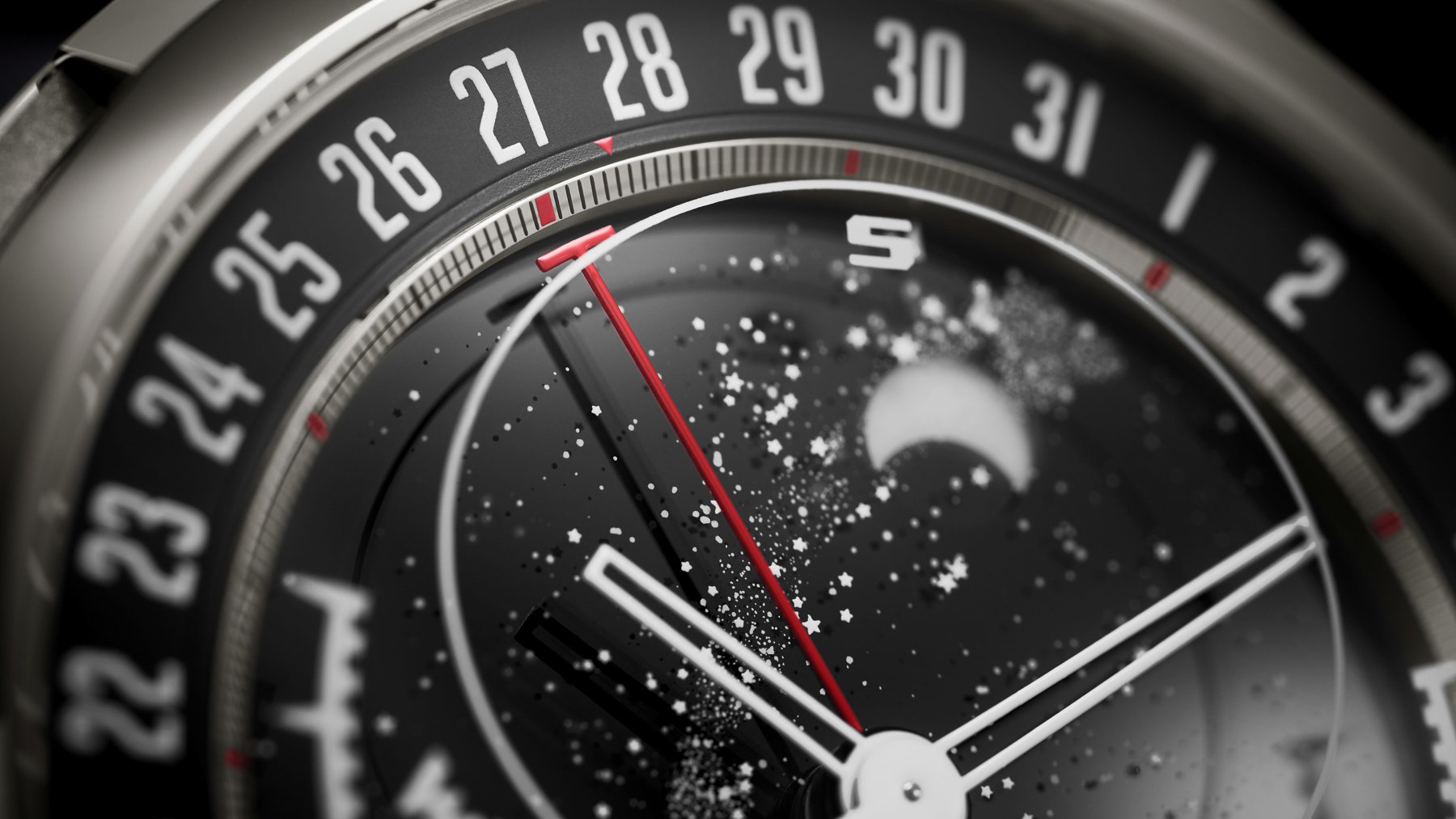
Around the dial periphery, a date scale serves multiple functions. A red hand indicates the date, while two additional hands track sunrise and sunset times. These solar indications vary throughout the year and are driven by an annual cam system. Two ovoid cams reproduce the seasonal variation in daylight, with a double feeler-spindle reading their profiles. The mechanism transmits this information to the sunrise and sunset hands via a rack-and-gear arrangement. This display system is the subject of one of the watch’s patents, covering the rack-based sunrise and sunset indication.
Patented systems
A second patented system addresses seasonal time changes. Pushers at 9 and 10 o’clock allow the wearer to move the hour hand forward or backward in one-hour increments, which is useful when switching between summer and winter time. When activated, the system simultaneously adjusts civil time, the date disk, and the sunrise and sunset scales without disturbing the astronomical displays. This coordinated correction is handled through linked gear trains and a synchronized motion of the peripheral disk. A safety mechanism prevents the same pusher from being activated repeatedly.
Additional patents relate to the integration and usability of the astronomical functions. One covers the display of summer and winter time using the date scale. Another concerns the bayonet-style disconnectable crown at 2 o’clock, designed to prevent accidental adjustment of the astronomical indications. A further patent addresses an eccentric finger-piece used within the gearing for the annual cam mechanism. The sixth patent concerns a stem re-centering system that keeps both crowns aligned within the caseband despite the complex internal layout.
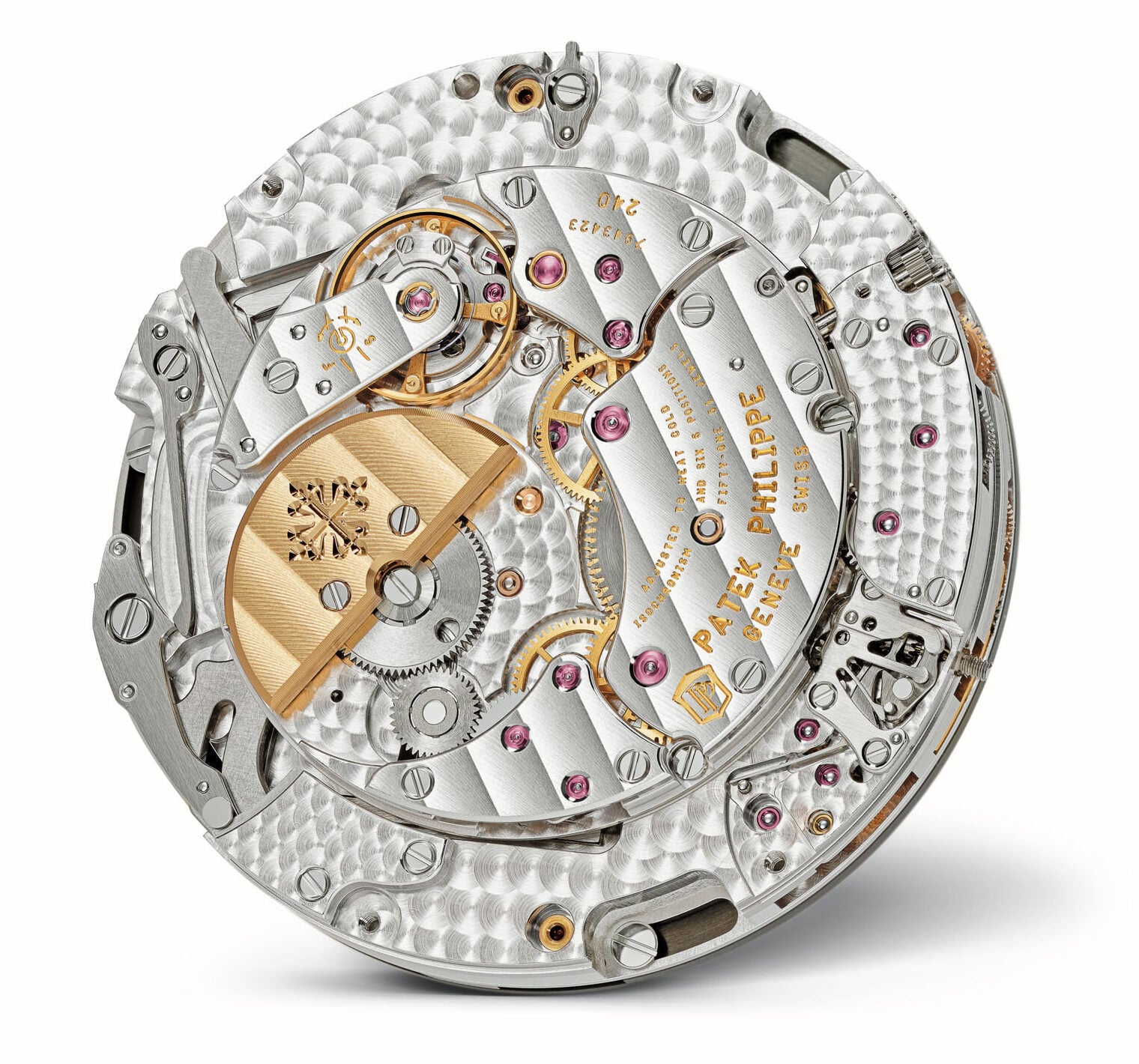
Patek Philippe caliber 240 C LU CL LCSO
Powering the watch is the new self-winding caliber 240 C LU CL LCSO. Based on the ultra-thin caliber 240’s architecture, this movement integrates the sunrise and sunset mechanism while maintaining compact dimensions. It has a 38mm diameter and 7.93mm thickness, incorporating 426 components. It runs at 21,600 vibrations per hour and uses a 22K gold off-center mini-rotor for automatic winding. The power reserve is rated at 38–48 hours. The movement drives the civil time, sky chart, lunar indications, moon phases, date, and sunrise and sunset displays.
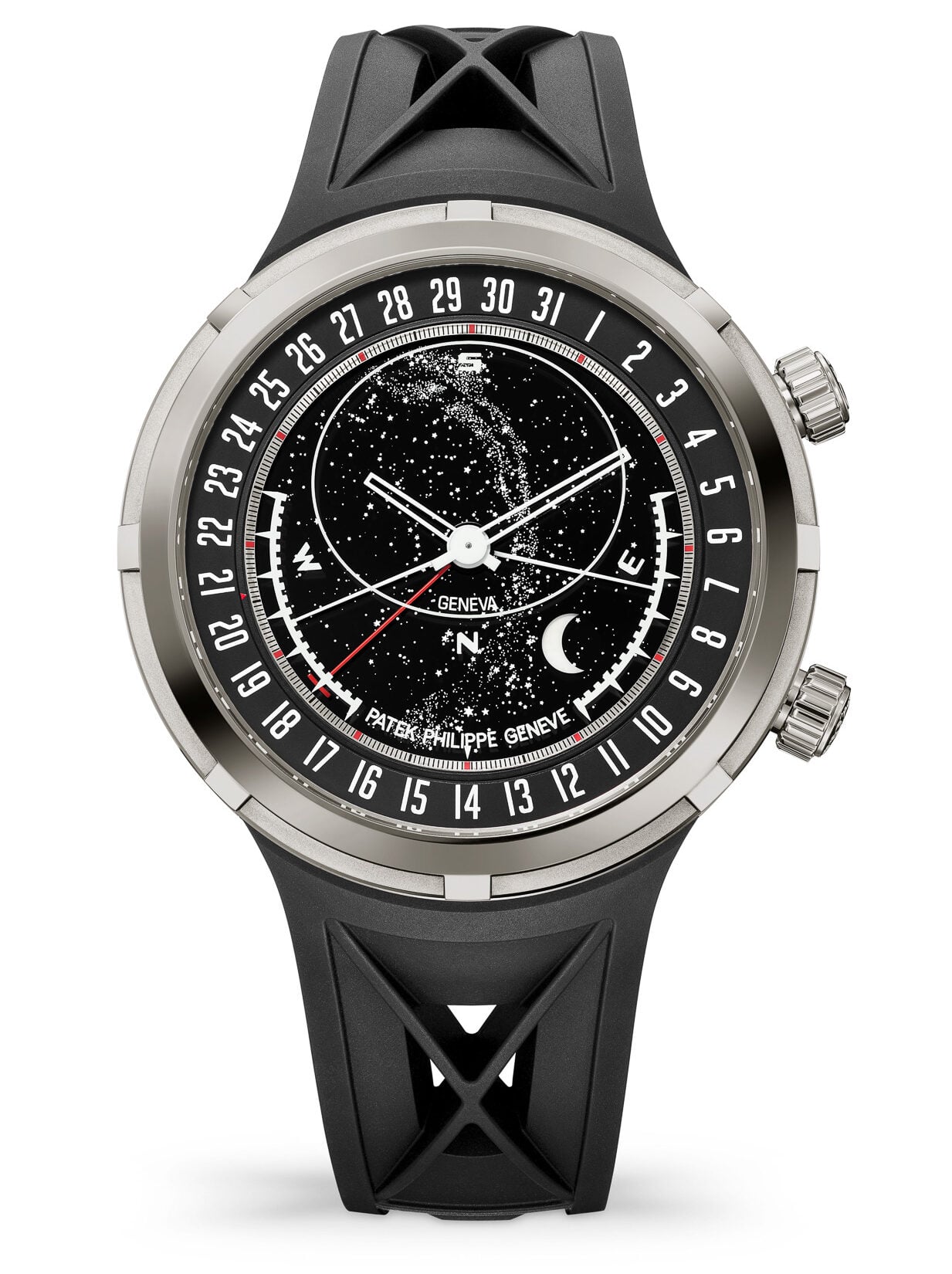
Patek Philippe equips the Celestial ref. 6105G-001 with a black composite strap, which, as mentioned, integrates directly into the case. The strap features a perforated X motif echoing the case design and closes with a white gold triple-blade folding clasp. This watch’s overall presentation emphasizes a contemporary interpretation of the Celestial line, with skeletonized hands and layered dial elements designed to highlight depth.
First impressions
The Celestial ref. 6105G-001 expands the concept of Patek Philippe’s astronomical wristwatches with a solar-based complication rarely seen in serial production. The addition of sunrise and sunset indications introduces a functional element alongside the visual sky display. Furthermore, the synchronized daylight-saving correction system addresses a practical limitation often associated with astronomical watches.
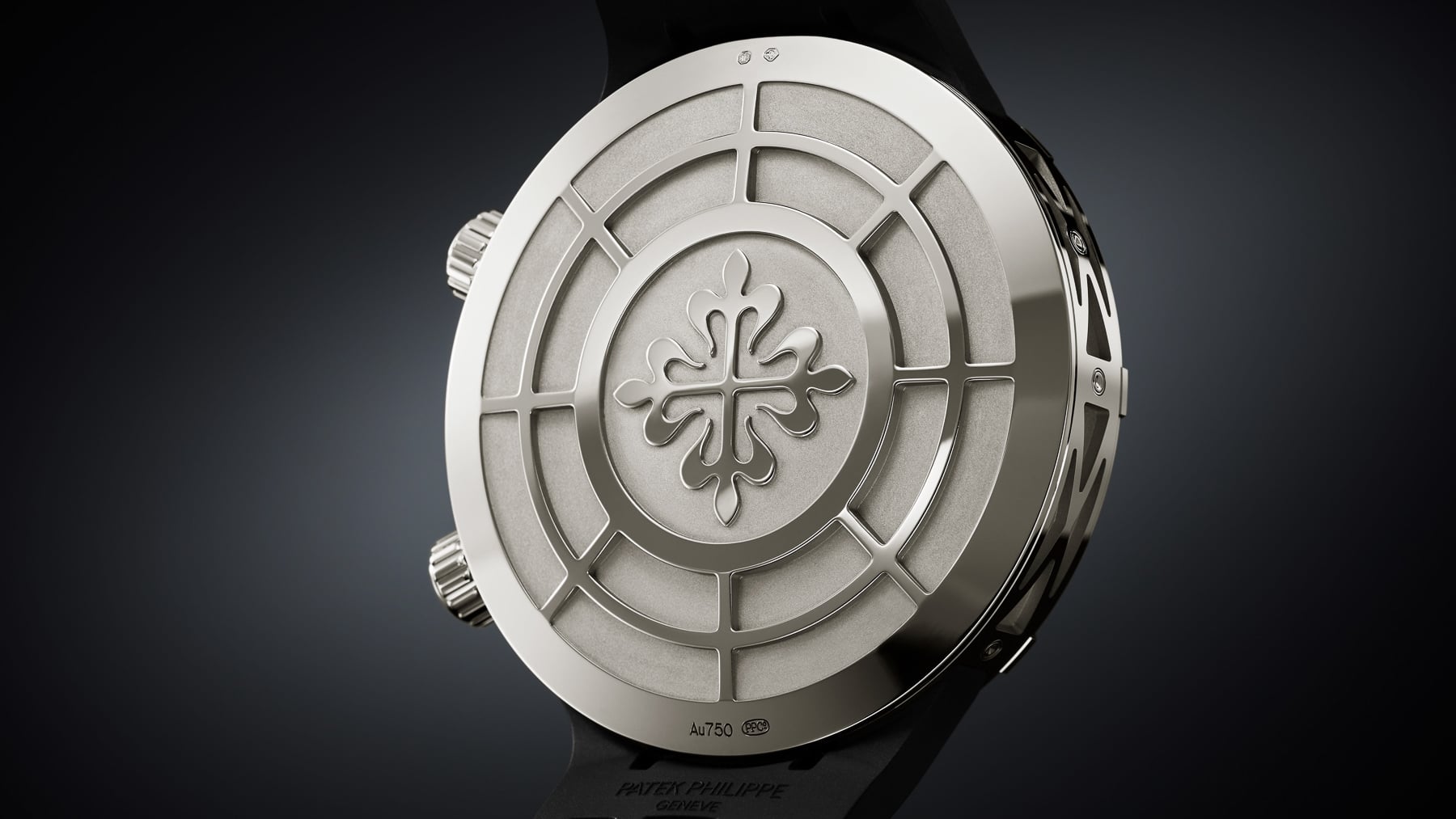
This Celestial model’s new case design marks a shift toward a more modern aesthetic compared to its predecessors. The integrated strap, sculpted case band, and larger dimensions underline this direction. With a 47mm diameter, the watch remains substantial, reflecting the complexity of the display and layered dial construction.
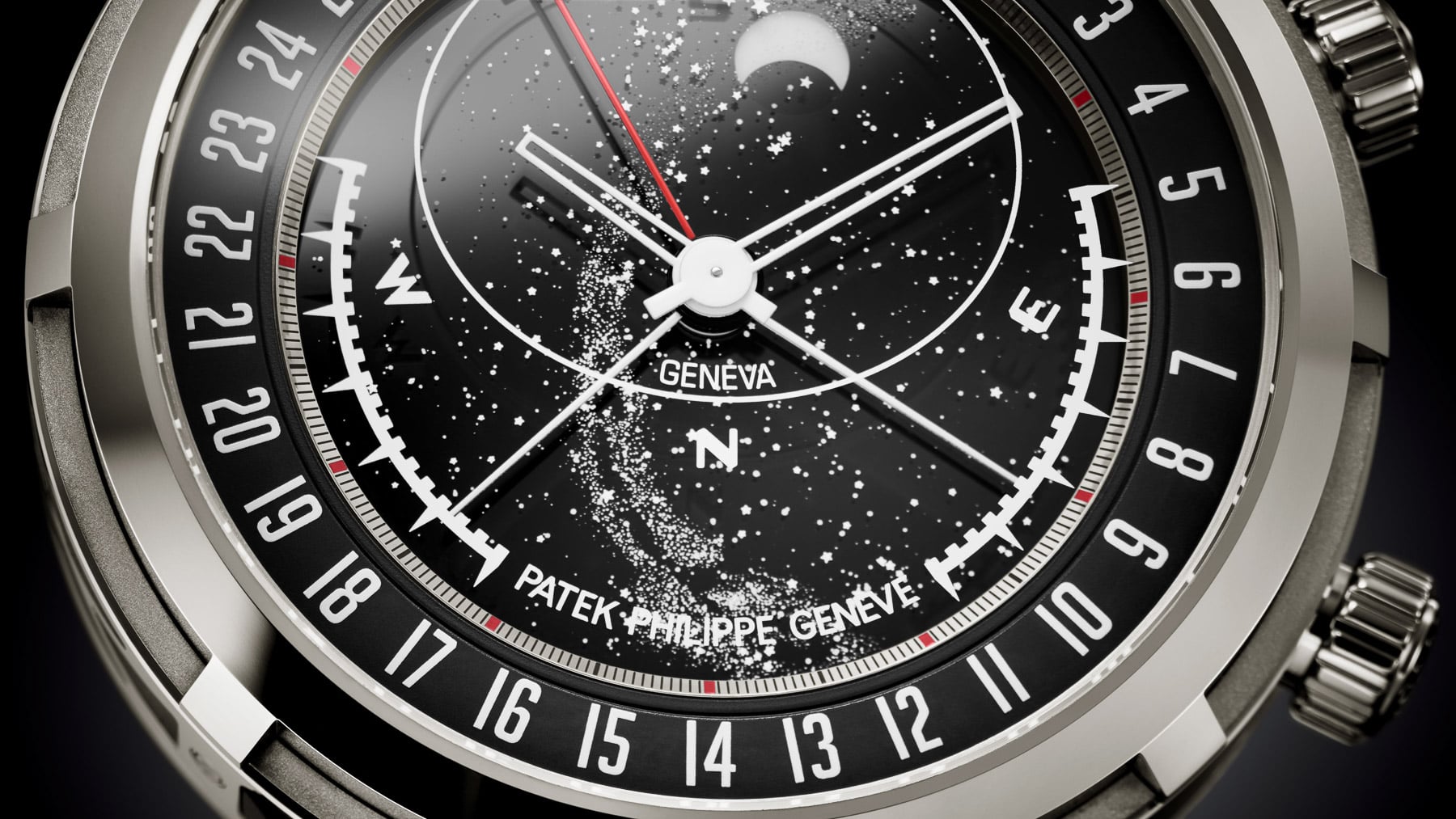
Within Patek Philippe’s lineup, the 6105G-001 sits alongside other high complications derived from the caliber 240 platform. The six patent applications highlight the technical focus of the release, particularly in integrating annual solar indications into a wristwatch format. The result is a new interpretation of the Celestial that combines sky chart, lunar display, and seasonal solar information in a single mechanism.
The Patek Philippe Celestial Sunrise And Sunset ref. 6105G-001 retails for €412,400 / US$437,610 / CHF 350,000.
Let us know your thoughts in the comments, and check out more of our Watches and Wonders 2026 coverage here.